Press release from PSNI (Police Service for Northern Ireland), 13 December 2024
POLICE CONFIRM BIRD POISONING IN ARMAGH
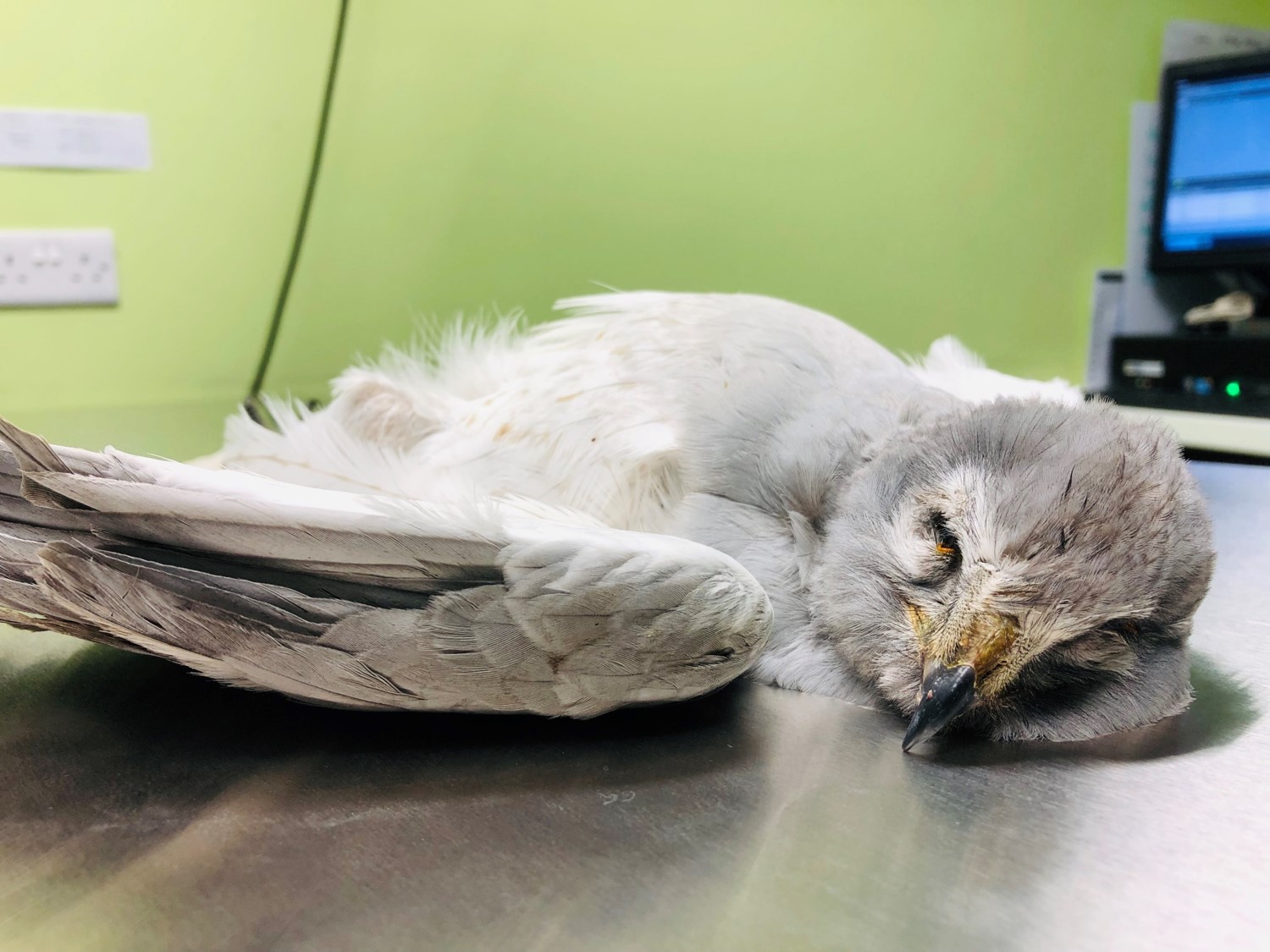
Police have confirmed that an adult bird of prey was found dead in the Forkhill area of Armagh in June of this year was poisoned.
It was reported on the 12th June that a Peregrine Falcon was found dead in the Forkhill area. The bird was retrieved by our search and rescue team and underwent testing to ascertain the exact circumstances, with enquiries ongoing the last number of months.
Constable Millen said: “We can now confirm the Peregrine Falcon found was poisoned with Carbofuran which is very concerning. This is not only a dangerous substance but it has been banned since 2001.
“We would remind the public if there is a suspicion of a crime, such as poisoning on any bird of prey in their local area, to leave the bird(s) and/or bait in situ and to call the police as soon as possible for officers to action.
“We have been working closely with our partners in Northern Ireland Environment Agency and National Wildlife Crime Unit and Northern Ireland Raptor Study Group regarding the matter and will continue to do so, in the hope to find those responsible.
“Police would appeal to anyone who has information on any suspected bird poisoning to please make contact via our non-emergency number 101, or online at http://www.psni.police.uk/makeareport/ or you can contact Crimestoppers anonymously on 0800 555 111 or online at http://crimestoppers-uk.org/.
ENDS
As far as I’m aware, nobody has ever been prosecuted for the illegal poisoning of any wildlife in Northern Ireland, which might explain why poisoning offences, especially against birds of prey, continue.
The Police waiting for six months before issuing an appeal for information about a poisoning crime won’t help, either.
Following the illegal poisoning of two white-tailed eagles in May 2023, found dead together on Northern Ireland’s only driven grouse moor at Glenwherry in the Antrim Hills (here), the Northern Ireland Raptor Study Group launched a petition calling for a ban on the possession of dangerous pesticides (here).
This petition is still live and has attracted almost 46,000 signatures. If you’d like to support it, please click here (you don’t have to be a resident/citizen of NI to sign – it’s open to anyone).
To learn more about recent raptor persecution incidents in Northern Ireland, this excellent report is well worth a read. It covers incidents reported in 2021 and 2022 (published May 2024).
South Yorkshire Police have issued the following press release (dated 9 December 2024):
WITNESS APPEAL AFTER BIRD SHOT IN PEAK DISTRICT
We are appealing for information after a protected bird was reportedly shot in Bradfield, near Sheffield.
On 25 August, a dead raven was found in a field near Agden Side Road, Bradfield, in the Peak District.
The incident was reported to the RSPB who collected the bird. An x-ray of the bird showed that it had been shot.
It is believed the bird was shot between 24 August and 25 August.
Since the incident, officers have been following several lines of enquiry and we are now appealing for anybody who may have any information about the incident to contact us.
You can report information to us online via live chat or by calling 101, quoting incident number 662 of 9 September 2024.
The Agden Side Road lies just beyond the boundary of two grouse moors (Strines and Broomhead) in the Peak District National Park.
This part of the Peak District National Park, dominated by land managed for driven grouse shooting, has a long and sordid history of raptor persecution incidents (e.g. see here, here, here, here, here etc).
Prosecutions are rare, largely due to the difficulty of identifying a named individual to link to a crime that has taken place in a relatively remote landscape with few witnesses.
This is certainly not helped by South Yorkshire Police, who rarely cover themselves in glory with timely investigations, although to be fair unless the shooting of this raven was witnessed and recorded, the police have little to go on.
Yes, the usual suspects will be in the frame but for a prosecution the police need evidence – they can’t just prosecute on the basis of recurrent past criminal behaviour in the area. Although waiting three and a half months to issue an appeal for witnesses, as they’ve done in this case, won’t help.
This scenario happens over and over again in areas managed for driven grouse shooting, even inside our National Parks, and has been happening for decades. Raptors are routinely shot, trapped and poisoned and the criminals get away with their crimes time after time after time.
This is one (of several) reasons why Wild Justice is currently running a petition calling for a ban on driven grouse shooting. The petition currently stands at 30,000 signatures but it needs 100,000 to trigger a parliamentary debate. If you’d like to sign it, please click HERE.
UPDATE 9 June 2025: Another Raven found shot dead next to grouse moor in notorious persecution hotspot in Peak District National Park (here)
The Financial Times ran a story yesterday discussing how the grouse shooting industry in Scotland is under pressure and feels ‘encircled’.
It features quotes from the gamekeeper and estate manager on Lochan Estate in Strathbraan – which is currently serving a three-year General Licence restriction after the discovery of a dead hen harrier found in an illegally-set trap (see here). The gamekeeper, Colin McGregor, blames wind farms for the high number of satellite-tagged golden eagles that routinely ‘disappear’ in suspicious circumstances or are found poisoned, trapped & shot on grouse moors.
There are also quotes from Ross McEwing of Scottish Land & Estates, who argues that the recent rise in offences against birds of prey relates to the illegal laundering of peregrines rather than moorland management.
Really, Ross? That’s disingenuous posturing if ever I saw it. The peregrine laundering offences took place in spring 2021. Since then, there has been the shooting of a golden eagle (here), the suspicious disappearance of a satellite-tagged hen harrier (here), the shooting of a buzzard (here),the poisoning of a red kite (here), the shooting of a peregrine (here), the shooting of an osprey (here), the suspicious disappearance of a satellite-tagged golden eagle (here), the discovery of a mutilated golden eagle in a carrier bag (here), the suspicious disappearance of another satellite-tagged hen harrier (here), a pole-trapped peregrine (here), the discovery of poisoned baits (here), the shooting of a sparrowhawk (here), the shooting of a red kite (here), the poisoning of another red kite (here), a shotgun attack on a goshawk nest (here), the shooting of another red kite (here), the shooting of ravens and the stamping on one of them (here)…there are probably more incidents, these are just off the top of my head. A considerable number of these offences were linked to grouse moor management.
As I told the Financial Times journalist, “Pretending the extent of these crimes is negligible is the mark of an industry desperately trying to ‘greenwash’ its shameful reputation“.
The article, written by Simeon Kerr, is reproduced below:
Scotland’s ‘sport of kings’ hit by extreme weather and land reform
Plumes of smoke roll along the brown patchwork of upland moors on Lochan Estate as its gamekeepers burn heather to regenerate leaves for the red grouse. The hut, where guests break from shooting for lunch, stands eerily empty.
Clients, who come from as far as the US and pay £216 per brace, or pair of birds, bagged a record 5,400 grouse over 22 days at the estate in Perthshire, central Scotland in 2017. This year, a late cold snap and fewer insects cut the population, meaning no shooting.
“We could tell in the summer that there weren’t enough brooding pairs; you could see grouse that had lost their young,” said Colin McGregor, who has worked as the estate’s gamekeeper for 37 years. “This business is up and down.”
With just four days left of the season, the same story has echoed around nearby estates and beyond as low stock combines with growing calls for land reform and resistance to shooting to put pressure on the traditional “sport of kings”.
Since the “glorious 12th” that kicked off the season as usual in August, Scottish estates had held about 30 days of driven grouse shooting, said Ross Ewing, moorland director at business group Scottish Land & Estates — a “pitiful” amount compared with the 2,000-3,000 during a good year across the 100-plus estates that host driven shoots.
Extreme, unpredictable weather associated with climate change was creating challenges across the rural landscape, including hitting the breeding success of ground-nesting birds, he said.
Stretching across 10,000 acres of high ground, Lochan’s sporting interests are underpinned by other revenue streams including a wind farm and agriculture.
But McGregor said the lack of business was putting the livelihoods of three families at risk, affecting dozens of casual staff employed as loaders, pickers-up and caterers, and dampening demand for local hotels.
The shooting industry says its activity sustains rural life, but mounting opposition to blood sport and demands to reform national land ownership have left it feeling encircled.
Research published by the British Association of Shooting and Conservation in July showed shooting in Scotland added 14,100 jobs and £760mn to the economy, which is estimated at £218bn including oil and gas.
But Revive, which campaigns for grouse moor reform, cited a Scottish Land & Estates report that found country sports provided little more than 1,000 direct jobs, despite estates taking up 57 per cent of rural Scotland.
“A transition away from grouse shooting is urgently needed — the sooner the better for our people, wildlife and environment, said Max Wiszniewski, Revive campaign director. He called for community-led ownership driven by nature-based industries such as peatland restoration, wildlife tourism and forestry.
The polarised debate around land use in Scotland, where fewer than 500 people own half of private land, is no more vigorous than around the vast tracts of grouse moorland.
Bordering Lochan Estate are large plots owned by Guy Hands, the private equity investor who is developing sustainable forestry, and Oxford university’s endowment fund, where the moorland is left to grow wild.
The arrival of “natural capital” investors pursuing rewilding projects for philanthropy or forestry and peatland restoration to sell carbon credits has lifted land valuations, making grouse shooting increasingly uneconomic.
As McGregor oversaw the burning of heather, known as muirburn, a golden eagle circled high above the ashen moor. The fate of raptors is another subject dividing Scots, with many pushing for tighter regulation to protect birds of prey from illegal killing.
Research by the Scottish government in 2017 found that one-third of satellite-tagged golden eagles had died in suspicious circumstances around grouse moors.
McGregor said the prevalence of birds of prey countered such concerns, blaming wind farms for deaths. Pointing to historically low levels of wildlife crime, Ewing said the recent rise in raptor offences related to illegal laundering of peregrine falcons, rather than moorland management.
Criticism “suits a narrative — many are opposed to hunting and, particularly, driven game bird shooting”, he added.
But Ruth Tingay, a conservation campaigner, said reported crimes were the “tip of the iceberg”, citing continuous reports of shot, trapped and poisoned raptors as well as the rarity of wind turbine strikes.
“Pretending the extent of these crimes is negligible is the mark of an industry desperately trying to ‘greenwash’ its shameful reputation,” she said. “There are huge gaps in the distribution of breeding species like golden eagles and hen harriers in areas intensively managed for driven grouse shooting.”
In early 2022, Lochan was hit by a three-year loss of its general license to control wild birds after allegations of wildlife crime. McGregor, who denies any wrongdoing, called for a neutral ombudsman to hear appeals against sanctions relating to the growing number of regulations.
“There should also be some recognition of the good we do for curlews and lapwings — all critically endangered. Grouse moors are one of the few places they are thriving,” he said.
The Scottish National party government has been legislating for land reform and tighter regulation of estate management as it balances tradition with advocacy for nature and climate policy.
It is implementing muirburn licensing, in recognition of how burning heather cuts wildfire risk by managing the fuel load on moorland while seeking to protect peatlands crucial for carbon storage.
A separate government licensing scheme this year threatened the removal of shooting rights if raptor persecution occurred anywhere on an estate’s boundaries, but was watered down within months.
Tingay said it was a “middle ground step” that, if found not fit for purpose, would fuel demand for an outright ban.
Back on the Lochan estate, in the absence of shooting parties, the team engaged in the daily tasks of maintaining infrastructure and managing the moor.
Richard Stewart, estate manager, was philosophical about the poor season.
“You just have to suck it up and keep going in the hope you can hit a good year to reimburse the investment,” he said.
ENDS
Wild Justice’s latest petition calling for a ban on driven grouse shooting currently has 28,000 signatures. It needs 100,000 to trigger a parliamentary debate in Westminster. If you’d like to sign it, please click HERE.
The young Golden Eagle, fitted with a satellite-tag, was being monitored by researchers in Scotland until it suddenly disappeared in the Angus Glens – an area dominated by grouse moors and with a history of raptor persecution.
Scotland’s national bird, Golden Eagles are still heavily – and criminally – persecuted.
The sudden disappearance of a satellite-tagged Golden Eagle has sparked concerns of criminal activity in the Angus Glens.
The young bird, which hatched in Tayside in 2022, was fitted with a satellite tag while in its nest. This work was supported by Forestry and Land Scotland for research purposes.
The tag was transmitting as expected until May 2024 when it suddenly went offline. Its last known location was an area of moorland in the Angus Glens – an area with a long history of illegal bird of prey persecution.
The data from the bird’s tag was swiftly provided to the police for independent scrutiny. Police Scotland, the National Wildlife Crime Unit and RSPB Scotland then conducted a search of the area but found no trace of the bird or its tag.
It is a crime to kill a bird of prey, and anyone caught doing so faces a fine or even jail. Furthermore, legislation introduced in March 2024 means that, if illegal activity takes place on a grouse moor, that grouse moor could lose its license to operate.
Will Hayward, RSPB Scotland Senior Investigations Officer, said: “The sudden cessation of transmissions from this tag strongly suggests human interference, and reflects a pattern of tagged birds ‘disappearing’ almost exclusively on or near grouse moors that has become all too evident in recent years. Had this bird died of natural causes or if the tag had become detached, we would be able to locate and retrieve it. Given the well-proven reliability of this technology, when no body or tag is found, this is highly suspicious. We believe this bird has been killed and the tag destroyed.”
Unfortunately, this young bird is the latest of many to disappear without explanation on or near a grouse moor.
Angus was one of the raptor crime hotspots identified in a Government-commissioned report on the fates of satellite tracked golden eagles in Scotland, published in 2017. Sadly there has been no let-up in confirmed incidents and suspicious disappearances since then. Most recently, an Osprey was found shot in the Glen Doll area on 12 August – the opening day of the grouse shooting season. [Ed: And a Peregrine was found shot in the Angus Glens on 3 September 2024, here]. And earlier this year sat-tagged Hen Harrier ‘Shalimar’ disappeared in circumstances similar to this Golden Eagle.
If you notice a dead or injured bird of prey in suspicious circumstances, call Police Scotland on 101 and fill in the RSPB’s online reporting form here.
If you have information about anyone killing birds of prey which you wish to report anonymously, call the RSPB’s confidential Raptor Crime Hotline on 0300 999 0101.
Six months on from the introduction of new legislation intended to tackle raptor persecution, wildlife campaigners have expressed concern about the continued shooting of protected birds of prey near Scotland’s grouse moors.
The League Against Cruel Sports and Raptor Persecution UK have both commented on the shooting of a protected buzzard found near to the boundary of land belonging to Glenturret Estate in Perthshire in mid-May, just a few weeks after the Wildlife Management and Muirburn Act 2024 received Royal assent.
The comments came after police notified the League Against Cruel Sports that they had concluded investigations into the shooting of the buzzard with no charges being brought.
The dead bird was found on its back with its wings spread out by a Field Officer of the League Against Cruel Sports, who was carrying out field research on grouse moor management in the area.
A post-mortem conducted by the SRCU revealed that the buzzard had been injured by a ‘shot gun wound that caused fracture of the lower leg bone’, concluding that ‘the bird died slowly as a result of the leg wound and secondary infection, experiencing significant unnecessary suffering.’
Robbie Marsland Director of Scotland and Northern Ireland for League Against Cruel Sports said:
“Why would anyone shoot at a buzzard – unless it was someone who was trying to make sure there would be more grouse to shoot for so-called sport?
“The new laws were supposed to stop this kind of wanton cruelty but this case just goes to show that the killing goes on. Our worry is that this cruelty will continue as long as buzzards, hen harriers and golden eagles are seen as a threat to the shooting industry, rather than the magnificent creatures that they are.”
Dr Ruth Tingay of Raptor Persecution UK added:
“It was the persistent illegal killing of golden eagles and other raptors that led the Scottish Parliament to introduce a grouse moor licensing scheme earlier this year, a ground-breaking piece of legislation designed to impose sanctions on those who continue to kill our special birds of prey.
“The news that yet another raptor has been shot and killed is appalling. This case, along with other ongoing police investigations such as the recent shooting of an osprey and a peregrine, as well as the poisoning of a red kite and the discovery of a dismembered golden eagle found dumped inside a plastic bag, will test the effectiveness of the new legislation.
“If the killings continue, it’s likely there will be a push to ban gamebird shooting outright. If businesses can’t operate without killing protected species then they shouldn’t be in business.”
The Wildlife Management and Muirburn Act introduced a range of measures including a new licensing framework for grouse moors, banning the practice of snaring and giving greater powers to Scottish SPCA inspectors to tackle wildlife crime.
In a background briefing note about the new legislation, the Scottish Government stated, ‘The Wildlife Management and Muirburn (Scotland) Bill was introduced primarily to address raptor persecution and ensure that the management of grouse moors and related activities are undertaken in an environmentally sustainable and welfare conscious manner.’
The need for land reform to help tackle wildlife crime will be one of the discussion points at the REVIVE Conference in Perth on Sunday 10 November. REVIVE is a coalition of the League Against Cruel Sports, Common Weal, OneKind, Friends of the Earth Scotland and Raptor Persecution UK, and both Robbie Marsland and Dr Ruth Tingay will speak at the event.
The conference will launch the Big Land Question campaign, a year-long programme of independent research with the aim of enhancing and informing policy development and to ascertain public perceptions around land reform.
ENDS
This news was published by the Daily Record this morning (here).
Strathbraan is a large area dominated by grouse moors and is a notorious raptor persecution hotspot.
The bird had consumed a banned pesticide which has a history of being used to kill birds of prey.
Red Kites are fully protected by law, and to kill or harm one could result in jail.
The illegal poisoning of birds of prey is a national issue and poses a potentially deadly danger to people, pets and wildlife.
A protected Red Kite endured an ‘agonising death’ after being killed by a banned pesticide, one quarter of a teaspoon of which is enough to kill a human.
RSPB Scotland received a call in April 2024 from a dog walker who had found a red kite dead on the ground near to a popular woodland walking trail, adjacent to hill farm land at Spinningdale, near Dornoch in East Sutherland.
RSPB Investigators notified Police Scotland, collected the bird and sent it for a post-mortem examination and toxicology analysis. The results were consistent with Carbofuran poisoning being the cause of the bird’s death, a pesticide banned for over 20 years.
Police Scotland and partner agencies conducted a search of the area but found no evidence that enabled them to identify a suspect.
It is a crime to kill or attempt to kill a bird of prey, and anyone caught doing so faces a fine or even jail.
The latest Birdcrime report, released last month found there were 159 poisoning incidents involving birds of prey between 2009-2024 in Scotland. In recent years, Carbofuran has become the pesticide most frequently associated with bird of prey persecution.
And of all UK counties, the Highland area had the second highest number of confirmed incidents of raptor persecution during the same 15-year period.
Ian Thomson, RSPB Investigations Manager, said:
“We are very grateful to the person that found this dead kite for reporting it to us. It is appalling that individuals are still using this poison, decades after it was banned, and this bird will have suffered an agonising and horrific death.
Carbofuran is a highly toxic substance and is one of several banned pesticides still used by criminals targeting birds of prey or other protected wildlife. Its possession or use is illegal and placing it out in the open poses a potentially deadly and indiscriminate risk not only to wildlife but to people and pets.
We ask anyone using the area to be vigilant if they find anything suspicious, don’t touch, but do take photos and report to Police Scotland immediately on 101.”
If you notice a dead or injured bird of prey in suspicious circumstances, call Police Scotland on 101 and fill in the RSPB’s online reporting form here.
If you have information about anyone killing birds of prey which you wish to report anonymously, call the RSPB’s confidential Raptor Crime Hotline on 0300 999 0101.
Press release from Police Scotland (5th November 2024):
INVESTIGATION UNDERWAY AFTER GOLDEN EAGLE FOUND IN A BAG NEAR PORT OF MONTEITH
An investigation is under way after a dead golden eagle was found on a forestry track off A81 near Loch Rusky, north east of Port of Monteith.
The eagle was discovered around 11am on Tuesday, 30 July, 2024, wrapped in a plastic bag and body parts had been removed.
Enquiries have been ongoing and now officers are appealing for help to find out how it came to be there.
Golden eagles are protected under the Wildlife and Countryside Act 1981 and anyone with information is asked to contact Police Scotland on 101, quoting incident number 1166 of 30/07/24 or make a call anonymously to Crimestoppers on 0800 555 111.
It’s not clear why it has taken Police Scotland this long to issue an appeal for information.
There also aren’t any indications about which body parts were missing – although I can understand why they wouldn’t divulge that level of detail for operational reasons.
There are reasons why some body parts might have been removed – e.g. legs, either to remove an identifying leg ring, or to disguise spring trap injuries; head, as some sort of ‘trophy’.
It’s unusual to find a dismembered corpse inside a bag. Why do that?Presumably the eagle was killed and dismembered elsewhere and was put inside the bag to make it easier to transport and dump.
The only other similar incident I can recall was the discovery of nine shot raptors found in bags outside two gamekeepers’ houses on Millden Estate and on the riverbank of a neighbouring estate in the notorious Angus Glens (see here).
Without a tip off from someone, backed up with photographic evidence and/or DNA work, I very much doubt the police will be able to solve this one.
The Moorland Association (a lobby group for grouse moor owners in northern England) has issued a statement in response to the Channel 4 exclusive last week that featured covertly-filmed RSPB footage showing three gamekeepers on an unnamed grouse moor, plotting to kill, and then apparently killing, an untagged hen harrier.
In its rattled response, the Moorland Association forgot to mention its deep concern about the appalling and seemingly criminal behaviour of those three gamekeepers, as so clearly exposed by the RSPB’s footage, and instead focused on its “deep concern” that the RSPB had passed the footage to Channel 4, claiming that the RSPB’s action “could materially affect a police investigation“.
On the contrary, the RSPB and Channel 4 took great care (a) not to name the grouse moor on which the gamekeepers had been filmed, not even the county in which it had been filmed, and (b) not to reveal the identities of the three gamekeepers caught red-handed. In addition, the Moorland Association was not privy to communications between the RSPB and the police about this footage.
I think it’s very revealing that the Moorland Association seems to be more concerned with protecting the image of the grouse shooting industry than rooting out the criminals within it.
Here’s the MA’s statement in full:
Screen grab from the Moorland Association website
The last line made me laugh out loud:
“The Moorland Association is keen to work closely with the Police to address this issue, but our efforts are being hampered by the actions of the RSPB“.
What efforts are those, then? And how, exactly, are those “efforts” being hampered by the release of that footage?
The Moorland Association should be grateful to the RSPB for its skill and tenacity in securing such clear evidence of what’s going on on that grouse moor, and no doubt on many other grouse moors, too. Surely, if the Moorland Association is so committed, as it claims, to a ‘zero tolerance’ policy against raptor persecution, it should be thanking the RSPB for demonstrating that (a) illegal raptor persecution is still going on, (b) where it’s going on and who’s doing it, and (c) how the crimes are being committed.
But then this is the organisation whose CEO, Andrew Gilruth, was recently booted off the national ‘partnership’ designed to tackle illegal raptor persecution in England and Wales (the Raptor Persecution Priority Delivery Group – RPPDG), after the Moorland Association had published an inflammatory blog that looked to be an attempt to sabotage the National Wildlife Crime Unit’s (NWCU) new Hen Harrier Taskforce (see here).
That blog wasn’t a one-off incident either – we later learned that Gilruth had been ejected from the group for “wasting time and distracting from the real work” [of tackling raptor persecution] for some time, according to a senior police officer (see here).
I’m not the only one questioning the Moorland Association’s response. The Northern England Raptor Forum (NERF) published this statement about it. Well worth a read.
I suspect what’s really agitating the Moorland Association is the fact that this highly damaging footage/audio has been seen by millions of Channel 4 News viewers, many of whom would have been previously unaware of the damage being caused by the shameful driven grouse shooting industry.
For anyone who still wants to pretend that the grouse shooting industry isn’t responsible for the systematic extermination of hen harriers on grouse moors across the UK, here’s the latest catalogue of crime that suggests otherwise.
[This male hen harrier died in 2019 after his leg was almost severed in an illegally set trap that had been placed next to his nest on a Scottish grouse moor (see here). Photo by Ruth Tingay]
This is the blog I now publish after every reported killing or suspicious disappearance.
“They disappear in the same way political dissidents in authoritarian dictatorships have disappeared” (Stephen Barlow, 22 January 2021).
Today the list has been updated to include the most recently reported victim, an un-tagged hen harrier shot on a grouse moor by one of three gamekeepers secretly being filmed by the RSPB’s Investigations Team (here).
I’ve been compiling this list only since 2018 because that is the year that the grouse shooting industry ‘leaders’ would have us believe that the criminal persecution of hen harriers had stopped and that these birds were being welcomed back on to the UK’s grouse moors (see here).
This assertion was made shortly before the publication of a devastating new scientific paper that demonstrated that 72% of satellite-tagged hen harriers were confirmed or considered likely to have been illegally killed, and this was ten times more likely to occur over areas of land managed for grouse shooting relative to other land uses (see here). A further scientific paper published in 2023 by scientists at the RSPB, utilising even more recent data, echoed these results – see here).
2018 was also the year that Natural England issued a licence to begin a hen harrier brood meddling trial on grouse moors in northern England. For new blog readers, hen harrier brood meddling was a conservation sham sanctioned by DEFRA as part of its ludicrous ‘Hen Harrier Action Plan‘ and carried out by Natural England (NE), in cahoots with the very industry responsible for the species’ catastrophic decline in England. For more background see here and for a critical evaluation of the trial after 5 years see this report by Wild Justice. This year, the brood meddling trial appears to have collapsed for reasons which are not yet clear (see here).
Brood meddling has been described as a sort of ‘gentleman’s agreement’ by commentator Stephen Welch:
“I don’t get it, I thought the idea of that scheme was some kind of trade off – a gentleman’s agreement that the birds would be left in peace if they were moved from grouse moors at a certain density. It seems that one party is not keeping their side of the bargain“.
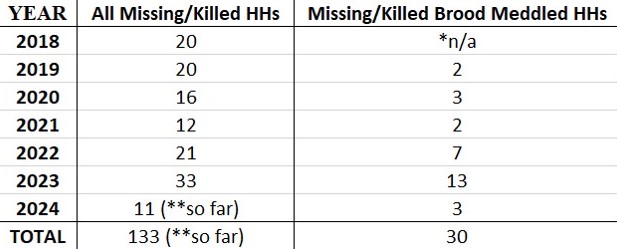
With at least 130 hen harriers gone since 2018, and 30 of those being brood meddled birds, there is no question that the grouse shooting industry is simply taking the piss. Meanwhile, Natural England pretends that ‘partnership working’ is the way to go and DEFRA Ministers remain silent.
*n/a – no hen harriers were brood meddled in 2018
‘Partnership working’ according to Natural England appears to include authorising the removal of hen harrier chicks from a grouse moor already under investigation by the police for suspected raptor persecution (here) and accepting a £75k ‘donation’ from representatives of the grouse shooting industry that prevents Natural England from criticising them or the sham brood meddling trial (see here). This is in addition to a £10k ‘donation’ that Natural England accepted, under the same terms, in 2021 (here).
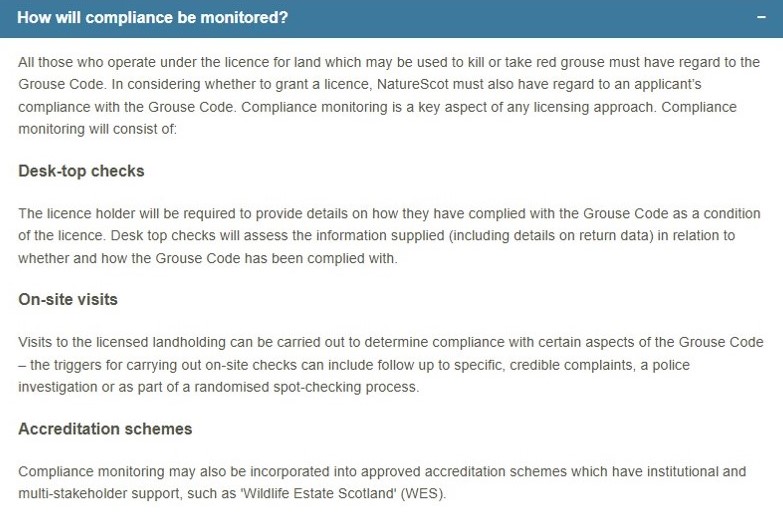
Thankfully, the Scottish Government has finally decided to act by introducing a grouse moor licensing scheme under the Wildlife Management & Muirburn (Scotland) Act 2024. The intention behind this new legislation is that grouse shooting estates could have their licences suspended/revoked if, on the balance of probability, it is shown that any raptor persecution crimes (& some other associated offences) are linked with grouse moor management on that estate.
So here’s the latest gruesome list of ‘missing’/illegally killed hen harriers since 2018. Note that the majority of these birds (but not all) were fitted with satellite tags. How many more [untagged] harriers have been killed?
February 2018: Hen harrier Saorsa ‘disappeared’ in the Angus Glens in Scotland (here). The Scottish Gamekeepers Association later published wholly inaccurate information claiming the bird had been re-sighted. The RSPB dismissed this as “completely false” (here).
5 February 2018: Hen harrier Marc ‘disappeared’ on a grouse moor in Durham (here).
9 February 2018: Hen harrier Aalin ‘disappeared’ on a grouse moor in Wales (here).
March 2018: Hen harrier Blue ‘disappeared’ in the Lake District National Park (here).
March 2018: Hen harrier Finn ‘disappeared’ near Moffat in Scotland (here).
18 April 2018: Hen harrier Lia ‘disappeared’ in Wales and her corpse was retrieved in a field in May 2018. Cause of death was unconfirmed but police treating death as suspicious (here).
8 August 2018: Hen harrier Hilma ‘disappeared’ on a grouse moor in Northumberland (here).
16 August 2018: Hen harrier Athena ‘disappeared’ on a grouse moor in Scotland (here).
26 August 2018: Hen Harrier Octavia ‘disappeared’ on a grouse moor in the Peak District National Park (here).
29 August 2018: Hen harrier Margot ‘disappeared’ on a grouse moor in Scotland (here).
29 August 2018: Hen Harrier Heulwen ‘disappeared’ on a grouse moor in Wales (here).
3 September 2018: Hen harrier Stelmaria ‘disappeared’ on a grouse moor in Scotland (here).
24 September 2018: Hen harrier Heather ‘disappeared’ on a grouse moor in Scotland (here).
2 October 2018: Hen harrier Mabel ‘disappeared’ on a grouse moor on the edge of the Yorkshire Dales National Park (here).
3 October 2018: Hen Harrier Thor ‘disappeared’ next to a grouse moor in Bowland, Lanacashire (here).
23 October 2018: Hen harrier Tom ‘disappeared’ in South Wales (here).
26 October 2018: Hen harrier Arthur ‘disappeared’ on a grouse moor in the North York Moors National Park (here).
1 November 2018: Hen harrier Barney ‘disappeared’ on Bodmin Moor (here).
10 November 2018: Hen harrier Rannoch ‘disappeared’ on a grouse moor in Scotland (here). Her corpse was found nearby in May 2019 – she’d been killed in an illegally-set spring trap (here).
14 November 2018: Hen harrier River ‘disappeared’ on a grouse moor in the Nidderdale AONB (here). Her corpse was found nearby in April 2019 – she’d been illegally shot (here).
16 January 2019: Hen harrier Vulcan ‘disappeared’ in Wiltshire close to Natural England’s proposed reintroduction site (here).
28 January 2019: Hen harrier DeeCee ‘disappeared’ in Glen Esk, a grouse moor area of the Angus Glens (see here).
7 February 2019: Hen harrier Skylar ‘disappeared’ next to a grouse moor in South Lanarkshire (here).
22 April 2019: Hen harrier Marci ‘disappeared’ on a grouse moor in the Cairngorms National Park (here).
26 April 2019: Hen harrier Rain ‘disappeared’ on a grouse moor in Nairnshire (here).
11 May 2019: An untagged male hen harrier was caught in an illegally-set trap next to his nest on a grouse moor in South Lanarkshire. He didn’t survive (here).
7 June 2019: An untagged hen harrier was found dead on a grouse moor in Scotland. A post mortem stated the bird had died as a result of ‘penetrating trauma’ injuries and that this bird had previously been shot (here).
5 September 2019: Wildland Hen Harrier 1 ‘disappeared’ on a grouse moor nr Dalnaspidal on the edge of the Cairngorms National Park (here).
11 September 2019: Hen harrier Romario ‘disappeared’ on a grouse moor in the Cairngorms National Park (here).
14 September 2019: Hen harrier (Brood meddled in 2019, #183704) ‘disappeared’ in the North Pennines (here).
23 September 2019: Hen harrier (Brood meddled in 2019, #55149) ‘disappeared’ in North Pennines (here).
24 September 2019: Wildland Hen Harrier 2 ‘disappeared’ on a grouse moor at Invercauld in the Cairngorms National Park (here).
24 September 2019: Hen harrier Bronwyn ‘disappeared’ near a grouse moor in North Wales (here).
10 October 2019: Hen harrier Ada ‘disappeared’ on a grouse moor in the North Pennines AONB (here).
12 October 2019: Hen harrier Thistle ‘disappeared’ on a grouse moor in Sutherland (here).
18 October 2019: Member of the public reports the witnessed shooting of an untagged male hen harrier on White Syke Hill in North Yorkshire (here).
November 2019: Hen harrier Mary found illegally poisoned on a pheasant shoot in Ireland (here).
November 2019: Hen harrier Artemis ‘disappeared’ near Long Formacus in south Scotland (RSPB pers comm).
14 December 2019: Hen harrier Oscar ‘disappeared’ in Eskdalemuir, south Scotland (here).
December 2019: Hen harrier Ingmar ‘disappeared’ in the Strathbraan grouse moor area of Perthshire (RSPB pers comm).
anuary 2020: Members of the public report the witnessed shooting of a male hen harrier on Threshfield Moor in the Yorkshire Dales National Park (here).
23 March 2020: Hen harrier Rosie ‘disappeared’ at an undisclosed roost site in Northumberland (here).
1 April 2020: Hen harrier (Brood meddled in 2019, #183703) ‘disappeared’ in unnamed location, tag intermittent (here).
5 April 2020: Hen harrier Hoolie ‘disappeared’ on a grouse moor in the Cairngorms National Park (here)
8 April 2020: Hen harrier Marlin ‘disappeared’ on a grouse moor in the Cairngorms National Park (here).
19 May 2020: Hen harrier Fingal ‘disappeared’ on a grouse moor in the Lowther Hills, Scotland (here).
21 May 2020: Hen harrier (Brood meddled in 2019, #183701) ‘disappeared’ on a grouse moor in Cumbria shortly after returning from wintering in France (here).
27 May 2020: Hen harrier Silver ‘disappeared’ on a grouse moor on Leadhills Estate, Scotland (here).
2020: day/month unknown: Unnamed male hen harrier breeding on RSPB Geltsdale Reserve, Cumbria ‘disappeared’ while away hunting (here).
9 July 2020: Unnamed female hen harrier (#201118) ‘disappeared’ from an undisclosed site in Northumberland (here).
25 July 2020: Hen harrier Harriet ‘disappeared’ on a grouse moor in the Yorkshire Dales National Park (here).
14 August 2020: Hen harrier Solo ‘disappeared’ in confidential nest area in Lancashire (here).
7 September 2020: Hen harrier Dryad ‘disappeared’ on a grouse moor in the Yorkshire Dales National Park (here).
16 September 2020: Hen harrier Fortune ‘disappeared’ from an undisclosed roost site in Northumberland (here).
19 September 2020: Hen harrier Harold ‘disappeared’ on a grouse moor in the Yorkshire Dales National Park (here).
20 September 2020: Hen harrier (Brood meddled in 2020, #55152) ‘disappeared’ next to a grouse moor in North Yorkshire (here).
24 February 2021: Hen harrier Tarras ‘disappeared’ next to a grouse moor in Northumberland (here)
12th April 2021: Hen harrier Yarrow ‘disappeared’ near Stockton, County Durham (here).
18 May 2021: Adult male hen harrier ‘disappeared’ from its breeding attempt on RSPB Geltsdale Reserve, Cumbria whilst away hunting (here).
18 May 2021: Another adult male hen harrier ‘disappeared’ from its breeding attempt on RSPB Geltsdale Reserve, Cumbria whilst away hunting (here).
24 July 2021: Hen harrier Asta ‘disappeared’ at a ‘confidential site’ in the North Pennines (here). We learned 18 months later that her wings had been ripped off so her tag could be fitted to a crow in an attempt to cover up her death (here).
14th August 2021: Hen harrier Josephine ‘disappeared’ at a ‘confidential site’ in Northumberland (here).
17 September 2021: Hen harrier Reiver ‘disappeared’ in a grouse moor dominated region of Northumberland (here)
24 September 2021: Hen harrier (Brood meddled in 2021, R2-F-1-21) ‘disappeared’ in Northumberland (here).
15 November 2021: Hen harrier (brood meddled in 2020, #R2-F1-20) ‘disappeared’ at the edge of a grouse moor on Arkengarthdale Estate in the Yorkshire Dales National Park (here).
19 November 2021: Hen harrier Val ‘disappeared’ in the Lake District National Park in Cumbria (here).
19 November 2021: Hen harrier Percy ‘disappeared’ in Lothian, Scotland (here).
12 December 2021: Hen harrier Jasmine ‘disappeared’ on a grouse moor (High Rigg Moor on the Middlesmoor Estate) in the Nidderdale AONB in North Yorkshire (here).
9 January 2022: Hen harrier Ethel ‘disappeared’ in Northumberland (here).
26 January 2022: Hen harrier Amelia ‘disappeared’ in Bowland (here).
10 February 2022: An unnamed satellite-tagged hen harrier ‘disappeared’ in a grouse moor dominated area of the Peak District National Park (here). One year later it was revealed that the satellite tag/harness of this young male called ‘Anu’ had been deliberately cut off (see here).
12 April 2022: Hen harrier ‘Free’ (Tag ID 201121) ‘disappeared’ at a ‘confidential site’ in Cumbria (here). It later emerged he hadn’t disappeared, but his mutilated corpse was found on moorland in the Yorkshire Dales National Park. A post mortem revealed the cause of death was having his head twisted and pulled off. One leg had also been torn off whilst he was still alive (here).
April 2022: Hen harrier ‘Pegasus’ (tagged by the RSPB) ‘disappeared’ on a grouse moor at Birkdale in the Yorkshire Dales National Park (here).
May 2022: A male breeding hen harrier ‘disappeared’ from a National Trust-owned grouse moor in the Peak District National Park (here).
May 2022: Another breeding male hen harrier ‘disappeared’ from a National Trust-owned grouse moor in the Peak District National Park (here).
14 May 2022: Hen harrier ‘Harvey’ (Tag ID 213844) ‘disappeared’ from a ‘confidential site’ in the North Pennines (here).
20 June 2022: Hen harrier chick #1 stamped to death in nest on a grouse moor in the Yorkshire Dales National Park (here).
20 June 2022: Hen harrier chick #2 stamped to death in nest on a grouse moor in the Yorkshire Dales National Park (here).
20 June 2022: Hen harrier chick #3 stamped to death in nest on a grouse moor in the Yorkshire Dales National Park (here).
20 June 2022: Hen harrier chick #4 stamped to death in nest on a grouse moor in the Yorkshire Dales National Park (here).
17 August 2022: Hen harrier (brood meddled in 2022, #R1-M1-22) ‘disappeared’ on moorland in the Yorkshire Dales National Park (here).
September 2022: Hen harrier ‘Sullis’ (tagged by the RSPB) ‘disappeared’ on a grouse moor in Cumbria (here).
5 October 2022: Hen harrier (brood meddled in 2022, #R3-M2-22) ‘disappeared’ on moorland in the Yorkshire Dales National Park (here).
10 October 2022: Hen harrier ‘Sia’ ‘disappeared’ near Hamsterley Forest in the North Pennines (here).
October 2022: Hen harrier (brood meddled in 2021, #R1-F1-21) ‘disappeared’ in the North Sea off the North York Moors National Park (here).
1 December 2022: Hen harrier male (brood meddled in 2021, #R1-M1-21) ‘disappeared’ on moorland in the Yorkshire Dales National Park (here).
7 December 2022: Hen harrier female (brood meddled in 2020, #R2-F2-20) ‘disappeared’ from winter roost (same as #R3-F1-22) on moorland in North Pennines AONB (here). Later found dead with 3 shotgun pellets in corpse.
14 December 2022: Hen harrier female (brood meddled in 2022, #R3-F1-22) ‘disappeared’ from winter roost (same as #R2-F2-20) on moorland in the North Pennines AONB (here). Later found dead with two shotgun pellets in corpse.
15 December 2022: Hen harrier female (brood meddled in 2022, #R2-F1-22) ‘disappeared’ on moorland in the Yorkshire Dales National Park (here).
30 March 2023: Hen harrier female (brood meddled in 2022, #R1-F3-22) ‘disappeared’ in Yorkshire (here). Notes from NE Sept 2023 spreadsheet update: “Final transmission location temporarily withheld at police request“.
1 April 2023: Hen harrier male (brood meddled in 2022, #R2-M1-22) ‘disappeared’ in Yorkshire (here). Notes from NE Sept 2023 spreadsheet update: “Final transmission location temporarily withheld at police request“.
April 2023: Hen harrier ‘Lagertha’ (tagged by RSPB) ‘disappeared’ in North Yorkshire (here).
April 2023: Hen harrier ‘Nicola’ (Tag ID 234078) ”disappeared’ in North Yorkshire (here).
April 2023: Untagged male hen harrier ‘disappeared’ from an active nest on RSPB Geltsdale Reserve in Cumbria (here).
April 2023: Another untagged male hen harrier ‘disappeared’ from an active nest on RSPB Geltsdale Reserve in Cumbria (here).
April 2023: Untagged male hen harrier ‘disappeared’ from an active nest in Durham (here).
4/5 May 2023: Satellite-tagged male hen harrier called ‘Rush’ ‘disappeared’ from a grouse moor in Bowland AONB in Lancashire (here).
9/10 May 2023: Hen harrier male called ‘Dagda’, tagged by the RSPB in Lancashire in June 2022 and who was breeding on the RSPB’s Geltsdale Reserve in 2023 until he ‘vanished’, only to be found dead on the neighbouring Knarsdale grouse moor in May 2023 – a post mortem revealed he had been shot (here).
17 May 2023: Satellite-tagged hen harrier called ‘Wayland’ ‘disappeared’ in the Clapham area of North Yorkshire, just north of the Bowland AONB (here).
31 May 2023: Hen harrier male (brood meddled in 2022, tag #213932, name: R2-M3-22) ‘disappeared’ in Northumberland (grid ref: NY765687) (here).
11 June 2023: Hen harrier male (brood meddled in 2021, tag #213922, name: R2-M1-21) ‘disappeared’ at a confidential site in the Yorkshire Dales National Park. Notes from the NE spreadsheet: “Final transmission location temporarily withheld at police request“ (here).
12 June 2023: Hen harrier male (brood meddled in 2020, tag #203004, name: R1-M2-20) ‘disappeared’ on a grouse moor in Co. Durham (grid ref: NY976322) (here).
6 July 2023: Satellite-tagged female hen harrier named ‘Rubi’ (tag #201124a) ‘disappeared’ on a grouse moor in Co. Durham (grid ref: NY911151) (here).
23 July 2023: Hen harrier female (brood meddled in 2023, tag #55154a, name: R1-F1-23) ‘disappeared’ on a grouse moor in Co. Durham (close to where ‘Rubi’ vanished), grid ref: NY910126 (here).
29 July 2023: Hen harrier female (brood meddled in 2020, tag #55144, name: R2-F2-20) ‘disappeared’ at a confidential site in the North Pennines. Notes from the NE spreadsheet: “Dead. Recovered – awaiting PM results. Final transmission location temporarily withheld at police request“ (here).
9 August 2023: Satellite-tagged hen harrier called ‘Martha’ ‘disappeared’ on a grouse moor (Westburnhope Moor) near Hexham in the North Pennines (here).
11 August 2023: Satellite-tagged hen harrier called ‘Selena’ ‘disappeared’ on a grouse moor (Mossdale Moor) in the Yorkshire Dales National Park (here).
11 August 2023: Hen harrier female (brood meddled in 2023, tag #201118a, name: R3-F1-23) ‘disappeared’ in Co. Durham (grid ref: NZ072136) (here).
15 August 2023: Satellite-tagged hen harrier called ‘Hepit’ ‘disappeared’ on a grouse moor (Birkdale Common) near Kirkby Stephen in the Yorkshire Dales National Park (here).
24 August 2023: Hen harrier female (brood meddled in 2023, tag #55155a, name: R1-F2-23) ‘disappeared’ at a confidential site in Northumberland. Notes from the NE spreadsheet: “Final transmission location temporarily withheld at police request“ (here).
August-Sept 2023: Satellite-tagged hen harrier called ‘Harmonia’ ‘disappeared’ in the Yorkshire Dales National Park (here).
September 2023: Hen harrier female ‘Saranyu’, tagged by the RSPB in Cumbria in June 2023, ‘disappeared’ in Durham in September 2023 (no further details available yet – just outline info provided in 2022 Birdcrime report) (here).
September 2023: Hen harrier female ‘Inger’, a female tagged by the RSPB in Perthshire in July 2022, ‘disappeared’ on a grouse moor in the Angus Glens in September 2023 (here).
15 September 2023: Hen harrier male called ‘Rhys’, tagged in Cumbria on 1st August 2023, ‘disappeared’ on a grouse moor in the Yorkshire Dales National Park. Grid ref: SD798896 (here).
24 September 2023: Hen harrier female (brood meddled in 2023, name: ‘R2-F2-23’) ‘disappeared’ in the North Pennines, grid ref: NY888062 (here).
25 September 2023: Hen harrier female (brood meddled in 2022, name: ‘R1-F4-22’) ‘disappeared’ on a grouse moor in the Yorkshire Dales National Park, grid ref: SE077699 (here).
26 September 2023: Hen harrier female called ‘Hope’, tagged in Cumbria on 21 July 2023, ‘disappeared’ next to a grouse moor in the Yorkshire Dales National Park, grid ref: SD801926 (here).
4 October 2023: Hen harrier male (brood meddled in 2020, name: ‘R1-M3-20’) ‘disappeared’ in Co Durham, grid ref: NY935192 (here).
4 October 2023: Hen harrier female (brood meddled in 2023, name: ‘R4-F1-23’) ‘disappeared’ on a grouse moor in the Yorkshire Dales National Park, grid ref: SE003981 (here).
14 October 2023: Hen harrier male called ‘Cillian’, tagged in Cumbria on 1 August 2023, ‘disappeared’ in south west Scotland, grid ref: NY051946 (here).
15 November 2023: Hen harrier female called ‘Hazel’, tagged in Cumbria on 21 July 2023, ‘disappeared’ on the Isle of Man, grid ref: SC251803 (here).
27 November 2023: Hen harrier female called ‘Gill’, tagged in Northumberland on 10 July 2023, ‘disappeared’ at a confidential location in Teeside (here).
12 February 2024: Hen harrier female called ‘Susie’, Tag ID 201122, found dead at a confidential location in Northumberland and the subject of an ongoing police investigation (here).
15 February 2024: Hen harrier female called ‘Shalimar’, tagged on the National Trust for Scotland’s Mar Lodge estate in 2023, ‘disappeared’ in suspicious circumstances on a grouse moor in the notorious Angus Glens (here).
7 March 2024: Hen harrier male (brood meddled in 2023, name R2-M1-23) found dead in Devon. According to an FoI response from Natural England in June 2024 this death is the subject of an ongoing police investigation (here).
24 April 2024: Hen harrier male called ‘Ken’, Tag ID 213849a, ‘disappeared’ in suspicious circumstances close to a grouse moor in Bowland, grid ref SD 684601 (here).
17 May 2024: Hen harrier male (brood meddled in 2023, name R2-M2-23) ‘disappeared’ in suspicious circumstances next to Middlesmoor grouse moor in Nidderdale, grid ref SE043754 (here).
25 June 2024: Hen harrier female (brood meddled in 2023, name R2-F1-23) ‘disappeared’ in suspicious circumstances on a grouse moor in Yorkshire Dales National Park, grid ref NY985082 (here).
July 2024: Hen harrier female named ‘Helius’ satellite tagged by the RSPB ‘disappeared’ in suspicious circumstances in Bowland (here).
October 2024: An un-tagged hen harrier was shot on a grouse moor by one of three gamekeepers being secretly filmed by the RSPB (here).
To be continued…….
Not one of these 130 incidents has resulted in an arrest, let alone a prosecution. I had thought that when we reached 30 dead/missing hen harriers then the authorities might pretend to be interested and at least say a few words about this national scandal. We’ve now reached ONE HUNDRED AND THIRTY hen harriers, and still Govt ministers remain silent. They appear not to give a monkey’s. And yes, there are other things going on in the world, as always. That is not reason enough to ignore this blatant, brazen and systematic destruction of a supposedly protected species, being undertaken to satisfy the greed and bloodlust of a minority of society.
And let’s not forget the response from the (now former) Moorland Association Chair (and owner of Swinton Estate) Mark Cunliffe-Lister, who told BBC Radio 4 in August 2023 that, “Clearly any illegal [hen harrier] persecution is not happening” (here).
Nor should we forget the response from the Game and Wildlife Conservation Trust’s (GWCT) Director of Policy Dr Alistair Leake who wrote a letter to the Guardian newspaper in November 2023 stating that the hen harrier brood management [meddling] scheme “is surely a shining example of human / wildlife conflict resolution that would be the envy of other countries trying to find similar solutions“ (I kid you not – here).
It remains to be seen whether DEFRA Ministers under the new Labour Government will be prepared to tolerate such blatant criminality. Watch this space.
Yesterday evening, Channel 4 News featured some incredible footage, secretly filmed by the RSPB’s investigations team, of three gamekeepers on an unnamed grouse moor in northern England, first plotting to kill, and then apparently killing, a hen harrier.
If you didn’t see it, here it is:
The footage was remarkable, not because it showed gamekeepers killing birds of prey – we’ve all seen plenty of secretly filmed footage catching gamekeepers committing these crimes.
What was different about this particular footage was the audio quality – so acutely clear that we could hear the radio comms between the three gamekeepers, one in view (the estate’s Head gamekeeper, according to the RSPB) and the other two strategically placed elsewhere on the grouse moor but taking clear direction about what not to shoot (a hen harrier with a satellite tag) and what to shoot (an untagged hen harrier, whose death would not be revealed to the wider world, or so they thought). They were also heard discussing what else they’d casually shot that afternoon – a buzzard and a raven, both protected species.
I daresay their conversation probably revealed much more, but the full audio transcript is not being released by the RSPB, at least not yet, but it may come to light either as evidence in a prosecution trial or as a stand alone release once any criminal proceedings have concluded.
I hope there is a prosecution – actually, I hope there are three of them – and three convictions with appropriately severe sentences, although I’m not holding my breath. We’ve been here many times before, with what is often clear and compelling video evidence of raptor persecution offences, only for the case to be thrown out on a technicality.
I imagine the very well paid defence lawyers are already circling the wagons, ready to argue that the video/audio evidence should be deemed inadmissible if the landowner’s permission wasn’t granted in advance of filming.
Can you imagine an abattoir owner, or the national trade body of abattoir owners, using this defence if someone had secretly filmed their employees inflicting gratuitous cruelty to animals? No, me neither because it’d not only be ludicrous and provoke justifiable public revulsion, but it could also be argued that it looked like a clear indication that the owner and the abattoir trade association condoned the crimes of those employees.
But prosecuting those three gamekeepers, important as that is, isn’t all that’s at stake in this particular case.
The bigger picture here is what that RSPB footage has exposed about the grouse shooting industry. For years, the representative bodies of that industry have insisted, time and time again, that gamekeepers are not ‘at it’, that the RSPB has fabricated the evidence, that gamekeepers are being unfairly attacked, and that any of us who report on such crimes to raise awareness are nothing more than ‘anti-shooting extremists’ whose opinions should be disregarded as ‘lies’.
In recent years, they’ve mobilised to deliver a unified propaganda missive designed to hide what they actually get up to and to instead present themselves as raptor-loving, law-abiding members of society.
I’m sure, in fact I know, that there are some decent members in that industry who abhor the illegal killing of raptors as much as many of us do. But there are not enough of them and they don’t speak out often enough against the criminals within their industry. The time is fast approaching when they may regret that.
The wider significance of this RSPB footage is what it reveals about the grouse-shooting industry’s propaganda campaign on hen harriers and the utter futility of the brood meddling sham.
It seems pretty clear to me from the footage, given the time of day and the number of harriers present, that those three gamekeepers were staking out a hen harrier roost. It’s been common knowledge for years amongst raptor fieldworkers that gamekeepers sit out on the hill to target harriers coming in to roost, and if they don’t manage to kill them when they’re flying in, then they’ll take their dogs, guns and thermal imagers through the roost site under the cover of darkness to get the job done.
I thought it was interesting that these three gamekeepers didn’t want to kill any harriers that were carrying satellite tags because that would draw unwanted attention to the estate but any without a satellite tag were fair game, because those hen harriers, if killed cleanly, could be disposed of, probably stamped into the peat, without anyone being any the wiser, so the industry can maintain the charade that hen harriers are welcome on grouse moors.
It’s clear from the high number of satellite-tagged hen harriers that have been illegally killed in recent years that not all gamekeepers are as devious as these three, but how many more gamekeepers are out there targeting non-tagged harriers? We know of 129 hen harriers (now 130 if we include the one shot in this footage) that have been killed or have vanished in suspicious circumstances since 2018. Every time another one is reported, there’ll be voices from the industry desperately trying to cast doubt about the fate of the bird in an attempt to cover up the appalling truth.
And that’s the significance of this latest footage. It delivers that appalling truth with such clarity that there’s nowhere left for the grouse shooting industry to hide.
There’s also nowhere left for Natural England to hide. The evidence couldn’t be any clearer – the brood meddling sham has not changed the attitude of the grouse shooting industry towards hen harriers and any thought that Natural England might have about rolling out brood meddling as a so-called annual ‘conservation licence’ should be as dead and cold in the water as that shot hen harrier.
Kudos to the team at Channel 4 News and especially chief correspondent Alex Thomson for their willingness, once again, to broadcast the atrocities of the grouse shooting industry with such lucidity.
Our biggest thanks needs to go to the RSPB’s Investigations Team, whose dedication, ingenuity, professionalism and sheer tenacity, despite the daily foul, vitriolic abuse they’re subjected to from the criminals and their benefactors, continues to provide us with such insight.
If you want to demonstrate your support please consider making a donation to keep the team in the field – see here.
UPDATE 24 October 2024: 130 hen harriers confirmed ‘missing’ or illegally killed in UK since 2018, most of them on or close to grouse moors (here)
UPDATE 31 October 2024: Moorland Association’s response to THAT damaging video/audio aired on Channel 4 News last week (here)
UPDATE 14 April 2025: Gamekeeper from a Yorkshire Dales grouse moor charged in relation to alleged shooting of a hen harrier (as featured on Channel 4 News last October) here
UPDATE 2 May 2025: Gamekeeper Racster Dingwall pleads not guilty to two charges relating to alleged conspiracy to kill a Hen Harrier on grouse moor in Yorkshire Dales National Park (here)
UPDATE 4 May 2025: News coverage about first court appearance of Yorkshire Dales gamekeeper Racster Dingwall in relation to alleged conspiracy to shoot a Hen Harrier (here)
UPDATE 9 September 2025: Gamekeeper Racster Dingwall back in court today for case relating to Hen Harrier shooting on a grouse moor in Yorkshire Dales National Park (here)
UPDATE 9 September 2025: Judge rules RSPB covert video surveillance is admissible evidence in prosecution of gamekeeper Racster Dingwall (here)
UPDATE 25 September 2025: More detail on court ruling accepting admissibility of RSPB’s covert surveillance in prosecution of gamekeeper accused of conspiracy to kill a Hen Harrier (here)