Sparrowhawk dies in suspected poisoning incident in North York Moors National Park

North Yorkshire Police press statement (24 August 2020)

Police urge vigilance after sparrowhawk shows symptoms of poisoning

Police are warning residents near Kirkbymoorside after a bird of prey died in circumstances that could suggest poisoning

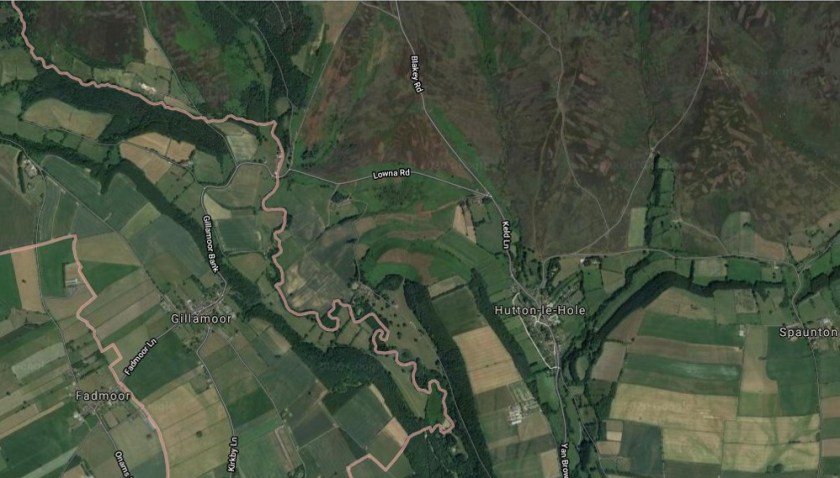
A very unwell sparrowhawk was found by members of the public in woodland, just off Gillamoor Bank, close to Gillamoor village near Kirkbymoorside in Ryedale.

The bird appeared to be experiencing seizures and clenching its talons, and was taken locally for care, but died shortly after.

The symptoms shown by the bird suggest that poisons could have been involved in its death.

Officers from North Yorkshire Police are investigating the incident, and the dead bird has been accepted onto the Wildlife Incident Investigation Scheme (WIIS) for testing to establish the cause of death.

The WIIS investigates the deaths of wildlife and pet animals and beneficial invertebrates in the UK if there is evidence to suggest that they may have been poisoned or put at risk by pesticides.

The sparrowhawk was found earlier this month in a location very close to the village of Gillamoor, in woodland which includes a public footpath.

A spokesperson for North Yorkshire Police said: “At this time, we are keeping an open mind as to the cause of death. However, toxicology results may not be known for a number of weeks, so we want to make the community aware so they can take precautions to keep pets, children and themselves safe.

Once the results of the tests are known we will update the community, but for the time being dog owners should take care to keep their dogs on leads when in this area, and remain vigilant.”

If you have any information about this incident, contact North Yorkshire Police on 101 quoting reference 12200142198.

If you find a dead animal you believe may be contaminated, do not touch it – poisons can transfer through contact with skin – and keep children and pets well away. Instead, take photographs, obtain an exact location (for example, a grid reference or a What3words location) and contact the police.

ENDS

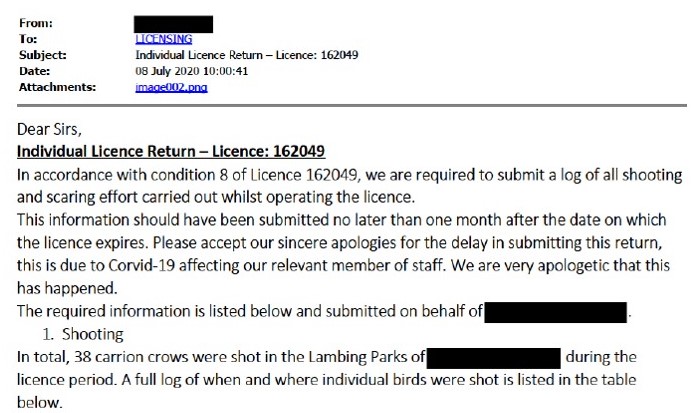
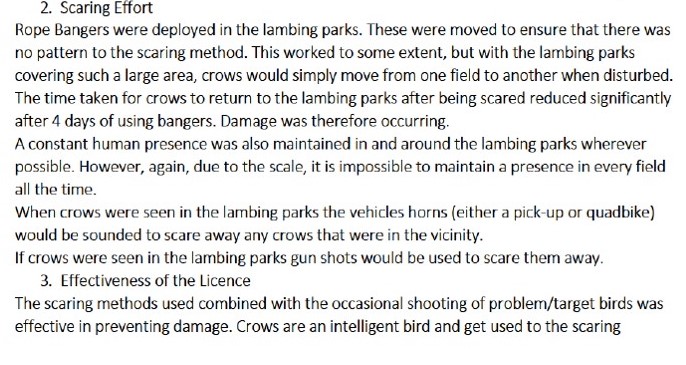
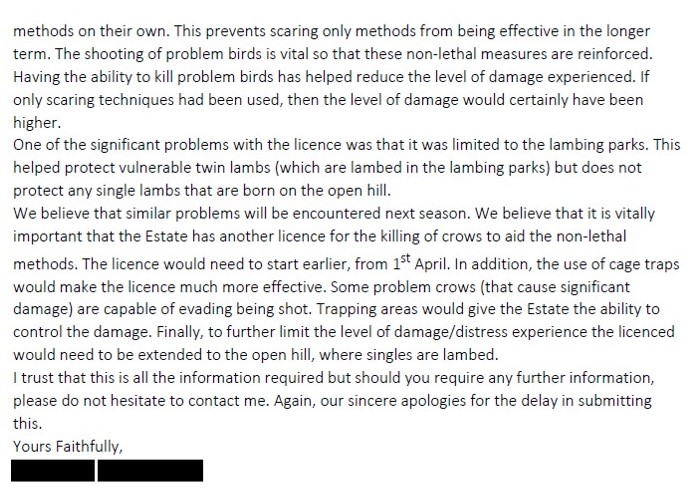
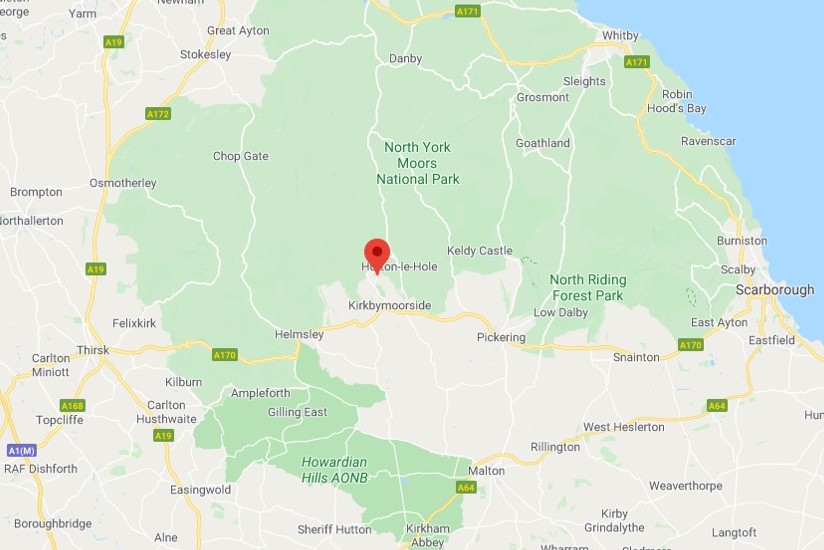
Here’s the location of Gillamoor village and the surrounding woodland, right next door to an area that appears to be managed for driven grouse shooting on the edge of the North York Moors National Park:

Obviously, the results of the toxicology tests are awaited before this incident can be confirmed as an illegal poisoning but let’s be honest, given North Yorkshire’s appalling reputation for the illegal killing of birds of prey, including inside its two National Parks, either by shooting, trapping or poisoning (e.g. see here, here, here and here), yet another victim would come as no surprise whatsoever.

TAKE ACTION

If you’re concerned about the level of illegal raptor persecution in the UK, especially the high incidence of killing that takes place on or close to driven grouse moors, you can sign this e-action which urges your politician to take note and actually do something about it.

Launched two weeks ago by three organisations: Wild Justice, the RSPB and Hen Harrier Action, so far over 84,000 people have signed up. All you need to do is enter your postcode and a polite, pre-written email will automatically be sent to your parliamentary representative asking them to stop ignoring this issue.

If you want to add your voice and give your elected politician a polite nudge, please sign up HERE and pass this link on to others.

Thank you
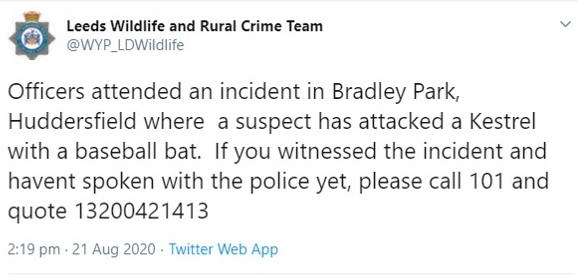
Kestrel attacked with baseball bat: West Yorkshire Police seek witnesses

West Yorkshire Police’s Wildlife & Rural Team (Leeds) attended an incident in Bradley Park, Huddersfield where someone had attacked a kestrel with a baseball bat.

The date and time of the incident is not given in this police tweet posted yesterday but police are appealing for witnesses who haven’t already come forward to please do so now.

If you saw this incident or have information relating to it please call the police on 101 and quote ref # 13200421413.


Local resident puts up £5,000 reward to find Nidderdale poisoner

In April, during lockdown, two dogs became violently ill on a dog walk near Pateley Bridge in Nidderdale, North Yorkshire.

One of them survived but sadly the other one (Molly) did not.

[Molly, photo by Chloe Ambler]

In August, North Yorkshire Police confirmed (here) that Molly had died after ingesting what has widely become known as the ‘Nidderdale Cocktail’ – a lethal combination of four pesticides (Bendiocarb, Chloralose, Isophenphos and Carbofuran) that has been identified in a number of raptor persecution poisoning crimes in the area.

The police investigation has included conducting high profile raids at several Nidderdale addresses, accompanied by poisons experts from Natural England and persecution experts from RSPB (see here). The police have also issued a warning notice (here) for local residents to take extra care, one in a long line of warnings given Nidderdale’s notorious reputation as a red kite poisoning hotspot (see here).

[Photo by Ruth Tingay]

A local resident has now stepped forward to offer a £5,000 reward for information leading to the poisoner(s). Keith Tordoff, who owns the sweet shop in Pateley Bridge, told BBC news:

It affects tourism. It affects business. Everybody’s affected by this stain on the reputation of Nidderdale and we’ve got to get the message across to these people, this has got to stop.”

You might recognise Keith’s name. It’s not the first time he’s put up a reward for information to help catch the raptor killers and he featured in a recent Channel 4 News documentary about raptor persecution on grouse moors in North Yorkshire, where he told the presenter he’d faced a backlash for speaking out, including having eggs thrown at his windows and receiving anonymous threatening letters (here).

Molly’s owner, Chloe Ambler, wants the poisoner(s) to be held to account. She told the BBC:

“[It’s] absolutely devastating. You feel like you’ve been robbed.

I need someone to be held responsible because at the end of the day we’ve lost amazing Molly.

It’s been so awful for us and I don’t see why people should get away with that.”

Howard Jones, an investigations officer at RSPB, said:

It is absolutely dreadful and this underlines what is the completely irresponsible nature of placing poison out into the countryside.

These people are doing it and know it’s illegal but they don’t care.”

TAKE ACTION

If you’re sick to the back teeth of illegal raptor persecution on driven grouse moors, please consider participating in this quick and easy e-action to send a letter to your local Parliamentary representative (MSP/MP/MS) urging action. Launched on Hen Harrier Day by Wild Justice, RSPB and Hen Harrier Action, over 58,000 people have signed up so far.

This means that over 58,000 pre-written letters complaining about illegal raptor persecution and the environmental damage caused by intensive grouse moor management, are winging their way to politicians of all parties across the UK. If you want your local politician to receive one, Please join in HERE

Thank you

Local residents paint ‘an important message’ against raptor killing in North York Moors National Park

North Yorkshire has the unenviable reputation for being the worst English county for bird of prey persecution and it’s maintained this status for years.

So how about this for a statement from local residents opposed to the ongoing criminality:

This raptor mural was painted by Nicky & Simon Johnston who live in the village of Hartoft in the North York Moors National Park.

Infuriated by reports of ongoing raptor persecution within the National Park, they decided to paint the gable end of their barn to send “an important message” that whether you are pro or anti driven grouse shooting, killing these birds is still a crime.

It’s good to see more and more local residents finding their voices to speak out (e.g. see here for some others).

The Hartoft mural was featured on Hen Harrier Day 2020 and if you missed it, here’s a short film from the Hen Harrier Day Youtube channel:

TAKE ACTION

If you’re like Nicky & Simon and you’re sick to the back teeth of illegal raptor persecution on driven grouse moors, please consider participating in this quick and easy e-action to send a letter to your local Parliamentary representative (MSP/MP/MS) urging action. Launched on Hen Harrier Day by Wild Justice, RSPB and Hen Harrier Action, over 57,000 people have signed up so far.

This means that over 57,000 pre-written letters complaining about illegal raptor persecution and the environmental damage caused by intensive grouse moor management, are winging their way to politicians of all parties across the UK. If you want your local politician to receive one, Please join in HERE

Thank you

Hobby dies after suspected shooting in Essex

Essex Police’s Rural Engagement Team have been in touch to say they’ve had reports of a Hobby being shot and unfortunately not surviving its injuries.

This is believed to have happened between 14th-15th August (last Friday – Saturday) at Essex Wildlife Trust’s Blue House Farm Nature Reserve at North Fambridge.

The incident number is #42/127418 and is being investigated by PCs Andy Long & Jed Raven from Essex Police.

Please call 101 and quote the reference number if you have any information that could help.

[Photo of the shot Hobby via Essex Police].


Seven more white-tailed eagles released on Isle of Wight

Following the recent news of a young white-tailed eagle being found dead on a grouse moor in the Cairngorms National Park, killed after ingesting a banned poison (see here), here is some some more positive news for the future of this iconic species.

Press release from Roy Dennis Wildlife Foundation (18th August 2020)

Successful second release of White-tailed eagles takes place in landmark English reintroduction project

The return of white-tailed eagles to England has reached its next key milestone with the successful release of a further 7 birds on the Isle of Wight. The five-year reintroduction programme now in its second year is led by Forestry England and the Roy Dennis Wildlife Foundation, and aims to restore this lost species after an absence of 240 years.

Over five years, up to 60 white-tailed eagles will be released with the aim of establishing an initial population of 6- 8 breeding pairs on the Isle of Wight and along the mainland coast. The first six birds were released last year. It will take several years for the young birds to become established and breeding is not expected to start until at least 2024.

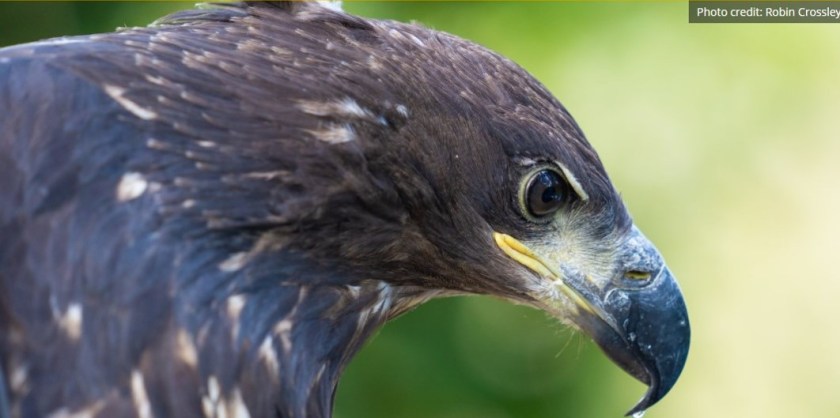
[Juvenile white-tailed eagle, photo by Robin Crossley]

Each bird is fitted with a satellite tracker to enable the team to monitor and track their progress. Evidence from similar reintroductions suggests that the rate of survival to breeding age is around 40%, and four of the six birds released last year have survived and are doing well.

As they mature the released white-tailed eagles have, as expected, begun to explore widely. Their journeys have taken them across much of England as they explore and learn about the landscape for the first time. Between these explorations, the birds have regularly been seen fishing for Grey Mullet in the estuaries of the Solent and observed in the skies over the Isle of Wight.

Bird enthusiasts and members of the public across the country have supported the project by reporting sightings of the eagles and sharing these via @seaeagleengland on social media and via our online sightings form.

Roy Dennis, Founder of the Roy Dennis Wildlife Foundation said: “We are delighted that we have been able to release this next group of birds this year as planned. We have seen from other reintroduction programmes that returning lost species offers real benefits for the health of our environment, and to people and local economies. This is particularly important at these difficult times as people rediscover nature and its benefits.”

“It has been very exciting to follow the exploratory flights of the birds we released last year and to see how they are learning to live successfully in the English landscape. We have been particularly encouraged that the birds have been catching Grey Mullet in the estuaries of the Isle of Wight because we believe this will become an important food source as the population develops, and is one of the key reasons we considered the Isle of Wight and the South Coast suitable for a reintroduction.”

“A project like this relies upon the involvement and support of many, many people. I would like to thank everyone who has helped us again this year including the local organisations and individuals on our steering group. We look forward to the day when these amazing birds become a regular feature in the skies above us.”

[One of this year’s juvenile eagles at the release pen. Photo via Roy Dennis Wildlife Foundation]

Steve Egerton-Read, White-Tailed Eagle Project Officer, Forestry England, said: “We are now a year on from the release of the first white-tailed eagles and it’s very encouraging to see them doing well. We have been following their movements closely using the satellite monitoring, field visits and reports from members of the public.”

“It will be fascinating to see how the young birds released this summer explore and how they interact with the slightly older birds released in 2019. Thank you to everyone who continues to support us by reporting observations and photos of the birds as they travel around the country, we are always keen to hear about your amazing sightings.”

The reintroduction of Britain’s largest bird of prey is being conducted under licence from Natural England, the Government’s wildlife licensing authority. All of the young birds involved in the project are collected under a Scottish Natural Heritage licence from the wild in Scotland and brought to the Isle of Wight.

Natural England Chair, Tony Juniper, said: “Today is an important landmark for the conservation of these spectacular birds, and I am delighted that we have played our part by licensing this trailblazing project. A key condition of our licence was the involvement of stakeholders and ongoing monitoring, and Roy Dennis and his team have worked hard to involve local groups which has been critical to the success of this project.”

“It’s been thrilling to see last year’s birds travel across England. I hope this project sets a blueprint for further successful species re-introductions in England, which are a vital part of achieving our overarching goal for nature conservation and recovery.”

The Isle of Wight was chosen as the location to reintroduce the white-tailed eagles, also known as sea eagles, as it offers an ideal habitat for these coastal loving birds with plentiful sources of food in the surrounding waters. It also offers a central position on the south coast allowing the birds to disperse and link with other populations in Scotland, Ireland and on the continent.

The project is also expected to make a significant contribution to the local economy. A similar scheme on The Isle of Mull was found to have boosted its local economy by up to £5 million a year, demonstrating the interest in this iconic bird.

A comprehensive feasibility study and public surveys were conducted prior to reintroduction and a steering group made up of local organisations and members of the community are helping to guide the project.

ENDS

10 year old boy tells First Minister he’s worried about golden eagles ‘going missing’

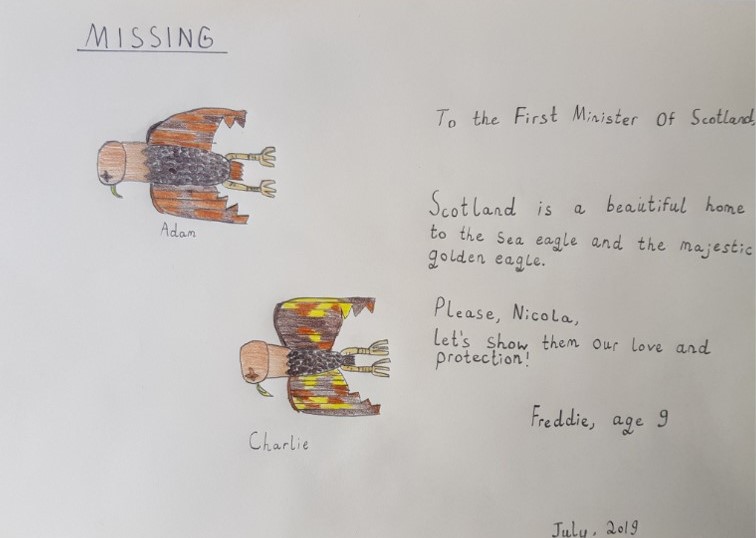
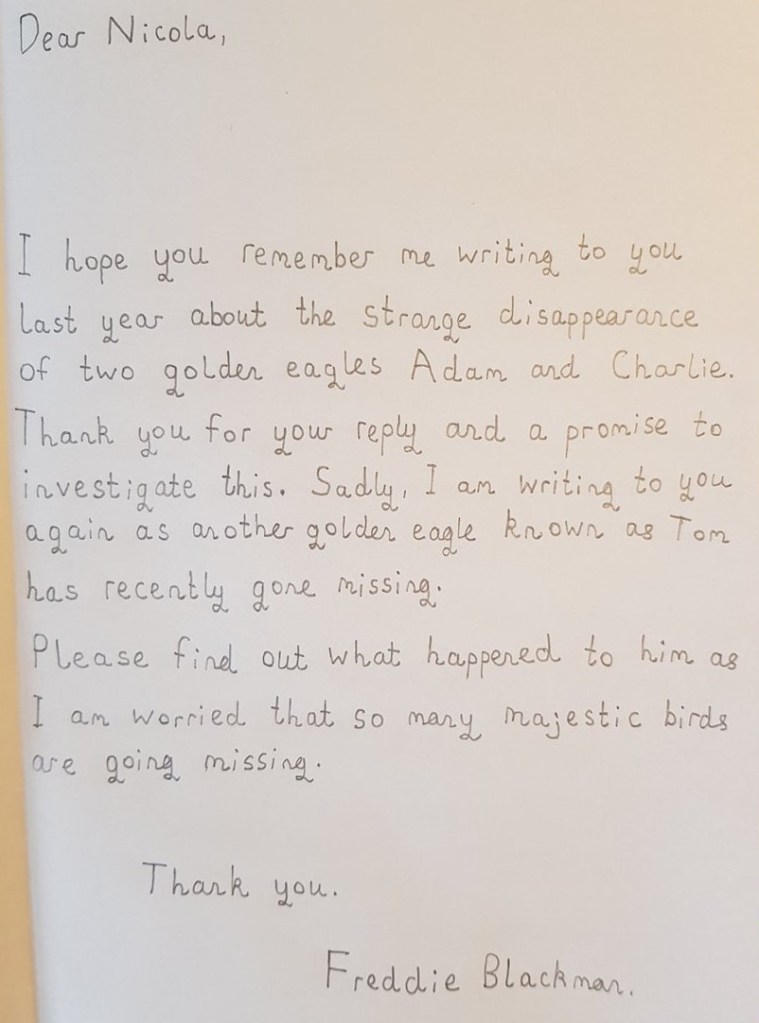
Last year, a nine-year-old boy called Freddie Blackman was so upset about the suspicious disappearance of two satellite-tagged golden eagles (Adam & Charlie) that vanished on a grouse moor in Strathbraan (see here) that he, and many others, wrote to First Minister Nicola Sturgeon urging her and her Government to do more to protect Scotland’s eagles (see here, here, here, here).

Here’s the letter Freddie wrote to Nicola Sturgeon last year:

The First Minister eventually responded to Freddie and wrote him a letter (here) telling him, ‘I believe that the Scottish Government must do everything it can to look after our eagles’ and then going on to fob him off telling him she was waiting for the Werritty review to be delivered.

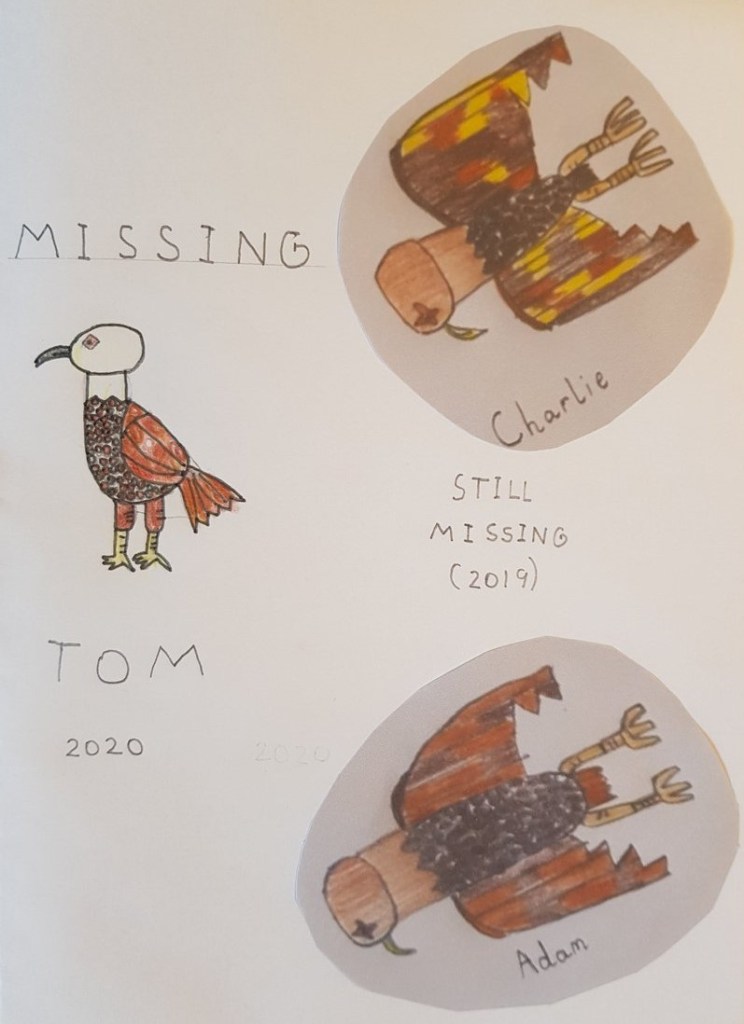
Fast forward 12 months and Freddie is now a year older, another satellite-tagged golden eagle (Tom – see here) has gone ‘missing’ in suspicious circumstances on a Scottish grouse moor, in the same raptor persecution hotspot as where Adam and Charlie disappeared, and we’re still waiting for the Scottish Government to respond to the Werritty review, which cost taxpayers £86,000 and which has been sitting on Ministers’ desks since November 2019 (nine months ago).

Ten-year-old Freddie has just sent another card to the First Minister:

How will the First Minister respond this time?

How embarrassing must it be to have a nine and now ten-year-old calling you out on your failure to protect one of your country’s most iconic species?

How many more letters will Freddie have to write and how old will he be when the Scottish Government finally takes effective action against those who continue to kill these eagles?

YOU CAN TAKE ACTION

If you’re sick to the back teeth of illegal raptor persecution on driven grouse moors, please consider participating in this quick and easy e-action to send a letter to your local Parliamentary representative (MSP/MP/MS) urging action. Launched just nine days ago by Wild Justice, RSPB and Hen Harrier Action, over 53,000 people have signed up so far.

This means that over 53,000 pre-written letters complaining about illegal raptor persecution and the environmental damage caused by intensive grouse moor management, are winging their way to politicians of all parties across the UK. If you want your local politician to receive one, Please join in HERE

Thank you


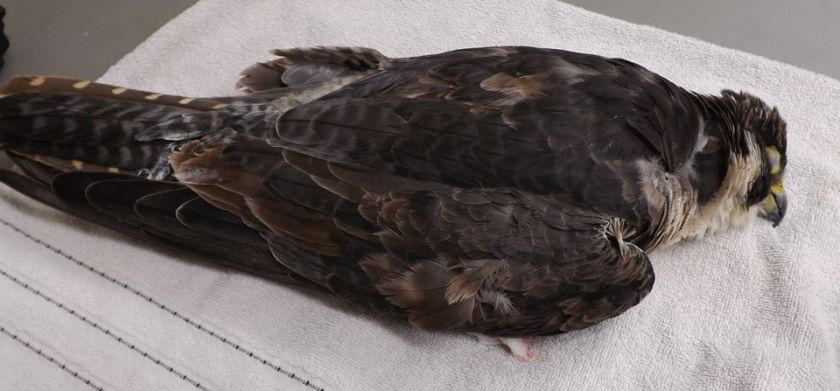
Shot peregrine euthanised in Gloucestershire

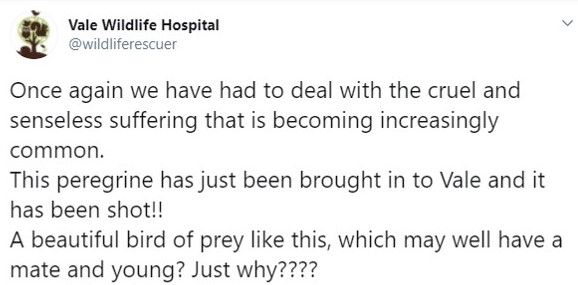
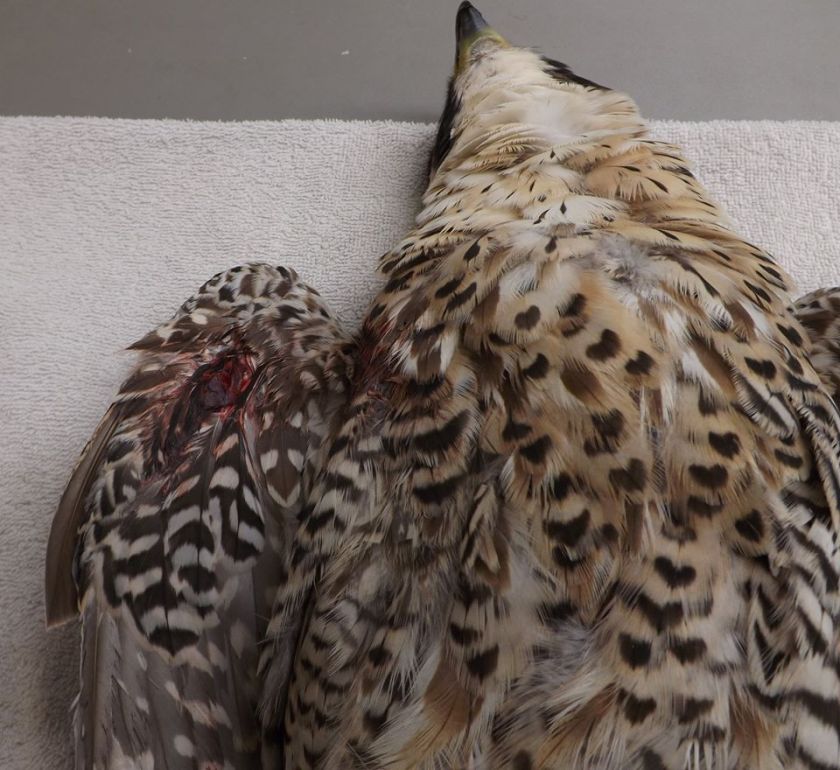
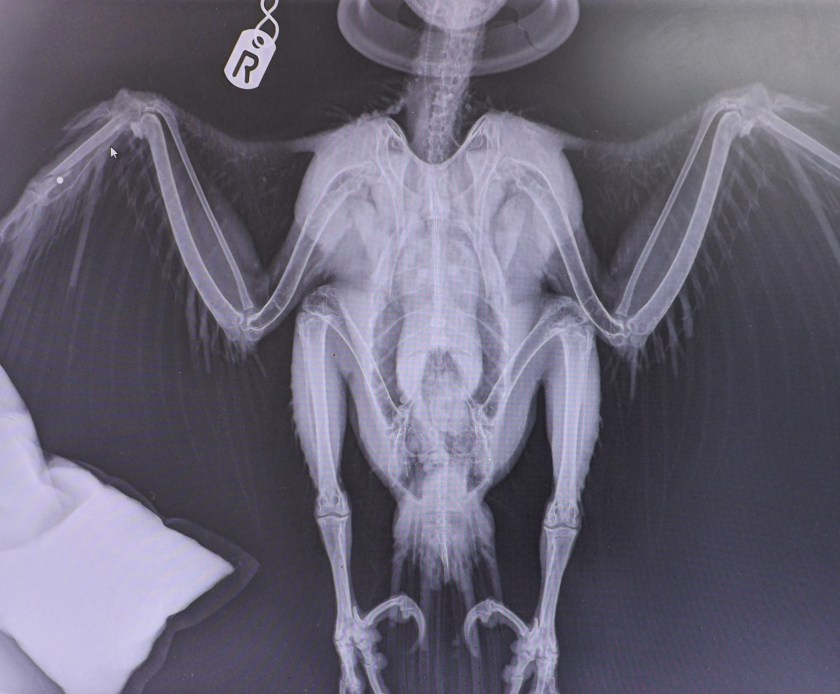
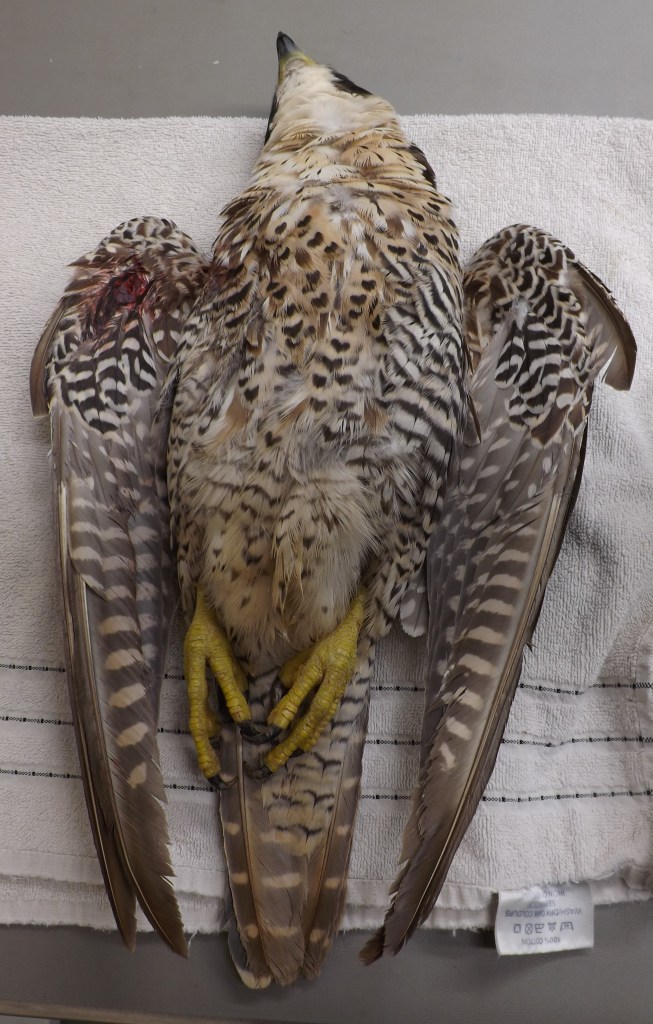
A critically-injured peregrine has been euthanised after an x-ray revealed a shotgun pellet lodged in its wing, causing a catastrophic break.

[All photographs from Vale Wildlife Hospital]

The wounded bird was taken to Vale Wildlife Hospital near Tewkesbury, Gloucestershire today. There are no further details yet about where this illegally-shot peregrine was picked up.

Anyone with information please contact the Police on Tel: 101, or the RSPB Raptor Crime Hotline on Tel: 0300 999 0101 or anonymously Crimestoppers on Tel: 0800 555 111.


‘Everywhere we go there are dead animals’ – local residents detest grouse moor management

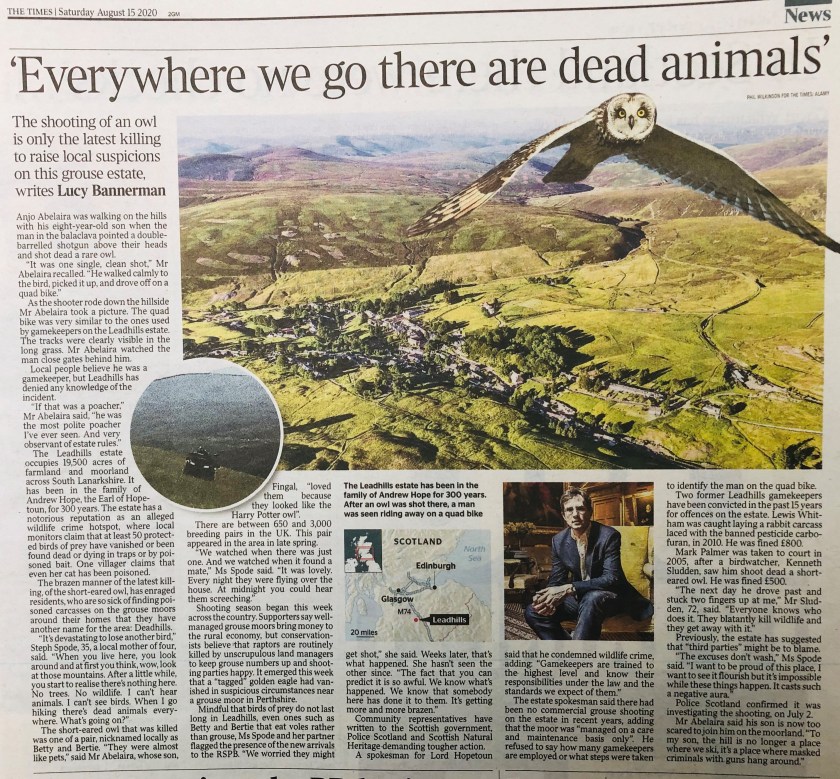
There’s a very interesting article in The Times today, debunking the picture often painted by the grouse shooting industry of moorland community harmony – a rural idyll where local residents are deliriously enthralled by the activities of the local grouse moor managers and thankful for the boost that grouse shooting brings to the local economy, without which the local community would apparently collapse. Oh, and it’s where unicorns live, too.

If the Campaign for the Protection of Moorland Communities (C4PMC) wasn’t so busy astroturfing for the grouse shooting industry, this story (below) is the one it should be telling, instead of spending thousands of pounds on Facebook to promote abusive and personal attacks on decent, hardworking conservationists who are simply seeking grouse moor reform (e.g. see here).

Today’s article in The Times comes on the back of last week’s news (here) that Police Scotland are investigating alleged wildlife crimes on the Leadhills Estate in South Lanarkshire (yes, that place again), including the suspicious disappearance of a satellite-tagged hen harrier and the shooting of a(nother) short-eared owl. The estate has denied all responsibility, obvs.

Written by journalist Lucy Bannerman, it takes a slightly different angle and focuses on the impact on local residents of having to live in the shadow of an estate as notorious as Leadhills.

Bannerman writes:

The estate has a notorious reputation as an alleged wildlife crime hotspot, where local monitors claim that at least 50 protected birds of prey have vanished or been found dead or dying in traps or by poisoned bait. One villager claims that even her cat has been poisoned.

The brazen manner of the latest killing, of the short-eared owl, has enraged residents, who are so sick of finding poisoned carcasses on the grouse moors around their homes that they have another name for the area: Deadhills.

“It’s devastating to lose another bird”, Steph Spode, 35, a local mother of four, said. “When you live here, you look around and at first you think, wow, look at those mountains. After a little while, you start to realise there’s nothing here. No trees. No wildlife. I can’t hear animals. I can’t see birds. When I go hiking there’s dead animals everywhere. What’s going on?“‘

It’s no surprise that there are ‘dead animals everywhere’ – a report published just yesterday (here) by the League Against Cruel Sports, as part of the Revive Coalition for Grouse Moor Reform, indicates that up to a quarter of a million animals are killed on Scottish grouse moors every year, many in the most gruesome and barbaric way imaginable.

Here’s a video we made last year with Chris Packham about the miserable death of a hen harrier, a supposedly protected species, that was found caught in an illegally-set trap at Leadhills last year:

The residents of Leadhills are not the only moorland community to speak out. Increasingly we’ve been hearing from local residents across the uplands who are finding their voices and speaking out against the damage this industry brings to their door. First we heard from local communities in the Yorkshire Dales National Park (see here and here), then from a community in the Nidderdale Area of Outstanding Natural Beauty (see here), and then from a local community in the North York Moors National Park (here).

And then there are those local communities who want to buy the moors and transform and restore them in to something for the whole community, not just for those who come to kill birds for a bit of a laugh.

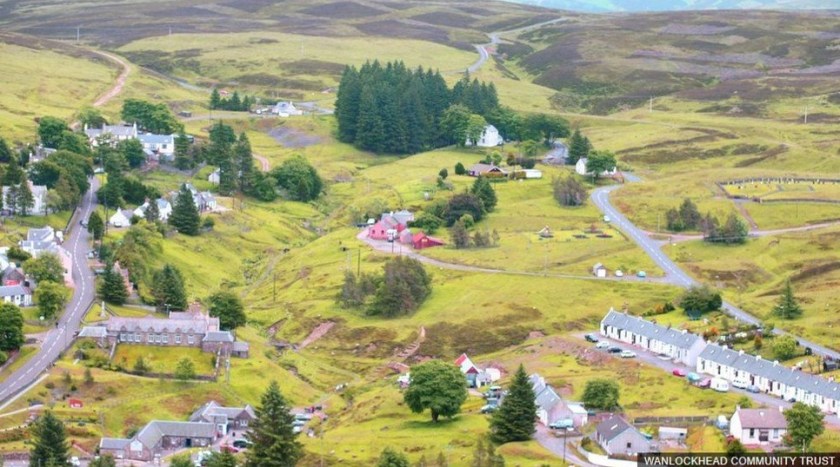
The Langholm community is currently attempting to buy part of Langholm Moor in Dumfries & Galloway from the Duke of Buccleuch (e.g. see here) and now the Wanlockhead Community Trust has voted (see here) to buy another part of Buccleuch’s moorland at Wanlockhead, the neighbouring village to Leadhills.

If you read the Wanlockhead Community Trust feasibility study you’ll see there’s not much interest in maintaining the moors for grouse shooting.

Download the report here: Wanlockhead Community Trust Buyout Feasibility Study April 2020

TAKE ACTION

If you’re sick to the back teeth of illegal raptor persecution on driven grouse moors, please consider participating in this quick and easy e-action to send a letter to your local Parliamentary representative (MSP/MP/MS) urging action. Launched just a week ago by Wild Justice, RSPB and Hen Harrier Action, over 43,000 people have signed up so far.

This means that over 43,000 pre-written letters complaining about illegal raptor persecution and the environmental damage caused by intensive grouse moor management, are winging their way to politicians of all parties across the UK. If you want your local politician to receive one, Please join in HERE

Thank you


Disappearance of golden eagle Tom prompts Parliamentary motion

Earlier this week we blogged about the suspicious disappearance of Tom, a golden eagle we’d been satellite-tracking since last year with Chris Packham and who vanished in to thin air, along with his fully-functioning satellite tag, with his last known location being on a driven grouse moor in Strathbraan, a well-known raptor persecution hotspot (see here).

[Golden eagle Tom at approx 8 weeks old having his satellite tag fitted in 2019 under expert licence. Photo Raptor Persecution UK]

We produced a video about Tom’s suspicious disappearance and this, along with the RPUK blog on his disappearance, received good media coverage both online and in the printed media throughout the week, even though a journalist at The Times simply cut and pasted the text from the RPUK blog, regurgitated it in an article and attributed this to ‘a spokesman from RPUK‘. Ha!

Here’s the video for those who may have missed it:

And now Tom’s disappearance has prompted a Parliamentary motion, lodged by Labour MSP Alex Rowley as follows:

It’s not just Tom’s disappearance that has led to this. As you can see, Alex also mentions the suspicious disappearance of seven other satellite-tagged golden eagles in the same area, the disappearance of another satellite-tagged hen harrier on another Scottish driven grouse moor (here), the illegal poisoning of a satellite-tagged white-tailed eagle found dead on another Scottish grouse moor (here), and the 43 hen harriers that have either gone missing or have been killed in the UK in the last two years (here).

He’s done his homework.

For a Parliamentary Motion to be considered for debate, at least 30 MSPs from at least two different political parties need to support it. So far, Alex’s motion has attracted the support of 17 MSPs, representing Labour, SNP, Greens, Liberal Democrats and one independent.

If your MSP’s name isn’t on the list as a supporter, please email them and prompt them to sign up. If they refuse, ask them why. Put them on the spot and most importantly of all, let them know that this issue matters to you.

If you don’t know who your MSP is you can find out here

If you want to do more, and if you’re sick to the back teeth of illegal raptor persecution on driven grouse moors, please consider participating in this quick and easy e-action to send a letter to your local Parliamentary representative (MSP/MP/MS) urging action. Launched last Saturday by Wild Justice, RSPB and Hen Harrier Action, over 41,000 people have signed up so far.

This means that over 41,000 pre-written letters complaining about illegal raptor persecution and the environmental damage caused by intensive grouse moor management, are winging their way to politicians of all parties across the UK. If you want your local politician to receive one, Please join in HERE

Thank you