New independent report reveals locations of poisoned raptors in northern England, 2015-2023 – information that has been suppressed by government

Press release from independent group, Wildlife Poisoning Research UK, 15th November 2025.

WHERE THE POISONED BODIES WERE FOUND!

Many people probably imagine that the use of poisons to kill protected wildlife is something out of the pre-Victorian era, like cock fighting and bull baiting.  However, this senseless and cruel slaughter is still happening in Britain, with many mammals and birds of prey suffering horrific and agonising deaths, even though this practice has been banned since 1911.

It is a crime which not only kills wildlife, but also kills much loved family pets and can even kill people.  This is a wildlife crime that frequently occurs on remote and private land where the chance of detection is very low and most victims are never found.  Those cases which are reported and then investigated must be considered to be a very small tip of a very large ‘iceberg’ of sickening rural felonies.

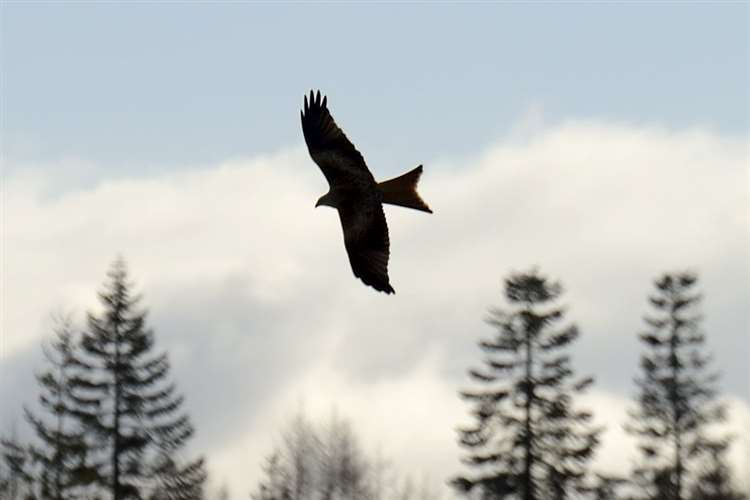
An illegally poisoned Red Kite (photo via WPRUK)

In 2017, in an attempt to combat this wildlife crime, the UK Government initiated a project to map incidents of illegal bird poisonings.  This provided information to the public and other interested parties as to where these crimes were taking place and it was intended that these maps would be updated annually to “provide an invaluable intelligence tool to help fight crimes against birds of prey” (Defra press release 2017).

It now appears that these wildlife poison crime maps have not been updated and there is very little governmental action informing the public that these crimes are still occurring and wildlife is still being deliberately poisoned.

Wildlife Poisoning Research UK (WPRUK) works to place information about the environmental impact of pesticides, biocides and other toxic chemicals into the public domain so that the general public and the media have a better understanding of this situation.  Data on cases of deliberate poisoning of birds has been obtained using Freedom of Information requests.  This has enabled WPRUK to produce maps showing where these poisoned birds have been found.  This is information which the Government, for whatever reason, has now apparently declined to put into the public domain.

WPRUK has now released a report pinpointing where the poisoned birds have been found in Northern England.  Future maps will cover other parts of the UK.

Between 2015 to 2023, the bodies of 73 legally protected birds, mostly birds of prey, were found in Northern England.  These birds had been illegally and deliberately killed using poisons; 31 birds being Schedule 1 Wildlife and Countryside Act (1981) species, which have the highest level of protection.  Due to the very small chance of poisoned birds being found, the real numbers of birds being killed by this criminal activity is likely to be far higher.  To date, no one has been convicted for killing any of these 73 birds.

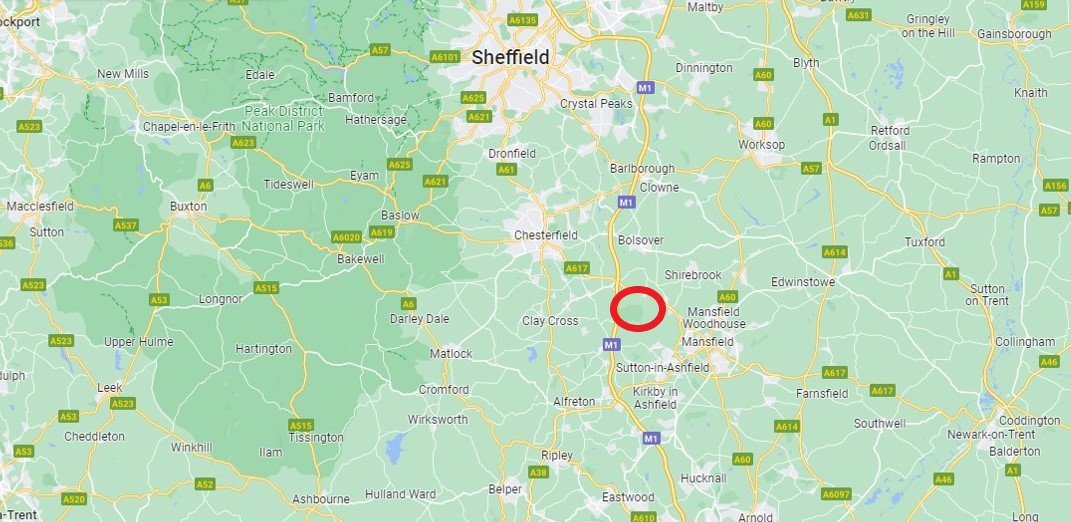
There were two areas in Northern England where particularly high numbers of poisoned birds were found.  These were Nidderdale in North Yorkshire and the Glapwell area in Derbyshire.

Releasing the report, Dr Ed Blane from WPRUK said: “The fact that 114 years after this sickening practice was banned, individuals are still poisoning our wildlife is deeply disturbing.  People visit the countryside to enjoy nature and they will be truly alarmed to learn that poison is still being used to kill wildlife.”

If this continues it might severely impact on plans to re-introduce white tailed eagles to Northern England.  In the Southern England eagle project, at least 2 birds have been killed by poison.

A comment from Steve Downing Chairman Northern England Raptor Forum:

We proudly, and rightly, identify ourselves as a nation of nature lovers.  Every year tens of thousands of tourists, both domestic and foreign, visit the historic and beautiful countryside throughout the North of England to enjoy the scenery and stunning birds of prey that it supports.  Collectively they spend £millions supporting our rural communities.  What the visitors don’t see is the underbelly of criminality in the countryside where the barbaric practice of deliberately poisoning raptors persists today, as highlighted by the bodies found in Nidderdale, North Yorkshire and around Glapwell in Derbyshire.  Thanks to Ed, a spotlight is being shone on this shocking pernicious activity raising public awareness of the danger presented by these lethal poisons, both to themselves and local birds of prey.

Bob Elliot CEO of Wild Justice said:

Illegal wildlife poisoning hasn’t faded into history; it’s still being carried out in the shadows with very little oversight.  These findings show that wildlife species are still being killed with impunity, and the public is being kept in the dark about the scale of it.  Without transparency, enforcement and the political will to confront those responsible, this criminal abuse of our countryside will continue unchecked.

ENDS

The report can be read / downloaded here:

29 ‘missing’ Hen Harriers & nearly 40 birds of prey poisoned, trapped or shot in Yorkshire Dales National Park since 2015

Media attention has been drawn to the Yorkshire Dales National Park this week, following the RSPB’s press release on the suspicious disappearance of a satellite-tagged Hen Harrier named ‘Sita’.

When it comes to the illegal killing of birds of prey, the Yorkshire Dales National Park is rarely out of the news, and that’s hardly surprising when 29 satellite-tagged Hen Harriers have gone ‘missing’ there and 39 other raptors have been found poisoned, trapped or shot there since 2015, including Peregrines, Hen Harriers, Red Kites and Buzzards.

Yorkshire Dales National Park. Photo by Ruth Tingay

Given these appalling figures, the RSPB has described the Yorkshire Dales National Park as a ‘no-fly zone for birds of prey’.

High profile cases within the National Park have included the conviction of a gamekeeper who was filmed shooting two Short-eared Owls on a grouse moor and then stamping the corpse of one of them into the peat and shoving the other one inside a drystone wall (here); a gamekeeper filmed on a grouse moor using a tethered Eagle Owl to attract Buzzards that he then shot and killed from close range (here); the stamping to death of four Hen Harrier chicks in a nest on a grouse moor (after obscuring the camera pointing at the nest, here); the grisly death of a Hen Harrier caused by his head and leg being pulled off whilst he was still alive (here); and three individuals caught on camera on a grouse moor discussing the shooting and killing of a Buzzard and a Raven before apparently shooting and killing a Hen Harrier (here) – one gamekeeper has been charged with conspiracy to kill a Hen Harrier, he has pleaded not guilty and his case will proceed to trial in January 2026 after his barrister failed in his attempt to have the case thrown out on a legal technicality.

The Yorkshire Dales National Park Authority has also long recognised the extent of this criminal activity and has responded to public concern (e.g. see here and here). Earlier this year the Park Authority terminated its five-year ‘partnership’ with the grouse shooting industry to tackle these crimes, after recognising the futility of this endeavour. Two conservation organisations (the RSPB and the Northern England Raptor Forum) had already walked away from the sham in 2023 and 2024 respectively.

In an article published a couple of days ago by the Craven Herald & Pioneer, Mark Corner, a member of the Yorkshire Dales National Park Authority is quoted saying the continued illegal killing of raptors in the Park was “a crying shame“.

He added: “As the member champion for the natural environment, I’m personally embarrassed that we are the worst spot in the country in terms of the illegal killing of birds.”

In the same article, there’s an hilarious quote from the Yorkshire Dales Moorland Group, which is one of a number of regional groups set up in 2015 to represent local grouse moor owners and their gamekeepers in an attempt to counter the bad publicity about ongoing illegal raptor persecution. I think that members of most of these regional moorland groups have been, or still are, the subject of police investigations into illegal raptor persecution.

A spokesperson for the Yorkshire Dales Moorland Group reportedly told the reporter that ‘hen harrier numbers were at a 200-year high across the uplands’.

That’s simply not true – Hen Harrier breeding attempts on grouse moors across the north of England have been in sharp decline over the last two years – the only areas where they remain stable is on land managed for conservation rather than for Red Grouse shooting.

According to its FaceBook page, the Yorkshire Dales Moorland Group claims to have “around 100,000 acres of managed uplands here in the Dales where the estates are members of this group (virtually all of the moors)“.

Why is it then, there were only two Hen Harrier breeding attempts in 2025 across the whole of the Yorkshire Dales and neighbouring Nidderdale? I’d like the Moorland Group to provide a plausible explanation for these absences.

The Yorkshire Dales Moorland Group also told the Craven Herald reporter:

Our keepers have and will always assist the police in searches for missing persons, lost dogs or missing birds. Tag failure is rare but not unheard of.

The default accusation that persecution is responsible is regrettable. The conservation work undertaken by moor keepers is commendable as can be seen by the abundance of raptors and other rare species in the Dales“.

What “abundance of raptors” are those then? All the dead ones? Or just the ones that are allowed to breed because they don’t pose any threat to Red Grouse stocks?

And if these grouse shooting estates are so keen to help the police, how many of them signed the letter last year agreeing to allow the police to enter the land and use equipment for the purposes of crime prevention and detection? Did any of them sign it?

And if these gamekeepers are so keen to help police investigations, how many of them have given ‘no comment’ responses when interviewed about suspected raptor persecution crimes on these moors? Maybe it’d be quicker to count how many gamekeeper didn’t give a ‘no comment’ interview.

The article also quotes Alex Farrell, Head of Uplands at BASC:

As a committed conservation organisation, we are taking progressive steps with our partners to oversee the continued recovery of hen harriers.

Figures released by Natural England today show that collaborative effort resulted in 106 fledged hen harrier chicks in England this year – up from 80 last year“.

What “progressive steps” is BASC taking?

Oh, and those figures released by Natural England show that the small increase in Hen Harrier fledging rates are in spite of, not because of, any so-called ‘collaborative effort’ from the grouse shooting industry.

The data couldn’t be any clearer (see here).

Perspective required as National Trust celebrates two successful hen harrier nests in Peak District National Park

The National Trust is celebrating two successful hen harrier breeding attempts in the Peak District National Park this year, in what it describes as ‘the most successful year for hen harrier breeding in the Peak District for over a decade‘.

Here is a press release issued by the National Trust this morning:

National Trust records most successful year for hen harrier breeding in the Peak District for over a decade

Seven hen harriers have successfully fledged from multiple nests on National Trust land in the High Peak, making 2022 the most successful year for hen harrier breeding on land cared for by the conservation charity in the Peak District for over a decade, despite two nest failures earlier this year.

[Hen harrier chicks, photo by Tim Melling]

The National Trust, RSPB and Peak District Raptor Group have been working closely together to encourage more birds of prey to live and thrive in the Peak District, by protecting birds currently living there, whilst also creating rich feeding and nesting grounds.

Work undertaken by the Trust includes cutting heather to allow a more diverse range of moorland plants such as sphagnum moss, bilberry and cottongrass to grow, which helps attract the different insects and small mammals which the birds rely upon for food. The charity is also working closely with tenants to ensure their land management practices support the vision for more birds of prey in the area.

Craig Best, General Manager of the National Trust in the Peak District said:A great deal of work has gone into encouraging more breeding pairs of these majestic birds to the Peak District, so this is brilliant news.

The presence of the birds indicates a plentiful and healthy food source, which shows the work we have done so far to improve the landscape is starting to provide ideal conditions for different species to thrive. However, we want to see more of these important birds of prey in the High Peak, as they play an important role in creating the right ecological balance in the landscape. That is why it is crucial that we continue to work together to achieve our aim of growing the population of birds of prey in the area and doing everything we can to prevent persecution.”

Mark Thomas, Head of investigations at the RSPB said:

Despite the suspicious loss of two hen harrier nests in this area earlier in the season [Ed: see here] we are delighted that further pairs have bred successfully and raised youngsters. This is a validation of the National Trust’s Moorland Vision, and a testament to the partnership work being undertaken to ensure hen harriers and other species flourish in our uplands. Hen harriers are protected by law – yet a government study in 2019 identified criminal persecution by humans as the main factor suppressing the UK hen harrier population. The Dark Peak is sadly one of the worst areas in the UK for raptor persecution, for this reason we will be keeping a close eye on the continuing survival of the chicks that have been tagged this year.”

To help monitor the birds progress and to aid understanding of the species, the birds have also been fitted with tracking tags by the RSPB and Natural England. The National Trust also works with the local Raptor Monitoring Group.

Mike Price from the Peak District Raptor Monitoring Group said: A mild winter, good prey availability and the fine weather during the nesting period have no doubt all contributed to what appears to be a successful year for breeding Hen Harriers both locally and nationally. It is another step along the journey to get a self-sustaining breeding population of Hen Harriers established in the area. Now the birds have fledged, the birds will face further threats, so we need to continue to work together to remain vigilant and do all we can to protect them.

Visitors and local residents can help with conservation efforts by staying on footpaths and keeping dogs on leads during ground nesting bird season, which lasts from the beginning of March to the end of July.

ENDS

When two nests inside a National Park are deemed a cause for celebration, and they amount to ‘the most successful breeding year for over a decade‘, you get a good idea of just how dire the situation is for hen harriers inside a National Park that has sufficient habitat and prey to host many, many more pairs.

The last time two hen harrier nests were successful on National Trust land in the Peak District National Park was back in 2006, fledging ten chicks. But those two nests were only ‘successful’ because a team of 40+ volunteers provided 24-hour-round-the-clock protection and supplementary feeding after the two breeding males ‘disappeared’ in suspicious circumstances (see here). Shockingly, they were only the second and third pairs to nest there in 140 years!

The National Trust was praised in 2016 when it terminated the shooting lease on one of its moors after video evidence emerged of an armed gamekeeper laying in wait next to a decoy hen harrier, presumably with the intention of luring in a live harrier and shooting it at close range (see here and here).

But despite that bold move by the National Trust, the suspected persecution of hen harriers in this National Park continues.

In 2018, a young satellite-tagged hen harrier called Octavia ‘disappeared’ in suspicious circumstances on a privately-owned grouse moor in the Peak District National Park (here).

In 2021, a displaying pair of hen harriers ‘disappeared’ in suspicious circumstances on another privately-owned grouse moor in the Peak District National Park (see here).

In February this year, another satellite-tagged hen harrier ‘disappeared’ in suspicious circumstances on another privately-owned grouse moor, neighbouring the grouse moor where Octavia vanished 4 years earlier (see here).

In May this year, two active hen harrier nests were abandoned on a National Trust-leased moor after the suspicious disappearance of two more breeding males, leaving ten eggs to chill and die (see here).

So actually, the news that two hen harrier nests have been successful this year on National Trust land inside the Peak District National Park goes against all the odds and for that, the National Trust, the Peak District Raptor Monitoring Group and the RSPB deserve to celebrate. However, as is emphasised in the National Trust press release, the seven fledglings are still not safe and face ongoing threats both inside the National Park and beyond.

Let’s see how long it takes before they feature on this sobering list of 70 (so far) hen harriers illegally killed or vanished in suspicious circumstances in the UK since 2018.

UPDATE 24th August 2022: Excellent BBC regional news coverage of hen harrier persecution & conservation in Peak District National Park (here)

General Licence restriction imposed on Moy, a grouse-shooting estate, after discovery of poisoned red kite

Press release from NatureScot, 21st June 2022:

General Licence restricted on Highland estate

NatureScot has restricted the use of General Licences on Moy Estate for three years

The decision was made on the basis of evidence provided by Police Scotland of wildlife crime against birds.

This evidence included a poisoned red kite found on the estate in 2020, and incidents in relation to trapping offences.

[Red kite. Photographer unknown]

Donald Fraser, NatureScot’s Head of Wildlife Management, said: “We consider the information from Police Scotland provides robust evidence that wild birds have been killed or taken or there has been intention to do so illegally on this land.

“Because of this, and the risk of more wildlife crimes taking place, we have suspended the use of general licences on this property for three years until June 2025. They may still apply for individual licences, but these will be closely monitored.

“NatureScot is committed to using all the tools we have available to tackle wildlife crime. This measure will help to protect wild birds in the area, while still allowing necessary land management activities to take place, although under tighter supervision.

“We believe this is a proportionate response to protect wild birds in the area and prevent further wildlife crime. We will continue to work closely with Police Scotland and consider information they provide on cases which may warrant restricting general licences.”

General licences allow landowners or land managers to carry out control of common species of wild birds, such as crows and magpies, to protect crops or livestock, without the need to apply for an individual licence.

In addition to this restriction, there are currently three other restrictions in place on Invercauld Estate in the Cairngorms National Park, Lochan Estate in Perthshire and Leadhills Estate in South Lanarkshire.

ENDS

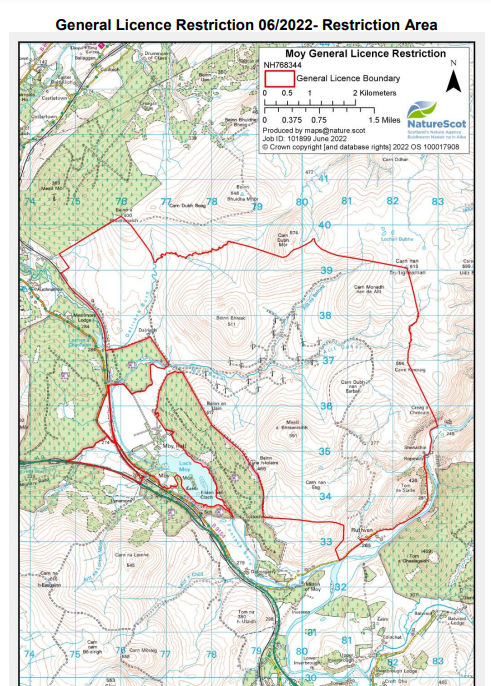
The restriction notice reads as follows:

In line with NatureScot’s published General Licence restrictions: Framework for Implementing Restrictions we hereby give notice that a restriction has been applied to the land outlined in red overleaf. This restriction prohibits the use of General Licences 01, 02 and 03 on that land between 21st June 2022 and 21st June 2025.

Please note that this restriction does not imply responsibility for the commission of crimes on any individuals.

This one has been a long time coming. Moy is one of those estates where if its name comes up in conversation amongst raptor conservationists in Scotland, eyes tend to roll and knowing looks are exchanged. It has been identified as a raptor persecution hotspot for many, many years.

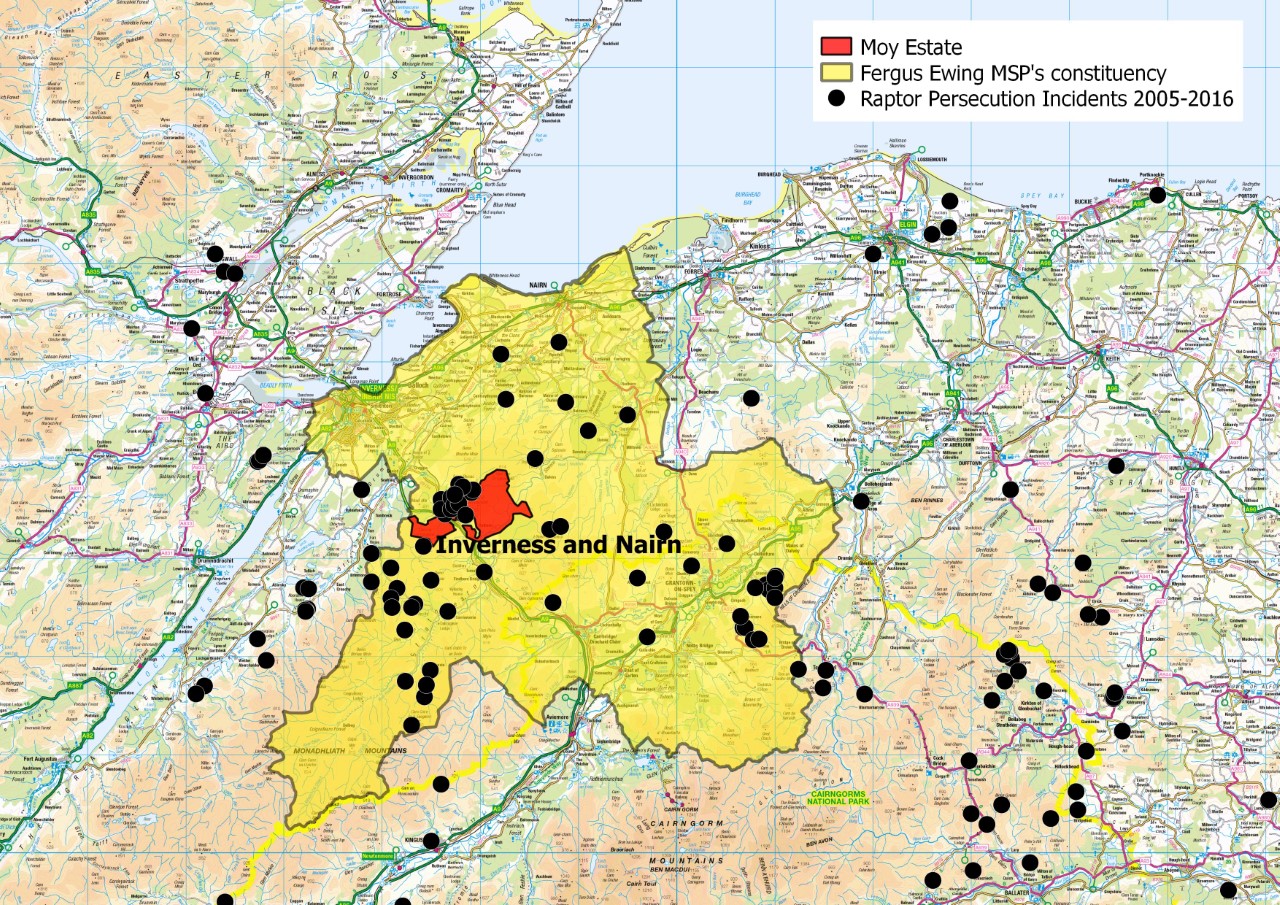
Here is a map we created way back in 2016 to highlight the extent of raptor persecution crimes in former Cabinet Secretary Fergus Ewing’s constituency (given his strong support of the Scottish Gamekeepers Association) and this shows the concentration of incidents on and close to Moy Estate:

Here is a selection of examples, but this is by no means an exhaustive list:

Moy Estate was raided by police in 2010 after the discovery of poisoned bait and dead raptors and illegally set traps. A gamekeeper was later convicted of possession of a red kite after its bloodied corpse was found in the back of his vehicle. It had two broken legs, consistent with being caught in spring traps, and a head injury. A bloodied shinty stick was also found in the back of the vehicle. Notably, the gamekeeper wasn’t convicted for killing the kite, just for having possession of it. Nobody was charged with killing this kite.

These baited traps were discovered on the moor (the illegally-set spring traps were originally disguised under moss, removed here for evidential purposes). No charges were brought.

The remains of two further red kites were discovered on the moor, including a severed red kite leg and some wing tags that had previously been fitted to a kite, all found buried in holes under some moss. No charges were brought.

A jar in one of the gamekeeper’s houses contained the leg rings of four young golden eagles – nobody could account for how they had ended up inside that jar. Perhaps he’d found them whilst ‘metal detecting at his uncle’s farm’ like gamekeeper Archie Watson, who recently gave this implausible explanation to the court for how he’d come to possess BTO leg rings from a buzzard and a red kite attached to his keyring.

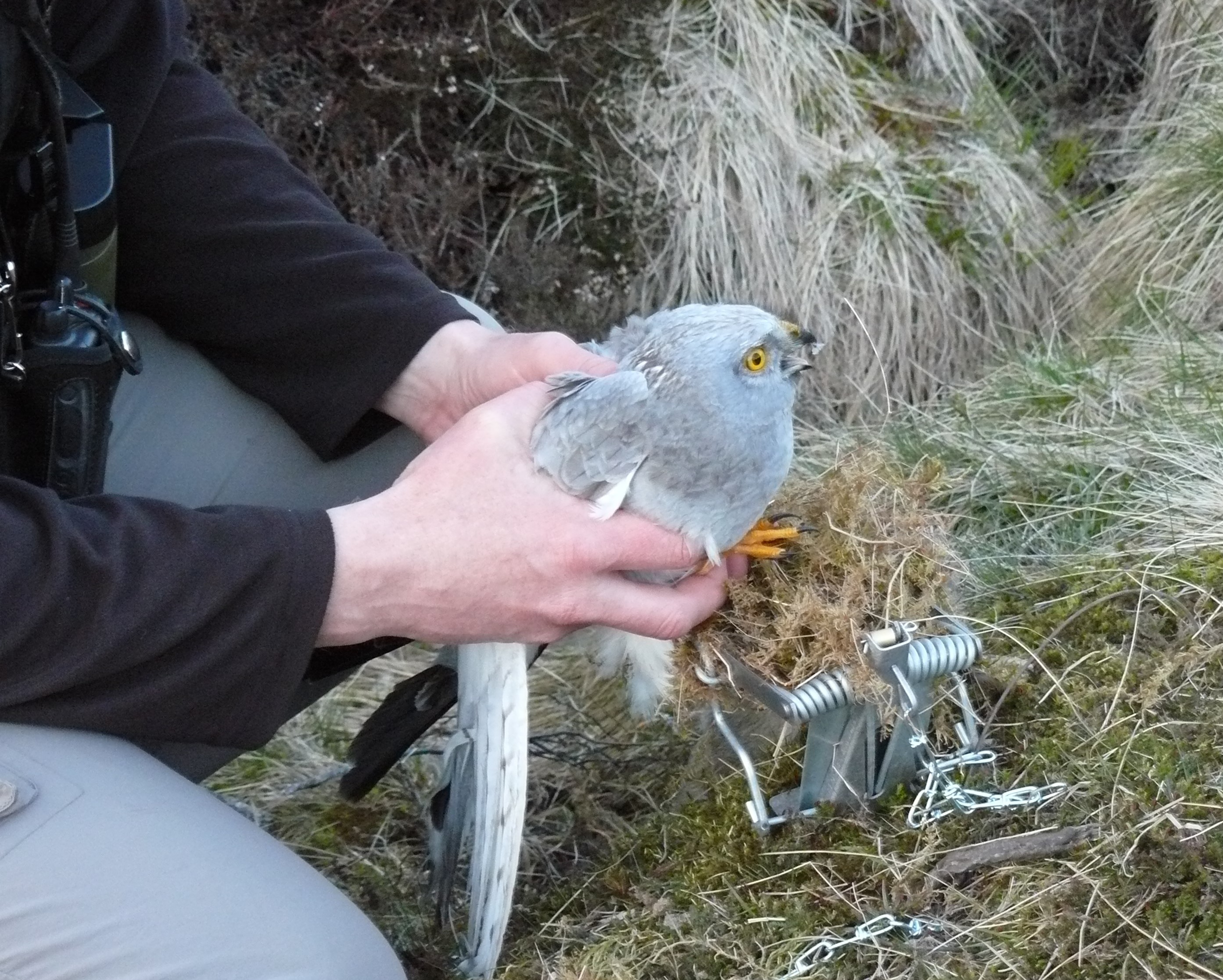
This male hen harrier was found caught by its leg in an illegally-set spring trap on Moy Estate in 2010. No charges were brought. It survived after being rescued by raptor workers from the Scottish Raptor Study Group.

In May 2011 a satellite-tracked red kite ‘disappeared’ on Moy, and another one ‘disappeared’ in August 2011.

In 2016 Police Scotland issued an appeal for information following the discovery of disturbed and abandoned buzzard and goshawk nests in the Moy Forest. One goshawk and four buzzard nests were abandoned in suspicious circumstances, with some evidence of illegal disturbance. These nests were being monitored by staff from Forestry Enterprise Scotland (see here). No charges were brought.

In 2017 masked gunmen were caught on camera at a goshawk nest in Moy Forest. A few days later the nest and a clutch of four eggs was found abandoned (see here). No charges were brought.

In 2018 Police Scotland issued an appeal for information after a buzzard was found caught in an illegal pole trap in the Moy area (see here). No charges were brought.

In 2020 a poisoned red kite was found dead, containing traces of a banned pesticide, leading to a police appeal for information (here).

In 2021 an individual was charged with the alleged killing of a bird of prey in this area. This case is believed to be progressing through the courts so I can’t comment further at this stage.

Of course, a General Licence restriction doesn’t amount to much of a sanction in real terms, as I’ve discussed on this blog endless times before (e.g. see here). However, it’s currently the only tool available to the authorities until we finally see the introduction of the promised grouse moor licensing scheme by the Scottish Government. Had that scheme been in place already, we’d hopefully have seen the removal of Moy Estate’s licence to shoot for a number of years, if not permanently.

Meanwhile, what will be really interesting to see is whether the Moy Game Fair goes ahead this year, given that the shooting organisations have all claimed to have a ‘zero tolerance’ approach to raptor persecution. I don’t think the likes of Scottish Land & Estates, Fergus Ewing MSP and the Scottish Gamekeepers Association can expect anything other than high-level criticism if they attend this event on an estate that has now been sanctioned for wildlife crimes by the statutory nature conservation advisor, based on evidence provided by Police Scotland. Mind you, the conviction of a gamekeeper on Moy Estate in 2011 didn’t stop them attending (see here and here).

UPDATE 14th July 2022: Scottish Gamekeepers Association plans award ceremony at disgraced Moy Estate (here)

UPDATE 6th August 2022: Fergus Ewing MSP & his shooting industry pals disregard sanctions imposed on Moy Estate for wildlife crime (here)

UPDATE 22nd August 2022: Moy Estate loses appeal against General Licence restriction imposed for wildlife crime (here)

Big decisions for National Trust’s policy on grouse moors in Peak District National Park after latest loss of hen harriers

Earlier this month the Peak District Raptor Monitoring Group (PDMG) announced the suspicious disappearance of two male hen harriers, and the subsequent failure of two hen harrier nests each containing five eggs (see here).

[One of the abandoned hen harrier nests. Photo by PDRMG]

Both nests were situated on a grouse moor owned by the National Trust and leased to a tenant. The grouse moor isn’t currently being used for driven grouse shooting (the tenant is believed to be focusing his energy on another moor that he owns) but the nests were close to the National Trust’s boundary and the moor is adjacent to other, privately-owned and intensively managed driven grouse moors, many that have been at the centre of other raptor persecution investigations for a number of years in what is a well-known raptor persecution hotspot (e.g. see here).

The Peak District National Park Authority has issued a statement in response to this latest incident:

Responding to reports of the failure of two hen harrier nests following the disappearance of male hen harriers thought to be supporting the nests in the area, the Peak District National Park Authority said:

“We share the immense frustration and disappointment of the National Trust and all those involved in monitoring our birds of prey, that the opportunity for not one, but two potentially viable nests for the iconic hen harrier has been lost again in the Peak District this year. This is a species which is emblematic of our uplands and where their haunting and often enigmatic presence should be welcomed.

“The fact that successful nesting attempts for the hen harrier in the Peak District remains firmly in single figures across almost two decades, demonstrates the significant challenge that remains for all those working to see their return in a long-term and sustainable way – addressing both conservation needs and the potential impact of wildlife crime.

“We understand a police investigation is ongoing into the matter and stand ready to provide any support to this”‘.

The National Trust has a new General Manager in the Peak District, Craig Best, and his reaction to the suspicious disappearances of the two harriers was as follows:

It’s deeply concerning to learn of the disappearance of two male hen harriers from the High Peak and subsequent abandoning of nests by the females. While the circumstances around this incident are not yet clear, it is indefensible that these beautiful birds still face persecution. The incident has been reported to the police and we’re working closely with statutory agencies and the RSPB to find out what happened.

We want to see a landscape that is full of wildlife, including birds of prey, and we work hard with a range of expert partners to create the right conditions for these species to thrive. Over the past few years we have seen several instances of successful hen harrier breeding in the Peak District“.

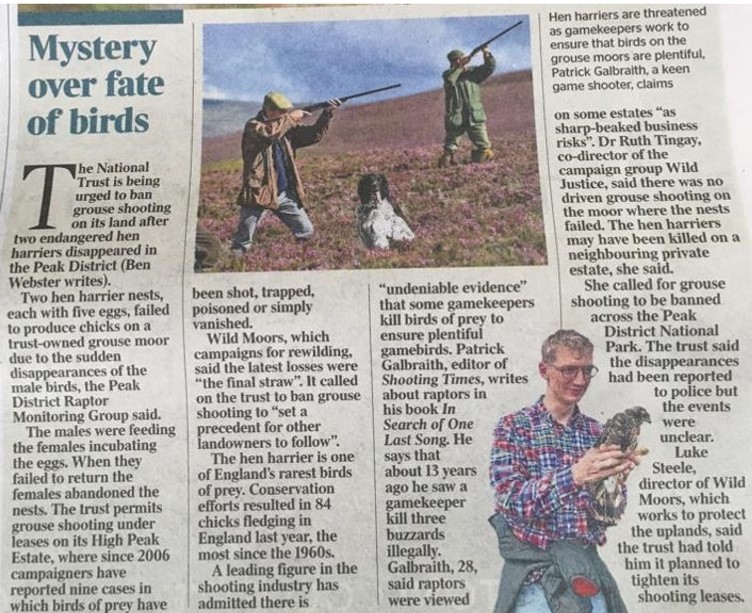
The disappearances attracted a lot of media attention, some of it accurate, some of it not so much, but it made local and national news and I was pleased to see that a couple of them had picked up on the fact that now 70 hen harriers are confirmed missing or illegally killed in the UK since 2018. Here’s some of the coverage in Sheffield Star, BBC News, and The Times, reproduced below:

There was also a feature on the BBC’s East Midlands Regional News, where BBC journalist Simon Hare interviewed Mike Price from the PDRMG – you can watch the video here:

The loss of two more hen harriers and their nests sparked a number of calls for the National Trust to ban driven grouse shooting on its land. I think that’s because many people assumed the harriers had been killed on the grouse moor where they were attempting to breed. The NT faced similar calls for a ban in 2016 when I posted footage of an armed gamekeeper who had been filmed crouching in the heather next to a decoy hen harrier on another NT-owned grouse moor in the Peak District National Park, presumably trying to entice a harrier to come in close so he could shoot it (see here).

That footage was so disturbing and the public reaction to it so strong, it prompted the National Trust to pull the shooting lease early and replace the shooting tenant with someone more conservation-focused, in what was a significant response at that time although some campaigners saw it as a lost opportunity to remove driven grouse shooting altogether (see here).

Since then, the NT has modified its tenancy agreements (e.g. see here), at least one new tenant has been and gone, and at least one current tenant is hosting a number of successfully breeding raptor species whilst moderately managing a driven grouse shoot (far less grouse shot last year compared to the thousands shot on some of the more intensively-managed moors). It has been reported recently that the NT has agreed to introduce even more modifications on its moors such as the removal of medicated grit, burning restrictions and the removal of traps and snares, although I haven’t yet seen a formal statement on this from the National Trust.

Some may argue that banning driven grouse shooting entirely from National Trust land is the only way forward, but some local raptor workers suggest the situation is a bit more nuanced than that and that just banning it on NT moors could actually lead to an increase in raptor persecution. They argue that as long as the NT has raptor-friendly shooting tenants, those tenants’ gamekeepers are acting as a sort of shield against gamekeepers from neighbouring, privately-owned estates from entering NT land and killing whatever they want. Of course, that doesn’t stop the raptors being killed if they fly from NT land on to neighbouring private estates to hunt, which is what many suspect has happened with these latest two ‘disappearances’.

It seems to me that the Peak District National Park Authority should be the organisation banning driven grouse shooting across the entire National Park. That would seem to be a far more effective prospect than a piecemeal approach by the National Trust, at least in terms of tackling the rampant raptor persecution taking place inside this National Park.

That’s not to say that the National Trust shouldn’t be banning driven grouse shooting, though. As we know, raptor persecution is only one of many environmentally-damaging issues associated with driven grouse shooting – burning, widespread and unregulated use of an environmentally toxic veterinary drug (medicated grit), and the lawful killing of thousands of native animals (e.g. foxes, stoats, weasels, corvids etc) to name just a few, all to create an artificial environment to maximise the production of red grouse for paying guests to shoot in the face for a bit of a laugh. That the NT still supports this management in what are supposed to be enlightened times, is quite remarkable.

However, if the National Trust has recently changed its policy, as has been reported, this could effectively lead to an end of driven grouse shooting on NT land without a formal ‘ban’ having to be introduced. But where will that leave the raptors trying to nest on NT land, still surrounded by privately-owned intensively-managed driven grouse moors?

Interesting times ahead in the Peak District National Park.

Multi-agency searches in raptor poisoning hotspot in Derbyshire

Multi-agency searches were conducted last week at a raptor-poisoning hotspot in Derbyshire.

Since 2015, at least eight illegally poisoned birds of prey including buzzards and kestrels, as well as poisoned pheasant baits, have been uncovered on farmland in the Glapwell / Ault Hucknall / Rowthorne / Pleasley area of north east Derbyshire. Toxicology analysis has confirmed they were killed by the poisons Aldicarb and Alphachloralose (see here).

[A dead buzzard found in the area. Photo by Derbyshire Constabulary]

Last week police officers from Derbyshire Police’s Rural Crime Team were joined by staff from the RSPB Investigations Team, Natural England and the National Wildlife Crime Unit to undertake a series of land searches. A number of follow-up investigations are now continuing as a result of those searches.

Derbyshire’s Rural Crime Team posted the following statement on Facebook yesterday:

Consider this post both an appeal for information and a public safety warning.

Over recent years there has been a concerning number of dead buzzards found to have died as a result of poisoning on land around the Glapwell / Ault Hucknall / Rowthorne / Pleasley area.

In response to this issue, last week Derbyshire Rural Crime Team, RSPB Birders , the NWCU and Natural England were involved in a day of action in the area. Land searches were conducted and other lines of enquiry pursued in what proved to be a very positive day.

Clearly these beautiful birds are being targeted. Killing birds of prey in any way is ILLEGAL but laying poison on land that can be easily accessed by the public poses a significant risk to public safety.

When out and about, should you find anything suspicious it is important that you contact the Police immediately. DO NOT touch or handle anything and do not let children or animals go near.

If you have any information that may aid this enquiry please contact Derbyshire Rural Crime Team’.

This is the latest in a surge of multi-agency investigations in response to raptor persecution crimes over the last 14 months, including a raid in Suffolk on 18th January 2021 (here), another raid in Nottinghamshire in January 2021 (here, resulting in a conviction of a gamekeeper in 2022 here), a raid in Lincolnshire on 15th March 2021 (see here), a raid in Dorset on 18th March 2021 (here), a raid in Devon on 26th March 2021 (see here), a raid in Teesdale on 21st April 2021 (here), a raid in Shropshire on 2nd August 2021 (here), a raid in Herefordshire on 12th August 2021 (here), a raid in Norfolk on 14th September 2021 (here), a raid in Wales in October 2021 (here), a raid in Humberside on 10th December 2021 (here) and a raid in North Wales on 8th February 2022 (here).

Poisoned golden eagle: will a General Licence restriction now be imposed on Invercauld Estate?

Earlier this month it was reported that police had conducted a raid, under warrant, on several properties on the Invercauld Estate following the discovery in March of a deliberately poisoned golden eagle and some poisoned bait (see here).

I’ve since blogged about why I think the golden eagle killer will evade criminal prosecution (see here) and a little bit about NatureScot making noises about considering a potential General Licence restriction on this estate (see here). A General Licence restriction is nowhere near as serious as a criminal prosecution but it is, in the words of former Environment Minister Paul Wheelhouse who worked hard to get this apparent sanction introduced, a ‘reputational driver’ (see here).

It’s my view that a General Licence restriction is long overdue here, given the history of alleged wildlife crime offences, and a blog that was published yesterday has further strengthened that view, of which more in a minute.

This area around Ballater in the Cairngorms National Park has been at the centre of a number of alleged wildlife crime offences over many years.

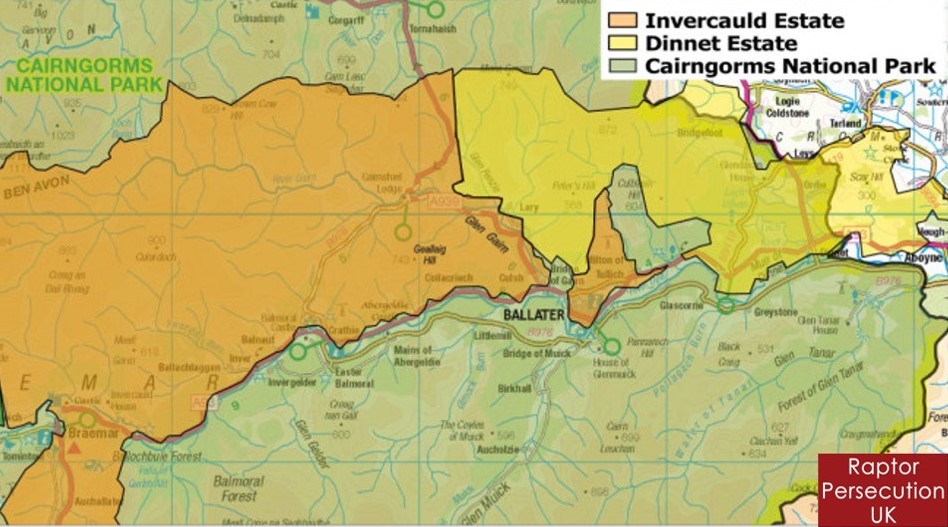
[Estate boundaries based on data from Andy Wightman’s Who Owns Scotland website]

There was the discovery of three poisoned buzzards on Invercauld Estate in 2005 (here), the discovery of an illegally shot peregrine at the Pass of Ballater in 2011, the reported coordinated hunt and subsequent shooting of an adult hen harrier at Glen Gairn on the border of Invercauld and Dinnet Estates in 2013, the illegally-set traps that were found near Geallaig Hill on Invercauld Estate in 2016, the suspicious disappearance of satellite-tagged hen harrier Calluna ‘on a grouse moor a few miles north of Ballater’ on 12 August 2017, the opening day of the grouse shooting season (here) although it’s not clear whether this was on Invercauld Estate or neighbouring Dinnet Estate, the suspicious disappearance of satellite-tagged white-tailed eagle ‘Blue T’ on Invercauld Estate in May 2018 (see here), the suspicious disappearance of satellite-tagged hen harrier Stelmaria ‘last recorded on grouse moor a few miles north west of Ballater, Aberdeenshire on 3rd September 2018 (see here), the suspicious disappearance of satellite-tagged hen harrier (Wildland 2) on Invercauld Estate on 24 September 2019 (here) and now the discovery of a deliberately poisoned golden eagle and poisonous baits on a grouse moor on Invercauld Estate in March 2021 (see here).

The suspicious disappearance of three satellite-tagged hen harriers and one white-tailed eagle in one small area managed for driven grouse shooting should raise lots of eyebrows given the unequivocal scientific pattern that has been identified for such occurrences (e.g. see here and here) and especially in an area where the alleged hunting and subsequent shooting of a hen harrier was witnessed and reported several years earlier.

However, according to NatureScot’s current Framework for how it makes decisions on whether to impose a General Licence restriction, the suspicious disappearance of a satellite-tagged raptor is not, in itself, considered sufficient evidence, even when there’s an emerging pattern in one particular area:

Unexplained ‘stopped no-malfunction’ satellite tags may be considered by NatureScot as supporting information in making a decision, particularly where multiple losses have occurred on the same land. However such instances will not be considered as evidence under the terms of this Framework unless recorded as a crime by Police Scotland‘.

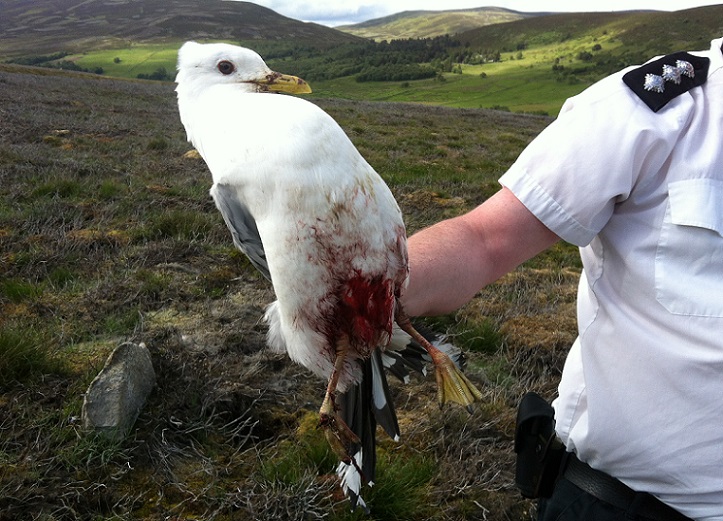
The most significant, and indeed tangible, wildlife crime incident that could be linked to Invercauld Estate was the discovery of illegally-set traps on the estate in 2016, which led to the horrific suffering of a Common Gull whose legs were caught in two of the traps (see here).

[Photo of the Common Gull after being released from the traps. Photo by Graeme Rose]

Long-term blog readers may recall this incident and the farcical non-existent enforcement measures that ensued. The SSPCA attended in the first instance and had to euthanise the gull due to the extent of its injuries but because of their ridiculously restricted investigatory powers, they were not permitted to search the area for more traps – this had to be done by the police, who conducted a search several days later where it was discovered that other traps (i.e. evidence of potential crime) had been recently removed prior to the police search (here).

Then there was an odd statement of denial from Invercauld Estate, bizarrely issued by the GWCT on behalf of the estate (a strange activity for a so-called independent wildlife conservation charity, see here) and incidentally, this denial is not that dissimilar to the one we saw recently from the estate in relation to the deliberately poisoned golden eagle – see here.

I challenged the estate’s claim that Police Scotland had not found any evidence of illegal activity back in 2016 and Police Scotland issued a statement in response (see here).

I then submitted a series of FoIs that revealed what looked like some very odd goings on between the estate, the Cairngorms National Park Authority and the Scottish Government, which resulted in ‘secret action‘ apparently being taken against a gamekeeper but no prosecution followed, and nor did NatureScot impose a General Licence restriction for this incident (and NatureScot has refused to discuss its decision saying ‘it’s not in the public interest‘ to tell us).

I did wonder whether NatureScot had not imposed a General Licence restriction due to a technical issue – the fact that the SSPCA, not the police, attended the scene and found the evidence of the illegally-trapped gull. If you look again at NatureScot’s Framework for decision-making on restrictions, it says that evidence must be provided by the police. It doesn’t say anything about evidence from the SSPCA being acceptable. I hope I’m wrong on that because as a statutory reporting agency, the SSPCA’s evidence should be considered just as robust as any evidence put forward by Police Scotland – I’ll check with NatureScot about it.

However, yesterday a blog was published on the excellent ParksWatchScotland blog, written by Graeme Rose, one of the guys who had actually found the critically-injured gull on Invercauld Estate in 2016. It’s a harrowing tale, but it’s incredibly enlightening in that he pursued the enforcement authorities for several years after the incident and by doing so uncovered all sorts of shenanigans. He says he received a text in July 2020 from the former Convenor of the Cairngorms National Park Authority who told him that a gamekeeper had indeed ‘been let go’ after the gull incident in 2016, despite the estate’s protestations at the time that any offence had even taken place. I believe this is the information that was deliberately redacted by the CNPA and the Scottish Government when I’d asked them about it in those FoIs.

What a pitiful state of affairs.

Will we see anything different in response to the discovery of the deliberately poisoned golden eagle? Well, we’ve already seen that Invercauld Estate has ‘left’ the Eastern Cairngorms Moorland Partnership, although there was absolutely zero indication whether the estate was expelled or left of its own accord (see here) so it looks like the Cairngorms National Park Authority is staying true to form and not wanting to be explicit about any action that may or may not have been taken. Why is that, do you think? Could it be anything to do with who sits on the CNPA’s Board? There are some interesting characters with some interesting connections to the grouse-shooting world, and even to Invercauld Estate itself.

And what about NatureScot and its deliberations about whether there is sufficient justification for a General Licence restriction on Invercauld Estate? That’s going to be VERY interesting and is something I’ll definitely be tracking. Watch this space.

Gamekeepers responsible for more illegal raptor killing than any other profession

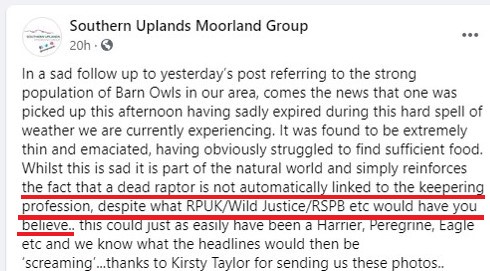
Somebody sent me a screen grab the other day of a statement posted on social media by the Southern Uplands Moorland Group (SUMG), which is one of a number of regional groups representing grouse moor estates around the country and designed to persuade the public that birds of prey are warmly welcomed and that gamekeepers love having birds of prey on their ground.

The statement published by the SUMG is fairly typical of the misrepresentation of facts that we’ve all come to expect from certain quarters of the grouse shooting industry. It reads as follows and I’ve underlined the sentence of interest:

Now, I can’t recall EVER saying on this blog that a dead raptor is automatically linked to the [game]keepering profession and there are numerous examples of illegal raptor killing offences that I’ve reported on here over the years where gamekeepers have quite clearly not been responsible (e.g. see here, here, here, here, here, here, here etc).

As a co-director of Wild Justice I’m also pretty certain that WJ has NEVER made such a claim. If there is such evidence, the SUMG are challenged to provide it.

I can’t speak for the RSPB but I can’t imagine they would EVER make such a ridiculous claim either.

Speaking for myself, I don’t even believe, as some do, that ALL gamekeepers are raptor killers. A lot of them are, of that there’s no doubt whatsoever, and some other gamekeepers will benefit from that killing even if they’re not doing the actual killing themselves, but I also know of some decent, law-abiding gamekeepers who are as thrilled at seeing a raptor as I am. I’ve met them and have worked with them, so I know they exist.

However, there’s no getting away from the undeniable evidence that shows overall, gamekeepers in the UK are responsible for more illegal raptor killing than any other profession. If you want to see the evidence, have a look at this pie chart published by the RSPB last year in their annual Birdcrime report:

Interestingly, one of the individuals included in the convicted gamekeepers section of this pie chart was a certain Alan Wilson, a member of the Scottish Gamekeepers Association who was convicted in 2019 of a catalogue of horrendous wildlife crimes he committed on the Longformacus Estate, a grouse/pheasant shooting moor in, er, the Southern Uplands (see here).

It strikes me that the Southern Uplands Moorland Group would do well to concentrate on ousting the criminals within the gamekeeping industry rather than smearing those of us who report on such crimes and who, quite legitimately, campaign for the Government to clamp down on the criminals involved.

The eagle’s satellite tag found in the river: poetic injustice

Further to last Friday’s shocking news that a missing golden eagle’s satellite tag had been found in a river in Strathbraan, with aerial and harness cut and the tag wrapped in lead sheeting, presumably in an attempt to block the tag’s signal and conceal any evidence of criminal behaviour (see here), there’s an interesting background story to this particular eagle.

Cast your minds back three and half years to this blog (here) written in March 2017.

Here are the, ahem, ‘highlights’:

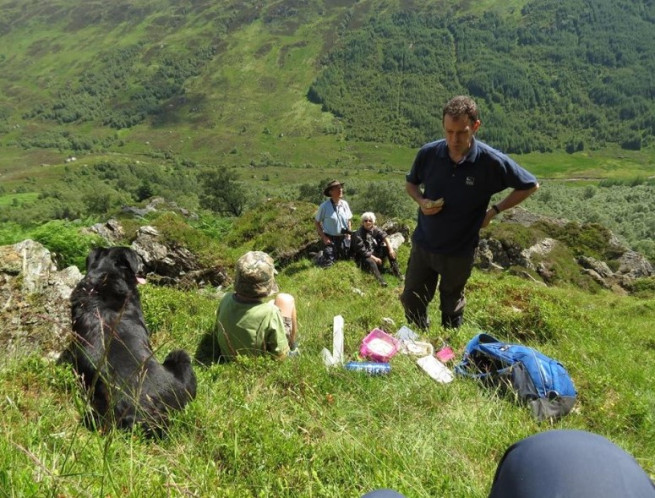
This photograph has been repeatedly posted on Facebook and other social media platforms as an example of ‘bad practice’ at a raptor tagging event. It shows a group of people at an eagle nest site in Perthshire in 2014. According to Bert Burnett of the Scottish Gamekeepers’ Association, who has posted this image several times, these people, including Duncan Orr-Ewing of RSPB Scotland, are “having a picnic underneath an eagle nest” for several hours and thus by implication are causing unnecessary disturbance at the site and causing the adult birds to desert.

What’s actually happening here is a group of people, including four licensed experts and their invited guests, have climbed to an eagle nest site and while the climbers have gone to retrieve the eaglet from the nest so its satellite tag can be fitted in safety on the ground, Duncan is eating a sandwich. That’s it. It’s a few sandwiches short of a picnic, or is that just Bert?

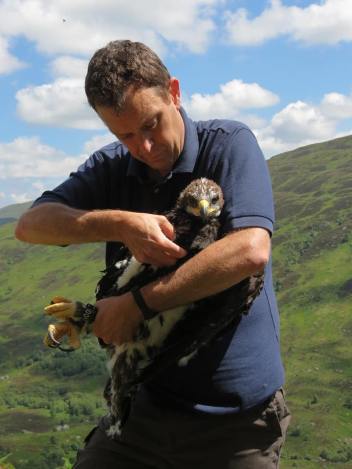
Another photograph that Bert has circulated was also taken at this site on the same day. It shows Duncan quite rightly checking the fit of the young eagle’s sat tag harness before the bird is put back in its nest.

This photograph elicited all sorts of comments on social media, with suggestions that sat tagging golden eagles is harmful to the birds, that it’s detrimental to their survival and one person even claiming that “they [the raptor fieldworkers] are a far greater threat to birds than any shooting interests“.

He posted another photograph (which we won’t post here for legal reasons) that shows a woman and her son on the nest ledge after the eagle had been returned to its nest. Bert said this about it: “What happens to birds after tagging is very questionable. Allowing your families and friends to climb up intae the nest just for photo shoots is totally out of order and shows no concern for the birds future welfare“. On a later post he also claimed the woman had been “hoisted in to the nest“. What the photo actually shows is a Schedule 1 licence holder and her son who have just climbed to the nest to return the eagle after tagging. It’s probably hard for Bert to comprehend that a woman might actually be a Schedule 1 licence holder and that she’d be capable of climbing to the nest without being “hoisted in” (surely her breasts would get in the way?) but when your mindset is firmly stuck in the 18th century then it’s probably no surprise at all.

As for Bert’s comment, “What happens to birds after tagging is very questionable“, well, it’s not questionable in this case. This eagle was satellite tagged in Perthshire in 2014. The bird fledged successfully and its movements were tracked until 2016 when its tag signal suddenly stopped transmitting and the eagle ‘disappeared’ on a grouse moor in Perthshire. We’d respectfully suggest that this eagle’s disappearance (probable death) was not caused by Duncan eating a sandwich at its natal site two years earlier nor by it being put back in to the nest by a woman, but was more than likely caused by illegal poisoning, illegal trapping or illegal shooting on or near a grouse moor in the Highlands.

ENDS

Little did we or Bert Burnett, then a Director of the Scottish Gamekeepers Association, imagine that this eagle would hit the headlines three and a half years later when its tag was found cut and wrapped in lead sheeting having been dumped in the river in one of Scotland’s most notorious raptor-killing hotspots – the grouse moors of Strathbraan, where eight satellite-tagged eagles have ‘disappeared’ in suspicious circumstances in recent years.

This background information clearly exposes the desperate lies and false accusations used by some in the grouse shooting industry to deflect attention from the bleedin’ obvious and instead used to undermine the integrity and professionalism of those conservationists working hard to protect this species in the face of relentless persecution.

These fabrications were made in the build up to the publication of the Government-commissioned Golden Eagle Satellite Tag Review, which was published in May 2017. It’s findings were damning.

Unbelievably, the lies from the grouse shooting industry continue. Over the last few days there have been a number of so-called ‘explanations’ from within the grouse shooting industry for what might have happened to this eagle and how it’s satellite tag ended up in the river wrapped in lead sheeting. They seek to have the public believe that this is ‘a set up’ – that conservationists (and some of them named, libellously, as perverting the course of justice) found the dead eagle several years ago after it died of natural causes and they apparently decided to ‘plant’ the tag in the river to make it look suspicious.

Fortunately, the public, the police and Government Ministers are not fooled.

All eyes on the Scottish Government’s imminent response to the Werritty review on grouse moor licensing.

Missing eagle’s satellite tag found cut & wrapped in lead, dumped in river at Strathbraan

Well, well, well.

Press release from RSPB Scotland (25th September 2020)

Shocking discovery reveals lengths raptor killers will go to to conceal crimes

Recovered satellite tag provides answers to what happens when birds of prey ‘disappear’ on Scotland’s grouse moors

A satellite tag removed from a ‘disappeared’ golden eagle has been recovered from a Highland river.

The discovery sheds new light on the activities that criminals will go to in a bid to cover up the illegal killing of protected birds of prey.

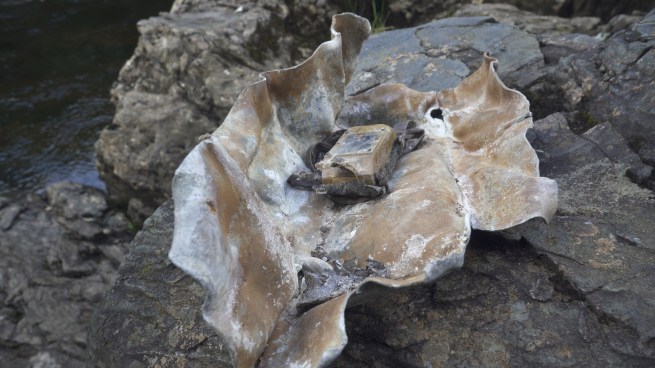
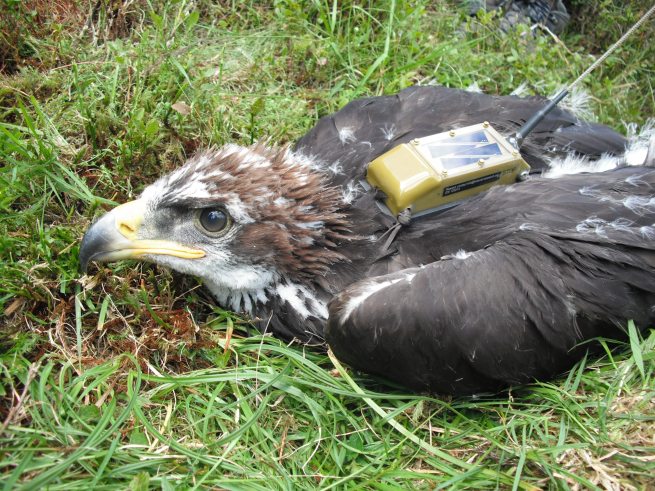
[The eagle satellite tag #129014, wrapped in lead casing, found at the side of the River Braan. Photo by RSPB Scotland]

In 2016 the bird’s tag stopped transmitting suddenly on a grouse moor in Perthshire and despite searches by Police and RSPB Scotland, it was never traced.

Now the tag has been found – wrapped in heavy lead sheeting and disposed of at a popular beauty spot just a few miles from the last known location of the bird.

The recovered tag is further evidence in just how far criminals who routinely kill birds of prey are going to in a bid to cover their tracks and to present driven grouse shooting as a clean industry.

The object was spotted by a walker and his son on the banks of the River Braan near Dunkeld in Perthshire on 21st May.

On closer examination, they found the tag wrapped in a piece of lead sheeting. The tag bore a label bearing contact details and a serial number, subsequently allowing the police and RSPB to jointly attend recover and identify the object.

Police Scotland have since held the tag for several months to conduct forensic analysis, which is ongoing.

After fledging from its nest, this young eagle had remained on its parents’ territory until November 2014. Over the following 18 months, it explored Scotland’s uplands before it moved into Strathbraan. Within a few days of arriving here, on 1st May 2016 his tag, that had been functioning exactly as would have expected, suddenly and inexplicably stopped. It was suspected that the bird had been killed, and the tag destroyed.

[The young golden eagle fitted with the satellite tag #129014 in 2014. Photo Scottish Raptor Study Group]

As with all such cases, this suspicious disappearance was reported to the police. A search of the land around the bird’s last known location on a remote hill took place and the disappearance was discussed with local land managers. No evidence of what had happened to the bird was uncovered.

Ian Thomson, RSPB Scotland’s Head of Investigations said: “As is the case in virtually every raptor persecution investigation, nobody seemed to know anything and, as is the case with every suspicious satellite tagged raptor disappearance on a grouse moor, spurious alternative theories as to what may have happened to the bird and tag were suggested. However, now we know the truth.

This young eagle was killed illegally. The tag was clearly removed from the bird, its antenna was cut off, and the tag was then wrapped in a piece of lead sheeting, presumably because the perpetrator thought this would stop it transmitting. The package was then cast into the river, never to be seen again. Or so they thought.

This discovery gives unequivocal proof not only of what is happening to these birds, but also the lengths to which the criminals involved in the killing of our raptors will go to dispose of evidence and evade justice. It is not unreasonable to conclude that the vast majority of other birds of prey and their tags that have disappeared on Scotland’s grouse moors have suffered similar fates.”

Satellite-tags are used by biological researchers throughout the world to track the movements of animals and birds, from vultures to elephants, and have a proven high reliability. In the UK, their use on birds is strictly regulated by the British Trust for Ornithology and the Government’s statutory nature conservation agencies, with individual projects and taggers requiring demonstrable training and experience and only then under specific licences.

Duncan Orr-Ewing, a member of the Central Scotland Raptor Study Group and RSPB Scotland’s Head of Species and Land Management, said: “The number of satellite tags fitted to raptors, functioning exactly as expected, only to have stopped suddenly on a grouse moor, is an issue of increasing public concern, as evidenced by the Scottish Government commissioning of a review of the fates of satellite-tagged golden eagles, published three years ago.”

It has long been suspected that tags are routinely destroyed by wildlife criminals in a deliberate attempt to conceal evidence. There is no other reasonable explanation as to why this tag has ended up in the river where it was found, wrapped in metal, and with the harness and antenna cut. For me this incident is doubly distressing as it is a bird that I tagged with a colleague in 2014, and it originates from a nest site in the Loch Lomond and Trossachs National Park where there has been a long history of local community protection from egg collectors.

More disappearances of tagged birds this year, as well as shooting and poisoning cases, destroy any pretence that the grouse shooting industry is able to self-regulate, even during a national pandemic. It is abundantly clear that the only way to stop this culturally ingrained and organised criminality against Scotland’s protected raptors is through robust, and immediate, regulation. We call upon the Scottish Government to prioritise this as their response to the Werritty Review.

ENDS

RSPB Scotland has also produced a video:

This tag is not one of the ones that RPUK and Chris Packham have fitted as part of our golden eagle tagging project, but the area where this eagle ‘disappeared’ and where the tag was subsequently found in the river is an area where three of our satellite tagged golden eagles have ‘disappeared’ (Adam, Charlie and Tom), probably suffering the same fate as this one. It’s actually an area where at least eight satellite-tagged eagles have ‘vanished’ in recent years, and was identified as a raptor persecution hotspot by the 2017 golden eagle satellite tag review. Strathbraan is circled in orange below:

We’ll be saying a lot more about this later today.

The Scottish Government has been dragging its feet on raptor persecution for years and years and years. We are expecting a response to the Werritty Review (on grouse moor reform) ‘this autumn’ and in light of this evidence, the latest in a long long line of evidence, we expect a meaningful response. If you’d like the First Minister (Nicola Sturgeon) and her Environment Cabinet Secretary (Roseanna Cunningham) to know how much you expect from them, please send POLITE but strongly-worded emails to:

firstminister@gov.scot

and

CabSecECCLR@gov.scot

UPDATE 25th September 2020 10.30hrs: RSPB Scotland’s Head of Investigations Ian Thomson has written a blog about this incident and he puts the discovery of this tag in to a wider context – read here.

UPDATE 30th September 2020: The eagle’s satellite tag found in the river: poetic injustice (here)