Kitten dies from Carbofuran poisoning in Midlothian

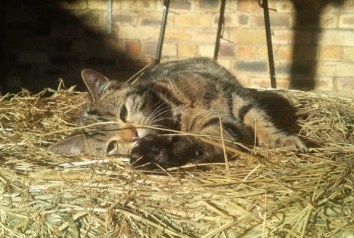
Cat poisoned Midlothian Dec 2014 Bootes - CopyAn eight-month old kitten has died after ingesting the banned poison Carbofuran.

The cat, Bootes, was found alive but fitting by the owner of Edgelaw Farm Livery near Gorebridge, Midlothian. Bootes died shortly afterwards.

Toxicology results identified Carbofuran and the SSPCA is now warning the public that this highly toxic poison is in use in the area (even though it’s been banned for 14 years and even possessing it constitutes an offence).

Carbofuran is, of course, the gamekeepers’ ‘poison of choice’ – you only need a small amount, it’s fast acting and it’s deadly. It’s the most commonly-used poison in illegal raptor persecution cases in Scotland and has been for some years.

Nobody will be at all surprised to learn that pheasant shooting is popular in the area where Bootes was poisoned.

Full article on SSPCA website here

Modern criminal

Modern Poisoner Mike Wood article March 2015 - CopyA few days ago we blogged about an attack on the campaign group Birders Against Wildlife Crime that had appeared in this month’s edition of Modern Gamekeeping (see here).

We also said we’d be blogging about another article that had been published in this industry rag. It’s a full-page spread on page 18, written by Mike Wood. Here’s the bio that accompanies this piece:

Michael Wood is a partner at Westfield Farms in Pickering, North Yorkshire. Founded in 1953, the farm has 59 years of experience breeding game birds, including pheasant, mallard, red-leg partridge and grey partridge“.

What the bio doesn’t say is ‘Michael Wood is a criminal with eight wildlife crime convictions to his name’.

See here and here.

Interesting, eh? How many times are we told not to tar all gamekeepers with the same brush? But why should we distinguish between lawful and criminal gamekeepers when the game-shooting industry itself doesn’t seem to bother? We already know that the National Gamekeepers’ Organisation doesn’t mind that Wood has wildlife crime convictions – they’ll still accept fund-raising donations from him and Charles Nodder from the NGO will still work with the Game Farmers’ Association, even though convicted wildlife criminal Wood is the GFA’s current Chairman (see here).

So we know that Noddy and the NGO don’t shun convicted wildlife criminals. But what about BASC? Surely they’ve got standards? Hmm. Take a look at this header from the front of Modern Gamekeeping:

 Modern Poisoner header March 2015 - Copy

It’s hard to read from this image so here’s what it says:

Modern Gamekeeping is proud to be in partnership with The British Association for Shooting and Conservation”.

Does that mean that BASC (a member of the Partnership for Action against Wildlife Crime (PAW UK)) endorses the idea that a wildlife criminal with multiple convictions should be given column inches in an industry publication to discuss the ‘management’ of his game-rearing farm? Surely not.

All in it together…?

Our 5th birthday

Today is our 5th birthday.

Sometimes it feels like we only started yesterday; sometimes it feels like we’ve been been here for a very long time.

When we started out, we had a clear objective: to raise awareness of the illegal poisoning, shooting and trapping of our raptors in our countryside. We were well aware of the issue – it had been going on for decades – but we were also equally aware that the wider general public were less well informed because the information wasn’t held in one easily-accessible central location – you had to know where to go and look to find the details.

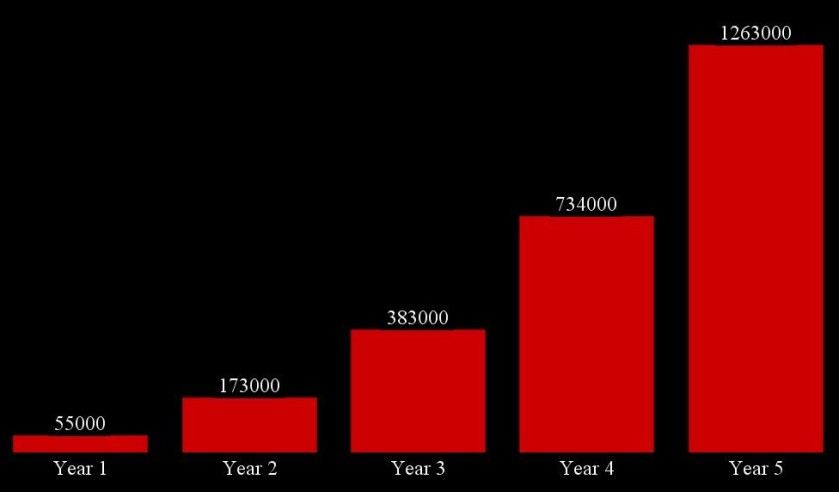
That awareness-raising objective has been successful: our blog hits counter has continued to rise and we’ve currently had over one and a quarter million blog views:
Blog growth 5 yrs - Copy

Our blog subscribers represent a wide cross-section of society. They include conservationists, lawyers, journalists, politicians, academics, campaigners, gamekeepers, land owners, sporting agents, civil servants, fieldworkers, police officers, wildlife rehabbers, ecologists, students, hedge fund managers, tv producers, tv presenters, newspaper and magazine editors, and most importantly, ‘ordinary’ members of the public.

Quite a lot has changed in those five years, much of it for the good. Raptor persecution has never been so prominent on the political agenda, largely thanks to an increase in public pressure. We’re on to our fourth Environment Minister since we started, and although the current Minister (Dr Aileen McLeod MSP) has yet to make her mark, her predecessor, Paul Wheelhouse MSP, engaged with this topic with sincerity and purpose. And although we were frequently frustrated that he didn’t go far enough or fast enough, he did move things along considerably.

The Government now produces an annual report on wildlife crime and although it’s had some teething issues, the intent is clear. We’ve seen the first successful conviction for vicarious liability and we’re aware that other cases are in the pipeline. We’ve seen the first custodial sentence handed out to a raptor killer after a hard-fought courtroom battle by the Crown to have the RSPB’s video evidence accepted. We’ve seen the introduction of General Licence restrictions for those thought to be involved in raptor persecution, and although these restrictions have yet to be implemented it’s highly likely that we’ll see some positive results this year. The penalties for wildlife crime offences are currently under review and we expect to see changes there. The consultation on whether to increase the SSPCA’s investigatory powers closed six months ago so we’re expecting to hear the Minister’s decision fairly soon.

Some things, though, haven’t changed in those five years. Raptor persecution continues and it’s still relatively rare to see a successful prosecution. The game-shooting industry continues to deny the extent of raptor persecution in general, and each time a new case is brought to the public’s attention we’re given every possible reason for the bird’s death apart from the obvious one. More and more people are seeing through these lies but there’s still much to be done.

Last year was significant in this war – and we make no bones about using that term – it is a war. (Extra)ordinary people gathered in Inverness town centre to demonstrate against the poisoning of 22 red kites and buzzards in an incident now known as the Ross-shire Massacre. Hen Harrier Day was launched and hundreds of (extra)ordinary members of the public gathered in appalling weather conditions at various locations across the country to stand together and say ‘Enough!’ Hen Harrier Day will continue this year – bigger and better – because more people are aware of what’s going on and care enough to want to do something about it. That’s amazing.

Thanks to everyone who has followed and supported our blog – we appreciate it.

Here are the top ten most viewed posts from the last year:

1. George Mutch sentenced to four months in prison.

2. They forgot the birds.

3. Scottish gamekeeper George Mutch guilty on all 4 counts.

4. Chris Packham resigns from Hawk & Owl Trust.

5. GWCT takes aim at Scottish pine martens.

6. Ross-shire Massacre: death toll rises to 19 – public protest this Saturday.

7. Hawk & Owl Trust getting it badly wrong.

8. East Scotland sea eagle chick ‘disappears’ on grouse moor.

9. First Irish-bred sea eagle shot and killed.

10. Bastards.

Poisoned peregrine found on Scottish grouse moor

A poisoned peregrine has been found on a grouse moor in Stirlingshire, resulting in a police raid last Friday (20th Feb).

Incredibly, Police Scotland issued a press statement immediately after the raid. The speed of this publicity and their willingness to inform the public about this crime is warmly welcomed.

Here’s what the press release said:

Today Police Scotland executed search warrants on a shooting estate in the Stirling area after a Peregrine Falcon was found to have been poisoned by the banned pesticide Carbofuran.

A Police Scotland spokesperson said:

“In July 2014, a member of the public contacted police to report a dead Red Kite on the same estate. Subsequent investigation revealed this bird was also poisoned with the same banned pesticide. There was no release of information to the general public at this time for operational reasons”.

“It is evident that an ongoing and intentional effort to poison wildlife is occurring at this location and we will be working closely with the relevant partners and using all investigative techniques at our disposal to identify the offender(s) and bring them to justice”.

“We would appeal to anyone who has knowledge of these incidents, or this type of criminality, to contact us and give any information that would assist us. We all have a duty to protect the environment and it is imperative these criminals are caught”.

“Information can be given by contacting 101 or by calling crimestoppers on 0800 555 111. Information will be treated in the strictest confidence if required”.

END

All quite interesting, especially as they have now revealed this poisoned peregrine was found on the same estate where a poisoned red kite was found dead last July. We blogged about that kite here and here, as we wondered why Police Scotland hadn’t publicised this crime and why SNH hadn’t yet enforced a General Licence restriction on this estate. With the discovery of this latest poisoning victim, we’ll be looking closely to see if, and how quickly, SNH now responds.

Peregrine photo: Martin Eager

National Gamekeepers’ Org linked to another convicted wildlife criminal

Regular blog readers may recall us writing previously about the National Gamekeepers’ Organisation’s unwillingness to expel a member who had been convicted of poison offences (see here).

We found this interesting, especially as the NGO is an organisational member of the Partnership for Action Against Wildlife Crime (PAW UK) – supposedly committed to helping tackle wildlife crime. Refusing to expel a member with a criminal conviction for, er, wildlife crime, should surely have resulted in PAW UK booting them off the Partnership? Apparently not – the NGO is still there.

And now we have evidence of the NGO’s connection with another convicted wildlife criminal – Michael Wood. We blogged about Michael Wood yesterday – he’s the pheasant/partridge/duck breeder in North Yorkshire who was found guilty of permitting the use of a banned pole trap at his breeding facility – Westfield Farm. In fact, a total of FIVE pole traps had been found there, but two of Wood’s employees escaped a criminal trial because North Yorks Police decided their crimes only merited a police caution.

Thanks to some investigative work by one of our blog readers (Marco McGinty), it turns out that the NGO accepted a fundraising donation from Michael Wood for their 2014 auction. Now, Wood hadn’t been convicted of the pole-trapping offence at that time, but he had been convicted, along with his company Yorks Sports Ltd., of seven offences under the Wildlife & Countryside Act in 2011 – these offences related to the unlawful release of thousands of pheasants (for shooting) which caused ‘significant damage’ to a noted conservation area in the Farndale valley (see here). So why did the NGO accept a fundraising donation from him in 2014?

NGO auction catalogue 2014 Mike Wood donation - Copy

Not only that, but as we mentioned yesterday, the NGO’s PR and political advisor, Charles Nodder, is also the Game Farmers’ Association’s contact for media and political enquiries. The current Chair of the Game Farmers’ Association is…..Michael Wood.

And let’s not forget the NGO’s recent attack on another PAW UK partner organisation – the RSPB (see here).

Isn’t it time the PAW UK Steering Group is asked to justify the continued membership of the National Gamekeepers’ Organisation as a partner member of PAW UK? Let’s ask them. Emails will have to be sent to the PAW UK Secretariat and ask for your message to be forwarded to the Steering Group. Emails to: paw.secretariat@defra.gsi.gov.uk  We’ll be very interested to hear what the Steering Group has to say.

Game farm owner convicted of pole trap offence

A two-day trial concluded at Scarborough Magistrates yesterday with the conviction of game farm owner Michael Wood, who was found guilty of permitting a pole trap last June.

Wood owns Westfield Farm in Cropton, North Yorkshire – a pheasant and partridge and duck breeding facility that supplies young birds to the game-shooting industry.

RSPB investigators found five pole traps placed around the rearing pens last summer. These traps are so barbaric they were outlawed over 100 years ago. They are basically a steel spring trap placed on top of a post (and usually nailed to the post with a short chain) so when a raptor lands on it, the trap crushes the bird’s legs and the bird is left dangling upside down for a prolonged and agonising death. Unbelievably, two farm workers were just given police cautions last year for setting these traps – why weren’t they prosecuted?

Wood was seen by the RSPB Investigations Team driving past one of the pole traps. His defence argued that he hadn’t seen it, but the magistrates didn’t believe him and said it was “inconceivable” that he wouldn’t have seen it.

Wood was fined £4,000, and ordered to pay £750 court costs as well as a £120 victim surcharge, amounting to a grand total of £4,870.

Great work by the RSPB Investigations Team (again).

Full details of this case can be read in the RSPB’s press release here

This isn’t Wood’s first conviction. In 2011, Wood and Yorks Sports Ltd (of which Wood was a Director) pleaded guilty to seven offences under the Wildlife & Countryside Act after defying official warnings and releasing thousands of pheasants (for shooting) on a Site of Special Scientific Interest (SSSI) when they’d only been given consent to release 500 birds. It was argued the birds had caused ‘significant damage’ to the conservation area. Wood and Yorks Sports Ltd were fined £20,000 each, plus a £15 victim surcharge, plus £125,000 between them towards the prosecutions costs. They also had to pay a £145,000 defence bill. (News article here).

Interestingly, it has been reported (by a media court reporter) that Wood is the Chairman of the Game Farmers’ Association [“Representing the UK’s game farmers and promoting high standards“] although we haven’t been able to find any supportive evidence of his Chairmanship. What we did find on the GFA’s website, though, is that their contact for ‘media and political enquiries’ is one Charles Nodder. Who he? Why, he’s the PR and political adviser of the National Gamekeepers’ Organisation. Let’s make a ‘media enquiry’ and ask him whether Wood is the Chair of the GFA, or if not whether he’s simply a member, and if so, whether he’ll be kicked out of the club, and if he isn’t kicked out of the club whether Nodder intends to continue working for an organisation whose membership includes someone convicted of wildlife crime. Emails to: cnodder@msn.com

UPDATE: Looks like someone called Mike Wood is indeed involved with the GFA – helping out on their stand at the CLA Game Fair in 2013. There’s also a charming pic of Nodder meeting Owen Paterson to discuss the GFA’s rearing guide. Read here.

Here’s one of the five pole traps found at Westfield Farm (photo RSPB).

Pole trap 1 of 5 westfield game farm RSPB

 Here’s a graphic example of what can happen when a buzzard lands on a pole trap (NB: this photo was not taken at Westfield Farm).

BZ pole trap c - Copy

Masked gunmen caught on camera attacking goshawk nest in Cairngorms National Park

Police Scotland and the RSPB have released video footage showing a gang of masked gunmen attacking a goshawk nest in the Cairngorms National Park.

The gunmen, wearing balaclavas, were filmed on a secret camera set up to monitor the nest site on Forestry Commission Scotland land at Glen Nochty, Strathdon. They made at least four visits to the nest tree – 14th May 2014 at 10.26hrs and again at 20.08hrs, and 15th May 2014 at 09.11hrs and again at 20.01hrs.

The video has been released in an appeal for information – nine months after the crimes were committed.

You can watch it here. [Update: this video appears to have been removed from YouTube. You can still see it on BBC News website here]

Interestingly, this FCS forest is very close to the boundaries of three grouse moor estates. Now, it’s not apparent from the video whether the criminals are gamekeepers (hard to tell when they wear balaclavas) but we’ll take an educated guess that it isn’t a gang of District Nurses having a bit of recreational downtime in between home visits, out for a little spot of armed trespass, dressed up in camouflage and firing bullets at the nest of a protected species. A species that just happens to be hated by those involved with game-bird shooting.

Media coverage:

BBC news (with a quote from Environment Minister Aileen McLeod) here

RSPB Scotland press statement here

There’s actually been a great deal of media coverage, which is excellent, including P&J, Daily Record, STV News, and the video was broadcast on Reporting Scotland. Strangely, no publicity from the SGA….

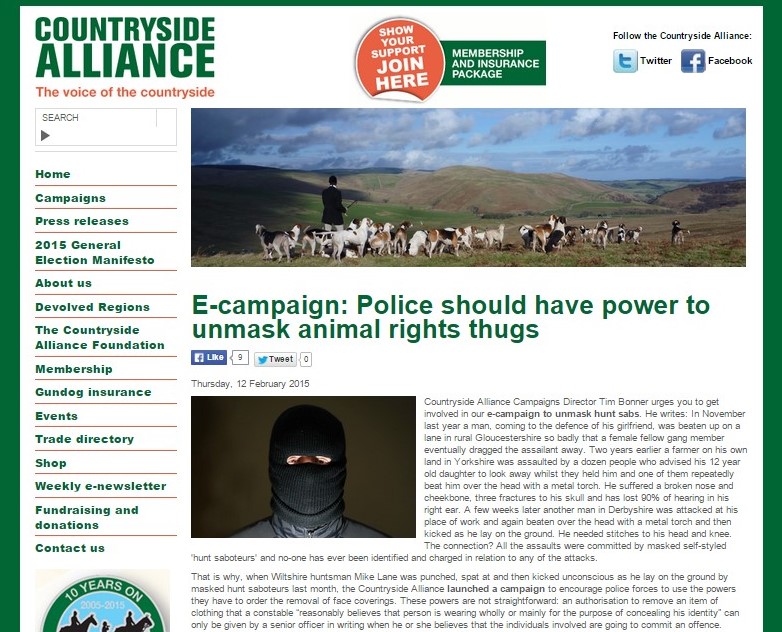
Amusingly, this shocking video footage coincides with a campaign currently being run by the Countryside Alliance who are lobbying for police to ‘unmask’ hunt sabs. In the longer term, they also want the next Government to review the law around wearing balaclavas. You can read their campaign notes here – and they really are worth a few minutes of your time. The Countryside Alliance should be careful what they wish for – there’ll be a lot of gamekeepers who won’t be happy if they’re banned from covering their faces while committing their crimes (see recent convictions of balaclava-wearing criminal gamekeepers such as George Mutch and Glenn Brown).

Countryside Alliance masked thugs - Copy

Hen harrier: ’cause of death withheld’

hh LAURIE CAMPBELLLast June we blogged about an illegally-killed hen harrier that had been found dead on moorland near Muirkirk in south west Scotland. The adult female’s corpse was discovered close to a nest containing two live chicks (see here).

At the time, Police Scotland refused to reveal the cause of death. Det. Inspector Graham Duncan of Kilmarnock CID was quoted as follows:

Whilst at this time we cannot divulge how the bird was killed, we do believe it was the result of a criminal act and we need to establish why this has happened“.

Pretty much everyone  in the country will know exactly ‘why this has happened’ – well, everyone it seems except Kilmarnock CID.

We suggested the harrier had probably been shot, although one of our readers commented that it could also have been clubbed to death – as has happened previously to hen harriers at Muirkirk.

Eight months on and the cause of death is still being withheld. Here’s what the latest SASA report says about this case:

Cause of death withheld due to specialist knowledge‘.

Marvellous.

It’s also interesting to note that SNH has not enforced a General Licence restriction on the land where this bird was found. Just as we discussed yesterday with the case of the poisoned red kite (see here), the illegal killing of this harrier seems to meet all the criteria needed for immediate enforcement action:

This hen harrier is not the first to be illegally-killed in the Muirkirk area – it’s one of many in a long, long line – read this article from 2008(!) detailing what was going on in this so-called Hen Harrier Special Protection Area; the conservation impact of killing a hen harrier is obvious; and the evidence [her carcass] was fresh.

So why the delay in enforcement?

Why is it so difficult to get the police (and in this case, SNH) to do their jobs properly?

SNH slow to enforce general licence restriction for poisoned red kite

It’s been four months since SNH set in place its procedures for restricting the use of General Licences on land where evidence of raptor crime is apparent.

Rolled out on 6th October 2014 (see here), this new measure was to be back-dated to incidents that have occurred since 1st January 2014. And there are plenty of those, some of which have reached the public domain and some of which have been deliberately kept quiet.

One of those which has been kept quiet is the illegal poisoning of a red kite which was found dead in central Scotland last July (seven months ago). It had died after ingesting the banned poison Carbofuran.

A couple of weeks ago we blogged about this particular case (see here) and we encouraged blog readers to email Andrew Bachell, SNH’s Director of Operations, to ask whether a General Licence restriction had been enforced. Here’s his response:

Dear XXXXX

Thank you for your e-mail. No restrictions have yet been implemented on a General Licence, including for this case.

We all find crimes such as these abhorrent and we, along with Scottish Ministers are fully committed to tackling wildlife crime. The restrictions on the use of General Licences are one tool we can use to help. In order to do so, we have been meeting regularly with the Police to review and discuss all evidence of bird-crimes that occurred in 2014 in line with our decision-making framework (see http://www.snh.gov.uk/docs/A1417398.pdf).

This document highlights that the decision to restrict the use of a General Licence will be based on evidence provided by Police Scotland and will be made on a case-by-case basis. In making a decision each piece of evidence will be assessed against criteria including:

– The strength of evidence that those activities had been carried out by owners or managers of that land

– The number or frequency of such instances

– The actual or potential conservation impact of those activities;

– The age of the evidence.

– Any history of previous, similar instances.

Whilst no restriction has yet been published, as soon as we were informed by Police Scotland about this case it has been under consideration by SNH against these criteria and we have been in close contact with the Police as the investigations continue. We will publish any restrictions on the website as and when they are implemented. In the meantime, I trust you can understand we cannot discuss individual cases, and particularly ones which are subject to ongoing police investigations such as this one.  

Yours sincerely

Andrew Bachell

Director of Operations

Scottish Natural Heritage

It’s a predictable response in that it doesn’t tell us very much other than the case is under consideration. What it doesn’t explain is the delayed enforcement action. When you consider that the decision whether or not to restrict the General Licence is based on a civil burden of proof rather than a criminal burden of proof (i.e. a conviction), it’s not clear why SNH is waiting to hear about the on-going police investigation. When you look at the other criteria that SNH is using to assess these cases, we believe the criteria for enforcement action have been met: This poisoned red kite is not the first case of raptor persecution in this area (although no known prior convictions but that shouldn’t matter because criminal burden of proof isn’t required); the conservation impact of poisoning a red kite is obvious; and the poisoned carcass (i.e. the evidence) was fresh enough for SASA to determine that the bird had been poisoned by Carbofuran.

So why the delay?

Perhaps we’re being unfair and SNH has already issued a restriction notice and it has been challenged/appealed by the landowner (as is his/her right under the terms of SNH’s restriction framework). Indeed, we’d be extremely surprised if any landowner didn’t challenge/appeal a restriction of this type, given the problems of using a civil burden of proof for enforcement measures.

This case will be an interesting one to watch. Let’s hope that whatever the outcome, SNH will demonstrate some transparency and explain the reasons for either the failed or successful enforcement.

Red kite photo by David Tomlinson

Case against Michael Johnston: part 2

Criminal proceedings against Michael Johnston have continued at Dumfries Sheriff Court.

Johnston, 45, of Eastriggs in Dumfriesshire has been accused of being in possession of the banned poison Strychnine in April 2014, as well as a number of other alleged offences. He has pleaded not guilty.

This case will continue on 24th February 2015.

Previous blog on this case here.