New BBC documentary provides shocking insight into appalling crimes on Auch Estate, Bridge of Orchy

A new BBC documentary aired last night that charts the police investigation into a missing charity cyclist, Tony Parsons, who vanished at the Bridge of Orchy in 2017 and whose remains were found three years later buried in a stink pit on the Auch Estate.

The programme follows the criminal trial of twin brothers Alexander (Sandy) and Robert McKellar from the Auch Estate, initially charged with murder but in 2023 Alexander was eventually convicted for the lesser offence of culpable homicide and Robert for attempting to defeat the ends of justice.

This case was of interest to me because the Auch Estate was at the centre of another criminal investigation in 2009 after walkers discovered a dead Golden Eagle. Tests revealed it had been illegally poisoned with the banned pesticide Carbofuran.

In 2012 Auch Estate farm manager Tom McKellar was convicted and fined £1,200 for possession of Carbofuran (not for poisoning the eagle, even though he had reportedly admitted during interview of putting out poisoned baits). He was also found to be in possession of two unlicensed handguns but instead of receiving a mandatory five-year custodial sentence he was given a 300-hour community service order.

From the Guardian, June 2009

The new BBC documentary provides a fascinating insight into the difficulties of investigating serious crime on a remote rural estate and the parallels with investigations into illegal raptor persecution in these glens will not be lost on blog readers. The ease with which the McKellar twins could hide their appalling crimes for so long is sobering.

The two-episode programme is available on BBC iPlayer (Murder Case: The Vanishing Cyclist).

Cyclist’s body found buried in stink pit on infamous Auch Estate

There was a pretty gruesome criminal case taking place at the High Court in Glasgow last week relating to the infamous Auch Estate at the Bridge of Orchy.

Long-term blog readers may well remember the Auch Estate – a deer-stalking and fishing sporting estate where a poisoned golden eagle was found in June 2009 along with a carbofuran-killed fox and a carbofuran-laced sheep carcass. The discovery led to a raid at the farm manager’s home where Carbofuran was discovered in a game bag and two illegal handguns were discovered in the loft.

Three years later after prolonged legal proceedings, farm manager Tom McKellar (then aged 50) was convicted for having possession of the banned pesticide Carbofuran, although he wasn’t charged with poisoning the golden eagle or placing the poisoned bait. He was given a pathetic £1,200 fine for possession of Carbofuran and a 300-hour community service order for possession of the two handguns, a crime which would normally have attracted a mandatory five year custodial sentence (see here and here for some background to that case).

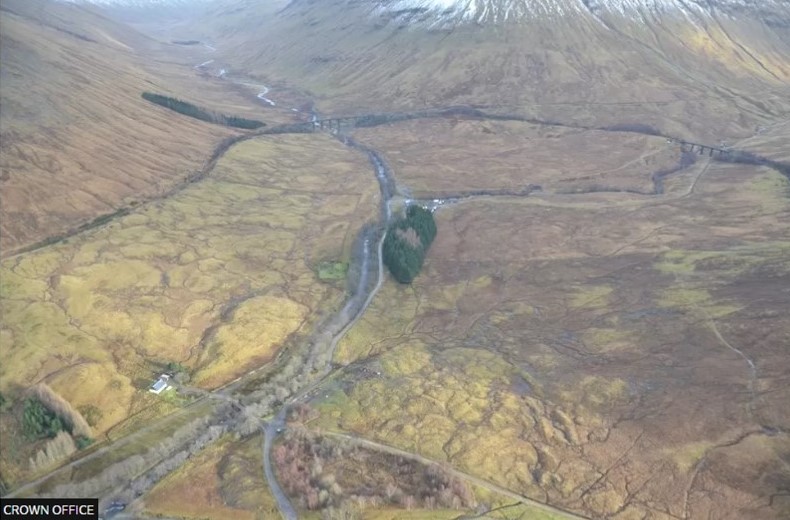
Aerial view of Auch Estate. Photo: Crown Office

The case heard last week at Glasgow High Court centred on twin brothers Alexander and Robert McKellar (now aged 31). In September 2017 after drinking with a German hunting party at a local hotel, Alexander McKellar’s vehicle hit a charity cyclist, Tony Parsons, who was cycling on the A82, causing him serious injury. Instead of helping him, the two brothers drove back to Auch Estate (where they were reportedly self employed farm workers living with their parents – Alexander McKellar was also reported to be a deer stalker), dumped their phones and changed vehicle and went back to pick up Tony Parson’s body, bike and possessions, and drove back to the estate and initially hid Mr Parsons in a wood.

They later removed him from the wood and took him to another location on the estate, reported in court as a location used for “the purposes of disposing dead animals”, in other words, a stink pit. There they dug a grave and buried Mr Parsons and burned his possessions.

Mr Parson’s remains were not discovered until January 2021 after a girlfriend of one of the McKellar brothers told police she’d been shown the grave site in 2020. Prior to her report, in 2018 the police had been tipped off to “pay attention” to the McKellar twins and had visited the estate in January 2019 but were apparently ‘asked to leave’.

Details of the case can be read here, here and here.

The McKellar brothers were due to stand trial for the murder of Mr Parsons but the court has accepted a not guilty plea from Robert McKellar and a guilty plea from Alexander McKellar to a lesser charge of culpable homicide. Both have pleaded guilty to attempting to defeat the ends of justice. They will be sentenced on 25th August at Glasgow High Court.

Let’s hope there’s some justice for Tony Parsons and his family.

UPDATE 4th August 2023: More detail emerges about McKellar twins who buried cyclist’s body in stink pit on Auch Estate (here)

UPDATE 25th August 2023: McKellar twins from Auch Estate sentenced for killing cyclist & burying his body in a stink pit (here)

Millden is yet another grouse-shooting estate to be sanctioned after police find evidence of raptor persecution

Further to this morning’s news that Millden Estate in the Angus Glens has been slapped with a three-year General Licence restriction after evidence was found of raptor persecution crimes (see here), it’s worth examining the background to this case.

Millden is one of a number of grouse-shooting estates situated in the Angus Glens that has featured many, many times on this blog (see here for all Millden posts).

Location of Millden Estate in the Angus Glens. Estate boundaries sourced from Andy Wightman’s Who Owns Scotland website

Millden Estate first came to my attention in July 2009 when a young satellite-tagged golden eagle called Alma was found dead on the moor – she’d ingested the deadly poison Carbofuran (here). It wasn’t clear where she’d been poisoned and the estate denied responsibility.

Then in 2012 there was the case of another satellite-tagged golden eagle, believed to have been caught in a spring trap on Millden Estate before moving, mysteriously, several km north during the night-time only to be found dead in a layby with two broken legs a few days later (here and here). The estate denied responsibility and the Scottish Gamekeepers Association conducted an ‘analysis’ (cough) and deduced it was all just a terrible accident (here).

There have been other incidents – former Tayside Police Wildlife Crime Officer Alan Stewart describes ‘a horrendous catalogue of criminality’ recorded on Millden Estate during his time (see here). However, despite this history, nobody has ever been prosecuted for raptor persecution crimes on Millden Estate.

Today’s announcement from NatureScot that a General Licence restriction has been imposed on Millden Estate is the first sanction I’m aware of at this location. It has been imposed after three shot buzzards were found in bags outside two gamekeeper’s cottages during an SSPCA-led investigation into badger-baiting and other animal-fighting offences in 2019.

That investigation led to the successful conviction in May 2022 of depraved Millden Estate gamekeeper Rhys Davies for his involvement in some sickening animal cruelty crimes (see here). Despite his conviction, Millden Estate denied all knowledge of this employee’s criminal activities (here).

There hasn’t been a prosecution for the shooting (or possession) of those three shot buzzards, nor for the six other shot raptors found in a bag just a short distance from the Millden Estate boundary (here), and nor will there be, according to a statement provided to me by the Crown Office (here).

With this long history of un-attributable wildlife crime on and close to Millden Estate, the imposition of a General Licence restriction is welcome news, although in real terms it’s nothing more than a minor inconvenience to the estate. It doesn’t stop their legal killing of so-called pest species (e.g. crows) because all they have to do is apply for an Individual licence, which NatureScot will have to grant (although it can revoke an Individual licence if more evidence of crime emerges – as happened on Raeshaw Estate in 2017 – see here), and nor does it stop the legal killing of red grouse, pheasants or red-legged partridge by paying guests.

This photograph appeared on social media in 2017 titled ‘Team Millden’ and shows a bunch of blokes dressed in Millden tweed grinning inside the estate’s larder after a day’s grouse shooting.

I’ve written about the monumental ineffectiveness of General Licence restrictions many times (e.g. see hereherehereherehere) and my view hasn’t changed. The only weight that a General Licence restriction carries is a reputational hit for the estate on which it is imposed, which was the Environment Minister’s aim when GL restrictions were first mooted (here).

This is useful from a campaigner’s perspective because it allows us to demonstrate that raptor persecution continues on Scottish grouse moors, despite the absurd denials of senior industry representatives (e.g. see here).

But it doesn’t stop the estate’s business activities. You might think that others in the industry, or even elected politicians, would shun a restricted estate but that simply doesn’t happen (e.g. see here and here).

And nor is it an effective deterrent – Leadhills Estate, a grouse moor in South Lanarkshire, was slapped with a second General Licence restriction after ‘clear evidence’ of wildlife crime was uncovered whilst the estate was still serving its first restriction notice (see here)!

Given the current number of grouse-shooting estates serving General Licence restrictions after ‘clear evidence’ of wildlife crime was provided by Police Scotland: Leadhills Estate (here), Lochan Estate (here), Leadhills Estate [again] (here), Invercauld Estate (here), Moy Estate (here) and now Millden Estate (here), it’s clear that the Scottish Government’s proposed grouse-shoot licensing scheme can’t come soon enough.

There are strong rumours that the Wildlife Management (Grouse) Bill will be presented to the Scottish Parliament before Easter and many of us are eagerly awaiting its publication to see the details of what is proposed and, importantly, how it will be enforced.

One thing’s for sure, it will need to be a lot more robust than the General Licence restriction and any sanctions, which should hopefully include terminating an estate’s ability to continue gamebird shooting during a determined-sanction period, will need to be deployed a lot quicker than the time it takes for a General Licence restriction to be imposed (it’s taken four years for the GL restriction to be placed on Millden Estate).

UPDATE 10th March 2023: Millden Estate says it will appeal General Licence restriction imposed after evidence of raptor persecution (here)

A poisoned sparrowhawk, a poisoned bait, and a Royal estate in Norfolk

A couple of months ago an article was published in the Mail on Sunday about the ‘mysterious’ death of a satellite-tagged goshawk on the Queen’s Sandringham Estate in Norfolk (see here).

We blogged about it (here) and mentioned a number of other raptor-related police investigations that had been undertaken on or near the estate. On the back of that blog, somebody contacted us and asked why we hadn’t included on our list ‘the confirmed illegal poisoning of a sparrowhawk a few years ago’? We hadn’t included it because we didn’t know anything about it, so we thought we’d do some digging.

First of all we did a general internet search. If there had been a confirmed raptor poisoning on the Queen’s Sandringham Estate then surely that would have made a few headlines, right? We didn’t find any record of it.

So then we started looking at the government’s database on pesticide misuse and abuse (the Wildlife Incident Investigation Scheme, often shortened to ‘the WIIS database’). In that database we found the following entry:

Although this entry showed that a poisoned sparrowhawk and a poisoned bait had been discovered in Norfolk in October 2009, as usual, no specific location was given. We were, however, intrigued by the ‘Notes’ column, that said even though a confirmed poisoning had occurred, the police were ‘not taking this forward’ and instead the CRD (Chemical Regulation Directorate, which is part of the Health & Safety Executive) had ‘sent a warning letter to the estate’.

So we thought we’d submit an FoI to the CRD to ask for a copy of that warning letter, because it might reveal the name of the estate where the poisoned sparrowhawk and poisoned bait had been found. We were also curious about the content of that warning letter – if there had been a confirmed poisoning, why was a warning letter considered to be a preferred option to a prosecution?

We’ve now received the FoI response and have been working our way through the various files.

The first file we looked at was a series of correspondence letters between the CRD and the estate. The estate’s name had been redacted throughout. Hmm. The letters are really worth reading though – there are some pretty hostile attitudes on display and there’s clearly no love lost between CRD and the estate manager! Download here: CRD correspondence with Estate_2010

There’s also a letter from a Natural England officer to the estate, asking for various documents relating to pesticide risk assessments, gamekeeper contracts, and gamekeeper training certificates: Natural England letter to Estate 19Oct2009

We gathered from the CRD/estate correspondence that no further evidence of Bendiocarb had been found during a Police/Natural England search of the estate which is presumably why Norfolk Police didn’t charge anybody for the poisoned sparrowhawk and poisoned bait, because there was no way of linking it to a named individual. Anybody could have placed the poisoned bait. But a series of alleged offences relating to pesticide storage had apparently been uncovered and it was these issues to which the CRD warning letter referred, although it’s clear from the estate’s letters to CRD that the estate disputed the alleged offences.

While that’s all very interesting, we were still in the dark about the name of the estate where all this had happened. That is, until we read another file that had been released as part of the FoI: CRD_lawyer discussion of FEPA exemption

This file contains correspondence between the CRD and a number of lawyers. They were discussing whether the estate had exemption under Section 20(5) of the Food and Environment Protection Act 1985 (FEPA). This exemption applies to land that is owned ‘in Crown interest’. There was a great deal of discussion about whether this estate (name redacted) was owned by the Crown or was privately owned by the Queen.

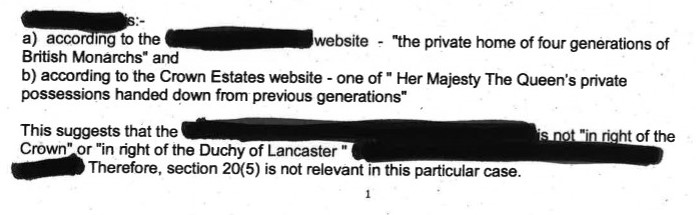
The lawyers decided that this estate (name redacted) was in fact privately owned by the Queen, and therefore exemption under Section 20(5) of FEPA did not apply. The lawyers had reached this conclusion after several internet searches on the status of this estate (name redacted) had been completed. What the FoI officer failed to do was redact the search phrases that had been used to reach their decision. Those search phrases included:

Now, if you Google the exact search phrase listed under (a) above (“the private home of four generations of British Monarchs“) you are directed to this website:

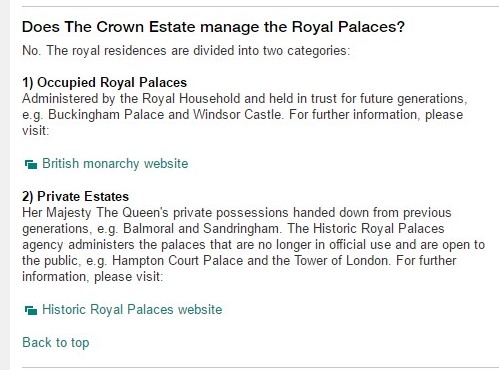
And if you go to the Crown Estates website and search for the exact search phrase listed in (b) above (“according to the Crown Estates website – one of Her Majesty the Queen’s private possessions handed down from previous generations“), you find this:

It’s all very interesting, isn’t it? This isn’t conclusive evidence that it was Sandringham Estate, of course, and there is no suggestion whatsoever that anyone associated with the Sandringham Estate was involved with placing a poisoned bait, although it is clear a poisoned sparrowhawk and a poisoned bait were found on a Royal estate in Norfolk (how many Royal estates are there in Norfolk?).

But what this does highlight, again, is the complete lack of transparency when the authorities investigate the discovery of highly toxic poisonous baits laid out on private estates with game-shooting interests, or the discovery of illegally killed raptors on privately owned estates with game-shooting interests.

Why has this case been kept secret since 2009?

Crown Office drops prosecution against Glenogil Estate gamekeeper

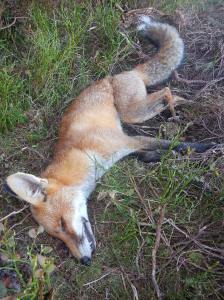
Snared fox dead alt, Glenogil Estate, Credit OneKindRegular blog readers will know we’ve been following the case of Scottish gamekeeper William Curr, who had been charged last year with alleged snaring offences on Glenogil Estate in the Angus Glens, said to have occurred in September 2014 (see here, here, here and here).

The charges related to allegations that several snares had not been checked (as they are required to be) within a 24-hour period of being set, after a field officer from the charity OneKind had discovered a dead snared deer, a dead snared fox and another snared fox that was still alive but had to be euthanised at the scene due to the extent of its horrific injuries (see OneKind photo).

For a harrowing description of what was found on Glenogil Estate, including a confrontation with the Head Gamekeeper, read this blog on the OneKind website.

Curr’s trial was due to start on 9th May but last week (10 March) the Crown Office informed the court that it was not going to proceed. OneKind has not yet been able to ascertain the reason for this decision, and in fact may never find out because the Crown Office is under no obligation to explain.

Accountability and transparency, anybody?

To quote from the OneKind blog:

OneKind is mystified by the dropping of this case, given the eye witness evidence, the horrific video footage and the detailed follow-up investigation carried out by the Scottish SPCA. This was a shocking incident where at least six people, including gamekeepers, witnessed the terror and pain of a live fox as the wire noose of a snare sliced into its abdomen. Had our research officer not been on the estate on that particular day, who knows how much longer the fox would have continued to suffer?

To put this dreadful story in the wider context: snares are still legal in Scotland and the rest of the UK. It is simply intolerable that the suffering this fox endured should be considered legally acceptable. The video footage is utterly harrowing and illustrates an animal which is clearly distressed, both physically and mentally. OneKind has long called for an outright ban on all snares and sadly we feel these calls have been justified by this case.

OneKind will seek an explanation for the failure of the Scottish justice system to bring this animal welfare case to court“.

The reason we’ve been so interested in this case is because the alleged offences occurred on the Glenogil Estate, one of several grouse shooting estates in the Angus Glens where wildlife crime incidents keep cropping up but have never resulted in a successful prosecution. For example, here are some incidents reported from in and around Glenogil over the last ten years:

2006 March: poisoned rabbit bait (Carbofuran). Listed as ‘Glenogil’ in RSPB annual report. No prosecution.

2006 April: poisoned buzzard (Alphachloralose). Listed as ‘Glenogil’ in RSPB annual report. No prosecution.

2006 April: poisoned tawny owl (Alphachloralose). Listed as ‘Glenogil’ in RSPB annual report. No prosecution.

2006 May: poisoned rabbit bait (Carbofuran). Listed as ‘Glenogil’ in RSPB annual report. No prosecution.

2006 June: poisoned woodpigeon bait (Carbofuran). Listed as ‘Glenogil’ in RSPB annual report. No prosecution.

2006 June: Traces of Carbofuran found in estate vehicles & on equipment during police search. Not listed in 2006 RSPB annual report but reported here. (Now former) estate owner John Dodd had £107k withdrawn from his farm subsidy payments as a result. This was being appealed but it is not known how this was resolved. Also a write up in RSPB 2007 annual report. No prosecution.

2007 November, Glenogil Estate: Disappearance of radio-tagged white-tailed eagle ‘Bird N’ coincides with tip off to police that bird been shot. No further transmissions or sightings of the bird. Not listed in RSPB annual report but reported here. No prosecution.

2008 May: poisoned white-tailed eagle ‘White G’ (Carbofuran, Isophenfos, Bendiocarb). Listed as ‘Nr Noranside’ in RSPB annual report. No prosecution.

2008 May: poisoned buzzard (Bendiocarb). Listed as ‘Nr Noranside’ in RSPB annual report. No prosecution.

2008 May: poisoned mountain hare bait (Carbofuran, Isophenfos, Bendiocarb). Listed as ‘Nr Noranside’ in RSPB annual report. No prosecution.

2008 May: 32 x poisoned meat baits on fenceposts (Carbofuran, Isophenfos, Bendiocarb). Listed as ‘Nr Noranside’ in RSPB annual report. No prosecution.

2008 October: poisoned meat bait on fencepost (Carbofuran). Listed as ‘Nr Noranside’ in RSPB annual report. No prosecution.

2009 March: poisoned buzzard (Carbofuran). Listed as ‘Glenogil’ in RSPB annual report. No prosecution.

2009 March: poisoned buzzard (Carbofuran). Listed as ‘Glenogil’ in RSPB annual report. No prosecution.

2009 August: poisoned white-tailed eagle “89” (Carbofuran). Listed as ‘Glenogil’ in RSPB annual report. No prosecution.

2010 May: poisoned red kite (Carbofuran). Listed as ‘Nr Noranside’ in RSPB annual report. No prosecution.

2010 September: poisoned buzzard (Chloralose). Listed as ‘Glenogil’ in RSPB annual report. No prosecution.

2010 October: poisoned buzzard (Carbofuran). Listed as ‘Glenogil’ in RSPB annual report. No prosecution.

2010 October: poisoned pigeon bait (Carbofuran). Listed as ‘Glenogil’ in RSPB annual report. No prosecution.

2010 October: poisoned pigeon bait (Carbofuran). Listed as ‘Glenogil’ in RSPB annual report. No prosecution.

2012 April: Remains of buzzard found beside pheasant pen. Listed as ‘Nr Noranside’ in RSPB annual report. No prosecution.

2014 June: shot buzzard. Listed as ‘Glenogil’ in RSPB annual report. No prosecution.

More raptor persecution uncovered in the Scottish Borders

We’re still working our way through RSPB Scotland’s recently published twenty-year review (see here) and what a fascinating read it’s proving to be. We’ve already blogged about two things that caught our eye (see here and here), and now here’s the third.

On page 14 of the report, the following has been written:

Lines 5, 6 and 7 of Table 4 describe the finding at one site, in an area intensively managed for driven grouse shooting, of a set crow trap, hidden within a small area of woodland, which was found to contain two feral pigeons indubitably being used as illegal lures to attract birds of prey. Under a tree, only a few metres away, were found the decomposed carcasses of four buzzards that had been shot, while a short distance from the crow trap a pigeon was found in a small circular cage, with four set spring traps set on the ground, hidden under moss, attached to the trap“.

Here’s a copy of Table 4, with lines 5, 6 and 7 highlighted:
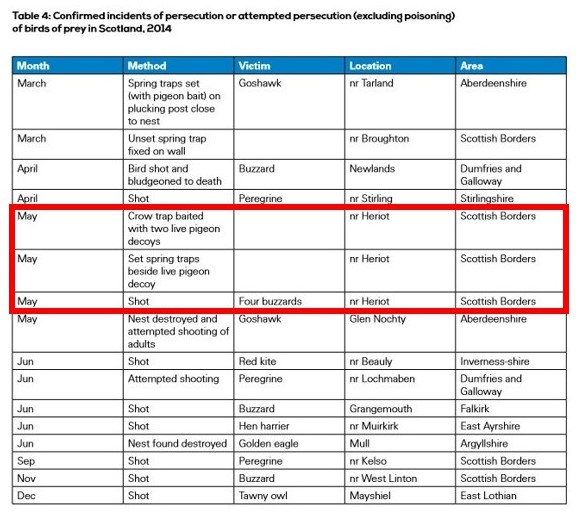
Nr Heriot 2014

Also included in the report is a photograph of the pigeon inside a small cage with the four set spring traps hidden under moss:
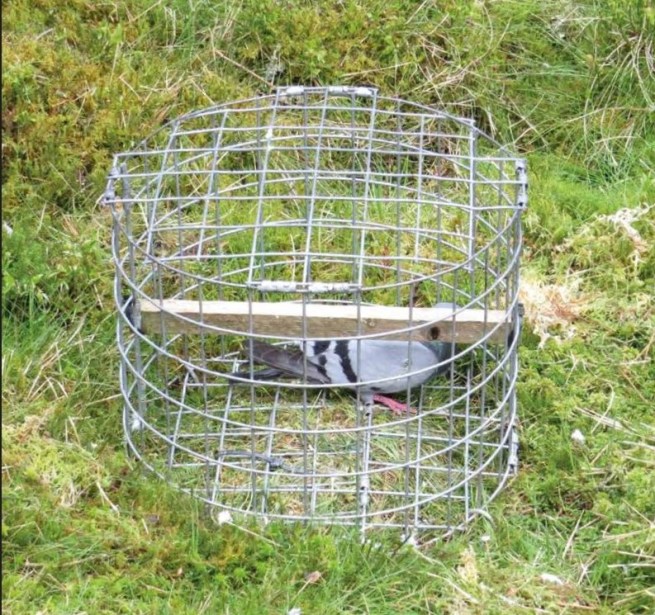
Pigeon in trap Heriot 2014

So, according to the RSPB report, these offences were uncovered in May 2014 on a driven grouse moor in the Borders, with the location given as “nr Heriot“. Funny, we don’t remember seeing anything in the press about these crimes.

Hmm. Could these wildlife crimes be in any way related to SNH’s recent decision to serve a General Licence restriction order on parts of the Raeshaw Estate and Corsehope Estate (see here)? Both Raeshaw Estate and neighbouring Corsehope Estate can be described as being ‘nr Heriot’; indeed, the recorded property address for Raeshaw Estate is given as ‘Raeshaw House, Heriot, EH38 5YE’ (although the owner is only listed as Raeshaw Holdings Ltd., registered in the Channel Islands, natch), according to Andy Wightman’s excellent Who Owns Scotland website. And according to SNH, the General Licence restriction order on these two estates was served due to “issues about the illegal placement of traps” (see here). It’s possible that they’re connected, but it’s also possible that these crimes are unconnected with SNH’s General Licence restriction order on these two estates because Raeshaw isn’t the only grouse moor that could be described as being ‘nr Heriot’. Unfortunately, the (lack of) detail available in the public domain doesn’t allow us to be conclusive. Perhaps there’ll be some transparency once the legal arguments (see here) about the General Licence restrictions have concluded (which should happen fairly soon). Then again, perhaps there won’t.

If these crimes were not uncovered on either the Raeshaw or Corsehope Estates, we hope there’ll at least be a General Licence restriction order served on whichever grouse moor these traps were found because there’s been a clear breach of the General Licence rules – pigeons are not permitted as decoy birds in crow cage traps; set spring traps are not permitted out in the open; oh, and shooting buzzards is also illegal. There should also be a prosecution of course, but that’s highly improbable given the track record of non-prosecutions for raptor crimes uncovered in this part of the Borders.

There’s been a long history of raptor persecution “nr Heriot“, dating back to at least 2001. Here’s a list we’ve compiled of confirmed raptor persecution crimes, all listed within RSPB annual reports:

2001 May: poisoned buzzard (Carbofuran) “Heriot Dale”. No prosecution

2003 Feb: poisoned buzzard (Carbofuran) “Heriot”. No prosecution

2003 Mar: poisoned buzzard (Carbofuran) “Heriot”. No prosecution

2003 Apr: poisoned buzzard (Carbofuran) “Heriot”. No prosecution

2003 Nov: poisoned buzzard (Carbofuran) “Heriot”. No prosecution

2004 Feb: Carbofuran (possession for use) “Heriot”. No prosecution

2004 Feb: two poisoned buzzards (Carbofuran) “Heriot”. No prosecution

2004 Oct: poisoned buzzard (Carbofuran) “Heriot”. No prosecution

2005 Dec: poisoned buzzard & raven (Carbofuran) “Heriot”. No prosecution

2006 Sep: poisoned buzzard (Carbofuran) “Heriot”. No prosecution

2006 Oct: poisoned buzzard (Carbofuran) “Heriot”. No prosecution

2009 Mar: two poisoned buzzards (Carbofuran) “nr Heriot”. No prosecution

2009 Jun: poisoned red kite (Carbofuran) “nr Heriot”. No prosecution

2009 Jun: 4 x poisoned baits (2 x rabbits; 2 x pigeons) (Carbofuran) “nr Heriot”. No prosecution

2010 Nov: poisoned buzzard (Carbofuran) “nr Heriot”. No prosecution

2011 Jan: poisoned buzzard (Carbofuran) “nr Heriot” No prosecution

2013 Jun: shot + poisoned buzzard (Carbofuran) “nr Heriot”. No prosecution

2014 May: crow trap baited with two live pigeon decoys “nr Heriot”. Prosecution?

2014 May: four set spring traps beside live pigeon decoy “nr Heriot”. Prosecution?

2014 May: four shot buzzards “nr Heriot” Prosecution?

Not included in an RSPB annual report (because it happened this year): 2015 Jul: shot buzzard “found by side of road between Heriot and Innerleithen” according to media reports (see here). Prosecution?

Interestingly, also not included in the RSPB’s annual reports but reported by the Southern Reporter (here) and the Guardian (here), a police raid on Raeshaw Estate in 2004 uncovered nine dead birds of prey, including five barn owls, two buzzards, a kestrel and a tawny owl, described as being “poisoned or shot“. In addition, “a number of illegal poisons were discovered but no-one was ever prosecuted“. According to both these articles, during a further police raid on Raeshaw in 2009 ‘three injured hunting dogs were seized by the SSPCA on suspicion of involvement with badger baiting’. We don’t know whether that resulted in a prosecution.

Also not included in the above list is the sudden ‘disappearance’ of a young satellite-tagged hen harrier in October 2011. This bird had fledged from Langholm and it’s last known signal came from Raeshaw Estate. A search failed to find the body or the tag.

Fascinating stuff.

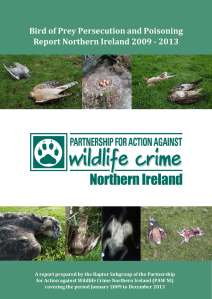
New report highlights raptor persecution in Northern Ireland

PAWNI Report 2009-2013The first ever ‘official’ report on raptor persecution in Northern Ireland has been published.
The report was prepared by the Raptor Subgroup of the Partnership for Action Against Wildlife Crime in Northern Ireland (PAWNI) – group members include the Northern Ireland Raptor Study Group (NIRSG), Police Service of Northern Ireland (PSNI), Northern Ireland Environment Agency (NIEA), Royal Society for the Protection of Birds (RSPB) and the National Wildlife Crime Unit (NWCU).

The report details confirmed raptor persecution crimes between 2009-2013, including location maps. A total of 33 raptors were confirmed to have been illegally killed during this five-year period, with buzzards, red kites and peregrines the most frequent victims but other species included golden eagle, white-tailed eagle, merlin and sparrowhawk.

The report serves a useful purpose to focus attention on the extent of raptor persecution in Northern Ireland and to encourage members of the public to report suspicious activity in their areas. It is anticipated that an annual persecution report will be published in future years.

NIRSG press release here

Read the report here

Buzzard with bait NI

Henry’s Tour: Day 19

Fri 24 April Copy

Henry went for a skydance across the lawns of Holkham Hall in north Norfolk.

This place is home to Viscount Coke, Vice Chairman of the Board of Trustees of that well-known raptor-loving organisation Songbird Survival.

In 2000, a Holkham Estate gamekeeper was prosecuted for 17 offences including the shooting of two kestrels and the poisoning of a third. He kept his job on the estate. Case write-up here.

In 2009, a dead buzzard was found at Holkham. It had been shot. The Holkham Estate put up a £500 reward for information leading to a conviction, as did the RSPB. Nobody was ever prosecuted.

Henry didn’t see any female hen harriers during his visit but he did watch a buzzard and three red kites. One kite had what some would call the ‘Malta Moult’ – a large hole blown through the feathers of one wing.

Henry thought it was time to get out of Norfolk but not before he called in for tea and cake with the legendary Richard Porter, author of the 1974 classic Flight Identification of European Raptors. More recently, Richard’s studies on the local buzzard population helped to convict Stody Estate gamekeeper Allen Lambert. Lambert had claimed that the ten poisoned buzzards found on the Stody Estate had been killed elsewhere and then ‘dumped’ on his estate in an attempt to set him up. His defence was to claim that they couldn’t possibly have been poisoned at Stody because there weren’t that many local buzzards to start with. He hadn’t banked on the evidence of one of the world’s leading raptor ID experts, who had recorded 233 buzzard sightings and had counted 73 pairs. Oops.

Thurs 23 April  Copy


Benyon meets the raptors on his Scottish grouse moor

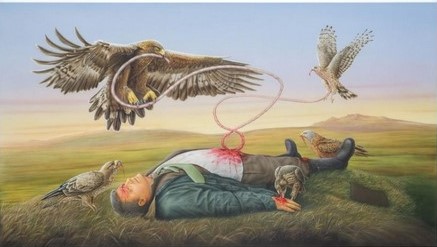
Turner Prize-winning artist Jeremy Deller (the guy who last year produced the image of a giant hen harrier carrying off a Range Rover – see here) has produced a new piece entitled: Monarchs of the Glen (Richard Benyon MP has an unexpected meeting on his grouse moor with some raptors).

Benyon by Deller

Some of you may remember we recently blogged about the discovery of a Carbofuran-poisoned raven on Benyon’s Scottish grouse moor back in 2009 (see here). We remarked on the lack of publicity about this discovery, especially as Benyon went on to serve as the DEFRA Minister who refused to criminalise the possession of Carbofuran in England, who decided there was no need to introduce vicarious liability in England, who applauded the ‘wonderful work of gamekeepers’, who was in charge when the controversial ‘buzzard management’ trial was proposed (and then quickly withdrawn), and who was in charge when a licence was issued to a gamekeeper with a previous conviction for poisoning offences to allow him to remove buzzard nests and eggs in order to protect his pheasants.

We’ve asked Benyon several times on Twitter whether he was informed about the discovery of the poisoned raven on his estate and if so, when he was told. He hasn’t responded. Perhaps Deller knows something we don’t!

Poisoned bird found on former DEFRA Minister’s grouse moor: why no publicity?

In February 2009, a dead raven was found on a Scottish grouse moor. Nothing surprising about that.

The dead raven was sent off to SASA for toxicology tests and their investigation concluded the bird had died from ingesting the banned poison, Carbofuran. Nothing surprising about that.

There wasn’t any subsequent publicity about this incident. Nothing surprising about that.

There wasn’t any subsequent prosecution. That’s kind of what we’ve come to expect so no surprises there, either.

However, this wasn’t just any old Scottish grouse moor. This was a grouse moor on Glenmazeran Estate in Inverness-shire. Glenmazeran Estate is, according to Andy Wightman’s brilliant website ‘Who Owns Scotland‘, owned by the Englefield Estate Trust Corporation Ltd, c/o Englefield Estate Office, Theale, Reading.

According to further information provided by the Who Owns Scotland website, “Englefield Estate Trust Corporation Ltd is a company registered in England No. 02065923. One of the beneficial owners is Richard Benyon, the Environment & Fisheries Minister in the UK Government (data accurate at August 2011)”.

At the time of this poisoned bird’s discovery, Mr Benyon MP was the Shadow Minister for the Environment, Food and Rural Affairs, until the 2010 general election when he entered Government. He was subsequently appointed the Parliamentary Under Secretary of State at DEFRA, with special responsibility for biodiversity and the natural environment, amongst other things, until he was booted out in Cameron’s reshuffle in October 2013.

While Mr Benyon was in post at DEFRA, the government sanctioned the controversial buzzard ‘management’ trial and committed £375k of taxpayers money to help support it (see here), although they swiftly backtracked after a huge public outcry against the plan (see here). However, the following year Natural England, acting on behalf of DEFRA, decided to go ahead and issue a licence (to a gamekeeper with a past conviction for wildlife crime) to destroy buzzard eggs and nests to protect pheasants (see here).

Mr Benyon also decided there was no need to introduce vicarious liability to England because “there are very good laws in place to punish the illegal killing of any animal. If they are not being effectively enforced, they must be and we will take steps to make sure that happens. However, this is a good opportunity to applaud gamekeepers for the wonderful work they do in providing excellent biodiversity across our countryside” (see here and here).

Mr Benyon also refused to criminalise the possession of the poison Carbofuran in England (see here and here).

These actions can be seen in a whole new light given what we now know was discovered on Glenmazeran Estate back in 2009.

Of course, the discovery of the poisoned raven on Glenmazeran doesn’t mean that Mr Benyon or anyone else connected with the estate was responsible. Some gamekeepers on some estates are known to place poisoned baits along the boundary of an estate, presumably to make any police investigation that much more difficult and to potentially deflect attention on to someone else. Glenmazeran is not known to us as an estate where frequent raptor persecution takes place, but it is situated in a notorious raptor persecution area and several other estates in the area are suspected to be regularly involved with criminal activity and some of them even have convictions for these offences.

What’s intriguing about the Glenmazeran incident is the complete silence about this case. Did the police (it would have been Northern Constabulary at the time) investigate? Did they search Glenmazeran or other nearby estates? Why didn’t they issue any media statements about this discovery? Would public knowledge of this incident have jeopardised Mr Benyon’s political career? It shouldn’t have, as he was never implicated in the crime, so why was it kept quiet?

What we do know is that the ‘landowner’ (whoever that was) was informed about the crime. This from the SASA report:

Raven found dead in remote area. The analytical investigation established that carbofuran poisoning was responsible for the bird’s death. The police have informed the landowner of the incident but the source of the chemical has not been established“.

Fascinating stuff.