Blog

Who’s fooling who?

Spinoculars at the ready, folks….

According to a new website, ‘Cairngorms Nature is a new partnership where people and organisations come together, regardless of sector or background, with one thing in common – a desire to safeguard and enhance the outstanding nature in the Cairngorms National Park’ (see here). An admirable project with an ambitious five-year action plan (see here) to be overseen and delivered by a ‘strategy group’ (see here for members).

Look closely at the detail of this action plan and you’ll find some barely believable action points that include:

Page 60 – Action: Restore the full community of raptor species. Key Partners:

(a) SGA and SLE to trial innovative techniques to increase raptor populations;

(b) Police Service, SLE, SGA, BASC to raise awareness and understanding, provide advice and training on wildlife legislation;

(c) Police Service to monitor wildlife crime in the national park;

(d) CNPA, SNH, SLE, SGA, RSPB to support collaboration to reduce conflicts in species and wildlife management.

Page 62 – Key species for focused action: Golden eagle. Key Actions:

(a) RSPB, CNPA, HFW and SNH to continue and expand Raptor Track project to gather data, raise awareness and understanding, and provide advice and guidance for land managers;

(b) SLE, SGA and SNH to work with moorland managers to manage mountain hare populations for the benefit of golden eagles.

In other unbelievable news, the latest SNH magazine has been published (#17, see here) and includes two contributed articles: one written by an employee of Scottish Land and Estates (page 34) and one by an employee of the Scottish Gamekeepers’ Association (page 54). Both articles, as well as a gushing editorial from SNH Chief Executive Ian Jardine (page 3) would have us believe that these two organisations are dedicated to protecting Scotland’s wildlife.

This magazine also includes an article about Scotland’s so-called Big Five, including the golden eagle (page 13). This is a carefully worded piece that totally ignores the species’ unfavourable conservation status and the reasons for that. The best line has to be: “There are reckoned to be around 440 pairs in Scotland, located mainly in the Highlands and Islands but with a presence in the Borders and Southern Uplands too“. I suppose “a presence” is one way of describing the golden eagle’s precarious status in southern Scotland, where they are barely hanging on by the tip of their talons thanks to the effect of illegal persecution (e.g. see here).

And finally, if you haven’t read enough guff,  the SGA’s Bert Burnett treats us to his thoughts on climate change [since deleted from SGA website] – a worthy contender for a scholarship at the Sarah Palin Institute of Scientific Understanding.

Environment Minister’s response to continuing raptor persecution

On October 10th 2012, one month into his job, Environment Minister Paul Wheelhouse made the following statement in response to the huge public uproar about the death of the Deeside eagle (see here) –

The unlawful killing of any raptors has no place in today’s Scotland and we will continue to work hard to eradicate this criminal activity. We believe that the partnership approach with the Partnership for Action Against Wildlife Crime (PAW) Scotland, is bringing the reduction in bird of prey poisoning that can be seen in the statistics in recent years. However we are not complacent and if there is evidence of a switch to other methods of persecution we will take action to bear down on those methods“.

He made a further statement on 28th November 2012 following the discovery on an Aberdeenshire estate of a hen harrier that had been shot dead (see here) –

We will not tolerate the illegal persecution of protected species such as the hen harrier and, as I have said recently in relation to another shooting [presumably the shot golden eagle found critically injured on an estate in south west Scotland – see here] I am prepared to look at further measures to strengthen and assist enforcement if we continue to see this flouting of the law in respect of protected species“.

Since then a number of further persecution incidents have taken place, some of which have made it into the public domain, whereas others are still being treated as closely-guarded secrets by Police Scotland (why is that, several months after the crimes were discovered?). The ones that have been publicised include:

1. A dead buzzard at Glasserton Estate, Whithorn that was discovered in December 2012 but not reported in the media until 6 March (see here). The press release was vague but we assume this buzzard had been poisoned judging by the location of known poisoning incidents that were included in the PAW Scotland 2012 poisoning maps.

2. A dead buzzard that had been found by the side of a road in Stirlingshire in early February 2013 – later tests showed it had been shot (see here).

3. A dead buzzard that had been found near St Mary’s Loch in the Borders in early March – it had been shot (see here). Following this incident, we tweeted Paul Wheelhouse and asked him if he was ready to take the action he’d promised (see here). He replied: “I will say more when I have a full briefing but my first reaction is instinctive – I’m both disgusted and very much angered“. Seven weeks later we’re still waiting for his statement.

In early April it was reported that the shot golden eagle that had been found on a grouse moor in south west Scotland had finally succumbed to its injuries (see here). This news prompted us to encourage readers to write to Paul Wheelhouse, again, and ask him whether he was now ready to take the action he’d promised. We know that over 100 of you sent emails to him. In early May he responded. The following email is an example of one of the generic responses that were sent out by his aide:

Thank you for your letter to the Minister for Environment and Climate Change, Mr Paul Wheelhouse. I have been asked to respond.

The Minister was saddened to hear that the golden eagle in the care of the SSPCA had to be put to sleep on veterinary advice, due to underlying health conditions as it had been hoped initially that the eagle would make a full recovery. This case involves an ongoing Police and SSPCA investigation, so further comment on that incident is inappropriate.

The Minister welcomed a reduction in confirmed poisoning figures for raptors in March 2013, however he did recognise that other forms of persecution do exist and he has already committed to looking at the development of further measures to end raptor persecution if other methods of persecution prove to be on the increase. Vicarious Liability provisions which came into force in 2012 are still to be tested in court and it is critical to assess the impact of the legislation by this means.

The difficulties in prosecuting wildlife crimes are well documented. Recognising the specialist nature of the investigations required, and legislation covering such criminality, the Crown Office and Procurator Fiscal Service created specialist wildlife and environmental fiscals in 2011. Police reform has also implemented changes with regard to the structure and coordination of wildlife crime officers with a net increase in officers with relevant responsibilities. These changes combined will continue to shape improvements in wildlife crime detection, investigations and prosecutions.

Tackling wildlife crime is a priority for the Minister and he stands by previous comments that he is not prepared to allow these crimes to continue unabated, and without consequence. Partnership working via the Partnership for Action Against Wildlife Crime (PAW) Scotland, which is chaired by the Minister, is key to progress and this path will also continue to be used to deliver a reduction in wildlife crime.

Yours faithfully,

Karen Hunter

Wildlife Crime Policy Officer

It seems to us that Paul Wheelhouse is good on rhetoric but not so good on action. Very disappointing but not at all surprising. It’ll be interesting to see how he responds when he hears about the other examples of ‘continued flouting of the law’, that have happened right under his nose. He might want to have a chat with Police Scotland and ask them what they’re keeping from public view, and why……

More delay in case against 3 Morvich Estate gamekeepers

00143855The second intermediate diet took place on Monday 13th May in the case against three gamekeepers from Morvich Estate in Sutherland who face charges relating to a number of alleged wildlife crime offences.

There was a further adjournment at Dornoch Sheriff Court at the request of the defence to allow more time for further preparation. The next intermediate diet will take place on 25th June.

For background on the case see here and here.

Rutland ospreys to be sat-tagged as a persecution deterrent

_67572148_ospreytrackerThree adult ospreys at Rutland Water are to be fitted with GPS tags in an effort to act as a deterrent to would-be persecutors. Three male ospreys disappeared from the area between 2010-2011 and the project team suspects they may have been shot.

It’s a sad reflection of our attitude to raptors when the primary reason for fitting sat tags is as a persecution deterrent, not research. Not that a sat tag will deter those with an interest in killing these birds, but at least the project team will know where the birds have gone down.

BBC news article here

For those interested in the fantastic osprey reintroduction project at Rutland, project officer Tim Mackrill has recently written a book about it (see here).

7.3% conviction rate for raptor crime in Scotland

One of our regular features on this blog has been to look at the number of illegally killed eagles over a period of time, and to compare that figure with the corresponding number of prosecutions (current stats are 27 dead or ‘missing’ eagles in seven years vs zero prosecutions).

We thought it’d be interesting to take a wider view and calculate the number of confirmed raptor persecution incidents (all species, not just eagles) and compare those with the corresponding number of convictions.

A few caveats first:

1. Persecution figures are only based on data from 2003-2011 inclusive, because we haven’t yet seen the confirmed data from 2012. We could have used persecution data from 1989 but the corresponding conviction data are unavailable pre-2003. We used 2012 conviction data as these relate to crimes that took place as far back as 2009.

2. The persecution data include other birds (e.g. ravens) but not mammals.

3. Only ‘confirmed’ incidents are included in the analysis; we have not included ‘probable’ or ‘possible’ incidents.

4. The number of confirmed incidents refers to the number of individual birds found, as opposed to the actual number of incidents per se. We don’t have access to information that would inform whether an incident involved more than one individual bird so we treated them all as separate incidents. We don’t think this is an unreasonable approach – indeed it’s how prosecutors treat incidents of other crime when they decide on the number of charges to bring, e.g. prosecutors in the case against the alleged Boston bomber will treat each victim as a separate charge against the alleged bomber, the same with the alleged kidnapper and rapist in the recent Cleveland, Ohio case.

So here’s what we found:

Confirmed incidents of poisoning, shooting, trapping, nest destruction 2003-2011 = 450.

Successful prosecutions 2003-2012 = 33.

Number of unsolved persecution crimes 2003-2011 = 417.

The conviction rate for raptor persecution crime in Scotland is a shocking 7.3%.

Scottish birdfair: more revealing details emerge

Last week we blogged about the continuing controversy over RSPB Scotland’s decision to once again hold their Scottish Birdfair at Hopetoun House. In defence of their decision, RSPB Scotland made the following statement:

In essence the Hopetoun House site is owned by an independent charity – and has been for many years“.

We argued that RSPB Scotland were being disingenuous by failing to mention that the Earl of Hopetoun is the Deputy Chairman of this ‘independent’ charity, the Hopetoun House Preservation Trust (HHPT) (see here).

Since then, we decided to look a bit closer at the stated independence of this charity. Thanks to Andy Wightman, we’ve obtained a copy of the HHPT’s most recent Consolidated Report and Accounts (dated 31 December 2011). It’s quite revealing.

The report lists the HHPT trustees. We already knew that the Earl of Hopetoun was the Deputy Chairman, but what we didn’t know is that the Earl, and his father, as well as being ex officio trustees, are also members of the Executive Committee, along with two of the other seven trustees.

So what? Well, according to this report, under the heading ‘Structure, Governance and Management’ (page 3):

The Trust [HHPT] is controlled by a Board of Trustees which meets twice a year. The Executive Committee, which meets regularly, is responsible for the day to day running of the trust“.

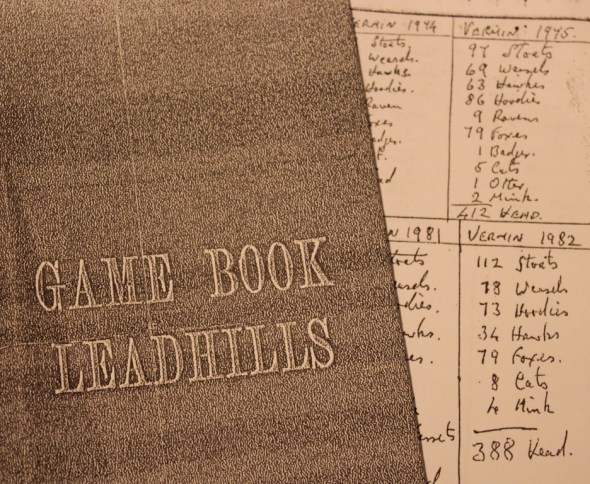
It’s funny, but in everday use the term ‘independent’ is usually used to mean unconnected, autonomous, unallied, ‘free from all ties’. Does this term accurately reflect the relationship between the Hopetoun family (who own Leadhills Estate) and the Hopetoun House Preservation Trust (the management body of the Scottish Birdfair venue)?

For the benefit of the decision-makers at RSPB Scotland, a copy of the report is provided here:

HHPT CONS 2011 DRAFT 180412

By the way, at the end of last week’s article we said we’d soon be blogging again about Leadhills Estate and that readers should prepare to be shocked (or not). Just to clarify, today’s blog entry is not the article to which we referred. That one’s coming up soon…

The SGA’s solution to climate change?…..kill predators

channel 4 newsIf you missed Channel 4 News this evening you really should watch the playback clip below – it’s hilarious.

As part of a Channel 4 News series, Jon Snow has been reporting on a new report written by some of the country’s top scientists on how climate change is affecting wildlife and how it’s likely to affect it in the future if management regimes are not adapted to address the issue.

Amongst other interviews, Snow discusses the report with Des Thompson of SNH and Allan Hodgson, an SGA member from Tomatin. Des Thompson does well and gives a sensible and concise explanation of what’s been happening and how authoritative the report is, based on the research of hundreds of scientists. Unsurprisingly, Hodgson doesn’t seem to have comprehended the whole climate change thing at all, and instead he talks about the need for “more control of protected predators“. Eh?

Hodgson’s interview technique doesn’t have the polished finish of his media-savvy colleague Alex Hogg – he looks decidedly uncomfortable throughout and what’s his right hand doing? – but he does live up to the standard of intelligence we’ve come to expect from the SGA. It was a masterstroke of Channel 4 news to invite him on.

Watch the interview available here for the next seven days. The relevant clip is called Britain’s countryside in crisis – debate.

Sea eagle chicks hatched in Ireland – first for over 100 years!

An historic conservation success has been achieved in Ireland as two pairs of white-tailed eagles have produced chicks in the last week – the first for over 100 years!

The chicks are the result of a long-term project to reintroduce sea eagles to Ireland after they were ruthlessly persecuted to extinction in the early 20th century. Beginning in 2007, the Golden Eagle Trust, an Irish conservation charity, in collaboration with the National Parks and Wildlife Service, began to release young sea eagles that had been donated by the Norwegian government. One hundred sea eagles were released in Killarney National Park, County Kerry, between 2007-2011 (see photo).

Last year one pair successfully laid eggs but unfortunately they failed to hatch. This is quite common for young, inexperienced eagles and this year, along with another pair, they’ve managed to produce chicks.

The project has not been without problems – many of the birds were wing-tagged and radio-tagged to follow their movements from the release site and this revealed that a number of them became victims of poisoning, shooting and windfarm collision. Others fared better though and a number have been reported in Northern Ireland and further afield in Scotland.

Many many congratulations to Project Manager Dr Allan Mee and his colleagues at the Golden Eagle Trust. These people are making history, not just with the sea eagle reintroduction but with similar projects for golden eagles and red kites too; species that also became extinct in Ireland as a direct result of persecution.

Golden Eagle Trust press release here

More on convicted gamekeeper Petrie

Petrie's middenFollowing on from yesterday’s blog entry about the conviction of ‘qualified’ gamekeeper Brian Petrie (here), more information has emerged.

The estate where Petrie committed his crimes has been reported by the Herald (see here) as Logie Estate, near Forres. The Herald article says: “The estate was not aware of Petrie’s actions and had cooperated fully  in the SSPCA’s investigation“. We’ve been told by a local informant who wishes to remain anonymous that Petrie had previously operated a sporting lease (for pheasant shooting) on Logie Estate but apparently did not have the lease at the time his offences were commited. In other words, it seems he had no permission to be setting snares on Logie Estate at that time.

We asked yesterday whether Petrie was a member of the Scottish Gamekeepers’ Association. A statement on the SGA website this morning suggests he was not (see here) and the SGA has strongly condemned his criminal activities (good). They also go on to try and justify the use of snares but clearly miss the point – yes of course if you remove predators then their prey will increase, probably to artificially-high levels – that’s primary school stuff – but the debate is not whether predators should be removed (that’s a whole other argument!) but it’s the way in which they’re removed, and the welfare implications, that are key. For those interested in the snaring debate we recommend OneKind’s SnareWatch web page here. This site includes some useful reports about the use of snares and also provides a facility for the public to report the illegal use of snares. We’d also point readers to our earlier blog entry about how to recognise an illegally-set snare here.

The next case against gamekeepers accused of alleged snare crimes will be heard at Dornoch Sheriff Court next Monday, which is another hearing in the case against three gamekeepers from the Morvich Estate in Sutherland (see here and here for previous blog entries).

‘Qualified’ gamekeeper convicted of snaring offences

petrie_web_2_full_widthA 66-year-old gamekeeper has today been convicted of snaring offences in Scotland.

Brian Petrie, of Woodhead, Dunphail, pled guilty to three charges including setting snares likely to cause unnecessary suffering by partially or wholly suspending animals, setting snares in a manner likely to be dragged, and failing to release or remove an animal from a snare, all contrary to the Wildlife & Countryside Act.

Petrie was fined £500 for each offence, totalling £1,500. Most importantly, his conviction should now preclude him from using a General Licence for five years (unless of course he uses the convenient get-out clause offered by SNH, in which someone convicted of a wildlife crime may still apply to use an individual licence!).

For the gruesome details of the case, read the SSPCA press release here. Congratulations to the SSPCA for yet another successful wildlife crime investigation and prosecution. Isn’t it about time the Scottish Government opened their consultation on increasing SSPCA powers – you know, the consultation that was promised back in 2010 during the WANE bill debates? Three years on and we’re still waiting…

What’s particularly interesting about this case is that it’s reported that Petrie had completed the new snaring training course one year prior to the offences. It’s a good example of how some gamekeepers continue to commit wildlife crime, even though they’re often portrayed as ‘professionals’ and in this case, ‘qualified’ to set snares. Is this snare training course simply a box-ticking exercise that provides an air of respectability to a practice that, on welfare grounds alone, should have been outlawed decades ago? It really doesn’t seem to matter what legislation is put in place, whether it be for snaring or other types of trapping, poisoning, shooting etc – a lot of gamekeepers continue to stick two fingers up to the law and to all of us.

The press release doesn’t reveal the location of Petrie’s crimes, although we have a fairly good idea that he was working on a particular estate. We’ll do some more digging on that and report back if we can verify our suspicions.

It would also be fascinating to know if Petrie was/is a member of the SGA. Shall we ask them? Emails to: info@scottishgamekeepers.co.uk

UPDATE 8th May: see here