On Sunday evening, Countryfile included a piece about the grouse moors of Invermark Estate in the Angus Glens and how it was “a haven for wildlife”.
It can be viewed on iPlayer here for the next 28 days (starts at 22 mins in).
Inane, vacuous and unquestioning, this piece was heralded in previews as ‘uncovering the secrets of the glen’.
Invermark is only one of several grouse moor estates in the Angus Glens. Here are some secrets of the wider Angus Glens that weren’t mentioned on Countryfile:
2004 May, near Edzell: long-eared owl and two short-eared owls starved to death in crow cage trap. No prosecution.
2004 May, Invermark Estate: peregrine nest destroyed. No prosecution.
2006 March, Glenogil Estate: poisoned rabbit bait (Carbofuran). No prosecution.
2006 April, Easter Ogil: poisoned buzzard (Alphachloralose). No prosecution.
2006 April, Easter Ogil: poisoned tawny owl (Alphachloralose). No prosecution.
2006 May, Glenogil Estate: poisoned rabbit bait (Carbofuran). No prosecution.
2006 June, Glenogil Estate: poisoned woodpigeon bait (Carbofuran). No prosecution.
2006 June, Glenogil Estate: Traces of Carbofuran found in estate vehicles & on equipment during police search. No prosecution. Estate owner had £107k withdrawn from his farm subsidy payments. This was being appealed, but it is not known how this was resolved.
2006 July, Millden Estate; poisoned sheepdog (Lindane). No prosecution.
2007 November, Glenogil Estate: Disappearance of radio-tagged white-tailed eagle ‘Bird N’ coincides with tip off to police that bird allegedly been shot. No further transmissions or sightings of the bird.
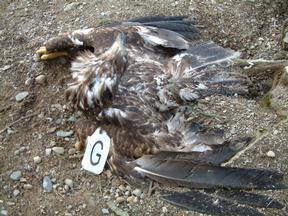
2008 May, ‘Nr Noranside’: poisoned white-tailed eagle ‘White G’ (Carbofuran, Isophenfos, Bendiocarb). No prosecution.
2008 May, ‘Nr Noranside’: poisoned buzzard (Bendiocarb). No prosecution.
2008 May, ‘Nr Noranside’: poisoned mountain hare bait (Carbofuran, Isophenfos, Bendiocarb). No prosecution.
2008 May, Glenogil Estate: 32 x poisoned meat baits on fenceposts (Carbofuran, Isophenfos, Bendiocarb). No prosecution.
2008 October, ‘Glenogil Estate: poisoned meat bait on fencepost (Carbofuran). No prosecution.
2009 March, Glenogil Estate: poisoned buzzard (Carbofuran). No prosecution.
2009 March, Glenogil Estate: poisoned buzzard (Carbofuran). No prosecution.
2009 April, Millden Estate: poisoned buzzard (Alphachloralose). No prosecution.
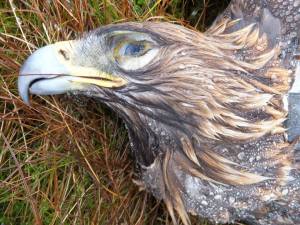
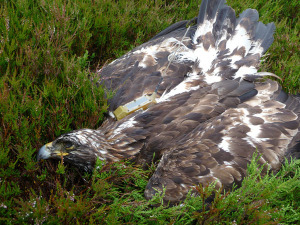
2009 July, Millden Estate: poisoned golden eagle ‘Alma’ (Carbofuran). No prosecution.
2009 August, Glenogil Estate: poisoned white-tailed eagle “89” (Carbofuran). No prosecution.
2010 May, ‘Nr Noranside’: poisoned red kite (Carbofuran). No prosecution.
2010 September, Glenogil Estate: poisoned buzzard (Chloralose). No prosecution.
2010 October, Glenogil Estate: poisoned buzzard (Carbofuran). No prosecution.
2010 October, Glenogil Estate: poisoned pigeon bait (Carbofuran). No prosecution.
2010 October, Glenogil Estate: poisoned pigeon bait (Carbofuran). No prosecution.
2011 February, Airlie Estate: buzzard caught in illegal crow trap. (see below)
2011 March, Airlie Estate: 3 x buzzard caught in illegal crow trap. Prosecution (!) but dropped after statement from suspect given to SSPCA deemed inadmissible.
2011 April, Millden Estate: shot buzzard. No prosecution.
2012 April, ‘Nr Noranside’: Remains of buzzard found beside pheasant pen. Suspicious death.
2011 June, Rottal & Tarabuckle Estate: dead kestrel inside crow cage trap. No prosecution.
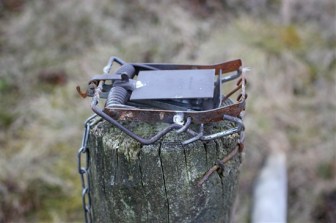
2012 February, ‘Nr Edzell’: spring-trapped buzzard. No prosecution.
2012 February, ‘Nr Bridgend’: remains of buzzard found under a rock. Suspicious death.
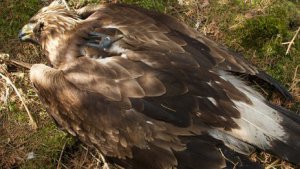
2012 May, Millden Estate: satellite-tagged golden eagle seemingly caught in spring trap, then apparently uplifted overnight and dumped on Deeside with two broken legs & left to die. No prosecution.
2012 May, Glen Esk: disappearance of sat-tagged red kite. No further transmissions or sightings of bird.
2013 January, Invermark Estate: white-tailed eagle nest tree felled. No prosecution.
2013 June, Glen Ogil: shot buzzard. No prosecution.
2013 July, Glen Moy: illegal hawk trap. No prosecution.
2013 September, nr Edzell: unset spring trap next to bait. No prosecution.
2013 November, Glen Lethnot: poisoned golden eagle ‘Fearnan’. No prosecution.
2014 August & September, Glenogil Estate: alleged snare offences. Prosecution of gamekeeper underway (currently ongoing).
2014 October, Nathro: shot buzzard. Prosecution? Unknown.
And some more secrets of the Angus Glens that weren’t mentioned:
No breeding hen harriers on the grouse moors of the Angus Glens since 2006 (see here).
Mountain hare massacre on the grouse moors of the Angus Glens (see here).
Angus Glens gamekeeper facing trial for alleged pole-trapping offences (see here).
Mark Avery has written an alternative and more accurate Countryfile script (see here) than the one that was aired on Sunday evening.
Plenty of people on social media have been asking when Countryfile will do a piece on illegal raptor persecution. To be fair, they did one in 2014 (we blogged about it here) and it was fairly well balanced, but this then begs the question why Countryfile researchers hadn’t done their homework for this latest episode.
Had they done so, here are some of the images they would have found from those ‘wildlife haven’ grouse moors of the Angus Glens. From the top down, an illegally poisoned golden eagle, another illegally poisoned golden eagle, an illegally poisoned white-tailed eagle, an illegally trapped golden eagle that was then dumped in a layby with two broken legs and left to die, the nest tree of a white-tailed eagle that was illegally chainsawed to the ground, and a pile of rotting shot mountain hares. The grouse moors of the Angus Glens a wildlife haven? Hardly. They’re notorious wildlife crime scenes.
Petition to ban driven grouse shooting here



 Police Scotland has issued an appeal for information following the discovery of disturbed and abandoned buzzard and goshawk nests in the Moy Forest near Tomatin in the Scottish Highlands.
 Following this morning’s news (see
  Martin Harper, the RSPB’s Conservation Director, has this morning published his promised mid-season update on the status of breeding hen harriers in England this year.

 This won’t come as any surprise to anyone, but it has now been confirmed that
