Blog

The real price of grouse: episode 6

NotsoGlorious-black-bg - Copy

Here’s episode 6 in a series of videos hosted by Chris Packham about the #NotSoGlorious damaging management practices associated with the driven grouse shooting industry. Episode one (an introduction to driven grouse shooting) can be watched here.  Episode 2 (the damaging environmental effects of heather burning) can be watched here. Episode 3 (traps) can be watched here. Episode 4 (parasites, medication and the mass killing of mountain hares) can be watched here. Episode 5 (flooding) can be watched here.

Here’s episode 6, all about subsidies (i.e. how your taxes are helping to pay for driven grouse shooting):

Over 121,000 people have joined Chris and signed the e-petition to ban driven grouse shooting. We’ve passed the 100,000 signatures needed to trigger a Westminster debate and we’re currently waiting to hear when that debate will take place. In the meantime, this petition is open until 20th September and the more signatures, the better. Please join us and sign HERE 

Thank you!

Tackling raptor persecution features in Scot Gov’s work plan 2016-17

scotgov-logoThe Scottish Government has published its work plan for 2016-2017 (see here).

We are pleased to see that tackling wildlife crime, and specifically raptor persecution, is a feature (see page 56).

We must protect the environment from those who seek to damage it for personal gain. We will increase the penalties for wildlife crime and consider the creation of new sentencing guidelines in line with the recommendations from the Wildlife Crimes Penalties Review Group“.

Good. Penalties for wildlife crimes have generally been at the lower end of the scale and penalties issued for similar crimes have been inconsistently applied. We fully support the recommendations of the Wildlife Crimes Penalties Review Group, published in November last year (see here) and we look forward to the Scottish Government getting on with implementing them.

However, increasing the tariffs available to the judiciary will count for little if the problems of early-stage enforcement (e.g. Police under-resourcing, the slow pace of gathering evidence and poor follow-up investigations – see here) are also not addressed. Regardless of the punitive value of a sentence, the deterrent effect will be limited if an offender knows that the chances of being caught and receiving the punishment are minimal.

It seems that the Scottish Government has recognised this in the work plan:

Police Scotland will create a new Wildlife Crime Investigation Unit to support the existing network of wildlife crime officers in complex investigations“.

We tentatively welcome this news, although of course much will depend on the details of how this new unit will function. It’s all very well being able to say you’ve got a special wildlife crime unit, but if it’s as semi-dysfunctional as the current National Wildlife Crime Unit (NWCU – very effective at dealing with the international trade in endangered species but wholly ineffective at dealing with raptor persecution) then there’s little point to its existence.

It’s also a little bit worrying that there is no mention of increased investigatory powers for the SSPCA to help Police Scotland tackle wildlife crime. Is that a sign of the Government’s direction on this issue? Time will tell.

Also included in the work plan is this:

In order to safeguard vulnerable species from illegal persecution, we will carry out a review of prevention measures including the operation of the Partnership Against Wildlife Crime [PAW Scotland] and supporting Police Scotland in their work to target wildlife crime hotspots. We are prepared to introduce legislation where necessary“.

We very much welcome a review of how PAW Scotland operates. We have been highly critical of this so-called ‘partnership’, particularly the PAW Raptor sub-group, which is dominated by land management groups, some of whom are tainted (indirectly, by association) with raptor persecution. Some of these groups consistently misrepresent raptor crime data and refuse to accept that persecution is an on-going problem. As a result, the PAW Raptor group has achieved very little in terms of tangible results and we hope this review will recognise the group’s failings and act accordingly.

We would welcome the Government’s claim that it is ‘prepared to introduce legislation where necessary‘ but we’ve heard it so many times before that it’s now just seen as empty rhetoric. If they’d just get on with it we’d be 100% supportive.

How to stop the illegal persecution of raptors in the Cairngorms National Park

Yesterday we blogged about the illegal persecution of birds of prey in the Cairngorms National Park (CNP) and how, 13 years after the Park was first established, persecution continues (see here).

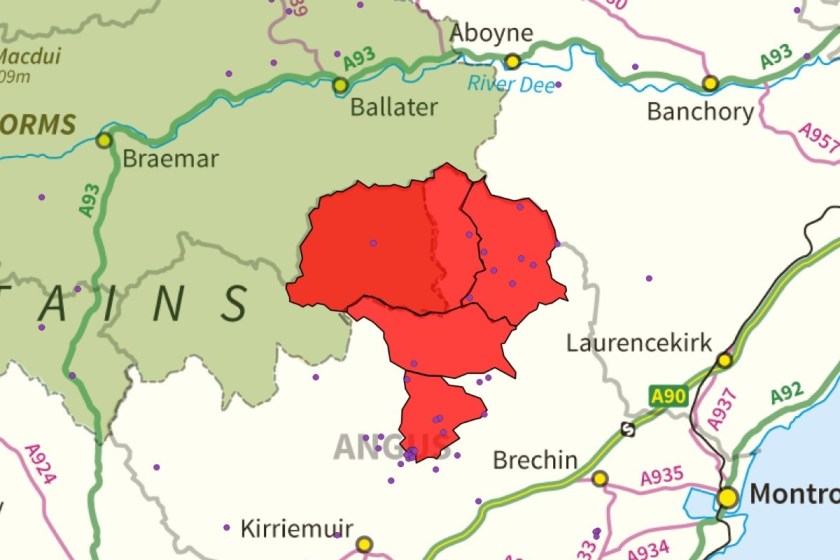
Some (but definitely not all) the grouse moor managers within the CNP are running rings around the Park Authority (CNPA), and have been doing so for years: Golden eagles poisoned, golden eagles ‘disappearing’, white-tailed eagles ‘disappearing’, white-tailed eagle nests felled, hen harriers shot, breeding hen harriers in catastrophic decline, goshawks shot, goshawk nests being attacked, peregrines shot, peregrine nest sites burnt out, breeding peregrines in long-term decline, buzzards poisoned, buzzards shot, red kites poisoned, short-eared owls shot, poisoned baits laid out, illegally-set traps, and mountain hares massacred. All within the Cairngorms National Park, a so-called haven for Scottish wildlife. It’s scandalous.

Lad HH

So what has the Cairngorms National Park Authority been doing about all this? To date, they’ve adopted the softly, softly partnership approach, which, to be fair, is a reasonable starting point. But this approach relies on ALL the ‘partners’ pulling together in the same direction; it’s not going to work if some of the ‘partners’ don’t or won’t comply with the law (i.e. not killing protected birds of prey).

We’ve seen the Cairngorms Nature Action Plan, a five-year initiative which included the aim of restoring the full community of raptor species within the NP and managing mountain hare populations for the benefit of golden eagles (see here). Three years on and evidence we produced yesterday shows the Plan is going nowhere fast (see here).

We’ve seen the Convenor of the CNPA pleading with the then Environment Minister to help combat raptor persecution within the NP because it ‘threatens to undermine the reputation of the National Park as a high quality wildlife tourism destination‘ (see here). The then Environment Minister (Dr Aileen McLeod) attended a meeting with ‘partners’ during which there was a ‘recognition of the progress made in recent years’ (see here). Eh? Have a look at our list of raptor persecution crimes within the CNP (here) – can you spot any sign of progress? No, because there hasn’t been any.

The next approach from the CNPA was the ‘East Cairngorms Moorland Partnership’. This is an interesting one. One of the stated aims of this ‘partnership’, comprising six contiguous estates and the CNPA, is to ‘enhance raptor and other priority species conservation’. A noble aim, but when you look at the details of this Partnership’s work plan it’s all pretty vague and lacking substance. It can be downloaded here:

east-cairngorms-moorland-partnership_statementofpurpose

Things don’t improve when you realise who is involved with this ‘Partnership’. One of the six estates is none other than Invercauld Estate. You remember Invercauld Estate – the place where illegally-set spring traps were recently discovered (here). The Estate’s response was (a) to suggest it didn’t happen but if it had happened it was probably a set-up to smear the grouse-shooting industry (see here), and (b) despite nothing happening, the Estate ‘took action’ although we’re not allowed to know what that ‘action’ entailed because it’s a secret (see here). Presumably, the setting of illegal traps isn’t part of the work plan designed to ‘enhance raptor and other priority species conservation’.

So where does the CNPA go from here? Well, we said yesterday that there was light at the end of the tunnel. And there is. The CNPA is currently consulting on the NP’s ‘Partnership Plan’ for 2017-2022. This is the management plan for the CNP for that five-year period and will help guide the CNPA’s work on the most pressing issues. The CNPA has identified several ‘big issues’ on which it wants to hear your views, and one of those is ‘Moorland Management’.

The question the CNPA is posing is:

How can management for grouse be better integrated with wider habitat and species enhancement objectives such as woodland expansion, peatland restoration and raptor conservation?

The obvious answer to achieving raptor conservation is to get the grouse shooting estates to stop illegally killing raptors! But how?

In the consultation document, the CNPA says the East Cairngorms Moorland Partnership is the stated mechanism for delivering raptor conservation within the eastern side of the NP. Er, illegally set traps being found on one of the Partnership estates doesn’t inspire confidence, does it?

There must come a time when the CNPA has to realise that the ‘partnership’ approach is not working, and to be frank, is unlikely to ever succeed. In our opinion, that time is now.

The CNPA actually has a great deal of power and authority to act against those who continue to persecute raptors within the NP. Have a read of this blog (here) published on the always interesting ParksWatchScotland blog. The authors suggest that the CNPA can introduce ‘hunting byelaws’ for grouse shooting estates within the CNP. Permits could be removed if wildlife crime is discovered and also if Estates refuse to allow monitoring cameras. Permits could also be used to limit the size of grouse ‘bags’, thus helping break the cycle of ever-increasing intensification of grouse moor management practices. Permits could also be used to limit the number of traps in use.

As the authors also point out, byelaws were recently created for the Loch Lomond & Trossachs NP to try and limit camping. So why not create them for the CNP to try and limit raptor persecution?

The CNPA has four aims, set out by Parliament:

  1. To conserve and enhance the natural and cultural heritage of the CNP;
  2. To promote sustainable use of the natural resources of the CNP;
  3. To promote understanding and enjoyment (including enjoyment in the form of recreation) of the special qualities of the CNP by the public;
  4. To promote sustainable economic and social development of the CNP’s communities.

These aims are to be pursued collectively. However, if there is conflict between the first aim and any of the others then greater weight must be given to the first aim (section 9.6 of the National Parks (Scotland) Act).

We’d encourage as many of you as possible to participate in the CNPA’s consultation process (it closes on 30 Sept 2016) and mention the idea of these byelaws and the CNPA’s responsibility for conserving the natural heritage above all else. You might think, ‘Oh, what’s the point, the CNPA won’t listen to me, they’re in the pockets of the large shooting estates’. Well, perhaps so in the past but perhaps things are changing. Have a read of this blog (here), entitled ‘Time to move with the times‘ recently written by Will Boyd Wallis, Head of Land Management and Conservation at the CNPA. There are clear signs in Will’s blog that the old regime is being challenged and the more people who write in support of this, the better.

You can access the consultation documents here.

The illegal killing of birds of prey in the Cairngorms National Park

Many people think of the Cairngorms National Park as a wildlife haven. It’s what many expect of a National Park; indeed, it’s what we should all expect of a National Park.

The Cairngorms National Park Authority (CNPA) promotes it as such (this screen grab taken from the CNPA website):

CNPscreengrab

But just how much of a ‘wildlife haven’ is it?

Here’s the gruesome reality.

The following list, which we’ve compiled from various data sources but predominantly from the RSPB’s annual persecution reports, documents over 60 illegal raptor persecution incidents inside the Cairngorms National Park (CNP) since 2002. (The Park wasn’t formally established until 2003 but we’ve included 2002 data as the area had been mapped by then). This list includes just the crimes we know about. How many more went unreported/undiscovered?

2002

Feb: 2 x poisoned buzzards (Carbofuran) + rabbit bait. Tomintoul

Mar: 2 x poisoned buzzards (Carbofuran) + 2 rabbit baits. Cromdale

2003

Apr: 3 x poisoned buzzards (Carbofuran) + 2 grey partridge baits. Kingussie, CNP

Jun: Attempted shooting of a hen harrier. Crannoch, CNP

2004

May: 1 x poisoned buzzard (Carbofuran). Cuaich, CNP

Nov: 1 x poisoned red kite (Carbofuran). Cromdale, CNP

Dec: 1 x poisoned buzzard (Carbofuran). Cromdale, CNP

2005

Feb: 1 x poisoned buzzard (Carbofuran). Cromdale, CNP

Feb: 1 x poisoned buzzard (Carbofuran). Cromdale, CNP

Mar: 3 x poisoned buzzards, 1 x poisoned raven (Carbofuran). Crathie, CNP

2006

Jan: 1 x poisoned raven (Carbofuran). Dulnain Bridge, CNP

May: 1 x poisoned raven (Mevinphos). Grantown-on-Spey, CNP

May: 1 x poisoned golden eagle (Carbofuran). Morven [corbett], CNP

May: 1 x poisoned raven + 1 x poisoned common gull (Aldicarb) + egg bait. Glenbuchat, CNP

May: egg bait (Aldicarb). Glenbuchat, CNP

Jun: 1 x poisoned golden eagle (Carbofuran). Glenfeshie, CNP

2007

Jan: 1 x poisoned red kite (Carbofuran). Glenshee, CNP

Apr: Illegally set spring trap. Grantown-on-Spey, CNP

May: Pole trap. Grantown-on-Spey, CNP

May: 1 x poisoned red kite (Carbofuran). Tomintoul, CNP

May: Illegally set spring trap. Grantown-on-Spey, CNP

Jun: 1 x poisoned buzzard (Carbofuran) + rabbit & hare baits. Grantown-on-Spey, CNP

Jun: 1 x poisoned buzzard (Carbofuran) + rabbit bait. Grantown-on-Spey, CNP

Jul: 1 x poisoned raven (Carbofuran). Ballater, CNP

Sep: 1 x shot buzzard. Newtonmore, CNP

Sep: 1 x shot buzzard. Grantown-on-Spey, CNP

Dec: 1 x poisoned buzzard (Alphachloralose). Grantown-on-Spey, CNP

Dec: 1 x poisoned buzzard (Carbofuran) + rabbit bait. Grantown-on-Spey, CNP

2008

Jan: 1 x poisoned buzzard (Alphachloralose). Nr Grantown-on-Spey, CNP

Mar: 1 x poisoned buzzard (Carbofuran). Nr Grantown-on-Spey, CNP

Dec: 1 x poisoned buzzard (Alphachloralose). Nr Grantown-on-Spey, CNP

2009

May: 2 x poisoned ravens (Mevinphos). Delnabo, CNP

Jun: rabbit bait (Mevinphos). nr Tomintoul, CNP

Jun: 1 x shot buzzard. Nr Strathdon, CNP

Jun: 1 x illegal crow trap. Nr Tomintoul, CNP

2010

Apr: Pole trap. Nr Dalwhinnie, CNP

Jun: 1 x pole-trapped goshawk. Nr Dalwhinnie, CNP

Jun: Illegally set spring trap on tree stump. Nr Dalwhinnie, CNP

Sep: 2 x poisoned buzzards (Carbofuran) + rabbit bait. Glenlochy, CNP

Oct: 2 x poisoned buzzards (Carbofuran) + rabbit bait. Nr Boat of Garten, CNP

2011

Jan: 1 x shot buzzard. Nr Bridge of Brown, CNP

Mar: 1 x poisoned golden eagle (Carbofuran). Glenbuchat, CNP

Apr: 1 x poisoned buzzard (Carbofuran & Aldicarb). Nr Bridge of Brown, CNP

May:  1 x poisoned buzzard (Carbofuran) + rabbit bait. Glenbuchat, CNP

May: 1 x shot short-eared owl, found stuffed under rock. Glenbuchat, CNP

Jun: 1 x shot peregrine. Pass of Ballater, CNP

Aug: grouse bait (Aldicarb). Glenlochy, CNP

Sep: Satellite-tagged golden eagle ‘disappears’. Nr Strathdon, CNP

Nov: Satellite-tagged golden eagle ‘disappears’. Nr Strathdon, CNP

2012

Apr: 1 x shot short-eared owl. Nr Grantown-on-Spey, CNP

Apr: Peregrine nest site burnt out. Glenshee, CNP

May: Buzzard nest shot out. Nr Ballater, CNP

2013

Jan: White-tailed eagle nest tree felled. Invermark, CNP

May: 1 x shot hen harrier. Glen Gairn, CNP

May: Satellite-tagged golden eagle ‘disappears’. Glenbuchat, CNP

2014

Apr: Satellite-tagged white-tailed eagle ‘disappears’. Glenbuchat, CNP

May: Armed masked men shoot out a goshawk nest. Glen Nochty, CNP

2015

Sep: Satellite-tagged hen harrier ‘Lad’ found dead, suspected shot. Newtonmore, CNP

2016

May: 1 x shot goshawk. Strathdon, CNP

Jun: Illegally set spring traps. Invercauld, CNP

In addition to the above list, two recent scientific publications have documented the long-term decline of breeding peregrines on grouse moors in the eastern side of the National Park (see here) and the catastrophic decline of breeding hen harriers, also on grouse moors in the eastern side of the Park (see here).

And let’s not forget the on-going massacre of mountain hares, taking place annually within the boundary of the National Park (e.g. see here, here).

So, who still thinks the Cairngorms National Park is a ‘wildlife haven’?

With over 40% of the National Park covered by driven grouse moors, it’s anything but. The next blog will explore how the Cairngorms National Park Authority has failed, so far, to effectively address the illegal killing of birds of prey, but there is a small chink of light ahead…..more shortly.

UPDATE 7/9/16: How to stop the illegal persecution of raptors in the Cairngorms National Park (here)

The real price of grouse: episode 5

NotsoGlorious-black-bg - Copy

Here’s episode 5 in a series of videos hosted by Chris Packham about the #NotSoGlorious damaging management practices associated with the driven grouse shooting industry. Episode one (an introduction to driven grouse shooting) can be watched here.  Episode 2 (the damaging environmental effects of heather burning) can be watched here. Episode 3 (traps) can be watched here. Episode 4 (parasites, medication and the mass killing of mountain hares) can be watched here.

Here’s episode 5, all about flooding:

Over 119,000 people have joined Chris and signed the e-petition to ban driven grouse shooting. We’ve passed the 100,000 signatures needed to trigger a Westminster debate and we’re currently waiting to hear when that debate will take place. In the meantime, this petition is open until 20th September and the more signatures, the better. Please join us and sign HERE 

Thank you!

‘Dodgy’ traps now ‘improved’ in Peak District National Park

Last week we blogged about two ‘dodgy’ tunnel traps that had been photographed in the Peak District National Park (see here).

There was some debate about the legality of both traps because the tunnel entrances hadn’t been sufficiently restricted to minimise the risk to non-target species, although one of the traps did have a twig shoved across the entrance – it was wholly ineffective but it could be argued that an attempt to restrict the entrance had been made.

Here are a couple of the images again:

sam3 - Copy

sam1 - Copy

Anyway, it appears that whoever manages the northern side of the Bole Edge Plantation (Strines Wood) close to Bradfield grouse moor, where these photographs were taken, has been paying attention to the criticism.

The two traps have now been rebuilt and the tunnel entrances are now clearly restricted:

TRAPrebuilt

TRAPrebuilt2

That’s a definite improvement (the power of social media, eh?) although the issue of whether these (legal) traps should be deployed inside a National Park is still up for debate.

And even when the tunnel entrance has been restricted, that doesn’t mean that non-target species won’t be caught. Have a look at the trap in these two photographs, taken earlier this summer on a driven grouse moor in North Yorkshire. Not good, is it?

B1 - Copy

B2 - Copy


Another hearing set for Raeshaw Estate’s judicial review (General Licence restriction)

Regular blog readers will know we’ve been writing about the General Licence (GL) restriction order placed on Raeshaw Estate (a grouse moor estate near Heriot in the Scottish Borders) for some time (see here for a summary). The restriction order was implemented due to alleged raptor persecution incidents reportedly taking place on the Estate (according to evidence provided by Police Scotland), even though nobody has been charged with any criminal offence and the Estate has denied any responsibility.

This restriction order, placed by SNH in November 2015, has been on and off for months, temporarily suspended and then reinstated as Raeshaw Estate mounted various legal challenges over the following months.

Currently, the GL restriction order is back in place, although SNH has issued a number of ‘individual’ licences permitting the Estate to continue with many activities that are supposed to have been restricted (see here).

Raeshaw Estate has launched a judicial review of the process that SNH used to issue a General Licence restriction order. We’re not that clear about the judicial review process in Scotland but here’s what we’ve managed to work out so far:

In April 2016, Raeshaw Estate petitioned for a judicial review.

In May or June 2016, the Court of Session granted permission for the judicial review to go ahead.

Another court date has now been set for a ‘procedural hearing’ on 3rd November 2016:

RaeshawJR3Nov2016

Our limited understanding is that this ‘procedural’ hearing is when the scope and duration of any later ‘substantive’ hearing will be decided.

This judicial review is an important test case with potentially far-reaching consequences. If the court decides that SNH acted fairly, then presumably SNH will get on with issuing other General Licence restrictions to other estates where Police Scotland has evidence of raptor persecution incidents having taken place since 1 January 2014 (there must be quite a backlog by now). Although it could be argued that if SNH continues to then issue ‘individual’ licences to those penalised estates, the purpose and effectiveness of the original General Licence restriction order is lost.

If the court decides that SNH acted unfairly in imposing a General Licence restriction order, then either the process for implementing a GL restriction order will have to be revised or the scheme scrapped altogether. If it’s scrapped, that’ll leave the Scottish Government in an interesting position. What next for addressing the never-ending cycle of raptor persecution?

Trial for gamekeeper re: alleged shooting of a hen harrier

Criminal proceedings continued at Elgin Sheriff Court on Thursday against Scottish gamekeeper Stanley Gordon.

Mr Gordon, 60, of Cabrach, Moray, is facing a charge in connection with the alleged shooting of a hen harrier in June 2013.

Mr Gordon entered a not guilty plea at Thursday’s hearing and so this case will now move to trial. An intermediate diet has been set for 18 November 2016 (this is an administrative hearing to establish whether both the defence and prosecution are ready for trial) and the trial date itself has been set for 19 December 2016.

Previous blogs on this case hereherehere and here

The real price of grouse: episode 4

NotsoGlorious-black-bg - Copy

Here’s episode 4 in a series of videos hosted by Chris Packham about the #NotSoGlorious damaging management practices associated with the driven grouse shooting industry. Episode one (an introduction to driven grouse shooting) can be watched here.  Episode 2 (the damaging environmental effects of heather burning) can be watched here. Episode 3 (traps) can be watched here.

Here’s episode 4, all about parasites, medication and the mass killing of mountain hares:

Over 119,000 people have joined Chris and signed the e-petition to ban driven grouse shooting. We’ve passed the 100,000 signatures needed to trigger a Westminster debate and we’re currently waiting to hear when that debate will take place. In the meantime, this petition is open until 20th September and the more signatures, the better. Please join us and sign HERE 

Thank you!

An interesting letter from Invercauld Estate

In July we blogged about the discovery in June of a critically-injured Common gull that had been found caught in two illegally-set spring traps on Invercauld Estate in the Cairngorms National Park (see here).
Cairngorms Invercauld - Copy

We also blogged about a bizarre press statement from Invercauld Estate (issued via the GWCT’s twitter feed) in which they denied any illegal activity had taken place or if it had, it was perhaps a set-up ‘intended to discredit the grouse industry‘ (see here).

We also blogged about the Scottish Gamekeepers’ Association’s press statement, which said the SGA was conducting its own enquiry (see here).

We also blogged about Police Scotland’s view that a Common gull had been found caught in an illegally-set trap but ‘despite a thorough investigation‘, Police enquiries had failed to find further evidence to proceed with a potential prosecution and ‘there are at present no further investigative opportunities available‘ (see here).

So that looked like the end of it. Until, through a series of FoIs to the Scottish Government and the Cairngorms National Park Authority, a very interesting letter has emerged.

The letter, dated 27 July 2016 (so a week after the original story had broken) was written by Angus McNicol, who identifies himself as the Estate Manager for Invercauld Estate, and was addressed to the Cabinet Secretary for the Environment, Roseanna Cunningham. A copy of the letter was also sent to the Cairngorms National Park Authority. It’s a fascinating read.

Here is a copy of the letter: Invercauld Estate letter

Having read it, our first question was, ‘Why was this letter written?’ That’s a hard question to answer because we can’t get inside Mr McNicol’s head to read his thought processes. We can, though, speculate about the intentions. In our opinion, this letter was written to reassure the Cabinet Secretary that Invercauld Estate takes wildlife crime seriously and they’ve done something about it.

You’ll see that one paragraph in this letter has been partially redacted (by the Scottish Government – and, incidentally, the copy of the letter received from the Cairngorms National Park Authority was redacted in exactly the same place). It’s this partial paragraph that interests us the most. Here it is:

Invercauld redacted

Let’s focus on the sentence immediately before the redaction begins. “Whilst this was a press report, we decided to act on the worst case scenario, taking the report at face value“. Assuming that the ‘worst case scenario‘ might have been that an Estate employee was responsible for illegally setting the traps, the Estate ‘decided to act‘. What action they took is unknown, because that bit has been redacted. But interestingly, the word ‘gamekeepers’ appears later in the same paragraph.

Later in the letter, Mr McNicol reiterates that ‘action‘ had been taken:

Invercauldredacted2

So, was the ‘action’ to which Mr McNicol refers, disciplinary action against one or more Invercauld Estate gamekeepers in relation to this crime? Has somebody been sacked?

If that’s actually what happened, and if Mr McNicol has admitted this in writing, wouldn’t that trigger an investigation in to a potential vicarious liability prosecution?

Is that why, later in the letter, Mr McNicol goes to great lengths to explain the measures that Invercauld Estate has put in place to ensure its staff do not commit wildlife crimes? These measures, explained in such detail, might form the defence of ‘due diligence’ – remember, if an estate is accused of being vicariously liable for certain wildlife crimes, a defence of due diligence is permitted (see here).

Whether an estate’s attempts at due diligence are a sufficient defence to an accusation of vicarious liability is for a court to decide. We presume, if our interpretation of what happened is accurate, that both the Scottish Government and the Cairngorms National Park Authority have notified Police Scotland about the content of Mr McNicol’s letter and Police Scotland will now be following this up with an investigation? Time will tell.

The content of Mr McNicol’s letter raises some other interesting points.

Why, if Invercauld Estate has taken action against an employee, did the Estate deny in their original press statement that the offence had even taken place or claim that if it had, it had been a set-up ‘intended to discredit the grouse industry‘?

Who is the person/organisation that conducted “independent searches of hill ground and of buildings on the Estate to check for illegal traps, snares and illegal pesticides“? Presumably it wasn’t the GWCT – they can hardly be classed as being ‘independent’ if they’re publishing press statements on their twitter feed on behalf of Invercauld Estate. And presumably it wasn’t anybody from Scottish Land & Estates – they can hardly be classed as ‘independent’ as Mr McNicol states Invercauld Estate is a member of SLE. And presumably it wasn’t anybody from the SGA – they can hardly be classed as ‘independent’ as Mr McNicol states that ‘all the relevant staff are members of the SGA‘. So who was it?

When did these ‘independent searches of hill ground and of buildings on the Estate to check for illegal traps, snares and illegal pesticides” take place, and how often have they been conducted?

Why did Police Scotland, as part of what they described as a ‘thorough investigation‘, only speak to a representative of Invercauld Estate (Mr McNicol)? Why didn’t officers question, under caution, the gamekeepers who work on the part of the Estate where the illegally-set traps were found?

It’s all very interesting.

Perhaps we’ll get some answers once the SGA has finished its enquiry in to what happened. Presumably they’ll be publishing their findings in due course….