Blog

Grouse shooting costing tax payers millions of pounds

An investigation by Friends of the Earth has revealed that grouse shooting is costing tax payers millions of pounds every year.

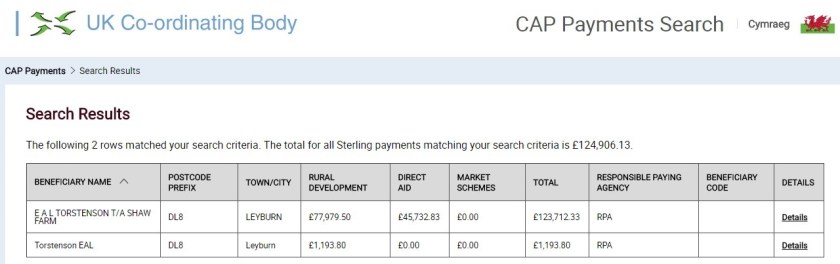
In an article in today’s Guardian (here), FoE shows how just 30 grouse moors in England received £4 million pounds in public subsidies during 2014 alone. These estates include those owned by lords, dukes, earls, barons, bankers, businessmen and companies based in off-shore tax havens. Imagine what the total would be if all 149 English grouse moors had been assessed.

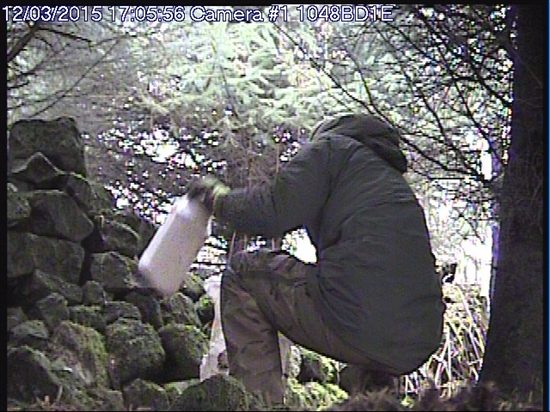
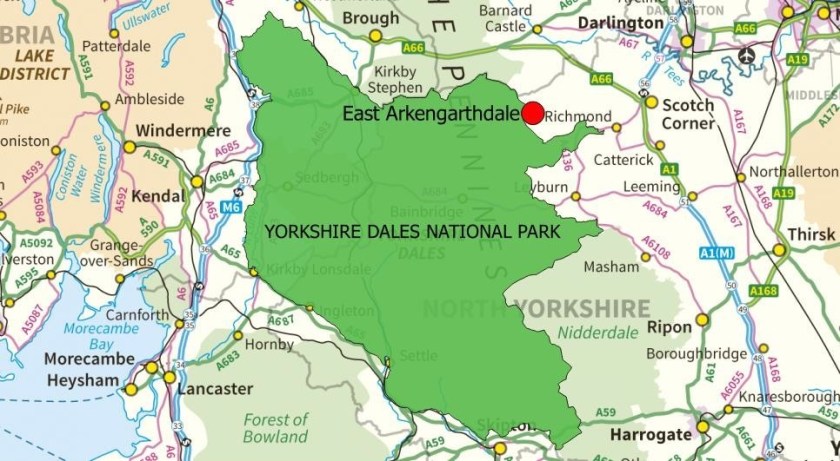
One of the 30 assessed is the Mossdale Estate in the Yorkshire Dales National Park, whose gamekeeper escaped prosecution earlier this year after he was filmed setting illegal pole traps in the vicinity of a foraging hen harrier. The police later admitted they’d cocked up and that he should have faced prosecution. This estate received £54,000 in CAP payments in 2014, and a further £170,000 in 2015.

In an age of austerity, who’s happy that their taxes are being used to support criminal activities on grouse moors? Even if we weren’t in austerity, why the hell should we be paying anything to help the super-rich trash our uplands so they can amuse themselves by killing thousands of red grouse in the name of ‘sport’?

img_5560-copy

Guy Shrubsole of FoE said:

These shocking new figures reveal the true, horrifying scale of grouse moors in England and the madness of the current farm payments system that subsidises them. Instead of handing out taxpayers’ money to billionaires and offshore firms to indulge in an elite sport, the government must reform farm payments so public money is spent on public goods – like tree-planting, restoring wildlife habitats, farming sustainably and preventing flooding downstream”.

For those of you with an interest in how FoE uncovered the scale of this scandal, have a read of this.

Photo: trashed upland grouse moor (RPUK)

“We are patient, reasonable people……..our patience has run out”

This morning, the Scottish Parliament’s Public Petitions Committee heard evidence on the call for the licensing of all gamebird hunting in Scotland (grouse, pheasant and partridge shooting).

The petition (here), submitted by the Scottish Raptor Study Group (SRSG) and supported by RSPB Scotland, raised 7,600 signatures over a six-week period this summer.

A petition briefing (written by research specialists in the Scottish Parliament Information Centre, known as a SPICe briefing) provides a short summary and can be read here.

This morning’s hearing was the first opportunity for the petitioner to explain why regulation is necessary. In addition, the Committee had received written evidence from various organisations, which we discuss below.

img_20161027_115416The witnesses at today’s hearing were Logan Steele (the petitioner, on behalf of the SRSG), Andrea Hudspeth (Tayside RSG) and Duncan Orr-Ewing (Head of Species & Land Management, RSPB Scotland).

After watching the unedifying hostility that Mark Avery had recently been subjected to when he appeared in front of the Westminster Petitions Committee to present his case for a ban on driven grouse shooting, these three witnesses may well have been nervous. They needn’t have worried. The Chair of this Committee (Johann Lamont MSP) behaved as you’d expect a Chair to behave – welcoming, interested and fair – there was no unnecessary rudeness or ungraciousness towards the petitioner as the Westminster Chair (Helen Jones MP) had unprofessionally displayed towards Mark last week.

The performance of today’s three witnesses was outstanding. Their evidence was authoritative, passionate, eloquent and compelling. Here’s the official transcript (starts at p14): game-licensing-petition-hearing_transcript-from-27-oct-2016-petitions-committee

We’d also encourage you to watch the video of today’s hearing here (starts at 40:08 mins).

Their delivery was so commanding that the Petitions Committee was clearly moved by the end of it. There was some discussion about whether to refer the petition to the Environment, Climate Change and Land Reform (ECCLR) Committee (the desired outcome as far as we were concerned), but the Petitions Committee didn’t want to refer it unless there was some commitment from the ECCLR Committee to take it on. If the Petitions Committee had referred it to the ECCLR, and then the ECCLR, for whatever reason, had rejected it, the petition would be considered dead and buried. The Petitions Committee clearly felt the issue was too important to risk losing it. Instead, they deferred their decision to send the petition to the ECCLR until they’ve managed to find out whether the ECCLR will take it. If the ECCLR won’t take it, then the Petitions Committee will continue with it. This is clear testimony to the convincing evidence provided by today’s witnesses. Very, very well done to all three. (Photograph L-R: Patrick Stirling-Aird, Andrea Hudspeth, Logan Steele (SRSG), Duncan Orr-Ewing (RSPB Scotland)).

Now on to the written evidence. So far there have been three submissions. One from RSPB Scotland (here) one from Scottish Land & Estates (here) and one from the Scottish Countryside Alliance (here). The latter two appear to have used the same crib sheet and it’s these two we’ll focus on here.

It is ironic that on the day a report is published that the rate of illegal persecution against red kites in North Scotland is just as bad now as it was in 1989 (see here), these two organisations are still maintaining that illegal raptor persecution is in “marked decline”. This claim from them is nothing new – they’ve been denying the extent of raptor persecution for years (e.g. see herehere and here) and yet, despite overwhelming evidence to the contrary (e.g. see here, here and here), they continue to peddle this myth.

They justify their claim by pointing to either the number of criminal convictions or the number of reported incidents. As everybody knows, these two measures do not reflect the reality on the ground, but rather they reflect the increasing effectiveness with which the raptor killers hide their crimes, e.g. using military-grade night vision and thermal imaging equipment to take out raptors and remove the evidence under the cover of darkness.

Contrast their claim with the evidence in the SPICe briefing (here). Everybody knows what’s going on, everybody has seen the devastating evidence of the impact this criminality is having on raptor populations, everybody accepts that illegal persecution is still a big, big issue. Everybody that is except these organisations from the game-shooting lobby. What sort of message is their continuing denial sending to their members?

Scottish Land & Estates points to various ‘initiatives’ with which they’re ‘involved’, to try and portray themselves as committed raptor conservationists. It’s pure window dressing.

For example, ‘Heads up for Hen Harriers’ – it’s utter tosh, a partnership-working sham (read this).

For example, ‘South of Scotland Golden Eagle project’ – it hasn’t even got off the ground yet and even if it does, what fate awaits those young translocated eagles? We can make an educated guess.

For example, ‘Wildlife Estates Scotland’ – more tosh. Two of these ‘WES-accredited’ estates have recently been at the centre of wildlife crime investigations (Invercauld Estate in the Cairngorms National Park & Newlands Estate in Dumfriesshire). Why haven’t they been expelled from the WES scheme?

And let’s not forget the input of the Scottish Countryside Alliance – they tried to (disingenuously) use satellite tag failures on marine turtles in India as an explanation for ‘disappearing’ golden eagles in the Scottish highlands.

Why are these organisations still allowed to sit at the table as ‘partners’ in tackling raptor persecution crimes? We’d get a lot further, a lot faster, if the authorities treated these organisations with the disdain they deserve and booted them off these pantomime partnerships.

Still, the pressure is on like never before and the game-shooting industry is squirming under the intensity of that great big spotlight shining on their activities. Today’s evidence hearing takes us one step closer to where we want to go….

UPDATE 28 Oct 2016: BASC has issued a press statement about today’s evidence session, accusing the petitioners of making “inflammatory and far-fetched claims” (see here).

Scottish Land & Estates has issued a press statement about today’s evidence session, claiming “partnership is making a real difference to raptor conservation” (see here).

UPDATE 10 Nov 2016: Scottish Petitions Committee to hear more evidence on the licensing of gamebird hunting (see here).

Red kite persecution in North Scotland at same level as 25 years ago, says new report

A new SNH-commissioned report, published today, shows that the high level of illegal red kite persecution in North Scotland has not changed in 25 years.

The latest report (see here) is a follow up study on a paper published in 2010 (see here) that showed illegal persecution was responsible for holding back the spread of re-introduced red kites in North Scotland. That study used data from 1989-2006. The latest study looked at more recent data (2007-2014) and shows that absolutely nothing has changed. Red kites in North Scotland are still being illegally killed at an astonishingly high rate.

A dead red kite

The Scotland red kite breeding population, currently at around 283 pairs, should be at around 1,500 pairs, if population growth is comparable with other re-introduced kite populations in other parts of the UK. The sickening reality is that the current North Scotland kite population is around 70 breeding pairs, in comparison to the reference population in the Chilterns (reintroduced at the same time as the N Scotland kites but not exposed to illegal persecution) which currently stands at over 1,000 breeding pairs. Illegal persecution has robbed Scotland of 1,430 breeding pairs of red kites.

What an absolute bloody disgrace.

Here is a quote from the new report:

It is clear that illegal killing is still the major factor limiting population growth of red kites in North Scotland. There is no evidence that the rate of illegal killing has changed between the time periods 1989-2006 (i.e. the years used in the original paper by Smart et al., 2010) and 2007-2014‘.

The Cabinet Secretary for the Environment, Roseanna Cunningham, had this to say in an SNH press release about today’s report:

It is of course, good news that red kite numbers are increasing in Scotland. But it must be said that it is extremely disappointing that this success is being lessened by illegal persecution of these magnificent birds.

I want to be clear that wildlife crime is not acceptable in a modern Scotland and this is why we are doing all we can to end the illegal killing of birds of prey and working in partnership with stakeholders to achieve that. Scotland already has the strongest wildlife legislation in the UK and earlier this year, we accepted proposals to introduce tough new maximum penalties for those who commit crimes against wildlife.

The Scottish Government has ordered a review of satellite tracking data – we want to make sure we are getting the most information we can on when and how birds are disappearing.

Last year, we also funded the free pesticide disposal scheme which removed over 700kg of illegally held poisons in Scotland, to allow those still in possession of illegal substances to have them removed. I’m also seeing some really encouraging best practice from the farming community on the responsible use of rodenticide, which can be used by wildlife criminals to persecute raptors.”

We’ll be commenting in a later blog about the Cabinet Secretary’s comments, and putting them in to context with other, similar comments that have been trotted out by her predecessors over the years. Suffice to say, we’ve heard it all before and whilst those (Government) who could stop all of this find reasons not to do so, the killing continues.

Today’s report can be added to the mountain of scientific evidence about the extent and damage that illegal persecution is causing to our native, protected raptors at the hands of the game-shooting industry (e.g. see recent papers on catastrophic decline of hen harriers (here) and peregrines (here) due to illegal killing on the grouse moors of NE Scotland).

The hand-wringing and platitudes from the Government, and the denials and obfuscation from the game-shooting industry have all worn thin.

When does it STOP, Roseanna Cunningham?

UPDATE 2PM: The Scottish Gamekeepers’ Association has issued a statement in response to this report. Basically, it reads ‘It’s nuffin to do wiv us, Guv’. Read it here.

Licensing of gamebird hunting in Scotland: petitions committee to hear evidence this morning

SRSG logo2In July 2016, the Scottish Raptor Study Group launched a petition calling for the state regulation of gamebird hunting in Scotland. We blogged about it here.

This Scottish petition differs from Mark Avery’s petition to ban driven grouse shooting because (a) it calls for licensing rather than a ban and (b) it is directed at ALL types of gamebird hunting (e.g. grouse, pheasant, partridge), not just driven grouse shooting.

This morning, the Scottish Parliament’s Petitions Committee will take oral evidence on this petition from Logan Steele (the petitioner, on behalf of the Scottish Raptor Study Group), Duncan Orr-Ewing (Head of Species and Land Management, RSPB Scotland), and Andrea Hudspeth (Tayside Raptor Study Group).

This evidence session can be watched live on Holyrood TV (starts at 9.45am in the Mary Fairfax Somerville Room [Committee Room 2] – here is the link). UPDATE: archived video link available – see below. A transcript of the session will be available later.

We will be blogging more about this petition after the evidence session, and will be scrutinising the written evidence that has been lodged (so far by RSPB Scotland, Scottish Land & Estates and the Scottish Countryside Alliance). There’s a lot to say about that!

More later.

UPDATE 11.40hrs. The archived video of this evidence session is now available HERE (starts at 40:08 mins).

Westminster debate on driven grouse shooting – evidence of raptor persecution

ALMDWe’ve been reading through the written evidence presented to the Westminster debate on driven grouse shooting and naturally, we’re interested in the evidence relating specifically to illegal raptor persecution.

472 submissions have been published. Of these, 200 were against driven grouse shooting in its current form, while 270 were supportive of the status quo (a couple of submissions didn’t provide a clear response either way).

Of the 200 submissions against driven grouse shooting, 182 of them cited illegal raptor persecution as a concern. That’s a lot. The on-going killing of raptors has clearly motivated the majority of respondents to write in against driven grouse shooting.

Of those in favour of driven grouse shooting, many of them simply didn’t mention raptor persecution at all (this was also noted by Mark Avery yesterday). Perhaps they thought that by ignoring it, we’d all forget it was an issue. Move along, nothing to see.

However, some of those in favour of driven grouse shooting DID mention illegal raptor persecution, but not as an issue of concern. Instead, 21 of them claimed that raptor persecution is either rare or isn’t even happening. Here are some quotes:

The funny thing is that the raptors rely on us and our work as much as the grouse do. The do-gooders are wrong to point fingers. There isn’t persecution of predators anymore, has been so for a while. If anything the only reason raptors like buzzards and hen harriers are still around is because of us, the keepers“.

The argument that we persecute raptors has no ground to stand on. The opposite. Because they are ground-nesting birds by controlling the population of vermin like foxes we protect them. And if a keeper is even suspected of killing a raptor, it’s instant dismissal. If they’re lucky. No one would want to give up their career like that“.

The argument that we persecute birds of prey is a good few decades behind“.

The antis keep slinging mud at us but there’s no proof. They say we persecute raptors but there aren’t bodies“.

And regarding birds of prey, it’s ridiculous too, they are about, they are abundant. If anything, I’d say there are now even too many of them, they are wiping out the smaller songbirds and such“.

Opponents of grouse shooting often say that management of prey species includes the illegal killing of protected birds of prey such as Hen Harriers. In fact, illegal persecution is extremely rare“.

The keepers, and everyone really, all agree that shooting birds of prey is wrong and it hasn’t been done for decades round here“.

Predator persecution has not happened in decades. At least on the moors I work and know I can say that for certain. It’s just wrong to shoot a particular species of bird off, we all know this, and it’s ridiculous that people still claim we continue with it“.

I doubt there are even any ‘bad eggs’ left in the keeping community nowadays. We have huge biodiversity on the moors here and are all extremely proud of it. We have everything from little songbirds to large merlins and hen harriers“.

If they think there is still bird of prey persecution, they are very wrong. They are misinformed“.

I know of no instance on any of the estates visited where raptor persecution has occurred or has even been spoken about“.

There are more birds of prey in the countryside than I can ever remember, yet there are constant accusations of persecution principally towards gamekeepers.  Many of these accusations are unfound [sic] as there is often no evidence to support them“.

Game keepers on  high profile estates have well paid jobs and would be unemployable elsewhere if guilty of persecuting raptors. Equally, landowners in Scotland many of them high profile are subject to vicarious liability if protected species are killed. So they don’t  do it“.

The whole grouse shooting debate comes down to the lives of predator birds, doesn’t it? I think the argument is three decades behind if not more. It used to be the case that they were labelled vermin and were treated as such but now predator persecution round here is no more, not even a memory“.

A similarly absurd claim was made by Amanda Anderson during her oral evidence, who claimed the raptors are ‘there on the moors’ (she had ‘a picture in her head’ and said she ‘could see raptors from her kitchen window’). About as credible as Sarah Palin’s claim that she could see Russia from her back door.

In amongst all the written submissions is plenty of evidence of continuing raptor persecution: eg. see here, herehere, here, here, here, here, here and here. And then there’s this one, listing 252 persecution incidents on grouse moors over the last ten years. We’ve copied the data below.

We look forward to Monday’s debate in Westminster Hall and listening to MPs trying to defend this widespread and disgusting criminality that continues, largely without punishment, on UK driven grouse moors. If your MP needs a reminder of the scale of these crimes, it might be worth sending him/her a link to this blog post.

2016

2015

2014

2013

2012a

2012b

2011

2010a

2010b

2009a

2009b

2008

2007a

2007b

2006a

2006b

Petition envy

We were amused to listen to Liam Stokes (Countryside Alliance) trying to tell the Parliamentary Petitions Committee (whose job it is, to er, assess petitions) that there is a need to be “very careful” when judging public perception on the basis of a petition (see oral evidence session here).

He, and others from the grouse-shooting industry, have gone to great lengths to try and discredit the successful petition to ban driven grouse shooting, signed by 123, 076 members of the public. For example, Mr Stokes said in a Countryside Alliance press statement issued at the end of last week’s evidence session:

“The manufactured support that led to the petition to ban driven grouse shooting being signed by 100,000 people is not reflective of the true priorities of the British public. It was achieved through the support of animal rights organisations and with the help of Mark Avery’s friend Chris Packham, who used the platform provided to him by the BBC to actively promote the petition.”

His boss, Tim Bonner, said in another Countryside Alliance press statement:

How many of the signatories know what a grouse is has not been revealed, but as the rule stands 100,000 electronic clicks trigger such a process even if, as in this case, it has taken three years and three petitions to reach that figure“.

Funny, Mr Bonner didn’t question how many of the 5, 015 signatories on the grouse shooting industry’s counter petition (to protect grouse shooting) knew that stone curlews don’t live on grouse moors! (The wording of this petition was subsequently revised to remove the false information – oh to have friends in Westminster who can facilitate such amendments to an already up-and-running petition, eh?).

stone-curlew-petition-2

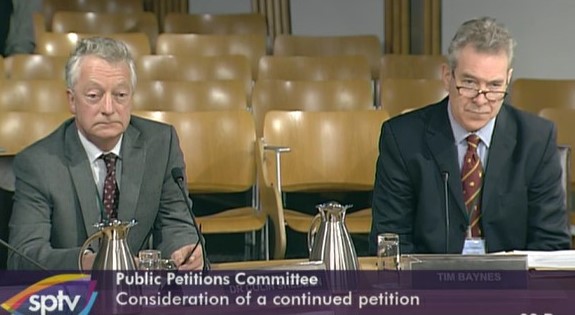
Tim (Kim) Baynes of the Scottish Moorland Group said in his written evidence:

The previous petitions by Mark Avery to ban driven grouse shooting attracted many less signatures and this one has only exceeded 100,000 because of aggressive marketing to the public in the last two months, for instance distribution of leaflets to households in Edinburgh and to festival goers in the street. This shows that it is the support of the wider animal right [sic] movement rather than people with experience of moorland management which has generated the necessary number of signatures for a debate, and the Petition needs to be seen in that light. This needs to be closely questioned“.

Crikey! Festival-goers asked to sign a petition? The shame of it. Everybody knows that attending a festival precludes your right to an opinion on anything. And as for that aggressive pushing of leaflets through letterboxes, it just shouldn’t be allowed. Come on, MPs, you need to “closely question” this behaviour.

How these people can possibly know what motivated every one of those 123,076 signatories is beyond us. Yes, of course some will have been motivated by concerns over animal rights, just as others will have been motivated by concerns over illegal raptor persecution, the burning of moorlands, the exacerbation of downstream flooding, the use of tax-payers’ money to support a rich man’s hobby etc etc. The reason the petition was so successful was precisely because of the wide variety of concerns arising from driven grouse shooting! We’re all perfectly entitled to our individual views because we live in a democracy where people are allowed to voice their opinion. Trying to paint a picture that we’re all ‘extremists’ is just another PR ploy to discredit a successful campaign. And it’s kind of ironic that we’re labelled extremists when Mr Stokes served as Secretary of the Traditional Britain Group – a right-wing outfit with homophobic, racist views that, when told that Doreen Lawrence (mother of murdered Stephen) was to receive a peerage, called for her to return to her ‘natural homeland’. Hmm, not extremist at all.

It seems though that all this whining about petitions being ‘unrepresentative’ of public opinion is simply a case of petition envy. The grouse-shooting industry knows all too well the impact of over 100,000 people signing a public petition to ban driven grouse shooting, when their own counter petition to protect grouse shooting has reached a mere 23,000. Indeed, this very point was raised by the Petitions Committee Chair at the beginning of Mr Stokes’s oral evidence. Mr Stokes tried (failed) to justify the difference in numbers by claiming the counter petition had been started by a gamekeeping student “with no support”. A bit like Mark Avery’s petition then, also started by an individual ‘with no support’ (from the mainstream environmental organisations).

Mr Stokes also suggested the numbers were still low on the counter petition because it hadn’t been running for as long (just two months), and compared it with Mark’s first petition that had reached a similar number of signatures over a period of one year. What he didn’t say was that this counter petition has received much more publicity than Mark’s first petition because the issue of driven grouse shooting is far more prominent now than it was when Mark first started his campaign two years ago.

He also forgot to mention the widespread support of the game-shooting industry that has been vigorously promoting this counter petition for at least a month. Here are some examples:

The Countryside Alliance on twitter:

ca-petition-support

An e-newsletter from Guns on Pegs (a company selling shooting days):

guns-on-pegs-petition

An e-newsletter from William Powell (a shooting company owned by Mark Osborne):

william-powell-petition

And this little gem from the Fieldsports magazine e-newsletter:

fieldsports-call-to-arms2

You’ll notice in this Fieldsports ‘Call to arms’ that they are pleading with pheasant shooters, partridge shooters, deer stalkers and anglers to sign this petition. Hmm, do you think that’s what Mr Stokes meant when he mentioned “manufactured support”?

And yet, even with all this industry promotion, the counter petition still stands at a pathetic 23, 445. Not exactly an indication of widespread public support, eh?

Westminster debate on driven grouse shooting – the evidence session

img_2495 As you’ll be well aware, in August Mark Avery’s petition to ban driven grouse shooting successfully passed the 100,000 signatures needed to trigger a Parliamentary debate, which is due to take place in Westminster Hall on Monday 31 October 2016.

In the run up to that debate, the Petitions Committee (along with the Environment, Food & Rural Affairs Committee) held an evidence session last Tuesday (18 Oct) at Portcullis House – the ugly looking building across the road from Big Ben – where oral evidence was given by Mark Avery, Jeff Knott (RSPB), Amanda Anderson (Moorland Association) and Liam Stokes (Countryside Alliance).

The evidence session was recorded and is available to watch on Parliamentary tv here. A transcript of the evidence session is available to read here.

In addition to the oral evidence, approximately 500 pieces of written evidence were submitted to the Petitions Committee’s inquiry. These are just beginning to be posted on the Parliamentary website (see here). So far, 104 submissions have been published and presumably the remainder will be published over the next few days.

We’ll be blogging about the oral evidence and the written evidence over the coming week. It’s also worth keeping an eye on Mark Avery’s blog as he too is examining the written evidence (e.g. see here, here [this one is priceless], here).

SNH’s General Licence restriction on Raeshaw Estate is “farcical”, says RSPB

It’s good to see environmental journalist Rob Edwards following up on SNH’s pointless General Licence restriction imposed on a grouse moor estate in the Scottish Borders for alleged raptor persecution crimes.

Read his article in today’s Sunday Herald here

img_6873-copy

We’ve blogged extensively (see here) about the General Licence restriction on Raeshaw Estate, near Heriot, which is currently subject to a judicial review (see here). We’ve argued that SNH’s subsequent issue of ‘individual’ licences, which permit the estate to continue the activities supposedly blocked by the General Licence restriction, is utterly ridiculous (see here). In Rob’s article, RSPB Scotland agrees with our view and calls the whole affair “farcical”.

SNH has responded by claiming this is “robust regulation”. Mark Avery has an amusing interpretation of ‘robust’ on his blog this morning (see here).

SNH has also told Rob that its staff has so far carried out two unannounced visits to check that Raeshaw has not breached its specific individual licences. We’re very interested in this. When did those visits take place, how long was each visit, and what actually happened during the visits? Are we expected to believe that SNH staff searched the whole 9,000 acre estate (and the neighbouring Corsehope Farm), twice, to look for unlicensed traps? Or did they just call in for a quick coffee and a chat? We’ll be asking SNH about the ‘robustness’ of these checks.

Rob’s article includes a quote from Raeshaw Estate (owned by an offshore company registered in Jersey and managed under the direction of Mark Osborne) which includes the line:

“Responsible game management practices are at the heart of what Raeshaw and its staff do”.

Here’s a reminder of some of the raptor persecution crimes that been uncovered in this part of the Scottish Borders over the last 15 years, none of which have ever been attributed to anyone.

Photo of Raeshaw Estate (RPUK)

Stop killing mountain hares! Protest at Scottish Parliament, 17 November 2016

As many of you will know, thousands of mountain hares are massacred on Scottish grouse moors every year, including inside the Cairngorms National Park. These killing sprees are unmonitored, unregulated and uncontrolled.

The grouse shooting industry justifies the slaughter on the following grounds:

Hares can affect fragile habitats through grazing pressure

Mountain hares can cause the failure of tree-planting schemes

Mountain hares can spread sheep tick which also affects red grouse

Shooting mountain hares is a legitimate sport

Hares_Lecht_25Feb2016 (2) - Copy

Conservationists have long raised concerns about the legality and sustainability of these culls, but all to no avail (see links to our earlier blogs on this issue below). Well now’s your chance to send a strong message to the Scottish Government that enough is enough.

The charity OneKind is organising a protest event at Holyrood on Thursday 17 November 2016, between 12 and 2pm.

Some background info about their mountain hare campaign can be read here.

To join the protest, you need to register here.

You might also want to sign their petition to stop the mountain hare massacres (here).

If you want to find out more about mountain hare massacres, the following blogs will help:

10 November 2013: Massive declines of mountain hares on Scottish grouse moors (here)

11 November 2013: The gruesome fate of mountain hares on Scottish grouse moors (here)

22 November 2013: MSP wants answers about mountain hare culling (here)

11 December 2013: SNH still licensing mountain hare culls (here)

28 September 2014: Mountain hares massacred on Lammermuir grouse moors (here)

21 October 2014: CEH scientist claims gamekeepers “protect” hen harriers and mountain hares (here)

30 December 2014: Pointless call for ‘voluntary restraint’ on Scottish grouse moor mountain hare massacres (here)

10 January 2015: New petition puts more pressure on SNH to protect mountain hares (here)

17 January 2015: “The eradication of mountain hares in eastern and southern Scotland is disgraceful” (here)

23 March 2015: Hare-brained propaganda from the grouse shooting industry (here)

14 April 2015: Ten conservation groups call for 3-year ban on grouse moor mountain hare slaughter (here)

15 February 2016: More mountain hares slaughtered in the Angus Glens (here)

13 March 2016: More mountain hares massacred in Cairngorms National Park (here)

14 March 2016: Cairngorms National Park Authority responds to mountain hare slaughter (here)

20 March 2016: Queen’s Balmoral Estate accused of mountain hare massacre (here)

30 March 2016: ‘Sustainable’ mountain hare culls – where’s the evidence? (here)

28 May 2016: Mountain hare slaughter set to continue in breach of EU regulations (here)

14 June 2016: Mountain hare massacres on Scottish grouse moors: no planned monitoring (here)

mountain-hare-cull-angus-glens-large - Copy

Outstanding Achievement award for Chris Packham

Yesterday Chris Packham was awarded a Wildscreen Panda Award for Outstanding Achievement at the 2016 Wildscreen Festival.

The Panda Awards, dubbed the ‘Green Oscars’, celebrate and honour the very best in wildlife filmmaking and tv presenting. David Attenborough presented the award which Chris received to a standing ovation. His award was given in recognition of his significant contribution to wildlife filmmaking, conservation and increasing the public’s understanding of the environment.

Had we been there, we would have stood and cheered and applauded as loudly as everyone else, not just for his professional achievements, which are many, but more for the personal commitment he has given to wildlife conservation campaigns, and especially his work on raising awareness about raptor persecution.

Many of us first met Chris in 2014 when he joined the #sodden570, standing all day in torrential rain in the Derbyshire Peak District at the very first Hen Harrier Day. He wasn’t paid to be there, he didn’t have to be there, but he was there, because he cared as passionately as the rest of us about hen harrier persecution. And he didn’t just flit in to say a few words and then clear off to the comfort of a warm, dry hotel room, as some ‘celebrities’ might have done. No. He stayed for the entire event and spent hours and hours and hours, soaked to the skin, talking to people, having his photograph taken, signing souvenirs, and ensuring that everyone who wanted to meet him was given that opportunity. He was one of the last to leave that day.

img_3843a

Since then he has been at the forefront of this campaign, on social media, at public events, and at further Hen Harrier Day rallies in 2015 and 2016. Perhaps most significantly, he also put his name to the latest petition to ban driven grouse shooting in March this year. But he didn’t just put his name to it and then forget about it, he campaigned for it, working tirelessly to promote the issue and raise awareness.

When, with Mark Avery, we told him we wanted to make some videos to help the public understand the environmental damage caused by driven grouse shooting, he jumped at the chance to help. Unbeknownst to many, he turned up the evening before we were due to start filming with a chronic back injury that rendered him virtually unable to walk. Did he cry off? Did he hell. He got himself an emergency medical appointment early the next morning, got dosed up on pain killers and joined us for two days of filming out on the moors without complaint or excuse. Again, he wasn’t paid to make those films, he didn’t have to be there, in agony, but he (and his film crew, who also volunteered their time and expertise) was there because he cared.

img_7295-3-copy

img_7352-3-copy

There is no doubt that Chris’s involvement in this campaign helped the petition to reach the required 100,000 signatures and why the issue of driven grouse shooting is heading for Westminster this month. He has an outspoken passion but it is delivered with integrity and professionalism, and the general public responds to these qualities. And that’s why the grouse shooting industry targeted him with their (unsuccessful) campaigns to get him sacked from the BBC. They could see how much the public valued his opinion and they could see how his advocacy was helping the campaign gain momentum. For all the personal abuse they’ve hurled at Chris, whether it be on social media or in the national press, his dignity and resoluteness has been astonishing.

Massive congratulations, Chris, for a well-deserved award.

Photos of Hen Harrier Day 2014 and film work on a North Yorkshire grouse moor, July 2016 (RPUK)