Blog

Prosecution dropped against gamekeeper in alleged hen harrier shooting

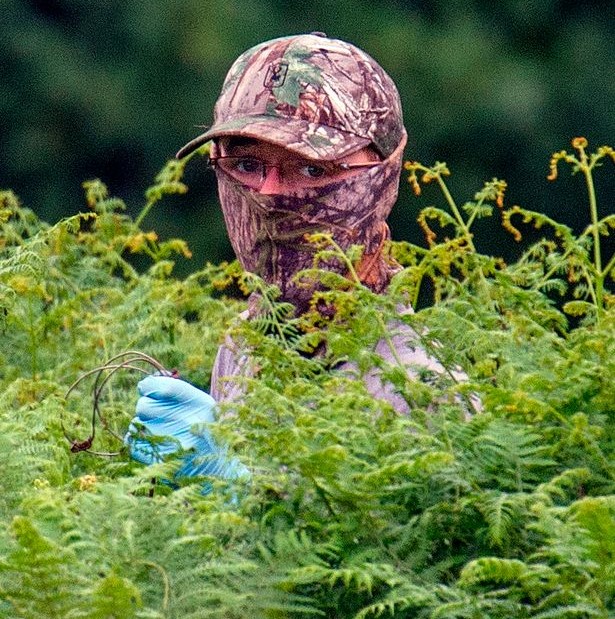
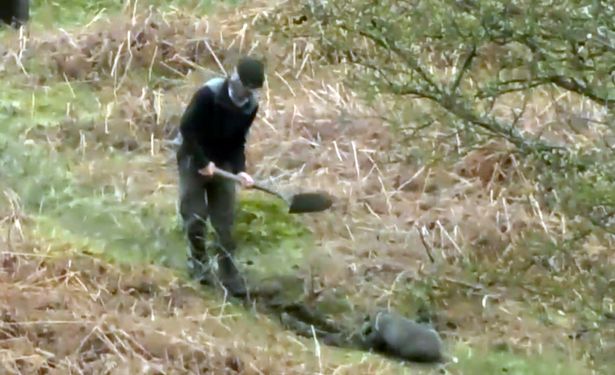
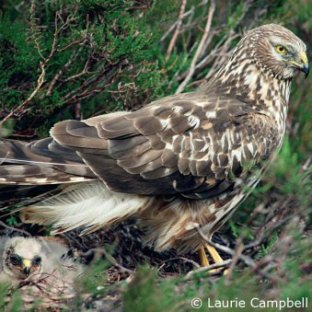
Regular blog readers will know we’ve been tracking the prosecution of Scottish gamekeeper Stanley Gordon, who was alleged to have shot a hen harrier on Cabrach Estate in Morayshire in June 2013.

It took the Crown Office & Procurator Fiscal Service (COPFS) almost three years to charge Mr Gordon, and they just beat the statutory time bar by a few weeks.

The first court hearing took place in May 2016 and there followed a total of nine court hearings in this case. Mr Gordon pleaded not guilty in September 2016 and so a trial date was set for 19 December 2016. This trial date was later dumped and another provisional trial date was set for 15 May 2017.

Today, there was supposed to be a final hearing (intermediate diet) to confirm the trial date. However, we have learned that the case was not called today because the COPFS have dropped all proceedings.

We do not yet know why the case has been abandoned.

There is no chance of anyone else being prosecuted in this case because the case is now time barred.

So in the space of ten days, yet again the COPFS have dropped a long-running prosecution for alleged raptor persecution; they recently dropped a vicarious liability prosecution because, they said, ‘it wasn’t in the public interest to continue‘ (see here).

And just as in the abandoned vicarious liability prosecution, this latest abandonment comes after a protracted period of court hearings, right up to almost the eve of the actual trial date.

Efforts will be made next week to try and find out why the COPFS dropped proceedings, but, as before, we don’t expect much detail to be revealed because public accountability appears to be limited.

It’s worth remembering at this point that hen harrier persecution is listed as a National Wildlife Crime Priority.

We will have more to say about this case in due course.

UPDATE 5 May 2017: Hen harrier shooting on Cabrach Estate – RSPB releases video footage (here)

UPDATE 5 May 2017: Hen harrier shooting – fury at decision to drop prosecution (here)

UPDATE 8 May 2017: Some more thoughts on the shot hen harrier video (here)

UPDATE 11 May 2017: Cabrach hen harrier shooting reaches First Minister’s question time (here)

Crowdfunder to help Andy Wightman fight defamation case

Andy Wightman has launched a crowdfunding appeal to help support his fight against a defamation case being brought against him by Wildcat Haven Enterprises CIC. The pursuer is also seeking an astonishing £750,000 in damages and if successful, would render Andy bankrupt which would result in him being ineligible to continue to serve as an MSP.

We’ve known Andy for several years, before he was elected as an MSP for the Scottish Green Party. He’s been a long-time and vocal supporter of this blog and we’re proud to count him as both a professional colleague and as a friend. His earlier work such as this, this and this sets the framework within which illegal raptor persecution takes place in Scotland and goes some way to help us understand why it is still so prevalent.

We’ve blogged about Andy before, a year before he became an MSP, and our opinion of him has only strengthened since he became a politician. We don’t just admire him, we’re in awe of him.

Here’s what we wrote earlier:

Andy Wightman is a class act. He’s an agitator, a truth-seeker and a fearless revolutionist, but achieves this with a charm and courteousness not often associated with anarchists. Combine that with his capacity for meticulous research and analysis and the result is devastating‘.

This charge of alleged defamation came as a shock to many. Andy is not someone who routinely slurs or makes defamatory commentary like a certain tabloid columnist; he is an honourable, thoughtful, principled man who has integrity and decency in spades. It’s not overly melodramatic to argue that if he loses this case, and loses his position in the Scottish Parliament, it will be a travesty of justice and we’ll all be the ones who lose.

If you’d like to support Andy’s crowdfunding appeal, please click HERE where you’ll also find some background to this case and a few words from Andy about how the funds will be used.

Thanks.

UPDATE 21 April 2017: Just a day and a half after launching, the crowdfunder has raised over £25,000. Legal proceedings have begun in the Court of Session. See Andy’s blog update here

UPDATE 3 May 2017: Crowdunder target extended to help Andy Wightman fight defamation case: here

Environment Committee takes evidence on licensing system for game bird hunting

This morning the Scottish Parliament’s Environment Committee will hear evidence on the Scottish Raptor Study Group’s petition to introduce a licensing system for all game bird hunting in Scotland.

The evidence session starts at 10am and you can watch it live here

UPDATE: The archived video of this session can be watched here

UPDATE 24 April 2017: Our commentary on the evidence session here

Vicarious liability prosecution abandoned as ‘not in public interest to continue’

Last week we blogged about the Crown Office dropping all proceedings against landowner Andrew Walter Bryce Duncan, who was alleged to be vicariously liable for the criminal actions of his gamekeeper, William (Billy) Dick in April 2014.

Gamekeeper Dick was convicted in August 2015 of killing a buzzard on the Newlands Estate, Dumfriesshire by striking it with rocks and repeatedly stamping on it (see here). Mr Dick was sentenced in September 2015 and was given a £2000 fine (see here). Mr Dick appealed his conviction but this appeal was rejected on 15 July 2016 (see here).

The Crown Office & Procurator Fiscal Service (COPFS) began vicarious liability proceedings against Mr Duncan in August 2015 but the case was repeatedly adjourned (a total of 13 court hearings) with two trial dates assigned but then later dropped (see here). These repeated delays were due in part to gamekeeper Dick’s appeal against his conviction but in part for other reasons which have not been explained.

As the third trial date (24 April 2017) approached, we were somewhat surprised to learn last week that the case had been abandoned. We asked COPFS why this had happened and this is their response:

All cases are continually kept under review, and after taking consideration of the full circumstances of this case, and all of the available evidence, Crown Counsel concluded that it was not in the public interest to continue the case to trial.

COPFS remain committed to tackling raptor persecution and there is a strong presumption in favour of prosecution of the cases reported to us where there is sufficient evidence and it is in the public interest to do so“.

There is no detail about why proceeding to trial ‘was not in the public interest’ and indeed, the COPFS does not have to disclose this information. We do know that the COPFS Prosecution Code outlines a large number of factors that are to be considered for a public interest test, including:

  • The nature and gravity of the offence
  • The impact of the offence on the victim and other witnesses
  • The age, background and personal circumstances of the accused
  • The age and personal circumstances of the victim and other witnesses
  • The attitude of the victim
  • The motive for the crime
  • The age of the offence
  • Mitigating circumstances
  • The effect of prosecution on the accused
  • The risk of further offending
  • The availability of a more appropriate civil remedy
  • The Powers of the court
  • Public concern

Without knowing the specific details of the evidence in this case it is pointless to speculate about why the case was abandoned (and for anyone commenting on this post, please be careful not to libel Mr Duncan). We just have to accept that it was abandoned, as frustrating as that is, but we do hope that the COPFS will share some detail with the reporting agencies so that lessons can be learned for future cases.

Journalist Rob Edwards has written an interesting piece about the case, published today on The Ferret website (here), which includes some news about the Newland Estate’s membership of Scottish Land & Estates and its accredited membership of the SLE-administered Wildlife Estates Scotland initiative.

In a wider context, this abandoned case is highly significant. Contrary to the COPFS’ decision, there is huge and legitimate public concern and interest about wildlife crime enforcement, particularly in respect to raptor persecution crimes. The Scottish Government is keenly aware of this and has come under increasing pressure in recent years to introduce new measures to tackle the problem. Vicarious liability was one of those new measures (introduced on 1 January 2012) but to date, only two cases have resulted in a conviction: one in December 2014 (see here) and one in December 2015 (see here). Both related to raptor persecution on low ground shoots, not on intensively managed driven grouse moors where raptor persecution is known to still be a common occurrence. One further case in October 2015 did not reach the prosecution stage due, we believe, to the difficulties associated with identifying the management structure on the estate where the crimes were committed (see here).

Given the low success rate of vicarious liability, alongside the continued illegal persecution of raptors on game-shooting estates, it is clear that the Scottish Government needs to do more.

Tomorrow, the Scottish Parliament’s Environment Committee will hear evidence from the Scottish Raptor Study Group (Logan Steele & Andrea Hudspeth) in support of their petition to introduce a state-regulated licensing scheme for all game bird shooting in Scotland. Part of this licensing scheme would include provisions for sanctions against estates where raptor persecution takes place. Evidence will also be heard from various stakeholders including RSPB Scotland (Duncan Orr-Ewing), Scottish Gamekeepers’ Association (Andy Smith), SNH (Robbie Kernahan) and Scottish Land & Estates (David Johnstone). The evidence session begins at 10am and can be watched live on Scottish Parliament TV (here) and we’ll post the transcript when it becomes available later in the week.

Shot hen harrier Rowan: no further metallurgical tests

The farcical reporting about the shooting of young hen harrier Rowan continues.

As you’ll recall, Rowan was satellite-tagged by the Hawk & Owl Trust / Natural England at Langholm in 2016. His corpse was discovered, in suspicious circumstances, in Cumbria /Yorkshire Dales National Park in October 2016, shortly before the Westminster debate on banning driven grouse shooting.

A press release issued by Cumbria Police (after consultation with Natural England and possibly the Hawk & Owl Trust) stated he was ‘likely to have been shot‘. We questioned that phrasing and a series of FoIs revealed that Cumbria Police had changed their statement from ‘was shot‘ to ‘was likely to have been shot‘. Why did they introduce an element of doubt? Was this a political move?

We asked Cumbria Police and Natural England to publish the post mortem report and the x-ray of Rowan’s corpse – they refused, saying it ‘might affect the course of justice‘. This made us even more suspicious as police forces routinely publish x-rays of shot birds as part of their appeals for information. By not publishing Rowan’s x-ray, it was almost as though they had something to hide.

Then on 3 February 2017, the RSPB published an image of Rowan’s x-ray on their blog. The image was clear: Rowan had suffered gun shot injuries to the leg and metal shot fragments were visible at the fracture site.

Later that day, the Hawk & Owl Trust issued a statement saying ‘the initial post mortem results were not wholly conclusive and further metallurgical tests were required‘.

We asked the Hawk & Owl Trust, several times, who had decided the post mortem results were inconclusive, who had decided that further metallurgical tests were required, had those tests been done, and if so, what were the findings?

The Hawk & Owl Trust did not respond.

So in March 2017, we submitted an FoI to Natural England to ask about these ‘further metallurgical tests’. Here’s their response:

You’ll notice that our questions about whether further metallurgical tests were ‘required’ and if so, who deemed them a ‘requirement’, were carefully dodged. The response to question 1 should really have been the response to question 3.

But that little anomaly aside, it’s clear from Natural England’s response that further metallurgical tests are not being undertaken. Does that mean that it is now accepted that Rowan had been shot? And if so, why all the obfuscation in the earlier press releases? To us, it looks remarkably like a cover-up job, albeit a bodged one.

Meanwhile, in the March edition of the RSPB’s Legal Eagle newsletter, it was stated that ‘the Zoological Society of London post mortem examination, including a radiograph of its fractured left leg, showed the bird’s injuries were entirely consistent with it having been shot‘.

And what of the Hawk & Owl Trust? Well, last week they published a statement on their website, out of the blue, about this case:

Why did they publish this statement last week? Was it because they’d been tipped off by Natural England that an FoI had been submitted seeking clarification on the claim that ‘further metallurgical tests were required‘? It certainly looks that way. So now they’re trying to put responsibility for this claim back on to Natural England! (“All subsequent statements from the Hawk & Owl Trust were based soley on information provided to them by Natural England“).

So, was it Natural England who determined that ‘further metallurgical tests were required‘ and if so, why haven’t these tests been done? Or was it the Hawk & Owl Trust who determined that ‘further metallurgical tests were required‘ in an attempt to introduce an element of doubt about the circumstances of Rowan’s death, to justify their continued involvement in the DEFRA Hen Harrier Inaction Plan, even though they’d previously stated that they’d pull out if criminal activities continued?

Suspicious meat baits on a Highland grouse moor

A few months ago one of our blog readers sent us a series of photographs and a report that a large number of meat baits had been found placed along a 250m estate boundary fence on a Highland grouse moor.

The meat baits had attracted the attention of a number of red kites, buzzards and corvids, and a dead corvid was found on the ground next to one of the baits.

Some of the baits (but not all) appeared to have a coating of white residual powder. Given the history of raptor persecution in the area, there was some suspicion that this might have been an attempted poisoning incident. Placing poisoned baits along a boundary fence is a technique that has been used on other grouse moor estates (e.g. see here).

We encouraged the witness to contact the police and a Police Wildlife Crime Officer attended the scene the next day (good response time). Several baits were collected to be sent for toxicology tests and the results were later confirmed as negative.

Unfortunately, the Police WCO also called the head gamekeeper while at the scene and asked why meat baits had been placed on the fence line. The gamekeeper’s response was along the lines of ‘It’s diversionary feeding and if you want any more information speak to my lawyer’.

In this instance, illegal poisoning was not proven (it’s a shame the dead corvid wasn’t sent for testing) and perhaps it was just a simple case of lawful, diversionary feeding. However, it could have been a prelude to something much more sinister but as the WCO had already alerted the estate staff that the baits had been found, it was a missed opportunity for further evidence gathering. The upside is that the estate was made aware that members of the public, and the police, were paying attention to estate activities.

If you’re out and about, it’s well worth taking a walk along estate boundary fence lines……

Remember those illegal pole traps found set on Mossdale Estate?

Remember those three illegally-set pole traps that were found on the Mossdale Estate in the Yorkshire Dales National Park last year? (Photo: RSPB)

You know, the ones where a Mossdale Estate gamekeeper was filmed by the RSPB as he re-set them on posts on the grouse moor? (Photo: RSPB)

Yes, the gamekeeper who escaped with a police caution after a procedural blunder, instead of facing a full blown prosecution.

Well, guess what? Two of those traps had been used previously to illegally catch birds. How do we know? Because when those traps were seized from the Mossdale Estate, sharp-eyed and forensically-aware RSPB investigators suspected that they’d been used for trapping other birds. The traps were sent for expert examination at the Wildlife Forensics Unit at the SASA labs near Edinburgh and tests revealed the presence of kestrel DNA on one trap, and DNA from another (unidentified) falcon species on the other. (Photo: Guy Shorrock)

Unfortunately a prosecution was not possible as it wasn’t known where the traps had been used previously, when they’d been used, and by whom.

You can read more about this, and other DNA cases, on a fascinating RSPB Investigations blog written by Guy Shorrock and published earlier this afternoon (here).

More ‘extreme hairdressing’ as Highland grouse moors set alight

Last week, Scottish Land & Estates were warning of a high wildfire risk but said that ‘many grouse moors have already stopped their annual muirburn programme’ (here).

Here are two that haven’t yet stopped (they don’t have to stop until the muirburn season ends on 15 April). First up is Moy Estate – we’ve blogged about the grouse moor hairdressers on this estate a few times (see here and here). Last Saturday (8 April 2017) one of our blog readers took the following photographs:

Here is a series of unattended fires stretching for an estimated 4km.

The fires created a massive plume of toxic smoke, heading towards Nairn. Lucky Nairn residents, eh? You do have to wonder how this all fits in with Scotland meeting its climate change targets.

Meanwhile, a little further to the east on Dava Moor, close to Lochindorb, another blog reader took photos of more trees that had been cut and then burned:

The photographer mentioned that the area around Lochindorb was also being burned, right up to the shore, in gale force winds!

What’s interesting about Dava Moor is that it forms part of the designated Drynachan, Lochindorb and Dava Moor Special Landscape Area:

You really should read the assessment of this SLA – it’s quite something. It says the landscape here (predominantly intensively managed grouse moor) is ‘valued for its homogeneity, characterised by geometric muirburn patterns creating an abstract mosaic of colour and texture’ and there is a ‘strong sense of tranquility’. See pages 144-149: Assessment of Highland Special Landscape Areas

Strong sense of tranquility? Who writes this crap? It’s a barren, biodiversity-poor wasteland, ravaged by the ecological warfare waged against any species that might interfere with the overproduction of farmed red grouse for ‘sport’ shooting.

Buzzard, raven & crow shot in Brecon Beacons National Park

The RSPCA is appealing for information after the shooting of three birds in the Brecon Beacons National Park.

A member of the public discovered a dead raven and a dead buzzard near Pen-y-Cae on 5 April 2017. They were taken to the RSPCA’s Merthyr Tydfil clinic where x-rays revealed they had been shot with a pellet gun (x-ray image by RSPCA).

An injured crow was rescued but later euthanised due to its injuries.

Local residents have reported seeing an unusual white van parked in the area around 5 April.

Anyone with information is urged to contact the RSPCA Appeals Line, in confidence, Tel 0300-123-8018.

BBC news article here

ITV news article here

Vicarious liability prosecution: case dropped (Andrew Duncan, Newlands Estate)

Regular blog readers will know that we’ve been tracking the vicarious liability prosecution of landowner Andrew Walter Bryce Duncan, who was alleged to be vicariously liable for the crimes committed by gamekeeper William (Billy) Dick in April 2014.

Gamekeeper Dick was convicted in August 2015 of killing a buzzard on the Newlands Estate, Dumfriesshire by striking it with rocks and repeatedly stamping on it (see here). Mr Dick was sentenced in September 2015 and was given a £2000 fine (see here). Mr Dick appealed his conviction but this appeal was rejected on 15 July 2016 (see here).

Vicarious liability proceedings against Mr Duncan began in August 2015 and the case has been repeatedly adjourned since then (a total of 13 court hearings) with two trial dates assigned but then later dropped (see here). These repeated delays were due in part to Mr Dick’s appeal against his conviction but in part for other reasons which have not been explained.

The third trial date (24 April 2017) looked set to go ahead but today we’ve learned that the Crown Office & Procurator Fiscal Service has dropped all proceedings. We do not yet know why the prosecution has been dropped.

Whatever the reason for dropping the prosecution, this result does not reflect well on the efficiency of wildlife crime enforcement measures in Scotland.

Vicarious liability in relation to the persecution of raptors in Scotland (where one person may potentially be legally responsible for the criminal actions of another person working under their supervision) came in to effect over five years ago on 1st January 2012 as a provision in the Wildlife and Natural Environment (Scotland) Act 2011. It was introduced as an amendment to the draft WANE Bill in November 2010 by the then Scottish Environment Minister, Roseanna Cunningham. It was a direct response to the unrelenting problem of illegal raptor persecution and the apparent inability/unwillingness of the game shooting lobby to get their own house (grouse moors) in order.

To date there have only been two successful prosecutions/convictions: one in December 2014 (see here) and one in December 2015 (see here). Both related to raptor persecution on low ground shoots, not on intensively managed driven grouse moors. One further case in October 2015 did not reach the prosecution stage due, we believe, to the difficulties associated with identifying the management structure on the estate where the crimes were committed (see here). And now this latest case has failed, for reasons as yet unknown.

Two successful prosecutions in five years is not very impressive, and won’t be much of a deterrent for those who continue to kill raptors safe in the knowledge that the probability of being caught, prosecuted and convicted is still virtually nil.