Blog

Satellite-tagged hen harrier disappears on grouse moor in Cairngorms National Park

Well that didn’t take long, did it? Just a few weeks after fledging, one of the 2017 cohort of satellite-tagged hen harriers has already ‘disappeared’, with its final signal emitted from a grouse moor on the 12th August, the opening day of the grouse-shooting season.

Hen harrier ‘Calluna‘ (photo RSPB Scotland)

RSPB Scotland press release:

SATELLITE-TAGGED HEN HARRIER DISAPPEARS ON DEESIDE GROUSE MOOR

RSPB Scotland has issued an appeal for information after a young hen harrier, fitted with a satellite tag as part of the charity’s EU-funded Hen Harrier LIFE project, disappeared on an Aberdeenshire grouse moor.

Calluna‘, a female harrier, was tagged this summer at a nest on the National Trust for Scotland’s Mar Lodge estate, near Braemar. Her transmitter’s data was being monitored by RSPB Scotland and showed that the bird fledged from the nest in July. She left the area in early August, with the data showing her gradually heading east over the Deeside moors. However, while the tag data showed it to be working perfectly, transmissions abruptly ended on 12th August, with no further data transmitted. Calluna’s last recorded position was on a grouse moor a few miles north of Ballater, in the Cairngorms National Park.

Hen harriers are one of the UK’s rarest raptors and the 2016 national survey results released earlier this year showed that even in Scotland, the species’ stronghold, these birds are struggling. The number of breeding pairs in Scotland now stands at 460, a fall of 27 per cent since 2004, with illegal killing in areas managed for driven grouse shooting identified as one of the main drivers of this decline.

David Frew, Operations Manager for the National Trust for Scotland at Mar Lodge Estate, said: “It is deeply saddening to learn that Calluna appears to have been lost, so soon after fledging from Mar Lodge Estate. Hen harriers were persecuted on Deeside for a great many years, and we had hoped that the first successful breeding attempt on Mar Lodge Estate in 2016 would signal the start of a recovery for these magnificent birds in the area.

Only one month after fledging, and having travelled only a relatively short distance, it appears that we will no longer be able to follow the progress of our 2017 chick. We hope however that the data her tag has provided will help to inform a wider understanding of the lives and threats faced by hen harriers.”

Ian Thomson, Head of Investigations at RSPB Scotland said: “This bird joins the lengthening list of satellite-tagged birds of prey that have disappeared, in highly suspicious circumstances, almost exclusively in areas in areas intensively managed for grouse shooting. We are pleased that the Cabinet Secretary for the Environment has commissioned an independent group to look at how grouse moors can be managed sustainably and within the law. We look forward to a further announcement shortly on the membership of this group, and we are committed to assist the work of this enquiry in any way that we can.

The LIFE project team has fitted a significant number of tags to young hen harriers this year, with the very welcome help from landowners, including the National Trust for Scotland, who value these magnificent birds breeding on their property. The transmitters used in this project are incredibly reliable and the sudden halt in data being received from it, with no hint of a malfunction, is very concerning. We ask that if anyone has any information about the disappearance of this bird we urge them to contact Police Scotland as quickly as possible”.

ENDS

Here’s a map we’ve created showing the location of the National Trust for Scotland’s Mar Lodge Estate in the Cairngorms National Park, where Calluna hatched, and the town of Ballater, close to where she disappeared.

The RSPB Scotland press release doesn’t name the estate from where Calluna’s last position was recorded, it just says it was “on a grouse moor a few miles north of Ballater, in the Cairngorms National Park“.

Hmm, let’s have a closer look at that. Here’s a map showing the grouse moor area a few miles north of Ballater. According to estate boundary details that we sourced from Andy Wightman’s Who Owns Scotland website, Calluna’s last position could have been recorded on either an Invercauld Estate grouse moor or a Dinnet Estate grouse moor.

If you’re thinking that this part of the Cairngorms National Park looks familiar, you’d be right, we’ve blogged about it a few times before. There was the discovery of an illegally shot peregrine at the Pass of Ballater in 2011, the reported coordinated hunt and subsequent shooting of an adult hen harrier at Glen Gairn on the border of Invercauld and Dinnet Estates in 2013, and then there were the illegally-set traps that were found nr Geallaig Hill on Invercauld Estate in 2016. This area of Royal Deeside is quite the little raptor persecution hotspot, isn’t it?

The evidence just keeps mounting. Is anyone still wondering why the game-shooting industry is so keen to try and discredit the use of satellite tags on raptors?

We wonder what explanations, to avoid the bleedin’ obvious, they’ll come up with this time? Perhaps they’ll suggest Calluna was sucked in to a vortex created by Hurricane Harvey? Or maybe they’ll say she was hit by a North Korean test missile? They might tell us that Vladimir Putin must have hacked the satellite signals? All just as plausible as the usual tosh they trot out, such as how a fieldworker eating a sandwich at a tagging session causes eagles to die (here), or how non-existent wind farms are responsible for the disappearance of eight sat-tagged golden eagles (here), or how ‘activists’ have been killing sat-tagged raptors as part of a smear campaign against the grouse-shooting industry (here), or how a faulty saltwater switch on tags attached to Olive Ridley turtles on the Indian subcontinent means that all satellite tags are unreliable (here).

We’ll be updating this page throughout the day if and when statements are made by the following:

Response of Environment Secretary Roseanna Cunningham –

Response of Alexander Burnett MSP (Conservative, Aberdeen West) –

Response of Cairngorms National Park Authority – Grant Moir, Chief Exec of CNPA said: “A hen harrier has once again disappeared in the Cairngorms National Park, with a satellite tracker ceasing to transmit. The Park Authority is determined to stop these recurring disappearances. Earlier this week the CNPA met with Police Scotland to discuss how increased use of special constables can help to tackle wildlife crime in the Cairngorms National Park. We also continue to work on other solutions to these issues. The CNPA look forward to the establishment by Scottish Government of the independently-led group to look at the environmental impact of grouse moor management and will feed in to that review“.

Response of Scottish Land & Estates – David Johnstone, chairman of Scottish Land and Estates, said: “Estates in the area have welcomed a number of hen harriers to the area during August and only today one moor reported three harriers. Local land managers reject the inference that the loss of signal from this tag is connected to grouse moor management and are now offering every assistance in searching the area where the last transmission was recorded. They are dismayed that they were not informed earlier that the tag had stopped transmitting nearly three weeks ago, as this would have assisted the search“.

Response of Scottish Wildlife Trust – Susan Davies, director of conservation at the Scottish Wildlife Trust (SWT) said: “It’s extremely disappointing to learn that yet another hen harrier has disappeared over a grouse moor. The most recent surveys show that hen harrier numbers are declining in most parts of Scotland and that illegal persecution is a factor in this decline. Anyone who has information on this bird’s disappearance should contact Police Scotland immediately. 

The Trust has repeatedly called on the Scottish Government to be tougher on wildlife crime and introduce a system of licensing for grouse moor management to encourage sustainable practices. We welcome the recent announcement that a working group will be formed to look at the environmental impact of grouse moors and options for better regulation, and we stand ready to assist this group in any way possible“.

Response of Scottish Gamekeepers’ Association – A spokesman for The Scottish Gamekeepers Association said: “The SGA would urge anyone who saw the bird or knows anything about it to contact Police Scotland. This is the first we have heard of this. Obviously any news like this is very disappointing. The SGA condemns raptor persecution and if any of our members are convicted of a wildlife crime they are removed from our organisation. We have learned from those monitoring tags that birds can move some distance away from where they were last recorded so it is important that, if people know anything, they alert the Police immediately.”

Response of Scottish Moorland Group –

Response of Grampian Moorland Group –

Response of GWCT – Nothing, nada, zilch. But on Twitter they announced the availability of the new GWCT Xmas Cards. That’s nice.

Response of BASC –

Response of Countryside Alliance –

Response of Scottish Association for Country Sports – (from The Times) – Julia Stoddart, head of policy for the SACS, lamented the practice of killing hen harriers to protect grouse. “However, we would remind the RSPB that tag technology can fail for a number of reasons, and that raptors are susceptible to natural causes of death as well as to illegal persecution“, she said.

Other media coverage:

BBC news here

Scotsman here

Press & Journal here

UPDATE 2 September 2017: On cue, Scottish landowners’ rep throws false allegations at RSPB (see here).

UPDATE 4 September 2017: Political silence in response to missing hen harrier Calluna (see here).

UPDATE 5 September 2017: Scottish Land & Estates and their indefensible distortion of the truth (see here).

Raven-killing licence, breeding hen harriers & return of a familiar name at Leadhills Estate

Regular readers of this blog will be very familiar with the Leadhills (Hopetoun) Estate in South Lanarkshire. We’ve been blogging about it for years, not only as a well known hotspot for illegal raptor persecution but also because of the owners’ links to the establishment and to landowners’ lobby group Scottish Land & Estates.

Here’s a map showing the location of Leadhills Estate (dotted lines show the estate boundary of neighbouring Buccleuch Estate, which has in the past been partly ‘managed’ by Leadhills Estate gamekeepers. Estate boundaries from Andy Wightman’s excellent website Who Owns Scotland).

A few months ago we submitted an FoI to SNH on an unrelated issue, and after some prevarication, we’ve finally received a response. Part of that response was quite surprising, on two levels.

First, it turns out that SNH has been issuing licences to kill ravens on Leadhills Estate for the last three years. The evidence supplied to justify the licences seems pretty thin, at best. Have a look at the licence applications, which are remarkably similiar, submitted on behalf of Linlithgow Farms Ltd and the Leadhills Trust here: Leadhills Raven Licence

We don’t know much about the population status of ravens in this part of Scotland but if any blog readers have detailed knowledge, we’d be pleased to hear about it.

However, also of interest to us was the headed notepaper used in the licensing correspondence between the applicant and SNH. Well, well, well, look who’s back:

As many of you will know, this is one of Mark Osborne’s companies. Osborne has a long history with Leadhills Estate. Between 2003-2006 he was listed as a Director of Leadhills Sporting Ltd, a company who held the sporting rights at Leadhills. Osborne resigned in 2006, shortly after the police raided the estate for alleged wildlife crimes (no prosecutions followed).

The sporting rights were later put up for sale in 2008 and Osborne was cited as joint agent (with Savills Estate Agent) in the sale. The sporting rights were again offered for sale in 2013 on a ten-year lease although it’s not clear whether Osborne was involved and it’s not known whether anyone took on the lease. We suspect not, as according to our local sources there hasn’t been any grouse shooting at Leadhills for a number of years; a fact verified by the estate earlier this year in a press release issued by Media House following the reported shooting of a hen harrier on the estate.

The reported shooting of a hen harrier at Leadhills was a bit of a surprise to us. Since the driven grouse shooting stopped and the number of full-time gamekeepers was reduced from ten to two, hen harriers have been making a bit of a comeback here. In 2015 there were three successful nests and this year there are reports of nine nests, and certainly some of those (if not all) have been successful. This is very, very welcome news and we hope, if driven grouse shooting does begin again on these moors, that the hen harriers will continue to thrive.

So, in the absence of driven grouse shooting and the estate’s tolerance of breeding hen harriers, the reported shooting in May of a hen harrier, by an armed man on a quad bike, was very disappointing. This was then closely followed by the reported shooting of a short-eared owl on the estate, this time by an armed man driving a black 4×4 vehicle. Police investigations continue in both cases.

We’re keen to see whether SNH considers the reported shooting of a hen harrier and a short-eared owl sufficient grounds for restricting the use of the General Licence at Leadhills Estate. We’ll have to wait and see. It’s a process that JM Osborne & Co will be quite familiar with; this sporting agency is involved with the management of Raeshaw Estate which had it’s General Licence restricted in 2015 after police uncovered evidence of attempted raptor persecution, and the estate has recently had its subsequent ‘Individual Licence’ revoked and a police investigation is underway for more alleged wildlife crime offences.

Interesting times.

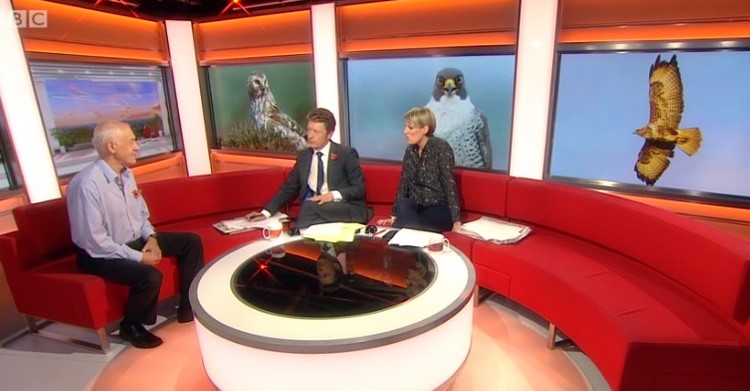
Raptor persecution features on Countryfile Summer Diaries

It was good to see a feature on raptor persecution on Tuesday’s edition of Countryfile Summer Diaries.

Well done to experts Ian Thomson (RSPB Scotland) and David Anderson (Forest Enterprise Scotland) for telling it how it is.

Available to watch on BBCiPlayer for 29 days (starts at 15.33) – click HERE

And….cue calls from the nasty brigade for everyone involved to be sacked, for Chris Packham to be sacked (he must have been involved, right?), and for the satellite tagging of raptors to be banned (although woodcock studies can continue because their sat tags aren’t exposing the rampant criminality that persists within the game-shooting industry).

Cabinet Secretary Fergus Ewing’s constituency a hotspot for ‘disappearing’ sat-tagged raptors

A few weeks ago we created a map for Mairi Gougeon MSP (Angus & Mearns, SNP) to show her the areas of her constituency where satellite-tagged raptors had either been found illegally killed or had ‘disappeared’ in suspicious circumstances. Unsurprisingly, the main hotspot area was centred on the grouse moors of the Angus Glens.

Mairi, as the Hen Harrier Species Champion, attended this year’s Hen Harrier Day at Loch Leven where she acknowledged the issues and spoke passionately about the need to address illegal raptor persecution. We welcomed her interest and enthusiasm and look forward to seeing her use her position to good effect.

We’ve now created another map, this time for MSP Fergus Ewing’s constituency of Inverness and Nairn. For new readers, Fergus also holds a senior position in the Scottish Government – he is Cabinet Secretary for the Rural Economy and Connectivity.

This latest map is based on data from the recent expert review of golden eagle satellite tag data and also from the RSPB’s recent map showing the locations of ‘disappeared’ or illegally killed satellite-tagged hen harriers and red kites. Here it is, showing the locations of 15 satellite-tagged raptors (8 x golden eagles, 6 x red kites, 1 x hen harrier) that were either illegally killed in Fergus’s constituency or ‘disappeared’ in suspicious circumstances in his constituency:

And just like the map we created for Mairi, the hotspot areas within Fergus Ewing’s constituency all just happen to be on land managed for driven grouse shooting. Imagine that!

Unlike Mairi Gougeon MSP, as far as we can tell, Cabinet Secretary Fergus Ewing has never publicly spoken out about the illegal persecution of raptors on grouse moors, either within his own constituency or beyond (if anyone has any evidence to the contrary we’ll be happy to post it here).

He did, sort of, hint at it in a statement he made about grouse shooting in 2015 when he was Minister for Business, Energy and Tourism:

I am very pleased to be able to extend support to all of those who make a success of fields sports in a professional and responsible fashion. Their efforts bring to Scotland a number of visitors who are very welcome and make a significant financial contribution to the sector”

but you’ll note that he very carefully avoided mentioning raptor persecution crimes or any of the other environmentally damaging effects of intensive grouse moor management.

And he can’t claim that he’s unaware of what’s going on – we’ve contacted him on social media many times about this issue, especially when persecution incidents have been detected in his constituency (most recently in July – see here). He has chosen to ignore us at every turn and has given his full public support to grouse moor management in well known raptor persecution hotspots including the Angus Glens and the Monadhliaths.

If you live in Fergus Ewing’s constituency of Inverness and Nairn, you might want to contact him to ask him what he’s doing about the illegal killing of raptors on grouse moors in this area. He has a responsibility to respond to the concerns of his constituents. Email: Fergus.ewing.msp@parliament.scot

If you don’t live in Inverness and Nairn but wish to raise concerns about the level of illegal raptor persecution on the grouse moors of this Cabinet Secretary’s constituency, please use this email address: Scottish.Ministers@gov.scot [and mark it for the attention of Fergus Ewing].

For far too long we’ve allowed certain politicians to get away with wilful blindness about this ongoing criminality. It’s up to all of us to hold these elected representatives to account.

A shedload of golden eagles satellite tagged in new RPUK/Chris Packham project

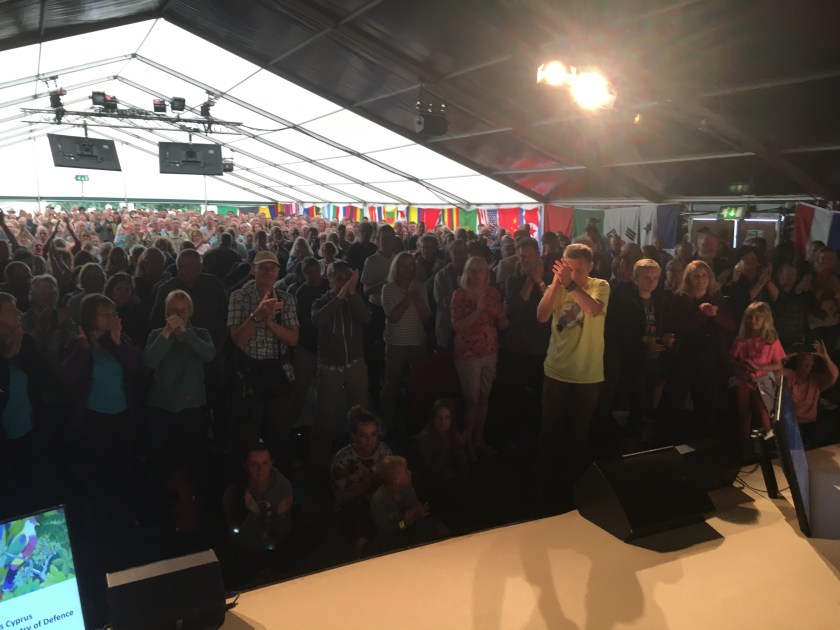
At last weekend’s British Birdfair at Rutland Water we joined with Chris Packham to launch a new joint project.

Privately funded by a pair of extraordinarily generous and supportive philanthropists, this project has been in development since the New Year. We are grateful not only to our funders, but also to a number of people without whose help the project would have been a non-starter.

This year our project has focused on fitting satellite tags to young golden eagles across Scotland. At this stage we’re not announcing how many eagles have been tagged, or where, exactly, they’ve been tagged (the location of nest sites must remain confidential for obvious reasons), but let’s just say we’ve tagged a shedload. Here’s a small subset:

The tags were fitted in June and July by highly experienced & appropriately licensed fieldworkers, with the support of several landowners, some of whom came along on tagging days. All the tagged eagles have fledged successfully and they are all hanging out in their natal territories, as expected.

Researchers have been satellite-tagging golden eagles in Scotland since 2004. This new technology has revolutionised our ability to better understand golden eagle ecology, and particularly the birds’ early years of life when they leave their parents’ territory and wander around the country before they attempt to settle in a territory of their own and join the breeding population at between 3 to 5 years of age. For an excellent first-hand and simple explanation of how the technology works in practice, have a read of this blog written last week by Stuey Benn of the RSPB.

Understanding golden eagle juvenile dispersal behaviour has important conservation implications because at present, Special Protection Areas designated specifically for golden eagles are based on the number of breeding pairs present in a particular area, and not on the number of juvenile eagles present. Research on 36 satellite-tagged golden eagles, undertaken by Ewan Weston for his PhD (published in 2014), identified nine distinct areas, known as Temporary Settlement Areas (TSAs) where these young birds tended to spend a lot of time during certain months of the year. Here’s a map we’ve created, based on data published in Ewan’s PhD, of these nine TSAs.

The identification of these areas would have been virtually impossible without the use of satellite tags. The data collected from our tagged eagles will contribute to this ongoing scientific research to help determine the importance of these, and perhaps other yet-to-be-discovered TSAs, which may lead in future to some areas being newly designated / protected for golden eagle conservation purposes.

Of course, along with the invaluable scientific data generated by these satellite tags, showing us how golden eagles utilise different landscapes, we are also learning a lot about how one type of land-use, intensively managed driven grouse moors, is impacting negatively on the golden eagle population. This has been known for some time, but the recently published Golden Eagle Satellite Tag Review clarified in which particular grouse moor areas satellite-tagged eagles are being illegally killed or are ‘disappearing’ in suspicious circumstances.

When the Review was published in May this year, we created this map to show the significant clustering of satellite-tagged eagles that had either been confirmed as illegally killed or the tags had suddenly stopped working in suspicious circumstances and the tags and eagles had ‘disappeared’ off the face of the earth:

The clusters around the Cairngorms National Park, including the Monadhliaths to the NW and the Angus Glens to the SE, are all areas where the land is intensively managed for driven grouse shooting.

Interestingly, when you overlay these data of killed or ‘missing’ satellite tagged eagles on to the map showing the Temporary Settlement Areas utilised by juvenile golden eagles, this is what you get:

[Yellow stars = satellite-tagged eagles confirmed as illegally killed; red stars = satellite tags that suddenly stopped functioning in suspicious circumstances and the tag & eagle nowhere to be found].

It’s quite clear then, that in some driven grouse moor areas, particularly in the Angus Glens, the Monadhliaths, and the NE and SW areas of the Cairngorms National Park where young golden eagles are spending a lot of time, illegal persecution is an ongoing threat.

Obviously we don’t yet know where our tagged eagles will disperse to, and whether they might head for some of these dangerous TSAs, but we’re about to find out.

We’ll be providing updates on our eagles’ movements over the coming months and if the tag data indicate that any of our birds have come to any harm, we’ll first be reporting it through the proper channels to the Police and then we’ll be publishing appropriate details on this blog.

Stay tuned!

Another red kite found shot dead in County Down

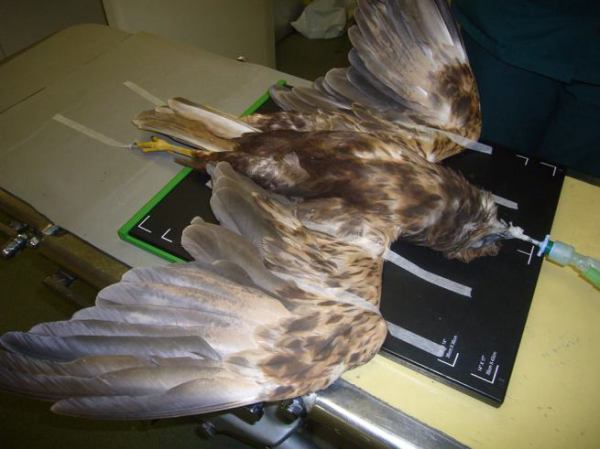
A three-month old red kite has been found shot dead in County Down, Northern Ireland.

The bird, hatched in May and tagged ‘Black 5W’, was found dead on a public road last Thursday (17 August 2017) outside Moneyslane, between Banbridge and Newcastle.

An initial x-ray revealed pieces of shot in the bird’s corpse and the body has now been sent for a full post-mortem.

Anyone with information on the incident can contact the Police Service of Northern Ireland on the non-emergency number 101 or anonymously via Crimestoppers on 0800 555 111, quoting reference number 837 of 17/8/17.

Further details on BBC News (here) and the Belfast Telegraph (here).

The tiny, reintroduced red kite population in Northern Ireland is under serious threat from on-going persecution. Another red kite was found shot in Co Down in 2015 (here) and in 2014, four kites were illegally killed in Co Down (one was shot, three were poisoned – see here).

In 2016, in response to a PAW report on raptor persecution in Northern Ireland, a new, multi-agency initiative called ‘Operation Raptor‘ was launched, aimed at targeting those who continue to kill protected birds of prey.

Police appeal in suspected peregrine poisoning incident

Press release from Devon & Cornwall Police, 18 August 2017:

POISONED PEREGRINE FALCON: WITNESS APPEAL

Officers are investigating an incident after being contacted by staff at Glendinning Quarry in Ashburton, on Tuesday 15 August, following reports of an injured Peregrine falcon.

The falcon had been located on the floor of the quarry which is home to a breeding pair of Peregrine falcons.

Devon and Cornwall Police Wildlife Crime Officer, PC Josh Marshall, sought that the juvenile Peregrine falcon was given the immediate care it required. However, the bird died the next day.

PC Marshall said: “The initial inspection and condition of the bird strongly suggests that this bird had been poisoned. The bird has now been placed into the Wildlife Investigation scheme administered by Natural England where it will be forensically examined to establish the cause of death and a police investigation has now begun into the incident.

Members of the public are warned that poisons commonly used to commit a crime like this are incredibly toxic to humans and pets. Should any person locate any dead or injured birds they are strongly advised not to touch them or let pets come into contact with them.

Ingestion of these poisons can lead to death. It is incredibly concerning that individuals are using these types of chemicals within public areas that not only kill our wildlife but could also place members of the public, children and their animals into harm’s way.

The area of Ashburton and neighbouring Buckfastleigh is unfortunately a hot spot for poisoning of these birds of prey. Previous incidents at the site are as follows:

2011 – 1 poisoned Peregrine falcon at White Cleaves (Buckfastleigh) Quarry – substance used – Aldicarb and Carbofuran.

2005 – Poisoned bait (racing pigeon) Glendinnings Quarry– substance used Aldicarb. A live bird with clipped wings. Adults missing presumed dead, chicks rescued. Police fitted telemetry device to see if pigeon would relocate but this failed. In Legal Eagle 47, page 5.

2005 – 1 poisoned peregrine and 1 poisoned bait (pigeon) – substance used – Aldicarb, peregrine found on dead pigeon which had wings clipped.

2003 – Two men with a pigeon on a length of string appearing to try and lure peregrines from the top of White Cleaves (Buckfastleigh) Quarry. Police visited site but men had gone.

2000 – 1 poisoned Peregrine, substance used Aldicarb at Glendinnings quarry

2000 – 1 shot Sparrowhawk near Buckfastleigh (it lived).

1992 – 2 dead peregrines at White Cleaves (Buckfastleigh), with pigeon flesh in crop – tested positive for Malathion.

As can been seen from this data, the use of illegal banned poisons are evident and put the public at significant risk. In the 2005 incident, a number of children could have been harmed or potentially worse when the poisoned bait (a racing pigeon) was located wondering around near to a childminders address.

Significantly racing pigeons have been used as the bait for a number incidents both here and nationally and the answer to solving and preventing these poisonings could lie somewhere within a rogue minority of the racing pigeon community.

Peregrine falcons do not differentiate between prey items such as wild pigeons and racing pigeons, this obviously causes conflict with some prize racing pigeons being taken by these birds of prey.

Generally the method used will be to smear the bait with a vasaline type substance containing the poison onto either a live or dead bird. When the Peregrine plucks and eats the bait item the poison is then ingested and kills the bird. The bird dies then endures an excruciating few hours whilst waiting to die.

South West Peregrines, a volunteer group who monitor these birds and others within the South West, have described the incident as ‘abhorrent’.

We are urging members of the local community to come forward with any information they may have that can assist in bringing these offenders to justice”.

Information is handled in the strictest of confidence and can be passed directly to PC Marshall at Joshua.marshall2@devonandcornwall.pnn.police.uk or by email 101@dc.police.uk or calling 101 quoting log number 0223 180817.

Information can be passed anonymously to Crimestoppers via 0800 555111 or the charity’s website at www.crimestoppers-uk.org

Tony Whitehead speaking for RSPB in the South West said: “Peregrines are magnificent and much-loved birds, whose comeback over the past twenty years is a conservation success. However, once again, it appears the peregrines at this site have been deliberately targeted and, it is suspected, poisoned.

Should this prove to be the case, this is outrageous and the criminals must be brought to justice. We are also concerned that, should this again prove to be a poisoning, someone is wantonly placing toxic chemicals in the countryside which can be a danger to both humans and pets.

Someone in the local community must have information about who’s doing this and we urge people to come forward and contact the police. A £1,000 reward has been offered by the RSPB for information that directly leads to the prosecution of the offender.

ENDS

New RPUK/Chris Packham project launching at Birdfair this weekend

We’ll be launching a new project at the British Birdfair this weekend, in collaboration with Chris Packham and a number of others.

Come along to the Events Marquee at 11am on Saturday morning (19th August) to find out more!

For those who can’t attend the Birdfair, we’ll be blogging about the project next week.

Hope to see some of you there – please come and say hello!

Harry didn’t kill Sally

The Sun’s take on the news that satellite-tagged Montagu’s harrier, Sally, has ‘disappeared’ in Norfolk:

Magnus Linklater and his fake facts: caught out, again

So, last night we posted a blog about a Times front-page article and a Times leader article that quite clearly was an attack on the good name of the RSPB.

The author of the front-page article was Magnus Linklater, a ‘journalist’ with a reported association with grouse shooting and a track record of producing fake facts and writing anti-RSPB rhetoric. In his article, Linklater claimed that the RSPB was fighting a proposed offshore windfarm development “despite a detailed environmental survey commissioned from the British Trust for Ornithologywhich estimated that the turbines would harm no more than 100 gannets a year”.

This claim looked decidedly dodgy as the official number of predicted gannet casualties, as published in Scottish Ministers’ own formal assessment of the windfarm’s impact, was actually 1169 gannets a year.

So we decided to ask the BTO if they had actually undertaken a “commissioned, detailed environmental survey” in relation to this windfarm proposal.

Guess what? The BTO confirmed this morning that er, no, they hadn’t!

So, we were right then. This was a grouse shooting apologist making up stuff to attack the RSPB.

This isn’t the first time the scientific credibility of the BTO has been misrepresented by someone in the grouse shooting industry to smear the reputation of the RSPB, and you can bet it won’t be the last.