Blog

Scottish Government commissions research on gamekeepers’ “rights & aspirations”

While we’re all waiting for Scottish Ministers to turn twenty years’ worth of hollow promises in to tangible and effective action against the rampant criminality still all-too evident on many grouse and pheasant-shooting estates, the Scottish Government has decided to invite tenders for some new research in to the ‘rights and aspirations’ of gamekeepers.

Yes, it’s easy to see why this would be a priority for the Government. Those poor, misunderstood raptor haters, who do so much in their role as custodians of the countryside….

[Pie chart from RSPB Birdcrime report: The occupations/interests of the 176 individuals convicted of bird of prey persecution-related offences 1990-2015]

Does this look like the actions of a Government ready to crack down on criminals in an industry known to be heavily involved in the illegal killing of birds of prey?

Although to be fair, the new research isn’t just about gamekeepers. The full title of the research contract up for grabs is this:

To fill gaps in existing knowledge on the socioeconomic and biodiversity impacts of driven grouse moors and to better understand the rights, benefits, attitudes, working conditions and future aspirations of gamekeepers.

This has come about following the publication earlier this year of the Government-commissioned Socio-economic and Biodiversity Impacts of Driven Grouse Moors in Scotland. That research identified a load of gaps and this latest research opportunity aims to fill some of those gaps as well as to look at the game-keeping profession, as Roseanna Cunningham had indicated way back in 2017 when she first announced the Werritty Review in to grouse moor management.

The invitation for tender can be found here with a closing date for applications at midday on 7th July 2019.

The research contract is worth £80,000 and begins on 24th July and ends on 20th December.

The tender document can be downloaded here: Research to assess the socioeconomic and biodiversity impacts of driven grouse moors

Most of the detail is dull and tedious and only relevant to those submitting a tender, but this short summary of what is expected from the work is useful:

Sarcasm and irony aside, some of this research is actually long-overdue and should make a significant contribution to the discussions about the so-called benefits of grouse moor management, assuming there are sufficient and reliable data sources available. However, the usual caveat applies – it all depends on which organisation wins the tender and whether they are sufficiently independent and robust for the research to withstand scrutiny. If it’s anything as bad as the GWCT’s research proposal to kill ravens in Strathbraan (described as “completely inadequate” and “seriously flawed” by SNH’s own Scientific Advisory Committee) then we’ll be no further forward.

The timing is interesting though. This research will clearly feed in to the long-awaited Werritty Review, which was supposed to have been submitted by now but we understand has been delayed due to ill-health. For how long remains to be seen.

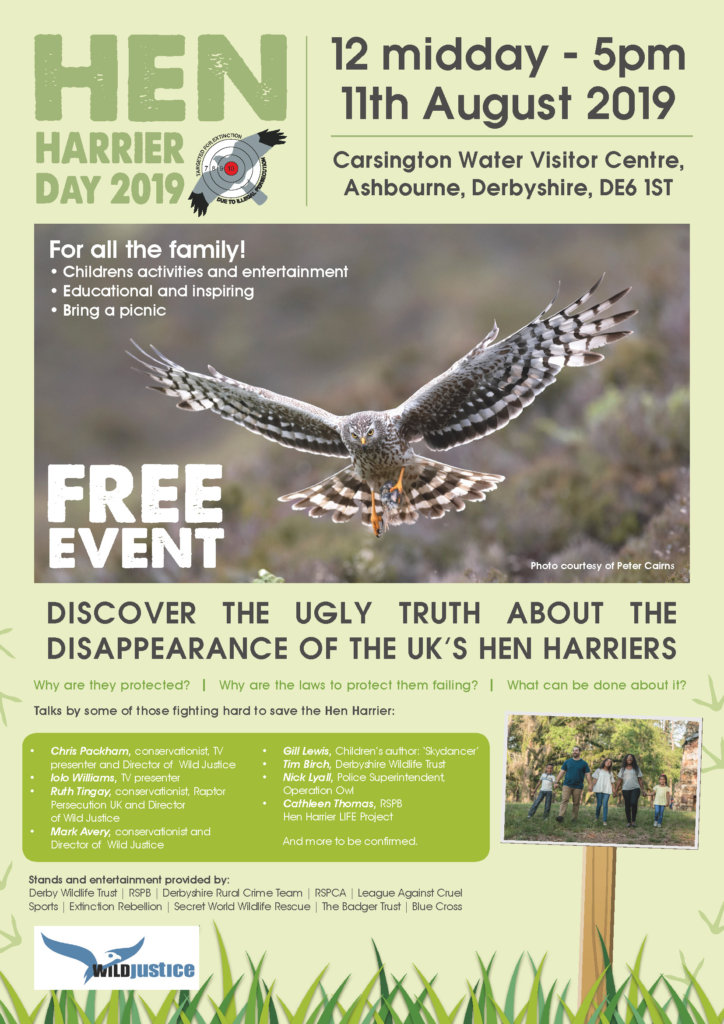
Hen Harrier Day 2019 (Sunday 11th August)

This year Wild Justice is organising a Hen Harrier Day event on Sunday 11th August at Carsington Water in Derbyshire, with fantastic support from Severn Trent Water.

Further details will be announced in the coming weeks, including more speakers, but this is what has been organised so far….

Download the poster, spread the word and hopefully see you there!

Alison Johnstone MSP launches draft Bill to protect foxes and hares

Alison Johnstone MSP has launched a public consultation as part of her draft Member’s Bill to provide protection for foxes, brown hares and mountain hares in Scotland.

Here is the press release from the Scottish Greens (24th June 2019):

Scottish Greens Parliamentary Co-Leader Alison Johnstone MSP will today (24 Jun) launch a consultation on her member’s bill to provide legal protections to foxes and hares. The consultation, which will run until mid-September, will gather views from people across Scotland and help shape the final bill proposal.

The fox and hare bill will deliver a real fox hunting ban, closing the loopholes that allow hunting to continue in Scotland now much as it did before the 2002 ‘ban’, and end the killing of hares, which has become routine on grouse moors across Scotland. The proposed Bill would also protect foxes, mountain hares and brown hares, prohibiting the killing of these species without a licence.

Ms Johnstone has brought this Bill forward because foxes and hares are routinely killed in huge numbers, the Scottish Government have consistently indicated their support for action, and because there is widespread public support for action.

[Alison Johnstone MSP launching her consultation outside the Scottish Parliament yesterday supported by League Against Cruel Sports Scotland and OneKind. Photo from Scottish Greens]

Alison Johnstone MSP said:

Foxes and hares are iconic species that are widely celebrated in popular culture and valued by rural and urban Scots alike. They deserve our compassion and respect, yet they are routinely slaughtered across the country in huge numbers. My proposal would give these animals the protection they so urgently need.

The Scottish Government and the First Minister herself have expressed their support for action but have been unable to find the time to bring forward a legislative proposal themselves. I’m confident they will get behind my proposal and together we can protect Scotland’s foxes and hares.

Fox hunting was meant to have been banned in Scotland in 2002, but little has changed. Hunts still go out, pursuing and killing foxes, and foxes are still being killed by hunting dogs. My proposal would remove the loopholes and result in a watertight ban, ending hunting for good. Politicians have repeatedly promised to end hunting, and the Parliament passed the Protection of Wild Mammals Act back in its very first session. For hunting to continue despite this leads to distrust in our institutions and those leading them. My proposals would represent a new contract between land managers and the wider public that could help restore good faith.

Mountain hares are routinely being killed in huge numbers on grouse moors in particular, with an average of 26,000 killed every year. This is a native species whose population has crashed in some parts of the Highlands, and there is simply no justification for the killing.

ENDS

This news received broad coverage in the national press yesterday but this article from Common Space provides the best overview and includes a quote from Environment Minister Mairi Gougeon.

There’s also a video of Alison encouraging everyone to participate in the consultation:

The consultation is now open and anyone can participate online HERE. The consultation closes on 15th Sept 2019.

Alison has produced a consultation document which is well worth a read. It provides an overview of how the consultation process works and how Member’s Bills work and then goes in to more detail about the proposed Bill.

Download the consultation document here: Protecting Scotlands Wild Mammals_consultation2019

Alison deserves our thanks for her work on this topic to date, particularly on highlighting the obscene slaughtering of thousands upon thousands of mountain hares on grouse moors every year for no legitimate reason whatsoever.

How often do we complain that politicians aren’t doing enough? All the time! Well here’s one who’s going the extra mile, who has created an opportunity to address what she calls the ‘casual and unmonitored approach’ to killing wild mammals in Scotland (sounds familiar – think General Licences) and her consultation deserves our best support.

If scenes like this sicken you, please support Alison’s proposed Bill by filling in the consultation form.

[Slaughtered mountain hares left to rot in a bloodied pile on a grouse shooting estate in the Angus Glens. Photo RPUK]

Trap causes horrific suffering on grouse moor in Peak District National Park

A member of the public stumbled across a gruesome scene this morning on a grouse moor in the Peak District National Park.

@PatHeath2 posted the following images on twitter:

The photographs, reported to be from a grouse moor on the north eastern side of the National Park, have understandably caused widespread disgust and anger.

It’s not clear from the photographs or the accompanying commentary whether this is an illegally-set trap i.e. it had been deliberately pegged out on open ground instead of being placed inside a natural or artificial tunnel or whether the trap had somehow become dislodged from its original [legal] setting inside a tunnel.

Either way, this animal’s suffering is sickeningly and indisputably brutal.

It’s yet another pitiful victim of the savagery that is driven grouse moor management.

And all inside the Peak District National Park; an area where you might reasonably expect wildlife to be protected, respected and cherished. It isn’t, of course, in this or in any of the other UK National Parks where grouse moor management dominates the landscape and where wildlife is simply treated as either a commodity or an inconvenience, to be dispensed with without a second thought.

The photographer has been urged to report this incident to South Yorkshire Police so the circumstances of the trap-setting can be investigated. Unfortunately this particular police force does not have a strong track record when it comes to investigating suspected wildlife crimes e.g. see here and here, despite this area being a well-known wildlife crime hotspot.

Limited edition hen harrier t-shirt on sale now!

The fantastically creative @YoloBirder (Probable Bird Society) has designed a new, limited edition hen harrier t-shirt, whose sales will benefit the RSPB’s Skydancer Appeal, Birders Against Wildlife Crime and Wild Justice.

Based on his popular t-shirt design of four years ago [the ‘hen diagram’, geddit?], this updated version includes the words ‘Enough is Enough’ on the front and a list of 27 satellite-tagged hen harriers, most of whom have vanished in suspicious circumstances in the last few years, on or next to a grouse moor.

The t-shirt costs £16.99 (in lots of different sizes) with an estimated delivery date between 13th – 20th July.

PLEASE NOTE: This is a limited edition and sale orders will close at 9pm on Thursday 27th June.

To order yours, please CLICK HERE


More innocent victims caught in traps set on grouse moors

This morning we received the following images from a blog reader showing a young Dipper that had been crushed to death inside a spring trap set across a stream on the Leadhills (Hopetoun) Estate, a grouse shooting estate in South Lanarkshire.

This particular trap looks to be legally-set to catch species such as stoats and weasels. Although there are strong ethical and welfare concerns about the use of these traps to kill these species (and especially the complete lack of monitoring and reporting) what has happened here is perfectly legal. As per the regulations, the trap is covered by an artificial tunnel and the entry holes at both ends have been restricted to reduce the opportunity for non-target species to enter the tunnel and be caught in the trap.

Clearly, the entrances were insufficiently restricted to prevent this bird entering and being killed, but that is in no way a reflection of bad practice by the estate – the trap operator has followed the rules.

There is no legal requirement for grouse shooting estates to monitor, record or report these deaths. The Scottish Government and its statutory conservation advisory agency (SNH) has no clue about how many of these deaths take place on grouse moors each day/week/month/year.

We’ve blogged about this issue many times before. Sometimes it’s obvious that a trap has been set illegally (i.e. when it hasn’t been placed inside a tunnel) and sometimes it’s less obvious but still illegal, for example when little or no effort has been made to restrict the tunnel entrances.

The RSPB has also had concerns about this issue and today has written a blog (here) and released a video (see below) about a number of cases of what appear to be illegally-set traps on various grouse moors in North Yorkshire, South Yorkshire and Bowland, all found this year. The RSPB blog highlights what it says are ongoing inconsistencies in how different police forces respond to such crimes and their subsequent decisions about enforcement action/inaction.

Scottish Environment Minister visits hen harrier nest with Raptor Study Group fieldworkers

Mairi Gougeon is the Scottish Government’s Minister for Rural Affairs and the Natural Environment, and she also happens to be the Species Champion for the Hen Harrier (Species Champions are roles devised to help politicians raise awareness of species conservation).

Mairi has been one of the more active Species Champions in the Scottish Parliament, enthusiastically offering her support for this species by way of a parliamentary debate, speaking at Hen Harrier Day, and going on field visits to see hen harriers in the wild.

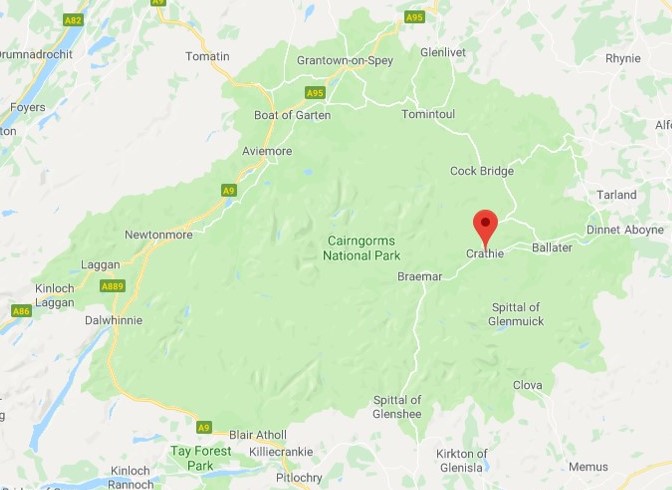
Earlier this week she was out again with experts from the Scottish Raptor Study Group and the National Trust for Scotland’s Mar Lodge Estate in the Cairngorms National Park, to watch (from a distance, obviously) a male hen harrier food passing to a female who had four chicks in the nest.

Photos from Kelvin Thomson (@thomsok) of Tayside Raptor Study Group.

That’s the smile of a Minister who’s enjoyed seeing hen harriers.

And although the Scottish Government needs to do much much more to combat the illegal killing of this species on grouse moors (remember Scotland has lost more than a quarter of its hen harrier population in just 12 years), Scotland is fortunate to have a Minister who is so engaged and supportive of the species.

Compare and contrast with Mairi’s Westminster counterpart, Dr Therese Coffey – she’s been in post since 2016 and hasn’t said or done anything of significance in support of hen harriers, even after recent Government-commissioned research showed that 72% of tagged hen harriers were presumed to have been killed illegally on grouse moors.

The Westminster Hen Harrier Species Champion is Angela Smith MP, who appears to have been about as productive as Dr Coffey.

Let’s hope the four chicks that Mairi Gougeon saw being carefully looked after on Mar Lodge Estate all survive and fledge. They’ll need plenty of luck though – four of the five hen harriers tagged here in the last few years have all vanished in suspicious circumstances on other grouse moors in the Cairngorms National Park, presumed to have been illegally killed (Calluna, Margot, Stelmaria and Marci).

And they’re not the only satellite tagged hen harriers to have come to harm inside this National Park. In August 2016 satellite-tagged hen harrier Brian ‘disappeared’ here (see here) and in August 2015 satellite-tagged hen harrier Lad was found dead, suspected shot, inside the Park (see here).

And it’s not just satellite-tagged hen harriers. At least 15 satellite-tagged golden eagles have also ‘disappeared’ in suspicious circumstances in recent years inside the Cairngorms National Park (see here). In 2014 the first white-tailed eagle chick to fledge in East Scotland in approx 200 years also ‘disappeared’ in suspicious circumstances (see here) and last year year another white-tailed eagle also ‘disappeared’ in suspicious circumstances inside the Park (see here).

The political silence on the recent losses of hen harriers Calluna, Margot, Stelmaria and Marci has been noted. We’ll be revisiting this topic soon.

Running scared?

The weekend before last we were out filming in Scotland with Chris Packham, at a number of locations and with a number of experts. We’re not going to say too much about that at the moment because….well, you’ll see in due course.

At one particular location we were followed and filmed by an individual. Those photographs were subsequently doing the rounds on social media last week – some of you may have seen them – and they led to a wide range of absurd accusations and claims, including one particular favourite – that Chris was ‘caught filming on a grouse moor and as soon as he was spotted by the gamekeeper he literally ran back to the car and hid his face’.

Now, what was it that Scottish gamekeepers have been accused of doing recently? Was it something about making “greatly exaggerated” claims? Have a look at this video that WE filmed of us leaving that grouse moor, having been followed and filmed by this gamekeeper for at least half an hour – can you see anyone “literally running back to the car to hide their face”?

Note the gamekeeper filming us, sitting in the black 4×4 parked in the lay by behind our two vehicles.

There have also been claims that we were filming “illegally” on the grouse moor. No, we weren’t. Our accusers would do well to read the Land Reform Act and learn about public rights of access in Scotland.

There have also been claims that Chris broke BBC guidelines by filming with a BBC film crew without landowner permission. No, he didn’t. This wasn’t a BBC film crew and landowner permission was not required (see above).

There have also been claims that Chris broke BBC guidelines by ‘campaigning on social media’ during his Springwatch contract. No, he didn’t. Chris wasn’t the one who posted the photos and associated commentary on social media (i.e. ‘campaigning’) – that was done by those in the game-shooting industry, who shot themselves in the foot by bringing it to the attention of Springwatch viewers while the series was still on air! How can Chris be held responsible for someone else’s decision to post photographs of him on social media, accompanied by a string of false accusations?!

There have also been claims that one of the people involved was (a) a security guard or (b) an ‘animal rights extremist/thug’ – no, he wasn’t either of those. It’ll become apparent later in the year exactly who he was and what he was doing there!

There have also been claims that this particular member of our team was violently intimidating towards the gamekeeper, and that he “wouldn’t back down against him”. Have another look at our video – can you see any evidence of violent intimidation or can you see a man walking back to his vehicle and immediately getting in to avoid any confrontation with the gamekeeper who was filming him?

On something of a tangent, it has also been claimed that Environment Cabinet Secretary Roseanna Cunningham and Ruth Tingay of RPUK are “shagging”, which is apparently why the Cabinet Secretary agreed to appear in our Fred video last year. Erm…..

It’s pretty clear that there are some within the game shooting industry who are so terrified about our work and the impact we are having they’ll try anything to discredit us, no matter how pathetic or defamatory the accusations.

It looks like they’re the ones running scared….and so they should be. Some of the footage we filmed in Scotland will be devastating to the grouse shooting industry. Forget Werritty and the long-awaited review – what we have transcends anything that Professor Werritty can report.


Gamekeepers accused of making ‘misleading’ & ‘greatly exaggerated’ claims re: mountain hares

Here’s a shocker. Scottish gamekeepers have been accused of making ‘misleading’ and ‘greatly exaggerated’ claims about mountain hares, according to SNH staff emails, uncovered by a Freedom of Information request from Scottish animal welfare charity OneKind.

Gamekeepers accused of making stuff up? Shurely shome mishtake.

This news was revealed in an article in yesterday’s Sunday Times, and the SNH staff comments are alleged to refer to a propaganda video on grouse moor management, produced by the Grampian Moorland Group.

Here’s the article (illustrated by what looks like a brown hare, not a mountain hare).

Gamekeepers have made “misleading” and “highly questionable” claims over mountain hares, according to Scottish Natural Heritage (SNH) staff emails passed to The Sunday Times.

In recent years sporting estates have defended mass culls of mountain hares in Scotland, an iconic species that animal welfare groups claim is under threat due to large-scale killing.

This newspaper revealed last year that up to 38,000 mountain hares a year had been killed on Scottish estates, some of which have charged people thousands of pounds a day to shoot the animal. More than 1.3m hares have been killed in Scotland over the past 50 years.

Mountain hare killing is unregulated during the open season, but although there has been a sharp decline in hares in northeast Scotland, there is an ongoing dispute as to whether the species is in decline overall.

SNH is the official body with the responsibility for protecting wildlife in Scotland, and it has been liaising with various bodies on how to protect mountain hares, while taking into account the views of gamekeepers and estates who dispute claims the animal is under threat.

Emails released following a freedom of information request reveal that SNH staff raised concerns over a promotional video for grouse moor and hare management produced by the Grampian Moorland Group.

During internal discussions last year, SNH staff said the video made “misleading claims” while another email said the browsing impacts of mountain hares were being “greatly exaggerated”. The emails were obtained by animal welfare charity, OneKind.

Bob Elliot, OneKind director, said: “We are always being informed by the gamekeeping community that large-scale mountain hare culls are needed. Now Scottish Natural Heritage are also raising serious concerns about some of the facts portrayed in online videos and communications by the shooting community. It’s time for the government to ban the large-scale culling of mountain hares for good.”

The Scottish Gamekeepers Association (SGA) said: “The SGA and SNH have long disagreed over issues such as browsing impacts of hare and deer on habitats and would have these same differences tomorrow, regardless of FOIs (freedom of information requests) or internal emails.”

Grampian Moorland Group said: “Group members worked with SNH and the James Hutton Institute on the research to establish the best methods of counting mountain hares. If SNH has a problem, they should contact us directly.”

SNH said: “We know of very few sites where mountain hares are considered to have an impact on site condition. The few we are aware of involve a combination of sheep and/or deer also.

We have not recommended control to improve the condition of any of these.”

ENDS

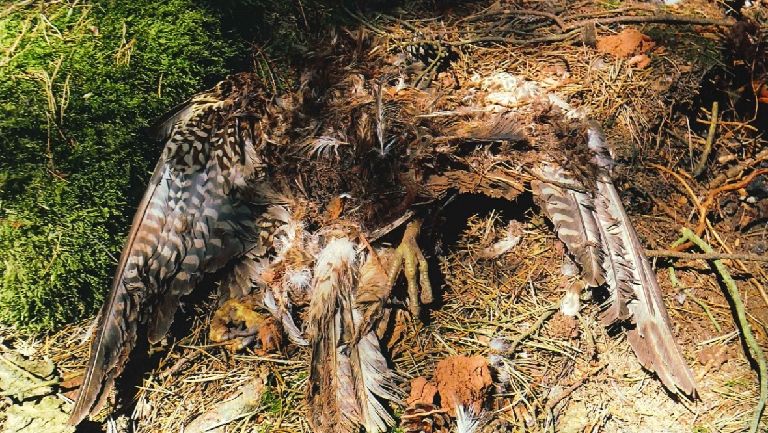
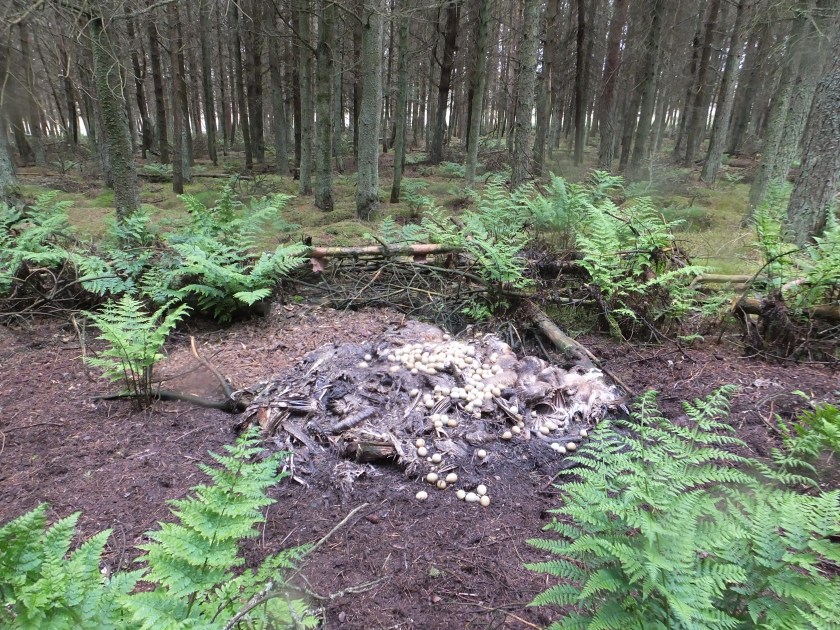
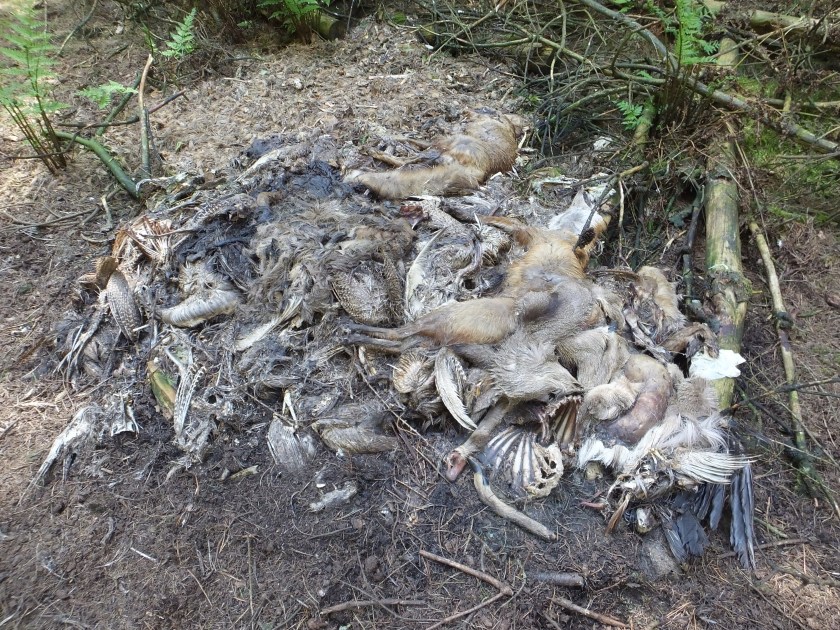
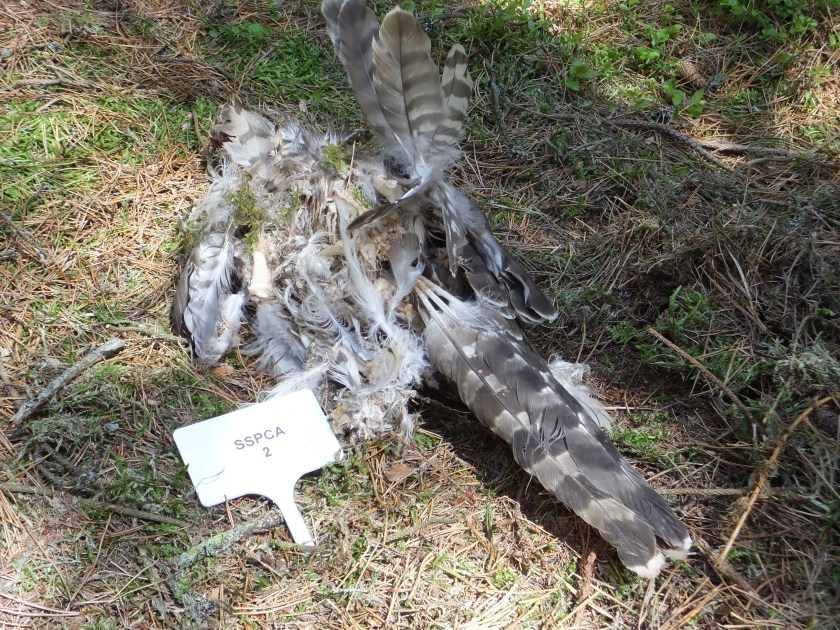
Case against Scottish gamekeeper accused of 12 alleged wildlife crimes: trial adjourned

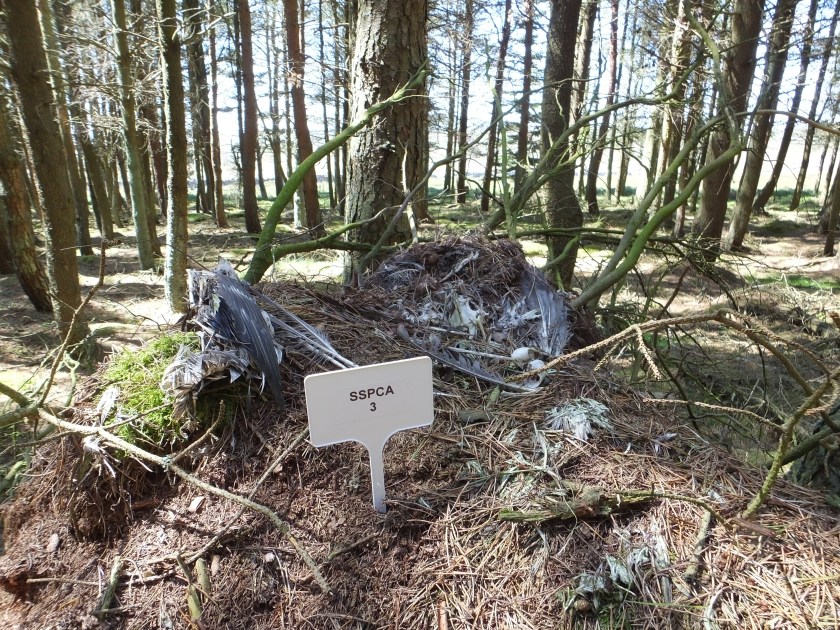
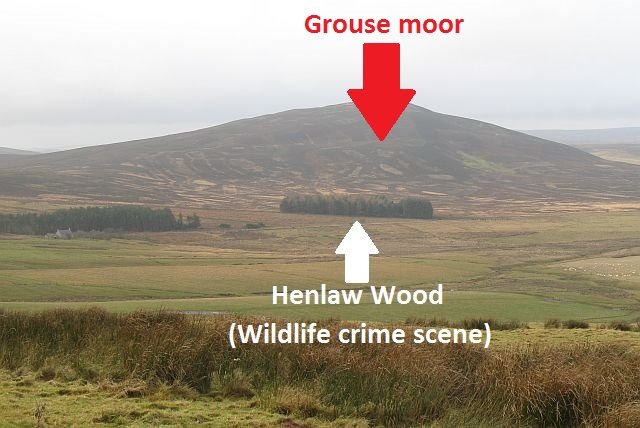
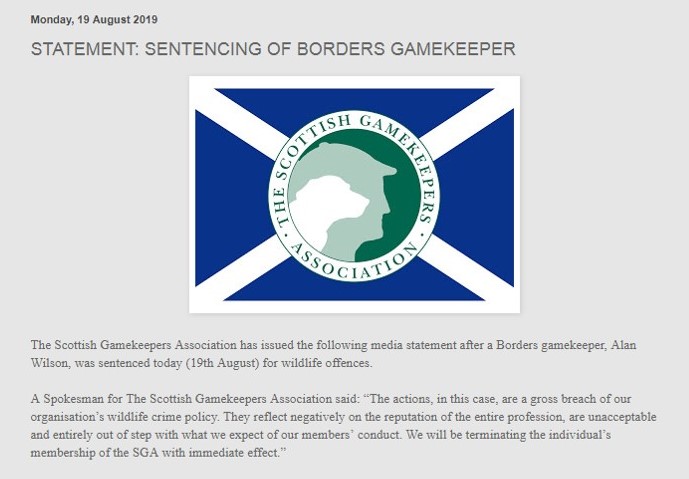
Two years on, and the trial against Scottish gamekeeper Alan Wilson, who is accused of committing 12 alleged wildlife crimes, has been adjourned before it even started.

Mr Wilson, 60, is accused of shooting two goshawks, four buzzards, a peregrine falcon, three badgers and an otter at Henlaw Wood, Longformacus, between March 2016 and May 2017.

He also faces charges of using a snare likely to cause partial suspension of an animal or drowning, failing to produce snaring records within 21 days when requested to do so by police and no certificate for an air weapon.

We also believe he is accused of the alleged possession of the banned pesticide, Carbofuran.

Mr Wilson pleaded not guilty to all charges at an earlier hearing in May and his trial was due to begin yesterday (13th June 2019) at Jedburgh Sheriff Court.

For reasons unknown to us, the trial has been adjourned. We don’t yet know if it will be rescheduled and if so, when that might be.

Previous blogs about this case: see herehere here  here herehere and here

Please note: we will not be accepting comments on this news item until legal proceedings have concluded. Thanks.