Blog

Yet another poisoned buzzard found dead on a grouse moor in North York Moors National Park

Joint press release from North Yorkshire Police and RSPB (24 July 2020)

APPEAL FOR INFORMATION AFTER ANALYSIS REVEALS BUZZARD POISONED

Buzzard found dead on moorland near Swainby, North Yorkshire

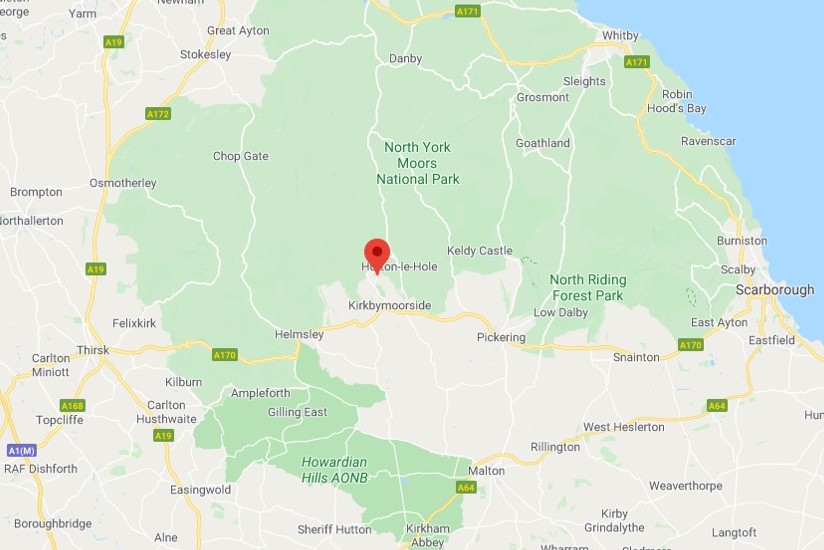
North Yorkshire Police and the RSPB are appealing for information after a dead buzzard was found on Live Moor close to the village of Swainby.

The bird was discovered by a member of the public on 20 March 2020 and reported to the RSPB before being removed. North Yorkshire Police submitted the buzzard for a post mortem examination which revealed an extremely high concentration of  toxic chemical, Chloralose in the bird’s system. Given the buzzard was in good bodily condition and had no injuries, the analysis shows poisoning to be the cause of death.

[The poisoned buzzard. Photo by RSPB]

North Yorkshire Police Inspector, Matt Hagen, explains:

A low percentage of chloralose was commonly used in rodenticides to kill mice but is only currently permitted for use indoors and at a small dose. As such, there is no way this buzzard could have come into contact with such a high concentration of this poison by accident and we believe someone deliberately set out to kill this bird by poisoning.

Unfortunately, this is the latest in a number of similar cases where birds of prey have been subjected to cruel and illegal persecution here in North Yorkshire. We are doing everything we can to try and find those responsible but we really need the public’s help as they are acting as our eyes and ears around the county. Anyone with information about this or any other incident of bird of prey persecution should contact the police on 101, we all have a part to play in putting an end to these unacceptable crimes.

Howard Jones, RSPB Investigations Officer, said:

Buzzards are a protected species yet continue to be relentlessly shot, trapped and poisoned in North Yorkshire. RSPB data shows that North Yorkshire is consistently the county with the highest number of crimes against birds of prey.

Alphachloralose is a commonly abused product in the illegal killing of birds of prey. The amount of it found in this bird was enough to kill a human child. People, pets and other wildlife are at risk from this kind of illegal behaviour, which is why we urge anyone who may have information about this incident to do the right thing and come forward.”

Anyone who has information which could assist with this investigation should contact North Yorkshire Police on 101 or if you wish to remain anonymous, you can call Crimestoppers on 0800 555 111. Quote reference: 12200116641.

ENDS

What this press release doesn’t say is that this illegally poisoned buzzard was found dead on a grouse moor inside the North York Moors National Park.

Nor does the press release explain the delay in publishing an appeal for information (corpse found 20 March, press release issued 24 July).

There are some individuals from the grouse shooting industry who are claiming on social media that this delayed reporting is a deliberate ploy to coincide with the run-up to the start of the grouse-shooting season on 12 August, and thus create bad publicity for the industry to ruin the ‘celebrations’. It’s a commonly-heard complaint and simply allows the persecution apologists to focus on anything other than the news that yet another bird of prey has been found illegally killed on yet another grouse moor.

Had they bothered to ask the police why there was such a long delay they might have understood that the toxicology labs were closed during lockdown and are now having to work through a significant backlog of cases, so confirmation of poisoning will take longer than usual.

It’s no surprise the grouse shooting industry wants to divert attention from this latest crime to be uncovered on a grouse moor inside this national park. It’s the third raptor persecution crime to be reported in the North York Moors National Park in recent months, following the discovery in April of five dead buzzards shoved in a hole on a grouse moor in Bransdale, four of which were later confirmed to have been shot (see here), and then last week’s news that three gamekeepers on the Queen’s grouse moor at Goathland had been suspended following a police investigation in to the trapping and alleged killing of a goshawk in May (see here).

The grouse shooting industry’s professed ‘zero tolerance for raptor persecution’ (see here) is as unconvincing now as it was when it was claimed last year, and the year before that, and the year before that, and the year before that, and the year before that, and the year before that, and the year before that, and the year before that, and the year before that, and the year before that, and the year before that, and the year before that……etc.

Insane hen harrier brood meddling trial continues in 2020

Natural England has today published a short, poorly-detailed update on this year’s hen harrier brood meddling trial.

For new blog readers, hen harrier brood meddling is a conservation sham sanctioned by DEFRA and carried out by Natural England (NE), in cahoots with the very industry responsible for the species’ catastrophic decline in England. For more background see here.

[Cartoon by Dr Gerard Hobley]

In today’s update, here’s what NE has to say:

So it looks like at least two hen harrier nests have been meddled with in this year’s trial – but of course NE hasn’t provided any further detail of the number nor locations of those nests, nor of the release site(s). We wouldn’t expect them to say exactly where these locations are – that would be counterproductive for a species that is so heavily persecuted, but a county-level disclosure would have been useful.

The death of one of the brood meddled hen harrier chicks prior to release is concerning and it’ll be interesting to hear more about the cause of death.

Although getting info out of Natural England is a painful exercise. Here’s an example of some recent correspondence on the fates of last year’s five brood meddled hen harrier chicks:

Of course we now know that all five of last year’s brood meddled hen harriers are ‘missing’ presumed dead, four of them in suspicious circumstances (see here). They form part of the list of 42 hen harriers that we know are either missing in suspicious circumstances or have been found illegally killed, since 2018, the majority on or near driven grouse moors (see here).

How many of this year’s brood meddled chicks do you think will survive to Christmas?

What’s that famous quote?

The definition of insanity is doing the same thing over and over again and expecting different results‘.

More dead pheasants wrapped in black bags & dumped in countryside

32 dead pheasants have been found wrapped in black bin liners and dumped in the countryside in the north east of England, according to a report on social media.

According to the local council guys who were called to come and remove them, this is the second time pheasants have been dumped at this site in recent months.

The reporter has asked that the location not be revealed as the council is installing cctv to try and catch the offender.

Dumping dead pheasants isn’t anything new. We’ve previously blogged about pheasants and red-legged partridge that have been shot and subsequently dumped in in Cheshire, Scottish borders (here), Norfolk (here), Perthshire (here), Berkshire (here), North York Moors National Park (here) and some more in North Yorkshire (here), Co. Derry (here), West Yorkshire (here), N Wales (here), mid-Wales (here), Leicestershire (here), Lincolnshire (here and more in West and North Yorkshire (here).

But this latest case is all a bit weird given the time of year. The pheasant-shooting season runs from 1st October to 1st February so where have these birds come from?

Gamebird dumping continues to be a widespread problem. That’s hardly a surprise when the game shooting industry is permitted to release as many non-native pheasants and red-legged partidge as it likes (conservatively estimated to be almost 60 million EVERY YEAR), with minimal regulation, and no requirement to report on what happens to those birds once they’ve been shot for a bit of a laugh.

And let’s not forget this is the same game shooting industry that is responsible for the vast majority of illegal raptor persecution, done, it says, to protect gamebirds. That’ll be the gamebirds that are shot and then dumped, with no respect for the quarry and no respect for the local residents who’ll have to foot the bill to have the carcasses removed.

In a letter to the Daily Telegraph in November 2005 headed ‘Game birds for eating not dumping’, Tim Bonner of the Countryside Alliance said this:

Every bird shot in Britain goes into the food chain, whether into participants’ freezers, or through game dealers into an increasing number of supermarkets, butchers, pubs and restaurants“.

That statement wasn’t true in 2005 and nor is it true 15 years later in 2020, despite the game shooting industry’s extensive (but flawed, e.g. see here) PR efforts to persuade the public that everything that’s killed is done ethically and sustainably.

Last year DEFRA admitted, after a legal challenge by Wild Justice, that gamebird releases need to be assessed properly for their potential ecological damage to protected nature conservation sites. However, as DEFRA failed to make significant and timely progress on addressing this issue, Wild Justice was recently granted permission for a Judicial Review and this will take place before the end of October (see here).

If you want to keep up to date with Wild Justice’s legal challenge (on this and other issues) you can sign up for the group’s free newsletter to ensure you’re amongst the first to know what’s going on. Please click here to subscribe.

“Licensing of Scottish grouse moors is needed now: it cannot wait five years”

Duncan Orr Ewing, Head of Species and Land Management at RSPB Scotland has written an opinion piece published today in The Scotsman:

Duncan’s article relates to the still-awaited Government response to the Werritty Review (apparently now due ‘in the autumn’ but don’t hold your breath). For new blog readers, the Werritty Review was commissioned by the Scottish Government in 2017 to assess the sustainability of grouse moor management and it reported in November 2019. The group unanimously recommended that grouse moors should be licensed but only if, within five years, there is no measured improvement in the conservation prospects of key bird of prey populations (see here).

Here are a couple of extracts from Duncan’s article:

In December 2019 the independent Grouse Moor Management Review Group, chaired by Professor Alan Werritty, made recommendations as to how Scottish grouse moors might be managed “sustainably and within the law”. The Werritty Review was prompted by relentless illegal persecution of birds of prey. It followed the publication of a damning report by Scottish Natural Heritage that analysed the fate of satellite-tagged golden eagles between 2004 and 2016. The report revealed that a third of the 131 tracked birds disappeared in illegal or suspicious circumstances, predominantly on land managed for grouse shooting. Since only a small proportion of the golden eagle population was monitored, the true number of birds killed was likely higher‘.

and

RSPB Scotland supports the Group’s recommendations; but we do not accept the need for a five-year delay before licensing is considered. Licensing must be progressed as soon as possible. Grouse shooting businesses have had many decades to get their house in order and have patently failed to adapt to the laws of the land and to modern expectations. A five-year delay would likely mean up to ten years before a licensing system could be practically implemented. We need an immediate and significant change to deliver environmentally sustainable grouse moor management practices; any delay puts the future of Scotland’s spectacular birds of prey at prolonged risk from illegal behaviours; and hinders Scotland’s attempts to use nature-based solutions to tackle the climate crisis‘.

To read the full article please click here

UPDATE 26 July 2020: More hysterical scaremongering over proposed grouse moor licensing (here)

Three gamekeepers suspended from Queen’s grouse moor after wildlife crime investigation

Following the news that a goshawk was recently trapped and apparently killed by a masked individual on the Queen’s grouse moor in North Yorkshire (see here and here), the Yorkshire Post is claiming that three gamekeepers were suspended.

According to the article, the Head gamekeeper and two underkeepers were suspended after being interviewed by North Yorkshire Police in relation to the alleged killing of the goshawk. Two have since been reinstated while the third one has been allowed to resign, and apparently allowed to work his notice period before he went!

The police investigation continues as officers await forensic results from items seized during a search of the estate.

Full article in the Yorkshire Post available here

UPDATE 21st July 2020: An article in The Independent names BH Sporting as the agents managing the land on behalf of the Duchy of Lancaster (here).

Channel 4 News does Langholm buyout

Alex Thomson, Chief Correspondent at Channel 4 News is on a bit of a roll.

In May he did a cracking report on the illegal persecution of birds of prey on grouse moors across North Yorkshire (see here).

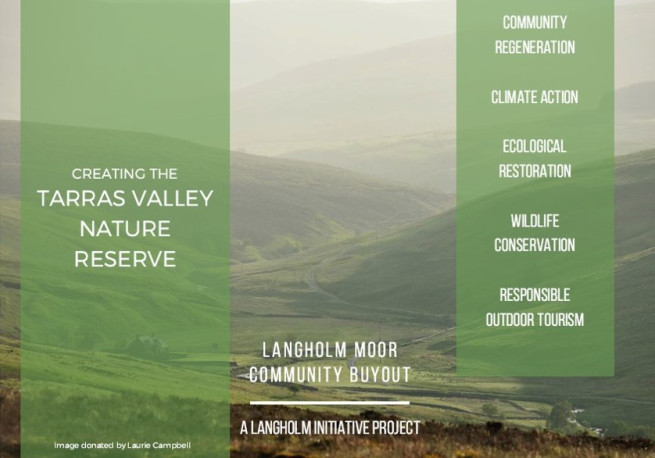
Yesterday he did a cracking report about why the Langholm community is having to raise £6 million to turn a knackered grouse moor in to a nature reserve.

You can watch the seven minute film here and it really is worth your time.

Here’s how Alex describes the film on the Channel 4 News website:

You could call it a highly ambitious grassroots project – a group of Scottish villagers in Dumfries and Galloway is hoping to raise more than six million pounds to turn the UK’s most famous grouse moor into a new ten thousand acre nature reserve.

The land currently belongs to the Duke of Buccleuch, the second largest private landowner in Britain.

This scheme has revealed how far the vestiges of feudal land ownership are still very much alive today‘.

Once you’ve watched the film, which features a cameo role for land reform campaigner and Scottish Greens MSP Andy Wightman, you might want to have a read of this blog (here) written by Andy back in 2014. It puts the current situation into context, somewhat.

Regular blog readers will already know about the Langholm Initiative’s crowdfunding campaign to try and raise the money to buy this tiny piece of Buccleuch’s massive estate (e.g. see here, here, here, here, here and here). There was also an interesting article published in The National last month by Dr Lesley Riddoch (see here).

If you want to contribute to the crowdfunder please click here.

Wildlife killed in illegally-set trap and snares in south Scotland

Press release from Scottish SPCA (17 July 2020)

Scottish SPCA raise concerns after animals die suffering in illegal snares and traps

The Scottish SPCA is appealing for information after being alerted to deceased animals caught in illegal snares and traps over the last month.

The Society’s special investigations unit was alerted to two incidents of badgers in illegal snares in North Lanarkshire since 5 July and a hare was discovered trapped in a spring trap in the Pentland Hills on 18 June.

From 2018 to 2019, the charity dealt with almost 60 incidents involving animals caught in snares and traps. The majority of these animals were dead on arrival.

Scotland’s animal welfare charity supports an outright ban on all snares due to the level of suffering an animal is caused.

The snares that killed the badgers were illegal as both had been set on a fence line. This is unlawful due to the risk of an animal trapped being wholly or partially suspended which can lead to severe unnecessary suffering. The snares also did not have a ‘stop’ which does not allow the device to tighten after a certain point. All snares are legally required to have an identification tag but this was absent on both devices. The snare in Motherwell was made out of nylon which is an illegal material for use in snares.

The hare was caught in an outdated spring trap which became illegal for use on non-target animals in April 2020. Trap operators should be aware of the recent change in legislation that dictates which traps are legal and which traps are no longer approved. This particular trap was unapproved and was not legal in the circumstances in which it was used.

Scottish SPCA special investigations inspector, who cannot be named due to undercover operations, said:

Snare and trap operators must check on the device every 24-hours and this was not the case in these incidents.

These animals were caused unimaginable physical and mental anguish being caught in these traps. The creatures will have experienced slow and agonising deaths. The level of suffering they would have felt is unimaginable.

The badger in Airdrie had been dead for two or three months and in Motherwell, the animal had been deceased for over 24 hours.

The badgers must have passed under the fence and become caught in the snare. One under its front legs and the other around its neck. Both animals must have panicked and this caused the snare to constrict them further and further.

The hare was found in the Pentland Hills near Balerno trapped by its front leg. By the time we found it, the leg had almost been severed due to the amount of struggle and fight put up by the animal.

These areas are popular with dog walkers so we would ask that anyone with pets in the areas are vigilant. Snares and traps are indiscriminate and domestic animals such as dogs and cats can also be caught in them. It is illegal for anyone to tamper with a legally set snare or trap so we would ask the public not to attempt this. If someone suspects a device is set illegally then they should contact us immediately.

We’ve been working closely with our partners at Police Scotland on these wildlife crimes and both agencies are keen to find those responsible.

We’d also like to thank the owners of the land in Airdrie, Premier Woodlands, who have been fully cooperative and are keen to find those responsible.

If anyone has any information on whoever may have set these snares or traps or if anyone finds what they believe to be an illegal item, we would urge them to phone our animal helpline immediately on 03000 999 999. All calls can be treated confidentially.”

ENDS

Queen’s North Yorkshire grouse moor named at centre of police investigation

Further to last week’s news that North Yorkshire Police were appealing for information after the alleged killing of a goshawk that was caught inside a trap on a grouse moor in the North York Moors National Park (see here), the location has now been revealed to be one of the Queen’s grouse moors, part of the Duchy of Lancaster, according to an article in The Times today.

It’s reported that ‘the Duchy of Lancaster is the private estate of the British sovereign, under the title the Duke of Lancaster. It covers more than 44,000 acres of rural and urban holdings, including several thousand acres of moorland‘.

The video footage of the goshawk caught in the trap is described:

A man approaches a large cage trap set up by a brook on the moors. He fills the trap with live jackdaws, apparently as bait, and leaves. When a man is filmed opening the trap a day later, a goshawk has entered the trap.

He uses a pole or hook to hold the goshawk as he enters the trap. For a moment it struggles and flaps but after a few seconds falls still, apparently dead. The man puts the goshawk into a bag and leaves, throwing a carcass of one of the jackdaws into the brook as he goes. The goshawk killed five of the birds, Inspector Matt Hagen, head of North Yorkshire Police Rural Task Force told The Times.’

North Yorkshire Police have searched part of the estate under warrant and interviewed three individuals under caution. The investigation is ongoing.

We understand there is a sporting agent on this estate and it’s a name we’ve heard many times before.

This isn’t the first time that a royal estate has been at the centre of a police investigation about goshawks – see here for a very mysterious story from the Queen’s Sandringham Estate in Norfolk a couple of years ago.

North Yorkshire Police search for illegal poisons in Nidderdale

North Yorkshire Police made quite a statement on Friday morning when at least 10 marked police vehicles descended upon Pateley Bridge in Nidderdale, along with forensic-suited poisons experts from Natural England. When asked by local residents what they were doing, the police replied they were conducting searches in relation to the illegal killing of birds of prey in the area.

North Yorkshire Police’s Rural Task Force tweeted about it yesterday:

This is a very good example of proactive policing. The Nidderdale AONB is one of the UK’s most notorious hotspots for illegal raptor persecution, particularly on many of its driven grouse moors e.g. see here for a recent damning report published by the local AONB authority and for just a small sample of reported persecution crimes in recent years see hereherehereherehereherehere here, here, here, here, here and here.

During lockdown, the police were appealing for information about two separate illegal poisoning incidents in the area, involving two dogs (here) and a buzzard (here) and it’s believed Friday’s search may have been in relation to these most recent incidents.

Illegal poisoning happens with such frequency in this area that the specific concoction used has even been named the ‘Nidderdale Cocktail’ (Bendiocarb, Carbofuran, Isofenphos, and Chloralose). Bendiocarb is licenced for use in England as an ingredient in a number of insect control products but should not be released into an environment where wildlife could come into contact with them. Carbofuran, Isofenphos and Chloralose are all banned substances which should not be used under any circumstances.

In the police’s tweet, they mention searches ‘under S19 of the Wildlife & Countryside Act 1981’. This refers to Section 19 of the Act, entitled ‘Enforcement’ and allows officers to enter private land, without a warrant, to conduct searches where there is reasonable suspicion that an individual is committing or has committed an offence:

North Yorkshire Police haven’t revealed whether anything was found, and nor would we expect them to at this early stage, but the fact they turned up in force, accompanied by Natural England staff who have expertise in poison storage, labelling and identification, and that they weren’t shy about telling local shoppers why they were there, sends a very clear message to the Nidderdale raptor killers.

Well done, North Yorkshire Police & Natural England. More of this, please.

Hen Harrier Day Wales – archived video available to watch now

Well done Ian Cooper (Mountain Escapes) for hosting today’s inaugural Hen Harrier Day Wales, ably assisted by Alan Davies (Birdwatching Trips).

This event was supposed to have taken place at a venue in Snowdonia but obviously covid19 put paid to that, but Ian and co have worked hard to bring the event online and it was live-streamed on Facebook this afternoon from 12-4pm.

The speakers included Iolo Williams, Dr Cathleen Thomas, Alan Davies, Ruth Tingay, Rob Taylor, Dan Rouse and Chris Packham.

For those who missed it, the archive video is now available to watch (and you don’t need a Facebook account to access it). Just click on the video below.

UK Hen Harrier Day will be an online event on Saturday 8 August 2020 – to find more details please visit the website here