Blog

Grouse moors – ‘a birdwatchers’ paradise’ according to Chair of Scottish Gamekeepers Association

Don’t laugh.

Actually, do laugh.

Alex Hogg, Chair of the Scottish Gamekeepers Association, was interviewed last week and he said some pretty baffling things about gamekeeping and grouse moor management, including the fantastic statement, “This is a birdwatchers’ paradise“.

Yep, he really did.

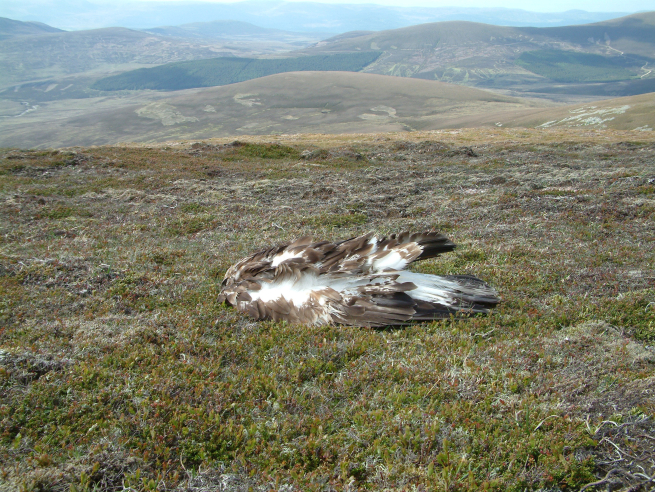
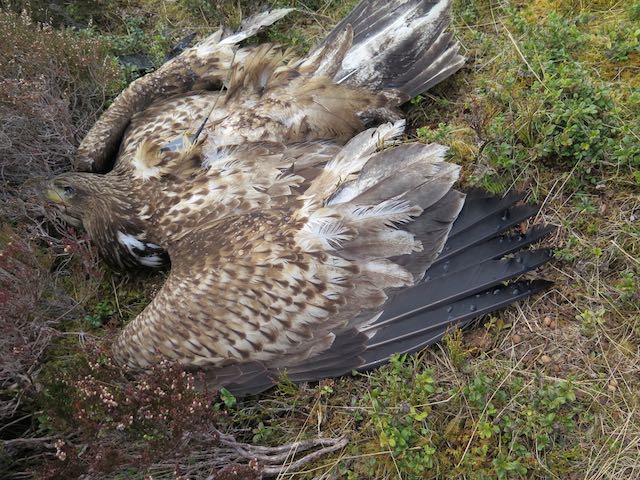
[An illegally poisoned white-tailed eagle, found dead on a grouse moor in the Cairngorms National Park earlier this year – see here and here. What a birdwatchers’ paradise!]

Alex was talking to a presenter on ITV’s regional news programme Representing Border on 2nd December 2020. The programme featured a piece on the Scottish Government’s recent decision to introduce a licensing scheme for driven grouse shooting (here) and it’s well worth five minutes of your time.

The programme is available here (starts at 15.49 mins, ends 22.01).

There was more baffling commentary from Alex, including this unfathomable statement on the effect a licensing scheme would have on gamekeeping:

We’ve done it for 200 years, we’ve kept a balance in the wildlife, and if we, it’s like a three-legged stool, if they take the leg away, we’re gone“.

Eh? I’ve no idea what ‘the leg’ is that he thinks is being ‘taken away’ and why he thinks a licensing scheme means gamekeepers will be ‘gone’. They’ll be gone if they breach the conditions of the licence (assuming it’s effectively enforced) but if they’re not doing anything illegal why would a licence cause them difficulties?

Unfortunately the presenter didn’t follow up on this, or if he did it was edited out. It’s also a shame he didn’t pick up on Alex’s statement about 200 years worth of ‘balancing the wildlife’ and ask him questions about why several species of raptors became extirpated from the UK about 100 years ago? And although some have made a brilliant comeback (with some help), why some populations are still struggling, notably in areas managed for driven grouse shooting? He could also have asked this question of Liz Smith MSP (Scottish Conservatives) who said she didn’t think that “fairly draconian” licensing was needed now!

Other interviewees were much more lucid, including Ian Thomson (RSPB Investigations, Scotland), Claudia Beamish MSP (Scottish Labour) and Mairi Gougeon (Environment Minister), who gave a robust argument for bringing in a licensing scheme now instead of sitting around for another five years doing nothing, including this statement:

There are still persistent problems out there with the illegal persecution of our birds of prey“.

It’s good to see this statement from a Scottish Minister. Can you imagine a similar comment from a Minister at Westminster?

Grouse shoot licensing: fear of ‘wider curbs’ or fear of getting caught?

The Financial Times published an interesting article a couple of days ago, with the header, ‘Scotland’s grouse shooting licence scheme fuels fears of wider curbs’ (see here).

You’ll note the sub-header includes the oft-repeated-but-not-yet-evidenced claim of ‘threats to the economy’, which seems to be the industry’s go-to response at the first hint of regulation (e.g. see discussion here).

And then there are the usual denials about the extent of illegal raptor persecution and its association with driven grouse shooting. This time the chief denier is Dee Ward, vice chair of the landowners’ lobby group Scottish Land and Estates (SLE), owner of Rottal Estate in Angus and Chairman of the Angus Glens Moorland Group. According to the article, Dee claims that ‘while a few estates might still be breaking the law, growing numbers of golden eagles and other raptors across Scotland showed the vast majority would these days never kill birds of prey’.

Now, whilst Dee is undoubtedly overseeing some great conservation work on his own estate and hosts some breeding raptors that struggle in some other areas of the Angus Glens, his suggestion that ‘a few estates might still be breaking the law‘ is a good example of why the Government’s patience has run out and a licensing scheme will be imposed.

There’s no ‘might be‘ about it. The evidence is irrefutable – some estates are most definitely still breaking the law, with impunity, and while golden eagle populations are increasing in some areas, they are still absent from core parts of their range which just happens to be managed for driven grouse shooting. The same for hen harriers, the same for peregrines, the same for red kites. Scientific reports have shown this for years and years and years and current police investigations reflect the ongoing criminality.

I would suggest that the ‘fear of wider curbs’ is actually a fear of getting caught and losing the right to shoot grouse. Those who manage their grouse shooting estates within the law, as Dee Ward does, have nothing whatsoever to fear from a licensing scheme. It’s those who continue to flout the law, in pursuit of large grouse bags at any cost, who will have the most to fear.

Animal cruelty charges follow SSPCA/Police raid on property at Millden Estate

In October last year the Scottish SPCA, supported by Police Scotland, executed search warrants at a number of addresses in Angus and Aberdeenshire as part of an intelligence-led investigation in to suspected animal fighting at those locations (see here).

A number of dogs were seized and an SSPCA investigator was later quoted as saying the dogs had ‘injuries consistent with animal fighting‘ (see here).

It later emerged that one of those raided properties was on the Millden Estate in the Angus Glens and that the estate had immediately suspended an employee pending further investigation (here). It was later reported that the suspended employee was a gamekeeper (here).

It was also reported that the police had recovered dead buzzards although the number of carcasses and the circumstances of the alleged discoveries were not reported.

[One of several newspaper headlines following the SSPCA/police raid in October 2019]

Since the raids there have been no further updates, until now.

A man has been charged with a number of alleged animal welfare offences. An inspector from the SSPCA’s Special Investigations Unit told me:

We can confirm that a report for Animal Welfare offences under Sec 19, 23 and 24 has been submitted to the Procurator Fiscal following a joint operation with Police Scotland in October of 2019“.

These offences relate to the Animal Health & Welfare (Scotland) Act 2006.

Section 19 concerns offences related to unnecessary suffering.

Section 23 concerns offences related to animal fights.

Section 24 concerns offences related to ensuring the welfare of animals.

This case was due to be heard last week but it has since been continued for another preliminary hearing on 11th May 2021 and a trial date has been set for 2nd June 2021.

In relation to the reported discovery of a number of dead buzzards I asked Police Scotland for an update on the investigation. Here is the statement released by the Police:

“We can confirm that a Police Scotland investigation remains ongoing in relation to search warrants which were executed at an address in Angus in October 2019. As part of these enquires, we can confirm that a 27-year-old man was reported to the Procurator Fiscal in relation to firearms offences. Officers will continue to work with the Scottish SPCA and partner agencies as the investigation continues.”

PLEASE NOTE, as there are live court proceedings and an ongoing investigation into other alleged offences, comments will not be published on this post until criminal proceedings have concluded. Thanks.

UPDATE 2 November 2021: New trial date set for Millden Estate gamekeeper accused of animal fighting offences (here)

Scottish Greens not giving an inch on grouse moor licensing regime

A week ago the Scottish Government finally announced that it had run out of patience with the grouse shooting industry and that it would begin work immediately to bring in a licensing regime for grouse moor management (see here).

[Grouse-shooting butt on a burnt Scottish moor, photo by Ruth Tingay]

Many of the details of the proposed licensing regime are yet to be thrashed out and consultations will need to take place but the commitment has been made that, if the SNP is re-elected in May 2021 then this licensing regime will be enacted during the next Parliament.

The Scottish Greens reacted to last week’s news with a healthy scepticism (see here) and that is reflected in these very welcome Parliamentary questions lodged two days ago by Mark Ruskell MSP:

Fundraiser for hen harrier satellite tags

The Nidderdale Raptor Study Group, in conjunction with the Northern England Raptor Forum (NERF) is hosting a fundraiser to support the RSPB Investigations Team to buy satellite tags for hen harriers.

In recent years satellite tags have revealed the extent of hen harrier persecution across the UK. In 2019 a damning scientific research paper demonstrated that at least 72% of tagged hen harriers were presumed illegally killed on or close to driven grouse moors (see here).

And a tally of incidents kept by this blog demonstrates that over the last two years alone at least 45 hen harriers, many of them satellite-tagged, are either ‘missing’ in suspicious circumstances or confirmed illegally killed, many on driven grouse moors (see here). It’s my understanding that this number has since risen but official notification is still pending. More on that shortly.

So, in essence, satellite-tagging has proven to be incredibly important in helping to detect a crime that is otherwise too easily hidden (and which explains the grouse shooting industry’s desperate attempts to undermine the science and the integrity of those who fit and monitor the tags).

Yorkshire-based artist Dan Evans has donated this A2-sized oil painting for an online auction to help support the purchase of more satellite tags:

If you’d like to bid on this artwork please visit the auction page here. The auction will close on 23 December 2020. There is also an opportunity to buy signed limited edition prints, with all profits being donated to the sat tag fund.

There is also a fundraising page for those who may not want to buy the artwork but who may still be interested in supporting the effort to buy more satellite tags – you can visit the fundraiser page here

Scottish grouse shooting industry ‘has only itself to blame for the Government’s licensing decision’

Here’s some more positive media coverage of the Scottish Government’s announcement last week that it is to introduce a licensing regime for grouse shooting in the face of ongoing wildlife crime directly associated with the ‘sport’.

Have a look at this from renowned author and journalist Jim Crumley in yesterday’s Courier, reproduced below:

Well, that didn’t take long. Last Tuesday, I was explaining why politics and nature didn’t mix well, what with the Scottish Parliament’s failure to endorse a motion to declare a nature emergency, and side-stepping the implementation of mountain hare legislation.

But then two days later, the Scottish Government announced the introduction of a new licensing scheme for driven grouse moors – not five years hence, as suggested by the Werrity Report it had commissioned, but with work to begin now.

All this from Minister for the Natural Environment Mairi Gougeon, Dundee-born and an MSP for the constituency of Angus and the Mearns, a landscape with something of an iffy record in these matters. It may have taken a year since the Werrity Report was published, but the Scottish Government came to the right conclusion. Suddenly, I have to admit, for once politics and nature mixed rather well.

Unless, of course, there is nothing you like better than killing wild creatures with guns. That cacophonous outburst you may have heard more or less immediately afterwards was the sound of the usual suspects – (deep breath) – the British Association for Shooting and Conservation, the Scottish Countryside Alliance, the Scottish Gamekeepers Association, the Scottish Association for Country Sports, and Scottish Land and Estates, all voicing their collective outrage in a joint statement. All guns blazing, you might say. They called the minister’s decision “a damaging blow to fragile rural communities” and that it “interferes with legitimate business activities and threatens to engulf the sector in a blizzard of red tape”.

Let’s take these one at a time. The idea that grouse shooting is a financial godsend for rural communities is both an urban and a rural myth. If the Scottish Government were to choose to be really radical in its reform of nature protection legislation and decided to ban all grouse shooting tomorrow and give the red grouse as a species Schedule 1 protection under the Wildlife and Countryside Act; if it also insisted that all grouse moorland be re-designated as nature reserves that could revert and be encouraged to return to a mixed landscape of woodland, forest, moorland and wetland; if it also replaced thousands of miles of bulldozed roads with walking and cycling paths – the following would happen.

Benefits to rural communities

Firstly, there would be a huge expansion of biodiversity. That much is perfectly predictable. Secondly, nature would respond to the changes in unpredictable ways that would astound us. Thirdly, the landscapes that were the preserve of rich people with guns (and traps and poisons and medicated grit and widespread contempt for existing legislation), would transform in terms of the possibilities they would present to rural communities. These communities would cease to be fragile simply because they would no longer be beholden to the oppressive regime of the grouse shooting industry.

Instead of being constrained by a land-use system invented by the Victorians before the concept of nature conservation was invented, and which physically abuses the land as a result, the reborn land would be wide open to new employment opportunities in green tourism, nature conservation (a singularly labour-intensive phenomenon when it’s done well), forestry, outdoor education and rural arts and crafts.

But there is a further consideration here, and it is this. As a government and as a people, we cannot make every decision we are ever faced with about the future of our land on the basis of whether or not it is good for the economy. Sometimes the debt we owe to our land is too great for that, and we must do what it takes to heal wounds that have been inflicted by our own species over centuries, and which are still being inflicted. Sometimes the land itself comes first.

Illegitimate activities

The second complaint of those who like to kill things with guns is that the minister’s decision interferes with legitimate activities. No it doesn’t. It interferes with illegitimate activities, activities which are specifically a by-product of the shooting industry. The problem for that industry is that we have got a lot better at detecting the crimes against wildlife. Activities that the estates have got away with for far too long are now being identified. The industry has only itself to blame for the government’s licensing decision.

The process began when what was then Scottish Natural Heritage (now NatureScot for reasons best known to itself) found that a third of all tagged golden eagles in Scotland had disappeared in suspicious circumstances on or near grouse moors. The estates were careless, even as the technology improved, and this is the result.

It is a short step from where we are now to ending the national embarrassment of grouse shooting once and for all. Enlightened nature conservation will surely seize on the momentum this moment has provided to push the case for the extinction of the grouse moor and the liberation of the grouse, the extinction of all thoughtless shooting in Scotland and legal protection for all birds, all mammals, all wildlife.

The widespread presumption of letting wildlife manage wildlife would usher in a new enlightenment of the landscape.

The Scottish Government just had a very good day indeed.

ENDS

With straight faces, Scottish landowners declare grouse moor licensing ‘draconian’

Definition of ‘draconian’: excessively harsh and severe

Can I just ask you to spare a few minutes and offer your thoughts and prayers to the private owners of intensively-managed grouse moors in Scotland, who, after decades of ‘magnanimous public service‘ (ha ha!) as ‘custodians’ of the uplands, are now facing what they’re calling ‘draconian’ grouse moor licensing proposals thanks to an ungrateful Government and public.

The news last week that the Scottish Government is to introduce a grouse shooting licensing regime (see here) has been met with fury from revolting gamekeepers and spluttering indignation from the landowners.

Here’s the response statement published by Scottish Land & Estates, the landowners’ lobby group:

It’s just more hysterical scaremongering, as discussed in this earlier blog (here) and the result of years and years of brazen denial in the face of overwhelming evidence about what goes on on some of those grouse moors, as discussed in this earlier blog (here).

Why is it ‘draconian’ to expect grouse moor owners and their gamekeepers to face sanctions if caught breaking the law?

Raptor persecution discussed in wildlife crime podcast

Wildlife crime in the UK was the subject of a recent podcast recorded by Planet Pod, which describes itself as ‘Essential listening for everyone who cares about the planet’.

Ruth Tingay (Co-Director, Wild Justice & RPUK blogger) and Richard Benwell (CEO, Wildlife & Countryside Link) were interviewed by host Amanda Carpenter about the difficulties of tackling wildlife crime in the UK.

It’s a 40 minute chat and can be listened to here

Scotland’s gamekeepers are revolting

Scotland’s gamekeepers are apparently very very angry. So angry they’re going to revolt. Well, protest.

But protest about what? Apparently about having to work within the law.

It’s all so unfair.

This is all part of the response to last week’s news that the Scottish Government has finally reached the end of its tether with the criminality associated with driven grouse shooting and has decided to implement a licensing scheme, not just to tackle the ongoing lawlessness but also to reign in the associated environmental damage (see here).

Here’s how the Scottish Gamekeepers Association (SGA) reacted to the news, with this statement on its website:

And here’s a further reaction the following day, announcing in a tragic display of victimisation, a series of what it calls ‘localised direct protests’:

You’d think that they’d just been told that gamekeeping was no longer an option and that all their guns, traps, poisons and snares had to be surrendered with immediate effect.

It’s only a licensing scheme, FFS. What’s the problem? Scared that it’ll be difficult/impossible to comply with regulations?

A hue and cry against driven grouse shooting

It’s always good to hear different voices joining the campaign against driven grouse shooting.

And what a brilliant voice this is – Pat Kane, who found fame with this and now does this – has written an entertaining comment piece published in The National yesterday, after Thursday’s announcement that the Scottish Government has finally decided to introduce a licensing scheme.

I’VE taken shots at coconuts while visiting the shows with the weans. But I have never raised a powerful-enough gun to my shoulder, aimed at a moving, living target, and taken it out of the sky mid-flight.

Evolutionary science tells me one thing; my automatic inner reactions tell me another.

The first says that sapient humans have been hunter-gatherers much longer than they have been agricultural or urban. Thus, much of our perceptual and motor equipment was forged to suit the demands of the hunt (computer games that let you take the shooting position, and their massive popularity, easily support this).

The second just recoils at the sporting destruction of a living organism, particularly under the ridiculous and farcical conditions of a “driven” grouse shoot.

We’ve seen enough nature documentaries that show the necessary link between prey and predator in an ecosystem: the raptor bright-eyed with gobbets of bird or rabbit in their mouths. It’s a challenge to watch it all. But it is, at least, the web of life.

The grouse-shoot, however? A landscape burned, polluted and made into a monoculture, encouraging fast but low-flying grouse to nibble at forced green shoots, so that upper-class hunting parties (coddled by supine assistants) can spray lead at a flurry of easy targets?

It’s hardly the high-stakes survival drama of the Paleolithic. The Pathetic, more like.

So for my sensibility, the more licensing and regulation of grouse shooting – as promised by the Scottish Government earlier this week – the better.

The nub of Environment Minister Mairi Gougeon’s statement addresses “the ongoing and abhorrent issue of wildlife crime – and in particular, raptor persecution”. The trigger was the 2017 finding that “a third of satellite-tagged golden eagles in Scotland disappeared in suspicious circumstances, on or around grouse moors”.

The ironies abound. Natural predators do their thing when faced with an abundance of grouse prey. The unnatural creators of that abundance defend their property by attacking and destroying raptors — now rendered as poachers.

They also defend their grouse stocks against Scottish mountain hares – specifically the ticks in their fur, which transmit a disease that worsens the quality of grouse populations.

This has justified mass winter cullings of mountain hares (also, incidentally, creating another commercial shooting opportunity). Mountain hares are now a protected species — so the minister is tightening the screws on this practice too.

All of this, and more, is promised to make up the specifications for a license to shoot grouse (though many environmental campaigners are already alarmed at the heavy presence of the hunting lobby in the consultation groups).

It’s hoped that the threat of investigation, sanction and withdrawal of the license will compel best practice. But another reading could be that they hope to bureaucratise and regulate the behaviour out of existence. Slow strangulation by red tape.

Here is the careful incrementalism of Scottish devolved government, in all its glory. You wonder, is outrage at the historical establishment of these shooting grounds a century-and-a-half ago – clearance and dispossession of communities allowing for upper-class sporting pursuits – something that deeply pulses away in a Scottish nationalist administration?

One would bloody well hope so. I watched an excellent news feature from BBC Alba’s Eorpa a few days ago [RPUK added link here]. The opening scenes captured port-soaked and tweed-clad shooters in all their coddled savagery. Yet the rest of the item tried to show a judicious balance of voices.

I was particularly struck by the granite-jawed and Gaelic-speaking estate manager from Lewis. Angus MacLeod of Barvas Estate objected to the “driven” grouse moor model – where beating the carefully-prepared heather ensures that each shooting expedition bags 20 to 50 birds.

MacLeod’s model was “walk-up” grouse shooting. In the driven model, “they’re only looking at the birds they’re aiming for. Up here, you watch for everything – eagles, hen harriers, merlin and deer too … You have to walk six or seven miles here, for a good day, just to get five or six grouse.” His quiet conclusion: “But that’s enough.”

It’s precious to hear any genuine declaration of “enough” these days. My own instincts, and progressive background, lean more towards the contribution from the Scottish Greens’ rep in the Eorpa show, Alison Johnstone MSP.

“It’s a relic of a bygone era, a Victorian pastime. Are we really suggesting that if we looked at a blank canvas just now, surveying this land mass, we’d be saying, ‘oh do you know what, let’s just fill this area with red grouse, and sell packages for people to have a day’s fun shooting at them’?

“We certainly would not — we’d be thinking how could we productively use it for the best outcome for the people of Scotland.”

THERE are some mightily impressive campaigners out there, proposing exactly these kinds of outcomes. The coalition revive.scot (one input to which is Common Weal, whose board I’m on) lays out a powerful, multi-factorial case against grouse shooting.

So is this the best economic and environmental use of somewhere between 12%-18% of Scotland’s land mass? Manifestly not. Revive’s figures are thumping. They do a “hectares required per job” number. For grouse shooting, it’s 330. Biomass renewables is 143, onshore wind 100. Forestry is 42, horticulture 3.

Then they do a “value per hectare used”. Grouse shooting stands at £30 (at the best estimate). The value for the preceding sectors quoted is, in order: £2596, £934, £900, £12,412.

There’s another thumping stat. “Repopulation and housing”, modestly named, could create 141,000 construction jobs and 39,000 real estate jobs, at a value per hectare of £11,950 (Revive imagines a “New Villages” programme to match the “New Towns” movement of the 60s and 70s).

Please, examine their numbers – but they won’t be out by that much. If we somehow shimmy our way into indy, I would expect that the urgent need to maximise our internal assets will reverse the gunfire on this “Victorian pastime”.

In matters of land, animals and their meaning in Scotland, I usually turn to one of the most reliable tuning forks I know – the human ecologist Alastair McIntosh. He sent me a few paragraphs yesterday:

“We’ve got to ask not just what satisfaction hunting might give, but also what service it provides towards maintaining a biodiverse natural and human ecosystem.

“I am a great supporter of deer stalking. Stalkers, like ghillies, love the land and what they take as prey. They know the stag has yet to be born that carries a condom. We should support such culling by proudly eating venison. But to farm pheasants just for bankers to bag, or to ‘manage’ grouse moors for the competitive fervour of the driven shoot, that’s a different matter.

“I remember discussing the sadomasochistic aspect of killing for the sake of it over an alcoholic lunch with a convenor of the then Scottish Land Owners’ Federation. Astonishingly, he conceded: ‘Oh yes, they got buggered and beaten when they were at school and now they want to do it back’ – and with a shotgun.

“Well, that may be psychotherapy: the primal bang. It may be peer-bonding, a business perk – and even back in the gun room at the lodge, a courtship ritual for the rich. But it’s no way that the Scotland of today should treat our wildlife.”

A complex view. And speaking as a townie who will never take a gun into his arms, even if the rationale is as eco-spiritual as Alastair’s, I won’t tower over every aspect of this debate with a complacent certitude.

But really, can it be right? That we subject so much of Scotland’s natural potential to so few?

ENDS