Yet another satellite-tagged hen harrier ‘disappears’ in suspicious circumstances in the North Pennines

Durham Constabulary have reported the suspicious disappearance of a young satellite-tagged hen harrier called ‘Sia’.

[‘Sia’ after being satellite-tagged in southern Scotland earlier this year. The tag was sponsored by the Lothian & Borders Raptor Study Group]

This is the press statement issued yesterday (4th November 2022):

Officers team up with partners in search for missing hen harrier

Officers have teamed up with partner agencies to investigate a suspected case of raptor persecution.

Led by Wildlife Officer, PC Dave Williamson, members of the Barnard Castle Neighbourhood Policing Team, RSPB, the National Wildlife Crime Unit and Police Scotland carried out a search in an area close to Hamsterley Forest on Wednesday morning (November 2).
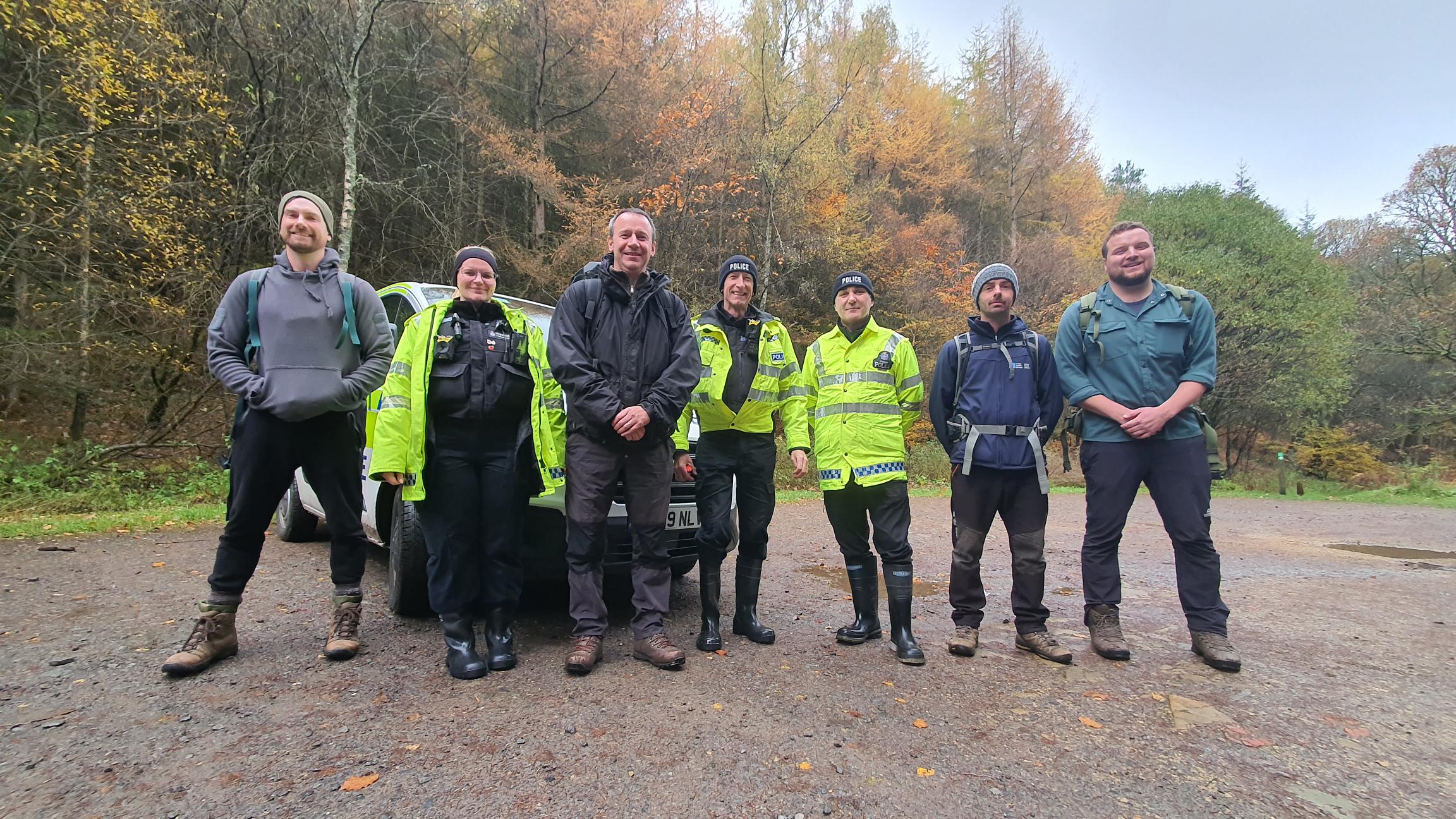
The activity came after a 2022 female hen harrier called Sia, from Southern Scotland, went missing in the area on October 10 when her tag stopped transmitting.

It is believed the protected species could have been shot down or killed unlawfully.

PC David Williamson, who led the operation, said: “We will always do everything we can to act on information received about alleged criminal activity.

“I would encourage anyone with information about this suspected crime to get in touch.”  

If you have any information call 101 quoting incident reference number 79 of October 19, email PC Williamson at david.williamson@durham.police.uk or contact Crimestoppers on 0800 555 111.

ENDS

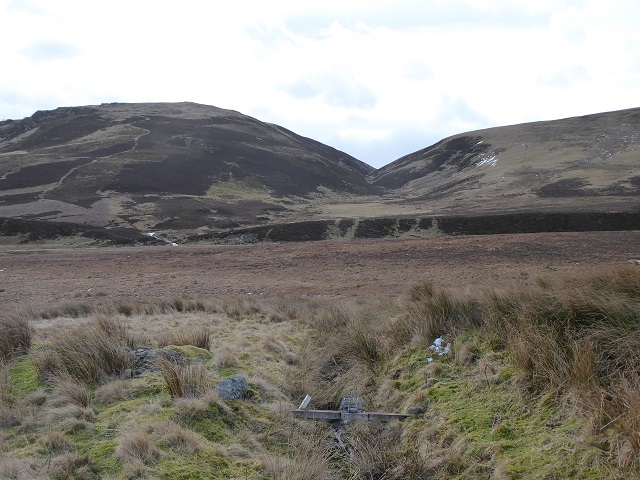
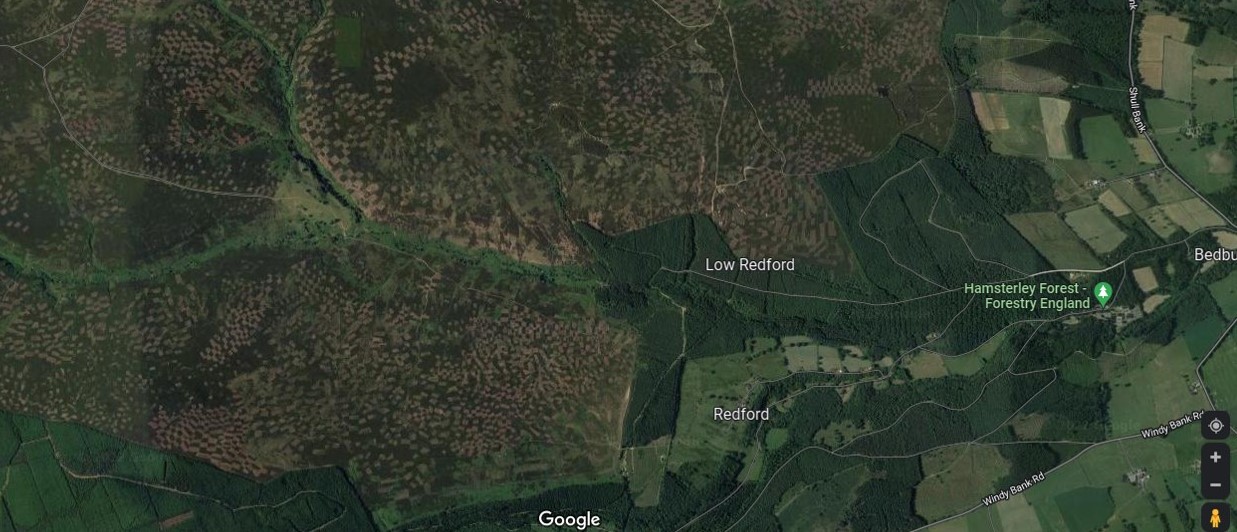
There’s no detail provided about the last known location of Sia, nor of the area searched last Wednesday, but it’ll come as no surprise to anyone to see that the area next to Hamsterley Forest is intensively managed for driven grouse shooting:
A scientific study published in 2019 showed that hen harriers are ten times more likely to disappear/be killed over areas of land managed for grouse shooting relative to other land uses.

Sia isn’t the first satellite-tagged hen harrier to ‘disappear’ in suspicious circumstances in the North Pennines. Just looking at the data since 2018, there have been seven others:

5 February 2018: Hen harrier Marc ‘disappeared’ on a grouse moor in Durham (here)

14 September 2019: Hen harrier (Brood meddled in 2019, #183704) ‘disappeared’ in the North Pennines (here)

23 September 2019: Hen harrier (Brood meddled in 2019, #55149) ‘disappeared’ in North Pennines (here)

10 October 2019: Hen harrier Ada ‘disappeared’ on a grouse moor in the North Pennines AONB (here)

12th April 2021: Hen harrier Yarrow ‘disappeared’ near Stockton, County Durham (here)

24 July 2021: Hen harrier Asta ‘disappeared’ at a ‘confidential site’ in the North Pennines (here). We learned 18 months later that her wings had been ripped off so her tag could be fitted to a crow in an attempt to cover up her death (here).

14 May 2022: Hen harrier ‘Harvey’ (Tag ID 213844) ‘disappeared’ from a ‘confidential site’ in the North Pennines (here).

And of course, it’s not just the North Pennines where they ‘vanish’. Since 2018, at least 72 hen harriers are known to have either been killed or to have ‘disappeared’ in suspicious circumstances, mostly on or close to grouse moors across the UK. I’ll now have to update that list to 73, and counting.

Why does it keep happening? Simple. Nobody has been caught or prosecuted in any of these 73 cases, the chances of anyone being caught or prosecuted are virtually none existent, and so there is absolutely no deterrent whatsoever to stop this happening again and again and again.

In addition, this systemic criminality is being enabled by a series of DEFRA Ministers who repeatedly and resolutely display wilful blindness at every opportunity (e.g. see here).

This cannot continue.

RSPB Investigations Officer reflects on conviction of Norfolk raptor-killing gamekeeper Matthew Stroud

Last month, Norfolk gamekeeper Matthew Stroud, 46, of Fengate in Weeting was convicted of multiple offences including:

  • Three counts of using poisoned bait on or before 19 August 2021 and 14 September 2021.
  • Six counts of killing a Common Buzzard (a non-Schedule 1 wild bird) at Weeting between 10 August and 14 September 2021.
  • One count of intentionally killing a Northern Goshawk (a Schedule 1 wild bird) at Weeting on or about 10 August 2021.
  • One count of possessing a regulated substance – Strychnine Hydrochloride – without a licence on 14 September 2021.
  • One count of possessing 4 shotguns to kill a Schedule 1 wild bird on 14 September 2021.
  • One count of releasing 3,400 Common Pheasants into the wild between 1 June and 14 September 2021 contrary to the Wildlife and Countryside Act 1981.
  • One count of incorrectly storing a biocidal product – Rentokil Phostoxin – on 14 September 2021 contrary to the Health and Safety at Work Act 1974.

Even though Stroud’s crimes easily passed the threshold for a custodial sentence, he received a 12-month Community Order and was ordered to do 200 hours of unpaid work, fined £692 and ordered to pay costs of £145, compensation of £288.72 and a victim surcharge of £95. The court also ordered the forfeiture and destruction of all Stroud’s firearms, mobile phones and any chemicals (see here and here for previous blogs on this).

Stroud’s prosecution and conviction was the result of a well-run multi-agency investigation involving Norfolk Constabulary, Natural England, National Wildlife Crime Unit, Crown Prosecution Service and the RSPB Investigations Team.

Today, the RSPB has published a blog written by RSPB Investigations Officer Tom Grose, reflecting on the investigation and the subsequent sentence. You can read it here. [UPDATE: This link has since broken – the RSPB blog has been copied and pasted at the foot of this blog]

UPDATE 29th June 2023: Another Weeting gamekeeper convicted – Gamekeeper Francis Addison receives suspended jail sentence in relation to five shot goshawks (here)

COPY AND PASTE OF RSPB BLOG:

Reflections on a poisoning, by Tom Grose, RSPB Investigations Officer

On 5 October 2022 gamekeeper Matthew Stroud was convicted of a litany of offences at Norwich Magistrates Court. He pleaded guilty to the killing six buzzards and a goshawk, placing poisoned baits, possession of the banned poison strychnine hydrochloride and the illegal release of gamebirds onto a Special Protection Area (SPA), along with sundry other offences.

Previous cases of this nature have been acknowledged to have crossed the custody threshold by the court (see John Orrey and Allen Lambert). So it was expected that Stroud was facing at the least a suspended prison sentence. The 200-hour community work order and financial penalties totalling £1220 he was given were accompanied by a sense of frustration by those involved in the case, and by shock and outrage by those who learned about it in the media or on social media. Not for the first time….

The long-running investigation that led to Stroud’s prosecution was a shining example of partnership working in action. Initial painstaking fieldwork by RSPB Investigations Officers sparked swift and decisive action by Norfolk Police upon the discovery of a suspected poisoned bait. A combined operation involving the National Wildlife Crime Unit and Natural England alongside the RSPB ensued. A warrant was executed and vital evidence recovered. Then came months of meticulous work involving a long list of dedicated professionals. X-rays, post-mortems, poison testing, feather analysis and police interviews all had to be carried out before the case file could be passed to the Crown Prosecution Service (CPS) and the charges laid. The CPS themselves provided guidance and were of enormous help in the run up to court.

On the day of the hearing itself, the prosecution was able to lay the stark facts of the case before the magistrates. In 2022 a man was jailed for 16 weeks for killing two gulls. So why did Stroud receive far less?

Unfortunately, it seems that the lack of sentencing guidelines available to the courts is at the heart of the matter. We’ve encountered this issue before, with magistrates and judges left without clear principles to follow when deciding how to sentence these relatively rare and complex cases. Each time a raptor killer is in court, it turns into a sentencing lottery. Clearly these guidelines must be put in place to deal with wildlife offences. The killing of so many protected birds, including a Schedule 1 species (the goshawk), and the deliberate use of a banned poison as dangerous as strychnine surely warranted a heavier punishment. This is hardly a deterrent to other wildlife criminals.

Another issue that keeps rearing its head is the lack of any consequences for Stroud’s employers. When a gamekeeper is found to be killing birds of prey it is normally due to pressure to produce enough gamebirds to shoot, and indeed Stroud admitted his motivation was to protect the pheasants in his care. In most other sectors the employer would face repercussions for the actions of staff. This isn’t the case in the English and Welsh shooting industries. Whilst vicarious liability has been introduced into Scotland, we need to see it implemented across the UK. 

More positively, Stroud was the first person convicted of illegal gamebird release. The impact of non-native pheasants is poorly understood but of increasing concern. To illegally release them on the Breckland SPA, supposedly an area of international conservation importance, showed a callous disregard for the environment. Alongside the potentially harmful effects of over 60 million gamebirds released into our countryside annually, it’s clear that raptor persecution is a serious issue for lowland shooting. 

It’s certainly not the case that raptor persecution is an issue confined to upland grouse moors. Cases like this one (and there are others ongoing), coupled with concerns over the release of non-native gamebirds, are why the RSPB is now calling for greater regulation of large-scale pheasant and partridge shoots. Clearly, self-regulation is not working, and current legislation is not enough. We also call on the courts to make full use of the sentences available to them.

We would like to thank all of those involved in securing this conviction, and particularly PC Chris Shelley of Norfolk Police for his hard work in leading the investigation. Although we are disappointed by the outcome, it has been heartening to work alongside officers and organisations who remain committed to stopping raptor persecution.

ENDS

Convicted Millden Estate gamekeeper Rhys Davies had ‘formed a close bond’ with another animal-fighting sadist

An article in today’s Daily Record reports that Rhys Davies, the Millden Estate gamekeeper jailed earlier this year for his involvement in depraved badger-baiting crimes (see here), had ‘formed a close bond’ with another animal-fighting sadist, Anthony Holloway.

[Convicted Millden Estate gamekeeper Rhys Davies]

According to today’s article, Holloway, 30, who is described as ‘a big player in the pit bull fighting scene‘ and, according to the Scottish SPCA’s Special Investigations Unit (here), ‘a significant member of organised dog fighting and badger baiting in Scotland and throughout the UK‘, sent disturbing videos to Rhys Davies, and others, depicting animal mutilation and footage of his dogs pulling badgers from their setts before being killed. The pair were also exchanging information regarding dog breeds and talking about what dogs are best for killing what animals, be it badger or fox. 

Whilst Davies received an eight-month custodial sentence, Holloway and another accomplice escaped jail, as I blogged previously (see here).

Today’s Daily Record article can be read here, but beware, it contains graphic video footage.

The gruesome offences of these men only came to the attention of the authorities after criminal mastermind Davies sent ‘trophy’ photographs of mutilated dogs and wildlife to an online ‘photobook’ shop and the shop assistant alerted the Scottish SPCA. It’s that ‘trophy’ fetish again that I was discussing just a few days ago (here).

The Scottish SPCA’s Special Investigations Unit deserves full credit for getting these monsters into court. And although the sentences handed down were pathetic, tougher penalties are now in place in Scotland for animal cruelty and wildlife crime.  New legislation enacted in December 2020 (the Animals and Wildlife (Penalties, Protections and Powers) (Scotland) Act 2020), increased the maximum penalty for the most serious animal welfare and wildlife crimes (including badger baiting) to five years imprisonment and unlimited fines. Unfortunately, Holloway & Davies’ crimes were uncovered prior to the new legislation being enacted so it couldn’t be applied retrospectively.

Hopefully we’ll soon be hearing about the Scottish Government’s ‘Independent Taskforce review’ into whether the SSPCA should be given increased powers to tackle other wildlife crimes, including raptor persecution. The Taskforce is due to report by the end of 2022 and the Scottish Government has made clear that the findings will be considered as part of the draft Wildlife Management (Grouse) Bill.

I’d argue that if the SSPCA can deal with the prosecution and conviction of organised crime gangs involved with badger-baiting and dog-fighting, then they’re certainly well-equipped to deal with the raptor killers.

Caution needed over apparent ‘biodiversity benefits’ from sale of Glenprosen Estate in Angus Glens

Last week news emerged that Scottish Government agency Forestry and Land Scotland (FLS, formerly known as Forestry Commission Scotland) was in the process of purchasing a large grouse-shooting estate in the Angus Glens, Glenprosen Estate, for the estimated sum of £25 million (e.g. news reports here and here).

Mainstream media focused on the reported secrecy of the sale, which doesn’t align with the Scottish Government’s promises to get rid of ‘backroom’ land sales, but that isn’t the focus of this blog.

Superficially, the news that an Angus Glens grouse shooting estate is about to be sold to FLS for ‘woodland creation and biodiversity’ sounds like very good news indeed. Regular blog readers will know that the Angus Glens has long been a blackspot for the illegal killing of birds of prey, and only a few weeks ago I was writing about the latest victims: nine raptors (8 x buzzards, 1 x sparrowhawk) that had been found shot and stuffed in bags on another Angus Glens grouse-shooting estate (see here), so a change of management with a focus on increasing biodiversity could only be a good thing in this region, right?

Well, not so fast.

Nick Kempe, who writes the excellently-researched ParksWatchScotland blog, has published a very different view of what might be going on at GlenProsen.

According to Nick, details of the sale are sketchy, even concerning the extent of the land being bought, which may or may not extend further than Glenprosen Estate, and importantly, whether or not the shooting rights are included in the sale. He also exposes some dodgy-looking data on the supposed density of red deer on the estate and has previously written about the extensive use of traps for killing native predators.

[Photo by Nick Kempe]

Of most interest (to me) is this paragraph in Nick’s latest blog:

At present, the only clue as to FLS’ intentions are the press reports that it wants to plant trees and there has been no mention of any wider conservation purpose.  This is important.  If the sporting and/or grazing rights are not included in the sale, there will be nothing to prevent the sorry history of land mis-use continuing outside the planted areas, while the public will incur yet more expense erecting fences to protect trees“.

And his commentary about the Sitka spruce plantation in the glen, already managed by FLS:

In the absence of statements to the contrary, there is  a real risk that FLS intends to manage the whole of Glen Prosen in this way, adding to the environmental damage rather than restoring it“.

Definitely one to watch.

I’d encourage you to read Nick’s blog post here and be cautious about welcoming what might be coming on this estate.

Another (former) gamekeeper jailed for depraved animal fighting cruelty

A number of blog readers sent me links about the conviction of a former gamekeeper who was jailed on Friday for depraved animal fighting cruelty.

Luke Rix, 32, of Gilks Lane, Oxhill, Warwickshire, was jailed for 18 weeks and banned from keeping dogs for ten years after video evidence was found of him stabbing a wild boar and then encouraging two of his dogs to attack it in the Forest of Dean. He was also ordered to pay £500 in costs and a £128 victim surcharge.

This conviction has been widely reported in the press (e.g. see here, here, here, here).

What struck me about this case was that it centred around video evidence from Rix’s iPad, which had been discovered by his (now ex) girlfriend who reported it to the RSPCA. A joint search at a property in Gloucestershire last year resulted in a number of items being seized, including Kevlar body armour for dogs and videos and photos showing dogs ripping apart a fox, dogs with injuries, terriers tormenting a caged rat, and discussions of boar, badger and fox hunting, and conversations with people on social media regarding his hunting exploits.

Many of the media reports included the fact that Rix was a former gamekeeper but none of them detailed when or where.

An RSPCA lawyer is quoted from court, saying that the evidence against Rix showed “this is a game to him which he will glorify by filming“.

It reminded me of the ‘trophy’ photographs that resulted in the recent conviction and jailing of another gamekeeper, Rhys Davies from Millden Estate, for horrific animal fighting crimes (see here).

And it’s not just filming – a number of gamekeepers have been found with leg rings from birds of prey, which could also be considered as ‘trophy’ items. For example, this convicted gamekeeper from Moy Estate was found in possession of a jar containing the leg rings of four young golden eagles but couldn’t account for how the jar ended up on his mantlepiece; and convicted gamekeeper Archie Watson from Wiltshire, who was found with the leg rings from a buzzard and a red kite attached to his keyring, which could only have been removed if the birds’ legs had been broken, according to the prosecution. Watson gave an implausible explanation to the court that he’d found them whilst metal-detecting on his uncle’s farm.

What is it that drives these sadists, not only to carry out these sick crimes, but also to film them and/or keep a trophy?

March for the Foxes, in Edinburgh today

REVIVE coalition partners OneKind and the League Against Cruel Sports are joining forces with Scottish Badgers today for a demonstration at the Scottish Parliament, calling for a ban on snares and a real ban on foxhunting.

OneKind had planned to host a demonstration against snaring in September (here) but the event was postponed after the death of the Queen. Now they’ve joined forces with the League Against Cruel Sports & Scottish Badgers, to send a strong message to the Scottish Government that the public supports a ban on snaring and also a real ban on fox hunting.

The groups will gather at St Giles Cathedral, Royal Mile (EH1 1RE) at 12 noon to march down the Royal Mile to the Scottish Parliament building where a number of speakers will address the crowd, finishing at 2pm.

Full details available here

Thousands of snares are deployed on game-shooting estates every year, which maim and kill animals in order to protect stocks of red grouse, pheasants and partridge for ‘sport’ shooting. It’s currently legal to snare some species (e.g. foxes), despite the inhumane method, but as snares are indiscriminate up to 80% of species caught are non-target species, according to DEFRA figures, and these species include badgers, otters, deer and pet cats and dogs. This shocking report from the REVIVE coalition for grouse moor reform provides more detail.

This demonstration is timed to coincide with the Scottish Government’s current review of snaring legislation and OneKind’s CEO Bob Elliot has written an excellent account of why a ban is needed and how this demo could help achieve that aim (see here).

Grouse shooting lobby quietly seething over proposed licensing scheme

Following on from yesterday’s news that the Scottish Government has finally launched a public consultation on its proposed grouse moor licensing scheme in an attempt to address the ongoing issue of illegal raptor persecution, amongst other things (here), the grouse shooting lobby is quietly seething in response.

A joint statement has been issued by the British Association for Shooting & Conservation (BASC), the Scottish Countryside Alliance, the Scottish Association for Country Sports, Scottish Land & Estates, the Scottish Gamekeepers Association (SGA) and Scotland’s Regional Moorland Groups (basically the gamekeepers again, and ironically many of these regional moorland groups either have been recently, or currently are, under investigation for alleged raptor persecution).

The statement reads:

The introduction of yet another layer of legislation, regulation and bureaucracy must not hamper what is a world-class rural business sector. Done wrongly, licensing could put at risk much-needed rural employment, as well as the outstanding conservation work undertaken on a daily basis by moorland managers.

Licensing grouse shooting is ostensibly aimed at tackling raptor persecution, but it is abundantly clear that over many years a massive amount of progress has been made in dealing with this issue and incidents are at a historic low – progress that has been recognised by the Scottish Government.

We are also concerned that the licensing of Muirburn – the controlled burning of heather – could, done wrongly, infringe upon efforts to combat devastating wildfires and promote carbon capture.

When all this is taken into consideration, it is difficult to see why licensing is necessary – and that is why our organisations have been opposed from the outset.

We do, however, acknowledge the political reality that Scottish Government has the power to license grouse shooting and muirburn. It is vital that these licensing schemes are proportionate, transparent and workable. If a scheme were to be overbearing, it would threaten so much good work.

Grouse moor management is playing a key role in tackling climate change and reversing biodiversity loss. It also provides widespread direct and indirect employment, and contributes to Scotland’s diverse tourism offering. This should not be disadvantaged and any licensing schemes introduced should be straightforward to operate and not detrimental to rural enterprise.

All our organisations will participate in the consultation and make our case clear.

ENDS

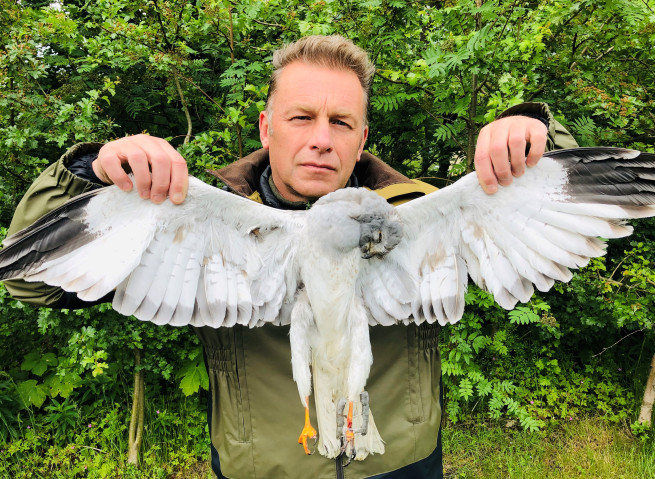
[Chris Packham holds a dead male hen harrier, killed after its leg was almost severed in an illegally set trap that had been placed next to his nest on a Scottish grouse moor (see here). Photo by Ruth Tingay]

They just don’t get it, do they?

Their constant denial (e.g. see here for the most recent absurd claim) about the scale of illegal raptor persecution, and their consistent failure to bring it under control, over many, many years, is what has led to their current predicament. And yet still they’re claiming that ‘progress has been made’ and that the Scottish Government ‘recognises’ this ‘progress’.

Really? Give it up, chaps, you’ve been caught with your pants down too many times.

Have a read of the Scottish Government’s Environment Minister’s statement in 2020 when she announced that there could be no further delay to the introduction of a grouse moor licensing scheme because:

“…despite our many attempts to address this issue, every year birds of prey continue to be killed or disappear in suspicious circumstances on or around grouse moors“.

And then read the Environment Minister’s foreword in the latest official report on wildlife crime, published in April 2022, where you’ll see that the Government recognises that illegal raptor persecution is still a massive problem, hence the introduction of this new legislation designed to hammer several dozen nails into the coffins of the criminals responsible.

The grouse shooting lobby says, “…..it is difficult to see why licensing is necessary…..”

If ever there was an example of wilful blindness…

REVIVE coalition cautiously welcomes Scot Gov’s consultation on grouse moor licensing

Further to the news today that the Scottish Government has launched a public consultation on its proposals for a grouse-shooting licensing scheme (here), REVIVE, the coalition for grouse moor reform, has cautiously welcomed the proposals.

The statement, published on REVIVE’s website (here) notes that ‘the consultation is the start of a process which will significantly change the way in which large areas of Scotland are managed, making it one of the biggest interventions in this area for generations’.

Campaign Manager Max Wiszniewski is quoted:

We are pleased the Scottish Government has recognised the need to legislate the way in which Scotland’s grouse moors are managed. This is a woefully under-regulated industry which has been left to effectively wreak havoc on our countryside.

The proposed Bill will address the serious issues which over generations have been allowed to create a circle of destruction around huge areas of our land, managed for grouse which are then shot for entertainment.

While the REVIVE Coalition welcomes the consultation, we are disappointed the scope of the exercise isn’t wider. We look forward to working with the Government to bring forward a robust, and long overdue piece of legislation which has the potential to address all elements of the circle of destruction surrounding Scotland’s grouse moors.

REVIVE will submit a considered response to the consultation, which closes on 14th December 2022.

The REVIVE coalition comprises the League Against Cruel Sports (Scotland), OneKind, Common Weal, Friends of the Earth (Scotland) and Raptor Persecution UK.

Grouse moor management in Scotland: Government launches public consultation

Today, the Scottish Government has launched a public consultation as the start of its commitment to introduce a licensing scheme for grouse moor management, following the publication of the Werritty Review in 2019, which was commissioned in 2017 after unequivocal evidence was published of the on-going illegal killing of golden eagles on some Scottish grouse moors.

That illegal killing continues, as evidenced by this young golden eagle recently found poisoned on a grouse moor in the Cairngorms National Park laying next to a dead mountain hare that had been used as the poisoned bait (photo by RSPB Scotland).

As is so often the case, nobody has been charged or prosecuted for this hideous wildlife crime, which is a fundamental reason why the Govt is introducing a licencing scheme, presumably as a means of sanctioning an estate (by withdrawing its licence) when evidence of wildlife crime is discovered. Without knowing the exact details of how the licensing scheme will operate, it’s impossible at this stage to predict its effectiveness. There are many sceptics, and I’m one of them, but I’m also certain that the status quo is untenable and so I view licensing as a step in the right direction, but definitely not the end of the road.

The Government’s licensing consultation preamble reads as follows:

‘A Stronger & More Resilient Scotland: The Programme for Government 2022-23 which was published on the 8 September 2022 committed to introducing the following Bill:

Wildlife Management (Grouse)

The Bill will implement the recommendations of the Werritty Review and introduce licensing for grouse moor management to ensure that the management of driven grouse moors and related activities is undertaken in an environmentally sustainable manner. The Bill will also include provisions to ban glue traps.

In November 2020, the Scottish Government published its response to the recommendations made by the Grouse Moor Management Group (“Werritty review”).  That report was commissioned by the Scottish Government in response to a report from NatureScot (formerly Scottish Natural Heritage), published in May 2017, which found that around a third of satellite-tagged golden eagles in Scotland disappeared in suspicious circumstances, on or around grouse moors.

The Werritty review made over 40 recommendations regarding grouse moor management. The recommendations, which were accepted by the Scottish Government, seek to address raptor persecution and ensure that the management of grouse moors is undertaken in an environmentally sustainable manner.

As well as proposals relating to grouse moor management, this consultation also considers glue traps. A report from the Scottish Animal Welfare Commission, published on 23 March 2021 stated that

‘……the animal welfare issues connected with the use of glue traps would justify an immediate outright ban on their sale and use. This is our preferred recommendation‘.

This consultation is therefore seeking your views on the Scottish Government’s proposals on:

*Grouse moor licensing

*Muirburn

*Trapping (wildlife traps, glue traps, snares)

You can complete all the sections in the consultation or only those sections which are of interest/relevance to you’.

ENDS

The Government’s proposals for its grouse moor licensing scheme are laid out here:

I haven’t yet looked at the consultation paper so I can’t offer any comments or suggested responses yet but I will do very soon. The consultation will close on 14th December 2022.

The link to the consultation questionnaire can be found HERE.

UPDATE 26th October 2022: REVIVE coalition cautiously welcomes Scot Gov’s consultation on grouse moor licensing (here)

UPDATE 27th October 2022: Grouse shooting lobby quietly seething over proposed licensing scheme (here)

UPDATE 10th December 2022: Last chance to have your say on Scottish Government’s consultation on grouse moor reform (here)

Raptor persecution crime fighters win national awards

I attended the UK Wildlife Crime Conference over the weekend, where law enforcers, statutory agencies and NGOs gather to hear the latest views, approaches, successes and challenges of combating wildlife crime in the UK. 

A feature of this annual event is the WWF-sponsored awards given to those whose work deserves national recognition.

This year, I was delighted to see two of those awards being won by teams whose work has focused on tackling the illegal persecution of birds of prey.

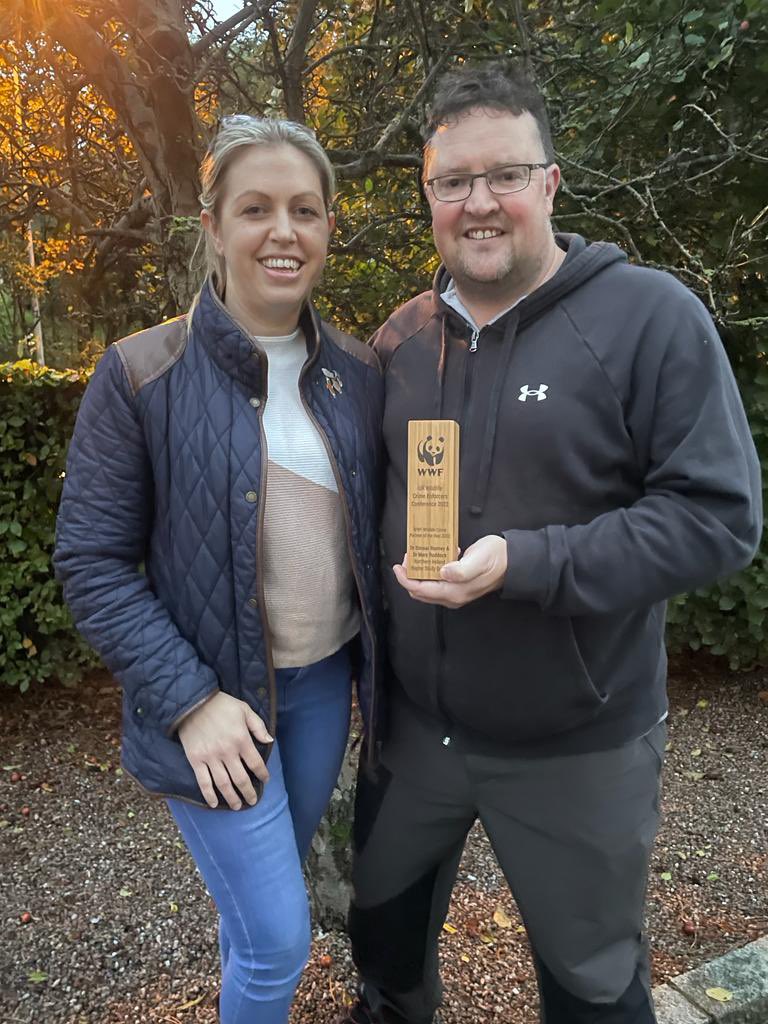
First up was Dr Eimear Rooney and Dr Marc Ruddock from the Northern Ireland Raptor Study Group, who won WWF Wildlife Crime Partner of the Year 2022:

To say their award was richly deserved is a massive understatement. I’ve watched them pour their hearts and souls into raptor conservation in Northern Ireland for many, many years and I can’t think of more deserving recipients.

Without their efforts, providing help, advice and training to an army of raptor monitoring volunteers, as well as doing their own fieldwork, as well as writing grant applications, as well as writing reports, as well as producing educational material, as well as fundraising, as well as hosting conferences, as well as political engagement, as well as engaging in multi-partner initiatives to tackle raptor persecution, often at the expense of spending time with their young families, and still managing to be the most upbeat and fun-loving people to be around, then raptors in Northern Ireland would be in a far more perilous state than they are currently.

I’m thrilled to see their efforts recognised at long last; well done Eimear & Marc!

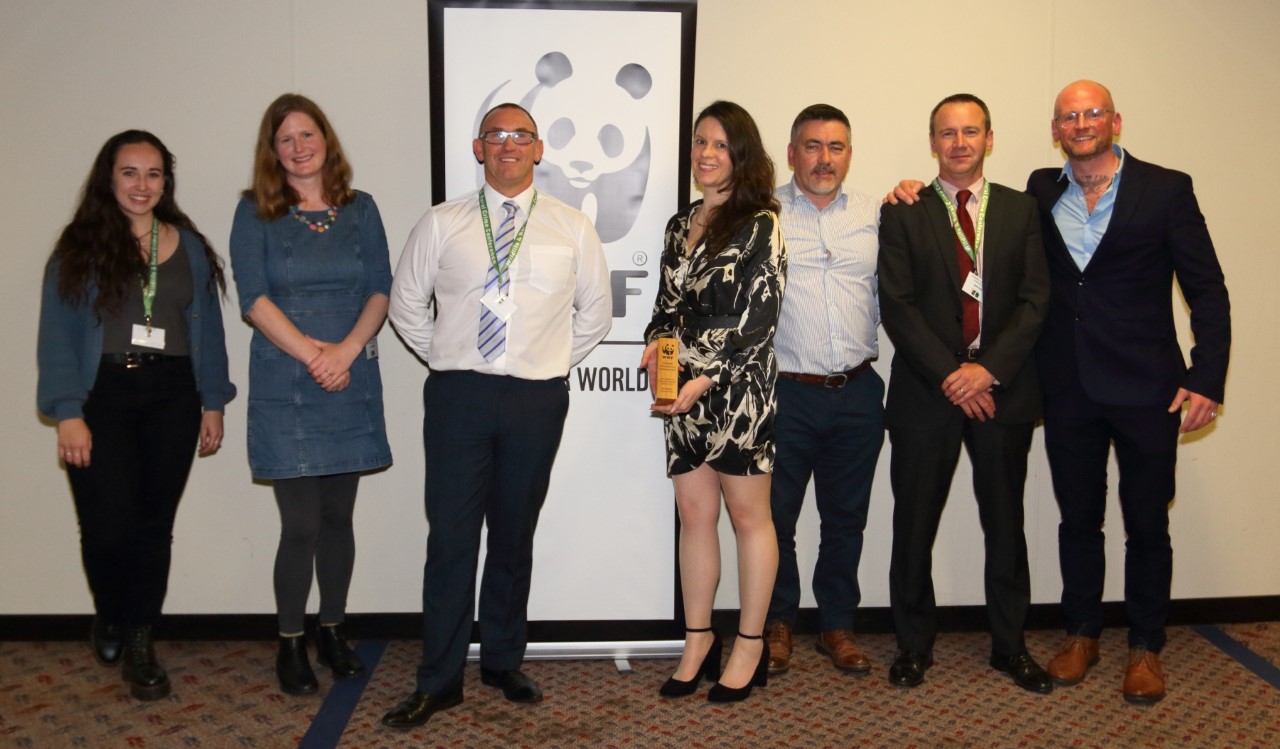
The second team to win an award for its work tackling raptor persecution was a multi-agency team working on ‘Operation Tantallon’, which is a huge, ongoing investigation into the alleged theft and laundering of wild peregrines in Scotland and northern England.

This investigation team includes Police Scotland, Scottish SPCA, NWCU and SASA, with additional support from members of the Scottish Raptor Study Group. So far three people have been charged with offences, including a serving police officer (see here) and a part-time gamekeeper (here).

Members of Operation Tantallon received the Wildlife Crime Operation of the Year Award 2022 from Megan McCubbin (photo by Guy Shorrock):

The case is ongoing, the defendants are reportedly facing over 100 charges, and a wide range of investigative techniques have been deployed including surveillance, peregrine DNA analysis, searches under warrants, bankers warrants, cyber crime and the Proceeds of Crime Act.

The scale of this effort to bring a prosecution in a raptor persecution case is virtually unheard of in the UK and the ramifications, should the defendants be found guilty, will be huge. Further details of the case will be made available as the case progresses through the courts.

The dedication and determination of those involved in the multi-agency investigation has been outstanding and it’s good to see their hard work recognised. Well done, all!

UPDATE 16 December 2023: Part-time gamekeeper & son plead guilty to peregrine laundering charges; serving police officer cleared (here)