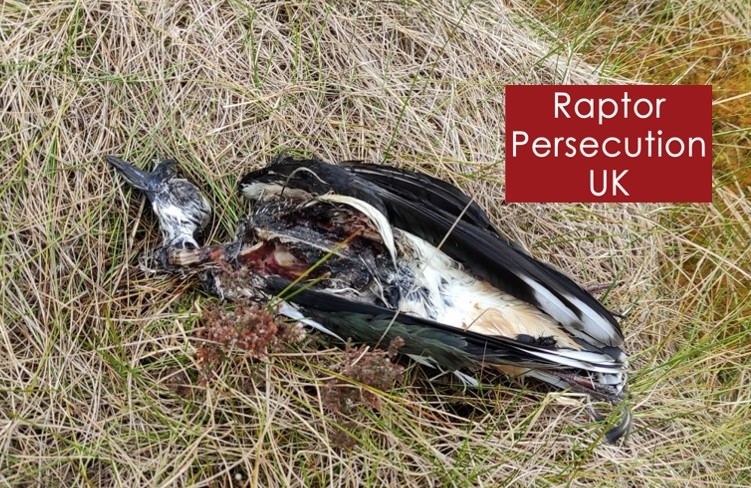
Hen harrier chicks stamped to death in nest on grouse moor in Yorkshire Dales National Park

North Yorkshire Police has issued the following appeal for information this morning:

Hen harrier nest investigation – police appeal for information

North Yorkshire Police suspect that a nest of Hen Harrier chicks, found dead earlier this year, was deliberately destroyed by human activity, and are calling for anyone with information to come forward.

The Hen Harrier nest, near Whernside in the Yorkshire Dales National Park, was being monitored by Natural England fieldworkers as part of their routine Hen Harrier monitoring. The nest was progressing well, and by 10 May 2022 there were four chicks, aged approximately 8 to 12 days old. The parent female was satellite-tagged “Susie”, who was tagged in Cumbria in 2020.
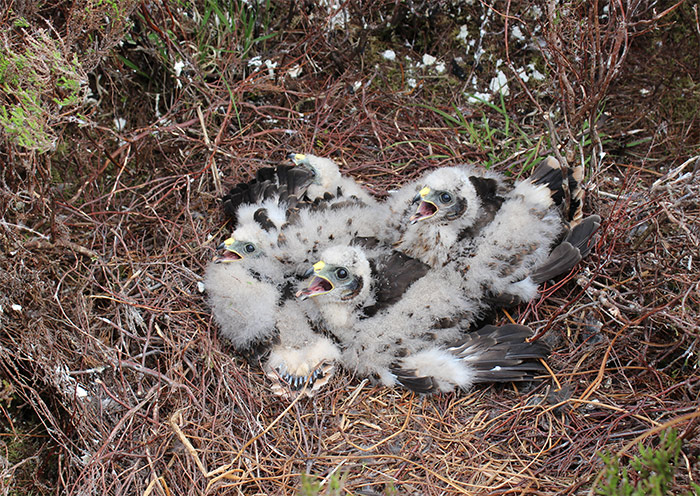
Young hen harriers in a nest (not the nest in this current police investigation). Photo by Ian Newton

Natural England staff became concerned on 20 June when “Susie” was unexpectedly and abruptly shown tracking approximately 35km away from her nest. An adult female should be attentive and close to her nest during this period. Her sudden exit from the nest area was worrying.

For this reason, on 21 June, Natural England field staff acting under licence checked the nest – and made the grim discovery of three dead Hen Harrier chicks.

There were no clear signs that the chicks had been killed by a predator. The situation was suspicious and so the Police were informed.

Natural England staff retrieved nest camera footage which confirmed that there were four chicks in the nest before the incident, that they were well fed and provisioned by the parents, and looked fit and well.

After dark, at 9.54pm on 15 June, the camera showed the nest site appeared normal with “Susie” settled in the nest with chicks. However, at 9.59pm a sudden irregular ‘whiteout’ of the camera occurred, blinding the camera.

The camera used is movement-activated, and it was not triggered again until the following morning when footage captured apparently dead chicks in the nest and “Susie” attempting to feed them.

She can then be seen removing her dead chicks from the nest. Three of these were found just outside the nest, and it is not known where she deposited the fourth.

A ‘whiteout’ has not occurred with a Natural England nest camera before, and the camera itself continued to operate normally since then, and once “Susie” returned to her nest the following morning her movement triggered further recording of images.

There was no trace on the ground that a vehicle had driven over the nest, nor did the nest camera footage indicate that this had happened. There was, however, a footmark impression in the vegetation at the nest site, strongly indicating that a person had approached the nest. Natural England staff are careful to approach using known routes – the footprint observed was believed to be recent, and not made by Natural England staff.

Post-mortem examinations of the three chicks were subsequently conducted and showed that each suffered with multiple fractured bones including humerus in one chick, both femurs in the second chick, and in the third chick, the humerus and a crushed skull. The fractures were complete and showed a considerable trauma had taken place for each chick.

Although avian flu H5N1 virus was detected in one of the chicks, the post-mortem examinations also showed that the birds had been eating up until their deaths. This implies that deaths were sudden rather than a result of a chronic disease process.

North Yorkshire Police have considered all the evidence, and strongly suspect that someone approached the nest after dark and deliberately killed the chicks.

A predator would normally be expected to return and remove the dead chicks. Stoats can kill without rendering much obvious damage, but as the chicks were within the nest, it would be reasonable to expect nest camera footage of a predation or other event.

The living status of the chicks, followed by a ‘whiteout’ of the nest camera (possibly by a bright lamp, or something placed in front of the camera) – followed by all chicks being lifeless on the next footage – together with the post-mortem results showing broken bones in all the chicks and a crushed skull, suggests human illegal persecution activity.

The Hen Harrier is listed on Schedule 1 of the Wildlife and Countryside Act 1981 and is protected under Annex 1 of the EU Birds Directive (2009/147/EC) as it is considered vulnerable within Europe. It is on the red-list of birds of conservation concern in the UK.

A North Yorkshire Police spokesperson said: “Despite there being encouraging news this spring regarding the numbers of successful Hen Harrier nests this year, we sadly continue to be regularly called upon to investigate cases of illegal persecution of Hen Harriers and other birds of prey. There is no place for the selfish and illegal killing of our wildlife in our countryside.

Paul Cantwell, Investigative Support Officer with the Police UK National Wildlife Crime Unit, said: “This incident unfortunately shows that despite more recent breeding success in Hen Harriers, people still appear to be determined to cause harm to this vulnerable species through cruel criminal acts.

We urge anyone with information about this matter to report it to the Police or Crimestoppers.”

John Holmes, Natural England Strategy Director, said: “The evidence points to this being one of the most clear-cut and brutal cases of Hen Harrier persecution we’ve ever found, and we would urge anyone with information to come forward.

We were diligently monitoring this nest and moved quickly to ensure collection of forensic and other evidence to support a police investigation as soon as persecution was suspected.

We have recently seen welcome increases in Hen Harrier numbers, but despite our best efforts there are still those who are set on disrupting this progress. We will continue to work to monitor Hen Harrier nests, to increase understanding of Hen Harriers and to support our enforcement and forensic partners where foul play is suspected, following every evidential lead possible.

We call for all landowners and managers to help police identify and prosecute anyone who commits these horrific crimes against birds of prey.”

Anyone with any information regarding this incident is asked to contact North Yorkshire Police on 101 and quote incident reference number 12220107140, online via the North Yorkshire Police website, or contact Crimestoppers anonymously on 0800 555 111.

ENDS

Although this appeal for information includes a detailed commentary of the known facts, I note with interest that the words ‘grouse moor’ have been excluded. According to my well-placed sources, this crime definitely took place on a grouse moor.

I would argue that North Yorkshire Police, in cahoots with Natural England, has deliberately excluded this detail.

I also note that this crime took place six months ago, in June. Why has it taken until December for the police to issue an appeal for information?

What we’re seeing here is nothing less than blatant censorship of raptor persecution crime data, designed to minimise media coverage to allow the grouse-shooting industry’s narrative of ‘hen harrier breeding success’ to be the strongest.

You only have to look at all the media propaganda we saw in August, from both the grouse shooting industry and Natural England, about the so-called ‘success’ of the hen harrier brood meddling trial. It was timed to coincide with the start of the grouse-shooting season (12th August) to paint grouse shooting in a positive light. It is absolutely bloody outrageous that Natural England knew about this heinous crime in August but said nothing about it; instead allowing the grouse shooter’s narrative to run unimpeded in the national press.

They did exactly the same with the news about the hen harrier called ‘Asta’, whose wings had been ripped off so her satellite tag could be attacked to a crow in an attempt to deceive researchers that Asta was alive and well (see here). That crime took place in spring 2021 but the news about it only emerged this summer because someone tipped me off and I blogged about it.

I’d like to know whether this latest sadistic crime, stamping to death four young, helpless hen harrier chicks in their nest, took place on the same Whernside grouse moor where a gunman was filmed next to a tethered eagle owl in a hen harrier’s breeding territory in 2020 (see here). It later emerged that Natural England had permitted hen harrier brood meddling on this estate, even though the estate was under police investigation for suspected raptor persecution (see here).

I’m sick to the back teeth of the raptor-killing criminals in the grouse shooting industry getting away with these crimes, aided and abetted, it would appear, by the police and the statutory nature conservation agency. Something has to change.

UPDATE 15th December 2022: 77 hen harriers confirmed ‘missing’ or illegally killed in UK since 2018, most of them on or close to grouse moors (here)

UPDATE 16th December 2022: Yorkshire Dales Bird of Prey ‘partnership’ responds to news of hen harriers stamped to death in nest (here)

UPDATE 27th January 2023: Hen harrier chicks stamped to death in nest: how the shooting industry manipulated the narrative (here)

UPDATE 15th August 2023: Killing the Skydancer: new podcast from the Guardian about raptor persecution on grouse moors (here)

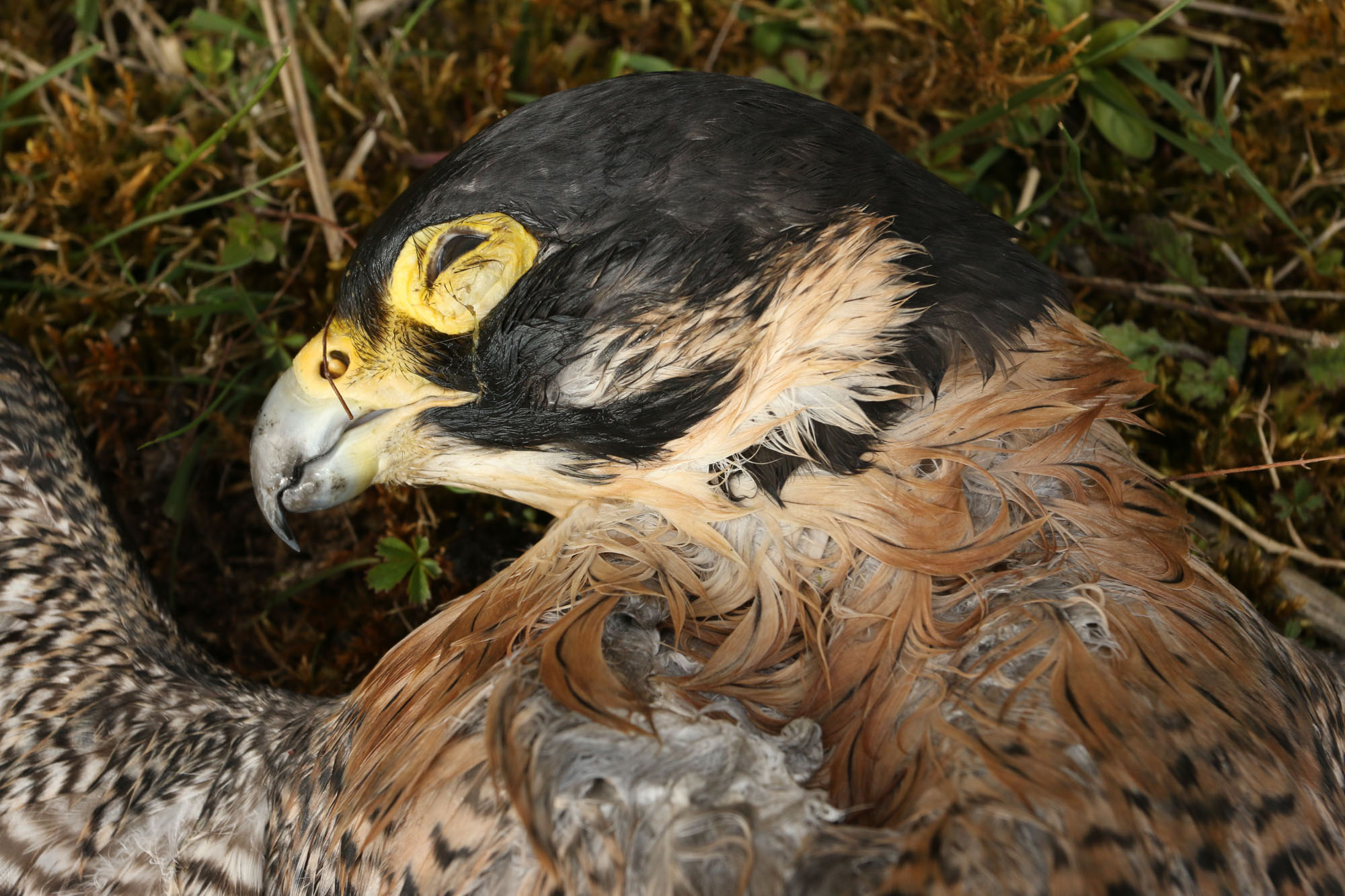
Stolen peregrine rehabbed and released back to the wild in Suffolk

Press release from Suffolk Constabulary (13th December 2022):

Helping peregrine back into the wild

A peregrine falcon that had been unlawfully taken from a nest and located by Suffolk Police has now been released back in the wild.

The protected bird of prey was looked after by wildlife expert Peter Merchant, who was contacted by officers of the Force’s Rural & Wildlife Team after it was found during a search of an address in Lowestoft in June this year.

Peter looked after the bird with minimal human contact and trained it to hunt, ensuring it was suitable for release. This has now been done in a secret location in the county.

Sgt Brian Calver, who leads the Rural & Wildlife Team, said: “It is illegal to take a bird from the wild. We suspect the birds from this nest were taken for financial gain and it is down to the vigilance of the public and by reporting this to us that this bird has been fortunate enough to be returned to the wild, where he should be. We would like to thank Peter for his help. His knowledge and experience were instrumental in ensuring the safe release of this wonderful bird.

We would encourage the public to notify us of any suspected criminal activity regarding wildlife. Nature cannot speak up for itself and needs us to be their eyes and ears.

Peter Merchant has four decades of experience of recovering and rehabilitating birds of prey under licence. Thanks to his skill and vigilance 25 peregrine falcons have been released back into the wild.

Peter said: “This latest situation came about because a person without licence retained a schedule 1 protected bird of prey. The early fledged youngster would, under normal circumstances, have been returned to its parental group but the period of delay before the bird was recovered meant this was not possible. This was why a considerable period of rehabilitation was needed.

The bird was isolated from human contact in an exercise pen and fed on a controlled diet with prey items which closely simulate the ground-feeding birds it will eventually encounter. In early November it was transferred to a purpose-built release pen and I want to thank the local landowner and his wildlife associates for their care and dedication. We all then had the satisfaction of seeing the bird released into the wild.”

ENDS

Presumably this is the same peregrine that featured on this blog in June 2022 (here).

Great work by everyone involved in this rescue, recovery and release!

‘Golden opportunity to tackle bird of prey killings & stop peatland burning in Scotland’ – RSPB blog on grouse moor licensing

RSPB Scotland has published a blog about the importance of contributing to the Scottish Government’s consultation on grouse moor reform.

The blog can be found here and is reproduced below:

An illegally-poisoned Peregrine Falcon. Photo by RSPB.

The Scottish Government’s Wildlife Management (Grouse) Bill consultation closes tomorrow. Duncan Orr-Ewing, our Head of Species and Land Management explains why we must make sure Scotland’s uplands and the wildlife which rely on them get the protection they need.

Scotland’s mountains, moors, hills and valleys should be full of life but increasingly these places have fallen silent. Centuries of unsustainable land management practices, including burning on peatlands, overgrazing by livestock such as sheep and wild deer, and the illegal and systematic killing of large numbers of our iconic birds of prey have forced nature to the fringes of some of Scotland’s most unique places.

Right now, as we face the nature and climate emergency, we need these places restored to their full potential. When healthy, they can serve as a habitat that is the last refuge of some of our most at risk and iconic species such as Hen Harrier, Black Grouse and Curlew, as well as also provide natural solutions to flooding and wildfires, whilst restored peatlands and regenerating native woodlands can store huge amounts of carbon.

However, in the past few decades many grouse moors we have seen intensification of land management practices, with more burning; more medication of red grouse and more predator control, all designed to deliver ever higher numbers of grouse for sporting clients to shoot, limited only by ineffective and voluntary codes of practices which are often widely ignored.

With this in mind, the Scottish Government has recently launched a public consultation on a Wildlife Management (Grouse) Bill. We believe that the proposed legislation should have a huge impact in addressing the long-term public concern around the illegal killing of birds of prey and more widely in asserting the public interest in the way in which grouse moors are managed (covering about 10-15% of Scotland’s land area). The legislation proposes licencing for grouse shooting and moorland burning, banning burning on deep peatland soils, as well as reform of trapping and we believe that land managers and owners that operate their businesses within the law have absolutely nothing to fear from the proposed reforms. Furthermore, the Scottish Government is also considering options for giving the Scottish SPCA small additional powers which would allow them to better investigate and report wildlife crimes, working alongside the Police.  

RSPB Scotland has long campaigned for better protection of birds of prey, including meaningful sanctions against those who break wildlife protection laws.  We also want to see our uplands managed sustainably and to deliver a wide variety of public benefits sitting alongside private sporting interests. In November 2020, following the Werritty Review of  Moor Management, the Scottish Government committed to bringing in new legislation to protect birds of prey and to address other unsustainable land management practices associated with the most intensive “driven” grouse shooting,

This consultation stage is an important part of the law-making process and provides an opportunity for everyone to have their say on what they think new legislation should contain. We strongly support the Scottish Government proposals, however there is still work to be done to ensure it properly protects Scotland’s nature and it is vital that the public’s voice is heard. The more people that respond to the consultation seeking progressive reform, the greater the chance that it will help nature. The consultation closes tomorrow, 14 December. 

You can respond to the Scottish Government consultation here.

END

If you’d like some guidance about how to respond to the consultation, please see here.

It closes tomorrow!

Don’t laugh, but here is the grouse-shooters’ consultation response to licensing

In October this year, the Scottish Government finally launched a consultation seeking the public’s views on its plans for grouse moor reform. Proposals under the Wildlife Management (Grouse) Bill include provisions to introduce a licensing scheme for grouse shoots, muirburn licensing and increased regulation on the use of traps used to kill so-called ‘pest’ species on grouse moors. The consultation closes this Wednesday (14th December 2022).

A couple of days ago I wrote about the response that conservationists were planning to submit (see here), including a guide for your own response.

I mentioned in that blog that the grouse shooting industry was also corralling its members, seemingly in an attempt to flood the consultation with arguments designed to weaken the proposed licensing scheme. This shouldn’t come as any surprise, given the industry’s previously very public histrionics against licensing, as well as its denials that any sort of reform is even required (e.g. see here, here, here, here, here and here).

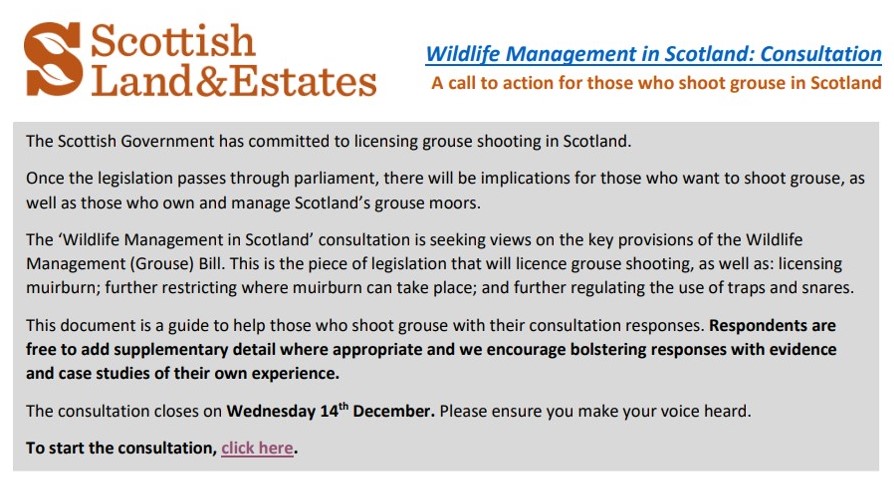
The landowners’ lobby group Scottish Land & Estates (SLE) has been quietly distributing a document amongst its members and supporters called ‘A Call to Action for Guns’ in which it goes through the Scottish Government’s consultation document and provides suggested responses. The full document is published at the end of this blog but I just wanted to highlight a few of the sections because if nothing else, they demonstrate the brass neck of this lot.

Here’s the opening statement:

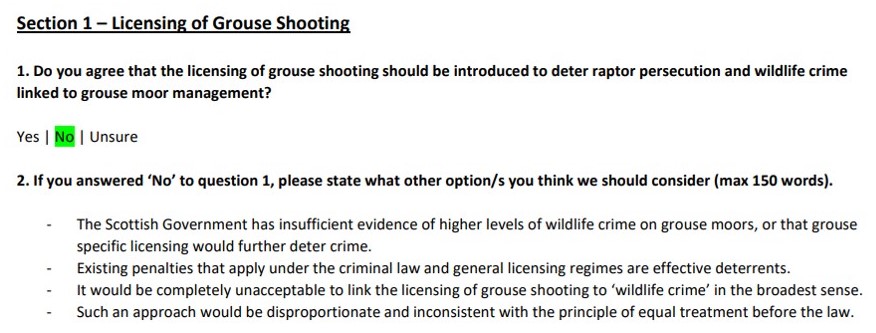
Here’s their suggested response to Question 1 of the consultation:

The Scottish Government should laugh this response out of the door. High levels of wildlife crime on (some) grouse moors has been unequivocally demonstrated time and time and time again. Indeed, ongoing raptor persecution on some driven grouse moors is EXACTLY what has prompted the Scottish Government to bring in licensing, as stated repeatedly by successive Environment Ministers (e.g. see here and here). To pretend otherwise, at this stage of the game, simply highlights the industry’s intransigence and confirms why Ministers consider licensing necessary. It’s not as though the grouse shooting industry hasn’t been given multiple warnings and opportunities to reform (e.g. see here).

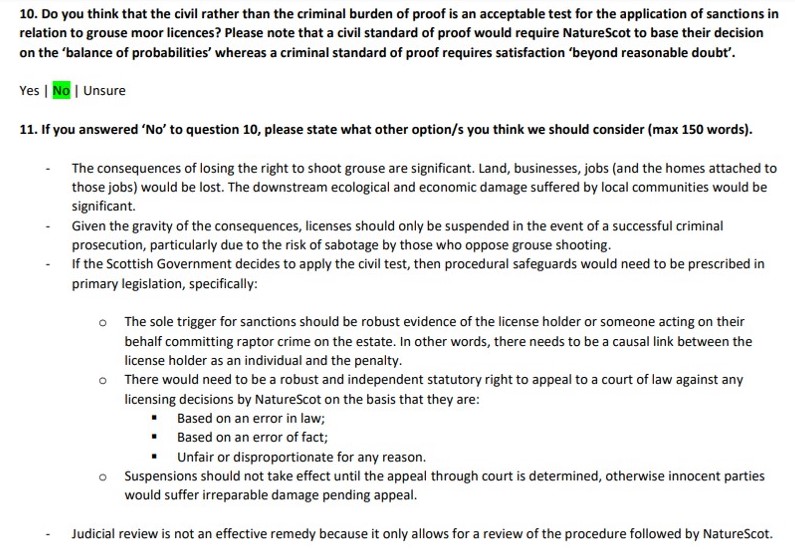
Here’s SLE’s suggested response to Question 10 of the consultation:

Again, the grouse shooting industry is asking for the status quo to remain because it knows how difficult it is to bring about criminal convictions for wildlife offences on grouse moors, given the remoteness of the locations, lack of witnesses, and the extraordinary lengths that the criminals will go to hide their crimes (e.g. see here). Even when sufficient evidence is gathered for a criminal prosecution, it is often ruled ‘inadmissible’ or ‘not in the public interest’ to proceed (e.g. see here, here, here, here, here, here). The odds have been stacked against the wildlife crime enforcers for decades and this proposed legislation seeks to address that imbalance. If I was a criminal gamekeeper or criminal sporting agent or criminal grouse moor owner, I too would be worried. Those who aren’t criminals should have nothing to fear.

And yes, the consequences of losing the right to shoot are significant – that’s kind of the whole point. If you don’t want to suffer the consequences, don’t break the law. It’s quite straightforward.

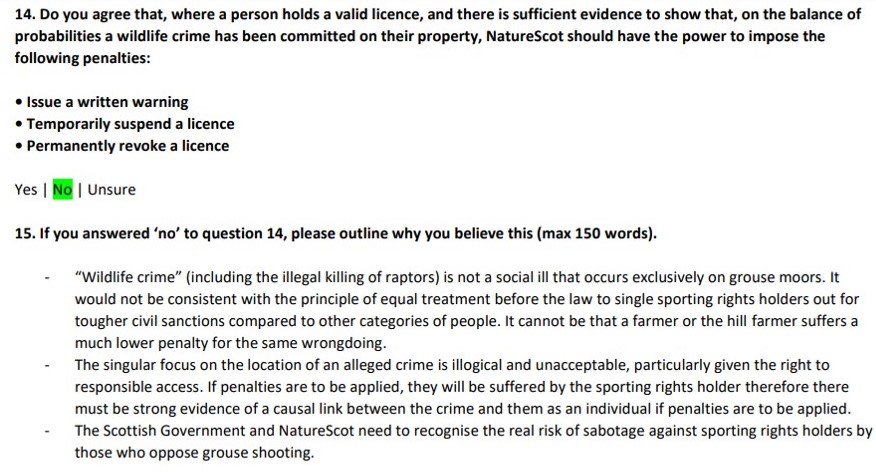
Here’s SLE’s suggested response to Question 14 of the consultation:

This is just trying to fudge the issue. I don’t think any informed person would argue that the illegal killing of raptors “occurs exclusively on grouse moors”. Of course it doesn’t. But there’s a massive weight of scientific evidence and crime statistics to demonstrate that illegal raptor persecution occurs disproportionately on some driven grouse moors, and THAT is what this licensing scheme is seeking to address.

And as for the “real risk of sabotage against sporting rights holders by those who oppose grouse shooting”, this argument that gamekeepers and estates may be ‘set-up’ was also used by SLE in 2012 when objecting to the introduction of vicarious liability for raptor persecution offences (see here). Ten years on, there hasn’t been a single case where this has been shown to have happened, but there have been plenty of cases where gamekeepers have been caught committing criminal offences as part of their daily routine.

I don’t have time (nor the will) to go through each of SLE’s consultation responses but if you’re interested, here it is in full:

For those of us who don’t want to see the status quo remain, and are sick to the back teeth of the grouse-shooting industry getting away with wildlife crimes, especially against birds of prey, there’s still time for you to participate in the public consultation (it is open to everyone). Even if you just tick the boxes (without needing to write additional comments), it all helps to demonstrate to the Scottish Government that this is an issue we care about. If you want to go further and add some commentary, you’ll find suggested guidance here.

The consultation closes the day after tomorrow (Weds 14th December 2022).

Forestry and Land Scotland issues controversial licence permitting Moy Estate gamekeepers to hunt foxes in public forests

Forestry and Land Scotland (FLS) has granted a controversial licence permitting Moy Estate gamekeepers, and others from the Three Straths Fox Control Association, to hunt and kill foxes on Scotland’s national forest estate, partly for the benefit of privately-owned grouse shooting estates, including Moy Estate.

This is the same Moy Estate that has been at the centre of police investigations into alleged raptor persecution crimes for over a decade (e.g. see here) and is currently serving a three-year General Licence restriction, imposed by NatureScot, after evidence of wildlife crime (raptor persecution) was again uncovered on the estate.

This is a map I produced a few years ago showing reported raptor persecution incidents in the region between 2005-2016. There have been many more since.

Wildlife campaigners are understandably furious about this decision, not least because FLS’s own experts strongly advised against it due to, amongst other things, the potential for illegal activity.

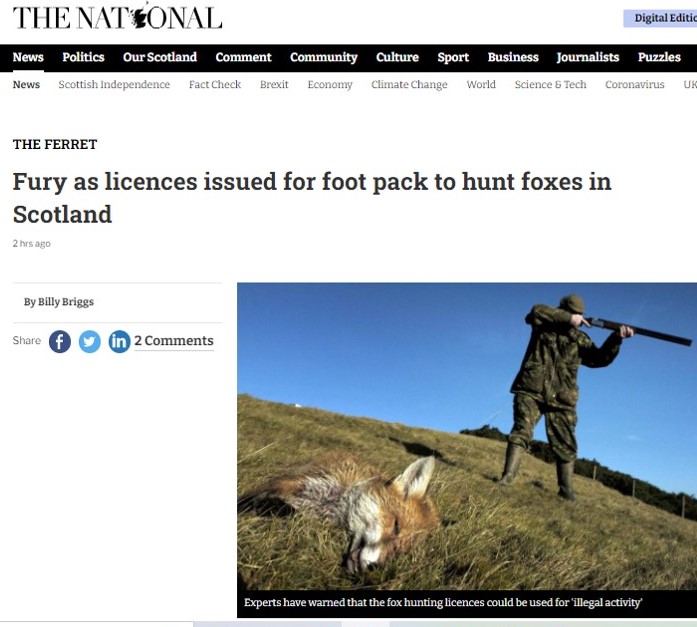
Journalist Billy Briggs has written an excellent article, based on Freedom of Information responses I received this autumn. His article is published today by The Ferret (here, behind a pay wall) and also here in The National, as follows:

LICENCES for a foot pack to kill foxes were issued by Forestry and Land Scotland despite strong objections from internal experts who feared there was potential for “illegal activity” and protected species such as badgers to be disturbed.

A foot pack – in contrast to ­traditional fox hunting with riders on horses – is where a huntsman, ­accompanied by colleagues acting as beaters, uses hounds to chase foxes out from cover to then be shot.

Critics who want hunting with packs of dogs banned in Scotland are urging Scottish Government ­ministers to outlaw foot packs as well as mounted hunts.

The Ferret previously revealed that foxes were being chased by hounds and shot by foot packs in forests used by the public.

Our investigation prompted angry responses from wildlife groups who have condemned Forestry and Land Scotland (FLS) once again for issuing more licences. FLS is responsible for managing and promoting Scotland’s national forest estate.

A freedom of information request was submitted to FLS by campaign group, Raptor Persecution. The ­reply revealed internal discussions at FLS in September and October after Three Straths Fox Control ­Association (Three Straths) applied for licences for fox control in the south Inverness area.

The documents, passed to The ­Ferret, showed that FLS experts strongly advised against the foot pack being allowed to hunt.

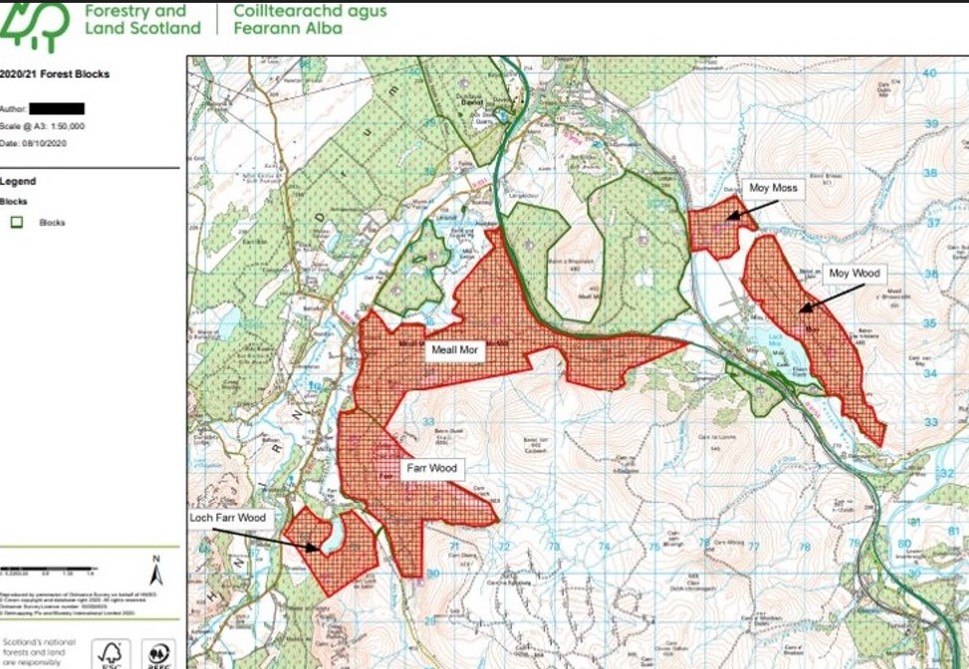
Map showing the woodland where FLS has permitted the hunting & killing of foxes during the 2022-2023 season. Released to RPUK under FoI.

The licences were issued, however, prompting condemnation by critics. They included the League Against Cruel Sports Scotland which said it was “quite staggering” FLS granted permission in the face of “vehement concerns” by its own staff.

In reply, FLS said it appreciates that fox control is a “contentious ­issue” but under existing legislation the activity is legal in Scotland and “closely regulated”.

Three Straths told The Ferret it ­always adheres to the law to “ensure public safety and to avoid non-target species”, adding that it provides a “public service at no cost to the ­public purse”.

The licence application said Three Straths represented a “number of sporting estates” seeking to hunt ­foxes on the Moy, Farr, and ­Dalmagarry estates. Each hunt would typically involve 30 people including local gamekeepers, 20 to 30 guns, 15 hounds and a huntsman.

The hounds are used to flush the fox from cover to a line of waiting guns where the animal is shot.

The foot packs are overseen by a wildlife team at FLS, but some staff still opposed Three Straths’ ­application.

Internal documents revealed one person wrote: “As a minimum we should request a protocol for how the operators (the foot pack) will deal with encounters with protected ­species. This was asked for at the last permission request but I have not yet seen it. As discussed before, without this I feel the activity cannot be done without potentially disturbing legally protected species and could lead to an illegal activity.”

They added: “As this is a known activity any disturbance could be classed as reckless under the law and would constitute an offence. FLS as the landowners would also be liable for allowing the activity to take place. Given the risks, lack of mitigation information and lack of rationale for why the activity is needed, I would strongly advise it is not allowed.”

Another expert — a species ­ecologist — also objected and wrote: “As I [sic] have pointed out several times ­previously, fox ‘control’ at this time of year has no impact on fox density the following spring. This is a matter of scientific fact. If the intention is to reduce (assumed) fox impacts on the shootable ‘surplus’ of grouse in 2020, it is a pointless exercise.”

They added: “Furthermore, I am not aware of any evidence that these ­foxes actually eat game birds on ­adjacent estates. To sanction this ­controversial activity without any evidence of an actual problem is ­inadvisable. For the record, and for the reasons I have listed in previous communications, I reiterate my ­advice that we should not give permission for this activity.”

It was also noted that internal ­concerns had been raised in previous years regarding requests by Three Straths to hunt, which were “not ­adequately addressed”.

Staff also pointed out that foxes are “part of the forest ecosystem” and “we should not be unsustainably removing any native species”. They said: “As we have no idea of the current population (no surveys have been undertaken) then effectively this could extirpate foxes on our land. We know foxes play a valuable role in keeping populations of other ­predators in check and in reducing rabbit and hare populations, thereby reducing damage to restock sites.”

Concerns were also raised over public safety and “verbal assurances” given by Three Straths that hounds would only chase foxes. There was a “real risk” that a bolting fox could go down the entrance to a protected ­species den or sett to escape the dogs, it was noted, and people firing guns on a badger sett “would be a ­disturbance in itself”.

Dr Ruth Tingay, of Raptor Persecution, who submitted the freedom of information request, pointed out that Moy Estate is currently serving a three-year general licence restriction, imposed by NatureScot, for wildlife crimes against birds. Moy ­Estate ­reportedly said it was ­extremely ­disappointed by the decision and would be considering an appeal. [Ed: Moy Estate has already lost its appeal against the General Licence restriction – see here].

Tingay said: “The rationale behind the restriction is that NatureScot can no longer trust Moy Estate to comply with the terms of the general licences after evidence of raptor persecution was provided by Police Scotland.

“So why on earth has FLS ­entrusted Moy Estate to comply with the terms of a licensed fox hunt, in a public forest, with what looks like ­minimal oversight and scrutiny? Don’t these licensing agencies talk to one ­another?”

Bob Elliot, director of the animal welfare charity, OneKind, argued that FLS fox control policy should ­reflect the views of the Scottish public who “overwhelmingly do not support fox hunting”.

He added: “It is incredibly ­disappointing to see that once again, despite several serious objections raised internally by Forestry and Land Scotland staff, FLS has ­granted permission to allow foot packs to kill foxes in Scotland’s public forests this winter.

“We know from our previous freedom of information requests to FLS that many of the concerns raised by FLS staff, including the non-necessity of fox hunting foot packs, the importance of foxes to the ecosystem, and the threat to other wild animals, have in fact been raised before.”

His views were echoed by Robbie Marsland, director of the League Against Cruel Sports Scotland, who said it was “quite staggering that ­despite vehement concerns” the ­licenses were issued.

He added: “The situation at FLS is yet another reason why it is ­imperative the new Hunting with Dogs Bill passes through parliament in the most robust form possible, ensuring hunting with dogs is really banned in Scotland once and for all.

“The existing legislation is so full of loopholes it isn’t worth the paper it’s written on and time and time again we’re seeing those who wish to hunt wild mammals with dogs for fun, ­simply ignoring the fact this activity is supposed to be illegal.”

A spokesperson for Forestry and Land Scotland said that in “all ­aspects” of its land management ­activities it has a duty to “follow the law and existing policies” when ­considering requests. “Only if there was a change in law and Scottish Government policy would we be in a position to review our procedures,” the spokesperson continued.

‘ORDINARILY FLS only controls foxes to meet specific conservation interests. However, we also appreciate that neighbouring land managers’ priorities might differ from our own and will assist where it is deemed appropriate. We continue to have our own staff monitor fox control activities.”

A spokesperson for Three Straths accused FLS experts of having a ­“personal bias” against predator ­control, adding that none of the ­objectors had come out with the foot pack to witness a hunt for themselves, despite being asked.

“We always have FLS staff out with us on days we are in the forest and in the 25 years I have been involved, not one of them has raised any ­complaint about our practices,” said the ­spokesperson. “On the point about controlling foxes at the time of year we do, making no difference. That is nonsense, areas where foxes are ­controlled all year round have a far smaller fox population and ground nesting birds breed far more ­successfully because of the control.

“We also used to hunt into the spring and summer on FLS land which did do a lot of good but we were stopped by the same ecologist who quotes that we are hunting at the wrong time of year now. His comment about no evidence to suggest foxes eat ground nesting birds just goes to show how far removed from reality some of these people can be.”

The spokesperson continued and said Three Straths controls foxes for the “good of all ground nesting birds”, not just game birds. “Many of these species are in dire straights [sic] at the moment and need all the help to survive they can get,” they added.

“Upland sporting estates are their last stronghold and their last chance of survival.”

A Scottish Land & Estates spokesperson said: “The predation of wild birds such as capercaillie, black grouse, curlew, golden plover, grey partridge, lapwing and oystercatcher continues to be a huge problem, with widespread declines in populations of these birds across Scotland since the 1960s.

“The control of foxes, alongside ­other predators such as crows and pine martens, is important in ­improving the breeding success of these birds. Predator control takes place when it is deemed necessary and in accordance with regulations.”

The Hunting With Dogs (Scotland) Bill – published in February and ­currently going through the Scottish Parliament – seeks to replace a widely criticised 2002 law which aimed to ban fox hunting in Scotland.

Both Farr Estate and Dalmagarry Estate were asked to comment. We were unable to contact Moy Estate ­directly so made an indirect approach through Three Straths.

ENDS

This isn’t the first time that a licence permitting fox hunting in public forests around Moy has been a source of controversy. Last year, Freedom of Information requests to FLS by campaigners from animal welfare charity OneKind revealed that FLS staff suspected that gamekeepers were visiting the forests to look for fox dens to block up, which also happened to be beside Schedule 1 raptor nests, some of which have been repeatedly attacked in previous years (see here).

And of course it’s not just FLS turning a blind eye to wildlife crimes uncovered on and around Moy Estate (e.g. see here, here, here).

Last chance to have your say on Scottish Government’s consultation on grouse moor reform

In October this year, the Scottish Government finally launched a consultation seeking the public’s views on its plans for grouse moor reform. The consultation closes on Wednesday 14th December 2022, so this is your final chance to provide your views on what is being proposed.

Proposals under the Wildlife Management (Grouse) Bill include plans to introduce a licensing scheme for grouse shoots, muirburn licensing and increased regulation on the use of traps used to kill so-called ‘pest’ species on grouse moors.

To say that driven grouse moor reform is long overdue is somewhat of an understatement. This ‘sport’ has been virtually unregulated since it began approx 150 years ago and much of what happened in the Edwardian and Victorian age still goes on today (albeit more intensively and commercially in many areas) including the illegal killing of birds of prey, which is the principle reason the Scottish Government has finally decided to act.

The campaign to get to this stage has been long and brutal and has come at a high personal cost to many of the individuals involved. It has been a hard-fought battle and this is why it’s so important that people now take part in the consultation process. The grouse-shooting lobby is urging its members to contribute – I’ve been sent a copy of how they are intending to respond, which includes ludicrous claims about there being ‘insufficient evidence’ of high levels of raptor persecution on grouse moors (I know!!). I’ll share their response in a separate blog but it highlights why we need to show a strong response in support of the Government’s licensing proposals.

That’s not to say the licensing proposals are perfect – they’re not – but this is our opportunity to make sure that they can be as watertight as possible.

I’m aware that some campaigners on ‘our side’ are very unhappy that licensing is coming in; they would prefer to see an outright ban on driven grouse shooting. That’s a view I understand but right now, a ban is not on the table. It’s either a licensing scheme or the status quo. Those are the two options. If licensing proves to be ineffective, then the campaign for a total ban will be strengthened. Maintaining the status quo is unthinkable, so let’s be pragmatic and work to secure the best standard of licensing that we can get.

The consultation is easy to respond to and anyone can participate – you don’t need to be a member of an organisation, your view as an informed member of the public is just as valid.

REVIVE, the coalition for grouse moor reform, has provided an easy supporter’s guide to help you complete the consultation – see here.

Most of it is a tick-box exercise, but there are also sections where space is provided for you to add your own comments. REVIVE has listed some suggested topics that you may wish to include, but has deliberately not provided statements for cut and paste. It’s important that you use your own words to have greater impact – if everyone submitted identical responses, the Government is likely to lump them all together and count them as a single response instead of the views of many individuals.

I’ll be submitting my own personal response this weekend. As mentioned above, I’m generally in support of the principle of licensing but I do have concerns about effective enforcement. Without that, a licensing scheme will be utterly pointless. I will be urging the Scottish Government to introduce a licensing fee that is sufficient to fund rigorous and effective compliance monitoring and enforcement, and to implement that fee now rather than later, as has been proposed.

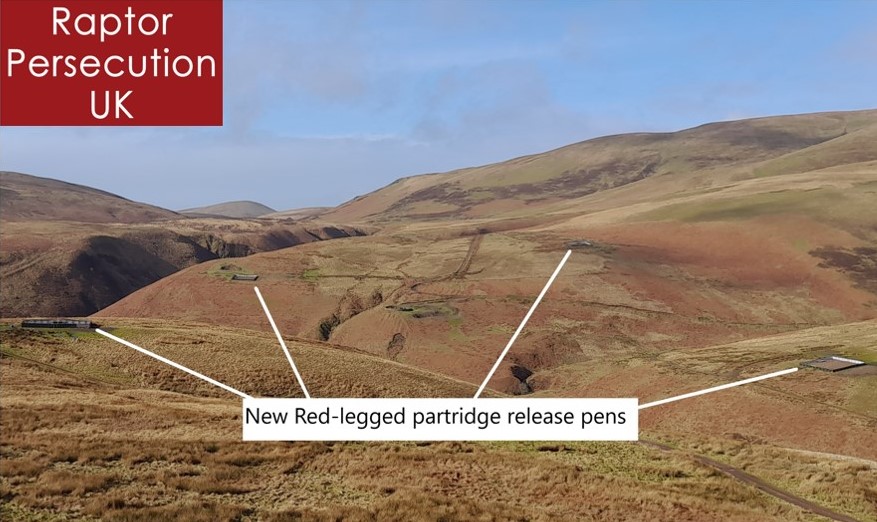
I’m also deeply concerned that the proposed licensing scheme excludes the shooting of red-legged partridges and pheasants on land managed for grouse shooting, and instead focuses just on the shooting of red grouse. There is an increasing body of evidence that demonstrates red-legged partridges (RLPs), and to a lesser extent, pheasants, are being released on grouse moors for shooting, either as a proxy for red grouse (in low stock years) or as an additional target species to boost income. When the grouse shooting licence scheme is introduced, it would be very simple for shoot managers to switch from shooting red grouse to shooting RPLs, thus side-stepping the licence (which is currently red grouse specific) and continuing with the very activities that this licencing scheme seeks to end (illegal raptor persecution). It’s a gaping loophole that needs to be closed off before it is exploited.

[This photograph was taken on Buccleuch Estate earlier this year]

For those who haven’t yet read the Government’s proposals, you can do so here:

If you want to use REVIVE’s guide for responding to the consultation, please click here.

Remember, the consultation closes on Wednesday 14th December 2022.

Thank you for your help and support.

UPDATE 12th December 2022: Don’t laugh, but here is the grouse-shooters’ consultation response to licensing (here)

UPDATE 13th December 2022: ‘Golden opportunity to tackle bird of prey killings & stop peatland burning in Scotland’ – RSPB blog on grouse moor licensing (here)

Another DEFRA Minister pretends to be tackling high levels of raptor persecution

A couple of weeks ago the RSPB published its latest annual Birdcrime report (2021), which showed that England had the second-highest record of raptor crimes since recording began (see here).

It was noted that yet again, over two thirds (71%) of all confirmed incidents of raptor persecution took place on land managed for gamebird shooting, where birds of prey are seen by some as a threat to gamebird stocks and illegally killed.

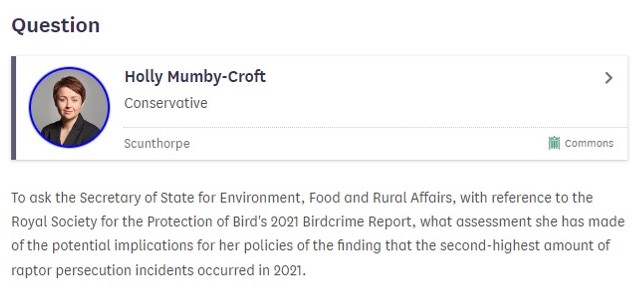
The Birdcrime report prompted a Parliamentary question from Holly Mumby-Croft MP as follows:

This was answered two days ago by the latest Parliamentary Under Secretary of State at DEFRA, Trudy Harrison MP, as follows:

Regular blog readers will know that this is just yet another DEFRA Minister trotting out the same tediously-predictable guff designed to look as though DEFRA has the raptor persecution issue under control.

We’ve heard virtually identical responses from previous DEFRA Ministers, e.g. see this from Environment Minister Rebecca Pow in September 2021, and this from Richard Benyon in February 2022, and this from Rebecca Pow in February 2022, and this from Richard Benyon in April 2022. And now the same again from Minister Trudy Harrison.

As I’ve said many times before, there’s a running theme in these responses which, under closer scrutiny, does not stand up as evidence that DEFRA is tackling the issue, let alone acknowledging it.

For example, yes, custodial sentences are available for these crimes but they have never once been applied to raptor-killing criminals in England, and only once in Scotland, and that was eight years ago.

And yes, DEFRA supports the sham-partnership that is the Raptor Persecution Priority Delivery Group (RPPDG) that has been in place since 2011 but it’s a group that has delivered precisely nothing of any use and is currently without a Chair because the position is so toxic and career-damaging that no senior police officer wants to take it on. The last Chair, Inspector Matt Hagen, stepped down after he was told he was not allowed to talk to the press about raptor crime. This ridiculous constraint was prompted by an interview he gave to National Geographic last year (here) in which his brutal honesty laid bare the scale of the problem.

I did note something new in this latest DEFRA response though – that it has provided funding to develop DNA analysis to help support investigations into peregrine theft. That’s good, but it doesn’t tackle the issue of the illegal poisoning and shooting of peregrines on and around driven grouse moors, a serious threat that is so widespread it is affecting the population distribution and has been known since at least 2011 and has been highlighted many times since (e.g. see here).

When will DEFRA Ministers stop pretending, stop with the wilful blindness, and start tackling these crimes?

General licence restriction to be considered on grouse moor where poisoned red kite & bait found

Further to yesterday’s blog about the discovery of a poisoned Red Kite, found in close proximity to a poisoned bait (a Lapwing) on Dava Moor in May 2021 (see here), there has been a development.

In yesterday’s blog I mentioned that I was curious about why, 19 months after the crime was discovered, there hadn’t been a General Licence restriction imposed on this grouse moor.

I’ve been in touch with NatureScot about this and they’ve confirmed that they didn’t know the investigation had concluded but now that they do know that, they’ll be contacting Police Scotland and requesting the documentation on this case, which NatureScot will consider under the General Licence Restriction Framework to see whether the threshold for a restriction notice has been met.

Excellent news, well done NatureScot.

Given the lengthy procedure involved under the Framework, including giving the landowner/shoot operator an opportunity to provide a defence, we won’t hear about the decision until well into the New Year.

UPDATE 17th January 2023: Police Scotland confirm red kite found poisoned on grouse moor had been killed with banned pesticide (here)

Red kite poisoned on grouse moor -Police Scotland withhold information

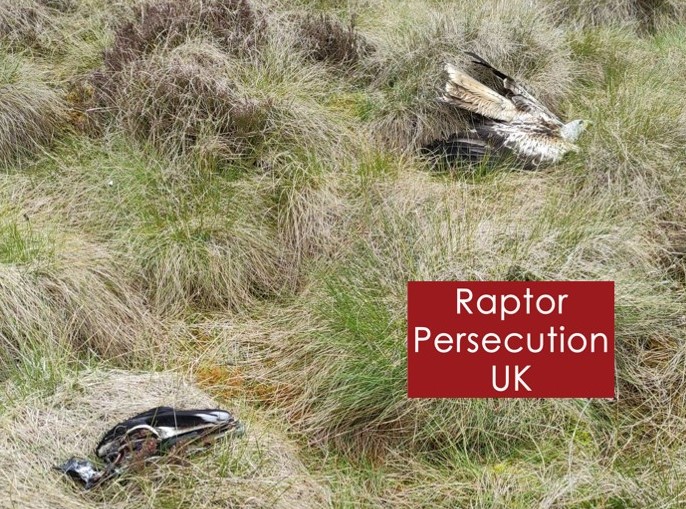
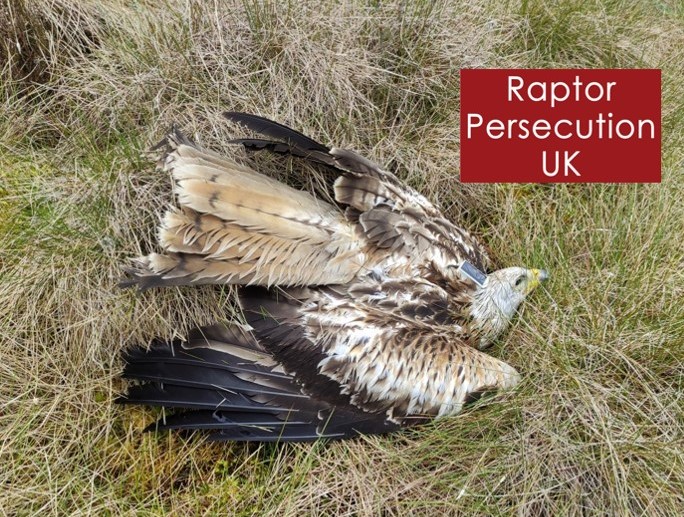
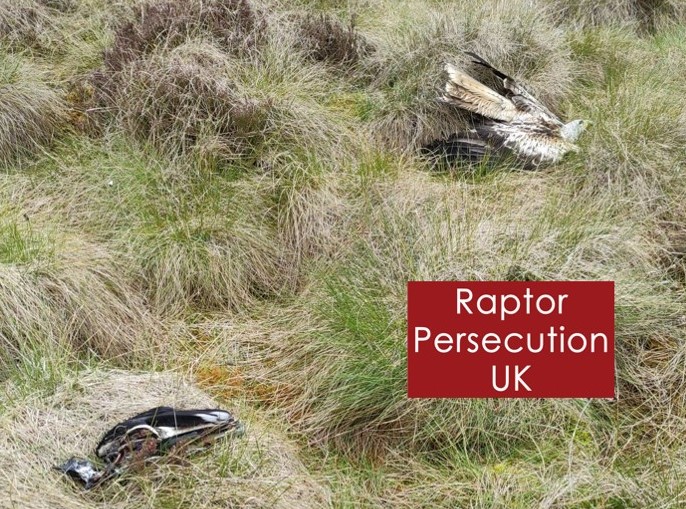
A young satellite-tagged Red Kite has been found poisoned on a Scottish grouse moor, lying next to a poisoned bait, in this case, a Lapwing, whose corpse had been cut open to entice any passing predator and to allow for easy access to the poison.

This gruesome discovery was made by a member of the public on 20th May 2021 on Dava Moor, just beyond the boundary of the Cairngorms National Park.

The Red Kite had hatched in a nest near Grantown on Spey in 2020. This nest was only the second to be located in Badenoch & Strathspey; the first pair at nearby Cromdale disappeared after just one successful breeding season. That only two nests have been located in Badenoch & Strathspey, 32 years after the start of the re-introduction of red kites to the Black Isle, speaks volumes of the ongoing illegal persecution in this region, as noted in a scientific study published in 2016 (here).

Police Scotland attended the scene of the poisoning and collected the Red Kite and the Lapwing for toxicology analysis. They also conducted a search of the grouse moor the following week. Toxicology tests confirmed the presence of poison in both the Kite and the Lapwing.

Sixteen months later in September 2022, Police Scotland notified the member of the public that ‘enquiries are complete, nobody has been charged and the case is now closed‘.

So where was the Police Scotland press release about this serious wildlife crime?

Where was the appeal for information about this serious wildlife crime?

Why has the name of the poison been withheld? Given the proximity of the poisoned Red Kite to the poisoned bait, we can assume it was a fast-acting, highly toxic poison, dangerous to humans as well as to wildlife. Was it one of the eight poisons (Aldicarb, Alphachloralose, Aluminium phosphide,  Bendiocarb, Carbofuran, Mevinphos and Sodium cyanide and Strychnine) banned under the Possession of Pesticides (Scotland) Order 2005, so dangerous it’s even an offence to be in possession of these chemicals, let alone to place them out on a bait in the open countryside?

Where was the warning to both locals and visitors to the area from Police Scotland about this serious threat to public safety?

Who benefits from this secrecy? Not the public, that’s for sure, and not wildlife.

Police Scotland has form for withholding information about raptor persecution crimes (e.g. see here, here, here, here). It’s noticeable that yet again, in the RSPB’s latest Birdcrime Report (2021), Police Scotland is the only force (with the exception of Dorset Police – on which more shortly) to withhold details of crimes that took place over a year ago.

I don’t know who’s making these decisions – I doubt very much it’s the wildlife crime officers on the ground, most of whom these days are undertaking prompt and rigorous investigations – but somewhere up the chain of command a decision appears to have been made to keep these serious crimes under wraps. Why is that?

I don’t understand the rationale at all. Certainly, in the early stages of an investigation it often pays for details to be withheld so as not to compromise searches etc. But sixteen months after the crime is discovered? It doesn’t make sense, and all it does is undermine public confidence.

I’d also like to know why a General Licence restriction hasn’t been imposed on Dava Moor. I understand from conversations with locals that somebody other than the landowner may be responsible for the ‘sporting management’ of Dava Moor. I’ve been told who that is by a number of people but have been unable to verify it so I’m not publishing it here. Nevertheless, at least two General Licence restrictions have previously been applied on landholdings that were ‘managed’ by someone other than the landowner so that shouldn’t be a barrier to imposing a restriction in this case.

And this isn’t the only illegal poisoning incident that Police Scotland are withholding from the public…more shortly.

UPDATE 6th December 2022: General Licence restriction to be considered on grouse moor where poisoned red kite and bait found (here)

UPDATE 2nd January 2023: Raven poisoned with banned chemicals – Police Scotland withhold information (here)

UPDATE 17th January 2023: Police Scotland confirm red kite found poisoned on grouse moor had been killed with banned pesticide (here)

Record high wildlife crime levels could be worsened by new legislation, warn wildlife campaigners

Press release from Wildlife & Countryside LINK (29th November 2022):

Record high wildlife crime levels could be worsened by new Government law, warn wildlife campaigners

*Figures collected annually by nature organisations reveal that wildlife crime rates remained stubbornly high in 2021, following record highs in 2020

*Convictions for most wildlife crime types rose in 2021 from record lows in 2020, with hunting and bat crimes showing the biggest proportional increase in conviction rates (although from low baselines).

*Campaigners are warning reductions in wildlife protections in the Retained EU Law Bill could see further rises in wildlife crime and are calling on Government to stop the Bill and make crucial improvements to wildlife crime monitoring and enforcement recommended by the UN. 

The annual Wildlife Crime Report compiled by Wildlife and Countryside Link, with information from groups including RSPB, WWF UK, and the League Against Cruel Sports, has shown that crime against wildlife in 2021 was at record levels. Wildlife crimes include, for example, hare coursing, persecution of birds of prey, badgers and bats, disturbance of seals and dolphins and illegal wildlife trade.

In England and Wales there were 1414 reported wildlife crime incidents (outside of fisheries), almost exactly the same level as in 2020 (1404). There were 3,337 fisheries crime reports in 2021, down from 4,163 in 2020. The scale of wildlife crime is likely to be far higher than the report details, due to lack of official recording and monitoring of most of the data relying on direct reports from members of the public to nature groups.

Dr Richard Benwell, CEO of Wildlife and Countryside Link, said: Wildlife crime soared during the pandemic and remained at record levels this year. Progress on convictions is positive, and we welcome DEFRA’s efforts to stiffen sentencing, but overall that is of little use while the rate of successful prosecutions remains so low.

The snapshot in our report is likely to be a significant under-estimate of all kinds of wildlife offences. To get to grips with these cruel crimes, the Home Office should make wildlife crime notifiable, to help target resources and action to deal with hotspots of criminality.

The Retained EU Law Bill threatens to be a serious distraction, and could even lead to important wildlife laws being lost. Instead, seven years on from its publication, the Government should implement the Law Commission’s 2015 wildlife law report. Surely it is better to spend time and money improving laws that are as much as two centuries old, than wasting time reviewing effective environmental laws under the REUL bill.”

Martin Sims, Chair of Link’s Wildlife Crime Working Group, said: We must empower police forces to act on wildlife crime. We already see how, with proper resources and training, a real difference can be made in the work against awful crimes like hare coursing. It’s the counties with well-funded and resourced projects in place where we’re seeing the most positive progress. Also essential to efforts to better protect our wildlife is making wildlife crime notifiable, and recorded in national statistics. This would better enable police forces to gauge the true extent of wildlife crime and to plan strategically to address it.

The pandemic contributed to the high wildlife crime reporting figures in both 2020 and 2021.  COVID-19 restrictions appear to have increased reporting of wildlife crimes in several ways. Opportunistic offenders may have felt that with the police busy enforcing social restrictions that wildlife could be harmed with relative impunity. With increased use of the countryside and coast in the pandemic more members of the public were also present to witness and report incidents of concern. Increased domestic tourism also played a role in increased wildlife disturbance of marine mammals. 

There was a positive increase in convictions in some types of wildlife crime in 2021. But low levels of prosecutions and low conviction rates are an on-going challenge in tackling wildlife crime. Despite the number of convictions in 2021 being more than double the rate in 2020, there were still only 55 convictions for wildlife crimes in the whole year (if well-resourced and enforced fisheries crimes are excluded). And for hunting crimes alone more than half (53%) of prosecutions were unsuccessful in securing a conviction in 2021. This is compared to an 82% conviction rate across all crime. A lack of training and resources is central to this issue.

The report highlights the difference in what can be achieved with the right budget, training, and resources, with concerted action to tackle hare-coursing being a main factor in the increase in convictions in 2021. This follows a nationwide police operation to tackle the issue – Operation Galileo – achieving good results. Consequently 2021 saw the highest number of cases proceeded against accused hunting crimes since 2015, with 80 cases taken to court. The highest increases in prosecutions were in Norfolk and Suffolk where police forces were active in Operation Galileo and other police activities designed to reduce the impact of hare coursing. This policing focus corresponded with legislative action, which has seen hare coursing sanctions increased in the Policing, Crime Sentencing and Courts Act 2022 (rising to up to 6 months imprisonment and unlimited fines). Similar action needs now to be taken to enable the more effective prosecution of other hunting crimes, including the illegal hunting of foxes with dogs. 

Despite this positive legislative move, one new Bill from Government could actively worsen wildlife crime. The Retained EU Law Bill is intended to ‘save, repeal, replace, restate or assimilate’ the retained EU law (known as REUL) applying in the UK within a set time period. These laws include the Conservation of Habitats and Species Regulations 2017, which make it a criminal offence to damage the habitats of key species including badgers and bats. Such habitat offences form the majority of the wildlife crimes against badgers and bats. The Bill is likely to lead to the hasty rewriting of the regulations, potentially weakening the legislative underpinning for tackling common wildlife crimes.

To properly tackle the issue of wildlife crime, nature experts are calling for the following actions (most of which were also recommended by a UN report in 2021):

  1. Making wildlife crimes notifiable to the Home Office, so such crimes are officially recorded in national statistics. This would better enable police forces to gauge the true extent of wildlife crime and to plan strategically to address it.
  2. Increasing resources & training for wildlife crime teams in police forces. Significant investment in expanding wildlife and rural crime teams across police forces in England & Wales, and the placing of National Wildlife Crime Unit funding on a permanent basis, would enable further investigations, and lead to further successful prosecutions.
  3. Reforming wildlife crime legislation. Wildlife crime legislation in the UK is antiquated and disparate. A 2015 Law Commission report concluded these laws are ‘‘overly complicated, frequently contradictory and unduly prescriptive’’. Much of this stems from the need to prove ‘intention and recklessness’, which has stunted the potential for prosecution in even clear cases of harm being done to protected and endangered species.
  4. The immediate withdrawal of the Retained EU Law Bill. Retained EU laws include the Conservation of Habitats and Species Regulations 2017, which (amongst other protections for habitats and species), make it a criminal offence to damage the habitats of key species including badgers and bats. These vital protections are at risk of being dropped or weakened, undermining the legislative foundation for tackling common wildlife crimes.

ENDS

Wildlife & Countryside LINK’s previous Wildlife Crime Reports can be read here and the 2021 report can be read here: