Welsh Government under fire for failing to implement gamebird regulations amidst heightened risk of bird flu

The RSPB has, justifiably, grown tired of waiting for the Welsh Government to implement regulations on the release of millions of non-native gamebirds (Pheasants and Red-legged Partridges) and wants urgent action to protect native wildlife from the threat of highly pathogenic Avian Influenza (bird flu).

In an article published last week, the RSPB argues that the Welsh Government has ignored the recommendation of its own statutory nature advisor (Natural Resources Wales – NRW) for too long and risks causing damage to protected wildlife and habitats by permitting the continued, unregulated release of gamebirds.

Millions of non-native Red-legged Partridges are released into the UK countryside every year for shooting. Photo by Ruth Tingay

Following legal action by Wild Justice in 2020, Defra added Pheasants and Red-legged Partridges to Schedule 9 of the Wildlife & Countryside Act, which means that these species are recognised as having the potential to cause ecological harm and can now only be released in England under licence.

This decision prompted Welsh Ministers to ask NRW whether there was an issue with gamebird releases in Wales and if so, to consider options for regulation.

In October 2023, after a public consultation that attracted 42,000 responses, NRW provided Ministers with very clear advice (see report below) that both Pheasants and Red-legged Partridges should be added to Schedule 9 of the W&CA so that any future releases in Wales would have to be licensed/regulated.

NRW suggested that if Ministers accepted the advice, a licensing scheme could be up and running by the start of the 2025 shooting season (i.e. now).

Since receiving that advice almost two years ago, Welsh Ministers have sat on their hands and done precisely nothing about it.

Meanwhile, Avian Influenza has been creeping across the UK with catastrophic consequences for not only many wild birds (particularly seabirds and some bird of prey species), but also for poultry farmers and the egg sector, some of whose businesses have been ruined (e.g. see here and here).

The RSPB has uncovered a shocking outbreak of Avian Influenza in May this year, described in last week’s article as follows:

In May, two Pheasants tested positive for bird flu in the North Berwyn hills, presumably having been released from a pen. Within weeks bird flu was confirmed in captive gamebirds nearby. We now know, having obtained information under the Environment Information Regulations, that the two reported were from a mass mortality event of around 875 dead Pheasants “in the wild”. The nearby game-rearing facility contained 11,000 Pheasants and 10,000 partridges, following which protection and surveillance zones were declared, which prevented gamebird releases until it was revoked last month.

This is extremely concerning because the entire population of Red-listed Black Grouse in Wales is in North Berwyn and the adjacent moorlands, and it’s an important area for breeding Curlews. Bird flu outbreaks in released Pheasants also pose a risk to scavengers including birds of prey. The incidents are close to the Berwyn Special Protection Area, classified for its populations of Hen Harrier, Merlin, Peregrine and Red Kite.

In Wales, bird flu cases in released Pheasants don’t trigger disease control zones, meaning if there is an outbreak in released Pheasants, shoots can continue to release birds that could further spread the disease. There is no requirement for shoots to report sick or dead released Pheasants or wild birds, nor to collect carcasses of dead released Pheasants on their land. With no licensing system in place to regulate releases of gamebirds, there is little NRW can do to help protect threatened wildlife‘.

This sounds particularly odd to me. I haven’t seen the EIR documents so can only speculate but the discovery of 875 dead Pheasants in one location, described as being “in the wild”, in May, rings alarm bells.

In my view it seems implausible, or at least highly unusual, that that density of Pheasants would be together in one location, “in the wild”, in May (so supposedly birds that were released the previous summer/autumn for shooting). The only time I’ve ever seen that number of gamebirds together ‘in the wild’ is in the weeks following release from captivity in the summer, prior to the start of the Pheasant-shooting season on 1 October. By May the following year they’ve either been shot, or run over, or have been caught up for breeding, or have dispersed into the wider countryside. I’d be interested to hear if anyone has experienced anything different.

I hope that somebody didn’t remove those diseased 875 birds from a pen, to make them appear to be last year’s ‘released’ birds (and thus defined as ‘wild’), to avoid any subsequent restriction on the movement and/or release of other gamebirds. That would be outrageously irresponsible (and also unlawful).

I hope the RSPB will publish those EIR documents to provide more clarity on the incident.

Whatever did or didn’t happen at that location, it’s clear that outbreaks of Avian Influenza in gamebirds that are left to wander around the countryside present an obvious threat to protected native species and habitats, and that the Welsh Government has had more than enough time to consider NRW’s advice and to take action.

The RSPB is asking members of the public to email the Deputy First Minister of Wales, Huw Irranca-Davies, to urge him to take that action. You don’t need to be a resident of Wales to do this – anybody can do it.

Please send (a polite) email to: Correspondence.Huw.Irranca-Davies@gov.wales asking him to implement NRW’s advice from two years ago and introduce a licensing scheme for gamebird releases.

Please note that his email address starts with the word ‘correspondence’. If you don’t use the address exactly as it’s written above, your email won’t get through.

Thank you.

Media coverage of the RSPB’s article:

BBC News website here

Radio Wales Breakfast here (starts at 38.00 min, available for 23 days)

Change of trial date for Scottish gamekeeper accused of killing a goshawk on a Perthshire shooting estate

The trial date has been changed for a Scottish gamekeeper who has been charged with killing a Goshawk on a Perthshire shooting estate last year.

Goshawk photo by Pete Walkden

The alleged incident took place on 12 February 2024 on a shooting estate near Blairgowrie.

Police Scotland, with the assistance of partners from the RSPB and Scottish SPCA, executed a search warrant on the estate on 29 February 2024, leading to the arrest of a 47-year-old gamekeeper and subsequent charge (see here).

The gamekeeper has pleaded not guilty and his trial was due to begin next Monday (22 September 2025).

It’s now been put back until November 2025.

NB: As this case is live, comments are turned off until legal proceedings have ended.

UPDATE 11 November 2025: Trial begins today for Scottish gamekeeper accused of killing a Goshawk on a Perthshire shooting estate (here)

Good news! Natural England pulls the plug on ‘reintroduction’ of Hen Harriers to southern England

It’s been a long time coming, but today Natural England has announced it is finally pulling the plug on its project to ‘reintroduce’ Hen Harriers to southern England.

It may sound odd that a pro-raptor conservationist sees this as good news, but I have long argued against this project, for a number of reasons, but predominantly because I saw it as an unhelpful distraction to tackling the real issue – that of the illegal killing of Hen Harriers on the grouse moors of northern Britain.

Hen Harrier by Pete Walkden

Natural England has been planning a so-called ‘reintroduction’ of hen harriers to southern England since 2016, as part of DEFRA’s ludicrous Hen Harrier Action Plan.

I think the proposed reintroduction project was initially supported by the pro-grouse shooting lobby because they thought that Hen Harriers could be removed from the northern grouse moors (under the equally ludicrous brood meddling scheme) and released into southern England, thus removing what they saw as a ‘problem species’ to the other end of the country, leaving them to get on with killing Red Grouse for fun (and money) without those pesky Hen Harriers ruining their sport (and profit).

An apt cartoon depicting what many of us saw as the intentions of the stakeholders in Defra’s Hen Harrier Action Plan. Cartoon by Gerard Hobley.

However, that plan was thwarted when it was pointed out that it would be a breach of international legislation to remove Hen Harriers from Special Protection Areas (SPAs) that had been designated specifically for Hen Harriers, and release them elsewhere.

I suspect that the pro-grouse shooting lobby continued to support the proposed ‘reintroduction’ into southern England because they knew that if even a handful of Hen Harriers were successful in the south, it would take the heat / attention off the continued illegal killing in the north.

We saw exactly this, when the brood meddling trial resulted in a few more pairs of Hen Harriers being allowed to breed – the ongoing illegal killing was simply brushed under the carpet by the grouse shooting lobby, and in many cases, outright denied using comically farcical logic (e.g. here) or grotesquely distorted reasoning (e.g. here).

But Hen Harriers don’t need to be ‘reintroduced’ to southern England, or anywhere else in the UK for that matter. They are perfectly capable of breeding in the wild and recolonising their former range, over a relatively short space of time, IF, and only IF, their survival isn’t curtailed by grouse moor gamekeepers shooting, trapping and poisoning them, pulling off their heads and legs, or stamping on their eggs and chicks.

Instead of wasting hundreds of thousands of pounds on this distraction project over many years, those funds could instead have been directed towards a focused enforcement plan to bring those criminals to justice.

For those interested, I’ve written extensively about this project since November 2016 and you can find links to the key blog posts here.

Here is today’s announcement from Natural England about the conclusion of the project:

NATURAL ENGLAND HEN HARRIER PROGRAMME – UPDATE TO SOUTHERN REINTRODUCTION PROJECT

By Sofía Muñoz, Senior Officer, Hen Harrier Southern Reintroduction

Background

The Hen Harrier Southern Reintroduction Project was set up in 2018 with the aim of establishing a wild, farmland-nesting population of hen harriers (Circus cyaneus) in southern England. 

The hen harrier is an iconic species and one of the UK’s rarest and most persecuted birds of prey. The combination of its beauty, charisma and rarity make this a highly cherished and valued bird. Hen harriers were once common across the UK but were driven to extinction across most of the British Isles during the 1800s. More recently, Natural England and many organisations have put great effort into helping them recolonise parts of Scotland and northern England. 

In England, their numbers are now estimated to have risen to 50 territorial pairs recorded in 2023, from four territorial pairs in 2016 – an increase of 1150%. Despite this increase in numbers, hen harriers remain at risk from illegal killing and disturbance, which is where human activities disrupt nesting sites, which can cause parent birds to abandon their nest and lead to failed eggs or chick deaths. 

Increasing hen harrier numbers is a particularly challenging task as they have a strong inclination to return to the same place they have hatched and fledged, meaning they don’t spread areas easily.  

Project timeline

In 2018, the Hen Harrier Southern Reintroduction project was conceived to encourage recolonisation of hen harriers further south in the UK. The project initially sought to translocate young hen harriers from continental Europe for release in the UK. However, collaboration between EU states and new importation rules for animals following the UK’s exit from the EU meant that translocation of young fledging birds became unfeasible due to extensive quarantine periods.   

Instead, a pioneering captive conservation breeding programme was developed which focussed on releasing offspring bred in the UK from adult birds imported from France and Spain. Beginning in late 2022, this ambitious programme hoped to boost the number of hen harriers in the UK with minimal impact on wild populations. The project sought to release a minimum of 100 juvenile hen harriers over a five-year period to ensure the best chances of success. 

In continental Europe, hen harriers nest on farmland which is directly comparable to much of the arable landscape across southern England. As part of the project, release pens were situated among an arable crop and these would be used to introduce chicks to the site from the captive breeding facility several weeks before fledging. It was hoped that this would enable them to familiarise themselves with the habitat and area around the release site, leading to them returning to breed in this same location in subsequent years. 

Latest situation

The third breeding season for the captive birds began in 2025. While the adult birds had not bred successfully in the first two years of the programme, advances in their breeding behaviour over the two years (20232024) had been noted. This meant that the team were optimistic that that things were moving in the right direction to eventually produce chicks for release. However, to the team’s disappointment, the females unfortunately laid infertile eggs in 2025, meaning that no chicks would be released this year.  

Future of the project

The Southern Reintroduction project constitutes one of six components of the Joint action plan for the recovery of the English hen harrier population (2016) being delivered by Natural England, with the support of DEFRA. It has been running in parallel with other activities, such as the long-term monitoring of the species in northern England

Following a thorough review, it has become clear that Natural England is no longer in a position to provide the long-term funding and resource needed to continue delivering the Hen Harrier Southern Reintroduction project, despite the progress to date. The difficult decision has therefore been made to conclude this project.  

The welfare of the hen harriers held in captivity for the conservation breeding programme remains the priority for the project through its closing phase. A number of options exist for the birds, and these will be explored in full. As they are unsuitable for release into the wild, they will be transferred into the care of a suitable host organisation. Organisations will be considered suitable where they are able to ensure the ongoing welfare of the birds for the remainder of their natural lives. In addition, Natural England would not preclude continuation of the conservation breeding programme under the leadership of the chosen organisation if the priority of welfare is maintained.  

Informing future conservation

Knowledge acquired through the delivery of this project can help to inform other conservation projects and expand our understanding of hen harrier biology. We have, for instance, gained a deeper insight into the health, genetics, and migratory patterns of hen harriers. 

We would like to express our gratitude to all our partners, who have contributed their time, expertise, and commitment to this project over the years. 

ENDS

I’ve asked Natural England for a copy of what it calls its “thorough review” of this failed project.

I’ll report if/when Natural England sends it to me.

Don’t hold your breath though, I’m still waiting for NE to send me a copy of its Hen Harrier Brood Meddling Social Science report that I asked for in April 2025 (here).

Oh, and we’re STILL waiting for NE to release this year’s Hen Harrier breeding figures, AND to release the details of at least seven post-mortem reports on dead Hen Harriers, many of them dating back over a year (here). More commentary on that from me to come shortly…

Government’s peatland ‘burning ban’ – a step in the right direction but a total ban is needed (guest blog by Bob Berzins)

This is a guest blog written by conservation campaigner and author Bob Berzins who has written previously on this blog hereherehereherehere, herehere and here.

The recent changes to moorland burning regulations have been widely publicised as a ban on burning. But all that’s happened is the prohibition on burning vegetation where peat soils are 40cm or more has been changed to 30cm. This will reduce areas where burning can take place and is a welcome change, but as an illustration, around 50% of the grouse moors surrounding Sheffield can still be burnt. This guest blog takes a closer look at what that means and the effects that will continue.

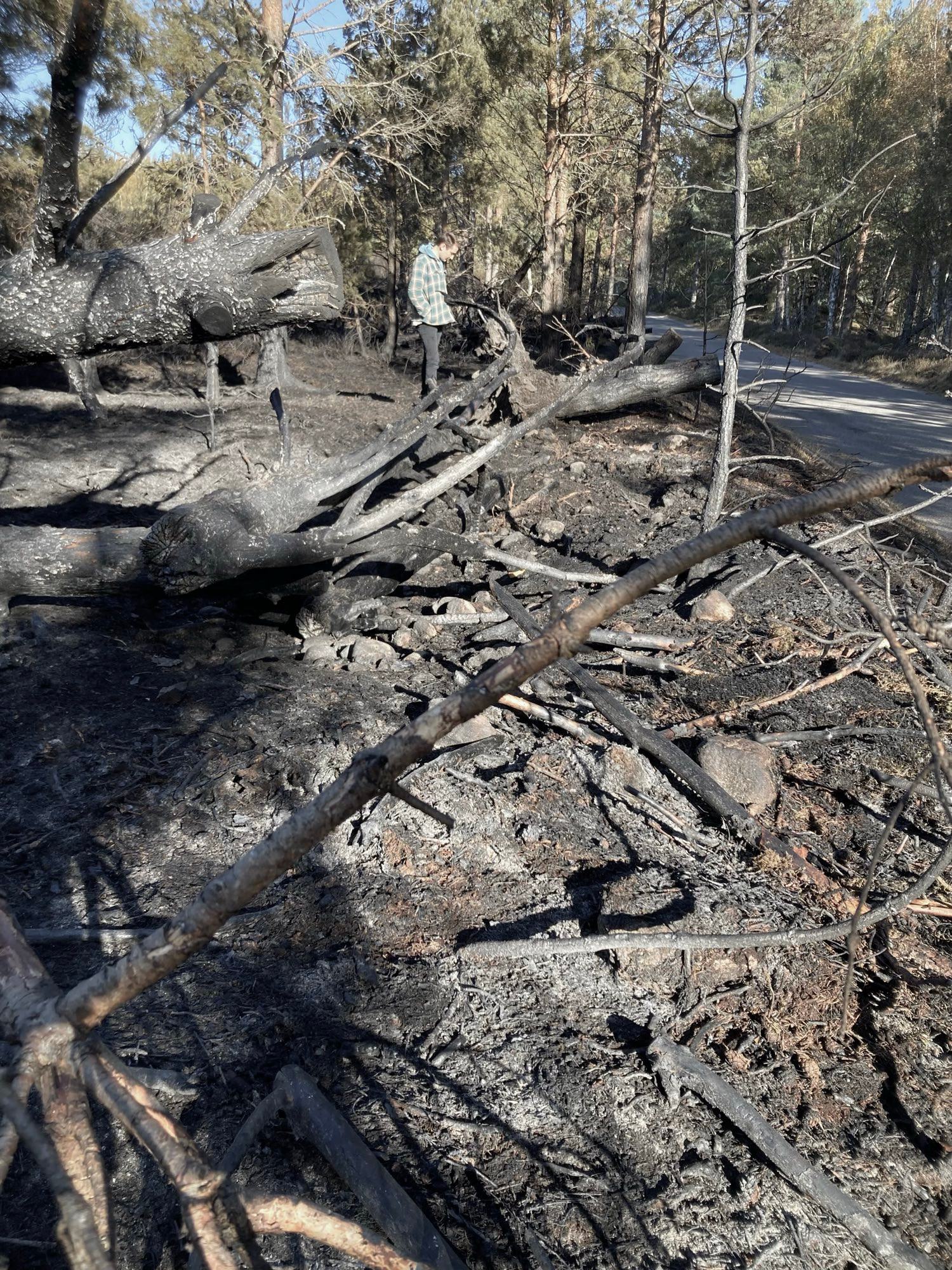
Incinerated medicated grit station and ash-filled controlled burn site on shallow peat. Yet gamekeepers still insist their “cool burns” would leave a Mars Bar untouched. Such intensive hot burning is in breach of moorland management plans and leaves the estate open to prosecution for an alleged breach of Section 28 of the Wildlife & Countryside Act which is supposed to protect SSSI conservation sites. However, Natural England rarely takes such enforcement action and these burns continue. This lack of enforcement is a common theme throughout grouse moor management.  

Blanket biased reporting

Shame on the BBC for the prominence given to pro-shooting interests in the recent BBC News website article ‘Misinformation is creating a moorland tinderbox’, a result of the power and influence of grouse shooting lobbyists. In this piece, Tom Aspinall, RSPB Senior Policy Officer for Uplands, says peatlands are, or “should be”, inherently wet.

Something like this:

Healthy blanket bog with sphagnum, cotton grass, a little heather, a lot of water and impossible to burn

It’s important to remember the peat soils which support all the heather filled grouse moors, were formed in conditions as wet as this. Peat forms very slowly in the anaerobic heart of sphagnum mounds. This extremely wet ecosystem is the natural state of all our upland moors.

Yet we have University of York Associate Professor Andreas Heinemeyer telling us, “Re-wetting and restoring peatlands is good but it won’t necessarily make them resilient to wildfires, especially under climate-change scenarios, which clearly point out that lots of heather might still be there”.

Really?

It’s the repeated cycle of controlled burning that dries the peat, providing ideal conditions for yet more heather to grow.

Tom Aspinall tells us: “Peatland landscapes are the best means of mitigation against the risks of fire because they hold water.

The problem with burning to try and reduce fire risk is that you put yourself in the perpetual cycle of increased fire risk, because the vegetation that grows after a burn is generally heather and heather is an oily plant, so it’s very volatile.

When you re-wet or diversify, you’ve got a different range of plants so you break up that continuous fuel and you can affect the ability of fires to spread“.

Shooters drool over Andreas Heinemeyer’s study Protecting our Peatlands not only as justification for extensive moorland burning but as the only management tool that results in healthy moorland. But if I’ve understood his University of York report, the study actually found that land left untouched absorbed carbon whereas burnt or mown areas emitted carbon over the study period. But this data was apparently disregarded because heather beetle was present (see page 14 of the report).

The effects of heather beetle

However, outbreaks of heather beetle are not just an inconvenience to be airbrushed out of a study, but a reality in our climate-changed world. Right now Peak District grouse moors have been severely affected by heather beetle. A walk over an intensively burnt and mown grouse moor reveals swathes of dead and dying heather with little or no insect or bird life.

According to Heinemeyer, these areas are emitting dangerous amounts of carbon adding to our climate emergency. But what Heinemeyer’s study has highlighted is the reality of intensive moorland management: a huge amount of burning leads to burnt areas being re-colonised by a monoculture of heather (handy for feeding grouse) but highly susceptible to devastating heather beetle attacks creating a toxic environment devoid of life. Whereas areas basically left alone are pretty much immune to heather beetle attacks.

In addition, the York University study received funding from the Moorland Association and British Association of Shooting and Conservation (BASC). The concept of ‘sponsorship bias’ in relation to studies on UK moorland burning has been examined by Professors Lee Brown and Joseph Holden of Leeds University and is well worth a read, here.

Smoke – Air pollution and Health

Shooting organisations and the media consistently fail to consider the instant consequence of moorland burning: huge amounts of acrid smoke settling over local communities resulting in levels of particulate air pollution with clear and dangerous effects on health.

Yet gamekeepers are desperate to continue this working practice.

Not so for members of the public, our local authorities and elected representatives. Green MPs are submitting these questions to Defra:

  1. Pursuant to UIN HL2512 tabled on 12 October 2022, does this Government plan to introduce monitoring of the air pollution and consequent health impacts of heather burning for grouse shooting on adjoining communities during the burning season, where the previous Government declined to do so?
  2. What consideration has been given to enhancing local authorities’ powers to monitor and act on the air pollution and consequent health impacts of heather burning for grouse shooting on adjoining communities during the burning season?

Smoke pollution from moorland burning is unregulated because Local Authorities have limited powers under the Environment Act 1990 related to nuisance burning. Moorland burning is licensed by Natural England and a land manager would merely have to argue they’d taken reasonable precautions for any enforcement action to be thrown out of court.

The burning that filled Sheffield with smoke in October 2023 occurred on peat soil as shallow as 8cm.

So the new 30cm regulations do not prevent a repeat of this devastating incident and Sheffield Council is powerless to take any action over the smoke pollution.

Enforcement of Heather & Grass  Burning Code

We’ve had 4 years of a ban on burning over 40cm peat but only two prosecutions (here & here), despite a huge number of detailed reports of illegal burning such as this on Sheffield moorland in autumn 2024:

Law-makers have been made well aware of this lack of enforcement, so will a ban on burning 30cm peat be any different? I’m not hopeful. But you can play your part by reporting all moorland burning using the RSPB’s Report a Burn App here.

Summary

 The current situation is pretty much this:

The latest regulations are a slap in the face for moorland owners. Peatland ecology and the damage caused by burning is no longer a niche academic interest and awareness extends way further.

Yet moorland owners continue to burn huge swathes of our uplands.

There’s no real enforcement of burning over 40cm+ peat and that’s unlikely to change for the new 30cm+ regulations.

Natural England don’t take enforcement action for damage to conservation sites as a result of illegal burning.

Local Authorities are powerless to prevent smoke pollution from moorland burning. The smoke produced from heather burning is unregulated.

Any reduction in the amount of burning is welcome but we need a complete ban.

ENDS

Lincolnshire Police launch investigation as 7 dead birds of prey found in raptor persecution hotspot

From Lincolnshire Police (11 September 2025)

Officers from Lincolnshire Police Rural Crime Action Team are investigating after a number of dead birds of prey were found in the countryside between Belchford and West Ashby in recent months.

Four birds of prey were previously discovered in the area. As a result of these reports, we carried out a Section 19 search under the Wildlife and Countryside Act today. During this search, a further three dead birds of prey were located.

Also in attendance and assisting with our thanks were members of the RSPB and National Wildlife Crime Unit.

The search team included officers from Lincolnshire Police Rural Crime Action Team, the RSPB and the National Wildlife Crime Unit. Photo via Lincolnshire Police

All of the birds have been recovered and will be sent for specialist testing through the Wildlife Incident Investigation Scheme (WIIS) to establish the cause of death.

The Officer In Charge, Detective Constable Aaron Flint Lincolnshire Police’s Force Wildlife Crime officer, said:

The discovery of multiple dead birds of prey in one locality is deeply concerning. We take all reports of suspected wildlife crime seriously, and our investigation is ongoing. Until we receive toxicology results, we cannot confirm the cause of death, but deliberate harm to birds of prey is a criminal offence and will be fully investigated.

We are appealing for anyone who may have information which could assist our enquiries. Did you see anything suspicious in the area in recent weeks or months? Have you found any other dead wildlife, bait, or unusual items in the countryside locally?

If you can help, please contact Lincolnshire Police on 101, quoting crime number 25000511499, email aaron.flint@lincs.police.uk or alternatively, you can report anonymously via Crimestoppers on 0800 555 111.

ENDS

This isn’t the first police investigation into the illegal killing of birds of prey in this area.

In March this year, gamekeeper John Bryant 40, of West Ashby, Horncastle, Lincolnshire was convicted after a trial at Lincolnshire Magistrates’ Court of four offences in relation to an investigation into the illegal poisoning of a Red Kite and two Buzzards in the Belchford area (here).

Bryant was ordered to pay over £7,000 in fines (see here and here) and he also lost an appeal against the Police’s decision to revoke his shotgun and firearms certificates (here).

The discovery of seven more dead raptors in the same area this year is, as Detective Constable Aaron Flint says, ‘deeply concerning’.

Well done DC Aaron Flint and team for another successful multi-agency raid and a timely press release – this level of transparency is rare and I can think of a number of police forces who could learn lessons from this approach.

More excellent news: UK government bans burning on deep peat in England

Press release from Defra (9 September 2025)

BURNING BANNED ON ENGLAND’S DEEP PEAT TO PROTECT WILDLIFE

Ban on burning heather and grass on deep peat extended to improve air quality for local communities, reduce flood risk and protect wildlife.

Local communities are set to benefit from improved air quality, following an announcement that the government will extend the ban on burning vegetation on deep peat as part of new plans to protect both the environment and public health.

The burning ban will protect our globally unique network of peatlands which are commonly referred to as the Earth’s lungs. 

Burning on grouse moors in England will be severely restricted. Photo: Ruth Tingay

Peatlands improve water and air quality, create habitats for wildlife, absorb carbon and help protect communities from flooding. To deliver these benefits, they must be in a healthy condition but 80% of peatlands across England are dried out and deteriorating and actually emit carbon dioxide contributing to global warming.  

Burning vegetation on deep peat causes the release of harmful smoke into the air, impacting air quality across communities. This includes harmful air pollutants for human health, including ones strongly associated with strokes, cardiovascular disease, asthma and some lung cancers.

The move as part of the government’s Plan for Change sees the burning ban extended to cover 676,628 hectares of deep peat up from the current 222,000 hectares – meaning an area equivalent to the size of Devon will now be better protected. The extension comes into force from 30 September.  

Environment Minister Mary Creagh said:

Our peatlands are England’s Amazon Rainforest – home to our most precious wildlife, storing carbon and reducing flooding downstream.

Burning on peatland releases harmful smoke ruining local air quality and damaging the precious ecosystems found in these iconic landscapes.  

Restricting burning will help us restore and rewet peatlands. These new measures will create resilient peatlands that are naturally protected from wildfires“.

The extension comes following a consultation on measures announced earlier this year, and expands protections to all deep peat in the uplands, and redefines deep peat from the current 40cm to 30cm depth. 

A refined licencing system which allows prescribed burning in exceptional circumstances will also be introduced. Any licences for prescribed burning will only be issued where there is a clear need, for example, to reduce wildfire risk. This will help balance environmental protection with practical land management.

The government is expected to publish its new Environmental Improvement Plan this Autumn, setting out its ambitions to halt the decline of nature. This will build on existing work to protect and restore nature, clean up our rivers and seas, boost tree planting and reduce waste.    

This government has already licensed the first wild beaver release since they were hunted to extinction around 400 years ago, announced the creation of a new national forest stretching from the Cotswolds to the Mendips, started cleaning up our rivers, lakes and seas by introducing tough new powers through a new Act of Parliament, initiated waste reforms which will see £10 billion invested in new recycling facilities, and will invest up to £400 million in tree planting and peatland restoration over the next two years.

Additional information:

You can find out more about when you need to apply for a licence to burn heather and grass via this link.

More information about the consultation is available via this link

A summary of responses and the government response is available here.

ENDS

This is excellent news! Defra has clearly responded to the science, rather than the hysteria and rhetoric of the grouse shooting industry.

Importantly, the ban comes into force in a few week’s time on 30 September 2025, the day before the opening of the burning season.

I’ll write a commentary about the Government’s decision in the coming days.

In haste…

Judge rules RSPB covert video surveillance is admissible evidence in prosecution of gamekeeper Racster Dingwall

BREAKING NEWS….AND IT’S EXCELLENT NEWS!

The District Judge presiding at York Magistrates Court has today ruled that the RSPB’s covert video and audio surveillance is to be considered admissible evidence in relation to the prosecution of gamekeeper Racster Dingwall.

He did not accept the defence’s argument that inclusion of the covert surveillance would have an adverse effect on the fairness of proceedings.

Mark Thomas and Ian Thomson from the RSPB’s Investigation Team attended York Magistrates Court today. Photo: Ruth Tingay

The case now moves to trial in January 2026 unless Mr Dingwall changes his not guilty plea in light of today’s ruling.

I’ll write a longer blog in the coming days, setting out the arguments and the Judge’s explanation for his decision.

In haste…

NB: Comments turned off as criminal proceedings are still live.

UPDATE 25 September 2025: More detail on court ruling accepting admissibility of RSPB’s covert surveillance in prosecution of gamekeeper accused of conspiracy to kill a Hen Harrier (here)

Gamekeeper Racster Dingwall back in court today for case relating to Hen Harrier shooting on a grouse moor in Yorkshire Dales National Park

Gamekeeper Racster Dingwall, 34, will appear at York Magistrates Court today for a hearing linked to his alleged involvement with the shooting of a Hen Harrier on a grouse moor (Coniston & Grassington Estate) in the Yorkshire Dales National Park on 2nd October 2024. He has pleaded not guilty.

This prosecution relies on the covert footage filmed by the RSPB’s Investigations team last autumn and later shown on Channel 4 News (here).

York Magistrates Court. Photo by Ruth Tingay

Dingwall faces two charges, according to the court notice:

  1. Possession of an article capable of being used to commit and summary offence under Section 1 to 13 or 15 to 17 of the Wildlife & Countryside Act;
  2. Encourage/assist in the commission of a summary offence believing it will be committed.

Today’s pre-trial hearing is expected to focus on legal arguments about the admissibility of the RSPB’s covert footage.

This was entirely to be expected. The defence team will be doing its best to have the evidence ruled inadmissible because without it, the prosecution will collapse.

We’ve been here many times before in similar cases. The last one I watched where the judge ruled the RSPB’s footage to be inadmissible was back in 2018, in relation to the illegal and brutal killing of two Peregrines on a grouse moor in Bowland. The legal arguments barely got going because the CPS lawyer was monumentally under-prepared, he hadn’t even watched the video footage in question, and was unable to answer the judge’s questions about it. The judge was really left with no other option than to rule the footage inadmissible and the case collapsed as a result (see here for more detailed blogs about that fiasco).

NB: Comments are closed until criminal proceedings have concluded.

Comprehensive evidence review on effects of grouse moor burning on biodiversity, carbon & water – a report the shooting industry doesn’t seem keen to promote

Over the last few months you’ve probably noticed that the grouse-shooting industry has been ramping up its rhetoric about the so-called virtues of what it calls ‘managed burning’ on peatland/grouse moors as a way of preventing and curtailing devastating wildfires.

This onslaught in the media has been helped along by the large number of wildfires that have been reported from across the UK this year, allowing the industry to exploit public concern and persistently present its practice of torching the uplands as being the best solution to preventing wildfires.

The industry rarely, if ever, mentions that its interest in heather burning on peatland has nothing whatsoever to do with wildfire management but everything to do with providing a mosaic of vegetation (heather) structure suitable to facilitate an artificially-high number of Red Grouse that can then be shot for ‘sport’. It’s textbook gaslighting.

Gamekeepers torching an already fire-ravaged grouse moor in the North Pennines. Photo by Ruth Tingay

The only reason the grouse-shooting industry (and its supporters in the Westminster Parliament) are banging on about this issue so much at the moment is because earlier this year, the UK Government announced proposals to ban heather burning on deep peat in England & Wales to protect carbon storage, improve water quality, provide valuable habitat for wildlife, help protect communities from flooding, improve air quality in villages, towns and cities, and help deliver manifesto commitments to reach Net Zero by 2050.

The grouse-shooting industry is terrified of these new proposals – as demonstrated by the speeches of some Conservative MPs in the recent Westminster Hall debate on driven grouse shooting – because they see it as a back-door way to a ban on driven grouse shooting. The excessive number of Red Grouse needed to sustain driven grouse shooting would be impossible to maintain if grouse moor managers were no longer able to set the moors ablaze each year, and the Government’s proposals would effectively put a stop to most burning on most grouse moors in England. But rather than admit to that, the industry has instead framed its scorched earth policy as being in the public interest to prevent wildfires.

In Scotland the issue has also been in the news after the grouse shooting industry successfully lobbied the Scottish Government to delay the introduction of a licensing scheme for burning on peatland, which was due to start this month under the Wildlife Managament & Muirburn (Scotland) Act 2024 but has now been set back until January 2026. The grouse shooting industry claimed it needed more time to prepare (see here) but in reality it looks more like a stalling tactic by the industry to try and persuade the Government to drop it altogether.

The UK Government’s proposals to extend the Heather and Grass etc. Burning (England) Regulations 2021, including a change to the definition of deep peat from 40cm depth to 30cm depth, were informed by a recent scientific report entitled, ‘An Evidence Review of the Effects of Managed Burning on Upland Peatland Biodiversity, Carbon and Water‘, published by Natural England in March 2025. [A copy of the report is available to download at the end of this blog].

This really is an exceptionally comprehensive and robust piece of work. I’d recommend it to anyone who wants to be better informed about the specific effects, be they positive, negative or neutral, of ‘managed burning’ in the UK uplands, rather than rely upon the cherry-picked studies used by the grouse shooting industry to support its particular narrative. Rather tellingly, I haven’t seen any of the grouse shooting organisations promoting this wide-ranging review that’s directly applicable to the UK uplands – they seem to be more interested in highlighting obscure reports from far-flung countries that have little if any relevance here. How odd.

What I particularly liked about this report is that it goes as far as to categorise the ‘quality’ of the evidence reviewed using a transparent and systematic approach. There’s none of this, ‘We asked 50 gamekeepers what they thought and we present their responses as unbiased fact‘ that I’ve seen in a number of reports produced recently by the grouse shooting industry (I’ll blog about a few of those if I can find the time because they’re really quite hilarious).

The Natural England review also doesn’t make any recommendations – it simply summarises the evidence, tells you exactly which study is being referenced along with a ‘quality’ assessment of the research, and presents the findings in a way that anyone can see exactly which study says what and whether it’s applicable to the UK uplands. That’s really impressive.

Here is the review’s Executive Summary:

Peatland ecosystems make important contributions to biodiversity, carbon storage and water provision in the UK and globally. Many UK upland peatlands have been subject to burning for land management purposes, particularly grouse moor management, with the practice increasing over the 20th and early 21st century. Concerns about harmful impacts have led to recent changes in regulation aimed at reducing burning on peatland habitats.

The use of burning on peatlands has remained a source of debate and hence an up-to-date overview of new relevant evidence was necessary to inform future policy and practice.

This evidence review updates a review by Glaves and others (2013, NEER004). It considers evidence from 102 studies published since NEER004 relating to the effects of managed burning on upland peatland biodiversity, carbon balance, water quality and hydrology, which were selected following a comprehensive search. Findings have been compared with those from 123 studies in NEER004 to give an updated overview of the whole evidence base. Combined findings of the two reviews have been synthesised into evidence statements, with high-level highlights of key evidence statements given below.

Taken as a whole, the available evidence shows that burning alters the species composition of blanket bog and upland wet heath vegetation in at least the short to medium term. This includes a tendency for initial grass and/or sedge dominance, typically followed by an increase in heather Calluna vulgaris. This, along with changes in other species (including bryophytes) and vegetation structure can result in a move away from the characteristic vegetation of these peatland habitats. The creation of bare ground following burning has also been observed and this may persist for several years.

Many studies relating to peatland fauna focused on breeding birds, and reported various effects of burning depending on species, though it can be difficult to separate the influence of burning from that of predator control carried out as part of grouse moor management. There is also evidence of effects on other faunal groups including invertebrate communities, which are influenced by changes in vegetation and soil characteristics –caused by burning. As with vegetation, these changes may result in a move away from characteristic peatland faunal communities.

Managed burning also affects various aspects of the carbon cycle of upland peatlands, with studies showing a large proportion (76–80%) of aboveground carbon stock lost via combustion, followed by gradual re-accumulation over several decades. There is also evidence that the export of dissolved and particulate organic carbon increase after burning, but inconsistent evidence of effects on some other carbon cycle pathways including CO2 fluxes and on overall carbon balance. For water, there is evidence that burning influences various aspects of chemistry and flow, including fluvial carbon export as mentioned above. There is also evidence of increased flow in watercourses draining burned catchments, potentially impacting downstream river levels.

The severity and frequency of burning appear to affect outcomes related to vegetation, carbon and water. Meanwhile, relatively few studies investigated interactions between burning and grazing, though there was some evidence of effects on vegetation.

Regarding the relationship between burning and wildfire, there is evidence that out-of-control burns are a cause of wildfire in the UK, particularly in the uplands. There is evidence from other countries and habitats on biomass management by managed burning to reduce wildfire hazard, but limited evidence from the UK peatland context. Variation in burning extent and frequency by UK region and year was apparent, with a long-term increase followed by an indication of a recent decrease since 2016. There was also evidence that designated sites and areas of deep peat have been burned at a similar frequency as other areas.

The evidence from 102 recent studies in addition to 123 reviewed in NEER004 gives a significant volume of evidence on which to draw conclusions on the impacts of burning, and many of the evidence gaps identified in NEER004 have been filled. Though there remain some areas where evidence appears inconsistent, this may often be explained by differences in the scale, location or timing of studies.

In conclusion, the evidence base suggests that burning impacts peatlands, and the ecosystem services they provide, via multiple mechanisms, and though recovery is often observed in the short to medium term, repeated burning risks a sustained departure from the characteristic structure and function of these habitats. Overall, this is consistent with the summary and conclusions of NEER004.

ENDS

We’re still waiting for Defra to announce its decision on whether it will implement its proposals to further limit burning on peatland; its public consultation closed at the end of May 2025. The new burning season is almost upon us (1st October) so there’ll be nothing in place to stop the grouse moor pyromania again this year.

It’ll be interesting to see whether the new Defra Environment Secretary Emma Reynolds (replacing Steve Reed) and new junior Minister Dame Angela Eagle (replacing Daniel Zeichner) push this forward or kick it into the long grass.

The Natural England review can be read / downloaded here:

UPDATE 9 September 2025: More excellent news: UK government bans burning on deep peat in England (here)

RSPB announces another record year for Hen Harriers in the Forest of Bowland

Statement from the RSPB (4 September 2025)

ANOTHER RECORD YEAR FOR HEN HARRIERS IN THE FOREST OF BOWLAND

Hen Harriers are one of the most charismatic yet also most threatened bird species nesting in our uplands. The Forest of Bowland has long served as their most important breeding stronghold in England thanks to collaborative conservation efforts centred on the United Utilities Bowland Estate, where the RSPB is working in partnership with United Utilities and their tenants to monitor and protect these amazing birds.

During the 2025 breeding season, RSPB staff and volunteers recorded 14 Hen Harrier nests on the United Utilities Estate, of which 12 were successful and fledged an outstanding 40 young. This represents the highest number of fledglings recorded in over 40 years. 

Hen Harriers. Photo by Pete Walkden

However, as reported last month there was also a disappointing setback in the form of two adult males disappearing from neighbouring nests within a few days of each other, something not seen on the United Utilities Estate in years.

At one affected nest, the chicks had already begun hatching and, with the help of some supplementary food provided by RSPB staff under licence from Natural England, the female was able to fledge two chicks on her own. At the other nest, the female was still incubating and deserted her clutch after the male disappeared. 

One additional nest failed as the female was not provisioned sufficiently by her polygamous male and was forced to hunt herself, leaving her young chick unattended and exposed to the elements. Male Hen Harriers often mate with more than one female (known as polygamy), however, when prey availability is low, they may struggle to provide sufficient food for both broods. 

Overall, it was a very good breeding season for Hen Harriers in Bowland. Together with an additional nest recorded by Natural England on a private estate, which fledged 2 chicks, a total of 15 Hen Harrier females bred within the Bowland Fells Special Protection Area (SPA). This meant the SPA again exceeded the threshold of 12 breeding pairs for the second time since 2022.

This sustained recovery over the last eight years reflects highly successful partnership working in Bowland and the commitment of landowners and tenants. However, the species’ overall recovery in England still faces ongoing threats such as illegal persecution, changes in land use and habitat loss.

ENDS

Fantastic work by all those involved – well done.

We still haven’t seen the overall results of the 2025 Hen Harrier breeding season in England but the word on the ground is that it’s been another poor year for Hen Harriers on private estates managed for driven grouse shooting and a good year for those nesting elsewhere. Quelle surprise.

Last year the grouse shooting industry blamed bad weather for the sudden drop in the number of breeding Hen Harriers on private grouse moors, although bad weather didn’t stop Hen Harriers breeding on United Utilities land in Bowland, the RSPB’s Geltsdale Reserve in Cumbria or Forestry England land at Kielder.

Last year there were just five successful nests on privately-owned grouse moors in England and I’m not expecting much to have changed this year. We’ll have to wait for Natural England to publish the 2025 breeding season numbers to find out if this is accurate, and who knows when NE will get its act together to do that.

This is the statutory agency that is STILL suppressing details about the death of at least seven satellite-tagged Hen Harriers, most of whom were found dead over a year ago and yet are still listed on Natural England’s tag database, implausibly, as ‘awaiting post mortem’ (see here for a previous blog about these birds).

They’re not ‘awaiting post mortem’ at all. The post mortems were all completed months ago (and in one case, over 18 months ago). Those post mortems have provided evidence (that I’m aware of) that at least some of these seven dead Hen Harriers were killed illegally.

The longer this information is suppressed, the further public confidence drops in any agency’s ability or desire to tackle these crimes.