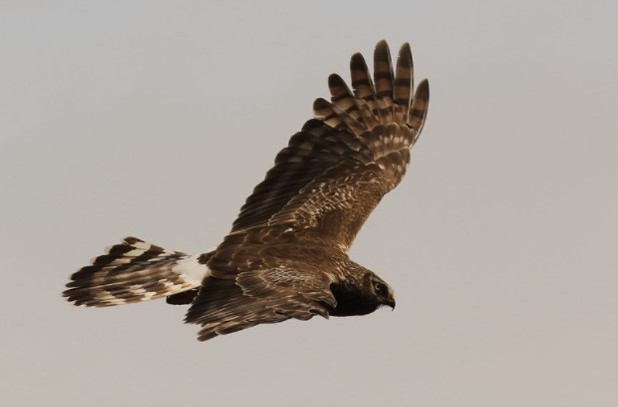
82 hen harriers confirmed ‘missing’ or illegally killed in UK since 2018, most of them on or close to grouse moors

For anyone who still wants to pretend that the grouse shooting industry isn’t responsible for the systematic extermination of hen harriers on grouse moors across the UK, here’s the latest catalogue of crime that suggests otherwise.

[This male hen harrier died in 2019 after his leg was almost severed in an illegally set trap that had been placed next to his nest on a Scottish grouse moor (see here). Photo by Ruth Tingay]

This is the blog I now publish after every reported killing or suspicious disappearance.

They disappear in the same way political dissidents in authoritarian dictatorships have disappeared” (Stephen Barlow, 22 January 2021).

Today the list has been updated to include the most recently reported victims, five young hen harriers that ‘disappeared’ in suspicious circumstances between 17th Aug – 15th Dec 2022, four of them on moorland in the Yorkshire Dales National Park, one on moorland in the North Pennines AONB (see here).

I’ve been compiling this list only since 2018 because that is the year that the grouse shooting industry ‘leaders’ would have us believe that the criminal persecution of hen harriers had stopped and that these birds were being welcomed back on to the UK’s grouse moors (see here).

This assertion was made shortly before the publication of a devastating new scientific paper that demonstrated that 72% of satellite-tagged hen harriers were confirmed or considered likely to have been illegally killed, and this was ten times more likely to occur over areas of land managed for grouse shooting relative to other land uses (see here).

2018 was also the year that Natural England issued a licence to begin a hen harrier brood meddling trial on grouse moors in northern England. For new blog readers, hen harrier brood meddling is a conservation sham sanctioned by DEFRA as part of its ludicrous ‘Hen Harrier Action Plan‘ and carried out by Natural England (NE), in cahoots with the very industry responsible for the species’ catastrophic decline in England. For more background see here.

Brood meddling has been described as a sort of ‘gentleman’s agreement’ by commentator Stephen Welch:

I don’t get it, I thought the idea of that scheme was some kind of trade off – a gentleman’s agreement that the birds would be left in peace if they were moved from grouse moors at a certain density. It seems that one party is not keeping their side of the bargain“.

With at least 82 hen harriers gone since 2018, I think it’s fair to say that the grouse shooting industry is simply taking the piss. Meanwhile, Natural England pretends that ‘partnership working’ is the way to go and DEFRA Ministers remain silent.

‘Partnership working’ according to Natural England appears to include authorising the removal of hen harrier chicks from a grouse moor already under investigation by the police for suspected raptor persecution (here) and accepting a £75k bung from representatives of the grouse shooting industry that prevents Natural England from criticising them or the sham brood meddling trial (see here). This is in addition to a £10k bung that Natural England accepted, under the same terms, in 2021 (here).

Cartoon by Gerard Hobley

So here’s the latest gruesome list. Note that the majority of these birds (but not all) were fitted with satellite tags. How many more [untagged] harriers have been killed?

February 2018: Hen harrier Saorsa ‘disappeared’ in the Angus Glens in Scotland (here). The Scottish Gamekeepers Association later published wholly inaccurate information claiming the bird had been re-sighted. The RSPB dismissed this as “completely false” (here).

5 February 2018: Hen harrier Marc ‘disappeared’ on a grouse moor in Durham (here).

9 February 2018: Hen harrier Aalin ‘disappeared’ on a grouse moor in Wales (here).

March 2018: Hen harrier Blue ‘disappeared’ in the Lake District National Park (here).

March 2018: Hen harrier Finn ‘disappeared’ near Moffat in Scotland (here).

18 April 2018: Hen harrier Lia ‘disappeared’ in Wales and her corpse was retrieved in a field in May 2018. Cause of death was unconfirmed but police treating death as suspicious (here).

8 August 2018: Hen harrier Hilma ‘disappeared’ on a grouse moor in Northumberland (here).

16 August 2018: Hen harrier Athena ‘disappeared’ on a grouse moor in Scotland (here).

26 August 2018: Hen Harrier Octavia ‘disappeared’ on a grouse moor in the Peak District National Park (here).

29 August 2018: Hen harrier Margot ‘disappeared’ on a grouse moor in Scotland (here).

29 August 2018: Hen Harrier Heulwen ‘disappeared’ on a grouse moor in Wales (here).

3 September 2018: Hen harrier Stelmaria ‘disappeared’ on a grouse moor in Scotland (here).

24 September 2018: Hen harrier Heather ‘disappeared’ on a grouse moor in Scotland (here).

2 October 2018: Hen harrier Mabel ‘disappeared’ on a grouse moor on the edge of the Yorkshire Dales National Park (here).

3 October 2018: Hen Harrier Thor ‘disappeared’ next to a grouse moor in Bowland, Lanacashire (here).

23 October 2018: Hen harrier Tom ‘disappeared’ in South Wales (here).

26 October 2018: Hen harrier Arthur ‘disappeared’ on a grouse moor in the North York Moors National Park (here).

1 November 2018: Hen harrier Barney ‘disappeared’ on Bodmin Moor (here).

10 November 2018: Hen harrier Rannoch ‘disappeared’ on a grouse moor in Scotland (here). Her corpse was found nearby in May 2019 – she’d been killed in an illegally-set spring trap (here).

14 November 2018: Hen harrier River ‘disappeared’ on a grouse moor in the Nidderdale AONB (here). Her corpse was found nearby in April 2019 – she’d been illegally shot (here).

16 January 2019: Hen harrier Vulcan ‘disappeared’ in Wiltshire close to Natural England’s proposed reintroduction site (here).

7 February 2019: Hen harrier Skylar ‘disappeared’ next to a grouse moor in South Lanarkshire (here).

22 April 2019: Hen harrier Marci ‘disappeared’ on a grouse moor in the Cairngorms National Park (here).

26 April 2019: Hen harrier Rain ‘disappeared’ on a grouse moor in Nairnshire (here).

11 May 2019: An untagged male hen harrier was caught in an illegally-set trap next to his nest on a grouse moor in South Lanarkshire. He didn’t survive (here).

7 June 2019: An untagged hen harrier was found dead on a grouse moor in Scotland. A post mortem stated the bird had died as a result of ‘penetrating trauma’ injuries and that this bird had previously been shot (here).

5 September 2019: Wildland Hen Harrier 1 ‘disappeared’ on a grouse moor nr Dalnaspidal on the edge of the Cairngorms National Park (here).

11 September 2019: Hen harrier Romario ‘disappeared’ on a grouse moor in the Cairngorms National Park (here).

14 September 2019: Hen harrier (Brood meddled in 2019, #183704) ‘disappeared’ in the North Pennines (here).

23 September 2019: Hen harrier (Brood meddled in 2019, #55149) ‘disappeared’ in North Pennines (here).

24 September 2019: Wildland Hen Harrier 2 ‘disappeared’ on a grouse moor at Invercauld in the Cairngorms National Park (here).

24 September 2019: Hen harrier Bronwyn ‘disappeared’ near a grouse moor in North Wales (here).

10 October 2019: Hen harrier Ada ‘disappeared’ on a grouse moor in the North Pennines AONB (here).

12 October 2019: Hen harrier Thistle ‘disappeared’ on a grouse moor in Sutherland (here).

18 October 2019: Member of the public reports the witnessed shooting of an untagged male hen harrier on White Syke Hill in North Yorkshire (here).

November 2019: Hen harrier Mary found illegally poisoned on a pheasant shoot in Ireland (here).

14 December 2019: Hen harrier Oscar ‘disappeared’ in Eskdalemuir, south Scotland (here).

January 2020: Members of the public report the witnessed shooting of a male hen harrier on Threshfield Moor in the Yorkshire Dales National Park (here).

23 March 2020: Hen harrier Rosie ‘disappeared’ at an undisclosed roost site in Northumberland (here).

1 April 2020: Hen harrier (Brood meddled in 2019, #183703) ‘disappeared’ in unnamed location, tag intermittent (here).

5 April 2020: Hen harrier Hoolie ‘disappeared’ on a grouse moor in the Cairngorms National Park (here)

8 April 2020: Hen harrier Marlin ‘disappeared’ on a grouse moor in the Cairngorms National Park (here).

19 May 2020: Hen harrier Fingal ‘disappeared’ on a grouse moor in the Lowther Hills, Scotland (here).

21 May 2020: Hen harrier (Brood meddled in 2019, #183701) ‘disappeared’ on a grouse moor in Cumbria shortly after returning from wintering in France (here).

27 May 2020: Hen harrier Silver ‘disappeared’ on a grouse moor on Leadhills Estate, Scotland (here).

2020: day/month unknown: Unnamed male hen harrier breeding on RSPB Geltsdale Reserve, Cumbria ‘disappeared’ while away hunting (here).

9 July 2020: Unnamed female hen harrier (#201118) ‘disappeared’ from an undisclosed site in Northumberland (here).

25 July 2020: Hen harrier Harriet ‘disappeared’ on a grouse moor in the Yorkshire Dales National Park (here).

14 August 2020: Hen harrier Solo ‘disappeared’ in confidential nest area in Lancashire (here).

7 September 2020: Hen harrier Dryad ‘disappeared’ on a grouse moor in the Yorkshire Dales National Park (here).

16 September 2020: Hen harrier Fortune ‘disappeared’ from an undisclosed roost site in Northumberland (here).

19 September 2020: Hen harrier Harold ‘disappeared’ on a grouse moor in the Yorkshire Dales National Park (here).

20 September 2020: Hen harrier (Brood meddled in 2020, #55152) ‘disappeared’ next to a grouse moor in North Yorkshire (here).

24 February 2021: Hen harrier Tarras ‘disappeared’ next to a grouse moor in Northumberland (here)

12th April 2021: Hen harrier Yarrow ‘disappeared’ near Stockton, County Durham (here).

18 May 2021: Adult male hen harrier ‘disappeared’ from its breeding attempt on RSPB Geltsdale Reserve, Cumbria whilst away hunting (here).

18 May 2021: Another adult male hen harrier ‘disappeared’ from its breeding attempt on RSPB Geltsdale Reserve, Cumbria whilst away hunting (here).

24 July 2021: Hen harrier Asta ‘disappeared’ at a ‘confidential site’ in the North Pennines (here). We learned 18 months later that her wings had been ripped off so her tag could be fitted to a crow in an attempt to cover up her death (here).

14th August 2021: Hen harrier Josephine ‘disappeared’ at a ‘confidential site’ in Northumberland (here).

17 September 2021: Hen harrier Reiver ‘disappeared’ in a grouse moor dominated region of Northumberland (here)

24 September 2021: Hen harrier (Brood meddled in 2021, R2-F-1-21) ‘disappeared’ in Northumberland (here).

15 November 2021: Hen harrier (brood meddled in 2020, #R2-F1-20) ‘disappeared’ at the edge of a grouse moor on Arkengarthdale Estate in the Yorkshire Dales National Park (here).

19 November 2021: Hen harrier Val ‘disappeared’ in the Lake District National Park in Cumbria (here).

19 November 2021: Hen harrier Percy ‘disappeared’ in Lothian, Scotland (here).

12 December 2021: Hen harrier Jasmine ‘disappeared’ on a grouse moor (High Rigg Moor on the Middlesmoor Estate) in the Nidderdale AONB in North Yorkshire (here).

9 January 2022: Hen harrier Ethel ‘disappeared’ in Northumberland (here).

26 January 2022: Hen harrier Amelia ‘disappeared’ in Bowland (here).

10 February 2022: An unnamed satellite-tagged hen harrier ‘disappeared’ in a grouse moor dominated area of the Peak District National Park (here). One year later it was revealed that the satellite tag/harness of this young male called ‘Anu’ had been deliberately cut off (see here).

12 April 2022: Hen harrier ‘Free’ (Tag ID 201121) ‘disappeared’ at a ‘confidential site’ in Cumbria (here).

May 2022: A male breeding hen harrier ‘disappeared’ from a National Trust-owned grouse moor in the Peak District National Park (here).

May 2022: Another breeding male hen harrier ‘disappeared’ from a National Trust-owned grouse moor in the Peak District National Park (here).

14 May 2022: Hen harrier ‘Harvey’ (Tag ID 213844) ‘disappeared’ from a ‘confidential site’ in the North Pennines (here).

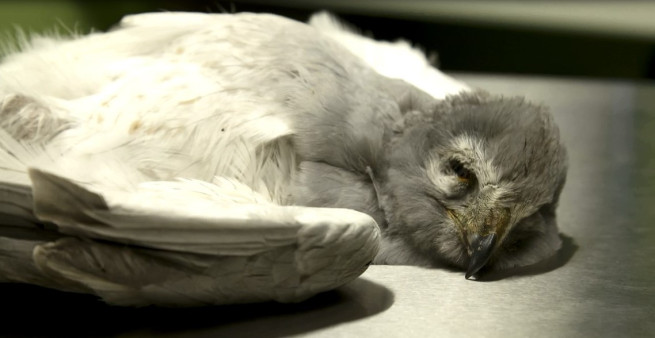
20 June 2022: Hen harrier chick #1 stamped to death in nest on a grouse moor in the Yorkshire Dales National Park (here).

20 June 2022: Hen harrier chick #2 stamped to death in nest on a grouse moor in the Yorkshire Dales National Park (here).

20 June 2022: Hen harrier chick #3 stamped to death in nest on a grouse moor in the Yorkshire Dales National Park (here).

20 June 2022: Hen harrier chick #4 stamped to death in nest on a grouse moor in the Yorkshire Dales National Park (here).

17 August 2022: Hen harrier (brood meddled in 2022, #R1-M1-22) ‘disappeared’ on moorland in the Yorkshire Dales National Park (here).

5 October 2022: Hen harrier (brood meddled in 2022, #R3-M2-22) ‘disappeared’ on moorland in the Yorkshire Dales National Park (here).

10 October 2022: Hen harrier ‘Sia’ ‘disappeared’ near Hamsterley Forest in the North Pennines (here).

1 December 2022: Hen harrier (brood meddled in 2021, #R1-M1-21) ‘disappeared’ on moorland in the Yorkshire Dales National Park (here).

14 December 2022: Hen harrier (brood meddled in 2022, #R3-F1-22) ‘disappeared’ on moorland in the North Pennines AONB (here).

15 December 2022: Hen harrier (brood meddled in 2022, #R2-F1-22) ‘disappeared’ on moorland in the Yorkshire Dales National Park (here).

To be continued……..

Not one of these 82 incidents has resulted in an arrest, let alone a prosecution. I had thought that when we reached 30 dead/missing hen harriers then the authorities might pretend to be interested and at least say a few words about this national scandal. We’ve now reached EIGHTY TWO hen harriers, and still Govt ministers remain silent. They appear not to give a monkey’s. And yes, there are other things going on in the world, as always. That is not reason enough to ignore this blatant, brazen and systematic destruction of a supposedly protected species, being undertaken to satisfy the greed and bloodlust of a minority of society.

Five more young satellite-tagged hen harriers ‘go missing’ on moorland in Northern England

Five more young hen harriers have ‘disappeared’ in suspicious circumstances, according to data published quietly and without fanfare by Natural England in February 2023.

All five hen harriers were ‘brood meddled’ birds and all five of them ‘disappeared’ on moorland in what are supposedly protected landscapes: four in the Yorkshire Dales National Park and one in the North Pennines Area of Outstanding Natural Beauty (AONB).

Last known locations of the five ‘missing’ hen harriers

The ‘missing’ hen harriers are as follows:

Brood-meddled Male, tagged July 2022, Tag ID 232637 (R1-M1-22), date of last contact 17th August 2022, grid ref: SD804893 (Yorkshire Dales National Park).

Brood-meddled Male, tagged August 2022, Tag ID 213920a (R3-M2-22), date of last contact 5th October 2022, grid ref: NY791016 (Yorkshire Dales National Park).

Brood-meddled Male, tagged July 2021, Tag ID 55145 (R1-M1-21), date of last contact 1st December 2022, grid ref: SD917620 (Yorkshire Dales National Park).

Brood-meddled Female, tagged August 2022, Tag ID 213921a (R3-F1-22), date of last contact 14th December 2022, grid ref: NY692415 (North Pennines AONB).

Brood-meddled Female, tagged July 2022, Tag ID 213931 (R2-F1-22), date of last contact 15th December 2022, grid ref: SD847831 (Yorkshire Dales National Park).

The data emerged from Natural England’s routine six-monthly update of its hen harrier satellite tag database, dated February 2023 (see here).

It’s interesting, isn’t it, that Natural England didn’t publish an accompanying blog with its data update, to draw attention to these latest ‘missing’ birds?

Why do you think that might be?

My view is that it’s because these latest data are damning of the ludicrous, ongoing hen harrier brood meddling trial on the grouse moors of northern England. For new blog readers, hen harrier brood meddling is a conservation sham sanctioned by DEFRA as part of its ludicrous ‘Hen Harrier Action Plan‘ and carried out by Natural England (NE), in cahoots with the very industry responsible for the species’ catastrophic decline in England. For more background see here.

In August last year, Natural England published a blog where it was claimed the results of the brood meddling scheme were ‘encouraging’ (here). As I and many others have said, repeatedly, nesting productivity is not the issue for hen harriers, survival is. Natural England and its so-called ‘partners’ can brood meddle as many chicks as it likes, it still doesn’t address the illegal killing that takes place once the chicks have fledged/been released.

The fact that all five of the latest ‘missing’ hen harriers are from brood meddled nests (four of them brood meddled in 2022, one in 2021) illustrates this point perfectly.

The latest five harriers ‘disappeared’ between 17th August – 15th December 2022. Four months on and I’m aware of a number of other ‘missing’ harriers whose stories are yet to be told. Watch this space.

Meanwhile, I’ll need to update the running total of hen harriers that have been illegally killed or have gone missing in suspicious circumstances, on or close to grouse moors, since 2018, when the brood meddling scheme began…

UPDATE 14.00hrs: 82 hen harriers confirmed ‘missing’ or illegally killed in UK since 2018, most of them on or close to grouse moors (here)

UPDATE 29th April 2023: Natural England & Moorland Association remain silent on latest ‘disappearance’ of five young hen harriers (here)

Peak District Bird of Prey Initiative finally folds as persecution continues

The Peak District National Park Authority has issued the following statement today:

PEAK DISTRICT BIRD OF PREY INITIATIVE TO CLOSE AS PERSECUTION CASES CONTINUE

The Peak District Bird of Prey Initiative is to close, with differing views among the group’s stakeholders and continued cases of persecution within the region leading to the initiative ‘no longer being able to deliver meaningful change’ – according to the National Park Authority, convenors of the initiative.

A buzzard and a peregrine found poisoned in the Peak District National Park. Photo: Staffordshire Police

Set up in 2011 by the National Park Authority, the initiative’s goal was for populations of the region’s key birds of prey or ‘raptors’ to be returned to levels last seen during the 1990s, and the re-establishment of hen harrier as a regularly breeding species.

The Peak District has historically been home to populations of iconic species such as the peregrine, goshawk, merlin – the UK’s smallest raptor – and the hen harrier, one of the most persecuted birds of prey in the country. A supporting cast of other raptors includes the short-eared owl, with increasing sightings of red kites and ospreys.

Despite more than a decade of the initiative, which included representatives from the landowning and gamekeeping community, experienced raptor surveyors, conservation groups, the police and other bodies, populations of many of the key species have not increased at the rates initially hoped for with some seeing no improvement at all. Whilst hen harriers have returned to the area, successful breeding currently remains limited.

Those involved in the annual surveying of raptors within the study area – largely comprising the National Park’s ‘Dark Peak’ uplands, have recently stated they no longer felt they could continue supporting the group. The RSPB stepped down as a member of the initiative in 2018.

Although progress has been seen with some species including the goshawk, and with the Initiative acknowledging that other species’ population changes appear to be mirroring those of wider UK trends, direct persecution has remained a factor alongside the initiative’s decade-long existence.

Incidents of shooting, poisoning, trapping, nest destruction or the disappearance of satellite-tracked birds active within the Peak District have featured in every year of the initiative’s monitoring.

The National Park Authority believes that until these illegal activities are tackled, meaningful progress towards population increases in key species will not be possible.

Phil Mulligan, chief executive of the Peak District National Park Authority said: “It is with regret that we are closing the initiative after more than a decade of endeavours to safeguard our charismatic birds of prey that have a rightful place here in the National Park.

Featuring at the very top of local ecosystems, these species like the hen harrier, peregrine and goshawk should be a flagship for landscapes and habitats at the heart of nature’s recovery.

The fact that the work of the initiative has failed to reflect those target populations of some 30 years ago remains a cause for real concern, and it is without question that illegal persecution targeted towards some of these species is one factor behind this stuttering progress.

I would like to extend my thanks to those who have put their time, energies and passion into the painstaking study, sharing of information and analysis of our raptor populations during the initiative’s existence, but we must now look at alternative ways to ensure our birds of prey have a future in the Peak District – free from the risk of illegal actions.”

The Authority has confirmed that it will continue working with a range of local stakeholders on priority actions for the future of birds of prey in the Peak District and potential activities will be outlined as part of the Authority’s ‘Nature Recovery Plan’ due to be released this summer.

ENDS

Hats off to the new Park Authority Chief Executive Phil Mulligan for having the guts to pull the plug on this long-running fiasco and especially for writing such an unequivocal and damning press release about the ongoing raptor persecution in this National Park.

The Peak District Bird of Prey Initiative has been an abject failure, consistently failing to meet its targets year after year. Calls by conservationists for it to be disbanded were routinely ignored by the previous Chief Executive over many years, providing an opportunity for the grouse-shooting organisations to pretend that they were working productively and cooperatively to bring an end to raptor persecution in the Park. Behind the scenes, the reality was somewhat different (e.g. see here and here).

The disbanding of this fake partnership signals a renewed hope for the area’s raptors, removing the persecution deniers from a position of influence. It’s now time for the Park Authority to form a genuine partnership that isn’t constrained by grandstanding propagandists whose sole intent seems to be to shield the criminals, not just from view, but from justice.

Previous blogs on the Peak District Bird of Prey Initiative can be read herehereherehereherehere, here.

BASC slurs expert study on amount of toxic lead ammunition in pheasants as ‘pseudoscience’

In February this year, a team of scientists from Cambridge University published a study that found that 94% of pheasants on sale in the UK for human consumption were killed using toxic lead (see here).

It was the third scientific paper published by the ‘Shot-Switch‘ group, which was established in 2020 to monitor the shooting industry’s professed voluntary five-year transition from toxic lead to non-lead ammunition in the UK; a massive U-turn by the shooting industry after defending the use of toxic lead ammunition for years.

The Shot-Switch team buys pheasants from retailers during each shooting season and undertakes rigorous scientific tests to determine whether they’ve been shot with toxic lead or non-lead ammunition.

This third paper, published in the highly-regarded Conservation Evidence journal, documenting that 94% of pheasants on sale during the 2022/23 season were contaminated with toxic lead, demonstrated that the shooting industry’s voluntary initiative to phase out toxic lead shot for pheasant hunting has so far had little impact.

This is fairly embarrassing for the game shooting industry, obviously, and, unsurprisingly, there was very little public response from them when the peer-reviewed paper was published in February.

Also unsurprisingly, at least one prominent shooting organisation has raised what it calls ‘significant concerns‘ about the accuracy of the most recent paper’s conclusions.

The Chief Executive of BASC (one of the nine shooting organisations that in 2020 committed to the 5-year voluntary transition away from toxic lead) wrote to the paper’s lead author, Professor Rhys Green, to raise those concerns in March 2023.

You can read what those concerns are, and how the expert scientists have responded, in this letter that’s just been published on the Shot-Switch website:

Astonishingly (or not!), BASC has responded today by publishing an outrageous slur on its website where it describes the Shot-Switch study as “pseudoscience“.

The BASC statement also fails to provide details of the Shot-Switch scientists’ responses to BASC’s concerns:

Of course the shooting organisations will want to undermine and discredit any research that demonstrates the industry’s intransigence and complete failure to self-regulate; it’s their stock response and they’ve been doing it for years (see their endless attempts to discredit scientific reports of ongoing raptor persecution, for example).

And it’s really no surprise that BASC is fronting this latest attack, given the revolt this organisation faced from its own members when it finally U-turned in 2020 and suggested a move away from toxic lead ammunition. I expect BASC’s latest response is to try and placate some of those members (and perhaps entice back some of its now ex-members).

But I’m really surprised at Dr O’Gorman’s accusation that the Shot-Switch project is “pseudoscience“. As someone with a PhD, he’ll know the appropriate process for challenging peer-reviewed scientific rigour is to submit a rebuttal to the journal that published the research, rather than pen a nasty, derogatory article on a website without providing the detailed responses of the expert scientists he’s accusing of false results.

Can we expect to see such a letter in the journal Conservation Evidence? No, thought not.

Fortunately, as the Shot-Switch scientists have had the decency to be transparent and publish their responses in full on their own website, people can read the evidence for themselves and draw their own conclusions.

It’s worth noting the following statement at the foot of the Shot-Switch website:

The Royal Society for the Protection of Birds and Waitrose & Partners contribute to the costs of materials and reagents for the study.

SHOT-SWITCH also approached two of the leading science-based organisations that made the joint statement on the 24th of February 2020 (BASC and GWCT) in April-September 2020 when the project was being planned and invited their involvement in its design and funding. Similar approaches were made in August 2021 and August 2022. BASC and GWCT have so far declined to participate in the project’. 

UPDATE 16th August 2023: BASC ‘forgets’ to mention evidence showing no difference between penetration level of lead vs steel shot in ‘game meat’ (here)

DEFRA Minister responds to question on gamebird industry’s failure to stop using toxic lead ammunition

Last month, Green Party Life Peer Natalie Bennett lodged a parliamentary question for DEFRA to answer, asking what steps the Government plans to take to end the use of toxic lead shot given the gamebird-shooting industry’s continued failure to do it voluntarily.

Her question came after a new scientific study was published, led by eminent researchers from the University of Cambridge, showing that three years into a five-year pledge to completely phase out lead shot in UK game hunting, 94% of pheasants on sale for human consumption were killed using toxic lead ammunition (see here).

Here is Natalie’s question:

And here is the reply from DEFRA Minister of State (and gamebird shooter) Lord Benyon:

Christ almighty. Almost another year to wait for a decision from DEFRA on whether to restrict the use of lead ammunition, when the risk from this toxic poison to wildlife, people and the environment has been known for, literally, decades.

UPDATE 13th September 2023: Is DEFRA can-kicking the decision to phase out use of toxic lead ammunition by gamebird shooters? (here)

REVIVE coalition publishes guide for responding to grouse moor reform bill (committee stage 1)

REVIVE, the coalition for grouse moor reform in Scotland has produced a guide to help people respond to a request for views of the long-awaited grouse moor reform bill, formally known as the Wildlife Management and Muirburn (Scotland) Bill.

This is the Bill the Scottish Government introduced in March 2023, in response to the 2019 Werritty Review, which recommended a grouse moor licensing scheme in an attempt to address the ongoing illegal killing of birds of prey on grouse moors. The Bill is also designed to regulate grouse moor management ‘to ensure grouse moors are managed sustainably’.

Now the Bill has finally been introduced, this is how it will progress through Parliament over the coming months.

It is currently at Stage 1 in the process, which is where a cross-party Parliamentary Committee scrutinises the Bill. The committee (in this case, the Rural Affairs & Islands Committee) will hear from experts, organisations and members of the public, including an opportunity for some to present oral evidence, and then the Committee will write a report detailing its view of the Bill and there’ll be a subsequent Parliamentary debate before the Bill progresses to Stage 2.

Rather unhelpfully, some commentators from ‘our side’ are refusing to engage with the Bill because they take the view that a grouse moor licensing scheme is unacceptable, arguing that we should instead be pushing for a ban on grouse shooting. In my view, that’s counterproductive because a ban isn’t on the table, and won’t be until such time a licensing scheme proves to be ineffective. The licensing scheme is seen as an unavoidable, proportionate next step by the Scottish Government so for now, it’s either (a) get behind the licensing scheme and try and make it as robust as possible, or (b) refuse to engage, allow the game-shooting industry to water down the proposed regulation and put up with the status quo. I prefer option (a). If the licensing scheme proves to be ineffective, then will be the time to push for a ban, because the Scottish Government won’t have anywhere else to go, having exhausted all other routes.

Some of you may think you’ve already responded to a consultation on this Bill, and you’d be right. The Scottish Government held a public consultation last autumn (here) prior to drafting this new Bill, and that consultation elicited an impressive 4,863 responses.

The latest call for public views and evidence is different to that consultation. This time the request has come from the Rural Affairs and Islands Committee who are about to start scrutinising the Bill.

The Committee is calling for the public’s views on a number of specific issues to help inform its deliberation of the Bill. The closing date for submitting views is Friday 5th May 2023.

Having seen how some of the game-shooting organisations are encouraging their supporters to respond (e.g. BASC, whose guidance basically amounts to, ‘Say no to everything‘!), the REVIVE coalition has produced a handy guide to help its supporters engage more constructively. Click here for REVIVE’s guidance.

Please note, it’s only a guide. If you have different views, or personal experience, feel free to express those, in your own words.

Please also note, anybody can respond to the request to views. It’s not restricted to Scottish residents.

Here’s the link to REVIVE’s guidance again (here).

Many thanks.

Daily Mail contrives disparaging headline about Chris Packham based on 5 words written by anonymous twitter user

Earlier this week the seedy Daily Mail published a disparaging headline about Chris Packham, this time screaming that Chris ‘faces calls to be sacked‘.

It was published in response to a short video Chris had posted on Twitter about attending a Biodiversity Earth Day rally in London today, which Chris described as “a family-friendly affair” and which the organisers had described as ‘a procession for nature, a parade of reflection and celebration, with masks, costumes and nature based art to honour and respect our natural world and all endangered species‘.

I wondered who it was that was calling for him to be sacked this time – I imagined it would be the usual suspects at the Countryside Alliance or their pro-hunting/shooting associates, who rarely miss an opportunity to launch an attack on Chris and who repeatedly pile on the pressure to the BBC demanding that Chris lose his job (e.g. here, here, here).

But this time it wasn’t them.

Instead, it appears that the justification for this headline was solely based on five words written by an anonymous Twitter user who has just 50 followers:

Little wonder that this so-called ‘news’ paper has been banned as an ‘unreliable’ source by Wikipedia.

Open letter to Scottish Government on muirburn licensing

Dear Cabinet Secretary,

We, the signatories to this letter, support the Scottish Government proposal, as part of the Wildlife Management and Muirburn (Scotland) Bill, that all muirburn should require a licence, regardless of whether it takes place on a grouse moor or not.

We also support proposals to redefine deep peat depth. However, we recommend the Scottish Government redefines this as 30cm (as opposed to 40cm). This would take Scotland beyond the ambitions of the UK Government. In addition, we request you consider the purposes under which a licence to muirburn might be requested and accepted.

At least 163,000 hectares of Scotland’s landmass is regularly burned for grouse shooting, particularly concentrated in certain areas of the country. It is estimated that around 40% of the burned area has taken place over deep peat (as it is currently defined).

Even if the muirburn code becomes a mandatory legal requirement of land managers, the large areas in which muirburn takes place will be hard to police without significant resources and without continued significant risk to our vital peat reserves.

Gamekeepers setting fire to grouse moor in Aberdeenshire, Feb 2022

We note that BASC Scotland (in response to government plans on February 28th, 2023) said it would be ‘unfeasible, laborious, and impractical for land managers to be expected to measure peat depth across their land as part of a licensing regime’.

We believe this argument fails to account for the Government’s climate change efforts.  As the grouse shooting industry has shown time and time again, particularly with regards to raptor persecution, voluntary restraint cannot always be relied upon. Moreover, against the recommendations of the UK Climate Change Committee they simultaneously argue, that best practice is widely followed while attempting to make the case that burning over peat is actually a good thing and should be allowed.

To draw a different conclusion on how muirburn should be handled, to make the regulation of muirburn manageable, in addition to our above points we propose that a licence should not be given for muirburn when the purpose is increasing grouse numbers for sport shooting.

In situations where there is evidence to support muirburn taking place, where alternatives like cutting are not available, we would not oppose this. These situations could include responsible research, creating strips for wildfire breakage points (as opposed to large less effective patches that are common on grouse moors) while peat should be avoided. We also support wider efforts from the Fire Service and the Scottish Government on public education initiatives and training land managers of all types to prevent wildfires where possible.

Large monocultures like heather moorland present their own challenges to fighting wildfires and that a more diverse mosaic of flora, fauna and trees can alter wildfire intensity and make them easier to tackle. Moving away from muirburn on our moors will unlock our land’s potential to provide far better resistance to wildfires over time, and also enable greater biodiversity and carbon sequestration potential.

The main point is that due to the risk of our vital peat reserves; our lack of faith in the grouse shooting industry to look after and prioritise peatland over grouse shooting; the difficulty and resources it would take to effectively enforce the licence; and because keeping so much of our land in state of monoculture stops the development of greater biodiversity: a licence should not be given for muirburn when the reason is as unnecessary as ensuring more grouse can be shot by a few people for sport.

We strongly urge you to consider and adopt the above position. To do so would be to aid the Government’s own stated goal to transition to more appropriate, economic and biodiverse land uses for our people, our wildlife and the environment.

Signed,

REVIVE

John Muir Trust

Friends of the Earth Scotland

Scottish Raptor Study Group

Rewilding Britain

League Against Cruel Sports Scotland

Raptor Persecution UK

Reforesting Scotland

Common Weal

North East Mountain Trust

Toxic, lead contaminated pheasants still on sale in UK supermarkets

The conservation campaign group Wild Justice has just published the findings of its latest research into the level of toxic, poisonous lead shot found in gamebirds (pheasants and partridges) on sale in supermarkets and from some online traders during the 2022/23 shooting season (see here, here and here for their most recent blogs).

Summary graph showing results of lead contamination in gamebirds 2022/23 season. Copyright: Wild Justice

In 2020, nine UK game-shooting organisations made a massive U-turn after years and years and years of defending the use of toxic lead ammunition, and said they wanted to drag the industry into the 21st Century by making a five-year voluntary transition away from lead ammunition (see here).

A lot of us were sceptical because (a) we rarely trust anything the industry tells us; (b) previous ‘voluntary bans’ by the industry on a number of issues have been unsuccessful (e.g. see herehere and here); (c) the ongoing failure of the shooting industry to comply with current regulations on many issues, including the use of lead ammunition over wetlands (here), means there should be absolutely zero confidence in its ability and/or willingness to stick to any notional voluntary ban; (d) the Scottish Gamekeepers Association refused to sign up to the proposed five-year transition period because they believe there is insufficient evidence to support the claim that lead can have damaging impacts on humans, wildlife and the environment (here); and (e) in the very same year that nine shooting organisations committed to the five-year transition, BASC announced it was set to fight a proposed EU ban on the use of lead ammunition on wetlands (see here).

Wild Justice’s latest results demonstrate that, with the exception of the partridge breasts sold by ‘Eat Wild’, all of the gamebird meat tested contained high levels of poisonous lead, well above the legal limit set for non-gamebird meat such as pork, chicken, lamb and beef.

The gamebird shooting industry has just two years left, within its own proposed five-year voluntary transition period, to get its act together on this public health issue.

And it’s not just a public health issue. It’s also an issue of sustainability. We’re often told (by the industry) that gamebird shooting is sustainable. But have a look at the Wild Justice blog about the pheasant breasts it bought and tested from Lidl stores in Northern Ireland and the Irish Republic (here). According to the packaging, Lidl pheasant breasts were shot in the UK, then sent to Poland for processing, then shipped to Northern Ireland & the RoI to be put on the shelves in Lidl stores!

No matter how much the industry spins the narrative, this cannot possibly be described as sustainable in any way, shape or form!

Gamekeeper acquitted after Police Scotland officers lied to estate owner during investigation

There was an interesting case heard at Banff Sheriff Court yesterday where Scottish gamekeeper Terry Lindsay, 40, was facing a charge relating to the use of a trap that was alleged to have been illegally-set on Fyvie Estate in Aberdeenshire.

The trap at the centre of the trial was a clam trap (also known as a Larsen Mate trap) that had been baited with a pheasant carcass and placed next to a pheasant release pen on 26th August 2020. The use of these traps, baited with meat, is lawful (although highly contentious – see this blog from 10 years ago!) as long as certain General Licence conditions are met.

Here’s a photo of the trap. For readers unfamiliar with how they work, the spilt perch above the bait is designed to collapse when a bird lands on it, which causes the two metal sides of the trap to close (like a clam), capturing the bird inside the trap where it will remain until the trap operator comes along to either release the bird (if it’s a non-target species, such as a raptor) or club it to death if it’s a legitimate target species (e.g. crow).

Set trap on Fyvie Estate, 26th August 2020. Photo: RSPB

A write-up of the case was published yesterday in the Press & Journal (behind a paywall) but unfortunately the article includes a number of inaccuracies. For the purpose of clarification, I’ve reproduced the P&J article (below), followed by my understanding of the case.

Here’s the article published by the P&J yesterday:

A gamekeeper has been cleared of illegally trapping a protected bird after it emerged police officers lied during the course of the investigation.

The case against Terry Lindsay collapsed when Sheriff Robert McDonald heard evidence that officers misled two people about why they were on the Fyvie Estate.

Police had received a tip-off that a sparrowhawk was “beside” a trap but lied to estate staff about why they were there – instead saying it was to look for a missing person.

Sheriff McDonald said that “outright lie” made the police officers’ evidence inadmissible and acquitted Mr Lindsay, 40, less than an hour after the trial started at Banff Sheriff Court.

“It seems to me that the critical point is the lying,” Sheriff McDonald said.

“I think the evidence of the search is inadmissible. It’s fatal that police have told an outright lie to two members of the public who, as I pointed out, had some authority as to who comes onto the land.

“That compounds it. I find the evidence inadmissible.”

A Police Scotland spokesman said: “We are aware of the outcome in court and the full circumstances leading to yesterday’s trial are being reviewed.”

The verdict was met with “disappointment” by the RSPB, the bird welfare charity which initially came across the trap and reported its whereabouts to police.

Pc Alison Davis told the trial she and her sergeant, Gary Johnston, spent about an hour scouring the estate on August 26 2020 after an RSPB informant made them aware there was a “trap with a bird beside it”.

She told procurator fiscal Gerard Droogan they were approached by a gamekeeper and the laird, Sir George Forbes-Leith, and told both that they were searching for a missing person.

“There was no truth in that as far as I am aware,” Pc Davis said, before adding: “He [Sgt Johnston] said to me afterwards that he was concerned that any evidence would be lost, or words to that effect.”

Mr Lindsay’s defence agent Paul Anderson asked Pc Davis why neither conversation was included in her statement.

She replied: “I didn’t consider them to be witnesses. I didn’t think of that as relevant to the inquiry. That’s why it’s not in my statement. It was certainly not intentionally left out.”

Mr Anderson asked: “Two lies were told in the space of one hour to two separate members of the public?”

“Yes,” replied the officer.

During her evidence, Pc Davis also explained how they eventually found the trap with a sparrowhawk inside around 20 metres from a pheasant breeding operation on the estate.

The bird was alive, she took photos of it and they released it, before placing the trap in the back of the van, she said.

Mr Anderson said this decision to lie, alongside a decision to search the land “without reasonable cause to suspect someone was committing an offence”, made any police evidence “unreliable and uncredible”.

“There were lies told to two members of the public within one hour about why police were on the land,” he told Sheriff McDonald.

“It’s inexcusable. The evidence is so tainted it cannot be considered by the court.”

He added the lies became “fatal to the search” and invited the sheriff to offer an acquittal.

Sheriff McDonald agreed and Mr Lindsay, of North Haddo, Fyvie, was acquitted of the charge under the Wildlife and Countryside Scotland Act 1981.

Speaking after the case, the RSPB said more needed to be done to regulate the use of traps.

Ian Thomson, RSPB Scotland’s head of investigations, told The Press and Journal: “While we are disappointed that this case was dismissed after the court considered witness evidence from the police, we remain concerned that traps authorised by the General Licences issued annually by NatureScot continue to be poorly regulated, with no compliance monitoring, and are widely misused and abused.

“We hope that provisions introduced by the Wildlife Management and Muirburn Bill, currently being considered by the Scottish Parliament, bring better training, accountability and tighter regulation of such devices that are in widespread use on gamebird shooting estates in particular.”

A Fyvie Estate spokesman said: “As per other legally set Larsen traps, a sparrowhawk was caught and upon Mr Lindsay checking the trap, he found the police in attendance. The sparrowhawk was released unharmed by police officers.

“All traps are licensed and tagged, and a meat bait return form is completed as per Nature Scot guidelines showing the release of non-target species caught. The beauty of this type of trap is that they are checked several times a day and birds can be released unharmed.”

ENDS

My understanding is that the main inaccuracy in this article is that the RSPB did not report a sparrowhawk being “beside” a trap to Police Scotland. Rather, the RSPB reported what appeared to be an illegally-set trap. It was suspected to be illegally-set because the trap didn’t appear to have a trap registration number attached to it (this is one of the conditions of the General Licence) so quite rightly, the RSPB reported it to Police Scotland for investigation.

By the time Police Scotland attended the scene, a raptor had been caught in the trap. It’s been reported that this was a sparrowhawk but the photographs suggest it was a goshawk. The species ID isn’t a significant issue though – it’s not unlawful to trap a raptor inside a clam trap, whatever species it is; it only becomes unlawful if the raptor isn’t released, unharmed, as soon as it’s discovered by the trap operator during the daily trap check. In this case, the police officers released the unharmed hawk, so no problem there.

Those are the two main inaccuracies in the article, as far as I’m aware.

What happened in court, according to the article, I’ll have to take at face value.

It seems the fact that the two Police Scotland officers lied to the estate owner and to the gamekeeper about their reason for being on the estate is not disputed. Unfortunately, the article doesn’t examine why the police officers lied about it. If they had reasonable suspicion that a crime may have been committed, they had full authority to enter the estate and conduct an initial land search, without a warrant. There was no reason for them to lie about the purpose of their visit – they had the authority to be there, under Section 19 of the Wildlife & Countryside Act 1981, which states:

If a constable suspects with reasonable cause that any person is committing, or has committed, an offence under this Part, he may, for the purpose of exercising the powers conferred by subsection (1), enter any land other than a dwelling or lockfast premises‘.

So why lie about their reason for visiting the estate? Why did they pretend they were looking for a missing person?

The only explanation I can think of (and this is pure speculation because I haven’t spoken to the two officers about it), is that they weren’t specialist Wildlife Crime Officers and so didn’t understand the extent of their powers to access the land and search for evidence.

If that is the case, it still doesn’t justify them lying to the landowner and the gamekeeper, but it perhaps provides an explanation of sorts.

Whatever their reasoning was, however, their actions are an embarrassment to Police Scotland and I hope that the ‘review of the full circumstances’, as stated in the P&J article, leads to lessons being learned.

For clarity, and for the benefit of anyone who might comment on this case, please note that gamekeeper Mr Lindsay was acquitted and any evidence about the alleged illegally-set trap was not put before the court because the Police Officers’ evidence was deemed inadmissible.