New investigatory powers for SSPCA proposed by Scottish Government

BREAKING NEWS!

The Scottish Government has finally published its response to the recommendations made in its commissioned review of increasing investigatory powers for the Scottish SPCA to help tackle wildlife crime, including raptor persecution. It’s good news!
Here’s the Government statement:

Scottish Government Response to Taskforce Report on SSPCA Powers

In response to the independent Scottish Society for the Prevention of Cruelty to Animals (SSPCA) Taskforce report, the Scottish Government is proposing to bring forward provisions to allow for a limited extension of the Scottish SPCA’s current powers to investigate wildlife crime.

We are grateful to the SSPCA Taskforce for conducting the review and producing their final report and we agree with the recommendation that further partnership working between the SSPCA and Police Scotland should be taken forward. Having considered the report in detail, we also propose that further limited powers for SSPCA inspectors should be provided.

Our proposal is to provide SSPCA inspectors with additional powers to search, examine and seize evidence in connection with specified wildlife crime offences under Part 1 of the Wildlife and Countryside Act 1981 and certain offences in the Wildlife Management and Muirburn (Scotland) Bill 2023. These powers would only be given to an inspector appointed under section 49(2)(a) of the Animal Health and Welfare (Scotland) Act 2006 and each inspector would be separately and individually authorised by the Scottish Government in connection with the new powers. All inspectors would be required to undertake specified training prior to being given authorisation to exercise the new powers. Authorisations could be withdrawn at the discretion of the Scottish Government.

In addition to the additional training requirements, protocols will be established between the SSPCA and Police Scotland to ensure effective partnership working and that Police Scotland have primacy over cases and offences under the Wildlife and Countryside Act 1981 and the Wildlife Management and Muirburn (Scotland) Bill 2023.

It is intended that an important limitation would be placed on the exercise of these powers, namely that the additional powers could only be exercised when an inspector is already responding to a case using their existing powers under the 2006 Act.

This has been a long-running issue and we believe that the approach we are proposing represents a balanced compromise. It will allow SSPCA inspectors who are already on the spot, investigating potential animal welfare offences under their existing powers, to seize and secure evidence of related wildlife crimes without delay and potential loss of that evidence. The proposal would not however lead to SSPCA becoming an alternative wildlife crime enforcement agency. Police Scotland would retain primacy as the enforcement body for all wildlife crime and the public should continue to report those crimes to Police Scotland.

Following further consultation with stakeholders the proposed changes will be brought forward as an amendment at Stage 2 of the Wildlife Management and Muirburn (Scotland) Bill 2023. The Bill is currently before the Parliament and we welcome more evidence on this being provided at Stage 1.

ENDS

This is a surprisingly good outcome, given where we were the last time the Government made a decision on the issue back in May 2017, when increased investigatory powers were ‘ruled out’, apparently ‘on legal advice’ (see here).

I don’t know what that ‘legal advice’ was in 2017 – my own view is that this was just a convenient excuse at the time, because the law hasn’t changed since then but now increased powers are suddenly possible? Hmm.

The proposed new powers are limited, yes, but they’re a good starting point.

Had these powers been in place previously then I dare say we might have seen a better outcome in a number of wildlife crime cases where the SSPCA were already on scene investigating alleged animal welfare offences but were not permitted to collect evidence of further wildlife crimes that were staring them in the face – e.g. the illegally-set spring traps on a grouse moor on the Invercauld Estate in the Cairngorms National Park (see here) and the carcasses of nine shot raptors found in bags in and around the grouse moors of Millden Estate in the Angus Glens (see here).

I’m not sure whether the Scottish Government is proposing yet another consultation on this issue (‘Following further consultation with stakeholders the proposed changes will be brought forward as an amendment at Stage 2 of the Wildlife Management and Muirburn (Scotland) Bill 2023‘) – surely to God we don’t need another bloody consultation – I’ve lost track of the number of consultations on this issue – we know where every organisation stands and none of them have changed their minds, or are likely to do so now. The general position is that the game shooting lobby don’t want the SSPCA to have increased investigatory powers (gosh, can’t think why) and the conservation organisations do want them to have increased powers.

Let’s see what happens between now and Stage 2 of the Wildlife and Muirburn (Scotland) Bill when the Government’s proposals will be debated. Stage 2 is expected to begin in the autumn.

For now, well done and thanks to everyone who has campaigned on this issue for the last 13 years, and thanks especially to Mark Ruskell MSP (Scottish Greens) who has championed the cause for many years.

This is not everything we wanted but nevertheless it’s a big win.

UPDATE 21.30hrs: Reaction to proposed new investigatory powers for Scottish SPCA to help tackle wildlife crime (here)

New spring traps – not so humane: guest blog by Bob Berzins

Guest blog written by conservation campaigner Bob Berzins, who has featured previously on this blog here, here, here and here.

The UK countryside is littered with thousands of animal traps and high concentrations are found around grouse moors and pheasant & partridge shoots, not surprising given the huge numbers of birds bred on moors or introduced in lowlands which inevitably attract predators.

Traps can be described in two categories: those that restrain and those that kill. This blog will examine lethal spring traps to see if they match up to claims of an instant humane kill.

WARNING:  Graphic images of animals killed in traps and descriptions of animal testing

There’s no doubt the UK has been slow to improve animal welfare standards around the use of traps. The Agreement on International Humane Trapping Standards (AIHTS) was brokered in 1997 and it took over 20 years for improved standards to be partially implemented in the UK (here and here).

AIHTS is about fur trapping which is a huge industry in Canada and Russia but in the UK the only “fur” animal that can be killed without special licence is the stoat. You might have noticed all the ermine on display at the recent coronation.

Until recently grouse moors often had hundreds of Fenn traps set on logs across streams as run through or “rail” traps or in single entrance tunnels. GWCT  provides the following information:

Fenn traps, and all copycat designs such as those by Springer and Solway, were made illegal to catch stoats from 1 April 2020, because tests have shown that they fail to kill stoats reliably within the time-frame required by AIHTS (45 seconds). It remains legal to use them to catch other target species for which they are currently approved (e.g. weasels, rats, grey squirrels), even though they have not undergone humaneness testing for those species (because of cost constraints). But the AIHTS does not apply to those other species, and Defra is implementing AIHTS by means of the least possible change.”

So the UK has done the absolute minimum to implement humane standards of lethal trapping for the full range of UK mammals. Data shows Fenn traps kill stoats inhumanely but Fenn traps are still acceptable to kill grey squirrels which can be almost twice the weight of a stoat. More on this below.

I don’t know the current prevalence of Fenn trap use across the UK as a whole but they’ve been almost completely removed from the grouse moors where I live because stoats are found in these areas. Surely this must have resulted in improved animal welfare?

What I’ve actually seen is after a slow initial implementation of new approved spring traps from April 2020, there’s been increasing evidence that animals are suffering in the new traps. So I submitted an FOI to Defra (Animal & Plant Health Authority APHA) for detailed information about how the humaneness of traps has been determined.    

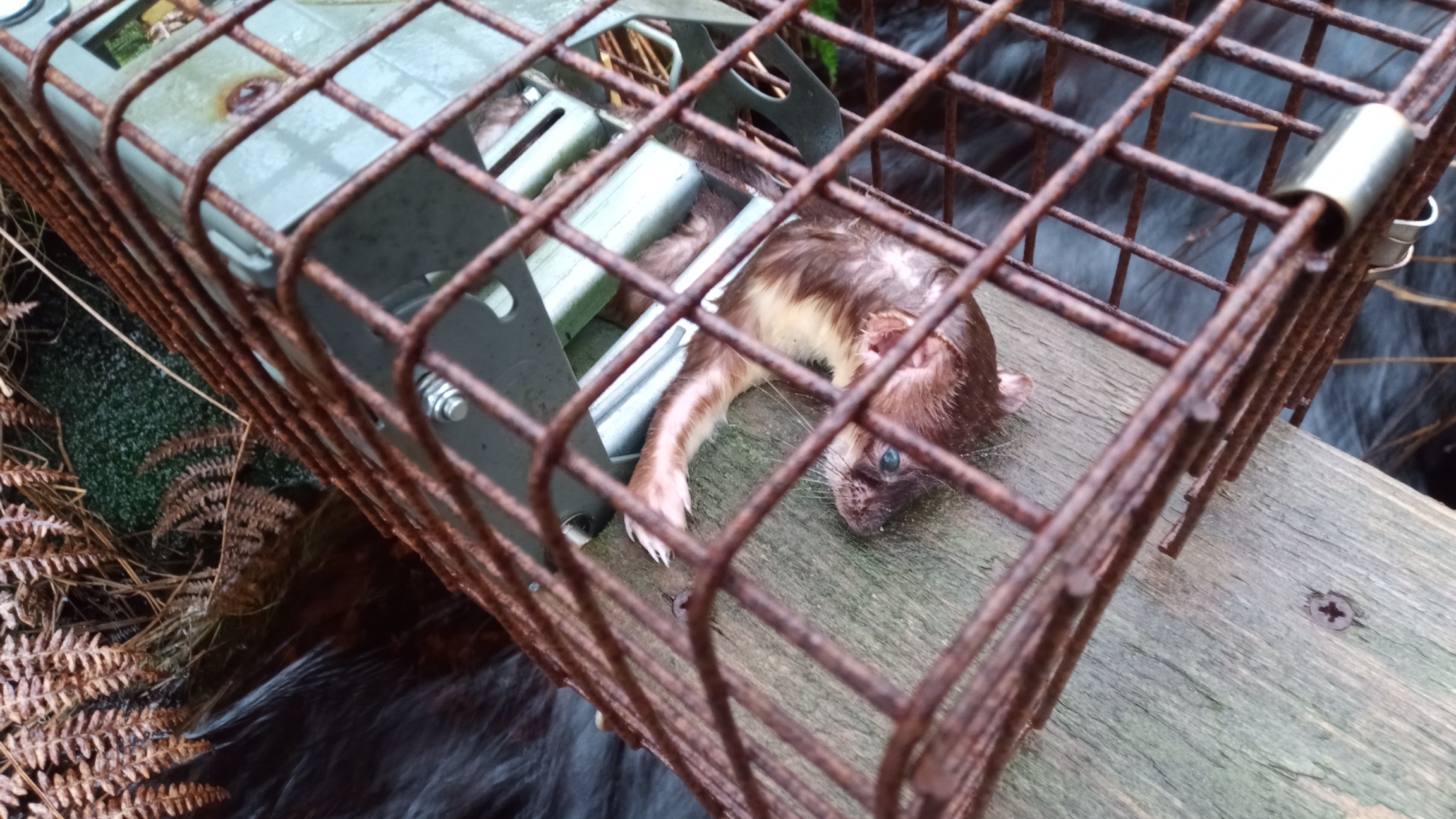
Stoat appears to escape from trap. Photo: Bob Berzins

This stoat appears to have tried to escape a head strike by the Tully trap or did the rear leg move by a death spasm or similar?

Data from laboratory tests on stoats and rats

The FOI revealed the AIHTS requirement is the trap induces irreversible removal of corneal and palpebral reflexes within 45 seconds (both these reflexes are tested by a stimulus to the eye). Removal of these reflexes indicates unconsciousness. APHA provided details of lethal tests on stoats and rats for DOC traps and tests on stoats for Tully traps. Overall the recorded time for cessation of heartbeat (death) ranged between 10 seconds and 7 minutes 35 seconds. So the humaneness standard is not for these traps to kill instantly but for these traps to induce unconsciousness within 45 seconds. This could provide plenty of time for the stoat above to try to escape from the trap.

When unconscious the brain is anything but silent  

The rationale from APHA is that unconscious animals feel no pain so it doesn’t matter if an animal takes seven minutes to die – a trap is humane if the animal is unconscious within 45 seconds. We are not going to get any research or data on brain activity of unconscious animals and it’s important to note the brain of a stoat or rat is not as developed as a human brain. But it is worth considering what we know from human research, particularly that there are many levels of unconsciousness.

The NHS describes coma patients who can have awareness of what is happening around them  and levels of unconsciousness can be measured using the Glasgow Coma Score (here). We don’t feel the pain of an operation when under general anaesthetic but anaesthetists aim to administer drugs to an optimal level, so we are neither too deeply nor too shallowly unconscious. And this paper (here) from the University of Basel shows synchronised activity of cells in the cerebral cortex  (the part of the brain generally associated with consciousness) under general anaesthesia. All of this suggests unconsciousness has many factors and we simply don’t know under what circumstances an animal will feel pain.

APHA data showed successful laboratory tests on DOC traps always resulted in a strike to the head/neck and severe head trauma is most likely to result in rapid unconsciousness and death. But real life data shows a huge variation in which parts of the animal are crushed by these traps – that’s important because strikes away from the head introduce a lot of uncertainty about how long the animal remains alive, conscious and in pain.    

Decomposed rat in the edge of a DOC trap – note the trap has not struck the head. Photo: Bob Berzins
Another rat also in the edge of a DOC trap which has struck the jaw and part of the chest. Photo: Bob Berzins

Successful and Unsuccessful laboratory tests

Sample sizes for DOC 150, Doc 200, Doc 250 and Tully trap were all aimed at achieving 10 successful tests. However a number of trap/configuration/species test failures were recorded as follows:

DOC 150 single entrance configuration (stoat) – one failure due to stoat being struck on the abdomen

DOC 150 single entrance configuration (rat) – one failure due to strike on the nose

DOC 200 single entrance configuration (stoat) – one failure due to unconsciousness not achieved within 45 seconds

DOC 250 configuration not specified  (rat) – one failure due to strike on the nose

Tully Trap – one failure no details provided.

Taken as a whole these results are shocking because they show a failure rate of around 1 test in ten or 10%. This implies that 1 in 10 animals would not be killed humanely by these traps. Yet this is deemed acceptable by Defra and AIHTS.  

In the real world the sample size now runs into thousands given the widespread use of these traps. Canadian researchers have calculated, given these test results on small samples, the real life probability of these traps being successful in a large population is 71% (here) which implies even more animals will die a painful inhumane death.

Tests using Tully traps recorded either head, neck, shoulder or chest strikes. The stoat in the photograph below was struck on the chest – a strike any further down the body would be regarded as a trap failure. Lab tests recorded stoats taking up to 3:04 minutes to die so it’s reasonable to question how much pain this animal suffered before dying?

Stoat in Tully trap strike on chest. Photo: Bob Berzins

Foul strikes

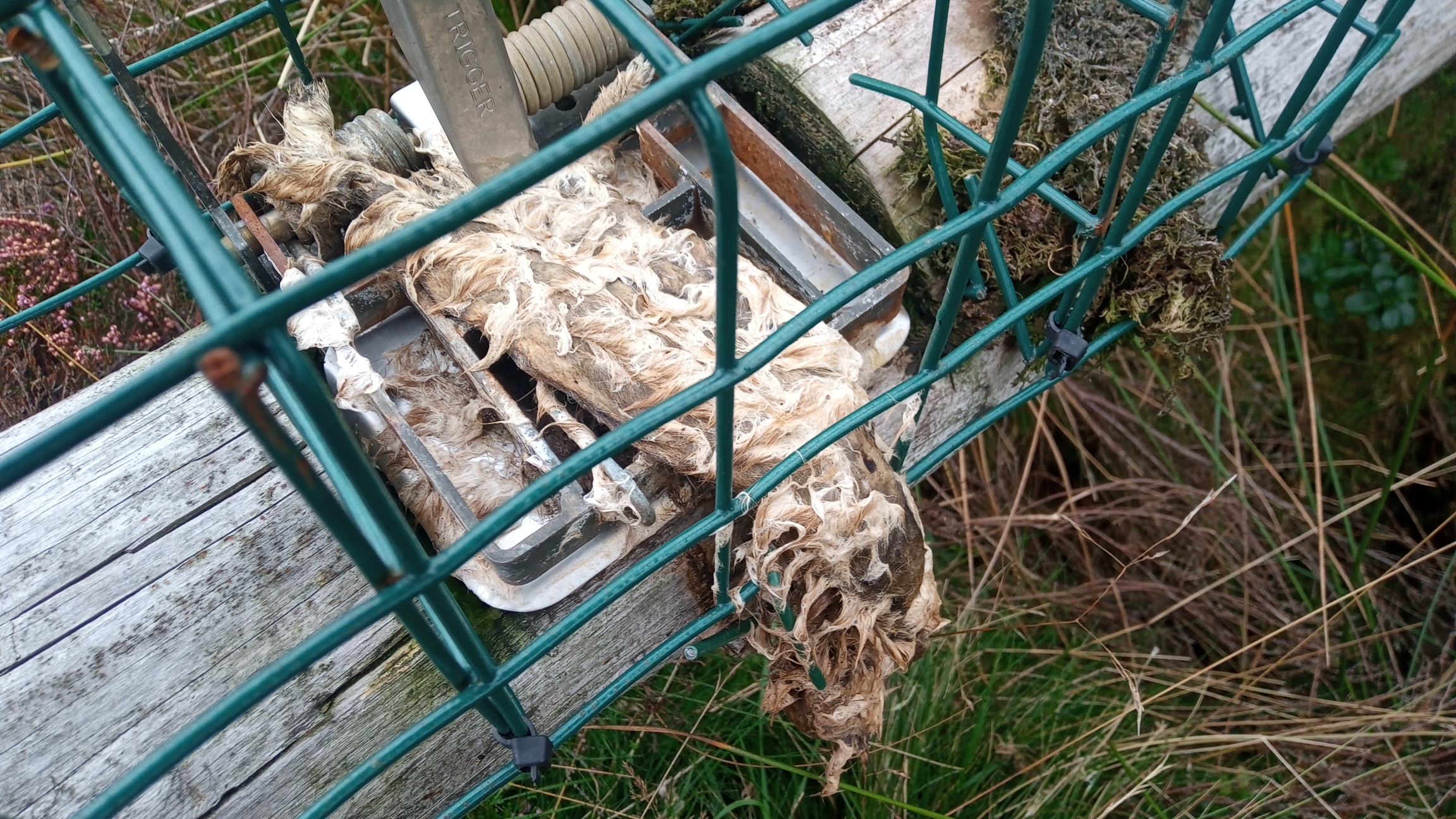
Police attended this trap and determined the (decomposed) stoat was caught by front paw only. This unfortunate animal must have suffered greatly before death:

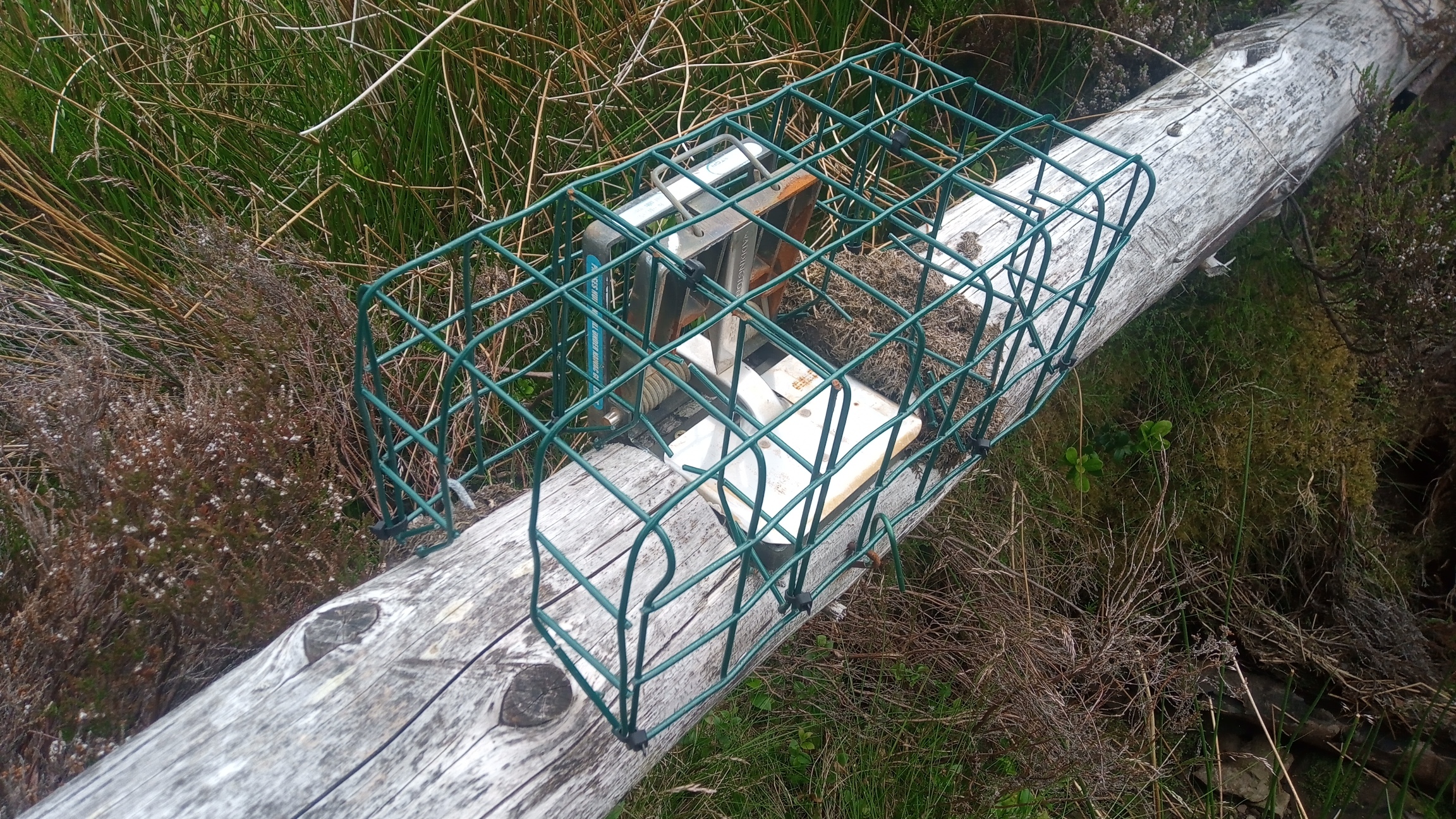
A photo of the same trap before the stoat entered, showing the entrance/access holes. These details are discussed below. Photo: Bob Berzins

In practice this trap became a leghold trap which is illegal under the following legislation:

The Leghold Trap and Pelt Imports (Amendment etc.) (EU Exit) Regulations 2019 implement a prohibition on the use of leghold traps in the UK,

Section 8 of the Pests Act 1954 prohibits the approval of any leghold trap, defined as “a device designed to restrain or capture an animal by means of jaws which close tightly upon one or more of the animal’s limbs, thereby preventing withdrawal of the limb or limbs from the trap” for use in England.

DEFRA also provided me with the following:

For traps which may occasionally produce a foul strike and restrain or pin animals in their mechanism without providing a quick and irreversible unconsciousness, the Animal Welfare Act (2006) requires users of traps to ensure animals do not endure prolonged suffering. This should include regularly checking traps and euthanizing any animals which continue to suffer. An example of best practice guidance can be found at Pest Management Codes of Best Practice | pest control standards (bpca.org.uk).

Defra, by implementing the Spring Traps Approval (England) Order 2018 requires users to deploy traps in appropriate enclosures, and where specified follow the manufacturer’s instructions closely. As both enclosure design and mode of use help minimise the chance of a foul strike, this requirement in regulation helps ensure the humane management of wildlife.”

The trap above was set using 50mm mesh for the tunnel/enclosure which allows the target species to enter the trap from above or from the side. Manufacturer’s instructions only have a vague specification the tunnel must be “suitable for the purpose”. So it’s virtually impossible to prosecute a trap operator for a tunnel/enclosure like the one above. In addition there’s no statutory requirement to check spring traps. And to gain a prosecution under the Animal Welfare Act: it’s necessary to establish that the defendant knew or ought reasonably to have known both that his or her act or failure would cause a protected animal to suffer and that the suffering was unnecessary. This is not going to be established if DEFRA- approved traps are used in a vaguely “suitable” tunnel.

 I suspect DEFRA are fully aware of the unlikeliness of prosecution so I regard their comments above as disingenuous to say the least. In reality there is little or no protection to stop or prevent animal suffering in traps like the one above.

Stoat on top bars of Tully trap. Photo: Bob Berzins

This Tully trap (photo above) has an enclosure of smaller gauge mesh but the stoat has still managed to end up on top of the bars of the trap with front paw only crushed in the trap. Once again this trap in reality has become an illegal leg hold trap.

Fenn Traps

As GWCT describe, killing a stoat in one of these traps is now unlawful because tests show it’s inhumane:

Stoat killed in Fenn trap (pre 2020). Photo: Bob Berzins

But killing a larger grey squirrel in a Fenn trap is still lawful:

Squirrel killed in Fenn trap. Photo: Bob Berzins

I asked DEFRA what testing had taken place to determine the humaneness of Fenn traps used for this species and the reply was: “The Fenn Vermin Trap Mark IV does not appear to have undergone any testing for grey squirrels. The approval for this trap was granted via the Spring Traps Approval (Amendment) Order 1970, prior to the implementation of the AIHTS.

I fail to see how Fenn traps could pass any AIHTS level testing for humanely killing grey squirrels.

 DEFRA claims “The UK is a world leader on animal welfare” (here). Yet even the traps which are approved to international standards have a shocking failure rate, no effective statutory requirements for tunnels/enclosures and in real life conditions strike, crush and hold a range of animal body parts. These traps are not working as intended resulting in animal suffering which is not prevented by the Animal Welfare Act and legal requirements for trap use.   

ENDS

New Scottish Environment Minister’s responsibilities include wildlife management & wildlife crime

Earlier this month I blogged about the appointment of Gillian Martin MSP as the new Environment Minister in the Scottish Government, alongside her current role as Energy Minister (see here).

Environment & Energy Minister Gillian Martin in action at Holyrood last week (Scottish Parliament TV)

At the time of Gillian’s appointment her specific responsibilities under the ‘Environment’ remit had not yet been published, other than to say she would be supporting the Cabinet Secretary for Rural Affairs, Land Reform and Islands (Mairi Gougeon).

The full list of Gillian’s responsibilities has now been made public, and as expected, her new portfolio covers many issues relevant to us, including wildlife management and wildlife crime:

She’s going to be busy!

Environment Minister ‘open to ideas about closing loopholes’ that currently block SSPCA investigating some wildlife crimes

Further to the publication yesterday of the Scottish Government’s commissioned review on increased investigatory powers for the Scottish SPCA (here), this issue was raised in the Scottish Parliament yesterday during Portfolio Questions.

New Environment Minister Gillian Martin responded to questions as follows:

This is a fairly positive response from the Minister but yet again, we’re left waiting for a formal Government response to the review, even though in February we were told that the Government’s response would be published at the same time as the review (i.e. yesterday).

I don’t understand why we’ve had to wait eight months for this very short review to be published (it was submitted to Government in Oct 2022) if the Government hasn’t even managed to cobble together a formal response yet. What was the delay for? And given that the issue has been tabled during the recent evidence sessions during the Stage 1 scrutiny of the Wildlife & Muirburn (Scotland) Bill, wouldn’t it have been useful to have had this review available in time for discussions?

So now we wait again….more bloody can-kicking, 12 years on. It’s tedious and unimpressive governance. Nevertheless, kudos to Mark Ruskell MSP (Scottish Greens) who has been pushing on this issue for many years now.

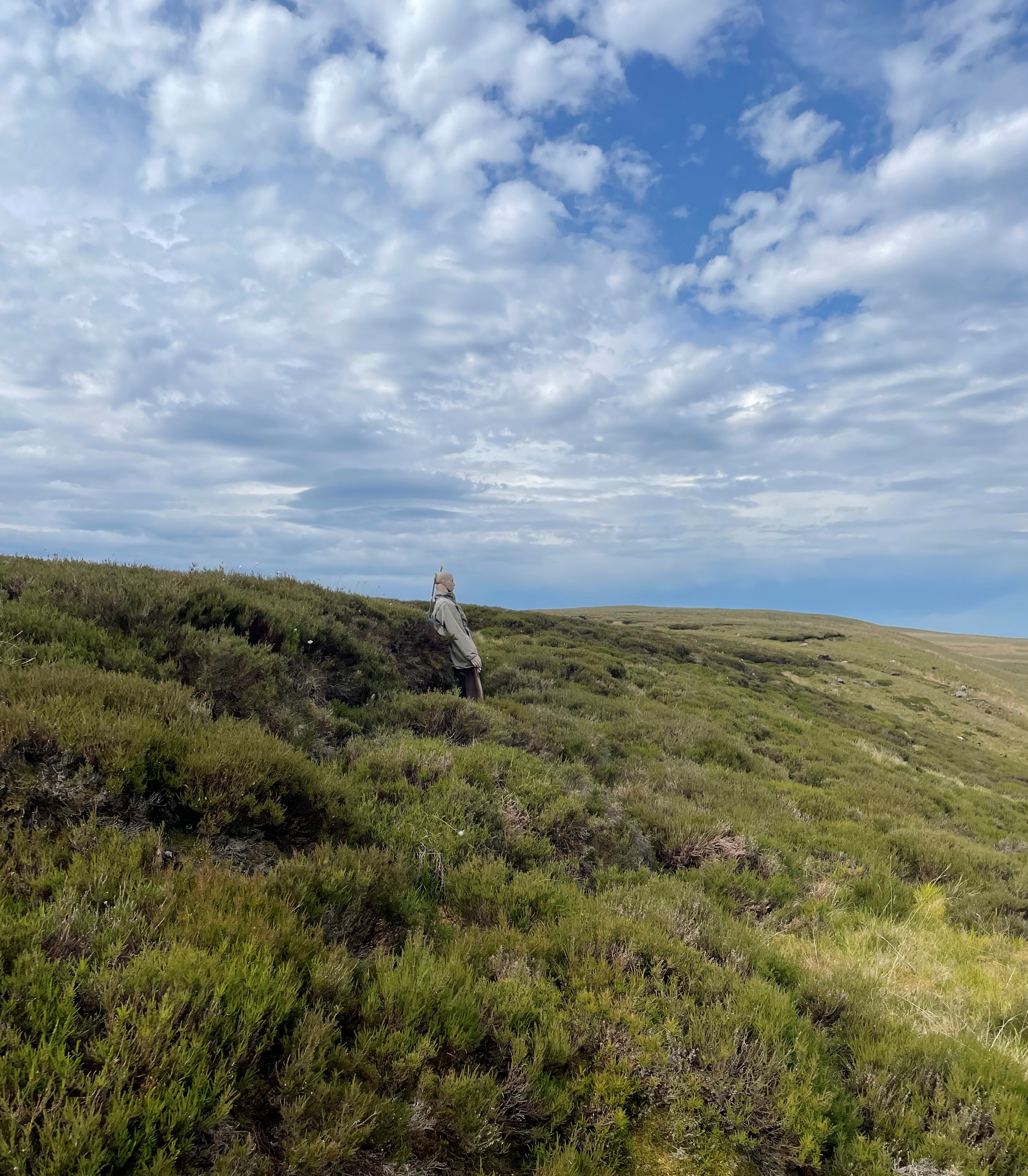
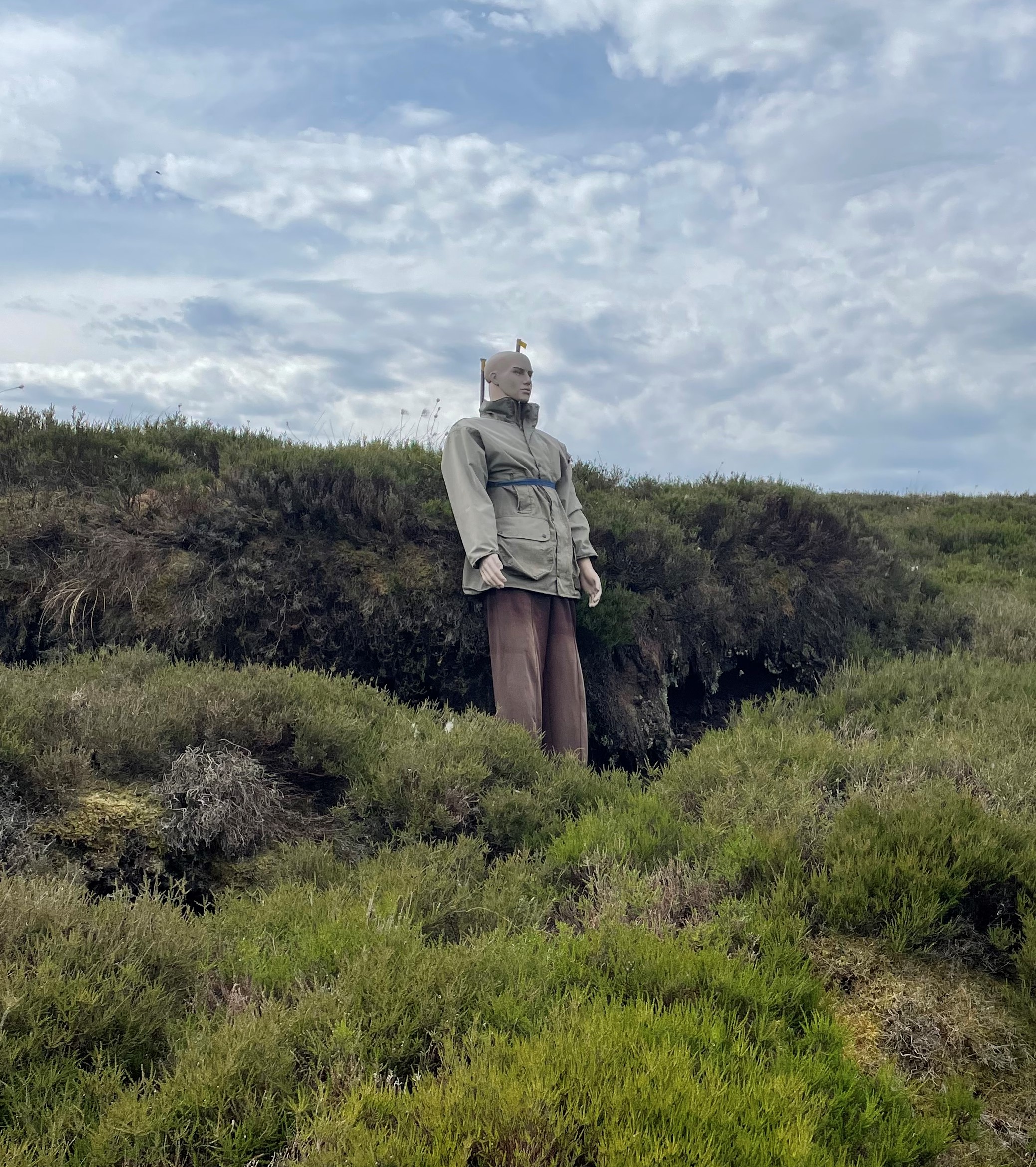
Another grouse moor, another mannequin (hen harrier scarer), this time in North Pennines AONB

Thanks to the blog reader who sent in photos of another mannequin (hen harrier scarer), this time on a grouse moor in the North Pennines Area of Outstanding Natural Beauty (AONB).

Photos taken last Saturday (17th June 2023).

Other mannequins (hen harrier scarers) photographed on grouse moors this year include those seen in the Yorkshire Dales National Park (here and here) and the Peak District National Park (here).

Short-eared owl shot & killed on Broomhead Estate, a grouse moor in the Peak District National Park

The RSPB has this evening released video footage of an eyewitness’s account of a short-eared owl being shot on the well-known Broomhead Estate in the Peak District National Park last summer.

Screen grab from the RSPB video showing the shot corpse of the short-eared owl.

The eyewitness, who understandably doesn’t want to be identified (probably due to the harassment and intimidation suffered by other eyewitnesses in this region – e.g. see here), watched the owl being shot by an armed man who had arrived on the grouse moor on an all-terrain vehicle, carrying a shotgun and a bag. He shot the owl and shoved its lifeless corpse inside a rabbit hole in an effort to conceal the crime.

Fortunately, this eyewitness was savvy enough to have filmed the event and was able to return to the grouse moor the next day and pinpoint the spot for investigators from the RSPB and South Yorkshire Police.

They retrieved the owl’s corpse and a post-mortem confirmed it had been shot.

A local gamekeeper became the immediate suspect but, as happens so often, there was insufficient evidence to link him conclusively to the crime and so no prosecution could take place. You can read the RSPB’s blog about this case here, including a link to the video.

RPUK map showing location of Broomhead Estate in Peak District National Park

Grouse moors in this part of the Peak District National Park have been at the centre of other police investigations into alleged raptor persecution in recent years, including the suspicious disappearance of a satellite-tagged hen harrier (‘Octavia’) in 2018 (here).

Last year, another satellite-tagged hen harrier (‘Anu’) roosted overnight on a local grouse moor before ‘disappearing’. His tag was found several km away, no longer attached to the harrier and a forensic examination revealed the tag’s harness had been deliberately cut from the bird (here).

Two other hen harriers ‘disappeared’ from their breeding attempts on National Trust-owned grouse moors in the Peak District National Park last year (see here).

I’ve blogged previously about the Broomhead Estate in relation to the apparent mis-use of medicated grit (see here) and the use of gas gun bird scarers (here, here, here and here).

Grouse-shooting butt on Broomhead Estate. Photo: Ruth Tingay

Wildlife crime: Scottish Government publishes its review on increased investigatory powers for the Scottish SPCA

The Scottish Government has finally published its commissioned review on increasing the Scottish SPCA’s investigatory powers to enable the organisation to help tackle wildlife crime, and particularly raptor persecution.

Buzzard killed after eating poisoned rabbit bait. Photo: NIRSG

As a quick recap for new blog readers, the SSPCA’s current powers (under animal welfare legislation) limits their investigations to cases that involve a live animal in distress (including some wildlife crimes). The proposed new powers would allow them to also investigate wildlife crimes under the Wildlife & Countryside Act legislation, e.g. where the victim is already dead, and also incidents where a victim may not be present (e.g. if an illegally-set pole trap or a poisoned bait was discovered). See here for further detail.

The review taskforce, launched in July 2022 and chaired by Susan Davies FRSB, was established after 11 long years of political can-kicking on this issue by the SNP, only because the Scottish Greens insisted on its inclusion in the historic Bute House Agreement, the power-sharing policy document published by the two parties in 2021.

The 13-page published review, which was submitted to the Scottish Government in October last year, can be read/downloaded here:

I haven’t read the review in detail yet but the main recommendation is that the Scottish SPCA NOT be given increased powers due to the lack of support for this provision from Police Scotland, the Crown Office and the National Wildlife Crime Unit (NWCU).

I’ll comment on that when the Scottish Government has published its own response to the review, which it previously said (here) would be published at the same time as the review was published, but I haven’t seen the Government’s response yet.

I think it’s prudent to wait to see the Government’s response before making any comment, although I’ve previously been critical of the apparent bias in favour of game-shooting industry organisations being invited to contribute to the review (all of whom are opposed to increased powers for the SSPCA), whereas opportunities for conservation organisations were apparently limited (see here and here).

Increased powers for the SSPCA is due to be debated at Stage 2 of the Wildlife & Muirburn (Scotland) Bill in the autumn, so this is far from over.

This issue has now been running for the last 12 years – here is the timeline of this sorry saga:

February 2011: Increased powers for the SSPCA was first suggested by MSP Peter Peacock as an amendment during the Wildlife & Natural Environment (Scotland) Bill debates. The then Environment Minister Roseanna Cunningham rejected it as an amendment but suggested a public consultation was in order.

September 2011: Seven months later Elaine Murray MSP (Scottish Labour) lodged a parliamentary motion that further powers for the SSPCA should be considered.

November 2011: Elaine Murray MSP (Scottish Labour) formalised the question in a P&Q session and the next Environment Minister, Stewart Stevenson MSP, then promised that the consultation would happen ‘in the first half of 2012’.

September 2012: Nine months later and nothing had happened so I asked Paul Wheelhouse MSP, as the new Environment Minister, when the consultation would take place. The response, in October 2012, was:

The consultation has been delayed by resource pressures but will be brought forward in the near future”.

July 2013: Ten months later and still no sign so I asked the Environment Minister (still Paul Wheelhouse) again. In August 2013, this was the response:

We regret that resource pressures did further delay the public consultation on the extension of SSPCA powers. However, I can confirm that the consultation document will be published later this year”.

September 2013: At a meeting of the PAW Executive Group, Minister Wheelhouse said this:

The consultation on new powers for the SSPCA will be published in October 2013“.

January 2014: In response to one of this blog’s readers who wrote to the Minister (still Paul Wheelhouse) to ask why the consultation had not yet been published:

We very much regret that resource pressures have caused further delays to the consultation to gain views on the extension of SSPCA powers. It will be published in the near future“.

31 March 2014: Public consultation launched.

1 September 2014: Consultation closed.

26 October 2014: I published my analysis of the consultation responses here.

22 January 2015: Analysis of consultation responses published by Scottish Government. 233 responses (although 7,256 responses if online petition included – see here).

I was told a decision would come from the new Environment Minister, Dr Aileen McLeod MSP, “in due course”.

1 September 2015: One year after the consultation closed and still nothing.

25 February 2016: In response to a question posed by the Rural Affairs, Climate Change & Environment Committee, Environment Minister Dr Aileen McLeod said: “I have some further matters to clarify with the SSPCA, however I do hope to be able to report on the Scottish Government’s position on this issue shortly“.

May 2016: Dr Aileen McLeod fails to get re-elected and loses her position as Environment Minister. Roseanna Cunningham is promoted to a newly-created position of Cabinet Secretary for the Environment.

12 May 2016: Mark Ruskell MSP (Scottish Greens) submits the following Parliamentary question:

Question S5W-00030 – To ask the Scottish Government when it will announce its decision regarding extending the powers of the Scottish SPCA to tackle wildlife crime.

26 May 2016: Cabinet Secretary Roseanna Cunningham responds with this:

A decision on whether to extend the investigatory powers of the Scottish SPCA will be announced in due course.

1 September 2016: Two years after the consultation closed and still nothing.

9 January 2017: Mark Ruskell MSP (Scottish Greens) submits the following Parliamentary question:

Question S5W-05982 – To ask the Scottish Government by what date it will publish its response to the consultation on the extension of wildlife crime investigative powers for inspectors in the Scottish SPCA.

17 January 2017: Cabinet Secretary Roseanna Cunningham responds:

A decision on whether to extend the investigatory powers of the Scottish Society for the Prevention of Cruelty to Animals will be announced in the first half of 2017.

31 May 2017: Cabinet Secretary Roseanna Cunningham rejects an extension of powers for the SSPCA ‘based on legal advice’ and instead announces, as an alternative, a pilot scheme of Special Constables for the Cairngorms National Park (here). It later emerged in 2018 that this pilot scheme was also an alternative to the Government’s 2016 manifesto pledge to establish a Wildlife Crime Investigation Unit as part of Police Scotland – a pledge on which it had now reneged (see here).

November 2019: The pilot scheme of Special Constables in the Cairngorms National Park was an absolute failure as a grand total of zero wildlife crimes were recorded by the Special Constables but plenty were reported by others (see here).

June 2020: Mark Ruskell (Scottish Greens) proposed further powers for the SSPCA at Stage 2 of the Animals and Wildlife Bill. The latest Environment Minister, Mairi Gougeon persuaded him to withdraw the proposed amendment on the basis that she’d consider establishing a taskforce to convene ‘this summer’ to consider increased powers (see here).

December 2020: Mark Ruskell (Scottish Greens) submits two Parliamentary questions asking about the status of the taskforce and who is serving on it (see here).

January 2021: New Environment Minister Ben Macpherson says the taskforce has not yet been appointed but that it is “expected to be established later this year“ (see here).

September 2021: In the 2021 to 2022 Programme for Government it was announced that the ‘independent taskforce [Ed: still to be appointed] will report before the end of 2022’ (see here).

May 3 2022: In an interview with Max Wiszniewski of the REVIVE coalition for grouse moor reform, new Environment Minister Mairi McAllan said: “It’s imminent and I wish I could tell you today but we are just finalising the last few points for the membership but I’m hoping to be able to make an announcement about that in the next few weeks“ (see here).

1 July 2022: Scottish Government announces Susan Davies has been appointed to lead the taskforce review and will ‘publish a report later this year’ (see here).

27 December 2022: A Scottish Government spokesperson tells Scotsman journalist the taskforce has completed its review and its findings will be published ‘within weeks’ (see here).

31 January 2023: An FoI response from the Scottish Government to this blog’s author reveals the Taskforce’s review was submitted to the Scottish Government on 22nd October 2022 and will be published ‘prior to summer 2023’.

1 February 2023: Wildlife crime: key conservation organisations ‘excluded’ from Scottish Government’s review on increasing SSPCA powers (here).

7 February 2023: Scottish Government tells journalist from The Scotsman that it will provide a response at the same time the Taskforce review on SSPCA powers is published (here).

7 March 2023: More detail provided on why key conservation organisations were excluded from Scottish Government’s review on increasing SSPCA powers (here).

21 June 2023: Scottish Government publishes its commissioned review on SSPCA powers.

UPDATE 27th June 2023: New investigatory powers for SSPCA proposed by Scottish Government (here)

Third evidence session today on Wildlife & Muirburn (Scotland) Bill

As many of you know, the Scottish Parliament’s Rural Affairs & Islands Committee is currently taking evidence from stakeholders as part of the Committee’s Stage 1 scrutiny of the Wildlife & Muirburn (Scotland) Bill.

For new blog readers, this is the Bill that has been introduced by the Scottish Government in response to the recommendations made in the 2019 Werritty Review and is designed to bring in licensing for grouse moor management and introduce measures to put an end to the illegal killing of birds of prey on grouse moors.

The first evidence session took place on 31st May 2023 and the Committee heard from members of the Scottish Government Bill Team, led by senior civil servant Hugh Dignon.

The second evidence session took place on 14th June 2023 and the Committee heard from members of the Werritty Review Group as well as a range of stakeholders. It was a fascinating session and I’ve quite a lot to say about it but I don’t intend to comment until later.

You can watch the second evidence session on Scottish Parliament TV (archived video here) and you can read the transcript here:

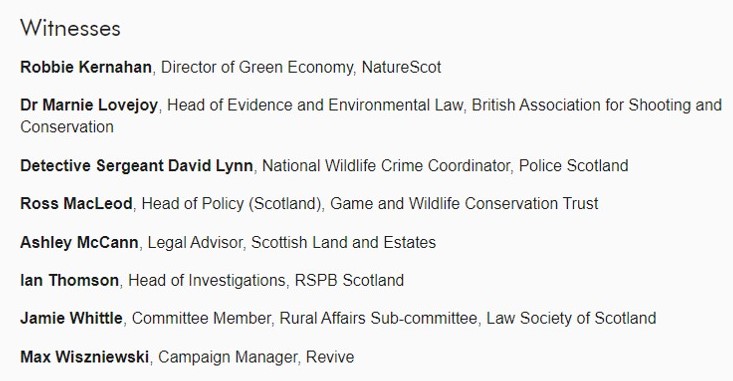
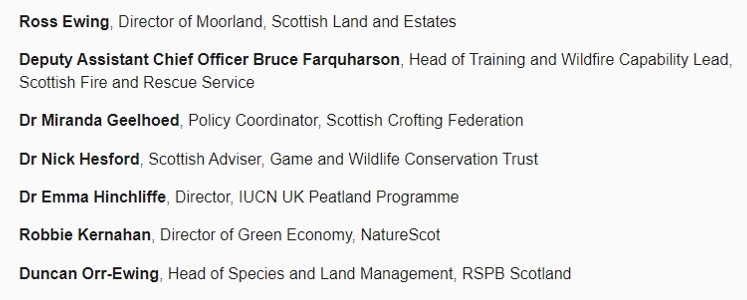
The third evidence session (in a series of four) takes place today, starting at 9am in the Fleming Room at Holyrood. There will be two sub-sessions: the first one on grouse moor licensing and the second one on muirburn. The witnesses giving evidence in these two sub-sessions are as follows:

Grouse moor licensing:

Muirburn:

You can watch live on Scottish Parliament TV (here) or watch the video archive shortly afterwards via the same website. The official transcript will be available several days after the meeting and I’ll post it on this blog when it comes out.

The fourth and final session, scheduled for 28th June, will hear evidence from Mairi Gougeon, the Cabinet Secretary for Rural Affairs, Land Reform and Islands.

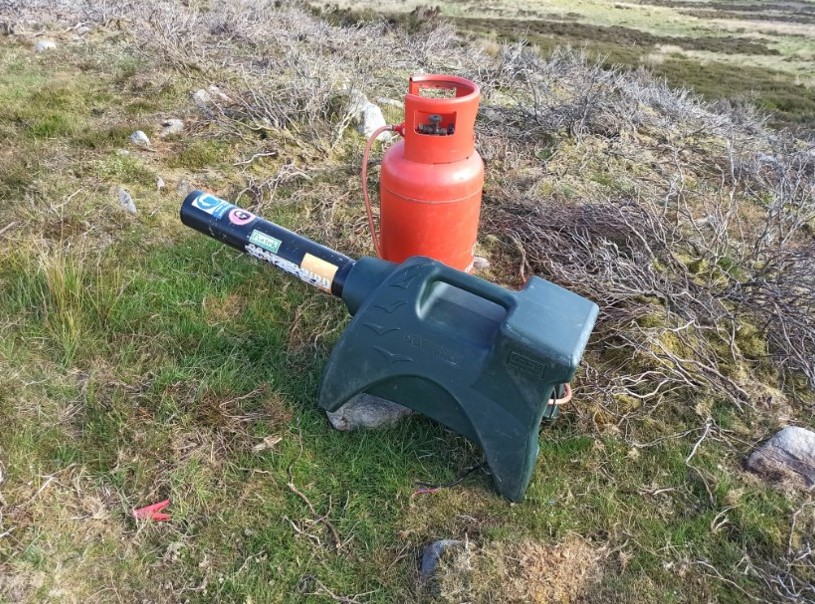
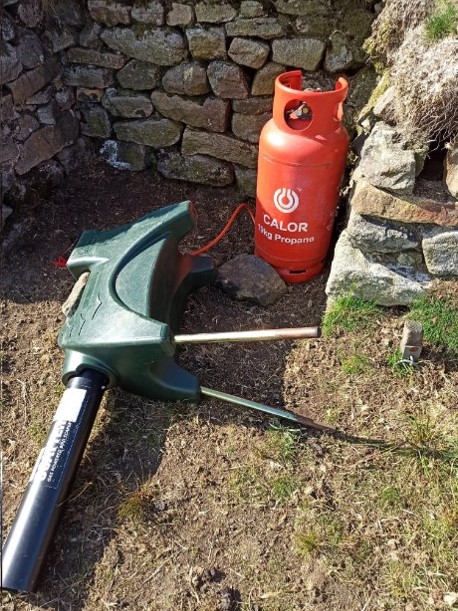
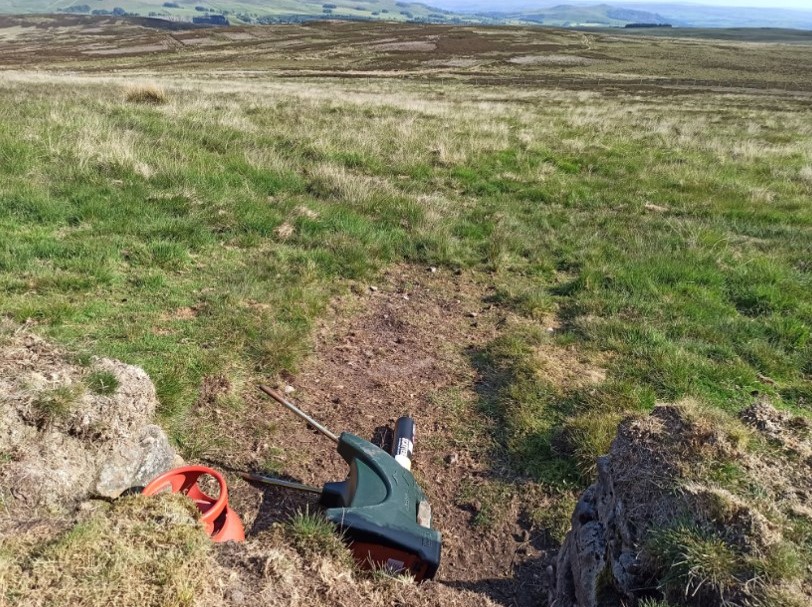
More gas guns positioned on another grouse moor in Yorkshire Dales National Park

I’ve recently been blogging about a number of mannequins (hen harrier scarers) that have been installed on a number of grouse moors in the Yorkshire Dales National Park and the Peak District National Park (here, here and here).

I also wrote about an active gas gun (a bird-scaring device designed to ‘boom’ loudly and intermittently), that had also been placed out on one of those grouse moors (here).

Another blog reader has now been in touch with photographs of two more gas guns that have been positioned on another grouse moor in the Yorkshire Dales National Park, one out in the open and the other one set inside a grouse- shooting butt:

I’ve blogged about the use of gas guns to deter breeding hen harriers many times before, as has Mark Avery, which led to us seeking advice from SNH (now NatureScot) and Natural England for guidance for their use on grouse moors during the breeding season (see here).

The eventual advice from SNH (here) and Natural England (here) was unimpressive to say the least, although it was clear that if Schedule 1 birds (i.e. hen harriers) were present in the area, the user was advised to ‘ensure that gas guns are located so that they do not disturb breeding Schedule 1 birds. This includes all breeding stages from nest building through to young that are still dependant on the adult birds‘.

The difficulties associated with determining sufficient evidence to demonstrate a disturbance offence in this scenario was coherently examined by former Police Wildlife Crime Officer Alan Stewart on his blog (here), at least in terms of wildlife protection legislation in Scotland.

So here we are, seven years later, and this issue is still not resolved.

I’d also like to know how the firing of gas guns, and the installation of mannequins, on grouse moors during the hen harrier breeding season fits in with DEFRA’s ludicrous Hen Harrier Action Plan (and the associated hen harrier brood meddling trial), where we’re supposed to believe that grouse moor owners and their gamekeepers are all welcoming breeding hen harriers with open arms.

Incidentally, the gas guns photographed earlier this month on a grouse moor in the Yorkshire Dales National Park (see above) just happen to be on the same grouse moor that was at at the centre of a police investigation in 2017 into the suspicious disappearance of a satellite-tagged hen harrier and another police investigation in 2020 into the alleged shooting of another hen harrier. Imagine that.

Another mannequin (hen harrier scarer), this time on a grouse moor in Peak District National Park

Last month I blogged about a number of mannequins (hen harrier scarers) that had been photographed on two separate grouse moors in the Yorkshire Dales National Park this year (see here and here).

Another blog reader (who wishes to remain anonymous) has sent in a photograph of another mannequin that’s been installed on another grouse moor, this time in the Peak District National Park:

A few people have commented on the purpose of these mannequins, rejecting the hypothesis that they’ve been installed to deter breeding hen harriers, even though one mannequin just happened to have been installed on the very hill slope where hen harriers had been prospecting just a few weeks prior to the installation of that particular mannequin. Coincidence? Perhaps, but I’m unconvinced given the grouse shooting industry’s continued intolerance of this species.

It’s been argued that the mannequins in the Yorkshire Dales National Park have been installed to deter ‘seagulls’ [sic] and someone suggested to me that this latest one in the Peak District National Park has been put there to deter ravens.

Maybe. But the point is, the deterrent effect is indiscriminate. Even if they have been installed to deter another species, a prospecting hen harrier is still going to take one look and move on. Job done.

Incidentally, that mannequin in the Yorkshire Dales National Park that suddenly appeared on the very slope where hen harriers had been nest prospecting – guess what? Two hen harrier nests close by have both failed, with the reported ‘disappearance’ of one of the males. Imagine that.

UPDATE 19th June 2013: More gas guns positioned on another grouse moor in Yorkshire Dales National Park (here)