Hen Harrier Action fundraising for more satellite tags

The charity Hen Harrier Action has launched a Christmas fundraising appeal to raise money for at least four more satellite tags to be fitted to young hen harriers in spring 2024.

Here are a few words from Hen Harrier Action about this fundraising appeal:

The latest RSPB Birdcrime Report documents the continuing relentless persecution of Hen Harriers and other birds of prey in the UK. As the Report notes, ‘despite being fully protected by law and a UK Red Listed species, they are being persecuted on a relentless scale’.

Between January 2022 and October 2023, 39 Hen Harriers are suspected or proven to have been persecuted across the UK. And the report tells us that this number is likely to rise, as some known incidents cannot be disclosed yet as they form part of on-going investigations.

As a rare protected species with an estimated fewer than 600 breeding pairs in the whole of the UK, this chronic level of persecution, if it continues, will severely hamper the chance of any recovery for this charismatic raptor.

In response, Hen Harrier Action has launched a Christmas Appeal on GoFundMe to raise money to fund the satellite tagging and monitoring of young Hen Harrier chicks next Spring.

We’ve set an ambitious target of raising enough money to fund four satellite tags, likely to cost around £12,000. The tagging and monitoring will be undertaken by the RSPB.

There’s more information here, and the fundraising page for donations is here.

Yorkshire Dales National Park Authority CEO “hugely embarrassed” by ongoing killing of birds of prey

Press release from Yorkshire Dales National Park Authority (1st December 2023)

Reaction to the RSPB Birdcrime Report

The RSPB recently published its latest ‘Birdcrime’ report.

David Butterworth, Chief Executive Officer of the Yorkshire Dales National Park Authority, said: “It is yet again hugely embarrassing that this part of the country has been shamed as being the worst for proven and suspected bird of prey persecution in the UK.

An end to the illegal killing of birds cannot come soon enough. Some of the instances of criminality this year beggar belief. The stamping to death of 4 young Harrier chicks and one Harrier having its head pulled from its body while still alive. Truly shocking levels of depravity.

Hen harrier ‘Free’, found on moorland in the Yorkshire Dales National Park and whose post mortem revealed that the cause of death was the head being twisted and pulled off while the body was held tightly. His leg had also been ripped off whilst he was alive. Photo by Natural England via RSPB’s 2022 Birdcrime report.

It’s all the more galling because there are signs of positive change. Some local land managers are doing great work to conserve birds of prey in the National Park.

We are currently preparing a new evidence report on bird of prey populations in the National Park on behalf of the Yorkshire Dales Bird of Prey Partnership. We hope this report will be published in the coming weeks. Sadly all of this will count for little whilst the persecution of Birds of Prey continues“.

ENDS

Bravo, David Butterworth, for this very public and unequivocal condemnation of the ongoing raptor persecution in this so-called National Park.

But isn’t it time the pretend Yorkshire Dales Bird of Prey ‘Partnership’ was closed down? The RSPB has already left because it recognised the futility of trying to ‘partner’ with the likes of the Moorland Association – how much more time, money and effort is going to be pumped into this pseudo-union, whilst the crimes against birds of prey just carry on and on and on?

Partnerships and coalitions only work when objectives are shared. In the case of the Yorkshire Dales Bird of Prey ‘Partnership’, the Chair of the Moorland Association doesn’t even accept that hen harrier persecution is happening (see here), let alone that it’s an issue that needs to be addressed. What’s the point of continuing this ‘partnership’ charade?

As an aside, the RSPB’s 2022 Birdcrime report was published ten days ago and it contains a lot of material that I want to blog about. I’ve been distracted by events in Scotland (more golden eagle persecution, more peregrine persecution, and a landmark vote by the Scottish Parliament to agree to the general principles of a grouse moor licensing scheme) but I haven’t forgotten about the Birdcrime report and will come back to it shortly….

A Scottish grouse moor-owning baron, an illegally pole-trapped peregrine and a Ministerial post in DEFRA

Yesterday it was announced that Robbie Douglas-Miller OBE has been appointed as a Parliamentary Under Secretary of State in the Department for Environment, Food and Rural Affairs (DEFRA).

Eh? So an unelected billionaire who likes to wear a crown has conferred a Barony on some other bloke which then allows that other unelected bloke to be given a Ministerial role in DEFRA, which has been approved by the unelected billionaire who likes to wear a crown, and we’re all supposed to accept this is a functional democracy? Good grief.

That new unelected DEFRA Environment Minister, Baron Douglas-Miller, is believed to be the same Robbie Douglas-Miller who just happens to be the sole director of Moorfoot Capital Management Ltd which owns a grouse moor (Hopes Estate) in the Lammermuirs in south Scotland. Along with Lord Benyon, that’ll now be two grouse moor-owning Environment Ministers in DEFRA.

Douglas-Miller has, according to this article in the Guardian, been accused of ‘obstructing public access‘ by ‘apparently making it difficult for walkers to access a site East Lothian’s Lammermuir Hills, which is part of his Hopes Estate‘.

It’s not the first time access issues have been raised at Hopes Estate. In 2017, fieldworkers from the Scottish Raptor Study Group published two scientific papers about their long-term monitoring of merlins on grouse moors in the Lammermuirs and how that came to an abrupt end in 2015 after they were suddenly refused vehicular access, having previously enjoyed a good cooperative relationship with landowners and gamekeepers for many years. They believed that the relationship breakdown was a result of them highlighting some of the intensification of management practices on those grouse moors. Their study area covered several estates including the Hopes Estate (see here and here).

It’s worth noting that none of these grouse moor management practices were unlawful (at the time), and indeed the fieldworkers did not find any evidence of illegal raptor persecution, but their criticism of the increased use of bridge (rail) traps that were catching / killing non-target species such as dippers, merlin and ring ouzels, and the killing of mountain hares that were then dumped in stink pits was an issue of concern to them.

The Hopes Estate had achieved accreditation in 2013/14 under the Wildlife Estates Scotland (WES) scheme, which is administered by landowners’ lobby group Scottish Land & Estates and was chaired for several years by Robbie Douglas-Miller.

Estates that are awarded accreditation under the WES scheme have to meet certain criteria, including:

  • Commitment to best practice
  • Adoption of game and wildlife management plans that underpin best practice
  • Maintaining species and habitats records
  • Conservation and collaborative work
  • Integration with other land management activities (such as farming, forestry and tourism)
  • Social, economic and cultural aspects (such as employment, community engagement and communications)

The WES scheme was first piloted in 2011 and was believed to be in response to MSP Peter Peacock’s call in 2010 for an estate licensing scheme to combat ongoing raptor persecution (see here). The scheme was then rolled out fully in 2013 but not without some healthy scepticism of it being a greenwashing exercise (see here).

Since then, in general, I think it’s probably been a good thing for estates to aspire to, although a number of estates in the WES scheme have had wildlife crime incidents recorded on their land, e.g. Invercauld Estate (see here and pay attention to the letter written by the estate to the then Environment Minister where the estate quoted its membership of the WES scheme as an example of its apparently good stewardship. Of course, this estate is now currently serving a three-year General Licence restriction after further evidence of wildlife crime was uncovered there, including what Police Scotland described as the ‘deliberate’ poisoning of a golden eagle – here).

In addition, the WES-accredited Newlands Estate in Dumfriesshire saw one of its gamekeepers convicted for killing a buzzard after he threw rocks at it before repeatedly stamping on it (see here and here). To be fair, when challenged about the estate’s WES accreditation in light of the gamekeeper’s conviction, WES stated that the estate’s accreditation had been ‘suspended’ (note, not revoked, see here) although for how long, who knows?

And just this week, another WES-accredited estate is at the centre of a police investigation after a dead peregrine was found in a baited illegal pole trap in the Pentlands (see here). The Police Scotland appeal for information stated that the dead peregrine ‘was found around 100 yards from a public path on the edge of a small woodland south of Wester Bavelaw on Thursday, 23 November, 2023′.

According to Andy Wightman’s Who Owns Scotland website this ‘small woodland south of Wester Bavelaw’ appears to be on the Bavelaw Estate:

The Bavelaw Estate, according to its own website, is a WES-accredited estate and says this about it:

Over the last five years, The estate have enhanced habitat across the board, including planting over 50 ha of mixed native woodland, peatland restoration, the creation of wetland areas, including wader scrapes and ponds, restoration of riparian habitats and heather and bracken swiping as well as connecting wildlife corridors. Additionally, restoring 7,861 sq Km of public access paths.

The assessor was extremely impressed with the integrated management direction the Estate is taking and specifically referenced the undeniable passion and enthusiasm for nature that both the landowner and his employees have‘.

Photo by RPUK blog reader

Interestingly, and again according to Andy Wightman’s Who Owns Scotland website (data collected 10 July 2023), Bavelaw Estate is owned by Robert, Andrew, Robert and Edward Douglas-Miller as Trustees of Firm of Bavelaw Castle Farm:

Now, to be absolutely clear and for the avoidance of doubt, there is no suggestion whatsoever that Robbie Douglas-Miller, or his relatives, or indeed anyone associated with Bavelaw Estate is responsible for, or had any knowledge of, the setting and baiting of that illegal pole trap that killed the peregrine. The police investigation is ongoing and we’ll just have to wait and see whether the police appeal for information brings forward any witnesses and whether the forensic analysis identifies a suspect.

I genuinely expect Robbie Douglas-Miller will have been as horrified as the rest of us and will be eager to know who set that illegal trap, and who might also be responsible for other incidents of raptor persecution / wildlife crime in the area, e.g. the illegally poisoned peregrine found about half a mile away in 2018 (here), the suspicious disappearance of golden eagle Fred a few kilometres away in 2018 (here) the merlin nest that was shot out in 2017 (here) and the raven shot on its nest in 2016 (here).

Nevertheless, it appears that a heinous wildlife crime has been detected on another WES-accredited estate, and that the apparent new DEFRA Environment Minister is a co-Trustee of the company that owns the estate.

As an aside, I was interested to see the game-shooting lobby was very quick to deny that the pole-trapped peregrine had anything to do with grouse shooting – indeed, MSP Rachael Hamilton even stated as much in the Chamber during Thursday’s parliamentary debate on the Wildlife Management Bill (“…there is clearly no link to a grouse moor management…“, here). How does she know?!

There is driven grouse shooting on neighbouring land to Bavelaw and Bavelaw was once a prominent grouse shooting estate itself (the lines of grouse butts are marked on the OS map) but it is believed that Bavelaw is currently managed as a sheep farm, although there is evidence that muirburn takes place but it doesn’t look like the intensive muirburn typically associated with a driven grouse moor:

Bavelaw Estate. Photo by RPUK blog reader

What’s really interesting then, is why the Bavelaw Estate was a signatory on a recent letter sent to Environment Minister Gillian Martin where nearly 400 rural businesses expressed their concern that a grouse moor licensing scheme would be detrimental to their interests (see here). You can’t have it both ways – either there’s a link to grouse shooting or there isn’t.

I really don’t know what to make of Robbie Douglas-Miller’s appointment as an Environment Minister in DEFRA. What can a prominent grouse moor owner, member of Scottish Land & Estates and a former GWCT Director bring to the policy table? Perhaps he’ll use his experience of chairing the WES scheme in Scotland to try and impart some sense to the appalling and unregulated mismanagement of England’s grouse moors? Although given SLE’s open-mouthed hysteria about the proposed grouse moor licensing scheme in Scotland, that doesn’t seem likely.

UPDATE 7th December 2023: More information emerges on new, unelected DEFRA minister (here)

New podcast: Will a grouse shoot licensing scheme bring an end to the illegal persecution of birds of prey on Scotland’s grouse moors?

RSPB Scotland has just published a podcast discussing whether the Wildlife Management & Muirburn Bill will finally bring an end to the illegal killing of birds of prey on Scottish grouse moors.

Some of it was recorded at REVIVE’s national conference in Perth last month, and some of it immediately prior, and after, yesterday’s Stage 1 debate of the Bill. It includes contributions from RSPB Scotland (Duncan Orr-Ewing and Ian Thomson), the REVIVE coalition for grouse moor reform (Robbie Marsland), Biodiversity Minister Lorna Slater, Chris Packham and me, with Stephen Magee from the RSPB hosting the discussions.

It’s available to listen, for free, HERE.

Landmark vote in Scottish Parliament to bring in grouse moor licensing

That landmark vote in the Scottish Parliament last night, in support of the general principles of the Wildlife Management & Muirburn (Scotland) Bill, was a significant milestone in what has been a long and often challenging campaign.

And although it’s a long way from being over, we should all take a breath and take the time to celebrate this achievement, as well as contemplate the years of hard grind that brought us to this point.

At the heart of it, and indeed was the trigger for putting this proposed legislation on the table, has been the ongoing illegal killing of birds of prey on driven grouse moors, despite raptors supposedly having full legal protected status since the 1954 Protection of Birds Act, almost 70 years ago.

I’ve heard several MSPs in the last few months, and indeed in the Chamber yesterday, talking about how we all owe a debt of gratitude to the gamekeepers and their lords and masters in the grouse shooting industry. I’d agree to a point, because without that industry’s ongoing criminality against birds of prey it would have been even more difficult to achieve yesterday’s result.

I don’t believe that they’re all ‘at it’; I personally know a few who feel as strongly as I do about protecting birds of prey, but unfortunately they are in the minority and not enough of them were prepared to stand up against what has become a pantomime of denial, attempting to mask what can only be described as archaic savageness. The world has moved on and now that industry must, too.

There are indeed people to whom we owe a great debt of gratitude and foremost amongst them are the members of the Scottish Raptor Study Group (SRSG), not least to those who argued so persuasively when they presented their petition for gamebird licensing to the Scottish Parliament back in 2016.

But also to all those SRSG fieldworkers who have dedicated years, sometimes decades, of their lives to voluntarily monitoring the status of birds of prey across Scotland, whose hard-won data allowed many talented academics to join the dots and present a compelling argument that the scale of illegal persecution was so extensive it was having population-level effects on the distribution and abundance of a number of species across Scotland, notably the golden eagle, hen harrier, red kite and peregrine.

Without those data, and the subsequent scientific publications on which they’re founded, the Scottish Government would not have had the incontrovertible evidence it needed to be convinced that raptor persecution on some (many) Scottish grouse moors continues, even to this day.

There are many others who also deserve credit but I’m going to save that until we reach the end and the Bill gains Royal assent (I do wonder whether the bloke in the crown will be able to snatch victory from the jaws of defeat, given his long-standing personal involvement in grouse shooting).

And yes, there is still a long way to go with this Bill but the bottom line is that a licensing scheme for grouse shooting, in whatever form it takes, will now become a legal requirement. I don’t think any of us doubts for one minute the struggles that lie ahead at Stage 2 against those who will seek to water down the restrictions as far as they can – representatives from the grouse shooting industry have made no secret of their intentions and judging by some of the comments made in the Chamber yesterday, they have the ear of not just the Scottish Conservatives to ease their way.

In the end though, only 32 voted against the general principles of the Bill and 82 voted to support it. Of the 32 who voted against it, 31 were Conservatives and 1 was the SNP’s Fergus Ewing:

But in the bigger picture, even if the industry succeeds in weakening the Bill and this new legislation turns out to be as unenforceable as all the previous attempts have been to make this industry accountable for its criminal and environmentally damaging actions, then it will simply make the case for a ban on grouse shooting all the more appealing, and, actually, achievable.

If you missed yesterday’s debate you can watch a video archive here and you can read the official report below (starts at page 31). The Tory contributions weren’t quite as dishonourable as those we saw on display in the Westminster debate on grouse shooting back in 2016 (here) but some were still decidedly unpleasant:

Grouse moor licensing bill passes Stage 1

BREAKING NEWS….

The Scottish Parliament has this evening voted to support the general principles of the Wildlife Management & Muirburn Bill and it will now pass to Stage 2.

Votes for = 82; votes against = 32, no abstentions.

The vote followed a fairly predictable debate in the Chamber this afternoon with no real surprises. I’ll come back to that tomorrow.

For now, it’s time to celebrate because the Scottish Parliament has, after many, many years of campaigning by so many people, finally voted to support, in principle, significant reform of an industry that has been out of control and unaccountable for far too long. Grouse shooting and its associated criminality and environmental destruction simply cannot survive in its current format and for that I’m bloody delighted.

Well done to everyone involved.

UPDATE 1 December 2023: Landmark vote in Scottish Parliament to bring in grouse moor licensing (here)

Environment Minister provides additional evidence ahead of today’s Stage 1 debate on grouse moor licensing bill

Ten days ago the Rural Affairs & Islands Committee published its Stage 1 report on the Wildlife Management & Muirburn (Scotland) Bill (here).

The Committee’s report contained requests for further detail / clarification from the Scottish Government on many aspects of the Bill, prior to today’s Stage 1 debate in the Scottish Parliament.

Those information requests included more information on the level of threat to raptors on grouse moors and the levels of ‘recovery’ of raptor populations, the provisions of NatureScot to suspend / revoke a grouse shooting licence, the range of relevant offences that would trigger a suspension / revocation, various questions about muirburn, various questions about the proposed ban on snares, and various questions about the proposed extension of powers for the SSPCA.

An illegally poisoned red kite found on Dava Moor, just outside the Cairngorms National Park, 2021

Yesterday, Environment Minister Gillian Martin MSP responded to the Committee with the following letter (see below), in which she provides a summary of the status of several raptor species whose populations have been affected by ongoing illegal persecution on grouse moors (regular blog readers won’t learn anything new – it’s all information that’s been in the public domain for some time). She also answers the unfounded and arrogant criticism from some in the grouse shooting industry that her speedy decision to ban snares was made fast because (a) the Committee had pushed her for a speedy response ahead of its deliberations for the Stage 1 report and (b) because the grouse shooting industry’s proposals for a licensing scheme for snare use didn’t contain any evidence that the Government hadn’t heard before.

Here’s her letter – well worth a read. She’s standing firm on the fundamental issues of importance but is prepared to consider her position on some of what I would consider minor, less important issues such as potentially changing the length of the licence period from an annual licence to one that is issued for a three to five year period. It’s also worth noting her cover letter to the Committee in which she points out that, unusually, the Committee’s Stage 1 report does not indicate whether the Committee supports or rejects the general principles of the Bill!

It’ll be all eyes on the Scottish Parliament this afternoon as the Stage 1 report is debated in the main Chamber, followed by a vote on whether the Bill can progress to Stage 2.

You can watch live on Scottish Parliament TV from 2.30pm HERE

Thank you to all of you who sent emails to your MSPs and to the three Ministers ahead of this debate, urging their attendance and support of the Bill following the news that one of the South Scotland golden eagles has ‘disappeared’ and which Police Scotland ‘believe has come to harm‘. It’s been important for MSPs to understand ahead of this debate the extent of public anger that these criminal atrocities against birds of prey continue.

Let’s see which MSPs agree.

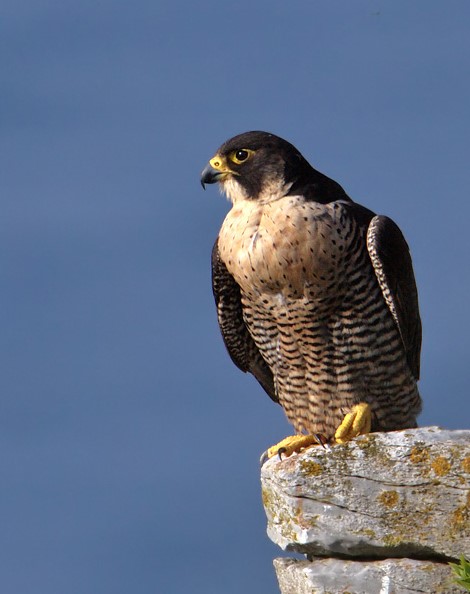
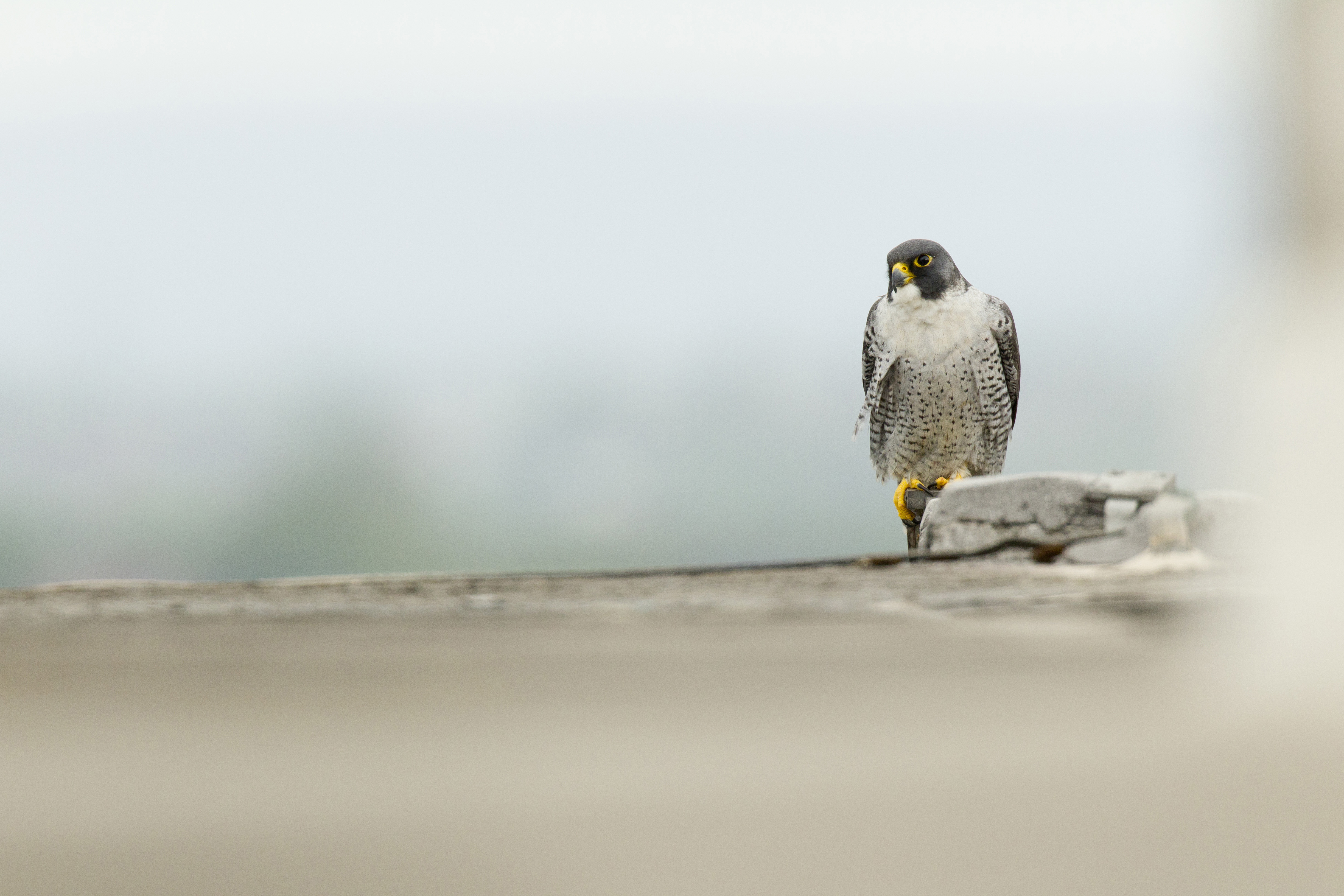
Peregrine found dead in illegal pole trap in Pentland Hills – Police Scotland appeals for information

Press release from Police Scotland:

Appeal after peregrine falcon found dead in a trap near Balerno, Edinburgh

Wildlife officers are appealing after a protected bird of prey was found dead in a trap near Balerno, Edinburgh.

The dead peregrine falcon was found around 100 yards from a public path on the edge of a small woodland south of Wester Bavelaw on Thursday, 23 November, 2023.

Wildlife Crime Officer, Detective Constable Daniel Crilley, said: “This protected bird was found in a baited pole trap that is illegal.

Peregrine falcons are protected under the Wildlife and Countryside Act and forensic tests are being done as part of our ongoing enquiries to establish the full circumstances.

We are asking anyone who saw anything suspicious in the area or who has information that could help pour investigation to get in touch.

If you can help please contact us via 101, quoting incident number 1376 of Friday, 24 November, or make a call anonymously to Crimestoppers on 0800 555 111.

ENDS

Well done Police Scotland for a speedy press release.

Pole traps, like this one photographed a few years ago on a grouse moor in the Yorkshire Dales National Park, have been illegal since 1904, and for very good reason.

Photo by RSPB Investigations

It’s a barbaric way to kill any animal and causes horrendous suffering and distress, often over a period of many hours. A spring trap is placed on a post where a bird of prey is likely to perch. When the bird lands on the ‘plate’, the trap springs shut on the bird’s legs. When the bird tries to fly off, it ends up dangling upside down because the trap is attached to the post to prevent it from being carried away. The bird remains dangling, often with severe injuries, until its ultimate demise.

Whoever set this trap, whether they were targeting a peregrine or something else, should be in jail. Anybody who is prepared to inflict this level of suffering to a living creature, let alone to a protected species, should not be at large in a civilised society.

The location of this awful crime is also of interest – just a couple of kilometres from where satellite-tagged golden eagle Fred ‘disappeared’ in 2018 (see here) before his tag (and maybe Fred) ended up in the North Sea. It’s also very close to the location of a poisoned peregrine found in the Pentlands in 2018 (here). It’s becoming quite the persecution hotspot.

It’s also yet another timely example for MSPs voting on the general principles of the Wildlife Management & Muirburn (Scotland) Bill in Parliament on Thursday. If this case, along with the recent suspicious disappearance of golden eagle Merrick, doesn’t help persuade MSPs that they’re being given the two-fingered salute, I don’t know what will.

UPDATE 2 December 2023: A Scottish grouse moor-owning Baron, an illegally pole-trapped peregrine and a Ministerial post in DEFRA (here)

Daily Mail publishes apology to Chris Packham for inaccurate reporting of his libel win against Fieldsports Channel Ltd

The Daily Mail has published an apology to Chris Packham and a correction for its inaccurate reporting of Chris’s libel win against Fieldsports Channel Ltd and one of its journalists, Andrew (Ben) O’Rourke.

Chris won his libel case (here) on 6 November 2023 after Fieldsports Channel Ltd admitted it was responsible for false and defamatory publications about Chris and submitted an apology to the court for publishing such “baseless and damaging allegations of dishonesty” that “fell far below the standards expected of responsible, impartial journalists” (see here) and agreed to pay Chris £30,000 in damages and costs, £10,000 of which had already been paid in October.

However, the following day the Daily Mail published an inaccurate article that suggested Chris had sued the wrong company and ‘may not see a penny’ of the damages/costs from Fieldsports Channel Ltd.

This was wholly untrue.

The Daily Mail published its correction and apology in yesterday’s print edition, as follows:

An article on November 7 said that, despite his successful libel action against Fieldsports Channel Ltd (FCL), Chris Packham ‘may not see a penny’ because he had sued the wrong company. In fact, FCL admitted responsibility in court and the first of three compensation payments has already been made. We apologise for suggesting otherwise.

UPDATE 10 December 2023: Shooting Times forced to publish apology to Chris Packham for inaccurate reporting of his successful libel action against Fieldsports Channel Ltd (here)

If you’re angry about the loss of golden eagle Merrick, here’s something you can do

Today’s news that yet another golden eagle (‘Merrick’) has ‘disappeared’ in an area dominated by driven grouse shooting, and that Police Scotland has reason to “believe she has come to harm” (see here and here), won’t be a surprise to anyone who follows this blog. The eagle killers have been at it for years (e.g. here).

The only surprise is that it took this long for an eagle from the high profile South Scotland Golden Eagle Project to be targeted. Although I daresay that the project’s convention of notifying estates when any of the eagles were present over their land has helped to delay the inevitable.

Golden eagle Merrick visiting northern England. Photo: Gordon MacPherson

The reason the eagle killers have been getting away with it for years (and years and years – nobody ever successfully prosecuted) is because the evidential threshold to charge a named individual is so very high. So even when, for example, three golden eagles were found poisoned on a grouse moor in the Highlands a few years ago, and a massive stash of the banned poison Carbofuran was found locked in the gamekeeper’s shed, to which only he had the key, there still wasn’t sufficient evidence to prosecute him for poisoning those eagles because the police/Crown Office couldn’t prove that that individual was the person who laid the poison that killed those three eagles.

But this frankly absurd situation is about to change, with the introduction of the Wildlife Management and Muirburn (Scotland) Bill, sometimes referred to as the ‘grouse moor reform Bill’.

This Bill proposes to introduce a licensing scheme for all grouse shooting in Scotland, and that licence could be suspended/revoked based on the civil burden of proof (i.e. ‘on a balance of probabilities’ that someone associated with the grouse shoot was responsible for an offence) rather than the much harder to achieve criminal burden of proof (i.e. where the prosecution has to prove ‘beyond reasonable doubt’ that a named individual was culpable).

The general principles of the Bill, furiously opposed by the grouse shooting industry, is due to be debated in the Scottish Parliament this Thursday (30 November 2023). If it passes, it will progress to Stage 2 where the finer details will be picked over.

It is vitally important that this Bill passes to Stage 2. It has been a long, long fight to get this Bill on the table and even though it’s not perfect, it offers the best opportunity to date to make the eagle-killers pay for their crimes.

If you’re angry about the loss of Merrick (and all the other golden eagles, hen harriers, white-tailed eagles, buzzards, goshawks, red kites, sparrowhawks, peregrines etc) that have been illegally killed before her, please consider channelling that anger into something positive.

If you’re a citizen of Scotland, please email your MSP, right now, and urge them to (a) attend the parliamentary debate on Thursday and (b) vote to pass the general principles of the Bill so it can progress to the next stage.

If you’re not sure who your MSP is, you can find them HERE.

For those who don’t live in Scotland but who care just as deeply about this issue (and let’s not forget, Merrick spent some time exploring parts of northern England so it’s not just Scotland who’s being robbed of these eagles), please send an email to the following Ministers and urge them to continue pressing on with this legislation without watering it down just to appease the eagle-killers:

Environment & Energy Minister, Gillian Martin MSP: ministerenergy@gov.scot

Green Skills, Circular Economy & Biodiversity Minister, Lorna Slater MSP: ministerforgsceb@gov.scot

Cabinet Secretary for Rural Affairs, Land Reform & Islands, Mairi Gougeon MSP: cabsecralri@gov.scot

Thank you.