Raptor poisoning map England & Wales 2007-2011

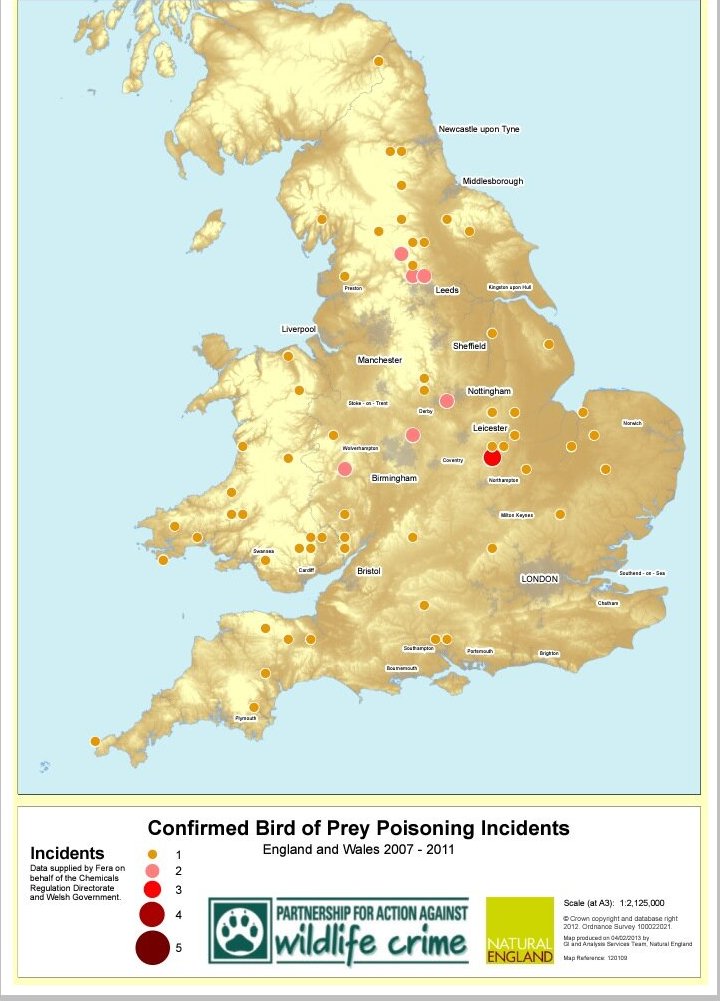
A poisoning map of England of Wales has just been published by DEFRA, detailing confirmed poisoning incidents between 2007-2011.

This map is a welcome source of information, similar to the poisoning hotspot maps that have been produced for Scotland in previous years. What would be even better is the production of maps (for Scotland as well as England & Wales) that included other types of raptor persecution incidents, not just poisoning. But they might be a bit too embarrassing, eh?

To accompany the map, DEFRA has issued a press release here.

The National Gamekeepers Organisation has also released a press release (here). They tell us not to worry, poisoning is a ‘very rare crime’. Judging by this map, which don’t forget is just the tip of the iceberg – how many incidents go undetected? – poisoning is a lot more frequent than they would have us believe: 30 poisoned raptors in 2011 alone. Oh and they also tell us that “nearly all species now at or near their highest populations since UK records began“. Er, hen harriers, red kites, goshawks, golden eagles, white-tailed eagles, kestrels, peregrines……? Morons.

Poisoning map 2007-2011

SNH species action framework conference: presentations & podcasts

species action frameworkSNH have been under fire in recent weeks over their controversial decision to authorise the use of clam traps. (Thanks, by the way, to all of you who took the time to contact SNH on this issue – we await their latest response with interest).

However, sometimes SNH do things well and this blog entry reflects that. Last November (2012), SNH held a Species Action Framework Conference in Edinburgh to discuss the results of their five-year programme focusing on the conservation and management of 32 species (see website here). Kudos to them for recently publishing the presentations, both as downloadable PowerPoints as well as Podcasts.

The following presentations may be of particular interest to RPS readers:

Managing Species Conflicts (Steve Redpath, Aberdeen University). Powerpoint presentation here; podcast here.

Sea Eagle (Andrew Stevenson, SNH and Rhian Evans, RSPB). Powerpoint presentation appears to be unavailable; podcast here.

Hen Harrier (Des Thompson, SNH and Simon Lester, Langholm Moor Demonstration Project). Powerpoint presentation here; podcast here.

The hen harrier presentation and podcast is particularly amusing, with head gamekeeper Simon Lester brushing over the reasons why none of the 34 Langholm harrier chicks raised during the current Langholm project have ever returned to breed at Langholm (er, because they’re dead?). Can’t blame the hen harrier anymore for failing grouse stock so instead he concentrated on buzzards and ravens as the prime culprits, although without producing supporting evidence. He did say that 78% of tagged red grouse had been ‘killed or eaten by raptors’. That’s quite a misleading statement – there’s a massive difference between ‘killing’ and ‘eating’. Who’s to say that the ‘eating’ wasn’t the result of scavenging the dead grouse as carrion? Anyway, we look forward, hopefully in the near future, to seeing some hard data rather than having to rely upon Simon Lester’s ‘beliefs’.

We’ll be blogging more about the demonisation of buzzards at Langholm in a later post – we’re currently reviewing some fascinating data that show, fairly conclusively on first appraisal, that red grouse are not a major component of the buzzards’ diet at Langholm. Watch this space…

Red kite shot in Shropshire

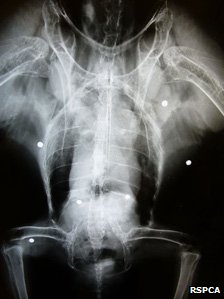
_65765793_red_kite_xray_224A red kite is lucky to be alive after being blasted with a shotgun in Shropshire. The kite is currently being cared for by the RSPCA.

A member of the public watched the bird ‘spiralling out of the sky’ before it crash landed into an electric fence in a field in Sleap, near Shrewsbury, on Saturday. The bird was taken to the RSPCA Stapely Grange Wildlife Centre where an x-ray revealed shotgun pellets in its body.

The RSPCA say the bird is responding to treatment but it’s still too early to know whether it will survive.

Anyone with information about this shooting is urged to contact the RSPCA on: 0300-123-8018

News story here

Clam traps: SNH in the last chance saloon

snh_logoOn Tuesday we blogged about SNH’s response to our concerns over the on-going clam trap fiasco (see here). We said we would outline what we thought the next step should be. Here are our thoughts:

There are two main issues. The first one is that the consultation process was flawed. It did not meet the standard required by the Scottish Government’s ‘Consultation Good Practice Guide’, which is applicable to an agency like SNH (see here).

For example, consultations should allow “at least 12 weeks to respond”. This particular consultation opened on October 1st 2012 and closed on November 9th 2012, thus only allowing 5.5 weeks in which to respond. In addition, in order to be transparent, SNH should have provided feedback on how each and every point raised during the consultation was treated. As far as we can tell, this has not taken place. Instead, it appears that the majority of points raised have been ignored (in terms of the final outcome of the consultation). In which case it could be argued that the whole consultation was pointless; SNH had already decided what they were going to do, regardless of the majority view of respondents, and they were just going through the motions of holding a public consultation to appease those of us who might object to their proposals.

The second main issue is the basis of evidence that SNH used to approve the use of clam-type traps. According to SNH, the consultation did not provide any evidence that clam-type traps were unsafe for target and/or non-target species, or a threat to protected species. Instead, they argued that as clam-type traps had previously been in use (albeit probably illegally!) it would be “disproportionate to ban their use outright”. There are several problems with this argument.

First of all, it is clear that no independent testing has taken place to provide evidence that these traps are safe. If SNH are using the ‘lack of available evidence’ to show that the traps are unsafe, then surely that mandate should also apply to demonstrate that the traps are safe before they are authorised for use? Is there any evidence to show that the traps have no welfare or lethal impacts to either target or non target species, which may include protected species, to justify their use? If there is evidence, it has not been made available to the public, in which case, SNH should have applied the precautionary principle and not authorised these traps until such time as independent testing shows they pose no threat to animal welfare as well as no impact on non-target species, some of which may be protected species.

Secondly, SNH have argued that by restricting the type of bait for these traps (bread and eggs only), they have “minimised the risk to non-target species”. Whilst this may be applicable to raptors, it certainly does not minimise the risk to other protected, non-target species, including the pine marten, a species that loves to eat eggs! According to SNH’s own website, it is an offence to intentionally or recklessly capture a pine marten unless you have a special licence to do so (see here). So why authorise a trap that, depending on its location, is highly likely to capture a pine marten?!

Thirdly, SNH said that it would be “disproportionate to ban their [the traps] use outright”. But, if you read the responses to the consultation, the majority of respondents were not asking for an ‘outright ban’ – they were asking for independent testing prior to the traps being authorised. Furthermore, there are alternative traps (Larsen trap) that could be used if clam-type traps were not approved this year or until such time as a trial showed that they are safe. So for SNH to say that not approving their use is ‘disproportionate’ is overstating the reason for approving the use of these traps.

So, where to go from here? In the first instance, we propose that people contact SNH and ask them to provide evidence to show that clam-type traps have no welfare or lethal impacts on either target or non-target species, and if they can’t provide such evidence then they should pull the clam-type trap from the General Licences until such time as that evidence is available.

This is SNH’s last chance to act. If the evidence is not forthcoming and SNH still refuse to withdraw the clam-type trap from the General Licences, then the next step would be to go to the Ombudsman and ask whether SNH has carried out this consultation appropriately.

If that fails, then we think there is a very strong case for making a formal complaint against SNH to the EU, for failing to protect the very species that they have a statutory duty to protect. This complaint wouldn’t just be limited to the clam-type trap issue – it would cover other traps that SNH have authorised, including crow-cage traps, without addressing the legitimate concerns about their use. These concerns have been raised over and over again during the last few years (see the current and previous consultation responses of groups such as RSPB, SRSGs and OneKind for examples) and SNH has consistently ignored them. They may argue that they’re going to address these concerns in their proposed ‘Code of Practice’ that they say they will develop ‘early this year’. The problem with that is it has not been made clear whether they will actually address all the concerns, and even if they do, whether this ‘Code of Practice’ will be a voluntary code (in which case it’ll be worthless) or whether breaking this code will be considered a formal breach of the conditions of the General Licence (and therefore should result in a prosecution).

It’s time to get serious. Please consider emailing SNH. It only takes a minute. The complaint should go right to the top again: Ian Jardine, (Chief Executive SNH) – ian.jardine@snh.gov.uk

If you’re not sure what to write, either copy the blog URL into the body an email, or you could use the following text as a guide – simply cut and paste or adapt it to your own words:

Dear Dr Jardine,

Re: the recent SNH consultation which led to the authorisation of clam-type traps in the 2013 Open General Licences.

Please can you provide the evidence you have used to demonstrate that clam-type traps have no welfare or lethal impacts to target or non-target species. If the evidence is unavailable, please consider withdrawing the use of clam-type traps from the Open General Licences until such time as independent and rigorously tested evidence is available.

Thanks.

Two more sea eagles poisoned in Kerry

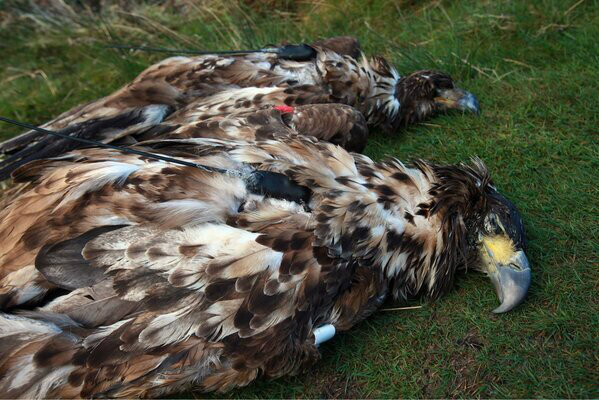
Two more white-tailed eagles have been found dead in Ireland. One, found in January 2013, has been confirmed poisoned. Another one is currently undergoing toxicology tests, although it too is suspected of being poisoned.

Full story in the Irish Times here

WTE Kerry 2013

Latest on SNH clam trap fiasco

snh_logoThe SNH clam trap fiasco continues. First, here’s a quick re-cap on their controversial decision to authorise the use of clam-type traps in the 2013 Open General Licences:

In October 2012, SNH announced that they would undertake a public consultation about the use of clam-type traps in Scotland (see here).

In early December 2012, following the public consultation, SNH announced that they would allow the use of clam-type traps on the Open General Licences beginning 1st January 2013 (see here). We questioned whether SNH had favoured the views of game-shooting lobby and ignored the views of the conservationists, and we asked to see the full set of consultation responses.

In mid-December 2012, SNH’s decision to authorise the use of clam traps led to several parliamentary questions. The questions can be read here, and the Environment Minister’s responses can be read here. The responses suggested that the Scottish Government didn’t see anything wrong with the decision to authorise clam-type trap use.

Meanwhile, also in mid-December 2012, at least two organisations (SSPCA and RSPB) asked SNH to reconsider their decision to approve the use of clam-type traps (see here).

In late December 2012, we blogged about how to recognise a clam trap being used lawfully and one being used unlawfully (see here).

In late December, SNH released the full set of consultation responses for scrutiny. In early January, we blogged about our analysis of these responses and concluded that SNH had not been truthful when they’d said that the “majority of consultees supported the proposed amendments” and that their decision to authorise the use of clam traps was based on “the feedback received“. In fact, our analysis showed that more than twice as many respondents were against the use of clam traps prior to independent testing than those who were supportive of their use! (see here). We encouraged people to contact SNH Chief Executive Ian Jardine to ask for an explanation.

So, the latest update is that SNH have now responded. The following generic letter was sent out in mid-January by one of Ian Jardine’s underlings, Nick Halfhide, Head of Operations:

I am sorry that you disagree with the decision that we have taken to include clam-type traps in the 2013 General Licences. We are aware of the potential risks to non-target species from these, as with other licensed traps, but at the same time we recognise the legitimate needs of the land management community to control certain bird species.

In balancing the needs of land managers and the risk to non-target species, we sought to gather evidence through the recent public consultation to inform our decision making. This produced much valid opinion but little solid evidence. We therefore formed the view that as these traps are already in use, and have been for some time, it would be disproportionate to ban their use outright.

Instead, we decided to take steps to minimise the risk to non-target species by placing a special condition that eggs or bread are the only permitted baits for use with Larsen mate and Larsen pod traps. In addition we intend to further test these traps this year which will be both rigorous and independent. If evidence does come to light that they pose unacceptable risks then any General Licence permitting their use could be revoked at any time.

I also understand your concerns over the potential misuse of all traps permitted under General Licences and this is something that we take very seriously. These issues are of course not new and we are aware of the recent misuse of traps to target birds of prey and this is something we are very keen to address.

We believe that one important step will be to develop a Code of Practice with the industry and key stakeholders – this document would provide clarity on design and use of traps to ensure that there is a clear understanding and agreement as to when and how they can be used. This should help to maximise their effectiveness in addressing the legitimate needs of users whilst minimising risk in relation to animal welfare, conservation and potential for misuse. We aim to take this forward early this year.

Finally, in relation to views received during the formal consultation last year, I agree that the majority of respondents did not favour the use of clam traps but were in favour of clarifying which traps could be used under General Licence. The commentary on this point in paragraph 2 of section 5 of Annex 1 in the letter to consultees dated 4 December 2012 is ambiguous and thus confusing, for which I apologise.

Yours sincerely

Nick Halfhide

Head of Operations”

Having considered this response for a few weeks, we have now decided on the next course of action. We think the SNH response is unsatisfactory in that it still does not address the fundamental problem behind their decision to authorise the use of clam-type traps; that is, SNH’s decision not to carry out independent testing prior to authorising clam trap use. A further blog entry will explain what we can do about it….

Lochindorb hare snare verdict leads to parliamentary questions

mhare contributedThe ‘not guilty’ verdict in the recent Lochindorb hare snare trial (see here) has led to some interesting parliamentary questions being asked.

Libby Anderson (of OneKind) posted the following comment on the blog. It’s a good one so we’re reproducing it here (thanks, Libby!) –

“A disappointing verdict but – while unfortunately there is no written judgment available – it does sound as if the Sheriff took pains to make it clear that this case turned on its own facts and should not be seen as a precedent.

On the “indiscriminate” issue: It may have been stated in court that bycatch is rare – amazing considering the high non-target capture levels recorded in DEFRA’s report on snaring last year, based on “best practice” field trials. But indiscriminate capture surely also refers to capture WITHIN the target population. For example, how can a snare be set to ensure it doesn’t capture a pregnant or lactating female? (Bearing in mind this case dates from before the close seasons were introduced for hares.)

Snares are specifically prohibited for use on mountain hares under the Bern Convention. If a state decides to make an exception to this it must be for good reason, subject to appropriate conditions and returns must be submitted so that the state can report to the COE. Yes, a licensing scheme!

I don’t really understand why there isn’t a strict liability offence of using a snare for the relevant species without a licence. Surely it shouldn’t be left to individuals to decide what the law is about using non-selective traps for protected species? Are industry legal advisers able to judge the population status of a protected species?

ChristineGrahameMSPRPS readers may be interested to see that Christine Grahame MSP [Midlothian South, Tweeddale and Lauderdale, SNP] has lodged some questions which ask the Scottish Gov to clarify current legal position:”

S4W-12780 Christine Grahame: To ask the Scottish Government how it ensures that it complies with the Convention on the Conservation of European Wildlife and Natural Habitats regarding the (a) use of non-selective traps to capture protected species and (b) the reporting requirements under article 9.2.

S4W-12781 Christine Grahame: To ask the Scottish Government what the legal basis is for the licensing regime operated by Scottish Natural Heritage regarding the use of snares to capture mountain hares.

S4W-12782 Christine Grahame: To ask the Scottish Government how many applications for species licences to use snares to capture mountain hares have been made since 2006; how many have been granted, and for what reasons licences were not granted.

The expected answer date is 28 Feb 2013 so we’ll post those when they’re available.

Mountain hare fans might be interested in Andy Howard’s fantastic photographs on his website Highland Nature Images (here).

New raptor crime reporting protocols – but for whose benefit?

Two new raptor crime reporting protocols have just been published on the PAW Scotland website. One covers the ‘collection of evidence for incidents of raptor crime’ and the other is ‘guidance for people who lose contact with satellite-tagged birds’.

Both protocols come from the Scottish Raptor Persecution Priority Delivery Group (SRPPDG). This group was established in 2009 as a sub-group of PAW Scotland and these protocols are the first ‘deliveries’ from the group. Before discussing each protocol in turn, it’s worth bearing in mind which organisations make up the SRPPDG, because then you’ll understand why landowner appeasement and suppression of news reports seem to be prominent elements in the protocols.

The current make-up of the SRPPDG is as follows:

Scottish Land & Estates (SLE), Scottish Gamekeepers’ Association (SGA), Game & Wildlife Conservation Trust (GWCT), British Association for Shooting & Conservation (BASC), Scottish Natural Heritage (SNH), National Wildlife Crime Unit (NWCU), Scottish Police, Scottish Government, Science & Advice for Scottish Agriculture (SASA), RSPB, Scottish Raptor Study Groups (SRSGs).

Let’s start with the ‘Collection of evidence for incidents of raptor crime’ protocol. You can read it here. This protocol is not just about the ‘collection of evidence’ – importantly, it’s also about how to report a raptor crime.

Incredibly, this protocol suggests that all suspected incidents of raptor crime ‘MUST’ be reported to the police. Now that’s not actually true. If the raptor crime involves a situation where an animal’s welfare is at risk (e.g. a live raptor caught in an illegally-set trap), then the SSPCA have a statutory authority to investigate the incident and report it for consideration for prosecution to the Crown Office. They can do this without needing police assistance – they have a highly experienced Special Investigations Unit to coordinate it. Nowhere in this protocol is that option given as a recommended course of action.

Also missing from the reporting options is a recommendation to report a suspected raptor crime to the RSPB. Now, unlike the SSPCA, the RSPB does not have any statutory authority to investigate. If they are involved, they have to work with one of the statutory authorities. Nevertheless, to exclude them entirely from this protocol is a dangerous business. They, too, have a highly specialised Investigations Unit, whereas some Scottish police forces still don’t even have a full-time wildlife crime officer, even though this was a recommendation made by the Scottish Government about five years ago!

The dead golden eagleWe have seen time and time again instances of suspected raptor crimes that have been reported to the police but the follow-up investigation has left a lot to be desired. Here is just one example from 2010. Also in 2010, the then Environment Minister Roseanna Cunningham admitted that police action on wildife crime investigation was “a challenge” (see here). Have things improved since then? Well, if you look at the recent incident of that golden eagle that was found dumped next to an Aberdeenshire lay-by, you could easily argue that things have not improved. The police did not issue a press statement about the illegal killing of that eagle, and nor did they even apply for a search warrant to search the land, buildings and vehicles where the bird was ‘downed’ for several hours before it was moved and dumped in the lay-by. The only reason the public found out about that incident was because the RSPB issued a press release 4.5 months after the incident (see here), perhaps in exasperation that the police hadn’t bothered.

We’re not suggesting that all Scottish police forces are useless at investigating wildlife crime. Some of them are very good, others not so good. Yes, we all recognise that prosecuting wildlife criminals is fraught with legal obstacles, but surely because of that it makes sense to involve as many specialist agencies as possible?

In whose interest is it, not to recommend reporting suspected raptor crime incidents to the SSPCA and RSPB? If we do as the protocol says and just report the incident to the police, who is going to follow up and ensure that the case is properly investigated? Who’s going to keep us, the general public, informed of raptor crime incidents? If the incident is reported solely to the police, who’s to know about an incident if the police decide to suppress it from the public arena? It doesn’t take much imagination to guess at who would benefit from such a protocol.

It is our strongly-held view that ALL incidents of suspected raptor crime should be reported to the RSPB Investigations Unit. If  the police need to be involved then the RSPB will contact them, or you can contact them yourself in addition to contacting the RSPB. If a live animal is involved, the first port of call should be the SSPCA. In our opinion it is vital that these agencies are not excluded from the reporting process – just think about the long list of raptor persecution incidents that the RSPB publishes each year in their annual report – nobody else publishes these because it isn’t in their interests to do so!

RSPB Scotland Investigations Unit: 0131 317 4100

SSPCA 24-hour animal welfare hot-line: 03000 999 999

The second recently-published protocol provides guidance for people who are actively involved in raptor satellite-tracking projects in Scotland. You can read the protocol here.

This one’s amazing. The protocol is, if the signal from your satellite-tagged bird has either ceased or is transmitting from the same area for more than 24 hours, you are to contact the National Wildlife Crime Unit (presumably for ‘intelligence’ on the given area). If you think the circumstances are not suspicious you should contact the landowner and then go looking for the bird. The problem with this is two-fold.

Firstly, what is defined as ‘suspicious’? Surely, any ‘downed’ bird on a piece of land that is used for game shooting must be considered suspicious until proven otherwise? In which case, the landowner should not be informed until a covert search for the downed bird has taken place.

Secondly, just how good is the NWCU’s ‘intelligence’? In a recent NWCU report (NWCU Strategic Assessment, Feb 2011) the following statement appears in the section about peregrine persecution:

Almost half of these reports originated from the RSPB but were not reported by the police force the offence occured in“.

Christ, if that’s not reason enough to persuade you to report raptor crimes to the RSPB then nothing is!

We don’t know how good the NWCU’s intelligence is. Based on the killing of that golden eagle mentioned above, and the subsequent ‘investigation’, you could argue that their intelligence is rubbish. The history of the area, in terms of dead raptors being found in suspicious circumstances, should have been an instant trigger to set off a request for a search warrant. We still have not been given a satisfactory explanation as to why a search warrant was not requested.

The protocol goes on to explain how any media publicity will be handled after the police investigation. Basically, the police ‘may choose’ to issue a press statement. That means they probably won’t say anything at all or if they do, they undoubtedly won’t mention any estate names. The NWCU will advise the satellite-trackers, and also several nominated groups from the SRPPDG (Scottish Government, BASC and Scottish Land & Estates!!!!!!!). The protocol ends with this:

There should be no further public comment on the finding“.

What? So it all gets quietly brushed under the carpet, none of us are any the wiser and the game-shooting lobby can continue to claim that they’ve all cleaned up their acts and with no evidence to the contrary they should now be allowed licences to legally cull raptors?

Ah, partnership working at its finest.

Countryside Alliance nicked our text!

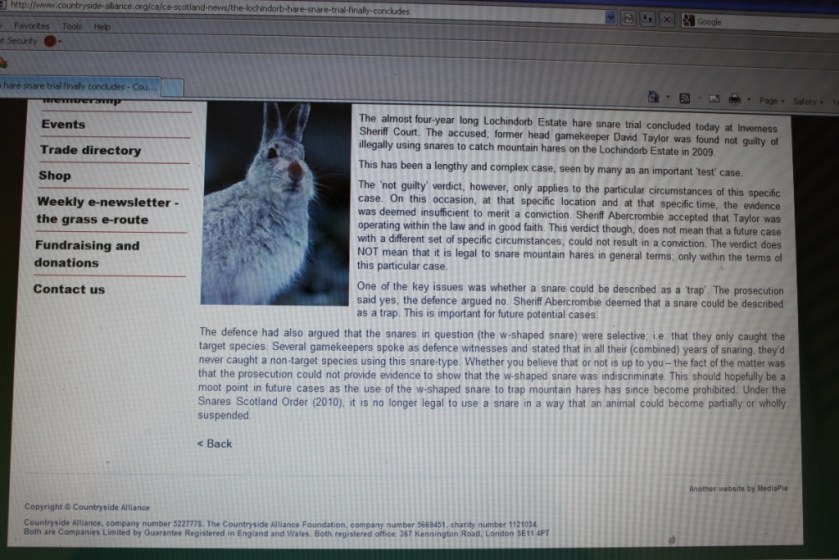
Well, well, well. Take a look at the Countryside Alliance’s website (see photos below) – they’ve only gone and nicked our text on the Lochindorb trial verdict, without acknowledging us as the authors!! They’ve even got ‘Copyright © Countryside Alliance’ at the foot of the page!

Seems like a breach of copyright to us, not dissimilar to the claims made by BASC last year when a video produced by the League Against Cruel Sports had to be removed as they’d included BASC footage, without permission for use (see here). The shooting press called that an ’embarrassing blunder’.

Here’s a message to the Countryside Alliance – either acknowledge where you lifted the text from, or remove it from your site. We’re flattered that you should think our blog is worthy of replication but we do not want anyone to think that we write for a shit outfit like yours.

UPDATE (17.00hrs). ‘Embarrassing blunder’ all sorted – our text now mashed up with their own.

IMG_2113a

IMG_2115a

Implications of the Lochindorb hare snare verdict

The almost four-year long Lochindorb Estate hare snare trial concluded today at Inverness Sheriff Court. The accused, former head gamekeeper and long-time SGA committee member David Taylor was found not guilty of illegally using snares to catch mountain hares on the Lochindorb Estate in 2009.

This has been a lengthy and complex case, seen by many as an important ‘test’ case. For previous blog entries see here, here, here, here, here and here.

The ‘not guilty’ verdict, however, only applies to the particular circumstances of this specific case. On this occasion, at that specific location and at that specific time, the evidence was deemed insufficient to merit a conviction. Sheriff Abercrombie accepted that Taylor was operating within the law and in good faith. This verdict though, does not mean that a future case with a different set of specific circumstances, could not result in a conviction. The verdict does NOT mean that it is legal to snare mountain hares in general terms; only within the terms of this particular case.

One of the key issues was whether a snare could be described as a ‘trap’. The prosecution said yes, the defence argued no. Sheriff Abercrombie deemed that a snare could be described as a trap. This is important for future potential cases.

The defence had also argued that the snares in question (the w-shaped snare) were selective; i.e. that they only caught the target species. Several gamekeepers spoke as defence witnesses and stated that in all their (combined) years of snaring, they’d never caught a non-target species using this snare-type. Whether you believe that or not is up to you – the fact of the matter was that the prosecution could not provide evidence to show that the w-shaped snare was indiscriminate. This should hopefully be a moot point in future cases as the use of the w-shaped snare to trap mountain hares has since become prohibited. Under the Snares Scotland Order (2010), it is no longer legal to use a snare in a way that an animal could become partially or wholly suspended.

The other important issue highlighted by this case was the lack of current scientific understanding of mountain hare population ecology in Scotland. We hope SNH will get their act together and implement an appropriate research and monitoring strategy for what many believe is a keystone species; i.e. one that plays an important role in the survival of other species such as the golden eagle and probably the pine marten.

BBC news article here

SGA statement here

Defence agent’s statement here