Raven found poisoned at Killard Nature Reserve

raven poisoned KillardThanks to the contributor who sent us a copy of the following article, published in the (County) Down Recorder, 23 July 2014. We’ve shortened it slightly:

The poisoning of a raven at Killard Nature Reserve, County Down, has prompted a police investigation and raised serious concerns amongst environmentalists.

The dead bird was found on 15th March 2014 but it has only now been confirmed that it was poisoned with the banned pesticide, Carbofuran.

Situated at the mouth of Strangford Lough opposite Ballyquintin, where walkers are attracted by the area’s rich wildlife and interesting rock formations, the site is managed by the Northern Ireland Environment Agency (NIEA).

An NIEA spokeswoman said they were “deeply concerned” and advised members of the public at Killard not to pick up any dead wildlife in case they are poisoned. She explained that the raven, protected by the Wildlife (NI) Order 1985, was found by one of their wildlife officers on the cliff top above Benderg Beach.

“The dead raven was found in an unnatural posture which, from experience, led the officer to believe that it may have been poisoned”, said the spokeswoman. “Despite a thorough search no evidence was found that poison had been laid in the reserve. Tests completed in early July revealed that the raven had died as a result of ingesting Carbofuran, a poison banned for use throughout the EU. It is likely that the bird picked this up from a poisoned bait within 100 metres of where the raven was found.

“NIEA is deeply concerned, not only the poisoning of a protected species nesting locally, but also that it took place on or near a protected site where wildlife should be safe”.

NIEA said it wasn’t aware of any other incidents at the reserve but issued the following advice: “Members of the public visiting Killard are asked to avoid handling any dead animals such as rabbits or birds in case they may have been poisoned or baited with poison. Dogs should be kept on the lead and prevented from approaching any such corpses, and dogs are not permitted on the Reserve when livestock graze there over the winter months.

“If members of the public in the Killard and Ballyhornan area do come across any dead crows, birds of prey or foxes, or find any suspicious carcasses or rabbits or chickens covered in granular or powdered substances, or see any suspicious activity which could relate to illegal poisoning, they are asked to contact Downpatrick PSNI”.

A spokeswoman for the RSPB in Northern Ireland said the incident was “very disappointing”.

“All cases of birds or wildlife being poisoned by an illegal substance are worrying, but this incident is particularly concerning because the County Down area is a stronghold for the threatened red kite”, she said.

“Having been persecuted to extinction in Northern Ireland more than 200 years ago, kites were reintroduced here in 2008. Sadly, last year alone around 30% of the breeding population were confirmed poisoned, making it more difficult for the species to thrive.

“Leaving out poisoned bait is an illegal practice as it is indiscriminate and can affect not only scavenging birds like red kites, but also pets, livestock and humans”.

Hen Harrier Day: “We will win”

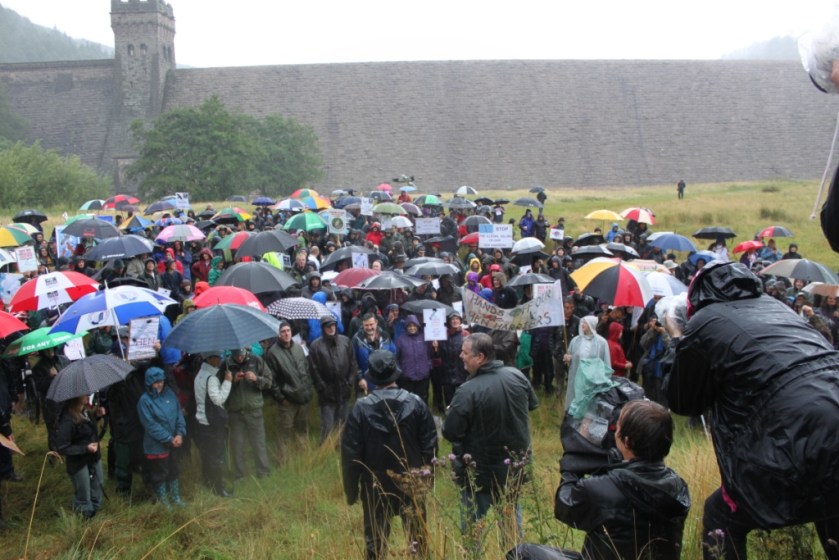
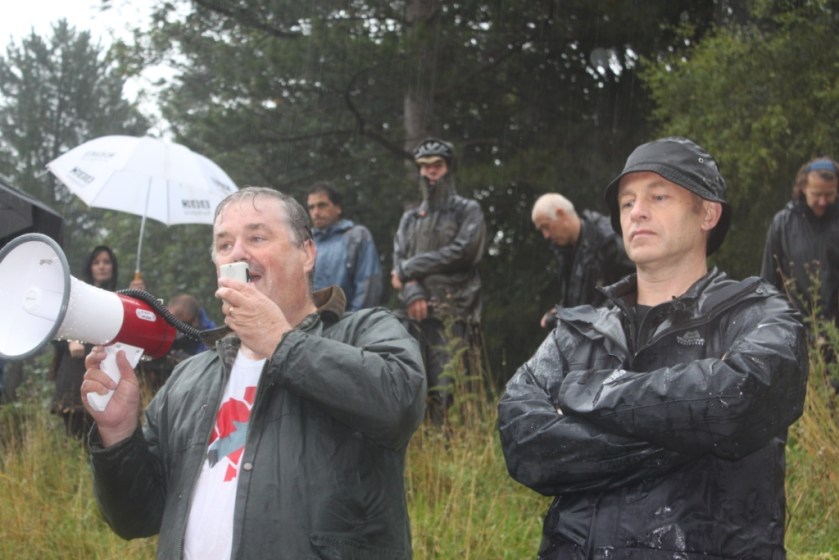
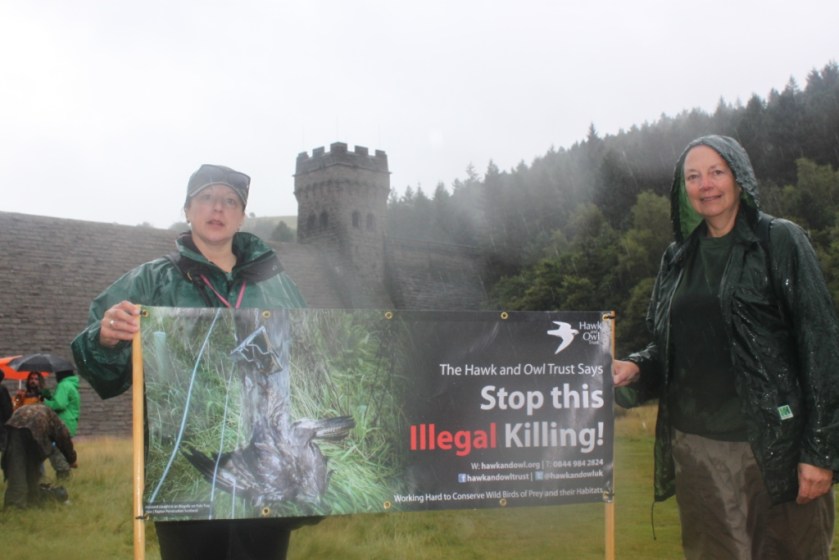
What an absolute privilege it was to be part of the 570-strong crowd at Derwent Water today for the inaugural Hen Harrier Day. 570 people, from Inverness to the Isle of Wight, who wouldn’t even let ex-Hurricane Bertha stop them from coming out to stand together and say they’d had enough of illegal hen harrier persecution. Strong, resolute and defiant; even if the dam’s wall had burst they’d still have stood firm. The cheers and applause that greeted Chris Packham’s closing statement, “We will win“, could probably be heard throughout the Dark Peak. Long may it resonate.

IMG_3833a

IMG_3830a

IMG_3835a

IMG_3837a

IMG_3841a

That guy in the blue coat holding up his phone (below) – that’s Barry Gardiner MP, the Shadow Environment Minister.

IMG_3839a

The woman in the blue coat (below) – that’s Amanda Anderson, Director of the Moorland Association, who appeared to be recording the speeches – perhaps the MA are getting a bit jittery?

IMG_3842a

IMG_3843a

“We will win”

IMG_3844a

IMG_3848a

IMG_3849a

IMG_3852a

IMG_3855a

Of course, illegal hen harrier persecution isn’t restricted to driven grouse moors in England. Here’s a quick overview of the issue in Scotland (info from the 2011 Hen Harrier Conservation Framework & the 2010 national survey):

  • The potential national hen harrier population in Scotland is estimated (conservatively) to be within the range 1467-1790 pairs.
  • The current national hen harrier population in Scotland as recorded during the most recent (2010) national survey is 505 pairs, more than a 20% decline from the numbers recorded during the 2004 national survey.
  • In Scotland, the hen harrier has a favourable conservation status in only five of 20 regions.
  • Two main constraints were identified: illegal persecution, and in one region, prey shortages.
  • The species is particularly unsuccessful in the Central Highlands, Cairngorm Massif, Northeast Glens, Western Southern Uplands and the Border Hills. There is strong evidence in these grouse moor regions that illegal persecution is causing the failure of a majority of breeding attempts.

IMG_3858a

This is what solidarity looks like (thanks Chris & Mark for being good sports!). Special mention to Findlay Wilde and his Dad for bringing along this spectacular centre piece.

IMG_3861a

Why not join 13,000 other voices and sign this e-petition to ban driven grouse shooting.

Media coverage of Hen Harrier Day in the Peak District:

Read Mark Avery’s take on the day here

Read what Guy Shorrock (RSPB Investigations) had to say here

A blog about the event from Alan Davies (The Biggest Twitch) here

Findlay Wilde’s blog about the day here

Article on Birdwatch website here

A blog about the event by Stewart Abbott here

A blog about the event by Ginny Battson here

Hen Harrier Day in pictures on RSPB Skydancer blog here

Watch Mark Avery & Chris Packham deliver their speeches (filmed by Stephen Cummings aka @TheBaldIbis) here

A video from the day, filmed and produced by Chris Packham’s ‘team’ here

East Scotland sea eagle chick fledges: what fate awaits this one?

For the second consecutive year, a young white-tailed eagle has successfully fledged from a nest in east Scotland.

His sibling, who hatched in 2013, un-mysteriously ‘disappeared’ earlier this year in a notorious raptor persecution blackspot in the Cairngorms National Park (see here and here). He was the first sea eagle to fledge in east Scotland in over 200 years but he didn’t even survive to see his first birthday. His satellite transmitter went silent after he’d visited a driven grouse moor where previously a head gamekeeper had been convicted of poisoning offences (2006), a poisoned golden eagle had been found in 2011 (no prosecution), a poisoned buzzard had been found in 2011 (no prosecution), poisoned bait had been discovered in 2011 (no prosecution) and a short-eared owl had been found in 2011 that had been shot and shoved underneath a rock (no prosecution). The police raided the estate in April this year but found no trace of the eagle.

He might not have been the first sea eagle to fledge in Scotland in over 200 years if another east Scotland pair had not had their nest tree felled by someone with a chainsaw (see here – no prosecution).

The BBC is running an article on this year’s fledgling (see here) and includes a telling remark from RSPB Scotland saying they hoped the young bird would avoid areas where birds of prey have been poisoned or trapped. In other words, steer clear of driven grouse moors.

He’s got at least five years in which to run the gauntlet before he becomes mature enough to breed – we don’t rate his chances much.

Go west, kid, go west.

wtse fife 2014 ian francis

LUSH Cosmetics supports hen harrier day

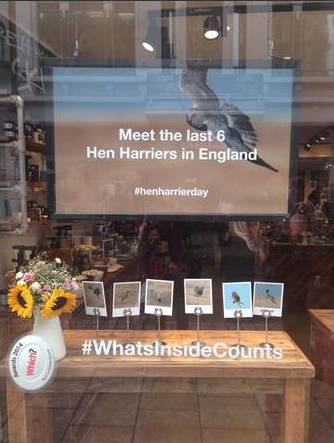
We saw this on Twitter yesterday (thanks to @vickysummers86) and thought it deserved sharing. It’s a window display from a LUSH Cosmetics shop:

LUSH shop VSummers

Well done LUSH! Check out their website here and buy their products!

Also seen on Twitter yesterday…..Reservoir Cats make a welcome return after four long years with this masterpiece. Wonder if we’ll see them hanging out at Derwent this weekend…

GWCT, the Moorland Association, and their absurd hen harrier pantomime

There’s a very good blog published today on the British Ornithological Union’s website (here). It’s written by Dr Arjun Amar, a leading raptor ecologist who has published widely on the hen harrier following his PhD and post-doc studies on this species.

Arjun’s blog summarises what he calls the ‘terminal decline’ of the hen harrier and discusses the various approaches that are currently being discussed to prevent the inevitable. The three main approaches are:

1. A ban on driven grouse shooting.

2. A grouse moor licensing scheme whereby sporting rights can be removed if illegal persecution continues.

3. A brood management scheme – which basically means removing young harriers from grouse moors, rearing them in captivity and releasing them elsewhere.

In Arjun’s considered opinion, “any one of these three approaches could work well to provide a conservation success (i.e. more harriers) at least in the short term“.

He’s right, of course, in a strictly scientific sense, although he doesn’t address either the ethical, practical or enforcement issues that accompany each approach. But then why should he? He’s a scientist and he’s arguing from a scientific perspective, which is appropriate in the context of the BOU website.

Meanwhile, Andrew Gilruth of the GWCT has jumped on Arjun’s blog and has written an article proclaiming, ‘Leading raptor scientist believes hen harrier brood management could provide success‘ (see here).

Yes, strictly speaking, that’s what Arjun did say. But he also said that the other two approaches could also work well. But then we’d hardly expect GWCT to headline an article with, ‘Leading raptor scientist believes a ban on driven grouse shooting could provide success‘!

Why did GWCT choose to highlight the brood management option and not the banning of driven grouse shooting or a grouse moor licensing scheme? Well, according to Andrew Gilruth, “it would appear to make sense to implement the only approach that is ready right now – brood management“. The thing is, the brood management approach is not ‘ready right now’. In fact it’s far from being ready – read this for a good explanation.

It’s all about the careful cherry-picking of words, of which the GWCT (and others in the game-shooting industry) do so well. If you’ve read the GWCT’s recent articles on hen harriers and taken them at face value (i.e. not bothered to read around the subject), you’d be forgiven for believing that the GWCT loves hen harriers and wants to help them recover. But you have to read the small print to understand that this ‘recovery’ is conditional on the hen harriers being restricted to areas away from driven grouse moors.

It wasn’t so long ago that the GWCT (or Game Conservancy Trust as they were then called) were calling for a cull of hen harriers on grouse moors (e.g. see here), as was the Moorland Association (see here) who are also currently trying to convince us that they love hen harriers. This is the same Moorland Association who claimed there was ‘no evidence’ of gamekeepers persecuting hen harriers and that moorland owners are ‘within their rights and the law to deter hen harriers from settling on their moor to breed’ (see here). This is also the same Moorland Association (along with the National Gamekeepers Organisation) who failed to encourage their members to sign a pledge to accept the laws protecting hen harriers (see here).

Some people may be taken in by the GWCT and Moorland Association’s current absurd hen harrier pantomime, but many of us are not.

E-petition to ban driven grouse shooting: SIGN HERE.

To find out how you can get involved with Hen Harrier Day activities, click here.

Hen Harrier photo by Gordon Langsbury.

Standing in solidarity for Hen Harrier Day: 10th August 2014

Hen-Harrier-Day-2014cHen Harrier Day is only a week away.

At 10am on Sunday 10th August 2014, hundreds of people will gather at three locations in northern England to protest about the illegal killing of hen harriers on driven grouse moors.

At the same time, over one million social media users will be seeing a ‘thunderclap’ message on their timelines about illegal hen harrier persecution.

Unfortunately, there isn’t a Hen Harrier Day ‘event’ planned in Scotland this year (although there will be next year – we’ll make sure of that). However, this provides us with an opportunity to stand in solidarity with our colleagues south of the border and show our unified support – after all, hen harrier persecution is not restricted to the English uplands – they are just as likely to be killed on a Scottish grouse moor as they are on an English grouse moor.

Here’s one example – this male was caught in an illegally-set leg-hold trap on a driven grouse moor in the Highlands a couple of years ago. Had he not been found and rescued by raptor fieldworkers, it’s quite likely his head would have been smashed in with a stick or a rock and his lifeless, bloodied body carted off to be hidden or burnt. Various red kite body parts were found on the same estate at the same time, their dismembered legs stuffed down rabbit holes. Nobody was prosecuted for these offences.

HH 2ndtrap6a

We know that a large number of our friends and colleagues from Scotland are travelling to the Northumberland rally next weekend, and we (RPS) will be at the demo in the Peak District.

Hen Harrier Day is an unprecedented opportunity to stand up and show you care. We urge as many of you as possible to get involved and show your support. There are a number of ways of doing this, including turning up at one of the demos, getting yourself a Hen Harrier Day t-shirt, joining the social media Hen Harrier Day ‘thunderclap’, downloading the Hen Harrier Day poster and taking a ‘selfie’ and using the #HenHarrierDay hashtag on Twitter. Details about all of these things, and more, can be found here.

You can also join over 10,000 others who have signed a petition to get driven grouse shooting banned – sign here.

Massive, massive kudos and thanks to Birders Against Wildlife Crime, Mark Avery and Chris Packham for their extraordinary (voluntary!) efforts to bring desperately-needed media attention to expose one of the biggest on-going scandals in UK conservation history. We’re very proud to be part of it.

Gamekeeper convicted for pole-trapping offences

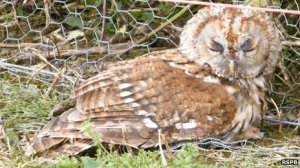
tawny owlMark Stevens, a self-employed gamekeeper who worked on Andrew Lloyd Webber’s Sydmonton Court Estate in Hampshire, has been convicted of setting two illegal traps and has been fined £700 with £650 court costs and a £50 victim surcharge.

Stevens, 42, admitted setting the two pole traps at a pheasant release pen in August last year but claimed he was targeting a grey squirrel that had been eating the pheasants’ food. The traps, which were not set on Lloyd Webber’s estate but on land at nearby Echinnswell, were discovered after a member of the public found a tawny owl hanging upside down with its leg caught in one of the traps. Its leg injuries were so severe it had to be euthanised by a vet.

According to Stevens’ solicitor, the setting of the traps was ‘accidental’.

Well done to the RSPB Investigations Team, Hampshire Constabulary and the Crown Prosecution Service for securing a conviction.

Pole-trapping has been illegal for over 100 years. Stevens is the latest of a number of gamekeepers recently convicted for this barbaric practice (e.g. see here and here). Unsurprisingly, all of them have claimed the traps were targeting squirrels and not birds of prey (as if that makes a difference).

RSPB Investigations video here (WARNING: GRAPHIC CONTENT)

RSPB Investigations blog here

News story in Daily Mail here

News story on BBC here


Poisoned bird found on former DEFRA Minister’s grouse moor: why no publicity?

In February 2009, a dead raven was found on a Scottish grouse moor. Nothing surprising about that.

The dead raven was sent off to SASA for toxicology tests and their investigation concluded the bird had died from ingesting the banned poison, Carbofuran. Nothing surprising about that.

There wasn’t any subsequent publicity about this incident. Nothing surprising about that.

There wasn’t any subsequent prosecution. That’s kind of what we’ve come to expect so no surprises there, either.

However, this wasn’t just any old Scottish grouse moor. This was a grouse moor on Glenmazeran Estate in Inverness-shire. Glenmazeran Estate is, according to Andy Wightman’s brilliant website ‘Who Owns Scotland‘, owned by the Englefield Estate Trust Corporation Ltd, c/o Englefield Estate Office, Theale, Reading.

According to further information provided by the Who Owns Scotland website, “Englefield Estate Trust Corporation Ltd is a company registered in England No. 02065923. One of the beneficial owners is Richard Benyon, the Environment & Fisheries Minister in the UK Government (data accurate at August 2011)”.

At the time of this poisoned bird’s discovery, Mr Benyon MP was the Shadow Minister for the Environment, Food and Rural Affairs, until the 2010 general election when he entered Government. He was subsequently appointed the Parliamentary Under Secretary of State at DEFRA, with special responsibility for biodiversity and the natural environment, amongst other things, until he was booted out in Cameron’s reshuffle in October 2013.

While Mr Benyon was in post at DEFRA, the government sanctioned the controversial buzzard ‘management’ trial and committed £375k of taxpayers money to help support it (see here), although they swiftly backtracked after a huge public outcry against the plan (see here). However, the following year Natural England, acting on behalf of DEFRA, decided to go ahead and issue a licence (to a gamekeeper with a past conviction for wildlife crime) to destroy buzzard eggs and nests to protect pheasants (see here).

Mr Benyon also decided there was no need to introduce vicarious liability to England because “there are very good laws in place to punish the illegal killing of any animal. If they are not being effectively enforced, they must be and we will take steps to make sure that happens. However, this is a good opportunity to applaud gamekeepers for the wonderful work they do in providing excellent biodiversity across our countryside” (see here and here).

Mr Benyon also refused to criminalise the possession of the poison Carbofuran in England (see here and here).

These actions can be seen in a whole new light given what we now know was discovered on Glenmazeran Estate back in 2009.

Of course, the discovery of the poisoned raven on Glenmazeran doesn’t mean that Mr Benyon or anyone else connected with the estate was responsible. Some gamekeepers on some estates are known to place poisoned baits along the boundary of an estate, presumably to make any police investigation that much more difficult and to potentially deflect attention on to someone else. Glenmazeran is not known to us as an estate where frequent raptor persecution takes place, but it is situated in a notorious raptor persecution area and several other estates in the area are suspected to be regularly involved with criminal activity and some of them even have convictions for these offences.

What’s intriguing about the Glenmazeran incident is the complete silence about this case. Did the police (it would have been Northern Constabulary at the time) investigate? Did they search Glenmazeran or other nearby estates? Why didn’t they issue any media statements about this discovery? Would public knowledge of this incident have jeopardised Mr Benyon’s political career? It shouldn’t have, as he was never implicated in the crime, so why was it kept quiet?

What we do know is that the ‘landowner’ (whoever that was) was informed about the crime. This from the SASA report:

Raven found dead in remote area. The analytical investigation established that carbofuran poisoning was responsible for the bird’s death. The police have informed the landowner of the incident but the source of the chemical has not been established“.

Fascinating stuff.

Hello, Westminster!

WestminsterIt seems that somebody in Westminster is spending a lot of time reading this blog. An awful lot of time, actually.
Take a look at the stats from our ClustrMap – this is an app that keeps track of where our site visitors are coming from. It shows a breakdown of all the countries, and then within each country it shows which cities/areas our visitors have logged in from.

The UK visitor stats show 154,070 visits between 14th September 2013 to date. Of those, 48,609 visits have come from Westminster. That accounts for almost almost one third of all UK-based visits in the last ten months.

It’s in sharp contrast to the number of visits from Orkney (3)!

Hmm, can’t think why anyone in Westminster would be so interested, unless of course they have a vested interest in what happens on driven grouse moors in northern England and Scotland….

Ross-shire Massacre: the pig’s ear of an investigation continues

RK5Ten days ago we blogged about the progress (or apparent lack of) being made in the Ross-shire Massacre case, four months on from the discovery of 22 dead raptors in one of Scotland’s worst raptor poisoning incidents (see here).

A couple of days ago, somebody told us that the ‘official’ number of birds confirmed poisoned was now 16 (12 red kites + 4 buzzards), according to Police Scotland.

We found this news intriguing. Did it mean that the remaining six carcasses (4 red kites + 2 buzzards) had not been poisoned?

No. What it turned out to mean was that toxicology tests on those remaining birds are still “continuing”, according to a news report in The Press and Journal (see here).

Still continuing, four months after discovery? Is that because the poison is proving difficult to detect, or is it because the tests have not been given priority? If not, why not?

What a shambles. And that’s only the start of it…..

Previous posts on the Ross-shire Massacre here