Shot buzzard successfully rehabilitated and released

Last month we blogged about a buzzard that had been found with shotgun injuries in North Frodingham, East Yorkshire (see here). Vet Mark Naguib pinned the buzzard’s wing and the bird spent four weeks in the expert care of wildlife rehabilitation specialist Jean Thorpe.

Buzzard shot Driffield April 2016 Jean Thorpe

Two days ago, Jean was able to release the buzzard back to the wild:

Chxf07BWUAA02lP

Just a few weeks earlier, we blogged about Jean’s work to successfully rehabilitate and release a shot red kite (see here).

Thanks, again, Jean Thorpe, for the incredible work you do.

If anyone wants to support Jean’s efforts, please consider making a donation here.

More raptor poisonings in Co Antrim, Northern Ireland

Peregrine GlenwherryLast month we blogged about a dead peregrine that had been found at a well known persecution hotspot on 11th April 2016 (see here). Laboratory tests have now confirmed this peregrine was poisoned with the banned pesticide Carbofuran.

A further two poisoned raptors have now been reported in Co Antrim: a buzzard found in woodland in Glenarm on 15th March 2016 (lab results confirm Carbofuran poisoning) and a second buzzard, also found near Glenarm on 29th March 2016 (lab tests confirm Alphachloralose poisoning).

Media coverage here, here, here.

Well done to PSNI Wildlife Liaison Officer Emma Meredith, who pressed for a quick turnaround on these lab results. This is a major step forward in the fight against raptor persecution in Northern Ireland, where previous lab results and subsequent police appeals have taken far, far too long (e.g. see here).

A further step forward in tackling raptor persecution in NI was announced in March (here) with the launch of a multi-agency initiative, Operation Raptor. With the news of these latest three poisoning victims, they’ve got their work cut out.

Aileen McLeod out – Andy Wightman MSP in!

Scotland will be getting a new Environment Minister as former MSP Dr Aileen McLeod has lost her seat.

While it’s sad when someone loses their job, we’re not sorry to see Dr McLeod go. Her record as Environment Minister was wholly unimpressive, at least on the ‘wildlife’ aspect of her portfolio. Her inaction since she took the post in November 2014 has earned her the nickname ‘Dr Doolittle’ amongst regular blog commentators.

Notable failures include:

Her failure to make a decision on whether to grant additional investigative powers to the SSPCA, even though the public consultation ended 20 months ago in September 2014 (see here).

Her failure to make a decision on whether beavers should receive legal protection, even when she knew pregnant beavers were being shot by landowners (see here).

Her claim that red grouse killed on driven grouse moors are healthy (they’re not), natural (they’re not) and sustainable (they’re not) (see here).

Her claim that the Scottish Gamekeepers Association has helped ensure the Scottish Government implements ‘best practices of conservation and wildlife management’ (yes, really!) (see here).

Her claim that Community Pay Back Orders are an effective alternative to custody for those convicted of wildlife crime, even though there is no evidence to support this (see here).

Her repeated (and perhaps most infuriating) rhetoric, rolled out after every incident of raptor persecution, that action was being taken to combat the criminals (e.g. see here and here). Yes, action was being taken but not nearly enough and not nearly fast enough.

There was one notable success – her acceptance of the recommendations made by the Wildlife Crime Penalties Review Group calling for tougher penalties (see here).

We wish her well in whatever she does next.

The issue now is who will Nicola Sturgeon put in to the role of Environment Minister?

Weds 3rd June CopyIn other election news, we’re delighted to see that Andy Wightman has been elected to Holyrood as a Scottish Greens MSP. Best known for his long-term research and outspoken campaigning on land reform issues, his new role probably won’t be welcomed by many of the country’s large estate owners or their representative bodies because there is nobody better informed (and now well placed) to hold the SNP to account over their land reform measures. Andy is also extremely well-informed about the environmental and social problems associated with the intensive management of driven grouse moors, as he demonstrated as senior author on a report on this issue last year.

Congratulations Andy, we can’t wait to see what you’ll accomplish in this role!

Red kite shot & killed on nest in West Yorkshire

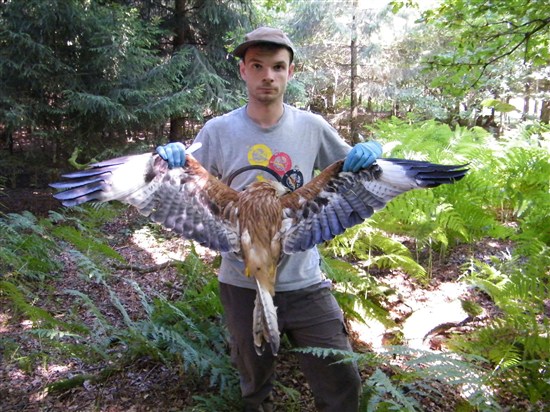
Red kite shot Eccup April 2016 Doug SimpsonOn 21st April 2016, a new red kite nest was discovered in woodland near Alwoodley Lane in the Eccup area of Leeds, West Yorkshire. Hanging in a tree next to the nest was the corpse of a dead kite.

A veterinary examination revealed the bird had suffered shot gun injuries and was most likely killed while on the nest, incubating eggs.

Short article in Yorkshire Evening Post here.

This is the latest in a number of illegally killed or illegally injured red kites reported in recent weeks. Others include this one in North Yorkshire, this one in North-east England, these two in Oxfordshire and another one in North Yorkshire.

Photo of the latest shot red kite in Leeds by Doug Simpson.

Pigeon racing man fined for storing banned poison Carbofuran

A Cumbrian man from the world of pigeon racing has been convicted for the illegal storage of the banned poison Carbofuran.

Keith Mingins, 58, of Main Street, Frizington, Cumbria, pled guilty at Workington Magistrates Court on 29th April 2016, following the discovery of Carbofuran at his pigeon lofts during a police raid in April 2015.

Mingin’s defence was that he had been given the poison by his father in law (who has since died), he didn’t know what it was but he used it anyway, to poison rats, apparently.

He was fined £300 for the illegal storage and ordered to pay costs and a victim surcharge amounting to £115.

Article in North West Evening Mail here.

It’s an interesting one. We wonder what triggered the police raid in the first place? (They would have to have grounds to justify a search of his premises, they can’t just turn up on a whim). And how many times have we heard the defence that someone who was in possession of a banned poison had been given it by someone who had since died? And just how plausible is it that someone gives you a poison, you don’t bother to find out what it is, but decide to use it all the same?

The pathetic fine makes us wonder whether the court received any background information about Carbofuran (banned 15 years ago in 2001) and how it is still commonly used to poison birds of prey and how some pigeon racing men are known to target birds of prey? We are in no way suggesting that’s what Keith Mingins did, but a wider perspective in these cases should help inform the magistrate prior to sentencing.

Frizington has been a hotspot for the attempted poisoning of peregrines over the years. At least twice in 2009, and also in previous years, live pigeons smeared with banned poisons (Carbofuran and Aldicarb) have been found tethered at a quarry (a known peregrine breeding site) at Rowrah, Frizington (see here). In 2010 a peregrine was found dead in ‘suspicious circumstances’ at an allotment in Frizington, although the cause of death is not known (see here).

Let’s hope the publicity of Keith Mingins’ conviction (if not his lame punishment) for storing a banned poison will act as a deterrent for anyone else in the area who may have some Carbofuran or another banned poison stashed away and who may be thinking about using it.

Well done to Cumbria Police, NWCU and Natural England for a successful prosecution.

General Licence Restriction suspended on Raeshaw Estate while judicial review underway

Regular blog readers will recall that in November 2015, SNH served two General Licence Restriction Orders on the Raeshaw Estate and Burnfoot Estate in response to alleged raptor persecution crimes (see here). This was the first time these GL restriction orders had been used since they became available on 1st January 2014.

The alleged offences on Raeshaw Estate, a grouse moor near Heriot, Scottish Borders, related to ‘the illegal placement of traps’. The alleged offences on Burnfoot Estate, a grouse moor in Stirlingshire, related to ‘the poisoning of birds of prey and illegal use of traps’. No criminal prosecutions were brought for any of these offences.

The GL restriction orders were due to run for three years, from 13th November 2015 to 12th November 2018, and would restrict the killing of certain ‘pest’ species (e.g. crows) that are usually permitted under the General Licence.

However, the restriction orders initially only lasted for six days because the estates appealed the decision (see here).

On 3rd February 2016, SNH reinstated the restriction orders after dismissing the estates’ appeals (see here).

On 7th February 2016, both estates denied any wrongdoing and indicated that they would try for a Judicial Review of SNH’s decision (see here).

It now appears that one of these estates (Raeshaw) has successfully applied for a Judicial Review, which is set to be heard on 20th May 2016. A Judicial Review is not about whether the principle of applying a General Licence restriction order is fair or unfair per se, but is more about the process underlying SNH’s decision. Did SNH act lawfully and follow the right procedures when it made the decision to apply GL restriction orders to these two estates? That’s what the court will have to decide. Obviously, the result of the Judicial Review, whichever way it goes, will have implications for the future use of the GL restriction order.

Meanwhile, in another twist, the GL restriction order on Raeshaw Estate has once again been suspended while the Judicial Review is underway. It’s not clear to us who instigated this suspension. The Estate may have applied for a temporary suspension to enable the killing of ‘pest’ species at this crucial time of year. Or, SNH may have decided to temporarily suspend the restriction order for fear that, if the Judicial Review goes against them, they may be subject to a lawsuit by the Estate for loss of earnings.

SNH temp suspension of GL - Copy

The Burnfoot Estate does not appear to be directly involved in the Judicial Review, which makes sense because the decision from the Raeshaw judgement will be equally applicable to Burnfoot so two Judicial Reviews on the same subject would be a waste of money. So consequently, the General Licence restriction order on the Burnfoot Estate is still in place – they are not permitted to kill ‘pest’ species as they would have done under the General Licence. We know from a recent FoI that SNH has not received any applications for an individual licence that would permit individual gamekeepers to carry out ‘pest’ control on this estate.

Let’s hope the Judicial Review for Raeshaw on 20th May results in a timely decision and that we don’t have to wait for months on end for a pronouncement. We’re pretty sure that there are other potential General Licence restriction orders for other estates sitting in SNH’s ‘pending folder’ (at least there should be) but, understandably, SNH may be reluctant to begin proceedings while this Judicial Review is still underway.

RSPB complaint sparks European legal action over grouse moor burning

This morning the European Commission has taken the first steps in legal infraction against the UK Government in relation to the burning of blanket bog in Special Areas of Conservation (SACs) in northern England.

The legal action follows separate complaints by the RSPB and Ban the Burn (from Hebden Bridge) in 2012.  These complaints related to decisions made by Natural England over the management and protection of part of the South Pennine Moors SAC and Special Protection Area owned and managed by the Walshaw Moor Estate Limited for grouse shooting.

Since then the RSPB has discovered that Natural England consent to burn protected blanket bog is confined to and almost routine on grouse moors in 5 SACs in Northern England.  This is part of the intensification of management of these special areas witnessed in recent years to produce increasing numbers of red grouse for driven grouse shooting. (See details of RSPB’s complaint here). These consents from Natural England are estimated to affect around 73,000 ha of deep peat soils that should be conserved as healthy blanket bog. The burning undermines the ability to restore these internationally important habitats, and protect their wildlife and associated ecosystem services.

This map shows the areas of concern: white areas show blanket bog in Special Areas of Conservation where Natural England has consented to burning; brown areas denote deep peat. The large circle denotes Walshaw Moor. Map source: RSPB (here).

BURNING COMPLAINT - Copy

While the details of the European Commission’s legal action is not yet known, it appears the Commission shares the concerns of the RSPB and Ban the Burn over bad application of the Habitats Directive and presumably the EC is not satisfied that the UK’s proposed actions would be sufficient to safeguard and restore the protected blanket bog habitats of European and global conservation importance.

The European Commission’s action is a significant step in reforming the way our hills are managed and securing the long-term conservation of these important areas. The RSPB and Ban the Burn both deserve credit and appreciation for pushing this forward and it’ll be fascinating to see how the grouse shooting industry and their friends in UK Government respond.

Martin Harper, RSPB’s Conservation Director has blogged about this news today (see here). But it’s a blog of two halves. The first half demonstrates that the RSPB has got plenty of backbone and isn’t afraid to act, undoubtedly against the wishes of DEFRA and Natural England, when it sees fit to do so. That’s brilliant.

But in contrast, the second half of the blog is utterly bewildering. Here Martin reiterates the RSPB’s softly softly approach to dealing with the illegal persecution of hen harriers on driven grouse moors. He maintains that DEFRA’s Hen Harrier Recovery Plan ‘offers a real chance of progress’. We fundamentally disagree, particularly on the subject of brood meddling, which essentially is just legalised persecution.

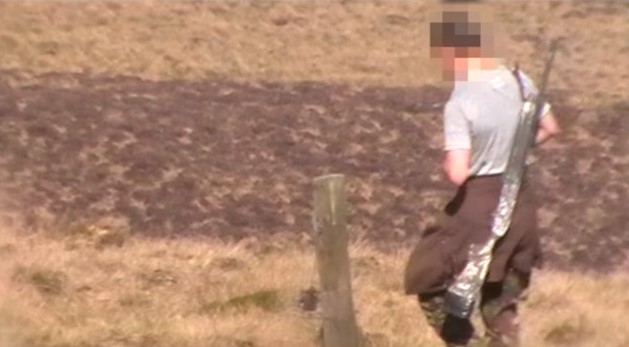
What we really struggle to understand is how anyone, especially a senior RSPB employee, who has seen that video of an armed man, on a grouse moor, with a decoy hen harrier, can still think that the grouse shooting industry is capable of compromise and reform. It so clearly isn’t.

E-petition to ban driven grouse shooting HERE

Peak District National Park Authority responds to decoy HH video

The Peak District National Park Authority has responded to the video of the armed man, with a decoy hen harrier, on a grouse moor within the Peak District National Park.

Fake Hen Harrier (1) - Copy

Sarah Fowler, PDNPA Chief Executive, had initially responded very quickly on Twitter, saying the video was “alarming and suspicious“.

The PDNPA has since published a full statement on its website, as follows:

Our position on the illegal persecution of birds of prey.

There has been a great deal of comment on social media regarding the illegal persecution of birds of prey in the Peak District National Park.

Without getting into the details of the specific incident that sparked this latest debate, I want to make clear in the strongest possible terms that we are appalled by the persecution of any protected species, whatever the circumstances.

There is never any excuse for this behaviour and we will always work with the police and our other partners to support any investigation. But it is important to point out that we can only take direct action if the persecution takes place on land owned by the National Park Authority not just within the National Park boundary. In fact on land where we own the shooting rights we have not allowed shooting since 1981 allowing agreements to expire. This current incident was not on National Park Authority owned land.

We recently acknowledged the disappointing results of the Peak District Bird of Prey Initiative and we are working with our partners to reverse the fortunes of birds of prey.” Sarah Fowler, Chief Executive, PDNPA.

It came as a bit of a surprise to us that the Peak District National Park Authority doesn’t, actually, have much (any?) authority, at least on this issue. It’s good to hear they don’t permit shooting on land they own, but as that only amounts to 5% of the Peak District National Park it’ll make some difference, but not a lot.

Since reading this statement, we’ve been doing some reading-up on the role and powers of a National Park Authority, and we’re kind of left wondering ‘what’s the point’? Well, there is a point and a role for the PDNPA, but mostly, it seems, in planning. Incidentally, during our recent research we found a fascinating retrospective planning application that relates to some work that has already been carried out on a grouse moor within the PDNP. It highlights the role that the PDNPA does (or could) play in the way these grouse moors are managed, regardless of ownership…but more on that in a different blog.

We also found this amusing news item on the PDNPA website. How the hell they managed to win this award is anyone’s guess. Apparently the Peak District National Park ‘has been monitored to ensure that sensitive environments and species are being properly looked after to preserve wildlife and landscape diversity’. Er, perhaps the judges should have a read of this. It documents the complete failure of the Peak District Bird of Prey Initiative over a number of years. Having seen the video of that armed man on a grouse moor with a decoy hen harrier, it’s not hard to work out where the problem lies.

So it seems, as Mark Avery pointed out yesterday, that it’s now all eyes on the National Trust as the only organisation with any power to take direct action, subject to the findings of their investigation. Their decision on how to respond could have important ramifications. This could get very interesting indeed.

By the way, it was good to see the BBC picked up on the video of an armed man, on a grouse moor, with a decoy hen harrier, and they gave the story significant prominence on the front of their ‘England-News’ website yesterday (here).

The petition to ban driven grouse shooting has passed 33,000 signatures. Is your name on it? Do your friends know about it? Your family? Your colleagues? Don’t assume they know about it – put it in front of them! PETITION HERE.

Blinding!

amanda blind text cropped (4) - Copy

For those who don’t know, the blind lady is Amanda Anderson, Director, Moorland Association.

Her companion is Robert Benson, Chairman, Moorland Association.

Thanks to the blog reader who sent this in. Priceless!

If you want to see more hen harriers in our uplands, where they belong, take the guide dog’s advice (nothing wrong with his vision) and sign the E-petition to ban driven grouse shooting HERE

Another red kite shot in North Yorkshire

North Yorkshire Police are appealing for information after the discovery of a critically injured red kite near Harrogate.

The wounded kite was discovered on Saturday 23rd April 2016 on farmland near Nidd, Harrogate and was taken to a specialist vet. X-rays revealed it had been shot. The vet believed the bird had been shot while in flight and had survived, unable to fly, for up to two days.

Unfortunately its injuries were so severe the kite had to be euthanised.

Press release from North Yorks Police here.

A big well done to the police for getting this appeal for information out so quickly – kite found on Saturday, press release (with photos) out on Wednesday. That’s a fantastic response.

Sick to the back teeth of hearing about the illegal killing of raptors? Help bring it to an end by signing this e-petition calling for a parliamentary debate on the future of grouse shooting – HERE

Red kite shot Harrogate April 2016

Red kite shot Harrogate x ray April 2016