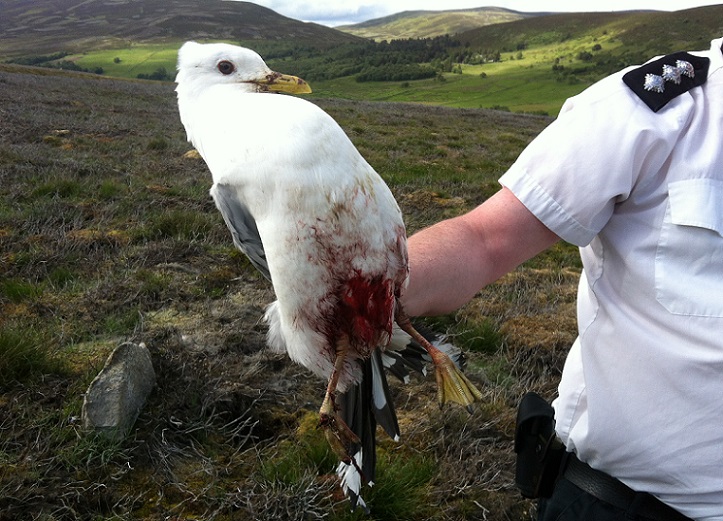
Landowners appear to launch damage limitation exercise as police investigate raptor persecution in Aberdeenshire

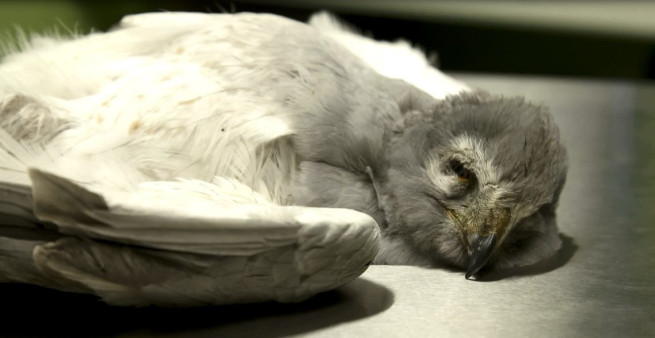
Today, in response to media enquiries, Police Scotland confirmed that a criminal investigation was underway after the discovery of a dead bird of prey found in Aberdeenshire last month.

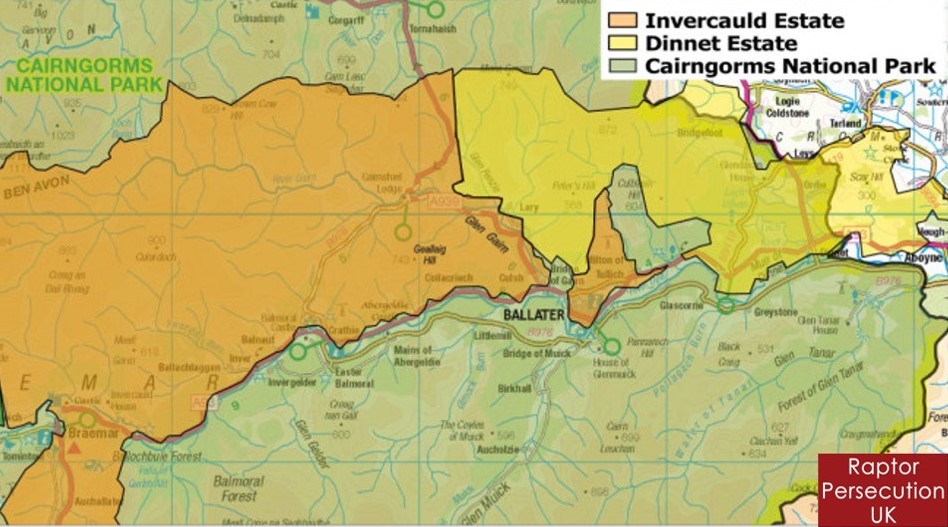
The details of the alleged crime, including the species of raptor, the cause of death and the actual location have not yet been revealed but I think it’s fair to assume this is going to be a big story, potentially involving a member estate of Scottish Land & Estates (SLE), the landowners’ lobby group.

What makes me think that? The response from Scottish Land & Estates, who posted this on their website today:

Grouse shooting featured at political hustings on animal welfare in Scotland

Last Thursday (15th April 2021), Scottish animal welfare charity OneKind hosted a political hustings to allow the public to quiz candidates from the five main political parties on their animal welfare policies ahead of the election on 6th May.

The hustings was organised by More for Scotland’s Animals (MFSA), a coalition of 11 leading animal welfare organisations (see here).

The MSP candidates were:

  • Maurice Golden (Scottish Conservative and Unionist Party)
  • Alison Johnstone (Scottish Green Party)
  • Ben Macpherson (SNP)
  • Molly Nolan (Scottish Liberal Democrats)
  • Colin Smyth (Scottish Labour)

I watched this hustings event and it was incredibly popular, with over 60 questions put forward for the candidates on a range of issues such as snaring, grouse shooting, fox hunting and greyhound racing but there simply wasn’t enough time for all the questions to be asked and answered.

I understand that OneKind is currently seeking permissions for a recording of the event to be posted online but in the meantime, journalist Mark Smith wrote an opinion piece for The Herald yesterday, focusing largely on the issue of grouse shooting. Mark’s opinions are his, of course, but where he reports on who said what, I think it’s an accurate account.

It is reproduced below:

IF you haven’t yet decided who to vote for, perhaps I can be of some assistance. Late last week, I put the same single question to five different politicians, one from each of the five main parties, and maybe their answers can tell us a little bit about the problems of modern Scottish politics. You can see familiar patterns at play in what they say – some new, some extremely old – and for voters trying to make up their minds, it’s very frustrating indeed.

What happened was that the charity OneKind asked the politicians along to an online hustings event to discuss the main issues around animal welfare and I took the opportunity to ask them about an issue I’ve written about many times: grouse shooting. My question was: do the candidates think there is a place for driven grouse shooting in Scotland or should it be banned? I was curious to see how far the parties would be willing to go.

Their answers were interesting, and in some cases passionate, but they also revealed something of the dilemmas that Scottish voters face, not only if they care about animal welfare but also if they care about the constitution. What if you’re a Scot who wants reform on animal welfare and other important issues – drugs, criminal justice, schools – but you’re also worried that voting for the SNP and the Greens (who have some good policies on these issues) could break up the UK? And what on earth are you to do if you’re concerned about independence but also not inclined to support the Conservatives? It’s not easy.

Alison Johnstone, the Green MSP, is a good example. She is a superb campaigner on animal welfare – informed, passionate, and committed – and her answers on driven grouse shooting were impressive. Her party, she said, want a complete ban on the practice, not only because there’s no justification for animals being killed for pleasure, but also because driven grouse shooting is an unproductive and inefficient way to use land. “We also see stink pits, snares and poor practice on every level,” she said. “I cannot wait to ban it.”

I have to say: I agree with every word Ms Johnstone says, having spoken to lots of people on every side of the argument over the years – gamekeepers, campaigners, police, lawyers, etc – and in any normal situation, she’d have my vote. The problem is that, for many people, the Greens’ policies – and there’s a lot to like in their manifesto – are tainted by the party’s stance on the constitution, meaning I could vote for animal welfare and end up with independence. Are there any unionists in the Scottish Greens, I wonder? And if so, how do they feel? If you’re out there, email me.

The other problem, obviously, is that the Greens are in bed with the SNP – all tucked up, nice ’n’ cosy – and this makes me doubt that anything significant will be done on animal welfare. The SNP representative at the hustings was the MSP Ben Macpherson who seems like a nice enough guy, but he’s saddled with defending what his party hasn’t done. In many ways, the SNP behave like a party in opposition, but Mr Macpherson also has to deal with the age-old problem of ruling parties during elections. They need to promise things are going to change (but not promise too hard in case they actually have to do it) but they also need to explain why they haven’t changed things already.

In the case of Mr Macpherson, this led to a lot of wibbly-wobbly government speak. On fox hunting, for example, the SNP “remain committed to closing the loopholes”. On cruelty to greyhounds, “we need to look at it very seriously”. On snares, “we accept the need for greater regulation”. And, sadly, there was the same lack of urgency on driven grouse shooting; Mr Macpherson said his party “remain committed” to bringing in a licensing system.

In any normal world, the SNP would be punished for all of this, for its lack of progress on important issues people care about – but Scottish politics is not a normal world. Alison Johnstone belongs to a party that has genuinely radical and transformative polices and Ben Macpherson belongs to a party that’s pretty much shagged-out on policy after 14 years in power, and yet neither party will be judged on any of that. They are the parties of Scottish independence and it means their promises on policy, and their delivery on those promises, doesn’t matter very much. How on earth did we get here?

The primacy of independence has also meant the banishment of the Lib-Dems and Labour to the outer reaches of Scottish politics, which is a pity. The Lib-Dems were represented at the hustings by Molly Nolan, the party’s candidate for Caithness, Sutherland and Ross, and she had some sensible stuff to say about how animal welfare can be improved, such as giving wildlife police officers the resources they need. She also pointed out that any licensing system for driven grouse shooting needs to be robust; there’s no point in introducing licences and then carrying on as normal.

But by far the most impressive performer was Labour’s Colin Smyth whose concern for animal welfare clearly comes from a genuine place. The legislation on fox hunting, he said, was “unfinished business” and, as for driven grouse shooting, he said the current situation was unsustainable and a licensing system was not good enough. I don’t know much about Mr Smyth – and it’s obviously easier to promise things when you’re a long way off from having to deliver them – but listening to his old-school campaigning politics, passionately delivered, was refreshing and pretty inspiring I have to say.

I wish I could say the same for the Tories. Their representative, the MSP Maurice Golden, said he wanted new legislation on pets, but he also said snares were “necessary land-management tools”. He said the laws on fox hunting don’t need changing. And as for my question about driven grouse moors, Mr Golden said the industry improves bio-diversity and is a “fulcrum for jobs”. His answers were deeply disappointing.

But maybe we shouldn’t be surprised by any of this: Tories defending vested interests and governments defending a lack of action. What makes it different, though, is that many Scottish voters will be guided by other factors. Some people who care about animal welfare will vote Tory and some people who think the nationalists have done poorly in government will vote SNP. That’s where we are now. It’s disappointing. It’s distorting. And it’s exhausting. One day, maybe, politics in Scotland will go back to normal.

ENDS

UPDATE 24th April 2021: Political hustings on animal welfare in Scotland now available to view (here)

Lincolnshire Police provide update on investigation into poisoned red kite

On 15th March this year, the RSPB tweeted that there’d been a multi-agency raid on two properties in Lincolnshire in connection with the poisoning of a red kite in 2020. Lincolnshire Police, supported by the National Wildlife Crime Unit, Natural England and the RSPB’s Investigations team, reportedly seized substances that were sent off for toxicology (see here).

[Multi-agency partnership working in Lincolnshire in March 2021. Photo by RSPB]

Today, Lincolnshire Police have issued the following press statement:

Investigation launched into suspected bird poisoning

Last year a Red Kite was found dead by a member of the public on a piece of land in the Crowland area.

The bird was sent off for forensic toxicology tests through the government Wildlife Incident Investigation Scheme (WIIS). The result of this analysis has been returned to us and indicates that the bird was poisoned.

Following this result, Lincolnshire Police Wildlife Crime officers, along with partner agencies including the National Wildlife Crime Unit (NWCU), Natural England and the RSPB, have been involved in a detailed investigation and two searches have been carried out at addresses in the Crowland area under the Wildlife and Countryside Act 1981.

During these searches, items have been recovered which are believed to have been linked to this offence, including some suspected banned pesticides. Investigations are ongoing and two people have been identified in relation to this and they will be spoken with in due course. 

Detective Constable Aaron Flint, Officer in the case has said: “Raptor Persecution is one of the UK’s National wildlife crime priorities and is taken very seriously by Lincolnshire Police. These offences will always be dealt with expeditiously and robustly. Deliberate killing of birds of prey is an offence which I urge the public to report if they become aware of it.

I would like to add, that if a bird of prey is found dead and you believe it is suspicious it should be reported to the police immediately to allow an investigation into its death to commence. The bird may have been poisoned which poses obvious health and safety concerns if handled. Providing the police with the What3words location would be extremely useful when reporting an incident”.

Guy Shorrock, senior Investigations officer with the RSPB, added: “Though raptor persecution data for 2020 has not yet been collated, the number of online reports relating to confirmed incidents and police follow up action around the UK indicate this problem is clearly not going away

Lincolnshire police would like to remind the public that any offences or information they come across can be reported via 999 (for urgent matters) or 101 for other non-urgent matters or visit the Lincolnshire police website to report it online.

ENDS

This is good stuff from Lincolnshire Police. Strong partnership-working with specialist agencies for the follow-up raids and a clear statement about what the investigation is about and its current status.

Let’s hope these efforts result in a prosecution and conviction.

UPDATE 15th April 2023: Lincolnshire Police charge man after investigation into poisoned red kite (here)

Keith Tordoff, candidate for North Yorkshire Police & Crime Commissioner is raptor champion

Last week I blogged about how a coalition of organisations under the umbrella group Wildlife & Countryside LINK was asking Police and Crime Commissioner candidates to prioritise wildlife crime should they be elected on 6th May 2021 (see here).

The role of a Police and Crime Commissioner (PCC) has the potential to be hugely influential as to how local policing operates. The PCC has a number of statutory responsibilities including:

  • to secure an efficient and effective police for their area;
  • to appoint the Chief Constable, hold them to account for running the force, and if necessary dismiss them;
  • to set the police and crime objectives for their area through a police and crime plan;
  • to set the force budget and determine the precept;
  • to contribute to the national and international policing capabilities set out by the Home Secretary; and
  • to bring together community safety and criminal justice partners, to make sure local priorities are joined up.

In North Yorkshire, the UK’s undisputed raptor persecution capital, there’s a candidate that should appeal to blog readers in that county – Keith Tordoff (visit Keith’s website here).

Keith has a varied background, including serving for 20 years with West Yorkshire Police, and now runs the sweet shop in Pateley Bridge.

Blog readers may recognise him from the Channel 4 piece last year (6 min video here) about the rampant crimes against birds of prey that continue to be reported across North Yorkshire, including in Pateley Bridge in the Nidderdale Area of Outstanding Natural Beauty, with its proximity to several notorious driven grouse moors.

Keith was interviewed as one of a number of local businessmen who had put up a reward to find the criminals responsible for laying poisoned baits that killed a buzzard and a local family’s pet dog (see here). It wasn’t the first time he’d stepped up with a reward, either.

As a long-standing and outspoken critic of the raptor killers, Keith has suffered abuse such as eggs being thrown at his shop windows and death threat letters being pushed through his letterbox, but he continues to defy the local grouse moor criminals and has considerable support from other Pateley Bridge residents who are tired of having the town’s reputation tarnished as a raptor persecution hotspot. I have no doubt that if elected, he’d continue that effort right across North Yorkshire.

If you’re a North Yorkshire resident and you want to see police resources continue to be prioritised to help fight wildlife crime, and especially raptor persecution, Keith may be just the candidate you’re looking for on 6th May.

Parties & public urged to choose rewilding in Scottish election

Press release from the Scottish Rewilding Alliance (19th April 2021)

The Scottish Rewilding Alliance has today set out the five key choices Holyrood will have to make during the next session to tackle the nature and climate crises.

In each case Parliament will have to decide whether to persist with a failing status quo or choose to make the bold changes the Alliance argues can protect and enhance biodiversity, help tackle climate change, and boost rural employment.

The Alliance, which is campaigning for Scotland to declare itself the world’s first Rewilding Nation, is urging all of Scotland’s political parties to commit to the following policy changes:

* To commit to rewilding 30% of public land, both for the direct benefits it will bring for wildlife and people, and set a good example for other landowners;


* To establish a community fund to support rewilding in our towns and cities, making the benefits of wild spaces available more widely;


* To back the reintroduction of keystone species, including rehoming beavers beyond their current limited range and considering a pilot reintroduction for the Eurasian lynx, where there is local support, suitable habitat and stakeholder buy-in;


* To introduce an inshore recovery zone where dredging and trawling are not permitted, to support species recovery and low impact fisheries; and


* To bring in robust deer population management: reducing overgrazing could allow two million hectares of peatland to recover and native woodlands to regenerate and expand, soaking up carbon dioxide reducing flooding, and restoring more diverse landscapes.

The Scottish Rewilding Alliance last year commissioned Scottish polling from Survation which showed strong support for the principle of rewilding. Of those who expressed a preference, 76% backed rewilding, with more than ten times supporting the idea as opposed it.

Steve Micklewright, Convenor of the Scottish Rewilding Alliance, said:

The parties and the public face many choices at this election, including major decisions which will shape the future of Scotland’s lands and seas. We can do so much better than the status quo, which has left us with damaged and unproductive lands and seas, degraded carbon sinks, and a biodiversity crisis in parallel with the climate crisis.

The Scottish Rewilding Alliance is today urging all the political parties to commit to five key policy decisions over the next session, measures which can unlock rural and coastal economic potential, help us protect against climate change and reduce our emissions, while allowing our plants and wildlife to come back in strength.

We know the public wants to see politicians make real progress on rewilding, and we would encourage people to take these issues into account when they’re looking at the parties’ manifestos. The opportunities here are substantial, for our climate, biodiversity, and for a wide range of potential social and economic benefits associated with making Scotland the world’s first Rewilding Nation.”

ENDS

[Beaver photo by Scotland The Big Picture]

Leicestershire Police welcomes 18 new wildlife crime officers

Press release from Leicestershire Police (14th April 2021):

Leicestershire Police welcomes new wildlife officers

Rural communities across Leicester, Leicestershire and Rutland will now benefit from a number of wildlife related officers within their areas.

All 18 officers have recently undertaken a five-day wildlife training course to gain a better understanding of rural issues and laws.

[Some of the new wildlife crime officers. Photo from Leicestershire Police]

Wildlife crime includes hare coursing, poaching and interfering with protected species such as badgers.

Traditionally, rural crime has been under represented due to the lack of understanding around wildlife crime and issues that may arise. With the introduction of 18 specially trained officers, it will encourage better working relationships between the communities and the police, as well as helping other neighbourhood officers understand rural crime issues.

PC James Johnson has worked for Leicestershire Police for seven and a half years and has recently taken on the role as a wildlife officer alongside his day-to-day duties as a beat officer.

He said: “This is something that has always been close to my heart. My great-grandparents had a farm that was passed down the family. My dad grew up on a farm and I have also married into a farming family, so it’s always something that has been in my life.

It’s an issue that’s very personal to me and I look forward to giving something back to the community and providing a good service from the force.”

PC Jon Barlow is another officer to join the wildlife team. He said: “For the past three years I have been the local beat officer for a rural beat, so this new role brings a number of great challenges investigating these kinds of incidents and working with the community.”

Sergeant Peter Jelbert, said: “Leicestershire and Rutland are very rural counties, so to be able to learn and refresh our knowledge of legislation which has an effect on our rural communities, will be a real bonus.

The greatest positive will be to our rural communities and to other partnerships such as the RSCPA.”

For more information on rural crime visit the force’s rural crime pages.

ENDS

Shot red kite: was it found on the Salperton Park Estate?

Last Thursday, Gloucestershire Police tweeted about a red kite that had been found injured on 12th March 2021, ‘believed to have been shot close to Salperton Village’ in the Cotswolds.

Judging by the accompanying x-ray, the kite had suffered a catastrophic wing injury and it seems unlikely it would have been able to fly far from where it had been shot (see here).

Gareth Jones from the Glos Raptor Study Group later tweeted that the kite had been found on the Salperton Estate and that it was ‘not the first incident found on this estate either‘. Gareth gave a site reference (What3Words) of dictation.dangerously.enacted which is located close to All Saints Church on the Salperton Park Estate:

The Salperton Park Estate in the Cotswolds is reported to host ‘one of the country’s most celebrated partridge shoots‘ over 4,000 acres, and is listed on Mark Osborne’s William Powell sporting agency website as being one his ‘hand-picked estates’ (see here).

Today there is a media article in the Wiltshire & Gloucestershire Standard about the shot red kite, including a quote from the RSPB, but once again, the Salperton Park Estate is not mentioned as being the location where this injured red kite was reportedly discovered:

The article just states that the shot red kite was found ‘close to the village of Salperton’.

Was the red kite found on the Salperton Park Estate and if so, why is there such reluctance to state this fact? If it wasn’t found injured on the Salperton Park Estate then the police should be clarifying where it was picked up.

As the police are appealing for witnesses, surely it’d make sense to give as much locational detail as possible?

In addition, if local raptor worker Gareth Jones is to be believed (and I have no reason not to), if this is not the first incident reported from this estate then all the more reason to publicise it. It doesn’t automatically mean that an estate employee is responsible for the crimes because there are a significant number of tenants renting properties at Salperton Park – how many of those might have access to a shotgun would be for the police to determine as part of their investigation, especially if this location is turning in to a persecution hotspot.

UPDATE 20th April 2021: Further news on this on today’s Gloucestershire Live website (here). Article reproduced below in case it vanishes:

Bird of prey shot in Cotswolds village dies as police condemn ‘unacceptable crime’

A bird of prey that was shot in a Gloucestershire village has been euthanised as police condemn the “unacceptable crime”.

On Friday March 12, a member of the public discovered the Red Kite by the roadside in the Cotswold village of Salperton.

The bird was alive but unable to fly due to its severe injuries – it has suffered multiple bone fractures.

It was taken to the Vale Wildlife Hospital and, following an X-ray, it was discovered the bird had been hit with a shotgun.

It is believed it had been shot close to the village, as it would have been unable to fly or glide with its injuries. The bird had to be euthanised due to the severity of its injuries.

Gloucestershire Constabulary said it was an “unacceptable crime and one which will be dealt with robustly”.

PC Ash Weller from the Rural Crime Team said: “This is an unacceptable crime and one which will be dealt with robustly if the offender is identified”.

An X-ray of the bird revealed multiple bone fractures caused by the lead shot, therefore suggesting a shotgun was used.

“We are exploring all avenues as this could have been someone travelling through the area rather than someone local to the area.

“We are working closely with shooting and animal protection organisations, who are equally appalled by this act and are assisting us with our enquiries.”

An officer from the Royal Society for the Protection of Birds said the species had almost been driven to extinction in the 19th century and that the shooting of one was a “blow”.

Jenny Shelton, investigations liaison officer at the RSPB, said: “Red kites are a joy to encounter on a country walk, or even soaring over our homes, identified by their long, red wings and distinctive forked tail.

“We can’t take these birds for granted. only 40 years ago they were a rare sight having been driven almost to extinction in the UK the 19th century.

“To know that they are still being illegally killed is a blow to anyone who enjoys and values the natural world. All birds of prey are protected by law and if anyone has any information that might help with this police investigation, I urge you to come forward.”

ENDS

Norfolk Police appeal for information after discovery of dead kite, believed shot

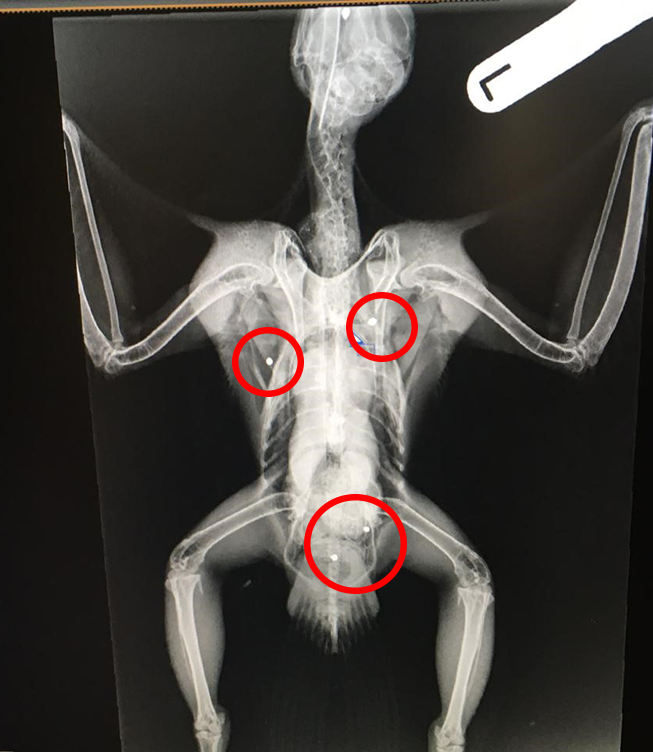
Norfolk Police are appealing for information after the discovery of a dead red kite in the Cockley Cley area of Norfolk on Friday 9th April 2021.

An x-ray shows the kite has broken bones in its leg and wing. The police believe the kite has been shot.

Anyone with information please contact Norfolk Police on 101 and quote reference 36/25060/21.

I couldn’t find a press release about this incident on the Norfolk Police website.

[The x-ray of the dead red kite. I have added the red circles to highlight the injuries]

UPDATE 23rd April 2021: Red kite believed to have been shot and hung from a tree (here)

Red kite shot in Cotswolds

A red kite has been shot in the Cotswolds AONB close to the village of Salperton.

It was shot on 12th March 2021 and the Gloucester Police rural crime team has announced it on Twitter this evening, along with some x-rays of the kite showing shotgun pellets and a broken humerus.

Disappointingly, there isn’t any further detail available. I couldn’t find a crime reference number or a press release appealing for witnesses.

[UPDATE: Thanks to those who have pointed out that ‘inc 333 14/03’ in the police’s tweet is probably the crime reference number]

[UPDATE #2: Thanks to Gareth Jones from the Glos Raptor Group who has confirmed this red kite was found on the Salperton Estate. He thinks a press release is forthcoming]

UPDATE 19th April 2021: Shot red kite – was it found on the Salperton Park Estate? (here)

Police & Crime Commissioner candidates asked to prioritise wildlife crime

Police and Crime Commissioner (PCC) candidates standing for election in England on 6th May have been asked to declare their commitment to prioritising wildlife crime.

Wildlife and Countryside LINK (often referred to as just LINK) is the largest environment and wildlife coalition in England, bringing together 58 organisations for the protection of nature (there are also LINK groups in Wales and Scotland). The Wildlife Crime Working Group is one of LINK’s sub-groups and it has today written to all of the PCC candidates inviting them to state whether they will commit to prioritising wildlife crime.

[Rural & wildlife crime policing in Staffordshire. Photo from Staffordshire Police]

The latest figures collected by LINK suggest that at least 3,800 wildlife crimes were reported to police forces in 2019. This is just a snapshot of the number of animals being illegally hurt and killed every single day, sometimes for ’fun’, sometimes for profit, sometimes in sheer callousness. However, just ten people were convicted of wildlife crimes in the same year. That’s a shockingly low return.

LINK’s Wildlife Crime Working Group believes that many police forces are constrained by too few resources, limited training opportunities and ineffective reporting systems.

The group believes that Police and Crime Commissioners have a crucial role to play by increasing support for wildlife crime policing within the police plans and budgets they control, giving their officers increased access to wildlife crime training and by adding their influential voices to calls to national policing action.

LINK has asked all PCC candidates to commit to the following:

If elected as Police and Crime Commissioner, I commit to:

• Make tackling wildlife crime a key priority within my first police and crime plan, and to make budget provision to support this prioritisation;

• Increase wildlife crime training opportunities for officers in my force and liaise with the National Wildlife Crime Unit on best wildlife policing practice;

and

• Encourage the Home Secretary to make wildlife crimes notifiable, so that data on these crimes can be collected and used to inform policing.

Prior to the elections on 6th May and to help voters decide who to support, LINK will be reporting on which PCC candidates have made the commitment to prioritise wildlife crime.