New golden eagle satellite tags being tested in Cairngorms National Park, an eagle-killing hotspot

Press release from Cairngorms National Park Authority (3rd August 2021). My commentary is below that.

High tech tags to give insight into lives of golden eagles in Cairngorms National Park

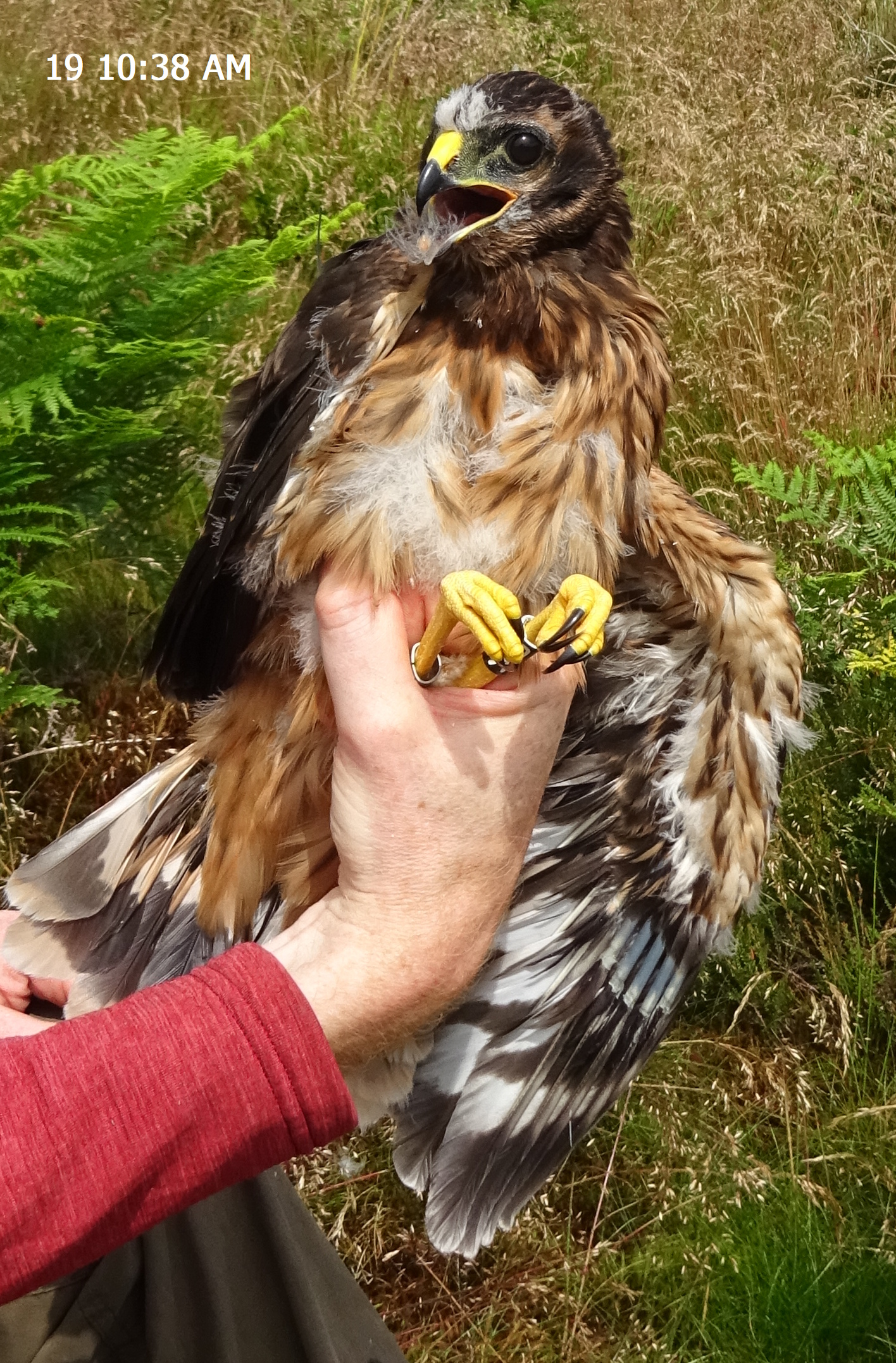
Three golden eagle chicks in the Cairngorms National Park have been successfully tagged using the latest innovative technology. Three estates in the Cairngorms National Park – including two in Strathspey – are part of this latest raptor tagging initiative, a partnership project that has been developed and funded by the Cairngorms National Park Authority and NatureScot.

The ‘Celltrack’ tags being used have come from the USA and are among the leading technology in raptor tagging. They will provide a better understanding of the species’ movements, habitat preferences and mortality.

The birds’ movements are tracked in real-time by CNPA staff and partners with transmissions coming in daily, providing a multitude of data that can help better understand the life of juvenile golden eagles, with an inbuilt alert system should mortality occur, whether through natural causes, persecution or other anthropogenic influences. The tags have the ability to detect unusual behaviour and send alerts with accurate locations.

‘Celltrack’ tags make use of an innovative dual communication system with data being sent over the mobile phone network as well as through a network of (ARGOS) satellites. By using this hybrid communication system, the large quantity of location fixes acquired each day can be transmitted over the mobile phone network, with the additional security of satellite communications when birds are out of signal.

Dr Ewan Weston, an independent research ecologist, has been in charge of tagging the golden eagle chicks under licence. He commented: “Having been involved in fitting tags to eagles for 14 years, the technological advances in the tags we use now bring data that was previously unimaginable. The data we receive, feeds into wider research on the species and covers aspects of golden eagle biology and environment, providing an insight into aspects of their lives in incredible detail. This work has included aspects of their dispersal behaviour, interaction with the landscape and developments such as wind farms.”

Dr Pete Mayhew, Director of Nature and Climate Change at the CNPA said: “The more we know about golden eagles in the Cairngorms National Park – from fledging through to acquiring their own territories – the better we can conserve and enhance their populations for the future. This is another excellent conservation partnership project involving government bodies and private estates who all wish to see a healthy future for our raptor species.”

The CNPA set out plans for a golden eagle tagging project in 2019, which included the use of British Trust for Ornithology-provided tags; however, delays in production, technical issues and the impact of the Covid-19 pandemic has seen the project switch to using ‘Celltrack’ tags. However, partners will continue to work closely with BTO over the coming months, including sharing data from the three recently tagged golden eagle chicks.

Seafield & Strathspey Estates are a partner in the project – their Chief Executive Will Anderson said: “We are very proud of our raptor populations here and as a result we are involved in several tagging projects. We are particularly pleased to be partnering with the Park Authority in this initiative as the type and volume of data collected is likely to be incredibly beneficial to be able to plan for the future with the birds needs in mind.”

The RSPB Scotland has also had one of their young golden eagles tagged as part of this project. Fraser Cormack, RSPB Scotland Abernethy Warden said “With raptors still being persecuted in Scotland the data that these tags provide could be crucial in helping to stop such crimes. Also with this potentially being a new territory it will be great to see the chicks movements after fledgling and where it disperses to in the future.”

Andy Turner, NatureScot Wildlife Crime officer, added: “NatureScot are providing strong support to the CNPA on this project. This innovative technological development will strengthen our understanding of golden eagle movements, aiding both research and hopefully acting as a deterrent to illegal persecution. The ability for instant alerts and complex motion data will provide welcome new insights into the movements of these special birds.  If this is successful, I hope we can deploy this technology more widely.”

Licenses to tag Golden Eagles are granted on behalf of NatureScot by the British Trust for Ornithology who look at various criteria, especially animal welfare. Tag data will be managed by a small, dedicated team at the CNPA and Dr Ewan Weston, NatureScot, and Police Scotland’s Wildlife Crime Unit.

ENDS

Hmmm. In principle, I am fully supportive of the continued satellite-tagging of golden eagles in Scotland because of the incredible insight they have provided in to the lives of this often elusive species.

Researchers have been able to provide tag data to influence conservation policy, based on new information about these birds that would previously have been almost impossible to find out (e.g. see here for a fantastic piece of modelling, based on satellite tag data, to predict how young dispersing golden eagles in Scotland will use specific landscape features, and here for the most recent scientific paper, again based on satellite tag data showing how young golden eagles in Scotland are actively avoiding wind turbines).

This sort of research is fundamental to our ability to conserve golden eagles and the quality of the research undertaken in Scotland is held in high regard by fellow scientists in Europe and North America.

I’m also very pleased to see the Cairngorms National Park Authority (CNPA) and NatureScot continue to recognise the importance and significance of golden eagle satellite-tagging, and be willing to put their money where their mouths are by funding this tagging sub-project, despite the best attempts of the grouse-shooting industry to derail this type of research. The shooters object because as well as ecological and biological insights, these tags are also providing illuminating information about the locations where golden eagles are still being illegally killed, almost 70 years after they became a protected species.

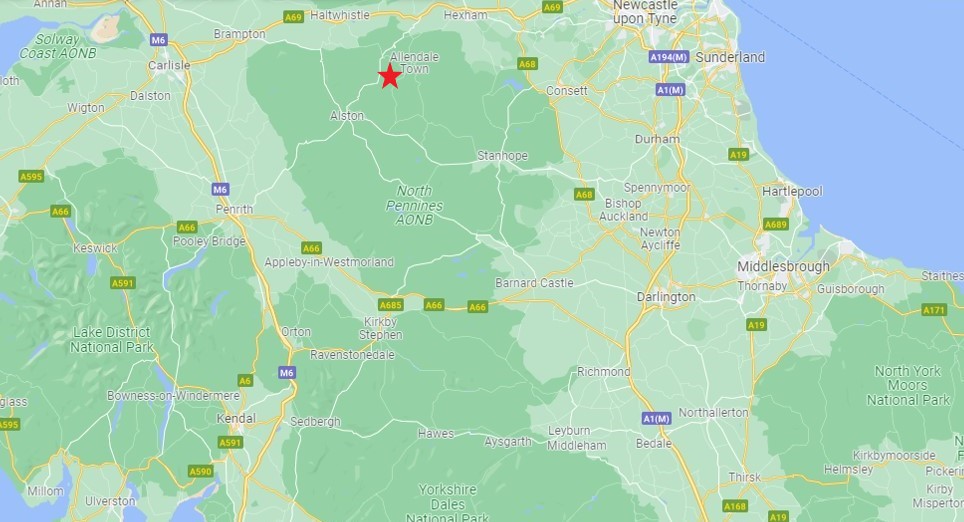
Significantly, the satellite tag data have allowed researchers to identify several geographical clusters where golden eagle persecution still takes place and more often than not, these are on or very close to moors being managed for driven grouse shooting. Unfortunately for the CNPA, some of those clusters are actually inside the Cairngorms National Park:

[This map shows the last known locations of satellite-tagged golden eagles that have either been found illegally killed or have disappeared in suspicious circumstances between 2004-2016. Data from the SNH report Analyses of the fates of satellite-tracked golden eagles in Scotland (2017) authored by Dr Alan Fielding & Dr Phil Whitfield]

It’s clear then, that the CNPA (and NatureScot) are in an embarrassing position and want/need to be seen to be doing something about the ongoing persecution. And ongoing it is, as we’ve seen with an illegally poisoned white-tailed eagle being found on a grouse moor inside the National Park last year (here) and yet another illegally poisoned golden eagle being discovered on another grouse moor inside the National Park earlier this year (see here). The subsequent bad press from these crimes is difficult for the CNPA to deal with (e.g. here).

And that leads me to be cynical about the timing of this latest press release. If you remember, back in 2019 the CNPA issued a similar press release (see here), stating that a new type of tag had been developed and would be fitted to golden eagles in the National Park over the forthcoming 18 months. The CNPA claimed this new tag would ‘provide an instant fix on any birds which die’.

The reality was somewhat different. The ‘new tag’ wasn’t developed to a sufficient standard that it could be trialled and thus was not fitted. That 2019 press release was considerably premature and I’m going to stick my neck out again and say this latest press release is similarly premature. Although this time a ‘new tag’ has actually been fitted and deployed on three young birds, it is far too soon to know whether the tag actually works as is being claimed, not least whether it will provide an ‘instant alert’ when an eagle dies. The ‘new tag’ being deployed this time is collecting the same type of data as the tags we currently deploy on golden eagles, and it has been used to track raptors in North America, but it is not the tag that we were told was being developed, with public funding, to specifically help detect illegal persecution of golden eagles in Scotland.

So why might the CNPA be keen to put out this press release prematurely? Well, if you’re a cynic like me, you might think that the CNPA has recently received a barrage of criticism for its inability to prevent the illegal killing of golden eagles (and other raptors) inside the National Park, sparked by the discovery of the poisoned golden eagle on Invercauld Estate earlier this spring, and so they’re keen to try and turn that around:

[The deliberately poisoned golden eagle, next to a poisoned mountain hare bait. Photo by RSPB Scotland]

The timing of the press release might also have a lot to do with the CNPA’s forthcoming five-year management plan, where it will have to report on its failures to meet the previous plan’s raptor conservation-based objectives. If the CNPA can chuck in a few ‘positives’ in to the new plan, such as the deployment of these new tags, it might act as a sweetener to those who will, quite rightly, be criticising the Park’s lack of progress on this issue.

Having said all that, I wouldn’t be alone in being delighted if this tag does function as is being claimed, and provides an ‘instant alert’ when an eagle dies, whether that be from natural causes or from illegal persecution. Any technological advance that would help the police to identify the criminals would be warmly welcomed by all (except for the criminals, obviously).

It’ll be interesting to see what happens with this new tag once the young eagles disperse during the autumn and travel into grouse moor areas where eagles are still not tolerated.

Incidentally, there will be short film about golden eagle persecution in Scotland being shown during this weekend’s live broadcast for Hen Harrier Day (Saturday 7th August 2021). If you want to hear more about this and what else is coming up, please sign up for Wild Justice’s event notification here.

Police lead multi-agency search after suspected peregrine poisoning in Shropshire

A multi-agency search took place in Shropshire yesterday as part of the ongoing investigation in to the suspected poisoning of a peregrine earlier this year.

You may recall the very prompt appeal for information made by West Mercia Police in May (see here) after the corpse of a female peregrine had been found, along with a suspected pigeon bait, at the notorious raptor persecution blackspot of Clee Hill.

[This is a photograph of another peregrine found poisoned at this site in 2017 (see here). Photo by RSPB]

Toxicology results are apparently still pending on this latest case but given the long history of poisoned peregrines at this site, and the discovery of yet another baited pigeon, it’s more than likely that this latest peregrine victim had also been illegally poisoned.

No doubt this is what prompted the police-led search at a premises yesterday, assisted by experts from Natural England, the National Wildlife Crime Unit and the RSPB Investigations team. The investigation continues.

[Photo via West Mercia Police]

This is at least the 5th multi-agency search in England this year, all in response to raptor persecution crimes. On 15th March 2021 there was a raid in Lincolnshire (see here), on 18th March a raid in Dorset (here), on 26th March a raid in Devon (see here) and on 21st April a raid in Teesdale (here). And now this raid in Shropshire.

Worryingly, all of these cases have involved the confirmed / suspected use of banned poisons to kill birds of prey.

Well done to all the agencies involved in these follow-up investigations. It’s good to see genuine partnership-working in the fight to catch the raptor killers.

New podcast: Professor Arjun Amar discusses raptor persecution on UK driven grouse moors

Arjun Amar will be a familiar name to anyone who’s taken more than a passing interest in the illegal persecution of birds of prey in the UK.

Arj has published a number of papers linking the illegal persecution of raptors to driven grouse shooting, including the detrimental effects this can have at a population scale, particularly on red kites, peregrines and hen harriers.

Most recently he was a co-author on the important Murgatroyd et al paper (2019) which showed that at least 72% of hen harriers satellite-tagged by Natural England were presumed to have been illegally killed on or close to driven grouse moors (see here).

Arj was recently interviewed by The Biome Project for a podcast about UK raptor persecution and its link to driven grouse shooting.

You can watch the 53 minute interview on YouTube (here) or if you’re on the move you can listen to the podcast (here).

As you’d expect from someone with such credentials, it’s well worth a listen.

As you might also expect, Arj’s research has drawn him to the attention of some members of the game-shooting industry who obviously don’t like what he’s doing and have tried, over a number of years, to undermine his credibility and scientific integrity with unfounded, disgraceful abuse and slurs.

For example:

Here was Arj’s response to the trolls:

As many of you will know, being targeted and harassed by some within the game-shooting industry is now commonplace (e.g. see here, here, here, here, here, here, here). Obviously, these abusive, personal attacks are designed to intimidate and silence not only those already speaking out against the criminal driven grouse shooting industry, but also anybody else who might be thinking of joining in.

Let’s turn that on its head and instead of silencing these voices let’s amplify them. If you’re on Twitter, please follow Arj and share his work: @arjundevamar

If you want to find out more about raptor persecution in the UK and what action is being taken to stand up to it, watch Hen Harrier Day this Saturday (7th August) from 10am, organised by Wild Justice & hosted by Chris Packham and Megan McCubbin. Sign up here for details.

Opportunity for Prince Harry to blow the cover of the hen harrier killers

The ‘wall of silence’ maintained by many in the grouse-shooting industry to protect the identities of the raptor killers within their ranks is a well-known phenomenon. It’s been likened to the Mafia’s omertà, the code of silence about criminal activity and a refusal to provide evidence to the police.

With news that Prince Harry has agreed a publishing deal with Random House to write his memoirs, including ‘the mistakes made, the lessons learned’, wildlife campaigners have been wondering whether he will use it to reveal what exactly went on at Dersingham Bog near Sandringham back in 2007 when he and his mate William van Cutsem were out shooting with a Sandringham Estate gamekeeper when a witness alleged two hen harriers had been shot. Harry and van Cutsem were interviewed by the police and denied all knowledge and no hen harrier corpses were found.

An article in the Guardian this last weekend examined the possibility of Harry using his memoirs to perhaps have more to say about not only this incident, but also to distance himself from the wider criminal link between driven grouse shooting and hen harrier persecution.

You can read the Guardian article in full here

iNews also carried a shortened version of the article here

It would have been quite good had the journalist not got his figures mixed up in this one paragraph:

Hen harriers have been illegally targeted particularly on upland moors because they prey on red grouse, for which there is a lucrative driven shooting industry on the moors. They virtually ceased breeding in England in the early 2000s because of persecution. They have since recovered to an estimated 330 pairs, but remain one of the rarest and most persecuted raptors in the UK‘.

If only hen harriers HAD recovered to an estimated 330 pairs in England! Sadly we are still a very long way from coming anywhere close to that number (unless DEFRA’s hen harrier brood meddling conservation sham has turned out to be extraordinarily good!).

What the journalist should have said was:

England has sufficient habitat to host at least 330 pairs of hen harriers but due to persistent illegal persecution by the grouse shooting industry (e.g. at least 56 hen harriers killed/suspiciously vanished in the last three years alone) we haven’t even got 10% of that number breeding. You can find out more about this scandal at this weekend’s Hen Harrier Day‘.

Hen Harrier Day 2021 takes place this Saturday (7th August 2021). You can sign up for notifications of Wild Justice’s online event here.

Peregrine found shot & critically injured in Fife

Press release from the Scottish SPCA (2nd August 2021)

Peregrine falcon shot near Kirkcaldy

We are appealing for information after a peregrine falcon was shot near Kirkcaldy.

We were alerted to the incident after the female bird was discovered on farmland at Grange Farm near Kirkcaldy on 25 July.

The falcon was unable to fly and was transferred to the Society’s National Wildlife Rescue Centre in Fishcross where x-rays uncovered she had been shot.

[Photos and x-rays by Liam Reed]

An undercover Scottish SPCA special investigations unit inspector said, “We were shocked to hear that the peregrine falcon had been shot.

This poor bird was extremely lucky to be spotted by the farm worker, who took immediate steps to ensure the falcon’s welfare and survival.

The shot would have knocked the bird out of the sky almost instantaneously so the incident will have happened close to the farmland the bird was found on.

Thankfully, due to the expert avian vets we have at our national wildlife hospital, the falcon has a good chance at recovery and release back in to the wild.

Peregrine falcons are a Schedule One listed species of The Wildlife and Countryside Act and it is illegal to intentionally harm or kill one of these birds.

We are working closely with Police Scotland to establish the circumstances around the bird’s injuries due to the use of a firearm in the incident.

We would like to find out what happened to this falcon. If anyone witnessed anything on the 25 July or has any information they feel may be relevant they can contact our confidential animal helpline on 03000 999 999 or Police Scotland on 101, quoting incident number quoting incident number 1390 of 28 July 2021.”

Wildlife Crime Liaison Officer, Detective Constable Ben Pacholek, said: “The fact that a shotgun has apparently been used in an attempt to kill a bird of prey is of serious concern. This incident is sadly another example of the unacceptable persecution of raptors in Scotland.

I strongly urge anyone within the local and wider community to come forward with details or any information about this incident which can help the ongoing investigation.”

If anyone is concerned about an animal, please do not hesitate to contact our confidential animal helpline on 03000 999 999.

ENDS

You can see on the x-ray that the peregrine’s ulna has been broken by the shotgun pellets. This is a clear indication the bird was shot close to where it was found – there’s no way this bird would have been able to fly with an injury that severe:

Well done to the Scottish SPCA for getting this appeal for information out so quickly. This should be the very least we expect from investigating authorities but as many of you will know, it doesn’t happen as often as it should.

Standby for news of another case involving a shot peregrine that Police Scotland has refused to publicise…….

Goshawk found shot in Staffordshire had to be euthanised

Staffordshire Police are appealing for information this evening after the discovery of a shot goshawk.

Unfortunately the details of this latest wildlife crime are vague, even though raptor persecution is supposed to be a national wildlife crime priority. This is what was posted on the Rural & Wildlife Crime team’s Facebook page:

The post doesn’t say when this bird was found, but the incident reference number suggests it may have been on 21st July 2021. There isn’t any information about the type of weapon used (e.g. shotgun, air rifle) nor any specific detail about the location. I couldn’t find any press statement/appeal on the police website.

If you can assist the police investigation, please get in touch with them.

Police searches as peregrine confirmed illegally poisoned with Carbofuran

Back in March this year there were reports that two dead peregrines had been found underneath the iconic Samson & Goliath cranes in Belfast. Experts from the Northern Ireland Raptor Study Group suspected the birds had been poisoned but there was also a potential issue with Avian Flu in the area which hadn’t been ruled out.

[One of the poisoned peregrines. Photo by the Northern Ireland Raptor Study Group]

Fast forward four months and an article has appeared today on the Farming Life website as follows:

Police confirm peregrine falcon poisoned

Police have confirmed that a bird of prey found dead in the Queens Island area of Belfast earlier this year was poisoned.

It was reported in March that a Peregrine Falcon was found dead. The bird was retrieved and underwent testing to ascertain the exact circumstances. Enquiries have been ongoing. Today (July 28th), officers, accompanied by colleagues from the Northern Ireland Environment Agency (NIEA), carried out searches at two premises.

Con. Phelan said: “We can now confirm the Peregrine Falcon was poisoned with Aldicarb and Carbofuran. This is very concerning. These are dangerous substances. We would remind the public if there is a suspicion of poisoning on any bird of prey to leave the bird/s and/or bait in situ and call the PSNI as soon as possible.”

PSNI Wildlife Liaison Officer, Emma Meredith, said: “We have been working with our partner, NIEA, and our enquiries are ongoing. If anyone has information then we would be really keen to hear from you.”

Anyone with information can contact police on the non-emergency number 101 or anonymously via Crimestoppers on 0800 555 111.

ENDS

There seems to be some confusion here about whether it was one or two peregrines poisoned, but nevertheless, the detection of Aldicarb and Carbofuran in at least one peregrine is a clear indication of criminal activity.

Presumably the police didn’t release the toxicology results until today as they’d have wanted to undertake their searches without alerting any potential suspects, just in case those poisons were still on the premises.

Peregrines have long been persecuted in Northern Ireland, mostly linked to pigeon racing rather than gamekeeping, and the species has suffered population decline as a result (see here). Undertaking searches is a big step forward there so today’s searches are a very welcome move by the police and their partners at the NIEA.

Hopefully there’ll be some progress that’ll lead to a prosecution in this case. The illegal poisoning of any raptor in this day and age is an outrage, but to do this so close to Belfast city centre, with such dangerous poisons, is reckless beyond belief.

Raptor persecution highlighted in Cumbria magazine

Raising public awareness of ongoing raptor persecution crimes is probably the single, most important thing that just about anybody can do.

You don’t need to be an expert on birds of prey, nor work in the conservation sector, nor to have a massive following on social media. All you need is an understanding that birds of prey are still systematically killed in the UK, almost 70 years after they became protected species, and that this killing most often takes place on land managed for gamebird shooting, where raptors are being poisoned, shot or trapped.

Nobody in their right mind is ever going to support this brutal slaughter, and yet many are still oblivious that it continues in 21st century Britain. Many assume it stopped back in the Victorian era. The more people that know that it still goes on today, the more pressure can be put on politicians to take meaningful action against it.

With this in mind, it’s great to see this opinion piece by Fiona Heslam, published in the August edition of the Cumbria magazine.

Thanks to Jamie Normington (@TLWforCumbria) for sharing it on social media.

Young golden eagles actively avoid wind turbines in Scotland: new scientific research paper

There’s a fascinating new scientific research paper just published in Ibis, the journal of the British Ornithologists’ Union, relating to the flight behaviour of young satellite-tagged golden eagles in Scotland in and around windfarms.

Authored by a number of experts from Scotland’s Golden Eagle Satellite Tag Group (GESTG), this study demonstrates how young golden eagles actively avoid operational wind turbines.

Here is the abstract:

The notion that young dispersing golden eagles in Scotland appear to avoid wind farms was discussed in the Government-commissioned report published in 2017: Fielding & Whitfield, Analyses of the Fates of Satellite Tracked Golden Eagles in Scotland (see Chapter 8), when the authors were examining whether any of the tagged eagles that had ‘disappeared’ in suspicious circumstances were within the vicinity of a wind farm.

The report concluded that no, they weren’t, and it was recommended that further detailed research be undertaken to examine the movements of young satellite-tagged eagles in and around operational vs non-operational windfarms, which is the focus of this latest paper.

Unfortunately this paper is behind a paywall (a particular gripe of mine but that’s for another day) so I can’t post the full paper on here. However, I do have a related graphic that I think helps to illustrate some of the research findings of the paper.

This map shows the flight lines (red) of one of the young satellite-tagged golden eagles that Chris Packham and I are monitoring. It shows, quite clearly, how this young eagle is generally avoiding flying over / through the footprints of three large windfarms (blue) in the Monadhliath Mountains (thanks to Alan Fielding for the data analysis).

Why this avoidance technique seems so prevalent in young Scottish golden eagles, in sharp contrast to findings in some other countries where certain raptor species have been recorded in high incident turbine collisions, is really interesting.

Raptor collision with turbines depends on a wide number of variables including site and habitat-related issues as well as the behaviour and ecology of the particular raptor species. It is a well-studied subject in a number of countries and has demonstrated that just because one raptor species has been killed at one wind farm at one location, it doesn’t automatically mean that every raptor is threatened by every wind farm, everywhere. I’m afraid that’s just simplistic nonsense, trotted out by those who are either (a) anti-wind farm or (b) desperate to deflect attention away from the continued illegal poisoning, shooting and trapping of raptors by gamekeepers in the UK (e.g. see here and here).

In their discussion about why young Scottish golden eagles might be avoiding wind turbines, in addition to the finding that habitat suitability inside and outside of the wind farm is important, the authors in this latest paper refer to a concept known as ‘the ecology of fear’ and discuss the evolutionary history of golden eagle persecution in the UK and how this may be leading to a genetic predisposition to wariness of humans, with wind turbines being used as the ‘cue’ for eagles to express their fear (i.e. by avoidance).

This latest paper from the Golden Eagle Satellite Tag Group is yet another significant contribution to our understanding of how golden eagles use the landscape and, along with this earlier paper from the GESTG, will greatly help planners and statutory agencies to make decisions that will have the least impact on this protected species and its preferred habitat.

It shouldn’t be necessary but apparently it is, to point out that this research is conducted by highly experienced conservationists, under licence, whose sole motivation is the protection of the golden eagle. They sacrifice time with their families and volunteer an enormous amount of personal time, personal funds and technical expertise to undertake this research. In any other country their efforts would be celebrated, applauded and appreciated (as indeed they have been in Spain!). But in Scotland, they are slandered, abused and attacked (e.g. here) by those who are desperate to corrode public and political confidence in raptor satellite-tagging because they know how incriminating these satellite tag data can be, exposing time and again the areas where birds of prey are being illegally killed.

There are a number of other peer-reviewed scientific papers from the Golden Eagle Satellite Tag Group, due imminently.

Author Cameron McNeish criticises SNP’s slow progress on raptor persecution, grouse moors & land reform

Award-winning author, mountaineer and broadcaster Cameron McNeish has quit the Scottish National Party after ten years of membership, claiming the party has done ‘zilch’ on environmental issues and land reform. He specifically spoke out about raptor persecution and grouse moors.

Mr McNeish told The Times:

It’s been coming for a while. The party has done absolutely zilch on land reform and the environment since Nicola Sturgeon came to power, and I have had a deep frustration over issues like raptor persecution, grouse moors all over Scotland, and what muirburning is doing to the environment.” 

He also described progress on land reform as being “glacier slow” and argued that the previous environment secretary Roseanna Cunningham’s efforts in that area had been frustrated.

He said: “There is no real interest in the SNP on these issues.”

The story was first reported in the Sunday Times and has since been picked up and published elsewhere (e.g. Press & Journal, Herald, National).