
Good news!
Raeshaw Estate, in the Scottish Borders, has lost its appeal against its latest three-year General Licence restriction.
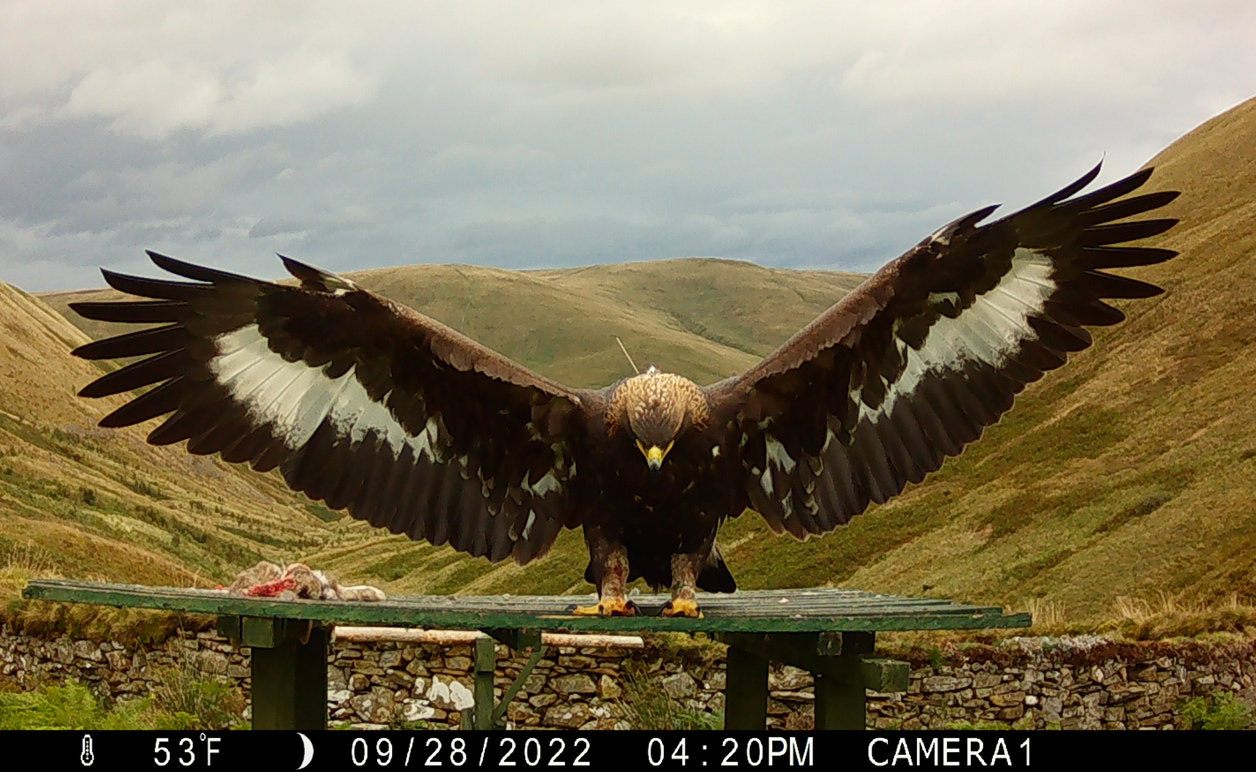
The restriction was imposed by NatureScot on 10 February 2026 in relation to the disappearance of Golden Eagle ‘Merrick’, who Police believe was ‘shot & killed‘ in October 2023.
Regular blog readers will know that General Licence restrictions, which have been available to NatureScot since 2014, are based on the civil burden of proof and are issued when NatureScot receives information from Police Scotland about wildlife crimes but where there is insufficient evidence to identify an individual offender for prosecution. (GL restrictions can also be imposed on estates where gamekeepers have been convicted of wildlife crimes).
General Licence restrictions do not prevent an estate from game-shooting, nor do they prevent an estate from carrying out [lawful] predator control – this can still be undertaken if the estate applies for an ‘individual licence’ which may restrict the amount of predator control, the estate may be subject to compliance spot checks, and the licence holder must provide NatureScot with licence returns (i.e. indicate how many birds were killed, where, and when etc).
General Licence restrictions are not perfect as an effective sanction – they are nowhere near, as I’ve written about many times before (e.g. see here and links within). They do, however, work as a ‘reputational driver’, although in some cases reputation is apparently not an issue of concern.
Regular blog readers will also know that NatureScot had been considering this particular decision for Raeshaw Estate since April 2024 (see here) when it first received information from Police Scotland about the shooting/killing of Merrick in October 2023. That’s almost two years of procrastination (e.g. see here, here).
When the decision was finally made by NatureScot to impose the three-year GL restriction, starting on 10 February 2026, a spokesperson for Raeshaw Estate, believed to be under the management of a company owned by ‘grouse moor guru’ Mark Osborne, was quoted the following day in various newspapers as saying the restriction was “wholly unjustified” and that the estate intended to appeal (see here).
Under NatureScot’s Framework for GL restrictions, Raeshaw Estate had to submit its appeal, in writing, within 14 days of the notification. That submission would have the effect of suspending the GL restriction, and given that the formal notification of the restriction had been removed from NatureScot’s website by 3 March 2026, it was assumed (and later confirmed) that Raeshaw Estate had indeed submitted an appeal.
Today, I noticed that the formal notification of the restriction has been put back on to NatureScot’s website, which indicates that the appeal has been considered, and formally rejected.
It’s also apparent that the representatives of neighbouring Watherston Wood also lodged an appeal against its three-year restriction, which has also been rejected. Although as far as I’m aware, the killing of so-called ‘pest’ bird species doesn’t take place in the wood anyway so perhaps the appeal was made as a matter of principle rather than an attempt to reinstate the use of General Licences 1, 2 and 3.
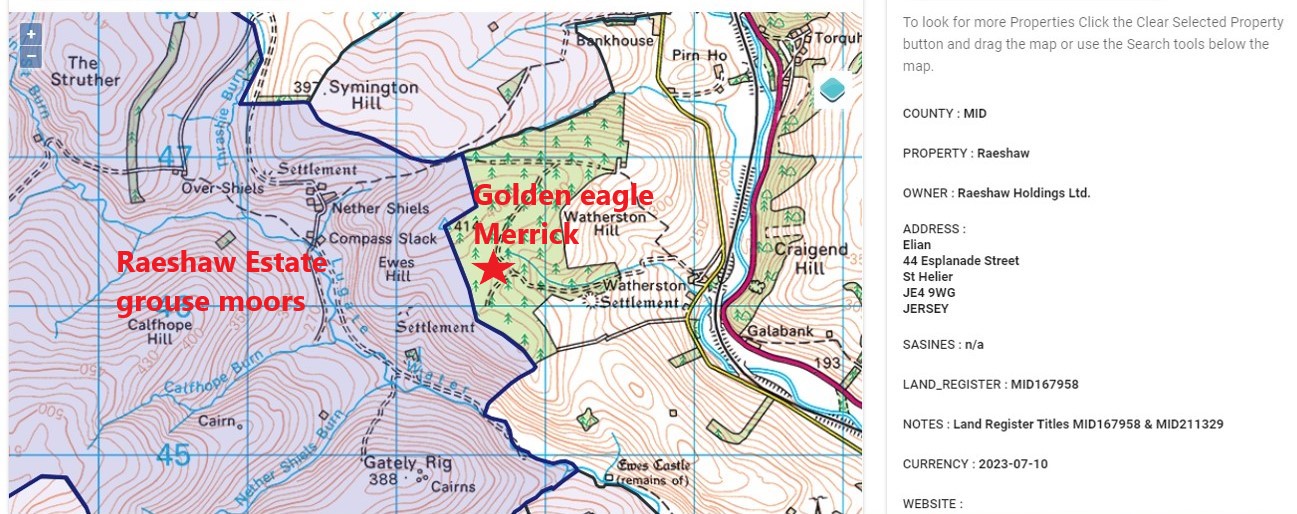
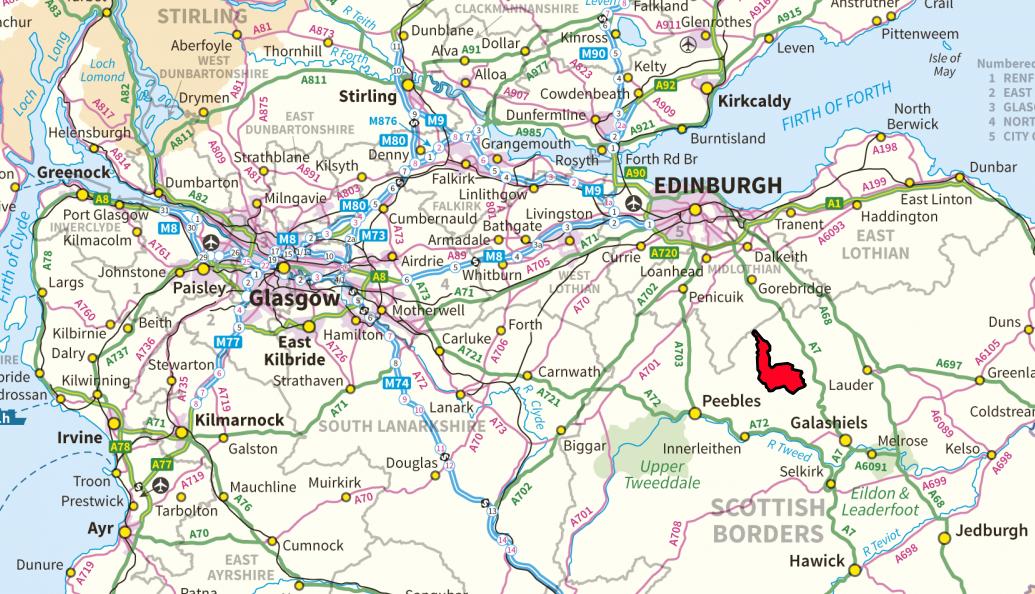
This is an unprecedented second General Licence restriction for Raeshaw Estate. It was one of the first estates to receive a General Licence restriction in 2015, based on clear police evidence that wildlife crimes had been committed although, just as with the latest GL restriction, there was insufficient evidence to prosecute any individual (see here).
Representatives of Raeshaw Estate applied for a judicial review of NatureScot’s 2015 decision but the Court of Session upheld NatureScot’s procedures and ruled the process was lawful (here).
Whilst under that first General Licence restriction, Raeshaw Estate applied for, and was granted, a number of ‘individual licences’ so the gamekeepers could continue to kill certain species as part of the estate’s grouse moor management plan (quite a lot of birds were lawfully killed – see here).
However, in 2017 the individual licence was revoked by NatureScot due to non-compliance issues and more suspected wildlife crime offences (see here). Not that the revocation made any difference whatsoever, as the estate could simply apply for another individual licence!
Inexplicably to many of us, NatureScot did not extend the length of the original General Licence restriction, which it had the authority to do, in light of the non-compliance issues on the estate’s individual licence (see here).
 Raptor Persecution UK
Great news!
A shame the General Licence restriction isn’t for ten years, if not longer