
Some good news!
This morning, the Moorland Association’s legal challenge against Defra’s new burning regulations (which restrict burning on deep peat) has been thrown out by the High Court in London.
This will be a quick blog – much more detail to come later, including full copies of the documents presented in court.
The Moorland Association had applied to the court for permission to take a judicial review to challenge the Heather & Grass etc Burning (England) (Amendment) Regulations 2025, which further restrict the 2021 Regulations for burning over specific areas of peatland, specifically limiting the depth of peat where fires can be lit.
These regulations were a significant blow to grouse moor owners (whose members are represented by the Moorland Association) because rotational burning (on peatland moors) is a fundamental aspect of managing a grouse moor to facilitate the maximum number of Red Grouse available to be shot, so it was no surprise to see the Moorland Association attempt to challenge the process used to introduce the new regulations.
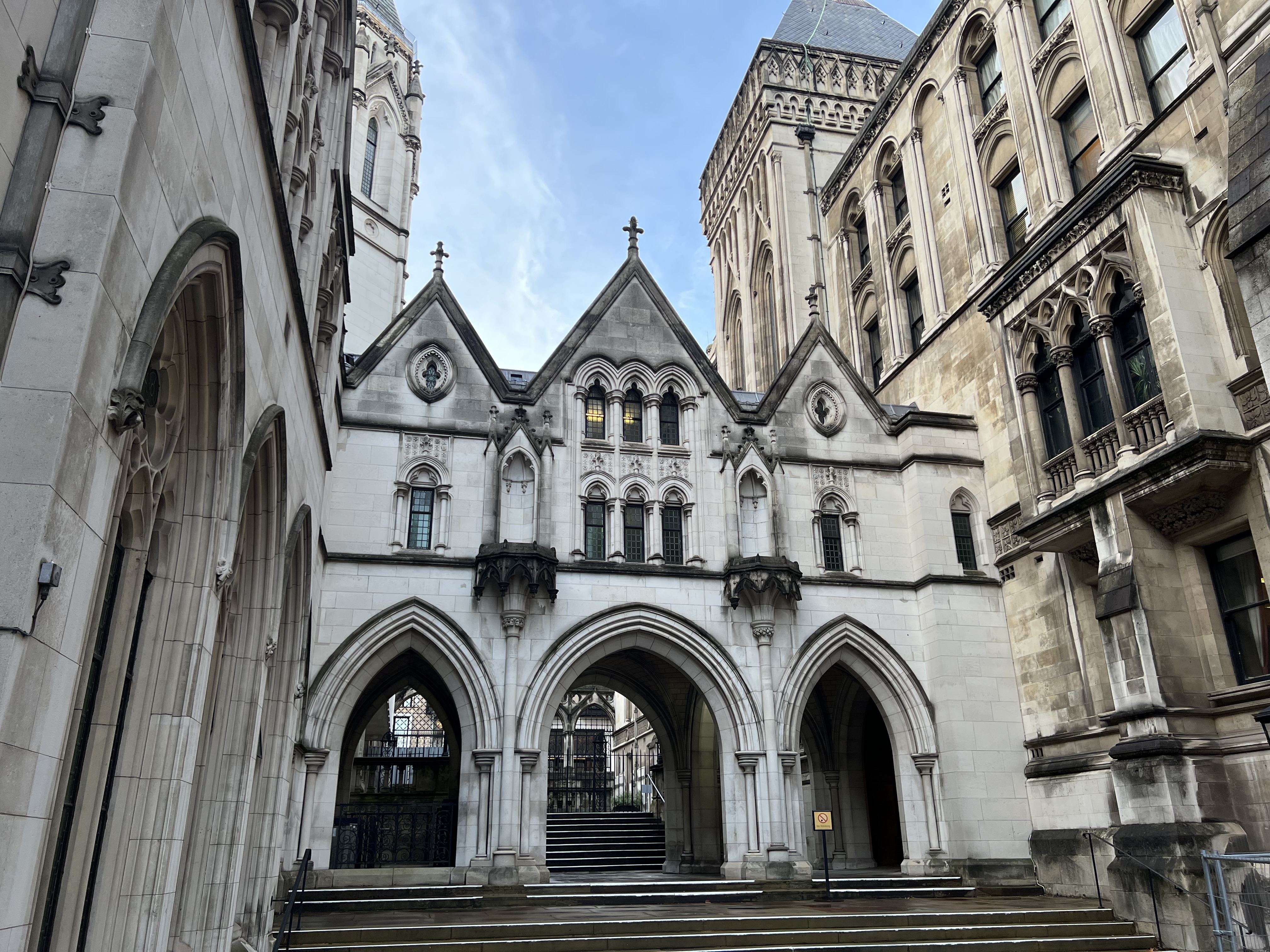
I went to the High Court with some colleagues yesterday to listen to the arguments in the permission hearing. It was interesting to note that the case had been listed as a ‘renewal’ hearing. My understanding is that this generally means that a judge has previously made a decision, just on the paperwork and without an in-person hearing, and that permission had been refused. A ‘renewal’ hearing is an appeal of that decision.
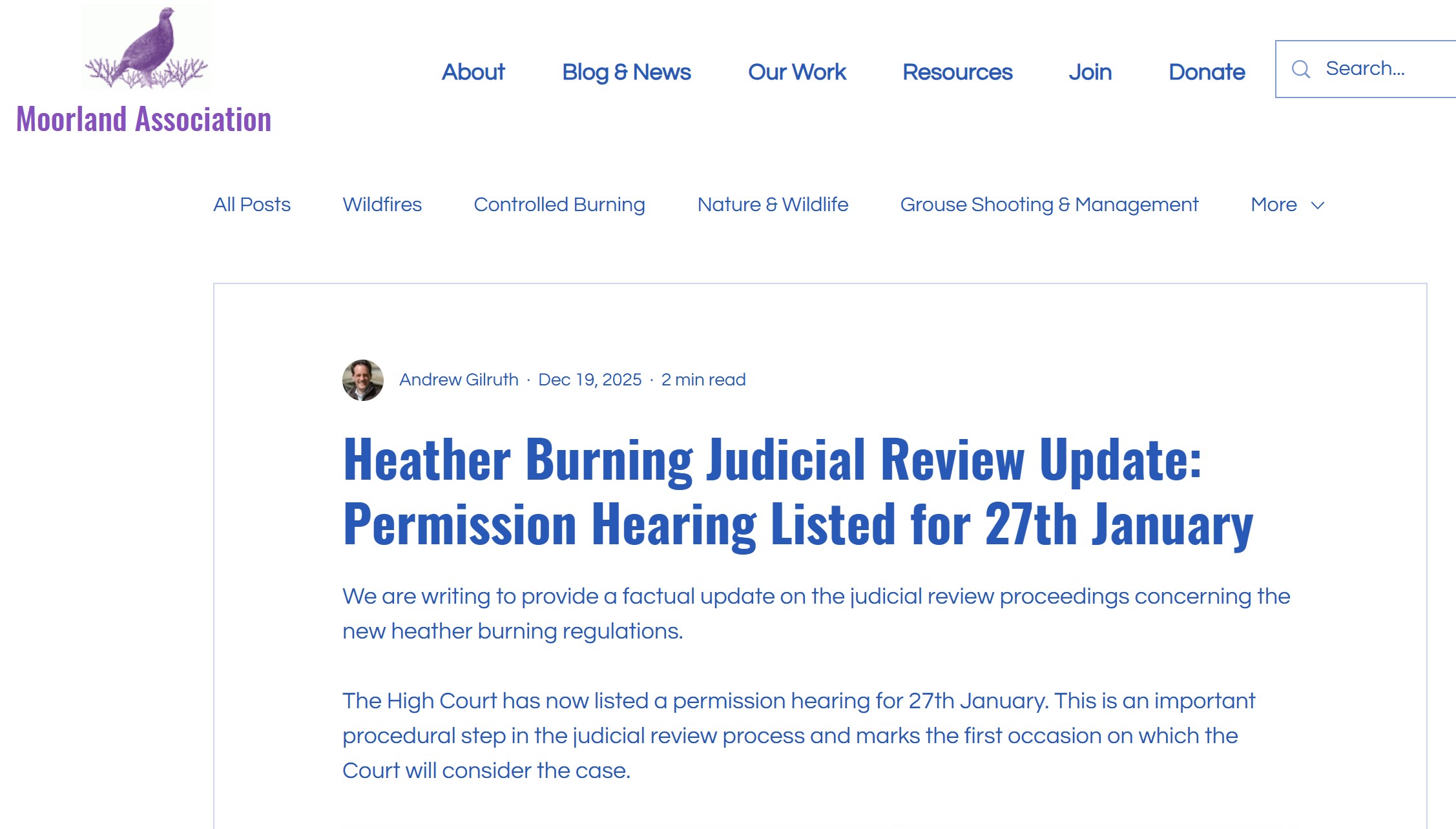
But that doesn’t seem to be how the Moorland Association has presented this case to the public. In a Moorland Association blog posted on 19 December 2025, the Moorland Association announces the date of the permission hearing as 27 January 2026 and writes, “This is an important procedural step in the judicial review process and marks the first occasion on which the Court will consider the case“. Hmm. [Ed – see *update on clarification at foot of blog]
Yesterday afternoon, the Moorland Association’s barrister presented three main grounds of challenge to the court, along with a number of sub-set grounds. The grounds were based on Arguability (challenging Defra’s consultation process for the 2025 Regulations which opened in March 2025 and closed on 25 May 2025); Procedural Fairness (challenging Defra’s alleged failure to address consultation responses, amongst other things); and Rationality (challenging the increase to the scope of the 2021 Burning Regulations).
The judge, Mrs Justice Lieven, was humourously scathing throughout, saying of the Moorland Association’s challenges, “It [the argument] just seems to lose all sense of reality“, and “You are really, really going to struggle with this one“.
The Moorland Association had also asked for an expedited hearing (if they were granted permission to proceed), to allow its members to get out and set fire to grouse moors before the end of this year’s burning season in England (31 March 2026), but Justice Lieven told them that this case “does not have that much urgency” when compared to other environmental challenges, such as large infrastructure projects or cases on nuclear power, that are all vying for court time.
The barrister for the defendant (Defra Secretary of State) then stood up and demolished each of the Moorland Association’s grounds, emphasising that the 2025 Burning Regulations did not constitute a ‘ban’ on burning, contrary to the claims made by the Moorland Association, but that they permit burning where necessary, for specific and exceptional circumstances, hence the licensing scheme.
She also pointed out that the 2025 Regulations were part of a staged process, representing the latest step towards fulfilling the UK’s longstanding commitment to peatland restoration and the phasing out of rotational burning. She argued that the Regulations were needed because a voluntary approach had failed and that the claimants couldn’t possibly argue that they didn’t know what was coming, and besides, licences to burn had been applied for and in some cases, granted.
Mrs Justice Lieven reserved judgement until 10am this morning, when she delivered her reasons for refusing each and every ground, resulting in a refusal to grant permission for the Moorland Association to continue to a substantive judicial review. She also awarded costs of £29k, to be paid by the Moorland Association to cover the time spent by Defra to defend the ‘hopeless’ challenge.
This might not be the end of it – the Moorland Association could apply to the Court of Appeal, although based on the findings of this case I’m not sure on what basis they would appeal, but then I’m not a lawyer.
I mentioned in yesterday’s blog that three estates (members of the Moorland Association) were co-challengers in this case but that their identities weren’t known because the Moorland Association had only published redacted documents.
They were named in the court documents yesterday as follows:
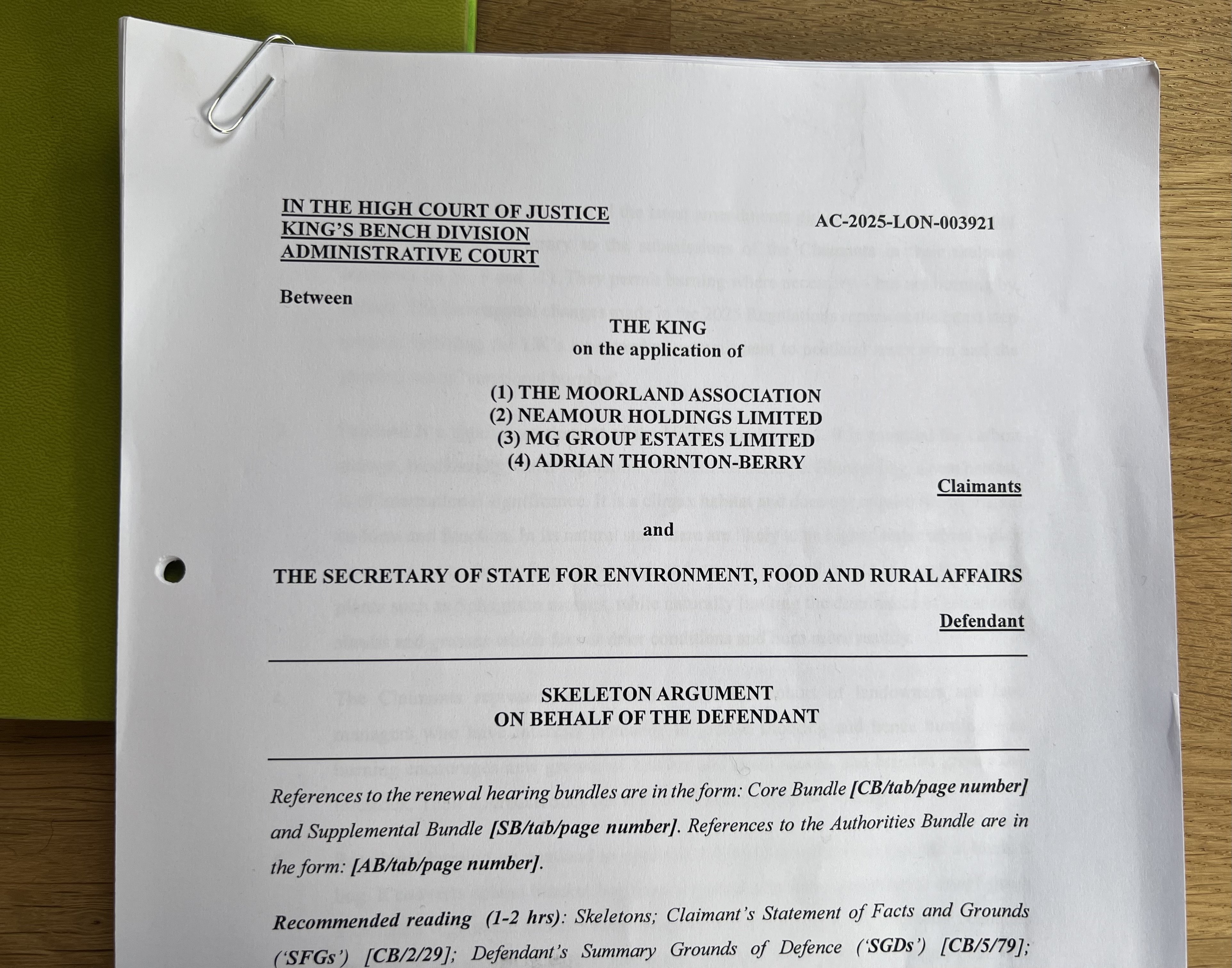
Adrian Thornton-Berry is a well known agent from the Yorkshire Dales who operates on sporting estates across the north of England. He’s a former Moorland Association director and his name appeared on this blog in 2016 where a question was asked if Mr Thornton-Berry was the agent at East Arkengarthdale Estate when a hidden poisons cache was uncovered by the RSPB in 2014.
Neamour Holdings Ltd and MG Group Estates Ltd are less well known to me, but searches on Companies House have revealed some interesting connections. I don’t have time to blog further on this today but will return to it in due course.
Meanwhile, a reminder to blog readers that the RSPB is asking the public to report evidence of burning on peatlands across the UK using its specialised reporting app or via the RSPB website – see here for more details.
*UPDATE 30 January 2026: I’ve been advised by a credible source that a ‘paper based’ decision on this case was not made; instead another judge looked at the papers and decided it ought to go straight to an oral hearing for permission in front of another judge. Thanks to the blog reader who provided this clarification.
UPDATE 8 February 2026: Moorland Association lodges appeal against recent High Court decision to refuse judicial review of Defra’s peatland regulations (here)
 Raptor Persecution UK
Bravo Judge Lieven ! Sympathies to the appellants. lol
I’ve come to the conclusion that you can’t believe ANYTHING the Moorland Association says.
I would suggest that you cannot believe anything anybody involved in the shooting industry says without specific, independent, ratification. Dishonesty seems to be the de facto standard of their claims on any subject relating to shooting, raptor and other wildlife persecution and environmental damage and destruction.
Still, £29k costs plus I guess a bigger fee? to their own legal team was IMO a relatively cheap* way of temporarily or in their hopes indefinitely staving this off.
Short term, the costs of mowing are high (too high in terms of time if their keepers have to do all of it, and it will probably give the contractor sector a boost. In medium term it will increase the prices that grouse shooting days sell for. Long term 20yrs ish includes probable ups and downs of global elite having spare cash – so this is certainly going to make some potential new buyers of grouse moors think harder about borrowing millions to join that elite club.
*And who knows how many other landowners and wealthy Guns might have discreetly chipped in to help too.
“This morning, the Moorland Association’s legal challenge against Defra’s new burning regulations (which restrict burning on deep peat) has been thrown out by the High Court in London.”
This is very welcome news. I get so used to the Judiciary making environmentally-damaging rulings in favour of big business that I had little expectation that the very lengthy, bankrupt arguments put forward by the shooting industry would be dismissed.
I also feared that the defending lawyer might be weak and under-prepared, but that does not appear to be the case.
So, two pleasant surprises:-)
Now, we just need Natural England (and Nature Scot) to grow some spines…