
The National Trust’s (NT) grouse shooting policy in the Peak District National Park has featured a few times on this blog, most notably in 2016 when the National Trust terminated a grouse shooting lease four years before it was due to expire on the Hope Woodlands and Park Hall estates following allegations of illegal raptor persecution (here).
In a direct response to this event, in 2017 the NT modified its grouse shooting tenancy agreements (here) and brought in three new tenants under new, five-year leases.
In 2022, following the ‘disappearance’ of a breeding pair of hen harriers on a National Trust-leased moor in the Peak District (here), the NT came under more public pressure to stop leasing its moors to grouse-shooting tenants.
In 2023 it terminated another grouse shooting lease at Park Hall following more allegations of wildlife crime and announced that no further grouse shooting leases would be issued on this particular NT moor and that it would now be re-wilded (here).
In November 2023 I attended the Northern England Raptor Forum’s (NERF) annual conference in Barnsley.
One of the presenters was Craig Best, the National Trust’s recently-appointed Peak District General Manager. Prior to taking this post in the Peak District, Craig had spent many years developing and overseeing the delivery of large scale moorland restoration and natural flood management on National Trust moorland in West Yorkshire. If you have an opportunity to hear him speak about his work, I recommend you do so. He’s knowledgeable, thoughtful and passionate about nature restoration.
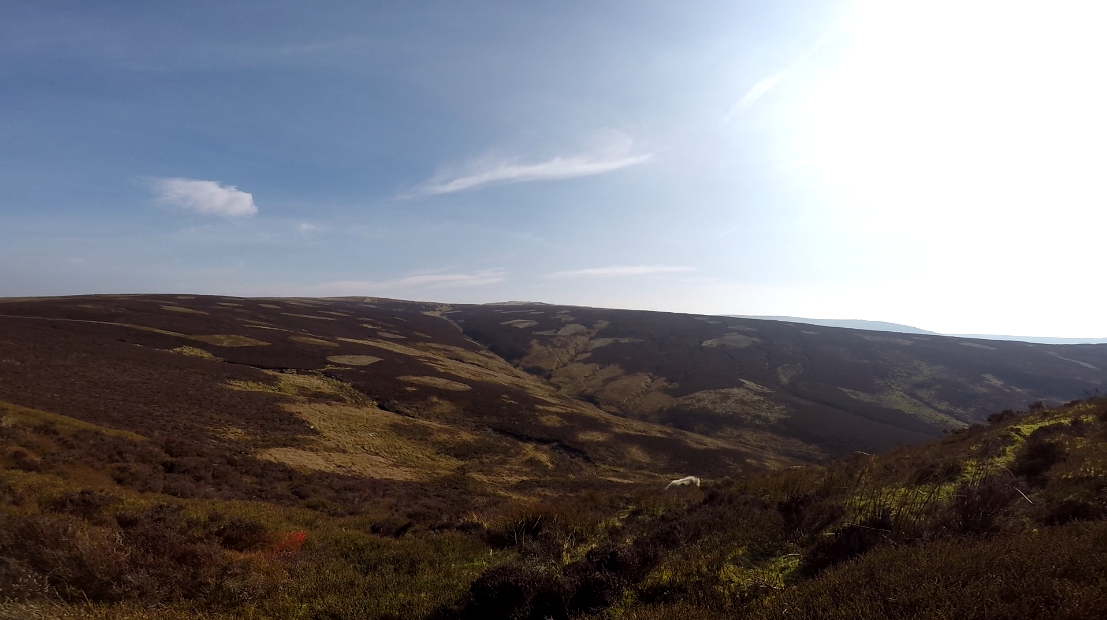
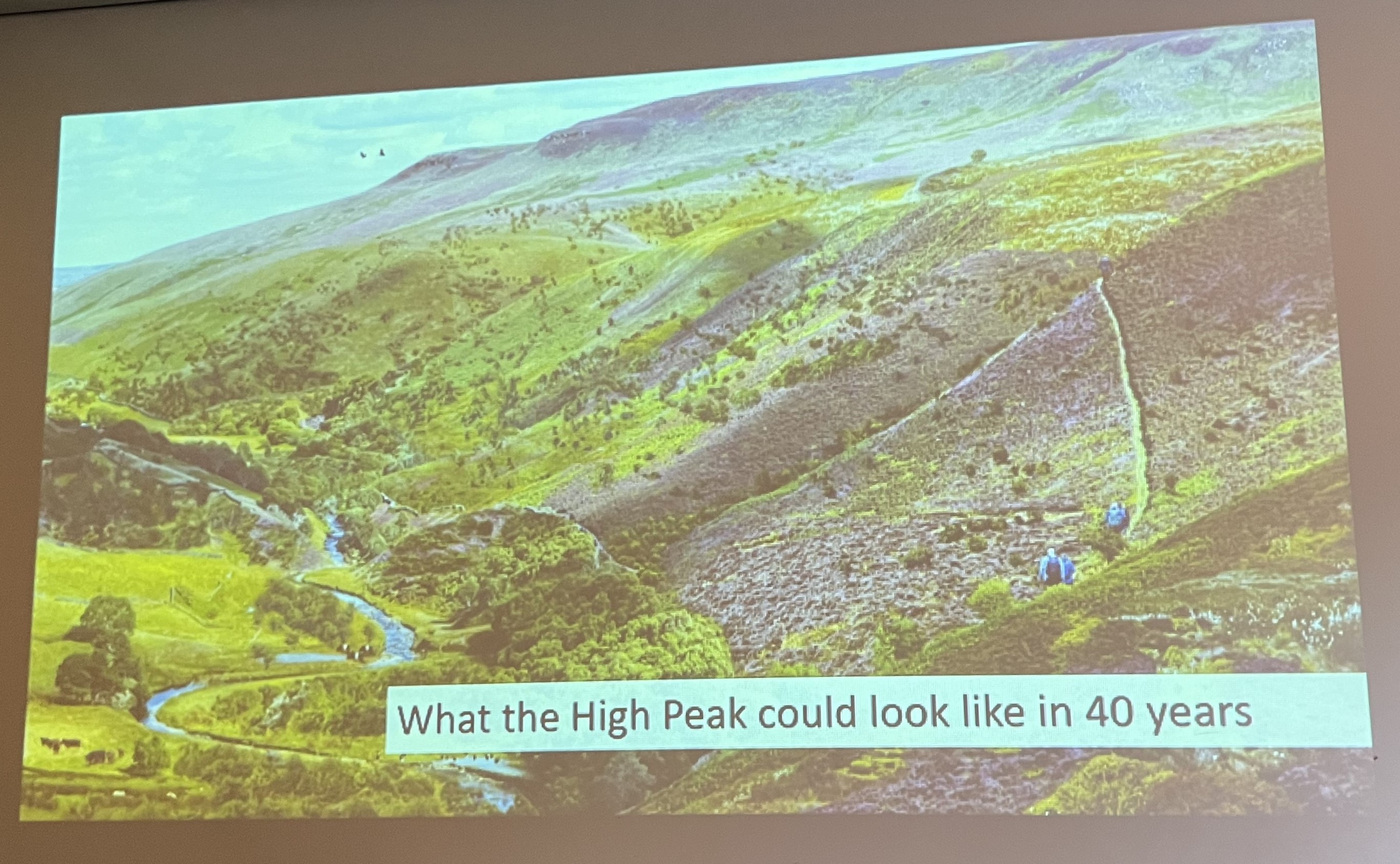
At the NERF conference, Craig spoke about the National Trust’s vision for its Peak District moorlands and he alluded to various new elements of the NT’s game shooting policy.
I contacted the National Trust afterwards and asked if it had any written documents I could read about this new game shooting policy. Nick Collinson, the NT’s National Manager on Wildlife Management was kind enough to send me the following summary:
‘We facilitate a range of recreational activities on our land, and we recognise that for some people, shooting is an important part of rural heritage and the rural economy. It has a long history as a recreational activity in the countryside. We also appreciate that there are a range of views on game shooting, and we regularly engage with different groups and individuals who have an interest in the topic. In developing our approach we have spoken to both shooting and nature conservation organisations.
We will continue to consider the leasing of game shooting rights (red grouse, pheasant, red-legged partridge, and limited wildfowling, only), but only where the activity is compatible with our aims for the land, for restoring nature (e.g. we do not permit burning of moorland vegetation on peat soils), and for local access. We will therefore now only consider leases for low intensity shoots with low numbers of birds, which in many places should negate the need for predator control to sustain high numbers of game birds. All shoots must comply with the terms of their lease, the Code of Good Shooting Practice, and the law, and to support this, all shoots will be required to develop a Shoot Plan which will set out, and work through, shoot and National Trust objectives.
We have a set of strict criteria that game shooting leases must adhere to. This includes the location of release pens, which must not impact priority habitats including ancient woods, the use of lead ammunition and medicated grit, which we will no longer permit, and requirements to ensure shoots do not hinder people’s access to our places. Moreover, we do not permit any shooting of red-listed birds of conservation concern and will only permit limited wildfowling of green and amber-listed birds on a species-by-species basis where statutory agency evidence confirms this is not damaging to local populations. We remain totally opposed to the illegal persecution of birds of prey and all other wildlife crimes and take action to combat these criminal practices, working closely with our partners in the Police, statutory agencies, and the RSPB, to report and convict those who commit these offences.
We will implement these changes when shoot leases come up for renewal, or sooner if break-clauses in agreements allow. Our approach will be kept under constant review, as will any position we might take on licencing of grouse shooting in the uplands‘.
I think this is a sensible and measured step forward by the National Trust. This new policy will effectively put an end to intensively-managed driven grouse shooting on National Trust moors, without actually banning it, and turns the focus back to nature-based, regenerative and sustainable management instead. No more burning on peat soils, no medicated grit, no lead ammunition, limited predator control and no more measuring ‘success’ by the number of birds shot in a day/season.
It doesn’t remove the threat to wildlife (especially raptors) from neighbouring, privately-owned grouse moors but it sets a new standard for grouse moor management and its effects will be interesting to monitor.
Personally I think this model is the only hope the grouse shooting industry has of staying alive and if these or similar practices aren’t quickly adopted more widely then the industry is doomed. I think the driven grouse shooting industry recognises this too, hence its hysteria over proposed regulations to reform grouse shooting in Scotland. The days of intensive and unsustainable driven grouse shooting are numbered, and they know it.
I’m also pleased to see that the National Trust’s new policy extends to all gamebird shooting, including pheasants, red-legged partridges and woodcock and isn’t just limited to driven grouse shooting. Bravo.
This policy shift will undoubtedly put the National Trust in the firing line of the game shooting industry – indeed, I’ve already read one ‘article’ attempting to undermine Craig Best’s professional reputation and expertise in a nasty, vindictive attack. It’s what they do.
I applaud Craig’s efforts on this issue, and those of the wider National Trust management team. Ten years ago to expect this level of progress would have been unthinkable.
 Raptor Persecution UK
Good news in that shooting will be more controlled and I suppose it sets a positive example to other estates about what they should be doing but why can’t the NT ban shooting totally on their land where they can? It’s not as if there won’t be plenty of shoots nearby! Why do practically all moors have to have shooting on them, why can’t more be shoot-free? It’s a practice that’s only been going on for 150 years or so, so why is it have to be endemic everywhere on our uplands? This could have been an opportunity to say enough is enough and set an even bigger example. By the way, is this policy just for the Peaks or all NT owned land, uplands and lowlands?
Shooting helps to pay for any management NT wish to conduct and probably means a keeper on the ground to help stop those of any neighbours taking liberties by coming on I principle I have no problem with harvesting some of the surplus although I am opposed to pheasant release in any places good for or being developed for wildlife. To me the release of alien birds goes completely against the idea harvesting a natural surplus as these birds don’t belong here. Whole idea looks good to me but we will see what happens in Practice
Paul, I suspect a keeper on the ground for NT might well have sympathy for a gamekeeper on neighbouring private shooting estate and may at the very least turn a blind eye to certain activities.
In 2017, when I was campaigning and petitioning for the National Trust NOT to renew grouse shooting leases on their Dark Peak estates, their regional director (Andy Beer), personally told me that the income from shooting leases was absolutely minimal and they were NOT making the decision to renew them because they needed the revenue stream. They don’t. It’s taken nearly 10 years for them to catch up and realise that simply bringing on new people to run intensive grouse shooting isn’t the way forward.
I trust your judgment, Ruth, and hope they rigorously enforce the rules and come down hard on anyone who breaks them. Hopefully, other more enlightened landowners may now feel able to follow suit.
But, to be honest, I’d like to be rid of it all.
I live in a pheasant-shooting area and it does disrupt our lives. Would so like to see it done away with
There are conditions there (all perfectly relevant and in the wider interests of the NT membership) that will be so problematic for potential lessees, making it virtually impossible to run a shoot profitably. Let’s hope this sets a trend.
I agree. Any shoot that hopes to make a profit should not be welcomed or offered a lease by NT, in my opinion. The models that I have in mind are along the lines of Guns spending their money on joining a syndicate, possibly employing a full time employee plus a part-timer or trainee, and in return getting maybe 8 to 12 very small scale days of proper mixed bag shooting enjoyment in return (ie walked up & taking turns to beat / stand, etc making variations only to support those with mobility issues/ disability). As well as the satisfaction & good conscience of being a part of something that can have a “net positive” contribution.
After all, if a couple of friends join a golf club or fishing club they do not expect to return a profit on the money they pay out for membership. Only in the over the top intensive and commercial shooting world does the chap whose mere “hobby” it is think in terms of break-even or making profit on his capital outlay, etc. And as for the professional “sporting agents” and other “gold-rush” type profiteers / exploiters of wildlife…they will hopefully be the only species that face extinction throughout the UK in the next few years.
” Only in the over the top intensive and commercial shooting world does the chap whose mere “hobby” it is think in terms of break-even or making profit on his capital outlay, etc.”
Do the people who shoot – rather than the land-owner/tenant – really expect to make a profit? From what?
Thanks Keith, I didn’t write that bit very clearly. When I refer to “the chap whose hobby it is” I’m not talking about the ordinary paying Gun on a let day. I am actually talking about the sporting tenant. i.e.The person or family or small circle of friends or syndicate of at least fairly well off persons, who have taken a long term lease of the shooting rights of a grouse moor from a big landowner (which is occasionally the NT). My poorly made point was that these days with the advent of medicated grit and the grubby side business of commercial let days especially red-leg shoots on lower ground, the sporting tenant(s) do not view their hobby of shooting driven grouse on their own place as a certain loss making money pit, as it always was pre- mid 1990’s. Indeed, this is the attraction of using an experienced Agent to manage he moor. The tenant forks out the capital in terms of renovation of keepers houses, vehicles, wages, new roads, etc and puts faith in an Agents calculating & astute (!) judgement to invest in right ways, so the enterprise can hope to break even or make a profit in the long run. For clarity, we agree – the bloke who simply books a one-off days shooting now and then, makes no profit himself – but simply hands his money over the same as anyone would for the provision of any leisure activity such as golf or a day at Wimbledon.
I’m very much a supporter of moving in this direction as I do believe there are positives to be had all around, not to say there won’t be a lot of issues to iron out. It wont work if NT sign a lease in good faith but then walk away hoping for the best, they will need to keep on top of it. Seems a perfect opportunity to research the effects of different models of “management” on levels of wildlife and flora/fauna, etc. Regular updates of data could be made openly available to help inform the licencing and other related debates, data which would be of interest to qualified researchers/scientists and laypersons. Quite pleased with this – I might even join NT as a proper member and make visits to see what develops over the years, having been previously been against them because of the negligence they showed in giving leases to certain management companies, and not acting sooner to stop some very bad things from continually occurring.
…..I’m with you on this! There is always room for smaller well run syndicates…that keep to the rules…are not for profit…and do not break the law of their tenancy in anyway! Illegal activity is normally in the pursuit of profit….take away the profit of large ‘intense’ commercial shoots…and you’ll hopefully start to see a reduction of raptor persecution cases!!
This is better than nothing but it’s a shame there does not seem to be any limit on the release of non native species.
Our best hope for the end of shooting is for the Royals to condemn it. After all a lot of it is about apeing nobility, donning tweed and showing off ones £200,000 Purdeys.
A good thought provoking article.
My view is
1. Walked up shooting is acceptable, traditional, sport
2. No lead ammunition – it is a poison
3. No burning on peat, ever
4. Eat what you shoot.
I should have added a fifth point
5. Keep to the laws of this land 100% of the time.
I sense that pest & predator killing that is 100% legal will continue to be as / or more controversial than the actual game shooting, even on a low intensity shoot.
Because a lot of that ethically speaking should really be illegal. My view – in this case the NT should also make some clauses of its own around killing pests & predators. Numbers must be agreed upon and recorded, permitted cull numbers can be adjusted up or down season by season. I would proscribe all snares and ban use of live call birds in corvid traps, and would dictate the maximum density, model & tunnel design and setting method (my opinion – baited only, no run throughs) of legal stoat traps. Also, no messing about with gas-guns / bird scarers / shop mannequins, etc without written permission in each instance.
Ps. also no terrier work on foxes or killing / flushing foxes with dogs. No digging out of foxes, etc.
In the 1980s, I worked as a NT estate warden in the at attitudes have much changed since then!Peak District. I voiced concerns about the killing of foxes, that I considered unnecessary. I was dragged over the coals for voicing such an opinion.
The NT really needs to decide whether it is a surrogate private estate or what it was set up to be. The argument that the drive to take on country houses skewed its remit seems increasingly supported as it morphs into an organisation driven by visitor numbers and income. It probably wouldn’t want to consult its voting membership on this – the people who make the effort to vote seem to be consistently for the future.
I watched Hamza Yassin wildlife cameraman on BBC last night he and Simon King and other passionate people looking at persecution of birds of prey I have no optimism with plans in the peak District there will still be persecution of wildlife where there’s shooting or hunting there’s killing I trust no one .
What are the National Trust’s objectives?
From their web site “About the National Trust today”:
“As Europe’s largest conservation charity, we look after nature, beauty and history for everyone to enjoy.”
“We all want quiet” – Octavia Hill.
“We protect and care for places so people and nature can thrive.”
“Nature and the historic environment are under threat. They’re essential to everyone…”
“As well as looking after the places in our care, we work with communities and partners across the nations to protect nature…”
I haven’t read through all the National Trust Acts… but there is nothing in the above about how shooting animals helps ‘nature’ or ‘conservation’, or maintains ‘quiet’.
I welcome the clear improvements implied in their statement, but I suspect it is a political decision guided by a reluctance to tackle the powerful shooting lobby head-on. Shooting businesses may well find it difficult to turn a profit on the conditions set (and, hence, wither away), while the Trust can rebut claims that it is anti-field sports.
But I would have voted for a complete ban, if allowed.