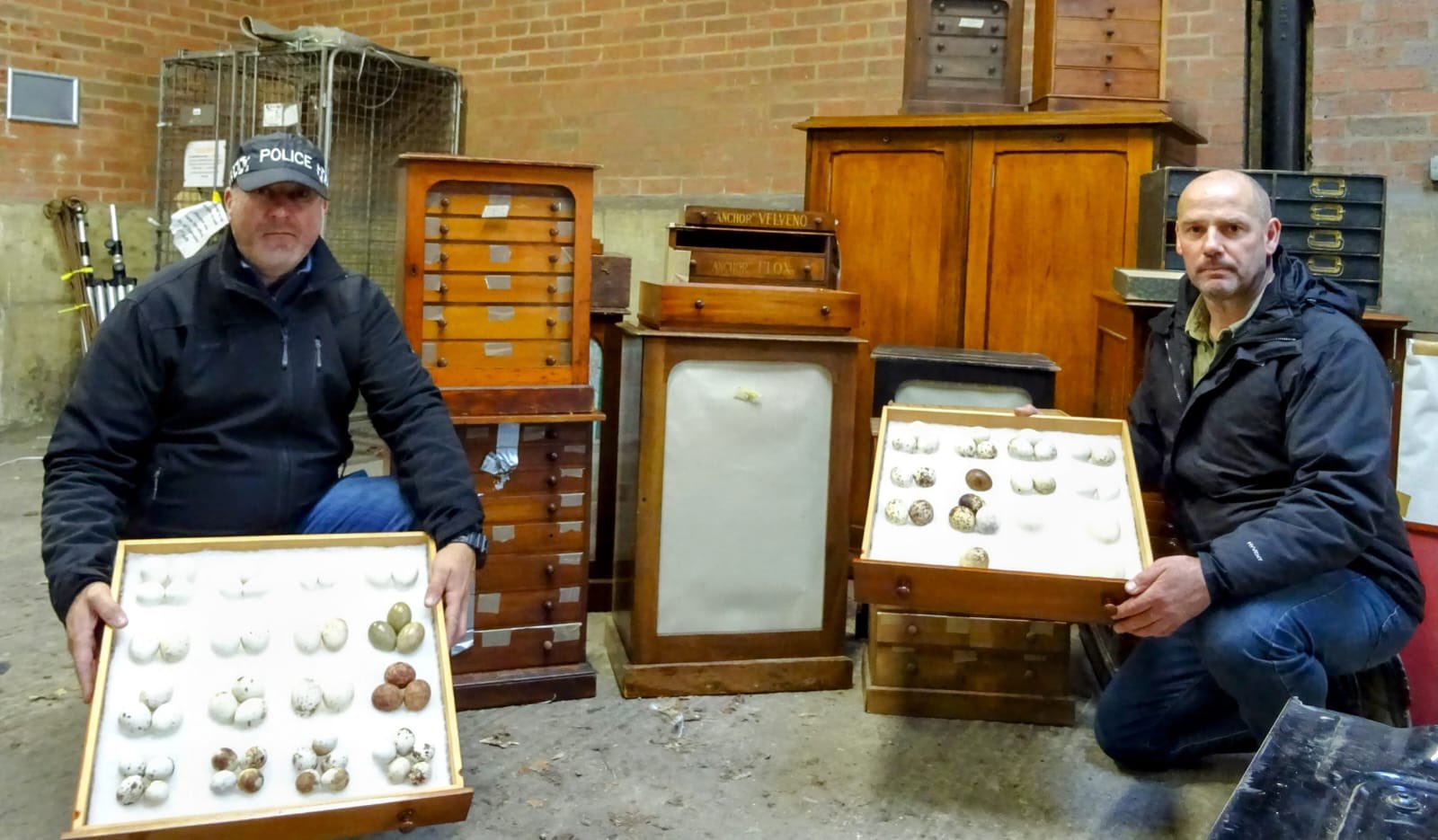
Suffolk Police’s Rural, Wildlife & Heritage Team has seized what it describes as a ‘vast’ egg collection in Halesworth. The haul is thought to include clutches of hen harrier and osprey eggs.
The police raid last Friday was part of Operation Easter, a policing initiative that began in Scotland 25 years ago (see here for background) that primarily targets wild bird egg thieves, although in recent years it has been expanded to also cover related crimes such as the online trade in eggs and the disturbance of nests for photography (see here).
This initiative is a good example of partnership-working. It’s facilitated by the National Wildlife Crime Unit that leads on intelligence reports and key partners include UK police forces and the RSPB’s Investigations Team. It’s seen some major successes over the years, with convictions often including custodial sentences, and large numbers of wild bird eggs being taken out of circulation.
More information about illegal egg collections can be found on the RSPB’s website here.
Well done to Suffolk Police’s Rural, Wildlife & Heritage Team for keeping the public informed.
You’d think, after the high profile conviction of gamekeeper Paul Allen two days ago, who pleaded guilty to multiple counts of wildlife, poisons and firearms offences on the Shaftesbury Estate (see here), that Dorset Police might have issued a statement.
You might think that Dorset Police would have wanted to publicise the conviction, not only to inform the public that a conviction had been secured thanks to the hard work and expertise of its wildlife crime officer Claire Dinsdale and the other partner agencies that Claire drafted in (National Wildlife Crime Unit, RSPB Investigations and Natural England), but also to send a message of deterrence to any other person thinking of committing these crimes.
It’s not as though Dorset Police doesn’t routinely publish statements on its website about other forthcoming court appearances and subsequent convictions for a wide range of offences such as assault, drug supply, sexual assault, murder, driving offences, fatal collisions etc (e.g. see here, here, here, here, here, here, here) and yet Dorset Police has remained tight-lipped about how this long and complex investigation, led by one of its own officers (the now former WCO Claire Dinsdale), resulted in seven guilty pleas at court on Wednesday.
Why would they want to keep quiet about that, do you think? It’s almost as though Dorset Police isn’t that bothered about raptor persecution, a police national wildlife crime priority.
*Multiple illegally killed birds of prey, six of which were confirmed shot and one poisoned, were uncovered by Dorset Police and the RSPB on the Shaftesbury Estate near Wimborne St Giles
*The recently published RSPB Birdcrime report identified Dorset as the second worst county in the UK for confirmed bird of prey incidents in 2021
*The conservation charity is calling for greater regulation of larger scale pheasant shoots in order to help address the climate and nature crises and to reduce these appalling crimes against birds of prey
At Weymouth Magistrates’ Court today (4 January 2023), Paul Allen, 64, of Brockington Down, Wimborne St Giles, pleaded guilty to multiple charges of raptor persecution and related offences.
The Dorset gamekeeper will be sentenced on 16 February.
Dorset Police were first alerted in November 2020 when a member of the public found a dead red kite lying close to a dead rat on a private pheasant shoot on the Shaftesbury Estate, near Wimborne St Giles. Toxicology examinations confirmed the presence of the highly toxic pesticide bendiocarb in both species. Bendiocarb, which in some forms has now been banned, has been persistently abused for the illegal poisoning of birds of prey and other animals for years. It is believed the rat was laced with the poison and deliberately placed as a poisoned bait.
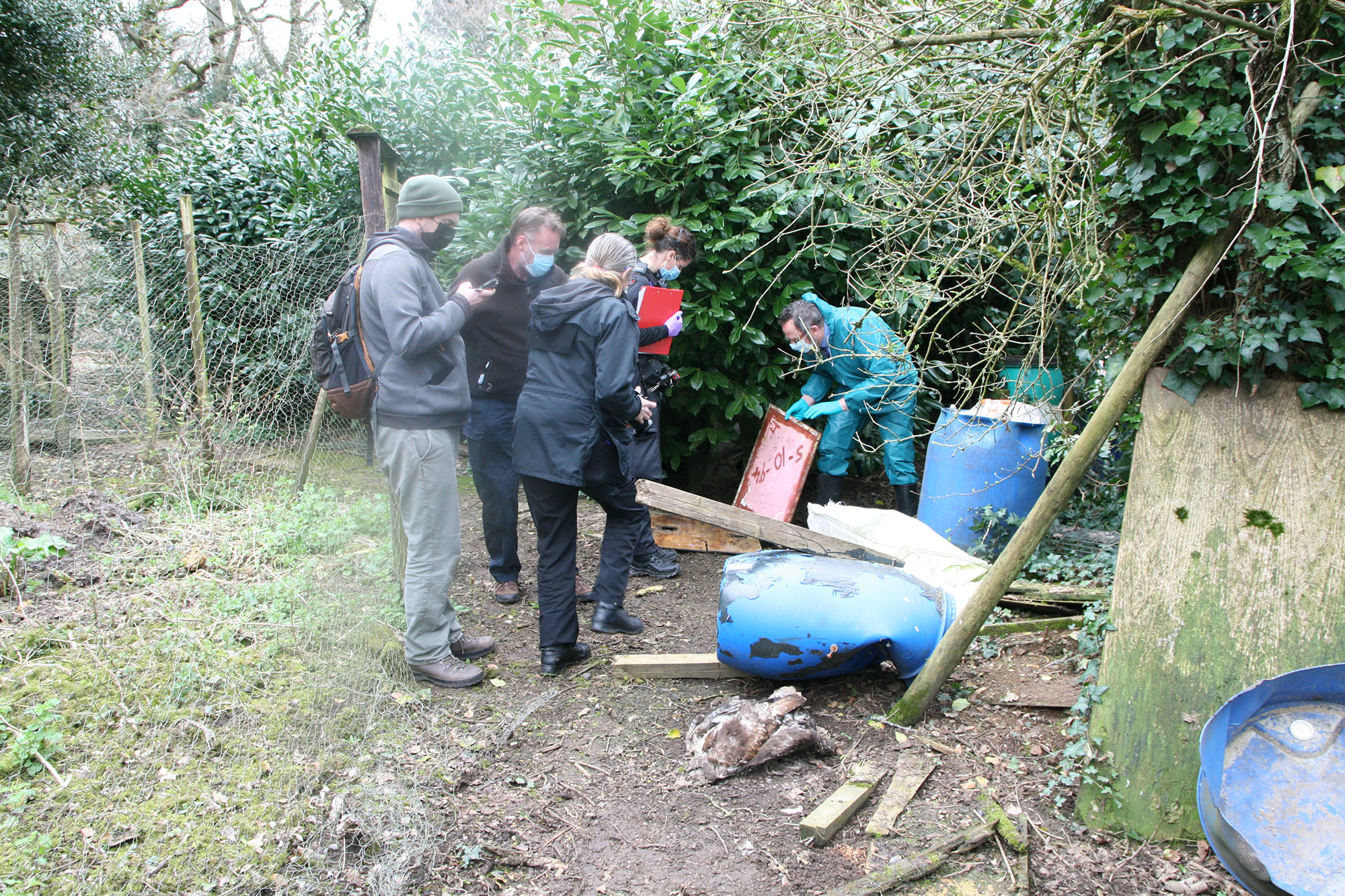
A multi-agency search of Allen’s home and surrounding land was undertaken in March 2021, led by Dorset Police and assisted by the National Wildlife Crime Unit (NWCU), Natural England and RSPB Investigations. Officers discovered six dead buzzards (which, following official post-mortem, were confirmed to have been shot) near the remains of a bonfire, including one that was suspected as having been shot within the preceding 24 hours. Tragically, this bird also contained shot from two previous shooting incidents, which it had survived.
Dorset Police, NWCU, Natural England & RSPB investigators at the scene where four of the nine buzzards were found. Photo: RSPB
Four of the six shot buzzards found by investigators. Photo: RSPB
Two more shot buzzards found during the search. The buzzard on the top was believed to have been shot less than 24 hours before being found. Photo: RSPB
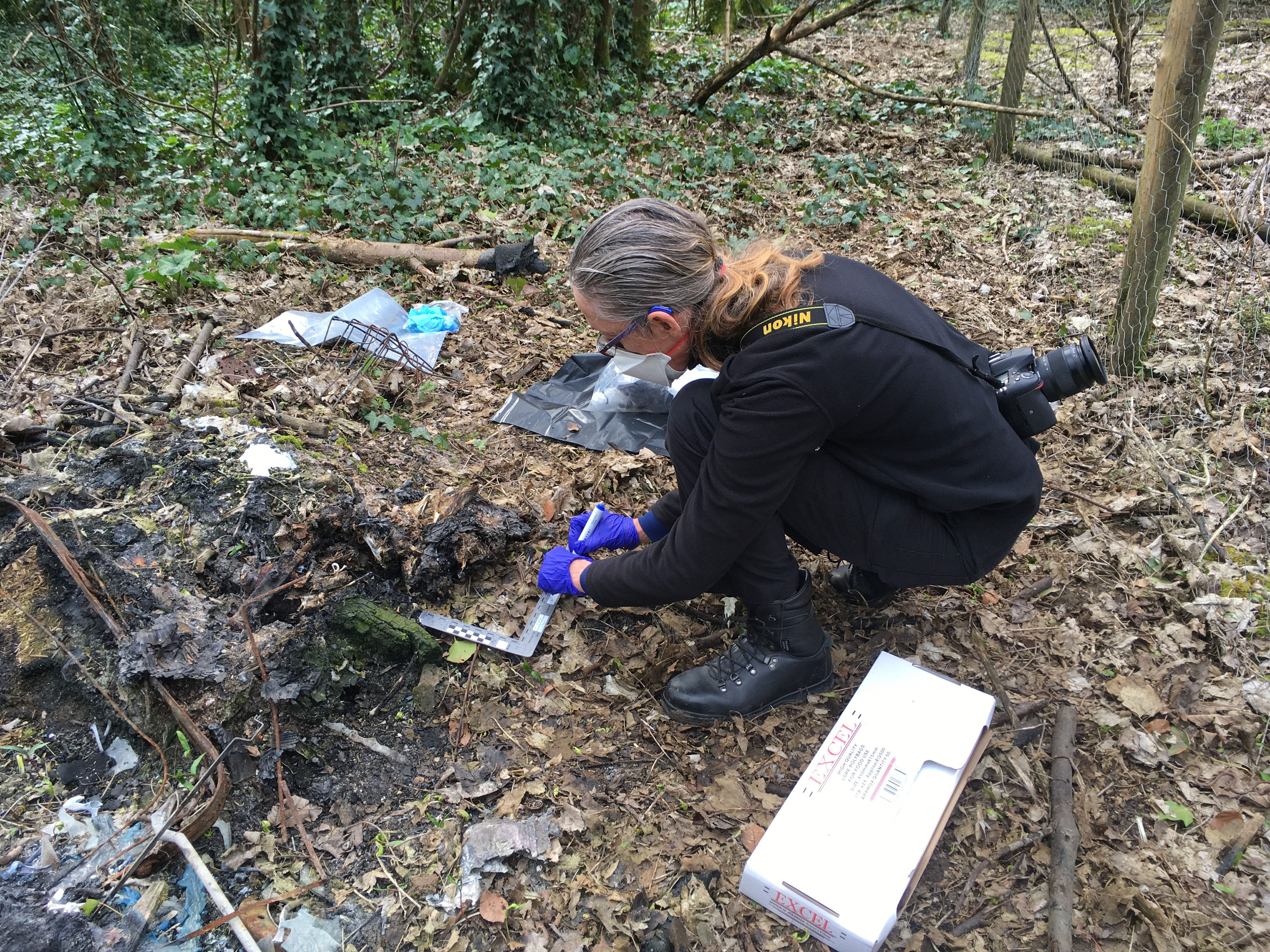
An avian specialist at the Natural History Museum examined the remains of the fire, which was collected by investigators and confirmed the presence of at least three further buzzards.
CSI officer from Dorset Police examining the remains of three buzzards on a bonfire. Photo: RSPB
A banned product containing the pesticide bendiocarb was found in Allen’s vehicle and in an insecure outbuilding, along with two bottles of strychnine: another deadly poison banned in 2006. Two full tins of Cymag – a lethal fumigant pesticide banned since 2004 – were also found outside under an upturned pond liner.
Officers from Dorset Police & Natural England with two containers of Cymag. Photo: RSPB
Sachet of banned pesticide Ficam W (Bendiocarb) found in unlocked outbuilding. Photo: RSPB
All birds of prey are protected under the Wildlife and Countryside Act 1981 and killing them is against the law, punishable by an unlimited fine and/or jail.
Thomas Grose, RSPB Investigations Officer, said: “Finding so many illegally killed buzzards was truly shocking. This is yet another example of a gamekeeper being prosecuted in connection with raptor persecution offences on land managed for gamebird shooting.
“In addition to all the agencies involved in this case, we would particularly like to thank Claire Dinsdale, formerly of Dorset Police, and currently with the NWCU, an exemplary officer who has devoted her career to tackling wildlife crime.”
Nationally, the RSPB’s recently published Birdcrime report for 2021 found that over two-thirds of confirmed raptor persecution incidents were in relation to land managed for gamebird shooting and identified Dorset as the county with the second-highest number of confirmed raptor persecution incidents in the UK that year.
Mark Thomas, UK Head of Investigations at the RSPB, said: “Tragically, only days into the New Year, we already have yet another highly significant bird of prey persecution case before a court. This is a national problem which requires urgent Government attention and solutions, as identified in their own report published in December 2021.
“In the time of a climate and nature emergency there can be no place for raptor persecution. We are therefore calling on Government to better enforce existing regulations relating to pheasant shoots, and to consider the introduction of new sanctions to act as a meaningful deterrent to such appalling crimes.”
The guilty pleas were –
· Two charges of possession of six dead common buzzards and remains of three more in March 2021
· Three charges of the keeping of banned pesticides (strychnine, bendiocarb and Cymag) in March 2021
· Two charges of failing to comply with conditions of shotgun and firearms certificates in March 2021
Charges relating to the killing of a red kite were dropped.
ENDS
The RSPB has also released a few minutes of video footage from the search – well worth viewing. You can find it on the ITV News website here
After today’s court case, where gamekeeper Paul Allen was found guilty of seven wildlife, poisons and firearms offences, including the possession of six shot buzzards and banned poisons in March 2021 (here), it can now be revealed that the poisoned white-tailed eagle that was found dead on a Dorset estate in January 2022 was on the very same estate – the very same estate (the Shaftesbury Estate) that Dorset Police u-turned on their decision to search during their botched investigation into the poisoning of that eagle (see here).
Now, before I go any further, there are a few things that need to be clarified before anyone jumps to conclusions and makes libellous comments. Firstly, and importantly, there is NO EVIDENCE to indicate that the eagle was poisoned on the Shaftesbury Estate. The eagle was found dead there, yes, that is a statement of fact. However, we know from the eagle’s satellite tag data that in the days preceding its death it visited two or three other estates in the area. We also know that the poison that killed the eagle (Brodifacoum) is not a fast-acting poison and that this eagle’s health deteriorated over a number of days before it died. It is quite feasible that it picked up the bait elsewhere but succumbed to internal haemorrhaging once it had reached the Shaftesbury Estate.
On the same lines, it is also important to clarify that there is NO EVIDENCE that gamekeeper Paul Allen had any involvement in the poisoning of the white-tailed eagle. He just happened to work on the estate where the eagle was found dead. My understanding is that the shoot that Paul Allen worked on, although located on Shaftesbury Estate, was not directly associated with the estate; it was a privately-run shoot (perhaps tenanted) that was not under the management of Shaftesbury Estate.
What is up for discussion though, is Dorset Police’s decision NOT to search the Shaftesbury Estate as part of their investigation into the poisoning of that eagle in March 2022, when they were already acutely aware of the offences that gamekeeper Paul Allen had committed on the very same estate, a year earlier.
Dorset Police’s (now former) wildlife crime officer, Claire Dinsdale, had organised a search of the Shaftesbury Estate after the toxicology results came back on that eagle. She was absolutely right to do so, whether earlier offences had been committed there or not. It’s a no-brainer. This is policing for beginners. You find a poisoned eagle, you go and search the location where it was found to see if there’s any evidence to identify a potential perpetrator. That these other raptor persecution offences were already under investigation on the same estate just ramps up the justification for another search, surely?
Why Claire’s decision to undertake a search was overruled by senior officers, who then repeatedly said, for months afterwards, that their decision not to conduct a search was ‘proportionate’ and that ‘there weren’t any new leads’ to justify a search, just beggars belief. Their decision to u-turn on the search was made despite representations from the National Wildlife Crime Unit (NWCU) and the RSPB, based on the eagle’s satellite tag data and decades of experience investigating raptor persecution crimes. Something happened to cause the police u-turn. But what?
There is a strong stench of something sinister going on at Dorset Police HQ.
I’m certain that this latest revelation will lead to more questions being asked of Dorset Police, and from a much higher authority than this little blog.
Further to my blog post on January 1st 2023 (here), this morning gamekeeper Paul Scott Allen, 54, of Baileys Hill, Brockington, near Wimbourne in Dorset, has pleaded guilty to seven charges of raptor persecution, poisons and firearms offences whilst he was working on a privately-run gamebird shoot located on the Shaftesbury Estate in March 2021.
Following the discovery of a poisoned red kite on the estate in November 2020, a multi-agency raid led by Dorset Police’s (now former) wildlife crime officer Claire Dinsdale took place in March 2021 (see here) where the corpses of six dead buzzards were found by a pen behind his house (tests later showed they had all been shot, including one that was was estimated to have been shot in the last 24hrs). Officers also found the remains (bones) of at least three more buzzards on a bonfire.
A loaded shotgun was found propped up behind a kitchen door (!) and 55 rounds of ammunition were found in a shed. Both the gun and the ammunition should have been inside a locked cabinet, by law. The ammunition was not covered by Allen’s firearms certificate.
Officers also found a number of dangerous, and banned, chemicals, including two bottles of Strychnine, two containers of Cymag and a packet of Ficam W (Bendiocarb) in various locations, including in a vehicle used by Allen.
Four of six illegally shot buzzards found during the police raid. Photo by RSPB
The seven guilty pleas included two counts of possessing a live or dead bird, or parts thereof, one charge of failing to comply with the conditions of a shotgun certificate, one charge of failing to comply with the conditions of a firearms certificate, one count of possessing a regulated substance without a license, one count of failing to comply with regulations in accordance with the Plant Protection Products (Sustainable Use) Regulations 2012 and one charge of contravening a health and safety regulations.
A number of charges were dropped prior to the hearing. More on that shortly.
Sentencing was adjourned for reports and Allen is due back in court on 16th February 2023.
There is plenty to discuss about this case and I will do that over the coming days. In the meantime, press attendance at court was strong so I’ll add the links to the various reports as they come out, below.
RSPB press statement (includes crime scene photos) here
UPDATE 4th January 2023: The estate that Dorset Police refused to search after discovery of poisoned eagle is the same location where gamekeeper was today convicted of multiple raptor persecution crimes (here)
UPDATE 16th February 2023: Convicted Dorset gamekeeper Paul Allen due to be sentenced today (here)
UPDATE 16th February 2023: Criminal Dorset gamekeeper Paul Allen receives suspended custodial sentence despite committing multiple wildlife, poisons and firearms offences (here)
Dorset Police were never far from the headlines last spring and summer, thanks to their appalling, botched investigation into the poisoning of a white-tailed eagle, found dead on a game-shooting estate and containing seven times the lethal dose of the rodenticide Brodifacoum.
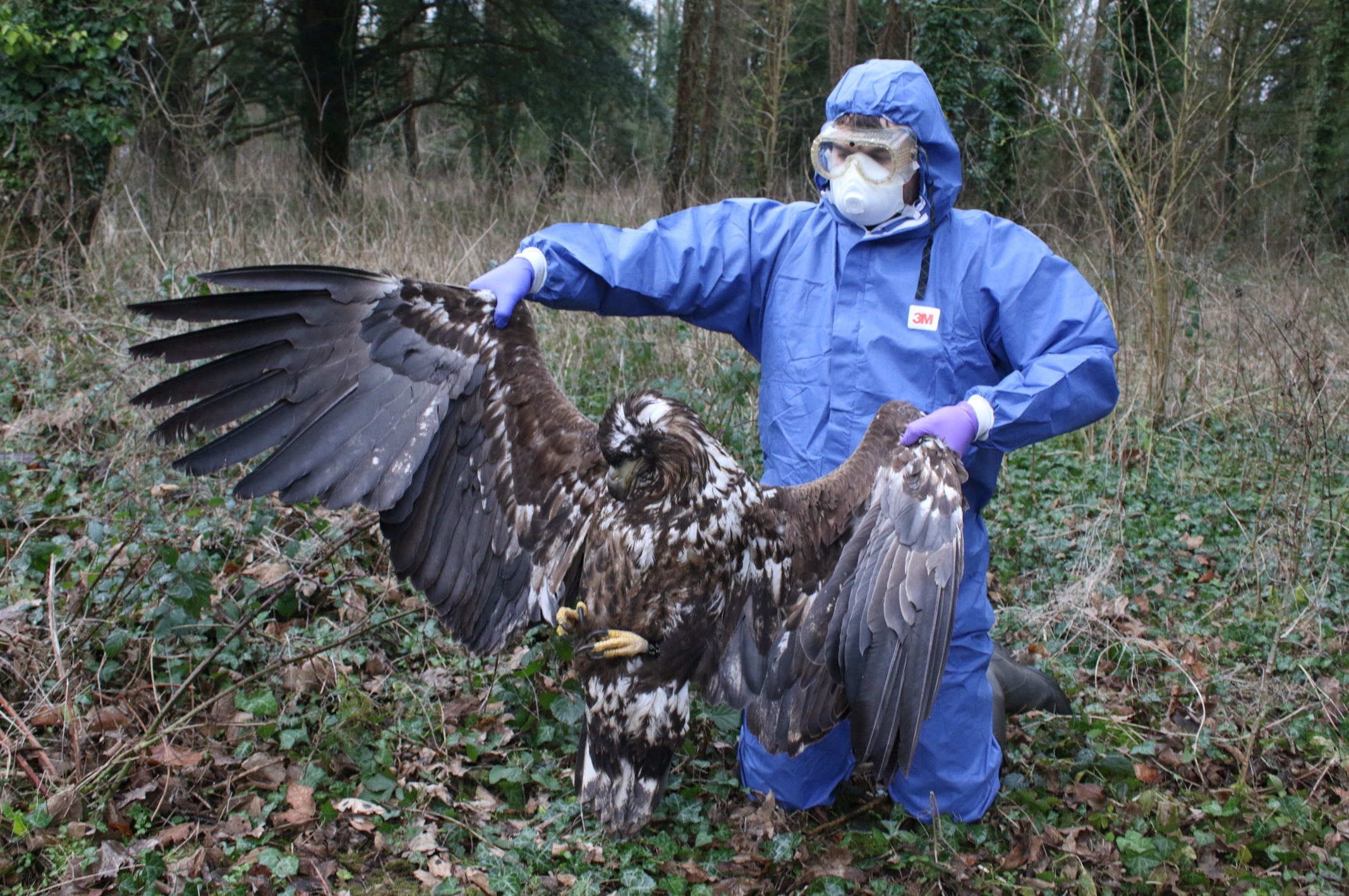
As a recap for new blog readers, the corpse of the young satellite-tagged eagle, which was one of the birds from the high profile reintroduction project on the Isle of Wight, was found on the unnamed shooting estate in January 2022. Dorset Police’s wildlife crime team, led at the time by the exemplary Claire Dinsdale (one of few officers awarded the Queen’s Police Medal for her work), undertook a multi-agency operation to retrieve the corpse, sent it off for toxicology analysis, and when the results came back in early February 2022, she set about organising a warrant for a multi-agency team to search the estate to look for evidence that might identify who was responsible for this serious wildlife crime. She also issued a public appeal for information (here).
The news of this eagle’s death made national news and led to some disturbing criticism of Dorset Police by local Conservative MP Chris Loder, who publicly declared that Dorset ‘wasn’t the place for eagles’ and argued that the police should be focusing their resources on other types of criminality and not on suspected wildlife crime (see here). It also emerged that Chris Loder had some interesting connections with at least one prominent Dorset estate from whom his local party had received considerable donations, although it wasn’t known whether funding had been received from the [unnamed] shooting estate where the eagle had been found poisoned (see here).
By the end of March 2022, Dorset Police issued an astonishing statement, claiming that the toxicology results were “inconclusive” (actually they were anything but!) “and it has therefore not been possible to confirm that any criminal offence has been committed…..As a result, no further police action will be taken in relation to this report“.
This decision to prematurely pull the planned search and close the investigation made no sense whatsoever, including to the RSPB (here) and it even led to questions being tabled in the House of Lords (here). It was a ludicrous situation. For this dead eagle’s liver to contain seven times the lethal dose of Brodifacoum (i.e. seven times the amount needed to kill a bird the size of an eagle), it could only be the result of either (a) mis-use of the rodenticide or (b) deliberate abuse of the rodenticide. Either way, these are both offences and deserved a full investigation, especially given Dorset’s reputation as a bird of prey persecution hotspot (see here). For Dorset Police to effectively pull down the shutters and shout ‘Nothing to see here’, without conducting a search, looked very dodgy indeed.
Around the same time news also emerged that Claire Dinsdale QPM had gone on ‘long-term sick leave’ with stress and, strangely, Dorset Police’s Rural Wildlife & Heritage Crime Team had a name change, which happened just after MP Chris Loder’s Twitter outbursts about Dorset Police spending time investigating wildlife crime. The words ‘wildlife’ and ‘heritage’ were completely and mysteriously removed from the name, which had now become ‘Dorset Police Rural Crime Team’ (see here).
There followed months of protracted aggro, as FoIs were submitted to Dorset Police who first ignored them (e.g. see here) and then subsequently refused to provide the requested information (e.g. see here), even after appeal. Many people were asking whether there was evidence of political interference by Chris Loder MP and the Dorset Police & Crime Commissioner David Sidwick, influencing Dorset Police’s decision to drop the investigation. All parties denied this, of course, and no hard evidence has emerged to answer the questions, but Dorset Police’s refusal to answer FoI questions simply left these concerns hanging in the air like a bad smell.
Dorset Police then attempted a futile damage limitation exercise where they claimed their decision to prematurely close the investigation before conducting a search was ‘proportionate’ (see here) and then they claimed to have undertaken a review (effectively marking their own homework) which concluded that there was ‘insufficient evidence’ and ‘no outstanding lines of enquiry’ to progress the case. Well of course, if you fail to conduct a search you’re not going to find any evidence, are you?!
In August news emerged that Wildlife Crime Officer Claire Dinsdale QPM had left Dorset Police and was now working at the National Wildlife Crime Unit.
On 7th October 2022, Dorset Police published another statement about this botched case, probably in response to the ongoing criticism that simply refused to go away. The new statement, issued by Dorset Police Assistant Chief Constable Rachel Farrell (here), just reinforced the earlier denials of dodgy policing and repeated the line that, “…there was insufficient evidence to prove an offence of wilful poisoning by an individual – so no one person can be proven to have been criminally responsible for the bird’s death“.
On 16th November 2022, coinciding with the publication of the RSPB’s latest annual Birdcrime report, Claire Dinsdale posted a remarkable comment thread on Twitter as follows:
Tweet 1:2020 – a series of concerning incidents in Dorset stood out to me & colleagues from various agencies. Progress was being made with multi agency searches & raising nationally at our Bird Of Prey PDG (Priority Delivery Group) meetings. It is clear to anyone with a basic understanding of wildlife crime that Dorset had a problem.
Tweet 2:Up until early 2022, there was thankfully no-one interfering with these specialised cases. Policing must be objective & not influenced by threats or pressure from other parties or their own officers. Without fear or favour. So no surprise to see Dorset is 2nd worst county in UK Bird Of Prey Crime 2021 data, with only 1 less than the No 1 slot.
Tweet 3:I hope lessons will be learned by those who made serious errors of judgement. Policing needs to respect & listen to those experienced & specialist officers on the ground.
Tweet 4:It needs to have the strength & courage to do what is right without personal regard for ambition or self importance. The public are not fools & will rightly hold us to account for the decisions made. When policing or other public servants get it wrong, they should say so.
Tweet 5:If I can correct the statement for the record here by the Dorset Echo and Natures Voice. The eagle case was shut down prematurely in my view & the planned multi agency search I had arranged was cancelled by a new boss with no understanding of wildlife crime and a very senior officer within days of an MPs rebuke & threats on police funding, got the word wildlife removed from our twitter bio. [Ed: I believe the Dorset Echo article to which Claire was referring was this one]
Tweet 6:The previous Chief Constable (who’d retired before these events) advised me should anyone interfere with one of my cases to come straight to him.
Tweet 7:There has been some great work done by WCOs colleagues in other forces. My last Dorset wildlife crime case myself & other agencies worked so hard on, will hopefully show how you can investigate bird of prey crime with searching being a key part of it.
Claire’s tweets earned her considerable support on Twitter – it takes an incredibly courageous officer to speak out on police failings – but by the end of November all but Tweet #7 had been deleted. We can only imagine what hell some senior officers in Dorset Police are now bringing to her door. Nevertheless, her revelations will lead to even more scrutiny of Dorset Police’s obvious mishandling of this case…more on that soon.
Meanwhile, and also in November 2022, MP Chris Loder’s apparently cosy relationship with Dorset Police was once again in the spotlight. Two Dorset residents and long term anti-sewage campaigners, Beverley Glock and Fran Swan, both received police visits to their homes after they’d registered to attend a public meeting to raise concerns with Chris Loder about sewage pollution in the area (see their press release here). [EDITORUPDATE 4th Jan 2023: the original press release now appears to be unavailable. There is an archived copy (here) and if that also disappears I’ve provided a copy and paste version in the comments section of this blog].
What the actual?!
According to a subsequent article published on the DorsetLive website on 3rd December 2022 (here), Dorset Police & Crime Commissioner David Sidwick (whose astonishing correspondence with Chris Loder (“You and I need to get our ducks in the row on this one“) on the poisoned eagle fiasco was revealed by FoI, here) is now conducting a review about why a uniformed officer visited these two ladies, at night, apparently after police had received an email from Chris Loder’s office about their planned (registered!) attendance at the public meeting.
A spokesperson from Dorset Police is quoted:
“Officers from the neighbourhood policing team wished to understand the intentions of those people to ensure that public safety was preserved and any lawful protest could be facilitated. This approach was well-intentioned without any direction from the local MP“.
And David Sidwick is quoted saying he was given a “satisfactory explanation” (from Dorset Police) about why the two women were visited by police. He noted that it is “routine” that the police are notified of attendances to MP events following the murder of Sir David Amess MP, but has promised a review into the incident.
Public confidence in Dorset Police continues to plummet, and I guarantee there’ll be an even bigger shit storm after revelations emerge about Wednesday’s court case concerning a Dorset gamekeeper facing multiple charges of alleged raptor persecution, poisons and firearms offences dating back to March 2021.
Interesting times.
UPDATE 4th January 2023: The estate that Dorset Police refused to search after discovery of poisoned eagle is the same location where gamekeeper was today convicted of multiple raptor persecution crimes (here)
More detail has emerged about the discovery of five dead birds of prey and two magpies found in suspicious circumstances and the subject of an appeal for information yesterday by Lincolnshire Police’s Wildlife Crime Team (see here).
The five raptors are reported to be three barn owls, one tawny owl and a red kite.
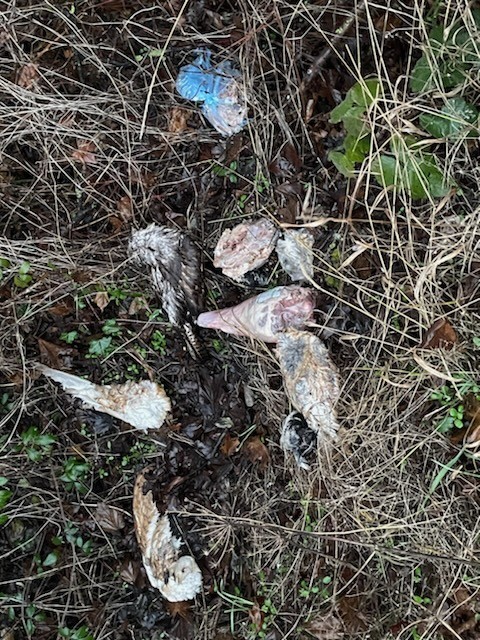
The police appeal for information contained very little detail yesterday – no date of discovery, no specific location and no species identification, although the dismembered wings of a barn owl could be seen in the accompanying police photograph:
Many thanks to BBC reporters Simon Hare and Paul Murphy for providing a bit more information:
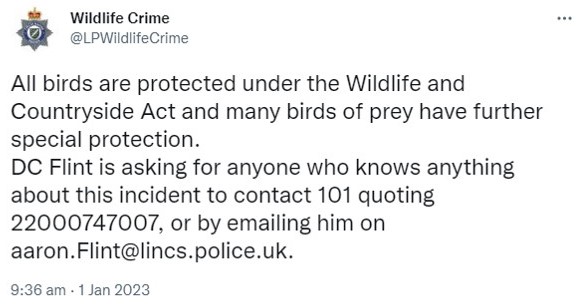
If you have any information that could assist the police investigation please contact DC Aaron Flint at Lincolnshire Police, either by calling 101 and quoting incident number 22000747007 or by emailing aaron.flint@lincs.police.uk
UPDATE 27th May 2023: Update from Lincolnshire Police on discovery of raptor body parts found in ditch (here)
Last month I wrote about a poisoned red kite that had been found dead on a grouse moor, next to a poisoned bait (a Lapwing), and how Police Scotland had deliberately withheld the details of this crime for over 18 months (see here).
Now there’s another poisoning crime where Police Scotland has deliberately withheld information from the public. This time it’s a poisoned raven, and this time Police Scotland has been nothing short of obstructive when I started to ask questions about it.
A poisoned raven (file copy, photographer unknown)
I found out about this poisoned raven after stumbling across an entry on the database published by the Wildlife Incident Investigation Scheme (WIIS), back in November 2022. The details were as follows:
‘Ref #21094. Raven, found April 2021. Lothian. Category: Abuse. Pesticide(s) involved: Carbofuran, Isofenphos. Case information: Despite extensive enquiries and property searches the investigation carried out by Police Scotland into the illegal poisoning of this raven failed to identify a suspect for the crime and the case is now closed‘.
This incident jumped out at me given that one of the poisons used was Carbofuran – a pesticide so dangerously toxic (to both humans and wildlife) that even possessing it, let alone placing it out in the open on a bait, has been an offence in Scotland since 2005 (Possession of Pesticides (Scotland) Order 2005). The combination of Carbofuran with Isofenphos has been used frequently in the illegal poisoning of birds of prey for years, notably by the game-shooting sector.
I didn’t recall seeing any media about this particular poisoning crime, and the Scottish Government’s annual wildlife crime report is so far behind the curve that we won’t see details of anything found in April 2021 until 2024(!), so I asked a couple of officers from Police Scotland what they could tell me about the case.
Both officers told me that they weren’t allowed to comment, and that I should direct my enquiries to Police Scotland’s media communications team. So I did.
I emailed the news desk and asked for details, giving them all the info that I’d read on the WIIS database.
No reply.
I followed up eight days later to ask again. Here’s the response:
“Good morning Ruth, we have been trying to track this one down for you. Apologies, but I need a bit more information. Unfortunately the incident number is not one we use on our systems so that has not enabled me to find it.
Are you able to provide a date in April when this was reported to police. I am afraid it is for the media to provide us with a location rather than the other way round so if you can narrow it down for me please – Lothian is not a county in Scotland – we have East Lothian, West Lothian and Midlothian, so a more accurate location would be helpful at our end“.
Eh? How many poisoned ravens were found in Lothian in April 2021 that triggered a police search? Surely there can’t be that many? And how am I supposed to know the location of this crime when it hasn’t even been publicised?! I wrote back to this effect, and suggested that the media officer could simply ask the Lothian & Borders Wildlife Crime Officer for details, given that his ‘patch’ covers East, West and Midlothian.
Here’s the response I received:
“Hi again Ruth, sorry but I really do need to know a more accurate location. As mentioned we have East Lothian, West Lothian and Midlothian. Or if you have the name of a town nearest to where this is supposed to have happened. To speak to officers to find out more I need to know where. Please get back to me when you have that information“.
Needless to say, I was less than impressed. This is a serious wildlife crime, supposedly a national wildlife crime priority, involving the use of a highly toxic poison of which just a few granules could kill a human should they come into contact with it. It seemed to me that Police Scotland’s media team was being deliberately obstructive in releasing any information about it. Not even an appeal for information or a warning to the public that this poison had been used in the area.
I wrote back, asking the media officer where he might suggest I find a more detailed location to help him find the case, given that Police Officers had been directed not to comment about it? I also indicated that I was considering submitting a formal complaint.
Four days later, a different media officer contacted me with the following statement:
“Hi Ruth, Regarding your previous enquiry please see our statement below:
A Police Scotland spokesperson said: “We received a report of a poisoned raven in the East Lothian area on Monday, 5 April, 2021. Extensive enquiries have been carried out. Any new information will be thoroughly investigated and anyone with new information should contact police on 101 quoting incident 1314 of 5 April, 2021.”
I really don’t know what’s going on with Police Scotland. They have some fantastic wildlife crime officers on the ground, many of them going above and beyond in their investigations to bring the raptor killers to justice, but they, and we, are being badly let down by the Force’s upper hierarchy who have clearly made a decision about withholding serious wildlife crime news from the public.
Why is that? Who benefits from such censorship?
As I wrote a few months ago on the withheld news of the poisoned red kite found on a Scottish grouse moor, news that Police Scotland had kept hidden for 18 months (here), I don’t understand the rationale at all. Certainly, in the early stages of an investigation it often pays for details to be withheld so as not to compromise searches etc. But 19 months (in the poisoned raven case) after the crime is discovered? It doesn’t make sense, and all it does is undermine public confidence, which really isn’t helpful when Police Scotland needs the public onside to report suspected wildlife crimes.
By the way, according to the WIIS database, a ‘suspected bait’ categorised as ‘abuse’ (name of chemical withheld) was discovered in Lothian in March 2021. The case notes say: ‘This incident is the subject of an ongoing Police Scotland investigation’.
So a poisoned bait was found one month prior to the poisoned raven. Are these crimes linked? Or is there another undisclosed location in ‘Lothian’ where deadly poisons are being laid out?
Where is the warning to both locals and visitors to the area from Police Scotland about this serious threat to public safety?
An MSP is currently in the process of asking formal questions about this ongoing censorship. Watch this space.
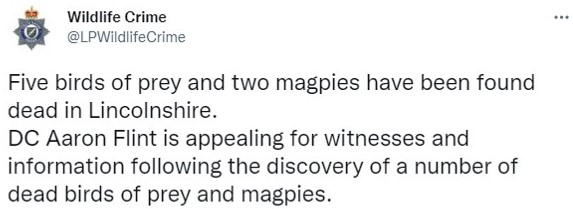
Lincolnshire Police’s Wildlife Crime Team has issued an appeal for information after the discovery of five birds of prey and two magpies found in suspicious circumstances.
The details are a bit sketchy – no date, no specific location, no species identification, but there’s a photograph of what looks to be an assortment of avian body parts, some chunks of meat and a strange blue colouring on one of the items:
If you’re able to assist, please contact Lincs Police.
UPDATE 2nd January 2023: Three barn owls, one tawny owl & one red kite found dumped in ditch – police appeal for information (here)
UPDATE 27th May 2023: Update from Lincolnshire Police on discovery of raptor body parts found in ditch (here)
A gamekeeper is due in court on Wednesday 4th January 2023 to answer multiple charges of alleged raptor persecution, poisons and firearms offences.
This case relates to the multi-agency raid carried out on a shooting estate in Dorset in March 2021, led by the now former wildlife crime officer Claire Dinsdale (see here).
This prosecution is particularly interesting on a number of levels – watch this space.
As this is a live prosecution, comments won’t be accepted until the case concludes. Thanks for your understanding.










 Raptor Persecution UK