On-going hen harrier persecution raised in House of Lords

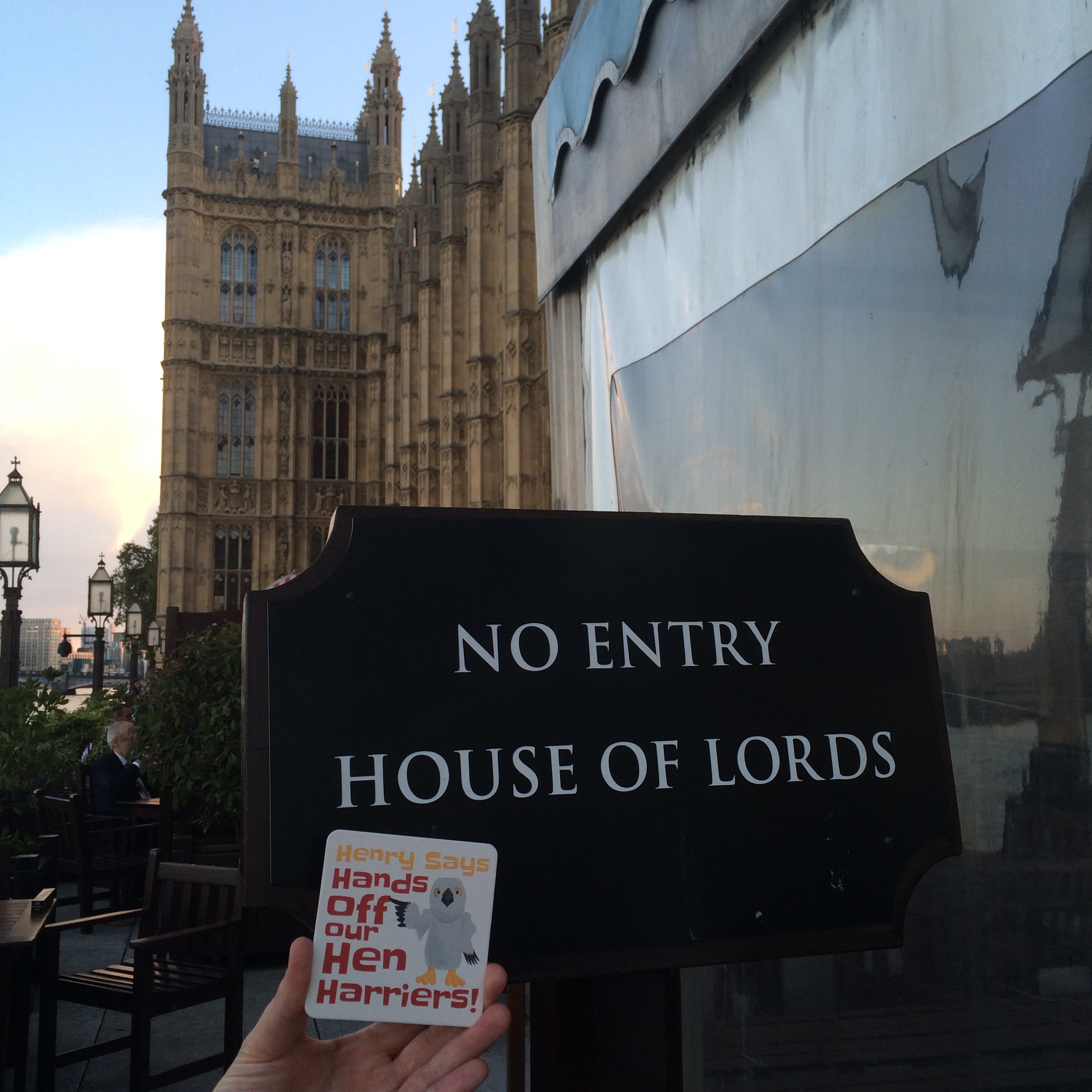
I’d wager that the subject of the illegal killing of hen harriers on driven grouse moors has been discussed many times in the House of Lords, probably on the terrace bar and probably accompanied by some hearty back-slapping, sniggering and cheering.

[Photo by Ruth Tingay]

Fortunately, the hen harrier does have some friends in high places, not least long-time supporter and Life Peer Natalie Bennett (Green party), who tabled the following written question on 21st January 2021 after learning that yet another satellite-tagged hen harrier had ‘vanished’ in suspicious circumstances (see here).

From Hansard: UIN HL12411, Baroness Bennett of Manor Castle –

To ask Her Majesty’s Government what plans they have to prevent the killing of satellite-tagged hen harriers.

Answered 4th February 2021 by Lord Goldsmith of Richmond Park, The Minister of State, Department for Environment, Food and Rural Affairs

All wild birds are protected under the Wildlife and Countryside Act 1981, which provides a powerful framework for the conservation of wild birds, their eggs, nests and habitats. The Government is committed to ensuring the protection afforded to wild birds of prey is effectively enforced. There are strong penalties for offenders, including imprisonment.

We are also committed to securing the long-term future of the hen harrier as a breeding bird in England. The Hen Harrier Action Plan sets out what will be done to increase hen harrier populations in England and includes measures to stop illegal persecution. The long-term plan was published in January 2016 and we believe that it remains the best way to safeguard the hen harrier in England. A copy of the plan is attached.

Raptor persecution is one of six national wildlife crime priorities. Each wildlife crime priority has a delivery group to consider what action should be taken and develop a plan to prevent crime, gather intelligence on offences and enforce against it. The Raptor Persecution Priority Delivery Group focuses on the golden eagle, goshawk, hen harrier, peregrine and white-tailed eagle. The National Wildlife Crime Unit, which is part funded by Defra, monitors and gathers intelligence on illegal activities affecting birds of prey and provides assistance to police forces when required.

So, five years on from the launch of DEFRA’s heavily criticised Hen Harrier Action Plan, which would be better re-named the Hen Harrier Persecution Plan, and with an embarrassing amount of evidence to demonstrate that the illegal killing of hen harriers is still rampant, this response from Zac Goldsmith is pathetically lame.

The evidence that hen harrier persecution continues relentlessly includes the devastating results of a peer-reviewed scientific study, based on Natural England’s own data and published in a high-ranking journal, demonstrating that at least 72% of satellite-tagged hen harriers are presumed illegally killed on grouse moors (see here).

There’s also the rather inconvenient tally of 51 hen harriers confirmed illegally killed or reported ‘missing’ in suspicious circumstances since 2018, when grouse moor owners pretended they’d be more tolerant of the species (here) and then the admission just a few days ago from Natural England’s Chair that “continuing illegal persecution [of hen harriers] is preventing the recovery we need to see” (here).

This issue is one of the most pressing wildlife conservation issues in the UK, and yet DEFRA has nothing more to offer than, ‘We believe the Hen Harrier Action Plan remains the best way to safeguard the hen harrier in England‘.

For how many more years is DEFRA going to hide behind it’s obviously-failing action plan? It’s been five years, and counting.

Here’s a more realistic view of the Hen Harrier Action Plan, from blog reader Dr Gerard Hobley.

Enough said.

Which English grouse moors will escape DEFRA’s so-called moorland ‘burning ban’?

Last week DEFRA published its long-awaited statement on proposed new legislation to ban burning on moorland (see here).

The statement included this: ‘The new regulations will prevent the burning of any specified vegetation on areas of deep peat (over 40cm depth) on a Site of Special Scientific Interest [SSSI] that is also a Special Area of Conservation [SAC] or a Special Protection Area [SPA] unless a licence has been granted or the land is steep or rocky

and this:

There will be specific circumstances where the ban does not apply, such as on steep land or where scree makes up half the land area. In addition, the Secretary of State may also issue licences for the burning of heather on blanket bog for the purposes of wildfire prevention, for a conservation purpose or where land is inaccessible to cutting or mowing machinery. These licences may cover several years so that they can be aligned with coherent management plans for sites‘.

DEFRA’s proposal has been widely criticised as being too constrained, having far too many loopholes and not being anywhere near what had previously been promised (e.g. see here).

Guy Shrubsole, formerly of Friends of the Earth and now at Rewilding Britain, whose research on Who Owns England is compelling reading, has put together some interesting material on which English grouse moors might be affected by DEFRA’s so-called ‘burning ban’ and which ones will probably not.

The following is what Guy posted on Twitter (@guyshrubsole) a few days ago, reproduced here with his kind permission:

How many grouse moor estates will the Government’s (very caveated) moorland burning ban affect? I’ve been looking at some maps…

Firstly, here’s a map of where grouse moors are in England, approximately, built by @beadyallen and me a few years ago:

Last week, the Govt said it would legislate to ban moorland burning – but its proposals contain many loopholes.

So, who owns the grouse moors that may be exempt from this burning ban?

First up: the Queen’s grouse moor in North Yorkshire: [Ed: this estate has featured previously on RPUK – see here]

In fact, most of the grouse moor estates in the North York Moors look like they’ll be exempted from a burning ban – because, despite all being designated sites (SSSIs, SACs and SPAs), Natural England considers the peat here to be ‘shallow’ rather than ‘deep’:

Outside of the North York Moors, there are also a number of other grouse moor estates that look like they could escape the Govt’s burning ban – because they’re not designated as SSSIs / SACs / SPAs.

This is despite them still containing lots of carbon-rich peat.

One of the likely exempt estates in the Yorkshire Dales is the East Arkengarth Estate, owned by a firm registered in the tax haven of Liechtenstein, and thought to belong to a Swedish businessman: [Ed: this estate has featured previously on RPUK – see here]

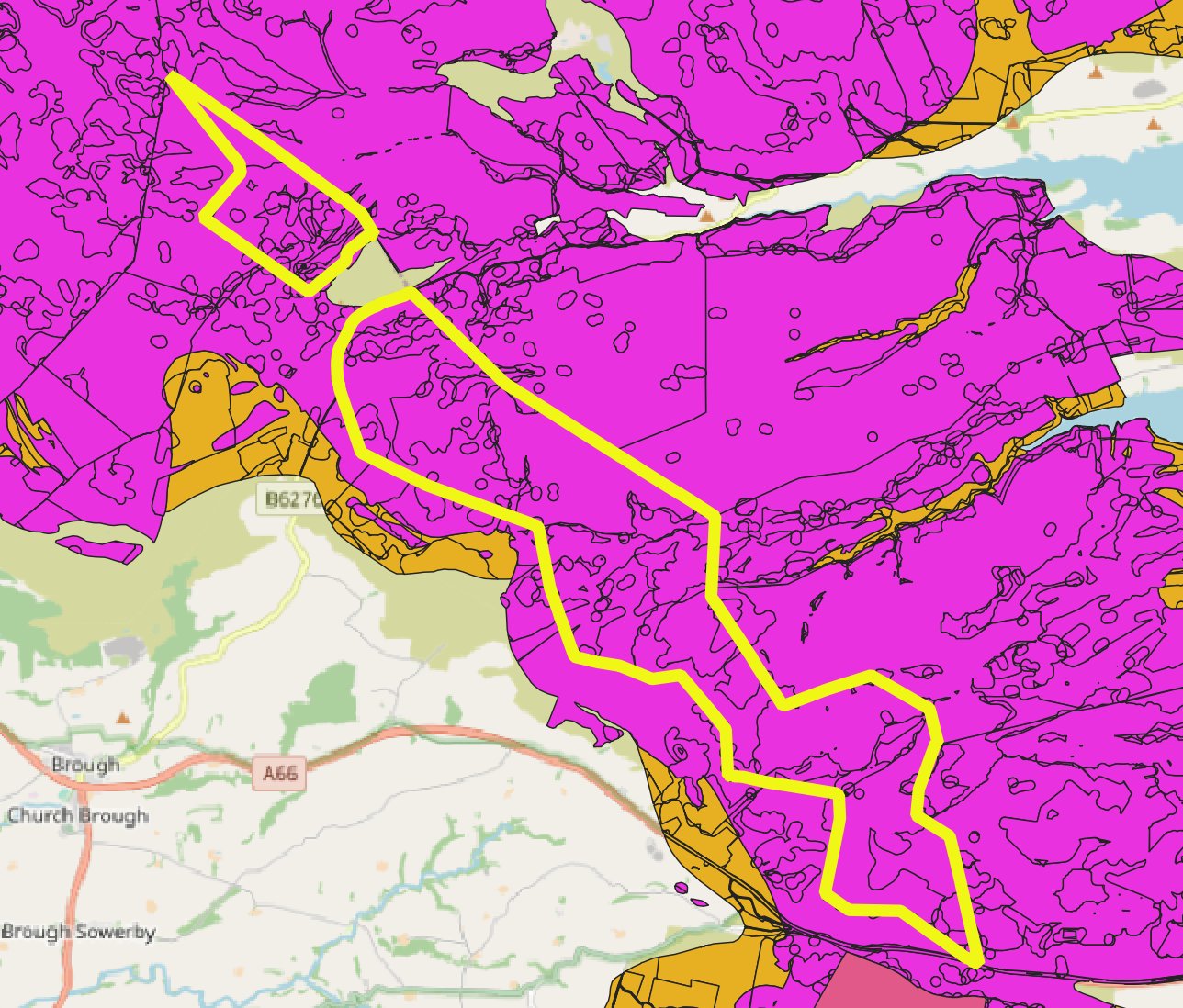
Another estate that might escape the burning ban is Knipe Moor in the North Pennines, belonging to Baron Hothfield.

Knipe Moor is all deep peat but because it’s not classed as an SSSI (or SAC or SPA) it’s not covered by the ban. Madness – bad for climate and nature.

Another example of an estate likely exempt from the burning ban: the Lilburn Estate in Northumberland, owned by the founder of Persimmon Homes.

Owns a grouse moor, most of it deep peat. It’s also a SSSI – but because it’s not *also* a SAC or SPA, it’s exempt… [Ed: this estate has featured previously on RPUK – see here & here]

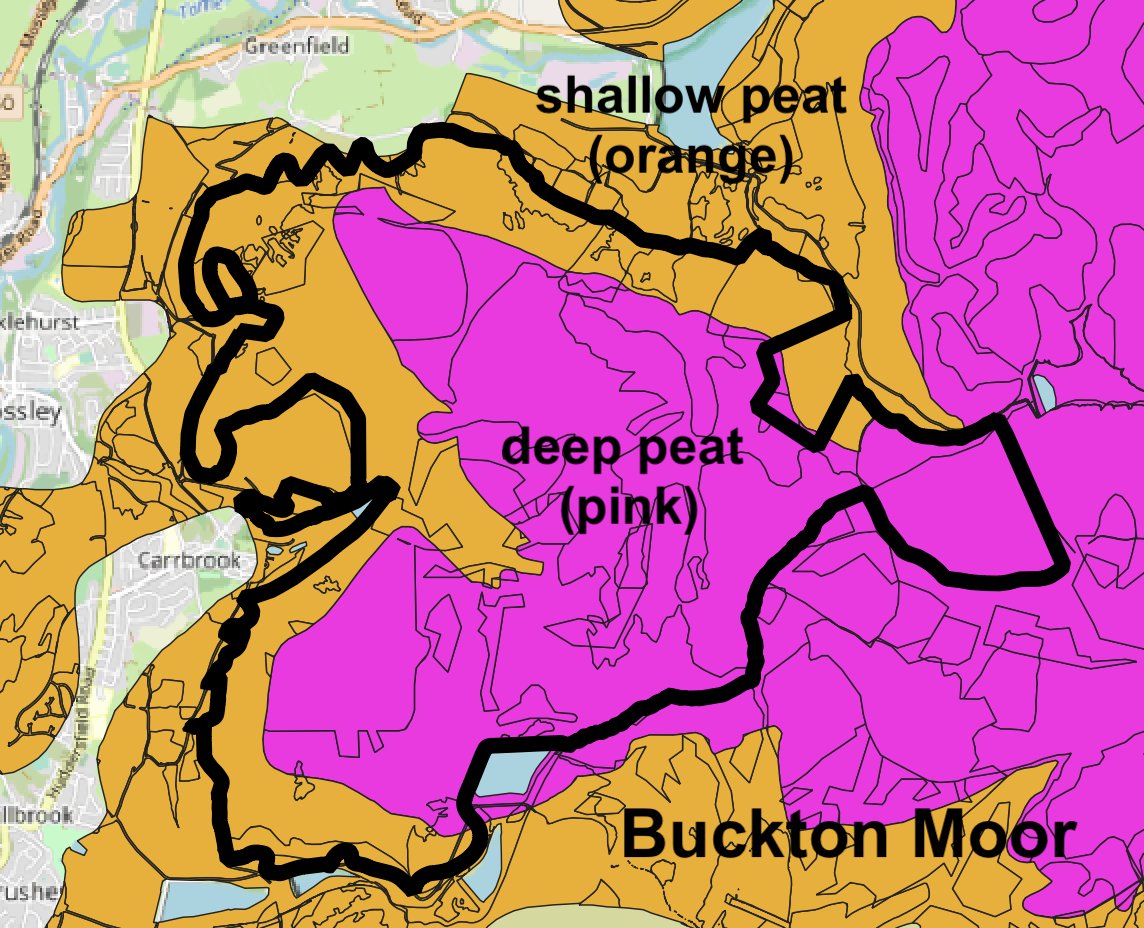
One last example of a grouse moor that’s likely exempt from the Govt’s burning ban: Buckton Moor on the edge of the Peak District.

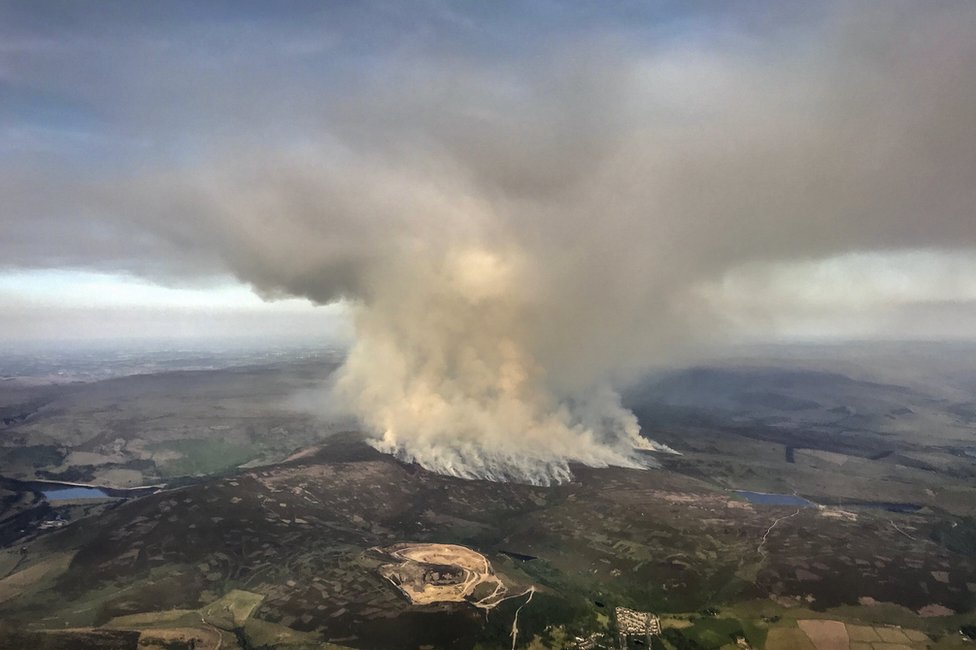
It’s not a designated site but it contains a lot of deep peat – and it’s where the massive Saddleworth fire happened in 2018!

And of course, any grouse moor estate can try to avoid the burning ban by applying to the Secretary of State to burn moorland for purposes of ‘conservation’ or ‘wildlife prevention’ [Ed: see caveats in DEFRA’s statement]

This is a nonsense; healthy peat bogs need water, not fire.

This thread gives some examples of the glaring loopholes in the Government’s moorland burning ban, and some of the estates that could benefit from its loose drafting.

@ZacGoldsmith please get rid of these loopholes – for the sake of the climate and upland wildlife!

ENDS

‘Public interest test’ proposed for large Scottish estates

Landowners could be barred from buying country estates or forced to sell off land if they are accused of neglect or abuse of power under proposals being studied by Scottish ministers.

The Scottish Land Commission (SLC), an influential advisory body, has recommended that all large or important land sales in Scotland should be subject to a legally enforceable public interest test to make sure the sale has wider social or environmental benefits.

In a detailed report to the Scottish government, the commission has told ministers any future sales involving estates over 10,000 hectares (24,710 acres), as well as any of economic or ecological significance, such as entire islands, should be included.

For the rest of Sev Carrell’s article, published yesterday in The Guardian, please click here

There are some potential implications here for massive, intensively managed driven grouse moors.

Police appeal after buzzard shot dead in Cambridgeshire

Press release from Cambridge Constabulary (4th February 2021)

Buzzard found shot in Horseheath

Police are appealing for information after a buzzard was found dead in Horseheath.

A member of the public found the bird of prey in a wooded area while on a walk on 29 January.

Cambridgeshire Constabulary’s Rural Crime Action Team (RCAT) are now working with the RSPB to find those responsible after it was discovered it had shot gun pellets in its body and wings.

PC Alun Bradshaw from the RCAT said: “Someone has deliberately shot this bird and we urge anyone with information to contact us.

All birds of prey are protected by law. If you notice a dead or injured bird of prey in suspicious circumstances, please notify us and the RSPB.”

RSPB Assistant Investigations Officer, Tom Grose, added: “Many of us will have enjoyed watching buzzards lately on our daily walks. They are a natural part of our countryside and a sign of a healthy ecosystem. Buzzards and other birds of prey are protected by law, yet all too often we received reports of them being illegally shot, trapped and poisoned.

At a time when the natural work and its wildlife are increasingly under threat, we all have an important role to play. If you have any information which may help this investigation, please come forward.”

Anyone with information is asked to contact us online via our web chat or call 101 quoting incident 239 of 30 January.

ENDS

Wildlife crime on grouse moors in the Peak District National Park – an illustrated talk by Bob Berzins

Bob Berzins is a conservation campaigner who has spent a number of years highlighting the ecological damage caused by grouse-shooting interests on the moors of the Peak District National Park (e.g. see guest blogs he’s written for Mark Avery here, here, here, here, here, here, here and here).

Regular blog readers will be well aware that the Peak District National Park has been identified as a hotbed of illegal raptor persecution for many years (e.g. see here) and this reputation continued, in and around this National Park (!) even when the country was in lockdown last spring (see here).

[A shot buzzard found critically injured at Rushup Edge, near Mam Tor in the Peak District National Park on 13th January 2020. It had to be euthanised. Photo via Derbyshire Constabulary]

Bob’s willingness to speak out about his findings on these Peak District grouse moors has led to him being targeted, like so many of us, by a campaign of harassment and intimidation from members of the grouse shooting industry, presumably in an attempt to silence him.

It’s a measure of the man that he hasn’t quietly slinked off, even in the face of the most malicious abuse, but has instead stood his ground and continued to share his experience and knowledge.

A few days ago he gave an illustrated presentation (online, of course) to the Sheffield Green Party. His talk was entitled ‘Wildlife Crime in the Peak District’ and it’s now available to watch on YouTube:

Gamekeepers responsible for more illegal raptor killing than any other profession

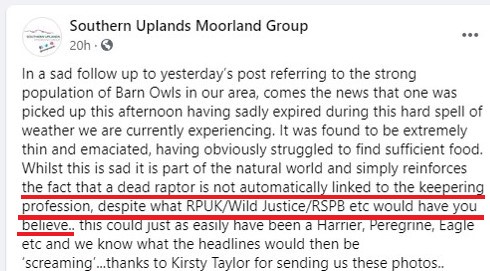
Somebody sent me a screen grab the other day of a statement posted on social media by the Southern Uplands Moorland Group (SUMG), which is one of a number of regional groups representing grouse moor estates around the country and designed to persuade the public that birds of prey are warmly welcomed and that gamekeepers love having birds of prey on their ground.

The statement published by the SUMG is fairly typical of the misrepresentation of facts that we’ve all come to expect from certain quarters of the grouse shooting industry. It reads as follows and I’ve underlined the sentence of interest:

Now, I can’t recall EVER saying on this blog that a dead raptor is automatically linked to the [game]keepering profession and there are numerous examples of illegal raptor killing offences that I’ve reported on here over the years where gamekeepers have quite clearly not been responsible (e.g. see here, here, here, here, here, here, here etc).

As a co-director of Wild Justice I’m also pretty certain that WJ has NEVER made such a claim. If there is such evidence, the SUMG are challenged to provide it.

I can’t speak for the RSPB but I can’t imagine they would EVER make such a ridiculous claim either.

Speaking for myself, I don’t even believe, as some do, that ALL gamekeepers are raptor killers. A lot of them are, of that there’s no doubt whatsoever, and some other gamekeepers will benefit from that killing even if they’re not doing the actual killing themselves, but I also know of some decent, law-abiding gamekeepers who are as thrilled at seeing a raptor as I am. I’ve met them and have worked with them, so I know they exist.

However, there’s no getting away from the undeniable evidence that shows overall, gamekeepers in the UK are responsible for more illegal raptor killing than any other profession. If you want to see the evidence, have a look at this pie chart published by the RSPB last year in their annual Birdcrime report:

Interestingly, one of the individuals included in the convicted gamekeepers section of this pie chart was a certain Alan Wilson, a member of the Scottish Gamekeepers Association who was convicted in 2019 of a catalogue of horrendous wildlife crimes he committed on the Longformacus Estate, a grouse/pheasant shooting moor in, er, the Southern Uplands (see here).

It strikes me that the Southern Uplands Moorland Group would do well to concentrate on ousting the criminals within the gamekeeping industry rather than smearing those of us who report on such crimes and who, quite legitimately, campaign for the Government to clamp down on the criminals involved.

Songbird Survival charity continues to call for licences to kill birds of prey

It’s usually the Scottish Gamekeepers Association making complete fools of themselves with wildly hysterical claims about the ‘damage’ that raptors might do to babies and toddlers, but never far behind is the massively ecologically-illiterate charity, Songbird Survival (SS).

The SS Chairman, Colin Strang Steel, is no stranger to these blog pages (e.g. see here and here). And here he is again, this time on the letters page of the Scottish Farmer (30 January 2021), calling, again, for licences to kill birds of prey (buzzards and sparrowhawks) in response to an earlier editorial about killing sea eagles (here).

His latest clamouring for licences is reproduced here:

Sir, – Your Editorial in The Scottish Farmer, January 16, made some eminently sensible proposals for dealing with rogue sea eagles.

The net needs to be widened, though, to include other avian and mammalian species which are largely responsible for the natural balance in this country having become so out of kilter, in favour of predators.

It is all very well for armchair conservationists to howl with protest at the mention of ‘control’ and trot out the usual platitude that nature will find its own balance. This, of course, is never going to happen while we are around, since man has controlled nature since Neolithic times.

At the top end of the apex predator lists are badgers, buzzards, foxes, and sparrowhawks, to mention just a few. They have no natural enemies and so it is hardly surprising that with the added benefit of protected status (except foxes) their numbers have just gone on multiplying, while their prey, like songbirds and waders, have gone in totally the opposite direction.

This has, not surprisingly, resulted in nature being out of balance and unless man is allowed to intervene more than current legislation permits, it is almost certain that we will not only see the demise of some of our best known and loved bird and small animal species, but attacks on livestock will only increase.

In an article about the threat posed by growing deer populations in The Scotsman on January 19, Duncan Orr-Ewing, of the RSPB, stated: “Nature seeks balance to thrive and by managing our deer populations, we can help nature to flourish.” It is not just deer populations which need managing for nature to thrive.

The idea of introducing even more apex predators, like lynx and wolves, should be treated with extreme caution as they can only contribute to the balance of nature going even further in the wrong direction once they become established and allowed to multiply unchecked.

Colin Strang Steel

Chairman of SongBird Survival,

Threepwood, Galashiels.

ENDS

I can’t think of anyone within the conservation community who takes SS seriously – whenever its name is raised, eyes roll, there are a few chortles and the conversation moves swiftly on. The SS is largely seen as an irrelevance and its Chair’s ill-informed views, made so frequently in publications like the above, do nothing to change anyone’s views.

The SS has recently announced a new CEO, Susan Morgan, who appears to be an experienced administrator but by her own admission is inexperienced in the field of conservation. She’ll fit right in at the good ship SS then. Perhaps her first project could be to fundraise for some much-needed training for SS trustees on the ecology of predator – prey relationships.

Multi-agency raid on Scottish grouse moor following reports of alleged wildlife crime

The Scottish SPCA and Police Scotland, along with other partners, have undertaken a search on a Scottish grouse shooting estate following reports of alleged wildlife crimes.

The multi-agency raid took place in November 2020.

A Scottish SPCA special investigations unit chief inspector, who cannot be named due to undercover work, said: “The Scottish SPCA is committed to the protection of all animals including wild animals.

We can confirm there is an ongoing investigation in to wildlife crime in the Tayside area.

This investigation is being carried out in conjunction with our partners from Police Scotland and we look forward to working with the wildlife crime unit as the case progresses“.

I understand this unnamed estate is in central Perthshire.

More details will be published when they’re made available.

Reintroduction & Rewilding Summit

Press release from Birds of Poole Harbour and the Self-Isolating Bird Club (2nd February 2021)

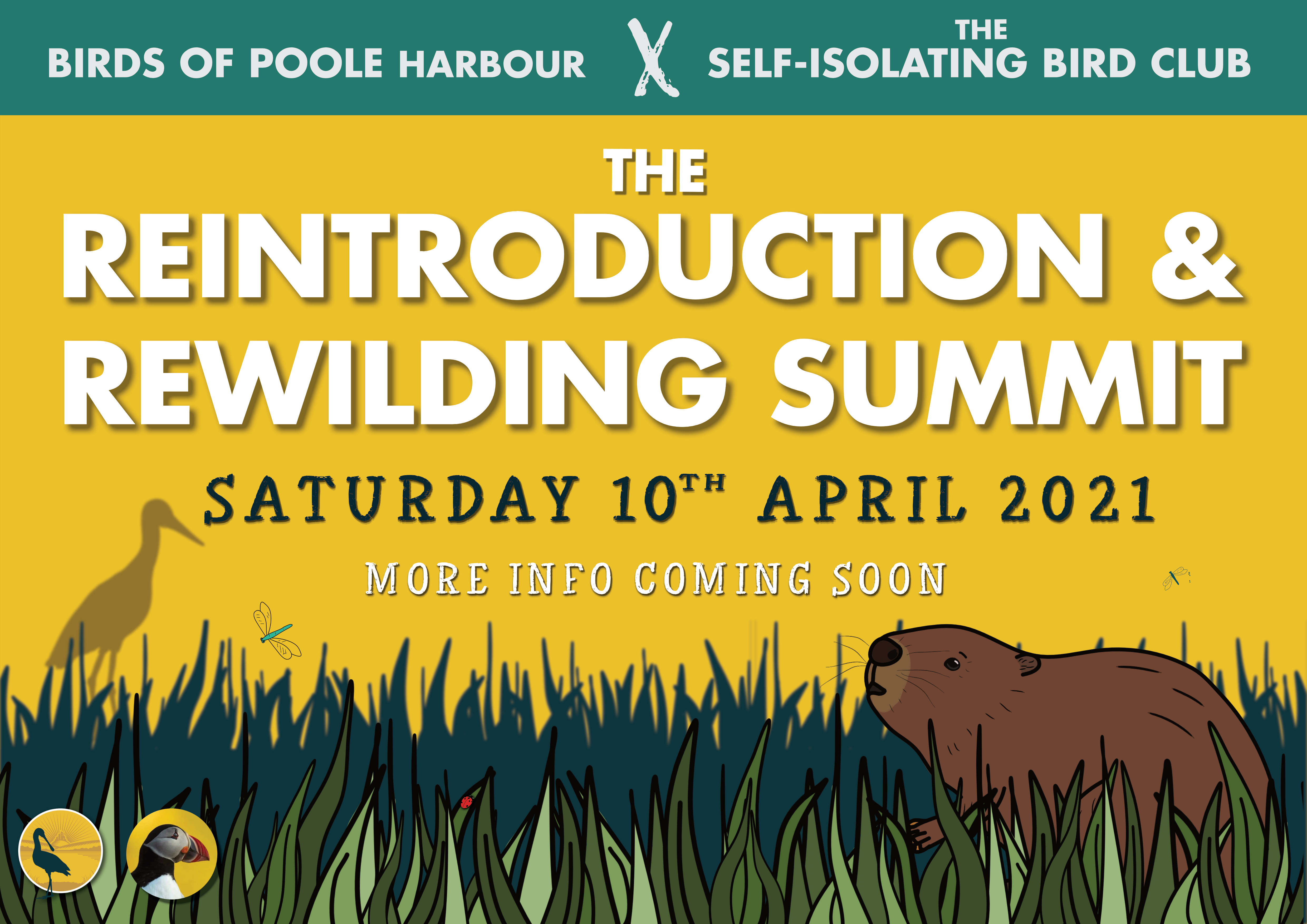
On April 10th 2021 Dorset-based charity Birds of Poole Harbour, in partnership with Chris Packham and Megan McCubbin’s Self Isolating Bird Club, will host the first ever Reintroduction and Rewilding Summit, an event aimed to educate and inspire the public on some of the latest and most innovative conservation projects going on across the UK and Europe right now.

It is widely accepted that the planet is now at an ecological tipping point. Whether discussing the climate crisis or extreme declines in biodiversity, taking appropriate action to remedy these problems is still not a priority for many of those in power. In the past year especially, nature has proven its worth 100 times over, with millions of people finding comfort and solace within it.

Liv Cooper from the Birds of Poole Harbour charity said:

At Birds of Poole Harbour, we are not content with letting the opportunity to restore and conserve our natural heritage slip through our fingers, and we’re not alone. We are a small part of a mighty network of people and organisations striving to make positive change for nature, exploring novel ways of doing so and educating the public as we go. As a charity, with our involvement in the Poole Harbour Osprey Translocation Project, we’re particularly inspired by the uptake of wildlife restoration projects through reintroductions and rewilding, and we know that many other people are just as engaged and enthused as we are. We therefore decided to launch a new event, bringing these projects together to showcase them to the public: The Reintroduction & Rewilding Summit“.

The R & R Summit is a virtual event which you will be able to stream live from home on Saturday 10th April 2021. The day will be hosted by the brilliant Self-Isolating Bird Club and will be jam-packed full of content from different projects, conservationists and science communicators talking all about reintroductions and nature restoration.

The event will raise the discussion of a multitude of questions, from whether reintroductions are the best way to re-establish native species, to how beavers can shape our landscape, and whether rewilding has become an overused buzzword or is it actually our best chance to reverse catastrophic biodiversity decline?

But most importantly, it’s hoped the day will provide much-needed hope and excitement for the future of wildlife restoration and will inspire the public to discover more about these projects.

Speakers will include the likes of conservation hero Roy Dennis, Beaver expert Derek Gow, ‘Rebirding’ author Benedict Macdonald and the White Stork project. The Birds of Poole Harbour team will also be sharing more information and announcing more guest speakers over the coming weeks, and are hoping to get as many people as possible to tune in on the day, so put the date in your diary! Plus, don’t worry if you can’t watch it on the day as all content will be available to watch on the Birds of Poole website and social media channels after the event too.

Here’s a taster video of what’s coming:

The R&R Summit Insight Podcasts

Over the next 10 weeks leading up to the event, guest podcaster Charlie Moores will be interviewing a series of reintroduction and rewilding project leaders, discussing the details, aims and inspiration behind each scheme. With many of these topics or ideas sometimes being considered controversial, these open discussions aim to lay all cards on the table, allowing listeners to hear about the processes, practicalities and outcomes of each of the projects and how they fit into a wider context of conservation.

Podcast 1 – Poole Harbour Osprey Translocation Project

In 2017, charity Birds of Poole Harbour began a 5-year Osprey translocation project in an effort to restore a south coast breeding population having been absent for nearly 200 years. In this first podcast, Charlie discusses with some of the Poole Harbour Osprey project team the reasoning behind the reintroduction, their aspirations moving forward and the project’s place within a wider nature restoration framework.

You can listen to the first podcast and all the rest as they’re produced over the next 10 weeks on the Birds of Poole Harbour website HERE

ENDS

Lies, damn lies & statistics

The following is a guest blog written by someone who wishes to remain anonymous. I know who they are and I understand their reason for wishing to remain anonymous. When you’ve read the blog, you’ll probably understand, too.

This guest blog was originally submitted last week so some of the figures referring to the number of abusive attacks by the Scottish Gamekeepers Association since the beginning of the year will probably now be out of date.

Lies, damn lies & statistics

In November last year, the Scottish Government finally published some more results of their socio-economic review of driven grouse moors (see here). These findings contributed to the Government’s thoughts about how to finally respond to the Werritty review of grouse moor management.

That response, accepting the need for immediate introduction of grouse moor licensing, as well as the regulation of muirburn and the use of medicated grit, came on 26 November. It was widely welcomed by those who had fought long and hard for progress on this issue. But of course, immediately afterwards, and ever since, the announcement led to a considerable amount of wailing and gnashing of teeth from the grouse shooting industry.

Their initial over-the-top response predictably suggested impending rural Armageddon, but it was much the same as they had been saying since the prospect of grouse moor licensing increased when Professor Werritty published his report back in December 2019. Landowners’ lobby group Scottish Land & Estates called the licensing announcement “unnecessary, disproportionate” and “draconian”. A bit like poisoning a young white-tailed eagle on a grouse moor in a National Park?

A few days later the Scottish Gamekeeper’s Association chairman told the world he was “angry beyond expression”, before going on to express how angry he was.

Then, after further dummy-spitting and throwing their toys out of the pram, the SGA announced that they were going to march on Holyrood to protest because “everything to do with our way of life” was being scrutinised.

Just the same as the rest of us then.

I think they want us all to feel sorry for them. But the shooting industry’s latest bout of playing the victim card began just before the Werritty response announcement, when the Scottish Government’s review reports were published. The focus of the industry’s media blitz was a carefully cherry-picked bit of this work, included in the report on the rights of gamekeepers.

BASC, who were members of the research advisory group overseeing this review (along with SLE, RSPB, NatureScot & SGA), started the ball rolling with a press release saying that “as many as 64% of Scottish gamekeepers experience threatening behaviour or abuse from members of the public at least once every year”. Spokesman Ross Ewing goes on “It is clear that this contemptuous behaviour is in part a product of concerted and maligned campaigns against shooting”.

Readers of this blog will know that many individuals who publicly speak out against some management practices associated with shooting are frequent recipients of abuse and threats, personal attacks, smears or campaigns of intimidation.

Anyone who is the recipient of this sort of behaviour will confirm that it is abhorrent, and will condemn it out of hand.

The claims made by BASC do deserve some scrutiny, however, not least because they are being routinely repeated in the shooting media and elsewhere, even as recently as last week.

The “Employment Rights of Gamekeepers” report was produced for the Scottish Government by SRUC. In introduction, it acknowledges that it is “one of the first independent attempts to investigate the gamekeeping profession and develop a profile of the people involved in the sector, their terms and conditions of employment and opinions they have on issues that impinge on their working lives.” Significantly, it also says that “a number of biases inherently exist within surveys of this type” and goes on “the findings should therefore be viewed with these caveats in mind”.

Funnily enough, none of the media coverage we’ve seen seems to mentions this.

The details about threatening behaviour appear on pg 37 of the report and states – “56% of respondents had experienced abuse/threats ‘rarely’ (once or twice per year), with 7% reporting ‘occasional’ abuse/threats (once or twice a month) and 1% ‘often’ (one or twice per week). That adds up to 64% as claimed by BASC in their press release.

But let’s look a bit more closely at the figures.

Firstly, we need to remember that this work was being undertaken parallel to and with the intention of informing the Scottish Government’s ongoing consideration of the future of grouse moor management, with a recommendation for licensing a very real possibility.

The prospect of shoot licensing described by BASC as long ago as 2017 as having “significant consequences for rural people and businesses”, and the SGA’s chairman quoted in the 22 Feb 2017 edition of Shooting Times as saying licensing “would drive wives, children and grandchildren from their homes”.

Unequivocal, emotive and very strong language, that you would imagine if they had agreed would have had the gamekeeper members of BASC & SGA flocking to contribute to the Scottish Government-commissioned review of the rights of gamekeepers, therefore having their own input to the decision-making process?

The online survey ran for two months, up to February 2020. The published report states “Gamekeeper members of BASC Scotland and the SGA were individually sent details of how to participate in the survey by these membership bodies, who also took actions to encourage uptake through newsletter articles, social media campaigns (Facebook and Twitter) and a radio interview (BBC Radio Scotland Out of Doors – January 2020).”

That’s a lot of publicity and encouragement, and at a time when grouse industry representatives had repeatedly been claiming their industry was under threat, you can understand them perhaps throwing everything at what they thought we be a good opportunity for the strength of feeling to be articulated. Similarly, it’s reasonable to expect that if Scotland’s gamekeeping community believed what their representative organisations were telling them, they would have been champing at the bit to tell their story.

The results were clear.

152 responses were received, 10%-13% of the Scotland’s gamekeepers.

Let that sink in. Only 1 in 9 of Scotland’s gamekeepers were so convinced by the scaremongering by SGA and BASC that they could be arsed responding to the survey by a group commissioned by the Scottish government to inform their grouse moor review. Does that mean 8 in 9 of Scotland’s gamekeepers realise that there is nothing to fear from licencing if you are managing your ground within the law? Let’s hope so!

But this response rate also calls into question the sweeping claims subsequently made in the media about 64% of gamekeepers suffering abuse. Let’s remember the caveat in the report: “a number of biases inherently exist within surveys of this type”.

If I had suffered regular or even occasional abuse just because of my work, here was an outlet where I could be counted, the abuse would be documented, the government and the public would be aware. I would want to participate.

Clearly some did. However, this was not 64% of Scotland’s gamekeepers, but 64% of the 152 people who felt sufficiently motivated to bother filling in a survey that BASC & SGA were pushing hard for their gamekeeper members to participate in.

What this survey actually reveals is that 97 people received personal abuse simply because they are gamekeepers. Again, this abuse is condemned unreservedly. But, this is not the “almost two thirds of Scotland’s gamekeepers” shamelessly peddled to the media!

Therefore, it’s entirely right that we question not just the questionable conclusions and extrapolations from this very limited, strongly caveated dataset, but also the flagrant hypocrisy of those who have desperately tried to make some capital out of these figures.

The latter predictably features the pointless and increasingly marginalised SGA, who since the 1st January this year, have either through posting on their website, publishing in their magazine, hosting on their social media accounts or sharing other’s equally squalid content, have on at least twenty-two occasions made personalised attacks, or published/shared smears, misrepresentations and unsubstantiated allegations targeting at least 9 named individuals simply because they perhaps don’t share their enthusiasm for grouse shooting/mountain hare culls etc.

They also recently hosted photos of four un-named but readily identifiable individuals with accompanying unsubstantiated allegations of crime/malpractice as comments by their supporters on their Facebook page, and have made similar accusations or smears against nine other organisations on at least eighteen occasions this year already.

And just to show how far they will stoop, one of the people targeted by a recent post on the SGA’s Facebook page died almost four years ago.

Lovely people, the SGA.

ENDS