Westminster finally agrees to consider lead ammunition ban

DEFRA press release (23 March 2021)

Plans announced to phase out lead ammunition in bid to protect wildlife

  • Government sets out the restriction work to be carried out in the first year of UK REACH, the UK’s new chemical regime
  • Evidence shows lead ammunition harms the environment, wildlife and people
  • Consultation will seek public’s views on restriction proposals

Lead ammunition could be phased out under government plans to help protect wildlife and nature, Environment Minister Rebecca Pow announced today (23 March).

A large volume of lead ammunition is discharged every year over the countryside, causing harm to the environment, wildlife and people. The government is now considering a ban under the UK’s new chemical regulation system – UK
REACH
– and has requested an official review of the evidence to begin today with a public consultation in due course.

Research by the Wildfowl and Wetlands Trust (here) shows that between 50,000 to 100,000 wildfowl die in the UK each year due ingesting lead from used pellets. Despite being highly toxic, wildfowl often mistake the pellets for food. A further 200,000 to 400,000 birds suffer welfare or health impacts, and animals that predate on wildfowl can also suffer.

Lead ammunition can also find its way into the wider environment and the food chain, posing a risk to people if they eat contaminated game birds. Studies have also found that lead poisoning caused lowered immune systems in wild birds, potentially aiding the spread of diseases such as avian influenza (bird flu).

Environment Minister Rebecca Pow said:

Addressing the impacts of lead ammunition will mark a significant step forward in helping to protect wildlife, people, and the environment.

This is a welcome development for our new chemicals framework, and will help ensure a sustainable relationship between shooting and conservation“.

The announcement today has been welcomed by environmental organisations.

Dr Julia Newth, Ecosystem Health & Social Dimensions Manager at the Wildfowl and Wetlands Trust (WWT), said:

Conservationists, including WWT, shooting organisations and game meat retailers have recognised the toxic risks from lead ammunition to people and the environment. Regulation of its use in all shooting, wherever this may happen, is very much needed as soon as possible to protect human and animal health and to enable us to move towards a greener and safer future“.

Shooting organisations are also supportive of transitioning away from the use of lead ammunition and are working with government to bring this about.

The Environment Agency, together with the Health and Safety Executive, will now start a two-year process to review the evidence, conduct a public consultation and propose options for restrictions.

Now we have left the EU we are able to make our own laws. UK REACH allows decisions to be made on the regulation of chemicals based on the best available scientific evidence, ensuring chemicals remain safely used and managed.

ENDS

This is a complete U-turn for the Westminster Government, who, for years, have ignored the best scientific evidence that they should have used to protect humans, wildlife and the environment, but chose instead to support the shooting industry’s refusal to get rid of toxic lead ammunition (e.g. see here and here).

Why the change of direction? They must have seen the writing on the wall.

Just as many of the shooting industry’s organisations did last year when they announced, after years and years and years of defending their position of firing poison in to food, that they were going to support a ‘voluntary ban’ on the use of toxic lead ammunition and wanted to see it phased out within five years. The industry leaders had decided to jump before they were pushed, although many of their members were furious with this u-turn.

However, this ‘voluntary’ approach by the rest of the industry just wasn’t convincing. A lot of us were sceptical because (a) we rarely trust anything the shooting industry tells us; (b) previous ‘voluntary bans’ by the industry on a number of issues have been unsuccessful (e.g. see herehere and here); (c) the ongoing failure of the shooting industry to comply with current regulations on many issues, including the use of lead ammunition over wetlands (here), means there should be absolutely zero confidence in its ability and/or willingness to stick to any notional voluntary ban; (d) the Scottish Gamekeepers Association refused to sign up to the proposed five-year transition period because they believe there is insufficient evidence to support the claim that poison can have damaging impacts on humans, wildlife and the environment (here); and (e) in the very same year that nine shooting organisations committed to the five-year transition, BASC announced it was set to fight a proposed EU ban on the use of lead ammunition on wetlands (see here).

A scientific paper published last month, one year in to the so-called ‘voluntary transition’, supported our scepticism when it demonstrated that of 180 pheasant carcasses bought from across the UK and scientifically examined, 179 had been shot with lead ammunition (see here). Not much evidence of transitioning there.

The ‘letter of the week’ in this week’s Shooting Times provides some insight in to the mindset of the shooters. They know that shooting poison in to the environment isn’t ‘the right thing to do’ but they’re going to continue to do it so they’re not left out of pocket and for the price of some lead ammunition, sod humans, wildlife and the environment in the process:

It’s not clear to me why the Government has suddenly done a u-turn, although I’m glad it has. But why on earth is it embarking on a two-year process to ‘review the evidence, conduct a public consultation and propose options for restrictions’? We don’t need two years of more time-wasting. The evidence has been done to death – just look at the amount of science here – another two year’s worth is not going to change the fact that poison is bad for humans to eat and bad for wildlife to eat and shouldn’t be sprayed around the countryside. And why the need for a public consultation? Lead ammunition is poisonous – for us and for wildlife. Who in their right mind is going to argue against getting rid of it?

And is the Government going to impose a ban after its two years of time-wasting? If it does, it’d better make sure that ban is enforced because three separate scientific studies have already shown that compliance with the ban on using lead ammunition over wetlands is appallingly low. These three studies showed that compliance with the regulations was 32% (2001-2), 30% (2008-9 and 2009-10) and 18-23% (2013-14)  – see here.

This is an industry that cannot be trusted, being regulated by a Government that cannot be trusted. Not a great combo for those of us who want to see lead ammunition gone for good without any further delay.
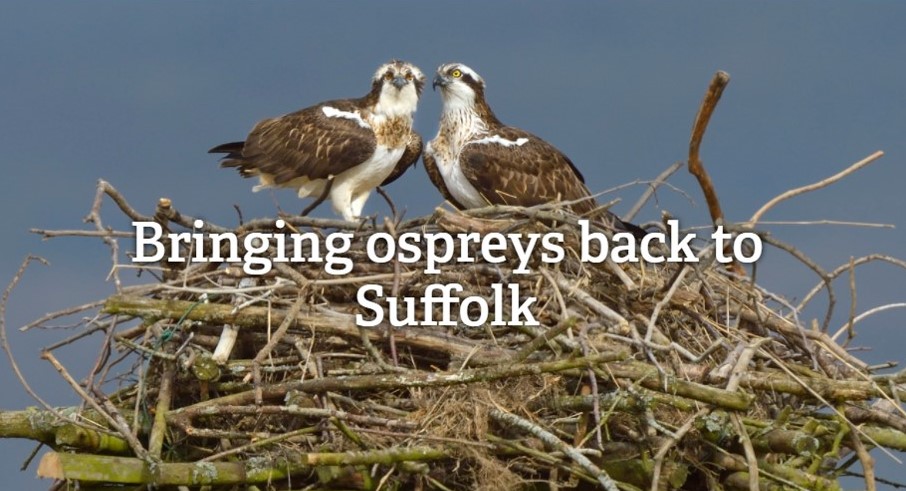
Plans to reintroduce Ospreys to Suffolk

Conservationists have drawn up plans to reintroduce Ospreys to Suffolk.

The Suffolk Wildlife Trust has teamed with experts from the Roy Dennis Wildlife Foundation and the Leicestershire and Wildlife Trust, who were behind the reintroduction of Ospreys to Rutland Water in the late 1990s. The Roy Dennis Wildlife Foundation is also a lead player in the reintroduction of Ospreys to Poole Harbour and White-tailed eagles to the Isle of Wight.

Assuming the project gets the go-ahead from Natural England, the five-year plan is to move up to eight juvenile ospreys per year to Suffolk from the Rutland Water area in the East Midlands where a healthy population is now established.

The team has just completed a public consultation and is now preparing to submit a licence application to Natural England.

For more details about the proposal, please visit the Osprey project page at the Suffolk Wildlife Trust website here

Online protest tomorrow about ongoing raptor persecution on Scottish grouse moors

Tomorrow (Friday 19 March 2021) is the online protest organised by the Scottish Gamekeepers Association (SGA) and seven regional moorland groups, who represent grouse shooting estates and their gamekeepers across Scotland.

This is the protest that the SGA has been threatening since November when the Scottish Government had finally had enough with the decades of criminality in the grouse-shooting industry and promised to bring in a grouse moor licensing scheme as soon as possible (see here).

The protest has been named the Rural Workers Protest in an attempt to garner more support from other industries and will be using the hashtag #RWP21 on social media.

It’s still not clear what the SGA et al are protesting about, other than progress and modernisation, although I keep reading that they’re not being listened to, which is an interesting concept given the tv coverage and media column inches they’ve had this last week, as well as the vocal support of a number of MSPs and their ‘friend in Parliament‘, Cabinet Secretary Fergus Ewing.

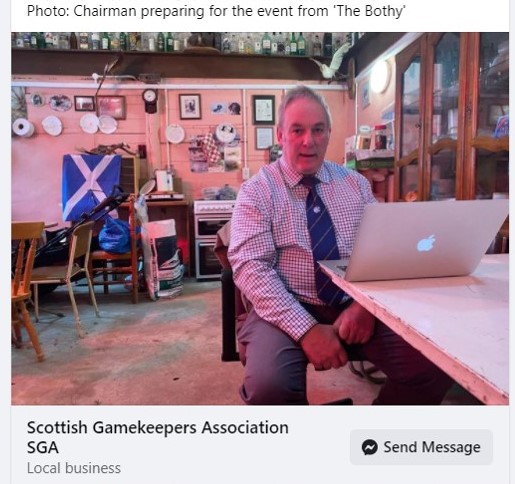
We do know that Alex isn’t happy about the drink driving laws being applied in rural areas because it ‘affected social cohesion in the countryside’, according to the speech he read out at the SGA AGM a couple of weeks ago. That’s an interesting position given the display of empties lining the walls in the bothy from which Alex was speaking.

What, you don’t remember seeing them? Well that’s maybe because someone might have angled the camera to make sure they were carefully obscured. Compare and contrast these two photos….. the first one was a screengrab from the actual AGM. The second photo, from the SGA’s facebook page, shows a slightly different camera angle from the day before when Alex and his team were preparing the scene.

It’s also interesting that Scotland’s seven regional moorland groups are co-hosting the event, especially when grouse moors in five of those seven regions have been in the last three years, or currently are, under police investigation for alleged raptor persecution crimes (grouse moors in the regions covered by the Angus Glens Moorland Group, Grampian Moorland Group, Tomatin Moorland Group, Tayside & Central Moorland Group and the Southern Uplands Moorland Group). Do you think tomorrow’s protesters will be shouting about the illegal killing of birds of prey, on their grouse moors, right under their noses but apparently without any of them seeing anything suspicious? Or will they be arguing for getting licences to kill birds of prey, as we know that’s what the SGA has been campaigning for for years.

Not to worry. A number of us will be joining the online protest tomorrow, not to complain about modernisation or progress, nor to call for licences to be issued to kill raptors so more gamebirds can be produced for the guns. No, we’ll be there to protest about the ongoing illegal killing of birds of prey, on grouse moors, in Scotland. We’ll also be using the #RWP21 hashtag and we’ll be sharing information and photos with the general public who may not previously have been aware of what is going on. Join us if you can.

[This young white-tailed eagle was found dead on a grouse moor inside the Cairngorms National Park in April last year. It had been poisoned to death with a banned substance. Nobody has been prosecuted for this crime. Photo by Police Scotland]

BASC Director Duncan Thomas apologises for misogynistic abuse

Earlier this year the British Association of Shooting & Conservation (BASC) was vociferously complaining in the press and to the Parliament about the alleged abuse faced by gamekeepers and others in the game-shooting industry (see here).

Meanwhile, at the same time, BASC’s Northern England Director, Duncan Thomas, was posting misogynistic abuse about me on social media (see here).

I made a formal complaint to BASC in February and one month later this letter was delivered to the Wild Justice office:

I don’t intend to comment on the content.

What I will comment on is the lack of parity between this letter and the original abuse. Duncan Thomas’s misogyny was displayed in public, on social media, on a page with thousands of viewers. His letter of apology was undated, on un-headed notepaper and sent through the post, presumably meant for my eyes only.

I think it is only fair that his apology is given the same level of exposure as his original disgusting commentary.

I don’t know what BASC as an organisation thinks about this incident; there hasn’t been a formal apology from head office about the behaviour of one its senior employees. However, I would like it on record that CEO Ian Bell handled my complaint with courtesy and professionalism and I have thanked him for that.

REVIVE publishes new land reform report described as “tipping point in the debate”

REVIVE, the coalition for grouse moor reform in Scotland, has published a second report this week, following yesterday’s report on how grouse moor reform could create tens of thousands of jobs (see here).

Today’s report was commissioned by REVIVE and authored by the New Economics Foundation and Common Weal and is called ‘Our Land: A vision for land reform and how we get there‘.

Here is a press release about it:

Groundbreaking report outlines road map towards land reform in Scotland

“This report is a tipping point in the debate”, says Andy Wightman

A groundbreaking report published today (17 March 2021) outlines a comprehensive toolkit of policies and actions providing a roadmap towards land reform in Scotland. The report by the New Economics Foundation and the Common Weal think tank has been described by land reform expert Andy Wightman MSP as ‘the tipping point in the debate”.

‘Our Land’, commissioned by REVIVE the coalition for grouse moor reform, provides an analysis of why concentrated land ownership is harming Scotland; sets out a comprehensive plan for proper reform; demonstrates that it is legal and possible within the powers Scotland already has and; sets out a vision for what a new Scottish landscape could look like.

Land reform in Scotland has been debated for centuries, punctuated with landmark works which have shown what is wrong with land ownership in Scotland, how it happened and what harm it has done to the country. Until now there has not been a comprehensive plan of how to challenge and change the situation. That is what this report does. It makes a detailed economic case for the way that concentrated land ownership has held back Scotland and its communities; assesses the legality of land reform and; sets out a vision for what it could mean to Scotland if land reform was achieved. But at the heart of the report is a comprehensive toolkit of actions and policies which can be used to make this happen.

Scotland’s best known land reform expert Andy Wightman MSP, an advisor on the report, said:

This report provides a commonsense approach to tackling land reform in Scotland. The land question is centuries old, yet Governments have repeatedly shied away from it.

This report is a tipping point in the debate and provides solutions which are in the gift of the Scottish Parliament to implement. I wholeheartedly endorse this comprehensive, well-researched and sensible approach to deal with the inequality and unfairness of land ownership in Scotland“.

Leading land reform activist, journalist and broadcaster Lesley Riddoch who contributed the foreword for the report added:

All the recommendations in this landmark report are legal within the existing powers of the Scottish Parliament, in line with international law, practised elsewhere and ready to be enacted now in Scotland. All that’s missing is the political will to mobilise a cross-party alliance, tackle age-old fears of confronting Scotland’s big landowners and finally achieve the transformation dreamed about by generations of our forebears who finally settled for less or took their energy, culture, language and dreams elsewhere.

Merely tweaking the developed world’s worst landownership system won’t save precious habitats, repopulate the glens or give Scots affordable leisure-time in their own country. This report is a policy roadmap showing how the land question can be tackled and what a normal Scotland might actually look like. I hope it puts land reform right back on the agenda for the Scottish Parliament and its parties“.

It is well known that Scotland has one of the most concentrated patterns of land ownership in the world but the report goes further in analysing some of the negative impacts that – and the land management practices it results in – has on Scotland.

The report then sets out a package of measures, all within the powers of the Scottish Parliament and legal under international law, which can be used to transform the pattern of land ownership and management in Scotland. The recommendations include the completion of a comprehensive land registry to provide full transparency on who owns Scotland’s land, the reform of the regulation of key practices in rural areas such as deer and grouse moor management to require more environmentally-sustainable practices, and the establishment of a National Land Agency to oversee all the report’s recommendations.

Duncan McCann from the New Economics Foundation said:

Significant land reform is vitally important if we want Scotland to be a more equal society as well as address the massive challenges of climate change and rural regeneration. The recommendations contained in this report, all of which can be implemented by the Scottish Government under the existing devolution arrangements, would go a long way towards creating the foundation we need to create the just and prosperous Scotland we all want to see.”

ENDS

The report can be downloaded here:

If you support REVIVE’s call for real land reform in Scotland, please consider signing this new e-petition which will be delivered to the Scottish Government (you don’t need to live in Scotland to sign). Please SIGN HERE

Watch the new REVIVE video here:

52 hen harriers confirmed illegally killed or ‘missing’ since 2018

For anyone who still wants to pretend that the grouse shooting industry isn’t responsible for the systematic extermination of hen harriers on grouse moors across the UK, here’s the latest catalogue of crime that suggests otherwise.

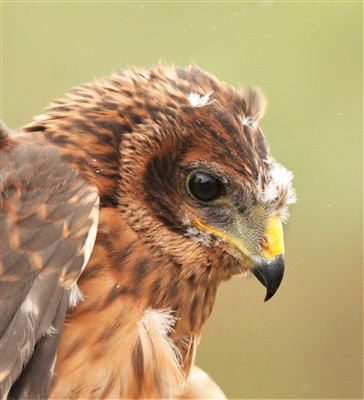
[This male hen harrier died in 2019 after his leg was almost severed in an illegally set trap that had been placed next to his nest on a Scottish grouse moor (see here). Photo by Ruth Tingay]

In January 2021, this list totalled 51 hen harriers, all either confirmed to have been illegally killed or to have ‘disappeared’, most of them on or next to driven grouse moors.

They disappear in the same way political dissidents in authoritarian dictatorships have disappeared” (Stephen Barlow, 22 January 2021).

Today the list has been updated to include the latest victim, Tarras, hatched in 2020, gone by 24th February 2021 (see here).

This disgraceful catalogue will continue to grow – I know of at least one more on-going police investigation which has yet to be publicised and I suspect there’s one other, although I’m still waiting for clarification on that one.

I’ve been compiling this list only since 2018 because that is the year that the grouse shooting industry ‘leaders’ would have us believe that the criminal persecution of hen harriers had stopped and that these birds were being welcomed back on to the UK’s grouse moors (see here).

This assertion was made shortly before the publication of a devastating new scientific paper that demonstrated that 72% of satellite-tagged hen harriers were confirmed or considered likely to have been illegally killed, and this was ten times more likely to occur over areas of land managed for grouse shooting relative to other land uses (see here).

2018 was also the year that Natural England issued itself with a licence to begin a hen harrier brood meddling trial on grouse moors in northern England. For new blog readers, hen harrier brood meddling is a conservation sham sanctioned by DEFRA as part of its ludicrous ‘Hen Harrier Action Plan‘ and carried out by Natural England (NE), in cahoots with the very industry responsible for the species’ catastrophic decline in England. For more background see here.

Brood meddling has been described as a sort of ‘gentleman’s agreement’ by commentator Stephen Welch:

I don’t get it, I thought the idea of that scheme was some kind of trade off – a gentleman’s agreement that the birds would be left in peace if they were moved from grouse moors at a certain density. It seems that one party is not keeping their side of the bargain“.

With 52 hen harriers gone since 2018, I think it’s fair to say that the grouse shooting industry is simply taking the piss. Meanwhile, Natural England pretends that ‘partnership working’ is the way to go.

‘Partnership working’ appears to include authorising the removal of hen harrier chicks from a grouse moor already under investigation by the police for suspected raptor persecution (here) and accepting a £10K bung from representatives of the grouse shooting industry that prevents Natural England from criticising them (see here).

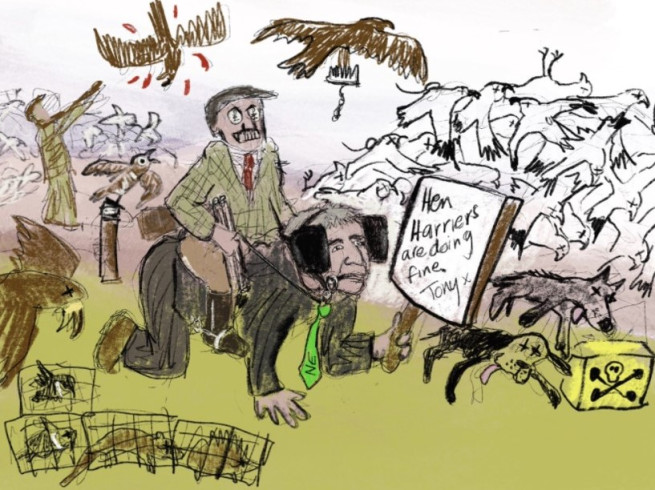
[Cartoon by Gill Lewis]

So here’s the latest gruesome list:

February 2018: Hen harrier Saorsa ‘disappeared’ in the Angus Glens in Scotland (here). The Scottish Gamekeepers Association later published wholly inaccurate information claiming the bird had been re-sighted. The RSPB dismissed this as “completely false” (here).

5 February 2018: Hen harrier Marc ‘disappeared’ on a grouse moor in Durham (here)

9 February 2018: Hen harrier Aalin ‘disappeared’ on a grouse moor in Wales (here)

March 2018: Hen harrier Blue ‘disappeared’ in the Lake District National Park (here)

March 2018: Hen harrier Finn ‘disappeared’ near Moffat in Scotland (here)

18 April 2018: Hen harrier Lia ‘disappeared’ in Wales and her corpse was retrieved in a field in May 2018. Cause of death was unconfirmed but police treating death as suspicious (here)

8 August 2018: Hen harrier Hilma ‘disappeared’ on a grouse moor in Northumberland (here).

16 August 2018: Hen harrier Athena ‘disappeared’ on a grouse moor in Scotland (here)

26 August 2018: Hen Harrier Octavia ‘disappeared’ on a grouse moor in the Peak District National Park (here)

29 August 2018: Hen harrier Margot ‘disappeared’ on a grouse moor in Scotland (here)

29 August 2018: Hen Harrier Heulwen ‘disappeared’ on a grouse moor in Wales (here)

3 September 2018: Hen harrier Stelmaria ‘disappeared’ on a grouse moor in Scotland (here)

24 September 2018: Hen harrier Heather ‘disappeared’ on a grouse moor in Scotland (here)

2 October 2018: Hen harrier Mabel ‘disappeared’ on a grouse moor on the edge of the Yorkshire Dales National Park (here)

3 October 2018: Hen Harrier Thor ‘disappeared’ next to a grouse moor in Bowland, Lanacashire (here)

23 October 2018: Hen harrier Tom ‘disappeared’ in South Wales (here)

26 October 2018: Hen harrier Arthur ‘disappeared’ on a grouse moor in the North York Moors National Park (here)

1 November 2018: Hen harrier Barney ‘disappeared’ on Bodmin Moor (here)

10 November 2018: Hen harrier Rannoch ‘disappeared’ on a grouse moor in Scotland (here). Her corpse was found nearby in May 2019 – she’d been killed in an illegally-set spring trap (here).

14 November 2018: Hen harrier River ‘disappeared’ on a grouse moor in the Nidderdale AONB (here). Her corpse was found nearby in April 2019 – she’d been illegally shot (here).

16 January 2019: Hen harrier Vulcan ‘disappeared’ in Wiltshire close to Natural England’s proposed reintroduction site (here)

7 February 2019: Hen harrier Skylar ‘disappeared’ next to a grouse moor in South Lanarkshire (here)

22 April 2019: Hen harrier Marci ‘disappeared’ on a grouse moor in the Cairngorms National Park (here)

26 April 2019: Hen harrier Rain ‘disappeared’ on a grouse moor in Nairnshire (here)

11 May 2019: An untagged male hen harrier was caught in an illegally-set trap next to his nest on a grouse moor in South Lanarkshire. He didn’t survive (here)

7 June 2019: An untagged hen harrier was found dead on a grouse moor in Scotland. A post mortem stated the bird had died as a result of ‘penetrating trauma’ injuries and that this bird had previously been shot (here)

5 September 2019: Wildland Hen Harrier 1 ‘disappeared’ on a grouse moor nr Dalnaspidal on the edge of the Cairngorms National Park (here)

11 September 2019: Hen harrier Romario ‘disappeared’ on a grouse moor in the Cairngorms National Park (here)

14 September 2019: Hen harrier (Brood meddled in 2019, #183704) ‘disappeared’ in North Pennines (here)

23 September 2019: Hen harrier (Brood meddled in 2019, #55149) ‘disappeared’ in North Pennines (here)

24 September 2019: Wildland Hen Harrier 2 ‘disappeared’ on a grouse moor at Invercauld in the Cairngorms National Park (here)

24 September 2019: Hen harrier Bronwyn ‘disappeared’ near a grouse moor in North Wales (here)

10 October 2019: Hen harrier Ada ‘disappeared’ on a grouse moor in the North Pennines AONB (here)

12 October 2019: Hen harrier Thistle ‘disappeared’ on a grouse moor in Sutherland (here)

18 October 2019: Member of the public reports the witnessed shooting of an untagged male hen harrier on White Syke Hill in North Yorkshire (here)

November 2019: Hen harrier Mary found illegally poisoned on a pheasant shoot in Ireland (here)

January 2020: Members of the public report the witnessed shooting of a male hen harrier on Threshfield Moor in the Yorkshire Dales National Park (here)

23 March 2020: Hen harrier Rosie ‘disappeared’ at an undisclosed roost site in Northumberland (here)

1 April 2020: Hen harrier (Brood meddled in 2019, #183703) ‘disappeared’ in unnamed location, tag intermittent (here)

5 April 2020: Hen harrier Hoolie ‘disappeared’ on a grouse moor in the Cairngorms National Park (here)

8 April 2020: Hen harrier Marlin ‘disappeared’ on a grouse moor in the Cairngorms National Park (here)

19 May 2020: Hen harrier Fingal ‘disappeared’ on a grouse moor in the Lowther Hills, Scotland (here)

21 May 2020: Hen harrier (Brood meddled in 2019, #183701) ‘disappeared’ on a grouse moor in Cumbria shortly after returning from wintering in France (here)

27 May 2020: Hen harrier Silver ‘disappeared’ on a grouse moor on Leadhills Estate, Scotland (here)

9 July 2020: Unnamed female hen harrier (#201118) ‘disappeared’ from an undisclosed site in Northumberland (here).

25 July 2020: Hen harrier Harriet ‘disappeared’ on a grouse moor in the Yorkshire Dales National Park (here)

14 August 2020: Hen harrier Solo ‘disappeared’ in confidential nest area in Lancashire (here)

7 September 2020: Hen harrier Dryad ‘disappeared’ on a grouse moor in the Yorkshire Dales National Park (here)

16 September 2020: Hen harrier Fortune ‘disappeared’ from an undisclosed roost site in Northumberland (here)

19 September 2020: Hen harrier Harold ‘disappeared’ on a grouse moor in the Yorkshire Dales National Park (here)

20 September 2020: Hen harrier (Brood meddled in 2020, #55152) ‘disappeared’ next to a grouse moor in North Yorkshire (here)

24 February 2021: Hen harrier Tarras ‘disappeared’ next to a grouse moor in Northumberland (here)

To be continued……..

Hen harrier Tarras ‘disappears’ next to grouse moor in Northumberland

Further to yesterday’s blog about a pathetically vague ‘appeal’ for information from Northumberland Police (here), the RSPB has now confirmed that yet another satellite-tagged hen harrier has disappeared in suspicious circumstances, next to a grouse moor.

According to the RSPB blog (here), this bird was called ‘Tarras’ and was tagged on Langholm Moor in 2020 (not be confused with a previously tagged hen harrier also called Tarras, also tagged on Langholm Moor but in 2016, and who vanished in the Peak District National Park the same year here). So much for hen harriers not being able to breed on Langholm once the gamekeepers had left, eh? Another rural myth busted.

Tarras had explored the North Pennines AONB before settling in south Northumberland in the late autumn.

[Hen harrier Tarras. Photo by RSPB]

From the RSPB blog:

For the 90 days prior to disappearing, we could see that Tarras had settled into a routine of hunting on grouse moor and roosting either on it or just off of it. However, after getting regular transmissions each day, since 24 February 2021 we have had nothing at all. The tag’s last fix showed that Tarras was roosting with other birds just off a grouse moor near Haltwhistle, just outside the North Pennines AONB boundary.

RSPB Investigations Officers searched the area but found no sign of tag or body. The matter was passed on to Northumbria Police, who have recently issued an appeal for information.

So, here we are, careering towards yet another year of insane hen harrier brood meddling where we’ll be told by the grouse-shooting industry that they love hen harriers to bits (there’ll be no mention of the harriers being shot to bits once the industry has pushed its propaganda around the newsrooms) and the country’s statutory conservation agency will clap its hands, pat the grouse moor owners on the back for their ‘conservation’ efforts and try to convince the rest of us, with prominent press coverage, that this is the way forward for the UK’s declining population of hen harriers.

Will the same media prominence be given to the ongoing never-bloody-ending illegal killing? I’ve discussed this before (here) but judging by Northumberland Police’s crap PR yesterday about this latest missing harrier, it looks like we’re set for another year of the same.

Well done to the RSPB for getting detailed information out.

New report from Revive Coalition – how grouse moor reform could lead to tens of thousands of jobs

The Revive Coalition for grouse moor reform has published its latest report, this time produced by coalition member Common Weal – a ‘think and do tank’ campaigning for social and economic equality in Scotland.

The new report, ‘Work the Land: The employment potential of land reform’ examines how alternative uses of Scotland’s rural land compares in job-creation potential with its current uses. It concludes that tens of thousands of jobs could be created if land was used for the public good and if communities and individuals looking to start land-based businesses could get access to land.

So when we’re told that without grouse moors, the fragile rural economy would collapse…….

From Common Weal:

This new report looks at ten possible new or expanded rural industries – land management, wildlife management, commercial forestry, wood processing, deer stalking/venison production, horticulture, crofting, energy engineering, housebuilding and ecotourism. For each it estimates the maximum amount of employment which could be created and typical incomes for those jobs and it compares this to current use. All but crofting (which is best considered a supplementary income) create higher rural incomes than current use as shooting estates and hill farming. And while it is not possible to sum up the jobs potential to get a single total (as some represent alternative possible uses of the same land), it comes to tens of thousands of potential jobs.

And that’s only the direct jobs. It doesn’t include the large number of indirect and secondary jobs which would also be created in supply chains, services, retail and leisure, public services and as a result of growing communities. Nor does it include the potential for existing business expansion, home-working relocation and job start-up entirely unrelated to these ten job types which would be made possible as a result of significantly expanded housing availability. And of course it doesn’t include the sheer difference growing, thriving rural communities would make to the people who live there.

This is the first of three major reports on land reform in Scotland by Common Weal. The next report (on exactly how Scotland can achieve real land reform quickly) will be launched tomorrow.

Download the new report here:

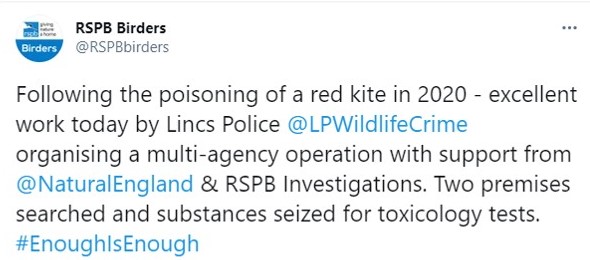
Suspected poisons seized during multi-agency raid following illegal poisoning of red kite

Breaking news from the RSPB’s Investigations Team…..

Looking forward to hearing more detail about this one.

UPDATE 20th April 2021: Lincolnshire Police provide update on investigation into poisoned red kite (here)

UPDATE 15th April 2023: Lincolnshire Police charge man after investigation into poisoned red kite (here)

Vague appeal for info from Northumberland Police as another hen harrier vanishes

Northumberland Police have issued a vague ‘appeal’ for information following a report from the RSPB that another satellite-tagged hen harrier has ‘disappeared’, last heard from on 24th February 2021 ‘south of Haltwhistle’.

This is what the police put out on Twitter on Friday:

I couldn’t find any press release on the Northumberland Police website, nor on the North Pennines AONB website, which is probably the area in which it has vanished.

Hopefully the RSPB will be publishing a detailed statement shortly……

UPDATE 16 March 2021: Hen harrier Tarras ‘disappears’ next to grouse moor in Northumberland (here)