SNH issues new wildlife-killing licences in Scotland

Scottish Natural Heritage (SNH) has issued its new General Licences today, which mostly focus on permitting the killing of some bird species under some circumstances, but there’s also a new General Licence (#14) with new rules on how stoats can be killed.

We blogged about the (then forthcoming) new General Licences for birds back in February (see here) when SNH published some information about the proposed changes.

Although this widespread killing is still mostly unmonitored, uncapped, too loosely regulated and the trap users generally unaccountable for their actions, some of the changes are to be welcomed, including the removal of some bird species from some licences and the removal of General Licences from some protected areas (to be replaced by individual licences) following legal challenges by Wild Justice south of the border.

We particularly welcome the new rule that individual bird trap operators must now register with SNH. Previously the General Licence conditions had stated that live-catch corvid traps (e.g. Larsen traps, Larsen mate traps and multi-catch crow cage traps) had to display an identification number of the trap owner, but this number did not identify an individual trap operator, only the owner, typically the landowner or sporting agent. So if an alleged breach/offence was detected, and the trap was located on a large grouse shooting estate where multiple gamekeepers were employed, it was virtually impossible for the Police to identify an individual suspect (and thus charge anyone) because the estate and gamekeepers simply closed ranks, offered a ‘no comment’ response and failed to identify the actual trap user. It’ll be interesting to see whether SNH knowing the identity of the trap operator will lead to successful prosecutions for mis-use.

[A multi-catch crow cage trap, baited with a live decoy bird and used to capture hundreds of birds which are then killed, often by being beaten to death with a stick. Photo by OneKind]

However, even though there are some welcome changes in the new General Licences there are still many details in need of drastic improvement, not least the paucity of animal welfare considerations.

Late last year, Revive, the coalition for grouse moor reform published a new report authored by coalition members OneKind and League Against Cruel Sports (Scotland) called Untold Suffering, which documented the scale and type of suffering endured by wildlife (and in some cases domestic pets) in various traps deployed on grouse moors.

Today, OneKind has written a blog about the animal welfare implications of the new General Licences for birds and is calling for a comprehensive welfare review (read the OneKind blog here).

Still on the subject of General Licences for birds, Wild Justice continues its legal challenge of the licences recently issued by Natural Resources Wales (NRW) and has written two more blogs about the glaring errors that make those who sanctioned these licences look like fools (see here and here).

The newest General Licence in Scotland (#14) relates to the permitted killing of stoats for the conservation of wild birds or for prevention of serious damage to livestock. Natural England has also issued one and NRW is due to issue one today. This legislation has been in the pipeline for a few years as the UK has to now comply with the Agreement on International Humane Trapping Standards.

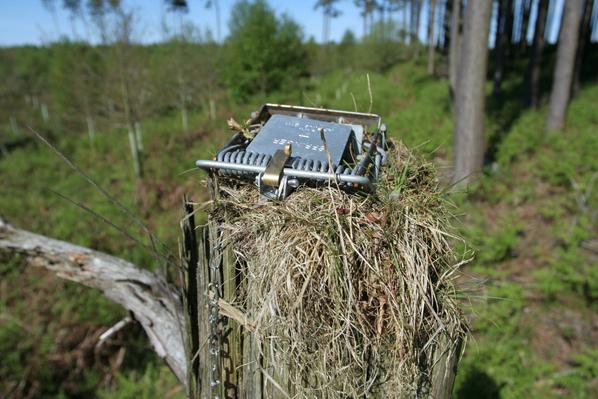
We don’t intend to go in to detail right now but the main point here is that stoat-killers are no longer permitted to use the Mark 4 Fenn (spring) trap for stoats, although apparently it is still a legal trap for rats and weasels as long as the conditions of the Springs Traps Approval Order are met. Instead, five new and apparently humane traps have been authorised by the new General Licence for killing stoats.

[The Mark 4 Fenn Trap is no longer permitted for catching stoats in the UK]

It’s not clear to us whether gamekeepers are still permitted to set the Mark 4 Fenn traps on the pretence of catching rats or weasels (but really still targeting stoats). If a stoat is captured will the trap operator be able to claim it as ‘accidental by-catch’? Or should the new legislation be interpreted in a way that gamekeepers should not set these traps in areas where the risk of catching stoats is high? And how would that risk be measured?

Time will tell, because inevitably there will be gamekeepers who will ignore the law and use these traps illegally, just as they’re still being used as illegal pole traps over one hundred years after pole-trapping was banned!

[A Mark 4 Fenn trap being used as an illegally-set pole trap, photo by RSPB]
 

More evidence of grouse moor burning in defiance of national emergency

Which part of ‘please stop burning the grouse moors to ease pressure on the emergency services while they try and cope with a national respiratory virus pandemic’ do they not understand?

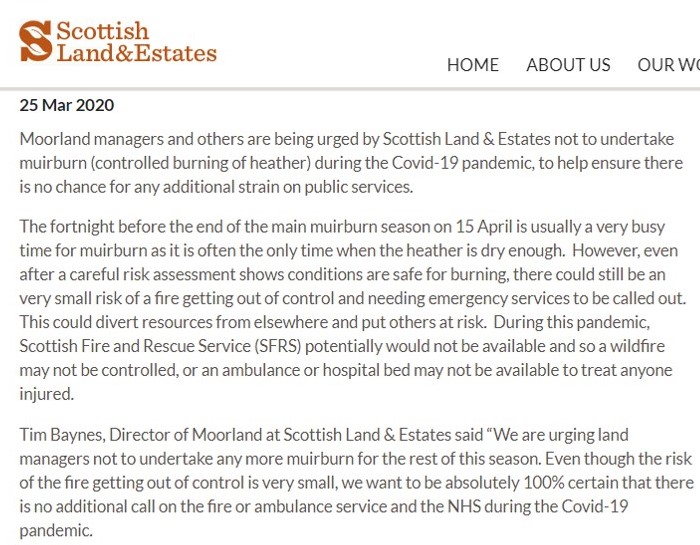
Here is further evidence that some moorland managers in Scotland are ignoring the plea for voluntary restraint that was issued six days ago by Scottish Land & Estates.

Why is this still continuing? Because presumably some people think that maximising the number of red grouse available for shooting parties in the autumn is ‘essential’ and because it is still legal to light these fires up until 15 April (and astonishingly, in some cases up to 30 April with landowner’s permission, despite the presence of breeding birds) and because a request for voluntary restraint can easily be ignored.

It could be argued, and indeed it already has been, that these are not deliberately-set fires but are the work of (a) arsonists, (b) out of control BBQs by members of the public ignoring the lockdown and enjoying March picnics in the snow, (c) anti-grouse shooting activists wanting to set up shooting estates, (d) spontaneously combusting heather during this winter heatwave, (e) spontaneously combusting imaginary wind turbines, (f) in fact anything other than the bleedin’ obvious.

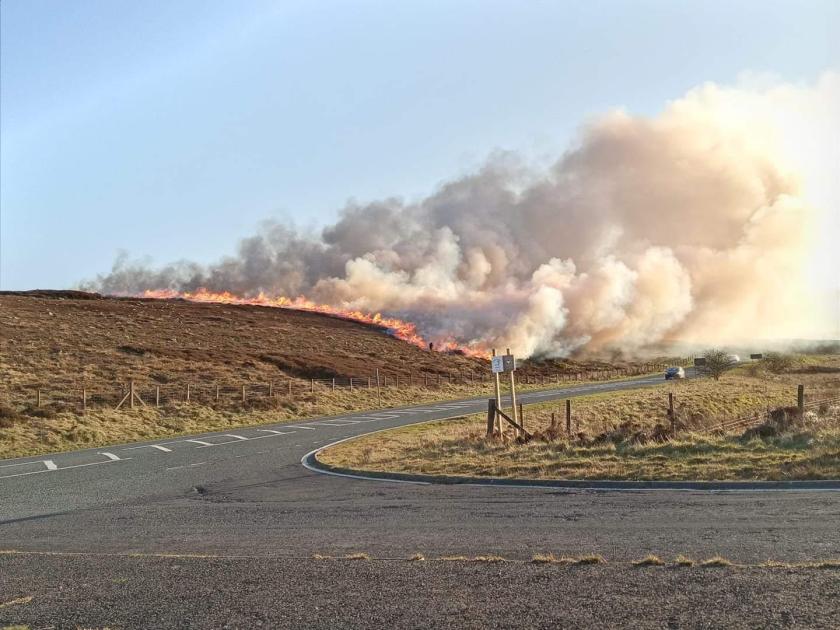
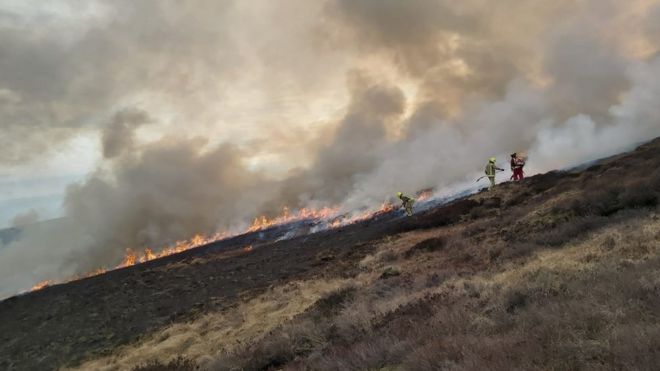
This photograph was taken yesterday afternoon and shows a fire on Garrows Estate in Strathbraan, Perthshire (photo by Keith Brockie and yes, he did have a legitimate reason to be driving through this area):

This photograph was taken today. It is the same location as the fire we blogged about yesterday (here) on a grouse moor in Stirlingshire:

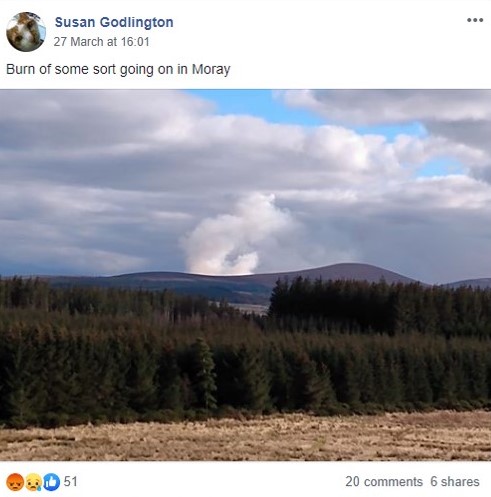
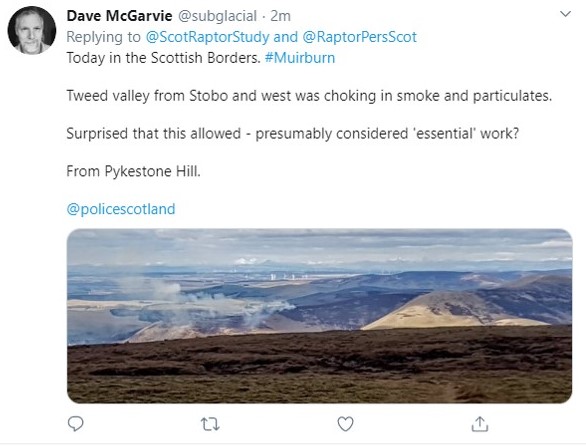
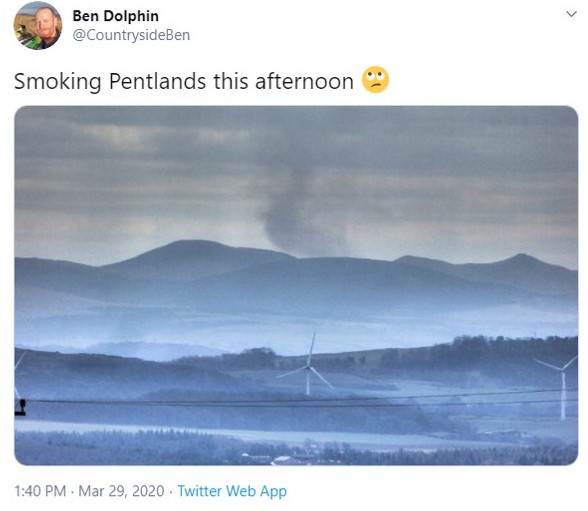
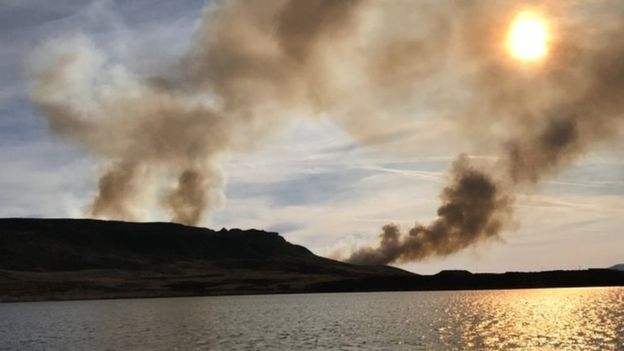
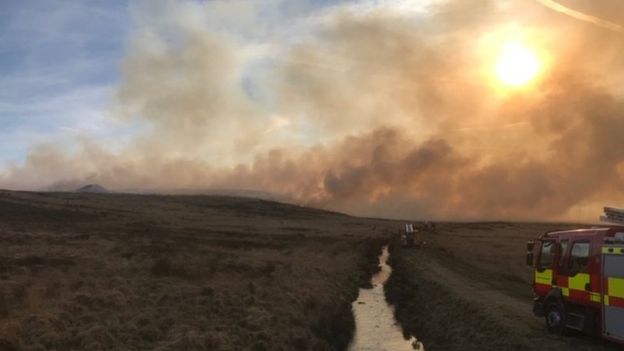
Here are some more fires from across Scotland, all recorded since the call for voluntary restraint was made on 25th March:

It’s interesting to note that the Scottish Gamekeepers Association hasn’t made any public statement about asking its members to stop burning. Perhaps this shouldn’t come as any surprise given this organisation’s reaction (here) to the shooting industry’s recent u-turn calling for an end to the use of toxic lead ammunition.

The SGA seems to have other things on its mind just now, moaning about what it sees as ‘unfair criticism, particularly over climate issues’ (yes, really!), and the Scottish Government’s decision to exclude some fieldsports businesses from claiming a Covid 19 support grant. This SGA video is quite something:


Gamekeepers ignore ‘voluntary suspension’ of burning as Scottish grouse moor set alight

It’s been just five days since the landowners’ lobby group Scottish Land & Estates called on land managers to voluntarily halt muirburn activities on grouse moors to ‘reduce the strain’ on the fire and rescue services during the coronavirus pandemic (see here).

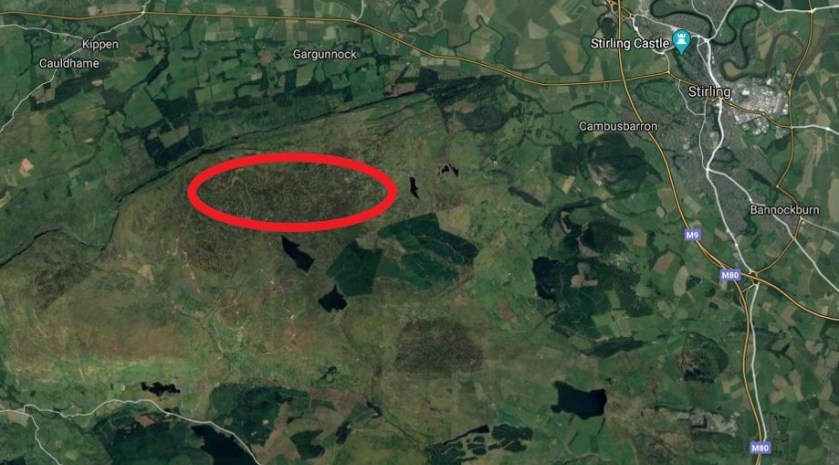
Today, at 15.39hrs, this photograph was taken showing smoke rising from a grouse moor in Stirlingshire. So much for the grouse shooting industry’s ability and willingness to self-regulate, eh?

This is an area of grouse moor a few miles west of Stirling:

It’s an interesting area, close to where a three-year general licence restriction was imposed on a grouse moor in 2015 (see here and here) following a number of confirmed raptor persecution incidents, including the poisoning of a red kite, the poisoning of a peregrine and the illegal trapping of a red kite.

This fire is yet another example, of hundreds if not thousands, of why this industry can’t be trusted to do the right thing and why the Scottish Government needs to get on with introducing statutory regulations without further delay.

Shot buzzard found dead on Scottish sporting estate

Police Scotland are appealing for information after a dead buzzard was discovered on a Scottish sporting estate in the Highlands.

A member of the public discovered the corpse in woodland ‘in the Dulsie area’ on 15 March 2020 and a subsequent post-mortem revealed it had been shot.

An x-ray revealing the extent of the shot damage has not been released so it’s impossible to comment on the likelihood that the bird was shot close to where it was found or whether it had been able to travel some distance before succumbing to its injuries.

Police wildlife crime officer Constable Daniel Sutherland said: “Positive work is constantly ongoing in the Highlands in relation to raptor persecution so it is sad and disappointing to find another incident like this reported to us.

I am grateful to the member of the public who came across the bird and reporting it. Our enquiries to establish the full circumstances are ongoing.

Anyone with information is about this incident or may have seen anything suspicious in this area are asked to contact Police Scotland on 101 quoting reference NM502/20 or Crimestoppers on 0800 555 111 if you wish to remain anonymous.”

Yorkshire Water instructs grouse moor tenants to halt burning until further notice

First it was the fire chiefs, then some of the National Park authorities, and now Yorkshire Water, calling on grouse moor owners to stop setting fire to the heather during this time of national emergency.

[The tell-tale pattern of heather burning on a grouse moor, undertaken solely to increase stocks of red grouse for shooting. Photo by Ruth Tingay]

Yorkshire Water has issued the following press statement today:

YORKSHIRE WATER TO HALT CONTROLLED BURNING ON THEIR LAND UNTIL FURTHER NOTICE

Yorkshire Water and United Utilities have asked their tenants and land managers to halt controlled burning on their land until further notice. Both water companies are significant landowners within their areas of operation, including owning moorland which is used to gather water for drinking water supplies and to help reduce the risk of flooding.

The instruction to cease any form of burning comes following requests from emergency services and local councils that landowners cease moorland burning. There are concerns that controlled burning increases the risk of unintentional wildfires, and that fumes from any form of fire may affect members of the public suffering from COVID-19.

Both Yorkshire Water and United Utilities are committed to ensuring that the emergency services staff dealing with the COVID-19 pandemic can focus on that work, rather than facing additional challenges that burning may bring. Both companies are asking that members of the public who intend to exercise in moorland areas in accordance with government guidance are aware that their actions can cause wildfires, and that they should behave responsibly to ensure that wildfires are avoided.

Richard Emmott, Director of Corporate Affairs said: “At this time of uncertainty all areas of society have a responsibility to ensure that our emergency services can focus on the key national priority, which is helping people affected by COVID-19 and halting its spread. We have therefore taken the decision to ask our tenants to cease burning until further notice.”

ENDS

Well done, Yorkshire Water.

Incidentally, if anyone has photographs of grouse moor burning that have been taken from today onwards, please send them in with details of where and when they were taken and we’ll publish them here. If you don’t want to be named as the photographer that’s fine, they can be published anonymously.

PLEASE NOTE: It’s important that if you witness smoke from a grouse moor fire that’s affecting the public highway, please report it to the police immediately, to give them the best opportunity of taking action.

Grouse moor owners urged to stop setting fire to the moors

Gamekeepers have been busily setting fire to grouse moors throughout the UK uplands in recent days, despite the environmental destruction this causes, despite the climate change emergency, and perhaps most selfishly right now, despite the national/global Coronavirus crisis and the pressure this has placed on our emergency services.

[A fire on Blubberhouse Moor last week in the Nidderdale Area of Outstanding Natural Beauty, North Yorkshire. Contributed photo]

Two days ago West Yorkshire Fire & Rescue Service called for an immediate ban on so-called ‘controlled’ grouse moor burning after one such fire turned in to a mile-long uncontrolled wildfire that required 20 fire engines and up to 100 firefighters to extinguish the flames (see here).

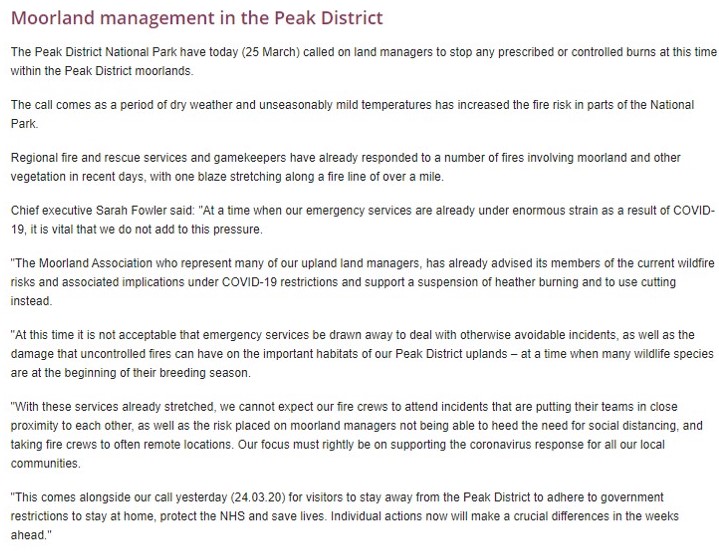
The Chief Executive of the Peak District National Park Authority has now published a statement calling for gamekeepers / grouse moor managers to stop the burning on the grouse moors of the National Park:

It’s interesting to note that, according to this statement, the Moorland Association has apparently ‘advised’ its members of the wildfire risks and is ‘supporting a suspension of heather burning and to use cutting instead’. Let’s see how many of those members accept this ‘advice’ and how many of them ignore it.

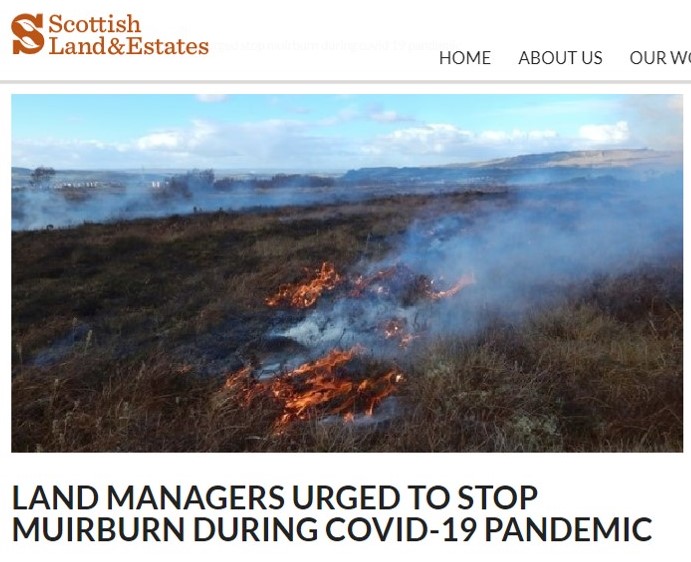
North of the border the landowners’ lobby group Scottish Land & Estates is also ‘urging’ its members to stop being so bloody stupid and has published a statement calling for an end to the burning:

This is welcome news, of course, although given the known dire consequences of muirburn there’s a strong case to be made (and is continuously being made by many environmentalists and conservationists) that they shouldn’t be burning heather moorland anyway, although if you read SLE’s statement you’d never guess that there was an issue and the only reason they’re calling for a cessation is to prevent further strain on public services:

Scottish Land & Estates is never one to miss an opportunity for propaganda, eh? Muirburn is not ‘strictly regulated’ as claimed – far from it! In Scotland it’s governed by the recently-revised Muirburn Code (Scotland’s Moorland Forum, 2017) which provides a combination of statutory requirements and good practice guidelines (and we all know how well this industry adheres to good practice guidelines!!). There is a burning season but apart from this, enforcement of the Muirburn Code is limited.

As for SLE’s claim that ‘the risk of fire getting out of control is very small’, well according to the Muirburn Code,

Fires escaping from muirburn are a major cause of wildfire in Scotland“.

In addition, the recent SNH-commissioned review of sustainable moorland management states:

Whilst large, intense wildfires can be destructive, many have no greater impact than prescribed burns (Clay et al 2010) and evidence suggests that over 50% of wildfires with known causes may themselves be caused by loss of control of prescribed burns“.

If you want to learn more about the environmental damage caused by muirburn in Scotland have a read of this summary report from Revive, the Coalition for Grouse Moor Reform.

Dorset Police investigate reported disturbance of nesting peregrines

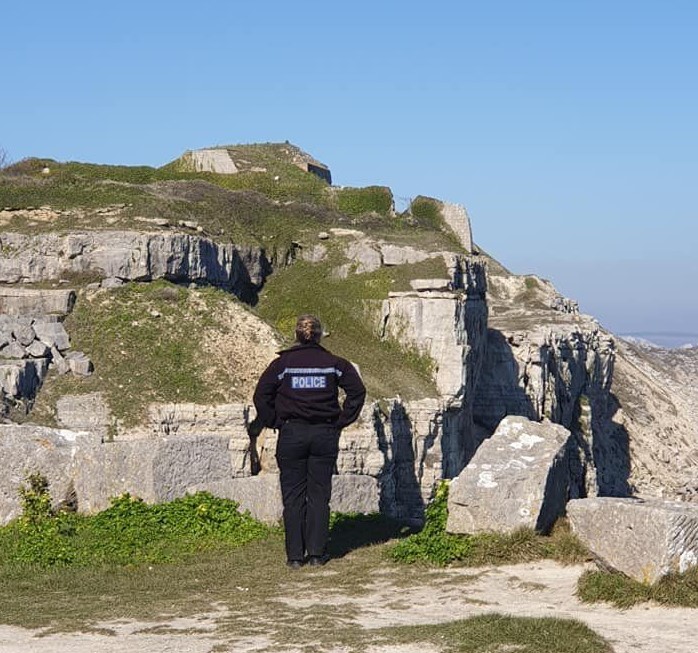
There have been a few reports in the media (e.g. here and here) about climbers and a drone-user disturbing breeding peregrines this week on cliffs in Portland, Dorset. This is an offence under the Wildlife & Countryside Act.

[Photos by Weymouth & Dorset Police]

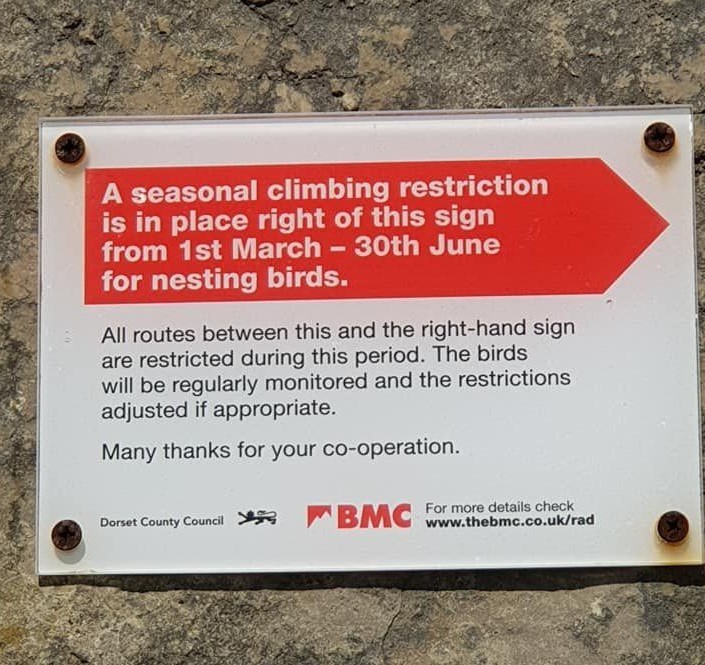
Apart from the fact that there’s supposed to be a lockdown, Police wildlife crime officers have stated that they will look to prosecute anybody ignoring the ‘clear signage’ to stay away from the nest sites between 1 March and 30 June:

These signs have been in place for years, initiated by local climbers keen to protect the peregrines (see here).

Buzzard & kestrel suspected poisoned in Derbyshire

Derbyshire Constabulary has published the following message on social media this evening:

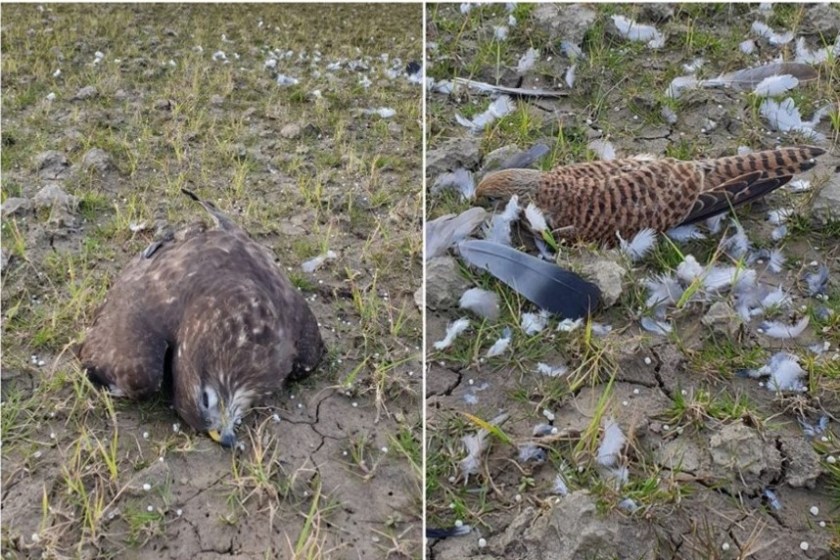
Derbyshire Rural Crime Team is investigating after two birds of prey were found dead in the Ault Hucknall area of Chesterfield.

A Kestrel and a Buzzard were found on Monday 23 March. Initial investigations lead us to believe they have been poisoned rather than shot.

The birds have been recovered and an investigation launched.

Anyone with information is asked to contact the Rural Crime Team by emailing DRCT@derbyshire.police.uk quoting reference 20000159754.

You can also pass information anonymously to Crimestoppers by calling 0800 555 111 or visiting https://crimestoppers-uk.org/

ENDS

Well done to the police for a very speedy notification. Obviously the investigation is still in the early stages although the proximity of a plucked wood pigeon in these photos is probably a big clue.

UPDATE 3rd August 2020: Buzzard and kestrel confirmed illegally poisoned in Derbyshire (here)

Fire service calls for ban on grouse moor burning

Press statement from West Yorkshire Fire & Rescue Service (23 March 2020):

FIRE SERVICE CALLS FOR A STOP TO CONTROLLED BURNING ON THE MOORLAND AFTER MAJOR BLAZE BREAKS OUT

Firefighters from across West Yorkshire have been tackling a significant moorland blaze at Deer Hill Reservoir in Marsden today after an emergency call came in just before 12.30pm.

The incident has required 20 fire appliances from across West Yorkshire to attend with firefighters tackling a mile long fire-front.

It’s believed the fire started as a result of controlled burning which spread.

The Fire Service is now strongly urging landowners to cease controlled burning and for anyone using the moors to be extra vigilant not to start a fire accidentally.

[Photos by West Yorkshire Fire & Rescue Service]

Last year the Fire Service and partners launched the Be Moor Aware campaign and Bradford, Calderdale and Kirklees councils brought in Public Space Protection Orders banning barbecues on moorland and other open spaces.

Assistant Chief Fire Officer Nick Smith said: “We are disappointed to see what has happened today which could have so easily been avoided and we urge landowners to stop controlled burning with immediate effect. Controlled burning can easily spread and tackling the consequences takes up a huge amount of the Fire Service’s time and resources – moorland fires can quite literally go on for miles and days.

We are currently trying to focus our resources on supporting the national effort to respond to Coronavirus and this is unhelpful to us. We will be making every effort to contact landowners over the forthcoming days and to reiterate this message. These are unprecedented times and we require our resources to support communities and help the vulnerable rather than having firefighters tied up for days on the moors undertaking this kind of arduous work. It is not where we want to be focusing our energies at this time, which we are sure people will understand.

Members of the public who are going onto the moorland for some fresh air and a walk should also be extra vigilant not to start a fire accidentally. Alongside partners, we started a public awareness campaign last year, called Be Moor Aware, following widespread moorland fires across the region and all of our advice from that campaign still stands.

We trust that you will take this advice seriously not only to protect the moorland, but also to help protect your communities at this difficult time.”

ENDS

Of course, grouse moor burning is continuing apace across the UK uplands. Apart from the obvious and well-documented environmental damage caused by deliberately setting fire to heather moorlands (just to enable a ridiculously high density of red grouse that can then be shot), and the unnecessary additional burden on the fire & rescue service at a time of national crisis, it’s actually astonishing that such a selfish practice that reduces air quality is still permitted while the nation struggles against a deadly respiratory virus.

For media coverage about this particular fire:

West Yorkshire Fire & Rescue Service here

Yorkshire Live here

BBC news here

About Manchester here

Two hen harriers shot on two North Yorkshire grouse moors: shooting industry’s response

At the end of January 2020 several prominent organisations from the game-shooting industry (BASC, Moorland Assoc, National Gamekeepers Org, Countryside Alliance) and the Country Landowners Association made a huge thing about acknowledging 66-year-old wildlife protection legislation when they announced a professed ‘zero tolerance’ for the illegal killing of birds of prey (see here).

Since then police in North Yorkshire, the epicentre of UK raptor persecution, have issued two public statements (on 12th and 17th March) about the witnessed shooting of two male hen harriers, one on a grouse moor in the Bowland AONB (here) and one on a grouse moor in the Yorkshire Dales National Park (here). The illegal killing of hen harriers has been identified as a National Wildlife Crime Priority. This species is on its knees, thanks to criminals within the grouse shooting industry.

It was also revealed that, unusually, North Yorkshire Police had been able to make two arrests in relation to these reported crimes; this was welcome news and in both press releases the police asked the public to come forward with any further information as their inquiries continued.

[Conservationist Chris Packham holding the corpse of an illegally trapped hen harrier that was found on a grouse moor in Scotland last year. Photo by Ruth Tingay]

You might think, given the recently professed ‘zero tolerance’ of these offences, that police appeals for information about these two disturbing crimes reported on Yorkshire grouse moors would provide the perfect opportunity for the grouse-shooting industry to offer its full support to the investigations and to encourage members of the public to step forward with info, especially if there was concern about dangerous unidentified armed criminals running amok on privately-owned land, right?

Well apparently not. We’ve looked at the websites of the five organisations to search for statements and this is what we found:

BASC: nothing

Moorland Association: nothing

National Gamekeepers Organisation: nothing

Countryside Alliance: nothing

CLA: nothing

Ah, you may say, well they’re all too busy focusing on the coronavirus so haven’t had time to share information about illegal raptor persecution.

Well, that may have been a credible argument had we not found the National Gamekeepers Organisation and Countryside Alliance yesterday making urgent demands of DEFRA’s Secretary of State George Eustice to issue licences that permit gamekeepers to continue killing stoats and sidestep new restrictions (see here and here).

Meanwhile, with the hypocrisy knob turned up to high, BASC has been howling with moral indignation about the timing of Wild Justice’s decision to challenge the casual killing of birds in Wales (see here).

Zero tolerance of illegal raptor persecution? Yeah, right.