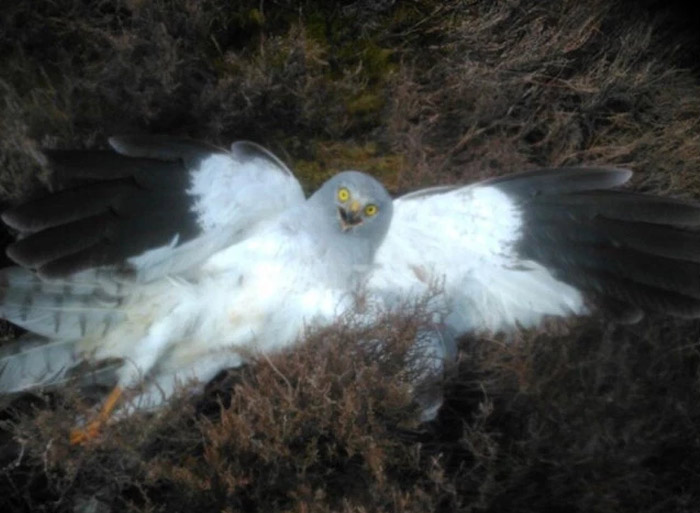
(Another) hen harrier shot on a grouse moor in Yorkshire Dales National Park – police arrest suspect

Just five days ago we blogged about the shooting of a male hen harrier on a grouse moor in the Bowland Area of Outstanding Natural Beauty, just across the boundary of the Yorkshire Dales National Park, that had been witnessed by a member of the public. Impressively, North Yorkshire Police arrested a suspect and he has been released pending further enquiries and forensic testing (see here).

Here we go again.

ANOTHER hen harrier has been shot on ANOTHER grouse moor, this time inside the Yorkshire Dales National Park and again it was witnessed by members of the public and again, North Yorkshire Police have arrested a suspect.

Here’s the police press release, published today (17 March 2020):

Two members of the public witness Hen Harrier being shot near Grassington

North Yorkshire Police are investigating the shooting of another Hen Harrier.

Two members of the public witnessed an incident which they believed was the shooting of a male Hen Harrier.

The incident occurred on Threshfield Moor at approximately 10.45hrs on Monday 27th January 2020.

North Yorkshire Police have been conducting enquiries and a man has been arrested in connection with this investigation.

Anyone with further information about this incident or who may have seen anything in the area shortly before the bird was shot, please call North Yorkshire Police on Tel 101 quoting reference # 12200015792.

If you wish to remain anonymous you can pass information to Crimestoppers on 0800 555 111.

This is the second incident of this type to take place in the last six months, with another hen harrier believed to have been shot in October 2019 near Keasden.

ENDS

Hang on a minute – Threshfield Moor? That rings a bell.

[RPUK map showing location of Threshfield Moor in the Yorkshire Dales National Park]

[Photo of the Threshfield grouse moor by Chris Heaton]
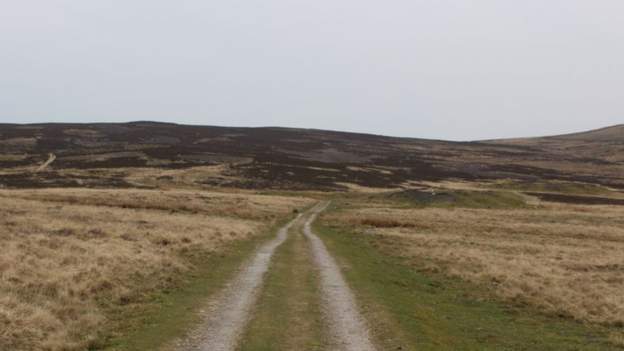
Ah yes, Threshfield Moor was reportedly the last known location of another male hen harrier, called John, who ‘disappeared’ in suspicious circumstances in October 2017 – see here.

The people believed to be the owners of Threshfield Moor are interesting and they have interesting connections – see here. Obviously they’ll be devastated to learn about the alleged illegal shooting of a hen harrier on their grouse moor and we’re sure will be doing everything they can to assist the police investigation.

Well done North Yorkshire Police – two arrests for two hen harrier shootings in the space of a few months – that’s really impressive work and the officers involved deserve much credit. There’s clearly some evidence to support reasonable suspicion of involvement because otherwise these arrests wouldn’t have been possible but whether there’s sufficient evidence to proceed to prosecution(s) remains to be seen. Whatever the outcome(s), these latest police investigations in to the alleged shooting of hen harriers on grouse moors expose the shooting industry’s desperate propaganda campaign for what it is and Natural England/DEFRA’s wilful blindness to the bleeding obvious.

So, grouse shooting industry, how’s that professed ‘zero tolerance‘ of illegal raptor persecution going?

So, Natural England /DEFRA, how that’s seriously flawed Hen Harrier (In)Action Plan working out?

Here’s a clue -let’s add the shooting of this latest hen harrier to the ever-expanding list of hen harriers (at least 31 now) believed to have been illegally killed since 2018, the year when grouse shooting industry reps would have us believe that hen harriers were welcomed back on the grouse moors:

February 2018: Hen harrier Saorsa ‘disappeared’ in the Angus Glens in Scotland (here). The Scottish Gamekeepers Association later published wholly inaccurate information claiming the bird had been re-sighted. The RSPB dismissed this as “completely false” (here).

5 February 2018: Hen harrier Marc ‘disappeared’ on a grouse moor in Durham (here)

9 February 2018: Hen harrier Aalin ‘disappeared’ on a grouse moor in Wales (here)

March 2018: Hen harrier Blue ‘disappeared’ in the Lake District National Park (here)

March 2018: Hen harrier Finn ‘disappeared’ near Moffat in Scotland (here)

18 April 2018: Hen harrier Lia ‘disappeared’ in Wales and her corpse was retrieved in a field in May 2018. Cause of death was unconfirmed but police treating death as suspicious (here)

8 August 2018: Hen harrier Hilma ‘disappeared’ on a grouse moor in Northumberland (here).

16 August 2018: Hen harrier Athena ‘disappeared’ on a grouse moor in Scotland (here)

26 August 2018: Hen Harrier Octavia ‘disappeared’ on a grouse moor in the Peak District National Park (here)

29 August 2018: Hen harrier Margot ‘disappeared’ on a grouse moor in Scotland (here)

29 August 2018: Hen Harrier Heulwen ‘disappeared’ on a grouse moor in Wales (here)

3 September 2018: Hen harrier Stelmaria ‘disappeared’ on a grouse moor in Scotland (here)

24 September 2018: Hen harrier Heather ‘disappeared’ on a grouse moor in Scotland (here)

2 October 2018: Hen harrier Mabel ‘disappeared’ on a grouse moor on the edge of the Yorkshire Dales National Park (here)

3 October 2018: Hen Harrier Thor ‘disappeared’ next to a grouse moor in Bowland, Lanacashire (here)

26 October 2018: Hen harrier Arthur ‘disappeared’ on a grouse moor in the North York Moors National Park (here)

10 November 2018: Hen harrier Rannoch ‘disappeared’ on a grouse moor in Scotland (here). Her corpse was found nearby in May 2019 – she’d been killed in an illegally-set spring trap (here).

14 November 2018: Hen harrier River ‘disappeared’ on a grouse moor in the Nidderdale AONB (here). Her corpse was found nearby in April 2019 – she’d been illegally shot (here).

16 January 2019: Hen harrier Vulcan ‘disappeared’ in Wiltshire close to Natural England’s proposed reintroduction site (here)

7 February 2019: Hen harrier Skylar ‘disappeared’ next to a grouse moor in South Lanarkshire (here)

22 April 2019: Hen harrier Marci ‘disappeared’ on a grouse moor in the Cairngorms National Park (here)

11 May 2019: A male hen harrier was caught in an illegally-set trap next to his nest on a grouse moor in South Lanarkshire. He didn’t survive (here)

7 June 2019: A hen harrier was found dead on a grouse moor in Scotland. A post mortem stated the bird had died as a result of ‘penetrating trauma’ injuries and that this bird had previously been shot (here)

11 September 2019: Hen harrier Romario ‘disappeared’ on a grouse moor in the Cairngorms National Park (here)

10 October 2019: Hen harrier Ada ‘disappeared’ on a grouse moor in the North Pennines AONB (here)

12 October 2019: Hen harrier Thistle ‘disappeared’ on a grouse moor in Sutherland (here)

18 October 2019: Member of the public reports the witnessed shooting of a male hen harrier on White Syke Hill in North Yorkshire (here)

November 2019: Hen harrier Mary found illegally poisoned on a pheasant shoot in Ireland (here)

January 2020: Members of the public report the witnessed shooting of a male hen harrier on Threshfield Moor in the Yorkshire Dales National Park (this post)

There are two more satellite-tagged hen harriers (Tony & Rain) that are reported either confirmed or suspected to have been illegally killed in the RSPB’s Hen Harrier LIFE Project Report but no further details are available.

And then there were last year’s brood meddled hen harrier chicks that have been reported ‘missing’ but as they’re carrying a new type of tag known to be unreliable it’s not known if they’ve been illegally killed or if they’re still ok. For the purposes of this mini-analysis we will discount these birds.

So that makes a total of at least 31 hen harriers that are known to have either ‘disappeared’ in suspicious circumstances or have been witnessed being shot or have been found illegally killed in the last two years. And still we’re expected to believe that everything’s perfect, that the grouse shooting industry is not riddled with armed criminals and that hen harriers are doing just fine, thriving even, according to the shooting industry’s propaganda.

Wilful blindness, writ large.

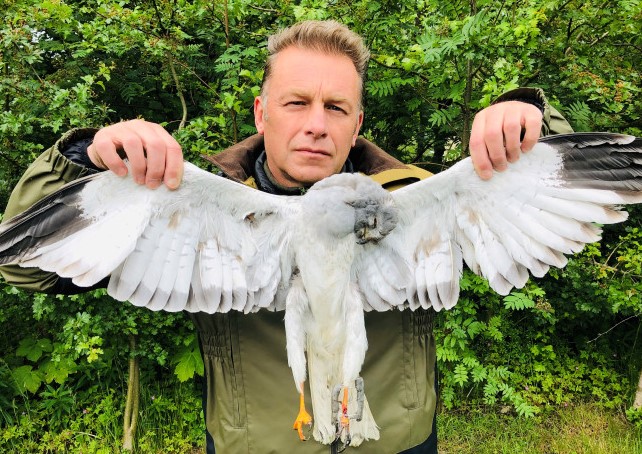
[This male hen harrier was found with his leg almost severed, trapped in an illegally-set spring trap on Leadhills Estate grouse moor in May 2019. He didn’t survive. Photo by Ruth Tingay]
 

General Licence restriction on Leadhills Estate: some fascinating details

In November 2019, Scottish Natural Heritage (SNH) imposed a three-year General Licence restriction on Leadhills Estate in South Lanarkshire following ‘clear evidence from Police Scotland that wildlife crimes had been committed on this estate’ (see here, here, and here).

Those alleged offences included the ‘illegal killing of a short-eared owl, two buzzards and three hen harriers’ that were ‘shot or caught in traps’ on Leadhills Estate since 1 January 2014 (when SNH was first given powers to impose a General Licence restriction). SNH had also claimed that ‘wild birds’ nests had also been disturbed’, although there was no further detail on this. The estate consistently denied responsibility.

[The shot short-eared owl that was found shoved under some heather on the Leadhills Estate grouse moor. Photo by RSPB Scotland]

In December 2019 Leadhills Estate appealed against SNH’s decision to impose the General Licence restriction (see here) but on 31 January 2020 SNH announced that it had rejected the estate’s appeal and the General Licence restriction still stood (see here).

We were really interested in the details of Leadhills Estate’s appeal so a freedom of information request was submitted to SNH to ask for the documents.

The information released by SNH in response is fascinating. Some material hasn’t been released due to what appear to be legitimate police concerns about the flow of intelligence about wildlife crime in the Leadhills area but what has been released provides a real insight to what goes on behind the scenes.

First up is an eight page rebuttal from Leadhills Estate’s lawyers about why it thinks SNH was “manifestly unfair” to impose the General Licence restriction.

Download it here: Leadhills Estate appeal against GL restriction decision

Next comes SNH’s six-page rejection of the estate’s appeal and the reasons for that rejection.

Download it here: SNH rejects Leadhills Estate appeal against GLrestriction

Prepare for some jaw-dropping correspondence from Leadhills Estate’s lawyers, including a discussion about how the raptor workers who found the hen harrier trapped by it’s leg in an illegally-set spring trap next to its nest last year ‘didn’t take steps to assist in the discovery of the suspect, which could have included placing a camera on the nest’.

Are they for real??!! Can you imagine the uproar, had those raptor workers placed a camera pointing at the nest and identified a suspect who was subsequently charged? We’ve all seen how that scenario plays out, with video evidence dismissed as ‘inadmissible’ and the game-shooting lobby leering about the court victory. That Leadhills Estate is now arguing that the failure of the raptor workers to install covert cameras is reason for the estate to avoid a penalty is simply astonishing, although the next time covert video evidence is challenged in a Scottish court it’ll be useful to be able to refer to this estate’s view that such action would be deemed reasonable. Apart from anything else though, those raptor workers were too busy trying to rescue that severely distressed hen harrier from an illegally-set trap:

[The illegally trapped hen harrier. Photo by Scottish Raptor Study Group]

Other gems to be found within this correspondence include the news that a container of an illegal pesticide (Carbosulfan) was found on Leadhills Estate in May 2019 and contributed to SNH’s decision to impose the General Licence restriction (this information has not previously been made public – why not?) and that during a police search of the estate (sometime in 2019 but the actual date has been redacted) the police seized some traps. The details of why those traps were seized has also been redacted but SNH write, ‘Although this in itself does not establish criminality it certainly adds weight to our “loss of confidence” [in the estate]’.

The Estate claims that the alleged impartiality of the witnesses should have some bearing on proceedings but SNH bats this away with ease, saying that the evidence on which the restriction decision was made was provided by Police Scotland and that the partiality of witnesses has not been identified as a significant factor of concern for the police, and thus not for SNH either.

It’s also amusing to see the estate claim ‘full cooperation’ by the estate with police enquiries. SNH points out that this so-called ‘full cooperation’ was actually largely limited to “no comment” interviews!

We don’t get to say this very often but hats off to SNH for treating the estate’s appeal with the disdain which, in our opinion, it thoroughly deserves.

Meanwhile, following SNH’s decision in January to uphold the General Licence restriction on Leadhills Estate due to ‘clear evidence’ of wildlife crime, we’re still waiting for Scottish Land & Estates (SLE) to respond to our enquiries about whether Leadhills Estate is still a member and whether Lord Hopetoun of Leadhills Estate is still Chairman of SLE’s Scottish Moorland Group.


‘Scaremongering & hysteria’ from usual suspects in response to Wild Justice legal challenge

It’s taken them a while, probably because they’ve been desperately trying to stem the membership haemorrhage following their recent u-turn on lead ammunition, but the game-shooting industry is back to its scaremongering best when it comes to Wild Justice and is desperately trying to claw back some credibility amongst its members that haven’t yet jumped ship.

(If you’re interested in the scale of membership upset about the lead ammunition issue, take a look at BASC’s Facebook page as the fall-out continues – it’s quite astonishing. We’re still keenly waiting to hear from the industry’s greatest cheerleader, Ian Botham, after his fantastic endorsement of lead ammunition in 2017 – see here).

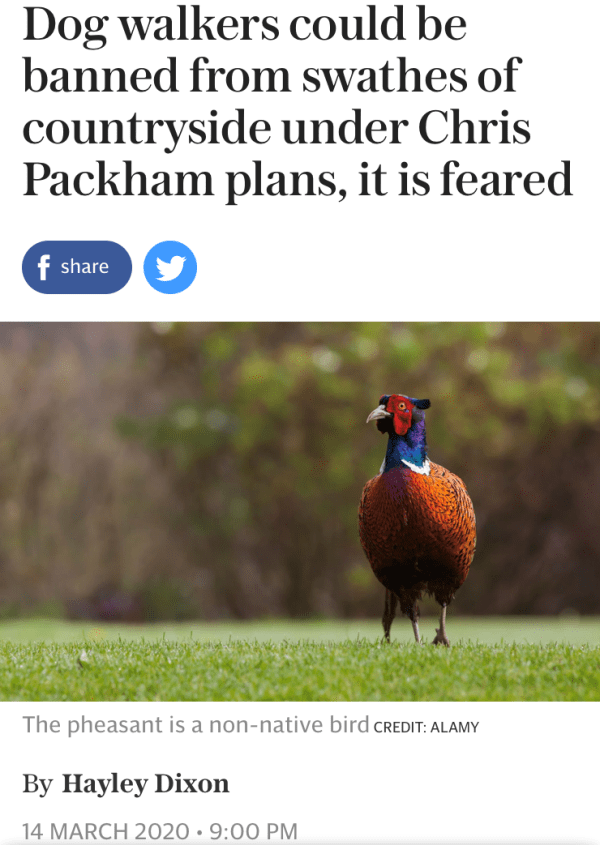
Anyway, on Saturday the Telegraph published this hysteria-laden piece in response to Wild Justice’s latest legal challenge seeking a judicial review of gamebird releases:

Wild Justice has responded with a blog as follows:

Wild Justice misrepresented by Daily Telegraph, again

Scaremongering and hysteria is the response we’ve come to expect from many within the game-shooting world whenever Wild Justice launches a new legal challenge, and that’s exactly what the Daily Telegraph published yesterday in an article headlined as, ‘Dog walkers could be banned from swathes of countryside under Chris Packham plans, it is feared’.

According to Telegraph journalist Hayley Dixon, Wild Justice’s current legal action against DEFRA concerning the Government’s failure to undertake environmental impact assessments on the release of millions of non-native gamebirds near Natura 2000 sites, ‘could have a knock on effect on other activities’ such as ‘dog-walking, horse riding and farming’. Her article includes quotes from BASC, Countryside Alliance, Game Farmers’ Association and the National Gamekeepers Organisation so it’s not difficult to see what prompted the melodrama.

Wild Justice co-director Dr Mark Avery said the suggestion that dog-walking would be affected was “nonsense”, adding, “Our case is about the real issue of biodiversity concerns”.

Solicitor Tessa Gregory from law firm Leigh Day, representing Wild Justice, did provide a quote to the journalist but only part of it was published. Here it is in full:

The suggestion that Wild Justice’s legal claim could result in the need to assess the environmental impact of dog-walking in the countryside is wrong and shows a fundamental misunderstanding of the law. Assessment is required under the law where, based on objective evidence, it is not possible to exclude likely significant effects of a plan or project on protected sites (known as Natura 2000 sites).

It is the scale, organisation and regularity of the mass release of gamebirds that mean such releases are capable of being a plan or project for the purposes of the law. Where these mass releases are on or near protected sites, it will in some instances (as accepted by Defra), not be possible to exclude negative impacts. It is in those circumstances that Wild Justice are asking the Government to comply with the law and carry out an assessment of the environmental impact of gamebird releases. Of course, there is nothing to fear from an assessment if a particular activity does not harm a protected site”.

Oh, and by the way, Daily Telegraph, none of the three Wild Justice Directors (Chris Packham CBE, Dr Mark Avery, Dr Ruth Tingay) are ‘animal rights activists’ as you’ve wrongly asserted. We’ve been here with you many times before (e.g. see here) and if you continue to misrepresent us we will consider legal action.

ENDS

Peregrine found shot in Shropshire: police appeal for information

Press release from West Mercia Police (13 March 2020)

APPEAL AFTER BIRD SUFFERS GUN INJURY

Police are appealing for help after a bird was found with what is believed to be a shotgun wound.

The Peregrine Falcon was found on the morning of Tuesday 10 March near Humber Lane, close to the roundabout on the A442 near Leegomery. It was taken to the vets with a broken wing and an x-ray showed fragments of a gunshot.

Although the falcon is recovering well it is possible it will not be able to fly again.

Anyone with information is urged to contact West Mercia Police on 101 quoting incident 704S 100320 or alternatively information can be given anonymously to Crimestoppers by calling 0800 555111.

ENDS

Well done West Mercia Police for a speedy response and appeal for info.

Booking opens for Hen Harrier Day Wales (18 July 2020)

The first ever Hen Harrier Day Wales takes place this year on Saturday 18 July 2020 in Snowdonia, from 12-5pm.

This is earlier than the usual August date for a Hen Harrier Day event but then hen harriers are killed on grouse moors throughout the year so it’s great that attention is being drawn to it with an additional event in July.

Hen Harrier Day Wales is being organised by Ian Cooper (a Snowdonia-based mountain leader) and Julian Cartwright, another mountain leader. Full details of this event and other Hen Harrier Day events planned for across the UK can be found on the newly-created Hen Harrier Day website.

The event location is Plas Y Brenin, the National Outdoor Centre in the Snowdonia National Park. As this is an indoor event, numbers are limited due to health & safety / fire regs etc. The organisers are offering places on a ticket-booking system and those tickets will become available tomorrow (Sunday 15 March) via Eventbrite HERE

‘Key moment’ as Scottish Government considers grouse moor licensing

It’s been three months since the Government-commissioned Werritty Review on grouse moor management was published (see here) and we’ve been waiting for the Scottish Government’s official response, which is due this spring.

We did hear from Nicola Sturgeon at First Ministers Questions in December that shortening the timescale for which grouse moor licensing may be introduced was ‘a serious consideration’ (here) which was very welcome news, although not to all.  Grouse moor trustee Magnus Linklater argued in a Times opinion piece that licensing threatened gamekeepers jobs (here), although he didn’t manage to explain how being law-abiding and not killing protected birds of prey would cost a gamekeeper his employment.

[An illegally-poisoned golden eagle in the Cairngorms National Park. Photo by Dave Dick]

As a follow up to the First Minister’s comments in December, Andy Wightman MSP (Scottish Greens) recently lodged this Parliamentary question:

S5W-27631: To ask the Scottish Government, further to the comments by the First Minister on 19 December 2019 (Official Report, c. 21), what its timescale is for reconsideration of the introduction of a licensing scheme for grouse shooting.

Environment Minister Mairi Gougeon has now responded:

We are giving very careful consideration to the recommendations in the report by the Grouse Moor Management Group (the ‘Werritty Review’).

We will set out our response to the report in due course, which will cover the recommendation on introducing licensing of grouse moor businesses.

Earlier this week Duncan Orr Ewing, RSPB Scotland’s Head of Species and Land Management wrote a very good blog (here) discussing the Werritty Review’s primary recommendation that grouse moor licensing be introduced but that the review had suggested a five-year delay. He goes on to explain what options are available to the Scottish Government as they consider the Werritty Review recommendations. Well worth a read.

Duncan describes this as a ‘key moment which could help safeguard some of Scotland’s most spectacular wildlife’ if the Scottish Government chooses to finally do what it’s been threatening for years and years and introduce a grouse moor licensing scheme.

He urges members of the public to contact their MSPs and ask them to encourage the Scottish Government to make grouse shooting both legal and more sustainable through a licencing system for grouse moors.

You can find contact details for your MSPs by entering your postcode on the “Find Your MSP” tool on the Scottish Parliament website here.

For those who don’t live in Scotland please contact Scottish Ministers at scottish.ministers@gov.scot.

Angus Glens landowner loses appeal over unauthorised vehicle track

Last October an Angus Glens landowner was ordered to remove a controversial vehicle track that was visible for miles around in the Cairngorms National Park (see here).

The landowner had argued the track was to support forestry works and thus he didn’t need permission for it but campaigners had argued that the track appeared to be being used to support gamebird management and fieldsports (e.g. see here) and thus was unauthorised.

The Cairngorms National Park Authority agreed with the campaigners and issued an enforcement notice requiring the landowner to remove the track.

The landowner appealed this decision in December 2019.

[The unauthorised hilltrack in Glen Clova. Photo by Scottish Ramblers]

A couple of days ago a Scottish Government reporter agreed with the Cairngorms National Park Authority and dismissed the landowner’s appeal. She ordered the land to be restored “so far as is reasonably practicable” within one year.

Scottish Environment LINK’s Hilltracks Group, long-time campaigners on this issue, have welcomed the decision with the following press release:

CAMPAIGNERS HAIL ‘LANDMARK’ DECISION OVER UNAUTHORISED TRACK IN GLEN CLOVA

A Scottish Government reporter has today dismissed a landowner’s appeal against an order forcing the removal of a controversial vehicle track in scenic Glen Clova, Cairngorms NP.

The decision ends a long-running battle over the 1.5km track, which is visible for miles around and features spoil mounds up to 10 metres wide.

The landowner had launched an appeal in December 2019 against Cairngorms National Park Authority’s enforcement notice ordering him to remove the vehicle track, as it appears to be used to support field sports.

But today Allison Coard, a reporter appointed by Scottish Ministers, has dismissed the appeal and ordered the land to be restored “so far as is reasonably practicable” within one year.

Scottish Environment LINK Hilltracks Group, which continues to campaign for stronger public oversight of upland vehicle tracks, commended the reporter and the national park authority for their decisive action.

Helen Todd, who is Ramblers Scotland’s policy manager and co-convener of the LINK Hilltracks group, said: “This is a landmark result, and sadly one of very few examples of an authority feeling able to commit enough time and money to retrospectively tackle unauthorised tracks.

This ugly track is scarring the landscape in this historic, protected glen – and we look forward to seeing the hillside restored within the coming year.

All Scottish landowners should take note of today’s decision, and the expensive restoration job that the landowner will now need to carry out.”

Beryl Leatherland, of Scottish Wild Land Group and co-convener of the LINK Hilltracks group said: “The case highlights the urgent need for the Scottish Government to introduce stronger controls over vehicle tracks in our hills – to boost local democracy, improve construction standards and protect precious environments from further damage.”

The Scottish Government has made hilltracks one of the top priorities in its forthcoming review of ‘Permitted Development Rights’, which governs which types of developments can bypass the full planning permission process.

Currently, landowners simply need to tell authorities before building tracks which are said to support ‘agriculture or forestry’ – and full planning permission is generally not required. Campaigners believe these tracks are often created to support shooting activities and therefore should be subject to a planning application.

Research published in 2018 by the Scottish Environment LINK Hilltracks group found that vehicle tracks continue to expand further into Scotland’s mountain landscapes, and that weak planning processes can lead to them being badly-sited and designed.  Some tracks have even been built over the top of narrow, low-impact trails and historical routes, with little chance for the public to comment in advance.

You can view the full appeal decision and history here.

ENDS

Well done to the campaigners at Scottish Environment LINK Hilltracks Group and also to Nick Kempe who writes the campaigning Parkswatchscotland blog – well worth subscribing to for detailed and interesting commentary. Also well done to the Cairngorms National Park Authority for issuing the enforcement notice in the first place.

Revive, the coalition for grouse moor reform in Scotland also has unauthorised hilltracks in its sights and you can read more about this in Revive’s report here.


Hen harrier shot on grouse moor: North Yorkshire Police make an arrest

North Yorkshire Police have arrested a man in connection with the reported shooting of a hen harrier on a grouse moor near the village of Keasden.

He has been released under investigation whilst police await the results of forensic analysis.

This incident relates to the reported shooting of a male hen harrier near White Syke Hill in the Bowland AONB last October. A previous blog on this case can be read here.

This is significant progress from North Yorkshire Police, not just in this particular investigation but also more generally in the investigation of crimes against birds of prey. Regular blog readers will be well aware of the infrequency of arrests in many of these cases, sometimes due to incompetence, inexperience and/or missed opportunities, sometimes due to lack of support from senior officers, but more often than not due to a lack of witnesses and insufficient evidence to instigate a prosecution against a named individual.

This is an issue that especially affects the persecution of hen harriers. Rigorous scientific research has demonstrated the eye-watering extent of hen harrier persecution on many driven grouse moors in northern England (e.g. here); it happens so often it’s brought the English hen harrier breeding population to its knees, but when was the last time you saw a named individual in court facing prosecution for allegedly killing one?

We have long argued that the scale of illegal raptor persecution, particularly on some driven grouse moors, amounts to serious organised crime and that the people involved are skilled at removing and destroying evidence to avoid prosecution. It takes tenacity, sometimes a bit of luck, and above all, determination, to get these people anywhere near a court room, let alone to secure a conviction.

This investigation is still in the very early stages and it may not progress to a charge if the evidence doesn’t reach the required standard but for now let’s congratulate North Yorkshire Police’s Rural Crime Team for getting it this far.

If you have any information that could help this investigation please contact North Yorkshire Police on Tel 101 quoting reference number: 12190193431.

Andy Wightman successfully defends defamation case

Yesterday a judge finally threw out a defamation claim against Andy Wightman MSP and a ludicrous claim for £750,000 damages against him, made by Dr Paul O’Donoghue of Wildcat Haven Enterprises [and Wilder Britain and Lynx UK Trust], who had argued that Andy had published, with malice, defamatory material on his blog, on Twitter and on Facebook in 2015 and 2016.

Lord Clark ruled that none of Andy’s comments were defamatory and dismissed O’Donoghue’s assertion of financial loss as no evidence was provided to support the claim. This means Andy doesn’t have to pay any damages to O’Donoghue. An expenses hearing will take place in due course to establish whether O’Donoghue will have to cover Andy’s costs.

You can read the full ruling here: Opinion of Lord Clark_WHE v Wightman 2020

[Andy Wightman at a golden eagle nest site in Scotland in his role as Golden Eagle Species Champion. Photo by Ruth Tingay]
This case has been running for several years, putting Andy under enormous stress as he faced bankruptcy and thus the loss of his job had he and his legal team not been able to defend the accusations. If he hadn’t been held in such high regard by thousands of people who helped to crowdfund approx £170,000 to launch a defence, the outcome of this case would have been swift and unjust.

Here’s how Andy broke the news on Twitter after Lord Clark published his verdict:

I’m delighted with this judgement from Lord Clark. I would like to thank my legal team of Campbell Deane and Roddy Dunlop QC for their support, diligence and hard work over the past three years. I’d also like to thank my family and colleagues at work for their support and understanding over this period.

I want to pay particular thanks to the thousands of people who generously contributed to my crowdfunder, without whom I would simply have been unable to defend myself. I have been hugely encouraged by their ongoing support.

The National Union of Journalists and Scottish PEN have also been very supportive as part of their wider campaign for defamation reform. I have maintained throughout that I did not defame the pursuer and that this action should never have been brought against me.

It is vital that Parliament modernises the law of defamation to ensure that the law provides the right balance between freedom of expression and the rights of people not to have their reputations tarnished. It is also important that the law is clear, so that writers and journalists can write confidently and provide the freedom of expression that is so important in any democracy.”

This case has attracted a lot of media attention, of course. Here are a few articles:

Holyrood Magazine: Andy Wightman wins defamation case

Times: Andy Wightman wants law reform after defamation victory

BBC: Scottish Green MSP Andy Wightman wins defamation case

Guardian: Scottish Green MSP successfully defends defamation case

STV: Green MSP Andy Wightman cleared in defamation case

Press & Journal: Green MSP Andy Wightman wins £750,000 defamation case brought against him

Scotsman: Greens MSP Andy Wightman wins £750,000 defamation case

National: Green MSP Andy Wightman wins in £750,000 defamation case

And what of Paul O’Donoghue? Well he’s featured in the current edition of Private Eye, although this time not about this case:


UPDATE 5th February 2022: Andy Wightman awarded over £170K expenses in defamation case (here)

Killing jackdaws in Strathbraan: another SNH licensing fiasco?

Just before Christmas we wrote a blog about a hilarious GWCT video in which Scottish gamekeeper Ronnie Kippen (of Garrows Estate, Strathbraan) claimed, with a straight face, that “Rewilding is deadlier to a mountain hare than a 12 bore shotgun“.

Here’s the video again for those that missed it – it’s well worth a few minutes of your day:

But that ridiculous statement wasn’t the only thing to catch our attention. In this video Ronnie Kippen also let on that last year SNH had issued a licence to gamekeepers in Strathbraan to use jackdaws as decoys in Larsen traps (to attract other jackdaws that would then be killed to protect waders).

This was really interesting on a number of points, not least because this was Strathbraan, an area identified in a Government-commissioned report as a raptor persecution hotspot and also the location of the controversial raven cull in 2018 which was successfully challenged by the Scottish Raptor Study Group after it emerged the GWCT’s scientific proposal was “completely inadequate” and “seriously flawed“.

Gamekeepers are permitted to kill jackdaws under the General Licences, but this species cannot be used as a decoy bird inside a Larsen trap in Scotland – only inside crow cage traps. We wanted to know the evidential basis that SNH had used to agree to issuing this licence (i.e. what evidence was provided by the gamekeepers to SNH of the purported damage to waders by jackdaws?) so we submitted an FoI to ask for the licence application and associated documents, as well as the actual licence itself.

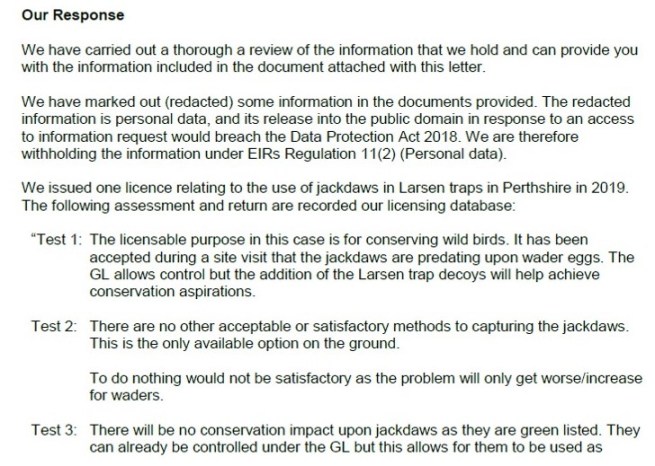
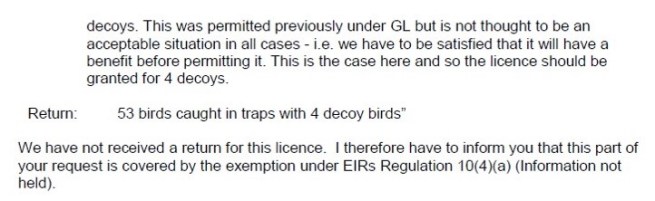
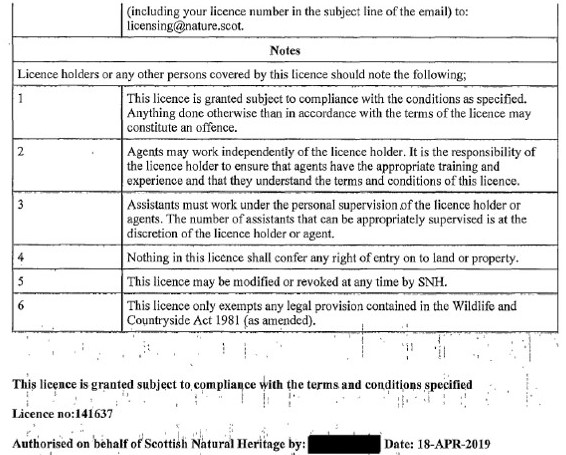
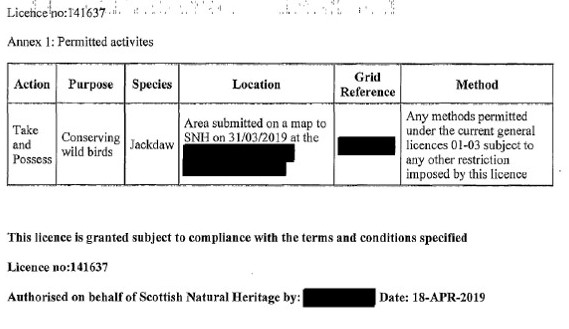
SNH has responded with the following letter:

Hmm. Ok, so according to this letter the decision to issue the licence was apparently based on a “site visit“. Hold that in mind and also hold in mind the statement, “We have not yet received a return for this licence“.

Now let’s look at the supporting documentation that SNH released as part of this FoI:

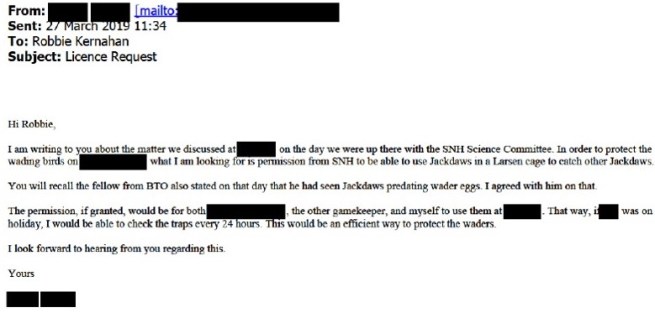
We don’t know who the licence applicant is because the name has been redacted so let’s just call him Mr Gammon. On 27 March 2019 Mr Gammon emailed SNH and asked for a licence. The ‘evidence’ provided by Mr Gammon appears to be that during an undisclosed meeting someone from the British Trust for Ornithology (BTO) said he’d seen jackdaws predating wader eggs and Mr Gammon had agreed with him. That’s it!

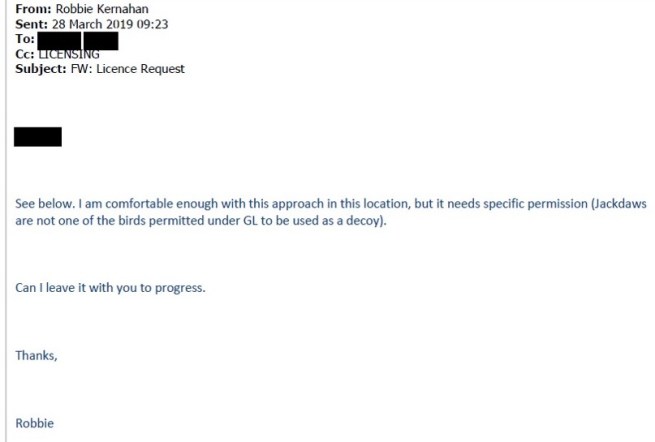
Mr Gammon’s ‘evidence’ was apparently sufficient, according to this internal email between SNH’s Robbie Kernahan and an unnamed SNH employee, presumably someone in the licensing dept:

Later that day, an unidentified SNH employee sent an email to SNH licensing asking them to contact Mr Gammon to ask for a licensing application:

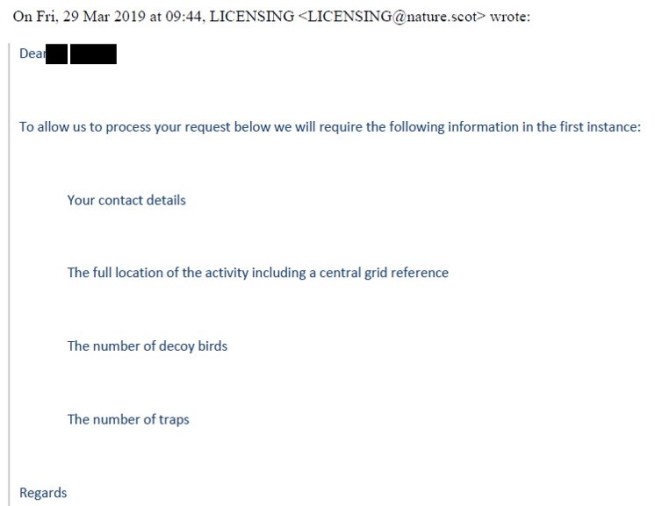
The next morning SNH licensing contacted Mr Gammon and asked for some basic details (note, no request for actual evidence):

A couple of days later Mr Gammon responds with the basic information requested, and a map (which has been redacted):

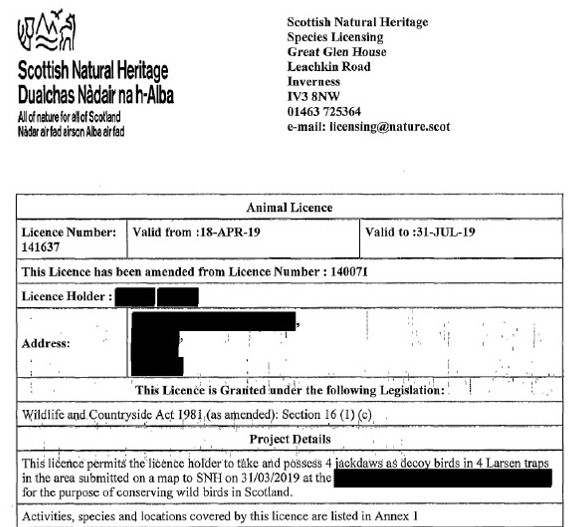
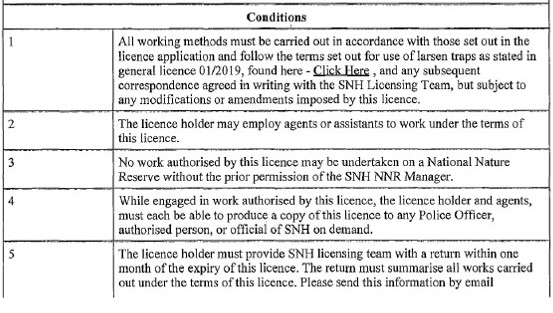
A couple of weeks later, SNH issued the licence to Mr Gammon. Take note that one of the licence conditions has been highlighted – Mr Gammon must submit a return within one month of the licence’s expiry date (31 July 2019):

So, according to all this documentation there was no ‘site visit’ as described in SNH’s letter to us, or if there was, SNH has forgotten to include it in this bundle of associated documents. What actually happened, according to these documents, is that Mr Gammon asked for a licence because some bloke from the BTO had once mentioned jackdaws predating waders and SNH decided to issue one without asking for any supportive evidence.

The second big issue here is that it appears Mr Gammon has breached the licence. A clear condition (#5) of the licence, as highlighted to Mr Gammon by SNH’s cover letter to him, was that ‘the licence holder must provide SNH licensing team with a return within one month of the expiry of this licence [so by 31 August 2019]. The return must summarise all works carried out under the terms of this licence. Please send this information by email’.

According to the FoI cover letter we received from SNH on 31 January 2020, ‘We have not received a return for this licence’.

We’ll be seeking further clarification on this from SNH and seeking assurances that if Mr Gammon is applying for any further licences this year that due consideration is given to this apparent breach of last year’s licence.

Watch this space.

UPDATE 12 March 2020: This morning we received an email from an SNH licensing officer which included the following:

In my letter about the Jackdaw licence dated 31 March  I include a paragraph which said that no licence return had been received.  This paragraph was included in error.  The licence return was recorded in database and the information is provided in the paragraph above. A corrected version of our response is attached.  I apologise for any confusion this has caused“.

It’s good to receive a swift response from SNH – although it still doesn’t clarify when the licence return was received, nor why a copy of the return wasn’t included in the FoI response docs. Is there a written return, as stipulated by the licence, or was the ‘return’ just a hasty phone call after the deadline?

It also doesn’t address the issue of SNH’s apparent failure to seek evidential support for the licence application. We will be following up on these points.