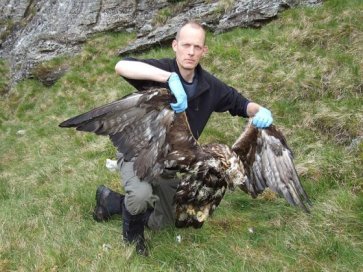
Scottish wildcat: going, going….

Scottish wildcats will be extinct in the wild within months, according to a new report (see here and here). Disease and inter-breeding with domestic and feral cats are considered to be main threats, although illegal persecution on sporting estates and farms is also considered to be a problem, according to the Scottish Wildcat Association (here). One academic believes the blame for the demise of the Scottish wildcat ‘can be placed firmly at the door’ of Scottish shooting estates who set thousands of indiscriminate snares every year (see here).

Surprisingly, the Scottish wildcat is not on the SGA’s ‘vermin’ list (i.e. animals that they think should be culled to protect their game stock). Indeed, the SGA was a partner in the Cairngorms Wildcat Project, helping to develop protocols for so-called wildcat-friendly predator control. These protocols included issuing wildcat ID cards to keepers, encouraging them not to shoot on sight if there was any doubt about the species’ identification, and the use of live traps instead of night-time shooting to reduce the risk of a wildcat being shot accidentally (see here for the Cairngorms Wildcat Project Final Report 2012).

However, with the latest estimate of 35 individual wildcats remaining in the wild, is it all a bit too late? The Scottish Wildcat Association are urging ‘bold action’ from SNH and the Scottish Government. Let’s hope they respond accordingly.

Video footage of animal cruelty: one rule for one….

William MacKenzie, a 68-year old pensioner who claimed to be running an animal rescue centre from his home in Shrewsbury, has been given a lifetime ban from keeping all animals after he was convicted of nine animal welfare offences, including punching and kicking birds of prey. He was convicted after the court saw video footage of his activities that had been filmed by his neighbours.

Interesting that this video footage was considered to be acceptable evidence, whereas video footage of a Scottish gamekeeper beating trapped birds to death with a stick inside a crow cage trap was deemed inadmissable (see here).

Well done to the neighbours who took action, to West Mercia Police, the RSPCA and the Crown Prosecution Service for the successful prosecution, and to the magistrates for handing out a suitable sentence.

Article in the Shrewsbury Chronicle here and Daily Mail here

Glen Orchy: a hollow victory

Last Friday, Tom McKellar, an employee of Auch Estate, an Argyll sporting estate in Bridge of Orchy, was convicted of possessing the illegal poison Carbofuran and was fined £1,200 (see here). This conviction should be a cause for celebration, and in some respects it is, but there is also an overwhelming sense of disappointment and frustration. We had all thought this was a pretty clear-cut case, with lots of investigative resources thrown at it, a strong evidential trail and a known suspect. We were further encouraged by a statement given by the then Scottish Environment Minister, Roseanna Cunningham, who said:

I am truly appalled that yet another golden eagle has been illegally killed in Scotland – the second this summer. Illegal poisoning is simply inexcusable and while the perpetrators are certainly beneath contempt they are in no way above the law“.

Given the nature of the alleged offences (wildlife & firearms), we were certain that a custodial sentence was inevitable. How stupid were we?

It all started to unravel in December 2010, 18 months after the poisoned eagle was found dead in Glen Orchy. We learned that Tom McKellar had been convicted of possessing two illegal handguns, but instead of receiving the mandatory five-year prison sentence, he was given just 300 hours community service and a commendation from the judge who reportedly told him: “There is no doubt you are an outstanding individual” (see here). There was little mention in the media about the poisoned golden eagle or the stash of illegal poison that had been found at McKellar’s house during the original police search. We were suspicious that the wildlife crimes were being ignored and that COPFS had decided to just take on the firearms offences because, in the eyes of the law, these are greater crimes than the poisoning offences and would normally result in a custodial sentence.

Based on these suspicions, we blogged about the case in January 2011, and suggested that no charges were being brought against anyone for poisoning that eagle. We also encouraged readers to contact the Scottish Government to complain. Many did, and all hell let loose. The Scottish Government responded by saying that the firearms offences were being dealt with separately, at a court with a higher authority than a Sheriff Court, and that the wildlife offences were still ‘being dealt with’. A well-known prosecutor threatened us, indirectly, with legal action. For what? Expressing an opinion? As it turns out, we were right all along, nobody has been prosecuted for poisoning that golden eagle, although we’ve had to wait for over three years to have this confirmed.

It then all went quiet for a while, at least publicly. It’s not known whether COPFS bowed to pressure to take forward the wildlife crime prosecution or whether they had actually been pursuing the charge all along, but that it took over three years for the case to conclude is probably quite telling.  Not that it really matters now anyway; what matters is the outcome.

So, a conviction was eventually secured, although this was just for ‘possession’ of a banned substance; in our opinion this is the least significant charge of any that could have been brought. McKellar admitted during interviews that he had laid out poisoned baits ‘in the past’, and yet he wasn’t charged for that. Were the words ‘in the past’ significant in the decision not to press charges for that offence? What does ‘in the past’ mean, anyway? Two years ago? Two weeks ago? Two days ago? Two hours ago? In addition to the poisoned golden eagle, a Carbofuran-poisoned fox was found and also a dead sheep laced with Carbofuran. Someone was clearly still putting out poisoned baits, but COPFS accepted McKellar’s claim that he wasn’t responsible. It’s unfortunate that these types of offences are only dealt with as summary cases in a Sheriff Court. It would have been interesting to hear what a jury might have thought had the charges been heard in a higher court. Again, we’ll never know and we have to accept that McKellar is guilty of nothing more than possessing the banned poison Carbofuran (oh, and possessing two illegal handguns).

It’s hard not to think that McKellar has come out of all this relatively lightly. It’s also hard to believe that his punishments will act as any sort of deterrent to other would-be criminals. He avoided a mandatory five-year prison term for the firearms offences, and he was fined just a fraction of the amount that he could have been fined for possessing the illegal poison Carbofuran. It appears that he has also kept his job. Auch Estate is currently up for sale (for a mere £8.4 million) and a look at the sales particulars (Auch Estate sales brochure 2012), dated August 2012, indicates that the new owner has to take on the current Estate employees under the TUPE regulations, including Farm Manager Tom McKellar. These sales particulars also show that almost £700,000 was paid in grants and subsidies during 2011; it would be interesting to know whether there will be any forfeiture of these payments following McKellar’s conviction, although based on previous experience, this information is exceptionally difficult to access, even though it’s public money! It would also be interesting to hear whether McKellar’s employer is being investigated, after McKellar reportedly claimed it was his employer who had provided him with the Carbofuran (see here). Wouldn’t it also be interesting to find out whether Auch Estate is a member of Scottish Land & Estates? And whether McKellar, as an employee of a sporting estate, is a member of the Scottish Gamekeepers’ Association? Needless to say, neither of these organisations has made any public statements about McKellar’s conviction last Friday.

Other question marks include a strange bit of (non)-reporting by SASA. The poisoned golden eagle found at Glen Orchy was listed in SASA’s 2009 annual report. However, the dead fox found nearby that was reported to have been poisoned by Carbofuran did not appear in the SASA report. Neither did the dead sheep also found nearby that was reportedly laced with Carbofuran and used as poisoned bait. Why weren’t these two animals included in SASA’s list of confirmed poison cases for 2009? Perhaps SASA didn’t do the toxicology tests. If they didn’t, then who did? If SASA did do the tests, but failed to include the animals in their report, what confidence does this give us when SASA release their annual poisoning statistics? Are other cases missing? We only knew about the fox and the sheep because the RSPB had listed them in their annual report.

A further question mark hangs over a related issue. The media has reported that the poisoned golden eagle found dead in Glen Orchy had been killed with the banned pesticide Carbofuran. However, if you look at the 2009 SASA report, the following chemicals are listed as being detected in this bird’s body: Carbofuran, Methiocarb, Sodium Cyanide and Strychnine. Now, we have it on good authority, although this has not been formally verified, that a second individual was searched during the police raid back in June 2009. This individual, XXXXX XXXXX is believed to be a gamekeeper in Perthshire but is not an employee of Auch Estate; he was just there on the day the police arrived to conduct their search. We understand that the police found Mr XXXXX to be in possession of a bottle of Strychnine and a container of decanted Cyanide. Now look again at the chemicals detected in the body of the dead golden eagle. As far as we are aware, no charges have been brought against Mr XXXXX, not even for possession. If this turns out to be an accurate report, then something has gone seriously wrong with this investigation. A lack of resources can’t be blamed on this one, given the array of organisations involved with the investigation, including multiple police forces with specialist wildlife crime officers as well as the National Wildlife Crime Unit. So what happened? Did Mr XXXXX slip through the net and if so, how? Do you think we’ll hear anything about this or do you think it’ll be quietly pushed under the carpet?

In summary then, yes, a conviction was secured (McKellar) and we should be pleased about that. McKellar’s illegal stash of Carbofuran and his illegal cache of handguns have been taken out of circulation and so we should also be pleased about that, too. But this is not what could be called a successful outcome; far from it. It’s deeply unsatisfactory and shares striking similarities with other recent, high-profile cases which also concluded unsatisfactorily, such as Moy Estate and Skibo Estate. In all three cases, and in countless other lower-profile cases, sporting estate employees have only been charged with the lesser offence of possession. Charges have not been brought against anyone for the illegally-killed raptors found in each location, nor for laying the illegal poisoned baits or for putting out the illegal traps. On a superficial level then, the convictions for possession look good and the authorities can claim they are successfully addressing the issue of wildlife crime. Scratch below the publicity gloss though and you find that very little progress has been made; charges, if they’re brought at all, are not reflecting the full extent of the crimes uncovered, and on conviction the sentences are not reflecting the seriousness of these crimes.

Glen Orchy case concludes: call this justice?

So, three years and three months later, the infamous Glen Orchy case has concluded. Tom McKellar, previously described as a gamekeeper but curiously now described as a farmer, has been fined £1,200 for possessing the banned pesticide, Carbofuran.

The Crown Office press release (here – NB, link no longer works, copy of press release at foot of blog) doesn’t mention anything of the poisoned golden eagle that was found in Glen Orchy and prompted the search of McKellar’s house, which led to the discovery of the Carbofuran. Although it does mention how he was previously given a 300-hour community service order for the possession of illegal handguns (instead of the mandatory five-year prison sentence), also found during the search of his house.

Of course, McKellar wasn’t charged with laying poisoned baits (even though he reportedly admitted to doing so during an interview), and nor was he charged with poisoning that golden eagle, because even though he had this rare, banned poison in his house, and lived just down the road from where the dead eagle had been found, and he’d previously admitted to laying out poisoned baits, there apparently wasn’t enough evidence to link him to the poisoned eagle.

But this story doesn’t end there. There are other things that went on (or more to the point, didn’t go on) in this investigation and we’ll be discussing those in due course, including the failure to charge a second person….

Meanwhile, we’ll add this poisoned golden eagle to the growing list of illegally-killed eagles for which nobody has ever been (nor will be) prosecuted. Justice?

RSPB press statement here (NB: link no longer available, copy of RSPB statement at foot of blog)

UPDATE 11 Sept 2012: Glen Orchy, a hollow victory (here)

Previous blogs on this case here, here, here, here, here,here here, here

COPY OF CROWN OFFICE PRESS RELEASE:

7 September 2012

FARMER FINED £1,200 FOR POSSESSING BANNED SUBSTANCE

An Argyll farmer was today fined for possessing the banned substance carbofuran.

Tom McKellar, 50, from Bridge of Orchy, Argyll, pled guilty on 18 April at Oban Sheriff Court. Today he was fined £1,200 for the offence.

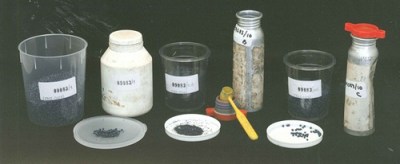
Carbofuran is a highly toxic pesticide and a single grain the size of a poppy seed can kill a bird.  A quarter of a teaspoonful can be fatal to humans.

Following a search of his property by police on 17 June 2009, McKellar was found to have quantities of Carbofuran in three separate containers and traces of it within a syringe.  When interviewed by police, he indicated that he had, in the past, placed it on meat for foxes to eat.

Craig Harris, Head of the Wildlife and Environmental Crime Unit (WECU) at COPFS, said:

“Carbofuran is an extremely toxic pesticide and even the tiniest amounts can be fatal to our wildlife.

“Possession of carbofuran is illegal and those who unlawfully retain stocks can expect to be brought before the court.

“This conviction and sentence should serve as a warning to anyone who thinks about keeping this substance.

“We remain committed to ensuring carbofuran is removed from the countryside and we will continue to work with our PAW partners to find the best way to achieve this.”

Notes to Editors

Tom McKellar pled guilty at Oban Sheriff Court on 18 April 2012 to possessing Carbofuran, an unauthorised pesticide, under section 15A of the Wildlife and Countryside Act 1981.

McKellar previously pled guilty at the High Court in Glasgow on 5 November 2010 to four charges relating to the illegal possession of a Webley revolver and a Browning pistol, recovered during police enquiries on 17 June 2009.  On 3 December 2010 he was sentenced to a Community Service Order of 300 hours.

Products containing Carbofuran as an active ingredient were formerly used in the U.K. as insecticides to control agricultural pests in crops.  Their use was restricted to farmers or contractors providing services to farmers for drilling into the ground.  Approval for the use of Carbofuran was withdrawn in 2001 and its possession is now illegal in terms of the Wildlife and Countryside Act 1981, Section 15A and the Possession of Pesticides (Scotland) Order 2005/66, Article 2 and Schedule 1.

Carbofuran is one of the most toxic pesticides.  In the granular form a single grain the size of a poppy seed can kill a bird.  A quarter teaspoon (1 millilitre) can be fatal to humans.

Carbofuran poisoning has been identified as the cause of death in over 240 incidents submitted to the WIIS scheme in Scotland since 1988 (this system records incidents of specific chemicals to provide feedback for regulations).  At least 95% of these incidents were attributed to the illegal abuse of a pesticide to poison non-target animals.  The most frequent casualties were birds of prey, with the remainder comprising corvid species, cats and dogs.  In the last decade, Carbofuran formulations appear to have become the poison of choice for individuals involved in illegal poisoning activities in Scotland.

PAW Scotland is the Partnership for Action Against Wildlife Crime in Scotland.  PAW Scotland partners include a wide range of bodies committed to tackling wildlife crime including conservation, land management, shooting and law enforcement organisations.

ENDS

COPY OF RSPB STATEMENT:

7 September 2012

Farm manager convicted of poison possession after Golden Eagle is killed near Bridge of Orchy

A farm manager has today (7th September) been convicted of possessing an illegal poison, following a police-led enquiry into the death of a golden eagle.

Earlier at Oban Sheriff Court, Tom McKellar pled guilty to possession of the banned pesticide Carbofuran and was fined £1200.

On 7th June 2009, a party of hillwalkers descending Beinn Udlaidh in northern Argyllshire, came across the body of the eagle, lying face down in the grass on a remote hillside near Bridge of Orchy.

The following day, the group contacted RSPB Scotland, who immediately notified Strathclyde Police.

That afternoon, the local police wildlife crime officer and RSPB Scotland investigations staff recovered the eagle carcass from the remote hillside.

It was photographed and seized as evidence by the police, meanwhile a post mortem by Scottish Government laboratories confirmed the bird had been poisoned with Carbofuran, a substance banned since 2001.

Further police investigations, including a search of land and buildings at Auch Estate, Bridge of Orchy,  recovered a quantity of carbofuran, a carbofuran-poisoned dead fox, and two handguns – found in the attic of a house occupied by estate employee Tom McKellar.

In subsequent days, the carcass of a sheep, laced with Carbofuran, was also found on a hillside in the area that the eagle had been found dead.

In December 2010, at the High Court in Glasgow, McKellar was convicted of possession of two hand guns, and was sentenced to 300 hours community service.

Commenting on today’s sentencing Ian Thomson, RSPB Scotland’s Head of Investigations, said:

“RSPB Scotland has invested considerable resources in assisting Strathclyde Police in the investigation of this significant case. We heartily commend the efforts of the police in their rigorous follow-up to the illegal poisoning of the golden eagle on Beinn Udlaidh, leading to this successful prosecution.

“We are very disappointed that, at the conclusion of the investigation, no-one has been charged with the poisoning of this golden eagle, one of our most vulnerable and iconic bird species, or with the laying out of poison baits in the open in our countryside.”

“While we welcome the conviction, yet again, we are dismayed that the final result of a high profile enquiry poses little in the way of a deterrent to those who continue to flagrantly disregard our wildlife protection laws. The illegal killing of protected birds of prey remains a persistent problem in some parts of Scotland, with, for example, six further golden eagles confirmed as illegally poisoned since this incident, including one in Lochaber earlier this year. We call upon the Scottish Government to urgently review the penalties imposed by the courts on those who break our wildlife laws.”

ENDS

UPDATE 6 May 2026: ‘Should I Marry a Murderer?’ New Netflix documentary provides sobering insight into brutal killing and burial of charity cyclist Tony Parsons by McKellar twins at Auch Estate, Glen Orchy (here)



Egg-thief Gonshaw in ASBO appeal – UPDATED

Convicted egg-thief Matthew Gonshaw is appealing the ASBO that prevents him from travelling to Scotland during the breeding season.
Court update due later….

Background info here, here, here, here

UPDATE: Gonshaw’s ASBO still stands. Apparently he failed to turn up and costs were made against him.

High hopes for new Scottish Environment Minister

We have a new Scottish Environment Minister, following the government reshuffle today. Stewart Stevenson MSP is out, and has been replaced by Paul Wheelhouse MSP.

Stevenson was ok, but always seemed slightly out of place in this role. He certainly didn’t engage with the issues as well as his predecessor, Roseanna Cunningham MSP had done. It would be fair to say he’d been unmemorable, but at least he didn’t sanction anything stupid during his time.

We don’t know much about Paul Wheelhouse, but a cursory glance at his page on the SNP website (here) gives us reason to be optimistic – he’s a member of the SSPCA and the RSPB.

We’ll be following his political activities with great interest.

Another poisoning incident goes unpublicised

The latest list of reported poisoning incidents in Scotland, as published by SASA, reveals that yet another poisoning incident took place earlier this year and it wasn’t publicised.

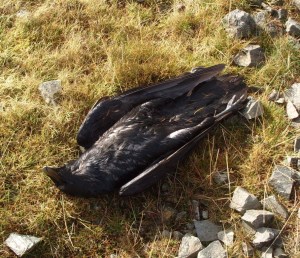
The report documents the discovery of a raven, a crow, a meat bait and two rabbit baits. The incident is categorised as ‘abuse’ and the chemical involved was the acutely toxic carbamate, Bendiocarb. This discovery was made in May and the location is given as ‘Borders’. The comments section says: “This incident is the subject of an on-going police investigation”.

So where was the publicity? What if the police hadn’t found all of the baits? What if more baits had been laid out? Where was the warning to the general public of the risks involved to them, their children and their pets if they stumbled across this poison? Isn’t there a duty of care for the authorities to warn the public about toxic poisons in their area?

There’s a fascinating document called ‘Communicating with the Public about Health Risks’, produced by Health Protection Scotland in 2008 (see here). This document spells out the importance of effective communication (with the public) about hazards that pose a risk to human health and gives very detailed guidance about how to communicate information about those risks.

There’s another useful document, called ‘Management of Public Health Incidents: Guidance on the Roles and Responsibilities of NHS-led Incident Management Teams’, produced by the Scottish Government in October 2011 (see here). This document details the statutory responsibilities for managing public health incidents and it tells us that poisons are indeed classified as a public health risk under The Public Health (Scotland) Act 2008. So who is failing in their duty to inform the public about these risks?

One of these days, somebody is going to come into contact with one of these poisoned baits and they’re either going to become seriously ill or even die. What would happen if it was revealed that the police already knew about the baits in that area/location, but hadn’t made the discovery public? There would probably be an almighty cry of public and media outrage and heads would roll. And they’d deserve to roll. This recurring situation is a scandal.

When are the interests of the public, and of wildlife, going to be put above the interests of protecting the identity of these sporting estates where illegal poisoned baits have been, and continue to be, routinely found?

Crown drops case against Edradynate estate gamekeeper

The case against Edradynate Estate Head Keeper David Campbell came to a close last Friday, after the Crown deserted the case at Perth Sheriff Court.

Campbell had been facing charges related to alleged firearms and explosives offences (see here, here and here), which he had denied.

We don’t know why the Crown deserted this case. It’s not the first time that charges against an Edradynate gamekeeper have been dropped (see the RSPB’s newsletter, Legal Eagle #43, page 3 here).