Yet another dead buzzard has been found in North Dorset.
Whilst the cause of death has yet to be ascertained (presumably the carcass has been sent for post mortem), yesterday PC Rob Hammond warned the public to keep their dogs on leads to avoid the risk of them coming into contact with potential poisoned baits.
Well done to PC Hammond for putting out this timely warning. Even though poisoning has not yet been confirmed, the potential risk to the public and their dogs is high so he’s done exactly the right thing.
Dorset is fast becoming quite the hotspot for raptor persecution. I’ve been looking through some reports from the last few years and have found the following incidents of raptor persecution recorded in the county:
May 2018: Suspicious deaths of two barn owls and several more buzzards (here).
March 2020: Disturbance of nesting peregrines (here).
April 2020: Several buzzards were found dead within close proximity to each other in the Ashmore Wood area near Blandford. These birds were sent for testing and enquiries remain ongoing (here).
August 2020: Two buzzards, one dead, were found near the body of a rabbit. An owl and a further two buzzards were also found. Analysis has confirmed Brodifacoum in the buzzard which is likely to have caused the death. The second buzzard and the owl had background residues and the analysis on the rabbit was negative.
September 2020: A dead buzzard was found on a bridleway, it had been shot.
November 2020: A dead red kite and rat were found near a footpath. Analysis has confirmed Bendiocarb in the stomach contents of the red kite and in pots removed from a vehicle and a sachet in a shed, which is likely to be the cause of death. No residues were found in the rat.
February 2021: A buzzard and a red kite were found in a wooded area. Analysis has confirmed Brodifacoum in the liver of the red kite which will have contributed to its death, the levels of Brodifacoum in the buzzard are borderline and uncertain if the exposure contributed to its death.
March 2021: A multi-agency raid was carried out on a shooting estate in North Dorset. A number of dead birds of prey and several pesticides, including banned substances, were located at the premises. A firearm was also recovered (here).
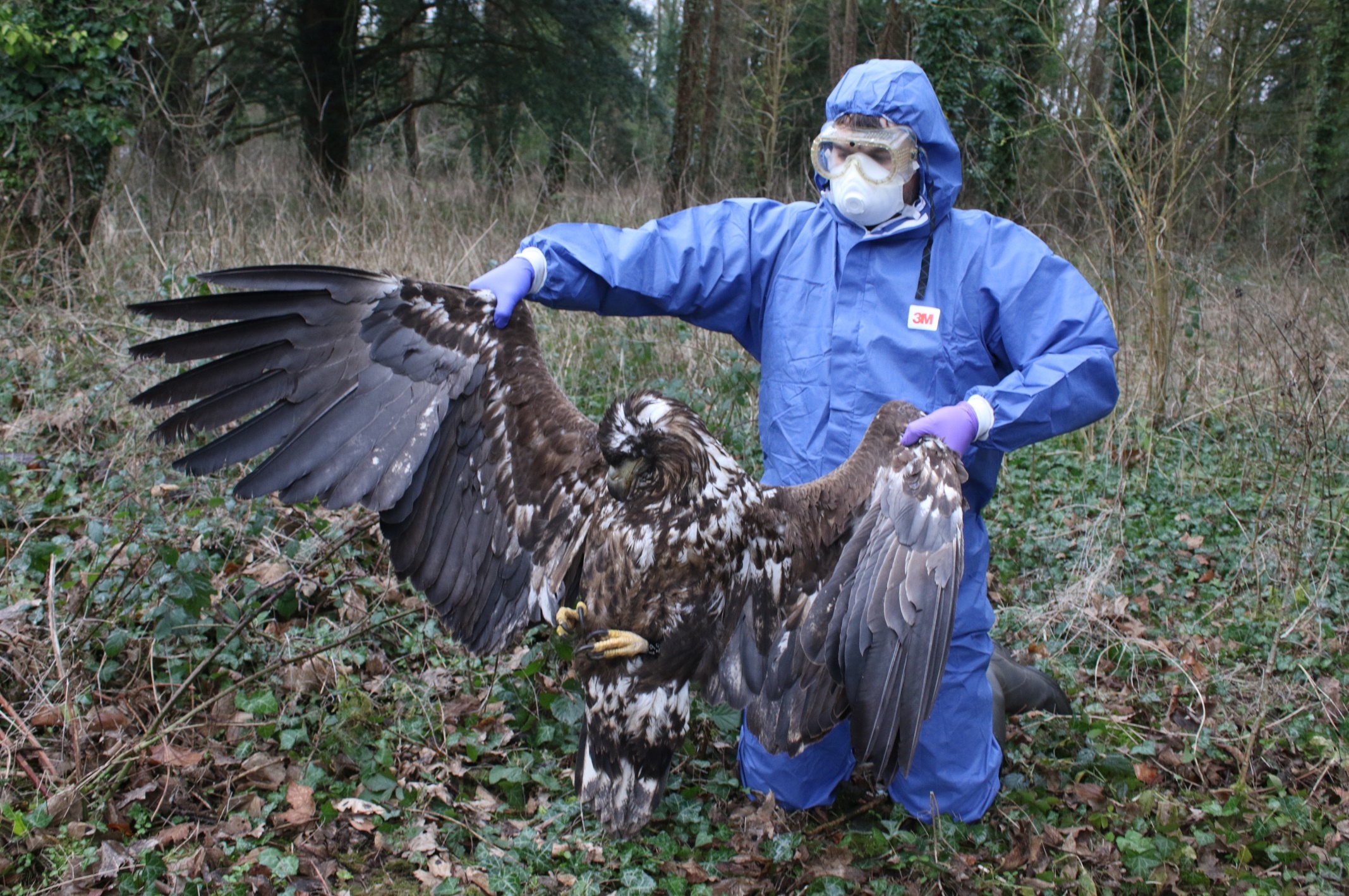
January 2022: A dead white-tailed eagle was found poisoned on a shooting estate in North Dorset. The post mortem found its liver contained 7 x lethal dose of rodenticide Brodifacoum. Inexplicably, Dorset Police closed the investigation before conducting a search (here).
February 2022: Another white-tailed eagle was suspected to have been poisoned on another shooting estate in North Dorset. This one survived (here).
February 2022: A dead buzzard and a dead red kite are found dead on a shooting estate in North Dorset, suspected poisoned. Toxicology results awaited (here).
April 2022: A dead buzzard found dead in the Ashmore area. Toxicology results awaited.
It’s even more astounding that Dorset Police shut down the poisoned eagle investigation, without conducting a search, and continue to refuse any explanation for their decision and yet still the top brass claim to be taking raptor persecution ‘seriously’, not that anyone believes them anymore.
It’s heartening then to see on-the-ground officers like PC Rob Hammond, trying to do the right thing. I wonder how long it’ll be before he’s told to drop the case and/or stop investigating wildlife crime, as has his colleague, PC Claire Dinsdale?
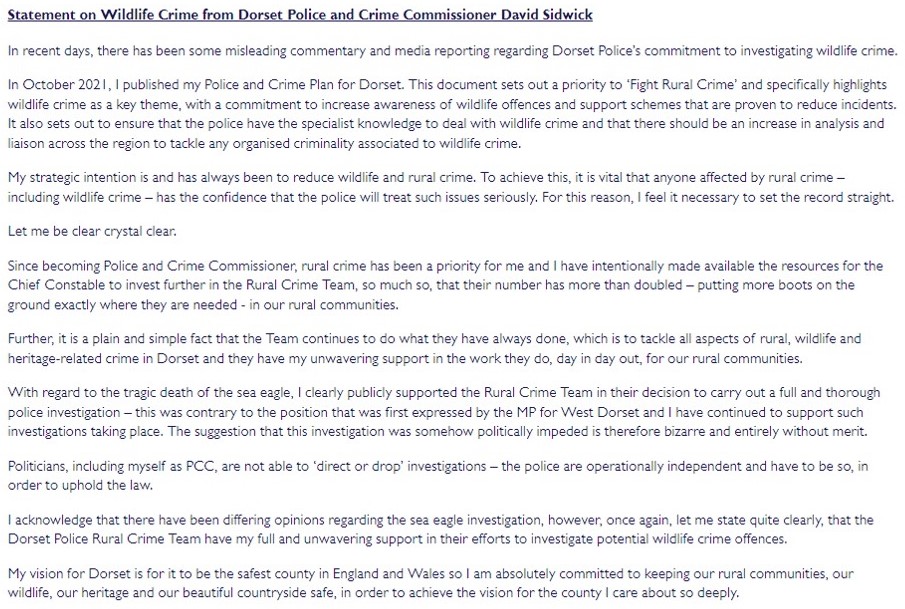
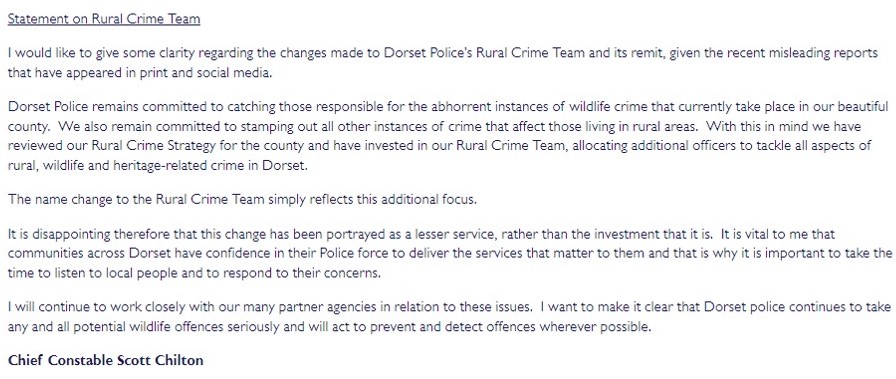
This afternoon, Dorset Police & Crime Commissioner (PCC) David Sidwick, and Dorset Police Chief Constable Scott Chilton, have both published statements in response to all the media attention brought to their doors by the failure of Dorset Police to fully investigate the circumstances of the poisoned eagle found dead on a shooting estate after it had ingested 7 x the lethal dose of a toxic rodenticide.
Here is what has appeared on the PCC’s website:
I’m sorry to say that I don’t see anything here other than a damage limitation exercise and an attempt to close down the public and media scrutiny to which both the police and the PCC’s office have been subjected (and rightly so, in my opinion).
It’s meaningless to talk about how ‘Dorset police continues to take any and allpotential wildlife offences seriously and will act to prevent and detect offenceswherever possible‘ when the investigation into the poisoned eagle was ended so abruptly and prematurely.
Why was the multi-agency search of the estate, planned for by Dorset Police’s award-winning wildlife crime officer, Claire Dinsdale, called off at the last minute? There still hasn’t been an explanation for that and neither of these two statements comes close to addressing it.
And why was that award-winning wildlife crime officer, Claire Dinsdale, removed from her post as wildlife crime lead?
And why was the word ‘wildlife’ removed from the title of the Rural Crime team if the team is still tackling wildlife crime?
There’s still more to come out in the public domain about this poisoned eagle case. Legal restrictions prevent me from publishing it right now but I’m hopeful that within a few weeks I’ll be able to do so once the wheels of justice have turned a bit further. And once this information is out, the public will be even more angry than they already are about the premature closing of the investigation. And I reckon Dorset Police know that. The PCC might not be aware of it but rest assured, he soon will be.
In February this year, I blogged about the suspicious deaths of two white-tailed eagles on two separate game-shooting estates – one in Dorset and the other one rumoured to be in West Sussex (see here).
Both eagles were from the Isle of Wight Reintroduction Project – a Government-backed five-year project bringing young sea eagles from Scotland and releasing them on the Isle of Wight to re-establish this species in part of its former range.
The dead eagle found on a shooting estate in Dorset in January has barely been out of the news since then, not least because even though a post mortem found its liver contained 7 x the lethal dose of the rodenticide Brodifacoum, Dorset Police decided to shut down the investigation prematurely for reasons which are still to be established (see here).
The eagle rumoured to have been found dead on a shooting estate in West Sussex last October (2021) has received less media attention because, inexplicably, Sussex Police have failed to make a public statement about it.
Today, I can report that this white-tailed eagle was poisoned with the banned pesticide Bendiocarb, according to a recently published laboratory report. It reads:
‘A dog died and a sea eagle and buzzard were found dead. Analysis has confirmed bendiocarb in the stomach contents of the sea eagle which is an abuse of the product. Negative analysis for the buzzard‘.
Until recently, a product containing 80% Bendiocarb was available for registered use in England (it’s been banned in Scotland since 2005 and it’s so toxic that even possession of this pesticide is considered a serious offence there). However, approval for this particular product was withdrawn in England in December 2020. Another product containing a much lower concentration of Bendiocarb (1.25%) was re-approved for use in England in 2019 but with a significant caveat – it was for indoor use only.
So unless this sea eagle broke into secure premises, opened a few sachets with its nail scissors and scoffed the contents, it seems pretty likely that a serious wildlife crime has taken place, probably including the use of poisoned bait(s) laced with Bendiocarb.
The report mentions that the buzzard tested negative for Bendiocarb poisoning but it’s interesting that no results are provided for the dog. I wonder why that is?
The immediate questions, of course, are why Sussex Police have failed, after six months, to make a statement about such a high profile criminal investigation (I assume there is an investigation, but given what’s been going on in Dorset, then who knows?) and why Sussex Police have failed to warn the public that a dangerously toxic poison is in use in a particular area where the public may have access? (The banned product containing 80% Bendiocarb can have fatal consequences for humans [adults and children] if the product is swallowed or inhaled. You can expect the same result for a pet dog).
If you’re a West Sussex resident, may I suggest you contact your MP and ask what the hell is going on? Why are you being exposed to such risk without any public warning being issued? The police are supposed to be there to protect the public, not the poisoners.
If you’re a responsible game-shooter thinking about booking to attend a pheasant or partridge shoot in West Sussex this coming season, I hope you’ll carry out due diligence and boycott any estate involved.
UPDATE 16.50hrs:The Independent has picked up on this blog and published an article (here)
UPDATE 25th May 2022: Wildlife Crime Working Group seeks (& receives) assurance from Sussex Police re: poisoned eagle investigation (here)
On 4th March I submitted a Freedom of Information request to the office of the Dorset Police & Crime Commissioner (PCC), Conservative David Sidwick, in relation to Dorset Police’s investigation into the poisoning of a white-tailed eagle that had been found dead on a shooting estate in January 2022 (see here).
I asked for copies of all correspondence relating to this matter between the PCC and (a) Dorset Police and (b) Chris Loder MP. You’ll recall that Mr Loder was the Conservative MP who took to Twitter to attack Dorset Police’s Rural, Wildlife & Heritage Crime team’s investigation into the poisoned eagle (see here and here).
By law (the Freedom of Information Act), the PCC’s office had to respond within 20 working days (by 1st April 2022) to either (a) provide the information I’d requested, (b) ask for an extension of a further 20 working days to send their response, or (c) refuse my request (and explain the legal grounds for that refusal).
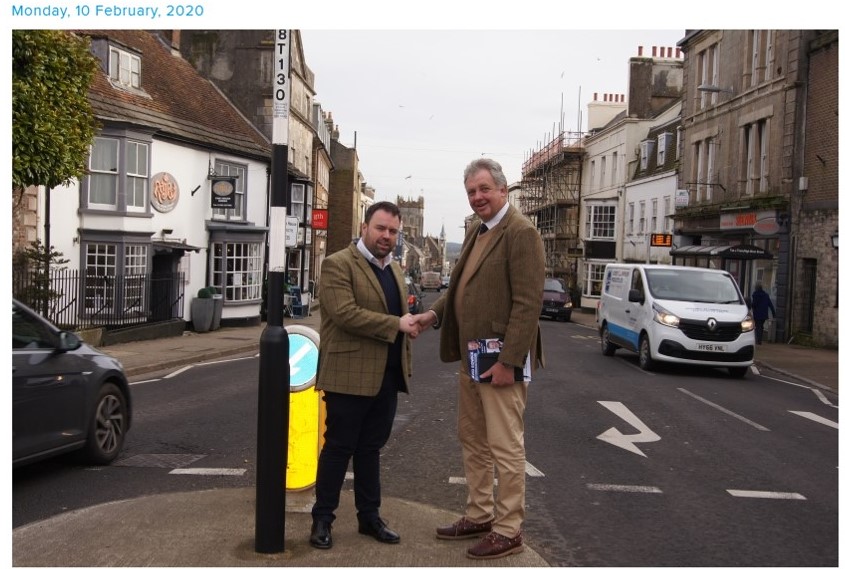
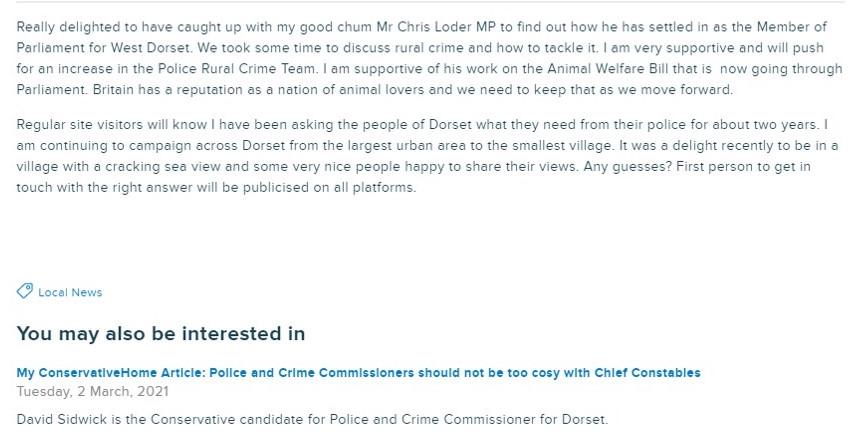
I asked for this information because David Sidwick had previously described Chris Loder MP as his ‘good chum’ in February 2020:
The FoI response from the PCC’s office did not arrive by 1st April. I gave them the benefit of the doubt and assumed it would arrive shortly afterwards.
On 7th April 2022 I wrote to the PCC’s office again, to remind them their FoI response was overdue. I just received an automated response.
On 11th April 2022 I wrote again, and again I received another automated response.
On 13th April 2022 I did receive an actual response from someone in the PPC’s office, apologising for the delay and saying:
“The response is just being pulled together and wewill come back to you asap“.
That was two weeks ago and I haven’t heard anything more. It must be a massive file. Or something.
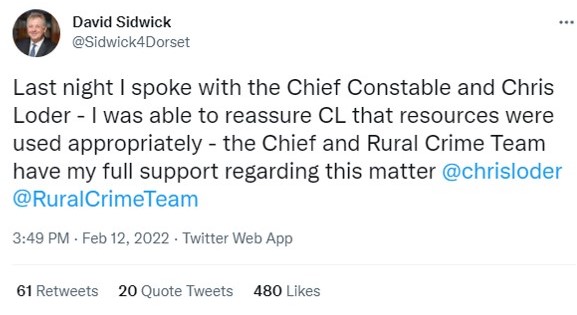
It’s been 53 days (35 working days) since I submitted my original FoI request. I know that there has definitely been communication between the PCC David Sidwick and Chris Loder MP about this issue because Mr Sidwick tweeted about it in February:
In this tweet, David Sidwick is clearly supportive of Dorset Police’s investigation into the poisoned eagle, despite his ‘good chum’ Chris Loder MP going ballistic on Twitter about ‘wasting police resources’.
A few weeks later, the police investigation was prematurely shut down, the Force’s award-winning wildlife crime officer was off on extended sick leave and is reported to have been told if/when she returns she’ll no longer be the wildlife crime lead, and the Force dropped the word ‘wildlife’ from the title of its Rural Crime team with a counter-intuitive explanation that simply doesn’t add up (i.e. “to reflect the broader work we are undertaking“). Surely if you’re increasing the scope of your work you add words to the title, not remove them?
So what went on in those few weeks between a live investigation supported by the PCC, to a complete shut-down of the case?
And why is the office of the Dorset Police & Crime Commissioner, David Sidwick, unlawfully delaying providing me with a response to my FoI request?
It could be incompetence. But it’s looking increasingly like something else, especially when Dorset Police refused my FoI request with the most ludicrous fob-off (here).
Today I emailed the PCC’s office, again, and asked them to respond to my FoI without further delay.
If Dorset Police think this issue is going away, they’d better have a re-think.
There’s a good article in The Guardian today, discussing the rebranding of Dorset Police’s Wildlife Crime Team, which now excludes the word ‘wildlife’, and the news that the team’s former, award-winning investigator, Claire Dinsdale, has apparently been told that she will no longer be a wildlife crime team lead when/if she returns from long-term sick leave.
Last week I blogged about Dorset Police’s refusal to respond to my Freedom of Information request, where I’d asked for copies of all correspondence between the Police and Dorset Conservative MP Chris Loder in relation to the poisoned eagle found dead on a shooting estate in January (see here).
Dorset Police tried to fob me off with what I consider an explanation that lacked any credibility (see here). I have since appealed that refusal notice and have asked for a review. Dorset Police are obliged to respond within a certain time period and I await their answer.
I also submitted an identical FoI request to the Dorset Police and Crime Commissioner (PCC), Conservative David Sidwick. That response is well overdue and I’ll be following that up again this week.
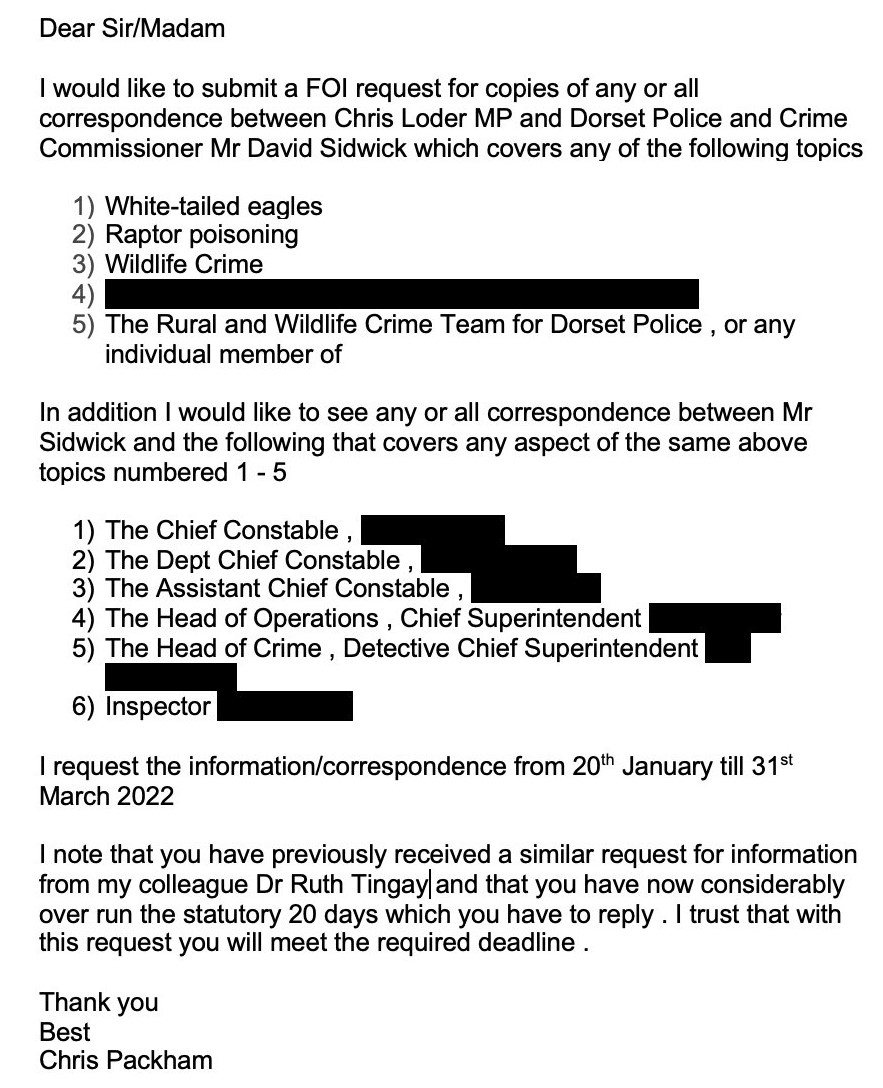
Meanwhile, this week my colleague Chris Packham has also submitted FoIs to both Dorset Police and the PCC. Chris has previously spoken out about Dorset Police’s decision to end their investigation which came shortly after Mr Loder’s Twitter outburst about how the police shouldn’t be using resources to investigate suspected wildlife crime.
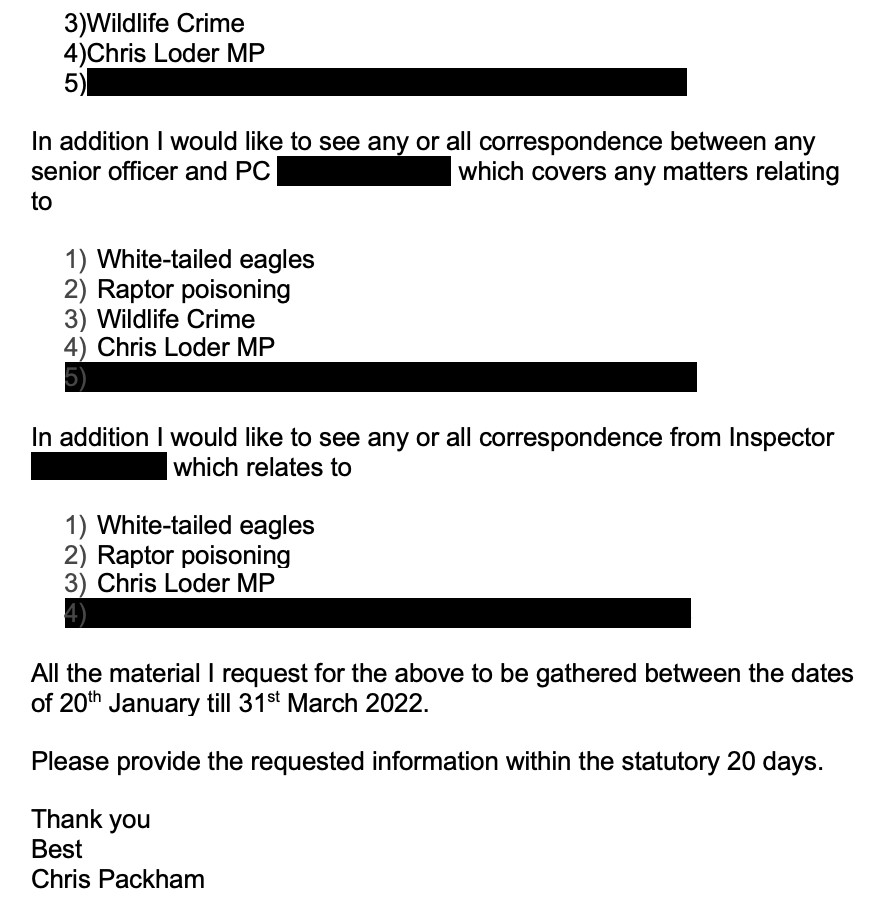
Chris’s FoIs are similar to mine but are more targeted, identifying named police officers who are likely to have been involved in the decision-making process about terminating the investigation on the poisoned eagle.
Here is a redacted copy of Chris’s FoI request to Dorset Police:
Here is a redacted copy of Chris’s FoI request to the Dorset Police and Crime Commissioner (PCC), Conservative David Sidwick:
UPDATE 25th May 2022: Dorset Police and the Dorset Police & Crime Commissioner in breach of Freedom of Information Act by failing to respond to Chris Packham’s request for info on poisoned eagle (here)
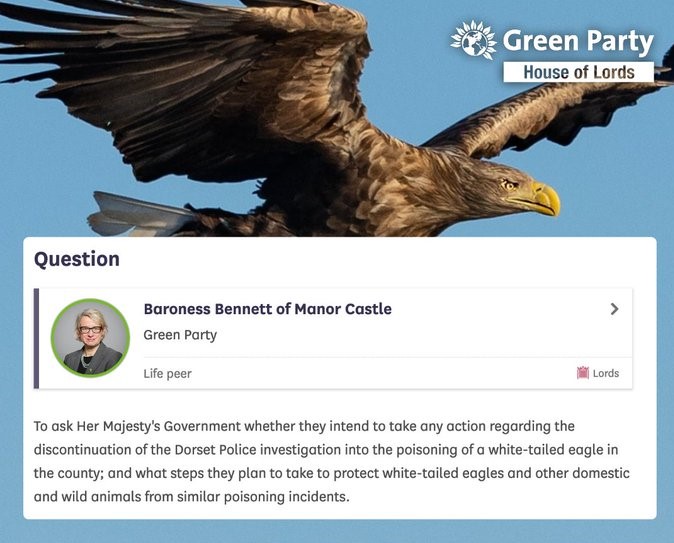
In late March, Life Peer Baroness Bennett of Manor Castle (known to many of us as the former Green Party leader Natalie Bennett) posed a written question in the House of Lords about Dorset Police’s unthinkable decision to drop its investigation into the poisoning of the white-tailed eagle that was found dead on a shooting estate in Dorset (see here).
Here is Natalie’s question:
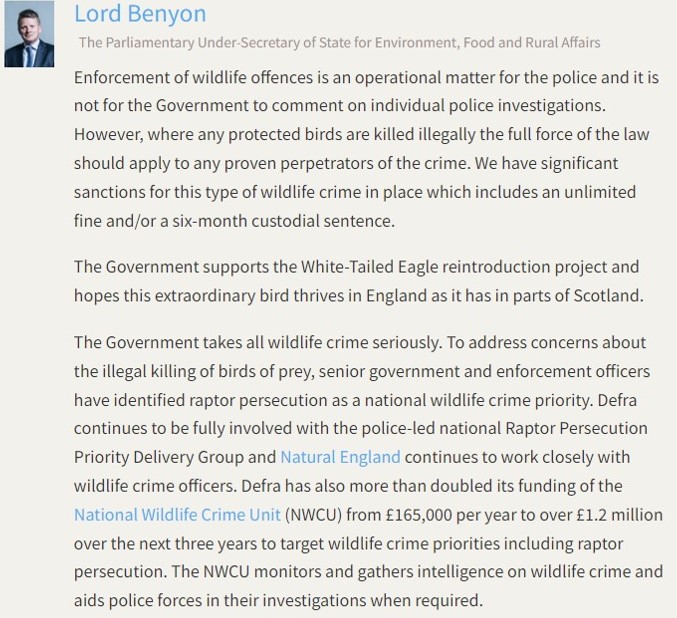
Natalie’s question has now been answered by the Parliamentary-Under-Secretary-of-State for Environment, Food and Rural Affairs, Lord Benyon, who also happens to own a pheasant-shooting estate and a grouse-shooting estate.
Here is Lord Benyon’s response:
It’s predictably tedious and is just the latest version of the same old tosh repeated every time the Government is asked to respond to ongoing raptor persecution incidents, e.g. see this from Environment Minister Rebecca Pow in September 2021, and this from Richard Benyon in February 2022, and this from Rebecca Pow in February 2022.
There’s a running theme in all of these responses that is supposed to persuade us that the Government takes raptor persecution crimes seriously. For example, by the provision of custodial sentences (that have never been applied in England to a raptor-killing criminals and only once in Scotland, in 2014), by DEFRA’s participation in the sham-partnership that is the Raptor Persecution Priority Delivery Group (RPPDG) that has been in place since 2011 and has delivered precisely nothing of any use, and by the continued funding of the National Wildlife Crime Unit (NWCU) which is supposed to ensure that regional police forces have sufficient support and expertise to undertake investigations into alleged raptor persecution crimes – clearly ineffective when it comes to Dorset Police.
It’s obvious to anyone who cares to look that the raptor-killing criminals continue to stick up two fingers to the law, time after time after time after time, and yet still the Government pretends it’s all under control. Meanwhile, inept police forces like Dorset can make stupendously stupid /suspiciously dodgy-looking decisions and not be held to account.
A journalist from one of the nationals contacted me to ask my opinion on a statement he’d been sent by Dorset Police about the premature closure of the investigation into the poisoned white-tailed eagle found dead on a shooting estate in North Dorset in January (see here).
You may recall that Dorset Police published a short public statement on 29th March 2022:
The latest police statement sent to the journalist reads as follows:
Deputy Chief Constable Sam de Reya, of Dorset Police, said: “Dorset Police has responded robustly to allegations that a White-tailed Sea Eagle had been deliberately poisoned and killed by unknown persons. As a result of the sea eagle being found dead on land in the North Dorset area, our team has carried out a full and proportionate investigation under Section 1 of the Wildlife Countryside Act 1981 in conjunction with Natural England, National Wildlife Crime Unit, the RSPB and the Roy Dennis Wildlife Foundation to identify any offences and perpetrators who may be responsible.
“As you can imagine detecting the deliberate poisoning of a bird of prey is extremely difficult without local intelligence and information to support the investigation. GPS data provided information that over an 11-day period the White-tailed Sea Eagle spent time across a multitude of locations in the North Dorset area. Despite working with experts, we have been unable to confirm deliberate intent to kill this beautiful bird or identify potential offenders. A detailed examination and tests have been carried out on the bird, which were inconclusive, and it has therefore not been possible to confirm that any criminal offence has been committed. While high levels of brodifacoum were detected, it has not been possible to establish whether this was as a result of a deliberate act or due to secondary rodenticide poisoning. We would still encourage anyone with new information to come forward to support enquiries.
“The Force is committed to keeping everyone in our county safe, including our wildlife, which brings so much to our beautiful countryside and our communities. As part of the police uplift programme and working together with the Office of the Police and Crime Commissioner we have reviewed our Rural Crime Strategy for the county and allocated increased numbers of officers to the Rural Crime Team to tackle the issues that matter. This includes all aspects of rural, wildlife and heritage-related crime. We will continue to work closely with many different partner agencies in relation to these issues. As always, should any new information be received in relation to this investigation, this will be considered.
“We want to make it clear that we take any and all potential wildlife offences seriously and will act to prevent and detect offences wherever possible.”
As you can see, this statement provides a bit more detail than the first, but nevertheless, it’s still full of holes.
I don’t know how they can claim to have ‘carried out a full and proportionate investigation‘ when the planned multi-agency search of the estate where the poisoned eagle had been found dead was pulled shortly after Dorset MP Chris Loder had tweeted his lack of support for the investigation.
Dorset Police say that ‘detecting the deliberate poisoning of a bird of prey is extremely difficult without local intelligence and information‘. Yes, it is difficult but not impossible, and in this case Dorset Police have plenty of local intelligence and information, not least from on-going investigations into alleged raptor poisoning in the same area over the last few years.
Dorset Police say the poisoned eagle’s satellite tag data showed that in the 11 days prior to its death, the eagle had ‘spent time across a multitude of locations in the North Dorset area‘. What the tag data actually showed was that the eagle had visited just 2-3 locations.
Dorset Police say, ‘We have been unable to confirm deliberate intent to kill this beautiful bird or identify potential offenders‘. The high-level of Brodifacoum (x 7 the lethal dose!) is indicative of an illegal act, whether it was mis-used or targeted. And no, if you don’t conduct a search you’re not likely to be able to identify potential offenders, are you!
Dorset Police say, ‘A detailed examination and tests have been carried out on the bird, which were inconclusive…’. That’s simply not true. The eagle clearly died from Brodifacoum poisoning.
Dorset Police say, ‘While high levels of brodifacoum were detected, it has not been possible to establish whether this was as a result of a deliberate act or due to secondary rodenticide poisoning‘. It doesn’t matter if it was deliberate or not, it’s still an offence (mis-use).
Last month, Dorset Police did the unthinkable and prematurely closed their investigation into the poisoning of a white-tailed eagle that was found dead on an undisclosed shooting estate in North Dorset in January 2022 (see here).
This was an astonishing decision for a number of reasons (e.g. see here), not least because prior to this incident, Dorset Police’s Rural & Wildlife Crime Team enjoyed a good reputation for it’s proactive stance in the investigation of raptor persecution crimes, and indeed the team had been preparing to conduct a multi-agency search of the estate where this dead eagle had been found, until the head honchos at Dorset Police decided to pull the plug.
It’s even more surprising when you learn what other police investigations into alleged wildlife crime have taken place on that unnamed estate – more on that soon.
Dorset Police’s decision to close the investigation came soon after an extraordinary outburst from local MP Chris Loder, who had argued on Twitter that Dorset ‘wasn’t the place for eagles’ and that Dorset Police should be focusing their resources on other types of criminality (see here) and not on suspected wildlife crime. And it wasn’t an off-the-cuff remark made in haste; he continued his tirade for sometime afterwards (e.g. see here). A quick look at Chris Loder’s Register of Interests on the Parliamentary website showed that his local Conservative party had received large donations from at least one shooting estate in North Dorset.
Unsurprisingly, there was widespread suspicion that Dorset Police’s decision to close the poisoned eagle investigation had been influenced by undue political interference so I submitted two Freedom of Information requests to find out if there was any evidence to support that suspicion. One FoI request was submitted to Dorset Police and the other to the Dorset Police & Crime Commissioner.
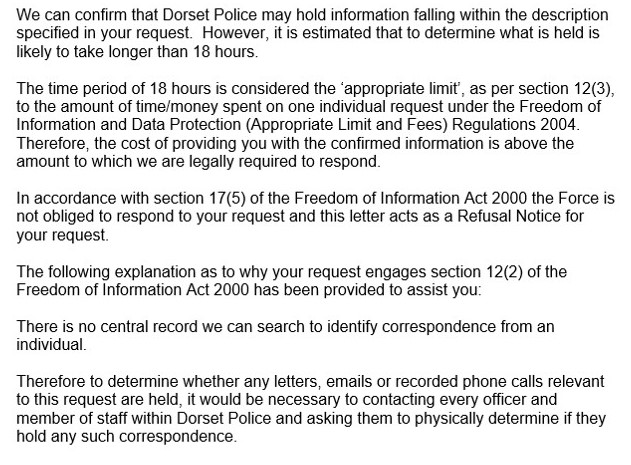
Dorset Police have since attempted to fob me off with this idiotic response:
Obviously, I have requested a review of Dorset Police’s Refusal Notice. I don’t accept the likelihood that an MP might have written to any one of 2,500 Dorset Police employees about this poisoned eagle. That would include those employed as call handlers, personal safety trainers, crime analysts, enquiry officers, IT consultants, project managers, administrations staff, mechanics, accountants, lawyers, to name just a few.
It’s common sense that an MP interested in the investigation of a poisoned eagle would be more likely to have corresponded with senior officers responsible for the supervision of the Force’s Rural & Wildlife Crime Team, and that probably means a handful of officers, let’s say ten, max (and that’s being generous). So Dorset Police can probably strike 2,490 people from their search, leaving ten people to spend two minutes searching their inboxes, amounting to 20 minutes of total search time, well within the statutory 18 hours of search time permitted for a Freedom of Information request.
I’ve also pointed out to Dorset Police’s Freedom of Information Officer that MPs are not classed as public authorities under the Freedom of Information Act so advising me to submit an FoI to Chris Loder MP was non-sensical, although surely an FoI Officer would already know this?!
I’ll blog about the outcome of my review request in due course.
As mentioned above, I’d originally submitted two FoI requests. My second one was an identical request for information about correspondence between Chris Loder MP and the Dorset Police and Crime Commissioner (PCC), Conservative David Sidwick.
Initially I received an automated response from the PCC office confirming receipt of my request. Then it all went quiet. I have since emailed two further times to highlight that their response is overdue (they’re allowed 20 working days). Yesterday I finally had a response, apologising for the delay and saying:
“The response is just being pulled together and wewill come back to you asap“.
I’ll blog about that response when it finally arrives.
UPDATE 21st April 2022: Chris Packham submits FoI requests to Dorset Police and the Crime Commissioner about poisoned eagle (here)
UPDATE 26th April 2022: The office of the Dorset Police & Crime Commissioner: incompetent or something more sinister? (here)
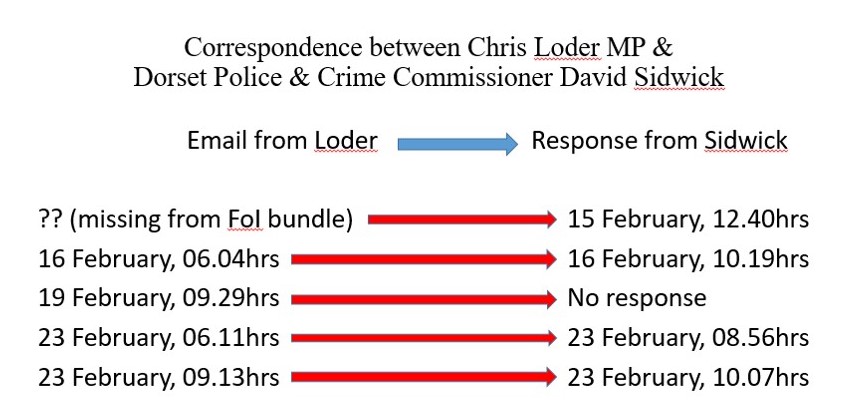
UPDATE 29th April 2022: Email correspondence between Chris Loder MP and Dorset Police & Crime Commissioner re: poisoned eagle (here)
UPDATE 25th May 2022: Dorset Police and the Dorset Police & Crime Commissioner in breach of Freedom of Information Act by failing to respond to Chris Packham’s request for info on poisoned eagle (here)
UPDATE 26th May 2022: Further breach of Freedom of Information Act by Dorset Police re: poisoned eagle (here)
Given the furore over SNP MP Angus MacNeil’s call for a cull of white-tailed eagles in Scotland (see here), here’s a timely press release from the charity Birds of Poole Harbour:
Reintroduction programmes working: historic osprey & white-tailed eagle projects bring education and eco-tourism opportunities to the south of England
The recent arrival of a pair of Ospreys and several White-tailed Eagles into Dorset – specifically Poole Harbour – has seen new, exciting environmental education and eco-tourism opportunities arise which are set to benefit schools and the local economy.
Ospreys, which haven’t bred in Southern Britain for nearly 200 years, are on the brink of returning thanks to a reintroduction program which began in Poole Harbour in 2017. Whilst White-tailed Eagles, which haven’t bred in England for over 250 years, began regularly appearing in Poole Harbour in September last year with a young male called G461 who began exploring and making the harbour his home. The eagles, which have an 8ft wingspan, originated from the Isle of Wight reintroduction programme that’s being hosted by The Roy Dennis Wildlife Foundation and Forestry England.
The Poole Harbour Osprey reintroduction programme, which is being carried out by local charity Birds of Poole Harbour and The Roy Dennis Wildlife Foundation, received a boost this week when a male and female Osprey arrived back safely on their migration from West Africa and settled on a nest platform at a secret location in the area. The pair known as CJ7 and 022 first met last summer, although the male was too young to breed. However, they’ve now both retuned early enough meaning there’s a good chance the pair will attempt to breed this summer, which will be a historic moment for Dorset and southern Britain.
[Ospreys CJ7 (female) and 022 (male) on a nest platform in Poole Harbour, April 2022. Photo by Birds of Poole Harbour]
During the latter months of 2021, a male White-tailed Eagle known as G461 spent his days touring the harbour, being seen regularly at sites like RSPB Arne, Brownsea Island and from public bird boat tours. Local school Longfleet Primary also had a special encounter, whilst taking part in the School Bird Boat project, an initiative run by the Birds of Poole Harbour charity when they saw the massive lumbering giant over the Brownsea Lagoon, providing a nature experience never to forget.
[White-tailed eagle on Brownsea Lagoon with Poole Quay in the background. Photo by Alison Copland]
As a result of the reintroductions of both White-tailed Eagles and Ospreys in southern Britain, it’s predicted that both species will establish breeding populations on the south coast over the coming years, which will not only help re-establish the species across their native range, but bring significant economic benefits too.
A recent study called the “The Economic Impact of White-Tailed Eagles on the Isle of Mull”, published by RSPB Scotland, has revealed the scale of the economic benefits that White-tailed Eagles have in that area. Tourism inspired by these majestic birds of prey accounts for between £4.9 million and £8 million of spend every year on Mull with the money supporting between 98 and 160 full time jobs on the island, and between £2.1 million and £3.5 million of local income annually. It’s hoped that the South Coast will benefit in a similar way, with evidence already emerging that the eagles are beginning to have a positive impact in the area.
In recent weeks several other White-tailed Eagles have found their way into Poole Harbour, including two regularly visiting females known as G801 and G318. Their presence has seen excitement build even more with visits to nature reserves and bird boat bookings increasing as a result.
There are also now plans through different initiatives to use the eagle’s and Osprey’s presence as a platform to engage local schools in educating students about the process of nature recovery, reintroductions and restoration. Live webcams have been installed on several of the Osprey nests so schools and members of the public can hopefully watch this historical moment.
Paul Morton from the Birds of Poole Harbour charity stated:
“It’s been a fascinating last 6 months. Never in our wildest dreams did we ever think we’d regularly be seeing White-tailed Eagles in Poole Harbour, but here we are, thanks to the hard work and persistence of multiple teams, that dream has become a reality. Also, to now have a pair of Osprey back in the harbour looking to set up territory is a perfect scenario.
One of the highlights of my career was the school bird boat last year when we saw male eagle G461 with Longfleet School. It was a really significant moment as it highlighted how far we’ve come as a society in our understanding, acceptance and knowledge in taking on ‘big’ projects like this. It’s not just eagles either. We’re of course currently carrying out our Osprey reintroduction right here in Poole Harbour, another species that hasn’t bred here for nearly 200 years due to human persecution, and with both ‘CJ7 and 022’ now safely back, we’re on the brink of seeing them back where they should be.
We’ve seen a real increased desire from the public to learn about and experience these reintroduction stories. On our Spring Safari Cruises recently we’ve been seeing the female White-tailed Eagles from the boat and most recently displaying Osprey too. It’s just magical. It was without doubt one of the most incredible moments of my career. To witness and share these moments with like-minded people was truly special, as it symbolised hope, progress and willingness to make things better. It was a hugely positive experience, something we all need at the moment”.
The Poole Harbour Osprey reintroduction has also shown the positive economic impacts these kinds of projects have on an area with the Birds of Poole Harbour charity seeing an increase in the number Osprey boat tours they’re now hosting each year. When the reintroduction project started in 2017 they hosted just three boat tours, however, this coming August and early September they’re hosting thirty. The team have now also begun twice weekly tours to cater for the demand in interest.
[Eager members of the public have been flocking on to the Birds of Poole Harbour ‘bird boat tours’ to have a guided view of the ospreys, eagles and other wildlife. Photo by Ruth Tingay]
[Tim Mackrill from the Roy Dennis Wildlife Foundation and Paul Morton from the charity Birds of Poole Harbour giving a running commentary on one of the guided ‘bird boat’ trips. Photo by Ruth Tingay]
It’s not all good news as sadly, the male eagle G461 was recently found dead on a private estate in North Dorset having been confirmed by Dorset Police to have ingested high levels of a rat poison called Brodifacoum. Conservationists involved in the project have seen this a tragic loss, but are committed to persevering and completing the reintroduction despite this set back. This wasn’t only devastating for the team carrying out the project, but also the school children that saw him on their school trip and the members of the public who watched in awe as he made his way around the harbour in late 2021.
To help protect any current or future nesting attempts of Osprey in Poole Harbour, the Dorset Wildlife Crime Team have committed to supporting and advising on keeping the birds safe from disturbance.
Paul Morton added: “It’s a really fascinating time for nature conservation. There will always be challenges and the death of the male sea eagle won’t be forgotten, but it’s through close, collaborative partnership working, including with Dorset Police, that we can all make things better. For example, in 2016 we discovered there was a mass-illegal collection of gull eggs from Poole Harbour’s Black-headed and Mediterranean Gull colony. As soon as we found out we contacted Dorset Police who played pivotal role in getting the issue stopped with regular harbour patrols and liaising with us. It was so successful that the story made the national news and even featured on BBC’s Countryfile. Dorset Police have also been hugely supportive in regards to any immediate or future nesting attempts of our Ospreys making sure any nests get the best protection they can. It’s these types of partnerships and positive approaches to tackling these issues which will ultimately see success”.
Birds of Poole Harbour has said they’re committed to making sure that the pupils exciting experience last year doesn’t end on a negative, and are keen the children understand efforts are being made to look after the remaining eagles that are currently exploring the UK. With other White-tailed Eagles from the reintroduction program now beginning to visit Poole Harbour, more opportunities will be arise to see these awe-inspiring birds of prey in a wild setting.
Tim Mackrill from the Roy Dennis Wildlife Foundation explained:
“When we heard last year that the school children had seen the sea eagle from their boat trip it was really exciting because we know that experiences like that can ignite a real passion for natural history and conservation. The fact that other White-tailed Eagles are now visiting the harbour on a regular basis is an extremely encouraging sign for the future and shows what a superb place Poole Harbour is for these amazing birds. I hope that many more people, of all ages, will be able to enjoy the thrill of seeing them here and in other locations along the South Coast for many years to come”.
ENDS
The live webcam which will hopefully document the first breeding pair of ospreys in southern England in nearly 200 years can be viewed here:
HUGE congratulations to the conservationists who have spent years working on the osprey reintroduction project, particularly Roy Dennis, Tim Mackrill, Paul Morton, Brittany Maxted, Liv Cooper and Lucy Allen. They’ve had a long slog, including plenty of heartbreak, but hopefully this will be the year where their efforts finally pay off.
I have to say I’m totally unconvinced by Dorset Police’s ‘commitment to supporting and advising on keeping the birds safe from disturbance‘ after their appalling failure to conduct a proper investigation into the poisoning of a white-tailed eagle on a shooting estate in Dorset (here). Really, don’t bother.
If anyone is interested in booking on to one of the Birds of Poole Harbour Osprey Cruises in August (which I thoroughly recommend), you’ll find booking information here.