Wheelhouse responds to latest raptor killings….by doing nothing

Paul-Wheelhouse-MSP Earlier today we blogged about the latest poisoning victim to have been uncovered in Scotland….a dead buzzard that was found in Fife in April (see here).

This evening, Environment Minister Paul Wheelhouse has issued the following statement:

I have been hugely angered to learn about another case of a poisoned buzzard following on from a separate incident involving the illegal death of a hen harrier in Ayrshire. I have made it very clear that I will not tolerate these criminal and selfish acts and this form of criminality has also been roundly condemned by parliament in a recent debate.

These crimes are not the actions of people who value Scotland’s wildlife and natural environment and I encourage anyone with any information on these despicable crimes to contact Police Scotland on 101.

My officials are working on a pesticide disposal scheme to rid illegal substances from our countryside and I hope to see this up and running very soon while the implementation of changes to the General Licences is in the process of implementation.

Our ongoing review of wildlife crime penalties is due by December and these latest incidents only add to the evidence supporting a toughening of sanctions and penalties on perpetrators.

We don’t doubt that he’s “hugely angered” – we all are – but we most certainly do question his commitment to taking meaningful action against the raptor killers.

A year ago, give or take a few days, the Minister introduced a series of what he described as ‘further measures’ to combat raptor persecution (see here). Since then, not one of these measures has yet been fully implemented. Also since then, we’ve seen examples, over and over again, of how these crimes are still taking place right across Scotland. Here are some of them:

June 2013: Shot buzzard in the Borders (see here), later revealed to also have been poisoned (see here)

July 2013:  Buzzard shot in the throat in North Ayrshire (see here)

August 2013: Red kite found shot at Leadhills (see here)

September 2013: Poisoned buzzard found in Stirlingshire (see here)

October 2013: Langholm hen harrier ‘Blue’ disappears (see here)

October 2013: Half-made raptor trap discovered in Angus (see here)

December 2013: Buzzard died of ‘unnatural causes’ near Tomatin (see here) [we now know it had been shot]

December 2013: Golden eagle ‘Fearnan’ found poisoned on Angus grouse moor (see here)

January 2014: Man reported for hen harrier death in Aberdeenshire (see here)

January 2014: Dead bird (species unknown) & suspected poisoned bait found in South Lanarkshire (see here)

February 2014: Poisoned peregrine found near Leadhills (see here)

March 2014: 22 poisoned raptors (16 red kites + 6 buzzards) found in Ross-shire (see here)

April 2014: Man arrested for alleged attempted raptor trapping in Aberdeenshire (see here)

April 2014: ‘Illegally-killed’ peregrine found near Stirling (see here) [we now know it had been shot]

April 2014: East Scotland sea eagle chick ‘disappears’ on Aberdeenshire grouse moor (see here)

April 2014: Gamekeeper charged for allegedly shooting, bludgeoning & stamping on buzzard in Dumfries (see here)

April 2014: Poisoned buzzard found in Fife (see here)

June 2014: Allegations emerge of ‘coordinated hunt & shooting’ of a hen harrier in Aberdeenshire last year (see here)

June 2014: Hen harrier died “as result of criminal act” near Muirkirk (see here)

These are just the ones that have been made public – we expect there to be a number of others that have not yet been revealed to the public.

Each time, we’ve asked Wheelhouse to act. Each time, he’s told us we need to ‘wait’ for the new measures to take effect but he has adamantly refused to give a time-frame of how long that wait should be. It’s crystal clear, even to a child, that The Untouchables are out of control and waiting for them to stop of their own accord is ridiculous.

The Minister’s response this evening is simply not good enough. A ‘poisoning amnesty’? It sounds good, but the truth is it’s been done before and with no effect. Carbofuran has been banned since 2001 – that’s 13 years ago! Does he really think that these disgusting poisoners are going to hand over their private stashes of poison when they know full well they can continue to use them without fear of consequence? The whole industry denies that poisoning is even happening!

We think the amnesty is being implemented so the Government can be seen to be doing ‘something’ but actually it’s just a bit of cynical window dressing in an attempt to delay taking the proper action that is needed. It’s just another excuse to do nothing.

And actually, this amnesty hasn’t been announced as a reaction to the recently-reported killing of the buzzard and the hen harrier. He announced his intention to launch an amnesty in his speech at the Police Wildlife Crime Conference several months ago. So what has he actually announced in response to the poisoned buzzard and the illegally-killed (probably shot) hen harrier? Absolutely nothing.

The Minister says he “won’t tolerate these criminal and selfish acts“. Sorry, Minister, but that is exactly what you’re doing.

If you feel strongly about this and agree that this government is still failing to address the widespread persecution of protected raptor species, we’d encourage you to email Mr Wheelhouse, cite the list of crimes (above) and demand he takes meaningful action or resign his position as Environment Minister. Email: ministerforenvironment@scotland.gsi.gov.uk

Sea eagle poisoned in Northern Ireland: police appeal for info one year later!

Last week, at the end of May 2014, the Police Service of Northern Ireland issued a vague press release calling for information about the discovery of a poisoned white-tailed eagle in the Armoy area of Northern Ireland. Toxicology results revealed the bird had been killed by the banned poison, Carbofuran.

The thing is, this bird was discovered in April 2013 – over a year ago – and yet this is the first time the PSNI have published anything about it.

Here’s what their press release said:

“Police are investigating the circumstances surrounding the death of a sea eagle.

During April 2013 police received a report from a member of the public regarding a dead sea eagle found within the Armoy area.

Subsequent toxicology reports confirmed Carbofuran poisoning to be the cause of death.

Carbofuran is a banned substance which is highly toxic and poses a serious risk to public health and safety.

Police are appealing to anyone with information in relation to this incident to contact them on the new non-emergency number 101″.

It’s not known if this was an adult or a juvenile bird, or whether it was from the Kerry reintroduction project in SW Ireland or whether it was a Scottish bird.

It’s also not known whether this appalling delay was due to the toxicology lab, or whether it was due to the police, or both. It’s not the first time that such chronically long delays have occurred here – see here and here for previous blogs. Whichever agency is responsible, it’s shocking that it has has taken over a year for an appeal for information.

It’s worth asking some questions about this. Let’s email the following people to ask about why it has taken so long to (a) appeal for information about this crime, and (b) warn the public in the Armoy area of Northern Ireland about the serious risk of a banned and highly toxic poison lying around in the countryside:

Environment Minister Mark H. Durkan (who incidentally has recently pledged improved action against wildlife crime – see here). His email address: doe.iemonitoring@doeni.gov.uk

Minister for Agriculture Michelle O’Neill (who is directly responsible for overseeing the process of toxicology sampling). Her email address: private.office@dardni.gov.uk

The local police office of the Armoy area: NPTBallycastle@psni.pnn.police.uk

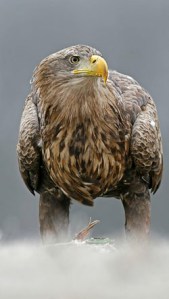
Photo of a white-tailed eagle by Mike Watson


Sea eagle killed at Scottish windfarm, but persecution remains greatest threat

The inevitable has finally happened; a Scottish windfarm has claimed its first reported eagle victim – a young sea eagle known as ‘Red T’.

Red T was released in 2011 as part of the East Scotland Sea Eagle Reintroduction Project – he was one of a cohort of young birds donated by Norway between 2007-2011 to form a nucleus breeding population for the species’ recovery in eastern Scotland.

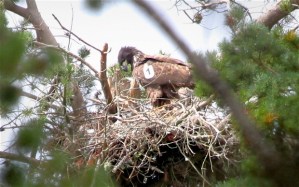
His body was discovered in February this year at Burnfoot Hill windfarm in the Ochil hills (see photo). A post-mortem concluded that the likely cause of death was collision with a wind turbine (see here for a report by Rob Edwards and here for the RSPB’s East Scotland Sea Eagle project blog).

This tragic event wasn’t wholly unexpected. Windfarms and eagles don’t mix, especially when the turbines have been sited in a high-density eagle area (e.g. Smola island, in Norway – see here). To date, Scotland’s 150+ windfarms haven’t caused such a catastrophic impact as those in places such as Smola, although other victims have been recorded here, including hen harriers and red kites. Red T is the first known recorded eagle to have been killed by a turbine collision in Scotland, and he probably won’t be the last.

However, it’s important to keep Red T’s death in perspective. Windfarms have been around in Scotland for nearly twenty years and yet this is the first reported eagle death. In contrast, since 1989, at least 63 eagles (golden & white-tailed) have been reported as victims of illegal persecution according to RSPB data, and these are just the known victims – there are likely to have been many more. There is compelling scientific evidence that persecution is having a population-level impact on some species, especially golden eagles. This persecution is particularly associated with land managed as driven grouse moors in the central, eastern and southern uplands. These driven grouse moors tend to be situated on large privately-owned estates. The Land Reform Review Group this week published an interesting report which considers the future of these massive sporting estates – have a read of land reform campaigner Andy Wightman’s blog here for his perspective and the amusing responses of various land-use groups including SLE and the SGA.

White-tailed eagles hatch in Irish Republic again

WTE iRELAND 2013 Co Clare Allan MeeSome good news for a change….

For the second year running, white-tailed eagle chicks have hatched successfully at the Mountshannon nest in Co. Clare, as well as at a nest in west Cork in the Irish Republic.

The chick in the Mountshannon nest is the sibling of last year’s chick (see photo by Allan Mee), which was one of the first white-tailed eagles to fledge in Ireland in over 100 years, only to be shot and killed nine months later (see here).

These eagles have been reintroduced to Ireland following their extinction in the early 20th Century thanks to human persecution. Between 2007-2011, one hundred young eagles, donated by Norway, were released into Killarney National Park. The reintroduction project has been managed by the Golden Eagle Trust, who have published the following press statement about this year’s breeding success:

The first white-tailed eagle chicks of the year have been hatched in Co Clare and west Cork in recent weeks, it was announced today.

The rare birds were born in nests at Mountshannon, Co Clare and Glengarriff in west Cork, according to the Golden Eagle Trust which runs the reintroduction programme .

The chick born in Mountshannon is a sibling of a bird which was shot and killed three months ago. The deceased bird was one of two chicks born to the Mountshannon pair last year which became the first chicks to fly from a nest in Ireland in over a century. The crime is under investigation by the Garda.

The chick born in Glengarriff, the first of the year to hatch, unfortunately died at two weeks old. This was likely due to a combination of bad weather and inexperienced adults, Golden Eagle Trust project manager Dr Alan Mee said.

Nesting pairs at sites in Kerry and Galway have also laid eggs which have yet to hatch. At least half of the fourteen pairs of eagles across four counties have nested and laid eggs in recent weeks. Some pairs, including a nest in Killarney National Park, failed to breed.

These are the latest chicks in the reintroduction programme which began in 2007 with the release of 100 young Norwegian eagles in Killarney National Park .

Minister for Arts, Heritage and the Gaeltacht Jimmy Deenihandescribed it as “A very promising development after the shocking killing earlier this year. That was a dark day for this ambitious project to reintroduce these magnificent birds of prey into Ireland,” he said. “I hope these young eagles will have a long life in our skies,” he said.

The pair at Mountshannon gives the general public a chance to see some of the most spectacular birds at close quarters.

Dr Mee warned about risks of disturbance during the early stages of nesting which would be detrimental to success and could result in chicks being left unguarded. “We would caution people not to approach the nest area but instead avail of the unique opportunity to watch from nearby Mountshannon pier,” he said.

He continued: “The increase in the number of nesting pairs is encouraging and bodes well for the future of the species. White-tailed eagles can live for 25 to 30 years and generally mate for life. Ultimately the viability of the reintroduced programme depends on these chicks going on to breed themselves in Ireland. Each step brings us closer to that goal”.

The reintroduced birds came from Norway and the Norwegian Ambassador to Ireland, Roald Naess, also welcomed the news: “This is an excellent example of international cooperation on the practical level, aiming at preserving nature and biodiversity for the benefit of future generations”.

The white-tailed eagle reintroduction project is managed by the Golden Eagle Trust with the National Parks and Wildlife Service. One hundred white-tailed eagles were released in Killarney National, park between 2007 and 2011 and 29 have been recovered dead, mainly due to illegal poisoning.

The birds were historically a part of the Irish landscape before being made extinct in the early 20th century due to human persecution.

Well done to all involved in this historic conservation effort and best of luck to this year’s young pioneering birds. Let’s hope the sea eagle reintroduction project in East Scotland has equal success and that any chicks that manage to fledge here are able to survive for longer than last year’s bird, which un-mysteriously disappeared on a grouse moor in the North East Glens last month (see here).

Peregrine shot in Devon as this year’s tally continues to rise

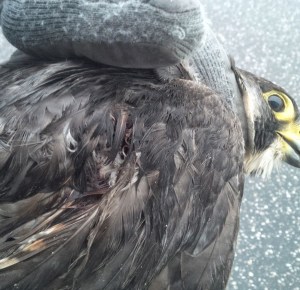
Perg shot seaton Devon May 2014A critically-injured peregrine was found at Seaton Beach in Devon on Bank Holiday Monday. The bird, soaked and unable to fly, was found by members of the public.

It was taken to a vets but had to be euthanized. Its injuries were consistent with a gunshot wound.

The police quickly issued an appeal for information (see here) and local birder Steve Waite has written about the incident on his blog (see here).

So here we are, another month, another reported raptor persecution crime to add to the year’s growing death toll:

Jan 2014: Shot buzzard, Norfolk.

Jan 2014: Dead bird (species unknown) & poisoned bait, South Lanarkshire.

Feb 2014: Shot buzzard, North Yorkshire.

Feb 2014: Shot buzzard, Norfolk.

Feb 2014: Shot sparrowhawk, Norfolk.

Feb 2014: Spring-trapped buzzard, West Yorkshire.

Feb 2014: Poisoned peregrine, South Lanarkshire.

Mar 2014: Shot peregrine, Dorset.

Mar-April 2014: Poisoned red kites (x 16) & buzzards (x 6), Ross-shire.

April 2014: Man arrested for alleged attempted raptor trapping, Aberdeenshire.

April 2014: Shot buzzard, North Yorkshire.

April 2014: Shot red kite, Northamptonshire.

April 2014: White-tailed eagle ‘disappears’ in suspicious circumstances, Aberdeenshire.

April 2014: Peregrine ‘illegally killed’, Stirlingshire.

May 2014: Shot peregrine, Devon.

Meanwhile, over in Northern Ireland a wildlife crime summit has learned that 90 raptors have been found poisoned there since 2006 – see here.

NFUS publishes its proposed sea eagle action plan

Back in January this year we blogged about how the National Farmers Union Scotland (NFUS) was calling on the government to introduce [unspecified] ‘control measures’ against white-tailed eagles (see here).

Several meetings later, the NFUS has now published its proposed ‘Sea Eagle Action Plan’. Some may consider this an ill-timed report given the public outrage at the recent mass poisoning of red kites and buzzards on farmland in Ross-shire, swiftly followed by the news that the first white-tailed eagle to fledge in East Scotland for ~200 years has mysteriously vanished in a well-known persecution hot-spot in Aberdeenshire. Still, it’s not the first time farmers have ignored public opinion – in January they dismissed the results of a poll (that they had organised) which showed that 92% of respondents were against control measures for sea eagles (see here), and then there was the badger cull…

Their latest proposed action plan has been published on the NFUS website. The first noticeable flaw is the photograph they’ve used to announce the publication: it most definitely isn’t a sea eagle! An inability to identify the species you’re accusing of killing thousands of lambs isn’t a good start.

NFUS Sea Eagle Action Plan

The action plan itself suggests several recommendations, and these are apparently based on the results of another NFUS survey recently completed by a small selection (103) of NFUS members. The survey results are fascinating.

66% of them claimed their farm business had been negatively affected by sea eagles although the report doesn’t provide any quantitative evidence to support those claims.

Respondents were asked whether it was adult or juvenile eagles that were having an impact – the results varied, although the report doesn’t provide any quantitative evidence to support the claims (and judging by the NFUS’ inability to distinguish between a golden and a white-tailed eagle, you have to question the credibility of these answers).

Bizarrely, the respondents were asked for their perceptions of the RSPB, SNH and FCS. Unsurprisingly, the RSPB and SNH weren’t looked upon favourably. It’s not clear why this question was included, other than to stir up some tension between the stakeholders.

The respondents were asked to document the scale of the impacts (i.e. how many lambs were lost per year to sea eagles) and here we have the first sign of some data, with a reported average of 40 lambs per year per negatively affected respondent. However, look a bit closer and you’ll see that these purported losses have been attributed to sea eagles without explaining how losses to other factors (such as weather, disease) were eliminated as the cause of death.

WTE Mike WatsonRespondents were then asked about the impact of sea eagles on other biodiversity. This is the point when you realise, if you hadn’t already, that this survey is nothing more than an outlet for some seriously ingrained prejudices dressed up to look like a scientific report. (It’s got graphs, it must be scientific, right?!).

According to the respondents, the negative effect of sea eagles on other biodiversity ranges from ‘very negative’, ‘negative’ [anyone care to elaborate on the criteria to distinguish between ‘very negative’ and ‘negative’?!], and ‘very positive’, while others ‘did not know’. One person said there was no impact. Unfortunately, the report doesn’t provide any quantitative data to support these claims although it does say that qualitative data (i.e. anecdotal remarks) were given at a couple of meetings and included reported impacts on golden eagles, mountain hares, lapwings, curlews, black grouse, otters and rabbits). Hmm. Recent scientific studies have shown that sea eagles in western Scotland are not impacting on golden eagles at nest sites (here) nor for food (see here). We’re not aware of any studies that have examined a perceived impact of sea eagles on mountain hares, lapwings, curlews, black grouse, otters or rabbits.

There’s another section on the impact of sea eagles on the farmers’ ’emotional well-being’ (see Annex 2 for responses) and a section on the ‘positive opportunities’ that the sea eagles provide (80% of the negatively impacted respondents didn’t think there were any).

And finally, the farmers were asked for other comments on sea eagles and the management scheme (see Annex 3). These included:

“I think S.N.H. and R.S.P.S. [sic] should be prosecuted for cruelty”;

“Have nothing positive to say about sea eagles whatsoever”;

“This is against my human rights to be subjected to such fear on a daily basis”;

“It is vital for individual businesses to be able to apply for a licence to shoot rogue birds”;

“Sea eagles numbers need to be reduced to a manageable level quickly or culled completely”;

“The situation is out of control in many places, far too many raptors and pine martens and heading for 100 ravens”;

“They should not be hear [sic]”;

“I have no problem with sea eagles”.

The report’s recommendations seem to boil down to the NFUS wanting SNH to publicly admit that sea eagles take live lambs (they’ve actually already done this in several of their reports, see below), wanting to get NFUS reps on the Sea Eagle Management Team (this is a group of senior scientists and sea eagle experts who have overseen the Reintroduction Projects), wanting SNH to make more money available for sheep management measures, and wanting the establishment of a long-term management plan for sea eagles to be put in place (they don’t actually specify what they mean by ‘management plan’ but you can probably guess).

SNH has already said ‘no’ to a sea eagle control scheme (see here). There have also been a number of government-funded studies looking at the impact of sea eagles on lambs (see here and here for the now infamous Gairloch study, and here for a study from Mull).

The government’s Sea Eagle Management Scheme (which provided payments to help sheep farmers reduce conflict with sea eagles) ended in summer 2013. According to the Environment Minister, a new scheme is expected to be launched in Spring 2014 following discussions with all stakeholders (see here).

Download the NFUS Sea Eagle Action Plan: NFUS Sea Eagle Action Plan March 2014

Sea Eagle photo by Mike Watson

32 eagles, 8 years, 0 prosecutions

In April 2012, we wrote an article called ’21 eagles, 6 years, 0 prosecutions’ (see here).

In September 2012, we updated it and called it ’26 eagles, 6 years, 0 prosecutions’ (see here).

In July 2013 we updated it again. This time, ’27 eagles, 7 years, 0 prosecutions’ (see here).

In December 2013 we had to do another update: ‘31 eagles, 7 years, 0 prosecutions’ (see here).

It’s now April 2014 and another ‘lost’ eagle means another update: ’32 eagles, 8 years, 0 prosecutions’.

28 of these 32 eagles have either been found dead or have ‘disappeared’ on Scottish grouse moors.

This article should provide some context the next time you hear someone (usually from the game-shooting industry or from the government) say that “We’re making real progress in the fight against raptor persecution”. So much ‘progress’ in fact that 24 of these eagles have been lost in the last 4 years. As this shameful list continues to grow, the Environment Minister is still insisting that more time is needed to see whether enforcement measures are working. How many more eagles need to be added to this catalogue of horror before he decides to act?

As before, a number of eagles included in this list (8 of them, to be precise) may not be dead. However, they are included here because their satellite tags unexpectedly stopped functioning (i.e. they’d been transmitting perfectly well up until the eagles’ last known location, often a known persecution hotspot). Two further satellite-tagged eagles (‘Angus’ and ‘Tom’) are not included in this list as although their transmitters stopped functioning, there had been recognisable problems with their tags prior to the final transmissions and so the benefit of the doubt has been applied.

Many of these listed eagles from recent years have only been discovered because the eagles were being satellite-tracked. Much kudos to the dedicated teams of fieldworkers who have put in hours and hours of skilled hard work to allow this to happen. Obviously there are many other eagles out there that have not been sat-tagged and on the balance of probability will have been killed at the hands of the game-shooting industry. 32 eagles in the last 8 years is the bare minimum. The number of prosecutions (zero) is indisputable.

MAY 2006: A dead adult golden eagle was found on the Dinnet & Kinord Estate, near Ballater, Aberdeenshire. Tests revealed it had been poisoned by the illegal pesticide Carbofuran. Grampian Police launched an investigation. Seven years and 11 months later, nobody has been prosecuted.

JUNE 2006: A dead golden eagle was found on Glen Feshie Estate in the Cairngorms. Tests revealed it had been poisoned by the illegal pesticide Carbofuran. Northern Constabulary launched an investigation. Seven years and 10 months later, nobody has been prosecuted.

AUGUST 2007: A dead adult female golden eagle was found on an estate near Peebles in the Borders. She was half of the last known breeding pair of golden eagles in the region. Tests revealed she had been poisoned by the illegal pesticide Carbofuran. Lothian & Borders Police launched an investigation. Six years and 8 months later, nobody has been prosecuted.

NOVEMBER 2007: Tayside Police received a detailed tip-off that a young male white-tailed eagle (known as ‘Bird N’) had allegedly been shot on a grouse moor estate in the Angus Glens. The timing and location included in the tip-off coincided with the timing and location of the last-known radio signal of this bird. Six years and 5 months later, the bird has not been seen again. With no carcass, an investigation isn’t possible.

MAY 2008: A one year old male white-tailed eagle hatched on Mull in 2007 and known as ‘White G’ was found dead on the Glenquoich Estate in the Angus Glens. Tests revealed he had been poisoned by an unusual concoction of pesticides that included Carbofuran, Bendiocarb and Isofenphos. A police search in the area also revealed a poisoned buzzard, a baited mountain hare and 32 pieces of poisoned venison baits placed on top of fence posts on the neighbouring Glenogil Estate. Laboratory tests revealed the baited mountain hare and the 32 poisoned venison baits contained the same unusual concoction of highly toxic chemicals that had killed the white-tailed eagle, ‘White G’. Five years and 11 months later, nobody has been prosecuted.

JUNE 2009: An adult golden eagle was found dead at Glen Orchy, Argyll, close to the West Highland Way. Tests revealed it had been poisoned by the illegal pesticide Carbofuran. Strathclyde Police launched a multi-agency investigation. Three years and 3 months later, estate employee Tom McKellar pled guilty to possession of Carbofuran stored in premises at Auch Estate, Bridge of Orchy and he was fined £1,200. Four years and 10 months on, nobody has been prosecuted for poisoning the golden eagle.

JULY 2009: A two year old female golden eagle known as ‘Alma’ was found dead on the Millden Estate in the Angus Glens. Tests revealed she had been poisoned by the illegal pesticide Carbofuran. Alma was a well-known eagle  – born on the Glen Feshie Estate in 2007, she was being satellite-tracked and her movements followed by the general public on the internet. Tayside Police launched an investigation. Four years and 9 months later, nobody has been prosecuted.

AUGUST 2009: A young white-tailed eagle was found dead on Glenogil Estate in the Angus Glens. Tests revealed it had been poisoned by the illegal pesticide Carbofuran. Tayside Police was criticized in the national press for not releasing a press statement about this incident until January 2010. Four years and 8 months later, nobody has been prosecuted.

MAY 2010: #1 of three dead golden eagles found on or close to Skibo Estate, Sutherland. Tests revealed they had been poisoned; two with Carbofuran and one with Aldicarb. Northern Constabulary launched a multi-agency investigation. One year later (May 2011), Sporting Manager Dean Barr pled guilty to possession of 10.5 kg of Carbofuran stored in premises at Skibo Estate. Three years and 11 months later, nobody has been prosecuted for poisoning this eagle.

MAY 2010: #2 of three dead golden eagles found on or close to Skibo Estate, Sutherland. Tests revealed they had been poisoned; two with Carbofuran and one with Aldicarb. Northern Constabulary launched a multi-agency investigation. One year later (May 2011), Sporting Manager Dean Barr pled guilty to possession of 10.5 kg of Carbofuran stored in premises at Skibo Estate. Three years and 11 months later, nobody has been prosecuted for poisoning this eagle.

MAY 2010: #3 of three dead golden eagles found on or close to Skibo Estate, Sutherland. Tests revealed they had been poisoned; two with Carbofuran and one with Aldicarb. Northern Constabulary launched a multi-agency investigation. One year later (May 2011), Sporting Manager Dean Barr pled guilty to possession of 10.5 kg of Carbofuran stored in premises at Skibo Estate. Three years and 11 months later, nobody has been prosecuted for poisoning this eagle.

JUNE 2010: #1: Leg rings with unique identification numbers that had previously been fitted to the legs of four young golden eagles in nests across Scotland were found in the possession of gamekeeper James Rolfe, during a multi-agency investigation into alleged raptor persecution at Moy Estate, near Inverness. It is not clear how he came to be in possession of the rings. The bodies of the eagles from which the rings had been removed were not found. No further action was taken in relation to the discovery.

JUNE 2010: #2: Leg rings with unique identification numbers that had previously been fitted to the legs of four young golden eagles in nests across Scotland were found in the possession of gamekeeper James Rolfe, during a multi-agency investigation into alleged raptor persecution at Moy Estate, near Inverness. It is not clear how he came to be in possession of the rings. The bodies of the eagles from which the rings had been removed were not found. No further action was taken in relation to the discovery.

JUNE 2010: #3: Leg rings with unique identification numbers that had previously been fitted to the legs of four young golden eagles in nests across Scotland were found in the possession of gamekeeper James Rolfe, during a multi-agency investigation into alleged raptor persecution at Moy Estate, near Inverness. It is not clear how he came to be in possession of the rings. The bodies of the eagles from which the rings had been removed were not found. No further action was taken in relation to the discovery.

JUNE 2010: #4: Leg rings with unique identification numbers that had previously been fitted to the legs of four young golden eagles in nests across Scotland were found in the possession of gamekeeper James Rolfe, during a multi-agency investigation into alleged raptor persecution at Moy Estate, near Inverness. It is not clear how he came to be in possession of the rings. The bodies of the eagles from which the rings had been removed were not found. No further action was taken in relation to the discovery.

JUNE 2010: A golden eagle was found dead on Farr & Kyllachy Estate, Inverness-shire. Tests revealed it had been poisoned by the illegal pesticide Carbofuran. Northern Constabulary apparently did not search the property until July 2011. Three years and 10 months later, nobody has been prosecuted.

JUNE 2010: A white-tailed eagle was found dead on Farr & Kyllachy Estate, Inverness-shire. Tests revealed it had been poisoned by the illegal pesticide Carbofuran. Northern Constabulary apparently did not search the property until July 2011. Three years and 10 months later, nobody has been prosecuted.

DECEMBER 2010: A decomposing carcass of a white-tailed eagle was found and photographed on Logie (Lochindorb) Estate, Morayshire. It was reported to Northern Constabulary. By the time the police arrived to collect it, the carcass had disappeared. The police said they couldn’t investigate further without the body.

FEBRUARY 2011: The signal from a young satellite-tracked golden eagle ( ‘Lee’, hatched in 2010) unexpectedly stopped transmitting after a final signal from the North Angus Glens. A technical malfunction or another mysterious ‘disappearance’?

MARCH 2011: The body of a young golden eagle was discovered on North Glenbuchat Estate, Aberdeenshire. Tests revealed it had been poisoned by the illegal pesticide Carbofuran. Grampian Police launched an investigation and raided the property in May 2011. A poisoned buzzard, a poisoned bait and a shot short-eared owl were found. Three years and 1 month later, nobody has been prosecuted.

APRIL 2011: The body of a white-tailed eagle was found at the base of cliffs on Skye. The person who discovered it (a professional medic) considered it to have been freshly shot with a rifle, decapitated with a sharp implement and thrown from the cliff top. He took photographs and alerted Northern Constabulary and RSPB. There was a delay of two weeks before the now probably decomposed carcass was collected. A post-mortem was inconclusive. This incident was not made public until one year later after a tip off to this blog. Three years later, nobody has been prosecuted.

SEPTEMBER 2011: The signal from a satellite-tracked young golden eagle (‘Strathy’, hatched in 2010) unexpectedly stopped transmitting after a final signal from an Aberdeenshire grouse moor. A technical malfunction or another mysterious ‘disappearance’?

MARCH 2012: The body of a young golden eagle being tracked by satellite was discovered in Lochaber. Tests revealed it had been poisoned with the banned pesticides Aldicarb and Bendiocarb. Information about this incident was not made public until three months later. Two years and 1 month later, nobody has been prosecuted.

MARCH 2012: The signal from a satellite-tracked young golden eagle (‘Angus 26′, hatched in 2011) unexpectedly stopped transmitting after a final signal from a grouse moor in the Angus Glens. This bird’s suspiciously damaged sat tag was found in the area. Two years and 1 month later, nobody has been prosecuted.

MAY 2012: The signal from a young satellite-tracked golden eagle (#32857) unexpectedly stopped transmitting when the bird was north-east of the Cairngorms National Park. A technical malfunction or another mysterious ‘disappearance’?

MAY 2012: The dead body of a young satellite-tracked golden eagle (hatched in 2011) was discovered near a lay-by in Aboyne, Aberdeenshire. The data from its satellite tag & the injuries the bird had when found (2 broken legs) suggested it had been caught in an illegal trap on a grouse moor in the Angus Glens and then removed, under cover of darkness, to be dumped in another area where it was left to die, probably a slow and agonising death. Information on this incident was not released until almost five months later, by the RSPB. It appears the police failed to properly investigate this incident as we understand that no search warrants were issued and no vehicles were searched. One year and 11 months later, nobody has been prosecuted.

OCTOBER 2012: An adult golden eagle was found shot and critically injured on grouse moor at Buccleuch Estate, near Wanlockhead, South Lanarkshire. The bird was rescued by the SSPCA and underwent surgery but it eventually succumbed to its injuries in April 2013. One year and 6 months later, nobody has been prosecuted.

MAY 2013: The signal from a two-year-old satellite tracked golden eagle (‘Angus 33′, hatched in 2011) unexpectedly stopped transmitting after its last signal from North Glenbuchat Estate in Aberdeenshire. A technical malfunction or another mysterious ‘disappearance’?

JUNE 2013: A dead golden eagle was found under power lines on an RSPB reserve on Oronsay. This bird had been shot although it is not known whether this was the cause of death or an historical injury.

JULY 2013: The signal from a young satellite tracked golden eagle (‘Cullen’, hatched 2010) unexpectedly stopped transmitting after its last signal in Aberdeenshire. A technical malfunction or another mysterious ‘disappearance’?

DECEMBER 2013: A two year old satellite tracked golden eagle (‘Fearnan’) was found dead on a grouse moor in the Angus Glens. Tests revealed he had been poisoned with the banned pesticide Carbofuran. Four months later, we are not aware of any pending prosecutions.

APRIL 2014: The signal from a young satellite tracked white-tailed eagle (the first fledged sea eagle chick in East Scotland in ~200 years) unexpectedly stopped transmitting after its last signal from the North Glenbuchat Estate in Aberdeenshire. Police raided the property a couple of weeks later. We are not aware of any pending prosecutions.

THE UNTOUCHABLES: 32; JUSTICE: 0
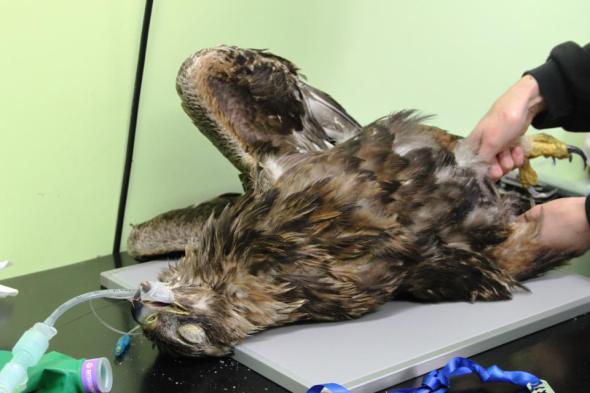
Wanlock Head GE Oct 2012

Reactions to the ‘missing’ East Scotland sea eagle

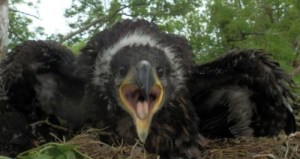
Sea-eagle chick 1 nestOn Thursday we blogged about the ‘disappearance’ of a young white-tailed eagle from a grouse moor in Strathdon, Aberdeenshire (see here).

This wasn’t just any old sea eagle, if there is such a thing. This was the first fledged white-tailed eagle in East Scotland in over 200 years – a pioneering bird from the East Scotland Sea Eagle Reintroduction Project; an initiative which had begun back in 2007. This young bird didn’t know it, but it was a symbol of conservation success – the result of thousands and thousands of hours of work by a dedicated team determined to restore this species back to its former range.

We refer to the bird in the past tense because in all likelihood, it is dead. It ‘disappeared’ in a notorious raptor persecution black hole where several other eagles have similarly ‘disappeared’ over the last few years, never to be seen again.

This area includes the North Glenbuchat Estate, from where this ‘missing’ sea eagle’s final sat tag signal was reportedly transmitted in mid-April. A poisoned golden eagle was found there in 2011, along with a poisoned buzzard, a poisoned bait, and a dead short-eared owl that had been shot and stuffed under a rock. (No prosecutions, of course).

Here are some of the responses to this latest incident…

Douglas McAdam, chief executive of Scottish Land & Estates (SLE), said: “As a member of the Partnership for Action Against Wildlife Crime, Scottish Land & Estates is offering every assistance to the investigation into the missing sea eagle in the north-east of Scotland and wholly supports the appeals for information that have been made by the Scottish Government and Police Scotland. It is of paramount importance that the facts are established as soon as possible and it would not be appropriate to comment on any specifics of the ongoing police investigation.”

[Note: we blogged yesterday about how the North Glenbuchat Estate became a member of SLE in 2013. Fascinating, eh?]

A spokesman for the Scottish Gamekeepers Association said: “The case of the missing sea eagle in the North East is currently under live investigation. There is very little known about the bird or the case at present so we await the outcome of the Police Scotland investigation.”

Environment Minister Paul Wheelhouse tweeted: “Clearly, I am not going to speculate on police investigations, but all on justice side keen to drive out such disgusting acts”.

Other members of society have been much more demonstrative in their condemnation:

The following appeared as an editorial in the Press & Journal:

The news that a satellite-tagged white-tailed eagle has gone missing in Aberdeenshire will send a chill down the spine of anyone who cares about Scotland’s natural heritage. Four tagged golden eagles have gone missing in the same area in the last five years and another was found poisoned in 2011. The first white-tailed eagle to be raised on the east coast in almost 200 years vanished as police continued to investigate the deaths of 20 raptors in the Black Isle. Public revulsion at the killings in Ross-shire is evident in the donations to a reward fund, now standing at more than £26,000. It is surely now time for the authorities to look seriously at why society is failing to give these magnificent birds the protection they deserve.”

Calton Hill, an independent blogger from Edinburgh, was moved to write this.

The ever-impressive Andy Wightman wrote a fascinating blog on who owns North Glenbuchat Estate and the inherent complications of proceeding with any potential vicarious liability prosecution (see here, and also read the comments for some local insight).

Ian Thomson, RSPB Scotland’s Head of Investigations, gave an interview to STV news in which he explained how young birds are drawn into these ‘black holes’ [of persecution] time and time again (watch the video here). Incidentally, at the end of this video, the reporter, Cheryl Paul, mentions the rise in the body count of the Ross-shire Massacre – this was our news source for yesterday’s blog when we reported that the death toll was now 22 (including 16 red kites and six buzzards).

In more general terms, earlier today Cameron McNeish wrote a compelling article which has appeared on the WalkHighlands website, discussing the ‘national embarrassment’ of raptor persecution in Scotland (see here).

And finally, according to our blog stats, over 100 of you have emailed Environment Minister Paul Wheelhouse about this crime (thank you).

We’re waiting for his formal response.

East Scotland sea eagle chick ‘disappears’ on grouse moor

Sea-eagle chick 1 nestLast year we celebrated the news of the first sea eagle chick to fledge in East Scotland for over 200 years (see here).

This year we’re discussing his ‘disappearance’ (in all likelihood his death) in a well-known grouse moor area in the Cairngorms National Park.

This bird was a significant one. He marked an important milestone in the East Scotland Sea Eagle Reintroduction Project, being the first to fledge from a nest there in over 200 years. He was also our symbol of hope, following the news earlier in the year that the nest tree of another pioneering pair had been illegally felled with a chainsaw, bringing their historic breeding attempt to an abrupt halt (see here).

When we blogged about the successful fledging of this young eagle last year, we ended the post with this:

Here’s hoping this year’s pioneering young male manages to stay alive (keep away from grouse moors) for long enough to raise his own family – the next big milestone for the East Coast Project will be Scottish-born sea eagles rearing their own young. Good luck kid”.

He didn’t make it. He didn’t even make it to his first birthday.

He had been fitted with a satellite tag before he fledged, allowing researchers to monitor his movements. In mid-April, the signal from his transmitter stopped. The last signal had come from the North Glenbuchat Estate in Strathdon.

North Glenbuchat Estate has been at the centre of a series of wildlife crime investigations over a number of years. These have included the prosecution and conviction of the then head gamekeeper (in 2006) for poisoning offences; the discovery of a poisoned golden eagle in 2011 (killed by Carbofuran – no prosecution); the discovery of a poisoned buzzard in 2011 (killed by Carbofuran – no prosecution); the discovery of a poisoned bait in 2011 (no prosecution), and the discovery of a dead short-eared owl in 2011, that had been shot and stuffed under a rock (no prosecution). (See here for details of these discoveries).

Not only that, but a number of young satellite-tagged eagles have all mysteriously ‘disappeared’ in this area over the last few years, including one in September 2011, one in February 2012, one in May 2013 and now this latest one in April 2014. Including the poisoned golden eagle found in 2011, at least five young eagles are presumed dead. We only know about these young birds because they were all fitted with satellite transmitters. How many other young eagles have ‘vanished’ in suspicious circumstances in similar black holes across the central and eastern uplands, the heartland of driven grouse moors?

North Glenbuchat Estate was bought by the Marquess of Milford Haven in 2008,  according to the Glenbuchat Heritage website, and he “began an ambitious programme of renovating Glenbuchat Lodge and its dependent properties and improving the grouse moor”.

In 2013, North Glenbuchat Estate became a member of Scottish Land & Estates:

North Glenbuchat joins SLE 2013

Today’s police raid of the estate (reported by the BBC here) is welcome news, although the chance of finding any evidence to link to a suspect is pretty slim, especially if the bird has been shot, as is suspected.

We’re almost at a loss what to say. What can we say that hasn’t already been said each and every time? What words are there to describe the fury, rage, sadness, sorrow and overwhelming frustration about what is going on, right under our noses, in our own countryside? The Untouchables strike again. It is out of control and the Government seems powerless to stop it.

Only they’re not powerless. They’re actually very powerful and they could stop this at the drop of a hat if they really wanted to. The Environment Minister has said over and over again that if persecution continues, he will ‘not hesitate’ to bring in further measures. It’s time to stop hesitating, Mr Wheelhouse – get a grip on this insidious criminality and do what you’re paid to do. No more excuses.

Please email the Environment Minister and demand further action. Email: ministerforenvironment@scotland.gsi.gov.uk

Raptor poisoning incidents doubled in 2013

The Partnership for Action against Wildlife Crime (PAW Scotland) has published the latest ‘official’ maps showing the distribution of reported raptor persecution incidents in Scotland during 2013.

Remember 2013? That was the government’s much heralded Year of Natural Scotland.

How disgraceful then, to see that reported incidents of raptor poisoning in 2013 doubled from the previous year. The victims this time around included a golden eagle, a red kite and four buzzards. And these were just the ones that were discovered – how many went undiscovered?

Not only did the reported poisoning incidents double, but other methods of illegal persecution were also reported, including disturbance, nest destruction, shooting and trapping, and these incidents numbered nearly three times the number of reported poisoning incidents.

It is clear, once again, that despite all the claims to the contrary, the illegal persecution of birds of prey in Scotland is still taking place with impunity. This has been vividly illustrated by the unfolding news from Ross-shire this week that at least 11 raptors have been found dead, including at least 8 red kites, all strongly suspected to be the victims of illegal poisoning. We fully expect this figure to rise…

This year, for the first time, the maps are now not just restricted to showing reported poisoning incidents; also included are the other types of persecution. This approach has to be applauded, especially as there is a real concern that the raptor killers are changing tactics in an attempt to show that the game-shooting industry is cleaning up its act (i.e. if they can keep poisoning figures low, they can point to this as an indication that persecution is dropping because they know that poisoning is the only method that is regularly mapped and monitored). Not any more, so well done to the Environment Minister for ensuring the other methods are also now ‘officially’ mapped and monitored.

However, the new and improved maps are still not showing the full picture.

For example, the recorded incidents shown on the new maps are limited to those where a dead or dying raptor has also been discovered:

The maps DO NOT show incidents where other birds/animals have been found poisoned with banned substances that have been categorised by SASA as ‘abuse’. Why not?

The maps DO NOT show incidents where an illegally-set trap has been found without an injured or dead raptor in/on it. Why not?

The maps DO NOT show the locations where satellite-tracked raptors have ‘mysteriously disappeared’ without trace. Why not?

But most significantly of all, the maps DO NOT show incidents where poisoned baits have been discovered, and have been categorised by SASA as ‘abuse’, unless a poisoned raptor was also found at the scene. Why not?

In our view, this is the most serious of all the omissions. The Scottish Government explains this away by saying that if there isn’t a dead/dying raptor at the scene then the discovery of poisoned baits can’t be classified as ‘raptor persecution’. Eh? Everybody knows that these poisons are routinely used to target birds of prey. To deliberately leave them off these poisoning maps is astonishing. In whose interest is it to exclude these incidents?

A good example of this sort of incident came last year when a massive stash of pre-prepared poisoned baits was found inside two game bags in woodland next to a grouse moor on Leadhills estate. Leadhills has a long and sorry history of poisoned baits and poisoned raptors having been found there, dating back several decades. A Leadhills gamekeeper was convicted in 2010 for er, laying out a poisoned bait on the moor. There were 36 baits in total in the 2013 stash; chopped up into bite-size pieces and sprinkled with Carbofuran. What on earth does the Government think those baits were going to be used for if not for poisoning raptors?

We think this particular stash of pre-prepared poisoned baits is the largest ever discovered in Scotland. The Leadhills baits are not included in the latest maps. Why? Because no poisoned raptors were found at the scene. Probably because the police failed to conduct any level of search when they turned up, in marked vehicles, to collect the baits.

If we, the BBC and Project Raptor had not reported on that incident, nobody would be any the wiser to it today. The police failed to issue a press release and now we find that the incident has been excluded from the ‘official’ poisoning maps. There’s now no doubt at all that the incident will also be excluded from the Scottish Government’s ‘official’ raptor persecution report that they’ll publish later this year.

‘Discovery of a massive stash of poisoned baits on a sporting estate? Where? When? Nope, we can’t find it in the ‘official’ statistics, you must be mistaken, it can’t have happened’.

Compare this approach with that used by the government/police to report on drug seizures. They regularly report on the recovery of big stashes of heroin, whether the heroin has actually found its way onto the street or not. They don’t say, ‘Oh, we can’t include that in our official stats because we didn’t find a junkie laying next to the stash”, do they? No, it all gets recorded as part of their official drug crimes statistics. What’s so different about the discovery of big stashes of banned poisons that are known to be used to illegally target birds of prey?

So, all in all then, situation normal in Scotland. Reported poisoning incidents have doubled from the previous year, other methods of killing raptors are being utilised with disturbing regularity, the game-shooting industry is still trying to spin the story into something positive (Doug McAdam is quoted in the Scotsman article as saying: ‘Good progress has been made on reducing illegal poisoning incidents’!!), the Scottish Government is still trying to spin the story into something positive (by comparing the 2013 figures with  figures from 2009 [the highest reported poisoning figures in 20 years] rather than focusing on the doubling of reported incidents from 2012 to 2013) and the ‘official’ statistics are still not showing the full scale of the problem.

See you all same place, same time, next year, when, judging by the recent Ross-shire news, once again we’ll be reporting that raptor poisoning incidents have increased over the last year. The only surprise will be by how much.

To view the ‘official’ maps on the PAW Scotland website see here.

Article in the Scotsman ‘Birds of prey spared poison – to be stamped to death’ – see here.

Article on BBC website ‘Number of birds of prey poisoned in Scotland doubles’ – see here.

Article on STV news ‘Rise in number of birds of prey illegally poisoned ‘very worrying” – see here.