Gamekeepers want sea eagles, kites, buzzards, sparrowhawks & ravens added to General Licences

Further to this morning’s blog about RSPB Scotland’s damning response to SNH’s General Licence consultation (see here), we said we’d write a separate blog about some of the other responses that SNH received.

SNH has now published all the responses, and they’re well worth a read: all-responses-to-snh-general-licence-consultation-2016

There are many organisations and individuals calling for ravens to be added to the General Licences (no surprise) and, yet again, there are a number of requests for buzzards and sparrowhawks to also be added, which would allow these species to be casually killed across Scotland without any monitoring or regulation, although some have suggested these raptors should be on ‘regional’ General Licences to limit the casual killing to a particular area. How thoughtful.

One of the reasons given for adding ravens and buzzards to the General Licences was this: “There are arguably too many of them around and they cloud the skies in our local area“.

Here’s a photograph of some ravens and buzzards clouding the skies:

Actually, this is a photograph (by Richard Barnes) of Dunlin flocking on the coast of North America but it could just as easily be a plague of swarming raptors over a Scottish grouse moor, if you happen to be a pathological raptor hater stuck with an 18th century attitude, that is.

Take a look at the consultation response from Garry MacLennan. Surely not the same Garry MacLennan, Head Gamekeeper at Invermark Estate? Aren’t raptors supposed to be ‘thriving’ there? Perhaps the headline should have read ‘Raptors are thriving on Scottish grouse moors and we want licences to kill them’.

Also have a look at the responses from Iain Hepburn (the same Iain Hepburn as the head gamekeeper at Dunmaglass Estate?), Duncan Mackenzie and Calum Kippen (the same Corrybrough Estate gamekeepers who attended the recent meeting between the Cairngorms National Park Authority & the Scottish Gamekeepers’ Association?). Aren’t these the gamekeepers who want licences to monitor and ring raptors? Don’t they see a bit of a conflict of interest there if they also want licences to kill these raptors?

Best of all though, is the response from Bert Burnett (presumably of the SGA). Bert suggests that ravens should be added to the General Licences and argues that regional general licences “could be rolled out for various species that may start to cause problems like sea eagles and kites etc“. Ah yes, that very serious problem of sea eagles mistaking small children for prey.

Of course, these calls for licences to cull raptors are nothing new. Scottish (and English) gamekeepers and land owners have been asking for these for 20 years (see here, here, here, here, hereherehere). So far, SNH has resisted but given Natural England’s recent capitulation on buzzard-killing licences, how much longer before we see the same in Scotland?

‘Giant buzzards’ eating dogs, warns Tipperary newspaper

The following article was headline news last week in the Tipperary Star, a local rag in the Irish Republic:
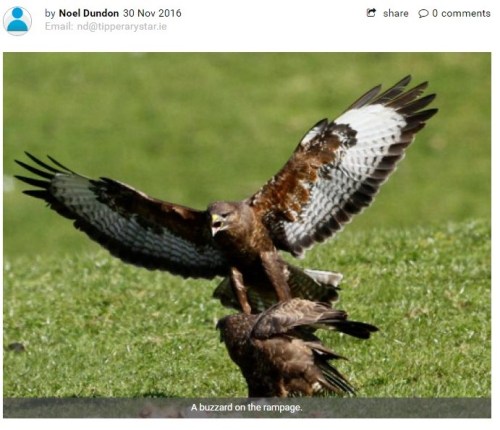
ATTACKING BUZZARDS TARGET TERRIERS

By Noel Dundon

A call to have the protection orders on buzzards lifted has been made following a number of incidents in which the birds of prey have taken terriers and other animals in deadly swoops through mid Tipperary.

Buzzards are causing major problems in the mid-Tipperary area at the present time with a number of terriers having been taken, leading to a call for protection orders to be lifted.

Two families have been left in distress after their dogs were preyed upon and killed by giant buzzards in the Templetuochy area where hares, rabbits, cats and other small animals have also been taken.

However, it has also been revealed that are birds of prey circling overhead Deputy Michael Lowry in Glenreigh, Holycross, while Moyaliffe, Drombane, Inch, Clonmore and Castleiney are also areas where buzzards have been spotted on the attack.

There is one report of a Yorkshire terrier having been attacked, but survived and was patched up by a veterinary surgeon, only to be attacked again and killed a short time later – all by the same buzzard which can have a wingspan of up to three feet with very powerful and strong claws used to take prey.

Forested areas which afford cover are the best hunting ground for buzzards and dog and cat owners are being advised to be on the watch out for their pets which could be taken at the blink of an eye.

There are also concerns that with the increase in buzzards, the spring lambing season after Christmas could be an ideal hunting ground for them – but a very costly one for sheep owners.

ENDS

The online version of the article was illustrated with this photograph, entitled ‘A buzzard on the rampage’.

Is this ‘journalist’ having a laugh? Since when did ‘giant buzzards’ (or even normal-sized buzzards) start killing dogs, and since when did the sight of soaring buzzards above a politician’s head become a cause for alarm?

This type of sensationalist, ignorant, scare-mongering would be funny if it didn’t have consequences. Unfortunately, this baseless demonisation of birds of prey does have consequences, and serious ones at that. As we see all too often, there are still people clinging on to 19th Century attitudes who think that raptors are ‘vermin’ and should be destroyed. Articles like this one above will only fuel their prejudice and lead to the illegal persecution of these birds.

Tipperary is no stranger to raptor persecution – in the last few years the following crimes have been recorded:

July 2015: shot buzzard

May 2014: poisoned peregrine

January 2014: shot white-tailed eagle

July 2013: shot peregrine

June 2013: shot peregrine

June 2013: shot peregrine

Raptor persecution is a serious issue in Ireland, and the latest official report shows the trend is pointing upwards with 35 confirmed persecution incidents in 2015 – the highest number since recording began in 2011 (see here).

We’d encourage strong (but polite) words of complaint to the Tipperary Star:

Email journalist Noel Dundon: nd@tipperarystar.ie

Email editor Anne O’Grady: aog@tipperarystar.ie

UPDATE 6/12/2016: BirdWatch Ireland has issued a strong statement in response to the Tipperary Star (see here).

Congratulations to multi-award winning Mull Eagle Watch!

Mull Eagle Watch is a community-based partnership offering visitors the chance to enjoy guided trips to see the reintroduced white-tailed eagles without disturbing them.

Starting in 2000 at Loch Frisa, the project has grown to become one of the UK’s best-known and loved wildlife tourism attractions, bringing in five million pounds to the island every year in tourism revenue. The project is run as a partnership between Forestry Commission Scotland, RSPB Scotland, Mull & Iona Community Trust, Police Scotland and SNH.

Already in receipt of a prestigious five star rating from VisitScotland and a gold rating from the Green Tourism Business Scheme, this month they’ve added two more top awards to their collection.

Earlier this month they won the Innovation in Tourism Award at the Highlands and Islands Tourism Awards (see here) and on Thursday evening they scooped first prize in the Nature Tourism category at the RSPB’s Nature of Scotland Awards, hosted by Chris Packham (see here).

Here they are collecting their award from Chris (photo nicked off Twitter!)

mull-eagle-watch

As Chris said on Thursday evening, at a time when the persistent and widespread killing of raptors causes many to view Scotland (and the rest of the UK) as an international embarrassment, this enlightened project is a shining example of how birds of prey can bring environmental, social and economic benefits to rural communities. More of this, please.

Many congratulations and thanks to all involved.

Bright future for white-tailed eagles in western Scotland

It’s not often that we can report good news stories for raptor populations in Scotland, and it’s equally rare to find a raptor-related SNH press release that hasn’t been coated in a thick layer of varnished, propaganda-fuelled tosh. But yesterday we had both a good news story AND an accompanying unvarnished SNH press release!

SNH has published a new report: Population and future range modelling of reintroduced Scottish white-tailed eagles (Haliaeetus albicilla), authored by Sansom, A., Evans, R. and Roos, S. (2016), SNH Commissioned Report No. 898.

This is a comprehensive piece of research using predictive modelling to forecast the short and long-term population growth of re-introduced sea eagles in Scotland. In a nutshell, the population is doing very well and is predicted to continue to do well in the coming years as the population grows and re-occupies its former range. The quality of this research looks very good so all credit to the authors, including the late and much-missed Richard Evans. The full report can be read here: wte-population-modelling_snh_2016

wte-core-breeding-areaSome new blog readers may be surprised by this raptor conservation success story, especially as the UK’s reputation for illegal raptor persecution is such a constant embarrassment, but the reason for the sea eagle’s success is pretty clear when you look at this map (copied from the report) of the eagle’s current core breeding area. These raptors are doing really really well because they’re mostly breeding far away from the intensively-managed grouse moor areas of central, eastern and southern Scotland, all well-known raptor persecution hotspots. Sure, the eagles also have their enemies in the west and there’s an on-going battle there with some sheep farmers and crofters (and this morning there’s an article in the Scotsman about the perceived threat to hill farming from an increasing sea eagle population) but clearly a lot of people in western Scotland have welcomed these eagles with open arms and many are benefiting from the millions of pounds worth of tourism money brought in by visitors who come to see these incredible birds.

Sea eagle population growth in eastern Scotland, following the more recent re-introduction there, remains to be seen. It’s still fairly early days but so far a number of young satellite-tagged sea eagles have either ‘disappeared’ or have been found poisoned on nearby driven grouse moors. And of course there was the now infamous felling of a sea eagle nest tree on a grouse moor in the Cairngorms National Park a few years ago. According to the new report, persecution (and wind-farm related mortality) shouldn’t now affect the overall stability  of the Scottish sea eagle population but obviously persecution has the potential for local and perhaps regional effects, as we’ve seen with golden eagles, peregrines, hen harriers and red kites.

The publication of this latest report attracted a lot of media attention yesterday (see links below) but surprisingly we’ve yet to see the usual hysteria from certain quarters, warning people to lock up their toddlers in case a big bad sea eagle mistakes one for prey.

SNH press release here

RSPB Scotland press release here

Scotsman article here

BBC news here

40 eagles, 10 years, 0 prosecutions

In April 2012, we wrote an article called ’21 eagles, 6 years, 0 prosecutions’ (see here).

In September 2012, we updated it and called it ’26 eagles, 6 years, 0 prosecutions’ (see here).

In July 2013 we updated it again. This time, ’27 eagles, 7 years, 0 prosecutions’ (see here).

In December 2013 we had to do another update: ‘31 eagles, 7 years, 0 prosecutions’ (see here).

In April 2014 we had to do another update: ’32 eagles, 8 years, 0 prosecutions’ (see here).

Fearnan Angus Glens Dec 2013 - Copy

After this morning’s news (here) that eight young satellite-tagged golden eagles have ‘disappeared’ on grouse moors in the Monadhliath Mountains over the last five years, we thought it was time for another update. This time it’s called: ’40 eagles, 10 years, 0 prosecutions’.

36 of these 40 eagles have either been found dead on, or have ‘disappeared’ on, Scottish grouse moors. (The other 4 have either died or have ‘disappeared’ in other habitat types).

Three of these 40 eagles have ‘disappeared’ in 2016. So much for the grouse-shooting industry claiming that they’ve cleaned up their act and that persecution is a thing of the past. The tactics of how to kill an eagle have clearly changed (see here) but the persecution continues.

As before, a number of eagles included in this list (16 of them, to be precise) may not be dead. However, they are included here because their satellite tags unexpectedly stopped functioning (i.e. they’d been transmitting perfectly well up until the eagles’ last known location, often a known persecution hotspot). Two further satellite-tagged eagles (‘Angus’ and ‘Tom’) are not included in this list as although their transmitters stopped functioning, there had been recognisable problems with their tags prior to the final transmissions and so the benefit of the doubt has been applied.

Many of these listed eagles from recent years have only been discovered because the eagles were being satellite-tracked. Much kudos to the dedicated teams of fieldworkers who have put in hours and hours of skilled hard work to allow this to happen. Obviously there are many other eagles out there that have not been sat-tagged and on the balance of probability will have been killed at the hands of the game-shooting industry. 40 eagles in the last 10 years is the bare minimum. The number of prosecutions (zero) is indisputable.

MAY 2006: A dead adult golden eagle was found on the Dinnet & Kinord Estate, near Ballater, Aberdeenshire. Tests revealed it had been poisoned by the illegal pesticide Carbofuran. Grampian Police launched an investigation. No prosecution.

JUNE 2006: A dead golden eagle was found on Glen Feshie Estate in the Cairngorms. Tests revealed it had been poisoned by the illegal pesticide Carbofuran. Northern Constabulary launched an investigation. No prosecution.

AUGUST 2007: A dead adult female golden eagle was found on an estate near Peebles in the Borders. She was half of the last known breeding pair of golden eagles in the region. Tests revealed she had been poisoned by the illegal pesticide Carbofuran. Lothian & Borders Police launched an investigation. No prosecution.

NOVEMBER 2007: Tayside Police received a detailed tip-off that a young male white-tailed eagle (known as ‘Bird N’) had allegedly been shot on a grouse moor estate in the Angus Glens. The timing and location included in the tip-off coincided with the timing and location of the last-known radio signal of this bird. The eagle has not been seen again. With no carcass, an investigation isn’t possible.

MAY 2008: A one year old male white-tailed eagle hatched on Mull in 2007 and known as ‘White G’ was found dead on the Glenquoich Estate in the Angus Glens. Tests revealed he had been poisoned by an unusual concoction of pesticides that included Carbofuran, Bendiocarb and Isofenphos. A police search in the area also revealed a poisoned buzzard, a baited mountain hare and 32 pieces of poisoned venison baits placed on top of fence posts on the neighbouring Glenogil Estate. Laboratory tests revealed the baited mountain hare and the 32 poisoned venison baits contained the same unusual concoction of highly toxic chemicals that had killed the white-tailed eagle, ‘White G’. No prosecution.

JUNE 2009: An adult golden eagle was found dead at Glen Orchy, Argyll, close to the West Highland Way. Tests revealed it had been poisoned by the illegal pesticide Carbofuran. Strathclyde Police launched a multi-agency investigation. Three years and 3 months later, estate employee Tom McKellar pled guilty to possession of Carbofuran stored in premises at Auch Estate, Bridge of Orchy and he was fined £1,200. No prosecution for poisoning the golden eagle.

JULY 2009: A two year old female golden eagle known as ‘Alma’ was found dead on the Millden Estate in the Angus Glens. Tests revealed she had been poisoned by the illegal pesticide Carbofuran. Alma was a well-known eagle  – born on the Glen Feshie Estate in 2007, she was being satellite-tracked and her movements followed by the general public on the internet. Tayside Police launched an investigation. No prosecution.

AUGUST 2009: A young white-tailed eagle was found dead on Glenogil Estate in the Angus Glens. Tests revealed it had been poisoned by the illegal pesticide Carbofuran. Tayside Police was criticized in the national press for not releasing a press statement about this incident until January 2010. No prosecution.

MAY 2010: #1 of three dead golden eagles found on or close to Skibo Estate, Sutherland. Tests revealed they had been poisoned; two with Carbofuran and one with Aldicarb. Northern Constabulary launched a multi-agency investigation. One year later (May 2011), Sporting Manager Dean Barr pled guilty to possession of 10.5 kg of Carbofuran stored in premises at Skibo Estate. No prosecution for poisoning the golden eagle.

MAY 2010: #2 of three dead golden eagles found on or close to Skibo Estate, Sutherland. Tests revealed they had been poisoned; two with Carbofuran and one with Aldicarb. Northern Constabulary launched a multi-agency investigation. One year later (May 2011), Sporting Manager Dean Barr pled guilty to possession of 10.5 kg of Carbofuran stored in premises at Skibo Estate. No prosecution for poisoning the golden eagle.

MAY 2010: #3 of three dead golden eagles found on or close to Skibo Estate, Sutherland. Tests revealed they had been poisoned; two with Carbofuran and one with Aldicarb. Northern Constabulary launched a multi-agency investigation. One year later (May 2011), Sporting Manager Dean Barr pled guilty to possession of 10.5 kg of Carbofuran stored in premises at Skibo Estate. No prosecution for poisoning the golden eagle.

JUNE 2010: #1: Leg rings with unique identification numbers that had previously been fitted to the legs of four young golden eagles in nests across Scotland were found in the possession of gamekeeper James Rolfe, during a multi-agency investigation into alleged raptor persecution at Moy Estate, near Inverness. It is not clear how he came to be in possession of the rings. The bodies of the eagles from which the rings had been removed were not found. No further action was taken in relation to the discovery.

JUNE 2010: #2: Leg rings with unique identification numbers that had previously been fitted to the legs of four young golden eagles in nests across Scotland were found in the possession of gamekeeper James Rolfe, during a multi-agency investigation into alleged raptor persecution at Moy Estate, near Inverness. It is not clear how he came to be in possession of the rings. The bodies of the eagles from which the rings had been removed were not found. No further action was taken in relation to the discovery.

JUNE 2010: #3: Leg rings with unique identification numbers that had previously been fitted to the legs of four young golden eagles in nests across Scotland were found in the possession of gamekeeper James Rolfe, during a multi-agency investigation into alleged raptor persecution at Moy Estate, near Inverness. It is not clear how he came to be in possession of the rings. The bodies of the eagles from which the rings had been removed were not found. No further action was taken in relation to the discovery.

JUNE 2010: #4: Leg rings with unique identification numbers that had previously been fitted to the legs of four young golden eagles in nests across Scotland were found in the possession of gamekeeper James Rolfe, during a multi-agency investigation into alleged raptor persecution at Moy Estate, near Inverness. It is not clear how he came to be in possession of the rings. The bodies of the eagles from which the rings had been removed were not found. No further action was taken in relation to the discovery.

JUNE 2010: A golden eagle was found dead on Farr & Kyllachy Estate, Inverness-shire. Tests revealed it had been poisoned by the illegal pesticide Carbofuran. Northern Constabulary apparently did not search the property until July 2011. No prosecution.

JUNE 2010: A white-tailed eagle was found dead on Farr & Kyllachy Estate, Inverness-shire. Tests revealed it had been poisoned by the illegal pesticide Carbofuran. Northern Constabulary apparently did not search the property until July 2011. No prosecution.

DECEMBER 2010: A decomposing carcass of a white-tailed eagle was found and photographed on Logie (Lochindorb) Estate, Morayshire. It was reported to Northern Constabulary. By the time the police arrived to collect it, the carcass had disappeared. The police said they couldn’t investigate further without the body.

FEBRUARY 2011: The signal from a young satellite-tracked golden eagle ( ‘Lee’, hatched in 2010) unexpectedly stopped transmitting after a final signal from the North Angus Glens. A technical malfunction or another mysterious ‘disappearance’?

MARCH 2011: The body of a young golden eagle was discovered on North Glenbuchat Estate, Aberdeenshire. Tests revealed it had been poisoned by the illegal pesticide Carbofuran. Grampian Police launched an investigation and raided the property in May 2011. A poisoned buzzard, a poisoned bait and a shot short-eared owl were found. No prosecution.

APRIL 2011: The body of a white-tailed eagle was found at the base of cliffs on Skye. The person who discovered it (a professional medic) considered it to have been freshly shot with a rifle, decapitated with a sharp implement and thrown from the cliff top. He took photographs and alerted Northern Constabulary and RSPB. There was a delay of two weeks before the now probably decomposed carcass was collected. A post-mortem was inconclusive. This incident was not made public until one year later after a tip off to this blog. No prosecution.

SEPTEMBER 2011: The signal from a satellite-tracked young golden eagle (‘Strathy’, hatched in 2010) unexpectedly stopped transmitting after a final signal from an Aberdeenshire grouse moor. A technical malfunction or another mysterious ‘disappearance’?

NOVEMBER 2011: The signal from a one-year-old satellite-tracked golden eagle (#57124) unexpectedly stopped transmitting after a final signal from a grouse moor in the Monadhliaths. A technical malfunction or another mysterious ‘disappearance’?

MARCH 2012: The body of a young golden eagle being tracked by satellite was discovered in Lochaber. Tests revealed it had been poisoned with the banned pesticides Aldicarb and Bendiocarb. Information about this incident was not made public until three months later. No prosecution.

MARCH 2012: The signal from a satellite-tracked young golden eagle (‘Angus 26′, hatched in 2011) unexpectedly stopped transmitting after a final signal from a grouse moor in the Angus Glens. This bird’s suspiciously damaged sat tag was found in the area. No prosecution.

MAY 2012: The signal from a young satellite-tracked golden eagle (#32857) unexpectedly stopped transmitting when the bird was north-east of the Cairngorms National Park. A technical malfunction or another mysterious ‘disappearance’?

MAY 2012: The dead body of a young satellite-tracked golden eagle (hatched in 2011) was discovered near a lay-by in Aboyne, Aberdeenshire. The data from its satellite tag & the injuries the bird had when found (2 broken legs) suggested it had been caught in an illegal trap on a grouse moor in the Angus Glens and then removed, under cover of darkness, to be dumped in another area where it was left to die, probably a slow and agonising death. Information on this incident was not released until almost five months later, by the RSPB. It appears the police failed to properly investigate this incident as we understand that no search warrants were issued and no vehicles were searched. No prosecution.

JULY 2012: The signal from a one-year-old satellite-tracked golden eagle (‘Foinaven’) unexpectedly stopped transmitting after a final signal from a grouse moor in the Monadhliaths. A technical malfunction or another mysterious ‘disappearance’?

OCTOBER 2012: An adult golden eagle was found shot and critically injured on grouse moor at Buccleuch Estate, near Wanlockhead, South Lanarkshire. The bird was rescued by the SSPCA and underwent surgery but it eventually succumbed to its injuries in April 2013. No prosecution.

MAY 2013: The signal from a two-year-old satellite tracked golden eagle (‘Angus 33′, hatched in 2011) unexpectedly stopped transmitting after its last signal from North Glenbuchat Estate in Aberdeenshire. A technical malfunction or another mysterious ‘disappearance’?

JUNE 2013: A dead golden eagle was found under power lines on an RSPB reserve on Oronsay. This bird had been shot although it is not known whether this was the cause of death or an historical injury.

JULY 2013: The signal from a young satellite tracked golden eagle (‘Cullen’, hatched 2010) unexpectedly stopped transmitting after its last signal in Aberdeenshire. A technical malfunction or another mysterious ‘disappearance’?

DECEMBER 2013: A two year old satellite tracked golden eagle (‘Fearnan’) was found dead on a grouse moor in the Angus Glens. Tests revealed he had been poisoned with the banned pesticide Carbofuran. No prosecution.

MARCH 2014: The signal from a one-year-old satellite-tagged golden eagle (#129002) unexpectedly stopped transmitting after a final signal from a grouse moor in the Monadhliaths. A technical malfunction or another mysterious ‘disappearance’?

APRIL 2014: The signal from a young satellite tracked white-tailed eagle (the first fledged sea eagle chick in East Scotland in ~200 years) unexpectedly stopped transmitting after its last signal from the North Glenbuchat Estate in Aberdeenshire. Police raided the property a couple of weeks later. No prosecution.

OCTOBER 2014: The signal from a one-year-old satellite-tagged golden eagle (#107133) unexpectedly stopped transmitting after a final signal from a grouse moor in the Monadhliaths. A technical malfunction or another mysterious ‘disappearance’?

OCTOBER 2014: The signal from a two-year-old satellite-tagged golden eagle (#119886) unexpectedly stopped transmitting after a final signal from a grouse moor in the Monadhliaths. A technical malfunction or another mysterious ‘disappearance’?

MAY 2016: The signal from a less-than-one-year-old satellite-tagged golden eagle (#00000583) unexpectedly stopped transmitting after a final signal from a grouse moor in the Monadhliaths. A technical malfunction or another mysterious ‘disappearance’?

JUNE 2016: The signal from a two-year-old satellite-tagged golden eagle (#129010) unexpectedly stopped transmitting after a final signal from a grouse moor in the Monadhliaths. A technical malfunction or another mysterious ‘disappearance’?

JULY 2016: The signal from a two-year-old satellite-tagged golden eagle (#129015 ‘Brodie’) unexpectedly stopped transmitting after a final signal from a grouse moor in the Monadhliaths. A technical malfunction or another mysterious ‘disappearance’?

THE UNTOUCHABLES: 40; JUSTICE: 0

Cabinet Secretary for the Environment Roseanna Cunningham has responded to this morning’s news (read her statement here) by calling for an analysis of the satellite tag data from around 90 surviving and missing eagles “to discover if there is a pattern of suspicious activity“. It just beggars belief. We’ll shortly be blogging in more detail about her response and that of the Scottish Moorland Group, which is equally as fatuous.

In the meantime, please sign this petition (here) calling on the Scottish Government to introduce a licensing scheme for gamebird shooting.

And then please sign this petition (here) calling on the Westminster Government to ban driven grouse shooting.

ALMD

The ‘secrets of the Angus Glens’ that Countryfile forgot to mention

On Sunday evening, Countryfile included a piece about the grouse moors of Invermark Estate in the Angus Glens and how it was “a haven for wildlife”.

It can be viewed on iPlayer here for the next 28 days (starts at 22 mins in).

Inane, vacuous and unquestioning, this piece was heralded in previews as ‘uncovering the secrets of the glen’.

Invermark is only one of several grouse moor estates in the Angus Glens. Here are some secrets of the wider Angus Glens that weren’t mentioned on Countryfile:

2004 May, near Edzell: long-eared owl and two short-eared owls starved to death in crow cage trap.  No prosecution.

2004 May, Invermark Estate: peregrine nest destroyed. No prosecution.

2006 March, Glenogil Estate: poisoned rabbit bait (Carbofuran). No prosecution.

2006 April, Easter Ogil: poisoned buzzard (Alphachloralose). No prosecution.

2006 April, Easter Ogil: poisoned tawny owl (Alphachloralose). No prosecution.

2006 May, Glenogil Estate: poisoned rabbit bait (Carbofuran). No prosecution.

2006 June, Glenogil Estate: poisoned woodpigeon bait (Carbofuran). No prosecution.

2006 June, Glenogil Estate: Traces of Carbofuran found in estate vehicles & on equipment during police search. No prosecution. Estate owner had £107k withdrawn from his farm subsidy payments. This was being appealed, but it is not known how this was resolved.

2006 July, Millden Estate; poisoned sheepdog (Lindane). No prosecution.

2007 November, Glenogil Estate: Disappearance of radio-tagged white-tailed eagle ‘Bird N’ coincides with tip off to police that bird allegedly been shot. No further transmissions or sightings of the bird.

2008 May, ‘Nr Noranside’: poisoned white-tailed eagle ‘White G’ (Carbofuran, Isophenfos, Bendiocarb). No prosecution.

2008 May, ‘Nr Noranside’: poisoned buzzard (Bendiocarb). No prosecution.

2008 May, ‘Nr Noranside’: poisoned mountain hare bait (Carbofuran, Isophenfos, Bendiocarb). No prosecution.

2008 May, Glenogil Estate: 32 x poisoned meat baits on fenceposts (Carbofuran, Isophenfos, Bendiocarb). No prosecution.

2008 October, ‘Glenogil Estate: poisoned meat bait on fencepost (Carbofuran). No prosecution.

2009 March, Glenogil Estate: poisoned buzzard (Carbofuran). No prosecution.

2009 March, Glenogil Estate: poisoned buzzard (Carbofuran). No prosecution.

2009 April, Millden Estate: poisoned buzzard (Alphachloralose). No prosecution.

2009 July, Millden Estate: poisoned golden eagle ‘Alma’ (Carbofuran). No prosecution.

2009 August, Glenogil Estate: poisoned white-tailed eagle “89” (Carbofuran). No prosecution.

2010 May, ‘Nr Noranside’: poisoned red kite (Carbofuran). No prosecution.

2010 September, Glenogil Estate: poisoned buzzard (Chloralose). No prosecution.

2010 October, Glenogil Estate: poisoned buzzard (Carbofuran). No prosecution.

2010 October, Glenogil Estate: poisoned pigeon bait (Carbofuran). No prosecution.

2010 October, Glenogil Estate: poisoned pigeon bait (Carbofuran). No prosecution.

2011 February, Airlie Estate: buzzard caught in illegal crow trap. (see below)

2011 March, Airlie Estate: 3 x buzzard caught in illegal crow trap. Prosecution (!) but dropped after statement from suspect given to SSPCA deemed inadmissible.

2011 April, Millden Estate: shot buzzard. No prosecution.

2012 April, ‘Nr Noranside’: Remains of buzzard found beside pheasant pen. Suspicious death.

2011 June, Rottal & Tarabuckle Estate: dead kestrel inside crow cage trap. No prosecution.

2012 February, ‘Nr Edzell’: spring-trapped buzzard. No prosecution.

2012 February, ‘Nr Bridgend’: remains of buzzard found under a rock. Suspicious death.

2012 May, Millden Estate: satellite-tagged golden eagle seemingly caught in spring trap, then apparently uplifted overnight and dumped on Deeside with two broken legs & left to die. No prosecution.

2012 May, Glen Esk: disappearance of sat-tagged red kite. No further transmissions or sightings of bird.

2013 January, Invermark Estate: white-tailed eagle nest tree felled. No prosecution.

2013 June, Glen Ogil: shot buzzard. No prosecution.

2013 July, Glen Moy: illegal hawk trap. No prosecution.

2013 September, nr Edzell: unset spring trap next to bait. No prosecution.

2013 November, Glen Lethnot: poisoned golden eagle ‘Fearnan’. No prosecution.

2014 August & September, Glenogil Estate: alleged snare offences. Prosecution of gamekeeper underway (currently ongoing).

2014 October, Nathro: shot buzzard. Prosecution? Unknown.

And some more secrets of the Angus Glens that weren’t mentioned:

No breeding hen harriers on the grouse moors of the Angus Glens since 2006 (see here).

Mountain hare massacre on the grouse moors of the Angus Glens (see here).

Angus Glens gamekeeper facing trial for alleged pole-trapping offences (see here).

Mark Avery has written an alternative and more accurate Countryfile script (see here) than the one that was aired on Sunday evening.

Plenty of people on social media have been asking when Countryfile will do a piece on illegal raptor persecution. To be fair, they did one in 2014 (we blogged about it here) and it was fairly well balanced, but this then begs the question why Countryfile researchers hadn’t done their homework for this latest episode.

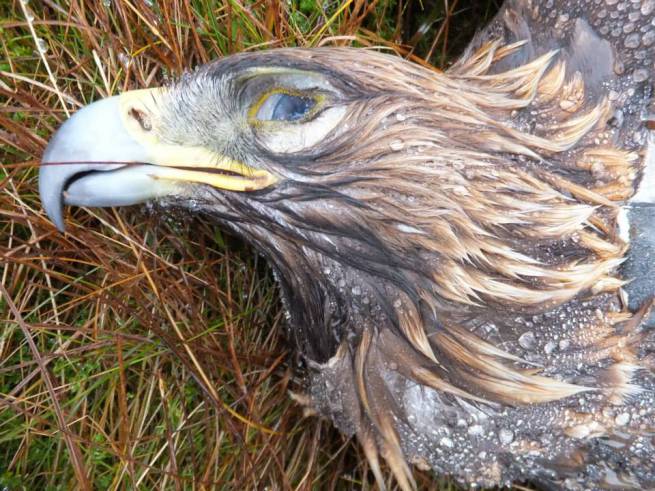
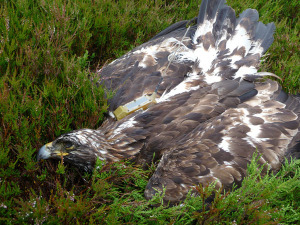
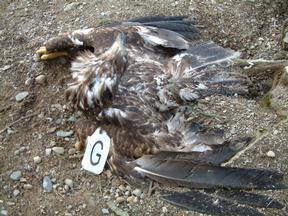
Had they done so, here are some of the images they would have found from those ‘wildlife haven’ grouse moors of the Angus Glens. From the top down, an illegally poisoned golden eagle, another illegally poisoned golden eagle, an illegally poisoned white-tailed eagle, an illegally trapped golden eagle that was then dumped in a layby with two broken legs and left to die, the nest tree of a white-tailed eagle that was illegally chainsawed to the ground, and a pile of rotting shot mountain hares. The grouse moors of the Angus Glens a wildlife haven? Hardly. They’re notorious wildlife crime scenes.

Petition to ban driven grouse shooting here

Fearnan

alma

whiteg

deeside eagle

wtenesttree

mountain-hare-cull-angus-glens-large-copy

Statement from Cairngorms National Park Authority re: shot goshawk

mon-15-june-copyGrant Moir, Chief Executive of the Cairngorms National Park Authority, has today issued a statement about the recent shooting of a goshawk (here) on land within the National Park:

We are incredibly frustrated to again be putting out a statement condemning the shooting of a raptor in the National Park. We must ensure such crimes become a thing of the past. We will be working with the new Minister for Environment to consider what else we can do in the National Park, building on public support for our wildlife and finding ways of getting more eyes and ears on the ground. We encourage anyone with information relating to this incident to contact the police by calling 101”.

The condemnation is good and is the least we should expect. However, the bit about “We will be working with the new Minister for Environment to consider what else we can do….” shows good intent, but in reality amounts to little more than a PR soundbite.

Remember the Cairngorms Nature action plan, aimed at restoring raptor populations & managing mountain hares for the benefit of golden eagles within the Cairngorms National Park (CNP), launched with great fanfare in May 2013 (see here)?

A resounding failure, as evidenced in May 2013 by the mysterious ‘disappearance’ of a young sat-tagged golden eagle on a CNP grouse moor (here); in May 2013 by the alleged ‘coordinated hunting’ and subsequent shooting of a hen harrier on a CNP grouse moor (here); in April 2014 by the mysterious ‘disappearance’ on a CNP grouse moor of East Scotland’s first fledged white-tailed eagle in ~200 years (here); in May 2014 by this video of masked armed gunmen attacking a goshawk nest within the CNP (here); in October 2015 by the publication of a scientific study documenting the long term decline of breeding peregrines on grouse moors in the eastern portion of the CNP (see here); in February 2016 by the publication of a scientific study documenting the catastrophic decline of breeding hen harriers in the eastern portion of the CNP (here); in March 2016 by the discovery of a dead hen harrier ‘Lad’, suspected shot, found on a grouse moor within the CNP (here); in March 2016 by the news that mountain hares were being massacred on grouse moors within the CNP (here); and again in March 2016 by news that further mountain hare massacres were taking place on grouse moors within the CNP (here); and now in May 2016 by the news that a goshawk was shot on an estate within the CNP (here).

And also remember, the CNPA has already met with the (now former) Environment Minister in January 2015 to discuss the issue of raptor persecution and moorland management within the NP – we blogged about that meeting here. The Environment Minister said afterwards that she ‘welcomed the positive collaboration shown between the CNPA and landowners and looked forward to seeing a real difference on the ground‘.

What is the point of the CNPA having further discussions with another naive Environment Minister? It’s utterly pointless. The grouse moor managers within the Cairngorms National Park are running rings around the Park Authority, and have been doing so for years: Golden eagles poisoned, golden eagles ‘disappearing’, white-tailed eagles ‘disappearing’, hen harriers being shot, breeding hen harriers in catastrophic decline, goshawks being shot, goshawk nests being attacked, breeding peregrines in long-term decline, mountain hares massacred. All within the Cairngorms National Park, the so-called ‘jewel’ of Scottish wildlife. It’s scandalous.

What we need, urgently, from the CNPA is action, not more hand-wringing and platitudes. For a start, the CNPA could be looking at the Sandford Principle (see here and here). There’s an excellent blog called Parks Watch Scotland that has also suggested some courses of action the CNPA could take: see here and here.

The CNPA CEO said today he was ‘incredibly frustrated’. We all are, but the difference is the CNPA has the power to do something about it.

Actually, we do have some power, albeit more indirect than the powers of the CNPA. We have the power to blog about the rampant and persistent persecution of wildlife within the National Park and by doing so, raise awareness amongst an unsuspecting general public of just what is happening to THEIR wildlife within the boundary of THEIR National Park. We’re pretty sure that as more people get to hear about it, the vast majority will be outraged and will join the call for further action to be taken against those grouse moor estates.

Please sign the petition and join 35,000+ calling for a parliamentary debate on the banning of driven grouse shooting: HERE

Crown Office drops prosecution against Glenogil Estate gamekeeper

Snared fox dead alt, Glenogil Estate, Credit OneKindRegular blog readers will know we’ve been following the case of Scottish gamekeeper William Curr, who had been charged last year with alleged snaring offences on Glenogil Estate in the Angus Glens, said to have occurred in September 2014 (see here, here, here and here).

The charges related to allegations that several snares had not been checked (as they are required to be) within a 24-hour period of being set, after a field officer from the charity OneKind had discovered a dead snared deer, a dead snared fox and another snared fox that was still alive but had to be euthanised at the scene due to the extent of its horrific injuries (see OneKind photo).

For a harrowing description of what was found on Glenogil Estate, including a confrontation with the Head Gamekeeper, read this blog on the OneKind website.

Curr’s trial was due to start on 9th May but last week (10 March) the Crown Office informed the court that it was not going to proceed. OneKind has not yet been able to ascertain the reason for this decision, and in fact may never find out because the Crown Office is under no obligation to explain.

Accountability and transparency, anybody?

To quote from the OneKind blog:

OneKind is mystified by the dropping of this case, given the eye witness evidence, the horrific video footage and the detailed follow-up investigation carried out by the Scottish SPCA. This was a shocking incident where at least six people, including gamekeepers, witnessed the terror and pain of a live fox as the wire noose of a snare sliced into its abdomen. Had our research officer not been on the estate on that particular day, who knows how much longer the fox would have continued to suffer?

To put this dreadful story in the wider context: snares are still legal in Scotland and the rest of the UK. It is simply intolerable that the suffering this fox endured should be considered legally acceptable. The video footage is utterly harrowing and illustrates an animal which is clearly distressed, both physically and mentally. OneKind has long called for an outright ban on all snares and sadly we feel these calls have been justified by this case.

OneKind will seek an explanation for the failure of the Scottish justice system to bring this animal welfare case to court“.

The reason we’ve been so interested in this case is because the alleged offences occurred on the Glenogil Estate, one of several grouse shooting estates in the Angus Glens where wildlife crime incidents keep cropping up but have never resulted in a successful prosecution. For example, here are some incidents reported from in and around Glenogil over the last ten years:

2006 March: poisoned rabbit bait (Carbofuran). Listed as ‘Glenogil’ in RSPB annual report. No prosecution.

2006 April: poisoned buzzard (Alphachloralose). Listed as ‘Glenogil’ in RSPB annual report. No prosecution.

2006 April: poisoned tawny owl (Alphachloralose). Listed as ‘Glenogil’ in RSPB annual report. No prosecution.

2006 May: poisoned rabbit bait (Carbofuran). Listed as ‘Glenogil’ in RSPB annual report. No prosecution.

2006 June: poisoned woodpigeon bait (Carbofuran). Listed as ‘Glenogil’ in RSPB annual report. No prosecution.

2006 June: Traces of Carbofuran found in estate vehicles & on equipment during police search. Not listed in 2006 RSPB annual report but reported here. (Now former) estate owner John Dodd had £107k withdrawn from his farm subsidy payments as a result. This was being appealed but it is not known how this was resolved. Also a write up in RSPB 2007 annual report. No prosecution.

2007 November, Glenogil Estate: Disappearance of radio-tagged white-tailed eagle ‘Bird N’ coincides with tip off to police that bird been shot. No further transmissions or sightings of the bird. Not listed in RSPB annual report but reported here. No prosecution.

2008 May: poisoned white-tailed eagle ‘White G’ (Carbofuran, Isophenfos, Bendiocarb). Listed as ‘Nr Noranside’ in RSPB annual report. No prosecution.

2008 May: poisoned buzzard (Bendiocarb). Listed as ‘Nr Noranside’ in RSPB annual report. No prosecution.

2008 May: poisoned mountain hare bait (Carbofuran, Isophenfos, Bendiocarb). Listed as ‘Nr Noranside’ in RSPB annual report. No prosecution.

2008 May: 32 x poisoned meat baits on fenceposts (Carbofuran, Isophenfos, Bendiocarb). Listed as ‘Nr Noranside’ in RSPB annual report. No prosecution.

2008 October: poisoned meat bait on fencepost (Carbofuran). Listed as ‘Nr Noranside’ in RSPB annual report. No prosecution.

2009 March: poisoned buzzard (Carbofuran). Listed as ‘Glenogil’ in RSPB annual report. No prosecution.

2009 March: poisoned buzzard (Carbofuran). Listed as ‘Glenogil’ in RSPB annual report. No prosecution.

2009 August: poisoned white-tailed eagle “89” (Carbofuran). Listed as ‘Glenogil’ in RSPB annual report. No prosecution.

2010 May: poisoned red kite (Carbofuran). Listed as ‘Nr Noranside’ in RSPB annual report. No prosecution.

2010 September: poisoned buzzard (Chloralose). Listed as ‘Glenogil’ in RSPB annual report. No prosecution.

2010 October: poisoned buzzard (Carbofuran). Listed as ‘Glenogil’ in RSPB annual report. No prosecution.

2010 October: poisoned pigeon bait (Carbofuran). Listed as ‘Glenogil’ in RSPB annual report. No prosecution.

2010 October: poisoned pigeon bait (Carbofuran). Listed as ‘Glenogil’ in RSPB annual report. No prosecution.

2012 April: Remains of buzzard found beside pheasant pen. Listed as ‘Nr Noranside’ in RSPB annual report. No prosecution.

2014 June: shot buzzard. Listed as ‘Glenogil’ in RSPB annual report. No prosecution.

New report reveals hundreds of raptors illegally killed on game-shooting estates in Scotland

RSPB persecution review 1994 2014Yesterday the RSPB published its latest figures on illegal raptor persecution in Scotland.
Rather than their usual annual review, this time they’ve produced a 20-year review covering the period 1994-2014. This is a really useful exercise as it puts the scale of (known) persecution in to perspective. It’s a sobering read.

A total of 779 birds of prey were confirmed to have been illegally killed during this period, either by poisoning, shooting or trapping. The known victims included 104 red kites, 37 golden eagles, 30 hen harriers, 16 goshawks, 10 white-tailed eagles and 458 buzzards.

In addition to these confirmed victims, a further 171 incidents are documented where poisoned baits and/or non-birds of prey victims were found, including 14 pet cats and 14 pet dogs, and then a further 134 incidents where no victim had been found but clear attempts to target raptors had been uncovered (e.g. illegally-set traps).

The report includes a map showing the landholdings of all known persecution incidents during this period. As ever, it’s pretty revealing, with a handful on the west coast but the vast majority in the uplands of central, eastern and southern Scotland – areas dominated by driven grouse shooting.

RSPB persecution review 1994 2014 map

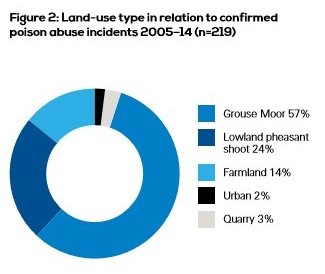
Drilling down in to the detail, there’s a useful analysis of land-use type of confirmed poisoning incidents between 2005-2014 (219 incidents). A shocking (or not) 81% of confirmed poisoning incidents during this nine-year period were on land used for game-shooting: 57% on grouse moors and 24% on land managed for lowland pheasant shoots. This tells us a great deal about who is responsible for the vast majority of illegal raptor poisoning. Despite their continued denials and protestations, and their increasingly-desperate attempts to minimise the scale of these crimes (“it’s just a few rogues”, “it’s just a small minority”), this graphic exposes the criminality at the heart of the game-shooting industry:

RSPB persecution review 1994 2014 land use

Further damning evidence, which isn’t needed by most of us but for the benefit of those who are still in denial of the bleedin’ obvious, is this graph showing the occupations of those convicted of raptor persecution between 1994-2014. Surprise, surprise, 86% of them were gamekeepers:

RSPB persecution review 1994 2014 occupation

RSPB Scotland is to be commended for publishing this exceptionally detailed and meticulously-researched report. There are a number of things in it that are of particular interest to us and we’ll come back to those in due course. For now though, particular recognition should go to the Investigations team – they may be small in number but their contribution to exposing the disgraceful continuation of illegal raptor persecution in Scotland is enormous. They, and their colleagues south of the border, are worthy of high acclaim. If anybody reading this is in a position to recognise excellence in the field of raptor conservation, e.g. a nomination for an award, this team should be at the top of your list.

So, how has the Environment Minister, Dr Aileen McLeod, responded to such an embarrassing report? She said: “There is no doubt that the figures in this report make for uncomfortable reading, but we have made progress in recent years with the new vicarious liability provisions, the publication of the report from the Wildlife Crime Penalties Review Group, new measures implementing restrictions on the use of General Licences and earlier this year the Scottish Government funded pesticide disposal scheme that removed over 700kg of illegally held poisons in Scotland“.

We have made progress…” Hmm. Let’s have a look:

Vicarious liability – introduced almost 4 years ago and only two successful convictions to date. A slow (but good) start, but we need to see many more convictions.

Wildlife Crime Penalties Review – Commissioned over two years ago, published last month. An excellent report calling for tougher sanctions but we’re waiting to hear whether the Environment Minister will act on the recommendations. Can only be defined as ‘progress’ if she agrees to act.

General Licence restrictions – available to be used against landholdings where raptor crimes committed/suspected from 1st January 2014. So far, only two restrictions have been implemented and those only lasted for six days each before they were suspended as legal arguments continue. A slow start, and the legal challenges were to be expected, but can’t be defined as ‘progress’ unless the restrictions are fully implemented. There should also be a lot more of them.

Pesticide disposal scheme –  implemented this year and resulted in the removal of some illegally-held poisons. That is progress, although it is tinged with frustration that the game-shooting industry was given yet another chance to avoid justice as this scheme (the second of its kind) comes 14 years after the pesticides were originally banned. It’s also interesting to note in the RSPB’s report (page 18) that evidence suggests a number of individuals have retained their illegal stocks. This is supported by more poisoning incidents that have taken place this year, after the disposal scheme ended.

So some progress has been made (and almost entirely due to the efforts of Dr McLeod’s predecessor, Paul Wheelhouse) but it is glacially slow and, so far, has not stemmed the occurrence of illegal persecution, as the damning figures in this report show all too clearly. Much, much more can and needs to be done before we’ll be convinced that Dr McLeod is having any sort of impact. She has, though, announced that tenders have just been invited for a review of game licensing practices in other countries (to inform a possible decision of introducing licensing to game-shooting estates in Scotland), and that’s a good thing, but again, the research needs to be done and then a decision made, which probably won’t happen for a number of years if past performance is anything to go by. She’d find herself with a lot more support if she got on with announcing increased investigatory powers for the SSPCA – the public consultation closed 1 year and 3 months ago – and still we await her decision as the criminals continue their rampage. It’s not impressive at all.

And what of the response of the game-shooting industry itself? Some didn’t bother to publish a statement (Scottish Gamekeepers’ Association), which ironically tells us quite a lot, although they are quoted in an article by STV (see media coverage below) where they revert to type and simply deny the evidence and slag off the RSPB instead. And remember, the SGA is a fully-paid up member of the Partnership for Action Against Wildlife Crime (cough).

Scottish Land and Estates (SLE), another PAW partner, did manage to issue a statement, via their Scottish Moorland Group (see media coverage below). Again, it’s the usual lamentable denial, characterised beautifully by this statement from Director Tim (Kim) Baynes:

Bird of prey deaths……have fallen dramatically over the last five years in particular“.

Er, here are some persecution figures that Kim might want to re-punch in to his calculator:

2012 – 18 confirmed deaths

2013 – 28 confirmed deaths

2014 – 37 confirmed deaths

There’s also this statement:

Our condemnation of wildlife crime is unquivocal...” All very touching but how is that “condemnation” manifested in the real world? It’s been brought to our attention that the current head gamekeeper on a Scottish grouse shooting estate has a (spent) conviction for shooting dead a raptor when he worked on another Scottish grouse moor. How does a criminal with a conviction like that (spent or not) remain employed in the game-shooting industry, let alone get a senior position on another Scottish grouse moor? Was he one of the posse of moorland gamekeepers recently invited to Holyrood to mingle with, and be applauded by, a number of MSPs, as part of the Gift of Grouse propaganda campaign? Surely not…

Download the RSPB report here

Media coverage

RSPB press release here

Statement from Environment Minister Dr Aileen McLeod here

Scottish Moorland Group statement here

BBC news here

STV article here

BBC Radio Scotland (Newsdrive) interview with Ian Thomson, Head of Investigations RSPB Scotland here (starts at 21.50, available for 29 days)

Guardian article here (a mis-leading headline but nevertheless good to see coverage in this paper)

What grisly fate awaits these two satellite-tagged hen harriers?

Bowland HH Jude LaneAs part of the RSPB’s Hen Harrier Life+ Project, the movements of two satellite-tagged hen harriers can now be followed online – see here.

The two birds are called ‘Holly’ and ‘Chance’.

Holly had her satellite tag fitted in June this year by members of the Scottish Raptor Study Group, assisted by the MOD Police and was one of three chicks from a nest located on high security MOD land at Coulport. She was named after a member of the production crew from BBC Scotland’s Landward programme after appearing in a special feature about hen harriers and the threats these birds face from illegal killing (see here). Holly fledged in August and has since left her natal area, moving in to the uplands of central Scotland.

Chance had her sat tag fitted in June last year by members of the Scottish Raptor Study Group and was named by RSPB Scotland staff. She travelled south from her nest in SW Scotland to the RSPB Wallasea Reserve in Essex at the end of October (2014), before crossing the Channel to spend the winter months in western France. Chance came back to the UK in spring this year but has since returned to France via Wales.

The RSPB’s explanation for sat tagging these two hen harriers (and others) is: ‘To better understand the threats they face and identify the places they are most at risk‘.

To be frank, there is already a very good understanding of the threats they face and of the places they are most at risk; it’s been known for at least 20 years that these birds are illegally killed by gamekeepers on driven grouse moors. It’s no mystery and it’s no secret.

However, that’s not to say that continued satellite-tagging is without purpose. There’s a very important reason for continuing to do it, and that is to raise public awareness by getting people ‘involved’ with these individual birds (hence, giving them names) and showing people the birds’ movements (via online maps) so that when they are eventually shot, trapped, poisoned, or they simply ‘disappear’ in grouse moor areas (it’s inevitable), the public outcry will be considerable and the subsequent pressure on the authorities to actually do something about it will be greater. That is, assuming the police decide to publish the information, but it’ll be harder for them to keep quiet if we all know the birds have stopped moving.

There are already plenty of examples of satellite-tagged hen harriers either ‘disappearing’ or being found shot, so nobody should expect anything different for Holly and Chance. Here are some of the well-known individuals from the last few years:

Hen Harrier Annie – found shot dead on a Scottish grouse moor in April 2015 (here).

Hen Harrier Heather – found shot dead at a winter roost site in Ireland in January 2015 (here).

Hen Harrier Sky – ‘disappeared’ on a grouse moor in Lancashire in September 2014 (here).

Hen Harrier Hope – ‘disappeared’ on a grouse moor in Lancashire in September 2014 (here).

Hen Harrier Sid – ‘disappeared’ on a grouse moor in North Yorkshire in September 2014 (here).

Hen Harrier Blue – ‘disappeared’ somewhere (location not revealed) in October 2013 (here).

Hen Harrier Bowland Betty – found shot on a grouse moor in North Yorkshire in July 2012 (here).

Hen Harrier Tanar – ‘disappeared’ on a grouse moor in Aberdeenshire in June 2011 (here).

Hen Harrier (unnamed) – ‘disappeared’ on a grouse moor in southern Scotland in October 2011 (here).

And then there were the 47 hen harriers that Natural England sat-tagged between 2007-2014. Last year we were told that four were still known to be alive, six had been found dead, and a staggering 37 birds (78.7%) were ‘missing’ ‘somewhere’ (see here). Natural England has been persistently coy about telling us us where those 37 birds went missing, even though the satellite tagging project has been funded by us taxpayers.

Bowland Betty

And of course it’s not just hen harriers that we’ve watched meet a premature death. Other species have also been sat-tagged in recent years including Montagu’s harrier ‘Mo’, who ‘disappeared’ on the Queen’s Sandringham Estate in Norfolk last year (here) as well as at least eleven golden and white-tailed eagles (listed here), including some very high profile cases such as golden eagle Fearnan (found poisoned on a Scottish grouse moor here), golden eagle Alma (found poisoned on a Scottish grouse moor here) an unnamed golden eagle that had been illegally trapped on a Scottish grouse moor before being dumped in a lay by (here) and the first fledged white-tailed eagle in East Scotland for over 200 years who ‘disappeared’ on a Scottish grouse moor (here).

So, contrary to the belief of the Hawk & Owl Trust who earlier this year told us that fitting satellite tags to hen harriers “would prevent any gamekeepers from shooting them in the sky” (see here), gamekeepers don’t give a toss whether the bird in their gun sight is carrying a transmitter or not because they know full well that they are highly unlikely to get caught, let alone prosecuted. Not one of the above cases has resulted in a prosecution. So, no, the purpose of tagging isn’t to directly save the bird, but indirectly it just might, if enough of us follow the online movements of Holly and Chance and all the other tagged harriers that will be part of the RSPB’s Hen Harrier Life+ Project and then shout from the rooftops when each bird is illegally killed. It’s going to happen, and we are going to shout.

Top photo: Bowland Betty alive (photo Jude Lane).

Bottom photo: Bowland Betty dead (photo RSPB).