Further to today’s earlier blog on the sentencing of Lincolnshire gamekeeper John Bryant who was found guilty of multiple crimes after a police investigation into the illegal killing of a red kite and two buzzards (see here), the RSPB Investigations Team has issued the following press release:
GAMEKEEPER ORDERED TO PAY OVER £7,000 AFTER BEING FOUND GUILTY OF POISON AND TRAP-RELATED OFFENCES
Numerous birds of prey had been poisoned in the Belchford area of Lincolnshire over a number of years, leading to a police investigation.
Police uncovered large quantities of banned poison and illegal traps on the gamebird shoot.
The RSPB is urging the government to introduce a licensing scheme for all gamebird shooting, with the sanction to remove licences to shoot if wildlife protection laws are broken, and to act as a meaningful deterrent to bird of prey crimes in particular.
After a two-day trial at Lincoln Magistrates’ Court, John Bryant (40), of West Ashby, Horncastle was found guilty on 7 March 2025 in relation to four offences. He was sentenced on 20 March 2025 and ordered to pay £7,449 in total – including £2112 in fines for the four offences, £4,492 in costs and a victim surcharge of £845. The court heard how a number of birds of prey were found poisoned in the Belchford area over several years, and how Lincolnshire Police then led a multi-agency search on a pheasant and partridge shoot at Grange Farms, West Ashby in October 2022 together with the RSPB, National Wildlife Crime Unit (NWCU) and Natural England.
This case is yet another example of why the RSPB is urging Westminster to introduce a system of licensing for gamebird shooting, to afford birds of prey better protection, and to follow Scotland’s lead on licensing all grouse shooting as a positive start.
Bryant, a gamekeeper and farmer, pleaded guilty to two offences relating to the illegal storage and usage of Alphachloralose. Alphachloralose can be legally used as a poison for rodents using products at 4% concentration or lower. However, during a search of his home, police found the poison illegally decanted into pots in the suspect’s vehicle and outbuilding. These two pots were tested under the WIIS (Wildlife Incident Investigations Scheme) run by Natural England, and found to contain banned and highly dangerous levels (85% and 88%) of the deadly substance. Alphachloralose remains one of the most common substances used for poisoning birds of prey.
Bryant was also found guilty of two offences relating to the possession of two pole traps, deemed as items capable of committing a wildlife offence. Police found unset spring traps (similar to a powerful mouse trap) hanging from wooden posts at two locations on land managed by Bryant. This set up is commonly recognized as a pole trap, used to catch and brutally injure birds of prey that perch on the post when hunting. Pole traps have been banned since 1904.
Forensic DNA analysis conducted by SASA (Science and Advice for Scottish Agriculture) found traces of Tawny Owl and wood pigeon DNA on one spring trap and the other spring trap tested positive for wood pigeon DNA. Bryant was found not guilty of setting any pole traps.
The District Judge said he found it unrealistic that Bryant would not have known the pole traps were on his land, which had been part of his defence.
Police also found four unset gin traps in an outbuilding belonging to the suspect. Forensic DNA analysis conducted by SASA found bird of prey DNA on three of the gin traps (a mechanical device, illegal in the UK since 1958, designed to catch an animal by the leg using spring-operated jaws). Two had Buzzard DNA on them, with a Sparrowhawk feather identified in the jaws of a third trap. Bryant was charged in relation to possession of the gin traps being items capable of committing a wildlife offence, but was found not guilty.
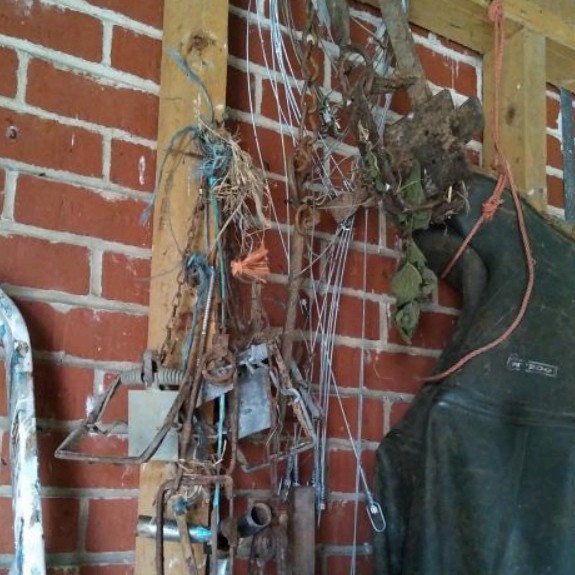
An assortment of traps found in Bryant’s garage. Photo: RSPB
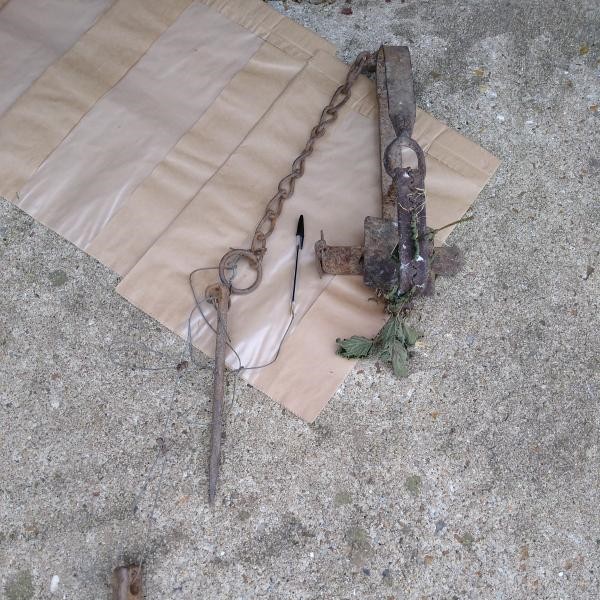
One of the gin traps with what look like relatively fresh nettles caught in the jaw. Photo: RSPB
Several birds of prey have been found poisoned in the Belchford area over a number of years. In 2022 a Buzzard was found poisoned by Alphachloralose. In 2020 another Buzzard was killed having ingested the banned insecticide Aldicarb, and in 2017 a Red Kite was killed by Alphachloralose. Bryant was not charged in relation to poisoning any of these birds.
It is illegal to intentionally kill, injure or take a wild bird in the UK under the Wildlife and Countryside Act 1981. Yet the persecution of raptors persists, particularly in connection with land managed for gamebird shooting. Of all individuals convicted of bird of prey persecution-related offences from 2009 to 2023, 68% have been gamekeepers.
Howard Jones, RSPB Senior Investigations Officer, said:
“This case highlights the immense value of police searches in relation to bird of prey persecution which clearly has been an issue in this area. This search found illegal poisons being used in a hugely dangerous manner, putting the public and wildlife at risk, along with a number of illegal traps.
“We are urging the UK Government to introduce a system of licensing for all gamebird shooting, whereby this licence to operate could be revoked if crimes against birds of prey are detected on an estate. This would set a better precedent and act as a greater deterrent to those tempted to commit these crimes. “We thank Lincolnshire Police, and in particular DC Aaron Flint, on an excellent investigation into this case, demonstrating the value in strong partnership working in tackling bird of prey persecution“.
DC Aaron Flint, Forces Wildlife Crime Officer at Lincolnshire Police, said:
“Unfortunately, this case is just one of a large number of bird of prey poisonings reported in Lincolnshire in recent years. However, the outcome demonstrates that Lincolnshire Police takes bird of prey persecution seriously. We thoroughly investigate any reports that relate to criminal activity around birds of prey. Our message is this: If you commit crimes against wildlife in Lincolnshire, we will identify you and you will be put before the courts.
“This investigation was made possible through close collaboration with multiple agencies, and I want to express my gratitude to the National Wildlife Crime Unit, the RSPB, Natural England, CPS and SASA for their invaluable support. The Forensic Analysis Fund also played a vital role in advancing this investigation“.
Chief Inspector Kevin Lacks-Kelly, Head of the UK National Wildlife Crime Unit:
“Thanks to the work of Police and Partners we have seen justice delivered. This conviction sends a strong message that bird of prey crime will not be tolerated, and you will feel the full force of the national policing capability. These offences are not only cruel, the undermine the conservation of our vulnerable wildlife. These birds should be free for us all to enjoy, not consigned to a police evidence bags.”
If you have information about anyone killing birds of prey which you wish to report anonymously, call the RSPB’s confidential Raptor Crime Hotline on 0300 999 0101.
ENDS
Well done to Lincolnshire Police Rural Crime Team and the partner agencies whose hard work resulted in Bryant’s conviction.
£7,000 is a relatively small fine given the seriousness of Bryant’s crimes, although when compared with some of the recent pathetic fines handed out by courts for wildlife crimes, this figure can be viewed as being substantial.
I’ve also been told by a blog reader who was observing proceedings in court, that it was mentioned that Bryant’s defence costs were £100,000. If that figure is accurate then he certainly has taken a big financial hit.
Earlier this month, following a trial at Lincolnshire Magistrates Court, gamekeeper John Bryant, 40, of West Ashby, Horncastle was found guilty of multiple offences following a police investigation into the illegal killing of a red kite and two buzzards over a five year period (see here).
Sentencing was deferred until this morning.
Lincolnshire Police have just issued the following statement:
MAN SENTENCED FOR POSSESSING DANGEROUS CHEMICALS AND BIRD TRAPS
A farmer and game keeper who used illegal traps and stored dangerous chemicals has been sentenced.
Police officers found the items after an investigation into the deaths of three birds of prey led them to the property of John Bryant from West Ashby in Horncastle.
The 40-year-old pleaded guilty to two charges and was found guilty of two more under the Wildlife and Countryside Act and Healthy and Safety Regulations when he appeared at Lincoln Magistrates’ Court earlier this month.
Investigators found the dead birds – a red kite and two buzzards – just north of West Ashby; forensic analysis determined they had been poisoned.
The findings led officers to execute a warrant and search Bryant’s land on 4 October 2022 where items were found which suggested he was targeting birds of prey using poison and traps.
Lincolnshire’s Rural Crime Action Team was joined by the Royal Society for the Protection of Birds, the National Wildlife Crime Unit, and Inspectors from Natural England to carry out the warrant.
A chemical identified as Alphachloralose – typically used to kill rodents and which is also one of the most common substances known to poison birds of prey – was discovered in a vehicle being used by Bryant with a second tub containing the same product later being found in his garage.
The chemical was highly concentrated with levels found to be over 80% meaning it is a banned and highly dangerous substance.
Illegal traps were also found in the search.
Two pole traps, which are specifically used to kill birds of prey, were recovered at the property at two pheasant release pens and found to contain tawny owl and pigeon DNA.
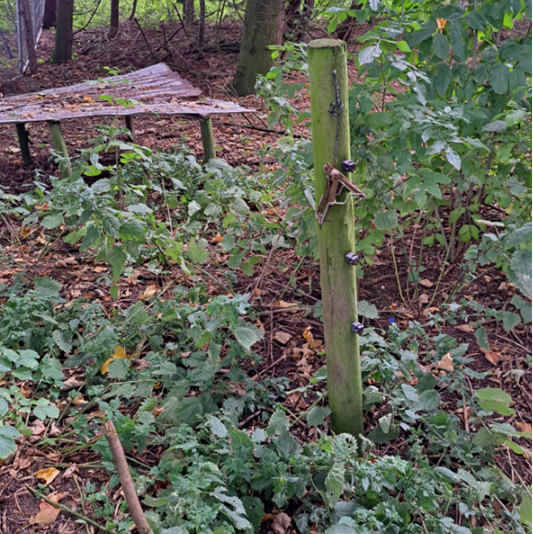
One of the illegal pole traps found at Bryant’s pheasant pen. These barbaric traps have been banned in the UK since 1904! Photo via Lincolnshire Police
Bryant pleaded guilty to two charges of storing Alpha Chloralose at his home and was found guilty of two charges of possessing a spring trap tethered to a pole. These relate to contravening Health and Safety Regulations and the Wildlife Countryside Act.
He was found not guilty of a further two counts of possessing Alpha Chloralose; two counts of using a spring trap tethered to a pole; and two counts of possessing gin traps.
Bryant was sentenced today and must pay fines of £2112, he must pay costs of £4492 and a victim surcharge of £845.
Due to his conviction, Bryant can no longer use a General Licence to carry out vermin control.
The sentence concludes a lengthy investigation that took years to bring to court and saw Lincolnshire Police work with a variety of partners to bring Bryant to justice.
It showcases the hard work, determination and tenacity of our Rural Crime Action Team and our commitment to protecting the county’s animals, not just its people.
DC Aaron Flint, Force Wildlife Crime Officer, Rural Crime Action Team, said:
“Unfortunately, this case is just one of many birds of prey poisonings reported in Lincolnshire in recent years. However, the outcome demonstrates that we and other agencies will take raptor persecution very seriously.
“We thoroughly investigate any reports that relate to criminal activity around birds of prey.Our message to anyone who unlawfully harms or kills our iconic wildlife is this; If you commit crimes against wildlife in Lincolnshire, we will identify you and you will be put before the courts where the evidence allows.
“This investigation was made possible through close collaboration with multiple agencies, and I want to express my gratitude to the National Wildlife Crime Unit, the Royal Society for the Protection of Birds, Natural England, and the Wildlife DNA Forensic unit at SASA for their invaluable support.
“The Forensic Analysis Fund also played a vital role in advancing this investigation and the Wildlife Specialist at the Crown Prosecution Service.”
Chief Inspector Kevin Lacks-Kelly, Head of the UK National Wildlife Crime Unit said:
“Thanks to the work of police and partners we have seen justice delivered. This conviction sends a strong message that bird of prey crime will not be tolerated, and you will feel the full force of the national policing capability.
“These offences are not only cruel, they undermine the conservation of our vulnerable wildlife. These birds should be free for us all to enjoy, not consigned to police evidence bags.”
Notes
Charges could not be brought under Section 1 of the Wildlife and Countryside Act 1981 in respect of the original three birds of prey as these are time-limited offences.
The Forensic Analysis Fund (FAF) offers financial support to police and customs officers seeking to carry out forensic analysis during a wildlife crime investigation -using funds donated from government departments and non-government organisations. For amounts up to £300 the scheme will cover full forensic costs. For amounts in excess of £300, the scheme will cover the initial £300 plus 50% of the remainder. The fund has been established to encourage the use of forensic techniques to help solve wildlife crimes and comes under the banner of the Partnership for Action against Wildlife Crime (PAW). Many wildlife cases which make use of forensic analysis would otherwise have failed to reach prosecution stage or be eliminated at an early stage. Founded in 2008, the scheme has already provided money to help support over 60 cases.
ENDS
UPDATE 18.20hrs: RSPB statement on conviction of Lincolnshire gamekeeper John Bryant (here)
Further to this morning’s blog about Natural England’s farcical interim evaluation of whether, as a result of brood meddling, attitudes within the grouse shooting industry had changed towards a greater tolerance of hen harriers (see here – spoiler alert, no, they obviously haven’t!), Natural England has today made an announcement about the status of the hen harrier brood meddling sham trial.
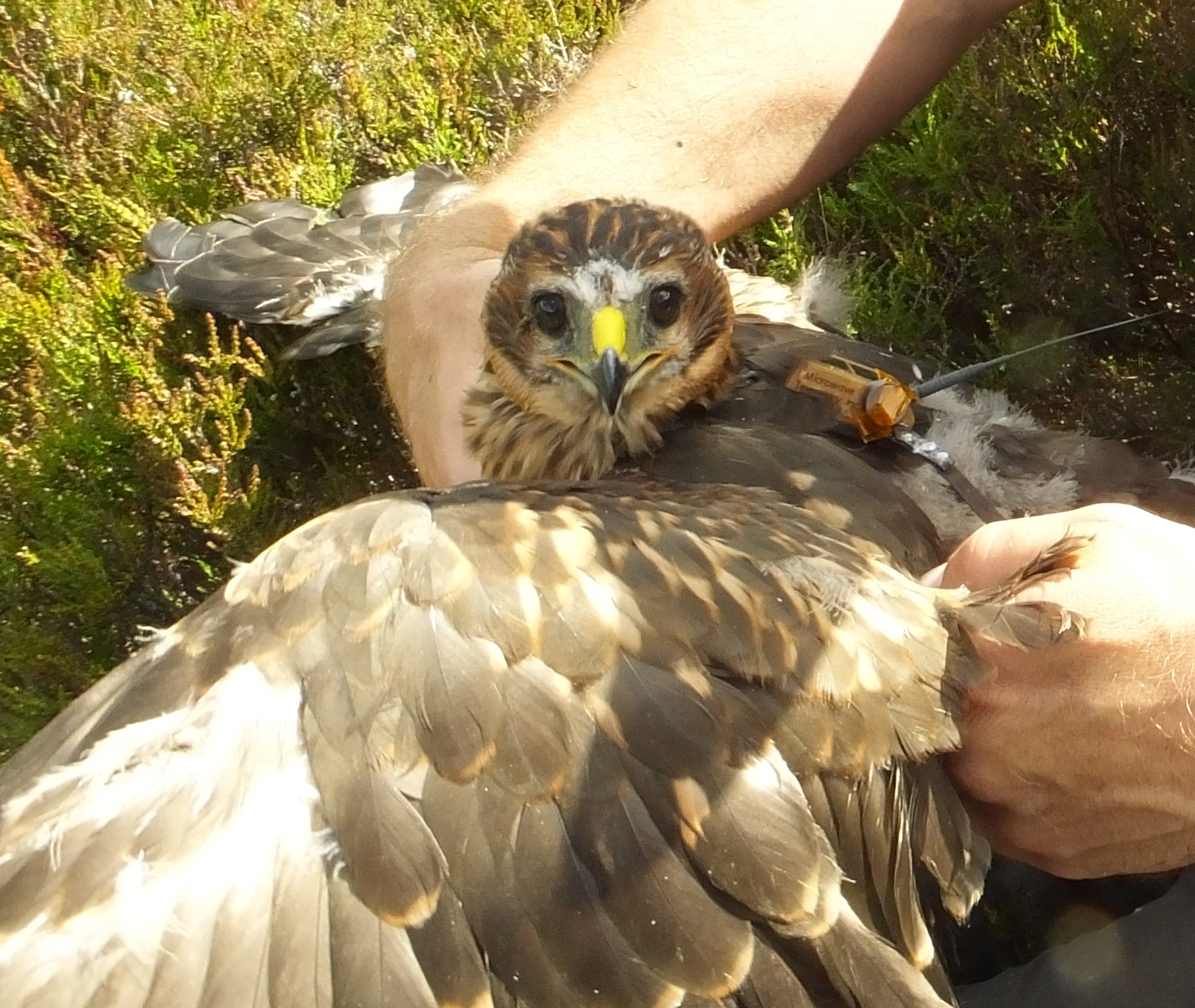
For new blog readers, the hen harrier brood meddling trial was a conservation sham sanctioned by DEFRA as part of its ludicrous ‘Hen Harrier Action Plan‘ and carried out by Natural England between 2018 – 2024, in cahoots with the very industry responsible for the species’ catastrophic decline in England. In general terms, the plan involved the removal of hen harrier chicks from grouse moors, they were reared in captivity, then released back into the uplands just in time for the start of the grouse-shooting season where many were illegally killed. It was plainly bonkers. For more background see here and here.
Natural England’s announcement, attributed to John Holmes, NE Strategy Director, and published here, announces that the seven-year brood meddling sham trial has concluded and the ‘partnership’ has now closed.
The announcement also states that no decision has yet been taken about whether NE will issue licences for hen harrier brood meddling to be rolled-out on a wider, annual basis – we know that there is currently a live licence application outstanding from the Moorland Association (grouse moor owners’ lobby group in England) for brood meddling, which apparently (see here and here) includes the following condition requests:
That there should be a single release site [for the brood meddled HHs] irrespective of the location from where they’d been removed from their nests; and
That the requirement for the brood meddled HHs to be satellite-tagged should be dropped.
Natural England states that it has commissioned four research reports about the brood meddling trial, covering population modelling, social science, and evaluation, and that any decision on the future of brood meddling licences will be based on an assessment of those reports. Only one report has been published so far (population modelling) and there is no indication about when the others will be published.
Natural England’s general review of the brood meddling trial has concluded that during the initial stages of the trial there was a significant increase in the number of hen harriers nesting in some grouse moor areas, mostly where brood meddling was being undertaken. However, towards the later stages of the trial this figure dropped substantially.
Natural England’s review has also concluded that illegal persecution has continued throughout the trial period in some grouse moor areas.
The NE-commissioned report on recent hen harrier population trends was undertaken by the British Trust for Ornithology (BTO) and was published this morning (see below for report). The study used a population modelling approach to try to determine the mechanism behind the sudden increase in the hen harrier population and whether that was attributable to the brood meddling trial or to other factors.
The authors used modelling techniques to look at changes in the rates of hen harrier productivity, survival and settlement but there were obvious constraints in the limited data available. They concluded that it was not possible to determine definitively whether the population increase was solely related to brood meddling or whether it was a response to wider environmental drivers (e.g. high prey availability).
The study was unable to determine whether hen harrier survival had increased in England during the trial period, and if it had, to what extent.
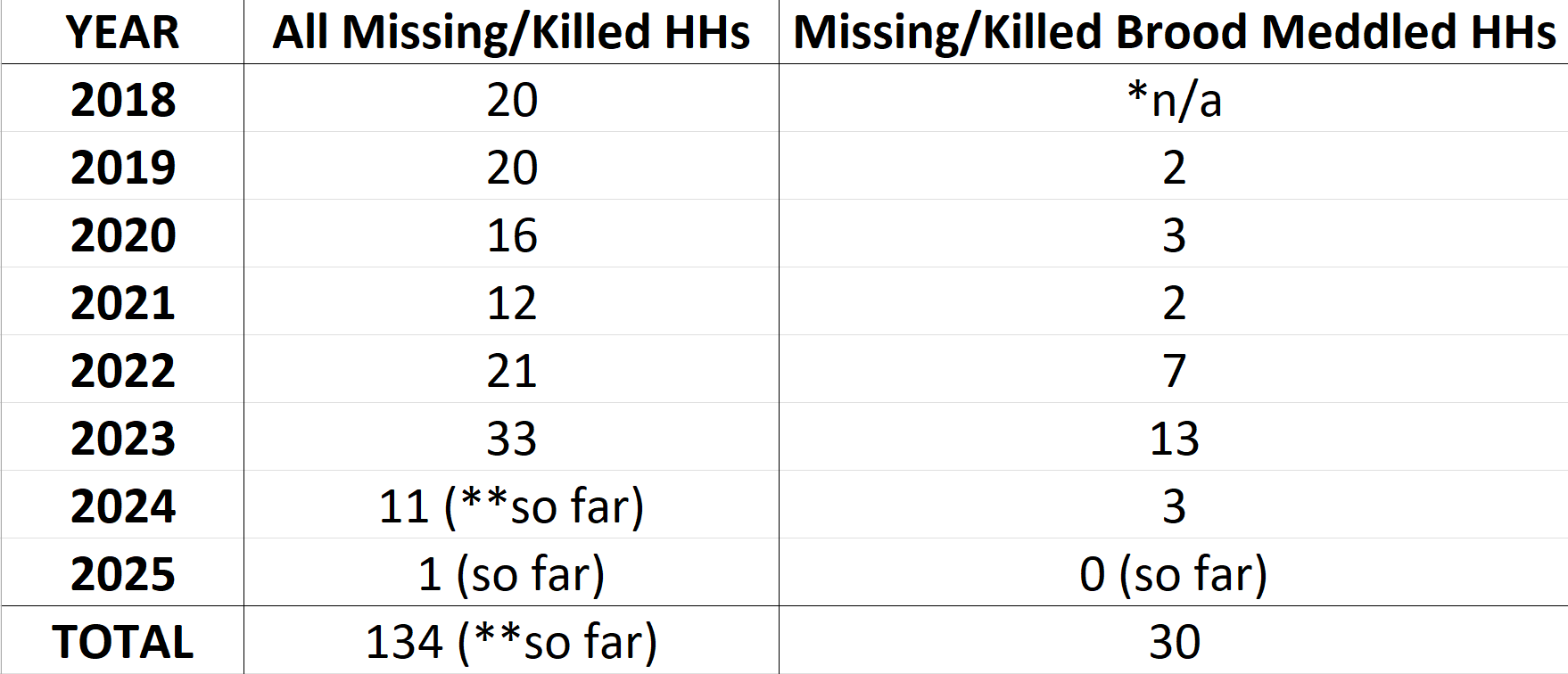
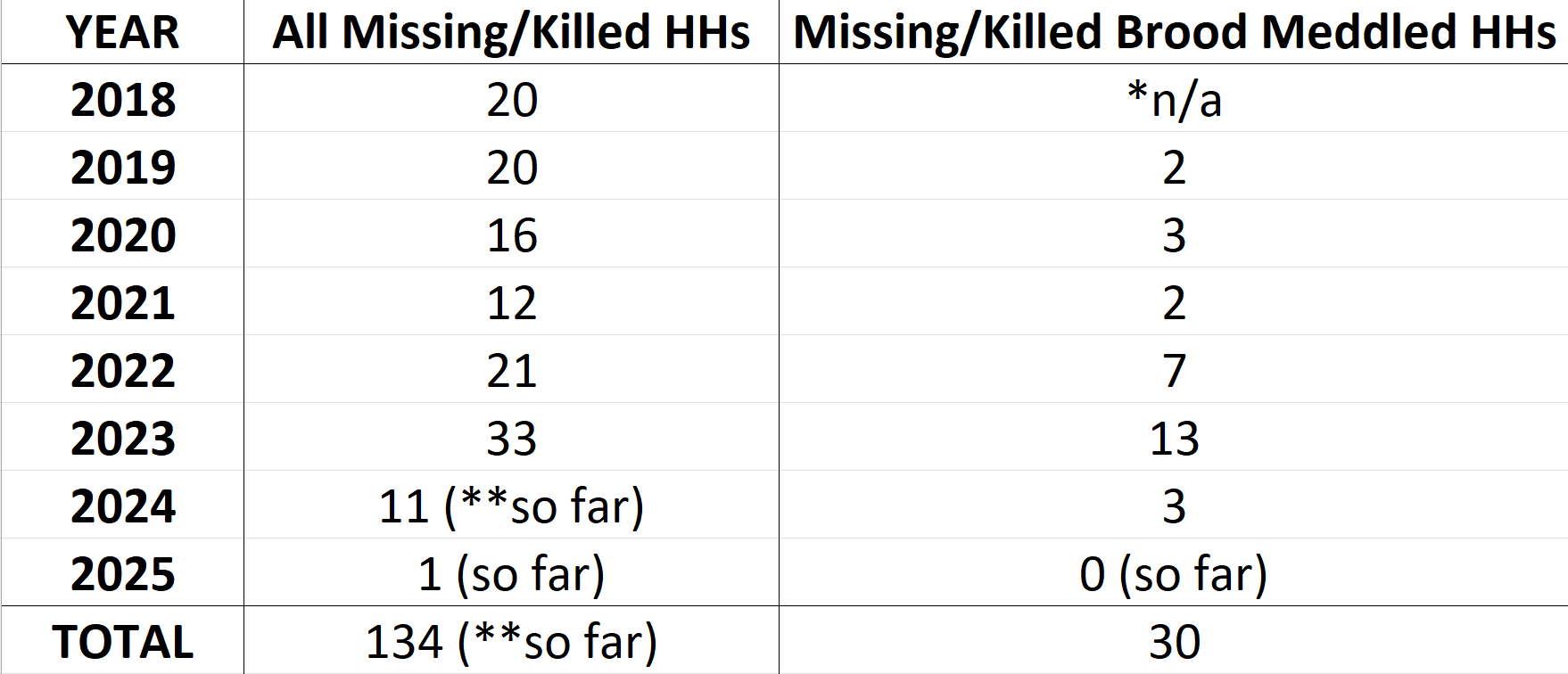
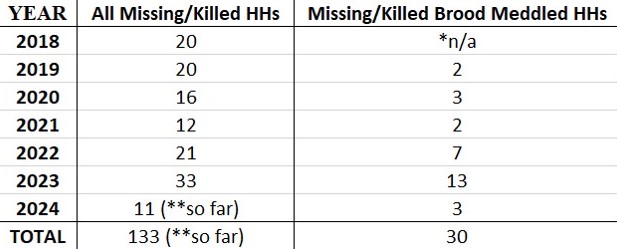
In total, 15 hen harrier nests were brood meddled during the trial period and 58 chicks were released back into the uplands. We know that at least 30 of those brood meddled chicks were either brutally killed or ‘disappeared’ in suspicious circumstances, mostly on or close to driven grouse moors. Some of them did manage to survive long enough to breed but many of them were killed within a few weeks/months of being released.
In addition to those 30 young birds, we know there were at least another 104 hen harriers that were killed or ‘disappeared’ during the brood meddling trial period (and actually this figure will definitely rise – we’re waiting for the police to publicise more cases).
*n/a – no hen harriers were brood meddled in 2018. **Post mortem reports on a further six hen harriers found dead in 2024 are awaited.
So what have we learnt? That despite over 70 years of supposed legal protection, and over £1 million (at least) of public money being wasted on years of facilitating pantomime ‘partnerships’ and a sham brood meddling trial, hen harriers are STILL being killed illegally by many within the grouse shooting industry.
I’m pleased that Natural England has finally seen sense and closed the brood meddling trial – it should never have even started – but we still need to see whether NE will issue further brood meddling licences to the very industry that’s responsible for bringing the hen harrier to its knees.
Natural England’s statement this morning included this:
‘It follows that a range of approaches may be required to reduce illegal killing on grouse moors and increase hen harrier numbers in future, potentially ranging from co-operative approaches to mitigate the impacts of hen harriers on grouse and support responsible grouse moor management, to monitoring and enforcement activities designed to tackle illegal killing and disturbance, depending on location and situation‘.
No, Natural England. Forget ‘co-operative approaches to mitigate the impacts of hen harriers on grouse‘. If these businesses are not sustainable because they cannot function without illegally killing protected species then the industry should be consigned to the dustbin. Enough, now. This charade of sustainability and respectability has gone on for far too long.
For those who want to see an end to driven grouse shooting, please sign this petition calling for a ban. It currently has 77,000 signatures – it needs 100,000 signatures before 22nd May 2025 to trigger a parliamentary debate in Westminster.
For those interested in reading the Natural England-commissioned report on recent hen harrier population trends in England, undertaken by the BTO, it’s available to read/download here:
This is a blog I’ve been meaning to write for some time but for various reasons it kept dropping down the list. However, given hen harrier brood meddling is back on the agenda (we’re awaiting the imminent publication by Natural England of its review of the hen harrier brood meddling trial and a decision about whether brood meddling will be allowed to continue now the 7-year trial has ended) it’s probably timely to write it now.
For new blog readers, the hen harrier brood meddling trial was a conservation sham sanctioned by DEFRA as part of its ludicrous ‘Hen Harrier Action Plan‘ and carried out by Natural England between 2018 – 2024, in cahoots with the very industry responsible for the species’ catastrophic decline in England. In general terms, the plan involved the removal of hen harrier chicks from grouse moors, they were reared in captivity, then released back into the uplands just in time for the start of the grouse-shooting season where many were illegally killed. It was plainly bonkers. For more background see here and here.
One of the objectives of running the brood meddling ‘trial’ was to test whether the availability of brood meddling would change the attitudes of grouse moor owners/managers towards hen harriers (i.e. would they have more tolerance of harriers), which could be judged by, for example, reduced levels of illegal persecution.
The brood meddling trial began in 2018 and three years in, Natural England conducted an ‘interim’ social science study in 2021, ‘to evaluate any changes in social attitudes by those involved in upland management‘.
This interim social science evaluation was completed in 2022 but I couldn’t find a copy in the public domain so I eventually received a (heavily redacted) copy via FoI in 2023. It’s this report that is the focus of this blog and the report is available to read/download at the bottom of this page.
I’ve read a lot of nonsense from Natural England over the years about hen harrier brood meddling but I’ve got to say, this report is right up there as being hilariously bad.
The evaluation was flawed right from the start. Given the tiny number of grouse moors directly involved in the brood meddling trial, it meant that there weren’t that many grouse moor owners and/or gamekeepers available to participate in Natural England’s evaluation interviews to measure if/how attitudes had changed.
There were so few relevant interviewees, in fact, that to make up the numbers for a semi-decent sample size it was decided to extend the list of participants to include seven Natural England staff (who were directly involved in the trial) as well as 12 non-Natural England participants who were directly involved in the brood meddling trial including a few grouse moor owners, gamekeepers and a bunch of people who weren’t from the grouse shooting industry at all but who had participated directly in the brood meddling trial, either by helping to apply for licences or those physically undertaking the brood meddling. The actual breakdown of who these people were and what their roles/affiliations were have been redacted from the report.
So, the opinions of 19 interviewees, seven of whom were Natural England staff and 12 others, some of whom were not directly associated with grouse moor management but were being paid what is believed to have been a large sum of money by the Moorland Association to undertake brood meddling, were used to assess whether attitudes had changed towards hen harriers within the grouse shooting industry as a result of brood meddling being available.
You couldn’t make it up!
Of course they’re going to say that brood meddling is a brilliant wheeze and is a positive course of action and how it’s promoted changed attitudes towards hen harriers; for some of them, their jobs/income relied upon brood meddling continuing!
To be fair to the authors of the interim evaluation report, some of the limitations were acknowledged:
“It is important to recognise a number of potential limitations of this study. First, although the [report’s social science] researchers are not part of the project delivery team, their affiliation with Natural England may have limited respondents’ willingness to be open and honest about their experiences of the trial. Second, in order to provide evidence for the process evaluation, the sample is limited only to those who are delivering or participating in the trial. There have only been a limited number of grouse moors where the density threshold for using brood management has been met as well as receptor sites assessed as suitable for harrier release within the same SPA. This has resulted in the comparatively small sample size of this research compared to the totalnumber of grouse moors and people involved in grouse shooting. As such, participants are likely to be among those members of the moorland management community who are most receptive to the idea of brood management and who recognise the need to change attitudes and behaviours. Caution must therefore be taken in extrapolating the potential effects of rolling the trial out more widely“.
To be honest, as soon as it was known that there were too few relevant participants available this social science ‘study’ should have been scrapped. How much public money was wasted on it?
I won’t go in to detail about the study’s findings – you can read them for yourselves in the report below – but there are some hilarious assertions made by the interviewees.
These include a suggestion that ‘within the last five years [up to 2021] there has been a wider change in attitude toward harriers among the grouse shooting community due to recognition that the future of grouse shooting is intrinsically linked with the future of hen harriers. Brood management was perceived to have tapped in to this change and helped harness it in a practical way‘
and
‘Brood management enabled moors to hold each other to account for any persecution through greater self-policing‘.
Of course, we all have the benefit of hindsight several years later and we know that attitudes by the majority of grouse moor owners/managers towards hen harriers has not changed one bit, as evidenced by the continued illegal killing throughout the duration of the brood meddling trial:
*n/a – no hen harriers were brood meddled in 2018. **Post mortem reports on a further six hen harriers found dead in 2024 are awaited.
I haven’t seen any evidence of ‘greater self-policing’ by grouse moor owners/managers, have you? How many cases have there been where someone from within the grouse shooting industry has reported another for illegal persecution?
What we’ve seen instead is at least 134 hen harriers confirmed illegally killed or ‘missing’ in suspicious circumstances on or close to grouse moors (here), complete denial by the then Chair of the Moorland Association, Mark Cunliffe-Lister, that persecution was even happening (here), the current CEO of the Moorland Association, Andrew Gilruth, being booted off the national priority delivery group (RPPDG) set up to tackle illegal raptor persecution and being accused by the police of “wasting time and distracting from the real work” of the police’s new Hen Harrier Taskforce (here), and a police investigation into alleged raptor persecution on a grouse moor that was directly involved in brood meddling (here). Oh, and what should have been a police investigation into the illegal poisoning of a red kite found dead on another grouse moor that was also directly involved in brood meddling (here).
Changed attitudes? Not by any stretch of imagination.
Although, thinking about it, it probably IS fair to say that attitudes have changed, but not in the way Natural England intended. They’ve changed in as much as more recently, gamekeepers are deliberately NOT targeting hen harriers that are carrying satellite tags because they know that will attract unwanted attention and instead they’re aiming their guns at untagged harriers, simply because those untagged victims are less likely to be detected by researchers or the authorities.
We saw and heard a vivid example of this change of tactics in the Channel 4 News programme that aired last October, which showed RSPB covertly-captured audio and video footage of three gamekeepers on a Yorkshire grouse moor discussing this very issue, deciding not to shoot a tagged hen harrier but then apparently shooting and killing an untagged one. If you haven’t seen this programme I strongly encourage you to watch it – it’s astounding:
I’ve no idea whether Natural England’s interim social science evaluation of the hen harrier brood meddling trial served any useful purpose in NE’s overall review of the trial, but hopefully we won’t need to wait for much longer before the final review is published and we learn whether the Moorland Association’s current licence application for brood meddling has been granted.
In the meantime, if you want a good laugh, here’s the interim report:
Another trial and yet another gamekeeper convicted of offences relating to the illegal killing of birds of prey.
The trial of gamekeeper John Bryant, in relation to the illegal killing of a red kite and two buzzards, concluded at Lincolnshire Magistrates Court last week where he was convicted of four of ten alleged offences.
Gamekeeper Bryant, 40, of West Ashby, Horncastle, Lincolnshire had been summonsed to court last September following a police investigation into reports of three birds of prey, a red kite and two buzzards, being poisoned and killed over a five year period between 2017 and 2022.
Buzzard photo by Ruth Tingay
Bryant had pleaded not guilty to ten charges (two charges of using a trap to kill or take a wild bird, six charges of possessing an article capable of being used to commit a summary offence, and two charges of contravening health & safety regulations) so he faced trial starting 6th March 2025.
He will be sentenced for the four offences next week when full details of the case and convictions will be published.
UPDATE 20 March 2025: Lincolnshire gamekeeper John Bryant sentenced for crimes relating to raptor persecution – police statement (here).
I’ve read two blogs recently that suggest we might be heading for yet another pointless and futile ‘dialogue’ process, purportedly to find a ‘solution’ to the ongoing illegal killing of hen harriers on grouse moors.
Representatives of the criminals within the driven grouse shooting industry would be on one side of the table and conservationists and the police on the other.
This hen harrier was euthanised after suffering catastrophic leg injuries in an illegal trap set next to its nest on a grouse moor in Scotland in 2019. Photo by Ruth Tingay
The first public indication that this dialogue process was being mooted appeared in a blog published by the charity Hen Harrier Action at the end of January 2025 (here). The charity had interviewed Detective Inspector Mark Harrison of the National Wildlife Crime Unit, who leads on the Hen Harrier Task Force.
In that interview, DI Harrison is quoted as follows:
“We are applying for funding from DEFRA to use the IUCN Human-Wildlife Conflict and Coexistence Guidelines as a tool for building for the future. This funding will bring in independent facilitators to collaborate with key stakeholders to find and implement long term solutions. We hope that this funding will be for three years“.
The second blog which refers to the same dialogue process is this one, posted three days ago on the Northern England Raptor Forum’s website (NERF represents raptor fieldworkers across northern England).
The NERF blog starts off with a response to the suspicious disappearance of satellite-tagged hen harrier ‘Red’, who hatched on the Tarras Valley Nature Reserve last year but then vanished on a grouse moor in the North Pennines in January 2025 (here).
It then moves on to the so-called ‘conflict resolution’ dialogue process, as follows:
“In the meantime, the MA [Moorland Association] are demanding that NE and Defra undertake another round of conflict resolution claiming that the killing of Hen Harriers is the result of human animal conflict as defined by the ICUN Guidelines. This assertion is dismissed by conservation groups, including by NERF, as irrelevant. The so-called conflict is entirely the result of criminals who consistently break the law at will killing Hen Harriers throughout the North of England. It is evident that there are many in the grouse shooting industry who will not be satisfied until Hen Harriers are extinct in the North of England.
“If the rumours are correct and a new round of conflict resolution is being entered into it will be yet another victory for the grouse shooting industry who will have kicked the problem into the long grass, again. Apparently, the plan is for the process to last for 3 years and cost £400, 000. If past experience is anything to go by the process will last longer and cost significantly more than the original estimate. How much of the estimated cost will come from the public purse is not known at the moment, however any intent to squander tax payer’s money on this flawed idea should be resisted. Hardly a day goes by without a Cabinet Minister reminding us that they inherited a £22 billion ‘black hole’. Government Departments are having their budgets slashed and staff numbers are being reduced. Natural England’s Hen Harrier field team is being reduced from 3 to 2. £400k could pay for that field worker to be retained for up to 10 years“.
The earlier conflict resolution process that NERF refers to was known as the ‘Hen Harrier Dialogue’ which began nineteen years ago in 2006 and was hosted by The Environment Council. It dragged on until 2013, by which time the breeding population of hen harriers in England had fallen to just a single, successful pair, the RSPB had walked away from the dialogue (here), later followed by NERF (here) and then the Hawk & Owl Trust (here).
The dialogue process was a complete and utter failure. It achieved absolutely nothing in terms of hen harrier conservation but was used by the grouse shooting industry as a politically-pleasing gesture and a useful delaying ploy.
The sham hen harrier brood meddling trial followed, between 2018 – 2024, which proved that attitudes in the grouse shooting industry towards hen harriers remained firmly in the Victorian era with at least 134 hen harriers ‘disappearing’ or confirmed illegally killed since the trial began, most of them on or close to grouse moors.
*n/a – no hen harriers were brood meddled in 2018. **Post mortem reports on a further six hen harriers found dead in 2024 are awaited.
We are currently awaiting a formal review of the brood meddling sham by Natural England and a decision on whether NE will issue a licence to the grouse shooting industry for further brood meddling this year and in the years ahead (see here).
It’s an oft-repeated phenomenon that whenever someone ‘new’ gets involved in the issue of hen harrier persecution, indeed the issues relating to all raptor persecution, that they call for all ‘sides’ to sit down together, build partnerships and reach a resolution that will end the illegal killing.
It’s an understandable and seemingly sensible idea. That is, until you look back at the history of this issue and realise that one ‘side’, i.e. the criminals within the shooting industry, simply aren’t prepared to tolerate hen harriers / raptors on ‘their’ grouse moors because of the perceived threat to ‘their’ red grouse.
Pseudo ‘partnerships’ with the game-shooting industry have been set-up so many times, only to fail miserably in the face of ongoing illegal persecution and abject denial from the shooting industry’s representatives (e.g. see here, here, here, here, here, here, here).
As far as I can see, nothing has changed to suggest that setting up yet another sham partnership to address the illegal killing of hen harriers on driven grouse moors will do anything other than provide the criminals with yet another opportunity to masquerade in public as law-abiding, responsible custodians whilst in private continuing to shoot, trap, stamp on, and pull the heads and wings off any hen harrier that dares to go anywhere near a driven grouse moor.
The time for talking ended years ago.
Sign the Wild Justice petition calling for a ban on driven grouse shooting HERE. It is currently supported by 69,000 people. It requires 100,000 people to sign it, before 22 May 2025, to trigger a debate in the Westminster parliament.
UPDATE 9 July 2025: Defra refuses funding for another futile ‘dialogue’ process to address ongoing killing of Hen Harriers on grouse moors (here).
Natural England’s review of its controversial Hen Harrier Brood Meddling trial is ‘being prepared for publication‘, according to a Freedom of Information request.
For new blog readers, the hen harrier brood meddling trial was a conservation sham sanctioned by DEFRA as part of its ludicrous ‘Hen Harrier Action Plan‘ and carried out by Natural England between 2018 – 2024, in cahoots with the very industry responsible for the species’ catastrophic decline in England.
In general terms, the plan involved the removal of hen harrier chicks from grouse moors, they were reared in captivity, then released back into the uplands just in time for the start of the grouse-shooting season where many were illegally killed. It was plainly bonkers. For more background see here and here.
Hen harrier photo by Laurie Campbell
In September 2024, Natural England announced on its blog that it was ‘currently reviewing and analysing the data gathered under the trial, a process which will be concluded later this year‘:
I have speculated previously that this relatively speedy review was probably triggered by an apparent application by the Moorland Association for a licence to continue Hen Harrier brood meddling as part of what it laughingly calls a ‘conservation licence’ (see here).
As I understand it, in September 2024 the Moorland Association (grouse moor owners’ lobby group in England) applied to Natural England for a brood meddling licence and it included the following condition requests:
That there should be a single release site [for the brood meddled HHs] irrespective of the location from where they’d been removed from their nests; and
That the requirement for the brood meddled HHs to be satellite-tagged should be dropped.
The first proposed condition is presumably designed to get around the problem of there not being sufficient receptor sites willing to take the brood meddled harriers (just a handful of estates agreed to receive brood meddled hen harriers during the trial period). I’m also led to understand that the proposed single release site is, shall we say, a location of great interest to this blog.
The second proposed condition, that any brood meddled hen harriers should not be satellite-tagged, is presumably because the data from current satellite-tagged hen harriers have been so very effective at revealing the devastating extent of ongoing hen harrier persecution on grouse moors (e.g. see here and here).
We also know that gamekeepers on grouse moors are now selectively choosing to kill hen harriers that are NOT satellite-tagged because there’s less chance of their crimes being detected (e.g. see here).
The deadline for Natural England to respond to the Moorland Association’s licence application must be fast approaching, hence Natural England’s relatively speedy brood meddling review.
Given that Natural England had said in September 2024 that its brood meddling review would be ‘concluded later this year‘, I submitted an FoI request on 2nd January 2025 to find out whether the review had been completed.
Natural England’s response was dated 28 January 2025, so a month on, the publication of this review must now be imminent.
Will Natural England conclude that the hen harrier brood meddling trial was ‘aremarkable success story‘ as the Moorland Association ridiculously claimed? Remember, the trial was set up to test two specific objectives:
The practicalities of brood management: can [hen harrier] eggs or chicks be taken from the wild and raised in captivity, can those chicks be released back in to the wild and the implications for their subsequent behaviour and survival;
Changes in societal attitudes by those involved in upland land management to the presence of hen harriers on grouse moors with a brood management scheme in place.
It’s quite clear that objective 1 has been answered by the trial – although chicks rather than eggs were brood meddled due to concerns about transporting the eggs from the nests over rough terrain, but that’s no big deal in terms of assessing the viability of the objective.
But what about objective 2? It’s abundantly clear that apart from the handful of estates involved in the brood meddling trial (whether they be ‘donor’ or ‘receptor’ sites), that a high level of illegal hen harrier persecution has continued amongst the wider grouse moor industry (at least 134 hen harriers reported as ‘missing’/illegally killed since the trial began in 2018, including at least 30 brood meddled hen harriers).
Indeed, the illegal killing is still on such a scale that the police have had to set up a new Hen Harrier Taskforce, designed to use techniques usually seen when dealing with serious and organised crime, to address the ongoing criminality.
*n/a – no hen harriers were brood meddled in 2018. **Post mortem reports on a further six hen harriers found dead in 2024 are awaited.
Many of us will be taking a very close look at Natural England’s review of brood meddling whenever it’s published. Watch this space.
For anyone who still wants to pretend that the grouse shooting industry isn’t responsible for the systematic extermination of hen harriers on grouse moors across the UK, here’s the latest catalogue of crime that suggests otherwise.
This male hen harrier died in 2019 after his leg was almost severed in an illegally set trap that had been placed next to his nest on a Scottish grouse moor (see here). Photo by Ruth Tingay
This is the blog I now publish after every reported killing or suspicious disappearance.
“They disappear in the same way political dissidents in authoritarian dictatorships have disappeared” (Stephen Barlow, 22 January 2021).
Today the list has been updated to include the most recently reported victim, ‘Red’, who hatched on the Tarras Valley Nature Reserve in 2024 and ‘disappeared’ on a grouse moor in the North Pennines in January 2025 (here).
I’ve been compiling this list only since 2018 because that is the year that the grouse shooting industry ‘leaders’ would have us believe that the criminal persecution of hen harriers had stopped and that these birds were being welcomed back on to the UK’s grouse moors (see here).
This assertion was made shortly before the publication of a devastating new scientific paper that demonstrated that 72% of satellite-tagged hen harriers were confirmed or considered likely to have been illegally killed, and this was ten times more likely to occur over areas of land managed for grouse shooting relative to other land uses (see here). A further scientific paper published in 2023 by scientists at the RSPB, utilising even more recent data, echoed these results – see here.
2018 was also the year that Natural England issued a licence to begin a hen harrier brood meddling trial on grouse moors in northern England. For new blog readers, hen harrier brood meddling was a conservation sham sanctioned by DEFRA as part of its ludicrous ‘Hen Harrier Action Plan‘ and carried out by Natural England (NE), in cahoots with the very industry responsible for the species’ catastrophic decline in England. For more background see here and for a critical evaluation of the trial after 5 years see this report by Wild Justice. In 2024 the brood meddling trial appeared to collapse for reasons which are not yet clear (see here) and the licence for the so-called ‘scientific trial’ expired. Natural England is currently undertaking a review of the ‘trial’ and a report is expected soon.
Brood meddling has been described as a sort of ‘gentleman’s agreement’ by commentator Stephen Welch:
“I don’t get it, I thought the idea of that scheme was some kind of trade off – a gentleman’s agreement that the birds would be left in peace if they were moved from grouse moors at a certain density. It seems that one party is not keeping their side of the bargain“.
With at least 134 hen harriers gone since 2018, and 30 of those being brood meddled birds, there is no question that the grouse shooting industry is simply taking the piss. Meanwhile, Natural England pretends that ‘partnership working’ is the way to go and consecutive DEFRA Ministers have remained silent.
*n/a – no hen harriers were brood meddled in 2018. **Post mortem reports on a further six hen harriers found dead in 2024 are awaited.
‘Partnership working’ according to Natural England appears to include authorising the removal of hen harrier chicks from a grouse moor already under investigation by the police for suspected raptor persecution (here) and accepting a £75k ‘donation’ from representatives of the grouse shooting industry that prevents Natural England from criticising them or the sham brood meddling trial (see here). This is in addition to a £10k ‘donation’ that Natural England accepted, under the same terms, in 2021 (here).
Thankfully, the Scottish Government finally decided to act by introducing a grouse moor licensing scheme under the Wildlife Management & Muirburn (Scotland) Act 2024. The intention behind this new legislation is that grouse shooting estates could have their licences suspended/revoked if, on the balance of probability, it is shown that any raptor persecution crimes (& some other associated offences) are linked with grouse moor management on that estate. There, are, however, ongoing issues with the licence as it’s been significantly watered-down after an intervention from the grouse shooting industry (see here). Work is underway to address this.
In England a new Hen Harrier Taskforce was established in 2024, led by the National Wildlife Crime Unit, to use innovative techniques to target hen harrier persecution hotspots (locations where hen harriers repeatedly ‘disappear’ or are found illegally killed). It’s too early to judge the Taskforce’s success and it’s been met with resistance from the Moorland Association, the grouse moor owners’ lobby group (here) and so far, illegal persecution continues.
So here’s the latest gruesome list of ‘missing’/illegally killed hen harriers since 2018. Note that the majority of these birds (but not all) were fitted with satellite tags. How many more [untagged] harriers have been killed? We now have evidence that gamekeepers are specifically targeting untagged hen harriers, precisely to avoid detection (see here for brilliant exposure by Channel 4 News).
February 2018: Hen harrier Saorsa ‘disappeared’ in the Angus Glens in Scotland (here). The Scottish Gamekeepers Association later published wholly inaccurate information claiming the bird had been re-sighted. The RSPB dismissed this as “completely false” (here).
5 February 2018: Hen harrier Marc ‘disappeared’ on a grouse moor in Durham (here).
9 February 2018: Hen harrier Aalin ‘disappeared’ on a grouse moor in Wales (here).
March 2018: Hen harrier Blue ‘disappeared’ in the Lake District National Park (here).
March 2018: Hen harrier Finn ‘disappeared’ near Moffat in Scotland (here).
18 April 2018: Hen harrier Lia ‘disappeared’ in Wales and her corpse was retrieved in a field in May 2018. Cause of death was unconfirmed but police treating death as suspicious (here).
8 August 2018: Hen harrier Hilma ‘disappeared’ on a grouse moor in Northumberland (here).
16 August 2018: Hen harrier Athena ‘disappeared’ on a grouse moor in Scotland (here).
26 August 2018: Hen Harrier Octavia ‘disappeared’ on a grouse moor in the Peak District National Park (here).
29 August 2018: Hen harrier Margot ‘disappeared’ on a grouse moor in Scotland (here).
29 August 2018: Hen Harrier Heulwen ‘disappeared’ on a grouse moor in Wales (here).
3 September 2018: Hen harrier Stelmaria ‘disappeared’ on a grouse moor in Scotland (here).
24 September 2018: Hen harrier Heather ‘disappeared’ on a grouse moor in Scotland (here).
2 October 2018: Hen harrier Mabel ‘disappeared’ on a grouse moor on the edge of the Yorkshire Dales National Park (here).
3 October 2018: Hen Harrier Thor ‘disappeared’ next to a grouse moor in Bowland, Lanacashire (here).
23 October 2018: Hen harrier Tom ‘disappeared’ in South Wales (here).
26 October 2018: Hen harrier Arthur ‘disappeared’ on a grouse moor in the North York Moors National Park (here).
1 November 2018: Hen harrier Barney ‘disappeared’ on Bodmin Moor (here).
10 November 2018: Hen harrier Rannoch ‘disappeared’ on a grouse moor in Scotland (here). Her corpse was found nearby in May 2019 – she’d been killed in an illegally-set spring trap (here).
14 November 2018: Hen harrier River ‘disappeared’ on a grouse moor in the Nidderdale AONB (here). Her corpse was found nearby in April 2019 – she’d been illegally shot (here).
16 January 2019: Hen harrier Vulcan ‘disappeared’ in Wiltshire close to Natural England’s proposed reintroduction site (here).
28 January 2019: Hen harrier DeeCee ‘disappeared’ in Glen Esk, a grouse moor area of the Angus Glens (see here).
7 February 2019: Hen harrier Skylar ‘disappeared’ next to a grouse moor in South Lanarkshire (here).
22 April 2019: Hen harrier Marci ‘disappeared’ on a grouse moor in the Cairngorms National Park (here).
26 April 2019: Hen harrier Rain ‘disappeared’ on a grouse moor in Nairnshire (here).
11 May 2019: An untagged male hen harrier was caught in an illegally-set trap next to his nest on a grouse moor in South Lanarkshire. He didn’t survive (here).
7 June 2019: An untagged hen harrier was found dead on a grouse moor in Scotland. A post mortem stated the bird had died as a result of ‘penetrating trauma’ injuries and that this bird had previously been shot (here).
5 September 2019: Wildland Hen Harrier 1 ‘disappeared’ on a grouse moor nr Dalnaspidal on the edge of the Cairngorms National Park (here).
11 September 2019: Hen harrier Romario ‘disappeared’ on a grouse moor in the Cairngorms National Park (here).
14 September 2019: Hen harrier (Brood meddled in 2019, #183704) ‘disappeared’ in the North Pennines (here).
23 September 2019: Hen harrier (Brood meddled in 2019, #55149) ‘disappeared’ in North Pennines (here).
24 September 2019: Wildland Hen Harrier 2 ‘disappeared’ on a grouse moor at Invercauld in the Cairngorms National Park (here).
24 September 2019: Hen harrier Bronwyn ‘disappeared’ near a grouse moor in North Wales (here).
10 October 2019: Hen harrier Ada ‘disappeared’ on a grouse moor in the North Pennines AONB (here).
12 October 2019: Hen harrier Thistle ‘disappeared’ on a grouse moor in Sutherland (here).
18 October 2019: Member of the public reports the witnessed shooting of an untagged male hen harrier on White Syke Hill in North Yorkshire (here).
November 2019: Hen harrier Mary found illegally poisoned on a pheasant shoot in Ireland (here).
November 2019: Hen harrier Artemis ‘disappeared’ near Long Formacus in south Scotland (RSPB pers comm).
14 December 2019: Hen harrier Oscar ‘disappeared’ in Eskdalemuir, south Scotland (here).
December 2019: Hen harrier Ingmar ‘disappeared’ in the Strathbraan grouse moor area of Perthshire (RSPB pers comm).
27 January 2020: Members of the public report the witnessed shooting of a male hen harrier on Threshfield Moor in the Yorkshire Dales National Park (here).
23 March 2020: Hen harrier Rosie ‘disappeared’ at an undisclosed roost site in Northumberland (here).
1 April 2020: Hen harrier (Brood meddled in 2019, #183703) ‘disappeared’ in unnamed location, tag intermittent (here).
5 April 2020: Hen harrier Hoolie ‘disappeared’ on a grouse moor in the Cairngorms National Park (here)
8 April 2020: Hen harrier Marlin ‘disappeared’ on a grouse moor in the Cairngorms National Park (here).
19 May 2020: Hen harrier Fingal ‘disappeared’ on a grouse moor in the Lowther Hills, Scotland (here).
21 May 2020: Hen harrier (Brood meddled in 2019, #183701) ‘disappeared’ on a grouse moor in Cumbria shortly after returning from wintering in France (here).
27 May 2020: Hen harrier Silver ‘disappeared’ on a grouse moor on Leadhills Estate, Scotland (here).
2020: day/month unknown: Unnamed male hen harrier breeding on RSPB Geltsdale Reserve, Cumbria ‘disappeared’ while away hunting (here).
9 July 2020: Unnamed female hen harrier (#201118) ‘disappeared’ from an undisclosed site in Northumberland (here).
25 July 2020: Hen harrier Harriet ‘disappeared’ on a grouse moor in the Yorkshire Dales National Park (here).
14 August 2020: Hen harrier Solo ‘disappeared’ in confidential nest area in Lancashire (here).
7 September 2020: Hen harrier Dryad ‘disappeared’ on a grouse moor in the Yorkshire Dales National Park (here).
16 September 2020: Hen harrier Fortune ‘disappeared’ from an undisclosed roost site in Northumberland (here).
19 September 2020: Hen harrier Harold ‘disappeared’ on a grouse moor in the Yorkshire Dales National Park (here).
20 September 2020: Hen harrier (Brood meddled in 2020, #55152) ‘disappeared’ next to a grouse moor in North Yorkshire (here).
24 February 2021: Hen harrier Tarras ‘disappeared’ next to a grouse moor in Northumberland (here)
12th April 2021: Hen harrier Yarrow ‘disappeared’ near Stockton, County Durham (here).
18 May 2021: Adult male hen harrier ‘disappeared’ from its breeding attempt on RSPB Geltsdale Reserve, Cumbria whilst away hunting (here).
18 May 2021: Another adult male hen harrier ‘disappeared’ from its breeding attempt on RSPB Geltsdale Reserve, Cumbria whilst away hunting (here).
24 July 2021: Hen harrier Asta ‘disappeared’ at a ‘confidential site’ in the North Pennines (here). We learned 18 months later that her wings had been ripped off so her tag could be fitted to a crow in an attempt to cover up her death (here).
14th August 2021: Hen harrier Josephine ‘disappeared’ at a ‘confidential site’ in Northumberland (here).
17 September 2021: Hen harrier Reiver ‘disappeared’ in a grouse moor dominated region of Northumberland (here)
24 September 2021: Hen harrier (Brood meddled in 2021, R2-F-1-21) ‘disappeared’ in Northumberland (here).
15 November 2021: Hen harrier (brood meddled in 2020, #R2-F1-20) ‘disappeared’ at the edge of a grouse moor on Arkengarthdale Estate in the Yorkshire Dales National Park (here).
19 November 2021: Hen harrier Val ‘disappeared’ in the Lake District National Park in Cumbria (here).
19 November 2021: Hen harrier Percy ‘disappeared’ in Lothian, Scotland (here).
12 December 2021: Hen harrier Jasmine ‘disappeared’ on a grouse moor (High Rigg Moor on the Middlesmoor Estate) in the Nidderdale AONB in North Yorkshire (here).
9 January 2022: Hen harrier Ethel ‘disappeared’ in Northumberland (here).
26 January 2022: Hen harrier Amelia ‘disappeared’ in Bowland (here).
10 February 2022: An unnamed satellite-tagged hen harrier ‘disappeared’ in a grouse moor dominated area of the Peak District National Park (here). One year later it was revealed that the satellite tag/harness of this young male called ‘Anu’ had been deliberately cut off (see here).
12 April 2022: Hen harrier ‘Free’ (Tag ID 201121) ‘disappeared’ at a ‘confidential site’ in Cumbria (here). It later emerged he hadn’t disappeared, but his mutilated corpse was found on moorland in the Yorkshire Dales National Park. A post mortem revealed the cause of death was having his head twisted and pulled off. One leg had also been torn off whilst he was still alive (here).
April 2022: Hen harrier ‘Pegasus’ (tagged by the RSPB) ‘disappeared’ on a grouse moor at Birkdale in the Yorkshire Dales National Park (here).
May 2022: A male breeding hen harrier ‘disappeared’ from a National Trust-owned grouse moor in the Peak District National Park (here).
May 2022: Another breeding male hen harrier ‘disappeared’ from a National Trust-owned grouse moor in the Peak District National Park (here).
14 May 2022: Hen harrier ‘Harvey’ (Tag ID 213844) ‘disappeared’ from a ‘confidential site’ in the North Pennines (here).
20 June 2022: Hen harrier chick #1 stamped to death in nest on a grouse moor in the Yorkshire Dales National Park (here).
20 June 2022: Hen harrier chick #2 stamped to death in nest on a grouse moor in the Yorkshire Dales National Park (here).
20 June 2022: Hen harrier chick #3 stamped to death in nest on a grouse moor in the Yorkshire Dales National Park (here).
20 June 2022: Hen harrier chick #4 stamped to death in nest on a grouse moor in the Yorkshire Dales National Park (here).
17 August 2022: Hen harrier (brood meddled in 2022, #R1-M1-22) ‘disappeared’ on moorland in the Yorkshire Dales National Park (here).
September 2022: Hen harrier ‘Sullis’ (tagged by the RSPB) ‘disappeared’ on a grouse moor in Cumbria (here).
5 October 2022: Hen harrier (brood meddled in 2022, #R3-M2-22) ‘disappeared’ on moorland in the Yorkshire Dales National Park (here).
10 October 2022: Hen harrier ‘Sia’ ‘disappeared’ near Hamsterley Forest in the North Pennines (here).
October 2022: Hen harrier (brood meddled in 2021, #R1-F1-21) ‘disappeared’ in the North Sea off the North York Moors National Park (here).
1 December 2022: Hen harrier male (brood meddled in 2021, #R1-M1-21) ‘disappeared’ on moorland in the Yorkshire Dales National Park (here).
7 December 2022: Hen harrier female (brood meddled in 2020, #R2-F2-20) ‘disappeared’ from winter roost (same as #R3-F1-22) on moorland in North Pennines AONB (here). Later found dead with 3 shotgun pellets in corpse.
14 December 2022: Hen harrier female (brood meddled in 2022, #R3-F1-22) ‘disappeared’ from winter roost (same as #R2-F2-20) on moorland in the North Pennines AONB (here). Later found dead with two shotgun pellets in corpse.
15 December 2022: Hen harrier female (brood meddled in 2022, #R2-F1-22) ‘disappeared’ on moorland in the Yorkshire Dales National Park (here).
30 March 2023: Hen harrier female (brood meddled in 2022, #R1-F3-22) ‘disappeared’ in Yorkshire (here). Notes from NE Sept 2023 spreadsheet update: “Final transmission location temporarily withheld at police request“.
1 April 2023: Hen harrier male (brood meddled in 2022, #R2-M1-22) ‘disappeared’ in Yorkshire (here). Notes from NE Sept 2023 spreadsheet update: “Final transmission location temporarily withheld at police request“.
April 2023: Hen harrier ‘Lagertha’ (tagged by RSPB) ‘disappeared’ in North Yorkshire (here).
April 2023: Hen harrier ‘Nicola’ (Tag ID 234078) ”disappeared’ in North Yorkshire (here).
April 2023: Untagged male hen harrier ‘disappeared’ from an active nest on RSPB Geltsdale Reserve in Cumbria (here).
April 2023: Another untagged male hen harrier ‘disappeared’ from an active nest on RSPB Geltsdale Reserve in Cumbria (here).
April 2023: Untagged male hen harrier ‘disappeared’ from an active nest in Durham (here).
4/5 May 2023: Satellite-tagged male hen harrier called ‘Rush’ ‘disappeared’ from a grouse moor in Bowland AONB in Lancashire (here).
9/10 May 2023: Hen harrier male called ‘Dagda’, tagged by the RSPB in Lancashire in June 2022 and who was breeding on the RSPB’s Geltsdale Reserve in 2023 until he ‘vanished’, only to be found dead on the neighbouring Knarsdale grouse moor in May 2023 – a post mortem revealed he had been shot (here).
17 May 2023: Satellite-tagged hen harrier called ‘Wayland’ ‘disappeared’ in the Clapham area of North Yorkshire, just north of the Bowland AONB (here).
31 May 2023: Hen harrier male (brood meddled in 2022, tag #213932, name: R2-M3-22) ‘disappeared’ in Northumberland (grid ref: NY765687) (here).
11 June 2023: Hen harrier male (brood meddled in 2021, tag #213922, name: R2-M1-21) ‘disappeared’ at a confidential site in the Yorkshire Dales National Park. Notes from the NE spreadsheet: “Final transmission location temporarily withheld at police request“ (here).
12 June 2023: Hen harrier male (brood meddled in 2020, tag #203004, name: R1-M2-20) ‘disappeared’ on a grouse moor in Co. Durham (grid ref: NY976322) (here).
6 July 2023: Satellite-tagged female hen harrier named ‘Rubi’ (tag #201124a) ‘disappeared’ on a grouse moor in Co. Durham (grid ref: NY911151) (here).
23 July 2023: Hen harrier female (brood meddled in 2023, tag #55154a, name: R1-F1-23) ‘disappeared’ on a grouse moor in Co. Durham (close to where ‘Rubi’ vanished), grid ref: NY910126 (here).
29 July 2023: Hen harrier female (brood meddled in 2020, tag #55144, name: R2-F2-20) ‘disappeared’ at a confidential site in the North Pennines. Notes from the NE spreadsheet: “Dead. Recovered – awaiting PM results. Final transmission location temporarily withheld at police request“ (here).
9 August 2023: Satellite-tagged hen harrier called ‘Martha’ ‘disappeared’ on a grouse moor (Westburnhope Moor) near Hexham in the North Pennines (here).
11 August 2023: Satellite-tagged hen harrier called ‘Selena’ ‘disappeared’ on a grouse moor (Mossdale Moor) in the Yorkshire Dales National Park (here).
11 August 2023: Hen harrier female (brood meddled in 2023, tag #201118a, name: R3-F1-23) ‘disappeared’ in Co. Durham (grid ref: NZ072136) (here).
15 August 2023: Satellite-tagged hen harrier called ‘Hepit’ ‘disappeared’ on a grouse moor (Birkdale Common) near Kirkby Stephen in the Yorkshire Dales National Park (here).
24 August 2023: Hen harrier female (brood meddled in 2023, tag #55155a, name: R1-F2-23) ‘disappeared’ at a confidential site in Northumberland. Notes from the NE spreadsheet: “Final transmission location temporarily withheld at police request“ (here).
August-Sept 2023: Satellite-tagged hen harrier called ‘Harmonia’ ‘disappeared’ in the Yorkshire Dales National Park (here).
September 2023: Hen harrier female ‘Saranyu’, tagged by the RSPB in Cumbria in June 2023, ‘disappeared’ in Durham in September 2023 (no further details available yet – just outline info provided in 2022 Birdcrime report) (here).
September 2023: Hen harrier female ‘Inger’, a female tagged by the RSPB in Perthshire in July 2022, ‘disappeared’ on a grouse moor in the Angus Glens in September 2023 (here).
15 September 2023: Hen harrier male called ‘Rhys’, tagged in Cumbria on 1st August 2023, ‘disappeared’ on a grouse moor in the Yorkshire Dales National Park. Grid ref: SD798896 (here).
24 September 2023: Hen harrier female (brood meddled in 2023, name: ‘R2-F2-23’) ‘disappeared’ in the North Pennines, grid ref: NY888062 (here).
25 September 2023: Hen harrier female (brood meddled in 2022, name: ‘R1-F4-22’) ‘disappeared’ on a grouse moor in the Yorkshire Dales National Park, grid ref: SE077699 (here).
26 September 2023: Hen harrier female called ‘Hope’, tagged in Cumbria on 21 July 2023, ‘disappeared’ next to a grouse moor in the Yorkshire Dales National Park, grid ref: SD801926 (here).
4 October 2023: Hen harrier male (brood meddled in 2020, name: ‘R1-M3-20’) ‘disappeared’ in Co Durham, grid ref: NY935192 (here).
4 October 2023: Hen harrier female (brood meddled in 2023, name: ‘R4-F1-23’) ‘disappeared’ on a grouse moor in the Yorkshire Dales National Park, grid ref: SE003981 (here).
14 October 2023: Hen harrier male called ‘Cillian’, tagged in Cumbria on 1 August 2023, ‘disappeared’ in south west Scotland, grid ref: NY051946 (here).
15 November 2023: Hen harrier female called ‘Hazel’, tagged in Cumbria on 21 July 2023, ‘disappeared’ on the Isle of Man, grid ref: SC251803 (here).
27 November 2023: Hen harrier female called ‘Gill’, tagged in Northumberland on 10 July 2023, ‘disappeared’ at a confidential location in Teeside (here).
12 February 2024: Hen harrier female called ‘Susie’, Tag ID 201122, found dead at a confidential location in Northumberland and the subject of an ongoing police investigation (here).
15 February 2024: Hen harrier female called ‘Shalimar’, tagged on the National Trust for Scotland’s Mar Lodge estate in 2023, ‘disappeared’ in suspicious circumstances on a grouse moor in the notorious Angus Glens (here).
7 March 2024: Hen harrier male (brood meddled in 2023, name R2-M1-23) found dead in Devon. According to an FoI response from Natural England in June 2024 this death is the subject of an ongoing police investigation (here).
24 April 2024: Hen harrier male called ‘Ken’, Tag ID 213849a, ‘disappeared’ in suspicious circumstances close to a grouse moor in Bowland, grid ref SD 684601 (here).
17 May 2024: Hen harrier male (brood meddled in 2023, name R2-M2-23) ‘disappeared’ in suspicious circumstances next to Middlesmoor grouse moor in Nidderdale, grid ref SE043754 (here).
25 June 2024: Hen harrier female (brood meddled in 2023, name R2-F1-23) ‘disappeared’ in suspicious circumstances on a grouse moor in Yorkshire Dales National Park, grid ref NY985082 (here).
July 2024: Hen harrier female named ‘Helius’ satellite tagged by the RSPB ‘disappeared’ in suspicious circumstances in Bowland (here).
October 2024: An un-tagged hen harrier was shot on a grouse moor by one of three gamekeepers being secretly filmed by the RSPB (here).
1 October 2024: Hen harrier female named ‘Dreich’, Tag ID: 254842, ‘disappeared’ in Lanarkshire. Listed by NE as ‘Missing Fate Unknown, site confidential – ongoing investigation‘ (here).
15 October 2024: Hen harrier male named ‘Baldur’, Tag ID: 240291, ‘disappeared’ in Northumberland. Listed by NE as ‘Missing Fate Unknown, site confidential – ongoing investigation‘ (here).
19 October 2024: Hen harrier female named ‘Margaret’, Tag ID: 254844, ‘disappeared’ in Northumberland. Listed by NE as ‘Missing Fate Unknown, site confidential – ongoing investigation‘ (here).
15 January 2025: Hen harrier female named ‘Red’, hatched on the Tarras Valley Nature Reserve in 2024, ‘disappeared’ on a grouse moor in County Durham in the North Pennines, in the same area another tagged hen harrier (Sia) vanished in 2022 (here).
To be continued…….
Not one of these 134 incidents has resulted in an arrest, let alone a prosecution. I had thought that when we reached 30 dead/missing hen harriers then the authorities might pretend to be interested and at least say a few words about this national scandal. We’ve now reached ONE HUNDRED AND THIRTY FOUR hen harriers, and still Govt ministers remain silent on the illegal persecution issue. They appear not to give a monkey’s. And yes, there are other things going on in the world, as always. That is not reason enough to ignore this blatant, brazen and systematic destruction of a supposedly protected species, being undertaken to satisfy the greed and bloodlust of a minority of society.
And let’s not forget the response from the (now former) Moorland Association Chair (and owner of Swinton Estate) Mark Cunliffe-Lister, who told BBC Radio 4 in August 2023 that, “Clearly any illegal [hen harrier] persecution is nothappening” (here), in the year when a record 33 hen harriers had been confirmed ‘missing’ and/or illegally killed.
Nor should we forget the response from the Game and Wildlife Conservation Trust’s (GWCT) Director of Policy Dr Alistair Leake who wrote a letter to the Guardian newspaper in November 2023 stating that the hen harrier brood management [meddling] scheme “is surely a shining example of human / wildlife conflict resolution that would be the envy of other countries trying to find similar solutions“ (I kid you not – here).
Wild Justice has launched another petition calling for a ban on driven grouse shooting. This latest petition is intended to gauge the view of the new Labour Government, as previous petitions were all lodged under the Conservative Government with its well-documented vested interests. Labour issued an appallingly pathetic interim response to the petition in January 2025, via DEFRA, which indicated it had no intention of banning driven grouse shooting (see here).
The petition is live until 22 May 2025 and needs 100,000 signatures to qualify for a debate in Westminster Hall. It’s currently on 65,000 signatures. If you haven’t yet signed it, it’s here.
UPDATE 14 April 2025: Natural England / DEFRA turns down licence application for hen harrier brood meddling in 2025 (here)
For anyone who still wants to pretend that the grouse shooting industry isn’t responsible for the systematic extermination of hen harriers on grouse moors across the UK, here’s the latest catalogue of crime that suggests otherwise.
This male hen harrier died in 2019 after his leg was almost severed in an illegally set trap that had been placed next to his nest on a Scottish grouse moor (see here). Photo by Ruth Tingay
This is the blog I now publish after every reported killing or suspicious disappearance.
“They disappear in the same way political dissidents in authoritarian dictatorships have disappeared” (Stephen Barlow, 22 January 2021).
Today the list has been updated to include the most recently reported victims, three more satellite-tagged hen harriers that ‘disappeared’ in Lanarkshire and Northumberland during October 2024 (here).
I’ve been compiling this list only since 2018 because that is the year that the grouse shooting industry ‘leaders’ would have us believe that the criminal persecution of hen harriers had stopped and that these birds were being welcomed back on to the UK’s grouse moors (see here).
This assertion was made shortly before the publication of a devastating new scientific paper that demonstrated that 72% of satellite-tagged hen harriers were confirmed or considered likely to have been illegally killed, and this was ten times more likely to occur over areas of land managed for grouse shooting relative to other land uses (see here). A further scientific paper published in 2023 by scientists at the RSPB, utilising even more recent data, echoed these results – see here.
2018 was also the year that Natural England issued a licence to begin a hen harrier brood meddling trial on grouse moors in northern England. For new blog readers, hen harrier brood meddling was a conservation sham sanctioned by DEFRA as part of its ludicrous ‘Hen Harrier Action Plan‘ and carried out by Natural England (NE), in cahoots with the very industry responsible for the species’ catastrophic decline in England. For more background see here and for a critical evaluation of the trial after 5 years see this report by Wild Justice. In 2024 the brood meddling trial appeared to collapse for reasons which are not yet clear (see here) and the licence for the so-called ‘scientific trial’ expired. Natural England is currently undertaking a review of the ‘trial’ and a report is expected soon.
Brood meddling has been described as a sort of ‘gentleman’s agreement’ by commentator Stephen Welch:
“I don’t get it, I thought the idea of that scheme was some kind of trade off – a gentleman’s agreement that the birds would be left in peace if they were moved from grouse moors at a certain density. It seems that one party is not keeping their side of the bargain“.
With at least 133 hen harriers gone since 2018, and 30 of those being brood meddled birds, there is no question that the grouse shooting industry is simply taking the piss. Meanwhile, Natural England pretends that ‘partnership working’ is the way to go and consecutive DEFRA Ministers have remained silent.
*n/a – no hen harriers were brood meddled in 2018. **Post mortem reports on a further six hen harriers found dead in 2024 are awaited.
‘Partnership working’ according to Natural England appears to include authorising the removal of hen harrier chicks from a grouse moor already under investigation by the police for suspected raptor persecution (here) and accepting a £75k ‘donation’ from representatives of the grouse shooting industry that prevents Natural England from criticising them or the sham brood meddling trial (see here). This is in addition to a £10k ‘donation’ that Natural England accepted, under the same terms, in 2021 (here).
Thankfully, the Scottish Government finally decided to act by introducing a grouse moor licensing scheme under the Wildlife Management & Muirburn (Scotland) Act 2024. The intention behind this new legislation is that grouse shooting estates could have their licences suspended/revoked if, on the balance of probability, it is shown that any raptor persecution crimes (& some other associated offences) are linked with grouse moor management on that estate. There, are, however, ongoing issues with the licence as it’s been significantly watered-down after an intervention from the grouse shooting industry (see here). Work is underway to address this.
In England a new Hen Harrier Taskforce was established in 2024, led by the National Wildlife Crime Unit, to use innovative techniques to target hen harrier persecution hotspots (locations where hen harriers repeatedly ‘disappear’ or are found illegally killed). It’s too early to judge the Taskforce’s success and it’s been met with resistance from the Moorland Association, the grouse moor owners’ lobby group (here) and so far, illegal persecution continues.
So here’s the latest gruesome list of ‘missing’/illegally killed hen harriers since 2018. Note that the majority of these birds (but not all) were fitted with satellite tags. How many more [untagged] harriers have been killed? We now have evidence that gamekeepers are specifically targeting untagged hen harriers, precisely to avoid detection (see here).
February 2018: Hen harrier Saorsa ‘disappeared’ in the Angus Glens in Scotland (here). The Scottish Gamekeepers Association later published wholly inaccurate information claiming the bird had been re-sighted. The RSPB dismissed this as “completely false” (here).
5 February 2018: Hen harrier Marc ‘disappeared’ on a grouse moor in Durham (here).
9 February 2018: Hen harrier Aalin ‘disappeared’ on a grouse moor in Wales (here).
March 2018: Hen harrier Blue ‘disappeared’ in the Lake District National Park (here).
March 2018: Hen harrier Finn ‘disappeared’ near Moffat in Scotland (here).
18 April 2018: Hen harrier Lia ‘disappeared’ in Wales and her corpse was retrieved in a field in May 2018. Cause of death was unconfirmed but police treating death as suspicious (here).
8 August 2018: Hen harrier Hilma ‘disappeared’ on a grouse moor in Northumberland (here).
16 August 2018: Hen harrier Athena ‘disappeared’ on a grouse moor in Scotland (here).
26 August 2018: Hen Harrier Octavia ‘disappeared’ on a grouse moor in the Peak District National Park (here).
29 August 2018: Hen harrier Margot ‘disappeared’ on a grouse moor in Scotland (here).
29 August 2018: Hen Harrier Heulwen ‘disappeared’ on a grouse moor in Wales (here).
3 September 2018: Hen harrier Stelmaria ‘disappeared’ on a grouse moor in Scotland (here).
24 September 2018: Hen harrier Heather ‘disappeared’ on a grouse moor in Scotland (here).
2 October 2018: Hen harrier Mabel ‘disappeared’ on a grouse moor on the edge of the Yorkshire Dales National Park (here).
3 October 2018: Hen Harrier Thor ‘disappeared’ next to a grouse moor in Bowland, Lanacashire (here).
23 October 2018: Hen harrier Tom ‘disappeared’ in South Wales (here).
26 October 2018: Hen harrier Arthur ‘disappeared’ on a grouse moor in the North York Moors National Park (here).
1 November 2018: Hen harrier Barney ‘disappeared’ on Bodmin Moor (here).
10 November 2018: Hen harrier Rannoch ‘disappeared’ on a grouse moor in Scotland (here). Her corpse was found nearby in May 2019 – she’d been killed in an illegally-set spring trap (here).
14 November 2018: Hen harrier River ‘disappeared’ on a grouse moor in the Nidderdale AONB (here). Her corpse was found nearby in April 2019 – she’d been illegally shot (here).
16 January 2019: Hen harrier Vulcan ‘disappeared’ in Wiltshire close to Natural England’s proposed reintroduction site (here).
28 January 2019: Hen harrier DeeCee ‘disappeared’ in Glen Esk, a grouse moor area of the Angus Glens (see here).
7 February 2019: Hen harrier Skylar ‘disappeared’ next to a grouse moor in South Lanarkshire (here).
22 April 2019: Hen harrier Marci ‘disappeared’ on a grouse moor in the Cairngorms National Park (here).
26 April 2019: Hen harrier Rain ‘disappeared’ on a grouse moor in Nairnshire (here).
11 May 2019: An untagged male hen harrier was caught in an illegally-set trap next to his nest on a grouse moor in South Lanarkshire. He didn’t survive (here).
7 June 2019: An untagged hen harrier was found dead on a grouse moor in Scotland. A post mortem stated the bird had died as a result of ‘penetrating trauma’ injuries and that this bird had previously been shot (here).
5 September 2019: Wildland Hen Harrier 1 ‘disappeared’ on a grouse moor nr Dalnaspidal on the edge of the Cairngorms National Park (here).
11 September 2019: Hen harrier Romario ‘disappeared’ on a grouse moor in the Cairngorms National Park (here).
14 September 2019: Hen harrier (Brood meddled in 2019, #183704) ‘disappeared’ in the North Pennines (here).
23 September 2019: Hen harrier (Brood meddled in 2019, #55149) ‘disappeared’ in North Pennines (here).
24 September 2019: Wildland Hen Harrier 2 ‘disappeared’ on a grouse moor at Invercauld in the Cairngorms National Park (here).
24 September 2019: Hen harrier Bronwyn ‘disappeared’ near a grouse moor in North Wales (here).
10 October 2019: Hen harrier Ada ‘disappeared’ on a grouse moor in the North Pennines AONB (here).
12 October 2019: Hen harrier Thistle ‘disappeared’ on a grouse moor in Sutherland (here).
18 October 2019: Member of the public reports the witnessed shooting of an untagged male hen harrier on White Syke Hill in North Yorkshire (here).
November 2019: Hen harrier Mary found illegally poisoned on a pheasant shoot in Ireland (here).
November 2019: Hen harrier Artemis ‘disappeared’ near Long Formacus in south Scotland (RSPB pers comm).
14 December 2019: Hen harrier Oscar ‘disappeared’ in Eskdalemuir, south Scotland (here).
December 2019: Hen harrier Ingmar ‘disappeared’ in the Strathbraan grouse moor area of Perthshire (RSPB pers comm).
27 January 2020: Members of the public report the witnessed shooting of a male hen harrier on Threshfield Moor in the Yorkshire Dales National Park (here).
23 March 2020: Hen harrier Rosie ‘disappeared’ at an undisclosed roost site in Northumberland (here).
1 April 2020: Hen harrier (Brood meddled in 2019, #183703) ‘disappeared’ in unnamed location, tag intermittent (here).
5 April 2020: Hen harrier Hoolie ‘disappeared’ on a grouse moor in the Cairngorms National Park (here)
8 April 2020: Hen harrier Marlin ‘disappeared’ on a grouse moor in the Cairngorms National Park (here).
19 May 2020: Hen harrier Fingal ‘disappeared’ on a grouse moor in the Lowther Hills, Scotland (here).
21 May 2020: Hen harrier (Brood meddled in 2019, #183701) ‘disappeared’ on a grouse moor in Cumbria shortly after returning from wintering in France (here).
27 May 2020: Hen harrier Silver ‘disappeared’ on a grouse moor on Leadhills Estate, Scotland (here).
2020: day/month unknown: Unnamed male hen harrier breeding on RSPB Geltsdale Reserve, Cumbria ‘disappeared’ while away hunting (here).
9 July 2020: Unnamed female hen harrier (#201118) ‘disappeared’ from an undisclosed site in Northumberland (here).
25 July 2020: Hen harrier Harriet ‘disappeared’ on a grouse moor in the Yorkshire Dales National Park (here).
14 August 2020: Hen harrier Solo ‘disappeared’ in confidential nest area in Lancashire (here).
7 September 2020: Hen harrier Dryad ‘disappeared’ on a grouse moor in the Yorkshire Dales National Park (here).
16 September 2020: Hen harrier Fortune ‘disappeared’ from an undisclosed roost site in Northumberland (here).
19 September 2020: Hen harrier Harold ‘disappeared’ on a grouse moor in the Yorkshire Dales National Park (here).
20 September 2020: Hen harrier (Brood meddled in 2020, #55152) ‘disappeared’ next to a grouse moor in North Yorkshire (here).
24 February 2021: Hen harrier Tarras ‘disappeared’ next to a grouse moor in Northumberland (here)
12th April 2021: Hen harrier Yarrow ‘disappeared’ near Stockton, County Durham (here).
18 May 2021: Adult male hen harrier ‘disappeared’ from its breeding attempt on RSPB Geltsdale Reserve, Cumbria whilst away hunting (here).
18 May 2021: Another adult male hen harrier ‘disappeared’ from its breeding attempt on RSPB Geltsdale Reserve, Cumbria whilst away hunting (here).
24 July 2021: Hen harrier Asta ‘disappeared’ at a ‘confidential site’ in the North Pennines (here). We learned 18 months later that her wings had been ripped off so her tag could be fitted to a crow in an attempt to cover up her death (here).
14th August 2021: Hen harrier Josephine ‘disappeared’ at a ‘confidential site’ in Northumberland (here).
17 September 2021: Hen harrier Reiver ‘disappeared’ in a grouse moor dominated region of Northumberland (here)
24 September 2021: Hen harrier (Brood meddled in 2021, R2-F-1-21) ‘disappeared’ in Northumberland (here).
15 November 2021: Hen harrier (brood meddled in 2020, #R2-F1-20) ‘disappeared’ at the edge of a grouse moor on Arkengarthdale Estate in the Yorkshire Dales National Park (here).
19 November 2021: Hen harrier Val ‘disappeared’ in the Lake District National Park in Cumbria (here).
19 November 2021: Hen harrier Percy ‘disappeared’ in Lothian, Scotland (here).
12 December 2021: Hen harrier Jasmine ‘disappeared’ on a grouse moor (High Rigg Moor on the Middlesmoor Estate) in the Nidderdale AONB in North Yorkshire (here).
9 January 2022: Hen harrier Ethel ‘disappeared’ in Northumberland (here).
26 January 2022: Hen harrier Amelia ‘disappeared’ in Bowland (here).
10 February 2022: An unnamed satellite-tagged hen harrier ‘disappeared’ in a grouse moor dominated area of the Peak District National Park (here). One year later it was revealed that the satellite tag/harness of this young male called ‘Anu’ had been deliberately cut off (see here).
12 April 2022: Hen harrier ‘Free’ (Tag ID 201121) ‘disappeared’ at a ‘confidential site’ in Cumbria (here). It later emerged he hadn’t disappeared, but his mutilated corpse was found on moorland in the Yorkshire Dales National Park. A post mortem revealed the cause of death was having his head twisted and pulled off. One leg had also been torn off whilst he was still alive (here).
April 2022: Hen harrier ‘Pegasus’ (tagged by the RSPB) ‘disappeared’ on a grouse moor at Birkdale in the Yorkshire Dales National Park (here).
May 2022: A male breeding hen harrier ‘disappeared’ from a National Trust-owned grouse moor in the Peak District National Park (here).
May 2022: Another breeding male hen harrier ‘disappeared’ from a National Trust-owned grouse moor in the Peak District National Park (here).
14 May 2022: Hen harrier ‘Harvey’ (Tag ID 213844) ‘disappeared’ from a ‘confidential site’ in the North Pennines (here).
20 June 2022: Hen harrier chick #1 stamped to death in nest on a grouse moor in the Yorkshire Dales National Park (here).
20 June 2022: Hen harrier chick #2 stamped to death in nest on a grouse moor in the Yorkshire Dales National Park (here).
20 June 2022: Hen harrier chick #3 stamped to death in nest on a grouse moor in the Yorkshire Dales National Park (here).
20 June 2022: Hen harrier chick #4 stamped to death in nest on a grouse moor in the Yorkshire Dales National Park (here).
17 August 2022: Hen harrier (brood meddled in 2022, #R1-M1-22) ‘disappeared’ on moorland in the Yorkshire Dales National Park (here).
September 2022: Hen harrier ‘Sullis’ (tagged by the RSPB) ‘disappeared’ on a grouse moor in Cumbria (here).
5 October 2022: Hen harrier (brood meddled in 2022, #R3-M2-22) ‘disappeared’ on moorland in the Yorkshire Dales National Park (here).
10 October 2022: Hen harrier ‘Sia’ ‘disappeared’ near Hamsterley Forest in the North Pennines (here).
October 2022: Hen harrier (brood meddled in 2021, #R1-F1-21) ‘disappeared’ in the North Sea off the North York Moors National Park (here).
1 December 2022: Hen harrier male (brood meddled in 2021, #R1-M1-21) ‘disappeared’ on moorland in the Yorkshire Dales National Park (here).
7 December 2022: Hen harrier female (brood meddled in 2020, #R2-F2-20) ‘disappeared’ from winter roost (same as #R3-F1-22) on moorland in North Pennines AONB (here). Later found dead with 3 shotgun pellets in corpse.
14 December 2022: Hen harrier female (brood meddled in 2022, #R3-F1-22) ‘disappeared’ from winter roost (same as #R2-F2-20) on moorland in the North Pennines AONB (here). Later found dead with two shotgun pellets in corpse.
15 December 2022: Hen harrier female (brood meddled in 2022, #R2-F1-22) ‘disappeared’ on moorland in the Yorkshire Dales National Park (here).
30 March 2023: Hen harrier female (brood meddled in 2022, #R1-F3-22) ‘disappeared’ in Yorkshire (here). Notes from NE Sept 2023 spreadsheet update: “Final transmission location temporarily withheld at police request“.
1 April 2023: Hen harrier male (brood meddled in 2022, #R2-M1-22) ‘disappeared’ in Yorkshire (here). Notes from NE Sept 2023 spreadsheet update: “Final transmission location temporarily withheld at police request“.
April 2023: Hen harrier ‘Lagertha’ (tagged by RSPB) ‘disappeared’ in North Yorkshire (here).
April 2023: Hen harrier ‘Nicola’ (Tag ID 234078) ”disappeared’ in North Yorkshire (here).
April 2023: Untagged male hen harrier ‘disappeared’ from an active nest on RSPB Geltsdale Reserve in Cumbria (here).
April 2023: Another untagged male hen harrier ‘disappeared’ from an active nest on RSPB Geltsdale Reserve in Cumbria (here).
April 2023: Untagged male hen harrier ‘disappeared’ from an active nest in Durham (here).
4/5 May 2023: Satellite-tagged male hen harrier called ‘Rush’ ‘disappeared’ from a grouse moor in Bowland AONB in Lancashire (here).
9/10 May 2023: Hen harrier male called ‘Dagda’, tagged by the RSPB in Lancashire in June 2022 and who was breeding on the RSPB’s Geltsdale Reserve in 2023 until he ‘vanished’, only to be found dead on the neighbouring Knarsdale grouse moor in May 2023 – a post mortem revealed he had been shot (here).
17 May 2023: Satellite-tagged hen harrier called ‘Wayland’ ‘disappeared’ in the Clapham area of North Yorkshire, just north of the Bowland AONB (here).
31 May 2023: Hen harrier male (brood meddled in 2022, tag #213932, name: R2-M3-22) ‘disappeared’ in Northumberland (grid ref: NY765687) (here).
11 June 2023: Hen harrier male (brood meddled in 2021, tag #213922, name: R2-M1-21) ‘disappeared’ at a confidential site in the Yorkshire Dales National Park. Notes from the NE spreadsheet: “Final transmission location temporarily withheld at police request“ (here).
12 June 2023: Hen harrier male (brood meddled in 2020, tag #203004, name: R1-M2-20) ‘disappeared’ on a grouse moor in Co. Durham (grid ref: NY976322) (here).
6 July 2023: Satellite-tagged female hen harrier named ‘Rubi’ (tag #201124a) ‘disappeared’ on a grouse moor in Co. Durham (grid ref: NY911151) (here).
23 July 2023: Hen harrier female (brood meddled in 2023, tag #55154a, name: R1-F1-23) ‘disappeared’ on a grouse moor in Co. Durham (close to where ‘Rubi’ vanished), grid ref: NY910126 (here).
29 July 2023: Hen harrier female (brood meddled in 2020, tag #55144, name: R2-F2-20) ‘disappeared’ at a confidential site in the North Pennines. Notes from the NE spreadsheet: “Dead. Recovered – awaiting PM results. Final transmission location temporarily withheld at police request“ (here).
9 August 2023: Satellite-tagged hen harrier called ‘Martha’ ‘disappeared’ on a grouse moor (Westburnhope Moor) near Hexham in the North Pennines (here).
11 August 2023: Satellite-tagged hen harrier called ‘Selena’ ‘disappeared’ on a grouse moor (Mossdale Moor) in the Yorkshire Dales National Park (here).
11 August 2023: Hen harrier female (brood meddled in 2023, tag #201118a, name: R3-F1-23) ‘disappeared’ in Co. Durham (grid ref: NZ072136) (here).
15 August 2023: Satellite-tagged hen harrier called ‘Hepit’ ‘disappeared’ on a grouse moor (Birkdale Common) near Kirkby Stephen in the Yorkshire Dales National Park (here).
24 August 2023: Hen harrier female (brood meddled in 2023, tag #55155a, name: R1-F2-23) ‘disappeared’ at a confidential site in Northumberland. Notes from the NE spreadsheet: “Final transmission location temporarily withheld at police request“ (here).
August-Sept 2023: Satellite-tagged hen harrier called ‘Harmonia’ ‘disappeared’ in the Yorkshire Dales National Park (here).
September 2023: Hen harrier female ‘Saranyu’, tagged by the RSPB in Cumbria in June 2023, ‘disappeared’ in Durham in September 2023 (no further details available yet – just outline info provided in 2022 Birdcrime report) (here).
September 2023: Hen harrier female ‘Inger’, a female tagged by the RSPB in Perthshire in July 2022, ‘disappeared’ on a grouse moor in the Angus Glens in September 2023 (here).
15 September 2023: Hen harrier male called ‘Rhys’, tagged in Cumbria on 1st August 2023, ‘disappeared’ on a grouse moor in the Yorkshire Dales National Park. Grid ref: SD798896 (here).
24 September 2023: Hen harrier female (brood meddled in 2023, name: ‘R2-F2-23’) ‘disappeared’ in the North Pennines, grid ref: NY888062 (here).
25 September 2023: Hen harrier female (brood meddled in 2022, name: ‘R1-F4-22’) ‘disappeared’ on a grouse moor in the Yorkshire Dales National Park, grid ref: SE077699 (here).
26 September 2023: Hen harrier female called ‘Hope’, tagged in Cumbria on 21 July 2023, ‘disappeared’ next to a grouse moor in the Yorkshire Dales National Park, grid ref: SD801926 (here).
4 October 2023: Hen harrier male (brood meddled in 2020, name: ‘R1-M3-20’) ‘disappeared’ in Co Durham, grid ref: NY935192 (here).
4 October 2023: Hen harrier female (brood meddled in 2023, name: ‘R4-F1-23’) ‘disappeared’ on a grouse moor in the Yorkshire Dales National Park, grid ref: SE003981 (here).
14 October 2023: Hen harrier male called ‘Cillian’, tagged in Cumbria on 1 August 2023, ‘disappeared’ in south west Scotland, grid ref: NY051946 (here).
15 November 2023: Hen harrier female called ‘Hazel’, tagged in Cumbria on 21 July 2023, ‘disappeared’ on the Isle of Man, grid ref: SC251803 (here).
27 November 2023: Hen harrier female called ‘Gill’, tagged in Northumberland on 10 July 2023, ‘disappeared’ at a confidential location in Teeside (here).
12 February 2024: Hen harrier female called ‘Susie’, Tag ID 201122, found dead at a confidential location in Northumberland and the subject of an ongoing police investigation (here).
15 February 2024: Hen harrier female called ‘Shalimar’, tagged on the National Trust for Scotland’s Mar Lodge estate in 2023, ‘disappeared’ in suspicious circumstances on a grouse moor in the notorious Angus Glens (here).
7 March 2024: Hen harrier male (brood meddled in 2023, name R2-M1-23) found dead in Devon. According to an FoI response from Natural England in June 2024 this death is the subject of an ongoing police investigation (here).
24 April 2024: Hen harrier male called ‘Ken’, Tag ID 213849a, ‘disappeared’ in suspicious circumstances close to a grouse moor in Bowland, grid ref SD 684601 (here).
17 May 2024: Hen harrier male (brood meddled in 2023, name R2-M2-23) ‘disappeared’ in suspicious circumstances next to Middlesmoor grouse moor in Nidderdale, grid ref SE043754 (here).
25 June 2024: Hen harrier female (brood meddled in 2023, name R2-F1-23) ‘disappeared’ in suspicious circumstances on a grouse moor in Yorkshire Dales National Park, grid ref NY985082 (here).
July 2024: Hen harrier female named ‘Helius’ satellite tagged by the RSPB ‘disappeared’ in suspicious circumstances in Bowland (here).
October 2024: An un-tagged hen harrier was shot on a grouse moor by one of three gamekeepers being secretly filmed by the RSPB (here).
1 October 2024: Hen harrier female named ‘Dreich’, Tag ID: 254842, ‘disappeared’ in Lanarkshire. Listed by NE as ‘Missing Fate Unknown, site confidential – ongoing investigation‘ (here).
15 October 2024: Hen harrier male named ‘Baldur’, Tag ID: 240291, ‘disappeared’ in Northumberland. Listed by NE as ‘Missing Fate Unknown, site confidential – ongoing investigation‘ (here).
19 October 2024: Hen harrier female named ‘Margaret’, Tag ID: 254844, ‘disappeared’ in Northumberland. Listed by NE as ‘Missing Fate Unknown, site confidential – ongoing investigation‘ (here).
To be continued…….
Not one of these 133 incidents has resulted in an arrest, let alone a prosecution. I had thought that when we reached 30 dead/missing hen harriers then the authorities might pretend to be interested and at least say a few words about this national scandal. We’ve now reached ONE HUNDRED AND THIRTY THREE hen harriers, and still Govt ministers remain silent on the illegal persecution issue. They appear not to give a monkey’s. And yes, there are other things going on in the world, as always. That is not reason enough to ignore this blatant, brazen and systematic destruction of a supposedly protected species, being undertaken to satisfy the greed and bloodlust of a minority of society.
And let’s not forget the response from the (now former) Moorland Association Chair (and owner of Swinton Estate) Mark Cunliffe-Lister, who told BBC Radio 4 in August 2023 that, “Clearly any illegal [hen harrier] persecution is nothappening” (here), in the year when a record 33 hen harriers had been confirmed ‘missing’ and/or illegally killed.
Nor should we forget the response from the Game and Wildlife Conservation Trust’s (GWCT) Director of Policy Dr Alistair Leake who wrote a letter to the Guardian newspaper in November 2023 stating that the hen harrier brood management [meddling] scheme “is surely a shining example of human / wildlife conflict resolution that would be the envy of other countries trying to find similar solutions“ (I kid you not – here).
Wild Justice has launched another petition calling for a ban on driven grouse shooting. This latest petition is intended to gauge the view of the new Labour Government, as previous petitions were all lodged under the Conservative Government with its well-documented vested interests. Labour issued an appalling pathetic interim response to the petition in January 2025, via DEFRA, which indicated it had no intention of banning driven grouse shooting (see here).
The petition is live until 22 May 2025 and needs 100,000 signatures to qualify for a debate in Westminster Hall. It’s currently on 53,000 signatures. If you haven’t yet signed it, it’s here.
Over the last 17 years or so, satellite-tracking technology has revolutionised our understanding of not only hen harrier ecology, but also the persistent, illegal killing of these birds on driven grouse moors across the UK.
Two organisations have been at the forefront of hen harrier satellite tracking – Natural England and the RSPB (with significant help from raptor study groups and others).
Satellite-tagged hen harrier. Photo by RSPB
For several years now, Natural England has been intermittently publishing the fates of the hen harriers it’s team has tagged (see here), but only with vague explanations about its definition of the category, ‘Missing, Fate Unknown’ (e.g. see here).
Of course, since then, a significant academic paper published in 2019 demonstrated what we all already knew – that patterns of satellite-tagged hen harrier disappearances suggested widespread illegal killing on British grouse moors (see here).
A further paper, published in 2023 and this time analysing the fates of hen harriers tagged by the RSPB, reached the same conclusion (see here).
Since 2018, I have been publishing details about the confirmed/suspected deaths of satellite-tagged (and a few untagged) hen harriers using data from both Natural England and the RSPB (this list currently stands at 130 illegally killed/’missing’ hen harriers although there are still more to add; those data are currently being withheld from the public – see here).
Now, for the first time, the RSPB has launched an interactive map hub showing the fates of hen harriers its team has satellite-tagged since 2014 (currently up to October 2024).
The RSPB’s interactive database includes the fates of 178 of the 226 hen harriers satellite-tagged so far. Some dead hen harriers are not included as they are subject to ongoing police investigations. The hen harriers that are still alive and are currently being tracked are also not included, for what should be obvious reasons.
Screen grab of the RSPB’s new interactive HH map hub
The interactive map hub allows users to filter the ‘fates’ of the RSPB’s tagged hen harriers into five different categories:
Confirmed Illegal persecution
Stop no malfunction (where the bird has disappeared in suspicious circumstances)
Natural
Unknown
Tag failure/expired
Detailed explanations of each of these categories are provided on the hub.
Users are also able to zoom in to the map to show the general area where a harrier died and you can manipulate the map to show terrain etc.
This facility is a useful and welcome addition to the public record on the fates of individual satellite-tracked hen harriers in the UK. I’m not sure it provides us with any wider, big-picture information that we don’t already know but that’s probably not the intention behind this interactive hub anyway. What it does do is provide the public with a level of detail to help them understand the scale of satellite-tagging efforts on the UK’s hen harriers and thus the veracity of the extent of the ongoing illegal killing of this species on many driven grouse moors.