Thanks to the reader who sent us a copy of this article from the Lanark Gazette.


Thanks to the reader who sent us a copy of this article from the Lanark Gazette.
A few days ago, Charles Nodder, Political Advisor to the National Gamekeepers’ Organisation (NGO), wrote on this blog:
“You should regard us [the NGO] as a key part of the solution [to stamping out illegal raptor persecution], not part of the problem. An organisation to be supported, not attacked”.
The thing is, in order to support an organisation there first needs to be a level of trust. It’s very hard for us to trust the NGO, and here’s why…
Until recently, we were under the impression (mistakenly, as it turns out) that the NGO wouldn’t tolerate any illegal gamekeeping activity and if any of their members were convicted of such an offence, they would be expelled from the organisation. This is what the NGO wants us all to believe, as outlined in their own Disciplinary Code, as published on their website.
However, it would now appear that the NGO does, in our opinion, tolerate some illegal gamekeeping activity. This has only come to light because we discovered that the NGO member who has been applying for licences to kill buzzards (and now sparrowhawks too) was recently convicted for being in possession of several banned poisons, including Carbofuran, the most common poison used to illegally kill birds of prey. We have now discovered that the NGO member, who we have called Mr Buzzard Licence Applicant, was not booted out of the NGO following his conviction for a wildlife crime that is closely linked with the illegal poisoning of birds of prey. Not only was he not booted out, but the NGO then actively supported this member by helping him to apply for his buzzard and sparrowhawk-killing licences.
When challenged about this, Mr Nodder provided some fascinating responses on this blog (see here). Before we take a closer look at those responses, we would first like to acknowledge Mr Nodder’s willingness to engage in conversation on this blog. That’s to his credit; there are many others within the game-shooting industry who have repeatedly refused to engage with us, citing excuses such as, “We don’t communicate with anonymous individuals” but who then go on to complain that we publish articles without giving them the right to reply!! Quite an astonishing response given today’s world of multi-media and social networking communications. A missed opportunity for them, but not really that surprising when you consider that many of them are still hanging on to other 19th Century ideals.
Anyway, back to that NGO policy of supposedly not tolerating any illegal gamekeeping activity.
To begin with, Mr Nodder tried to claim that “The possession of a banned substance [and remember we’re talking here about banned poisons that are routinely used to illegally poison wildlife] is quite clearly a possession offence and not an offence against wildlife”. We were astounded by this comment. There are many, many examples of ‘possession’ offences that are inextricably linked to wildlife crime. Here are just a few examples:
In many of these example cases, poisoned and/or other illegally killed raptors were also discovered. Indeed, in many cases it is the discovery of these poisoned animals that then leads on to a police investigation and search that then leads to the discovery of a stash of banned poisons. Quite often, as we all know, the subsequent charges that are brought do not often include charges for actually poisoning the wildlife, but instead the charges relate to the ‘lesser’ (in legal terms) offence of ‘possession’, either due to plea bargaining or due to lack of evidence needed to secure a conviction for the actual poisoning of a wild animal. It stands to reason that the actual poisoning of wildlife is inextricably linked to the possession of banned poisons; in order to poison wildlife, the criminal obviously first has to be in possession of the poison to carry out the act of poisoning.
The National Wildlife Crime Unit defines the possession of a banned poison as a wildlife crime – the Unit often publicises convictions for the possession of banned poisons in its reports. The Scottish Government also defines convictions for possession of banned poisons as wildlife crime – indeed, this is one of the offences that can trigger a prosecution under the new vicarious liability legislation, brought in specifically to address the continuing illegal persecution of raptors. The Crown Office considers possession of banned poisons as a wildlife crime because its specialist wildlife prosecutors take on these cases. The Partnership for Action against Wildlife Crime (PAW, of which the NGO boasts membership) also considers possession of banned poisons a wildlife crime – they, too, publicise ‘possession’ convictions in their newsletters.
So why is it that the National Gamekeepers’ Organisation doesn’t accept possession of banned poisons as a wildlife crime? And if they don’t, why the hell are they allowed to participate in the Raptor Persecution Wildlife Crime Priority Group? Surely that group has been established to find ways of stamping out illegal raptor persecution, but how can it achieve that if one organisational member refuses to expel members who have been convicted of a serious wildlife crime? It makes a mockery of the whole group and does absolutely nothing to instill public confidence in the sincerity of the process.
Mr Nodder’s next explanation for why Mr Buzzard Licence Applicant wasn’t booted out of the NGO was to suggest that possession of a banned poison was not a ‘gamekeeping activity’. On the contrary, if Mr Nodder took the time to look at the conviction statistics (publicly available to those who want to look) he would notice that the significant majority of those convicted for possession of banned poisons are gamekeepers, and that trend has continued for many years. In the case of Mr Buzzard Licence Applicant, his stashes of banned poisons were found in his work vehicle and inside one of his pheasant pens. There’s simply no denying it, unless of course you happen to be the NGO, trying to justify why you haven’t stuck to your stated Disciplinary Code and expelled a member for his criminal conviction.
And what sort of message does this policy send to other NGO members? ‘Don’t worry if you get caught in possession of banned poisons, we won’t kick you out of the club’. It makes you wonder what the law-abiding members of the NGO feel about this policy. If you were a law-abiding member (and there must be some, surely), would you want to be a member of a group that welcomed those with a criminal conviction related to banned poisons? If the NGO doesn’t distinguish between criminal and law-abiding members, why should we?
The third argument Mr Nodder used to try and get us to drop what must be quite embarrassing questions was to pull out the old ‘It’s a spent conviction so we can’t discuss it’ routine. Nice try, but in this case, wholly inapplicable. The legislation that prevents publication of so-called ‘spent convictions’ is the Rehabilitation of Offenders Act 1974 (see here for a good explanation). Its basic premise is that after a period of x years of rehabilitation (depending on the type of crime committed – in this case, five years), the conviction can be ignored and need not be divulged (with one or two exceptions). If somebody does then publish information about the conviction, they may be subject to libel damages, but only if the primary motive of publishing the information was malicious. In this case, seeing as though we haven’t named Mr Buzzard Licence Applicant, even though we’ve had lots of opportunity to do so (and indeed our own received legal advice was that we could name him), it would be extremely difficult, if not impossible, to demonstrate that we are acting in malice (against him as an individual) by discussing his spent conviction because he hasn’t been identified as a named individual. Our primary motive for discussing this case has been to (a) examine the Natural England/DEFRA policy that allows convicted wildlife criminals to apply for licences to kill protected species (see earlier blogs on this), and (b) to examine the sincerity of the NGO’s claims that they won’t tolerate any illegal gamekeeping activity and will expel any member with such a conviction.
And while we’re on the subject of the Rehab of Offenders Act, we’ve made a very interesting observation. Certain professions are exempt from the Act, so that individuals are not allowed to withhold details of previous convictions in relation to job applications. These professions include teachers, social workers, doctors, dentists, vets, accountants etc. But interestingly, also included are “Employees of the RSPCA or SSPCA whose duties extend to the humane killing of animals”. Now then, it is beyond question that the duties of gamekeepers ‘extend to the humane killing of animals’. They probably kill (legitimately) more animals on a daily basis than all the RSPCA and SSPCA employees put together. So why are gamekeepers not included in this list of exemptions? Why should a gamekeeper be able to hide past wildlife crime convictions but an RSPCA/SSPCA employee cannot? That’s a question for the policy makers…
In summary then, in our opinion the NGO’s stated claim that they don’t tolerate any illegal gamekeeping activity is not convincing. They don’t view the possession of a banned poison as a wildlife crime and a conviction for possession of a banned poison is not enough to warrant expulsion from the NGO, even when that poison just happens to be the most commonly used substance to illegally kill birds of prey. It doesn’t matter to us how many wildlife crime groups the NGO has joined – in our view this is just a convenient shield for hiding true intentions – we don’t trust them and will continue to view them with suspicion until they start to back up their stated claims with convincing actions.
The #Buzzardgate saga continues. Mr Buzzard Licence Applicant (the one who successfully applied for licences to destroy buzzard nests and eggs to protect pheasants earlier this year – see here) has applied for four more licences, this time to kill (by trapping and shooting) 16 buzzards and three sparrowhawks.
The details of these latest applications (well, heavily-redacted versions) have only been revealed after the RSPB again applied under FoI for the information from Natural England. The RSPB’s Conservation Director, Martin Harper, has published these redacted applications and has written a good blog about them (see here). Well done to the RSPB, and particularly to Jeff Knott (who wrote the FoI requests) and to Martin for publishing the results.
This time, Natural England rejected all four applications.
There are a number of issues that are a cause for serious concern, not least the secrecy of the full application material – given the huge public interest in this issue, and the potential for setting precedents that would allow other licences to be issued, the details should be available for public interest and scrutiny, not redacted under heavy black ink. Martin writes eloquently about this in his blog.
But what interests us the most is the involvement, again, of the National Gamekeepers’ Organisation (NGO). The latest licence applications were again made by the NGO “on behalf of our member”. We have blogged extensively about Mr Buzzard Licence Applicant and our strong suspicions that he has a recent conviction for possession of banned poisons, including the gamekeepers’ so-called ‘poison of choice’ – Carbofuran (e.g. see here).
Why do we have these suspicions? Well, we know Mr Buzzard Licence Applicant’s real name, and we know that someone with the same name, working as a gamekeeper, in the same region, was convicted for possession of banned poisons. There is a very slim chance, of course, that it is purely a coincidence that Mr Buzzard Licence Applicant shares the same name, occupation and location as the convicted criminal, but there is also every chance that these two people are one and the same.
According to the NGO’s disciplinary policy (available on their website, see here), they ‘automatically condemn any illegal gamekeeping practice’ and ‘In circumstances where an NGO member is convicted in court of a wildlife crime, that person’s membership will automatically be suspended forthwith, pending the decision of the NGO National Committee. The National Committee will at its next meeting decide, in the light of the court’s findings,…..whether the suspended member shall be expelled or re-admitted”. We and many of you (thank you) emailed the NGO after the first buzzard licence had been issued, seeking clarification about whether Mr Buzzard Licence Applicant was a member of the NGO or whether he had ever been previously suspended. The NGO responded with complete silence.
A few days ago, the NGO’s Political and PR Advisor, Charles Nodder, wrote a comment on this blog concerning another convicted gamekeeper (Andrew Knights). Mr Nodder wrote to advise us that he could find no record of Andrew Knights ever being a member of the NGO (see here). We again asked Mr Nodder for clarification about whether Mr Buzzard Licence Applicant had a previous conviction for wildlife crime and if so, how that fitted in with the NGO’s claimed stance of zero tolerance of illegal acts?
Mr Nodder replied: “Sorry but I am not sure what you are getting at here. The NGO is for best practice and against law-breaking. Is that not clear? Please understand that not all people calling themselves ‘gamekeepers’ are members of the NGO.
This website is implacably against raptor persecution and so too is the NGO. We are members of the Partnership Against Wildlife Crime and active participants in the Raptor Persecution Wildlife Crime Priority Group. We supported and publicised the official maps produced earlier this year showing where birds of prey had been confirmed poisoned.
So far as I know, only two members of the NGO (out of 16,000) have ever been convicted of crimes against raptors have both been publicly condemned on conviction and chucked out. The organisation’s disciplinary policy and unequivocal statement opposing raptor persecution are on the NGO website.
The NGO, and the firm stance it is taking on this subject, can probably achieve more in cleaning up game management practice and encouraging people to follow legal routes than any amount of sniping from the sidelines. You should regard us as a key part of the solution, not part of the problem. An organisation to be supported, not attacked.
And on the buzzard licence applicant, we cannot comment on spent convictions any more than you but I can assure you that he has never been convicted of any crime against wildlife”.
It would seem Mr Nodder has chosen his words carefully, but not carefully enough. You see, possession of banned poisons IS considered a wildife crime and in England, this crime can be prosecuted under the Wildlife & Countryside Act 1981. Or perhaps the NGO don’t consider the illegal possession of banned poisons (usually used to illegally poison wildlife) a legitimate wildlife crime?
So, back to the same question. Is the National Gamekeepers’ Organisation harbouring a convicted criminal amongst its membership? And if so, why is the National Gamekeepers’ Organisation allowed to serve on various wildlife crime committees (e.g. PAW and the Raptor Persecution Wildlife Crime Priority Group)? The legitimate members of these committees should be asking the NGO for clarification and transparency on this issue.
What’s the point of sitting around a table to discuss ways to resolve raptor persecution crime if one of those groups is representing someone with a conviction for wildlife crime? Come on RSPB and the other members of the Raptor Persecution Wildlife Crime Priority Group, ask them the bloody question!
We can also ask them the question: Email to – cnodder@msn.com and info@nationalgamekeepers.org.uk
Dear Charles Nodder/NGO, does Mr Buzzard Licence Applicant, an NGO member whose application to kill buzzards and sparrowhawks you are supporting, have a previous conviction for possession of banned poisons? If so, how does this fit in with the NGO policy of zero tolerance of illegal gamekeeping activities? Thanks.
By the way, we’re still waiting for a response from the Information Commissioner about whether Natural England can refuse to release the name of Mr Buzzard Licence Applicant because they believe it’s in the public interest to keep it secret (see here). We’ll report on that when we’ve had a response.
The Moy Game Fair starts today. On the Moy Estate.
Moy is quite the venue. In 2010, the following was found there:
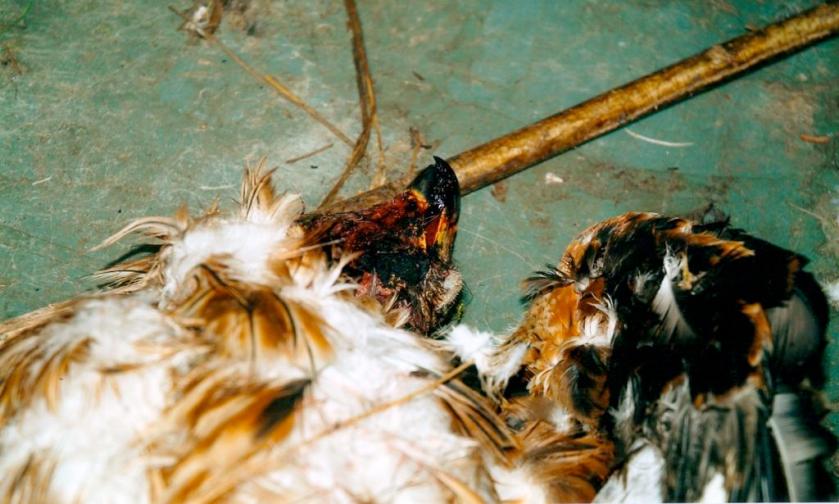
In May 2011, gamekeeper James Rolfe was convicted for possession of the dead red kite found in the back of his vehicle. He was fined £1,500. No charges were brought against anyone for any of the other offences.
If you’re heading to the Moy Game Fair, keep an eye out for ‘missing’ red kites. In May 2011, a satellite-tracked red kite ‘disappeared’ there. In August 2011, another red kite ‘disappeared’ there.
Ironically, representatives from the game-shooting industry will all be there, telling visitors how great their industry is for nature conservation. So much for strong leadership and zero tolerance (see here).
Talking of venue choice……..take a look at this! A government-approved GWCT training course being held at the one and only Glenogil Estate!
The photograph below shows the dead red kite with two broken legs and severe head injuries, lying in the back of a gamekeeper’s vehicle.
Last September we wrote an article called ’26 eagles, 6 years, 0 prosecutions’ (see here). We thought it was time to update it and it’s now called: ’27 eagles, 7 years, 0 prosecutions’.
Why update it now? Well mostly in response to Paul Wheelhouse’s comment yesterday that the Scottish Government “has achieved much since 2007” in relation to tackling illegal raptor persecution. Yes, ‘much’ has been achieved in terms of forming new committees and partnerships and having meetings and publishing soundbites, but what has actually been achieved on the ground, where it matters? According to the following list, absolutely bloody nothing.
As previously stated, some of these eagles on this list are just ‘missing’ and may not be dead, although the frequency with which these sat-tagged eagles are going ‘missing’ is indicative of something more sinister, of that there’s no more doubt. It’s also reasonable to point out that there may be (probably will be) a hell of a lot of other eagles that we haven’t included in this list because we just don’t know about them. We only see the tip of a very very large iceberg, as is becoming clearer to everyone by the day.
It’s also worth pointing out that if Scottish Land & Estates and the Scottish Gamekeepers Association had their way, we wouldn’t be able to report on any of these cases because presumably the police are still investigating them all. I can’t for the life of me think why those two organisations would prefer this information was kept secret.
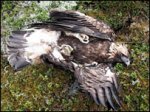 MAY 2006: A dead adult golden eagle was found on the Dinnet & Kinord Estate, near Ballater, Aberdeenshire. Tests revealed it had been poisoned by the illegal pesticide Carbofuran. Grampian Police launched an investigation. Seven years and 2 months later, nobody has been prosecuted.
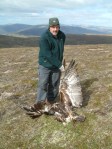 JUNE 2006: A dead golden eagle was found on Glen Feshie Estate in the Cairngorms. Tests revealed it had been poisoned by the illegal pesticide Carbofuran. Northern Constabulary launched an investigation. Seven years and 1 month later, nobody has been prosecuted.
 AUGUST 2007: A dead adult female golden eagle was found on an estate near Peebles in the Borders. She was half of the last known breeding pair of golden eagles in the region. Tests revealed she had been poisoned by the illegal pesticide Carbofuran. Lothian & Borders Police launched an investigation. Five years and 11 months later, nobody has been prosecuted.
 AUTUMN 2007: Tayside Police received a detailed tip-off that a young male white-tailed eagle (known as ‘Bird N’) had allegedly been shot on an estate in Angus. The timing and location included in the tip-off coincided with the timing and location of the last-known radio signal of this bird. Five and a half years later, the bird has not been seen again. With no body, an investigation isn’t possible.
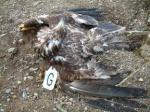 MAY 2008: A one year old male white-tailed eagle hatched on Mull in 2007 and known as ‘White G’ was found dead on the Glenquoich Estate, Angus. Tests revealed he had been poisoned by an unusual concoction of pesticides that included Carbofuran, Bendiocarb and Isofenphos. A police search in the area also revealed a poisoned buzzard, a baited mountain hare and 32 pieces of poisoned venison baits placed on top of fenceposts on the neighbouring Glenogil Estate. Laboratory tests revealed the baited mountain hare and the 32 poisoned venison baits contained the same unusual concoction of highly toxic chemicals that had killed the white-tailed eagle, ‘White G’. Five years and 2 months later, nobody has been prosecuted.
 JUNE 2009: An adult golden eagle was found dead at Glen Orchy, Argyll, close to the West Highland Way. Tests revealed it had been poisoned by the illegal pesticide Carbofuran. Strathclyde Police launched a multi-agency investigation. Three years and 3 months later, estate employee Tom McKellar pled guilty to possession of Carbofuran stored in premises at Auch Estate, Bridge of Orchy and he was fined £1,200. Nobody has been prosecuted for poisoning the golden eagle.
 JULY 2009: A two year old female golden eagle known as ‘Alma’ was found dead on the Millden Estate, Angus. Tests revealed she had been poisoned by the illegal pesticide Carbofuran. Alma was a well-known eagle – born on the Glen Feshie Estate in 2007, she was being satellite-tracked and her movements followed by the general public on the internet. Tayside Police launched an investigation. Four years later, nobody has been prosecuted.
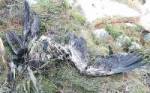 AUGUST 2009: A young white-tailed eagle was found dead on Glenogil Estate, Angus. Tests revealed it had been poisoned by the illegal pesticide Carbofuran. Tayside Police were criticized in the national press for not releasing a press statement about this incident until January 2010. Three years and 11 months later, nobody has been prosecuted.
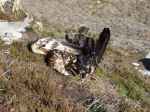 MAY 2010: Three dead golden eagles were found on or close to Skibo Estate, Sutherland. Tests revealed they had been poisoned; two with Carbofuran and one with Aldicarb. Northern Constabulary launched a multi-agency investigation. One year later (May 2011), Sporting Manager Dean Barr pled guilty to possession of 10.5 kg of Carbofuran stored in premises at Skibo Estate. Three years and 2 months later, nobody has been prosecuted for poisoning the three golden eagles.
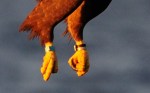 JUNE 2010: Leg rings with unique identification numbers that had previously been fitted to the legs of four young golden eagles in nests across Scotland were found in the possession of gamekeeper James Rolfe, during a multi-agency investigation into alleged raptor persecution at Moy Estate, near Inverness. It is not clear how he came to be in possession of the rings. The bodies of the eagles from which the rings had been removed were not found. No further action was taken in relation to the discovery.
 JUNE 2010: A golden eagle and a white-tailed eagle were found dead on Farr & Kyllachy Estate, Inverness-shire. Tests revealed they had been poisoned by the illegal pesticide Carbofuran. Northern Constabulary apparently did not search the property until July 2011. Three years and 1 month later, nobody has been prosecuted.
 DECEMBER 2010: A decomposing carcass of a white-tailed eagle was found and photographed on Logie (Lochindorb) Estate, Morayshire. It was reported to Northern Constabulary. By the time the police arrived to collect it, the carcass had disappeared. The police said they couldn’t investigate further without the body.
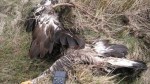 MARCH 2011: The body of a young golden eagle was discovered on North Glenbuchat Estate, Aberdeenshire. Tests revealed it had been poisoned by the illegal pesticide Carbofuran. Grampian Police launched an investigation and raided the property in May 2011. Two years and 4 months later, we are not aware of any pending prosecutions.
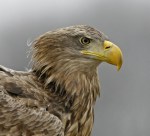 APRIL 2011: The body of a white-tailed eagle was found at the base of cliffs on Skye. The person who discovered it (a professional medic) considered it to have been freshly shot with a rifle, decapitated with a sharp implement and thrown from the cliff top. He took photographs and alerted Northern Constabulary and RSPB. There was a delay of two weeks before the now probably decomposed carcass was collected. A post-mortem was inconclusive. This incident was not made public until one year later after a tip off to this blog. Two years and 3 months later, we are not aware of any pending prosecutions.
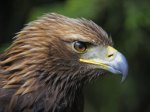 NOVEMBER 2011: The signal from a satellite-tracked young golden eagle (hatched in 2010) stopped functioning when she was at a location in the Monadhliaths, a well-known raptor persecution black spot in the Highlands. Her last known location was checked by researchers but there was no sign of the bird. Another technical malfunction of a satellite transmitter or another ‘disappearance’ in suspicious circumstances?
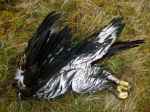 MARCH 2012: The body of a young golden eagle being tracked by satellite was discovered in Lochaber. Tests revealed it had been poisoned with the banned pesticides Aldicarb and Bendiocarb. Information about this incident was not made public until three months later. One year and 4 months later, we are not aware of any prosecutions for poisoning this bird.
MARCH 2012: The signal from a satellite-tracked young golden eagle (hatched in 2011) stopped functioning when the bird was in the eastern glens, a well-known raptor persecution blackspot. Another technical malfunction of a satellite transmitter or another ‘disappearance’ in suspicious circumstances?
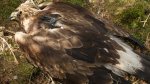 MAY 2012: The dead body of a young satellite-tracked golden eagle (hatched in 2011) was discovered near a lay-by in Aboyne, Aberdeenshire. The data from its satellite tag & the injuries the bird had when found (2 broken legs) suggested it had been caught in an illegal trap in the Angus glens and then removed, under cover of darkness, to be dumped in another area where it was left to die, probably a slow and agonising death. Information on this incident was not released until almost five months later, by the RSPB. It appears the police failed to properly investigate this incident as we understand that no search warrants were issued. One year and 2 months later, we are not aware of any pending prosecutions for killing this bird.
MAY/JUNE 2012: The signal from a young satellite-tracked golden eagle stopped functioning when the bird was north-east of the Cairngorms National Park. Another technical malfunction of a satellite transmitter or another ‘disappearance’ in suspicious circumstances?
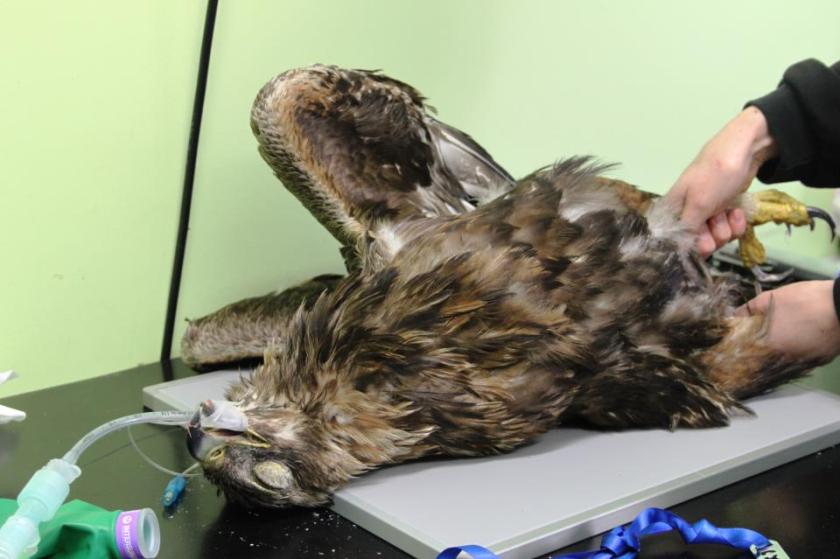
 OCTOBER 2012: An adult golden eagle was found shot and critically injured on grouse moor at Buccleuch Estate, near Wanlockhead, South Lanarkshire. The bird was rescued by the SSPCA and underwent surgery but it eventually succumbed to its injuries in April 2013. Nine months later, we’re not aware of any pending prosecutions for shooting this bird.
MAY 2013: The signal from a two-year-old satellite tracked golden eagle stopped functioning after it’s last signal from North Glenbuchat Estate in Aberdeenshire. Another technical malfunction of a satellite transmitter or another ‘disappearance’ in suspicious circumstances?
The Environment Minister Paul Wheelhouse has today announced what he calls ‘further measures’ to tackle the on-going problem of illegal raptor persecution in Scotland. Here is his statement in full:
“Since I took on responsibility for this portfolio, I have been clear that one of my priorities is to bear down on the illegal persecution of raptors that continues to blight the Scottish countryside and tarnish Scotland’s reputation. These outdated, barbaric and criminal practices put at risk the conservation status of some of our most magnificent wildlife. They also harm our reputation as a country which values its environment and wildlife and undermine the growing tourism sector that is built on that reputation.
We have achieved much since 2007. We have a robust legal framework that protects birds of prey and their nests, including the new vicarious liability provisions. We have dedicated resources in Police Scotland and the Crown Office and Procurator Fiscal Service (COPFS). We are leading the way in the UK in the development of wildlife crime forensics work, and we continue to work at building a broad-based alliance through the Partnership for Action Against Wildlife Crime (PAW Scotland).
In 2012 we saw a very welcome reduction in poisoning cases. However a number of recent reports, some of which are in the public domain and some of which are still subject to police enquiries, suggest that there is still a problem with the use of poison as well as cases involving illegal trapping and shooting. I have decided therefore that the time is right to bring forward some further measures which I hope will deter those involved in illegal activities.
Wildlife crime, and raptor persecution in particular, often takes place in remote locations or in the dark of night. By its very surreptitious nature, the likelihood of being seen by a member of the public who can report the matter to the authorities is small.
I have spoken with the Lord Advocate, who maintains a close personal interest in all wildlife crime. We are both keen to maximise the opportunity for offences to be detected and offenders to be tracked down.
The Lord Advocate has instructed the specialist prosecutors in the Wildlife and Environmental Crime Unit to work with Police Scotland to ensure that law enforcement utilises all investigative tools at their disposal in the fight against wildlife crime.
This work will take place within the National Wildlife Crime Co-Ordinating Forum – a group attended by police Wildlife Crime Liaison Officers from across Scotland and the police’s full-time Scottish Wildlife Crime Co-Ordinator, as well as senior police officers, the National Wildlife Crime Unit, Scottish Government officials and the specialist prosecutors from the Wildlife and Environment Crime Unit within COPFS.
Secondly, in my capacity as Chair of PAW Scotland, I intend to establish a group to carry out a review and report to me on how wildlife crime is treated within the criminal justice system, including examining whether the penalties available for wildlife crime properly reflect the seriousness of the damage caused to vulnerable wildlife and fragile habitats and ecosystems.
Thirdly, I will be asking Scottish Natural Heritage in their capacity as the authority for licensing decisions under section 16 of the Wildlife and Countryside Act to examine how and in what circumstances they can restrict the use of General Licences to trap and shoot wild birds on land where they have good reason to believe that crimes against wild birds have taken place. These General Licences allow the holders to carry out actions that would otherwise be unlawful if undertaken, without any reference to SNH. We regard the use of General Licences as a privilege that should not be extended in circumstances where there is evidence that their use may be facilitating illegal activities.
In putting together these measures I have sought to focus only on those individuals and businesses where there are very good reasons to believe they are involved in illegal practices. I am very keen to avoid anything that places an unfair burden on the majority of shooting businesses that are law-abiding and responsible members of the rural community. I should also say that I think it is important that wildlife crime is treated in exactly the same way as other types of crime. This means information about cases should be handled in the same way as in other types of crime and that the police and prosecutors are allowed the time and space to carry out whatever investigations they believe to be necessary according to their own professional judgement. We should not descend into allowing trial by leak and accusation. There is a responsibility on us all to avoid that.
In conclusion I wish to reiterate that eradicating raptor persecution in Scotland remains a high priority for the Scottish Government. It is not however the sole responsibility of the Scottish Government. Law enforcement clearly has a key role to play and I am confident that we are ratcheting up the pressure on those committing acts of illegal persecution. However, everyone involved in the Scottish countryside, and in particular those involved with shooting, should make abundantly clear their disapproval to the minority whose actions are tarnishing the reputation of Scotland’s country sports”.
So, this is the much anticipated ‘action’ against illegal raptor persecution that’s been promised since last autumn when Paul Wheelhouse was appointed. Whilst we welcome his willingness to engage with the issue (in stark comparison to his English counterpart who won’t even admit there’s a problem), we see these latest measures as tiny baby steps in the right direction, and not the decisive hefty stamp that could have been delivered.
The first four paragraphs of his statement are just introductory comments with the usual rhetoric, such as, “We have achieved much since 2007”. Actually, we haven’t. Raptors are still being illegally killed on land managed for game-shooting and more often than not the criminal(s) involved are not being prosecuted. In the few instances where they are prosecuted, there is evidence of extensive plea-bargaining resulting in convictions only for the minor offences, not for the major crimes.
“In 2012 we saw a very welcome reduction in poisoning cases”. No, we didn’t. What we saw was a reduction in the number of reported poisoning cases; that’s a very important distinction. Members of the game-shooting industry (and government, it seems) have made much of this claim, using it as an example of how the industry is cleaning up its act. They won’t be able to make the claim for much longer – we understand that there have been several poisoning incidents already in 2013 and we’re only half-way through the year. Naturally, once again the public haven’t (yet) been informed about these poisonings even though they took place several months ago. We’ll come back to this issue.
The first ‘new’ measure that Wheelhouse is introducing is this:“The Lord Advocate has instructed the specialist prosecutors in the Wildlife and Environmental Crime Unit to work with Police Scotland to ensure that law enforcement utilises all investigative tools at their disposal in the fight against wildlife crime”.
This is interesting, particularly because it immediately follows this paragraph:
“Wildlife crime, and raptor persecution in particular, often takes place in remote locations or in the dark of night. By its very surreptitious nature, the likelihood of being seen by a member of the public who can report the matter to the authorities is small”.
Does this mean that prosecutors in Scotland are being told by the Lord Advocate that they should now accept covert video surveillance as admissible evidence? If this is the case then it would be a very welcome step indeed. Covert film footage is routinely accepted as admissible evidence in England, but in Scotland it continues to be blocked by the Crown Office prosecutors. Why? We don’t know – we’ve never heard a satisfactory explanation. If our assumption is correct (and of course it may not be) and covert footage is to be accepted, then Wheelhouse deserves a good deal of credit for this single measure. We’ll be watching this potential development with great interest.
His second measure is to establish (yet another) group within the framework of PAW Scotland, “to carry out a review and report to me on how wildlife crime is treated within the criminal justice system, including examining whether the penalties available for wildlife crime properly reflect the seriousness of the damage caused to vulnerable wildlife and fragile habitats and ecosystems”. We’re not so impressed with this plan; it seems to be reinventing the wheel. A similar review was carried out in 2008 (Natural Justice 2008) following the poisoning of the last remaining breeding female golden eagle in the Scottish Borders in 2007. That review made many recommendations to improve the efficiency of detecting and prosecuting wildlife crime in Scotland, some of which have since been implemented but many have not. It would perhaps have been a good opportunity for Wheelhouse to critically evaluate the implementation of those recommendations made five years ago, rather than start off the process again from scratch, which just leads to further delays in addressing the actual problem.
The third and final new measure is what we would call a fig-leaf approach to tackling illegal raptor persecution. Wheelhouse says: “I will be asking Scottish Natural Heritage in their capacity as the authority for licensing decisions under section 16 of the Wildlife and Countryside Act to examine how and in what circumstances they can restrict the use of General Licences to trap and shoot wild birds on land where they have good reason to believe that crimes against wild birds have taken place. These General Licences allow the holders to carry out actions that would otherwise be unlawful if undertaken, without any reference to SNH. We regard the use of General Licences as a privilege that should not be extended in circumstances where there is evidence that their use may be facilitating illegal activities”.
At a superficial level, a restriction on the use of the General Licence sounds like a positive action. But let’s just think about the practicalities. First of all, Wheelhouse suggests that the General Licence may be restricted where SNH have “good reason to believe that crimes against wild birds have taken place”. That sounds like SNH would require a lower burden of proof to show that crimes against wild birds have taken place than say, for example, a criminal conviction. In real terms, how would that work? What would constitute ‘good reason’? The discovery of a poisoned or shot bird on a particular piece of land? In legal terms that’s not enough evidence for a conviction because the estate in question could legitimately argue (no matter how implausible) that the dead bird had been planted by someone with a grudge against them, or that the bird had been poisoned/shot elsewhere and just happened to fly on to their estate where it finally succumbed to its injuries. We can be certain that if SNH tried to use such evidence as giving them ‘good reason to believe that crimes against wild birds have taken place’ they would face a strong legal challenge by the estate’s lawyers. So then we’re back to the current situation whereby a conviction in a court of law is the only acceptable proof that the crime was committed by someone associated with the estate where the dead bird was found and those convictions are, as we all know, almost as rare as rocking horse shit.
But even if SNH could use a lower burden of proof as reason to believe a crime had been committed, there would still be difficulties. The use of General Licences is barely monitored or enforced due to the high volume of people operating under their terms. By their very nature, a General Licence is not actually issued to an individual – you don’t have to apply to use one and there isn’t even a competency test that you must first pass – it’s an open ‘licence’ that anyone can use to carry out what would otherwise be unlawful activities, such as the killing of so-called ‘pest species’ such as crows. We occasionally see a prosecution for an offence relating to a General Licence, e.g. when the operator of a crow cage trap has failed to meet the licence’s terms and conditions, but these prosecutions are rare and incidental. No statutory authority is regularly monitoring the use of General Licences (e.g. SNH don’t do it, the police don’t do it) – we don’t even know how many people are operating under the General Licences because the operators are not required to submit annual returns. So, if SNH did ‘restrict the use’ of a General Licence on a particular piece of land, who would be enforcing that restriction? How would we know whether a restriction was in place? Would the location and name of the estate be published? For how long would the restriction be in place? What would be the penalty if an estate was found to be flouting the restriction?
All in all, this proposed new measure has glaring loopholes that in practical terms would be very difficult to close. It’s hugely disappointing that the Minister has taken this route instead of another option that is already available to him in the provisions of the Wildlife & Countryside Act – that is, the ability to enforce a (temporary) ‘closed season’ on the hunting of a particular game bird species in a particular area (or in this case, a specific estate). For example, in exceptional circumstances a Minister can impose a temporary moratorium on shooting specific species during periods of prolonged severe weather. The authority to impose such restrictions is already there in the legislation – it wouldn’t require the lengthy drafting of new legislation – if he wanted to enforce a temporary ban on, say, driven grouse shooting on a particular moor, he could do so. This measure would fit with his approach of only targeting the criminals, not the ‘law-abiding majority’ (his words, not ours) so why isn’t he pursuing it? Just another missed opportunity.
One final point about the Minister’s statement – the bit in his penultimate paragraph where he says this:
“I should also say that I think it is important that wildlife crime is treated in exactly the same way as other types of crime. This means information about cases should be handled in the same way as in other types of crime and that the police and prosecutors are allowed the time and space to carry out whatever investigations they believe to be necessary according to their own professional judgement. We should not descend into allowing trial by leak and accusation. There is a responsibility on us all to avoid that”.
We whole-heartedly agree that wildlife crime should be treated in exactly the same way as other types of crime. This means that these crimes should be properly publicised in the media, just as other crimes are, and especially when they involve the discovery of potentially-fatal poisons that put the general public at significant risk. We hold very strong opinions on this and are adamant that it is not in the public interest for the police to keep these crimes hidden from view for months on end. Until we see an end to this ridiculous culture of silence we’ll continue to blog about these crimes with a measured, accurate and responsible approach.
We’ll be blogging later this week with some specific questions for Paul Wheelhouse….
Scottish Land & Estate’s response to the announcement here.
RSPB Scotland’s response here.
Scottish Gamekeepers’ Association response here.
BASC Scotland’s response here.
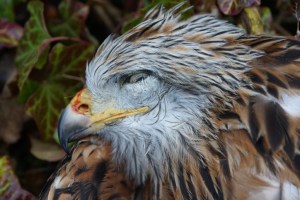 A press release has gone out this morning appealing for information after a dead red kite was discovered on Royal Deeside. According to the information released (see here), the bird was found in an area of woodland near Aboyne on 6th April 2013. The wing-tagged bird was known to be a three-year-old breeding female, originally from Perthshire, who had successfully raised three offspring in 2012 close to the area where subsequently she was killed.
Bizarrely, the press release does not explain how the kite was killed. Instead it has the following cryptic statement:
“After recovery of the carcass, a post mortem was carried out. This revealed that the bird’s death was not by natural causes”.
So what does that mean then? Was she poisoned? Caught in a leg-hold trap? Shot? Caught in a crow trap and clubbed to death?
We’ve seen this sort of press release before, notably in 2010 when the police force formerly known as Northern Constabulary put out an appeal for information after an osprey died from what was described as ‘deliberately inflicted injuries’ (see here). A few days later it was confirmed that the osprey had been shot (see here).
If this kite’s death was the result of a crime, which we presume it was given that she died of ‘unnatural causes’ and the police are appealing for information, then why the hell aren’t we just told straight? What’s the point of dressing it up to make it sound less serious than it is?
And why, yet again, has there been such a long delay between the discovery of the dead bird and the appeal for information? The bird was found on 6th April – the weekend after the Easter bank holiday – that’s over two and a half months ago. Sure, the police will want to conduct their initial investigations and so there may be an understandable delay of a couple of weeks, but there’s absolutely no operational excuse for a delay of nearly three months before it’s made public.
So here we have yet another example of an illegally-persecuted raptor – yet more evidence that the wildlife criminals are continuing to defy the law, safe in the knowledge that they’re virtually untouchable. Where are the promised ‘new measures’ to tackle raptor persecution from our Environment Minister, Paul Wheelhouse? We expected a statement from him this week but so far, nothing. The Scottish parliamentary recess begins next week (29th June until 1st September) – will we hear from him before then? Email: ministerforenvironment@scotland.gsi.gov.uk
Some background info about Scottish red kites:
Following their extinction as a breeding bird in Scotland in 1917, a joint RSPB Scotland and Scottish Natural Heritage project was undertaken with the aim of restoring the species to its former range.
Kites were released in four areas of Scotland:
In 1989-1994, 93 birds on the Black Isle;
In 1996-2001, 103 birds in Stirlingshire/Perthshire;
In 2001-05, 104 birds in Dumfries & Galloway;
In 2007-09, 101 birds in Aberdeenshire.
In 2012, there were 214 breeding pairs of red kites in Scotland.
From 1989-2011, a minimum of 75 red kites fell victim to illegal poisoning, with a further seven the victims of illegal shooting, trapping or nest destruction.
UPDATE 13.30hr: It’s been confirmed that this red kite had been shot. Why the bloody hell didn’t they just say that to begin with?
More than nine weeks ago, a buzzard was caught in an illegal leg-hold trap. According to local sources this happened on land part-managed for gamebird shooting in central Scotland. The buzzard’s injuries were such that it had to be euthanised.
Police Scotland have still not informed the public about this incident. Why not?
It happened in March, before the Easter Bank Holiday. They’ve had almost ten weeks to inform the public. In whose interest is it to keep this incident a dirty little secret?
We’ve blogged about this a million times before. They don’t have to give away details that might compromise an investigation – all they need to say is that an illegally trapped buzzard has been discovered, it didn’t survive its injuries, and a police investigation is underway. It’s really that simple. Here’s a recent example:
Police Wildlife Crime Officers in Devon & Cornwall Police blogged on 27th May 2013 that two dead buzzards, found in suspicious circumstances, had been reported to them that day. A couple of days later they provided an update to say the birds had been retrieved and had been sent off for toxicology analysis.
Here’s another example:
On 22nd May 2013, Gwent Police appealed for information after a shot peregrine falcon had to be euthanised. The shooting had been reported to the police only two days previously, on 20th May 2013 (see here).
Here’s another example:
On 6th April 2013, Norfolk Constabulary issued a press statement to say that a man had been arrested on suspicion of a number of wildlife crime offences after the discovery of over a dozen dead birds of prey. He had been arrested just two days earlier on 4th April 2013 (see here). [Incidentally, this man’s bail expired on 22nd May and we’re waiting to hear the latest development in this case].
So you see it’s quite possible for police forces to release information in a timely manner when they want to. It’s not as though the public aren’t interested in buzzard conservation in Scotland – a recent petition urging the Scottish Government not to licence a buzzard cull has now reached over 20,000 signatures in about a week (see here and please sign it if you haven’t already done so).
We’ll repeat the question posed earlier: in whose interest is it for Police Scotland to remain silent about this illegally-trapped buzzard?
The golden eagle that was found shot and critically injured on a grouse moor last autumn has finally succumbed to its injuries. The bird apparently died last week, although as far as we can tell there’s been no publicity, which seems a bit surprising given the public interest in this incident. We understand the Environment Minister Paul Wheelhouse was informed.
This eagle was discovered ‘barely alive’ last October, on a grouse moor belonging to Buccleuch Estate, close to the boundary with Leadhills Estate (see here). Its death now completes a grisly trilogy of golden eagle killings in Scotland in 2012: one poisoned, one trapped and one shot. And these are just the ones that were discovered.
It’s highly unlikely anyone will be prosecuted for killing these eagles if past incidents are anything to go by. We’ve been keeping a list of known dead or ‘missing’ eagles and any subsequent prosecutions. At last count it was 26 eagles, 6 years, 0 prosecutions (see here).
It’s now 27 eagles, 7 years, 0 prosecutions.
If you want to express your disgust to the Environment Minister and ask him when he’s going to make good on the promise he made last year to consider further measures to bring the raptor killers to justice, please email him at: ministerforenvironment@scotland.gsi.gov.uk
Last month the SGA released a report into their ‘investigation’ into the death of the Deeside golden eagle (see here to read their report).
At the time we said we would comment on their report once we’d received responses to some pending Freedom of Information requests. We’re now in a position to comment.
So, the motivation for the SGA’s ‘investigation’ into the circumstances of this eagle’s death was because of what they perceived as “irregularities” in the media reports put out by the RSPB. Let’s have a look at those ‘irregularities’ in turn.
 The SGA don’t believe that the eagle was caught in an illegally-set trap because during their discussions with the estate’s staff, it was claimed they only ever use Mark 4 Fenn traps as opposed to Mark 6 Fenn traps (and of course statements made by those involved with grouse moor management should always be believed). The SGA say the Mark 4 Fenn trap is too weak to smash the legs of a golden eagle and it would be impossible for an eagle to get both feet caught inside the trap at the same time. However, if you read the RSPB’s original media statement about this incident (released 24th September 2012 – here) nowhere do they mention a Fenn trap. All they mention is a “spring type trap”, which covers a wide array of different traps, both legal and illegal, that could have caused the injuries sustained by that eagle. Indeed, independent veterinary pathology experts at the Scottish Agricultural College laboratory concluded that the two broken legs sustained by this eagle “could be consistent with an injury caused by a spring type trap”. It’s up to the reader to decide whether the statements made by the estate’s staff and the SGA are more authoritative than those of the independent veterinary pathologist experts at the SAC lab.
The SGA say they visited the precise location of the ‘alleged’ trapping on the estate. They say, “Close by, on one side, was a large multi-catch crow cage. On the other was a 7-8 foot deer fence”. This is an interesting interpretation of what “close by” means. We understand that the deer fence is actually at least 80m away from the location where the bird was static for 15 hours.
The SGA say that the eagle could have broken both its legs by crashing into the fence at a speed that could have been in excess of 50mph (according to their falconer friend). However, the post mortem report clearly states that the eagle’s injuries could be consistent with being caught in a spring type trap, not crashing into a static object at high speed. In the event of crashing into the fence with an estimated speed in excess of 50mph, you might expect injuries to the feet and to the pelvis, as a bare minimum. The post mortem report documented two broken legs as the bird’s only injuries. It’s up to the reader to decide whether the statement of an un-named falconer with an unknown level of ‘expertise’ holds more authority than the statements of the independent veterinary pathologist experts at the SAC lab.
The SGA say that after hitting the fence the eagle “would then have undoubtedly tried to regain flight. This is consistent with the GPS signals which we were shown by the RSPB, which appeared to show variations in the readings. The readings do not show that the bird was “static” for 15 hours”. It seems that the SGA have a limited understanding of how to interpret GPS sat tag signals. The variations in the readings are entirely within the +/- 18m variation quoted by the manufacturer (Microwave Telemetry). In other words, all of the signals received during the 15 hour period in question were within an 18m circle radius. To all intents and purposes the bird was “static”. It’s up to the reader to decide whether the SGA’s interpretation of the satellite data is more authoritative than those of the sat tag manufacturer or the experienced biologists tracking this eagle.
The SGA say, “The RSPB state that the eagle could no longer become airborne. We disagree, having witnessed on several occasions various bird species gaining flight with leg injuries”. But it wasn’t the RSPB who said that the eagle could no longer become airborne, it was the independent veterinary pathologists at the SAC, who said the injuries were so severe “they would prevent the bird from being able to take off”. If anyone has ever watched a golden eagle take off they will know that the bird bends its legs to push off from the ground/perch. Clearly, two broken legs would prevent this from happening. The SGA suggest that the bird could have used the “advantageous slope of the ground” to “get air below its wings”. Actually the area where this bird was static for 15 hours is relatively flat – not on the edge of a high cliff where an injured bird might be able to roll off and find a thermal uplift. So, imagine an eagle with two broken legs on the flat ground – it will be lying on its side, back or front – do you think it could get airborne? It’s up to the reader to decide whether the SGA’s explanation is more plausible than that of the independent veterinary pathologist experts at the SAC lab.
The SGA say that the eagle could have flown 15km in the dark, tried to land but crashed into the tree and fell to its final resting place underneath a tree branch. This crash would, according to them, explain the eagle feathers found between the road lay-by and the dead eagle. Unfortunately the post mortem report doesn’t show any evidence of the eagle having crashed into a dense conifer tree. It’s up to the reader to decide whether the opinion of the SGA is more authoritative than that of the independent veterinary pathologist experts at the SAC lab.
To conclude then, the SGA’s version of what happened to this eagle was that it died as a result of a terrible accident. However, they haven’t been able to provide any convincing evidence and what they propose happened is not supported by the evidence provided by the independent veterinary pathology experts.
The RSPB’s reaction to the SGA’s report included this statement:
“This is a rather desperate statement from the SGA, which seemingly does more to reveal their nature as apologists for the worst types of wildlife crime, as they try to defend the indefensible. Indeed, it calls into question their very commitment to the aims and objectives of the partnership for Action Against Wildlife crime Scotland (PAWS)”.
It’s interesting (and obviously totally unrelated) to learn that in a recent meeting with the Environment Minister Paul Wheelhouse, the SGA were told very clearly that they would not be issued with licences to kill raptors for the foreseeable future due to the ongoing incidents of criminal raptor persecution. According to the police, the case of this particular eagle obviously falls within that category.
Unfortunately we’ll probably never find out who was responsible for this eagle’s death. Had a full police search, under warrant, taken place then further supporting evidence might have been retrieved. As it stands, it appears that this supposedly ‘on-going investigation’ is as dead as the eagle.
This bird will simply join the long list of other dead or ‘missing’ eagles whose killers have never been brought to justice: 26 eagles in six years at our last count, including ‘Alma’ who was found poisoned in 2009 on, er, this estate.
 Raptor Persecution UK