Illegally set traps on Glendye Estate grouse moor, Aberdeenshire

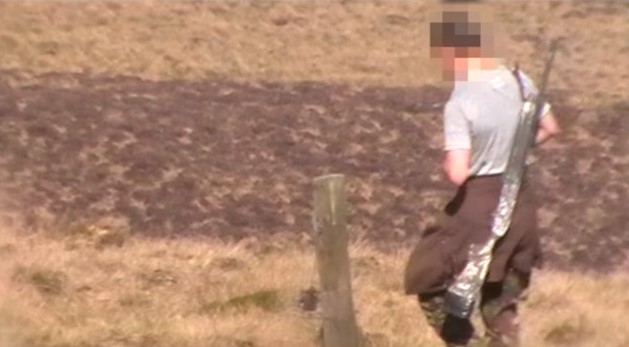
Have a look at this blog. You’ll see a series of photographs, taken yesterday (17 January 2017) on a grouse moor at Glendye, just beyond the famous Clachnaben hill, which is part of the Fasque & Glendye Estate according to Andy Wightman’s always useful website Who Owns Scotland. This area looks like it’s the area covered by the Glendye Grouse Syndicate who apparently took on a 20-year lease of this moor in 1997.

We’re not allowed to reproduce the photographs here so you’ll have to click the link if you want to see them. And you really should see them.

Three of these photographs depict illegally-set traps. They are all ‘bridge traps’ – comprising a Fenn spring trap fixed to a log across a burn or gully and designed to catch so-called ‘vermin’ such as stoats or weasels. This type of trap is legal if the trap is covered either in a natural or artificial tunnel, but the three traps photographed yesterday are definitely illegal.

One is covered with wire mesh but the entry and exit holes are wide open. This is illegal. These entry/exit holes are supposed to be partially closed to minimise the risk of catching non-target species. This trap in the photograph could easily catch a non-target species, including protected Scottish wildcats, otters and pine martens.

The other two spring traps are totally uncovered except for a single wire loop above each trap. A wire loop is not going to protect any species from standing on these traps and thus both traps are illegal. These two traps are effectively pole traps – if a bird or mammal stands on the trap, the trap will fall from the log, with the animal attached (probably by the leg), and the animal will dangle, suspended below the log, until it dies a slow, miserable death.

We don’t know whether the photographer has reported these crimes to the local police. We would hope he has – he understands that the traps are illegally-set (the safety catch is not on – we’ve looked) so we’d expect him to have provided grid references and photographs to the local Police Wildlife Crime Officer. In case he hasn’t reported them, we’ll do it for him, although by now the individual who set these traps has probably been alerted and is probably out on the moor removing all the evidence as we speak.

The local Police Wildlife Crime Officer is Doug Darling. Here’s his email address: douglas.darling@scotland.pnn.police.uk

Ask him for a crime reference number so we can follow up what action he has taken to identify the individual(s) responsible. This is important because after his investigation, we expect him to alert SNH to these illegal traps. Why? Well, because these illegal traps should result in the withdrawal of the General Licence on this grouse moor. According to SNH guidelines, evidence which may be considered by SNH in any decision to impose a General Licence restriction includes:

Illegal placement, design or use of traps or methods that are not in compliance with the requirements of the General Licence‘.

However, the evidence must be provided by the Police. So, just in case the Police ‘forget’ to tell SNH, we’ll notify SNH as well so they can’t then argue they haven’t been informed. Emails should be sent to Nick Halfhide, Director of Operations: nick.halfhide@snh.gov.uk 

To be fair to SNH, they are probably awaiting the findings of the Raeshaw Estate judicial review before they impose any more General Licence restrictions. That’s fine, they can just add this case to the others they’re currently sitting on and hopefully they’ll be in a position to take action in due course.

And, if you’re in the mood for writing emails, you might also want to alert the Environment Cabinet Secretary, Roseanna Cunningham, to these illegally-set traps. The information will be very helpful as she ponders the issue of introducing state-regulated licensing. These photographs confirm that law-breaking continues, despite the grouse shooting industry’s fervent claims to the contrary. Emails to: scottish.ministers@gov.scot and mark it FAO Roseanna Cunningham.

We wonder what the grouse shooting industry’s Gift of Grouse project has to say about these illegal traps? We wonder if Glendye is part of the Grampian Moorland Group, which in turn is part of the Gift of Grouse propaganda campaign? That’d be interesting…..

UPDATE 17 March 2017: Update on illegally-set traps on Glendye grouse moor (here)

Withheld raptor crime data: some info for DCS Scott of Police Scotland

This morning the Scottish Parliament’s Environment, Climate Change & Land Reform (ECCLR) Committee heard evidence on the Scottish Government’s 2015 annual wildlife crime report.

The archived video can be viewed here.

The official transcript can be read here: ecclr-transcript-wildlife-crime-10-jan-2017

The session was dynamite and there are many things to discuss – we’ll be blogging a lot more about this in the coming days but we wanted to start with the issue of withheld raptor crime data.

As some of you may remember, we criticised the Government’s annual wildlife crime report when it was published in November, precisely because we knew that several confirmed raptor crimes had not been included in the data presented to the Government by Police Scotland (see here). At the time, we didn’t elaborate on which specific crimes had been withheld from the report but we argued that the withholding of data completely undermined the public’s confidence in the report’s findings.

We were delighted to see this issue raised at this morning’s evidence session by Mark Ruskell MSP (Scottish Greens), and with devastating aplomb.

In the video link above, the discussion starts at 1:06:31.

Mark asked the Police Scotland representatives (ACC Steve Johnson and DCS Sean Scott) why some raptor crimes that had been recorded by RSPB Scotland had been excluded from the Government’s report. DCS Scott looked blank, and then mumbled something about perhaps the crimes weren’t actually crimes at all so they wouldn’t have been recorded. Mark pressed on and gave DCS Scott specific details about the crimes in question and even showed him a photograph of one of the illegally set traps involved, to check that it was indeed an illegally-set trap and thus a confirmed crime. DCS Scott maintained he didn’t know about these specific crimes, even when Mark gave him more detailed information about the location. This went on for some time and it was excellent to see Mark’s persistence and his unwillingness to be fobbed off. Eventually, DCS Scott committed to finding out about these specific crimes and gave assurance that he would later write to the ECCLR Committee to explain why these data had been withheld from the Government’s report.

To help DCS Scott, here’s some background about these specific crimes:

If you look at Table 19 in the Scottish Government’s 2015 annual wildlife crime report, there is a list of raptor persecution crimes and the data are attributed to Police Scotland. Listed under Lothian & Borders, Police Scotland recorded the following incidents between April 2014-March 2015:

Peregrine shooting (Sept 2014)

Attempted trapping (species not identified) (Sept 2014)

Buzzard shooting (October 2014)

Tawny owl shooting (Dec 2014)

Now, compare the Police Scotland data with the data published in Table 4 in the RSPB’s annual report – ‘The Illegal Killing of Birds of Prey in Scotland, 1994-2014, A Review‘. In that report, listed under Scottish Borders, the RSPB has recorded the following additional confirmed crimes for the same time period, that were excluded from the Police Scotland data in the Government’s annual report:

Crow trap baited with 2 live pigeons, surrounded by 4 set spring traps, nr Heriot (May 2014) – there is even a photograph of this illegally-set trap on page 16)

and

4 x shot buzzards, nr Heriot (May 2014).

pigeon-in-trap-heriot-2014

rspb-table-4

It was later revealed during the second part of the ECCLR Committee evidence session this morning, in evidence given by Ian Thomson (Head of Investigations, RSPB Scotland) that the above offences were uncovered during a Police Scotland-led multi-agency raid on this estate ‘nr Heriot’, so it is somewhat surprising that DCS Scott claimed to have no knowledge about them.

In due course we look forward to reading DCS Scott’s written explanation about why these data were withheld from the Government’s 2015 annual wildlife crime report.

In the meantime, kudos and thanks to Mark Ruskell MSP, who was one of several MSPs who performed exceptionally well at this morning’s evidence session. More on that in later blogs…..

RSPB Scotland slams General Licence system as ‘cover for criminal destruction of raptors’

Earlier this year, SNH opened a consultation on the use of General Licences (GLs), in anticipation of updating the terms of use for their suite of 2017 GLs.

This wasn’t anything new. SNH regularly reviews the GLs, but, as has happened so many times before, this year SNH has yet again ignored the on-going conservation concerns about the use of these GLs.

We’ve blogged about the terms of the GLs many times, particularly in relation to the mis-use of traps that are authorised under the terms of the GLs (e.g. see here, here, here, herehereherehere, here) and RSPB Scotland has been questioning the terms of GLs for over ten years (e.g. see here [pages 6-13] and here).

RSPB Scotland responded to this year’s GL consultation, repeating the same concerns as they had ten years ago. You can read their consultation response here: rspb_scotland_response_to-snh_2016_gl_consultation

(As an aside, SNH has now published all the responses to this year’s GL consultation but we’ll be blogging about that in another post).

A couple of weeks ago, SNH announced the changes it was making to the 2017 GLs and, surprise surprise, many of the concerns raised by RSPB Scotland and other conservation organisations have been totally ignored, again. You can read SNH’s announcement here: snh-ogl-consultation-response-letter-annexes-a-b-and-c

baited-clam1Amongst other things, SNH has decided to reinstate the use of meat bait inside clam traps (thus increasing the likelihood of catching birds of prey), and there is also a commitment to ‘explore new and responsive licensing solutions to prevent agricultural damage by ravens’. On-going concerns that have not been addressed include (but are not limited to) compliance (or not) with European environmental legislation; welfare concerns; poor trap design that allows indiscriminate species trapping; year-round use (as opposed to seasonal use); ineffective regulation of trap users; ineffective monitoring of trap use (i.e. number and species caught/killed); inability to identify an individual trap user; and the lovely get-out clause for any General Licence user with an unspent criminal conviction.

Justifiably, RSPB Scotland are pretty unimpressed, as well they should be, and they have issued a scathing press release about SNH’s failure to address long-term concerns, particularly in relation to the use of GLs as a cover for the illegal persecution of raptors. RSPB Scotland’s press release can be read here.

RSPB Scotland has also produced a video to highlight some of their concerns. Watch it here.

If you share RSPB Scotland’s concerns, and you agree that the current GL system is not fit for purpose, you can make your views known to SNH by emailing them at: licensing@snh.gov.uk

Further delay in case against Angus Glens gamekeeper accused of pole trapping offences

Criminal proceedings continued on Monday (5 December 2016) against Scottish gamekeeper Craig Graham.

Mr Graham, 51, is accused of setting and re-setting a pole trap, baited with a pheasant carcass, on the Brewlands Estate between 9-17 July 2015. He has denied the charges.

This case was first called on 31 March 2016. A provisional trial date was set for 9th September 2016. This date was later dumped and another provisional trial date was set for 5th December 2016.

On Monday, the case was adjourned, again. An intermediate diet is scheduled for 28 March 2017 and another provisional trial date has been scheduled for 15 May 2017. This is the third time a provisional trial date has been set for this case.

Previous blogs on this case here and here

Illegally-set traps on Invercauld Estate: not another cover up?

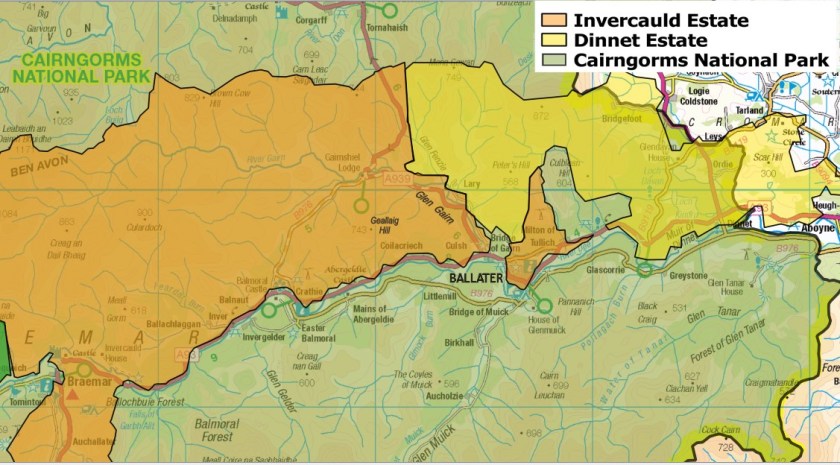
Cairngorms Invercauld - CopyIn July we blogged about the discovery in June of a critically-injured Common gull that had been found caught in two illegally-set spring traps on Invercauld Estate in the Cairngorms National Park (see here).

We also blogged about a bizarre press statement from Invercauld Estate (issued via the GWCT’s twitter feed) in which they denied any illegal activity had taken place or if it had, it was perhaps a set-up ‘intended to discredit the grouse industry‘ (see here).

We also blogged about the Scottish Gamekeepers’ Association’s response, which was an announcement that they would conduct their own enquiry before commenting further (see here).

We also blogged about Police Scotland’s view that a Common gull had been found caught in an illegally-set trap but ‘despite a thorough investigation‘, Police enquiries had failed to find further evidence to proceed with a potential prosecution and ‘there are at present no further investigative opportunities available‘ (see here).

In September, through a series of FoIs, we uncovered a very interesting letter, dated 27 July 2016 and written by Angus McNicol, who identified himself as the Estate Manager for Invercauld Estate. The letter was addressed to the Cabinet Secretary for the Environment, Roseanna Cunningham. A copy of the letter was also sent to the Cairngorms National Park Authority (CNPA). It was written, in our view, to reassure the Cabinet Secretary and the CNPA that Invercauld Estate takes wildlife crime very seriously and that they’d ‘taken action’ in this case. The specific action taken was unknown (to us) because that part of the letter had been redacted. We’ll come back to this.

Since then, it all went quiet, apart from a persistent rumour (we’ve been told this by five separate, well-informed sources) that a gamekeeper had been sacked as a result of this incident. This claim has also been made on the ParksWatchScotland blog (here), which says: ‘Unusually, the gamekeeper in this case has been dismissed, although he apparently has not been charged‘.

Hmm. Naturally, we wanted to find out if this rumour had any basis.

We knew that Grant Moir (CNPA Chief Executive) had asked for a meeting with Invercauld Estate and the sporting partner ‘to discuss the issue’ of the illegally-set traps – he had said so in a press statement in July (here). Perhaps the minutes from that meeting would reveal whether a gamekeeper had been sacked, so we asked, via FoI, for a copy of those minutes.

We received a response from the CNPA in mid-November which confirmed that two meetings had indeed taken place:

Meeting 1 (22 August 2016) with the following people present: Peter Argyle (CNPA Convener), Grant Moir (CNPA Chief Executive), Hamish Trench (CNPA Director of Conservation & Visitor Experience) and Invercauld Estate’s sporting partner from the Micras beat (his name was not given).

Meeting 2 (25 August 2016) with the following people present: Peter Argyle (CNPA Convener), Grant Moir (CNPA Chief Executive), Hamish Trench (CNPA Director of Conservation & Visitor Experience), the Chair of Trustees for Invercauld Estate (name not given) and the Manager for Invercauld Estate (name not given but presumably this was Angus McNicol, the author of the letter from Invercauld Estate to the Environment Cabinet Secretary).

According to the CNPA’s response to our FoI, ‘The purpose of both meetings was to discuss the recent incident and understand the actions taken by the estate and sporting partner. As a result of the meetings we will now be meeting with the other sporting partners on Invercauld Estate‘.

Interestingly, according to the CNPA, there isn’t a record of the minutes from either of these meetings.

So, we’re still none the wiser about whether a gamekeeper was sacked by Invercauld Estate, which brings us back to that redacted letter from Invercauld Estate to the Cabinet Secretary. Was the readacted part of that letter a statement from Invercauld Estate, saying that they’d sacked a gamekeeper as a result of this incident?

If so, that’s incredible. A wildlife crime took place on Invercauld Estate in June 2016 (that’s undeniable). Has Invercauld Estate identified a suspect and sacked him/her? And if so, does the Scottish Government know about it, does the Cairngorms National Park Authority know about it, and does the Scottish Gamekeepers’ Association know about it (given they were conducting their ‘own enquiry’ in to this incident back in July)?

The question then becomes, does Police Scotland know about it, and if so, will they be prosecuting? If not, why not?

Some transparency about this case wouldn’t go amiss.

Red kite persecution in North Scotland at same level as 25 years ago, says new report

A new SNH-commissioned report, published today, shows that the high level of illegal red kite persecution in North Scotland has not changed in 25 years.

The latest report (see here) is a follow up study on a paper published in 2010 (see here) that showed illegal persecution was responsible for holding back the spread of re-introduced red kites in North Scotland. That study used data from 1989-2006. The latest study looked at more recent data (2007-2014) and shows that absolutely nothing has changed. Red kites in North Scotland are still being illegally killed at an astonishingly high rate.

A dead red kite

The Scotland red kite breeding population, currently at around 283 pairs, should be at around 1,500 pairs, if population growth is comparable with other re-introduced kite populations in other parts of the UK. The sickening reality is that the current North Scotland kite population is around 70 breeding pairs, in comparison to the reference population in the Chilterns (reintroduced at the same time as the N Scotland kites but not exposed to illegal persecution) which currently stands at over 1,000 breeding pairs. Illegal persecution has robbed Scotland of 1,430 breeding pairs of red kites.

What an absolute bloody disgrace.

Here is a quote from the new report:

It is clear that illegal killing is still the major factor limiting population growth of red kites in North Scotland. There is no evidence that the rate of illegal killing has changed between the time periods 1989-2006 (i.e. the years used in the original paper by Smart et al., 2010) and 2007-2014‘.

The Cabinet Secretary for the Environment, Roseanna Cunningham, had this to say in an SNH press release about today’s report:

It is of course, good news that red kite numbers are increasing in Scotland. But it must be said that it is extremely disappointing that this success is being lessened by illegal persecution of these magnificent birds.

I want to be clear that wildlife crime is not acceptable in a modern Scotland and this is why we are doing all we can to end the illegal killing of birds of prey and working in partnership with stakeholders to achieve that. Scotland already has the strongest wildlife legislation in the UK and earlier this year, we accepted proposals to introduce tough new maximum penalties for those who commit crimes against wildlife.

The Scottish Government has ordered a review of satellite tracking data – we want to make sure we are getting the most information we can on when and how birds are disappearing.

Last year, we also funded the free pesticide disposal scheme which removed over 700kg of illegally held poisons in Scotland, to allow those still in possession of illegal substances to have them removed. I’m also seeing some really encouraging best practice from the farming community on the responsible use of rodenticide, which can be used by wildlife criminals to persecute raptors.”

We’ll be commenting in a later blog about the Cabinet Secretary’s comments, and putting them in to context with other, similar comments that have been trotted out by her predecessors over the years. Suffice to say, we’ve heard it all before and whilst those (Government) who could stop all of this find reasons not to do so, the killing continues.

Today’s report can be added to the mountain of scientific evidence about the extent and damage that illegal persecution is causing to our native, protected raptors at the hands of the game-shooting industry (e.g. see recent papers on catastrophic decline of hen harriers (here) and peregrines (here) due to illegal killing on the grouse moors of NE Scotland).

The hand-wringing and platitudes from the Government, and the denials and obfuscation from the game-shooting industry have all worn thin.

When does it STOP, Roseanna Cunningham?

UPDATE 2PM: The Scottish Gamekeepers’ Association has issued a statement in response to this report. Basically, it reads ‘It’s nuffin to do wiv us, Guv’. Read it here.

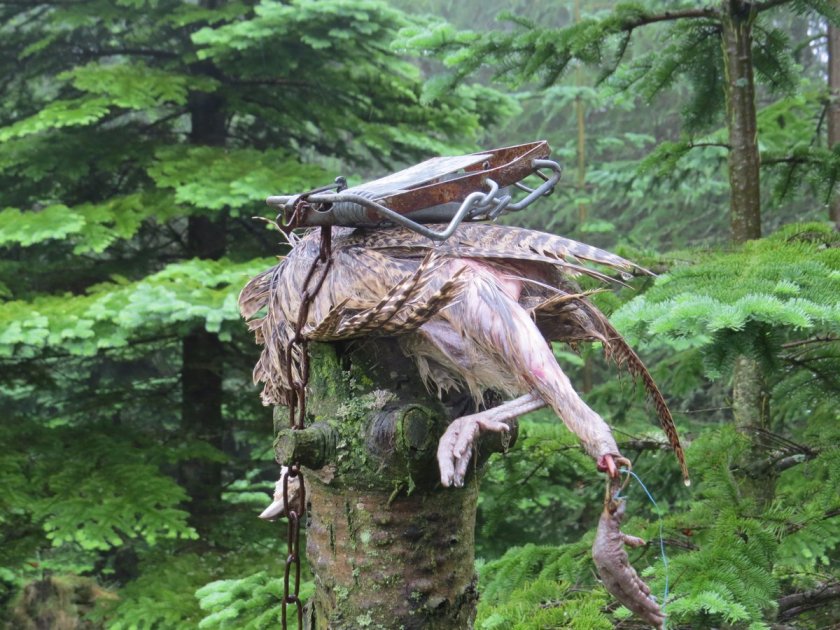
Baited pole trap found next to pheasant pen in Devon: appeal for information

RSPB press release:

Reward for information after baited pole trap discovered on east Devon farmland

pole-trap-1

The RSPB and Devon & Cornwall Police are appealing for witnesses after a trap designed to kill birds of prey was found on farmland, next to a pheasant release pen.

Police attended a location near Dunkeswell, in the Blackdown Hills, East Devon, following a tip off recently, where they discovered a live, baited pole trap.

Police officers photographed the trap, which was set and ready to use, but left it in situ. When police returned the next day the trap had been removed. Further visits accompanied by the RSPB’s Investigations unit have yielded no more information.

pole-trap-2

Pole traps have been outlawed for more than 100 years and work by smashing the bird’s legs when it lands on the trigger plate.

Mark Thomas, a senior investigations officer at the RSPB, said: “There is a reason why these traps have been illegal for so long, they are barbaric and they are designed to kill protected birds of prey“.

Inspector Martin Taylor, wildlife crime coordinator for Devon & Cornwall Police, said: “Despite it being illegal for over a century, we are still getting reports of spring traps being placed on poles or perches set to kill birds of prey. We will prosecute anyone setting these indiscriminate and lethal traps“.

Birds of prey habitually use posts as lookouts when hunting and in this case the trap had been baited using meat to encourage a bird to land.

The trap’s presence was reported on August 11 2016 and police first visited the following day. The RSPB is offering a reward of £1,000 for information that leads to a successful prosecution.

Anybody with information should contact Devon & Cornwall Police by phoning 101 or emailing 101@dc.police.uk quoting crime reference CR/56051/16.

END

pole-trap-3

The illegal killing of birds of prey in the Cairngorms National Park

Many people think of the Cairngorms National Park as a wildlife haven. It’s what many expect of a National Park; indeed, it’s what we should all expect of a National Park.

The Cairngorms National Park Authority (CNPA) promotes it as such (this screen grab taken from the CNPA website):

CNPscreengrab

But just how much of a ‘wildlife haven’ is it?

Here’s the gruesome reality.

The following list, which we’ve compiled from various data sources but predominantly from the RSPB’s annual persecution reports, documents over 60 illegal raptor persecution incidents inside the Cairngorms National Park (CNP) since 2002. (The Park wasn’t formally established until 2003 but we’ve included 2002 data as the area had been mapped by then). This list includes just the crimes we know about. How many more went unreported/undiscovered?

2002

Feb: 2 x poisoned buzzards (Carbofuran) + rabbit bait. Tomintoul

Mar: 2 x poisoned buzzards (Carbofuran) + 2 rabbit baits. Cromdale

2003

Apr: 3 x poisoned buzzards (Carbofuran) + 2 grey partridge baits. Kingussie, CNP

Jun: Attempted shooting of a hen harrier. Crannoch, CNP

2004

May: 1 x poisoned buzzard (Carbofuran). Cuaich, CNP

Nov: 1 x poisoned red kite (Carbofuran). Cromdale, CNP

Dec: 1 x poisoned buzzard (Carbofuran). Cromdale, CNP

2005

Feb: 1 x poisoned buzzard (Carbofuran). Cromdale, CNP

Feb: 1 x poisoned buzzard (Carbofuran). Cromdale, CNP

Mar: 3 x poisoned buzzards, 1 x poisoned raven (Carbofuran). Crathie, CNP

2006

Jan: 1 x poisoned raven (Carbofuran). Dulnain Bridge, CNP

May: 1 x poisoned raven (Mevinphos). Grantown-on-Spey, CNP

May: 1 x poisoned golden eagle (Carbofuran). Morven [corbett], CNP

May: 1 x poisoned raven + 1 x poisoned common gull (Aldicarb) + egg bait. Glenbuchat, CNP

May: egg bait (Aldicarb). Glenbuchat, CNP

Jun: 1 x poisoned golden eagle (Carbofuran). Glenfeshie, CNP

2007

Jan: 1 x poisoned red kite (Carbofuran). Glenshee, CNP

Apr: Illegally set spring trap. Grantown-on-Spey, CNP

May: Pole trap. Grantown-on-Spey, CNP

May: 1 x poisoned red kite (Carbofuran). Tomintoul, CNP

May: Illegally set spring trap. Grantown-on-Spey, CNP

Jun: 1 x poisoned buzzard (Carbofuran) + rabbit & hare baits. Grantown-on-Spey, CNP

Jun: 1 x poisoned buzzard (Carbofuran) + rabbit bait. Grantown-on-Spey, CNP

Jul: 1 x poisoned raven (Carbofuran). Ballater, CNP

Sep: 1 x shot buzzard. Newtonmore, CNP

Sep: 1 x shot buzzard. Grantown-on-Spey, CNP

Dec: 1 x poisoned buzzard (Alphachloralose). Grantown-on-Spey, CNP

Dec: 1 x poisoned buzzard (Carbofuran) + rabbit bait. Grantown-on-Spey, CNP

2008

Jan: 1 x poisoned buzzard (Alphachloralose). Nr Grantown-on-Spey, CNP

Mar: 1 x poisoned buzzard (Carbofuran). Nr Grantown-on-Spey, CNP

Dec: 1 x poisoned buzzard (Alphachloralose). Nr Grantown-on-Spey, CNP

2009

May: 2 x poisoned ravens (Mevinphos). Delnabo, CNP

Jun: rabbit bait (Mevinphos). nr Tomintoul, CNP

Jun: 1 x shot buzzard. Nr Strathdon, CNP

Jun: 1 x illegal crow trap. Nr Tomintoul, CNP

2010

Apr: Pole trap. Nr Dalwhinnie, CNP

Jun: 1 x pole-trapped goshawk. Nr Dalwhinnie, CNP

Jun: Illegally set spring trap on tree stump. Nr Dalwhinnie, CNP

Sep: 2 x poisoned buzzards (Carbofuran) + rabbit bait. Glenlochy, CNP

Oct: 2 x poisoned buzzards (Carbofuran) + rabbit bait. Nr Boat of Garten, CNP

2011

Jan: 1 x shot buzzard. Nr Bridge of Brown, CNP

Mar: 1 x poisoned golden eagle (Carbofuran). Glenbuchat, CNP

Apr: 1 x poisoned buzzard (Carbofuran & Aldicarb). Nr Bridge of Brown, CNP

May:  1 x poisoned buzzard (Carbofuran) + rabbit bait. Glenbuchat, CNP

May: 1 x shot short-eared owl, found stuffed under rock. Glenbuchat, CNP

Jun: 1 x shot peregrine. Pass of Ballater, CNP

Aug: grouse bait (Aldicarb). Glenlochy, CNP

Sep: Satellite-tagged golden eagle ‘disappears’. Nr Strathdon, CNP

Nov: Satellite-tagged golden eagle ‘disappears’. Nr Strathdon, CNP

2012

Apr: 1 x shot short-eared owl. Nr Grantown-on-Spey, CNP

Apr: Peregrine nest site burnt out. Glenshee, CNP

May: Buzzard nest shot out. Nr Ballater, CNP

2013

Jan: White-tailed eagle nest tree felled. Invermark, CNP

May: 1 x shot hen harrier. Glen Gairn, CNP

May: Satellite-tagged golden eagle ‘disappears’. Glenbuchat, CNP

2014

Apr: Satellite-tagged white-tailed eagle ‘disappears’. Glenbuchat, CNP

May: Armed masked men shoot out a goshawk nest. Glen Nochty, CNP

2015

Sep: Satellite-tagged hen harrier ‘Lad’ found dead, suspected shot. Newtonmore, CNP

2016

May: 1 x shot goshawk. Strathdon, CNP

Jun: Illegally set spring traps. Invercauld, CNP

In addition to the above list, two recent scientific publications have documented the long-term decline of breeding peregrines on grouse moors in the eastern side of the National Park (see here) and the catastrophic decline of breeding hen harriers, also on grouse moors in the eastern side of the Park (see here).

And let’s not forget the on-going massacre of mountain hares, taking place annually within the boundary of the National Park (e.g. see here, here).

So, who still thinks the Cairngorms National Park is a ‘wildlife haven’?

With over 40% of the National Park covered by driven grouse moors, it’s anything but. The next blog will explore how the Cairngorms National Park Authority has failed, so far, to effectively address the illegal killing of birds of prey, but there is a small chink of light ahead…..more shortly.

UPDATE 7/9/16: How to stop the illegal persecution of raptors in the Cairngorms National Park (here)

‘Dodgy’ traps now ‘improved’ in Peak District National Park

Last week we blogged about two ‘dodgy’ tunnel traps that had been photographed in the Peak District National Park (see here).

There was some debate about the legality of both traps because the tunnel entrances hadn’t been sufficiently restricted to minimise the risk to non-target species, although one of the traps did have a twig shoved across the entrance – it was wholly ineffective but it could be argued that an attempt to restrict the entrance had been made.

Here are a couple of the images again:

sam3 - Copy

sam1 - Copy

Anyway, it appears that whoever manages the northern side of the Bole Edge Plantation (Strines Wood) close to Bradfield grouse moor, where these photographs were taken, has been paying attention to the criticism.

The two traps have now been rebuilt and the tunnel entrances are now clearly restricted:

TRAPrebuilt

TRAPrebuilt2

That’s a definite improvement (the power of social media, eh?) although the issue of whether these (legal) traps should be deployed inside a National Park is still up for debate.

And even when the tunnel entrance has been restricted, that doesn’t mean that non-target species won’t be caught. Have a look at the trap in these two photographs, taken earlier this summer on a driven grouse moor in North Yorkshire. Not good, is it?

B1 - Copy

B2 - Copy


An interesting letter from Invercauld Estate

In July we blogged about the discovery in June of a critically-injured Common gull that had been found caught in two illegally-set spring traps on Invercauld Estate in the Cairngorms National Park (see here).

Cairngorms Invercauld - Copy

We also blogged about a bizarre press statement from Invercauld Estate (issued via the GWCT’s twitter feed) in which they denied any illegal activity had taken place or if it had, it was perhaps a set-up ‘intended to discredit the grouse industry‘ (see here).

We also blogged about the Scottish Gamekeepers’ Association’s press statement, which said the SGA was conducting its own enquiry (see here).

We also blogged about Police Scotland’s view that a Common gull had been found caught in an illegally-set trap but ‘despite a thorough investigation‘, Police enquiries had failed to find further evidence to proceed with a potential prosecution and ‘there are at present no further investigative opportunities available‘ (see here).

So that looked like the end of it. Until, through a series of FoIs to the Scottish Government and the Cairngorms National Park Authority, a very interesting letter has emerged.

The letter, dated 27 July 2016 (so a week after the original story had broken) was written by Angus McNicol, who identifies himself as the Estate Manager for Invercauld Estate, and was addressed to the Cabinet Secretary for the Environment, Roseanna Cunningham. A copy of the letter was also sent to the Cairngorms National Park Authority. It’s a fascinating read.

Here is a copy of the letter: Invercauld Estate letter

Having read it, our first question was, ‘Why was this letter written?’ That’s a hard question to answer because we can’t get inside Mr McNicol’s head to read his thought processes. We can, though, speculate about the intentions. In our opinion, this letter was written to reassure the Cabinet Secretary that Invercauld Estate takes wildlife crime seriously and they’ve done something about it.

You’ll see that one paragraph in this letter has been partially redacted (by the Scottish Government – and, incidentally, the copy of the letter received from the Cairngorms National Park Authority was redacted in exactly the same place). It’s this partial paragraph that interests us the most. Here it is:

Invercauld redacted

Let’s focus on the sentence immediately before the redaction begins. “Whilst this was a press report, we decided to act on the worst case scenario, taking the report at face value“. Assuming that the ‘worst case scenario‘ might have been that an Estate employee was responsible for illegally setting the traps, the Estate ‘decided to act‘. What action they took is unknown, because that bit has been redacted. But interestingly, the word ‘gamekeepers’ appears later in the same paragraph.

Later in the letter, Mr McNicol reiterates that ‘action‘ had been taken:

Invercauldredacted2

So, was the ‘action’ to which Mr McNicol refers, disciplinary action against one or more Invercauld Estate gamekeepers in relation to this crime? Has somebody been sacked?

If that’s actually what happened, and if Mr McNicol has admitted this in writing, wouldn’t that trigger an investigation in to a potential vicarious liability prosecution?

Is that why, later in the letter, Mr McNicol goes to great lengths to explain the measures that Invercauld Estate has put in place to ensure its staff do not commit wildlife crimes? These measures, explained in such detail, might form the defence of ‘due diligence’ – remember, if an estate is accused of being vicariously liable for certain wildlife crimes, a defence of due diligence is permitted (see here).

Whether an estate’s attempts at due diligence are a sufficient defence to an accusation of vicarious liability is for a court to decide. We presume, if our interpretation of what happened is accurate, that both the Scottish Government and the Cairngorms National Park Authority have notified Police Scotland about the content of Mr McNicol’s letter and Police Scotland will now be following this up with an investigation? Time will tell.

The content of Mr McNicol’s letter raises some other interesting points.

Why, if Invercauld Estate has taken action against an employee, did the Estate deny in their original press statement that the offence had even taken place or claim that if it had, it had been a set-up ‘intended to discredit the grouse industry‘?

Who is the person/organisation that conducted “independent searches of hill ground and of buildings on the Estate to check for illegal traps, snares and illegal pesticides“? Presumably it wasn’t the GWCT – they can hardly be classed as being ‘independent’ if they’re publishing press statements on their twitter feed on behalf of Invercauld Estate. And presumably it wasn’t anybody from Scottish Land & Estates – they can hardly be classed as ‘independent’ as Mr McNicol states Invercauld Estate is a member of SLE. And presumably it wasn’t anybody from the SGA – they can hardly be classed as ‘independent’ as Mr McNicol states that ‘all the relevant staff are members of the SGA‘. So who was it?

When did these ‘independent searches of hill ground and of buildings on the Estate to check for illegal traps, snares and illegal pesticides” take place, and how often have they been conducted?

Why did Police Scotland, as part of what they described as a ‘thorough investigation‘, only speak to a representative of Invercauld Estate (Mr McNicol)? Why didn’t officers question, under caution, the gamekeepers who work on the part of the Estate where the illegally-set traps were found?

It’s all very interesting.

Perhaps we’ll get some answers once the SGA has finished its enquiry in to what happened. Presumably they’ll be publishing their findings in due course….