Swinton Estate owner (& Chair of Moorland Association) challenged by BBC about raptor persecution on his estate

This is worth a watch.

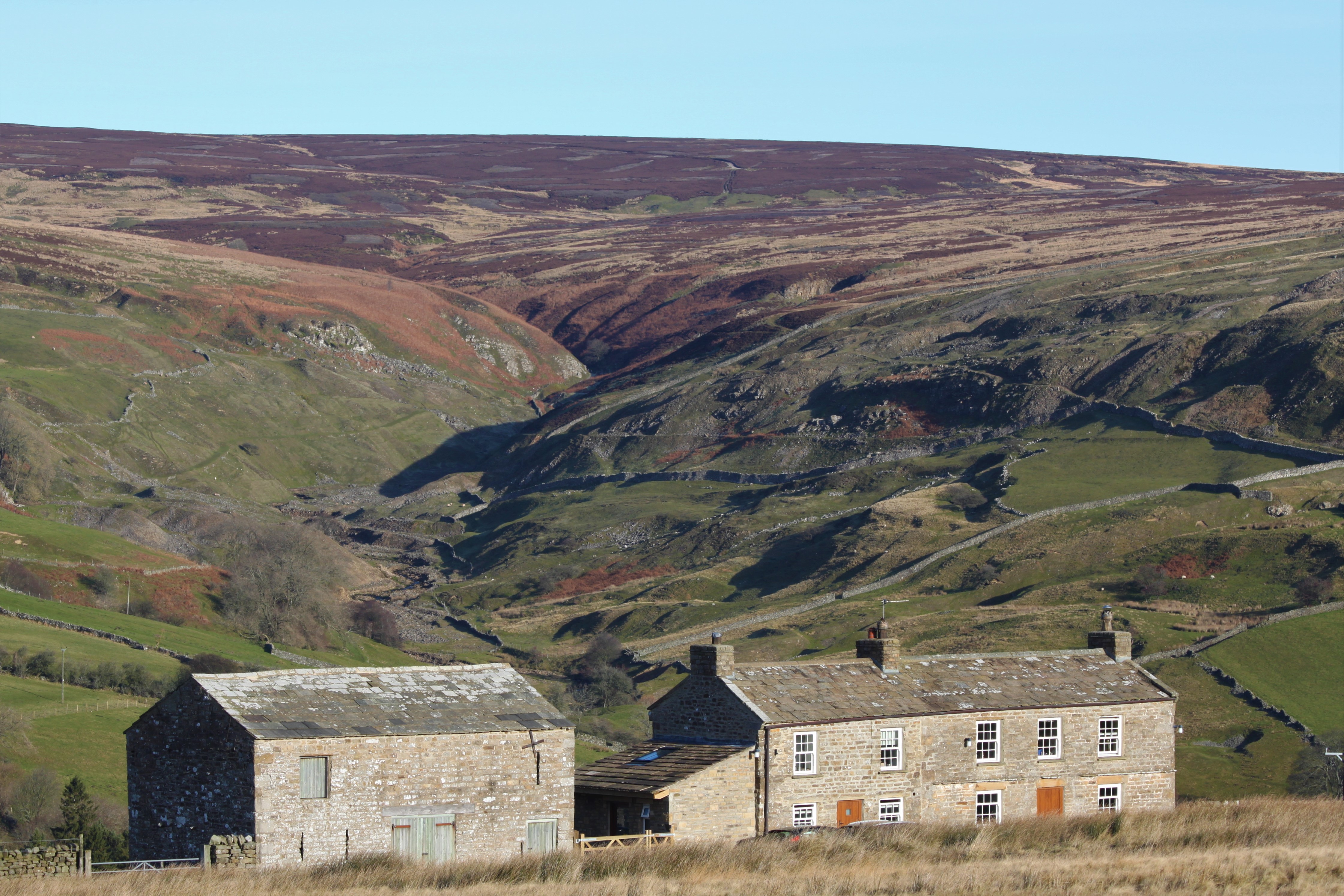
A BBC documentary series called Amazing Hotels: Life Beyond the Lobby featured the Swinton Estate in Nidderdale, North Yorkshire a couple of weeks ago.

The owner of the estate, Mark Cunliffe-Lister (also known as Lord Masham) also happens to be the Chair of the Moorland Association, the lobby group for grouse moor owners in England.

As part of the programme, presenter Giles Coren visited Swinton’s grouse moors with Cunliffe-Lister and Coren asked him straight out about confirmed raptor persecution crimes on Swinton. The change in Cunliffe-Lister’s body language was quite noticeable – he went from confident, open, welcoming hotel owner to cagey, uncomfortable grouse moor owner.

Giles Coren:Have there been instances around here of raptors being killed?

Mark Cunliffe-Lister:Yes, there have been, there was one that was found on Swinton itself, it was found to have some lead in it so, er, clearly had been shot at some stage. There’s nothing that we’re culpable of but clearly there are still instances of it taking place“.

Just the one, Mark? What a forgetful silly billy (and not for the first time).

Kudos to Giles Coren and to whoever was the BBC executive producer of this edition. Good stuff.

The programme is available to watch on BBC iPlayer for a year (the grouse moor stuff starts at 39 mins 15 sec) HERE

On-going hen harrier persecution raised in House of Lords

I’d wager that the subject of the illegal killing of hen harriers on driven grouse moors has been discussed many times in the House of Lords, probably on the terrace bar and probably accompanied by some hearty back-slapping, sniggering and cheering.

[Photo by Ruth Tingay]

Fortunately, the hen harrier does have some friends in high places, not least long-time supporter and Life Peer Natalie Bennett (Green party), who tabled the following written question on 21st January 2021 after learning that yet another satellite-tagged hen harrier had ‘vanished’ in suspicious circumstances (see here).

From Hansard: UIN HL12411, Baroness Bennett of Manor Castle –

To ask Her Majesty’s Government what plans they have to prevent the killing of satellite-tagged hen harriers.

Answered 4th February 2021 by Lord Goldsmith of Richmond Park, The Minister of State, Department for Environment, Food and Rural Affairs

All wild birds are protected under the Wildlife and Countryside Act 1981, which provides a powerful framework for the conservation of wild birds, their eggs, nests and habitats. The Government is committed to ensuring the protection afforded to wild birds of prey is effectively enforced. There are strong penalties for offenders, including imprisonment.

We are also committed to securing the long-term future of the hen harrier as a breeding bird in England. The Hen Harrier Action Plan sets out what will be done to increase hen harrier populations in England and includes measures to stop illegal persecution. The long-term plan was published in January 2016 and we believe that it remains the best way to safeguard the hen harrier in England. A copy of the plan is attached.

Raptor persecution is one of six national wildlife crime priorities. Each wildlife crime priority has a delivery group to consider what action should be taken and develop a plan to prevent crime, gather intelligence on offences and enforce against it. The Raptor Persecution Priority Delivery Group focuses on the golden eagle, goshawk, hen harrier, peregrine and white-tailed eagle. The National Wildlife Crime Unit, which is part funded by Defra, monitors and gathers intelligence on illegal activities affecting birds of prey and provides assistance to police forces when required.

So, five years on from the launch of DEFRA’s heavily criticised Hen Harrier Action Plan, which would be better re-named the Hen Harrier Persecution Plan, and with an embarrassing amount of evidence to demonstrate that the illegal killing of hen harriers is still rampant, this response from Zac Goldsmith is pathetically lame.

The evidence that hen harrier persecution continues relentlessly includes the devastating results of a peer-reviewed scientific study, based on Natural England’s own data and published in a high-ranking journal, demonstrating that at least 72% of satellite-tagged hen harriers are presumed illegally killed on grouse moors (see here).

There’s also the rather inconvenient tally of 51 hen harriers confirmed illegally killed or reported ‘missing’ in suspicious circumstances since 2018, when grouse moor owners pretended they’d be more tolerant of the species (here) and then the admission just a few days ago from Natural England’s Chair that “continuing illegal persecution [of hen harriers] is preventing the recovery we need to see” (here).

This issue is one of the most pressing wildlife conservation issues in the UK, and yet DEFRA has nothing more to offer than, ‘We believe the Hen Harrier Action Plan remains the best way to safeguard the hen harrier in England‘.

For how many more years is DEFRA going to hide behind it’s obviously-failing action plan? It’s been five years, and counting.

Here’s a more realistic view of the Hen Harrier Action Plan, from blog reader Dr Gerard Hobley.

Enough said.

Gamekeepers responsible for more illegal raptor killing than any other profession

Somebody sent me a screen grab the other day of a statement posted on social media by the Southern Uplands Moorland Group (SUMG), which is one of a number of regional groups representing grouse moor estates around the country and designed to persuade the public that birds of prey are warmly welcomed and that gamekeepers love having birds of prey on their ground.

The statement published by the SUMG is fairly typical of the misrepresentation of facts that we’ve all come to expect from certain quarters of the grouse shooting industry. It reads as follows and I’ve underlined the sentence of interest:

Now, I can’t recall EVER saying on this blog that a dead raptor is automatically linked to the [game]keepering profession and there are numerous examples of illegal raptor killing offences that I’ve reported on here over the years where gamekeepers have quite clearly not been responsible (e.g. see here, here, here, here, here, here, here etc).

As a co-director of Wild Justice I’m also pretty certain that WJ has NEVER made such a claim. If there is such evidence, the SUMG are challenged to provide it.

I can’t speak for the RSPB but I can’t imagine they would EVER make such a ridiculous claim either.

Speaking for myself, I don’t even believe, as some do, that ALL gamekeepers are raptor killers. A lot of them are, of that there’s no doubt whatsoever, and some other gamekeepers will benefit from that killing even if they’re not doing the actual killing themselves, but I also know of some decent, law-abiding gamekeepers who are as thrilled at seeing a raptor as I am. I’ve met them and have worked with them, so I know they exist.

However, there’s no getting away from the undeniable evidence that shows overall, gamekeepers in the UK are responsible for more illegal raptor killing than any other profession. If you want to see the evidence, have a look at this pie chart published by the RSPB last year in their annual Birdcrime report:

Interestingly, one of the individuals included in the convicted gamekeepers section of this pie chart was a certain Alan Wilson, a member of the Scottish Gamekeepers Association who was convicted in 2019 of a catalogue of horrendous wildlife crimes he committed on the Longformacus Estate, a grouse/pheasant shooting moor in, er, the Southern Uplands (see here).

It strikes me that the Southern Uplands Moorland Group would do well to concentrate on ousting the criminals within the gamekeeping industry rather than smearing those of us who report on such crimes and who, quite legitimately, campaign for the Government to clamp down on the criminals involved.

51 hen harriers confirmed illegally killed or ‘missing’ since 2018

For anyone who still wants to pretend that the grouse shooting industry isn’t responsible for the systematic extermination of hen harriers on grouse moors across the UK, here’s the latest catalogue of crime that suggests otherwise.

[This male hen harrier died in 2019 after his leg was almost severed in an illegally set trap that had been placed next to his nest on a Scottish grouse moor (see here). Photo by Ruth Tingay]

Ten days ago this list totalled 48 hen harriers, all either confirmed to have been illegally killed or to have ‘disappeared’, most of them on or next to driven grouse moors.

They disappear in the same way political dissidents in authoritarian dictatorships have disappeared” (Stephen Barlow, 22 January 2021).

Today the list has been updated to include some others whose reported disappearances in 2020 have been confirmed, including Bronwyn (here) and Rosie (here), bringing the current running total to 51 hen harriers.

This disgraceful catalogue will continue to grow – I know of at least one more on-going police investigation which has yet to be publicised and I suspect there’s one other, although I’m still waiting for clarification on that one.

I’ve been compiling this list only since 2018 because that is the year that the grouse shooting industry ‘leaders’ would have us believe that the criminal persecution of hen harriers had stopped and that these birds were being welcomed back on to the UK’s grouse moors (see here).

This assertion was made shortly before the publication of a devastating new scientific paper that demonstrated that 72% of satellite-tagged hen harriers were confirmed or considered likely to have been illegally killed, and this was ten times more likely to occur over areas of land managed for grouse shooting relative to other land uses (see here).

2018 was also the year that Natural England issued itself with a licence to begin a hen harrier brood meddling trial on grouse moors in northern England. For new blog readers, hen harrier brood meddling is a conservation sham sanctioned by DEFRA as part of its ludicrous ‘Hen Harrier Action Plan‘ and carried out by Natural England (NE), in cahoots with the very industry responsible for the species’ catastrophic decline in England. For more background see here.

Brood meddling has been described as a sort of ‘gentleman’s agreement’ by commentator Stephen Welch:

I don’t get it, I thought the idea of that scheme was some kind of trade off – a gentleman’s agreement that the birds would be left in peace if they were moved from grouse moors at a certain density. It seems that one party is not keeping their side of the bargain“.

With 51 hen harriers gone since 2018, I think it’s fair to say that the grouse shooting industry is simply taking the piss. Meanwhile, Natural England pretends that ‘partnership working’ is the way to go.

‘Partnership working’ appears to include authorising the removal of hen harrier chicks from a grouse moor already under investigation by the police for suspected raptor persecution (here) and accepting a £10K bung from representatives of the grouse shooting industry that prevents Natural England from criticising them (see here).

[Cartoon by Gill Lewis]

So here’s the latest gruesome list:

February 2018: Hen harrier Saorsa ‘disappeared’ in the Angus Glens in Scotland (here). The Scottish Gamekeepers Association later published wholly inaccurate information claiming the bird had been re-sighted. The RSPB dismissed this as “completely false” (here).

5 February 2018: Hen harrier Marc ‘disappeared’ on a grouse moor in Durham (here)

9 February 2018: Hen harrier Aalin ‘disappeared’ on a grouse moor in Wales (here)

March 2018: Hen harrier Blue ‘disappeared’ in the Lake District National Park (here)

March 2018: Hen harrier Finn ‘disappeared’ near Moffat in Scotland (here)

18 April 2018: Hen harrier Lia ‘disappeared’ in Wales and her corpse was retrieved in a field in May 2018. Cause of death was unconfirmed but police treating death as suspicious (here)

8 August 2018: Hen harrier Hilma ‘disappeared’ on a grouse moor in Northumberland (here).

16 August 2018: Hen harrier Athena ‘disappeared’ on a grouse moor in Scotland (here)

26 August 2018: Hen Harrier Octavia ‘disappeared’ on a grouse moor in the Peak District National Park (here)

29 August 2018: Hen harrier Margot ‘disappeared’ on a grouse moor in Scotland (here)

29 August 2018: Hen Harrier Heulwen ‘disappeared’ on a grouse moor in Wales (here)

3 September 2018: Hen harrier Stelmaria ‘disappeared’ on a grouse moor in Scotland (here)

24 September 2018: Hen harrier Heather ‘disappeared’ on a grouse moor in Scotland (here)

2 October 2018: Hen harrier Mabel ‘disappeared’ on a grouse moor on the edge of the Yorkshire Dales National Park (here)

3 October 2018: Hen Harrier Thor ‘disappeared’ next to a grouse moor in Bowland, Lanacashire (here)

23 October 2018: Hen harrier Tom ‘disappeared’ in South Wales (here)

26 October 2018: Hen harrier Arthur ‘disappeared’ on a grouse moor in the North York Moors National Park (here)

1 November 2018: Hen harrier Barney ‘disappeared’ on Bodmin Moor (here)

10 November 2018: Hen harrier Rannoch ‘disappeared’ on a grouse moor in Scotland (here). Her corpse was found nearby in May 2019 – she’d been killed in an illegally-set spring trap (here).

14 November 2018: Hen harrier River ‘disappeared’ on a grouse moor in the Nidderdale AONB (here). Her corpse was found nearby in April 2019 – she’d been illegally shot (here).

16 January 2019: Hen harrier Vulcan ‘disappeared’ in Wiltshire close to Natural England’s proposed reintroduction site (here)

7 February 2019: Hen harrier Skylar ‘disappeared’ next to a grouse moor in South Lanarkshire (here)

22 April 2019: Hen harrier Marci ‘disappeared’ on a grouse moor in the Cairngorms National Park (here)

26 April 2019: Hen harrier Rain ‘disappeared’ on a grouse moor in Nairnshire (here)

11 May 2019: An untagged male hen harrier was caught in an illegally-set trap next to his nest on a grouse moor in South Lanarkshire. He didn’t survive (here)

7 June 2019: An untagged hen harrier was found dead on a grouse moor in Scotland. A post mortem stated the bird had died as a result of ‘penetrating trauma’ injuries and that this bird had previously been shot (here)

5 September 2019: Wildland Hen Harrier 1 ‘disappeared’ on a grouse moor nr Dalnaspidal on the edge of the Cairngorms National Park (here)

11 September 2019: Hen harrier Romario ‘disappeared’ on a grouse moor in the Cairngorms National Park (here)

14 September 2019: Hen harrier (Brood meddled in 2019, #183704) ‘disappeared’ in North Pennines (here)

23 September 2019: Hen harrier (Brood meddled in 2019, #55149) ‘disappeared’ in North Pennines (here)

24 September 2019: Wildland Hen Harrier 2 ‘disappeared’ on a grouse moor at Invercauld in the Cairngorms National Park (here)

24 September 2019: Hen harrier Bronwyn ‘disappeared’ near a grouse moor in North Wales (here)

10 October 2019: Hen harrier Ada ‘disappeared’ on a grouse moor in the North Pennines AONB (here)

12 October 2019: Hen harrier Thistle ‘disappeared’ on a grouse moor in Sutherland (here)

18 October 2019: Member of the public reports the witnessed shooting of an untagged male hen harrier on White Syke Hill in North Yorkshire (here)

November 2019: Hen harrier Mary found illegally poisoned on a pheasant shoot in Ireland (here)

January 2020: Members of the public report the witnessed shooting of a male hen harrier on Threshfield Moor in the Yorkshire Dales National Park (here)

23 March 2020: Hen harrier Rosie ‘disappeared’ at an undisclosed roost site in Northumberland (here)

1 April 2020: Hen harrier (Brood meddled in 2019, #183703) ‘disappeared’ in unnamed location, tag intermittent (here)

5 April 2020: Hen harrier Hoolie ‘disappeared’ on a grouse moor in the Cairngorms National Park (here)

8 April 2020: Hen harrier Marlin ‘disappeared’ on a grouse moor in the Cairngorms National Park (here)

19 May 2020: Hen harrier Fingal ‘disappeared’ on a grouse moor in the Lowther Hills, Scotland (here)

21 May 2020: Hen harrier (Brood meddled in 2019, #183701) ‘disappeared’ on a grouse moor in Cumbria shortly after returning from wintering in France (here)

27 May 2020: Hen harrier Silver ‘disappeared’ on a grouse moor on Leadhills Estate, Scotland (here)

9 July 2020: Unnamed female hen harrier (#201118) ‘disappeared’ from an undisclosed site in Northumberland (here).

25 July 2020: Hen harrier Harriet ‘disappeared’ on a grouse moor in the Yorkshire Dales National Park (here)

14 August 2020: Hen harrier Solo ‘disappeared’ in confidential nest area in Lancashire (here)

7 September 2020: Hen harrier Dryad ‘disappeared’ on a grouse moor in the Yorkshire Dales National Park (here)

16 September 2020: Hen harrier Fortune ‘disappeared’ from an undisclosed roost site in Northumberland (here)

19 September 2020: Hen harrier Harold ‘disappeared’ on a grouse moor in the Yorkshire Dales National Park (here)

20 September 2020: Hen harrier (Brood meddled in 2020, #55152) ‘disappeared’ next to a grouse moor in North Yorkshire (here)

To be continued……..
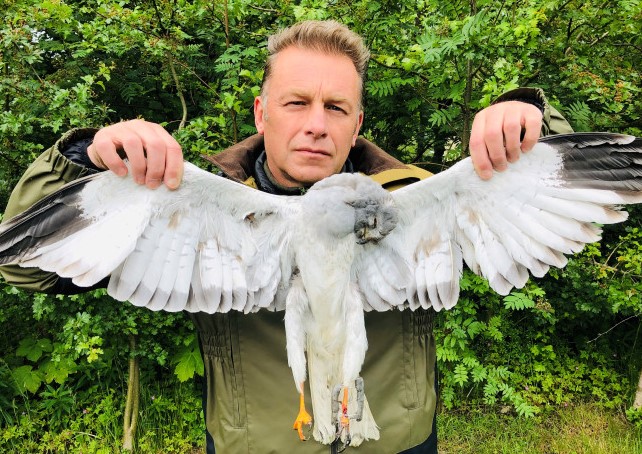
Anybody still wondering why the grouse shooting industry wants conservationists to stop fitting satellite tags?

Police investigate illegal killing of buzzards in Nottinghamshire

Press release from Nottingham Police (17 January 2021)

Investigation begins into killing of wild birds

A local man is assisting police with their enquiries in relation to the killing of wild birds.

Nottinghamshire Police officers have worked closely with the RSPB after they were called on 12 January following concern to wildlife in the Kneeton area.

All birds of prey are protected by the Wildlife and Countryside Act 1981. To intentionally kill or injure one is a criminal offence and could result in an unlimited fine or up to six months in jail.

Wildlife Crime Officers from Newark and West Bridgford officers were assisted by investigators from the RSPB.

Rushcliffe Inspector Craig Berry said: “Following excellent partnership work by the police and the RSPB we have interviewed a man under caution at the police station in connection with the death of buzzards.   

The incident was called into the RSPB following a report that the birds were killed  and officers are now making further enquiries.”  

Wildlife crimes are often under reported and can pose some practical difficulties in the investigation, however this example demonstrates the police will seek to gather evidence and prosecute offenders.

Officers have urged anyone with any information to contact police by calling 101, the RSPB or Crimestoppers and report similar matters.

ENDS

UPDATE 11th August 2021: Gamekeeper on trial for alleged killing of buzzards (here)

Red kite killed in barbaric illegal trap on pheasant-shooting estate – no prosecution

A red kite suffered a brutal and agonizing death when it was caught in a barbaric illegal trap at a pheasant-release pen on an unnamed Berkshire shooting estate in August 2020.

A member of the public found the dead kite, hanging upside down with its legs caught in a pole trap, a cruel device that has been outlawed since 1904.

[Red kite hanging dead in an illegal pole trap on a Berkshire shooting estate. Photos via RSPB].

The member of the public reported the incident to the estate (please note – if you find something like this report it to the police and the RSPB, straight away). A gamekeeper was reportedly abusive and threatening in response.

The incident was reported to the RSPB a couple of days later, who contacted Thames Valley Police. Fortunately in this instance, senior estate officials had already reported the crime to the police and had instructed the gamekeeper to retrieve the dead kite and the illegal trap.

The gamekeeper was interviewed and denied setting the trap on his pheasant pen and claimed it was ‘a set-up’.

There appears to be insufficient evidence to progress a prosecution.

For further details of this horrific crime, and the ongoing difficulty of securing sufficient evidence for a prosecution, please see the RSPB Investigations Team’s blog here.

SNH grants licence to Leadhills Estate for out-of-season muirburn

Leadhills Estate, which has been at the centre of over 50 police wildlife crime investigations in the last two decades, has had two gamekeepers convicted for committing wildlife crime offences during that time, and is currently the subject of a three-year General Licence restriction, imposed after Police Scotland found ‘clear evidence’ of wildlife crimes having being committed by persons unknown in recent years, and is under further police investigation since more allegations have been made this year, was granted a licence by SNH to undertake out-of-season muirburn on estate grouse moors in September.

There have been some jaw-dropping revelations on this blog over the years but this one is right up there.

[Muirburn on Leadhills Estate, South Lanarkshire. Photo by Ruth Tingay]

A quick recap of the situation (for those who want more detail please see the links to previous blog posts below).

In April 2020 the Scottish Government temporarily banned all muirburn in Scotland under emergency Coronavirus legislation (see here).

Despite being in the middle of a pandemic, in July 2020 Mark Osborne, acting on behalf of Leadhills Estate, applied to Scottish Natural Heritage for an out-of-season licence to conduct muirburn on the estate in September after spraying some areas with glyphosate (see here).

Scottish Natural Heritage (now rebranded as NatureScot but that’s irrelevant) refused the licence application in August (here) and Osborne immediately appealed the decision (see here).

That’s where we left the saga last time. Here’s what happened next…..

SNH was obliged to consider Osborne’s appeal, although it wasn’t obliged to overturn it’s previous decision to refuse permission.

Here’s how SNH’s reconsideration went:

According to the Freedom of Information documents that have been released, that’s it. That’s the extent of the discussion at SNH about whether Leadhills Estate should be given permission to set fire to its grouse moors out of season and in the middle of a global pandemic.

A couple of days later SNH wrote to advise Osborne of its U-turn decision and sent him the licence, as follows:

There has been some discussion amongst RPUK colleagues and associates about whether SNH’s decision to issue this licence was a breach of the Government’s emergency Coronavirus legislation which had temporarily banned muirburn until the official season opened on 1 October 2020. I might return to that topic.

However, of greater interest, to me, is how SNH’s decision-making on whether to issue an out-of-season muirburn licence apparently failed to consider the wider picture of what’s been going on at Leadhills, and especially the current three-year General Licence restriction placed on the estate, by, er, SNH. Didn’t anybody think about that?

Ah, well somebody did, but unfortunately it seems this person’s expert input wasn’t invited as part of the decision-making process:

There’s quite a lot to take in about this case, and the details and circumstances of this particular licence. An FoI has been submitted to SNH to see the licence return which, as detailed in condition #9, should have now been submitted to SNH by Osborne.

And it turns out that this isn’t the first year that SNH has granted an out-of-season muirburn licence to Leadhills Estate. More on that shortly.

For some reason, the phrases ‘taking the piss’ and ‘impotent licensing authority’ are uppermost in my mind.

Man charged for wildlife offences relating to illegal trapping of a bird of prey

A 38-year-old man has been ‘cautioned and charged’ for wildlife offences in relation to the illegal trapping of a bird of prey on 26th August 2020 in Aberdeenshire, according to Police Scotland.

PC Davis is quoted as saying:

Police responded to a report of a trapped bird of prey which was recovered safe and well and released unharmed.

Police Scotland take wildlife crime seriously and appreciate the assistance we get from our communities.

If you have information or concerns you can contact us on 101“.

The species ID of the trapped raptor has not been published, nor have any further details of the location, type of trap etc.

As this individual has been charged, comments on this case will not be published on this blog until criminal proceedings have finished. Thanks for your understanding.

[Tweet from Aberdeenshire North Police earlier this afternoon]

Raptor persecution highlighted in House of Lords

Natalie Bennett is a long-time supporter of the campaign for grouse moor reform and particularly against the illegal killing of birds of prey – she’s been a familiar spokesperson at many Hen Harrier Day events over the last few years.

Now Baroness Bennett of Manor Castle, she is using her position in the House of Lords to keep up the pressure.

Here’s a question she posed to DEFRA Minister The Rt Honourable Lord Zac Goldsmith on 16th September 2020 (text from Hansard):

Here is Zac’s response:

Zac said, “I would welcome access to the report that the noble Baroness mentions“.

Here you go, Zac, the report, documenting the 44 hen harriers that have either vanished in suspicious circumstances or have been confirmed illegally killed, most of them on or close to driven grouse moors, since 1 January 2018, can be read here

But that report is now out of date. The running total now stands at 45 hen harriers that have either vanished in suspicious circumstances or have been confirmed illegally killed, most of them on or close to driven grouse moors, since 1 January 2018 (see here for details).

For completeness, although as a DEFRA Minister you must surely already be aware of this, the peer-reviewed science, based on Natural England’s own data, that demonstrates that 72% of satellite-tagged hen harriers in England were ten times more likely to ‘disappear’ or be illegally killed on or close to British grouse moors, can be read here.

The question now is, what do you intend to do about it?

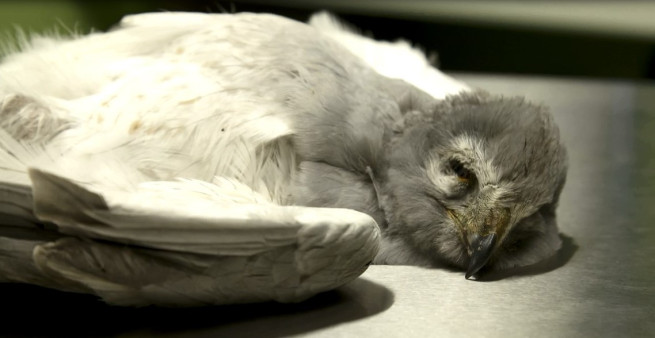
[An illegally killed hen harrier. Photo by Ruth Tingay]

Channel 4 News re-visits the grouse moors of the North York Moors National Park

The illegal killing of birds of prey on the grouse moors of North Yorkshire was firmly back in the news headlines this evening with another excellent piece fronted by Alex Thomson of Channel 4 News.

You may remember an earlier piece from Alex back in May this year (here) which featured various police investigations in Nidderdale AONB and the discovery of five dead buzzards stuffed into a hole on a Bransdale grouse moor in the North York Moors National Park during lockdown – four were later confirmed to have been shot (here).

This time the TV crew filmed a grouse-shooting party near Goathland in the North York Moors, where earlier this year film footage emerged purporting to show an individual killing a trapped goshawk on the Queen’s grouse moor in May (see here and here).

In this latest film there’s some hilarious footage of various members of the shooting party denying all knowledge of the alleged goshawk incident and providing a display of arrogance that the general public doesn’t often get to see, usually hidden as it is behind carefully-worded propaganda pieces.

Speaking of the alleged goshawk incident, Alex said,

The police told us, a gamekeeper will soon be prosecuted for killing the goshawk“.

The Duchy of Lancaster says if there is a successful prosecution, the sporting tenant, BH Sporting, may lose its lease.

Interesting times.

Here’s the six minute video that appeared on Channel 4 News this evening:

UPDATE 24th September 2020: Channel 4 bats away shooting industry hysteria (here)