60 hen harriers confirmed illegally killed or ‘missing’ since 2018, most of them on or close to UK grouse moors

For anyone who still wants to pretend that the grouse shooting industry isn’t responsible for the systematic extermination of hen harriers on grouse moors across the UK, here’s the latest catalogue of crime that suggests otherwise.

[This male hen harrier died in 2019 after his leg was almost severed in an illegally set trap that had been placed next to his nest on a Scottish grouse moor (see here). Photo by Ruth Tingay]

This is the blog I now publish after every reported killing or suspicious disappearance.

They disappear in the same way political dissidents in authoritarian dictatorships have disappeared” (Stephen Barlow, 22 January 2021).

Today the list has been updated to include the most recently reported victims, three young hen harriers whose satellite tags inexplicably stopped transmitting and whose corpses vanished in to thin air in July, August and September 2021 (see here).

The disgraceful national catalogue of illegally killed and ‘missing’ hen harriers will continue to grow – I know of at least one more on-going police investigation which has yet to be publicised.

I’ve been compiling this list only since 2018 because that is the year that the grouse shooting industry ‘leaders’ would have us believe that the criminal persecution of hen harriers had stopped and that these birds were being welcomed back on to the UK’s grouse moors (see here).

This assertion was made shortly before the publication of a devastating new scientific paper that demonstrated that 72% of satellite-tagged hen harriers were confirmed or considered likely to have been illegally killed, and this was ten times more likely to occur over areas of land managed for grouse shooting relative to other land uses (see here).

2018 was also the year that Natural England issued itself with a licence to begin a hen harrier brood meddling trial on grouse moors in northern England. For new blog readers, hen harrier brood meddling is a conservation sham sanctioned by DEFRA as part of its ludicrous ‘Hen Harrier Action Plan‘ and carried out by Natural England (NE), in cahoots with the very industry responsible for the species’ catastrophic decline in England. For more background see here.

Brood meddling has been described as a sort of ‘gentleman’s agreement’ by commentator Stephen Welch:

I don’t get it, I thought the idea of that scheme was some kind of trade off – a gentleman’s agreement that the birds would be left in peace if they were moved from grouse moors at a certain density. It seems that one party is not keeping their side of the bargain“.

With at least 60 hen harriers gone since 2018, I think it’s fair to say that the grouse shooting industry is simply taking the piss. Meanwhile, Natural England pretends that ‘partnership working’ is the way to go.

‘Partnership working’ appears to include authorising the removal of hen harrier chicks from a grouse moor already under investigation by the police for suspected raptor persecution (here) and accepting a £10K bung from representatives of the grouse shooting industry that prevents Natural England from criticising them or the sham brood meddling trial (see here).

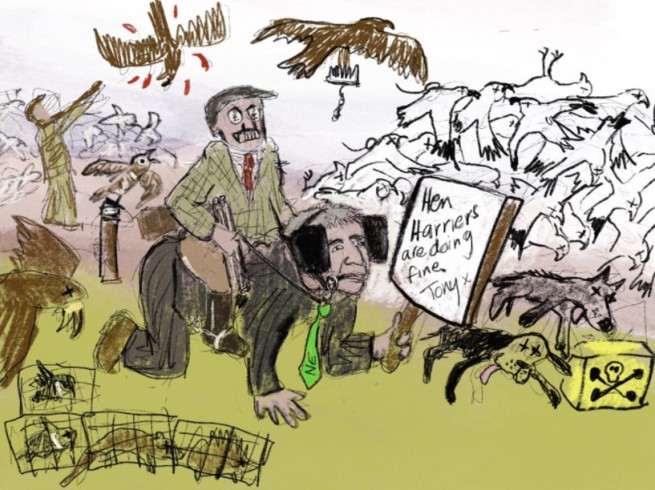
[Cartoon by Gill Lewis]

So here’s the latest gruesome list. Note that the majority of these birds (but not all) were fitted with satellite tags. How many more [untagged] harriers have been killed?

February 2018: Hen harrier Saorsa ‘disappeared’ in the Angus Glens in Scotland (here). The Scottish Gamekeepers Association later published wholly inaccurate information claiming the bird had been re-sighted. The RSPB dismissed this as “completely false” (here).

5 February 2018: Hen harrier Marc ‘disappeared’ on a grouse moor in Durham (here)

9 February 2018: Hen harrier Aalin ‘disappeared’ on a grouse moor in Wales (here)

March 2018: Hen harrier Blue ‘disappeared’ in the Lake District National Park (here)

March 2018: Hen harrier Finn ‘disappeared’ near Moffat in Scotland (here)

18 April 2018: Hen harrier Lia ‘disappeared’ in Wales and her corpse was retrieved in a field in May 2018. Cause of death was unconfirmed but police treating death as suspicious (here)

8 August 2018: Hen harrier Hilma ‘disappeared’ on a grouse moor in Northumberland (here).

16 August 2018: Hen harrier Athena ‘disappeared’ on a grouse moor in Scotland (here)

26 August 2018: Hen Harrier Octavia ‘disappeared’ on a grouse moor in the Peak District National Park (here)

29 August 2018: Hen harrier Margot ‘disappeared’ on a grouse moor in Scotland (here)

29 August 2018: Hen Harrier Heulwen ‘disappeared’ on a grouse moor in Wales (here)

3 September 2018: Hen harrier Stelmaria ‘disappeared’ on a grouse moor in Scotland (here)

24 September 2018: Hen harrier Heather ‘disappeared’ on a grouse moor in Scotland (here)

2 October 2018: Hen harrier Mabel ‘disappeared’ on a grouse moor on the edge of the Yorkshire Dales National Park (here)

3 October 2018: Hen Harrier Thor ‘disappeared’ next to a grouse moor in Bowland, Lanacashire (here)

23 October 2018: Hen harrier Tom ‘disappeared’ in South Wales (here)

26 October 2018: Hen harrier Arthur ‘disappeared’ on a grouse moor in the North York Moors National Park (here)

1 November 2018: Hen harrier Barney ‘disappeared’ on Bodmin Moor (here)

10 November 2018: Hen harrier Rannoch ‘disappeared’ on a grouse moor in Scotland (here). Her corpse was found nearby in May 2019 – she’d been killed in an illegally-set spring trap (here).

14 November 2018: Hen harrier River ‘disappeared’ on a grouse moor in the Nidderdale AONB (here). Her corpse was found nearby in April 2019 – she’d been illegally shot (here).

16 January 2019: Hen harrier Vulcan ‘disappeared’ in Wiltshire close to Natural England’s proposed reintroduction site (here)

7 February 2019: Hen harrier Skylar ‘disappeared’ next to a grouse moor in South Lanarkshire (here)

22 April 2019: Hen harrier Marci ‘disappeared’ on a grouse moor in the Cairngorms National Park (here)

26 April 2019: Hen harrier Rain ‘disappeared’ on a grouse moor in Nairnshire (here)

11 May 2019: An untagged male hen harrier was caught in an illegally-set trap next to his nest on a grouse moor in South Lanarkshire. He didn’t survive (here)

7 June 2019: An untagged hen harrier was found dead on a grouse moor in Scotland. A post mortem stated the bird had died as a result of ‘penetrating trauma’ injuries and that this bird had previously been shot (here)

5 September 2019: Wildland Hen Harrier 1 ‘disappeared’ on a grouse moor nr Dalnaspidal on the edge of the Cairngorms National Park (here)

11 September 2019: Hen harrier Romario ‘disappeared’ on a grouse moor in the Cairngorms National Park (here)

14 September 2019: Hen harrier (Brood meddled in 2019, #183704) ‘disappeared’ in North Pennines (here)

23 September 2019: Hen harrier (Brood meddled in 2019, #55149) ‘disappeared’ in North Pennines (here)

24 September 2019: Wildland Hen Harrier 2 ‘disappeared’ on a grouse moor at Invercauld in the Cairngorms National Park (here)

24 September 2019: Hen harrier Bronwyn ‘disappeared’ near a grouse moor in North Wales (here)

10 October 2019: Hen harrier Ada ‘disappeared’ on a grouse moor in the North Pennines AONB (here)

12 October 2019: Hen harrier Thistle ‘disappeared’ on a grouse moor in Sutherland (here)

18 October 2019: Member of the public reports the witnessed shooting of an untagged male hen harrier on White Syke Hill in North Yorkshire (here)

November 2019: Hen harrier Mary found illegally poisoned on a pheasant shoot in Ireland (here)

January 2020: Members of the public report the witnessed shooting of a male hen harrier on Threshfield Moor in the Yorkshire Dales National Park (here)

23 March 2020: Hen harrier Rosie ‘disappeared’ at an undisclosed roost site in Northumberland (here)

1 April 2020: Hen harrier (Brood meddled in 2019, #183703) ‘disappeared’ in unnamed location, tag intermittent (here)

5 April 2020: Hen harrier Hoolie ‘disappeared’ on a grouse moor in the Cairngorms National Park (here)

8 April 2020: Hen harrier Marlin ‘disappeared’ on a grouse moor in the Cairngorms National Park (here)

19 May 2020: Hen harrier Fingal ‘disappeared’ on a grouse moor in the Lowther Hills, Scotland (here)

21 May 2020: Hen harrier (Brood meddled in 2019, #183701) ‘disappeared’ on a grouse moor in Cumbria shortly after returning from wintering in France (here)

27 May 2020: Hen harrier Silver ‘disappeared’ on a grouse moor on Leadhills Estate, Scotland (here)

day/month unknown: Unnamed male hen harrier breeding on RSPB Geltsdale Reserve, Cumbria ‘disappeared’ while away hunting (here)

9 July 2020: Unnamed female hen harrier (#201118) ‘disappeared’ from an undisclosed site in Northumberland (here).

25 July 2020: Hen harrier Harriet ‘disappeared’ on a grouse moor in the Yorkshire Dales National Park (here)

14 August 2020: Hen harrier Solo ‘disappeared’ in confidential nest area in Lancashire (here)

7 September 2020: Hen harrier Dryad ‘disappeared’ on a grouse moor in the Yorkshire Dales National Park (here)

16 September 2020: Hen harrier Fortune ‘disappeared’ from an undisclosed roost site in Northumberland (here)

19 September 2020: Hen harrier Harold ‘disappeared’ on a grouse moor in the Yorkshire Dales National Park (here)

20 September 2020: Hen harrier (Brood meddled in 2020, #55152) ‘disappeared’ next to a grouse moor in North Yorkshire (here)

24 February 2021: Hen harrier Tarras ‘disappeared’ next to a grouse moor in Northumberland (here)

12th April 2021: Hen harrier Yarrow ‘disappeared’ near Stockton, County Durham (here)

18 May 2021: Adult male hen harrier ‘disappeared’ from its breeding attempt on RSPB Geltsdale Reserve, Cumbria whilst away hunting (here)

18 May 2021: Another adult male hen harrier ‘disappeared’ from its breeding attempt on RSPB Geltsdale Reserve, Cumbria whilst away hunting (here)

24 July 2021: Hen harrier Asta ‘disappeared’ at a ‘confidential site’ in the North Pennines (here)

14th August 2021: Hen harrier Josephine ‘disappeared’ at a ‘confidential site’ in Northumberland (here)

17 September 2021: Hen harrier Reiver ‘disappeared’ in a grouse moor dominated region of Northumberland (here)

24 September 2021: Hen harrier (Brood meddled in 2021, R2-F-1-21) ‘disappeared’ in Northumberland (here)

To be continued……..

Another gamekeeper convicted as another bird of prey starves to death in illegally-operated trap

A couple of weeks ago I blogged about the conviction of a 53-year-old gamekeeper in the Scottish Borders, Peter Givens, who was responsible for an illegally-operated trap in which a barn owl and a goshawk had starved to death (see here). I’ll be blogging more about that case shortly as some interesting things have come to light.

Fast forward two weeks and today another gamekeeper, 58-year-old Hilton Prest, has been convicted for an almost identical offence, this time causing a sparrowhawk to starve to death inside an illegally-operated trap in Bosley, Cheshire, in February this year.

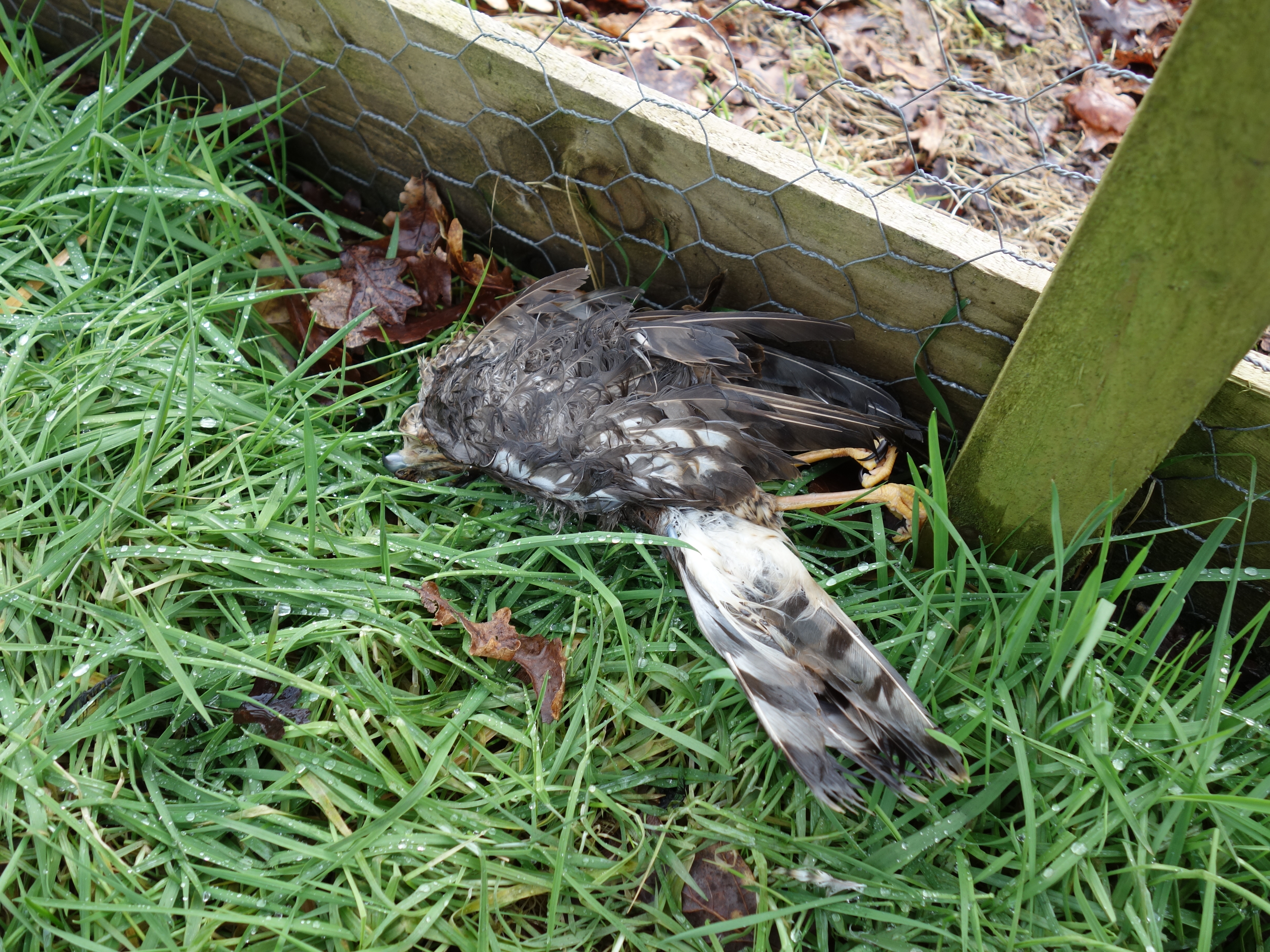
[The dead sparrowhawk inside the crow cage trap. Photo by RSPB]

The RSPB has published a press release about this latest conviction, which I’ll reproduce below, and then I’ll add some commentary at the end.

RSPB press release, 16th December 2021:

Man fined after sparrowhawk starves to death in trap

An amateur gamekeeper has received an £800 fine after a sparrowhawk starved to death in a trap in Cheshire.

At Manchester Magistrates’ court today (16 December 2021), Hilton Prest pleaded guilty to unlawfully using a trap on or before 10/2/21 contrary to Sec 5(1)(b) of the Wildlife and Countryside Act. He was fined £800 (plus £85 costs and £80 victim surcharge). A charge against a second man was discontinued. 

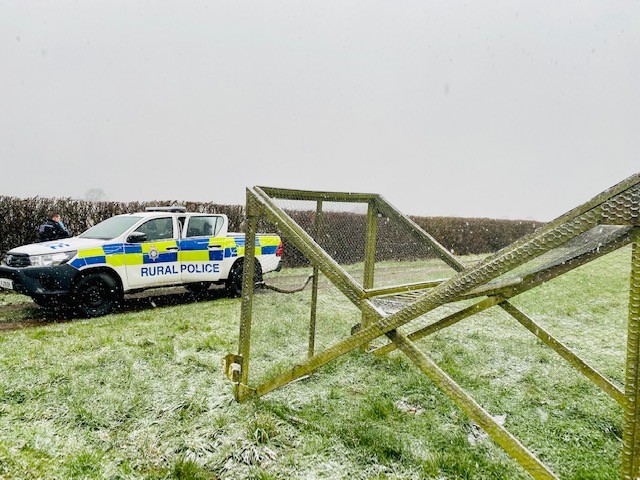
On 10 February 2021, a member of the public found a sparrowhawk alive in a cage trap on land managed for gamebird shooting near Bosley. Cage traps are large mesh traps designed so a bird can get in but not out. They can be used legally, under license, to control crows, and must be checked every 25 hours. Any non-target birds caught accidentally must be released unharmed during daily inspections. When not in use the doors on such traps must be removed or secured open so birds cannot be caught.

There was snow on the ground and no shelter or water for the bird. The door to the trap was closed, so the member of the public opened it slightly, hoping the sparrowhawk would escape. Concerned for the bird’s welfare, they later provided the trap’s location to the RSPB.

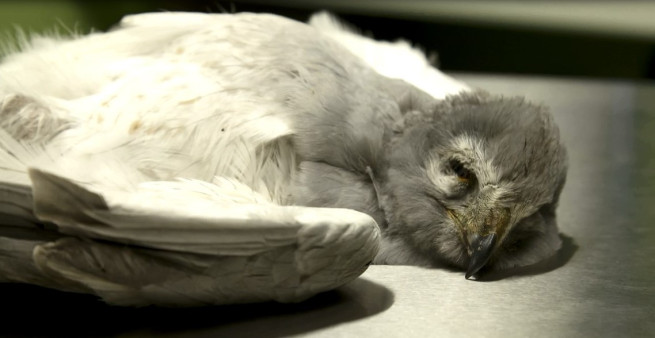
[The juvenile sparrowhawk caught inside the trap during freezing weather in Feb 2021. Photo by RSPB]

RSPB Investigators attended the following day, 17 February, however they found the sparrowhawk (later confirmed as the same bird) dead inside the trap. There were also the remains of a blackbird, which had presumably attracted the sparrowhawk inside, and some grain, which had presumably attracted the blackbird. Despite the door being ajar, it appeared the sparrowhawk had been unable to escape and starved to death.

Cheshire Police were notified and the body of the bird sent for post-mortem examination. A veterinary pathologist confirmed the bird had died of starvation and would have experienced considerable unnecessary suffering inside the trap. (The veterinary work was funded by money from Wild Justice’s Raptor Forensic Fund, provided to support such cases, and administered by the PAW Forensic Working Group.) Two men were later interviewed by the police and reported for offences in relation to the unlawful use of the trap. 

District Judge Mr Jack McGarver said that he accepted that the act was careless rather than reckless or intentional, but that the degree of carelessness was high, and that it was well below the standard that was expected.

He added: “The sparrowhawk is a beautiful native creature which is entitled to be protected.”

Tom Grose, RSPB Investigations Officer, said: “An unattended set trap in sub-zero temperatures was a death sentence for both birds.

If a trap is no longer in operation, it must be disabled in such a way that no bird can become caught. The operator has a duty of care to ensure that this happens, and that no birds can become caught inside. This duty of care was not met.

This is yet another example of why Natural England must improve the general license conditions for disabling these traps, in line with conditions in Scotland. We are aware of a number of other birds, including buzzards and a goshawk, that have starved to death inside cage traps which appear not to have been properly disabled. In this case, a simple padlock securing the door wide open would have saved the life of this blackbird and this sparrowhawk. This needs to be addressed to ensure no more birds perish in this sad and wasteful way.”

If you find a wild bird of prey which you suspect has been illegally killed, or a trap with a bird of prey caught inside, phone the police on 101, email RSPB Investigations at crime@rspb.org.uk or fill in the online form: https://www.rspb.org.uk/our-work/our-positions-and-campaigns/positions/wildbirdslaw/reportform.aspx

ENDS

First of all, well done to the RSPB’s investigations team, working with Cheshire Police, to bring this case to court and secure a conviction.

The penalty given to gamekeeper Prest (£800 fine plus £85 costs and £80 victim surcharge) is higher than that given to gamekeeper Givens (£300 fine plus £20 victim surcharge) even though two Schedule 1 species had died as a result of Givens’ offence so once again sentencing consistency is lacking.

What’s really interesting though is the difference in the trapping rules between Scotland and England. In the Scottish case, it could be shown quite easily that Givens was operating an unlawful trap because (a) in Scotland the General Licence requires that the trap user be identified by a code attached to each trap (this is not a requirement in England because statutory agency Natural England hasn’t bothered to introduce it), and (b) in Scotland, when the trap is not in use the trap operator MUST do the following, as a condition of the General Licence:

Any trap not in use must be immobilised and rendered incapable of use. For multi-catch cage traps, the access doors must be removed from the site or securely padlocked open so that no bird can be confined‘.

This is a clear instruction – you either padlock the door open or you remove it completely if the trap is not in use. It’s unambiguous.

However, the equivalent General Licence condition in England is nowhere near as clear cut and can lead to all sorts of ‘accidents’ and excuses.

In England, the General Licence condition says this:

When you are not using a trap, it must not be capable of holding or catching animals.

You must secure trap doors in a fully open position, or remove the doors completely from the site‘.

Then there’s an add-on bit of ‘advice’ underneath, that says:

Padlocks are the most secure way to secure trap doors open, but cable ties or wire may also be suitable‘.

Crucially, this ‘advice’ is not legally binding, so a trap operator in England could legally use a rock or a piece of baler twine to ‘secure trap doors in a fully open position’ but both these techniques, and others, are not bomb proof and a door could ‘accidentally’ close, preventing a trapped bird from a means of escape. Padlocking the door or removing the door completely provides a trapped bird with a route to escape.

Quite why Natural England hasn’t incorporated this very simple but effective condition into its General Licence is a matter of bemusement for many of us. It’s really not that difficult, is it?

And if game-shooting organisations were as interested in protecting birds of prey as they claim to be, they’d be pushing for this very simple measure, too.

Leadhills Estate loses appeal over extension to General Licence restriction

Regular blog readers will be well aware that the notorious Leadhills Estate, a grouse-shooting estate in South Lanarkshire that has been at the centre of police wildlife crime investigations at least 70 times since the early 2000s, is currently serving a three-year General Licence restriction based on what NatureScot described as ‘clear evidence’ of raptor persecution offences, including the illegal killing of a short-eared owl, two buzzards and three hen harriers that were ‘shot or caught in traps’ on Leadhills Estate since 1 January 2014 (see here) and the discovery of banned poisons on the estate in May 2019 (see here).

That original General Licence restriction was imposed on Leadhills Estate by NatureScot in November 2019 and is valid until November 2022.

A General Licence restriction can be imposed by NatureScot when there is sufficient evidence of wildlife crime on an estate but insufficient evidence for the police to charge a named individual. Leadhills Estate has denied all knowledge of any wildlife crime on its land.

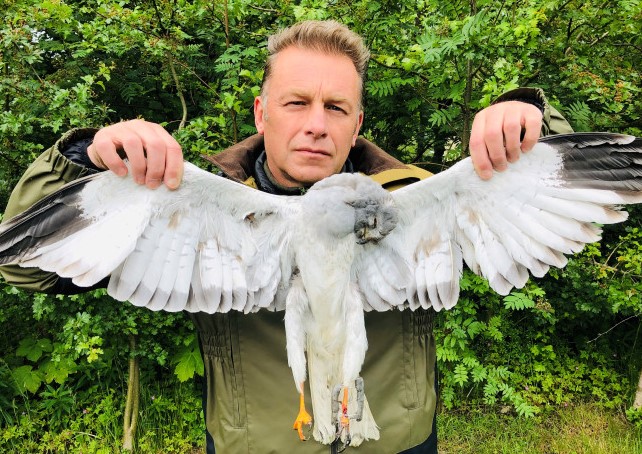
[Chris Packham holds a dead hen harrier. This bird was caught by the leg in an illegally-set trap on the Leadhills Estate grouse moor in May 2019. The trap had been set next to the harrier’s nest and was hidden by moss. The harrier’s leg was almost severed. Unfortunately, extensive surgery could not save this bird. Photo by Ruth Tingay]

Since that original General Licence restriction was imposed on Leadhills Estate in November 2019, further alleged offences have been reported and are the subject of ongoing police investigations (see here) including the alleged shooting of a(nother) short-eared owl by a masked gunman on a quad bike as witnessed by a local resident and his eight year old son in July 2020 (see here) and the discovery of yet another batch of banned poisons, also in July 2020 (here). A satellite-tagged hen harrier (Silver) also vanished in suspicious circumstances on the estate in May 2020 (here), and although NatureScot don’t consider missing satellite-tagged raptors as sufficient evidence for a General Licence restriction, the disappearance can be used as supportive evidence if further alleged offences are also being considered.

In light of these latest allegations, in late September 2021 NatureScot announced that a further three-year General Licence restriction (an extension to the first one) was being imposed on Leadhills Estate (here), although it turned out that it wasn’t a three-year extension, as NatureScot had claimed, but was rather an eight-month extension because this latest restriction was running concurrently with the first restriction (see here).

In early October 2021 Leadhills Estate was reported to be considering appealing against the extended restriction (here) and shortly afterwards NatureScot removed the official notification of the extension from its website, a sure sign that an appeal was underway.

Roll on two months and the official notification has been re-posted on NatureScot’s website (here), which I take to mean that Leadhills Estate has lost its appeal and the General Licence restriction has been re-instated until it expires on 8th July 2023. This means that the estate cannot undertake certain activities (e.g. the operation of crow cage traps to kill hundreds of corvids) unless estate gamekeepers apply to NatureScot for an individual licence and NatureScot approves the application(s).

I’ll be monitoring this and will be keen to see whether individual licences are granted to gamekeepers on an estate that has had, in effect, a double General Licence restriction imposed after evidence of multiple wildlife crimes has been provided to NatureScot by Police Scotland.

Earlier this autumn I submitted an FoI to NatureScot to find out on what basis Leadhills Estate was appealing the General Licence restriction. The last time the estate appealed (against the original General Licence restriction), the grounds for appeal were laughable (see here) and were not accepted by NatureScot.

This time, NatureScot refused to release the details of the estate’s appeal because at the time the appeal was considered to be ‘live’ and it was thought that publication might affect the estate’s right to a fair hearing. I don’t know how it would have affected the estate’s appeal, given the appeal is heard in-house at NatureScot and cannot be influenced by outside commentary, but that was NatureScot’s decision.

That’s fine. Now the appeal has been dismissed and the restriction is in place, I have submitted another FoI to NatureScot and I expect the estate’s grounds for appeal to be released in to the public domain.

A response is due from NatureScot by the end of this month. I’ll keep you posted.

UPDATE 23 February 2022: NatureScot refuses to publish details of Leadhills Estate’s general licence restriction appeal (here)

Gamekeeper convicted as birds of prey die in trap

A gamekeeper in the Scottish Borders has been convicted today after two supposedly protected birds of prey (a barn owl and a goshawk) died inside a trap which he neglected to check.

There’s an article about this case in the Border Telegraph this evening, which I’ll copy below, and then I’ll add some further commentary below that.

Here’s the Border Telegraph piece:

Borders gamekeeper ‘recklessly’ killed two protected birds

A GAMEKEEPER who recklessly killed two protected birds on a Borders estate by leaving open the door of a multi crow cage trap [Ed: see commentary at foot of this blog] has been fined £300 at Selkirk Sheriff Court.

An owl and a goshawk perished from exposure and a lack of food and water at Cathpair Farm near Stow on September 13 last year.

Fifty-three-year-old Peter Givens, of Keepers Cottage, Cathpair, pleaded guilty to recklessly taking and killing the wild birds under the Wildlife and Countryside Act.

His lawyer explained that Givens had used the crow trap for the lambing season earlier in the year but thought had had [sic] secured it properly when no longer required.

Wildlife and environmental crime depute fiscal Joe Stewart said: “An ecologist carrying out a survey on the estate came across a crow cage trap near some woodland.

“He noticed a barn owl lying deceased in the trap which was in an advanced state of decomposition and had obviously been there for a long time.

“The door was closed and the trap was in use.

“The local wildlife police attended carrying out a search and he found another bird in the trap which was a goshawk.”

An identification tag on the trap was traced to Givens.

Mr Stewart said the trap should have been removed.

Givens’ lawyer said his client had been a gamekeeper for more than 30 years and had no previous convictions.

He said around the start of the COVID pandemic in March 2020 the trap was put in place and checked on a regular basis in case other birds were trapped.

He explained that there had been a lot of crows at the start of the lambing season but this had tailed off by May.

The lawyer continued: “He thought the trap had been deactivated. There was no intention to keep the trap operating.

“What happened on September 13 came as a shock to him and a source of embarrassment and sadness for the damage he has caused.

“He has accepted he failed to deactivate the trap properly.

“He accepts his conduct was reckless but it was not intentional and he is very remorseful.”

Sheriff Peter Paterson said: “This was an oversight rather than an intentional act.

“It was not a deliberate act to trap predators with the unintended consequences.”

Sheriff Paterson added: “I take into account your spotless record and while this was reckless, it was not intentional.”

He reduced the fine from £375 to £300 to reflect the guilty plea with a £20 victim surcharge added.

ENDS

Ok, so first a technical correction on the court reporter’s write up in the Border Telegraph. The article states the gamekeeper had killed the two birds of prey ‘by leaving open the door of a multi crow cage trap’. This can’t be accurate. Had he left the door open, the barn owl and the goshawk would have been able to escape! What is more likely to have happened is the gamekeeper kept the cage door shut, which is an offence if the trap is no longer in use because, as we’ve seen, birds can enter the trap through a roof opening (either a ‘ladder’ or funnel design) but then they cannot escape back up.

Anybody who operates a multi-cage crow trap under the General Licences in Scotland MUST render the trap ‘incapable of use’ if the trap is not being used, and this means either removing the door entirely or padlocking it open. Leaving the door closed when the trap is not in use is an offence.

I was interested to read the gamekeeper’s lawyer’s defence: “…..the gamekeeper thought he had secured it properly when no longer required“. I’m not sure how someone can believe they’ve secured a cage trap ‘properly’ if they haven’t obeyed the General Licence terms and conditions and either (a) removed the door or (b) padlocked it open. There’s no possibility of ‘accidentally’ doing half a job here – you either remove the door or you don’t, or you padlock the door open, or you don’t.

I was also interested to see that the guilty gamekeeper was 53 years old and had been a gamekeeper for ‘more than 30 years’. These were details given by his lawyer in his defence. I’d argue that those details should have gone against the gamekeeper – he’s been in the wildlife-killing business for long enough to know the risks and certainly to know the law. Indeed, I understand Peter Givens was the former Head Gamekeeper on nearby Raeshaw Estate. This is an estate that has been at the centre of multiple wildlife crime investigations for many, many years and was the subject of the very first General Licence restriction in 2015, based on clear police evidence that wildlife crimes had been committed there, although there was insufficient evidence to prosecute any individual (see here).

Even after the General Licence restriction was imposed on Raeshaw Estate, even more alleged wildlife crimes were uncovered which resulted in the estate’s Individual licences being revoked by SNH in 2017 (here).

There is no evidence nor indeed suggestion that Peter Givens was involved in any of those alleged offences but the point of highlighting this background is that he would certainly have been aware of the police investigations and thus the importance of adhering to the law, which he failed to do in this latest case (which incidentally did not take place on Raeshaw Estate – Givens has since moved to a smaller shoot].

The lawyer also made a point of telling the Sheriff that Givens had no previous convictions, and his ‘spotless record’ was taken in to account by Sheriff Paterson when Givens was sentenced.

And the punishment for ‘recklessly’ killing two Schedule 1 birds of prey? A £300 fine and a £20 victim surcharge.

You can decide for yourselves whether this will be sufficient deterrent for other gamekeepers to ensure they adhere to the terms and conditions of the General Licences to prevent protected species being trapped in a literal death trap and starving to death.

Yorkshire Dales National Park Authority reacts to 2020 being ‘worst year on record’ for raptor persecution crimes

Last week the RSPB published its latest annual Birdcrime report which showed that 2020 was the ‘worst year on record’ for confirmed crimes against birds of prey in the UK (see here).

For the seventh year in a row, North Yorkshire had more confirmed raptor persecution crimes than any other county in the UK. Twenty-six of the 137 confirmed UK incidents occurred in North Yorkshire. Of these two thirds were directly related to grouse shooting and a further four incidents to other types of shooting. Victims in the county included 16 buzzards, two peregrine falcons, two red kites and one goshawk.

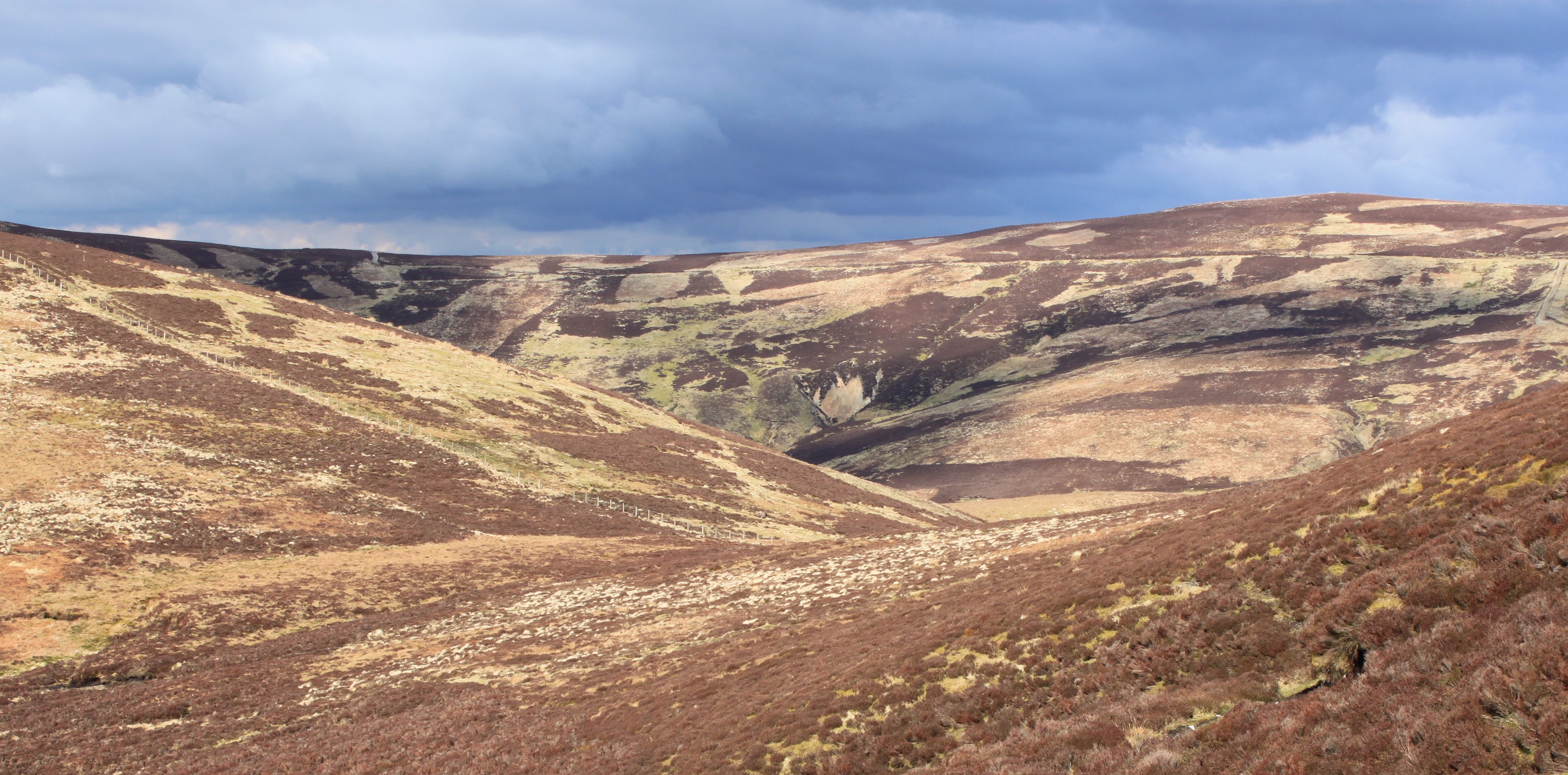
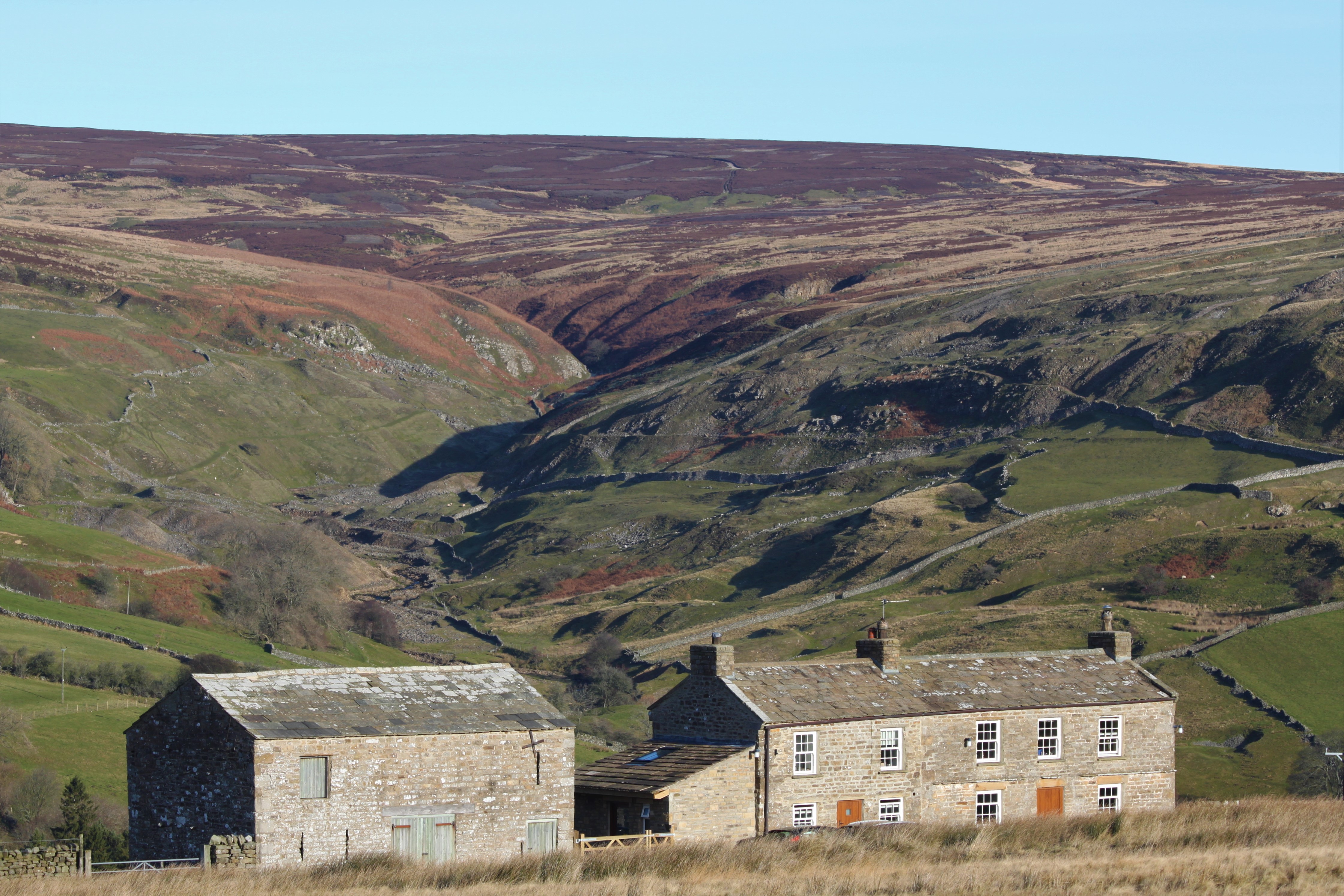
[Grouse moor landscape in the Yorkshire Dales National Park. Photo by Ruth Tingay]

In response to the damning Birdcrime report, the Yorkshire Dales National Park Authority has issued this pretty unequivocal statement:

YORKSHIRE DALES NATIONAL PARK AUTHORITY REACTION TO LATEST RSPB BIRDCRIME REPORT

Commenting on the RSPB Birdcrime Report 2020, Yorkshire Dales National Park Authority Chief Executive David Butterworth said:

“This report makes grim reading for all landscape authorities, landowners, managers and other partners who are working hard to call out and tackle illegal raptor persecution, and it’s embarrassing and humiliating to see North Yorkshire yet again topping the league table with the highest number of confirmed incidents.

“As we’ve said before, the continuing issue of bird of prey persecution in North Yorkshire demands maximum exposure, as do the activities of those who take part in this criminality. People need to know what is happening here and the devastating impact this is having on our protected species. This report lays that bare.

”The Yorkshire Dales National Park Authority condemns raptor persecution in the strongest possible terms and, as highlighted in this report, we will continue to work closely with partners and others to stamp out this crime once and for all.

“I would appeal to anyone, local or visitor, who witnesses any suspicious activity while they’re out and about in the countryside, or anyone who is made aware of it through their networks, to contact the Police”.

The Yorkshire Dales National Park Management Plan objective C5 on illegal persecution of raptors can be viewed here.

For concerns about a possible wildlife crime, you should call 101. If you witness a suspected wildlife crime in action, call 999 immediately and ask for the Police. Finally, you can speak in confidence about raptor persecution directly with the RSPB on 0300 9990101

ENDS

57 hen harriers confirmed illegally killed or ‘missing’ on or close to UK grouse moors since 2018

For anyone who still wants to pretend that the grouse shooting industry isn’t responsible for the systematic extermination of hen harriers on grouse moors across the UK, here’s the latest catalogue of crime that suggests otherwise.

[This male hen harrier died in 2019 after his leg was almost severed in an illegally set trap that had been placed next to his nest on a Scottish grouse moor (see here). Photo by Ruth Tingay]

This is the blog I now publish after every reported killing or suspicious disappearance.

They disappear in the same way political dissidents in authoritarian dictatorships have disappeared” (Stephen Barlow, 22 January 2021).

Today the list has been updated to include the most recently reported victim, a young hen harrier called Reiver who hatched on Langholm Moor earlier this year and whose tag suddenly and inexplicably stopped transmitting on 17th September 2021 in a grouse moor area of Northumberland (see here).

The disgraceful national catalogue of illegally killed and ‘missing’ hen harriers will continue to grow – I know of at least one more on-going police investigation which has yet to be publicised.

I’ve been compiling this list only since 2018 because that is the year that the grouse shooting industry ‘leaders’ would have us believe that the criminal persecution of hen harriers had stopped and that these birds were being welcomed back on to the UK’s grouse moors (see here).

This assertion was made shortly before the publication of a devastating new scientific paper that demonstrated that 72% of satellite-tagged hen harriers were confirmed or considered likely to have been illegally killed, and this was ten times more likely to occur over areas of land managed for grouse shooting relative to other land uses (see here).

2018 was also the year that Natural England issued itself with a licence to begin a hen harrier brood meddling trial on grouse moors in northern England. For new blog readers, hen harrier brood meddling is a conservation sham sanctioned by DEFRA as part of its ludicrous ‘Hen Harrier Action Plan‘ and carried out by Natural England (NE), in cahoots with the very industry responsible for the species’ catastrophic decline in England. For more background see here.

Brood meddling has been described as a sort of ‘gentleman’s agreement’ by commentator Stephen Welch:

I don’t get it, I thought the idea of that scheme was some kind of trade off – a gentleman’s agreement that the birds would be left in peace if they were moved from grouse moors at a certain density. It seems that one party is not keeping their side of the bargain“.

With at least 57 hen harriers gone since 2018, I think it’s fair to say that the grouse shooting industry is simply taking the piss. Meanwhile, Natural England pretends that ‘partnership working’ is the way to go.

‘Partnership working’ appears to include authorising the removal of hen harrier chicks from a grouse moor already under investigation by the police for suspected raptor persecution (here) and accepting a £10K bung from representatives of the grouse shooting industry that prevents Natural England from criticising them (see here).

[Cartoon by Gill Lewis]

So here’s the latest gruesome list:

February 2018: Hen harrier Saorsa ‘disappeared’ in the Angus Glens in Scotland (here). The Scottish Gamekeepers Association later published wholly inaccurate information claiming the bird had been re-sighted. The RSPB dismissed this as “completely false” (here).

5 February 2018: Hen harrier Marc ‘disappeared’ on a grouse moor in Durham (here)

9 February 2018: Hen harrier Aalin ‘disappeared’ on a grouse moor in Wales (here)

March 2018: Hen harrier Blue ‘disappeared’ in the Lake District National Park (here)

March 2018: Hen harrier Finn ‘disappeared’ near Moffat in Scotland (here)

18 April 2018: Hen harrier Lia ‘disappeared’ in Wales and her corpse was retrieved in a field in May 2018. Cause of death was unconfirmed but police treating death as suspicious (here)

8 August 2018: Hen harrier Hilma ‘disappeared’ on a grouse moor in Northumberland (here).

16 August 2018: Hen harrier Athena ‘disappeared’ on a grouse moor in Scotland (here)

26 August 2018: Hen Harrier Octavia ‘disappeared’ on a grouse moor in the Peak District National Park (here)

29 August 2018: Hen harrier Margot ‘disappeared’ on a grouse moor in Scotland (here)

29 August 2018: Hen Harrier Heulwen ‘disappeared’ on a grouse moor in Wales (here)

3 September 2018: Hen harrier Stelmaria ‘disappeared’ on a grouse moor in Scotland (here)

24 September 2018: Hen harrier Heather ‘disappeared’ on a grouse moor in Scotland (here)

2 October 2018: Hen harrier Mabel ‘disappeared’ on a grouse moor on the edge of the Yorkshire Dales National Park (here)

3 October 2018: Hen Harrier Thor ‘disappeared’ next to a grouse moor in Bowland, Lanacashire (here)

23 October 2018: Hen harrier Tom ‘disappeared’ in South Wales (here)

26 October 2018: Hen harrier Arthur ‘disappeared’ on a grouse moor in the North York Moors National Park (here)

1 November 2018: Hen harrier Barney ‘disappeared’ on Bodmin Moor (here)

10 November 2018: Hen harrier Rannoch ‘disappeared’ on a grouse moor in Scotland (here). Her corpse was found nearby in May 2019 – she’d been killed in an illegally-set spring trap (here).

14 November 2018: Hen harrier River ‘disappeared’ on a grouse moor in the Nidderdale AONB (here). Her corpse was found nearby in April 2019 – she’d been illegally shot (here).

16 January 2019: Hen harrier Vulcan ‘disappeared’ in Wiltshire close to Natural England’s proposed reintroduction site (here)

7 February 2019: Hen harrier Skylar ‘disappeared’ next to a grouse moor in South Lanarkshire (here)

22 April 2019: Hen harrier Marci ‘disappeared’ on a grouse moor in the Cairngorms National Park (here)

26 April 2019: Hen harrier Rain ‘disappeared’ on a grouse moor in Nairnshire (here)

11 May 2019: An untagged male hen harrier was caught in an illegally-set trap next to his nest on a grouse moor in South Lanarkshire. He didn’t survive (here)

7 June 2019: An untagged hen harrier was found dead on a grouse moor in Scotland. A post mortem stated the bird had died as a result of ‘penetrating trauma’ injuries and that this bird had previously been shot (here)

5 September 2019: Wildland Hen Harrier 1 ‘disappeared’ on a grouse moor nr Dalnaspidal on the edge of the Cairngorms National Park (here)

11 September 2019: Hen harrier Romario ‘disappeared’ on a grouse moor in the Cairngorms National Park (here)

14 September 2019: Hen harrier (Brood meddled in 2019, #183704) ‘disappeared’ in North Pennines (here)

23 September 2019: Hen harrier (Brood meddled in 2019, #55149) ‘disappeared’ in North Pennines (here)

24 September 2019: Wildland Hen Harrier 2 ‘disappeared’ on a grouse moor at Invercauld in the Cairngorms National Park (here)

24 September 2019: Hen harrier Bronwyn ‘disappeared’ near a grouse moor in North Wales (here)

10 October 2019: Hen harrier Ada ‘disappeared’ on a grouse moor in the North Pennines AONB (here)

12 October 2019: Hen harrier Thistle ‘disappeared’ on a grouse moor in Sutherland (here)

18 October 2019: Member of the public reports the witnessed shooting of an untagged male hen harrier on White Syke Hill in North Yorkshire (here)

November 2019: Hen harrier Mary found illegally poisoned on a pheasant shoot in Ireland (here)

January 2020: Members of the public report the witnessed shooting of a male hen harrier on Threshfield Moor in the Yorkshire Dales National Park (here)

23 March 2020: Hen harrier Rosie ‘disappeared’ at an undisclosed roost site in Northumberland (here)

1 April 2020: Hen harrier (Brood meddled in 2019, #183703) ‘disappeared’ in unnamed location, tag intermittent (here)

5 April 2020: Hen harrier Hoolie ‘disappeared’ on a grouse moor in the Cairngorms National Park (here)

8 April 2020: Hen harrier Marlin ‘disappeared’ on a grouse moor in the Cairngorms National Park (here)

19 May 2020: Hen harrier Fingal ‘disappeared’ on a grouse moor in the Lowther Hills, Scotland (here)

21 May 2020: Hen harrier (Brood meddled in 2019, #183701) ‘disappeared’ on a grouse moor in Cumbria shortly after returning from wintering in France (here)

27 May 2020: Hen harrier Silver ‘disappeared’ on a grouse moor on Leadhills Estate, Scotland (here)

day/month unknown: Unnamed male hen harrier breeding on RSPB Geltsdale Reserve, Cumbria ‘disappears’ while away hunting (here)

9 July 2020: Unnamed female hen harrier (#201118) ‘disappeared’ from an undisclosed site in Northumberland (here).

25 July 2020: Hen harrier Harriet ‘disappeared’ on a grouse moor in the Yorkshire Dales National Park (here)

14 August 2020: Hen harrier Solo ‘disappeared’ in confidential nest area in Lancashire (here)

7 September 2020: Hen harrier Dryad ‘disappeared’ on a grouse moor in the Yorkshire Dales National Park (here)

16 September 2020: Hen harrier Fortune ‘disappeared’ from an undisclosed roost site in Northumberland (here)

19 September 2020: Hen harrier Harold ‘disappeared’ on a grouse moor in the Yorkshire Dales National Park (here)

20 September 2020: Hen harrier (Brood meddled in 2020, #55152) ‘disappeared’ next to a grouse moor in North Yorkshire (here)

24 February 2021: Hen harrier Tarras ‘disappeared’ next to a grouse moor in Northumberland (here)

12th April 2021: Hen harrier Yarrow ‘disappeared’ near Stockton, County Durham (here)

18 May 2021: Adult male hen harrier ‘disappears’ from its breeding attempt on RSPB Geltsdale Reserve, Cumbria whilst away hunting (here)

18 May 2021: Another adult male hen harrier ‘disappears’ from its breeding attempt on RSPB Geltsdale Reserve, Cumbria whilst away hunting (here)

17 September 2021: Hen harrier Reiver ‘disappears’ in a grouse moor dominated region of Northumberland (here)

To be continued……..

Buzzard caught in primitive illegal trap set inside pheasant pen in Shropshire

Video footage has emerged, filmed in mid-September, of two primitive and illegal traps that had been set inside a pheasant pen in woodland near the village of Chelmarsh, just south of Bridgnorth, Shropshire.

One of the traps had been triggered and had caught a buzzard. The other trap had been baited with a dead pheasant but had not been triggered.

[Screen grab from the video, showing the trapped buzzard inside the illegal trap]

[A photo of the second illegal trap, baited with the dead pheasant. The map shows the location:

The trapped buzzard was released by a member of the public and subsequent covert video evidence shows a man entering the pheasant pen, attending the trap and removing all evidence of it.

I understand that a report has been made to the police.

There is a write-up about this criminal activity on the Hunt Saboteurs Association website (here), where it is claimed the man attending the trap is a gamekeeper. I don’t have any information that can support or refute that claim.

The video can be watched here:

Long-eared owl illegally held in trap on same Strathbraan grouse moor where shot peregrine found

Further to yesterday’s blog about a shot peregrine being found dead on a grouse moor in the notorious raptor persecution hotspot of Strathbraan (see here), further news has just emerged of another offence being committed on the same shooting estate.

Ian Thomson, Head of Investigations at RSPB Scotland has just tweeted the following:

The dead peregrine was found during a police/SSPCA follow-up to incidents of cage trap abuse on the same estate – eg. this LE Owl had been illegally held in a trap, in pouring rain, for >24hrs. IMO there is no legitimate reason for a grouse moor be using crow traps in October…

Here is a photo of the illegally-trapped Long-eared owl:

Crow cage traps are not illegal to use under the General Licences, as long as certain conditions are met. Birds of prey can often enter these traps and are then unable to escape. Catching a raptor is not an offence in itself. However, the trap operator has a legal obligation to check the trap at least once every 24 hours and if a trapped raptor (or any other non-target species) is found and it is uninjured, the trap operator MUST release it back to the wild immediately. If the trapped raptor is held for longer than 24 hours then the trap operator has committed an offence under the Wildlife & Countryside Act 1981.

To not release this long-eared owl within 24 hours of capture is a clear offence and there may also be other welfare offences to consider under the Animal Health & Welfare (Scotland) Act 2006 if the owl did not have adequate food, water and shelter.

Ian also raises the question of the legitimacy of operating a crow cage trap in October. He’s absolutely right to question this. Crow cage traps can be used under the General Licences in Scotland for three purposes:

  • GL 01/2021: To kill or take certain birds for the conservation of wild birds.
  • GL 02/2021: To kill or take certain birds for the prevention of serious damage to livestock, foodstuffs for livestock, crops, vegetables and fruit.
  • GL 03/2021: To kill or take certain birds for the preservation of public health, public safety and preventing the spread of disease

For what legitimate purpose was this crow cage trap being deployed on a Strathbraan grouse moor in October??

I’m very curious about why a charge has not been brought against the trap operator in this case. All crow cage traps now have to be registered with NatureScot by the trap operator and a sign affixed to the trap to show the trap operator’s registration number. Police Scotland can use this number to identify the trap operator and pursue a prosecution if an offence has been committed.

I’m even more curious to know why NatureScot has not imposed a General Licence restriction on this estate. The crow cage trap offence was committed in October 2020. The shot peregrine was discovered in November 2020. The Scottish SPCA is pursuing a case for alleged snaring offences also discovered in November 2020.

It’s now September 2021.

Just what is going on here? There are serious questions to be asked of Police Scotland and NatureScot.

Why no publicity?

Why no prosecution?

Why no General Licence restriction?

New study: raptor persecution in Wales 3 x more likely in areas managed for driven gamebird shooting

Press release from RSPB Wales (24th August 2021)

New research sheds light on crimes against birds of prey in Wales

The theft of eggs and chicks of birds of prey has almost ceased in Wales, but persecution rates are not declining – according to a new RSPB Cymru review, published today.

Crimes against raptors in Wales 1990-2019 – written by RSPB Cymru and published by the Welsh Ornithological Society – summarises the plight of raptors in Wales over the past three decades.

One of the key findings is that since the 1990s, egg and chick theft has almost ceased. Theft used to be a major problem in Wales, with eggs of raptors such as peregrines and red kites stolen by collectors. The chicks of goshawks and peregrines have also been targeted for the purposes of selling to falconers, including in the Middle East. But tougher penalties and a shift in public awareness and attitude has resulted in the detection of only a handful of cases in Wales over the past decade.

On the other side of the coin, the picture for raptor persecution (by shooting, trapping and poisoning) is less positive. While the number of confirmed incidents of raptor persecution fell in 2000 – 09 compared to the previous decade, there has been a marginal increase in the past decade. However, the real total could be much higher, as the number of confirmed persecution cases could only be the tip of the iceberg.

[This buzzard was found shot dead near Powys]

Most worryingly of all, the rate of poisoning cases has increased in the last 30 years, with 52 cases confirmed in the last decade. While laying poison baits in the open has been illegal since 1911, the review suggests that it remains a problem for wildlife in the Welsh countryside. Birds of prey, wild mammals and even household pets can fall victim to the abuse of pesticides.

Julian Hughes, RSPB Cymru Head of Species and lead author of the paper, said:

There has been good progress made over the past three decades to reduce the rate of crimes against our majestic birds of prey. The dramatic reduction in the theft of egg and chick shows that tougher action really does work. This has helped the welcome return of birds such as red kite that was once on the brink of extinction. However, the rise in persecution, and especially poisoning cases, is a big worry. There’s still work to be done to root out these deplorable acts of crime against wildlife.

The paper also shows that the probability of a persecution incident in 2010-19 was three times higher in areas where driven shooting of gamebirds is available for sale.

Julian Hughes continued:

The relationship between raptor persecution and driven shooting was stronger than we expected, and we think this deserves further investigation to understand.”

Anne Brenchley, Chair of the Welsh Ornithological Society, said:

Public awareness of raptor persecution has heightened in the last thirty years, often due to the concerted efforts of the RSPB. The Welsh Ornithological Society fully supports all attempts to reduce raptor persecution, particularly investigating the apparent link between persecution and gamebird management. We hope that the levels of detected illegal raptor persecution continues to decrease over the next thirty years.”

Rob Taylor, Welsh Government Wildlife and Rural Crime Coordinator, said:

Historically the human race has affected the population and even existence of many birds and habitats within Wales, for a variety of reasons. As a nation we have many iconic birds that proudly adorn our skies and we give credit to the work of the few who have gone that extra mile to maintain their essential conservation. The red kite and osprey are a prime example of a success story within Wales, although these can be still subject to unnecessary persecution even in 2021. We, the police and our key partner agencies, have a duty to prevent the further persecution of any bird within Wales and protect them and their habitats for future generations to come. My new role, sponsored by the Welsh Government, will ensure that we remain focused as a nation and the establishment of a Wales Bird Crime Enforcement Group will bring together the necessary expertise to achieve that. Our work today will maintain the natural beauty of our Welsh birds and visitors for generations to come.”

ENDS

The research paper has been published today in the journal of the Welsh Ornithological Society. Here’s the citation:

Hughes, J., Mason, H., Bruce, M. and Shorrock, G. (2021). Crimes against raptors in Wales 1990-2019. Birds in Wales 18 (1): 3-19.

The research paper can be downloaded here:

Trial date set for gamekeeper accused of killing buzzards

A gamekeeper appeared in court on 12th August 2021 accused of the alleged killing of a number of buzzards in Nottinghamshire in January 2021.

He was charged after a joint investigation by Nottinghamshire Police and the RSPB’s Investigations Team (see here).

The gamekeeper pleaded not guilty so this case will now progress to trial.

Trial dates have been set for 6th-7th January 2022.

Please note, as this is a live case no further detail will be provided here until the case has concluded or there is official commentary from the court reporter. Comments on this particular blog also won’t be accepted until the case concludes so as not to prejudice proceedings. Thanks for your understanding.