Fergus Ewing MSP & his shooting industry pals disregard sanctions imposed on Moy Estate for wildlife crime

Look at the state of this.

A tweet by Fergus Ewing MSP, former Cabinet Secretary for Rural Economy, posted yesterday at the Scottish Gamekeeper Association’s stand at the Moy Game Fair. I wonder who he’s referring to when he says ‘We’? Is he speaking on behalf of the Scottish Government?

The Moy Game Fair is hosted by the Moy Estate. That’ll be the disgraced Moy Estate that had a three-year General Licence restriction imposed on it in June this year (see here) after Police Scotland provided evidence to demonstrate wildlife crime had taken place on the estate, notably the discovery of a poisoned red kite and incidents related to alleged trapping offences, although the estate has long been recognised as a raptor persecution hotspot (e.g. see here, scroll down to below the press release).

An estate gamekeeper has recently been charged with the alleged shooting of a sparrowhawk and is due in court in September.

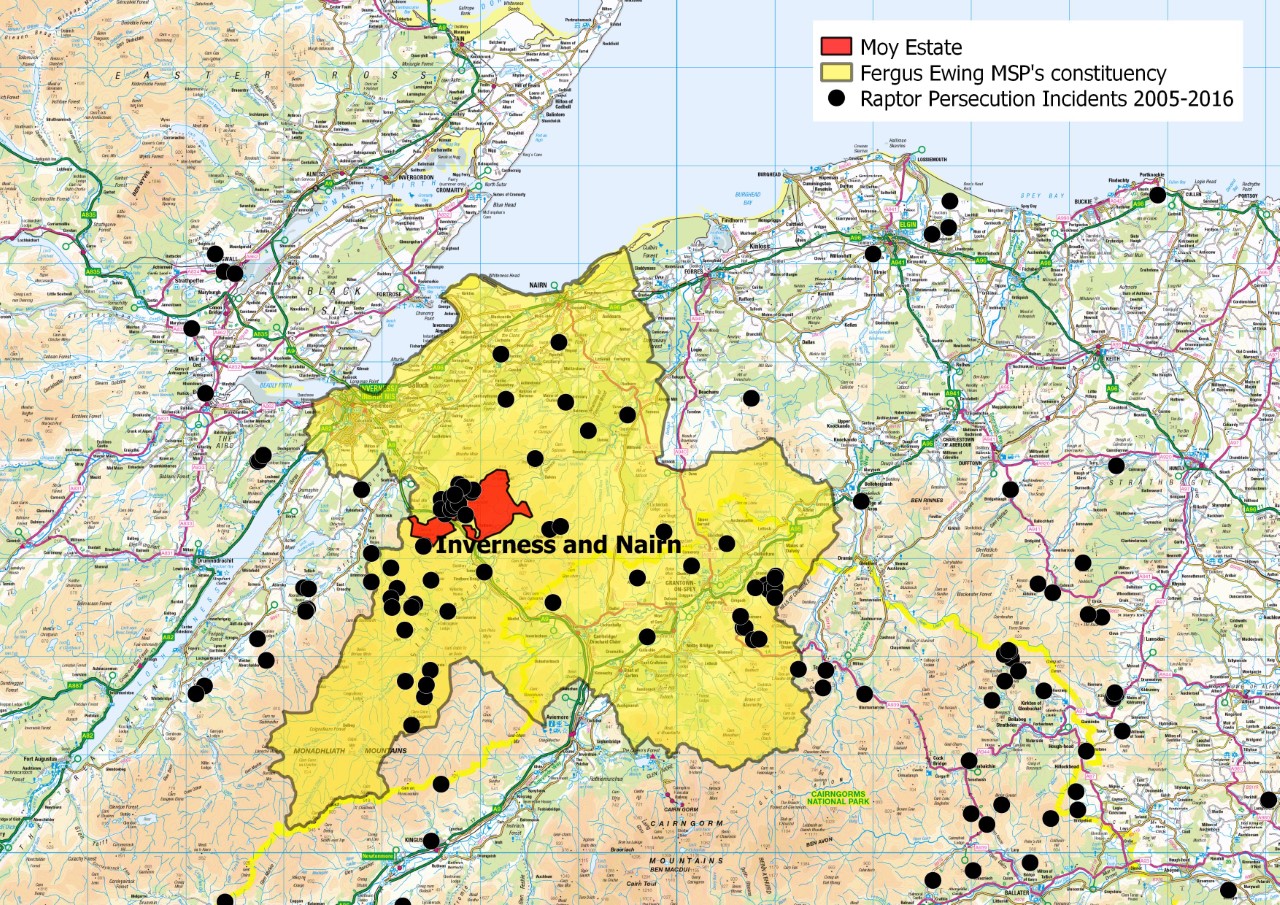
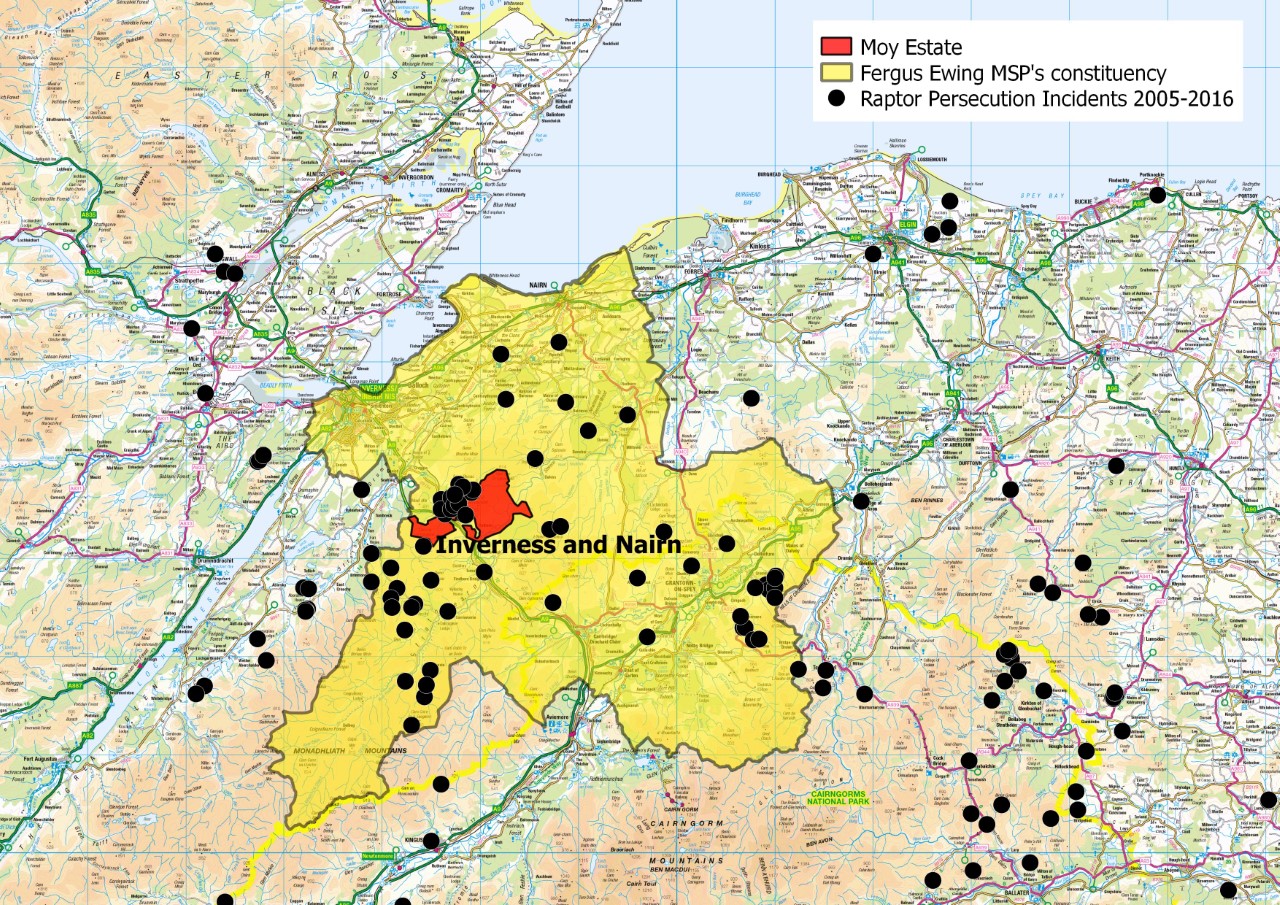
Here is a map we created way back in 2016 to highlight the extent of raptor persecution crimes in Fergus Ewing’s constituency and this shows the concentration of incidents on and close to Moy Estate. There have been further incidents since this map was created, hence the General Licence restriction imposed this year:

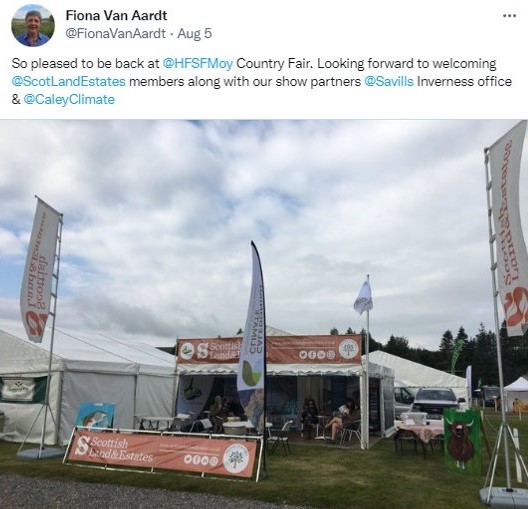
Also ignoring the sanction for wildlife crime on Moy Estate is Scottish Land & Estates (SLE), the lobby group for game-shooting estates across Scotland, as demonstrated by this tweet yesterday from SLE’s North of Scotland Regional Coordinator, Fiona Van Aardt:

So here’s a senior politician from the SNP Government, the Scottish Gamekeepers Association and Scottish Land & Estates, all effectively sticking up two fingers to the Government’s policy of sanctioning estates for raptor persecution.

When the policy of imposing General Licence restrictions as a tool for tackling rampant bird of prey persecution was first introduced in 2014, the then Environment Minister Paul Wheelhouse described the restrictions as being a ‘reputational driver‘. In other words, a sanctioned estate would not enjoy the benefits of being part of the shooting industry because the industry, with its claimed ‘zero tolerance’ approach to raptor persecution, would not wish to be associated with wildlife crime and this (hoped for) ostracization would stimulate a clamp-down on raptor-killing estates.

So much for that idea. It appears that the shooting industry, along with its political supporters, couldn’t give a monkeys. There’s been previous evidence of this on other so-called sanctioned estates (e.g. see here for examples).

Technically speaking, Mr Ewing and his shooting industry pals could argue that Moy Estate is not currently serving a General Licence restriction. How come? Well, because under the rules, if an estate appeals the GL restriction decision, the restriction is temporarily lifted whilst NatureScot considers the estate’s appeal. This is completely bonkers, of course, because a sanctioned estate has already had a chance to appeal the decision, when NatureScot first issues the notification for a restriction. But they’re then given another opportunity to appeal once the restriction has been imposed, and during that appeal process (typically four weeks) NatureScot removes the restriction so the estate can carry on as if the restriction never existed. I’m pretty sure that that’s what’s going on at Moy because the GL restriction decision notice for Moy Estate has been removed from the section of NatureScot’s website where currently-restricted estates are listed (here).

Although if Mr Ewing, the SGA and SLE were to rely upon this technicality, I don’t think that many people would view it as the shooting industry working in the spirit of wishing to stamp out raptor persecution, do you?

Raptor persecution “hasn’t been a problem for years”, claims Scottish Gamekeepers committee member

There was a jaw-droppingly half-baked article published in The Courier last week, featuring commentary from a Scottish gamekeeper.

Bob Connelly, who is reportedly a Committee member of the Scottish Gamekeepers Association (SGA), had been speaking at the Scottish Game Fair and the Couriers environment journalist Scott Milne took the comments at face value and wrote the following article, which has to be read to be believed.

People will not realise the importance of land management and the shooting industry until campaigners force the end of the sector.

That is the view of gamekeeper Bob Connelly, who works in an estate in north east Perthshire.

Bob was speaking at the Scottish Game Fair, which took place in Scone over the weekend.

The Scottish Government is preparing legislation that could see gamekeeper grouse shooting licenced.

This has come after a campaign by animal rights advocates [Ed: he’s referring to this blog!] releasing evidence which appears to show wildlife crimes such as raptor persecution and misuse of traps.

The theory goes that predators such as buzzards and hen harries are killed in order to protect grouse, which brings in a lot of money during shooting season.

ARE GAMEKEEPERS VICTIM OF A HATE CAMPAIGN?

Bob feels much of this evidence has been manufactured as part of a “malicious” campaign to turn public opinion against gamekeepers and the shooting industry.

He said: “They want to get rid of us.

“But people don’t understand what we do and why we do it.”

A case in point is the controversial practice of heather burning.

It has been criticised as unnecessary and potentially damaging to peatland, which can release large swathes of carbon.

But Bob has a different perspective.

“You have to accept that there are going to be fires in places like that if you let it overgrow.

“So if it’s inevitable, do you want to have a controlled fire or let a wild one get out of hand?

“That would be even more damaging.”

Bob also feels it’s important gamekeepers are allowed to control predator populations in order to protect smaller species.

He said: “What we do is we build it from the ground up. We make sure the right environment is in place for insects and other small species and then bigger ones can naturally thrive on top of that.

“There’s more and more red-listed birds. If you want to protect them, it’s important to control predators such as foxes and buzzards.

“There’s a lot of people who have been manipulated to feel a certain way on social media, but don’t fully understand what we do.

“They’ll will miss us when we’re gone.”

WILL LEGISLATION CHANGE THINGS?

Bob thinks the upcoming gamekeeper shooting legislation is not needed.

“There is already rules surrounding things like traps. I can’t see how it can be legislated anymore.

“Yes, there were problems in the past with raptor persecution and things like that.

“But if you discount one or two recent examples, it hasn’t been a problem for years.”

GAMEKEEPERS AND LAND MANAGERS ARE WORRIED

Tim Baynes is director of moorland with Scottish Land and Estates.

Also speaking at the Scottish Game Fair, he said many gamekeepers and land managers he knows are worried for their jobs.

“A lot of these people have a very specific skillset that has come down from generations.”

Tim wouldn’t go as far as Bob and say anti-shooting campaigners have adopted “malicious” practices, but he does feel they “have an agenda”.

“They want to remove shooting.

“But they are not involved in it or in managing land so they are coming at it from a different perspective.”

Tim hopes the shooting industry can work with politicians to have legislation that works for everyone.

However, he is concerned that last-minute changes might be brought in that would work against their favour.

“At the end of the day, we have to work with the government that has got the votes.

“There are people within the government who are pragmatic about the industry.

“But it can be difficult for them to publicly say so.”

ENDS

The level of idiocy in this article is quite staggering, even for an SGA committee member. I guess it’s what we’ve come to expect from the SGA though, who have been in denial about the extent of these crimes for at least the 12 years I’ve been writing this blog and probably for years prior to that, as their standard response to the most glaring of truths.

And it is that level of idiotic denial, combined with ongoing raptor persecution and the SGA’s inability to influence those within the shooting industry who continue to commit these disgusting wildlife crimes (e.g. see here, here, here, here, here), that has brought about the Government’s decision to introduce a grouse shooting licensing scheme.

That decision wasn’t based on so-called ” manufactured evidence“. It was based on the number of raptor corpses found dead and mutilated on game-shooting estates over many, many years, including poisoned eagles found on grouse shooting estates even inside our National Parks for God’s sake, combined with the massive weight of incontrovertible scientific evidence that all points to an outright refusal to abide by the law by many members of the game-shooting industry.

It’s not the fault of this blog, nor the fault of the many other campaigners who have been fighting against this abuse of our raptors for decades. The blame lies entirely, and obviously, with the criminals.

General Licence restriction imposed on Moy, a grouse-shooting estate, after discovery of poisoned red kite

Press release from NatureScot, 21st June 2022:

General Licence restricted on Highland estate

NatureScot has restricted the use of General Licences on Moy Estate for three years

The decision was made on the basis of evidence provided by Police Scotland of wildlife crime against birds.

This evidence included a poisoned red kite found on the estate in 2020, and incidents in relation to trapping offences.

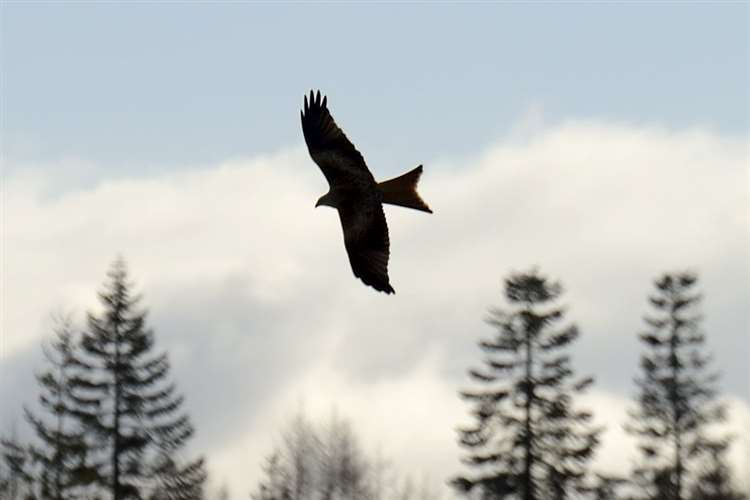
[Red kite. Photographer unknown]

Donald Fraser, NatureScot’s Head of Wildlife Management, said: “We consider the information from Police Scotland provides robust evidence that wild birds have been killed or taken or there has been intention to do so illegally on this land.

“Because of this, and the risk of more wildlife crimes taking place, we have suspended the use of general licences on this property for three years until June 2025. They may still apply for individual licences, but these will be closely monitored.

“NatureScot is committed to using all the tools we have available to tackle wildlife crime. This measure will help to protect wild birds in the area, while still allowing necessary land management activities to take place, although under tighter supervision.

“We believe this is a proportionate response to protect wild birds in the area and prevent further wildlife crime. We will continue to work closely with Police Scotland and consider information they provide on cases which may warrant restricting general licences.”

General licences allow landowners or land managers to carry out control of common species of wild birds, such as crows and magpies, to protect crops or livestock, without the need to apply for an individual licence.

In addition to this restriction, there are currently three other restrictions in place on Invercauld Estate in the Cairngorms National Park, Lochan Estate in Perthshire and Leadhills Estate in South Lanarkshire.

ENDS

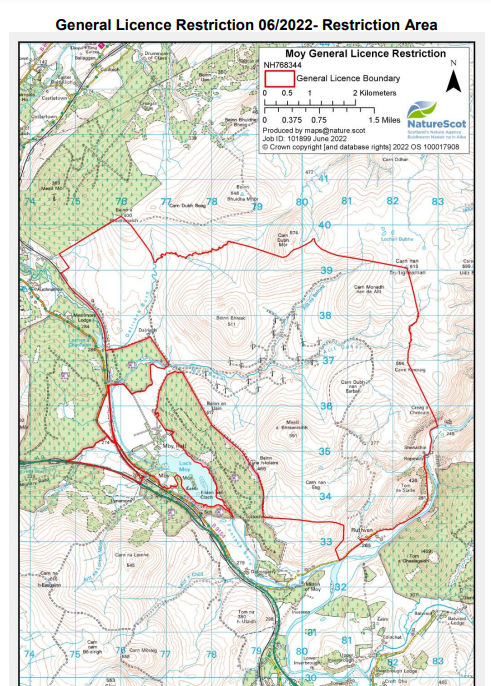
The restriction notice reads as follows:

In line with NatureScot’s published General Licence restrictions: Framework for Implementing Restrictions we hereby give notice that a restriction has been applied to the land outlined in red overleaf. This restriction prohibits the use of General Licences 01, 02 and 03 on that land between 21st June 2022 and 21st June 2025.

Please note that this restriction does not imply responsibility for the commission of crimes on any individuals.

This one has been a long time coming. Moy is one of those estates where if its name comes up in conversation amongst raptor conservationists in Scotland, eyes tend to roll and knowing looks are exchanged. It has been identified as a raptor persecution hotspot for many, many years.

Here is a map we created way back in 2016 to highlight the extent of raptor persecution crimes in former Cabinet Secretary Fergus Ewing’s constituency (given his strong support of the Scottish Gamekeepers Association) and this shows the concentration of incidents on and close to Moy Estate:

Here is a selection of examples, but this is by no means an exhaustive list:

Moy Estate was raided by police in 2010 after the discovery of poisoned bait and dead raptors and illegally set traps. A gamekeeper was later convicted of possession of a red kite after its bloodied corpse was found in the back of his vehicle. It had two broken legs, consistent with being caught in spring traps, and a head injury. A bloodied shinty stick was also found in the back of the vehicle. Notably, the gamekeeper wasn’t convicted for killing the kite, just for having possession of it. Nobody was charged with killing this kite.

These baited traps were discovered on the moor (the illegally-set spring traps were originally disguised under moss, removed here for evidential purposes). No charges were brought.

The remains of two further red kites were discovered on the moor, including a severed red kite leg and some wing tags that had previously been fitted to a kite, all found buried in holes under some moss. No charges were brought.

A jar in one of the gamekeeper’s houses contained the leg rings of four young golden eagles – nobody could account for how they had ended up inside that jar. Perhaps he’d found them whilst ‘metal detecting at his uncle’s farm’ like gamekeeper Archie Watson, who recently gave this implausible explanation to the court for how he’d come to possess BTO leg rings from a buzzard and a red kite attached to his keyring.

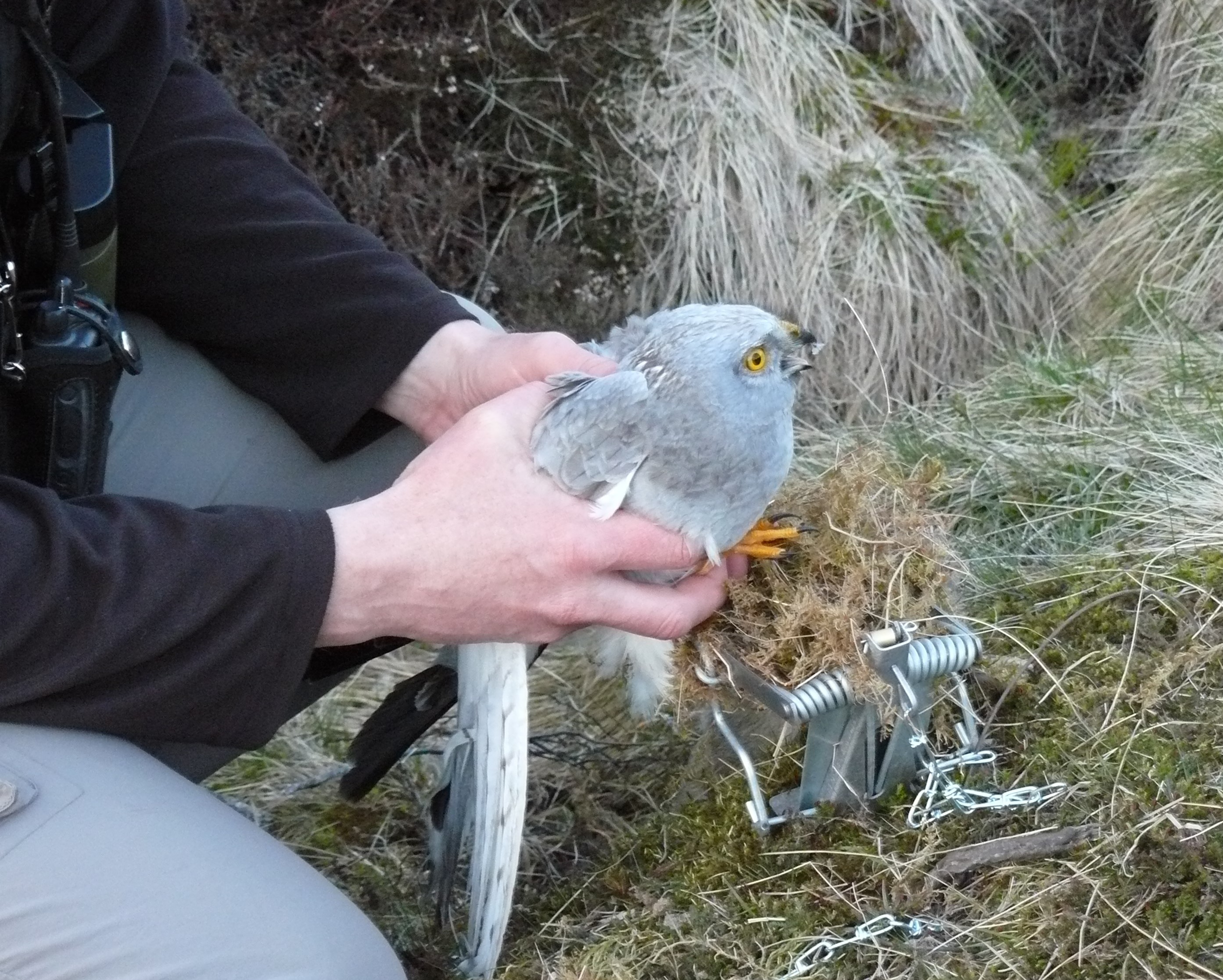
This male hen harrier was found caught by its leg in an illegally-set spring trap on Moy Estate in 2010. No charges were brought. It survived after being rescued by raptor workers from the Scottish Raptor Study Group.

In May 2011 a satellite-tracked red kite ‘disappeared’ on Moy, and another one ‘disappeared’ in August 2011.

In 2016 Police Scotland issued an appeal for information following the discovery of disturbed and abandoned buzzard and goshawk nests in the Moy Forest. One goshawk and four buzzard nests were abandoned in suspicious circumstances, with some evidence of illegal disturbance. These nests were being monitored by staff from Forestry Enterprise Scotland (see here). No charges were brought.

In 2017 masked gunmen were caught on camera at a goshawk nest in Moy Forest. A few days later the nest and a clutch of four eggs was found abandoned (see here). No charges were brought.

In 2018 Police Scotland issued an appeal for information after a buzzard was found caught in an illegal pole trap in the Moy area (see here). No charges were brought.

In 2020 a poisoned red kite was found dead, containing traces of a banned pesticide, leading to a police appeal for information (here).

In 2021 an individual was charged with the alleged killing of a bird of prey in this area. This case is believed to be progressing through the courts so I can’t comment further at this stage.

Of course, a General Licence restriction doesn’t amount to much of a sanction in real terms, as I’ve discussed on this blog endless times before (e.g. see here). However, it’s currently the only tool available to the authorities until we finally see the introduction of the promised grouse moor licensing scheme by the Scottish Government. Had that scheme been in place already, we’d hopefully have seen the removal of Moy Estate’s licence to shoot for a number of years, if not permanently.

Meanwhile, what will be really interesting to see is whether the Moy Game Fair goes ahead this year, given that the shooting organisations have all claimed to have a ‘zero tolerance’ approach to raptor persecution. I don’t think the likes of Scottish Land & Estates, Fergus Ewing MSP and the Scottish Gamekeepers Association can expect anything other than high-level criticism if they attend this event on an estate that has now been sanctioned for wildlife crimes by the statutory nature conservation advisor, based on evidence provided by Police Scotland. Mind you, the conviction of a gamekeeper on Moy Estate in 2011 didn’t stop them attending (see here and here).

UPDATE 14th July 2022: Scottish Gamekeepers Association plans award ceremony at disgraced Moy Estate (here)

UPDATE 6th August 2022: Fergus Ewing MSP & his shooting industry pals disregard sanctions imposed on Moy Estate for wildlife crime (here)

UPDATE 22nd August 2022: Moy Estate loses appeal against General Licence restriction imposed for wildlife crime (here)

Police lead more multi-agency raids after suspected raptor persecution & poisoning in Durham & Northumbria

Statement from Durham Constabulary (27th May 2022)

Joint operation targets suspected raptor persecution and poisoning of birds of prey

Police have carried out searches at several locations this week in connection with suspected raptor persecution and poisoning of birds of prey. 

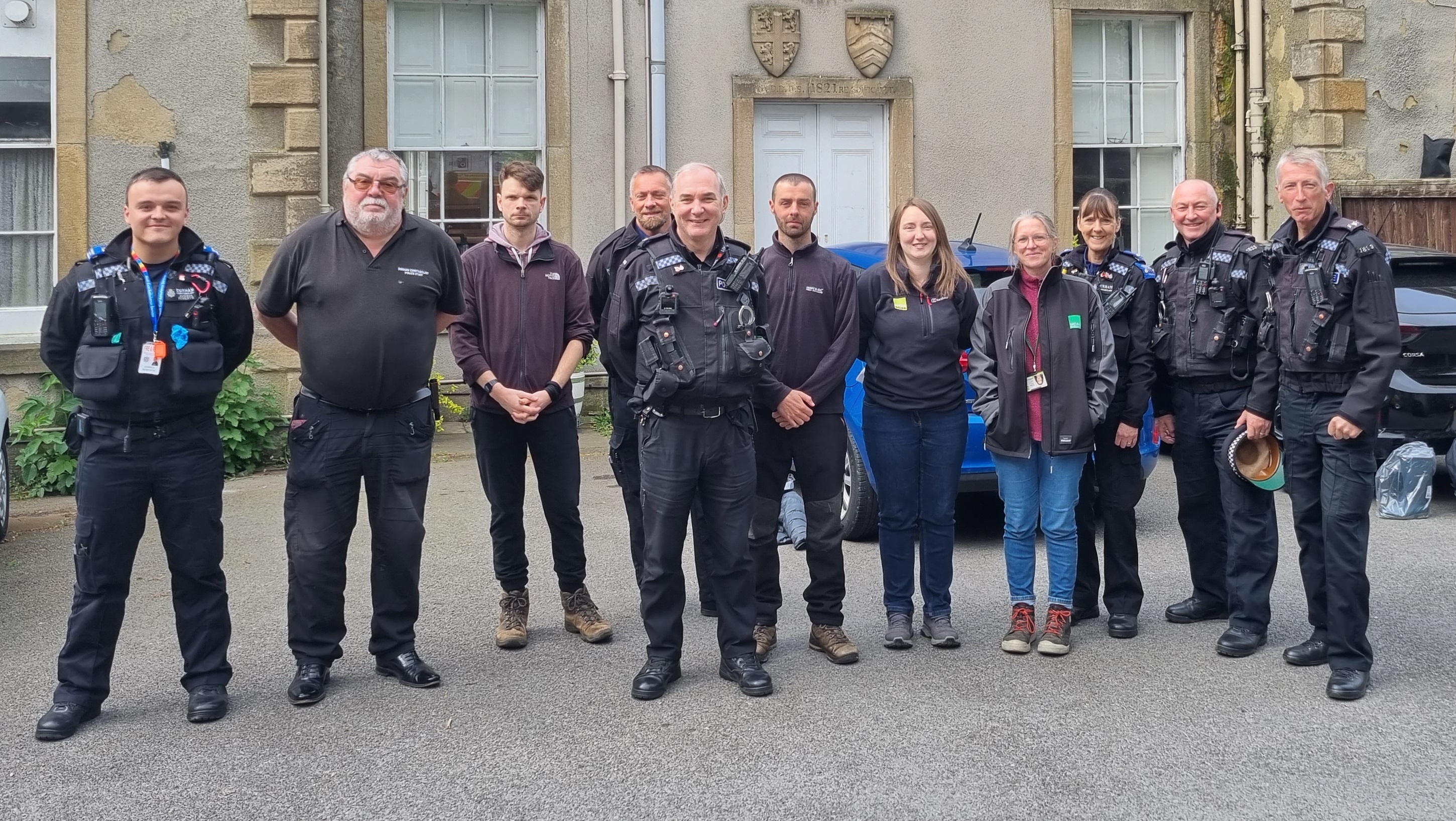
Officers from Durham and Northumbria attended the addresses across the two force areas following information received from the public. 

Suspicious substances were seized from some of the locations and taken away for forensic examination. 

[Photo from Durham Constabulary]

The multi-agency operation was carried out with the help and support of Natural England, the Royal Society for the Protection of Birds (RSPB) and the National Wildlife Crime Unit.

It also formed part of Operation Owl, which is a national initiative to increase awareness of bird of prey persecution and to seek support in tackling it head on. 

Raptor persecution is one of the UK Wildlife Crime Priorities, which includes poisoning, shooting, trapping, and habitat and nest destruction. 

PC David Williamson, Durham Constabulary’s Wildlife Crime Officer, said: “In the UK, birds of prey are a protected species and any criminal offences committed against these beautiful creatures are completely unacceptable. 

We have acted on intelligence from the local community to carry out this operation and try and disrupt those involved in these activities. 

We’d encourage anyone with an information on potential criminal activity in their area to call us on 101 or report it via Crimestoppers anonymously on 0800 555 111.”

ENDS

Well done Durham Constabulary, Northumbria Police, Natural England, RSPB and the National Wildlife Crime Unit.

These latest multi-agency raids are the latest in a surge of similar investigations in response to raptor persecution crimes over the last 18 months, including a raid in Suffolk on 18th January 2021 (here), a raid in January 2021 in Nottinghamshire (here), on 15th March 2021 a raid in Lincolnshire (see here), on 18th March 2021 a raid in Dorset (here), on 26th March 2021 a raid in Devon (see here), on 21st April 2021 a raid in Teesdale (here), on 2nd August 2021 a raid in Shropshire (here), on 12th August 2021 a raid in Herefordshire (here), on 14th September 2021 a raid in Norfolk (here), a raid in Wales in October 2021 (here) a raid in Humberside on 10th December 2021 (here), a raid in North Wales on 8th February 2022 (here) and another raid in Suffolk on 22nd April 2022 (here).

So far, only two of these investigations have concluded. These are the Nottinghamshire case (from January 2021), where gamekeeper John Orrey was sentenced in January 2022 for battering to death two buzzards he’d caught inside a trap (here), and the Suffolk case (also from January 2021) where gamekeeper Shane Leech was convicted of firearms and pesticides offences in November 2021 after the discovery of a poisoned buzzard found close to pheasant-rearing pens in Lakenheath (here).

The conviction yesterday of gamekeeper Archie Watson in Wiltshire (here) was the result of another multi-agency raid undertaken in 2020 (here).

I was at a wildlife crime meeting recently when it was announced that at least 12 raptor persecution cases are pending court hearings, some of them also dating back to 2019. That’s indicative of the hard work of these investigators and they deserve full credit for their efforts. It’s been a long, long time since that number of raptor persecution cases have got anywhere near a court room. Well done all.

Peregrine suffers appalling injuries after being being shot & trapped in Suffolk

This is grim.

Press statement from Suffolk Constabulary, 16th May 2022.

APPEAL FOLLOWS DEATH OF WILD PEREGRINE FALCON

A wild peregrine falcon found badly injured after being illegally trapped and shot has been put down.

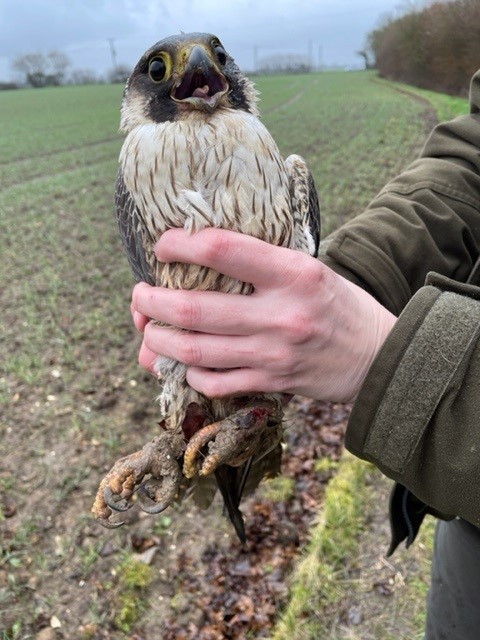
The bird was discovered by a member of the public in a field in Cratfield on 15 March and taken to the Suffolk Owl Sanctuary at Stonham Barns. However, its injuries were too severe to save it. Both of its legs were badly broken and it was also found to have been shot. Police believe the bird was caught in an illegal trap and released alive but injured and officers would like to hear from anybody who could help find those responsible.

Sgt Brian Calver, head of Suffolk Police’s Rural Crime Unit, said:

“These iconic birds are not a common site in Suffolk and are vulnerable to human interference. Populations are improving slowly but persecution by humans remains one of the biggest threats to them. These are schedule one birds and the fastest animal on the planet. To trap any bird in such a way is cruel but to release an illegally trapped bird with broken legs is horrible. This bird would not have been able to feed and if not found by a member of the public would have suffered a slow and painful death. The traps we suspect to have caused these injuries are indiscriminate when used unlawfully. I appeal to anybody who has any knowledge of this to get in touch with Suffolk Police, quoting crime reference 37/18491/22“.

ENDS

Mail on Sunday blames ‘vigilantes’ for police investigation into alleged wildlife crime on Van Cutsem’s estate

The police investigation of alleged raptor persecution and associated wildlife crime at William van Cutsem’s Hilborough Estate in Norfolk is being kept in the public eye thanks to the Mail on Sunday (MOS).

However, instead of claiming that [Police] ‘Officers found no evidence of wrong-doing‘ [on van Cutsem’s estate] which is what the MOS published the previous weekend (here), this time they’re focusing on the ‘animal rights vigilantes’ who had secretly filmed the alleged offences on the estate and then passed on their footage to the police.

The full article can be read here.

It’s classic tabloid nonsense, designed to take the focus off the alleged offences and undermine the credibility of the people who discovered those alleged offences.

The article quotes ‘a source close to Mr van Cutsem‘ throughout, but conveniently doesn’t name that source. Quotes from this unidentified source include:

A source close to Mr van Cutsem condemned HIT as a vigilante group which had set up cameras on private land without his permission, saying there were questions about its relationship with police and the Royal Society for the Protection of Birds‘.

and

William is baffled the police didn’t say anything or give him any information and he had to read about it [on their Twitter page],’ said the source.

and

‘What also is interesting is how close HIT works with the RSPB. It would be good to understand how a mainstream charity is working with a shady group. Police said nothing.’

and

The source added: ‘William doesn’t want to say anything else at this stage, but needless to say it’s bonkers that the first he finds out about details was not from the police but from the HIT story’. 

The same weekend this happened, a neighbouring estate had four traps vandalised and a buzzard was found in another one, which was then released by the estate owner. 

These were all reported to the police. I’m also surprised the RSPB, who attended the raid, seem to be getting information from a group with a long history of shady entrapments.

Interesting then that ‘the source’ didn’t apparently raise any concerns about what had been filmed, just who had filmed it and whether they had permission to do so.

This sort of commentary is a tried and tested routine, and one we’ve seen over and over again from the likes of You Forgot the Birds and C4PMC, even down to the slagging off of the RSPB. This is not quality journalism, it’s just laughable bollocks, designed to deflect attention from the alleged crimes filmed on this estate.

I particularly enjoyed the MOS’s sub-heading in this article:

They [that’ll be the so-called vigilantes] released a video purporting to show a Goshawk stuck in a trap on the estate‘.

Er, I think it was a bit more than showing ‘a goshawk stuck in a trap’! What the video actually showed was a masked man removing a goshawk from an illegally-set trap (baited with live pigeons) purportedly filmed on van Cutsem’s estate. The man was then filmed carrying the goshawk away, which is also an offence under the Wildlife & Countryside Act (the goshawk should have been immediately released).

Thanks for the laugh, MOS, and especially for the crap reporting which will just draw this police investigation to the attention of an even larger audience.

I look forward to reading an update from Norfolk Police in due course.

Covert video footage published showing masked man with trapped goshawk on van Cutsem’s Hilborough Estate

Yet more evidence has emerged about the police investigation into alleged raptor persecution on William van Cutsem’s Hilborough Estate in Norfolk (see here, here, here for previous blogs).

Last night, the Hunt Investigation Team (HIT), a group describing itself as ‘anti-bloodsports’, published covert video footage it claims was filmed on van Cutsem’s estate. The footage shows a crow cage trap in woodland, the trap had been baited with live pigeons (this is an offence) and a young goshawk was attracted to the bait, entered the trap and then couldn’t escape. A masked man is then recorded entering the trap, pinning the goshawk to the side netting with a stick so he could grab the bird, and then removing it from the trap and walking away with it (also an offence). The goshawk’s fate is not shown.

[Screen grab from the HIT covert footage]

The video can be watched on YouTube here.

There are concerns amongst some conservationists, including me, that releasing this footage at this stage could jeopardise any potential prosecution. This is (was?) an active police investigation, the estate had been searched, police had seized various items and a number of employees are (were?) due to be questioned this week. Norfolk Police were doing a good job by all accounts and there wasn’t any reason to question their commitment to the investigation.

I doubt very much whether Norfolk Police gave their blessing to release this footage at this stage of the investigation.

The HIT team have already published potentially libellous commentary on Twitter (which I won’t repeat here, for obvious reasons) and they said this about releasing the footage at this stage of the investigation:

We do not believe in sitting on evidence for months and years on end, hoping for an unlikely prosecution whilst wildlife is relentlessly killed. People need to know what goes on within shooting estates and to be empowered to act‘.

I do sympathise with this view, and I guess it’s a reflection of the many police failures to investigate allegations of illegal fox-hunting (which is an area in which the HIT team are very experienced) and failures of some police forces to investigate raptor persecution. People get frustrated when the authorities repeatedly refuse to investigate what looks like clear criminal activity, and so they decide to do what they think is right. But from my point of view, with this particular investigation, Norfolk Police had responded well and were actively pursuing enquiries so the premature release of this footage by the HIT team is hard to comprehend. I wish they’d waited a few more days.

It’s out there now though. And the camera is well-positioned and the footage is very clear.

I hope the release hasn’t jeopardised this police investigation by compromising the planned employee interviews. Even if the case does reach court, a top QC (because let’s face it, that’s who would be representing the defendants) would make light work of drawing attention to this footage and the associated commentary and could argue the defendants wouldn’t get a fair trial.

Let’s see what happens.

UPDATE 16th May 2022: Mail on Sunday blames ‘vigilantes’ for police investigation into alleged wildlife crime on van Cutsem’s estate (here)

Police confirm bird of prey was caught in illegally-set trap on van Cutsem’s Hilborough Estate in Norfolk

Further to the news last weekend that the van Cutsem’s Hilborough Estate in Norfolk was at the centre of a police investigation into alleged raptor persecution (here), and then the follow-up news yesterday that an illegally-set trap had been found in woodland and two men had been found there in possession of five pigeons and a police-style baton (here), there’s now a bit more detail to add to this story.

The BBC News website is reporting that ‘a bird of prey was illegally caught in a trap baited with a live pigeon’ (news article here).

The rest of the BBC News article is just a regurgitation of what has previously been reported.

There isn’t any detail about the raptor species that was trapped, nor its fate, nor any information about who was responsible for operating the trap.

I expect more information to be revealed in the very near future.

Illegally-set trap found on van Cutsem’s Hilborough Estate in Norfolk

Further to the news two days ago that the van Cutsem’s Hilborough Estate in Norfolk was under police investigation for alleged raptor persecution (here), more news about this case has emerged.

According to an article in yesterday’s Eastern Daily Press, police officers attended woodland close to the A1065 at Hilborough at 5pm on 29th April 2022.

Here’s an excerpt from the article:

A [Norfolk Police] spokesperson said it [the investigation] came after they “received intelligence” that a bird of prey had been caught in a trap baited with a live pigeon, an offence under the 1981 Wildlife and Countryside Act.

“While in the wood, officers discovered a trap set with a live pigeon. The pigeon was released by officers and is being looked after by another organisation on behalf of the police,” they added.

“At about 7pm, the officers saw two men in the same wood. The men were stopped and searched, and officers discovered a police-style baton in a vehicle being used by one of the men.

“Four live pigeons, one deceased pigeon and the police-style baton were among the items seized by police. The pigeons are currently being cared for on behalf of the police.”

Well, how interesting. I’m not sure how the EDP article can claim ‘it is understood that police left the estate having found no evidence of wrongdoing‘ when the police found a pigeon-baited trap in the woodland. It’s an offence to bait a trap with live pigeons because this would likely attract certain protected raptor species to the trap (especially goshawks) where they’d be caught and unable to escape. It’s for this reason that trap-users must comply with the General Licence conditions that permit just a few specific species to be used as decoys within a trap.

I’ve got to say, the reporting of this case so far appears to be for the purpose of deflecting all attention away from William van Cutsem and the Hilborough Estate.

The article published a couple of days ago by the Mail on Sunday looked to me like it had been placed by a van Cutsem supporter, perhaps as a damage limitation exercise. It emphasised the estate’s ‘legal methods for vermin control‘ (the use of the word ‘vermin’ was a bit of a giveaway, to be honest!), bigged up the estate’s reported conservation credentials (the late Hugh van Cutsem was well regarded in conservation circles – he died in 2013), and used an unnamed source (‘a friend‘ – typical tabloid tactics) to suggest that the estate’s current occupier, William van Cutsem, suspected he’d been set up by a disgruntled former employee.

Yesterday’s article in the EDP repeats some of this stuff and states that the estate ‘is now regarded as one of the UK’s best game shoots‘, although it doesn’t say who regards it as such or on what criteria this acclaim is based.

Nevertheless, whether you believe any of that stuff or not, the news that the police found an illegally-set trap and that they’d seized five pigeons and a police-style baton from two men in the same woodland suggests to me that there is a lot more to this investigation than the Mail on Sunday and EDP would have us believe.

I look forward to a press statement from Norfolk Police as the investigation progresses.

UPDATE 11th May 2022: Police confirm bird of prey was caught in an illegally-set trap on van Cutsem’s Hilborough Estate in Norfolk (here).

13% increase in recorded wildlife crime incidents in Scotland – new Government report

The Scottish Government has published its latest annual wildlife crime report, covering the period April 2019-March 2020, which reveals an increase of 13% in recorded wildlife crime incidents.

Raptor persecution offences increased during this period, with shooting and poisoning being the joint highest recorded crime type. Obviously, these figures only represent offences that have been discovered; there will be many more that went undiscovered, as acknowledged by the report’s foreword written by Environment Minister Mairi McAllen.

Here are a few excerpts from the Minister:

After a drop in recorded wildlife crime incidents of over 60% between the 2014-15 report and 2018-19, it is frustrating to see an increase of 13% in recorded wildlife crime incidents in 2019-20. Wildlife crime is not only abhorrent, it is also completely at odds with our work to address the biodiversity crisis, which is supported by so many people and organisations across Scotland.

While it is reassuring that incidents of wildlife crime have not returned to previous higher levels, we remain aware that recorded wildlife crime does not provide the full picture. This is an area where the victims are unable to speak for themselves and we know that many wildlife crimes are not witnessed and not reported. This has been especially true in the area of raptor persecution where tagged birds have disappeared in unexplained circumstances and where expected numbers of some species are not present in certain areas.

The Scottish Government has always been clear that wildlife crime is unacceptable, and we have brought forward a number of measures to tackle the issue over the years. These measures have included a poisons amnesty, vicarious liability, restrictions on general licences and most recently, significant increases in penalties for wildlife crimes. I am sure many of you reading this share my frustration that despite these measures there are some who continue to take a selfish, cruel and callous approach to our wildlife.

It is disappointing to see a rise in raptor persecution offences from the previous year. We have committed to taking forward the recommendations made by the Grouse Moor Management Group as a matter of urgency, to tackle this type of offence. We will bring forward legislation during this parliamentary term with the aim of putting in place a meaningful, effective and workable sanctions through a licensing system to deter and punish those who deliberately commit crimes in our uplands, without placing unworkable and disproportionate burdens on the majority who work within the law‘.

Yada, yada, yada. The Scottish Government’s idea of what constitutes ‘a matter of urgency’ is very different to mine. The Werritty report on grouse moor management, on which the Government made it’s decision to implement a licencing scheme for grouse shooting in Scotland, was submitted in November 2019. Here we are in April 2022 and nothing has happened except repeated statements from Ministers, now over a period of years, about it being a ‘matter of urgency’.

It’s obvious that raptor persecution isn’t going to stop without further statutory intervention, and depending on what that looks like and how it’s implemented and enforced, it probably still won’t stop without a ban on certain types of gamebird shooting. The longer the Scottish Government procrastinates, the longer these crimes will persist.

Pick a date and get on with it.

You can read/download the Scottish Government’s 2020 annual report on wildlife crime here: