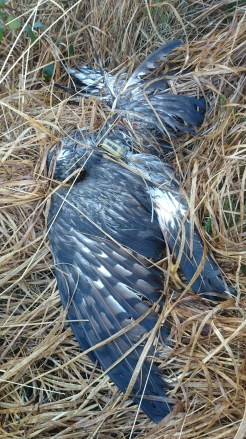
Red kite dies after being shot in Northamptonshire

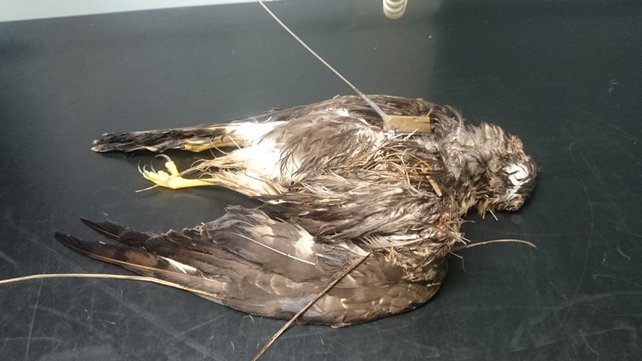
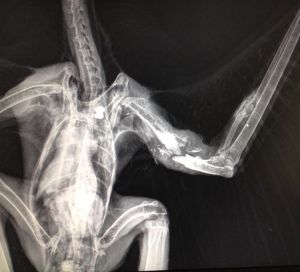
The RSPCA is appealing for information after a red kite was shot and critically-injured in Northamptonshire earlier this month.

The wounded bird suffered gunshot injuries from the incident in Wellingborough around 4th April. It was taken to a wildlife centre but its injuries were so severe the bird had to be euthanised.

Further details in the Northampton Chronicle & Echo here.

RK Wellingborough


Public consultation on increased powers for SSPCA investigators finally launched

sspca_badgeThe Scottish Government has finally launched its public consultation on increasing the powers of the SSPCA to investigate a wider suite of wildlife crimes.

We have campaigned long and hard for this and it’s taken the Government three years since they first committed to opening a consultation, so now it’s vitally important that as many people as possible actually respond to it. The Government wants to hear your views, whether in support or opposition, so this is your chance to influence policy and make a real difference in the fight against wildlife crime in Scotland.

The consultation document itself is extremely well-written, and we are delighted to see that the consultation period will be open for five months (closing 1st September 2014). We are also pleased to see that the consultation questions are straightforward:

1. Do you agree that the law in Scotland should be changed to give the SSPCA the powers as set out in section 4.1 [of the consultation document]?

2. Please set out your reasons for your answer to Q1.

3. If you would prefer to see changes to the SSPCA’s powers to investigate wildife crime other than those set out in section 4.1, please describe them.

So what’s it all about? The finer details can be read in the consultation document (see below) but in a nutshell….

Currently, the SSPCA has the power to investigate wildlife crimes that involve an animal in distress. So for example, if they are called out to an incident of a golden eagle that had been caught in an illegally-set spring trap and the eagle was still alive, the SSPCA has the power to collect evidence as part of a criminal investigation. This is because they have powers under the animal welfare legislation and this incident would certainly fall into a welfare category where the animal was ‘under the control of man’.

However, if they are called out to an incident where a golden eagle had eaten a poisoned bait and had died two minutes before the SSPCA arrived on scene, the SSPCA does not currently have the power to investigate because the welfare legislation doesn’t apply (the bird is already dead) and the dead bird is not ‘under the control of man’. In this scenario, all the SSPCA can do is to call the police and hope that the police attend the scene in a timely manner. How stupid is that?

Another example – if the SSPCA was called out to an incident of an illegally-snared badger, and that badger was already dead, and the SSPCA found 100 illegally-set snares at the same location, the SSPCA would not be able to investigate; they would have to rely upon the police to attend. If the badger was still alive (suffering), the SSPCA could investigate.

The proposal laid out in the consultation is to widen the investigatory powers of the SSPCA so that they’re not just limited to operating under welfare legislation; the increased powers, if granted, would also allow them to operate under certain parts of the Wildlife & Countryside Act in addition to the welfare legislation.

Importantly, the increased powers would  allow them to continue their investigations into animal welfare incidents where an animal is in distress, but also to investigate wildlife crimes where the animal is already dead, and even wildlife crimes that haven’t yet involved an animal – for example an illegally-set trap.

For us, the increased investigatory powers are a no-brainer. If you care about wildlife crime and you want to see improved detection rates, more prosecutions and a greater chance of conviction, then these increased investigatory powers are a logical step. Here’s why:

1. The SSPCA has a successful track record for investigating [a limited number of] wildlife crimes, both on their own and in partnership with the police.

2. Their inspectors and specialist investigations team have long experience in this field and are already fully trained.

3. SSPCA inspectors are fully focused on animal welfare and wildlife crime – they are not part-timers like many of the police WCOs and nor are they distracted by having to investigate other types of crime, as police WCOs can be.

4. The SSPCA is already a Specialist Reporting Agency, which means they can report alleged offences [within their limited remit] to the Procurator Fiscal and they know what evidence is required for a potential prosecution.

5. With increased investigatory powers, a total of 64 experienced SSPCA staff would be available to respond to a wider range of wildlife crimes.

6. These 64 experienced SSPCA staff would come at no cost whatsoever to the public purse. It would be a free resource to bolster an often under-resourced police force.

7. The specialist skills of the SSPCA are already recognised and utilised by the police in multi-agency searches. The sticking point, under current legislation, is that the police are not obliged to invite them to participate on such searches. Sometimes they do, sometimes, inexplicably, they don’t; it all depends on the personalities involved, which is not, in our opinion, the best way of investigating a wildlife crime.

8. The increase of powers to the SSPCA would not mean that the police are excluded from such investigations. The police would still retain their powers but crucially, they’d now have a further resource to call upon if they needed help. Alternatively, the SSPCA would have the powers to conduct their own investigation if the police couldn’t attend at short notice, for whatever reason. That would be true partnership working and, most importantly of all, increase the chances of a thorough investigation leading to a successful prosecution.

9. Last year we calculated the conviction rate for raptor persecution crime in Scotland as being a pathetic 7.3% (see here). Obviously, something is not working and by giving increased powers to the SSPCA we would expect to see this conviction rate rise considerably. Surely that’s in everyone’s interest (apart from the wildlife criminals, of course).

We know that there will probably be a lot of opposition to the proposal. For example, the Scottish Gamekeepers Association were not in support when the issue was first raised during the WANE bill consultations several years ago. We’re fairly sure that others from within the game-shooting industry will also oppose it – you’ll have to draw your own conclusions on their motivation for opposition. It’ll certainly be interesting to see the consultation responses of various organisations when they are published after the close of the consultation period.

At a time when there is an increasing public awareness of wildlife crime, and an ever-growing sense of frustration at the endless series of failed investigations (with a handful of exceptions), this consultation couldn’t have come at a better time.

Please, have a look at the consultation document and send in your views to the government using the official response form (see below). If you want to copy and paste any or all of our reasons listed above for increasing the SSPCA’s investigatory powers, please feel free.

The time is long-overdue for the pressure to be ramped up on the wildlife criminals (the Untouchables) running amok in our countryside, illegally poisoning, shooting, trapping and bludgeoning our wildlife and sticking up two fingers to the rest of us. Let them know we’ve had enough and let the government know that they have our full support to implement these changes.

Download the SSPCA Consultation document: SSPCA Consulation document

Download the Consultation and Response Form: SSPCA Consultation Questions and Response Form

Raptor poisoning incidents doubled in 2013

The Partnership for Action against Wildlife Crime (PAW Scotland) has published the latest ‘official’ maps showing the distribution of reported raptor persecution incidents in Scotland during 2013.

Remember 2013? That was the government’s much heralded Year of Natural Scotland.

How disgraceful then, to see that reported incidents of raptor poisoning in 2013 doubled from the previous year. The victims this time around included a golden eagle, a red kite and four buzzards. And these were just the ones that were discovered – how many went undiscovered?

Not only did the reported poisoning incidents double, but other methods of illegal persecution were also reported, including disturbance, nest destruction, shooting and trapping, and these incidents numbered nearly three times the number of reported poisoning incidents.

It is clear, once again, that despite all the claims to the contrary, the illegal persecution of birds of prey in Scotland is still taking place with impunity. This has been vividly illustrated by the unfolding news from Ross-shire this week that at least 11 raptors have been found dead, including at least 8 red kites, all strongly suspected to be the victims of illegal poisoning. We fully expect this figure to rise…

This year, for the first time, the maps are now not just restricted to showing reported poisoning incidents; also included are the other types of persecution. This approach has to be applauded, especially as there is a real concern that the raptor killers are changing tactics in an attempt to show that the game-shooting industry is cleaning up its act (i.e. if they can keep poisoning figures low, they can point to this as an indication that persecution is dropping because they know that poisoning is the only method that is regularly mapped and monitored). Not any more, so well done to the Environment Minister for ensuring the other methods are also now ‘officially’ mapped and monitored.

However, the new and improved maps are still not showing the full picture.

For example, the recorded incidents shown on the new maps are limited to those where a dead or dying raptor has also been discovered:

The maps DO NOT show incidents where other birds/animals have been found poisoned with banned substances that have been categorised by SASA as ‘abuse’. Why not?

The maps DO NOT show incidents where an illegally-set trap has been found without an injured or dead raptor in/on it. Why not?

The maps DO NOT show the locations where satellite-tracked raptors have ‘mysteriously disappeared’ without trace. Why not?

But most significantly of all, the maps DO NOT show incidents where poisoned baits have been discovered, and have been categorised by SASA as ‘abuse’, unless a poisoned raptor was also found at the scene. Why not?

In our view, this is the most serious of all the omissions. The Scottish Government explains this away by saying that if there isn’t a dead/dying raptor at the scene then the discovery of poisoned baits can’t be classified as ‘raptor persecution’. Eh? Everybody knows that these poisons are routinely used to target birds of prey. To deliberately leave them off these poisoning maps is astonishing. In whose interest is it to exclude these incidents?

A good example of this sort of incident came last year when a massive stash of pre-prepared poisoned baits was found inside two game bags in woodland next to a grouse moor on Leadhills estate. Leadhills has a long and sorry history of poisoned baits and poisoned raptors having been found there, dating back several decades. A Leadhills gamekeeper was convicted in 2010 for er, laying out a poisoned bait on the moor. There were 36 baits in total in the 2013 stash; chopped up into bite-size pieces and sprinkled with Carbofuran. What on earth does the Government think those baits were going to be used for if not for poisoning raptors?

We think this particular stash of pre-prepared poisoned baits is the largest ever discovered in Scotland. The Leadhills baits are not included in the latest maps. Why? Because no poisoned raptors were found at the scene. Probably because the police failed to conduct any level of search when they turned up, in marked vehicles, to collect the baits.

If we, the BBC and Project Raptor had not reported on that incident, nobody would be any the wiser to it today. The police failed to issue a press release and now we find that the incident has been excluded from the ‘official’ poisoning maps. There’s now no doubt at all that the incident will also be excluded from the Scottish Government’s ‘official’ raptor persecution report that they’ll publish later this year.

‘Discovery of a massive stash of poisoned baits on a sporting estate? Where? When? Nope, we can’t find it in the ‘official’ statistics, you must be mistaken, it can’t have happened’.

Compare this approach with that used by the government/police to report on drug seizures. They regularly report on the recovery of big stashes of heroin, whether the heroin has actually found its way onto the street or not. They don’t say, ‘Oh, we can’t include that in our official stats because we didn’t find a junkie laying next to the stash”, do they? No, it all gets recorded as part of their official drug crimes statistics. What’s so different about the discovery of big stashes of banned poisons that are known to be used to illegally target birds of prey?

So, all in all then, situation normal in Scotland. Reported poisoning incidents have doubled from the previous year, other methods of killing raptors are being utilised with disturbing regularity, the game-shooting industry is still trying to spin the story into something positive (Doug McAdam is quoted in the Scotsman article as saying: ‘Good progress has been made on reducing illegal poisoning incidents’!!), the Scottish Government is still trying to spin the story into something positive (by comparing the 2013 figures with  figures from 2009 [the highest reported poisoning figures in 20 years] rather than focusing on the doubling of reported incidents from 2012 to 2013) and the ‘official’ statistics are still not showing the full scale of the problem.

See you all same place, same time, next year, when, judging by the recent Ross-shire news, once again we’ll be reporting that raptor poisoning incidents have increased over the last year. The only surprise will be by how much.

To view the ‘official’ maps on the PAW Scotland website see here.

Article in the Scotsman ‘Birds of prey spared poison – to be stamped to death’ – see here.

Article on BBC website ‘Number of birds of prey poisoned in Scotland doubles’ – see here.

Article on STV news ‘Rise in number of birds of prey illegally poisoned ‘very worrying” – see here.

Two more raptors shot dead in Norfolk

Norfolk is becoming quite the raptor persecution hotspot….

Norfolk Constabulary are investigating two separate persecution incidents following the discovery of a dead sparrowhawk and a dying buzzard in February.

The sparrowhawk was found with gunshot injuries on 16th February  by walkers on the Brisley Road in Whissonsett, near Fakenham.

One week later walkers heard shooting in Narford Wood near Swaffham and found the dying buzzard which had been shot.

Any information, please call Norfolk Constabulary on 101.

News article from EDP24 here.

Shooting Times publishes astonishing denials about eagle persecution on grouse moors

Eagle eyed keepers shooting times March 2014Talking of very, very stupid people….

An article has appeared in the latest edition of the Shooting Times & Countryside Magazine that once again repeats the ludicrous notion that gamekeepers on Scottish grouse moors are a force for good as far as eagle conservation goes, and suggests that accusations to the contrary are ‘unfair’.

We’ve provided a PDF of the article here: Eagle-eyed keepers Shooting Times March 2014

Really? How many times do we have to go over this? The evidence is there for all to see. These continuous denials just serve to further entrench positions and frankly make a laughing stock of those pumping out this clearly inaccurate guff.

So, let’s lay out the facts once again for the benefit of those new to the issue.

Scotland’s golden eagle population is not ‘stable’. On a superficial level it appears to be stable, but the overall population figure (estimated at ~430 pairs, give or take a few) masks some very big differences in regional abundance. For example, there has been a substantial increase of golden eagles in the Western Isles over the last ~20 years, largely thanks to a reduction in illegal persecution in that region. In contrast, there has been a significant decrease in the number of golden eagles in the central, eastern and southern uplands (hence all those vacant territories), thanks largely to illegal persecution on driven grouse moors. That is a fact, backed up by a suite of scientific peer-reviewed studies. That’s why the population appears to be ‘stable’ – because all the losses in the east are being counterbalanced by the gains in the west. We’ve blogged about this in greater detail here.

posioned GE Lethnot 2013The golden eagle in Scotland does face a variety of threats or potential threats, including afforestation and the construction of wind farms. We don’t dispute that. However, the main scientific report on this issue has shown that the single biggest threat to golden eagles in Scotland is illegal persecution on driven grouse moors. That is a fact, backed up by scientific peer-reviewed evidence (see link above).

The article says: “Unfortunately, even in recent times, a handful of Scottish golden eagles have been found dead as a result of poisoning“. What the article fails to say is that the majority of those poisoned birds have been found on driven grouse moors. And not only poisoned, but shot and trapped as well. In addition, plenty of satellite-tagged golden eagles have ‘disappeared’ – unsurprisingly their last signals emitted from driven grouse moors. Oh, and it’s more than ‘a handful’. Our latest count is 31 eagles in 7 years, either illegally persecuted or mysteriously ‘disappeared’, with the majority of them on driven grouse moors (see here). And those are only the birds we know about because the majority of them were wearing satellite tags. How many more are being killed that we don’t know about? Plenty more if you look at the population figures and the rather telling ‘gaps’ in distribution.

The article says it is “unfortunate and unfair” to blame sporting estates when these illegally-killed eagles are discovered on, er, grouse moors. It is neither unfortunate nor unfair. The blame is fairly and squarely put at the feet of those involved with grouse moor management based on decades of scientific evidence. The link between driven grouse moors and raptor persecution (not just of eagles but of several raptor species) has been clearly established as this suite of scientific papers demonstrates (see here for a recent blog on this).

The article cites the SGA’s recent claims of ’55 active eagle nests on keepered grouse moors in eastern and central Scotland’ as evidence that golden eagles are doing just fine on driven grouse moors. We blogged about that claim here. We also blogged about the Scottish Raptor Study Group’s research into that claim (see here). Here’s part of what we wrote:

According to the SGA, there are ‘at least 55 active golden eagle nests’ in these ‘keepered grouse areas’; the SRSG is saying that there are 52 ‘active nests’ in the area, and of those 52, only 8 are on driven grouse moors. Crucially, the SRSG also includes information about the vacant golden eagle territories in the area – information that the SGA conveniently ‘forgot’ to include. According to the SRSG, there are an additional 57 ‘non-active’ golden eagle nests in this area, and 31 of them (54%) happen to be on driven grouse moors.

Hmm. The picture doesn’t look quite so rosy now, does it?”

GE conservation status 2003The article goes on: “It is interesting to note that eagle numbers are highest in eastern Scotland, where grouse moors are actively managed“. Er, no, they’re not. Try looking at the scientific data (see here especially) and pay particular attention to territory occupancy rates:

Western Isles = 91%

Western Highlands = 89.5%

Argyll West & Islands = 81.5%

Central Highlands = 48%

Cairngorms Massif = 42.4%

North East Glens = 17.6%

Also pay particular attention to the map which shows the species’ conservation status across Scotland. You’ll find that the golden eagle only has favourable conservation status (green colour on the map) in three of sixteen regions, and those three regions are nowhere near the driven grouse moors of the eastern and central uplands.

This incredible article finishes with this: “The fact remains, however, that far from being the purveyor of poison and pole traps – so often portrayed in the popular press – the 21st century moorland keeper is probably the golden eagle’s staunchest ally“. Aye, right.

You carry on chucking out this fantastical image of the raptor-friendly moorland keeper and we’ll keep publishing the facts which show that the majority of them are anything but.

Facebook braggers get caught out

dead sparSome people are just very, very stupid.

A couple of days ago someone called Steve R Godfrey posted a picture of a dead sparrowhawk on a private Facebook forum called Forester’s Hunting Community. This group is for those interested in air rifles and shooting. He included the following statement with his photograph:

This was stalking my friends racing pigeons. He asked for my services“.

In response, many, many group members wrote of their utter disgust and outrage at the inference that Godfrey had killed this bird. The group’s moderators banned Godfrey from the group and reported him to the police.

An update on the group’s Facebook page yesterday stated that Derbyshire police were actively investigating the incident following the high number of complaints that had been received from the shooting community.

Steve R Godfrey’s Facebook account appears to have vanished.

Kudos to the members of the Forester’s Hunting Community for reporting him and to Derbyshire Constabulary for following up.

neknominateAnother investigation has been launched after a video of a man slitting a deer’s throat and drinking its blood was posted on Facebook last month. The ‘stunt’ was allegedly part of the ‘neknominate’ craze where someone drinks alcohol, performs a stunt and then nominates someone else to take part. The video was posted by someone called Shaun Wilson from Newcastle. An article in the Newcastle Chronicle (see here) suggests that the person in the video is a gamekeeper and that he has been suspended from his position on a Northumberland estate.

The National Gamekeepers’ Organisation has confirmed that the gamekeeper is one of their members and they have apparently launched a disciplinary investigation. A committee hearing next month will decide whether the man’s actions are ‘relevant to gamekeeping and whether he has damaged the reputation or profession of gamekeeping’. Don’t hold your breath – this is the same organisation that thinks a conviction for possession of a banned poison is not enough to warrant expulsion from the organisation because ‘it’s not a wildlife crime’ (see here).

Shot peregrine found dead near pheasant pen in Yetminster

From Lauren Jean on Twitter (@lau1180) –

This peregrine was found shot dead near a pheasant pen close to Millennium Woods near Yetminster, Dorset. The discovery has been reported to the police and the RSPB.

perg shot Yetminster March 2014

First Irish-bred sea eagle shot & killed

One of two Irish-bred white-tailed sea eagles, hatched last year for the first time in over 100 years, has been shot and killed.

The nine-month old bird was found in a remote part of Tipperary with 40-50 shot gun pellets in its body.

A post mortem revealed that the pellets had broken one of the bird’s legs and wing but the bird had survived for several weeks before succumbing to its injuries.

What an absolutely tragic and shocking outcome, highlighting once again that the disgraceful illegal persecution of raptors continues unabated in these isles.

See here for the report in the Irish Times to read the response of the Minister and the Irish White-tailed Eagle Reintroduction team.

We’re absolutely gutted for them.

The photograph shows Project Manager Allan Mee with one of the first sea eagle chicks donated to the project by Norway in 2007.

Further coverage

Golden Eagle Trust press release here

Independent Ireland article here

BBC news article here

RTE News & audio here

SGA Chairman claims he was “stitched up” by Channel 4 News

Mod Game coverbRemember last month when Channel 4 News did a piece on raptor persecution on grouse moors in Scotland? The one where SGA Chairman Alex Hogg was asked whether gamekeepers were poisoning, shooting and trapping birds of prey and he replied:

No they aren’t. We would dispute that“.

Yes, THAT programme (see here and here for previous blogs).

Well according to the monthly game keeping rag Modern Gamekeeping, Hogg reckons Channel 4 News stitched him up.

According to the article, Hogg said that during a one-hour interview he was asked the question of whether gamekeepers were killing raptors at least half a dozen times. “By the time the interviewer asked it the last time, I was so annoyed I just said ‘No’ and didn’t give a reason“.

Sounds like he stitched himself up, telling a blatant lie that he must have known was going to be challenged with irrefutable evidence that gamekeepers have been convicted for illegally killing raptors, including members of his own organisation.

He also complains about being interviewed last (after Ian Thomson of RSPB Scotland, Dominic Dyer of Care for the Wild, and Logan Steele of the Scottish Raptor Study Group), and therefore having to respond to ‘claims’ [aka given facts] made by the other interviewees, and not being allowed to talk about waders [and presumably the unproven, non-evidenced claims that raptors are wiping them out and therefore keepers should be able to cull raptors].

He also says, “There were also a lot of figures used that were not official figures held by the police or the Scottish Government“. Really? The figures used were based on scientific evidence and official court records, accepted by every person and organisation in the country except for those with a vested interest in the grouse-shooting industry.

He goes on to argue that the finished programme was “extreme”, designed to provoke an emotional response from the public, and didn’t fairly represent what he was trying to say. How you can misrepresent, “No they aren’t. We would dispute that” in response to a simple question of whether gamekeepers are persecuting raptors is a mystery. Did he mean to say, ‘Yes, we are illegally killing raptors’?

All the Hogg nonsense aside, there is a particularly interesting paragraph in the article, presumably written by the rag’s editor. It reads:

Presenter Cordelia Lynch then quoted RSPB figures to claim that hen harriers were ‘close to extinction’ on the grounds that none had bred last year in England – ignoring the fact that the bird is categorised as ‘Least Concern’ worldwide with a global population of more than 1,300,000 and its major threat is stated to be ‘habitat loss’. It is also said to be ‘highly vulnerable to the impacts of potential wind energy developments’ (source: BTO)“.

Now, this claim of the species being classified as ‘Least Concern’ is often trotted out by those trying to downplay the seriousness of the species’ conservation status in the UK. It is an accurate statement in as much as this is what is written on the species’ IUCN Red List entry (from where the quote is taken), with the addition of one important statement conveniently left out by the Modern Gamekeeping editor – under the heading ‘Major Threats’:

“Persecution is an important threat locally, notably on game preserves in Scotland (del Hoyo et al. 1994)”.

The species’ IUCN listing is fine to use if you want to stick to a species’ global conservation status and ignore its European and UK conservation status. If you look at the IUCN global status for the three wader species that Hogg and friends are up in arms about, their listings also give little cause for concern:

Lapwing – listed as Least Concern. Estimated population c. 5,200,000-10,000,000 individuals. Major threats include land use intensification, pollution and hunting. [Note, no mention of raptors being a major threat].

Curlew – listed as Near Threatened. Estimated population c. 77,000-1,065,000 individuals. Major threats include afforestation, agricultural intensification and hunting. [Note, no mention of raptors being a major threat].

Golden Plover – listed as Least Concern. No population estimate given. Major threats include cultivation and afforestation, severe weather conditions and hunting. [Note, no mention of raptors being a major threat].

So, on the basis of suggesting that the hen harrier’s conservation status is of ‘least concern’ on a global scale [and therefore why all the fuss of losing an entire breeding population in England?], the statement is equally as applicable to those three wader species, right? We shouldn’t be concerned about any of them because on a global scale they’re all doing just fine, right?

Wrong.

Fortunately, government and non-governmental organisations are a lot more clued in and understand the concept, and importance, of national, regional and local biodiversity. Indeed, the Westminster and Scottish Governments have a statutory responsibility for ensuring that national biodiversity targets are met and maintained (although you wouldn’t know it by their continuing failure to address illegal raptor persecution). Rather than use the broad-based IUCN Red List as guidance, they look to more detailed and relevant assessments such as the UK ‘Birds of Conservation Concern’ scientific review (see here). In this document, the hen harrier and lapwing are red listed, and the golden plover and curlew are amber listed.

It’s quite telling, isn’t it, that those with a vested interest in grouse-shooting should continue to not only deny their involvement in the catastrophic loss of an entire breeding population (hen harriers in England), but also continue to downplay its conservation significance.

SNH refuses to recommend golden eagle as national bird

Fearnan2Last month, the Scottish Parliament’s Public Petitions Committee took oral evidence on the petition to designate the golden eagle as Scotland’s National Bird.

Evidence in support of the petition was provided by Duncan Orr-Ewing (RSPB Scotland) and wildlife cameraman Gordon Buchanan. The hearing descended into farce when Tory MSP committee member Jackson Carlaw suggested that the eagle was an unsuitable candidate as it was symbolic of the Nazi regime (see our blog here).

The hearing was available to watch on Scottish Parliament TV but for those who missed it, you can read the official report here: Public Petitions Committee official report 28 Jan 2014

The hearing ended with the Petitions Committee agreeing to seek written advice from key organisations including the Scottish Raptor Study Group and SNH.

That written advice has now been submitted.

SNH advice: SNH response to petition 1500 Feb 19 2014

SRSG advice: SRSG response to petition 1500 Feb 23 2014

SNH, the Government’s statutory conservation agency, has refused to recommend the golden eagle to be Scotland’s National Bird. They say it is a contender, but suggest that other species are also worthy of consideration, such as the Scottish crossbill, crested tit, various sea birds, golden plover, curlew, osprey, white-tailed eagle, and wait for it….the red grouse.

Yeah, brilliant suggestion – let’s have the red grouse, a species that is intensively managed on an industrial scale (kept at artificially high densities and repeatedly dosed with toxic medications) across wide swathes of the Central, Eastern and Southern uplands at the expense of every predator with teeth, claws or a hooked beak. Predators that are ruthlessly and systematically killed, both legally and illegally, just so some grouse moor owner can impress his cronies with a large ‘bag’ of dead red grouse.

In stark comparison, the Scottish Raptor Study Group expressly supports the designation of the golden eagle as Scotland’s National Bird and makes clear that this designation would go some way to reducing the current illegal persecution of this species.

SNH (who quite tellingly didn’t once mention persecution in their response) has missed an important opportunity to promote the conservation of the golden eagle and send out a clear message to those who continue to poison, trap and shoot this species as part of grouse-management activities. They have actually sent out a message, just not one that’s fitting of a conservation agency that knows, through its own commissioned research, that this species needs all the help it can get.

The next stage of the petition process will likely be a public consultation. We’ll post links in due course.

Photo of young golden eagle ‘Fearnan‘ taken in his Perthshire nest by Keith Brockie. Two years later (Dec 2013) he was found dead on an Angus grouse moor. He had been illegally poisoned.