Wheelhouse responds to latest raptor killings….by doing nothing

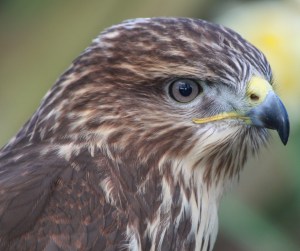
Paul-Wheelhouse-MSP Earlier today we blogged about the latest poisoning victim to have been uncovered in Scotland….a dead buzzard that was found in Fife in April (see here).

This evening, Environment Minister Paul Wheelhouse has issued the following statement:

I have been hugely angered to learn about another case of a poisoned buzzard following on from a separate incident involving the illegal death of a hen harrier in Ayrshire. I have made it very clear that I will not tolerate these criminal and selfish acts and this form of criminality has also been roundly condemned by parliament in a recent debate.

These crimes are not the actions of people who value Scotland’s wildlife and natural environment and I encourage anyone with any information on these despicable crimes to contact Police Scotland on 101.

My officials are working on a pesticide disposal scheme to rid illegal substances from our countryside and I hope to see this up and running very soon while the implementation of changes to the General Licences is in the process of implementation.

Our ongoing review of wildlife crime penalties is due by December and these latest incidents only add to the evidence supporting a toughening of sanctions and penalties on perpetrators.

We don’t doubt that he’s “hugely angered” – we all are – but we most certainly do question his commitment to taking meaningful action against the raptor killers.

A year ago, give or take a few days, the Minister introduced a series of what he described as ‘further measures’ to combat raptor persecution (see here). Since then, not one of these measures has yet been fully implemented. Also since then, we’ve seen examples, over and over again, of how these crimes are still taking place right across Scotland. Here are some of them:

June 2013: Shot buzzard in the Borders (see here), later revealed to also have been poisoned (see here)

July 2013:  Buzzard shot in the throat in North Ayrshire (see here)

August 2013: Red kite found shot at Leadhills (see here)

September 2013: Poisoned buzzard found in Stirlingshire (see here)

October 2013: Langholm hen harrier ‘Blue’ disappears (see here)

October 2013: Half-made raptor trap discovered in Angus (see here)

December 2013: Buzzard died of ‘unnatural causes’ near Tomatin (see here) [we now know it had been shot]

December 2013: Golden eagle ‘Fearnan’ found poisoned on Angus grouse moor (see here)

January 2014: Man reported for hen harrier death in Aberdeenshire (see here)

January 2014: Dead bird (species unknown) & suspected poisoned bait found in South Lanarkshire (see here)

February 2014: Poisoned peregrine found near Leadhills (see here)

March 2014: 22 poisoned raptors (16 red kites + 6 buzzards) found in Ross-shire (see here)

April 2014: Man arrested for alleged attempted raptor trapping in Aberdeenshire (see here)

April 2014: ‘Illegally-killed’ peregrine found near Stirling (see here) [we now know it had been shot]

April 2014: East Scotland sea eagle chick ‘disappears’ on Aberdeenshire grouse moor (see here)

April 2014: Gamekeeper charged for allegedly shooting, bludgeoning & stamping on buzzard in Dumfries (see here)

April 2014: Poisoned buzzard found in Fife (see here)

June 2014: Allegations emerge of ‘coordinated hunt & shooting’ of a hen harrier in Aberdeenshire last year (see here)

June 2014: Hen harrier died “as result of criminal act” near Muirkirk (see here)

These are just the ones that have been made public – we expect there to be a number of others that have not yet been revealed to the public.

Each time, we’ve asked Wheelhouse to act. Each time, he’s told us we need to ‘wait’ for the new measures to take effect but he has adamantly refused to give a time-frame of how long that wait should be. It’s crystal clear, even to a child, that The Untouchables are out of control and waiting for them to stop of their own accord is ridiculous.

The Minister’s response this evening is simply not good enough. A ‘poisoning amnesty’? It sounds good, but the truth is it’s been done before and with no effect. Carbofuran has been banned since 2001 – that’s 13 years ago! Does he really think that these disgusting poisoners are going to hand over their private stashes of poison when they know full well they can continue to use them without fear of consequence? The whole industry denies that poisoning is even happening!

We think the amnesty is being implemented so the Government can be seen to be doing ‘something’ but actually it’s just a bit of cynical window dressing in an attempt to delay taking the proper action that is needed. It’s just another excuse to do nothing.

And actually, this amnesty hasn’t been announced as a reaction to the recently-reported killing of the buzzard and the hen harrier. He announced his intention to launch an amnesty in his speech at the Police Wildlife Crime Conference several months ago. So what has he actually announced in response to the poisoned buzzard and the illegally-killed (probably shot) hen harrier? Absolutely nothing.

The Minister says he “won’t tolerate these criminal and selfish acts“. Sorry, Minister, but that is exactly what you’re doing.

If you feel strongly about this and agree that this government is still failing to address the widespread persecution of protected raptor species, we’d encourage you to email Mr Wheelhouse, cite the list of crimes (above) and demand he takes meaningful action or resign his position as Environment Minister. Email: ministerforenvironment@scotland.gsi.gov.uk

The Untouchables strike again: yet another illegally-killed hen harrier

HH Laurie CampbellHere we go again….a female hen harrier has been found dead on moorland near Muirkirk in south west Scotland.

The body was found on Tuesday evening close to a nest containing two live chicks. The cause of death? Police Scotland aren’t saying, surprise surprise.

Det Inspector Graham Duncan of Kilmarnock CID said: “Whilst at this time we cannot divulge how the bird was killed, we do believe it was the result of a criminal act and we need to establish why this has happened“.

For god’s sake, why can’t they say how it was killed? It was probably shot – what’s the point of hiding it, other than to appease an influential landowner? They’ll probably tell us it’s for ‘tactical’ purposes, but they know fine well, as we all do, that the chance of anyone being brought to justice for this crime is zero.

It’s just another example of what appears to be one massive cover-up job.

And what’s that about needing to establish why it’s happened? Is he for real? Perhaps he’d like to read the following article, published in the Herald in 2008(!!) about the illegal killing of hen harriers in the Muirkirk area:

Saturday 22 November 2008

‘Pathetic’ response to disappearing hen harriers: Government failing to stop landowners’ illegal killings.

By Rob Edwards, Environment Editor, Herald Scotland

One of Scotland’s premier birds of prey is facing almost terminal decline because government measures meant to protect it from persecution are failing.

The hen harrier, which used to be a familiar feature of the moorlands, is disappearing so fast that experts fear for its future, and have castigated the government’s wildlife agency, Scottish Natural Heritage (SNH), for its “pathetic” response.

Scottish environment minister Michael Russell has said he is “horrified” by the decline. SNH has defended itself by promising renewed action to crack down on wildlife crime and encourage better behaviour by landowners.

The plight of the hen harrier is nowhere better illustrated than across a vast swathe of southwest Scotland between Kilmarnock, New Cumnock and the M74. The area, known as Muirkirk and North Lowther Uplands, was declared a Special Protection Area in 2003 because of the richness of its hen harrier population.

In the 1990s the area supported 29 breeding females as part of one of the largest populations in Britain. By 2004, however, the number of breeding pairs had dropped to 21. The latest counts have found no more than 14 pairs.

Worse are the statistics for the number of young that the birds have successfully managed to fledge. The figure has plummeted from 44 in 2004 to just five in 2008.

Across Scotland, the number of home ranges occupied by hen harriers has fallen from 417 in 2004 to 264 in 2007, and the number of successfully fledged young from 630 to 383.

The figures were provided to the Sunday Herald by Scottish Raptor Study Groups, a network of dedicated experts who regularly monitors birds of prey across the country. They have few doubts over who is to blame.

Kenneth Sludden, secretary of the South Strathclyde Raptor Study Group, ascribes the “alarming” and “almost terminal” decline in Muirkirk and North Lowther mainly to “a concerted cull of raptors by gamekeepers, condoned by factors and landowners”.

He pointed out that SNH had a statutory duty to protect the birds in the area, and accused it of abjectly failing to do so. “The response from SNH management is cosmetic, condescending and pathetically inadequate,” he said.

According to Sludden, landowners were paid £100,000 or more of taxpayers’ money to help conserve hen harrier habitat. But he said the payments were having little effect, and that the monitoring of the work they were meant to fund was “haphazard, and at worse non-existent”.

Meetings with landowners had “descended into farce” after one apologised for arriving late because he had been “shooting a couple of hen harriers”, Sludden said. A gamekeeper also allegedly expressed hatred for the birds, describing them as “rats with wings”.

SNH’s local area manager, Ross Johnston, said he shared Sludden’s concern about the drop in the number of hen harriers. He promised to work with all those involved to develop a “local action plan” for Muirkirk and North Lowther.

“This will focus on raising awareness of the issues, funding positive action to help the hen harriers, carrying out surveillance, and conducting crime-analysis work and enforcement,” he said.

Environment minister Michael Russell said: “I was horrified to hear about the apparent decline in hen harrier numbers at Muirkirk and would be interested to hear more details about potential reasons as to why this has happened.”

The Royal Society for the Protection of Birds (RSPB) pointed out that across Scotland the hen harrier population was significantly lower than habitat and food supply suggested it ought be. “Human interference, especially illegal killing, is known to be the main factor causing this,” said RSPB Scotland’s Duncan Orr-Ewing.

“The Scottish government, SNH, the police and other agencies must redouble their efforts to identify and prosecute the culprits – while encouraging good land management practice.”

So there we have it. Six years on, it’s the same old story, in the same old area, and absolutely NOTHING has changed. The current Environment Minister, Paul Wheelhouse, is just as appalled as Mike Russell was, and yet…..and yet…and yet…it’s the same old platitudes, same old promises, and the killing goes on and The Untouchables are still evading justice.

Great, isn’t it?

Article about the latest killing can be read on the BBC here.

If you want to make a stand against the illegal killing of hen harriers, please consider signing this e-petition to get driven grouse shooting banned (sign here) and make plans to attend one of the public protests against hen harrier persecution taking place on 10th August (see here).

Photo of the hen harrier by Laurie Campbell.

Alleged ‘coordinated hunt & shooting’ of a hen harrier on a Scottish grouse moor

News has emerged today of an incident that allegedly took place on a grouse moor in the Cairngorms National Park, Aberdeenshire, over a year ago.

According to an RSPB press release, on May 30th 2013, two witnesses contacted Police Scotland about what they described as a “coordinated hunt” of a male hen harrier, which ended with the bird allegedly being shot.

‘They explained watching for almost three hours as two individuals, armed with shotguns, criss-crossed the moor, with at least one other individual directing them by radio from his vehicle to the location of where the bird was seen perched’.

Police Scotland launched an ‘investigation’ but apparently insufficient evidence meant that nobody has been charged.

Read the RSPB press release here.

Article about this incident in The Herald here.

It’s all so depressingly familiar.

The ‘investigation’ probably went something like this:

Police Officer: “Have you been shooting at hen harriers?”

Gamekeeper: “No comment”.

Police Officer: “Ok thanks, sorry to have troubled you”.

The Scottish Gamekeepers’ Association has issued a statement about this alleged incident – it’s exactly what you would expect from them – read it here. Apparently the alleged incident never happened and it’s unfair for the RSPB to blame gamekeepers for killing raptors blah blah blah.

Meanwhile, we’re still waiting to hear whether another gamekeeper, who allegedly killed a hen harrier in Aberdeenshire a year ago, will face prosecution. We blogged about his case being reported to the Crown in January this year (see here). It seems the Crown is taking its time to decide whether to proceed, which is quite surprising when you consider that hen harrier persecution is supposedly a wildlife crime priority. Seven months from the time of the alleged incident to report it to the Fiscal? Another five months (& counting) for the Fiscal to decide whether to proceed with a prosecution? Yep, it’s a real priority, isn’t it? Time is running out though – the Fiscal has until mid-July to decide what to do…

If, like us, you’re sick of all the denials, and all the failed ‘investigations’, and all the incidents that The Untouchables keep getting away with, you can sign this petition to ban driven grouse shooting (background info here, sign it here) and you can make plans to take part in one of several peaceful protests against hen harrier persecution – see here for info.

UPDATE 17 August 2016: Coordinated hunt & shooting of a hen harrier in 2013 – location revealed (here)

Scottish gamekeeper accused of bludgeoning then stamping on buzzard that had been shot

A Scottish gamekeeper is facing trial over allegations that he bludgeoned and then repeatedly stamped on a buzzard.

William Dick, 24, of Whitehill Cottages, Kirkmahoe, Dumfries, denied the charges at Dumfries Sheriff Court last week. The alleged offences reportedly took place in Sunnybrae, Dumfries in April this year.

Dick also denies two charges of breaching firearms regulations by leaving a bolt-action rifle and a Beretta self-loading shotgun loaded with five shells out-with a secure cabinet in his kitchen.

The case has been continued for one month to fix a trial date.

Thanks to the blog reader who sent us a local newspaper report about this hearing.

We’ll be following this case with interest.

UPDATE: 15th October 2014 here

UPDATE: 22nd October 2014 here

Natural England says no to buzzard-killing licence

buzzard 3A couple of days ago we learned that Natural England had received a licence application to permit the capture and killing of ten buzzards (well done to the RSPB for getting the info – see their blog on the subject here.)

The licence application was made by somebody who had applied for licences before and the justification for wanting to trap and shoot ten buzzards was to prevent so-called “serious damage” to pheasant poults.

Natural England has just made the following announcement about this year’s application:

Decision on buzzard control licence

On 23 April 2014 Natural England received an application for a licence to cage trap and shoot ten common buzzard (Buteo buteo) in the vicinity of a site which has experienced loss to pheasant poults in recent years.

The application had been made by the operator of a pheasant rearing and shooting business on the site and is supported by the National Gamekeepers’ Organisation. After careful consideration, Natural England has concluded that the application does not meet the criteria that would permit lethal control to be licensed.

ENDS

Unlike last year, so far this year we haven’t seen the actual licence application, although we strongly suspect that this year’s licence applicant is the same individual as last year, working with the help and support of the National Gamekeepers Organisation (NGO). We blogged a lot about this gamekeeper last year, and particularly about his previous criminal conviction for poison offences and questioned why the NGO were still supporting him instead of booting him out of their club for being a convicted wildlife criminal. Astonishingly, we were told that they hadn’t booted him out because the NGO apparently doesn’t see poison offences as either a ‘game-keeping activity’ or a wildlife crime! We also learned that having a wildlife crime conviction was no barrier to applying (and receiving) a licence from Natural England to destroy protected wildlife (e.g. see here, here, here, here, here). The whole affair was illuminating, to say the least, and that’s without even going in to the arguments against killing a protected native species in order to protect an exotic, introduced species that is bred and released into our countryside by the tens of millions every year so that they can be later shot for ‘sport’.

Today’s announcement is very welcome news indeed, although most (all?) of the game-shooting lobby will disagree. We expect them to launch a judicial review of Natural England’s decision, as they threatened to do last year if they didn’t get their way. That might be quite interesting, especially when they get to the bit where they’re asked to provide scientific evidence about the ‘serious damage’ caused by buzzards….

UPDATE 7pm: The NGO has issued a statement about Natural England’s decision (here). In it, they claim the gamekeeper involved is “close to financial ruin”. Here’s a tip for that gamekeeper – if your business is reliant on the killing of protected species, it ‘ain’t viable in the long term. Try another ‘profession’.

Peregrine shot in Devon as this year’s tally continues to rise

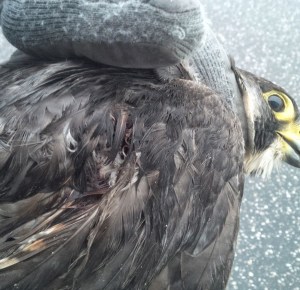
Perg shot seaton Devon May 2014A critically-injured peregrine was found at Seaton Beach in Devon on Bank Holiday Monday. The bird, soaked and unable to fly, was found by members of the public.

It was taken to a vets but had to be euthanized. Its injuries were consistent with a gunshot wound.

The police quickly issued an appeal for information (see here) and local birder Steve Waite has written about the incident on his blog (see here).

So here we are, another month, another reported raptor persecution crime to add to the year’s growing death toll:

Jan 2014: Shot buzzard, Norfolk.

Jan 2014: Dead bird (species unknown) & poisoned bait, South Lanarkshire.

Feb 2014: Shot buzzard, North Yorkshire.

Feb 2014: Shot buzzard, Norfolk.

Feb 2014: Shot sparrowhawk, Norfolk.

Feb 2014: Spring-trapped buzzard, West Yorkshire.

Feb 2014: Poisoned peregrine, South Lanarkshire.

Mar 2014: Shot peregrine, Dorset.

Mar-April 2014: Poisoned red kites (x 16) & buzzards (x 6), Ross-shire.

April 2014: Man arrested for alleged attempted raptor trapping, Aberdeenshire.

April 2014: Shot buzzard, North Yorkshire.

April 2014: Shot red kite, Northamptonshire.

April 2014: White-tailed eagle ‘disappears’ in suspicious circumstances, Aberdeenshire.

April 2014: Peregrine ‘illegally killed’, Stirlingshire.

May 2014: Shot peregrine, Devon.

Meanwhile, over in Northern Ireland a wildlife crime summit has learned that 90 raptors have been found poisoned there since 2006 – see here.

Buzzard shot dead in North Yorkshire

North Yorks Police logoNo surprise to learn that another buzzard has been shot dead in North Yorkshire, a county with one of the worst records for raptor persecution in the UK (e.g. see here).

The latest victim was found near Soar Spring Wood, between Wathgill Road and Reeth Road, Leyburn, on Easter Sunday. It was killed after being blasted with a shotgun.

North Yorks Police are appealing for info – see here.

The RSPB is suggesting that a clandestine campaign against buzzards is being carried out in the county and they’re calling for custodial sentences for anyone convicted of this offence (see here).

32 eagles, 8 years, 0 prosecutions

In April 2012, we wrote an article called ’21 eagles, 6 years, 0 prosecutions’ (see here).

In September 2012, we updated it and called it ’26 eagles, 6 years, 0 prosecutions’ (see here).

In July 2013 we updated it again. This time, ’27 eagles, 7 years, 0 prosecutions’ (see here).

In December 2013 we had to do another update: ‘31 eagles, 7 years, 0 prosecutions’ (see here).

It’s now April 2014 and another ‘lost’ eagle means another update: ’32 eagles, 8 years, 0 prosecutions’.

28 of these 32 eagles have either been found dead or have ‘disappeared’ on Scottish grouse moors.

This article should provide some context the next time you hear someone (usually from the game-shooting industry or from the government) say that “We’re making real progress in the fight against raptor persecution”. So much ‘progress’ in fact that 24 of these eagles have been lost in the last 4 years. As this shameful list continues to grow, the Environment Minister is still insisting that more time is needed to see whether enforcement measures are working. How many more eagles need to be added to this catalogue of horror before he decides to act?

As before, a number of eagles included in this list (8 of them, to be precise) may not be dead. However, they are included here because their satellite tags unexpectedly stopped functioning (i.e. they’d been transmitting perfectly well up until the eagles’ last known location, often a known persecution hotspot). Two further satellite-tagged eagles (‘Angus’ and ‘Tom’) are not included in this list as although their transmitters stopped functioning, there had been recognisable problems with their tags prior to the final transmissions and so the benefit of the doubt has been applied.

Many of these listed eagles from recent years have only been discovered because the eagles were being satellite-tracked. Much kudos to the dedicated teams of fieldworkers who have put in hours and hours of skilled hard work to allow this to happen. Obviously there are many other eagles out there that have not been sat-tagged and on the balance of probability will have been killed at the hands of the game-shooting industry. 32 eagles in the last 8 years is the bare minimum. The number of prosecutions (zero) is indisputable.

MAY 2006: A dead adult golden eagle was found on the Dinnet & Kinord Estate, near Ballater, Aberdeenshire. Tests revealed it had been poisoned by the illegal pesticide Carbofuran. Grampian Police launched an investigation. Seven years and 11 months later, nobody has been prosecuted.

JUNE 2006: A dead golden eagle was found on Glen Feshie Estate in the Cairngorms. Tests revealed it had been poisoned by the illegal pesticide Carbofuran. Northern Constabulary launched an investigation. Seven years and 10 months later, nobody has been prosecuted.

AUGUST 2007: A dead adult female golden eagle was found on an estate near Peebles in the Borders. She was half of the last known breeding pair of golden eagles in the region. Tests revealed she had been poisoned by the illegal pesticide Carbofuran. Lothian & Borders Police launched an investigation. Six years and 8 months later, nobody has been prosecuted.

NOVEMBER 2007: Tayside Police received a detailed tip-off that a young male white-tailed eagle (known as ‘Bird N’) had allegedly been shot on a grouse moor estate in the Angus Glens. The timing and location included in the tip-off coincided with the timing and location of the last-known radio signal of this bird. Six years and 5 months later, the bird has not been seen again. With no carcass, an investigation isn’t possible.

MAY 2008: A one year old male white-tailed eagle hatched on Mull in 2007 and known as ‘White G’ was found dead on the Glenquoich Estate in the Angus Glens. Tests revealed he had been poisoned by an unusual concoction of pesticides that included Carbofuran, Bendiocarb and Isofenphos. A police search in the area also revealed a poisoned buzzard, a baited mountain hare and 32 pieces of poisoned venison baits placed on top of fence posts on the neighbouring Glenogil Estate. Laboratory tests revealed the baited mountain hare and the 32 poisoned venison baits contained the same unusual concoction of highly toxic chemicals that had killed the white-tailed eagle, ‘White G’. Five years and 11 months later, nobody has been prosecuted.

JUNE 2009: An adult golden eagle was found dead at Glen Orchy, Argyll, close to the West Highland Way. Tests revealed it had been poisoned by the illegal pesticide Carbofuran. Strathclyde Police launched a multi-agency investigation. Three years and 3 months later, estate employee Tom McKellar pled guilty to possession of Carbofuran stored in premises at Auch Estate, Bridge of Orchy and he was fined £1,200. Four years and 10 months on, nobody has been prosecuted for poisoning the golden eagle.

JULY 2009: A two year old female golden eagle known as ‘Alma’ was found dead on the Millden Estate in the Angus Glens. Tests revealed she had been poisoned by the illegal pesticide Carbofuran. Alma was a well-known eagle  – born on the Glen Feshie Estate in 2007, she was being satellite-tracked and her movements followed by the general public on the internet. Tayside Police launched an investigation. Four years and 9 months later, nobody has been prosecuted.

AUGUST 2009: A young white-tailed eagle was found dead on Glenogil Estate in the Angus Glens. Tests revealed it had been poisoned by the illegal pesticide Carbofuran. Tayside Police was criticized in the national press for not releasing a press statement about this incident until January 2010. Four years and 8 months later, nobody has been prosecuted.

MAY 2010: #1 of three dead golden eagles found on or close to Skibo Estate, Sutherland. Tests revealed they had been poisoned; two with Carbofuran and one with Aldicarb. Northern Constabulary launched a multi-agency investigation. One year later (May 2011), Sporting Manager Dean Barr pled guilty to possession of 10.5 kg of Carbofuran stored in premises at Skibo Estate. Three years and 11 months later, nobody has been prosecuted for poisoning this eagle.

MAY 2010: #2 of three dead golden eagles found on or close to Skibo Estate, Sutherland. Tests revealed they had been poisoned; two with Carbofuran and one with Aldicarb. Northern Constabulary launched a multi-agency investigation. One year later (May 2011), Sporting Manager Dean Barr pled guilty to possession of 10.5 kg of Carbofuran stored in premises at Skibo Estate. Three years and 11 months later, nobody has been prosecuted for poisoning this eagle.

MAY 2010: #3 of three dead golden eagles found on or close to Skibo Estate, Sutherland. Tests revealed they had been poisoned; two with Carbofuran and one with Aldicarb. Northern Constabulary launched a multi-agency investigation. One year later (May 2011), Sporting Manager Dean Barr pled guilty to possession of 10.5 kg of Carbofuran stored in premises at Skibo Estate. Three years and 11 months later, nobody has been prosecuted for poisoning this eagle.

JUNE 2010: #1: Leg rings with unique identification numbers that had previously been fitted to the legs of four young golden eagles in nests across Scotland were found in the possession of gamekeeper James Rolfe, during a multi-agency investigation into alleged raptor persecution at Moy Estate, near Inverness. It is not clear how he came to be in possession of the rings. The bodies of the eagles from which the rings had been removed were not found. No further action was taken in relation to the discovery.

JUNE 2010: #2: Leg rings with unique identification numbers that had previously been fitted to the legs of four young golden eagles in nests across Scotland were found in the possession of gamekeeper James Rolfe, during a multi-agency investigation into alleged raptor persecution at Moy Estate, near Inverness. It is not clear how he came to be in possession of the rings. The bodies of the eagles from which the rings had been removed were not found. No further action was taken in relation to the discovery.

JUNE 2010: #3: Leg rings with unique identification numbers that had previously been fitted to the legs of four young golden eagles in nests across Scotland were found in the possession of gamekeeper James Rolfe, during a multi-agency investigation into alleged raptor persecution at Moy Estate, near Inverness. It is not clear how he came to be in possession of the rings. The bodies of the eagles from which the rings had been removed were not found. No further action was taken in relation to the discovery.

JUNE 2010: #4: Leg rings with unique identification numbers that had previously been fitted to the legs of four young golden eagles in nests across Scotland were found in the possession of gamekeeper James Rolfe, during a multi-agency investigation into alleged raptor persecution at Moy Estate, near Inverness. It is not clear how he came to be in possession of the rings. The bodies of the eagles from which the rings had been removed were not found. No further action was taken in relation to the discovery.

JUNE 2010: A golden eagle was found dead on Farr & Kyllachy Estate, Inverness-shire. Tests revealed it had been poisoned by the illegal pesticide Carbofuran. Northern Constabulary apparently did not search the property until July 2011. Three years and 10 months later, nobody has been prosecuted.

JUNE 2010: A white-tailed eagle was found dead on Farr & Kyllachy Estate, Inverness-shire. Tests revealed it had been poisoned by the illegal pesticide Carbofuran. Northern Constabulary apparently did not search the property until July 2011. Three years and 10 months later, nobody has been prosecuted.

DECEMBER 2010: A decomposing carcass of a white-tailed eagle was found and photographed on Logie (Lochindorb) Estate, Morayshire. It was reported to Northern Constabulary. By the time the police arrived to collect it, the carcass had disappeared. The police said they couldn’t investigate further without the body.

FEBRUARY 2011: The signal from a young satellite-tracked golden eagle ( ‘Lee’, hatched in 2010) unexpectedly stopped transmitting after a final signal from the North Angus Glens. A technical malfunction or another mysterious ‘disappearance’?

MARCH 2011: The body of a young golden eagle was discovered on North Glenbuchat Estate, Aberdeenshire. Tests revealed it had been poisoned by the illegal pesticide Carbofuran. Grampian Police launched an investigation and raided the property in May 2011. A poisoned buzzard, a poisoned bait and a shot short-eared owl were found. Three years and 1 month later, nobody has been prosecuted.

APRIL 2011: The body of a white-tailed eagle was found at the base of cliffs on Skye. The person who discovered it (a professional medic) considered it to have been freshly shot with a rifle, decapitated with a sharp implement and thrown from the cliff top. He took photographs and alerted Northern Constabulary and RSPB. There was a delay of two weeks before the now probably decomposed carcass was collected. A post-mortem was inconclusive. This incident was not made public until one year later after a tip off to this blog. Three years later, nobody has been prosecuted.

SEPTEMBER 2011: The signal from a satellite-tracked young golden eagle (‘Strathy’, hatched in 2010) unexpectedly stopped transmitting after a final signal from an Aberdeenshire grouse moor. A technical malfunction or another mysterious ‘disappearance’?

MARCH 2012: The body of a young golden eagle being tracked by satellite was discovered in Lochaber. Tests revealed it had been poisoned with the banned pesticides Aldicarb and Bendiocarb. Information about this incident was not made public until three months later. Two years and 1 month later, nobody has been prosecuted.

MARCH 2012: The signal from a satellite-tracked young golden eagle (‘Angus 26′, hatched in 2011) unexpectedly stopped transmitting after a final signal from a grouse moor in the Angus Glens. This bird’s suspiciously damaged sat tag was found in the area. Two years and 1 month later, nobody has been prosecuted.

MAY 2012: The signal from a young satellite-tracked golden eagle (#32857) unexpectedly stopped transmitting when the bird was north-east of the Cairngorms National Park. A technical malfunction or another mysterious ‘disappearance’?

MAY 2012: The dead body of a young satellite-tracked golden eagle (hatched in 2011) was discovered near a lay-by in Aboyne, Aberdeenshire. The data from its satellite tag & the injuries the bird had when found (2 broken legs) suggested it had been caught in an illegal trap on a grouse moor in the Angus Glens and then removed, under cover of darkness, to be dumped in another area where it was left to die, probably a slow and agonising death. Information on this incident was not released until almost five months later, by the RSPB. It appears the police failed to properly investigate this incident as we understand that no search warrants were issued and no vehicles were searched. One year and 11 months later, nobody has been prosecuted.

OCTOBER 2012: An adult golden eagle was found shot and critically injured on grouse moor at Buccleuch Estate, near Wanlockhead, South Lanarkshire. The bird was rescued by the SSPCA and underwent surgery but it eventually succumbed to its injuries in April 2013. One year and 6 months later, nobody has been prosecuted.

MAY 2013: The signal from a two-year-old satellite tracked golden eagle (‘Angus 33′, hatched in 2011) unexpectedly stopped transmitting after its last signal from North Glenbuchat Estate in Aberdeenshire. A technical malfunction or another mysterious ‘disappearance’?

JUNE 2013: A dead golden eagle was found under power lines on an RSPB reserve on Oronsay. This bird had been shot although it is not known whether this was the cause of death or an historical injury.

JULY 2013: The signal from a young satellite tracked golden eagle (‘Cullen’, hatched 2010) unexpectedly stopped transmitting after its last signal in Aberdeenshire. A technical malfunction or another mysterious ‘disappearance’?

DECEMBER 2013: A two year old satellite tracked golden eagle (‘Fearnan’) was found dead on a grouse moor in the Angus Glens. Tests revealed he had been poisoned with the banned pesticide Carbofuran. Four months later, we are not aware of any pending prosecutions.

APRIL 2014: The signal from a young satellite tracked white-tailed eagle (the first fledged sea eagle chick in East Scotland in ~200 years) unexpectedly stopped transmitting after its last signal from the North Glenbuchat Estate in Aberdeenshire. Police raided the property a couple of weeks later. We are not aware of any pending prosecutions.

THE UNTOUCHABLES: 32; JUSTICE: 0
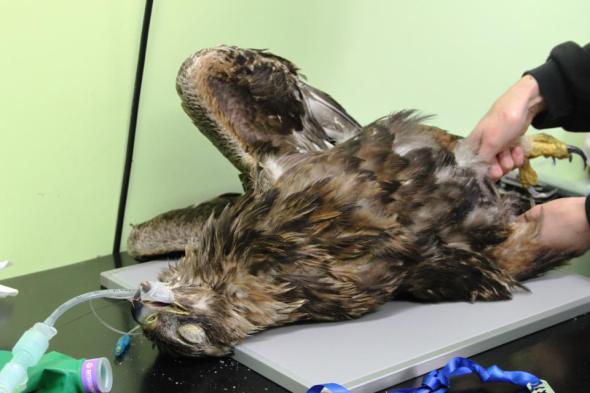
Wanlock Head GE Oct 2012

Red kite dies after being shot in Northamptonshire

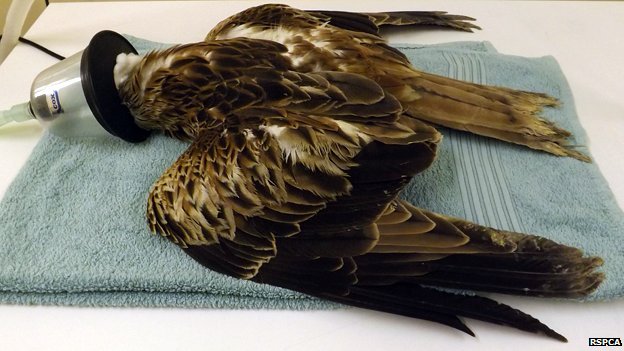
The RSPCA is appealing for information after a red kite was shot and critically-injured in Northamptonshire earlier this month.

The wounded bird suffered gunshot injuries from the incident in Wellingborough around 4th April. It was taken to a wildlife centre but its injuries were so severe the bird had to be euthanised.

Further details in the Northampton Chronicle & Echo here.

RK Wellingborough


Public consultation on increased powers for SSPCA investigators finally launched

sspca_badgeThe Scottish Government has finally launched its public consultation on increasing the powers of the SSPCA to investigate a wider suite of wildlife crimes.

We have campaigned long and hard for this and it’s taken the Government three years since they first committed to opening a consultation, so now it’s vitally important that as many people as possible actually respond to it. The Government wants to hear your views, whether in support or opposition, so this is your chance to influence policy and make a real difference in the fight against wildlife crime in Scotland.

The consultation document itself is extremely well-written, and we are delighted to see that the consultation period will be open for five months (closing 1st September 2014). We are also pleased to see that the consultation questions are straightforward:

1. Do you agree that the law in Scotland should be changed to give the SSPCA the powers as set out in section 4.1 [of the consultation document]?

2. Please set out your reasons for your answer to Q1.

3. If you would prefer to see changes to the SSPCA’s powers to investigate wildife crime other than those set out in section 4.1, please describe them.

So what’s it all about? The finer details can be read in the consultation document (see below) but in a nutshell….

Currently, the SSPCA has the power to investigate wildlife crimes that involve an animal in distress. So for example, if they are called out to an incident of a golden eagle that had been caught in an illegally-set spring trap and the eagle was still alive, the SSPCA has the power to collect evidence as part of a criminal investigation. This is because they have powers under the animal welfare legislation and this incident would certainly fall into a welfare category where the animal was ‘under the control of man’.

However, if they are called out to an incident where a golden eagle had eaten a poisoned bait and had died two minutes before the SSPCA arrived on scene, the SSPCA does not currently have the power to investigate because the welfare legislation doesn’t apply (the bird is already dead) and the dead bird is not ‘under the control of man’. In this scenario, all the SSPCA can do is to call the police and hope that the police attend the scene in a timely manner. How stupid is that?

Another example – if the SSPCA was called out to an incident of an illegally-snared badger, and that badger was already dead, and the SSPCA found 100 illegally-set snares at the same location, the SSPCA would not be able to investigate; they would have to rely upon the police to attend. If the badger was still alive (suffering), the SSPCA could investigate.

The proposal laid out in the consultation is to widen the investigatory powers of the SSPCA so that they’re not just limited to operating under welfare legislation; the increased powers, if granted, would also allow them to operate under certain parts of the Wildlife & Countryside Act in addition to the welfare legislation.

Importantly, the increased powers would  allow them to continue their investigations into animal welfare incidents where an animal is in distress, but also to investigate wildlife crimes where the animal is already dead, and even wildlife crimes that haven’t yet involved an animal – for example an illegally-set trap.

For us, the increased investigatory powers are a no-brainer. If you care about wildlife crime and you want to see improved detection rates, more prosecutions and a greater chance of conviction, then these increased investigatory powers are a logical step. Here’s why:

1. The SSPCA has a successful track record for investigating [a limited number of] wildlife crimes, both on their own and in partnership with the police.

2. Their inspectors and specialist investigations team have long experience in this field and are already fully trained.

3. SSPCA inspectors are fully focused on animal welfare and wildlife crime – they are not part-timers like many of the police WCOs and nor are they distracted by having to investigate other types of crime, as police WCOs can be.

4. The SSPCA is already a Specialist Reporting Agency, which means they can report alleged offences [within their limited remit] to the Procurator Fiscal and they know what evidence is required for a potential prosecution.

5. With increased investigatory powers, a total of 64 experienced SSPCA staff would be available to respond to a wider range of wildlife crimes.

6. These 64 experienced SSPCA staff would come at no cost whatsoever to the public purse. It would be a free resource to bolster an often under-resourced police force.

7. The specialist skills of the SSPCA are already recognised and utilised by the police in multi-agency searches. The sticking point, under current legislation, is that the police are not obliged to invite them to participate on such searches. Sometimes they do, sometimes, inexplicably, they don’t; it all depends on the personalities involved, which is not, in our opinion, the best way of investigating a wildlife crime.

8. The increase of powers to the SSPCA would not mean that the police are excluded from such investigations. The police would still retain their powers but crucially, they’d now have a further resource to call upon if they needed help. Alternatively, the SSPCA would have the powers to conduct their own investigation if the police couldn’t attend at short notice, for whatever reason. That would be true partnership working and, most importantly of all, increase the chances of a thorough investigation leading to a successful prosecution.

9. Last year we calculated the conviction rate for raptor persecution crime in Scotland as being a pathetic 7.3% (see here). Obviously, something is not working and by giving increased powers to the SSPCA we would expect to see this conviction rate rise considerably. Surely that’s in everyone’s interest (apart from the wildlife criminals, of course).

We know that there will probably be a lot of opposition to the proposal. For example, the Scottish Gamekeepers Association were not in support when the issue was first raised during the WANE bill consultations several years ago. We’re fairly sure that others from within the game-shooting industry will also oppose it – you’ll have to draw your own conclusions on their motivation for opposition. It’ll certainly be interesting to see the consultation responses of various organisations when they are published after the close of the consultation period.

At a time when there is an increasing public awareness of wildlife crime, and an ever-growing sense of frustration at the endless series of failed investigations (with a handful of exceptions), this consultation couldn’t have come at a better time.

Please, have a look at the consultation document and send in your views to the government using the official response form (see below). If you want to copy and paste any or all of our reasons listed above for increasing the SSPCA’s investigatory powers, please feel free.

The time is long-overdue for the pressure to be ramped up on the wildlife criminals (the Untouchables) running amok in our countryside, illegally poisoning, shooting, trapping and bludgeoning our wildlife and sticking up two fingers to the rest of us. Let them know we’ve had enough and let the government know that they have our full support to implement these changes.

Download the SSPCA Consultation document: SSPCA Consulation document

Download the Consultation and Response Form: SSPCA Consultation Questions and Response Form