Case against Scottish gamekeeper William Dick: part 2

Criminal proceedings in the case against Scottish gamekeeper William Dick continued yesterday at Dumfries Sheriff Court.

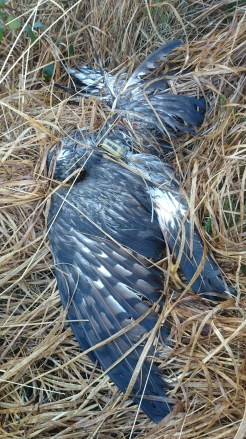
It has been reported that Mr Dick, 24, is accused of bludgeoning and then repeatedly stamping on a buzzard. The alleged offences are reported to have taken place in Sunnybrae, Dumfries, in April 2014. Mr Dick denied the allegations at an earlier hearing (see here).

Yesterday the case was continued for a notional diet on 21st October 2014. A notional diet is basically a hearing for legal arguments. What happens next is subject to what the Sheriff decides at the notional diet; a trial may or may not follow at a later date.

Highland red kite shot in the head

According to a local journalist, a dead red kite was found on a railway line in Inverness-shire in early July.

It was collected and sent for a post-mortem, which revealed it had been shot in the head.

We don’t know whether the kite was shot at another location and then dumped on a railway line to disguise its cause of death as an accidental collision with a train, or whether it was actually shot on or close to the railway line. Either way, it was illegally killed.

Needless to say, more than three months later and it would appear that Police Scotland haven’t issued any press statement or appealed for information.

Why not?

Cairngorms National Park Authority wants ‘action’ against raptor persecution

Duncan BrydenThe Convenor of the Cairngorms National Park Authority (CPNA), Duncan Bryden, has written to the Environment Minister to tell him that continued incidents of raptor persecution and ‘disappearing birds’ in the eastern side of the Cairngorms National Park “threatens to undermine the reputation of the National Park as a high quality wildlife tourism destination“.

He has asked for the Minister to attend a meeting of stakeholders in the Eastern Cairngorms (including RSPB Scotland and, er, Scottish Land & Estates) to discuss ways to address this on-going issue.

That’ll be interesting, seeing as though SLE continue to deny the extent of the problem (e.g. see here) and only last year gave membership to the ranks of SLE to the North Glenbuchat Estate – a grouse moor in the National Park that has been at the centre of wildlife crime investigations for years, most recently following the ‘disappearance’ in April of the first fledged white-tailed eagle in eastern Scotland for 200 years – it’s final signal reportedly came from North Glenbuchat estate (see here). The eagle is presumed dead but it’s body has not been recovered, just like the bodies of three other young satellite tagged eagles that ‘disappeared’ in the area in recent years. The body of a fifth eagle was found on North Glenbuchat Estate in 2011 – it had been poisoned with Carbofuran. As had a poisoned buzzard, also found in 2011, as well as a poisoned bait. A dead short-eared owl was also found in 2011 – it had been shot and stuffed under a rock.

Good luck to the CNPA in trying to oust the raptor-killing criminals from the National Park and well done Duncan Bryden for taking a stand.

Download: CNPA letter to Paul Wheelhouse May2014

Download: Paul Wheelhouse response to CNPA

CNP map


Enough is enough

SOCThe latest edition of the Scottish Ornithologists’ Club journal, Scottish Birds, dropped through the letterbox the other day. It contains an interesting article from Ian Thomson, Head of Investigations at RSPB Scotland:

Raptor Persecution in Scotland: July 2014 update

The last article on the illegal killing of birds of prey in Scotland written for Scottish Birds (33:1) appeared at the beginning of 2013, a year designated “The Year of Natural Scotland” by the Scottish Government.

The year had dawned with some optimism. For the fourth consecutive year, we had seen detected cases of illegal poisoning decline, and although, again it is important to reiterate that these only represent what was actually found, the apparent reduction in these indiscriminate crimes was welcomed universally. In saying that, yet again, a Golden Eagle was one of the victims, with a satellite-tagged bird found dead in Lochaber in March. But, the year ended with the news that a young pair of White-tailed Eagles from the east Scotland re-introduction scheme had built a nest in an Angus glen, the first breeding attempt in the east of the country for a hundred years.

Within days of the New Year beginning, however, it was discovered that the tree had been deliberately felled, and the nest destroyed. Realism returned quickly. A police investigation was launched. The site was five miles from the nearest public vehicle access. The tree felled was the only one in the whole plantation. Full cooperation from the estate where the nest was felled was assured. Surely it would be easy to identify the culprit?

No. The police requests for information were met with “no comment” responses across the board, from all those employed in the area concerned. While the right to decline to answer questions is enshrined in Scots Law, few would agree that this amounts to “full cooperation”. But, with no suspect identified, that would ostensibly mean the end of the investigation.

Of course, this sad example was not the first time this has happened. Indeed, when it comes to the persecution of raptors, no-one ever seems prepared to say a word that may assist in the identification of the perpetrator.

In late May 2013, two members of the public witnessed the organised “hunt” of a pair of hen harriers that had just started nest-building on an Aberdeenshire estate. For almost three hours, two armed men stalked the protected raptors, guided to where they were perched or flying by a third man, communicating with those on the hill by radio. As darkness fell, four shots rang out, and the men were seen and heard celebrating the killing of the male harrier.

Of course, the killer did not leave the body lying around to be found, but at least there were the two other individuals he was with, fully aware that he had committed the crime. Again the police investigated; again, nobody was prepared to identify the criminal. Again, a raptor killer escaped justice.

This latest case was one of several, including the killing of another harrier, the poisoning of a red kite and shooting of another; and the shooting of four buzzards in other incidents, which led to the Scottish Government Minister for the Environment and Climate Change, Paul Wheelhouse MSP, to announce further measures to combat these crimes. This included a review of sentences given for convicted wildlife criminals, and instructing Scottish Natural Heritage to implement a means of restricting the use of General Licences (a legislative tool that allows an “authorised person” to kill certain species under specific circumstances eg. allows a gamekeeper to shoot a carrion crow, that would otherwise be protected).

It is perhaps ironic, that just a few weeks earlier, the SOC had been part of a delegation that met with the Minister to handover a petition, officially endorsed by the Club, that contained almost 23,000 names, collected in just over two weeks, calling on him to ensure that Buzzards continued to have full legal protection, and to resist calls made by some in the game-shooting sector to allow licences to control them.

Sadly, despite the Minister’s robust comments, this did not seem to deter those who seem intent on continuing to kill some of our rarest protected birds with further shootings of a red kite and several buzzards. But, on a positive note, a second pair of white-tailed eagles did manage to breed in the east of Scotland, successfully fledging a male chick.

Unfortunately, The Year of Natural Scotland ended, as inauspiciously as it had began, with the poisoning of yet another golden eagle in the Angus glens, just the latest incident of a litany of recent raptor persecution cases in this area.

2014 has been no better, with the massacre of birds of prey on the Black Isle grabbing a great deal of media attention. Twenty-two dead raptors – six buzzards and sixteen red kites – were found dead in a small area of farmland near Conon Bridge. Thus far, fifteen of these have been confirmed to have been the victims of poisoning as a result of consuming bait laced with a banned pesticide.

This incident, quite rightly, attracted universal condemnation, lead to the establishment of a reward fund and resulted in an unprecedented public demonstration in Inverness town centre. But, it is important to put this case into context. It was highly unusual in that it was on lowland farmland, close to a town and in an area frequently and easily accessed by members of the public.

The vast majority of raptor persecution incidents still happen away from the public gaze, in upland areas where visitors are few and where the chances of evidence of the crimes being found is very slim. These incidents may not be seen, the bodies may not be found, but the evidence is clear time and time again – large swathes of Scotland’s uplands managed intensively for driven grouse shooting continue to see virtually no raptors breeding successfully.

It is for this reason that RSPB Scotland is now calling for a robust system of licencing for grouse moors. The grouse-shooting industry has had decades to put its house in order, but has singularly failed to demonstrate that it can operate in harmony with protected birds of prey. Licenses should have sanctions for wrongdoers, with repeat offenders losing their license and thus the right to shoot all gamebirds for set periods. Estates that do practise sustainable management, and obey the law should have nothing to fear.

The one light that had shone from the gloom of 2013 was that first white-tailed eagle chick to fly from a nest in east Scotland for 200 years. It thrived and survived the challenges of its first winter. But that light too was extinguished, when the satellite-tagged bird “disappeared” on a grouse moor in upper Donside. At the same location, four tagged golden eagles have similarly vanished. The only eagle body recovered confirmed it had died due to illegal poisoning.

Enough is enough.

Full reference: Thomson, I. (2014). Raptor persecution in Scotland: July 2014 update. Scottish Birds 34(3): 232-233.

Police investigate shooting of young peregrine in Suffolk

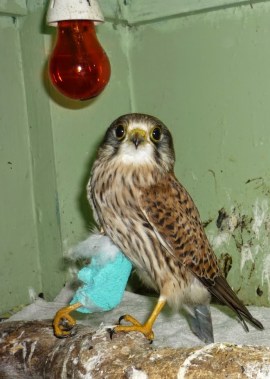
shot perg suffolk aug 2014Suffolk police and the RSPB are appealing for information after the discovery of a young, injured peregrine near the village of Long Melford in Suffolk on 20th August. The bird had been shot.

The peregrine has survived and is currently being rehabilitated at a nearby falconry centre in the hope it can make a full recovery and be released back to the wild.

The RSPB is offering a £1,000 reward for information leading to a conviction.

Full news article here.

This is the 17th peregrine known to have been targeted in these isles this year. And these are only the ones that have reported – how many more have been killed?

In February, a poisoned peregrine was found dead in South Lanarkshire, Scotland (here). In March, a shot peregrine was found dead in Dorset, England (here). In April, a shot peregrine was found dead near Stirling, Scotland (here). In May, a shot peregrine was found critically injured in Devon, England (here). In June, the public foiled an attempted poisoning of six peregrines in Co. Dublin, Ireland (here). In June, a poisoned peregrine was found dead in North Wales (here). In July, four dead peregrines suspected to have been poisoned were found in Gwynedd, NW Wales (here). In August a shot peregrine was found critically injured in Co. Wexford, Ireland (here).

Buzzard shooting condemned as abhorrent

Police are investigating following the discovery of a buzzard that had been shot dead in July.

The bird was found in a wooded area near Dundrum Road, Newcastle, Co Down on 9th July, according to an article in the local Mourne Observer (thanks to the contributor who sent us a copy).

An RSPB spokesperson said: “Any incident of wildlife crime is to be condemned but the shooting of a majestic bird of prey is completely abhorrent”.

Anyone with information about the shooting is asked to contact Newcastle police station on the non-emergency number 101.

Buzzard photograph: unknown photographer.

By the way, in case you’re thinking that due to a paucity of recently reported information, raptor persecution in Scotland has suddenly stopped, think again. We’re just waiting to see how long it takes Police Scotland to make these crimes public…..

Young peregrine shot in Co Wexford

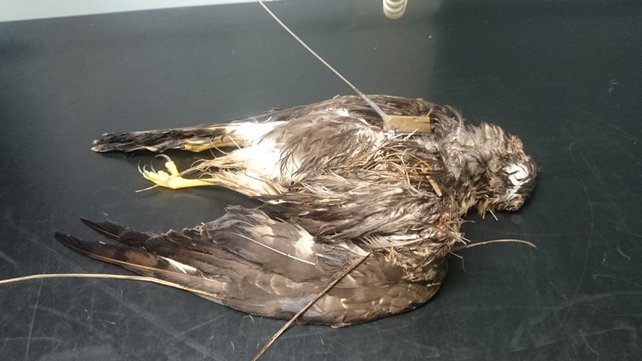
Perg Co WexA young peregrine falcon has had to be euthanised after it was illegally shot in Co Wexford, Ireland.

The news article in the Irish Times (here) doesn’t say when the bird was found but it can be assumed it was quite recently – the young bird had been ringed with a unique identification number so presumably the authorities know it was one of this year’s fledglings.

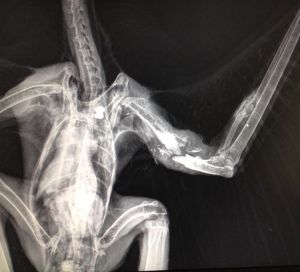
The bird was found at Ballynastraw near Enniscorthy and an x-ray revealed it had been hit with shotgun pellets in its wings and leg. A vet decided the injuries were too severe for the bird to be rehabilitated.

The National Parks and Wildlife Service has appealed for information. Dominic Berridge of NPWS said: “The finding of this bird is not an isolated incident. There have been attempts to poison and shoot birds at a number of nests and if people see anything suspicious like a tethered pigeon or a trap, NPWS staff should be called”.

East Scotland sea eagle chick fledges: what fate awaits this one?

For the second consecutive year, a young white-tailed eagle has successfully fledged from a nest in east Scotland.

His sibling, who hatched in 2013, un-mysteriously ‘disappeared’ earlier this year in a notorious raptor persecution blackspot in the Cairngorms National Park (see here and here). He was the first sea eagle to fledge in east Scotland in over 200 years but he didn’t even survive to see his first birthday. His satellite transmitter went silent after he’d visited a driven grouse moor where previously a head gamekeeper had been convicted of poisoning offences (2006), a poisoned golden eagle had been found in 2011 (no prosecution), a poisoned buzzard had been found in 2011 (no prosecution), poisoned bait had been discovered in 2011 (no prosecution) and a short-eared owl had been found in 2011 that had been shot and shoved underneath a rock (no prosecution). The police raided the estate in April this year but found no trace of the eagle.

He might not have been the first sea eagle to fledge in Scotland in over 200 years if another east Scotland pair had not had their nest tree felled by someone with a chainsaw (see here – no prosecution).

The BBC is running an article on this year’s fledgling (see here) and includes a telling remark from RSPB Scotland saying they hoped the young bird would avoid areas where birds of prey have been poisoned or trapped. In other words, steer clear of driven grouse moors.

He’s got at least five years in which to run the gauntlet before he becomes mature enough to breed – we don’t rate his chances much.

Go west, kid, go west.

wtse fife 2014 ian francis

Golden eagles in southern Scotland: the facts and the fiction

A new report has been published today detailing the recovery prospects for golden eagles in southern Scotland.

The SNH-commissioned report has been written by two undisputed experts (Alan Fielding and Paul Haworth), both of whom were involved with the impressive Golden Eagle Conservation Framework report that was published in 2008.

The report has only just been made available on SNH’s website so we’ve not had a chance to thoroughly digest its findings – although we intend to come back to it in due course.

Having skimmed through it, it looks like a very detailed analysis of the various issues that could affect the recovery of this tiny population (see here for a previous blog entry on the perilous state of the golden eagle population in southern Scotland), including, of course, the effect of illegal persecution. This photo below shows the graphic effect of persecution on golden eagles in south Scotland – this one was found shot and critically injured on a driven grouse moor in 2012 – it later died from its injuries – see here.

Wanlock Head GE Oct 2012

If you haven’t read the new report (and let’s face it, not many people will), you might just base your opinion of it on what has been written in the mainstream media, which would be fine if the media reports were accurate, balanced and didn’t contain any lies.

For example, if you read the BBC report, you’d be forgiven for thinking that golden eagles in southern Scotland are only constrained by impoverished habitat and potentially by climate change, lack of prey (apparently due to a loss of gamekeepers!) and afforestation. You’d read that illegal persecution ‘may have been an historical factor’ but apparently it isn’t any more.

Hmm. Is that what the report actually says? Er, no. The report mentions persecution in several areas (Lowther Hills, Tweedsmuir Hills, Ettrick Hills and Moorfoot Hills) and suggests that it needs to be brought under control if golden eagles are to once again survive in these areas.

So if the report didn’t say that illegal persecution ‘may have been an historical factor’ but apparently isn’t any more, then who did?

McAdam 1No surprises…..Doug McAdam, CEO of the landowners’ organisation, Scottish Land and Estates. We  blogged about SLE’s persistent denial of raptor persecution only yesterday (see here) in relation to comments made by SLE’s Moorland Director Tim (Kim) Baynes during a radio debate. It looks like McAdam was sent the same memo – just deny, deny, deny.

This time, however, we intend to do more than just make fun of him – we’re going to complain to the BBC about publishing such nonsense and we’d encourage as many of you as possible to join in. We’ve even prepared some suggested text that you can simply cut and paste if you’re short of time or not sure what to write. Here it is:

Dear BBC,

I wish to make a complaint about the content of an online article about a new report about Golden Eagles in the south of Scotland:

http://www.bbc.co.uk/news/uk-scotland-south-scotland-28320168

In my opinion, a disproportionate amount of space in the written article is given over to comments made by Mr Doug McAdam, the chief executive of Scottish Land and Estates. This is in complete contrast to the amount of space given to the comments by Prof Des Thompson “who led the research” and Mr Ian Thomson of RSPB Scotland.

In addition I am very concerned that the comments attributed to Mr McAdam reflect a falsehood that is frequently stated by his organisation and others who have a long-term political agenda to downplay the issue of persecution of birds of prey. Mr McAdam is quoted as saying, “Where persecution may have been a historical factor, it is clear from the official government data – published alongside our partners in PAW Scotland in March – that the number of such incidents has dropped significantly in recent years.”

In fact, the figures published by the Scottish Government show the opposite to be the case. In the Scottish Government’s wildlife crime report for 2012:  http://www.scotland.gov.uk/Resource/0043/00434716.pdf thirteen birds of prey are listed as being the victims of persecution.

In 2013, twenty three birds of prey were listed as victims:  http://www.scotland.gov.uk/Topics/Environment/Wildlife-Habitats/paw-scotland/types-of-crime/crimes-against-birds/Poisoninghotspotmaps/2009-2013

These figures are nowhere near being indicative of “a significant” decline – in fact they are wholly contradictory of such a claim.

I urge the BBC to remove these erroneous comments from the article, given that they suggest to its readers a picture which is patently untrue.

Yours faithfully, (your name).

Here’s where to send your complaint: https://ssl.bbc.co.uk/complaints/forms/?reset=#anchor  [click on ‘Make a complaint’]

Some links:

BBC news article (and accompanying video) here

SNH press release about the new golden eagle report here

RSPB Scotland press release here

Download the new report here: Fielding & Haworth 2014_Golden Eagles in south Scotland an overview

UPDATE 17.40: Interestingly, the BBC appears to have retracted some of McAdam’s quote, but not the offending part! (Many thanks to those of you have already complained – we can see from our site stats that quite a few of you have done so).

Here’s McAdam’s quote from this morning:

Douglas McAdam, chief executive of Scottish Land & Estates, said: “We have been involved with Scottish Natural Heritage and other partners in this study since its inception as we felt it was crucial to understand the real underlying reasons why Golden Eagles were struggling in certain parts of Scotland.

This thorough and detailed study makes clear that SNH believes that habitat improvements are needed to encourage more breeding golden eagle pairs in the south of the country. We fully support this conclusion and we will encourage land managers to work in partnership with SNH and other bodies to make improvements to these habitats wherever possible.

Other factors, including climate change, lack of availability of prey base for eagles – often because these areas are no longer actively managed by gamekeepers – as well as expansion of forestry and changing land use may also be inhibiting eagle presence in these areas. Where persecution may have been a historical factor, it is clear from the official government data – published alongside our partners in PAW Scotland in March – that the number of such incidents has dropped significantly in recent years. However, everyone remains resolute that where persecution exists it must be eradicated.

Golden Eagles are iconic Scottish birds, adding greatly to Scotland’s natural landscape and welcomed by estates as part of our natural heritage. This study will add greatly to our understanding of what limits the presence of these magnificent birds and should therefore help us to understand how best they can be conserved.”

And here’s what’s currently online at 17.40: 

Scottish Land and Estates chief executive Douglas McAdam said: “Where persecution may have been a historical factor, it is clear from the official government data – published alongside our partners in PAW Scotland in March – that the number of such incidents has dropped significantly in recent years.

However, everyone remains resolute that where persecution exists it must be eradicated.

Golden Eagles are iconic Scottish birds, adding greatly to Scotland’s natural landscape and welcomed by estates as part of our natural heritage.

This study will add greatly to our understanding of what limits the presence of these magnificent birds and should therefore help us to understand how best they can be conserved.”

Come on BBC editors, get your act together!

Wheelhouse responds to latest raptor killings….by doing nothing

Paul-Wheelhouse-MSP Earlier today we blogged about the latest poisoning victim to have been uncovered in Scotland….a dead buzzard that was found in Fife in April (see here).

This evening, Environment Minister Paul Wheelhouse has issued the following statement:

I have been hugely angered to learn about another case of a poisoned buzzard following on from a separate incident involving the illegal death of a hen harrier in Ayrshire. I have made it very clear that I will not tolerate these criminal and selfish acts and this form of criminality has also been roundly condemned by parliament in a recent debate.

These crimes are not the actions of people who value Scotland’s wildlife and natural environment and I encourage anyone with any information on these despicable crimes to contact Police Scotland on 101.

My officials are working on a pesticide disposal scheme to rid illegal substances from our countryside and I hope to see this up and running very soon while the implementation of changes to the General Licences is in the process of implementation.

Our ongoing review of wildlife crime penalties is due by December and these latest incidents only add to the evidence supporting a toughening of sanctions and penalties on perpetrators.

We don’t doubt that he’s “hugely angered” – we all are – but we most certainly do question his commitment to taking meaningful action against the raptor killers.

A year ago, give or take a few days, the Minister introduced a series of what he described as ‘further measures’ to combat raptor persecution (see here). Since then, not one of these measures has yet been fully implemented. Also since then, we’ve seen examples, over and over again, of how these crimes are still taking place right across Scotland. Here are some of them:

June 2013: Shot buzzard in the Borders (see here), later revealed to also have been poisoned (see here)

July 2013:  Buzzard shot in the throat in North Ayrshire (see here)

August 2013: Red kite found shot at Leadhills (see here)

September 2013: Poisoned buzzard found in Stirlingshire (see here)

October 2013: Langholm hen harrier ‘Blue’ disappears (see here)

October 2013: Half-made raptor trap discovered in Angus (see here)

December 2013: Buzzard died of ‘unnatural causes’ near Tomatin (see here) [we now know it had been shot]

December 2013: Golden eagle ‘Fearnan’ found poisoned on Angus grouse moor (see here)

January 2014: Man reported for hen harrier death in Aberdeenshire (see here)

January 2014: Dead bird (species unknown) & suspected poisoned bait found in South Lanarkshire (see here)

February 2014: Poisoned peregrine found near Leadhills (see here)

March 2014: 22 poisoned raptors (16 red kites + 6 buzzards) found in Ross-shire (see here)

April 2014: Man arrested for alleged attempted raptor trapping in Aberdeenshire (see here)

April 2014: ‘Illegally-killed’ peregrine found near Stirling (see here) [we now know it had been shot]

April 2014: East Scotland sea eagle chick ‘disappears’ on Aberdeenshire grouse moor (see here)

April 2014: Gamekeeper charged for allegedly shooting, bludgeoning & stamping on buzzard in Dumfries (see here)

April 2014: Poisoned buzzard found in Fife (see here)

June 2014: Allegations emerge of ‘coordinated hunt & shooting’ of a hen harrier in Aberdeenshire last year (see here)

June 2014: Hen harrier died “as result of criminal act” near Muirkirk (see here)

These are just the ones that have been made public – we expect there to be a number of others that have not yet been revealed to the public.

Each time, we’ve asked Wheelhouse to act. Each time, he’s told us we need to ‘wait’ for the new measures to take effect but he has adamantly refused to give a time-frame of how long that wait should be. It’s crystal clear, even to a child, that The Untouchables are out of control and waiting for them to stop of their own accord is ridiculous.

The Minister’s response this evening is simply not good enough. A ‘poisoning amnesty’? It sounds good, but the truth is it’s been done before and with no effect. Carbofuran has been banned since 2001 – that’s 13 years ago! Does he really think that these disgusting poisoners are going to hand over their private stashes of poison when they know full well they can continue to use them without fear of consequence? The whole industry denies that poisoning is even happening!

We think the amnesty is being implemented so the Government can be seen to be doing ‘something’ but actually it’s just a bit of cynical window dressing in an attempt to delay taking the proper action that is needed. It’s just another excuse to do nothing.

And actually, this amnesty hasn’t been announced as a reaction to the recently-reported killing of the buzzard and the hen harrier. He announced his intention to launch an amnesty in his speech at the Police Wildlife Crime Conference several months ago. So what has he actually announced in response to the poisoned buzzard and the illegally-killed (probably shot) hen harrier? Absolutely nothing.

The Minister says he “won’t tolerate these criminal and selfish acts“. Sorry, Minister, but that is exactly what you’re doing.

If you feel strongly about this and agree that this government is still failing to address the widespread persecution of protected raptor species, we’d encourage you to email Mr Wheelhouse, cite the list of crimes (above) and demand he takes meaningful action or resign his position as Environment Minister. Email: ministerforenvironment@scotland.gsi.gov.uk