Deja vu

Yesterday we published a map. It showed part of the East Arkengarthdale Estate in North Yorkshire where an illegal cache of poisons had been discovered in 2014. Here’s the map again:

shaw-farm-map

Did anyone else get a sense of deja vu when looking at that map? Have a look at that forest block at the top of the map. That’s Stang Forest and it’s got quite a distinctive shape.

Now have a look at this map, which we published a year ago in December 2015:

stang-forest-copy

Why did we publish this map last year? Well, it was to illustrate an area where a peregrine had been found shot dead on 23 August 2015 ‘on the south east edge of Stang Forest’.

An interesting area, eh?

Stang Forest shot perg - Copy

Satellite-tagged hen harrier ‘Beater’ is lost, presumed dead

Another of the 2016 cohort of satellite-tagged hen harriers has been reported as ‘lost’, presumed dead.

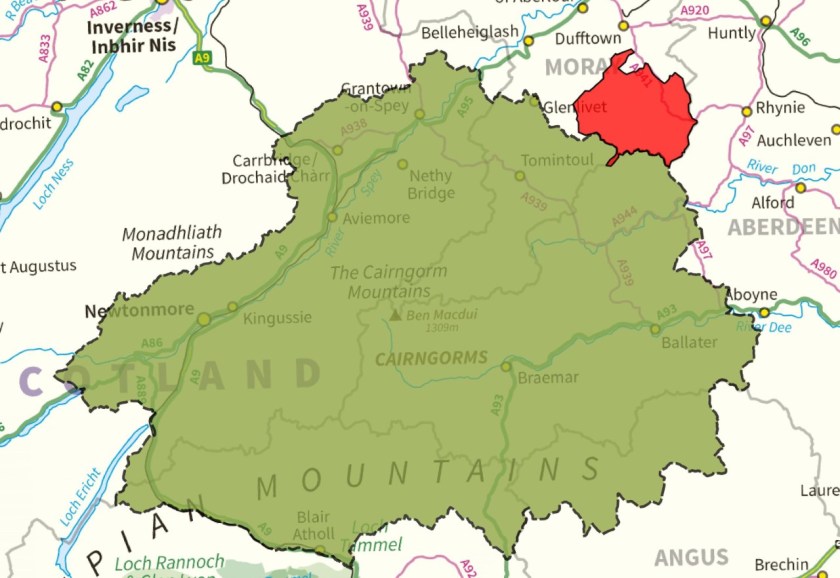
This time it’s a bird called ‘Beater’, a young male who hatched on the admirable Glen Feshie Estate in the Cairngorms National Park. According to the most recent blog update from Blanaid Denman (Project Manager, RSPB Hen Harrier Life Project):

Sadly, no data has been received from Beater since his tag last transmitted on 14th November. His last known location was on an area upland pasture in the central Scottish Borders. We have no information to suggest anything illegal has happened, the transmissions did not stop abruptly as in other recent cases, but we do now think it most likely that he has died” (read the full Skydancer blog here).

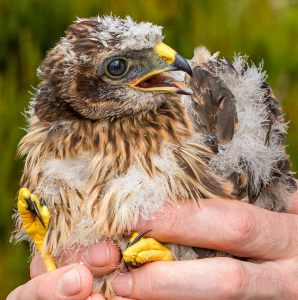
Photo of Beater shortly before fledging (photo by Ewan Weston)

The class of 2016 are not doing very well. In addition to Beater, here are some of the others that haven’t survived past November:

Hen harrier Elwood – ‘disappeared’ in the Monadhliaths just a few weeks after fledging.

Hen harrier Brian – ‘disappeared’ in the Cairngorms National Park just a few weeks after fledging.

Hen harrier Donald – missing in northern France, presumed dead.

Hen harrier Hermione – found dead on Mull, believed to have died from natural causes.

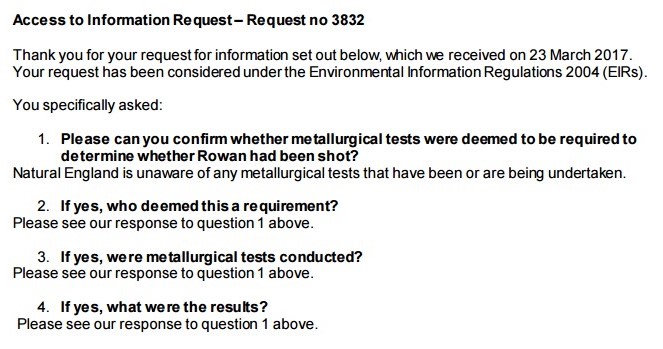
Hen harrier Rowan – found dead in Yorkshire Dales National Park. Cumbria Police said ‘likely to have been shot’. There is no ambiguity – this bird was shot (more on this soon).

Hen harrier Tarras – ‘disappeared’ in the Peak District National Park.

Also ‘lost’ this year were two birds from the 2014 cohort: Hen harrier Highlander ‘disappeared’ in Co Durham in April and Hen harrier Chance ‘disappeared’ in South Lanarkshire in May.

At least eight of the 2016 cohort are still alive (Aalin, Bonny, Carroll, DeeCee, Finn, Harriet, Wendy and Sorrel). Thanks to regular updates from Blanaid and her colleagues (thank you – much appreciated), these birds’ movements can be followed on the project website (here) with the exception of Sorrel, whose movements are being monitored on the Hawk & Owl Trust website (here). How many will make it to Xmas?

‘Giant buzzards’ eating dogs, warns Tipperary newspaper

The following article was headline news last week in the Tipperary Star, a local rag in the Irish Republic:

ATTACKING BUZZARDS TARGET TERRIERS

By Noel Dundon

A call to have the protection orders on buzzards lifted has been made following a number of incidents in which the birds of prey have taken terriers and other animals in deadly swoops through mid Tipperary.

Buzzards are causing major problems in the mid-Tipperary area at the present time with a number of terriers having been taken, leading to a call for protection orders to be lifted.

Two families have been left in distress after their dogs were preyed upon and killed by giant buzzards in the Templetuochy area where hares, rabbits, cats and other small animals have also been taken.

However, it has also been revealed that are birds of prey circling overhead Deputy Michael Lowry in Glenreigh, Holycross, while Moyaliffe, Drombane, Inch, Clonmore and Castleiney are also areas where buzzards have been spotted on the attack.

There is one report of a Yorkshire terrier having been attacked, but survived and was patched up by a veterinary surgeon, only to be attacked again and killed a short time later – all by the same buzzard which can have a wingspan of up to three feet with very powerful and strong claws used to take prey.

Forested areas which afford cover are the best hunting ground for buzzards and dog and cat owners are being advised to be on the watch out for their pets which could be taken at the blink of an eye.

There are also concerns that with the increase in buzzards, the spring lambing season after Christmas could be an ideal hunting ground for them – but a very costly one for sheep owners.

ENDS

The online version of the article was illustrated with this photograph, entitled ‘A buzzard on the rampage’.

Is this ‘journalist’ having a laugh? Since when did ‘giant buzzards’ (or even normal-sized buzzards) start killing dogs, and since when did the sight of soaring buzzards above a politician’s head become a cause for alarm?

This type of sensationalist, ignorant, scare-mongering would be funny if it didn’t have consequences. Unfortunately, this baseless demonisation of birds of prey does have consequences, and serious ones at that. As we see all too often, there are still people clinging on to 19th Century attitudes who think that raptors are ‘vermin’ and should be destroyed. Articles like this one above will only fuel their prejudice and lead to the illegal persecution of these birds.

Tipperary is no stranger to raptor persecution – in the last few years the following crimes have been recorded:

July 2015: shot buzzard

May 2014: poisoned peregrine

January 2014: shot white-tailed eagle

July 2013: shot peregrine

June 2013: shot peregrine

June 2013: shot peregrine

Raptor persecution is a serious issue in Ireland, and the latest official report shows the trend is pointing upwards with 35 confirmed persecution incidents in 2015 – the highest number since recording began in 2011 (see here).

We’d encourage strong (but polite) words of complaint to the Tipperary Star:

Email journalist Noel Dundon: nd@tipperarystar.ie

Email editor Anne O’Grady: aog@tipperarystar.ie

UPDATE 6/12/2016: BirdWatch Ireland has issued a strong statement in response to the Tipperary Star (see here).

Shot buzzard rehabilitated & returned to the wild in North Yorkshire

At the end of October we blogged about a buzzard that had been found with shotgun injuries in Thirsk, North Yorkshire (see here).

The bird’s broken femur was expertly pinned by Mark Naguib of Battle Flatts Veterinary Clinic and the buzzard then underwent a period of care and rehabilitation with the wonderful Jean Thorpe of Ryedale Wildlife Rehabilitation.

Yesterday this buzzard was released back to the wild (pictured here with vet Mark Maguib – photo by Jean Thorpe)

We’ve said this before but we’ll say it again – Jean’s work is entirely voluntary. If you want to support her efforts, please consider making a donation here.

Case against gamekeeper Stanley Gordon re: shot hen harrier, part 7

Criminal proceedings continued at Elgin Sheriff Court today against Scottish gamekeeper Stanley Gordon.

Mr Gordon, 60, of Cabrach, Moray, is facing a charge in connection with the alleged shooting of a hen harrier in June 2013.

Here’s a summary of what’s happened so far in this case:

Hearing #1 (19 May 2016): Case continued without plea until 16 June 2016.

Hearing #2 (16 June 2016): Case continued without plea until 14 July 2016.

Hearing #3 (14 July 2016): Case continued without plea until 11 August 2016.

Hearing #4 (11 August 2016): Case continued without plea until 1 September 2016.

Hearing #5 (1 September 2016): Mr Gordon enters a not guilty plea. A provisional trial date is set for 19 December 2016, with an intermediate diet set for 18 November 2016.

Hearing #6 (18 November 2016): Case adjourned for another intermediate diet on 2 December 2016.

Hearing #7 (2 December 2016). Provisional trial date of 19 December is dumped. Case adjourned for another intermediate diet on 10 February 2017.

Case against gamekeeper Stanley Gordon re: shot hen harrier, part 6

Criminal proceedings continued at Elgin Sheriff Court on Friday against Scottish gamekeeper Stanley Gordon.

Mr Gordon, 60, of Cabrach, Moray, is facing a charge in connection with the alleged shooting of a hen harrier in June 2013.

Here’s a summary of what’s happened so far in this case:

Hearing #1 (19 May 2016): Case continued without plea until 16 June 2016.

Hearing #2 (16 June 2016): Case continued without plea until 14 July 2016.

Hearing #3 (14 July 2016): Case continued without plea until 11 August 2016.

Hearing #4 (11 August 2016): Case continued without plea until 1 September 2016.

Hearing #5 (1 September 2016): Mr Gordon enters a not guilty plea. A provisional trial date is set for 19 December 2016, with an intermediate diet set for 18 November 2016.

Hearing #6 (18 November 2016): Case adjourned for another intermediate diet on 2 December 2016.

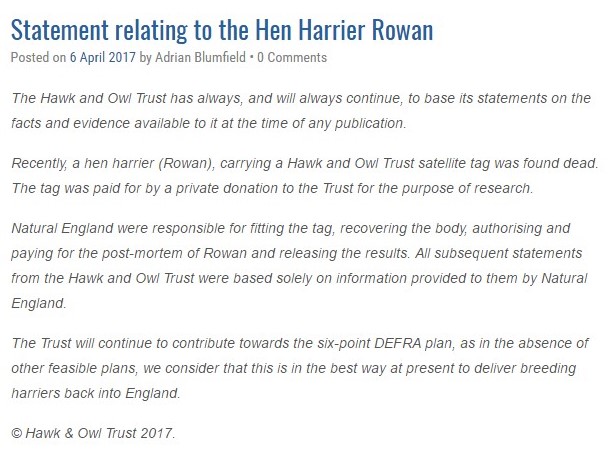
Hen Harrier Rowan ‘likely to have been shot’ in Yorkshire Dales National Park

On 28 October 2016 we learned that one of this year’s young hen harriers had been found dead in Cumbria in suspicious circumstances (see blog here).

This was a hen harrier called Rowan, who had hatched at Langholm this summer and was one of two hen harriers being satellite-tracked by the Hawk & Owl Trust.

rowanhh

The press release from the Hawk & Owl Trust and Natural England had just said Rowan’s body had been found in Cumbria on 22 October 2016, and following a post mortem, details had been passed to the police.

Today, Cumbria Police have issued a press statement as follows:

Cumbria Police have opened an investigation into the death of a hen harrier.

The body of a male Hen Harrier was found in the Ravenstonedale area of the county on 22nd October 2016. A post-mortem examination funded by Natural England and carried out by the Zoological Society of London has established that the bird was likely to have been shot.

The hen harrier, called Rowan, was satellite tagged at the Langholm Project as part of a joint venture between Natural England and the Hawk and Owl Trust. The bird had recently flown in the Cumbria and North Yorkshire Dales area before being found at Ravenstonedale.

Hen Harriers are specially protected under the Wildlife and Countryside Act, and the Government has set raptor persecution as one of their wildlife crime action priorities.

There is huge pressure on the survival of the hen harrier in England particularly and projects such as this are working hard to assist with the bird’s survival. Cumbria Police are working alongside such organisations to progress this investigation.

Anyone with information is asked to contact police on 101 and ask to speak to PC 2059 Helen Branthwaite.

END

Ravenstonedale lies within the Yorkshire Dales National Park (the bit that was recently added in August 2016).

ravenstonedale

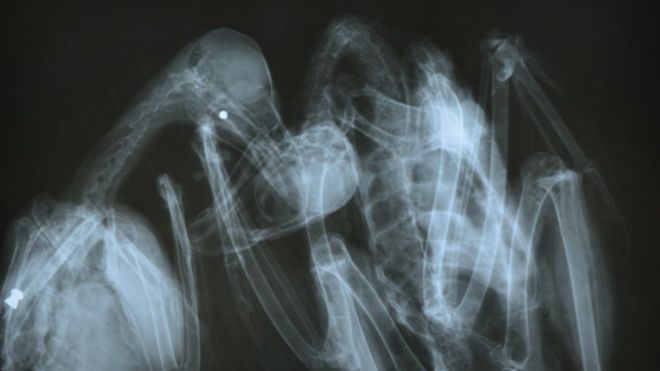
The statement that Rowan “was likely to have been shot” is a bit odd. It would have been useful for Cumbria Police to release a copy of the x-ray, as other police forces often do when appealing for information about shot birds. Perhaps there is justification for the vague statement about the cause of death, but then again, perhaps there isn’t. Did the post mortem report use the words ‘likely shot’? That would be an unusual phrase. Usually they say something like ‘injuries consistent with’ (being shot). There’s a big difference in interpretation. There’s a faint whiff of a cover up here. Not an overpowering stench, but definitely an aroma of something….

The reputation of the Yorkshire Dales National Park as a hell hole for hen harriers (and most other raptors) continues to grow. Hen harriers haven’t bred in this National Park since 2007 and young birds that visit don’t last very long either. Here are some YDNP hen harrier data (2007-2014) from Natural England we’ve blogged about before:

Female, tagged N England 26/6/07: last known location YDNP 5/10/07. Status: missing.

Female, tagged N England 16/7/09: last known location YDNP 27/9/09. Status: missing.

Male, tagged Bowland 29/6/09: last known location YDNP 17/8/09. Status: missing.

Female, tagged N England 29/6/10: last known location YDNP 25/11/10. Status: missing.

Female (Bowland Betty), tagged Bowland 22/6/11: last known location YDNP 5/7/12. Status: shot dead.

Female (Kristina), tagged N England 25/6/12: last known location YDNP 9/10/12. Status: missing.

Male (Thomas), tagged N England 4/9/12: last known location YDNP 4/9/12. Status: missing.

Male (Sid), tagged Langholm 21/9/14: last known location YDNP 21/9/14. Status: missing.

Female (Imogen), tagged N England 26/6/14: last known location YDNP 1/9/14. Status: missing.

Marsh harrier found shot on East Yorkshire sporting estate

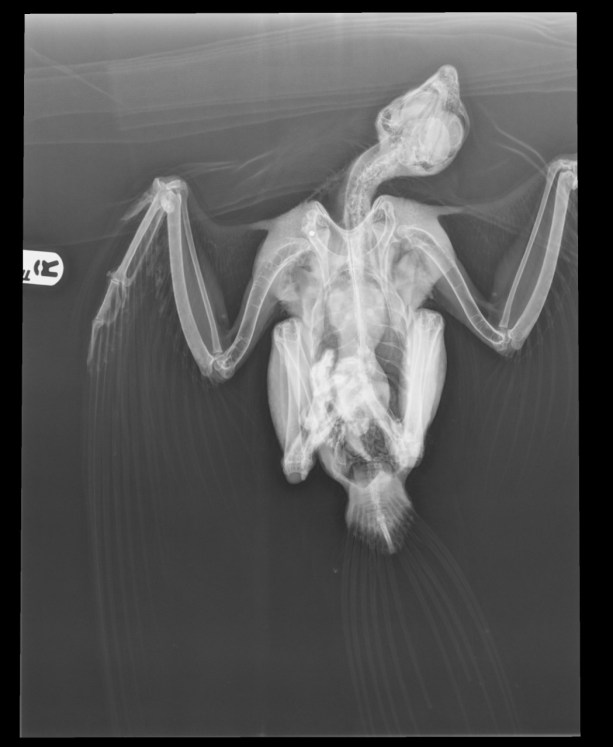
On 7th September 2016 an adult female Marsh harrier was found with shotgun injuries next to a partridge release pen on an East Yorkshire sporting estate.

The bird was rescued and underwent surgery at Battle Flatts vets in North Yorkshire.

mh-theatre

mh-xray

After surgery the bird was sent to Jean Thorpe in Ryedale for a period of rehabilitation.

On 31 October 2016, Jean was able to release this bird back to the wild.

mh-release

mh-jean-1

mh-jean-2

A couple of things to mention here. This wildlife crime was uncovered nearly two months ago. We don’t know the circumstances of the bird’s discovery (e.g. Who found it? Who reported it?). We don’t know where or when it was shot, although looking at that x-ray it would be fair to assume the bird wouldn’t have been able to fly far from the location it was shot. We haven’t seen a Police press statement about this crime. Have they charged a suspect? If not, where’s the Police appeal for information? Are they still investigating? Isn’t wildlife crime supposed to be a police national priority? Pathetic.

On a more positive note, the work of Jean Thorpe at Ryedale Wildlife Rehabilitation continues to amaze us (and not forgetting the skill of vet Mark Naguib at Battle Flatts Veterinary Clinic). Jean’s efforts are the perfect antidote to watching those disgraceful braying Tory MPs on Monday evening. They’d do well to visit her for an hour and learn about decency and compassion. Of course, Jean is not the only raptor rehabber in the UK but, living in North Yorkshire, she sees more than her fair share of raptor persecution victims. We’ve said this before but we’ll say it again – Jean’s work is entirely voluntary. If you want to support her work, please consider making a donation here.

UPDATE 4 Nov 2016: North Yorkshire Police have finally issued an appeal for information here. They’ve carefully avoided naming the estate where this bird was found.

Buzzard with shotgun injuries found in Thirsk, North Yorkshire

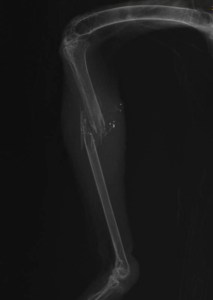
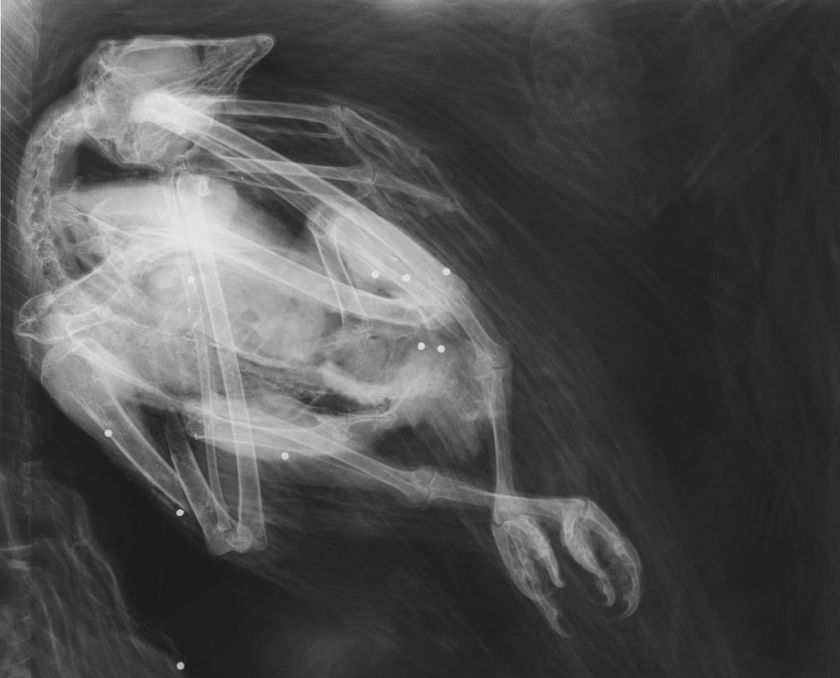
A buzzard with shotgun injuries has been found in Thirsk, North Yorkshire, this week. It had a broken femur. The bird has undergone surgery and is currently in rehabilitation with the wonderful Jean Thorpe of Ryedale Wildlife Rehabilitation.

bz-thirsk-oct-2016shot

bz-thirsk-oct-2016-xray

A quote from Jean: “Amazing work once again by Mark Naguib of Battleflatts vets. The shot buzzard is stood square once again with shiny pins correcting the break. He looks so much better already. Long way to go yet but looking good so far“.

North Yorkshire Police have been informed.

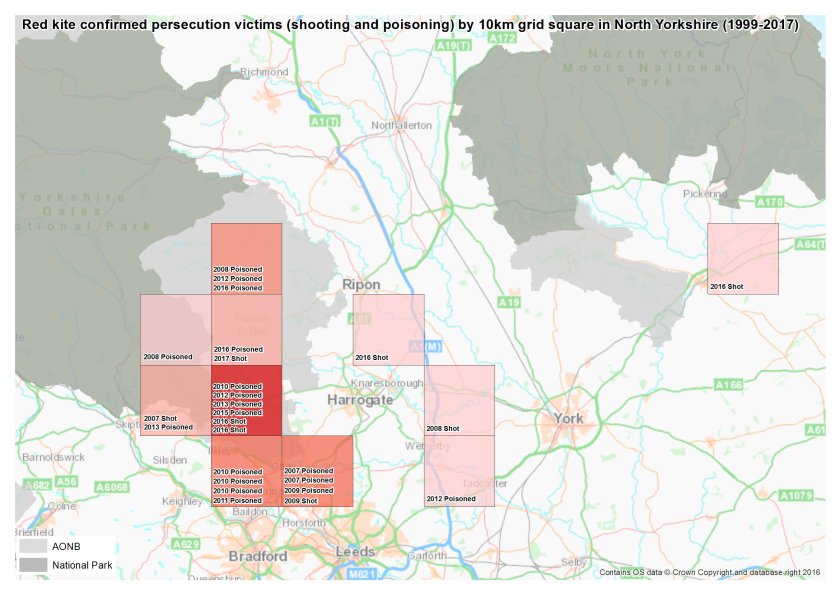
North Yorkshire maintains its status as one of the worst places in the UK for the illegal killing of birds of prey. It’s a county where much of the landscape is dominated by grouse moors, particularly in the two National Parks: the North York Moors NP and the Yorkshire Dales NP, as well as a large number of pheasant and partridge shoots.

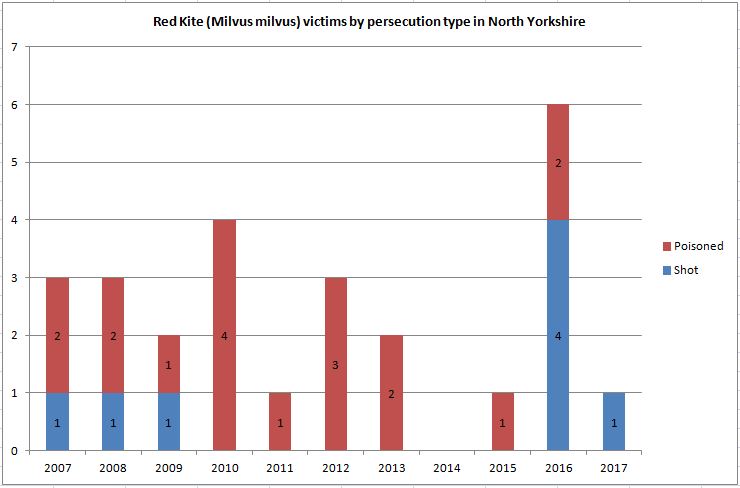
This year, other raptor persecution crimes uncovered in North Yorkshire have included several illegally spring-trapped buzzards, several shot buzzards, at least ten shot red kites, and a gamekeeper filmed setting three illegal pole traps on a grouse moor.

Red kite persecution in North Scotland at same level as 25 years ago, says new report

A new SNH-commissioned report, published today, shows that the high level of illegal red kite persecution in North Scotland has not changed in 25 years.

The latest report (see here) is a follow up study on a paper published in 2010 (see here) that showed illegal persecution was responsible for holding back the spread of re-introduced red kites in North Scotland. That study used data from 1989-2006. The latest study looked at more recent data (2007-2014) and shows that absolutely nothing has changed. Red kites in North Scotland are still being illegally killed at an astonishingly high rate.

A dead red kite

The Scotland red kite breeding population, currently at around 283 pairs, should be at around 1,500 pairs, if population growth is comparable with other re-introduced kite populations in other parts of the UK. The sickening reality is that the current North Scotland kite population is around 70 breeding pairs, in comparison to the reference population in the Chilterns (reintroduced at the same time as the N Scotland kites but not exposed to illegal persecution) which currently stands at over 1,000 breeding pairs. Illegal persecution has robbed Scotland of 1,430 breeding pairs of red kites.

What an absolute bloody disgrace.

Here is a quote from the new report:

It is clear that illegal killing is still the major factor limiting population growth of red kites in North Scotland. There is no evidence that the rate of illegal killing has changed between the time periods 1989-2006 (i.e. the years used in the original paper by Smart et al., 2010) and 2007-2014‘.

The Cabinet Secretary for the Environment, Roseanna Cunningham, had this to say in an SNH press release about today’s report:

It is of course, good news that red kite numbers are increasing in Scotland. But it must be said that it is extremely disappointing that this success is being lessened by illegal persecution of these magnificent birds.

I want to be clear that wildlife crime is not acceptable in a modern Scotland and this is why we are doing all we can to end the illegal killing of birds of prey and working in partnership with stakeholders to achieve that. Scotland already has the strongest wildlife legislation in the UK and earlier this year, we accepted proposals to introduce tough new maximum penalties for those who commit crimes against wildlife.

The Scottish Government has ordered a review of satellite tracking data – we want to make sure we are getting the most information we can on when and how birds are disappearing.

Last year, we also funded the free pesticide disposal scheme which removed over 700kg of illegally held poisons in Scotland, to allow those still in possession of illegal substances to have them removed. I’m also seeing some really encouraging best practice from the farming community on the responsible use of rodenticide, which can be used by wildlife criminals to persecute raptors.”

We’ll be commenting in a later blog about the Cabinet Secretary’s comments, and putting them in to context with other, similar comments that have been trotted out by her predecessors over the years. Suffice to say, we’ve heard it all before and whilst those (Government) who could stop all of this find reasons not to do so, the killing continues.

Today’s report can be added to the mountain of scientific evidence about the extent and damage that illegal persecution is causing to our native, protected raptors at the hands of the game-shooting industry (e.g. see recent papers on catastrophic decline of hen harriers (here) and peregrines (here) due to illegal killing on the grouse moors of NE Scotland).

The hand-wringing and platitudes from the Government, and the denials and obfuscation from the game-shooting industry have all worn thin.

When does it STOP, Roseanna Cunningham?

UPDATE 2PM: The Scottish Gamekeepers’ Association has issued a statement in response to this report. Basically, it reads ‘It’s nuffin to do wiv us, Guv’. Read it here.