Shot hen harrier Rowan – a Natural England/Hawk and Owl Trust cover up? Part 2

This is Part 2 of a two-part blog. For Part one, please read here.

The following information is a timeline of what happened and has been compiled from a series of FoIs. Natural England has refused to release some of the information we asked for (notably a copy of the post mortem report that was paid for with tax payers’ money, but also some email correspondence) because apparently this may ‘affect the course of justice’.

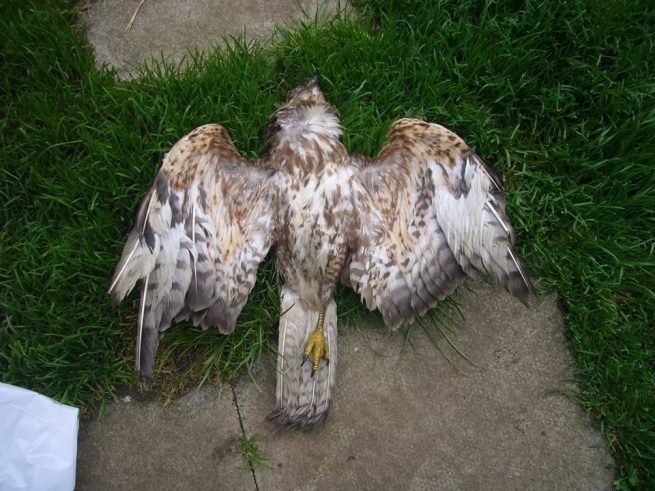
Satellite-tagged hen harrier Rowan was found dead in Cumbria on 22 October 2016.

His corpse was collected by Stephen Murphy (Natural England) and sent to the Zoological Society of London for a post mortem on 24 October 2016.

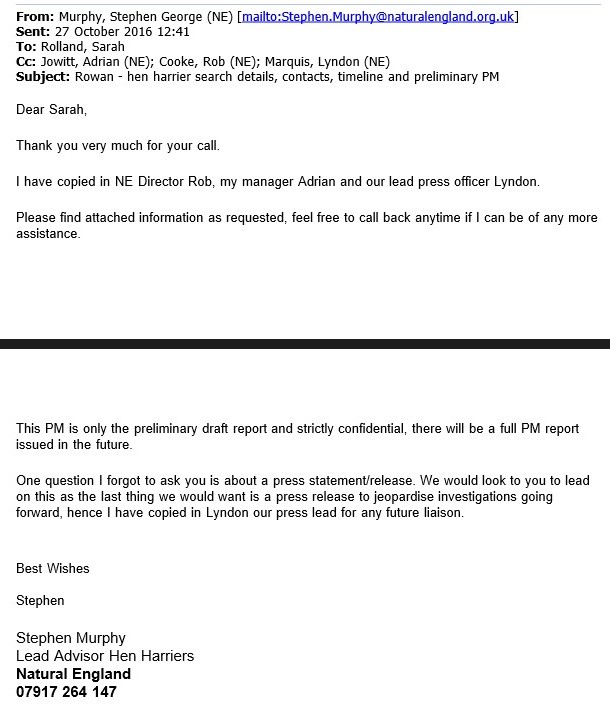
The post mortem was conducted on 26 October 2016 and the preliminary findings were passed to Natural England on 27 October 2016. The preliminary findings indicated the bird had been shot. Stephen Murphy passed on the preliminary findings to Cumbria Police on 27 October 2016:
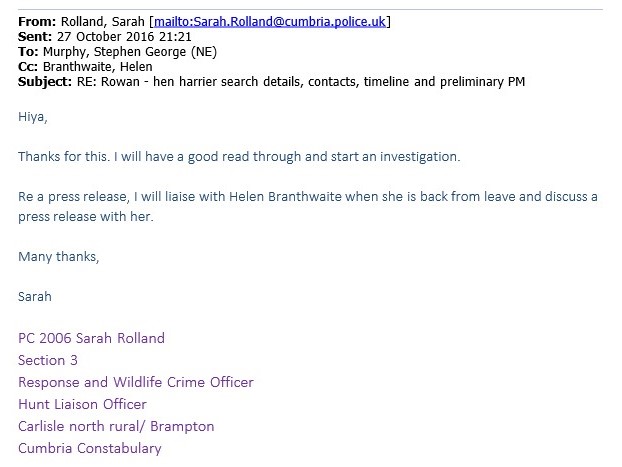
Cumbria Police launched an investigation the same day, based on the findings of the preliminary post mortem report (i.e. that Rowan had been shot):
The following day, on 28 October 2016 (the Friday before the Monday Westminster debate on driven grouse shooting), Natural England and the Hawk & Owl Trust issued the following vague joint press statement:

The body of a juvenile, male hen harrier – named Rowan – was recovered in Cumbria on 22nd October. He was satellite tagged at the Langholm project in the Scottish borders, as part of a joint venture between Natural England and the Hawk and Owl Trust. Following an autopsy, Natural England has passed details to the police for investigation.

We are unable to make further comments or enter into discussion at this time as this may be prejudicial to ongoing investigations.

On Monday 31 October 2016 – the Westminster debate on driven grouse shooting took place.

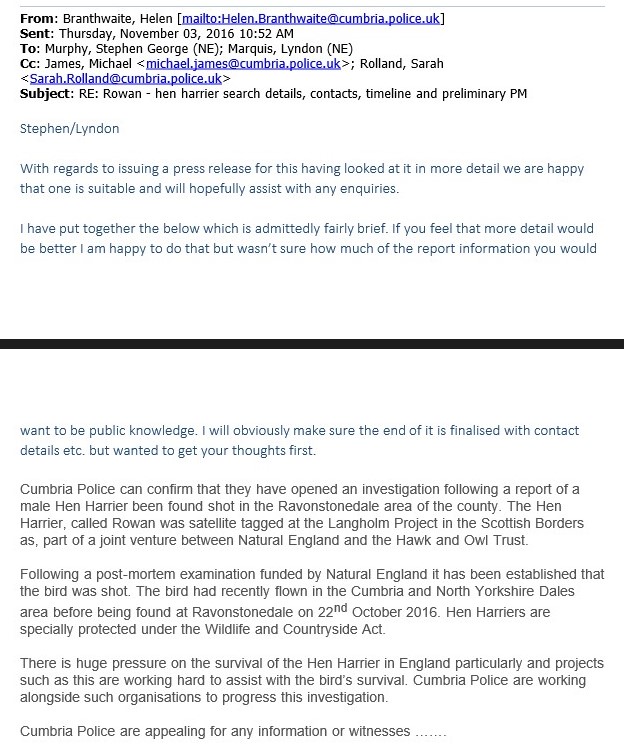
On 3 November 2016, WCO Helen Branthwaite of Cumbria Police sent a copy of a draft press statement about Rowan’s death to Natural England. Pay close attention to the wording of this draft police press statement, particularly the sentence, ‘Following a post mortem examination funded by Natural England it has been established that the bird was shot’:
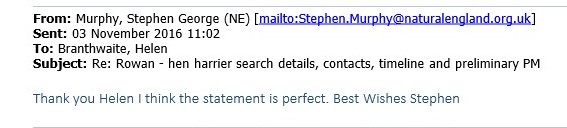
Stephen Murphy (Natural England) replied to WCO Helen Branthwaite with this:
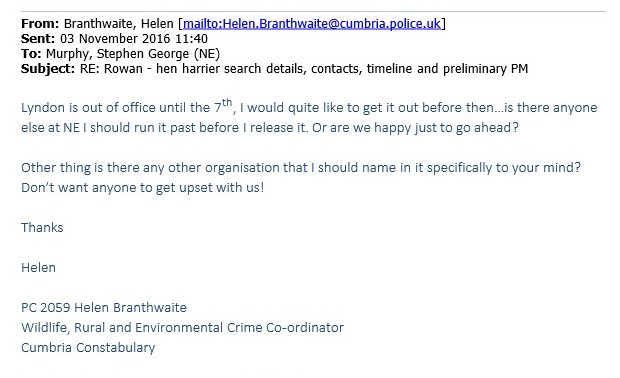
WCO Helen Branthwaite replied to Stephen Murphy to say she couldn’t get hold of the Natural England press officer (Lyndon Marquis) and asked if anyone else at Natural England should take a look over the draft police press statement:
Stephen Murphy replied to Helen and suggested that Graham Tibbetts (Head of Media at Natural England) and Rob Cooke (a Director at Natural England) should take a look:
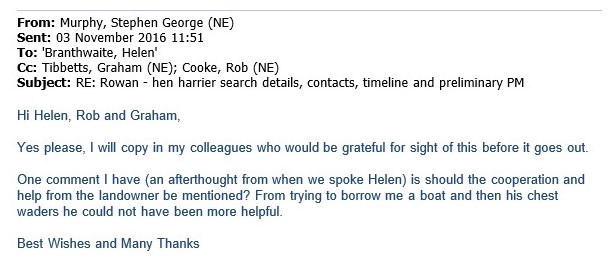
At this point, the email chain goes cold (so either this conversation ended here or, if it did continue, Natural England has decided to withhold this information from the FoI response).

Four days later, on 7 November, Philip Merricks (Hawk & Owl Trust) wrote to Rob Cooke (Natural England) asking for a telephone conversation between Rob Cooke, Philip Merricks, Adrian Blumfield (Chief Operating Officer, Hawk & Owl Trust) to discuss the imminent Police press release about Rowan “which will be signed off by” Rob Cooke. Rob Cooke replied and said he would ask Graham Tibbetts (NE’s Head of Media) to make contact with Adrian Blumfield:
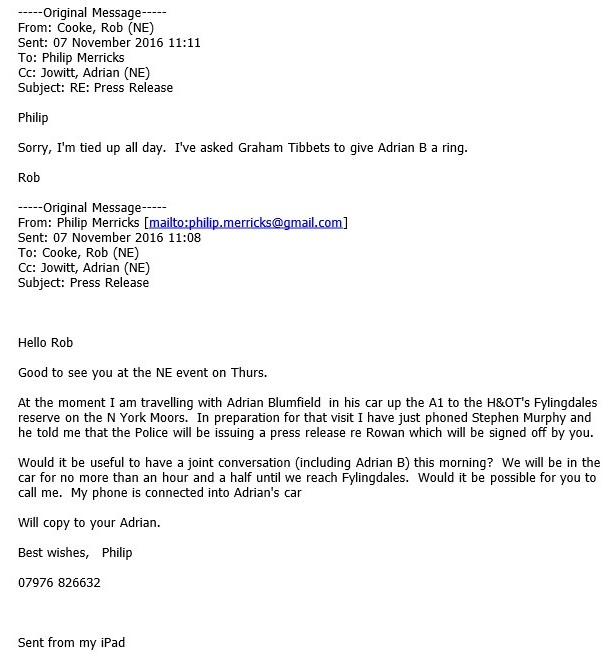
We don’t know if that telephone conversation took place because if it did, there won’t be a written record of it, but it is clear that the intention to have a conversation was there.

Later that same day, Cumbria Police issued the following press statement:

Cumbria Police have opened an investigation into the death of a hen harrier.

The body of a male Hen Harrier was found in the Ravenstonedale area of the county on 22nd October 2016. A post-mortem examination funded by Natural England and carried out by the Zoological Society of London has established that the bird was likely to have been shot.

The hen harrier, called Rowan, was satellite tagged at the Langholm Project as part of a joint venture between Natural England and the Hawk and Owl Trust. The bird had recently flown in the Cumbria and North Yorkshire Dales area before being found at Ravenstonedale.

Hen Harriers are specially protected under the Wildlife and Countryside Act, and the Government has set raptor persecution as one of their wildlife crime action priorities.

There is huge pressure on the survival of the hen harrier in England particularly and projects such as this are working hard to assist with the bird’s survival. Cumbria Police are working alongside such organisations to progress this investigation.

Anyone with information is asked to contact police on 101 and ask to speak to PC 2059 Helen Branthwaite.

Pay really close attention to the wording of this Police press statement, and notice which words have been changed from the draft police press statement that WCO Helen Branthwaite sent to Natural England on 3 November. The press statement no longer says that the post mortem established that Rowan had been shot; it now says the post mortem established that Rowan was ‘likely to have been shot‘.

This raises some really interesting questions.

If Cumbria Police were happy to tell the public that Rowan had been shot, based on a post mortem report (see their draft police press statement), why did the final police press statement only say he was ‘likely to have been shot’? Why the ambiguity?

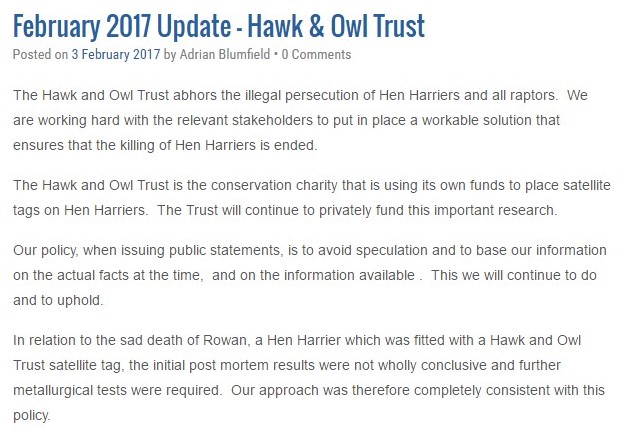
It is apparent from the wording in Philip Merricks’ email that Rob Cooke (Natural England) was going to “sign off” the police press statement so did Natural England and the Hawk & Owl Trust collude to have this detail changed? It would certainly be in both their interests to have it changed because a ‘muddied’ ambiguous statement about a ‘likely shot’ hen harrier is far less damaging to their friends in the grouse shooting industry than a clear, evidence-based confirmatory statement that a hen harrier had been shot, especially at the time when driven grouse shooting and its associated criminality was being debated at Westminster.

If there was any doubt in WCO Helen Branthwaite’s mind that Rowan had been shot, did she contact the pathologist at ZSL for clarification or did she just accept the word of Natural England / Hawk & Owl Trust? If so, why?

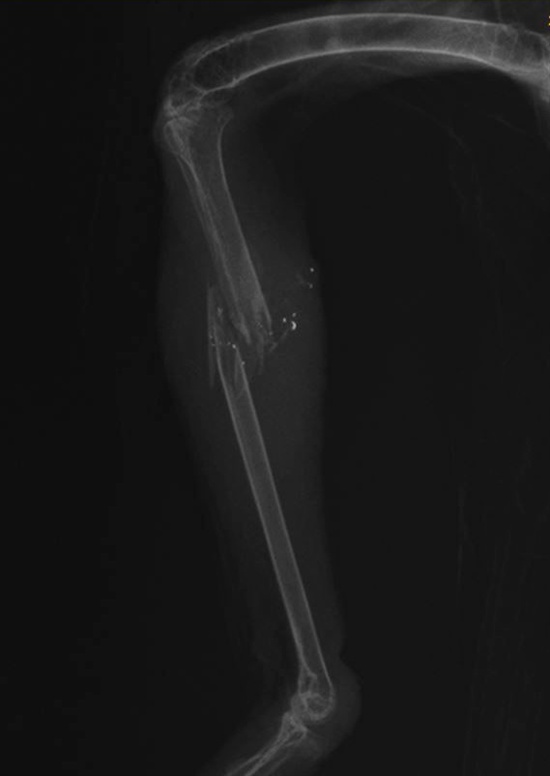
These questions could easily be answered if we had sighting of the post mortem report, because then we’d know whether the final Police press statement was an accurate reflection of the post mortem’s findings or whether it was a cover-up job, but Natural England has refused to release it. Quite how the publication of a shot bird’s x-ray ‘might affect the course of justice’ is a mystery, especially when many police forces routinely publish such images as part of their appeals for information.

Unless of course Natural England is worried that its release might affect the uncovering of corruption….

Shot hen harrier Rowan – a Natural England/Hawk and Owl Trust cover up? Part 1

rowanhhThis is Part 1 of 2 blogs.

Hen harrier ‘Rowan’ was one of two harriers satellite-tagged by the Hawk & Owl Trust at Langholm in the summer of 2016.

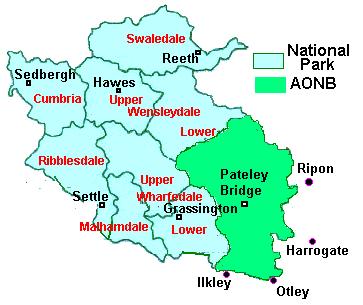
On 28 October 2016, a joint press release issued by Natural England and the Hawk & Owl Trust revealed he had been found dead in Cumbria / Yorkshire Dales National Park on 22 October 2016. We weren’t told the circumstances of his death but the press release did say: ‘Following an autopsy, Natural England has passed details to the police for investigation‘, so it was pretty obvious that criminal activity was suspected.

Take note of the date because this is important (we’ll come back to this in Part 2). This vague press release appeared on the Friday before the Westminster debate on driven grouse shooting on the Monday (31 October).

The next press release was issued by Cumbria police on 7 November 2016. It was slightly more informative than the first press release, but still quite vague. This press release included the sentence:  

A post-mortem examination funded by Natural England and carried out by the Zoological Society of London has established that the bird was likely to have been shot‘.

At the time we questioned the wording of the police statement and suggested it was odd to say the bird ‘was likely to have been shot’ because it’s not a phrase often used in a post mortem report. Typically, a report will say something like ‘the injuries are consistent’ with the bird being shot. Unfortunately, Cumbria police chose not to publish an x-ray of the dead bird, which would have clarified the situation; again, this was unusual and raised our suspicions.

We’ve since done some digging through a series of FoIs and it seems we were right to be suspicious. Little did we know what a trail of collusion, cock-up and cover-up we’d discover.

Part 2 of this blog will appear shortly……

UPDATE: Part 2 can be read here

Buzzard shot in Devon

A member of the public found a weak and thin buzzard by the side of the road in Tedburn St Mary, near Exeter, Devon on 20 January 2017.

It was taken to the RSPCA’s West Hatch wildlife centre in Taunton where, due to the extent of its injuries, the bird was euthanised.

It appears the buzzard had been hit by a car and suffered extensive soft tissue damage and internal bleeding. However, during a post mortem the vet also discovered the bird had been shot in the foot with an air rifle, causing a swollen foot with restricted movement.

This is the fourth shot buzzard that the RSPCA’s West Hatch centre in Somerset has received this month, following the two shot buzzards from south Wales and the one shot in Somerset (see here).

Kestrel found shot dead in Worcestershire

A kestrel has been found shot dead in the village of Broadwas in Worcestershire. It was discovered on 10 January 2017.

This information was sent to us by a blog reader (thank you). The kestrel had been ringed in Warwickshire in June 2016 and whoever found the body in Worcestershire reported the ring number to the British Trust for Ornithology (BTO), who then sent a ‘ringing return’ note to the bird ringer, to inform him / her of the bird’s death.

According to this ringing return, the bird had been categorised as being ‘dead for more than a week, not fresh, found shot’.

What’s interesting about this, apart from the utter stupidity of the person who shot this bird (it’s a kestrel for god’s sake, what possible reason would there be for shooting it?), is what happens to the data after being reported to the BTO.

It’s our understanding that the BTO does not, as a matter of routine, forward data about suspected persecution incidents to the Police or the RSPB.

If our understanding is correct, this situation is quite astonishing. Surely there’s an ethical responsibility for the BTO to report suspected persecution incidents, to allow the Police or RSPB to undertake follow up investigations? Even if nothing comes of any investigation, these cases would still provide useful background intelligence and, importantly, would contribute to a better understanding of the extent of illegal raptor persecution in a given area. Reporting suspected crimes to the Police / RSPB would not affect the usefulness of the data to the BTO – the BTO could still use the data for trend analyses etc, it’s not as though the data point would be ‘lost’ if it was reported to the authorities.

How many of these suspected persecution incidents go unreported by the BTO every year? Is it the BTO’s responsibility to report suspect crimes, or is it the responsibility of the ringer (once notified of the circumstances of a bird’s death via the ringing return from the BTO), or is it nobody’s responsibility?

It’s all very strange.

Photo of a kestrel by Graham Catley

UPDATE 3.30pm: The BTO has responded to this post on Twitter as follows: ‘The finder has responsibility to report any suspicious deaths but we will review to see if there is more we can do’. Good for them.

Withheld raptor crime data: some info for DCS Scott of Police Scotland

This morning the Scottish Parliament’s Environment, Climate Change & Land Reform (ECCLR) Committee heard evidence on the Scottish Government’s 2015 annual wildlife crime report.

The archived video can be viewed here.

The official transcript can be read here: ecclr-transcript-wildlife-crime-10-jan-2017

The session was dynamite and there are many things to discuss – we’ll be blogging a lot more about this in the coming days but we wanted to start with the issue of withheld raptor crime data.

As some of you may remember, we criticised the Government’s annual wildlife crime report when it was published in November, precisely because we knew that several confirmed raptor crimes had not been included in the data presented to the Government by Police Scotland (see here). At the time, we didn’t elaborate on which specific crimes had been withheld from the report but we argued that the withholding of data completely undermined the public’s confidence in the report’s findings.

We were delighted to see this issue raised at this morning’s evidence session by Mark Ruskell MSP (Scottish Greens), and with devastating aplomb.

In the video link above, the discussion starts at 1:06:31.

Mark asked the Police Scotland representatives (ACC Steve Johnson and DCS Sean Scott) why some raptor crimes that had been recorded by RSPB Scotland had been excluded from the Government’s report. DCS Scott looked blank, and then mumbled something about perhaps the crimes weren’t actually crimes at all so they wouldn’t have been recorded. Mark pressed on and gave DCS Scott specific details about the crimes in question and even showed him a photograph of one of the illegally set traps involved, to check that it was indeed an illegally-set trap and thus a confirmed crime. DCS Scott maintained he didn’t know about these specific crimes, even when Mark gave him more detailed information about the location. This went on for some time and it was excellent to see Mark’s persistence and his unwillingness to be fobbed off. Eventually, DCS Scott committed to finding out about these specific crimes and gave assurance that he would later write to the ECCLR Committee to explain why these data had been withheld from the Government’s report.

To help DCS Scott, here’s some background about these specific crimes:

If you look at Table 19 in the Scottish Government’s 2015 annual wildlife crime report, there is a list of raptor persecution crimes and the data are attributed to Police Scotland. Listed under Lothian & Borders, Police Scotland recorded the following incidents between April 2014-March 2015:

Peregrine shooting (Sept 2014)

Attempted trapping (species not identified) (Sept 2014)

Buzzard shooting (October 2014)

Tawny owl shooting (Dec 2014)

Now, compare the Police Scotland data with the data published in Table 4 in the RSPB’s annual report – ‘The Illegal Killing of Birds of Prey in Scotland, 1994-2014, A Review‘. In that report, listed under Scottish Borders, the RSPB has recorded the following additional confirmed crimes for the same time period, that were excluded from the Police Scotland data in the Government’s annual report:

Crow trap baited with 2 live pigeons, surrounded by 4 set spring traps, nr Heriot (May 2014) – there is even a photograph of this illegally-set trap on page 16)

and

4 x shot buzzards, nr Heriot (May 2014).

pigeon-in-trap-heriot-2014

rspb-table-4

It was later revealed during the second part of the ECCLR Committee evidence session this morning, in evidence given by Ian Thomson (Head of Investigations, RSPB Scotland) that the above offences were uncovered during a Police Scotland-led multi-agency raid on this estate ‘nr Heriot’, so it is somewhat surprising that DCS Scott claimed to have no knowledge about them.

In due course we look forward to reading DCS Scott’s written explanation about why these data were withheld from the Government’s 2015 annual wildlife crime report.

In the meantime, kudos and thanks to Mark Ruskell MSP, who was one of several MSPs who performed exceptionally well at this morning’s evidence session. More on that in later blogs…..

Update on the 3 shot buzzards in Somerset

Following on from today’s earlier blog about the three shot buzzards in Somerset (here), we’ve now been informed that one was shot in Somerset (Chedzoy) on New Year’s Day and died of its injuries and the other two were shot in separate incidents in Wales (locations unknown) and were transported to the RSPCA wildlife hospital in Somerset where they are undergoing treatment.

Thanks to the two blog readers who contacted us with updated info.

3 buzzards shot in separate incidents in Somerset

In the first few days of the New Year, three buzzards have been shot in separate incidents in Somerset.

Two are being treated at an RSPCA wildlife hospital but the third didn’t make it. Two men were seen shooting at this third buzzard near Chedzoy on New Year’s Day.

And this is an area where DEFRA/Natural England are planning to reintroduce hen harriers because persecution levels are considered low. Three shot birds in four days suggests otherwise.

UPDATE 17.30hrs here

Deja vu

Yesterday we published a map. It showed part of the East Arkengarthdale Estate in North Yorkshire where an illegal cache of poisons had been discovered in 2014. Here’s the map again:

shaw-farm-map

Did anyone else get a sense of deja vu when looking at that map? Have a look at that forest block at the top of the map. That’s Stang Forest and it’s got quite a distinctive shape.

Now have a look at this map, which we published a year ago in December 2015:

stang-forest-copy

Why did we publish this map last year? Well, it was to illustrate an area where a peregrine had been found shot dead on 23 August 2015 ‘on the south east edge of Stang Forest’.

An interesting area, eh?

Stang Forest shot perg - Copy

Satellite-tagged hen harrier ‘Beater’ is lost, presumed dead

Another of the 2016 cohort of satellite-tagged hen harriers has been reported as ‘lost’, presumed dead.

This time it’s a bird called ‘Beater’, a young male who hatched on the admirable Glen Feshie Estate in the Cairngorms National Park. According to the most recent blog update from Blanaid Denman (Project Manager, RSPB Hen Harrier Life Project):

Sadly, no data has been received from Beater since his tag last transmitted on 14th November. His last known location was on an area upland pasture in the central Scottish Borders. We have no information to suggest anything illegal has happened, the transmissions did not stop abruptly as in other recent cases, but we do now think it most likely that he has died” (read the full Skydancer blog here).

Photo of Beater shortly before fledging (photo by Ewan Weston)

The class of 2016 are not doing very well. In addition to Beater, here are some of the others that haven’t survived past November:

Hen harrier Elwood – ‘disappeared’ in the Monadhliaths just a few weeks after fledging.

Hen harrier Brian – ‘disappeared’ in the Cairngorms National Park just a few weeks after fledging.

Hen harrier Donald – missing in northern France, presumed dead.

Hen harrier Hermione – found dead on Mull, believed to have died from natural causes.

Hen harrier Rowan – found dead in Yorkshire Dales National Park. Cumbria Police said ‘likely to have been shot’. There is no ambiguity – this bird was shot (more on this soon).

Hen harrier Tarras – ‘disappeared’ in the Peak District National Park.

Also ‘lost’ this year were two birds from the 2014 cohort: Hen harrier Highlander ‘disappeared’ in Co Durham in April and Hen harrier Chance ‘disappeared’ in South Lanarkshire in May.

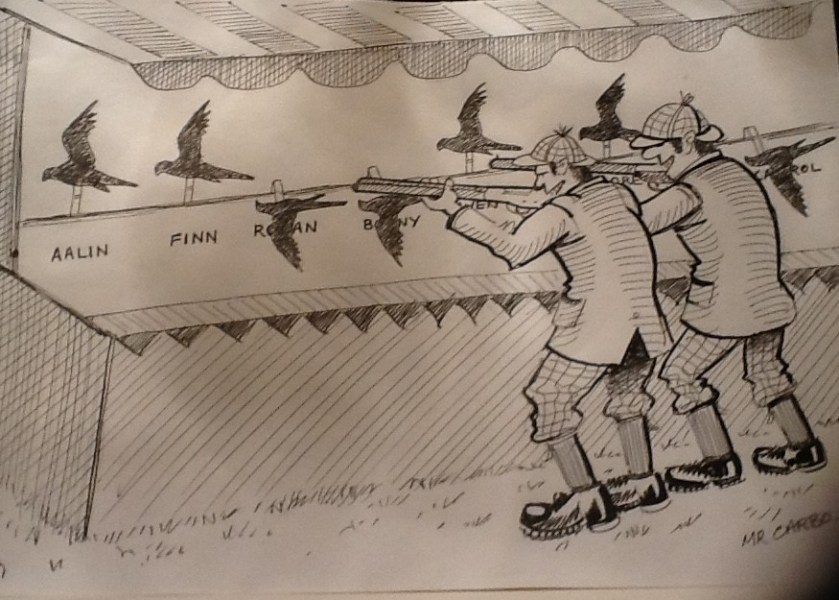
At least eight of the 2016 cohort are still alive (Aalin, Bonny, Carroll, DeeCee, Finn, Harriet, Wendy and Sorrel). Thanks to regular updates from Blanaid and her colleagues (thank you – much appreciated), these birds’ movements can be followed on the project website (here) with the exception of Sorrel, whose movements are being monitored on the Hawk & Owl Trust website (here). How many will make it to Xmas?

‘Giant buzzards’ eating dogs, warns Tipperary newspaper

The following article was headline news last week in the Tipperary Star, a local rag in the Irish Republic:

ATTACKING BUZZARDS TARGET TERRIERS

By Noel Dundon

A call to have the protection orders on buzzards lifted has been made following a number of incidents in which the birds of prey have taken terriers and other animals in deadly swoops through mid Tipperary.

Buzzards are causing major problems in the mid-Tipperary area at the present time with a number of terriers having been taken, leading to a call for protection orders to be lifted.

Two families have been left in distress after their dogs were preyed upon and killed by giant buzzards in the Templetuochy area where hares, rabbits, cats and other small animals have also been taken.

However, it has also been revealed that are birds of prey circling overhead Deputy Michael Lowry in Glenreigh, Holycross, while Moyaliffe, Drombane, Inch, Clonmore and Castleiney are also areas where buzzards have been spotted on the attack.

There is one report of a Yorkshire terrier having been attacked, but survived and was patched up by a veterinary surgeon, only to be attacked again and killed a short time later – all by the same buzzard which can have a wingspan of up to three feet with very powerful and strong claws used to take prey.

Forested areas which afford cover are the best hunting ground for buzzards and dog and cat owners are being advised to be on the watch out for their pets which could be taken at the blink of an eye.

There are also concerns that with the increase in buzzards, the spring lambing season after Christmas could be an ideal hunting ground for them – but a very costly one for sheep owners.

ENDS

The online version of the article was illustrated with this photograph, entitled ‘A buzzard on the rampage’.

Is this ‘journalist’ having a laugh? Since when did ‘giant buzzards’ (or even normal-sized buzzards) start killing dogs, and since when did the sight of soaring buzzards above a politician’s head become a cause for alarm?

This type of sensationalist, ignorant, scare-mongering would be funny if it didn’t have consequences. Unfortunately, this baseless demonisation of birds of prey does have consequences, and serious ones at that. As we see all too often, there are still people clinging on to 19th Century attitudes who think that raptors are ‘vermin’ and should be destroyed. Articles like this one above will only fuel their prejudice and lead to the illegal persecution of these birds.

Tipperary is no stranger to raptor persecution – in the last few years the following crimes have been recorded:

July 2015: shot buzzard

May 2014: poisoned peregrine

January 2014: shot white-tailed eagle

July 2013: shot peregrine

June 2013: shot peregrine

June 2013: shot peregrine

Raptor persecution is a serious issue in Ireland, and the latest official report shows the trend is pointing upwards with 35 confirmed persecution incidents in 2015 – the highest number since recording began in 2011 (see here).

We’d encourage strong (but polite) words of complaint to the Tipperary Star:

Email journalist Noel Dundon: nd@tipperarystar.ie

Email editor Anne O’Grady: aog@tipperarystar.ie

UPDATE 6/12/2016: BirdWatch Ireland has issued a strong statement in response to the Tipperary Star (see here).