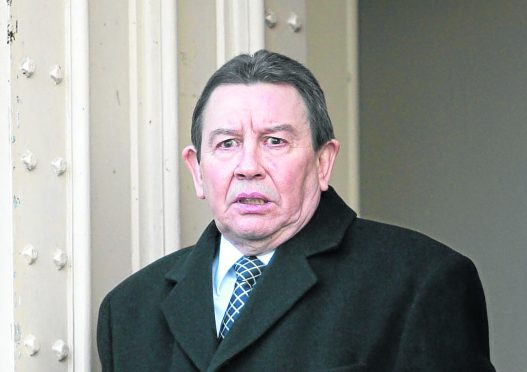
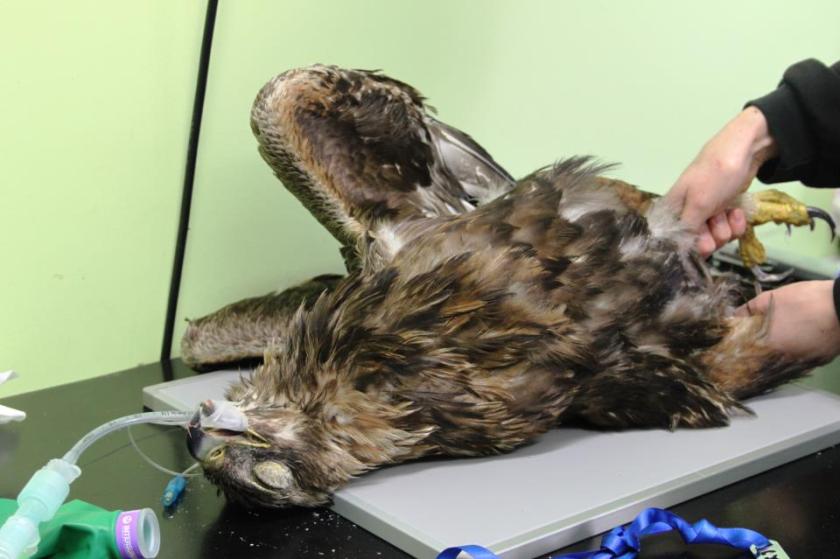
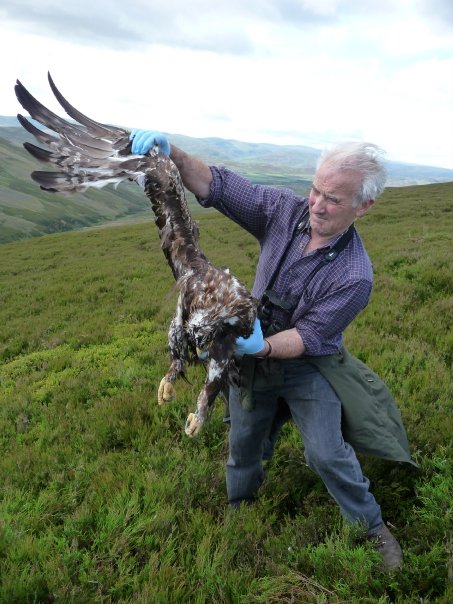
[Photo: Conservationist Roy Dennis with dead golden eagle ‘Alma’ – one of Roy’s first satellite-tagged eagles that was found illegally poisoned on an Angus Glens grouse moor]
Finally, almost six months after that first announcement, the Scottish Government has just released the news about who will serve on this review group.
Membership of an independent group to ensure grouse moor management practices are sustainable and legally compliant has been confirmed.
The new group will be led by Professor Alan Werrity, who previously chaired a Scottish Natural Heritage review into sustainable moorland management. It includes scientists, moorland managers, regulatory experts and advisers from SNH, Scottish Wildlife Trust, the Game and Wildlife Conservation Trust and the Scottish Environmental Protection Agency.
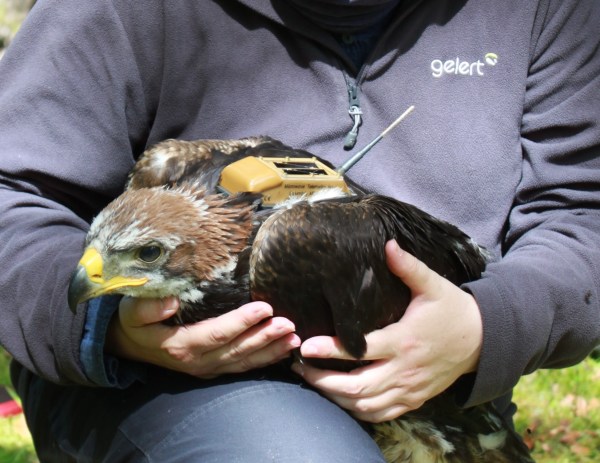
The group has been set up in response to SNH research that found almost a third of golden eagles being tracked by satellite died in suspicious circumstances and that the majority of cases were where land is intensively managed for driven grouse shooting.
The group will look at the environmental impact of grouse moor management practices such as muirburn, the use of medicated grit and mountain hare culls and advise on the option of licensing grouse shooting businesses.
Environment Secretary Roseanna Cunningham said:
“We have been clear that the continued killing of protected species of birds of prey damages the reputation of law-abiding gamekeepers, landowners and the country as a whole.
This new group will look at what we can do to balance our commitment to tackling wildlife crime with grouse moor management practices, so it continues to contribute to our rural economy, while being sustainable and compliant with the law.
The group membership reflects the complex nature and wide range of issues that need to be considered and I look forward to hearing their advice in due course.”
Professor Werrity said:
“This is truly challenging work given the traditions underlying moorland management and the concerns coming to light over some mal-practices.
My earlier work chairing the SNH Moorland review also sought to reconcile nature conservation interests with promoting the rural economy. I will be taking an evidence-based approach, and for this we have the right mixture of experience, expertise and knowledge on the group to get to grips with the subject. I look forward to getting started on this review. ”
Background
Read the Golden Eagle Satellite Tag Review
The confirmed membership of the group includes Professor Alan Werrity FRSE, Professor Ian Newton OBE, FRS, FRSE, Professor Alison Hester FSB, (Professor Colin Reid FRSA – see update below) and moorland managers Alexander Jameson BLE MRICS FAAV and Mark Oddy MRICS CEnV MIAagrM.
[Update 28 Nov 2017: Law professor joins grouse moor management review group, here ]
Dr Calum Macdonald (SEPA), Professor Des Thompson (SNH), Dr Adam Smith (GWCT Scotland) and Susan Davies (SWT) will be specialist advisers to the group.
ENDS
Here is the response from RSPB Scotland to today’s announcement:
RSPB Scotland welcomes announcement of grouse moor enquiry
RSPB Scotland has welcomed today’s announcement by the Scottish Government on the grouse moor enquiry panel. Duncan Orr-Ewing, Head of Species and Land Management for RSPB Scotland said: “We very much welcome the announcement of this enquiry and of the independent panel. We look forward to giving evidence to the panel in due course.
The remit of the panel includes consideration as to how grouse moors can be managed sustainably and within the law. There are significant public concerns about how grouse moors are currently being managed in Scotland, including clear evidence gathered over decades of the illegal killing of birds of prey.
In recent years these concerns have broadened to encompass wider grouse moor management practices, as commercialisation has taken place, with an emphasis on producing very large and unsustainable grouse numbers for sport shooting. These practices include muirburn on peatland habitats which are important as carbon stores for combating climate change, the culling of mountain hares and the medication of ‘wild’ red grouse, both designed to prevent grouse diseases and artificially boost grouse bags.
We support the introduction of an effective licensing system for driven grouse shooting, with sanctions including the removal of such licences where illegal practices are confirmed. A licensing system could be supported by a statutory Code of Practice setting out clear management standards to protect public interests and prevent bad management practices. These kind of licensing systems are common place in other European countries and equally support legitimate and well run shooting enterprises.”
ENDS
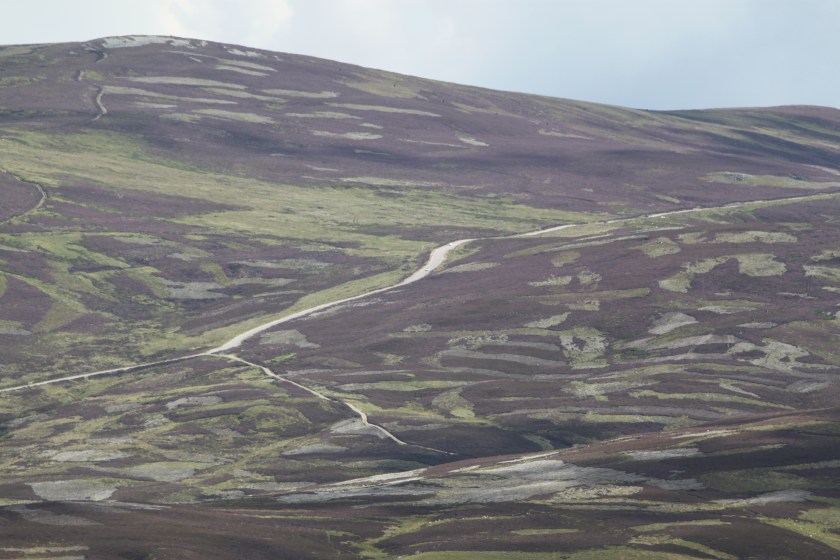
[Photo: the typical landscape of an intensively-managed driven grouse moor in Scotland. Photo by Ruth Tingay]
Here is the response from the Scottish Raptor Study Group to today’s announcement:
Scottish Raptor Study Group warmly welcomes today’s announcement by the Scottish Government on the grouse moor enquiry panel.
Patrick Stirling Aird, Secretary of the Scottish Raptor Study Group said, “We are delighted that the membership of the panel has been announced and look forward to providing evidence when called upon to do so“.
The public have increasing concerns around the way in which grouse moors are being operated with a substantial body of science proving beyond all doubt the widespread and illegal persecution of birds of prey on many such moors.
We support the introduction of licensing for driven grouse shooting with enforceable sanctions where illegal practices are confirmed. Such a licensing scheme could incorporate a statutory code of practice which helps to protect the public interest and to prevent bad management practices. This concept is widespread in Europe and elsewhere and works well with legitimate shooting interests.
ENDS
Here are our first thoughts.
Hallelujah! The panel has finally been announced and presumably its work will now get underway, although notice there is no mention of timescales in the Scottish Government’s statement. That’s not too much of a concern right now – as Roseanna mentions, this work will be complex and it’s in everyone’s interests that it is done thoroughly, so we probably shouldn’t expect any output until at least 2019.
This panel has some serious intellectual heavy weights (Chair, Professor Werrity, and panel members Professors Newton and Hester). All three are at the top of their respective fields and have been for years; their academic achievements and scientific authority are undisputed. We are delighted to see these three involved, especially given Professor Werrity’s intention for having an “evidence-based approach” to the review. Excellent.
The other two panel members (Mr Jameson and Mr Oddy) are a bit of a surprise, to be honest. We didn’t expect to see anybody with such obvious vested interests be part of what had been described as an independently-led review group. Nevertheless, there is probably good reason for having them on board, not least to get buy-in to the review from the game-shooting sector. We know very little about Mr Jameson and only a little bit about Mr Oddy – he’s the chap who, when working for Buccleuch Estates on the Langholm Moor Demonstration Project, suggested that lethal control of buzzards should be a considered option…..but his suggestion was based on no scientific evidence whatsoever, in fact it was the exact opposite of what the science was showing. Hmm.
All in all, just like RSPB Scotland and the Scottish Raptor Study Group, we very much welcome today’s announcement. It is the next step on the road to what many see as the inevitable introduction of an estate licensing scheme in Scotland. We look forward to giving evidence, if invited to do so.
UPDATE 28 November 2017: Law professor joins grouse moor management review group (here)
UPDATE 24 April 2018: Grouse Moor Management Review Group: 1st meeting report (here)