2017 raptor persecution stats show criminals getting better at hiding evidence

The Scottish Government’s annual raptor persecution maps have just been released showing the number of reported crimes in 2017.

A five-year map showing the number of reported raptor persecution crimes between 2013-2017 has also been published:

An accompanying press release is as follows:

Recorded cases of bird of prey poisonings at record low

2017 saw only one recorded incident of illegal bird of prey poisoning in Scotland, according to new maps published by the Partnership for Action Against Wildlife Crime (PAW) Scotland.
This is the lowest total in a single year since PAW Scotland began compiling data for 2004 onwards.
Despite the drop in recorded incidents, data from satellite tagged raptors continues to show birds disappearing in unexplained circumstances, with persecution strongly suspected in many cases.
There was a further 36% fall in all recorded bird of prey crimes during 2017. The new figures show 9 confirmed crimes compared to 14 the previous year.
Species illegally killed in 2017 incidents included buzzards, owls, and a hen harrier, while the golden eagle, osprey and merlin were victims of disturbance cases. In addition to the poisoning incident, there were two shootings, two illegal trappings and three cases of disturbance.
Environment Secretary Roseanna Cunningham said:
While I welcome this further reduction in recorded bird of prey crimes, including our lowest ever total for poisoning incidents, reports from early 2018 indicate that this remains a problem in some parts of Scotland.
It is extremely frustrating that some criminals continue to undermine the good work that has been done by conservationists and land managers in recent years, with much of that work being done through the Partnership Against Wildlife Crime (PAW Scotland).
We have recently provided additional resources to Police Scotland for the detection and investigation of wildlife crime, and set up a review group to look at grouse moor management, including the potential for licensing this type of business.
ENDS
The maps are available on the Scottish Government website here
It’s interesting that the Government’s headline refers only to poisoning incidents, and of course this is the line that will be picked up by the press (e.g. BBC news here). A drop to only one reported poisoning incident in 2017 does look like progress has been made, but we are well aware that the criminals have switched tactics in recent years, favouring shooting over poisoned baits, presumably because a shot bird can be swiftly removed from the crime scene to avoid detection whereas a poisoned bait (and any poisoned victim) is more likely to be accidentally discovered by walkers before the poisoner has had the time to return and remove the evidence.
However, as pointed out by Environment Secretary Roseanna Cunningham in the press release, this reduction to only one reported poisoning incident in 2017 appears to just be a temporary hiatus; we know that in 2018 there have been at least five reported raptor poisoning crimes (of which we’re aware), including four red kites and buzzards that were poisoned in Dumfries & Galloway between Jan-May this year (see here) and a poisoned peregrine found in the Pentland Hills in May this year (see here). There may well be further cases that Police Scotland are keeping quiet about, as they did with the Pentland peregrine. It’ll be interesting to see whether the headline accompanying the 2018 persecution maps highlight an upturn in illegal raptor poisoning.
The Government maps no longer just focus on poisoning  – they now include other types of raptor persecution such as illegal trapping, shooting, disturbance, nest destruction etc. However, what they don’t include are the suspicious disappearances of satellite-tagged golden eagles, hen harriers and white-tailed eagles. Again, it’s good to see this point being highlighted in the Scottish Government’s press statement but it’s about time these incidents were also included in the official data.
The 2017 report on the fate of satellite-tagged golden eagles in Scotland was unequivocal, showing clear evidence of deliberate and sustained illegal raptor persecution over a number of years.
[Stars indicate last known location of satellite-tagged golden eagles that have ‘disappeared’ in suspicious circustances, 2004-2016. Data from golden eagle satellite tag review]
Since the research was completed in January 2017, the findings of which the Scottish Government accepted as strong evidence of ongoing illegal persecution, at least eight more satellite-tagged raptors have ‘disappeared’ in suspicious circumstances in Scotland (3 x golden eagles, 2 x white-tailed eagles, 3 x hen harriers), and seven of these vanished on land managed for driven grouse shooting. None of these incidents are included in the Government’s raptor persecution maps, even though the pattern of disappearance is damning.
There is further evidence of continued raptor persecution crimes, again not included in the Government’s maps. This evidence is provided by the national and regional surveys of several raptor species, which show another clear pattern of criminality with golden eagles, hen harriers and peregrines noticeably absent from many areas managed for driven grouse shooting and illegal persecution identifed yet again as the main factor limiting these populations.
Until all the available evidence is compiled together to show an overall picture of the continued criminal killing of birds of prey, these annual persecution maps should be considered as an under-representation of what is actually going on.
Hiding the evidence of raptor crime is definitely on the increase, and the next blog will provide a good example of how this is achieved….
UPDATE 3pm: Great to see The Scotsman journalist Jane Bradley recognising the limitations of the Govt’s ‘official’ raptor crime stats (here).

Merlin nest shot out in the Pentland Hills

Following Tuesday’s news that a peregrine had been illegally killed with a highly toxic banned poison in the Pentland Hills Regional Park earlier this year (see here), we’d also blogged yesterday (here) about other recorded wildlife crime in this area, including the shooting out of a merlin’s nest in 2017:

We’ve been asked some questions about the merlin case so here are some background details about that crime.

A breeding pair had taken over an abandoned crow nest at the top of a tree on the edge of a small copse. The immediate land was being used for sheep farming but the site was close to an area being managed for driven grouse shooting (as you can see from the above map). The sheep-farming landowner (believed to be Alastair Cowan of Eastside Estate, according to Andy Wightman’s brilliant Who Owns Scotland website) was known to be very supportive of raptors having previously given permission to local Raptor Study Group members to erect nest boxes for kestrels and nest baskets for merlin.

[Merlin nest tree, photo SSPCA]

The merlins had laid four eggs and were at the incubation stage when a routine monitoring visit by licensed Raptor Study Group fieldworkers led to suspicions that the breeding attempt had failed. Climbing to the nest to investigate, they found smashed eggs and feathers from the adult female congealed together. They also found residual bits of bark in the nest cup and fresh damage marks on the surrounding tree branches that were suspected to have been caused by shotgun pellets. Given that the eggs were on the point of hatch, the fieldworkers were concerned the incubating female had been shot on the nest, although there was no sign of her body but had she been shot it’s possible her body had been scavenged by corvids.

[Merlin nest contents, photo SSPCA]

The incident was reported to the SSPCA who also notified the police. Typically in a case such as this that’s as far as things would have gone. It would have been recorded as a ‘probable’ wildlife crime but without witnesses or video evidence it would have been virtually impossible to progress the case.

However, although the prospects of solving the case were slim to zero, the SSPCA investigator wanted to do everything possible to at least demonstrate that this was a crime, so after securing the landowner’s permission, the top of the tree was cut off and sent for digital x-ray. The results were clear, the nest and the branches around the nest were peppered with shotgun pellets:

[X-rays from SSPCA]

It could be argued that the nest had been blasted by a shotgun prior to the merlins taking it over for their breeding attempt; if the nest had previously been occupied by corvids then destroying the nest, eggs and adults of specified corvid species is a legal activity under the terms of a General Licence. It’s a fairly barbaric thing to do but nevertheless it is a lawful activity, routinely undertaken by gamekeepers up and down the country who only require a shotgun certificate and the landowner’s permission.

However, in this case the fresh damage marks to the tree branches and the presence of pieces of bark in the nest cup were indicative that this nest had been blasted with a shotgun while the nest was being used by a protected species, the merlin.

The shooting of a nearby raven’s nest the previous year (see map above) where the corpse of a raven riddled with holes was found on the nest is also suggestive that someone with access to a shotgun is waging a determined campaign against protected species in this area. Perhaps the same person using a dangerous toxic poison to kill peregrines?

Full credit to the SSPCA for the extraordinary and creative lengths they were prepared to go to to secure the evidence that would see this incident recorded as a confirmed crime. We’re not aware of any other case where a tree top has been removed and x-rayed.

Although nobody has been charged, the details of this case, along with the other recorded wildlife crimes in the Pentlands, are all building a picture of yet another raptor persecution hotspot in south Scotland, right under the noses of the Scottish Government (who, incidentally, still haven’t responded to the news that a peregrine was illegally killed in this area with a highly toxic banned poison).

Armed criminals running amok in the Pentland Hills nr Edinburgh

The northern edge of the Pentland Hills is a familiar sight to residents of Edinburgh and can be seen from the Scottish Parliament building.

[View of the Pentlands from Edinburgh, photo by Ruth Tingay]

Designated as “a place for the peaceful enjoyment of the countryside“, the Pentland Hills Regional Park hosts over 600,000 visitors per year.

We suspect many of those visitors looking for a bit of ‘peaceful enjoyment’ would be outraged to discover that this area is actually a wildlife crime hotspot and the armed criminals involved are running amok without being brought to justice.

In the last two years, a raven was found shot dead on its nest, a merlin’s nest was shot out, a golden eagle ‘disappeared‘ in highly suspicious circumstances and a peregrine has been poisoned with a deadly toxin so powerful that it could kill a human.

These are blatant wildlife crimes and nobody has been charged, let alone prosecuted or convicted. That’s not a criticism of the police – collecting sufficient evidence to charge an individual is almost impossible without the help of witnesses and/or camera footage – but it is a criticism of the Scottish Government’s continuing failure to deal with this issue.

It’s interesting to note that the majority of these crimes occured very close to land managed for driven grouse shooting. The tell-tale rectangular strips of burned heather on this map are quite striking:

Large areas of the Pentland Hills Regional Park are privately owned estates and are managed for grouse shooting and farming. The wildlife crimes have been committed across several estate boundaries and we understand that at least until recently, some estates ‘shared’ gamekeepers.

It is not unusual for the police to be unable to identify the individual(s) committing crimes on driven grouse moors – and again, that’s not a criticism of the police, although withholding information from the public for months on end, especially when there is a risk to public safety, certainly doesn’t help. In fact escaping prosecution was such a common problem that in 2013 the then Environment Minister Paul Wheelhouse MSP introduced another sanction – he instructed Scottish Natural Heritage (SNH) to withdraw the use of the General Licence on shooting estates where there was sufficient evidence to indicate a raptor persecution crime but insufficient evidence to identify the individual culprit(s).

This power has been available to SNH since 1 January 2014 but so far only four restrictions have been imposed: one on Raeshaw Estate/Corsehope Estate in the Scottish Borders; one on Burnfoot Estate/Wester Cringate Estate in Stirlingshire; one on Edradynate Estate in Perthshire; and one on an unnamed individual who had worked on the Tillypronie Estate in Aberdeenshire. We’ve blogged a lot about this sanction and particularly SNH’s failure to impose General Licence restrictions in at least nine other cases where raptor persecution has been detected. When asked about these failures, SNH responded that it “wasn’t in the public interest” to explain (see here).

We’d like to know whether SNH is considering withdrawing the use of the General Licence on any of the shooting/farming estates in the Pentland Hills where raptor persecution crimes have been confirmed. And if not, why not?

Without sanctions being imposed, and importantly, being seen to be imposed, the armed criminals, whoever they may be, running around the Pentland Hills laying poisoned baits and shooting out nests and killing protected birds are going to think they’re untouchable and the wildlife-loving general public is going to know that the Scottish Government has lost all control over this disgraceful issue, happening right on its doorstep.

Ps. Great to see the BBC News website is running with the peregrine poisoning news today (see here).

UPDATE 11 Oct 2018: Merlin nest shot out in the Pentland Hills (here)

Yorkshire police investigate suspicious death of buzzard found with head injuries

Press release from Humberside Police (2 Oct 2018):

BUZZARD FOUND DEAD WITH TRAP WOUNDS TO HEAD

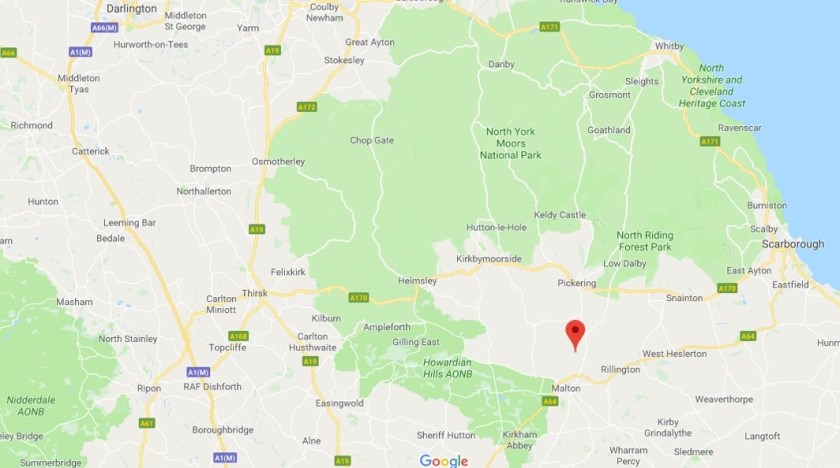
We are investigating the suspicious death of a common buzzard found at the end of August in the western area of the East Riding of Yorkshire.

X-rays of the bird show that it has previously suffered shotgun injuries as three shotgun pellets were found embedded in the bird.  The shotgun pellets are not thought to have caused its death and when the bird was found it had recent injuries to its head consistent with being confined in a cage trap.

[Photos by Humberside Police]

Wildlife Crime Officer PC 1708 Ward said,

However this bird met its end it has previously been shot. Raptor persecution is a National Wildlife Crime priority which we take very seriously. Whatever anyone’s feelings are towards birds of prey there is no excuse for this type of criminality.

It’s sad that such practices are still common place. Due to the nature of these crimes they are difficult to detect. If you have information about anyone persecuting birds of prey we want to know.

I can be contacted in confidence via 101 and your information will be treated with the utmost confidentiality“.

Anyone with information regarding the above incident should call us on the non-emergency number 101 quoting investigation number 16/99978/18 which is being dealt with by WCO PC 1529 Day.

The attached images may cause distress and are property of Humberside Police

Note to press: No one is available for interview regarding this news story.

END

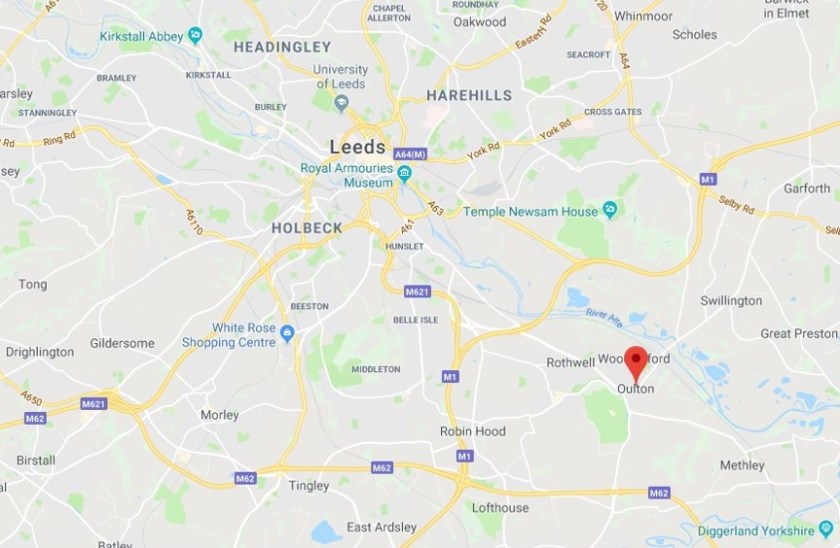
There’s no detail about the location other than “the western area of the East Riding of Yorkshire“. Here’s a Google map showing East Riding:

UPDATE 20 February 2019: Buzzard shot and poisoned in East Yorkshire: police renew appeal for info (here)

Despite best efforts, shot red kite didn’t make it

In July an injured red kite was found by a member of the public in woodland near Corby, Northants – she’d been shot and had three shotgun pellets lodged in her body. We blogged about her here.

She was cared for by Simon Dudhill and team at The Raptor Foundation in Cambridgeshire. Simon said at the time:

I have taken charge of a red kite that has been shot, with three shotgun pellets, in the leg, shoulder and ear. The leg and shoulder pellets are not really an issue governing the birds potential release as they are below joints. The pellet in the ear is lodged in the bony part of the skull and is causing the bird problems with balance. The vet and I both agree the bird could not be released back with the pellet still inside. We have been treating for infection and pain relief and the bird is making steady improvements. It was unable to stand on admission, but is now mobile along the floor to some degree. The vet is looking to operate later this week“.

[Photo by The Raptor Foundation]

Unfortunately, she didn’t make it.

Simon said:

Sadly, despite two months of hard work by ourselves and our vets, we had to make the extremely disappointing decision to put her to sleep. None of her balance had returned, she was only able to get about 15 inches off the ground onto a log, and the rest of the time she was dragging her wings and body along the ground. We all felt it was not in the bird’s best interest to keep her in this poor condition, as any further improvement was not expected“.

RSPB’s 2017 Birdcrime report documents ongoing illegal raptor persecution

The RSPB published its 2017 Birdcrime Report yesterday. It didn’t contain any surprises – we all know that crimes against birds of prey continued in 2017, and that these were largely associated with game-shooting estates.

The online report can be read here

The very useful appendices (actual data) can be accessed here

The RSPB’s interactive map hub (showing the spatial pattern of raptor crime) can be accessed here

We were particularly interested in the Scotland data, which amounted to just five confirmed, detected raptor persecution crimes. Quite obviously, this is just the tip of a large iceberg and is an indication of just how good the raptor killers have become at hiding the evidence of their crimes rather than an accurate reflection of the extent of ongoing raptor persecution – a fact recently acknowledged by Police Scotland (see here).

We know from the recent national survey results for three iconic species (golden eagle, hen harrier, peregrine) that illegal persecution continues to suppress the populations of all three species in areas where the land is dominated for driven grouse shooting. We also know from the ongoing studies of satellite-tagged golden eagles, white-tailed eagles and hen harriers that these birds continue to ‘vanish’ in the same grouse moor areas. Unfortunately these cases don’t make it in to the official wildlife crime stats although both the police and the Scottish Government have acknowledged that they are indicative of criminality, hence the current Government-commissioned Werritty review in to grouse moor management.

Of the five confirmed cases of illegal raptor persecution in Scotland last year, two were linked to the Leadhills (Hopetoun) Estate in South Lanarkshire – the witnessed shooting of a hen harrier in May 2017 (here) and then a few weeks later the witnessed shooting of a short-eared owl (here). The crumpled body of the shot short-eared owl was retrieved from a ditch the following day and the RSPB sent it off for post mortem, which confirmed it had been shot, causing multiple fractures to its wing, leg, foot, ribs and skull.

[The short-eared owl shot on Leadhills Estate, photo by RSPB]

The police investigated both cases but no prosecutions followed. Earlier this year, a dead buzzard was found at Leadhills and it too had been shot but yet again, nobody was prosecuted (here).

For those familiar with the Leadhills (Hopetoun) Estate this will come as no surprise – there have been over 50 reported cases of raptor persecution crimes on or close to this estate since 2003 and of those, only two have resulted in a conviction (gamekeeper convicted in 2004 for shooting a short-eared owl; gamekeeper convicted in 2009 for laying out a poisoned bait).

This appalling failure to enforce the law was addressed by the then Environment Minister Paul Wheelhouse MSP, who instructed SNH to withdraw the use of the General Licence on estates where there was sufficient evidence to demonstrate raptor persecution crimes had occurred but insufficient evidence to progress a prosecution against a named individual. We’ve waited and waited and waited for SNH to impose a General Licence restriction on the Leadhills (Hopetoun) Estate for these recent shootings but so far, nothing. When we’ve asked SNH for an explanation, it has refused to comment, saying it’s not in the public interest for SNH to explain its decisions.

Meanwhile, Lord Hopetoun continues to serve as the Chair of the Scottish Moorland Group (a sub-group of Scottish Land & Estates) and whose Director, Tim (Kim) Baynes continues to serve on the PAW Scotland Raptor Group – you know the one – the pretend ‘partnership’, chaired by the Scottish Government, set up to tackle the illegal persecution of raptors on driven grouse moors.

Climber witnesses shooting of red kite in Peak District National Park

Press release from RSPB (20/9/18):

SHOT RED KITE ‘LIKE BALLOON BURSTING’

A red kite seen falling from the sky accompanied by the sound of gunshots is the latest in a series of concerning incidents involving birds of prey in the Peak District National Park.

Climber Adam Long heard gunshots and saw the bird fall from the sky on 7 June near Saddleworth Moor, within the Peak District National Park. The shooter, however, remained out of sight. The police were called and spoke to the landowner, on whose land the incident is alleged to have occurred, but no leads were forthcoming.

Howard Jones, RSPB Investigations Officer, said: “Though red kites have enjoyed a remarkable comeback in many parts of the country, they are not commonly seen in this area, on the outskirts of Greater Manchester and are struggling to expand into the Peak District National Park despite plenty of suitable breeding habitat. Like all birds of prey, red kites are protected by law under the Wildlife and Countryside Act 1981. If someone is found to have shot this bird they face an unlimited fine and/or up to six months in jail.

The public play such an important role in reporting incidents like this. If you think you’ve witnessed a crime against a bird of prey while our walking, climbing, cycling or walking your dog, let the police know on 101 or contact the RSPB on 01767 680551.”

Adam, the climber who witnessed the event, said: “I saw the kite slowly soaring up the valley, then again when we’d started our climb. I heard two shots, and the kite fell out of the sky – it was like a balloon bursting, crumpling so suddenly then falling. I was completely shocked by the brazenness of it. You hear about this sort of thing happening, and that the chances of seeing or recording something are so slim, so to see this in broad daylight when anyone could have witnessed it was incredible. This is a popular valley for climbing and walking, plus there’s a busy A-road close by. I was literally tied to the crag when it happened so I couldn’t move to get a better view, but I rang the police as soon as I was able.”

The persecution of birds of prey in upland areas like the Peak District is a continuing issue with serious implications on raptor populations. Figures from the latest Birdcrime report showed that over 80 confirmed incidents of shooting, trapping, poisoning and destruction of birds of prey took place in 2016, but in the same year there were no convictions for crimes relating to raptor persecution.

In May this year a scientific paper in the journal British Birds identified significant associations between land managed for driven grouse shooting and the persecution of peregrines and goshawks in the northern Peak District. Populations of the birds were seen to have declined in the northern ‘Dark Peak’, but increased in the southern ‘White Peak’, which is virtually free from grouse shoots.

Chief Inspector Dave Henthorne of Greater Manchester Police (GMP), who is also the force’s lead for wildlife crime, said: “GMP officers spoke to a number of people regarding this incident. If there is evidence to link an individual with raptor persecution we will work with the RSPB to prosecute those responsible. In addition to prosecution, GMP would review any firearms license that the offenders possess.”

If you have any information relating to this incident, call Greater Manchester Police on 101.

If you find a wild bird which you suspect has been illegally killed or injured, contact RSPB investigations on 01767 680551 or fill in the online form.

ENDS

This shooting took place three and a half months ago. Why didn’t Greater Manchester Police issue an appeal for information at the time it happened?

Whernside Estate: more reaction to gamekeeper’s conviction for shooting owls

On Tuesday gamekeeper Tim Cowin was convicted for shooting, and then stamping on, two short-eared owls before then hiding the corpses on a grouse moor on the Whernside Estate in the Yorkshire Dales National Park (see here).

[Gamekeeper Cowin being arrested on the Whernside Estate shortly after shooting and then stamping on two short-eared owls and hiding their corpses on the moor. Photo by Guy Shorrock, RSPB]

Cowin’s conviction was widely welcomed by the public, and there was also comprehensive revulsion at his criminal and sadistic behaviour after people were able to watch the extraordinary video footage captured on scene by the RSPB’s Investigations Team.

Several organisations involved in the Raptor Persecution Priority Delivery Group (RPPDG – the PAW Raptor Group) have since published statements on their respective websites:

North Yorkshire Police Rural Task Force’s statement can be read here, and it mentions how this conviction ‘should serve as a warning’ to others committing wildlife crime in North Yorkshire.

North Yorkshire Police Crime Commissioner Julia Muligan, who had the foresight to establish the Rural Task Force in response to N Yorkshire’s reputation as a wildlife crime hotspot, has also issued a statement, here. Julia’s statement focuses on the value of the police working in partnership with the RSPB to catch the raptor killers.

The Northern England Raptor Forum (NERF) has also published a long statement (here), also praising the efforts of the RSPB and North Yorkshire Police (and the CPS) and takes a justified side swipe at fellow RPPDG member, the Moorland Association, for its failure to do likewise.

And what about the other members of the RPPDG ‘partnership’? Three days on, what statements have been issued by the game-shooting industry’s RPPDG representatives about this successful conviction and the outstanding efforts of the RSPB, North Yorkshire Police and the CPS to expose yet another criminal gamekeeper? (Don’t forget, part of the RPPDG’s role is to provide publicity about illegal raptor persecution to ‘build trust and transparency’).

Moorland Association – we blogged about the Moorland Association’s statement on Wednesday (here) which was fully supportive of the Whernside Estate (allowing it to retain its membership of the MA) and didn’t mention the RSPB, Police or CPS at all.

National Gamekeepers Organisation – no statement

British Association for Shooting & Conservation – no statement

Country Land & Business Association – no statement

Countryside Alliance – no statement

Game and Wildlife Conservation Trust – no statement (GWCT isn’t a member of the RPPDG but we include them here because they have a prominent role in the game-shooting world).

This deafening silence comes as no surprise. We’ve seen it time and time again from these so-called ‘partners’ – we either get silence, or a demented attack on the RSPB.

For example, not one of them issued a statement after a gamekeeper was filmed with a poisons cache on the East ArkengarthDale Estate (here), nor after men dressed as gamekeepers were filmed shooting at nesting marsh harriers and then removing their eggs on Denton Moor (here).

We did get statements from the Moorland Association, BASC and the Countryside Alliance after the collapse of a prosecution against a gamekeeper who was alleged to have been filmed trapping a peregrine on its nest ledge on the Bleasdale Estate (here). BASC’s statement was pretty good (here) but the statements from the Moorland Association and Countryside Alliance were appalling.

We blogged about the Moorland Association’s statement on the Bleasdale case (here), which focused on trying to undermine the integrity and credibility of the RSPB.

The Countryside Alliance didn’t issue a statement on its website when the RSPB eventually published its Bleasdale video nasty, but what it did do was have an article published in the Shooting Times earlier in the year, when the Bleasdale prosecution case had collapsed. The article, attributed to Countryside Alliance CEO Tim Bonner, was basically a re-hash of an article the CA had published on its website the previous year, attacking the RSPB for its use of covert filming in Scotland (and incorrectly asserting that the RSPB and police should seek authorisation under the RIPA legislation for such filming, even though RIPA authorisation will not be approved as raptor persecution is not considered ‘serious crime’ by the Sentencing Council).

The title of Bonner’s re-hashed article published by the Shooting Times (June 2018) tells its own story of the game-shooting industry’s attitude to tackling illegal raptor persecution – smug, sniggering and sneering:

These aren’t ‘partners’, genuinely interested in stopping raptor crimes on land managed for game shooting. If they were, they’d all be falling over themselves to heap praise on the actions of the RSPB and North Yorkshire Police that resulted in Cowin’s conviction. None of them have.

They’d all have promoted the RSPB’s raptor crime hotline which allows people to report suspected raptor killers in confidence (here). None of them have.

They’d all be publicly blacklisting the estates and sporting agents known to be involved with the illegal killing of raptors. None of them have.

And they’d all be queuing up to ask the police and RSPB to install covert cameras to monitor the security of any Schedule 1 raptor species nesting on their land. None of them have, although they’re quite happy to install stealth cameras to film the visiting public.

[Photo by Ruth Tingay]

Whernside Estate retains membership of Moorland Association

Following on from yesterday’s news that gamekeeper Timothy Cowin had been convicted for shooting and then sadistically stamping to death two protected short-eared owls on a grouse moor on the Whernside Estate in the Yorkshire Dales National Park (see here), public anger has been justifiably prominent.

Many have commented on Cowin’s pathetic sentence (a £1,210 fine) but there has also been considerable commentary on social media about why the landowner hasn’t also been prosecuted.

If these crimes had taken place in Scotland, there would have been an opportunity to prosecute the landowner and/or shooting agent for alleged vicarious liability, following the introduction of the WANE Act 2011. Although in Scotland a prosecution may not have followed automatically, especially if the landowner and/or agent was able to show due diligence, or if the landowner couldn’t be identified, or if the prosecutors deemed it wasn’t in the public interest to proceed. Since the legislation was enacted on 1 January 2012, six and a half years ago, there have only been two successful prosecutions for vicarious liability in relation to raptor persecution (here and here); two others have failed (here and here) and others simply haven’t been considered for reasons that haven’t been made clear to us (e.g. see here).

However, as Whernside Estate is in the Yorkshire Dales National Park, not in Scotland, there is no hope that a prosecution for alleged vicarious liability will follow in this case.

[RPUK Map showing location of Whernside Estate, which is located in the county of Cumbria but also lies within the boundary of the Yorkshire Dales National Park]

So with no prospect of a further prosecution, the least that could be expected would be for the grouse moor owners’ lobby group, the Moorland Association, to expel the Whernside Estate from the ranks of its membership, right?

Well, no. The Moorland Association has done the exact opposite and has instead chosen to publish a statement in support of Whernside Estate and confirmed the estate’s continued membership in the Moorland Association:

Amanda Anderson’s justification for not expelling Whernside Estate rests with the Moorland Association’s “satisfaction” that the estate had taken “all appropriate measures” to ensure its staff acted within the law and this included written correspondence between the estate and gamekeeper Cowin. Without seeing this correspondence it’s impossible to know whether this evidence would have been sufficient to meet the standards of due diligence required as a defence against vicarious liability in Scotland. It’s our understanding that in Scotland, this correspondence may not be enough to demonstrate due diligence, and other measures may also be required such as the landowner and/or agent undertaking spot checks on their employees and having a written record of those checks.

It’s fairly apparent from the detail we do know about Cowin’s case that had adequate spot checks been undertaken, questions would have been raised about Cowin being in possession of a plastic peregrine decoy, and importantly, his possession of a calling device that had been loaded with the calls of several raptor species, presumably to be used to entice raptors, perhaps towards a plastic decoy, where they could then be shot at close range.

Unfortunately we’ll never get to hear about the details of the estate’s claimed supervision of Cowin because, as there’s no provision for a potential prosecution for alleged vicarious liability in relation to raptor persecution in England, the estate doesn’t have to present this information to the authorities for scrutiny. We only have the word of the Moorland Association, which, of course, has a long track record of denying the bleedin’ obvious.

But let’s take the word of the Moorland Association, and the Whernside Estate, at face value and assume that Cowin’s crimes were as abhorrent to them as they are to the rest of us. That leads to a very interesting question. Two questions, in fact.

Firstly, no matter what claims the Moorland Association makes in all these so-called ‘partnership’ meetings trying to combat illegal raptor persecution, the Moorland Association, and its members, have absolutely no control or influence over gamekeepers working on grouse moors. Cowin is a perfect example of this. If, as the MA and the Whernside Estate claims, Cowin had undergone training, refresher training, and had signed an employment contract undertaking to work within the law, he STILL went on to commit these crimes. So what, exactly, is the point of the Moorland Association attending these ‘partnership’ meetings if it can’t offer any guarantees that gamekeepers won’t kill raptors on grouse moors?

[Gamekeeper Cowin, leaving Whernside Moor after shooting and stamping on two short-eared owls and hiding their corpses. Photo by Guy Shorrock]

Secondly, if the Whernside Estate was “dismayed” at Cowin’s actions of shooting and then stamping on those two short-eared owls, and being in possession of a calling device with raptor calls loaded on to it, did the Whernside Estate pay for Cowin’s legal representation?

Cowin’s solicitor was Michael Kenyon. Mr Kenyon was unlikely to have been a random duty solicitor called in to the police station to represent Cowin when he was questioned and later charged. Mr Kenyon is a well known figure in the game shooting world and is considered a ‘leading expert’ in firearms law and wildlife crime and once served as the legal advisor to the National Gamekeepers’ Organisation (see here) so it seems likely that he was chosen specifically to defend Cowin based on his expertise.

We had thought that perhaps Cowin’s legal representation costs had been covered by his presumed membership of the National Gamekeepers’ Organisation, especially given Mr Kenyon’s links, but according to a tweet from the NGO this morning, Cowin “was not and never has been a member of the NGO“. So it would seem unlikely the NGO paid.

Did Cowin himself pay for Mr Kenyon’s legal services? Perhaps, but this seems unlikely given what the court heard yesterday about Cowin’s financial means.

Was Cowin a member of another ‘professional’ group whose membership dues include the cost of legal representation if faced with a prosecution in relation to gamekeeping activities? We don’t know.

Did the Whernside Estate pay for Cowin’s legal representation? We don’t know that either, but we do know that somebody accompanied Cowin to several court appearances and although we cannot identify that person, it was suggested to us that it was Cowin’s boss. It may well have been, as he was certainly chatty with Mr Kenyon, heard discussing the number of grouse available to shoot on Mossdale Estate (remember them?), but equally as plausible is an explanation that it may have been a member of Cowin’s family attending court to support him.

Unfortunately we’ll never get to find out who paid for Cowin’s defence.

We were also interested in what the other ‘countryside’ organisations had to say about Cowin’s conviction. Would they all be condemning his actions and saluting the efforts of the RSPB et al in securing a successful outcome? Here’s what we found, at the time of writing this blog:

GWCT – silence

BASC – silence

NGO – silence, apart from responding to a tweet to confirm Cowin was never a member.

Countryside Alliance – silence on Cowin’s conviction but leading with the news that the prosecution of three hunting group members for alleged hunting and wildlife crime offences had been dropped, and focusing on the “wasted public resources” by “animal rights extremists” in bringing this case to trial. Interesting – we could argue the same point about the amount of wasted public resources spent in Cowin’s case as it was dragged around five different courts in NW England before his eventual guilty plea.

During our searches for commentary from the grouse shooting industry we did stumble across an article about grouse shooting on Whernside Estate that had been published in The Field magazine in 2012. Strangely, the article seems to have been removed from The Field’s website archives but fortunately we were able to find a cached version elsewhere. It makes for an interesting read, especially the bit about Headkeeper Tim Cowin working as a joiner!

UPDATE 31 August 2018: Whernside Estate: more reaction to gamekeeper’s conviction for shooting owls (here)

Gamekeeper convicted for killing two short-eared owls on grouse moor in Yorkshire Dales National Park

A gamekeeper was convicted at Lancaster Magistrates Court this morning for the killing of two short-eared owls on a grouse moor in the Yorkshire Dales National Park.

Timothy David Cowin, 44, pleaded guilty to shooting the owls on the Whernside Estate in Cumbria (inside the Yorkshire Dales National Park boundary) and to being in possession of a calling device that held the calls of several raptor species.

[Gamekeeper Cowin trying to leave the moor after shooting two short-eared owls. Photo by Guy Shorrock, RSPB]

His sentence? A pathetic £1,210, broken down as £400 for killing each short-eared owl, £200 for possessing the calling device, £170 costs and a £40 victim surcharge. The court heard that Cowin was suspended by the Whernside Estate pending the prosecution but then he later resigned and now apparently works as a joiner in Sedburgh.

Cowin committed these offences in April 2017 and was witnessed doing so by three members of the RSPB’s Investigations Team who just happened to be on the moor. The crimes were videoed (from a distance), and Cowin was observed shooting the owls, then stamping on them, and then disposing of the bodies – one hidden inside a stone wall and one stamped in to the peat. The quick-thinking RSPB team called the police, carried on filming, and one of them made his presence known to Cowin as Cowin tried to leave the moor, resulting in a chase across the hills before the police arrived to arrest him and retrieve the corpses.

For full details, have a read of this RSPB blog here.

And then watch this remarkable RSPB video:

We’ve blogged about this case previously (here), as it’s been dragged around five courts in north west England over a six-month period. At several stages it looked as though it was going to be abandoned on a legal technicality (paperwork issues this time, instead of contesting the admissibility of video evidence), as we’ve seen so often with other cases in recent years, and it is testament to the dedication of all those involved in the prosecution (RSPB, North Yorkshire Police Rural Taskforce, and the Crown Prosecution Service, who all put in extra hours) that it stayed on track and resulted in a conviction.

Of course it wouldn’t have got to court in the first place if it hadn’t been for the RSPB’s Investigations Team being on that grouse moor to install a covert camera for what had looked to them like previous suspicious activity. But just being there wouldn’t have been enough. The team was also skilled enough to recognise what Cowin was up to, quick-witted enough to film him, sharp enough to call the Police as the crime was in progress, and fit enough to chase Cowin across the moor when he was trying to escape. Added to their outstanding efforts was the swift response from North Yorkshire Police to get up to the grouse moor in time to arrest him. And then the dedicated, committed efforts of both the RSPB and the police to return early the next day to search for the second owl corpse before Cowin had an opportunity to get back on the moor and remove the evidence. In court, CPS prosecutor Rachel Parker was forensic in rebutting the attempts by the defence solicitor to have the case thrown out.

The actions of all involved in this successful prosecution were exemplary. Will the grouse shooting industry praise their efforts and encourage them to continue routing out the criminal gamekeepers known to be routinely committing these offences?

Unlikely.

We’ll no doubt hear the disingenuous bleating of the Moorland Association, GWCT, National Gamekeepers Organisation, Countryside Alliance etc, all condemning wildlife crime before swiftly returning to their usual criticism of the RSPB and its efforts to fight the continuing illegal persecution of raptors on driven grouse moors.

There are plenty more ‘Cowins’ out there, and despite the efforts of the grouse shooting industry to deny the extent of these crimes and pay for expensive lawyers to defend the criminals responsible, the public is becoming increasingly aware of how big a problem this is, through the efforts of the RSPB and its genuine conservation partners.

Today’s verdict doesn’t help those two short-eared owls; it’s too late for them, but Cowin’s conviction is yet another nail in the coffin of the driven grouse shooting industry. Kudos to all involved.

UPDATE 29 August 2018: Whernside Estate retains membership of Moorland Association (here)

UPDATE 31 August 2018: Whernside Estate: more reaction to gamekeeper’s conviction for shooting owls (here)

[PC Carr retrieving the pitiful corpse of the second short-eared owl that had been shot then stamped in to the ground. Photo by Guy Shorrock]